Michael Hyatt's Blog, page 196
June 7, 2012
Why Vision Matters Now


I originally wrote the following article as part of What Matters Now , a free eBook that Seth Godin created and compiled a few years ago. However, I think it may be more relevant now that ever. What do you think? Leave me a comment at the end of this post.
Vision is the lifeblood of any organization. It is what keeps it moving forward. It provides meaning to the day-to-day challenges and setbacks that make up the rumble and tumble of real life.

Photo courtesy of ©iStockphoto.com/BrianAJackson
In a down economy—particularly one that has lasted so long—things get very tactical. Most are just trying to survive. What worked yesterday does not necessarily work today. What works today may not necessarily work tomorrow. Decisions become pragmatic.
But after a while this wears on people. They don’t know why their efforts matter. They cannot connect their actions to a larger story. Their work becomes a matter of just going through the motions, living from weekend to weekend, paycheck to paycheck.
This is where great leadership makes all the difference. Leadership is more than influence. It is about reminding people of what it is we are trying to build—and why it matters. It is about painting a picture of a better future. It comes down to pointing the way and saying, “C’mon. We can do this!”
When times are tough, vision is the first casualty. Before conditions can improve, it is the first thing we must recover.
Question: How important do you think vision is as we move through the rest of this year? You can leave a comment by clicking here.







June 6, 2012
#015: How Leaders Can Create Alignment [Podcast]
In this podcast episode, I talk about how leaders can create alignment in teams. This is a crucial leadership skill. Without it, your organization cannot achieve its full potential.

It doesn’t matter if the context of your leadership is your family, small business, a large corporation, a network of free-lancers or volunteers, or a church, the more aligned your team is, the more likely you will produce the outcomes you are after.
Click to Listen
[image error]
Podcast: Subscribe in iTunes | Play in browser | Download
Episode Outline
As a leader, you create alignment in your team by practicing three key DISCIPLINES.
Discipline #1: The Discipline of Contact. You cannot keep your team aligned unless you have frequent contact with them. They are going to do the best with what you give them. If you don’t spend time with them, it is inevitable that they are going to make decisions you are uncomfortable with. It is your responsibility to initiate this contact. You can do this through regular one-on-one meetings, staff meetings, and by just walking around.
Discipline #2: The Discipline of Communication. Contact is not enough. You have to communicate. Your people cannot read your mind. They need to know what you expect. They need to understand the mission and the vision. You need to verbalize it. Over and over again. In addition, if you don’t like something, you need to speak up—before you get into a high stakes situation where dialog is happening in real time.
Discipline #3: The Discipline of Connection. Communication is not even enough. For true alignment to take place, your people have to know and trust your heart. They have to be committed to your success and the success of the team. You may be tempted to think that you are entitled to this by virtue of employing them. You’re not.You can buy their presence, but you can’t buy their heart. You must earn it. You can only create a connection—and thus alignment—when you open your heart and let them in.
Alignment is critical if you want to get the right things done and move your organization forward in the most effective and efficient way possible. However, it won’t happen on it’s own. As a leader, you must take the initiative to create it.
Listener Questions
Question #1: Nick Cook asked, “What are some of the ways you had to change as a young leader in order to create alignment?”
Question #2: Lawrence Wilson asked, “How do you create alignment among team members you inherited from a previous leader who are still loyal to that leader?”
Question #3: Stephen Robles asked, “How can I get my teammates to align with my leader’s vision?”
Question #4: Nathan Martin asked, “What do you do to foster alignment among virtual workers that are spread out geographically.”
Special Announcements
My new book, Platform: Get Noticed in a Noisy World if officially a bestseller. It hit all four major bestseller lists this past week: Amazon, New York Times, USA Today, and the Wall Street Journal. To celebrate, I am making a very special offer available for my listeners who haven’t yet bought the book. The offer is worth $110.97, and it’s free when you buy the book. BUT you have to listen to the podcast to get the details.
I will be speaking at the BlogWorld & New Media Expo in New York City tomorrow (June 7). I will be leading one of the “Super Sessions” at 9:00 a.m. if you happen to be attending. I will be speaking on the subject of Platform with an emphasis on what I am learning by producing my new podcast.
If you are interested in having me speak at your
I will also be speaking at the Shelby International Conference (June 14, 2012) and the American Christian Fiction Writers Conference (September 21, 2012). I will be speaking at a number of private corporate events in between. If you are interested in having me speak at your event, please visit my Speaking page.
Episode Resources
In the episode I mentioned Gap International’s “Alignment Intensive” Seminar. I highly recommend attending. It is not cheap but worth every cent.
Show Transcript
You can download a transcript of this episode here.
Subscription Links
If you have enjoyed this podcast, please subscribe:

iTunes

Zune

RSS
Your Feedback
I want to hear from you! Please leave me a voicemail with your question. I may use it on the next episode of my show. If you have an idea for a podcast you would like to see or a question about an upcoming episode, e-mail me.
Also, if you enjoyed the show, please rate it on iTunes and write a brief review. That would help tremendously in getting the word out! Thanks.
Question: Is your team aligned? What can you do today to create more alignment? You can leave a comment by clicking here.



#015: How Leaders Can Create Alignment
In this podcast episode, I talk about how leaders can create alignment in teams. This is a crucial leadership skill. Without it, your organization cannot achieve its full potential.
It doesn’t matter if the context of your leadership is your family, small business, a large corporation, a network of free-lancers or volunteers, or a church, the more aligned your team is, the more likely you will produce the outcomes you are after.
Click to Listen
[image error]
Podcast: Subscribe in iTunes | Play in browser | Download
Episode Outline
As a leader, you create alignment in your team by practicing three key DISCIPLINES.
Discipline #1: The Discipline of Contact. You cannot keep your team aligned unless you have frequent contact with them. They are going to do the best with what you give them. If you don’t spend time with them, it is inevitable that they are going to make decisions you are uncomfortable with. It is your responsibility to initiate this contact. You can do this through regular one-on-one meetings, staff meetings, and by just walking around.
Discipline #2: The Discipline of Communication. Contact is not enough. You have to communicate. Your people cannot read your mind. They need to know what you expect. They need to understand the mission and the vision. You need to verbalize it. Over and over again. In addition, if you don’t like something, you need to speak up—before you get into a high stakes situation where dialog is happening in real time.
Discipline #3: The Discipline of Connection. Communication is not even enough. For true alignment to take place, your people have to know and trust your heart. They have to be committed to your success and the success of the team. You may be tempted to think that you are entitled to this by virtue of employing them. You’re not.You can buy their presence, but you can’t buy their heart. You must earn it. You can only create a connection—and thus alignment—when you open your heart and let them in.
Alignment is critical if you want to get the right things done and move your organization forward in the most effective and efficient way possible. However, it won’t happen on it’s own. As a leader, you must take the initiative to create it.
Listener Questions
Question #1: Nick Cook asked, “What are some of the ways you had to change as a young leader in order to create alignment?”
Question #2: Lawrence Wilson asked, “How do you create alignment among team members you inherited from a previous leader who are still loyal to that leader?”
Question #3: Stephen Robles asked, “How can I get my teammates to align with my leader’s vision?”
Question #4: Nathan Martin asked, “What do you do to foster alignment among virtual workers that are spread out geographically.”
Special Announcements
My new book, Platform: Get Noticed in a Noisy World if officially a bestseller. It hit all four major bestseller lists this past week: Amazon, New York Times, USA Today, and the Wall Street Journal. To celebrate, I am making a very special offer available for my listeners who haven’t yet bought the book. The offer is worth $110.97, and it’s free when you buy the book. BUT you have to listen to the podcast to get the details.
I will be speaking at the BlogWorld & New Media Expo in New York City tomorrow (June 7). I will be leading one of the “Super Sessions” at 9:00 a.m. if you happen to be attending. I will be speaking on the subject of Platform with an emphasis on what I am learning by producing my new podcast.
If you are interested in having me speak at your
I will also be speaking at the Shelby International Conference (June 14, 2012) and the American Christian Fiction Writers Conference (September 21, 2012). I will be speaking at a number of private corporate events in between. If you are interested in having me speak at your event, please visit my Speaking page.
Episode Resources
In the episode I mentioned Gap International’s “Alignment Intensive” Seminar. I highly recommend attending. It is not cheap but worth every cent.
Show Transcript
You can download a transcript of this episode here.
Subscription Links
If you have enjoyed this podcast, please subscribe:
iTunes
Zune
RSS
Your Feedback
I want to hear from you! Please leave me a voicemail with your question. I may use it on the next episode of my show. If you have an idea for a podcast you would like to see or a question about an upcoming episode, e-mail me.
Also, if you enjoyed the show, please rate it on iTunes and write a brief review. That would help tremendously in getting the word out! Thanks.
Question: Is your team aligned? What can you do today to create more alignment? You can leave a comment by clicking here.
June 5, 2012
A Review of Love Works by Joel Manby
In my experience, the word love is rarely used at work. While we may love our work, we rarely think of love as an effective business strategy or management philosophy. In a moment, I’ll tell you how to get a free copy of a brand new book on this topic.
If you can’t see this video in your RSS reader or email, then click here.
Perhaps it’s because we usually think of love as an emotion rather a behavior. When we look at love in action, however, love works—at work. And it can be a powerful tool to help us strengthen our teams and improve bottom line results.
My friend, Joel Manby, has just written a powerful book on this very topic. You may have seen him on the hit television show, Undercover Boss, along with some 18 million viewers who watched this particular episode.
Joel is the President and CEO of Herschend Family Entertainment, which owns and operates dozens of theme parks across the country such as Dollywood, Silver Dollar City, and Stone Mountain in Georgia. He and his colleagues practice servant-based leadership, based on the philosophy of leading with love.
After the show, Joel received an avalanche of mail from people people wanting to learn more. He said, “I never imagined how people from across the world would embrace our company and culture like they did. People were starving for a better a way to lead.”
That inspired Joel to write Love Works: Seven Timeless Principles for Effective Leaders (Zondervan), a new book that I read several weeks ago. I highly recommend it. It is must-reading for anyone in leadership.
Love Works is a practical how-to guide for anyone who wants to lead with love at work. Whether you lead a small business, a department, a large company, or a non-profit ministry, this book is for you.
The seven principles explored in Love Works come from one of the oldest and most respected authorities on human behavior: the Bible. In 1 Corinthians chapter 13, the apostle Paul writes,
Love is patient, love is kind. It does not envy, it does not boast, it is not proud. It does not dishonor others, it is not self-seeking, it is not easily angered, it keeps no record of wrongs. Love does not delight in evil but rejoices with the truth. It always protects, always trusts, always hopes, always perseveres.”
We’ve all heard this passage read at weddings, but how many of us have ever thought of it as a business philsophy?
Joel elaborates on these seven principles:
Be patient—demonstrate self-control in difficult situations.
Be kind—show encouragement and enthusiasm.
Be trusting—place confidence in those around you.
Be unselfish—think of yourself less.
Be truthful—define reality corporately and individually.
Be forgiving—release the grip of the grudge.
Be dedicated—stick to your values in all circumstances.
If you choose to lead with love, others around you may not initially understand what you’re doing. But Joel admonishes to do it anyway. This type of leadership is more important than the temporary approval of your coworkers.
Choosing to lead with love is the single most difficult decision a leader can make, but a wise leader dedicates him or herself to it because it is also the single best way to lead an organization.
Zondervan, Joel’s publisher, has agreed to give 50 copies of his new book, Love Works , to my readers. To get a chance at snagging one, you must take the following three actions:
Leave a comment below. Answer the’s question at the bottom of this post.
Fill out the special form. I have set up a separate contact form to make it convenient for you to provide your mailing address. Please do not put your shipping address in your comment. This will automatically disqualify you.
Twitter a link to this post. You can do so automatically by clicking here. If you don’t have a Twitter account, you can use Facebook. Just share this blog post with your friends.
On Saturday, June 9, 2011, I will select 50 people at random. If you are one of those selected, I will notify you via email. If you don’t hear from me, you can assume you were not selected. I appreciate you entering a comment, and I hope you will buy the book any way.
Question: Why do you want a copy of Love Works? You can leave a comment by clicking here.



June 4, 2012
7 Ways to Get Super Focused When You Need It
Every now and then, I have a need to get super-focused. It’s usually when I have an important task to accomplish like preparing a speech, writing a blog post, or solving a complex problem.

Photo courtesy of ©iStockphoto.com/medlar
Unfortunately, I live in the same distracting world you do, where multiple voices compete for my attention. I’ve gone through days when I didn’t accomplish a single thing on my to-do list. Yet, somehow I was busy the entire time!
Recently, I found myself in this exact situation. My new book, Platform, launched and my daughter, Madeline, got married—both in the same week. (I know, I know, what was I thinking?) I had the need to focus on the task at hand and be super-productive.
This got me thinking. Is it possible to turn focus on and off like a switch?
I am not sure I can say yes one hundred percent of the time. But, over the years, I have found seven practices that enable me to be better focused, especially when I need to get important work done.
Give yourself a deadline. Though I often dislike them, the truth is I usually perform better when I have a clear deadline. It provides clarity, efficiency, and the ability to persist until I am done—even when it is totally self-imposed.
Get a good night’s sleep. Don’t you find yourself more unfocused when you are tired? You may have to reread the same paragraph four times to get the meaning. Being fully rested just makes you more productive.
Eat the right foods. Certain foods hinder focus. In my experience, these include high glycemic carbs (e.g., white bread, potatoes, pasta) and sugars. After the initial burst of energy, I get sleepy—and lose focus. One food that almost always gives me more focus is juiced beets, probably because they stimulate blood flow to the brain.
Listen to the right music. We all know music can affect our moods. But it can also affect our brain activity. According to several studies, baroque music helps you focus by changing your brain waves. If this kind of music doesn’t appeal to you, try something else. Personally, I do best while listening to native American flute music.
Eliminate distractions. This is just common sense, but find a quiet, distraction free environment—or one that has consistent background noise that quickly turns to white noise. Turn off the Internet or at least the social parts, like Twitter, Facebook, and e-mail that endlessly ping you. One great tool for this is Anti-Social.
Focus on one task. Multi-tasking is a myth. In fact, it’s impossible. What you are really doing is serial tasking—shifting from one task to another. The problem is that this actually destroys productivity. It is sometimes necessary but never efficient. When you are trying to focus, you need to work on one task at a time and set everything else aside.
Take periodic breaks. The key to staying focused is to adopt a rhythm of work and rest or what Jim Loehr and Tony Schwartz call “the pulse of high performance" in their book, The Power of Full Engagement . I use the Pomodoro Technique to work for 50 minutes and then break for 10 minutes.
There’s not much we can do to affect our external environment. But we can shape our internal one by following these seven practices.
Questions: What did I miss? What do you do when you need to get super-focused? You can leave a comment by clicking here.


June 2, 2012
Platform Is Officially a Bestseller [Announcement]

Platform Is Officially a Bestseller
I am pleased to announce that my new book, Platform: Get Noticed in a Noisy World, landed on several bestseller lists this week:
Amazon Top Overall Books (#4)
Amazon Top Marketing Books (#1)
New York Times Hardcover Advice Best Sellers (#12)
USA Today Best-Selling Books (#92)
Wall Street Journal Hardcover Business Best-Selling Books (#5)
Thanks to all my friends who helped make this happen, especially the members of the Platform Launch Team.



June 1, 2012
How Being Wrong Can Sometimes Be Right
This is a guest post by Kelly Combs. She is a full-time housewife and mom. She blogs at ChattyKelly. You can also follow her on Twitter. If you want to guest post on this blog, check out the guidelines here.
The song ended on a sour note. It wasn’t the note that was actually wrong; it was the fact that everyone held the note for a different length of time. We didn’t follow the conductor. This resulted in the droning sound of a hissing snake as everyone stopped on different beats.
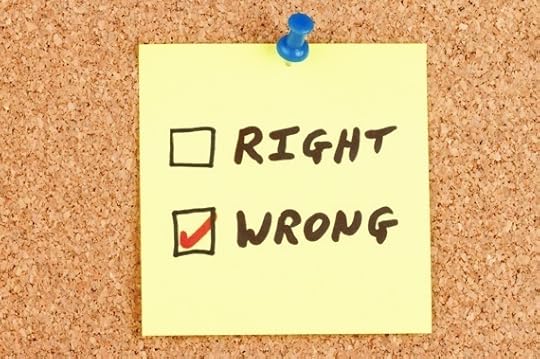
Photo courtesy of ©iStockphoto.com/nigelcarse
Exasperated, our leader said, “You have to look at me. End when I end. If I’m wrong be wrong with me!” While his last sentence caused me to pause, it made sense.
Even if he ended a beat early or late, if we all ended at the same time no one would notice. If we didn’t follow his cues we wouldn’t make beautiful music, but instead be a cacophony of voices. We had to stay together, even if it meant being wrong together.
This standard can create harmony in life, as well as in music, improving relationships and building trust.
For example:
In Marriage—The Duet: A man was telling friends about the great movie he saw Wednesday night, when his wife interrupted, “No, it was Thursday.” Did it make a difference?
No, says family expert Kevin Leman. He calls the wife’s interruption combative. Allowing your spouse’s error to go unchecked strengthens the partnership of your marriage, and gives you an opportunity to be wrong together.
In Family—The Ensemble: My daughter came home with a low B on her algebra test. She studied hard with her dad, and I could see the disappointment on her face over the grade. This was not a time to bring up the fact that she could have studied more, or to fill her with platitudes that she would do better next time.
Instead, I looked over the test and said truthfully, “Wow, this was really hard. I’m not sure I would have gotten a B.” In choosing to empathize with her, and “be wrong with her,” I created camaraderie and collaboration. Then we could brainstorm together some ways to improve her math skills.
In Business—The Symphony: In his post “How Real Leaders Demonstrate Accountability,” Michael Hyatt shared the story of Thomas Nelson division leader Allen Arnold, who took full responsibility for the budget failings his team experienced one month.
Arnold wasn’t just wrong with his team, but for his team. He used pronouns like “I” and “Me” instead of hiding behind his team (e.g., “we didn’t do such and such”) or blaming others (e.g., “they didn’t do such and such.”). In doing so he built trust and confidence among his employees, and gained the respect of the Executive Team.
This is not a lesson in integrity but in team-building. When someone does the wrong thing morally, we are called to rebuke, correct, and instruct. But in accidental and incidental occurrences, there can be value in being wrong together. When we come together in unison whether in choir, in business or in life, we will find harmony and live a life in concert.
Questions: Have you ever chosen to be wrong with someone? What was the result? You can leave a comment by clicking here.



May 31, 2012
Join John Maxwell and Me As We Share Our Best Publishing Advice
My friend, John Maxwell, is hosting a one-day live event called “A Day About Books.” You don’t want to miss this. It is an unprecedented opportunity to learn from someone who has written seventy-plus books and sold more than twenty million copies. He is one of Amazon’s top 25 best-selling authors of all time.

I first met John in 1998, when I became the Vice President of Marketing for Thomas Nelson Books. We worked together to put The 21 Irrefutable Laws of Leadership on the New York Times best sellers list. Since that time, John has written dozens of bestsellers.
He has also become a good friend and mentor. We have had scores of conversations through the years. While playing golf together in Ireland. While having dinner together with our wives. While flying together on a book tour.
I have had access to John’s counsel at critical points in my own career. He is someone who has shaped who I am as a leader.
But it was one private conversation in his study that stands out among all the rest. It changed forever the way I think about publishing—and how I approach it as a writer.
It was in his study that I first learned about his unique process for writing books.
Understand, I have worked with dozens of best-selling authors. All of them had great book ideas. Most of them were excellent writers (or had collaborators who were). Many of them knew what their readers wanted and were natural marketers.
But John was different.
He is the first person I ever met who has a system for writing best-selling books. He understands the whole process—from A to Z—and is strategic about the writing, the marketing, and monetizing the backend.
I had always secretly hoped that other authors could learn from John. Not that he is infallible or gets it right every single time. He doesn’t. But I know that every author can benefit from his experience and wisdom. I don’t know of another non-fiction author who has written more best-sellers than he has.
That’s why I am so excited about this conference.
If you have ever thought about writing a book—or are in the process of doing so now—I urge you to register for “A Day About Books.” You may discover one piece of information that kicks your writing journey into overdrive.
This event is right for you if you are:
A person with a product, message, service, skill, or teaching you want to share with the world
An aspiring author, or even someone who has always wished you could write a book
A blogger, writer, or website owner looking to create content for your readers that can one day become a book
Please understand, this is not:
Your typical book-writing workshop
Taught by dusty editors and B-list authors
About how to get a publishing deal
No, this is:
John sharing his exclusive system for writing more than 70 books
John explaining exactly how he markets his books, selling more over 20 million copies
John revealing the three strategies he uses with every book to make every book #1
John describing how to monetize your book with coaching and speaking
John giving you access to his elite writing and publishing team
I will also be speaking at this special event. I will be sharing what every publisher wishes you knew—and how this can give you the edge you need to succeed as an author.
Don’t miss this one-day event. It will sell out.
“A Day About Books” will be held on June 23, 2012 in West Palm Beach, Florida. It is a rare opportunity to meet John and learn his unique publishing system. There is no guarantee that he will do this event again. This may be your only chance to take advantage of this opportunity.
Question: What would succeeding as an author make possible for you? You can leave a comment by clicking here.



May 30, 2012
#014: Building Your Platform, Part 2 [Podcast]
In this podcast episode, I continue discussing my new book, Platform: Get Noticed in a Noisy World (Nashville: Thomas Nelson).

Last week was the official launch week. Things could not have gone better.
Click to Listen
[image error]
Podcast: Subscribe in iTunes | Play in browser | Download
Episode Outline
On Monday morning, I told my team, “If we can get the book into Amazon’s Top 1,000, that will be huge.”
However, by 8:30 that morning, it was already #160.
By 10:15, it had moved to #16.
A few hours later it hit #5 and then a little after 5:00 p.m. it hit #4.
It stayed #4, #5, or #6 all week.
We had a ton of people help promote it, including some well-known bloggers. You can find a complete list here.
I pretty much had to stop promoting the book on Wednesday evening, because I had an even bigger launch scheduled for the weekend—my daughter Madeline’s wedding.
In this podcast, I don’t cover the basics of platform-building. If you want that, listen to Episode 13. In this podcast I focus on answering my listeners’ questions.
Listener Questions
Question #1: Sarah Ferree asked, “How do I get my employees excited about our platform?”
Question #2: Philip Rothschild asked, “What is more important when it comes to a website, engagement or design?”
Question #3: Heidi Kreider asked, “How would you advise someone to get started who doesn’t have a lot of money to invest?”
Question #4: Jeremy Meyers asked, “How do you develop your platform when you already have a very busy life?”
Question #5: J. D. Smith asked, “What are the best ways to integrate an organizational platform with a personal one?”
Question #6: Tom Schulte asked, “How can I move my “embassy site” on LinkedIn to a true “home base site” on my own server?”
Question #7: Wanda Ball asked, “How do I market my services as a public speaker to a wider audience?”
Question #8: Joshua Bedford asked, “If you automate tweets as you suggest, how far should we space them apart?”
Question #9: Paul Evans asked, “How bold can you be in asking other people to share your message for you?”
Question #10: Rebecca Livermore asked, “What is the best way for people who are introverts to expand their platform?”
Question #11: Jane Graham asked, “How do you discern when to persevere verses when to quit or change direction?”
Question #12: K. C. Cupp asked, “How can you promote your blog without coming across as narcissistic or self-absorbed?”
Question #13: Tammy Helfrich asked, “How many blog visitors do you need to have before advertisers will consider you?”
Question #14: Kelly Combs asked, “If you don’t have a large platform that you can share with guest bloggers or books to give away, what are some of the ways that you can be generous?”
Next week, I we will discussing “How to Create Alignment in Teams.” If you have a question about this topic, please leave me a voice mail. I’d love to hear from you.
Special Announcements
Please tell your friends about Platform . I would be very grateful for your help in spreading the word.
I will be speaking at the BlogWorld & New Media Expo in New York City on June 5–7. I will be leading one of the “Super Sessions” on Thursday, June 7th, at 9:00 a.m. You can register here.
Episode Resources
I did not mention any additional resources in this episode.
Subscription Links
If you have enjoyed this podcast, please subscribe:
iTunes
Zune
RSS
Your Feedback
I want to hear from you! Please leave me a voicemail with your question. I may use it on the next episode of my show. If you have an idea for a podcast you would like to see or a question about an upcoming episode, e-mail me.
Also, if you enjoyed the show, please rate it on iTunes and write a brief review. That would help tremendously in getting the word out! Thanks.
Question: What would a platform make possible for you? You can leave a comment by clicking here.



May 29, 2012
How to Say No When You Feel Pressured to Say Yes
Do you have a difficult time saying no? I do. At heart, I am a people-pleaser. I hate disappointing people.

Photo courtesy of ©iStockphoto.com/OrangeDukeProductions
But at some point, you realize that you can’t say yes to everyone else. Attempting to do so puts at risk your own agenda and the things that matter most.
Recently, at the recommendation of my friend, Mary DeMuth, I started reading The Power of a Positive No: How to Say No and Still Get to Yes by Harvard professor William Ury. It has strengthened my resolve to say No when necessary but to do so in a healthy, respectful way.
In the introduction to the book, the author explains that there are three responses to someone who asks us to do something we don’t want to do.
Accommodation: We say Yes when we want to say No. This usually comes when we value the relationship of the person making the request above the importance of our own interests.
Attack: We say no poorly. This is a result of valuing our own interests above the importance of the relationship. Sometimes we are fearful or resentful of the request and overreact to the person asking.
Avoidance: We say nothing at all. Because we are afraid of offending the other party, we say nothing, hoping the problem will go away. It rarely does.
Sometimes, these responses spill over into one another, making a difficult situation worse. For example, we initially avoid the request, prompting a second or third request. We then get annoyed and attack the one making the request. This leads to guilt, perhaps an apology, and then accommodation.
There has to be a better way. Fortunately, there is.
Dr. Ury suggests a fourth strategy that doesn’t require us to sacrifice either the relationship or our own priorities. He calls this a positive no.
This simple formula employs a “Yes-No-Yes” response. “In contrast to an ordinary No which begins with a No and ends with a No, a positive No begins with a Yes and ends with a Yes (p. 16).”
A positive No has three parts:
Yes: It begins by saying Yes to yourself and protecting what is important to you. I would also add the importance of affirming the other person.
No: It continues with a matter-of-fact No that sets clear boundaries. I also avoid leaving the door open by saying “maybe,” and in “maybe I can say Yes to your request in the future.”
Yes: A positive No ends with a Yes that affirms the relationship and offers another solution to the person’s request.
For example, aspiring authors often e-mail me, asking that I review their book proposal. Here’s how I respond using the Yes-No-Yes formula.
Bill,
Congratulations on your new proposal. Very few authors make it this far. Thanks for your interest in having me review it.
Unfortunately, due to my other commitments, I am no longer able to review proposals. Therefore, I must decline.
However, I can give you some guidance on how to get published. If you haven’t already done so, may I recommend that you start by reading my blog post, “Advice for First Time Authors,” In it, I offer step-by-step instructions for what to do first.
Also, Thomas Nelson has a self-publishing imprint called WestBow Press. While this isn’t right for everyone, it might be appropriate for you, depending on your circumstances. You can read about it here.
I hope you will find this helpful.
Michael
You can find additional examples in a post I wrote called, “Using E-mail Templates to Say No with Grace.”
Interestingly, I rarely have anyone pressure me after receiving an e-mail like this. They typically respond by saying, “Thanks for your consideration. I understand. Thanks for getting back to me.”
Question: Do you find it difficult to say No? How do you typically respond? You can leave a comment by clicking here.