Michael Hyatt's Blog, page 195
June 18, 2012
Embrace Permanent Beta and Launch


A while back, I met with a friend who is a blogger. She has been blogging for a few years, but her blog is in desperate need of a facelift. It has grown a little “long in the tooth,” as they say. I have been meaning to speak to her about his, but she brought it up herself.

Photo courtesy of ©iStockphoto.com/Neutronman
“I am redesigning my blog,” she mentioned. She then showed me a prototype. I was flabbergasted. It looked … great! It was a hundred times better than what she currently has.
Truly wowed, I asked, “So when does it launch?”
“I don’t know,” she replied. “I still have some changes to make.”
A little suspicious, I asked, “How long have you had it at this level?”
“Months,” she admitted.
“What?!” I exclaimed. “This is way better than what you have now,” I blurted out. “Just launch it!”
Unfortunately, many people get stuck in this kind of no-man’s land. They want it perfect before they share it with the world. The problem is that they are missing scores of opportunities by waiting. Instead, they should get used to the concept of “permanent beta.”
As you probably know, “beta testing” is that stage of software development when companies roll out a version of their product for a wider audience. The premise is this: “we know it’s not perfect, but it’s far enough along that we need your input to get it right.”
The wide-spread use of beta testing has conditioned consumers to think of it as a permanent state. Gmail, for example, was released to the public in March 2004. It didn’t officially exit beta status until July 7, 2009. That’s a five-year beta test!
Software is never perfect; this is why there continue to be upgrades and bug fixes. Everything improves over time—and it does so faster when more users see it and have the opportunity to provide input.
Just because the Gmail beta test ended it did not mean that Google finally had everything right. After the test ended, GMail suffered a major outage. But most people are okay with that. Or, if not, they get over it quickly. Users would rather have something now than perfection later.
When I post to my own blog, for example, I know there are likely errors in what I have written. But no matter how many times I read and re-read my posts, I can’t see them. Instead, I post them as-is and let my readers proof them. They are faithful to let me know when I have a typo or other error.
It doesn’t have to be this way. As the Chairman of a book publishing company, I know numerous editors. I could hire them to review my posts before posting them to my blog. I could also submit them to our lawyers for legal review. I could even have our marketing people have a look.
But if I followed that process, I would never post anything. Instead, I have embraced the concept of permanent beta. I launch and then tweak. This is the pattern.
As G.K. Chesterton once famously said, “If something is worth doing, it is worth doing badly.” In other words, the point of absolute perfection never comes. Too often, this is just an excuse for procrastination.
Question: What are you sitting on that you should just get out the door today? You can leave a comment by clicking here.








June 17, 2012
The Five Steps to Building Your Platform [Photo]

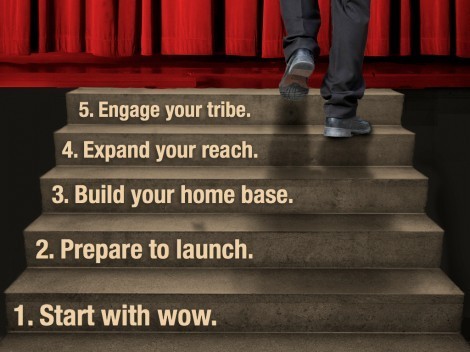
Five Steps to Building Your Platform
This is the image I am now using in my slide deck when I speak on the topic of Platform: Get Noticed in a Noisy World. I have been giving this keynote speech to a wide variety of audiences: small business owners, mortgage bankers, realtors, comedians, pastors, and authors. As it turns out, almost everyone needs a platform. If you are interested in having me speak at your event, click here.



June 15, 2012
3 Ways To Find the Truth—About Yourself
This is a guest post by LaRae Quy. She was an FBI agent, both as a counterintelligence and undercover agent, for 25 years. She exposed foreign spies and recruited them to work for the U.S. Government. Now she uses the skills she learned as an FBI agent to help others develop personal leadership strengths via her blog, Empower the Leader In You. You can also follow her on Twitter.
The quickest and surest way to get fired as an FBI agent is to lie. Proven lack of candor is automatic dismissal—truth is a precious commodity in an organization whose primary purpose is peeling back layers of deceit to expose cold, hard facts.

Photo courtesy of ©iStockphoto.com/petrograd99
Many of us have a love/hate relationship with truth. We tell ourselves we want to know the truth, but we’re very selective about the kind of truth we seek. About others, yes—and usually about world events and situations that impact us directly, but we are less receptive to revelations about ourselves.
In fact, self-knowledge is a two-edged sword because we might find out something about ourselves that we would rather not know. We’ve carefully packaged ourselves to look and act in a manner that ensures success in the world. Our ego has dressed us up for so long that many of us don’t even know how to begin to peel back the layers of illusion to expose cold, hard facts about ourselves.
The Book of LaRae was quite short for many years. I, like most others, lived in co-dependent dramas by acting out the role and living up to the identity I’d given myself. There was little of substance because I hadn’t taken the time to excavate the significance of my own stories and experiences. I had the form but little else.
This is ironic because peeling back the layers to get at the truth was my job. Yet I had never applied the same science to my own life. As a counterintelligence FBI agent, I identified foreign spies operating in the United States and tried to recruit them to work for the FBI. Identifying them was the easy part; I surrounded them with people and other informants that alerted me to their every move.
A successful recruitment, however, means digging deep and finding what gives their life meaning. It is helping that person explore their choices in life so they can make better decisions.
By encouraging people to be truthful about their dreams and goals in life, I empowered them to change direction so they would be moving toward something that had true meaning for them.
When did the Book of LaRae start to thicken up? I was selected as spokesperson for the FBI in Northern California after working in counterintelligence for twenty years. It was a great opportunity, but in a way that I didn’t expect: it gave me the space to reflect on how to use those same counterintelligence skills to look at the role and identity I’d given myself as a way of competing—successfully—in a very competitive world.
As we age, it becomes even harder to keep up false pretenses. It’s why baby-boomers are starting to experience emptiness as the identities they’ve given themselves crumble into layers of fat and wrinkles.
Here are three ways that I encouraged foreign spies—and ultimately, myself—to dig down and discover what gives life meaning:
Life Assessment
One of the quickest ways to bring more truth into your life is to conduct a quick assessment. Assign a numerical number between 1 and 10 to each area listed below. 1 means “not at all satisfied with my life” and 10 means “completely satisfied.” Remember that a 10 doesn’t necessarily mean “perfect.”
Area of Your Life
Your Rating (1-10)
Family
Career
Health
Financial
Education
Recreation
Charitable
Spiritual
Adventure
Travel
Romance
Relationships
The most difficult numbers are 5s and 6s because they mean you’re not unhappy enough to do anything about it, but a long way from being satisfied, too. In other words, “you’ve settled.”
Delete every number that is not an 8, 9 or 10. Either you have what you want or you don’t. Anything below an 8 means that you don’t have what you want but you haven’t faced up to it yet.
Ask Great Questions
If you want a great life, ask great questions. Questions can help because they are catalysts that get you to thinking about your own stories and experiences. The secret of an FBI stealth interrogation is to never ask direct questions. Instead, come from the side.
For example, questions like, “What is my purpose in life?” Or, “What do I want?” are too broad to produce a meaningful answer. Instead, ask yourself stealth questions like “What would excite me?” “What looks, feels, and sounds like an adventure?”
Other questions to ask yourself:
Who is the happiest person you know?
Who are the people you like and respect the most? Why?
What are you curious about?
When does time seem to fly?
What bores you?
What makes you different from other people or members of your family?
How do you want to be remembered?
What is in your bucket list of things to do in life?
Keep a Journal
Journaling is a powerful way of excavating the significance of your own stories and experiences. It’s a very effective way of coaxing out thoughts, questions, and insights into your patterns of behavior.
It’s important to keep track of events in your life. This means more than the “Dear Diary” approach we learned as kids. Journaling is like homework; only you can do it and it only works if you put your mind to it. You can only see the significance of events, people, or circumstances by looking backward. Memorialize the triumphs but look closely at the failures, losses, and disappointments. Only by examining your life in its entirety—the good, the bad, and the ugly—can you gain a deeper understanding of your experiences.
More importantly, you give yourself the opportunity to change direction, if needed, so you can explore your choices in life and make better decisions in the future. Journaling was the tool that gave me the space I needed to look back at my life and see how I could move from form to substance.
As you being to tear away at the packaging that your ego has wrapped you up in for so many years, you’ll find something very powerful inside: you. The real person is empowered because you’ll have no need to impress others. Or lie to yourself.
What are you discovering about yourself? You can leave a comment by clicking here.


June 14, 2012
Before You Send That Angry E-mail
Over the course of my career, I have fired off my share of angry letters and e-mail. However, I cannot think of a single time when these communiques had a positive effect. Usually, they only served to escalate the conflict and alienate the recipient.

Photo courtesy of ©iStockphoto.com/clintspencer
Several years ago, I wrote a fourteen-page diatribe to a business associate. I skewered him. I was right. He was wrong. And I had the proof.
I laid it out in meticulous detail. I prosecuted my case like a lawyer before the bar. I sent it off with fire in my eyes and a healthy dose of self-satisfaction in my heart. That’ll show him, I thought.
I eagerly waited for his response. After a few weeks, I still hadn’t heard a word. So I re-read the letter and was embarrassed. My response was way out of proportion to the stimulus that provoked it. While I was technically right, I was relationally wrong. I never should have sent the letter. I regretted that I had acted so childishly.
Thankfully, the recipient never did respond to the letter—ever. The next time I saw him (several months later), he embraced me and acted like nothing had ever happened. That day, I got a little taste of grace. I also purposed that I would never send another letter like that. I had dodged a bullet.
In any relationship, you are going to experience times when you feel angry. It happens at home, at work, at church, and in countless other situations.
Next time it happens to you, I suggest you do the following:
Cool down. Put some space between the stimulus and the response. Little offenses look much bigger the closer you are to them. If you let a little time pass, you will see them in their proper context and respond appropriately. This is what makes you different from the animals. You have the choice—the freedom—to chose how you will respond.
Talk it out. I have a lot of close business associates and friends whom I trust. They are committed to saving me from myself. My wife, Gail, is, of course, the best. She helps me regain my perspective and gently asks, “Now, what are you really trying to accomplish here?” This is a great question which helps me consider the bigger picture.
Write a response. If you want to write an angry e-mail, do it. Just don’t send it. I often do this, and it helps me process my feelings. It also helps me get a grip on reality. One word of caution: don’t fill in the “To:” field in the e-mail. I have seen people accidentally hit the “Send” button and regret it. Instead, write it and save it as a draft. After you have cooled down, you can delete it.
Do your homework. Sometimes you think you are right, but upon further investigation, you may discover that you contributed to the problem or aggravated the situation. The question I increasingly like to ask is this: What was it in my leadership that contributed to this outcome? This helps me move from being the victim to being an active participant in finding a solution.
Schedule a meeting. I recently heard John Eldredge make the point that it’s easy to be brave when you are sitting in the safety of your own office. You can hurl digital spears at your adversaries without without the risk of a real, live encounter. But confronting people face-to-face—or even over the telephone—is a different matter. That takes real guts. But it can also lead to real solutions. The real question is whether we want to merely make a point or solve the problem.
Admit your mistakes. If you slip up and send off an angry e-mail or letter, then acknowledge it. I will never forget getting an angry e-mail from one of our authors. He lambasted one of our VPs, going into great detail about how he had screwed up an important project. Unfortunately, he unintentionally copied the VP in the e-mail. Oops. Once he realized it, he was mortified. With great humility, he called the VP, admitted that he was way out of line, and then asked his forgiveness. Then he sent a formal apology to each of us. We took the time to rebuild the relationships and, in the process, further endeared himself to us.
As long as we have to deal with people, we are going to be disappointed, get frustrated, and react in anger. But we have to know how to channel these emotions in productive ways. Sending an e-mail or writing a letter is almost never the appropriate or most effective way. If you get angry, resist the temptation to respond in anger.
Question: What experiences have you had with either sending or receiving angry email messages? You can leave a comment by clicking here.



June 13, 2012
#016: The How of Wow [Podcast]
In this episode, I talk about “The How of Wow.“ If you are going to be successful in getting the attention of the market, you will need to start with something remarkable. In this episode, I define wow and how you can create it by answering five questions.
If you have read my new book, Platform: Get Noticed in a Noisy World, you know that the first section of the book is called, “Start with Wow.” This is the first step in building a platform. Why? Because of something David Ogilvy said two generations ago: “Great marketing only makes a bad product fail faster.”
Click to Listen
[image error]
Podcast: Subscribe in iTunes | Play in browser | Download
Episode Outline
The purpose of marketing is to prime the pump. But if people aren’t wowed by your product and want to use it, they won’t recommend it to their friends. In other words, you won’t get word-of-mouth promotion.
You can’t spend enough money or be clever enough to overcome a lack of word-of-mouth marketing. It just won’t work. This is especially true in the world of social media, because it accelerates the word-of-mouth process. Why? Because of two facts:
Everyone now has a megaphone.
Everyone is connected to everyone else.
So what is wow? Here’s how do I define it:
Wow is the gap that exists between your prospect’s expectation and his or her experience.
If that gap is negative—your customer’s experience doesn’t live up to his expectation—he is disappointed. This is the opposite of wow.
If that gap is positive—your customer’s experience exceeds his expectation—he is wowed.
I first noticed this a few years ago when Steve Jobs introduced the first iPhone back in 2007. As I reflected on his presentation, I came away with three insight into wow:
Insight #1: Create products you would personally use.
Insight #2: Create products that solve problems in unexpected ways.
Insight #3: Create products that exceed your customers’ expectations.
My premise for this episode is this: Wow can be engineered. Not perfectly. Not every time. But once you understand what wow is simply a function of exceeding your customer’s expectations, you have a much better chance of making it happen.
You can create wow by asking five QUESTIONS.
Question #1: What is the product or experience I want to create or transform into a wow?
Question #2: How will the customer or prospect feel as a result of this experience? (In other words, what is the specific outcome you want to create?)
Question #3: What specific expectations does the typical customer bring to this experience?
Question #4: What does failing to meet customers’ expectations for this experience look like?
Question #5: What does exceeding customers’ expectations for this experience look like
Here’s the bottom line, if we want to win in today’s competitive marketplace—if we want to build a powerful platform, we must start with wow. Without it, we can’t achieve our full potential.
Listener Questions
Question #1: “Blessing Mpofu asked, How do you constantly create new and fresh material to become a thought leader?”
Question #2: Claire Dias-Ortiz asked, “How can you best turn blog content into the early draft of a new book?”
Question #3: J.D. Smith asked, Where should the Wow be located, on your homebase or in the outposts? Should it be from the author’s perspective or the listener or readers’?
Question #4: John Richardson asked, “Is there such a thing as too much wow?”
Question #5: Joseph Lalonde asked, “When you are releasing a new product, how do you gauge what your customer’s expectations are?”
Question #6: Mary DeMuth asked, “How does creating wow tie in with doing your one thing well?”
Question #7: Rebecca Livermore asked, “How can I come up with ideas that are creative and unique?”
Question #8: Tor Constantino asked, “How do you know when you have created wow?”
Question #9: Wanda Ball asked, “If I am not getting comments and traffic, how do I know if my content is wow?”
Special Announcements
I am hosting a live Platform Teleseminar on June 19, 2012 at 7:00 p.m. CT. It is free, but you must register. We have a limited number of seats based on band-width. You can find out more here.
I will be speaking at the Shelby International Conference (June 14, 2012) and the American Christian Fiction Writers Conference (September 21, 2012). I will be speaking at a number of private corporate events in between. If you are interested in having me speak at your event, please visit my Speaking page.
Episode Resources
In this episode I mentioned, How to Blog Your Book. I have not yet read it, but the author gave me a copy at BlogWorld, and it looks fascinating.
Show Transcript
You can download a transcript of this episode here.
Subscription Links
If you have enjoyed this podcast, please subscribe:

iTunes

Zune

RSS
Your Feedback
I want to hear from you! Please leave me a voicemail with your question. I may use it on the next episode of my show. If you have an idea for a podcast you would like to see or a question about an upcoming episode, e-mail me.
Also, if you enjoyed the show, please rate it on iTunes and write a brief review. That would help tremendously in getting the word out! Thanks.
Question: What is the biggest obstacle you face today to creating wow? You can leave a comment by clicking here.



June 12, 2012
4 Reasons You Should Consider Launching Your Own Podcast
When I talk about building a home base for your platform, people naturally assume I’m referencing a blog. But this is only one possibility. Your home base could just as easily be a podcast or vlog (i.e., a video blog).

As I explain in my book, Platform, the key attribute of a home base is that it is a place in cyberspace that you own and control. This is different than an “embassy” (e.g., Facebook, Twitter, LinkedIn, Google+, or Pinterest), which is place you don’t own but where you have a presence. On a home base you have 100 percent control of your messaging and brand.
I never considered doing a podcast as part of my platform until my friend Dan Miller mentioned it. He said it was the single most important part of his home base, even more than his blog or newsletter.
That was back on January 6th of this year. Following that conversation with Dan, I launched my podcast, This Is Your Life, on February 14th and have released fifteen episodes so far. It has consistently been in the top ten in the iTunes Business category. I couldn’t be happier with the results.
Frankly, it’s been a lot of work—more than I anticipated. But I am starting to “find my voice” and get the workflow down. I am finally producing each episode now in about half the time it initially took me. I am hoping I can cut it in half again in the next few months.
You might want to consider podcasting too. It could be either your primary platform or a secondary one. Either way, I think a podcast offers several benefits, especially if you are already a blogger.
A podcast provides an alternative media channel. There are some people who prefer reading blogs. Others prefer listening to podcasts. Often, these are very different audiences. This has been my experience. Certainly, there is overlap, but, based on the comments and e-mails I have received, it has brought in a whole new audience for my content.
A podcast provides another way for people to discover you. A podcast gives you visibility in a completely different world—primarily iTunes. I have had scores of new people say they had never heard of me until they stumbled onto me in iTunes or at the recommendation of another podcaster.
A podcast provides a more intimate way for your fans to engage with you. Most people listen to podcasts using headphones or earbuds. It doesn’t get more intimate than talking directly into someone’s ear! Moreover, you can communicate with greater nuance than print offers alone. People can experience your voice, your enthusiasm, and your warmth.
A podcast provides another way to repurpose your content. I am not suggesting you can simply read your blog posts into a recorder and call it a podcast. But if you are a blogger, you probably have content that can serve as the foundation for your podcasts. This is precisely what I am doing. Podcasting gives me the opportunity to expand on posts I have written and answer questions from my readers and listeners.
Podcasting is certainly not for everyone. It requires a good deal of work. But as you build out your platform, it is one of the options you should consider. It may, in fact, be the best way for you to deliver your message to your intended market. (You might even consider doing a podcast with someone else.)
If you want to learn more about podcasting, I highly recommend my friend Cliff Ravenscraft’s course, “Podcasting A-Z.” It’s not cheap, but it will save you far more than it costs if you are serious about podcasting. I have bought several of Cliff’s courses and they were jam-packed with practical, step-by-step advice.
Believe me, this course covers EVERYTHING you need to know to create a successful audio podcast. It’s four weeks in length and will launch on July 9th. In addition to all the course materials—which are considerable—you will have unlimited access to Cliff (via an online forum) during this time. In my opinion, this alone is worth the price of the course.
If you use the discount code “hyatt,” you will get $100.00 off the registration price. Check out the course description and see if it’s right for you.
Update: If you want to learn more about the state of podcasting, check out the new special report from Edison Research and Arbitron: The Podcast Consumer 2012 (May 2012).
Question: How do you think a podcast might fit into your platform goals? You can leave a comment by clicking here.



June 11, 2012
Why You Aren’t Dead Yet
Several weeks ago, I had lunch with a friend I hadn’t seen in years. He had just turned eighty years old. His mind was as sharp as ever—witty, inquisitive, and focused. He was also a great listener. When he did speak, wisdom dripped from his lips like honey.
If you can’t see this video in your RSS reader or email, then click here.
After reading this blog post, Greg Surrant, Senior Pastor of Seacoast Church, decided to preach a sermon series on the topic. His creative team produced the video above to promote the series.
In a point of genuine humility but uncertainty he asked me, “Michael, do you think I have anything left to contribute? Are my best days over?” Tears welled up in his eyes.
I admit, his question caught me off-guard. I thought to myself, Here I am with one of the wisest men I have ever met. He is a living treasure. I would pay for the privilege of sitting at his feet and listening to his stories. And he is asking me whether or not he has anything left to contribute? I was flabbergasted.
I leaned in, grasped his hand with mine, and said, “Jimmy, listen to me carefully: your best days are ahead of you. I am not saying this just because I like you—and I do like you—but because it is the truth. I can prove it to you.”
I then began to make an argument that I first learned in The Noticer by Andy Andrews. In the book, Jones, the personification of wisdom, makes six points to Willow, a seventy-six year old lady, who had given up hope that she had anything left to contribute. (see chapter 6, pp. 83–85).
God has a purpose for every single person.
You won’t die until that purpose is fulfilled.
If you are still alive, then you haven’t completed what you were put on earth to do.
If you haven’t completed what you were put on earth to do, then your very purpose hasn’t been fulfilled.
If your purpose hasn’t been fulfilled, then the most important part of your life is still ahead.
You have yet to make your most important contribution.
Jones goes on to say,
If the most important part of your life is ahead of you, then even during the worst times, one can be assured that there is more laughter ahead, more success to look forward to, more children to teach and help, more friends to touch and influence. There is proof of hope . . . for more.” (p. 85)
My friend, Jimmy, sat back in his chair and was silent for a full minute. I could tell he was taking it all in. Finally, he said, “Then I better get busy. It sounds like I have a lot of work to do.”
You may be old. You may be sick. You may be divorced. Your kids may not be speaking to you. You may be out of work. You may be broke. You may be discouraged.
But you’re not dead yet.
And that’s proof that you still have not completed what you were put on earth to do.
Question: Is this a new thought? What does it make possible in your life? You can leave a comment by clicking here.


June 9, 2012
Join Me for a FREE Platform Teleseminar
I’d like to invite you to join me for a free, LIVE Platform Teleseminar on Tuesday, June 19th at 8:00 pm Eastern Time (7:00 pm Central, 6:00 pm Mountain, 5:00 pm Pacific).
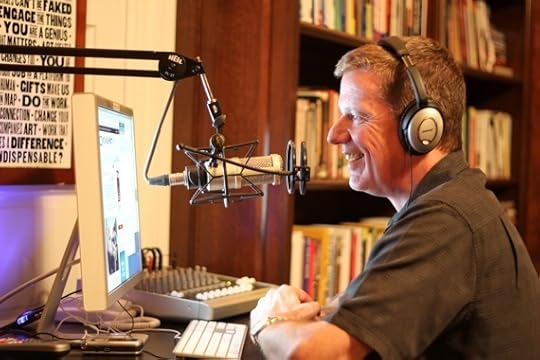
During the call, I’ll share several HELPFUL TIPS to help you jumpstart your own platform or expand your existing one. I’ll share specific visibility-generating advice for authors, entrepreneurs, pastors, professional speakers, small business owners, corporate brand managers, and more.
I’ll also answer questions LIVE—a perfect opportunity for you to ask me anything about platform-building, blogging, social media, or publishing. But you must register to participate.
What You’ll Learn
I will begin by sharing how I built my own platform from 100 readers a month to 300,000. I will explain:
What a platform is and why you MUST have one to succeed in today’s noisy marketplace.
The five steps you must take to build a powerful, personal platform (and why they must happen in order).
The one attribute your product or service must have in order to harness the power of word-of-mouth and turn your best customers into unpaid evangelists.
The mindset you must acquire before you launch any significant new product, cause, or brand.
A social media framework that will keep you from getting overwhelmed and enable you to stay focused on what matters most.
Why you can kiss traditional marketing goodbye—what no longer works and what does.
A single metaphor that explains what engagement is and how you can be more effective at it.
The main obstacle standing between you success—and how to overcome it.
How to Register
This call is FREE. You can access it LIVE by phone or a streaming web audio player. And yes, I will make the recording of the call available sometime after the call.
Please note: I only have room for 3,000 people on this teleseminar. (That’s the limit imposed by our hosting company.) Therefore, you must register now to participate.
Register for the FREE Platform Teleseminar
I am really excited about this online event. I want to give you a jumpstart in building your platform. I know personally what this can mean for your future.
If you still have questions, read the FAQs below.
FAQs
Q: What is a teleseminar?
A: Think of it as a giant conference call. You dial in (or listen via streaming web audio), along with others and listen while I share and answer questions.
Q: How much does this cost?
A: It’s free. If you choose to access the LIVE call via phone, you may incur standard long-distance charges if you choose a dial-in number that is not local to you (there are multiple dial-in number options). Other than that, no fee at all.
Q: What is the date and time?
A: The LIVE call will take place on Tuesday, June 19th, at 8:00 pm Eastern Time (7:00 pm Central, 6:00 pm Mountain, 5:00 pm Pacific).
Q: How can I access the LIVE call?
A: You’ll have two options. Our call capacity is 3000 total. Five hundred can access the call via phone, the rest via streaming web audio (listening via your computer). Access is on a first-come, first-served based on registration and which access option you chose. We will notify you prior to the call with the specific phone number and web address.
Q: I can’t make the LIVE call. Will there be a recording?
A: Yes, I will make a recording available after the LIVE call. You are welcome to listen to that recording and share it with others. You’ll have the option to listen to a replay online or download the MP3 file.
Q: How do I ask a question for you to answer during the call?
A: When you register there will be an option for you to submit a question. I’ll do my best to answer as many questions as possible during the LIVE call. However, I will likely not get to all of them. I’ll try to make sure I address common themes.
Q: Do I need any special equipment?
A: No, nothing special needed. You won’t need to download anything to access the call. If you use the dial-in access then you simply make a phone call. If you use the streaming web access then you simply open a web browser, click play, and listen. I will send the instructions to you via email.
Q: When do I get access information after I register?
A: I will send you access information via email a day or two before the call and a reminder email on the day of the call.
Question: What appeals to you the most about building a platform or taking yours to the next level? You can leave a comment by clicking here.



June 8, 2012
Leadership Begins at Home
This is a guest post by Dave Stone. He is the Pastor at one of America’s largest churches, Southeast Christian Church in Louisville, Kentucky, and is the author of the recently released Building Family Ties with Faith, Love, and Laughter . At the end of this post, I’ll tell you how to get a free copy. You can read Dave’s blog and follow him on Twitter. If you want to guest post on this blog, check out the guidelines here.
Why do some of the sharpest leaders step up in the workplace but flake out when they walk into their home? Is it fatigue? Work overload? Or are they just out of their element?

Photo courtesy of ©iStockphoto.com/DoxaDigital
With Father’s Day approaching, this blog is written from one dad to another. Mom’s, I encourage you to keep reading too because you’re our partner, and often our greatest supporter. Hopefully the single parents who read this will also be encouraged and challenged.
Most of us tend to view leading as something that’s work-related—it’s something we do with and for our constituents, co-workers, or congregants. And if we’re lucky, we hope that our leadership will trickle down to our family lives at home. But we’ve got it backwards.
A little girl asked her mom, “Why does Daddy always bring work home?”
Her upbeat mom answered, “Oh, Daddy has so much work to do that he can’t get it all done at the office.”
And the child said, “Why don’t they just put him in a slower group?”
If only it were that easy. Work flows to the competent, which makes time of the essence.
Living for the Ladder
The more you achieve in leadership circles, the more tempted you will be to put family on the back-burner. Don’t become consumed with climbing the ladder of success. Someday you may find yourself at the top of the ladder—all alone. The joy of success comes when your loved ones are by your side supporting you.
Since leaders are pretty time conscious, let me suggest three crucial times when you can lead your family.
Mealtime: Guard it. Protect it. You may have to eat early or late—just make certain you do it together as often as possible. Harvard professor Dr. Catherine Snow followed 65 families over an eight-year period. She made this profound discovery: Dinnertime is of more value to child development than playtime, school time, and story time.
If eating around the kitchen table trumps the benefits of school, then you’ve got my attention. At the table you can affirm, teach, listen, reinforce, and laugh! Life lessons can be learned here. So put away your phone and look into your family’s eyes.
Travel Time: Like it or not the inside of your SUV or car has become the modern day living room. As you shuttle your kids to and from, you have quality training time. Jesus taught his disciples while he travelled. He always seized teachable moments.
Leading your family isn’t measured by how many different directions you go. Non-stop activity rarely breeds character. Use your travel time to point your children in the right direction.
You won’t always have them riding with you. Someday they’ll be driving separately, and it will be sooner than you think. Take advantage of your captive audience (see Deuteronomy 6:4–9). Remember you are raising them to release them. So use your travel time to prepare them for when you’re not there.
Bedtime: Sometimes we miss out on this pivotal time to lead our little ones, especially Dads. I’ve been guilty of leaving the tucking in and bedtime prayers to my wife—that’s a leadership cop out on my part. You may spend your workday delegating duties, but please don’t do it here. This is an opportunity for each parent to affirm, console, encourage, and bless your kids just before they fall asleep.
My parents took turns. Often one of them would pray by my bedside. “Oh Lord, I can’t wait to see how you are going to use Dave.” So, instead of falling asleep wondering if God could use me, I dreamed of how He was going to use me. They were vision-casting for me as an elementary student. That’s leadership in the home.
Restructure Your Day—and Your Priorities
Centuries ago, the Hebrews actually viewed 6 p.m. when the workday ended as the technical beginning of the day. What if you were to change the way you view the home front—and you allowed your family to get the first fruits of your energy instead of the leftovers? Your children need to see, hear, and sense that they are more important to you than your job.
Remember, in order to lead in the home you must actually be in the home.
Thomas Nelson, Dave’s publisher, has agreed to give 50 copies of his new book, Building Family Ties with Faith, Love, and Laughter to my readers. To get a chance at snagging one, you must take the following three actions:
Leave a comment below. Answer Dave’s question at the bottom of this post.
Fill out the special form. I have set up a separate contact form to make it convenient for you to provide your mailing address. Please do not put your shipping address in your comment. This will automatically disqualify you.
Twitter a link to this post. You can do so automatically by clicking here. If you don’t have a Twitter account, you can use Facebook.
On Friday, June 15, 2012, I will select 50 people at random. If you are one of those selected, I will notify you via email. If you don’t hear from me, you can assume you were not selected.
Question: Be honest—which one of these could use your leadership attention at home—mealtime, travel time or bedtime? You can leave a comment by clicking here.



June 7, 2012
Dreams and Dangerous Men [Quote]


All men dream: but not equally. Those who dream by night in the dusty recesses of their minds wake in the day to find that it was vanity: but the dreamers of the day are dangerous men, for they may act their dream with open eyes to make it possible.”

T.E. Lawrence
Seven Pillars of Wisdom: A Triumph (Wilder Publications, 1922)