Michael Hyatt's Blog, page 59
July 19, 2017
Why Businesses and Nonprofits Need to Rethink their Benefits Packages
It’s More than a Hiring Gimmick—It’s a Tool for Fine Tuning Team Culture
There’s no greater predictor of long-term organizational success than healthy team culture. Yes, customers matter. So do products and services. But an unhealthy team won’t create the best products or serve their customers very well. But how can leaders build healthy team culture?

The most common way is to start with a list of core values. But that’s not enough. We’ve all spent time in organizations whose core values hung on the wall, and the frame was worth more than the list.
An Engine with No Wheels
Several years ago Patrick Lencioni highlighted one company’s values: communication, respect, integrity, excellence. Looks good, right? “These are the corporate values of Enron, as stated in the company’s 2000 annual report,” he explained.
Building healthy team culture takes more than compiling a list of values. It’s like an engine. You could have the best engine in the word, but it’s worthless without a transmission to engage the wheels.
Fortunately, most organizations have a tool they can repurpose to make the connection. I’m talking about their benefits package.
More Than a Recruitment Tool
Benefits are typically used in recruitment. They’re designed to woo prospective employees or seal the deal after the larger considerations like pay are discussed. And they’re useful for that.
But serving as a hiring gimmick falls far short of their potential. When leaders see benefits as the gear box for our company values, they can be used to power team culture in exciting and effective ways.
Here’s an example from my own organization. At Michael Hyatt & Company our core values include radical margin, unyielding integrity, and continuous growth. I firmly believe we’re at our best at work when we’re at our best as people. As a result, we’ve designed our benefits package to help bring those and other core values to life.
How Benefits Embody Values
Here are just five benefits from our package. Every item on this list is intended to empower our full-time, salaried team members (and their families) to embody our values and experience personal development and transformation.
No-cap bonus plans. To achieve success, we all have to work together. That’s why we share in our success together, too. And if we beat our goals, there’s no ceiling on bonus potential.
Work from wherever. We trust our employees to know what surroundings will help them do their best work. So we welcome employees to work from home or wherever they like. We are building private, premium co-working space but working there is optional except for key meetings.
40-hour workweek. We know our best work happens when we have margin in our lives for what matters most so we aim for a sustainable workweek and encourage employees to unplug after hours.
Unlimited PTO. High-performing teams excel when they are healthy and well-rested. That’s why we allow our full-time employees to take as much paid time off as needed to do their best work. (We also encourage a one-month paid sabbatical for eligible employees.)
Premium health-care. Healthy employees are happy employees, so we cover 100 percent of our employees’ health care plan and 50 percent for their dependents.
That doesn’t even cover our paid family leave, investment in professional development, or no-red-tape software budgets.
Make the Connection
Too often benefits and values live on two separate lists in two separate departments. HR handles the benefits list. The executive team handles the values. But if you’re looking to build a healthy, thriving team, they need to be integrated.
It’s fine to have values that hang on the wall. But you also want them walking down the halls. Teams are made of people. And the right people will help you embody your values if you structure your benefits to engage them.
“
It’s fine to have values that hang on the wall. But you also want them walking down the halls.
—MICHAEL HYATT

If you’re looking for more on our values and benefits, visit our careers page.
Question: Do your company values align with your benefits package? What steps can you take to make sure they’re integrated? You can leave a comment by clicking here.






July 17, 2017
Why Leaders Cannot Afford to Be Easily Offended
3 Vital Truths to Remember as You Work to Make a Difference in the World
Here is one big downside to being a leader: You are going to draw fire. You will have critics, trolls, second-guessers, and people who insist on thinking the worst of you.

You may be falsely accused of wrong motives and much worse. It’s not any fun, but it goes with the territory. And your job in the midst of all this criticism is to keep your head clear and not respond in anger.
The Temptation to Lash Out
I have been called many horrible things publicly, including a hypocrite. I won’t lie. It stings, and I am sometimes tempted to respond in kind.
It would be so easy—and so disastrously wrong.
As a rule, I refuse to take the bait. But that sort of restraint is never easy. I often have to remind myself of three great truths I have learned, and am still learning, along the way about how to deal with offenses.
1. Offenses Are Inevitable
Life affords us opportunities to be offended every day. As you work to make a difference in your organization, people inside and out will find reasons to disagree—and worse. You will be the cause of offense from time to time whether you mean to or not.
That people—especially in the age of social media—are going to take offense doesn’t mean you or your team should be insensitive or shrug it off when it happens.
But it’s important to understand that people are going to take umbrage, in spite of your best efforts. It helps to prepare you to respond the right way.
2. Offenses Can Be Turned Around and Used for Good
If you are prepared when people both take and give offense, it can help to set your organization up for success.
Martin Luther King Jr. is a personal hero. One of the reasons the civil rights movement was so successful under his leadership were the offenses endured by those marching and protesting for equal dignity under the law.
It shocked and changed the mind of the nation. How?
3. Being Offended Is a Choice
As Dr. King promised in his “I Have a Dream” speech, marchers and boycotters would meet “police brutality” not with anger and violence but with “soul force.” And that’s what they did.
Did people outside the movement take offense at this? Absolutely. Did they respond with anger and even violence? Some did.
But others saw Dr. King suffering in jail for his beliefs, reasoning with his jailers, forcefully but respectfully insisting that the United States must recognize the equal dignity of all its people.
King’s choice showed them they had a choice too. It created the option to choose a different path.
Who Takes the High Road?
Granted, whatever struggle you face trying to change things in your organization, it doesn’t have nearly the weight as the civil rights movement.
“
Being offended is a choice. You get to decide how you react to the wrongdoing of others.
—MICHAEL HYATT
I bring it up because Dr. King gives leaders a very good model of how best to prepare for, manage, and overcome offenses.
Like the greatest leaders I have known, he was not easily offended. He overlooked most of the petty slights and took the high road that leads to genuine change. Shouldn’t more of us be like that?
Question: What can you do to become less likely to be offended? You can leave a comment by clicking here.


July 14, 2017
The No-Fail Product Plan [Free New Webinar]
7 Keys for Creating and Launching a Successful Product
What’s an entrepreneur’s worst nightmare? Spending tons of time developing a product, testing it, and finally launching it—only to be met with mediocre sales. Or worse, none at all.

It’s a legitimate concern. It happens in the marketplace all the time. In fact, the fear of a product flop is the reason so many product ideas never leave the notebook or napkin they were first scribbled on.
Would you like to know exactly how to build a high-impact, high-profit product? Sign up for my new webinar, The No-Fail Product Plan: 7 Keys for Creating and Launching a Successful Product. It’s free, but registration is limited.
I get it. I’ve launched several successful products into the online marketplace but that doesn’t make me immune. In fact, a few years ago I worked hard with my team to create a companion product for one of my popular online courses. We released it to our tribe with great anticipation—and we sold one unit. One. It was gut-wrenching.
I know stories like that can be scary. It certainly took some guts for us to try again after that happened. But I’m glad we did.
In the years since then, we’ve released many other products (some created in as little as a week!) that have generated millions of dollars in sales. Best of all, they’ve helped transform the lives of tens of thousands of our customers.
The bottom line is that I’ve done it both ways. I’ve launched winning products and sustained a few product flops. Along the way, I’ve learned some crucial lessons about what differentiates the two.
That’s more than I have time to unpack here, which is why I’d like to invite you to a free new webinar I’m hosting: The No-Fail Product Plan: 7 Keys for Creating and Launching a Successful Product.
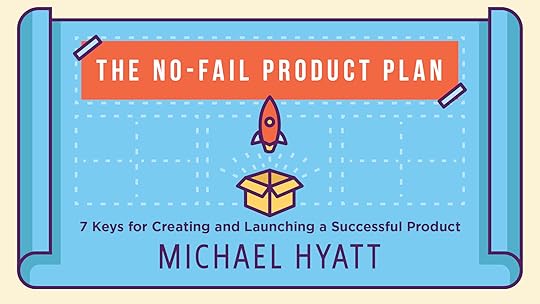
This webinar is designed to shine a spotlight on the most common pitfalls that could sabotage your product to help ensure your success. Tune in and you’ll discover:
How to identify your audience’s dire pain points—and tailor an irresistible solution
The secret to anticipating (and resolving) the objections that keep customers from buying
How to construct a compelling case for the transformation your product offers
The delicate art of determining what to charge for your product
The #1 thing you MUST know to ensure your product launches successfully
My friend Ryan Levesque’s unbeatable method for capturing high-yield returns—every time
A proprietary, four-part framework that will help you dial in your offer in minutes
The bonus item you can create in a day that could double the perceived value of your product
Plus the fatal flaw that sabotages most marketing efforts—and how to conquer it
It’s totally free. But spots are limited, so if you want to participate I recommend registering soon, before the seats fill up or the clock runs out.
You don’t have to succumb to the fear of a product-fail or go the way of most aspiring product-creators—good intentions but no action. The truth is, the issues that derail product performance are predictable. I’ve experienced them myself and I can tell you how to avoid them.
The No-Fail Product Plan will give you a clear path around them so you can release a high-impact, high-profit product with total confidence. I’d love to see you there.
Sign up for my new FREE webinar, The No-Fail Product Plan: 7 Keys for Creating and Launching a Successful Product now to claim your spot.


July 12, 2017
Michelangelo Didn’t Starve for His Art—Why Should You?
4 Strategies Entrepreneurs and Creatives Can Use to Learn From the Masters
We’ve all heard of the curse of the starving artist, right? If you’re interested in technique or design, you’re stuck suffering for your craft. But what if I told you that’s just a limiting belief holding you back?

Jeff Goins has good news for creatives in the business world: You don’t have to relegate yourself to poverty to do what you love. In fact, Jeff’s liberating truth is that with the right approach you just might thrive.
Michelangelo’s Bank Account
Jeff is a bestselling author of several books, the latest of which is Real Artists Don’t Starve. The notion that all great craftsmen are impoverished by their work is an old one, he explains. And it’s also dead wrong.
Take Michelangelo, who complained publicly that his craft had left him “poor, old, and working as a servant of others.” It turns out his bank deposits tell a different story.
According to art historian Rab Hatfield, that isn’t even close to true. By the time of his death, the man who gave us those unforgettable images in the ceiling of the Sistine Chapel had amassed a fortune worth roughly $47 million today.
That revelation turned a key for Jeff. He realized that creatives can excel in the marketplace.
Work and Pay the Bills
When I talked with him about this recently, I pushed Jeff on the Michelangelo example: How sure was he that this wasn’t just an outlier?
Jeff had the same question, so he conducted “hundreds of one-on-one interviews with modern day creatives.” He spoke with “people whose names you probably never heard of before, unless you read the book,” and found out that “they’re thriving.”
Many of these artisans and entrepreneurs may not be incredibly wealthy like Michelangelo ended up, but they’ve found a way to make a living doing what they love. They share many strategies in common that Jeff identifies and explains so that other creatives can learn to apply what works in their own business.
Here are four I find broadly applicable:
1. Don’t Quit Your Day Job Right Away
As Jeff explained in an earlier guest post on this site aimed at entrepreneurs, it doesn’t have to be all-or-nothing at the start. You can and should work up to it, crafting your product or service and finding a market for it so that you do not have to starve.
2. Strive for Quality Over Originality
Starving artists are often excessively stubborn and strive to be original in all things. In contrast, successful creatives understand that they have much to learn from others and the thing they really need to be stubborn about is quality. The most important question to ask yourself is this—are you giving your best effort to what you are putting out?
3. Start, Collaborate, and Listen
Starving artists work alone, in private. Successful creatives are willing to work with and learn from others. They’re often willing to work in public and solicit public feedback on their work, because they realize it’s a good path to both improvement and profit.
4. Think Enough About Money
Jeff understands that too much focus on money can be annoying for most of us, especially creative types. But he also insists that we ought to think enough about money so that we can continue to do what we love without worrying too much. “The thriving artist makes money to make more art,” he said.
“
You don’t have to relegate yourself to poverty to do what you love.
—MICHAEL HYATT
Question: Have you ever felt like you had to choose between making money and doing what you love? What did you do? And what would you do differently today? You can leave a comment by clicking here.


July 10, 2017
10 Practical Ways to Focus Your Mental Energy
How to Kill Distractions and Amp Up Your Productivity
I can’t imagine living in a more distracting time in human history. Hundreds of cable channels, millions of Web sites, and the constant pinging of email and social media all compete for our attention. But if you are like me, you still have to get real work done.

A few weeks ago, I had to prepare for a board meeting. I really needed an extended period of time to review the material and prepare my presentation. In doing this, I realized that I go through a similar pattern whenever I need to increase my mental focus and get a lot of work done in a short period of time.
Here are ten tactics I use that may help you:
1. Block Off Time on Your Calendar
I schedule time on my calendar for special projects. Following Jason Fried and David Heinemeier Hansson’s recommendation in Rework, I call this “The Alone Zone.” If some asks if I am available, I reply, “I’m sorry, but I have another commitment at that time.”
2. Isolate Yourself in a Quiet Place
I try to eliminate all the distractions I can. While I generally practice an “open door policy,” I close my door when I have something important to get done. I even hang a sign on my door that signals to my family and co-workers that I am in project mode.
3. Turn the Room Temperature Down
If the room gets too warm, I get sleepy and lose my edge. As a result, I intentionally turn the thermostat down to 69°. After years of testing, I have noticed that this is the temperature at which I am the most productive.
4. Get Comfortable
When I need to get a lot done, I dress comfortably. For me that usually means jeans and a loose shirt. Even in the office, I kick off my shoes. I don’t want anything constricting my blood flow or distracting me.
5. Take Email and Social Media Software Offline
When you are constantly checking email and social media, you can fool yourself into thinking you are working. Therefore, I take my email software offline. I also put my phone in Do Not Disturb mode. I do leave my web browser open, because I have to use it for research. I’ve also used services like Freedom to block specific apps and websites with minimal effort.
6. Put on Music That Helps Facilitate Concentration
Certain music really helps me concentrate. When I wrote my first book, I created a playlist of instrumental music that moved me. Listening to it became a powerful ritual. It got me into the writing zone quickly and made me more productive. It still works for me today.
7. Drink Caffeine in Moderation
Various studies have shown that caffeine can have a positive effect on your mental focus, provided you consume it in moderation. In addition to caffeine, “the neuroactive amino acids … help increase your mental focus and alertness by supporting your brain’s ability to receive and send messages to and from the nervous system.”
8. Avoid High Glycemic Carbohydrates
Nothing makes me sleepy faster than foods containing white flour and sugar. Breads are the absolutely the worst. Low glycemic carbs—darker vegetables, for example—are fine, because the sugars are released slowly. But high glycemic ones spike my blood sugar, and then I get sleepy.
9. Set Mini-Goals
I try to focus on one project until I am done. If it’s a big project, I break it into smaller goals. This usually means something I can finish in three hours or less. I personally get a rush from accomplishing a task and checking it off my to-do list.
10. Set a Timer and Take Predetermined Breaks
I am competitive by nature. If I set a timer on my iPhone and determine in advance how much time I will spend on a task. I will work hard to beat the clock. Not everyone is like this, but it works great for me.
In a world of distraction and competing demands, mental focus is a scarce commodity. If you want more of it, you will have to be intentional about getting it.
“
In a world of distraction and competing demands, mental focus is a scarce commodity.
—MICHAEL HYATT
Question: What do you do to increase your mental focus? You can leave a comment by clicking here.


July 7, 2017
Smash That Glass Ceiling With Feeling
4 Lessons to Help Strong Women Thrive in the Marketplace
Here’s an idea for women who bump up against the glass ceiling at work: Create your own business where you own the ceiling. And the good news about that DIY approach to business is that it’s easier than ever before.

Christy Wright is an entrepreneur and business coach whose mission is to help create a “movement of women making money doing what they love.” It’s a needed message.
Daughter Approved
I have five adult daughters and have watched them as they struggle to make their way in the marketplace over the years while also making room for family life. At times, business can seem stacked against women.
What Wright has to say gets them excited.
A couple of my daughters were in an audience when Wright gave a presentation. Suddenly I started getting a flurry of texts saying, “Dad, you’ve got to connect with Christy. She’s amazing!”
So I spoke with her recently about her story and the lessons of her new book Business Boutique.
Wright’s Story
Wright was six months old when her newly single mother started a cake shop that eventually employed fifteen people.
She saw certain key traits while growing up in that business. Wright recalls “sleeping on flour sacks and sugar bags” before she went to school because her mother would have to be there very early in the morning to get those cakes baking.
“I started my first little side business myself when I was twenty-three to help pay the bills,” Wright said. It wasn’t because her mother advised her to—it was because her mom had modeled business bootstrapping.
Wright had always wanted to try country life. She visited a forty-acre farm with an eleven-stall barn and decided to rent it out. That could have been a problem since the rent was three times as much as she had been paying. But her entrepreneurial upbringing gave her a leg up.
She reasoned, “There’s no way I can afford it, but I’ll just start a little business boarding horses and that will help me pay my rent. So that’s what I did.”
Wright had zero experience on a farm, but she made life there work because she followed her mother’s example. Many women don’t have that example, so Wright has written a book to help make more of their dreams come true by becoming entrepreneurs.
From our conversation, I took four lessons that can help women in the marketplace today. And I’ll let the guys in on a secret: Men can benefit from these lessons too.
1. Find Something You’re Passionate About
Passion and Proficiency are very important to business success. Wright emphasizes the passion side of the equation because of her perspective on how women are motivated to succeed.
“Why you do it will always affect how you do it,” she explained. If you love what you’re doing, “You put a different level of passion into every detail of your work,” making success all the more likely.
2. Take Some Risks and Learn from Them
Wright points out that because of the internet and social media, we have ready access to much larger markets than before. Marketing our goods and services is easier and cheaper. We can raise capital through several websites and other sites serve as incubators and resellers.
“The barrier to entry into the marketplace is lower than ever before. You can dip your toe in the water with very low risk and very low cost. And so it’s a great time to try some things out,” she said.
It may not always work, or work as well as we’d want. But lessons are much less expensive to learn these days. And with the right attitude, those lessons can help us to adjust and grow our businesses for future success.
“
Business lessons are much less expensive to learn these days. Dip your toe, try things, and learn.
—MICHAEL HYATT
3. Everyone Wants More Flexibility in Business
One of the frustrations women (and men!) have with corporate environments is how much time they demand and when they demand that time. Often, they don’t leave much margin for life.
If you strike out on your own, you can design your own business with your own values in mind. And those values can include the flexibility that you and others need to have room for life.
In Wright’s way of thinking, this doesn’t always include a strict separation of business and private life. When she goes on the road to speak to audiences, for instance, she often takes her son with her. But it does include the insistence that women’s business efforts should give them more room for life.
4. Independence Is Important
One warning Wright had for fledgling female entrepreneurs was this: Don’t let your inexperience lead you to make commitments that will start to feel like that glass ceiling again.
She specifically cautioned against getting into partnerships before you know what you’re doing, only to have that partnership frustrate you and cost you a bundle in the future. “Find ways to do business with others without going into business with others,” she says.
And let me say, from years of experience as an entrepreneur, that’s sound advice.
Question: Which of these lessons resonate with you? What are some other ways you could own your own ceiling and accomplish your goals? You can leave a comment by clicking here.


July 5, 2017
How to Read Your Customers’ Minds
The System I Use to Ensure My Products Succeed
Over the years, I’ve coached thousands of online entrepreneurs and aspiring business-builders. Whether they’ve already started or they’re hoping to make the leap, there’s one concern they all have in common: How do I know people will actually buy what I produce?

You see two distinct scenarios in your mind’s eye. The first involves your product thriving—transforming the lives of your customers, generating revenue, and creating opportunity for you and your business. But in the second, your product crashes and burns. It generates few or no sales and all the time and money you invested creating it goes to waste. Sound familiar?
I get it. The online marketplace is crowded. Dozens of products compete for your prospective customers’ attention in just a few inches of online real estate. So how can you ensure that your product rises above the rest? How can you create a product so compelling to your customers that they can’t help but buy?
I faced this exact dilemma recently myself. One of my products was under-performing. I knew it had value and we were seeing great results from the customers in the program. But its growth had plateaued and our sales messaging no longer seemed to be resonating.
So how did we fix it?
I brought in my friend, Ryan Levesque. Ryan has created a solution to the problem that keeps so many aspiring entrepreneurs up at night. Like most effective answers, it’s surprisingly simple. Instead of guessing what your prospective customers want from you—ask them.

He coached my team through his proprietary framework, the ASK Method®, which outlines a step-by-step process for tapping into your customers’ deepest desires. It’s been a complete game-changer for us.
I’d recommend this training with Ryan to every online entrepreneur. The trouble is, it’s a big investment and Ryan only has so much time to go around. Fortunately, he has a new free workshop available called the ASK Method® Workshop.
Watch the First Video in Ryan’s FREE Workshop
In this free workshop, you’ll discover the main elements of Ryan’s method including:
How to tap into EXACTLY what your customers are looking for
Proven tactics to add relevant, interested leads to your email list
How to improve your service—and target your sales messaging—by sorting your customers into “buckets”
The #1 most important thing to customize to give your customers the sense that you created your product just for them
Plus 3 simple words you can type into Google right now to reveal the hidden profit pockets in any market
This training is part of the warm-up for Ryan’s next online ASK Method® Masterclass. If you like what you see, you can register for the paid Masterclass, but this workshop all by itself is a complete education in discovering your customers’ desires—and it’s totally free.
I wouldn’t recommend this workshop if I wasn’t sure it would help your next product succeed. How do I know? Because that’s exactly what it’s done for me and my team.
After two days of workshopping with Ryan, we put the ASK Method® to work on our most recent product launch. As a result, we maxed out at over 162% of our goal, hitting over 1 million in total value for the campaign. This is the same product that had plateaued before we brought Ryan in. It was a complete turnaround!
“
Instead of guessing what your prospective customers want from you—ask them.
—MICHAEL HYATT
It all happened as a result of getting crystal clear on what our customers wanted using Ryan’s strategies. You can learn them, too. But you’ll need to act quickly because Ryan’s free workshop is only available for a limited time.
I’m partnering with Ryan and will receive an affiliate commission for sales of the full ASK Method® Masterclass, but there’s no obligation for you to purchase anything.
Just watch the free videos and learn how tons of online businesses (including mine) are catapulting their success by tailoring their products to their clients.
So what are you waiting for? You can finally put to rest that nagging question that’s been hindering your latest product idea. How can you make sure people actually want what you’re selling? Sign up for the first video in Ryan’s free workshop now to find out.


July 3, 2017
Why Great Customer Service Is So Important
5 Ways We’re Focused on Making Ours Great
Customer service is a double-edged sword. Get it right and you can make loyal, lifelong customers who sell your products for you. Get it wrong and you can find your business in real trouble.

The Wrong Way to Do It
My friend Frank gave me an example of the exact wrong way to do customer service. He saw a t-shirt he wanted for his brother at JCPenney for $6. That branch didn’t have the right size but a sales clerk said the right size could be shipped to the store if he paid for it in advance.
Frank had to travel unexpectedly. The store left a message on his answering machine saying that it was in and he had only a few days to pick it up. He accidentally deleted the message and didn’t know if the store still had the shirt available. He called the local store to find out, and there the troubles began.
No one picked up. He was given several hard-to-navigate options and eventually reached someone who said she would go check and put Frank on hold. After what seemed like half an hour listening to bad hold music, he was disconnected. He called again but couldn’t reach anyone.
So Frank called the national JCPenney hotline and reached a sales representative. His computer system couldn’t tell him whether the local store still had the shirt. He put Frank on hold for a long time while he called the store and likely got a bit of the run-around himself.
Frank finally did get the shirt for his brother, after several hours on the phone. He went to the store, where he had spent at least $1,000 over the last few years, and vowed that was the last time he would shop there.
One reason many brick-and-mortar stores are in real trouble is stories like this one, multiplied by the thousands and broadcast by the millions over social media.
On the Front Lines
I have written about how good customer service also serves as good marketing, but it’s also much more than that.
Done right, customer service is way to not only delight but retain and grow your base of customers and supporters. At Michael Hyatt & Company, we regard the Customer Experience team as the “front line” of engagement for our brand.
From surveys, we understand that our customers appreciate prompt responses to their concerns and that, for every customer who complains, there are dozens who are silently annoyed.
I asked the head of our CE team Blair Arcaini for a list of initiatives we are undertaking to better serve our customers. She highlighted 5 strategies that we are currently using to listen, respond, and provide our customers with the kind of support they’re asking for.
“Our company has leveraged data from surveys to focus our customer experience efforts where it counts most,” Blair explained.
Listen intently on social media. Customer engagement through social media is becoming increasingly important. We use applications like Mention to monitor activity on Twitter, Facebook, Instagram, and even on third-party sites and blogs, to ensure that we have an ear to the ground for questions, complaints, and needs. This monitoring provides invaluable feedback we use to improve.
Respond quickly with live chat. Customers want answers, and fast. Offering a way to engage with our team “live” has upped our ability to serve our customers at the pace they desire. We’ve incorporated Olark live chat as a way to engage and support purchasers in real-time during our product promotions and membership enrollments. Sometimes a clear response to a simple question is all a customer needs to purchase your product—and experience the transformation it offers. So we’re leveraging live chat to quickly answers those questions.
Honor standout customers with a loyalty program. 54% of customers polled said that they would do more business with a company if they offered a loyalty program. At Michael Hyatt & Company, we’re fortunate to have loyal customers who invest across several of our brands. We acknowledge the value of their loyalty by offering discounted rates for cross-brand Alumni, as well as social sharing and refer-a-friend incentives.
Provide self-support knowledge bases. The #1 most important factor in customer loyalty is reducing customer effort. Providing our customers with the resources they need to help themselves, and fast, is one of the quickest ways to increase customer satisfaction. We’ve implemented a comprehensive Knowledge Base support tool within at least one of our brands in 2017, and have plans to extend it across all brands in the next year.
Practice customer-first marketing. We compile and digest all customer feedback during our promotional campaigns to ensure that our integrity is intact. This has impacted not only what we offer and when, but how we offer it, and how we engage with existing customers while making those new offers. Closing sales doesn’t move us forward if we’re alienating existing customers in the process—so we have an eye on our existing tribe as we plan every new marketing effort.
If companies’ priorities are straight, they understand that a customer’s experience from beginning to end with their brand is as important as the quality of their marketing and products. Like most companies, we don’t always get it right. But, we aspire to constant improvement in every part of our company and customer service is no exception.
In fact, it’s our central priority. If our customers have concerns, we want to hear them and take action. It’s the single greatest practice that keeps us relevant—and helps take our game to the next level.
Question: Have you ever experienced excellent customer service? How did it affect your view of the organization? You can leave a comment by clicking here.


July 1, 2017


June 30, 2017
How to Push a Major Organizational Change Without the Backlash
6 Ways to Pluck the Goose Without Ruffling Feathers
When I first joined Thomas Nelson, communications with most of our staff were not where they needed to be. There was a joke at the time that was all too accurate. If you worked at our publishing house and wanted to know what was coming next, you’d just have to find out about it in The Tennessean.

Our CEO did not get along with the reporter for the state’s biggest newspaper who was breaking all those stories before he broke the news to his own employees.
When I took over the company, I took a different approach. I invited that reporter out to lunch and established a working relationship with him. It was a good step, yet that was only one small part of what changed.
Beyond the Backlash
I realized that the reason the company was so prone to leaks was that instead of an information flow, what we had created was a vacuum, punctuated only by unexpected changes. We couldn’t fix the problem by plugging leaks or freezing out reporters. What we really needed was a whole new communication strategy.
This was especially true where large changes were involved. Any major change was met with leaks and shock and backlash. It seemed to me there was a way to avoid all of that.
There were 6 things that we needed to do well when pushing any new initiatives if we wanted to make real progress as a company. These 6 strategies are still applicable today for any leader pushing through a major organizational change.
Figure out what you want to say. Get crystal clear on your message behind the change. Distill it down to what could be a headline. Then flesh it out in more detail.
One of those details should be not just what is changing but why. Employees are often very cooperative once they understand why you are taking a particular action. They’ll also want to know how and when you will implement it and how it will affect them personally. It’s a bad idea to leave them guessing.
Once you’ve decided on the message, write it down. I always start by writing a press release. Next up are written talking points to prepare you for speaking with your people about the change. Also start a Frequently Asked Questions document and add to it as more questions come in.
Get your leadership team on the same page. Give your key leaders time to process the change you’re calling for, provide input, and work toward alignment. This might take days, weeks, or, in some cases, months, depending on the size and significance of the decision.
You may not always be able to get agreement, but you can get alignment. Individuals may disagree with the direction you are taking. But if they feel they have been heard and considered, they will generally align with the decision and support it when you call for that.
Alignment means that no one publicly second-guesses the decision or the process as we roll it out. If a new concern develops, they bring it back to me or the group to consider.
Contact influential stakeholders—personally. On major decisions, develop a list of influential stakeholders, determine who will contact whom, and then begin quietly making visits or calls before the public announcement. If you have a broader group of leaders in your organization, start with them. This includes divisional or department leaders—anyone with supervisory responsibility. Cascade this communication down the organization.
Then roll it out selectively to VIPs outside the organization. This might include big investors if you are a private company, key customers, vendors, authors, agents, collaborators, etc. Once you have done that, you need to communicate the news to your entire organization. And then, go public.
Announce the change through the press and social media. Send out a press release, and use social media. If you’ve done your job, this will not be news to those who care about this the most. They will have already heard from you or your colleagues personally.
Make yourself available to answer questions. If the news is big enough, I make myself available for interviews. It’s a bad idea to hide from the media. My office responds to every media inquiry. We do our best to answer every question, even if we have to admit that we don’t have the answer—or can’t comment.
In my experience, the media are almost always respectful if they feel respected. That means being responsive and being honest and perhaps developing a relationship with key reporters. Remember, if you have a relationship with people, they’re more likely to give you the benefit of the doubt if the communication gets muddled – as it might in spite of your best efforts.
It’s also a good idea to actively monitor social media responses to major changes so that you know what people are saying. Don’t be afraid to jump into the middle of a conversation and respectfully correct the narrative.
It’s amazing how often these simple steps can shift the entire conversation and help turn would-be backlashers into backers. Plain speaking has its benefits.
“
Speaking plainly about change can allow you to pluck the goose without ruffling feathers.
—MICHAEL HYATT
Question: What results have you seen in the past when leaders did (or did not) implement these strategies? You can leave a comment by clicking here.