
Anne R. Allen's Blog, page 64
March 10, 2013
The #1 Reason for #QueryFails—How to Avoid Automatic Rejection from a Reviewer, Agent, Editor or Blogger
Whether you’re a freelance journalist trying to place an article, a novelist looking for literary representation, or an indie author seeking reviews and/or guest post gigs, every writer needs to learn to write a smart, short, compelling query letter. (And no, it can't be a Tweet or personal message on Facebook. Please.)
A query only needs three paragraphs:
1) A statement of why you’re contacting this particular editor/agent/blogger and what you’re offering.
2) A three-to-four sentence synopsis presenting the book, blogpost or article,
3) A quick mention of your most notable qualifications.
Then close with a nice thank you.
That’s it.
Sounds easy. But it’s way hard. Believe me, I know. It’s tearing-out-hair hard. Banging-head-on-desk hard. Especially writing the dreaded synopsis. If you need help in the daunting task of writing your pitch, we can offer some in our post on Hooks, Loglines and Pitches.
But you know what isn’t hard?
Visiting the agent/editor/blogger’s website before you write the query.
And yet this is the number one reason queries are rejected.
Agents say their most common reason for rejecting a manuscript is that it’s not in a genre they represent. You can avoid this by reading the bio on their agency website and looking for key phrases like, "genres I represent."Book reviewers say their most common reason for not reviewing a book is it’s not in a genre they read. The genres they review will be stated on the blog.Magazine editors say the most common reasons for passing on an article or proposal are 1) the article is not compatible with the content of the magazine or 2) They ran a similar article recently. You used to have to buy issues of the magazine to see what kind of things they buy and find out about recent article topics. Now you can find sample articles and a table of contents—or maybe even the whole magazine—online.The major reason I personally turn down an author or publicist asking me to review a book on my blog is: I DON’T HAVE A BOOK REVIEW BLOG. Um, look around. How many book reviews do you see? I also don’t take on a prospective guest blogger who’s a beginning writer who offers to “write on the subject of your choice: free of charge.” Why? The answer is on our “Contact Us” page.One click. Thirty seconds. Probably quicker than cutting and pasting my email address into that mass query. And think of all the wear and tear on your psyche you’ll save by cutting down on those rejections.
Seriously, it usually takes less than half a minute’s visit to a website or blog to find out if you should be querying or not.
Looking for a review of your inspirational YA romance? If all the book covers on the site have naked male chests on them, you're probably not going to get a review here. And you wouldn't like the review if they wrote one.
Looking for an agent to rep your occult horror novel? If there's a "Scripture quote of the day" in the sidebar and the agents' clients are all published by Christian publishers like Thomas A. Nelson and Zondervan, you're going to be wasting your time.
A few moments more and you can click on the “about me” or “submission guidelines” page and get exciting information like “what I’m looking for” from an agent and see that part where she says “If I ever see another vampire romance, I’m going to drive a stake through my own heart.”
See how much heartbreak an author can save herself with a couple of clicks?
Querying somebody in business isn’t that different from asking somebody on a date (in principle—not in style, please. Always remember a query is a business letter. Candy and flowers may get you noticed, but not in the way you want.)
Most important: the letter needs to be about what you can offer THE OTHER PERSON, not about your own needs.
Which of the following emails do you think would be more likely to land this guy a date?
“Hey there, human being with lady parts (cc half the human race) —
I’m a five foot ten inch hetero male with brown eyes and hair. I have a degree in English lit from State. Well, almost. I didn’t finish because of the expulsion thing, but the hazing accident at DKE house totally wasn’t my fault.
I really need a girlfriend. I haven’t got laid in almost a year, because most women are such bitches they won’t give you the time of day. I don't have a car, but I keep very fit riding my bicycle every day, so NO FATTIES!
But you probably don’t want to go out with me because I live in my mom’s basement and I only work part time as a bike messenger. But I have a much tighter butt than George Clooney, who is just an old guy and totally overrated.
Please write back by midnight tonight or I’ll kill myself.
Very Truly Yours,
Desperate Dan”
Or this one?
“Hi Marci—
Fun talking to you in the line at Starbucks yesterday. (I’m Dan, the guy with the dorky bike helmet.) You sure know a lot about bike trails in the Bay Area. Just as you were rushing to get back to work, you mentioned you did a bike tour of Canada last summer. I’m planning one myself and sure would like to talk with you about your trip.
Would you like to meet up at Starbucks again next week? I’ll buy your Venti half-caf soy latte!
Hope to see you soon—
Dan”
The first one is all about Dan and his needs. The second one pays attention to Marci—it mentions her interests (and even her coffee order) and why she is a person he wants to get to know. Notice he didn’t shower her with meaningless over-the-top compliments. He asks to meet her for coffee because of what she has to say, not just because he so desperately wants to get an agent a book review laid.
Like Marci, agents, editors and bloggers usually on the run and wildly busy—and fulfilling your needs isn’t in their job description.
If you want a relationship with somebody—whether it's personal or business—you have to show you're a person who's pleasant to be around and respects others. No matter how fantastic your book, content or gluteus maximus, if you treat everybody as interchangeable ciphers, they’re not going to want to work with you.
And you know what? You don’t have to stand in the same line at Starbucks to get to know agents, editors and bloggers these days.
Back in the olden days when I started querying, you had to go to conferences and buy big expensive books like Writers’ Market or Jeff Herman’s Guide every year just to get a few agents' names—and the books were always out of date by the time they went to print.
Now, through the magic of the Interwebz, all that info is available to you—up-to-date and absolutely free—at the proverbial click of a mouse.
So why do so many people fail to use it?
I think some writers are using publicity agencies. A lot of the generic queries I get sound the same, so one place may be churning out a lot of similar generic crapola.
It should be obvious how counter-productive it is to hire somebody to alienate bloggers for you. Blogging is a social medium. Be social. Read book bloggers in your genre regularly. You get big pluses if they recognize you as a regular commenter.
Even though this blog usually has well-known authors and industry professionals as guests, and we've hosted literary icons and movie stars, we'll consider a guest post from a newbie if 1) the topic is unique and useful to our readers and 2) the query comes from a regular commenter. But I have to reject 90% of queries I get. Why? 90% of queriers haven't read this blog. All they know is we have great stats and lots of eyeballs looking in, so WE can do a lot for THEM. But they don't think about what they can do for us or our readers.
Agent-querying services are even worse. Any agent's assistant will pass on a mass query without reading it. When they see that “Dear Mr. or Ms. Esteemed Agent-Person” salutation, they can’t hit the delete button fast enough. Your money has been wasted.
But your book is brilliant! Exquisitely written!! You’re the next Dan Brown/JK Rowling/Hugh Howey rolled into one!!! Plus you have an MFA!!!!
Thing is: the quality of your book doesn’t matter—any more than Desperate Dan’s tight butt—if nobody sees it. If you turn people off from the get-go, nobody sees your fabulous qualities or reads that brilliant, heart-stopping synopsis you’ve been honing for months.
And for those of you who are looking for reviews from book bloggers, I’ll repeat below the wonderful tips we got last year from book review blogger Danielle Smith of There’s a Book.
I need to add that Danielle is no longer a just a book reviewer. As of this week, she has become a literary agent! Yes, Danielle is now an agent repping children's books at the powerhouse new agency Foreword Literary. She’s zoomed from book blogger to assistant to agent in a matter of months—Yes, book bloggers ARE the new gatekeepers. So treat them right!
Congrats to Danielle, Pam van Hylckama Vlieg, Gordon Wornock, and Foreword Literary Agency founder Laurie McLean on their exciting new venture.
You can read Laurie McLean's predictions for the world of publishing in 2013 in our archives. She didn’t tell us then that future would include an exciting new agency with a cutting-edge outlook and traditional publishing deal-making skills, but this development does fit into her forward-looking predictions.
Some tips on Approaching Book Review Bloggers
How do you find the right book bloggers to query?
 New Agent Danielle SmithThe best way is to check similar books in your genre—especially those that have been recently released. Do a search for those titles with the word “review” and read as many reviews as you can. Make a list of the reviewers you like and read their review policies.
Yes, there are lists of reviewers out there. I’m suggesting this instead of relying on lists because reviewers get their calendars filled up fast and change policies often. Using a prepared list can lure you into mass querying. So if you do use a list, remember you still need to visit each blog before querying. You’ll get better results and make fewer enemies.
Remember:
Keep queries short and intriguing. Don’t take it personally if they turn you down. Reading takes a lot of time and most of them are swamped. Understand the review is for the READER, not the writer, so negative reviews happen. If you get a less than stellar review, mourn in private and move on. NEVER respond to a negative review. Danielle Smith's Guidelines for Authors Seeking ReviewsMake sure you address the blogger by nameInclude a two to four sentence synopsis—no longerKeep personal information to a minimum. And don’t guilt-trip.Attach an image of the book coverFor children's books, give the age range of the intended audienceInclude the page count (for print books)Provide the publication dateDon’t ask for a review outside the blogger’s genreDon’t query if you don’t have a website or a blog. (That screams “unprofessional” to a blogger.)
In other words, treat the book blogger like a professional and she will reciprocate. And for goodness sake: VISIT THE BLOG!!
What about you, scriveners? Have you made this mistake in your query history? (I’m not going to pretend I’m innocent. I cringe at my old queries. I finally burned them all in a big bonfire last year.) What’s the dumbest query mistake you ever made?
BLOG NEWS: Next week's guest post is from Boomer Lit author Michael Murphy. "So You Want to Use Song Lyrics in Your Novel? 5 Steps to Getting Rights to Lyrics." This is essential information Michael learned when writing his Woodstock novel, Goodbye Emily . Do NOT publish a book using song lyrics without reading this. You can end up owing thousands to the copyright owners.
OPPORTUNITY ALERTS:
1) BiblioPublishing is looking for submissions of out-of-print or new books for publication through their small press. This 25-year-old press (formerly called The Educational Publisher) is branching out from educational books to other nonfiction and selected fiction. They're especially looking for self-help and sci-fi. They provide cover design, formatting and distribution, but ask your ms. be pre-edited. They publish in print as well as all ebook formats
2) Interested in having your short fiction recorded for a weekly podcast?There’s no pay, but it’s fantastic publicity if your story is accepted by SMOKE AND MIRRORS. They broadcast about three stories a week. Spooky, dark tales preferred. No previous publication necessary. They judge on the story alone.
3) Cash prizes for flash fiction. The San Luis Obispo NIGHTWRITERS are holding their annual 500-word story contest. Anybody from anywhere in the world is welcome to enter. Prizes are $200, $150 and $75. This is a fantastic organization that boasts a number of bestselling authors among their members, including Jay Asher, Jeff Carlson, and moi. (Well, some sell better than others :-) ) Deadline is March 31st.
4) Ploughshares Emerging Writers Contest. The prestigious literary journal Ploughshares runs a number of contests during the year. Winning or placing looks really good in a query. Plus there's a cash prize of $1000 in each category. This one is limited to writers who have not yet published. They're looking for poems and literary stories of up to 6000 words. Deadline is April 2.
5) FREE BOOK: Sherwood, Ltd, Anne's hilarious Camilla Randall mystery set in Merrie Olde England, is FREE for your Kindle, Nook, iPad or any other e-reading device for a few more weeks. You can pick it up here.


March 3, 2013
5 Ways “Difficult” Women Can Energize Your Writing and Make Your Fiction Memorable
by Ruth Harris
Before there was The Girl With The Dragon Tattoo and Lisbeth Salander, there was Smilla Qaavigaaq Jaspersen, the heroine of a novel called Smilla's Sense of Snow by Peter Hoeg. Smilla is part Inuit and lives in Copenhagen.
 COMING SOON!
According to the flap copy of the FSG edition, "she is thirty-seven, single, childless, moody, and she refuses to fit in." She is complex, thorny, obstinate, blunt, fearless, she loves clothes and, when required, she can—and does—kick ass. Like Lisbeth—who's a talented computer jock—Smilla has her tech side and sees the beauty in mathematics.
Thinking about these two "difficult" women—Lisbeth and Smilla—I began to realize that the “difficult,” unconventional female character, like Joseph Campbell’s Hero With A Thousand Faces, appears in fiction again and again in different guises.
Clarice Starling, the FBI agent in Silence of the Lambs (played by Jodie Foster in the film), must face her fears—and Hannibal Lector—to solve the identity of a serial killer but she has no personal life that we know of. She's a nun, FBI-style, and she doesn’t give up until the case is solved.Jane Tennison, the DI in television’s Prime Suspect, played by Hellen Mirren, is a “woman of a certain age” as they say in France. Her love life is on the gritty side, she drinks too much, she can be flinty—not flirtatious. The men she works with give her a hard time and she isn’t shy about pushing back.Carrie Mathison. Cable television, quite willing to break molds, has come up with Carrie, the bi-polar CIA agent in Homeland, who has sex with the suspected terrorist. Carrie is also “single, childless, moody, and she refuses to fit in.”Maya. The young CIA officer played by Jessica Chastain in Zero Dark Thirty, is tough-minded, focused and willing to contradict senior officers in her quest to find the al Qaeda terrorist, Osama bin Laden.Nurse Ratched, in One Flew Over The Cuckoo’s Nest. Wikipedia describes her like this: “the ward is run by steely, unyielding Nurse Mildred Ratched (Louise Fletcher), who employs subtle humiliation, unpleasant medical treatments and a mind-numbing daily routine to suppress the patients.”Annie Wilkes. And while we’re in the medical dept: Annie Wilkes, a former nurse, cuts off her favorite writer’s foot with an axe and cauterizes the wound with a blowtorch. Played by Kathy Bates in the movie, Annie is the unforgettable, over-the-top “difficult” woman in Stephen King’s bestseller, Misery.Ellen Ripley. Sigourney Weaver as Ripley, the warrant officer in Alien, is courageous, authoritative and has no personal life that we know of. She’s a sci-fi heroine who must rely on her own guts, brains and fearlessness.Mrs. Danvers, the creepy housekeeper with no first name in Rebecca, is dedicated to her dead employer, the first Mrs. Maxim de Winter. She is intimidating, manipulative and willing to drive the second Mrs. DeWinter to suicide.Alex Forrest. Glenn Close plays this murderous seductress in Fatal Attraction. She lives alone, has no family that we are aware of and is psychopathically determined to get what she wants.M. Judi Dench as the head of MI6 in the James Bond films. She is blunt and unmarried as far as we know although in one scene it is clear she is sleeping with a male companion. She is James Bond’s boss and does not flinch from bossing him around and dressing him down for his recklessness.
So what do these “difficult” women have to do with you? What does the tough, determined, bossy, or downright crazy woman have to offer?
The “difficult” female character can—and will—do the shocking, the unexpected and, as a consequence, will give your story an immediate jolt of energy. She is the character who doesn’t fit the mold. She is the boss (M), the beginner (Clarice Starling), the domestic employee (Mrs. Danvers).
2. The “difficult” female character will live in the “wrong” neighborhood, drink too much, have sex with the “wrong” partners—all good ways to add sizzle and wow! plot twists.
3. She will not take her niece or nephew to Disney World but to a stock car race one day, to the ballet the next and teach him or her how to run a bulldozer, how to roast the perfect chicken and how to rob a bank.
4. She will most likely not be a secretary or a dress designer but a (believable) nuclear physicist, petroleum engineer or cat burglar. If she is a secretary or dress designer, it’s because she’s got a dramatic secret that will give your fiction a buzz.
5. She will never do the expected or the conventional: she will not give up a career or a promotion for Mr. Right. She will not fall madly in love, swoon into someone’s arms and make irrational choices although she might be an excellent and loyal lover. She can be stubborn, pathological, repellent but don’t forget the “difficult” woman: she can be the larger-than-life character who will rescue you from the plot blahs and help you break through a block.
I know this because a terror named Chessie Tillman bailed me out of a dead end in Brainwashed—it’s a thriller that takes place in the sour, paranoid 1970’s of Watergate and Vietnam War. Because the book is a political thriller, I needed a politician and I had one. I thought. Except he was so stupefyingly boring he brought the plot, the book—and me—to a dead halt.
I fretted and stewed. Bitched and complained. I was blocked and couldn’t figure out what happened next or who did what to whom. Color me one very very unhappy writer. Then, popping out somewhere from the murk of my unhappiness, along came Chessie.
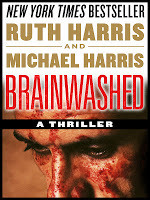 “Senator Chessie Tillman’s parents wanted a boy. What they got was her. She was short, dumpy, and dressed like a rag picker. She smoked like a chimney, drank like a fish, swore like a sailor. She had been married three times, each husband richer and more handsome than the one before.
“A roof-rattling orator and take-no-prisoners arm-twister, Chessie Tillman had mowed down men twice her size. In a series of headline-making speeches, she expressed the nation’s disgust with the sleazy goings-on of the Watergate scandal. In Senate hearings she faced down the beribboned generals who were bullshitting the public about the alleged “progress” being made in the high-body-count, vastly expensive, and increasingly pointless war in Vietnam.
“She was blunt, fearless, and had a big mouth. When something bothered her, she didn’t give up and she didn’t give in. America had never seen a politician like her. Right now, sitting behind the desk in her shambles of an office in the Senate office building, she had a new bug up her ass.”
I hadn’t realized until then the power of the “difficult” woman. Lesson learned: When in deep writing doo-doo, she can—and will—come to your rescue.
***
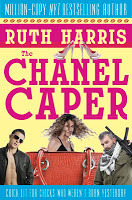
 Ruth Harris blogs here once a month. She is a New York Times bestselling author and former Big Five editor. Her latest book is The Chanel Caper: James Bond meets Nora Ephron...or is it the other way around? You can read more about her work at Ruth Harris's Blog.
This is such a great insight from Ruth! I realize I had a similar experience when Athena Roberts walked into Food of Love. All I wanted was a hairdresser for one scene. In walked this bald, 6-foot Lesbian Iraq War vet. She took no prisoners and took over the story--and energized a ho-hum ms. into an exciting thriller.
What about you, scriveners? Who are your favorite "difficult women"? Do you write about them? Could adding one to your WIP give your book the "oomph" it needs?
Opportunity Alerts
1) BiblioPublishing is looking for submissions of out-of-print or new books for publication through their small press. This 25-year-old press (formerly called The Educational Publisher) is branching out from educational books to other nonfiction and selected fiction. They're especially looking for self-help and sci-fi. They provide cover design, formatting and distribution, but ask your ms. be pre-edited. They publish in print as well as all ebook formats
2) Memoir Writing Workshop by bestselling memorist and Emmy-winning TV producer Fern Field Brooks with frequent blog commenter Phyllis Humphries. If you're a memoirist living in SoCal, you might want to look into this seminar to be held in Palm Desert on April 4th from 1-4 PM. For details email Fern at letterstomyhusband2011(at) gmail (dot) com.
3) Interested in having your short fiction recorded for a weekly podcast?There’s no pay, but it’s fantastic publicity if your story is accepted by SMOKE AND MIRRORS. They broadcast about three stories a week. Spooky, dark tales preferred. No previous publication necessary. They judge on the story alone.
4) Cash prizes for flash fiction. The San Luis Obispo NIGHTWRITERS are holding their annual 500-word story contest. Anybody from anywhere in the world is welcome to enter. Prizes are $200, $150 and $75. This is a fantastic organization that boasts a number of bestselling authors among their members, including Jay Asher, Jeff Carlson, and moi. (Well, some sell better than others :-) ) Deadline is March 31st.
Before there was The Girl With The Dragon Tattoo and Lisbeth Salander, there was Smilla Qaavigaaq Jaspersen, the heroine of a novel called Smilla's Sense of Snow by Peter Hoeg. Smilla is part Inuit and lives in Copenhagen.
 COMING SOON!
According to the flap copy of the FSG edition, "she is thirty-seven, single, childless, moody, and she refuses to fit in." She is complex, thorny, obstinate, blunt, fearless, she loves clothes and, when required, she can—and does—kick ass. Like Lisbeth—who's a talented computer jock—Smilla has her tech side and sees the beauty in mathematics.
Thinking about these two "difficult" women—Lisbeth and Smilla—I began to realize that the “difficult,” unconventional female character, like Joseph Campbell’s Hero With A Thousand Faces, appears in fiction again and again in different guises.
Clarice Starling, the FBI agent in Silence of the Lambs (played by Jodie Foster in the film), must face her fears—and Hannibal Lector—to solve the identity of a serial killer but she has no personal life that we know of. She's a nun, FBI-style, and she doesn’t give up until the case is solved.Jane Tennison, the DI in television’s Prime Suspect, played by Hellen Mirren, is a “woman of a certain age” as they say in France. Her love life is on the gritty side, she drinks too much, she can be flinty—not flirtatious. The men she works with give her a hard time and she isn’t shy about pushing back.Carrie Mathison. Cable television, quite willing to break molds, has come up with Carrie, the bi-polar CIA agent in Homeland, who has sex with the suspected terrorist. Carrie is also “single, childless, moody, and she refuses to fit in.”Maya. The young CIA officer played by Jessica Chastain in Zero Dark Thirty, is tough-minded, focused and willing to contradict senior officers in her quest to find the al Qaeda terrorist, Osama bin Laden.Nurse Ratched, in One Flew Over The Cuckoo’s Nest. Wikipedia describes her like this: “the ward is run by steely, unyielding Nurse Mildred Ratched (Louise Fletcher), who employs subtle humiliation, unpleasant medical treatments and a mind-numbing daily routine to suppress the patients.”Annie Wilkes. And while we’re in the medical dept: Annie Wilkes, a former nurse, cuts off her favorite writer’s foot with an axe and cauterizes the wound with a blowtorch. Played by Kathy Bates in the movie, Annie is the unforgettable, over-the-top “difficult” woman in Stephen King’s bestseller, Misery.Ellen Ripley. Sigourney Weaver as Ripley, the warrant officer in Alien, is courageous, authoritative and has no personal life that we know of. She’s a sci-fi heroine who must rely on her own guts, brains and fearlessness.Mrs. Danvers, the creepy housekeeper with no first name in Rebecca, is dedicated to her dead employer, the first Mrs. Maxim de Winter. She is intimidating, manipulative and willing to drive the second Mrs. DeWinter to suicide.Alex Forrest. Glenn Close plays this murderous seductress in Fatal Attraction. She lives alone, has no family that we are aware of and is psychopathically determined to get what she wants.M. Judi Dench as the head of MI6 in the James Bond films. She is blunt and unmarried as far as we know although in one scene it is clear she is sleeping with a male companion. She is James Bond’s boss and does not flinch from bossing him around and dressing him down for his recklessness.
So what do these “difficult” women have to do with you? What does the tough, determined, bossy, or downright crazy woman have to offer?
The “difficult” female character can—and will—do the shocking, the unexpected and, as a consequence, will give your story an immediate jolt of energy. She is the character who doesn’t fit the mold. She is the boss (M), the beginner (Clarice Starling), the domestic employee (Mrs. Danvers).
2. The “difficult” female character will live in the “wrong” neighborhood, drink too much, have sex with the “wrong” partners—all good ways to add sizzle and wow! plot twists.
3. She will not take her niece or nephew to Disney World but to a stock car race one day, to the ballet the next and teach him or her how to run a bulldozer, how to roast the perfect chicken and how to rob a bank.
4. She will most likely not be a secretary or a dress designer but a (believable) nuclear physicist, petroleum engineer or cat burglar. If she is a secretary or dress designer, it’s because she’s got a dramatic secret that will give your fiction a buzz.
5. She will never do the expected or the conventional: she will not give up a career or a promotion for Mr. Right. She will not fall madly in love, swoon into someone’s arms and make irrational choices although she might be an excellent and loyal lover. She can be stubborn, pathological, repellent but don’t forget the “difficult” woman: she can be the larger-than-life character who will rescue you from the plot blahs and help you break through a block.
I know this because a terror named Chessie Tillman bailed me out of a dead end in Brainwashed—it’s a thriller that takes place in the sour, paranoid 1970’s of Watergate and Vietnam War. Because the book is a political thriller, I needed a politician and I had one. I thought. Except he was so stupefyingly boring he brought the plot, the book—and me—to a dead halt.
I fretted and stewed. Bitched and complained. I was blocked and couldn’t figure out what happened next or who did what to whom. Color me one very very unhappy writer. Then, popping out somewhere from the murk of my unhappiness, along came Chessie.
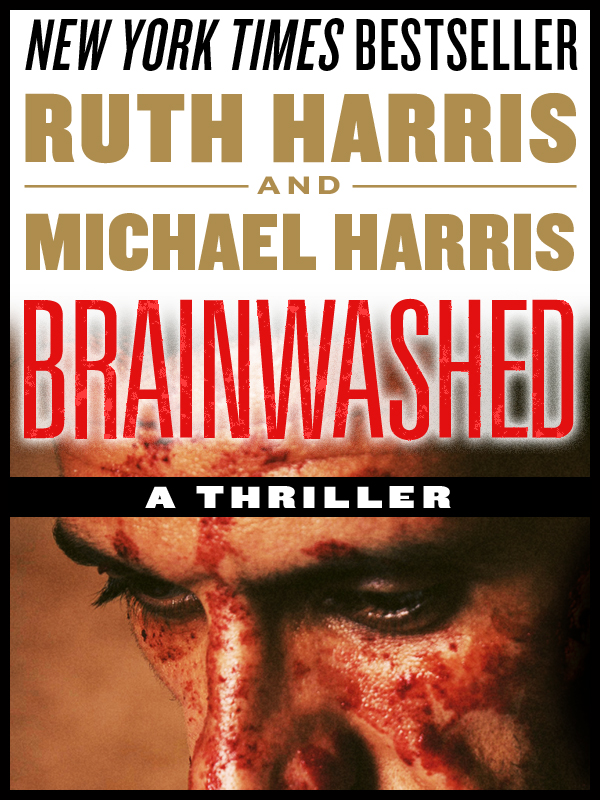 “Senator Chessie Tillman’s parents wanted a boy. What they got was her. She was short, dumpy, and dressed like a rag picker. She smoked like a chimney, drank like a fish, swore like a sailor. She had been married three times, each husband richer and more handsome than the one before.
“A roof-rattling orator and take-no-prisoners arm-twister, Chessie Tillman had mowed down men twice her size. In a series of headline-making speeches, she expressed the nation’s disgust with the sleazy goings-on of the Watergate scandal. In Senate hearings she faced down the beribboned generals who were bullshitting the public about the alleged “progress” being made in the high-body-count, vastly expensive, and increasingly pointless war in Vietnam.
“She was blunt, fearless, and had a big mouth. When something bothered her, she didn’t give up and she didn’t give in. America had never seen a politician like her. Right now, sitting behind the desk in her shambles of an office in the Senate office building, she had a new bug up her ass.”
I hadn’t realized until then the power of the “difficult” woman. Lesson learned: When in deep writing doo-doo, she can—and will—come to your rescue.
***
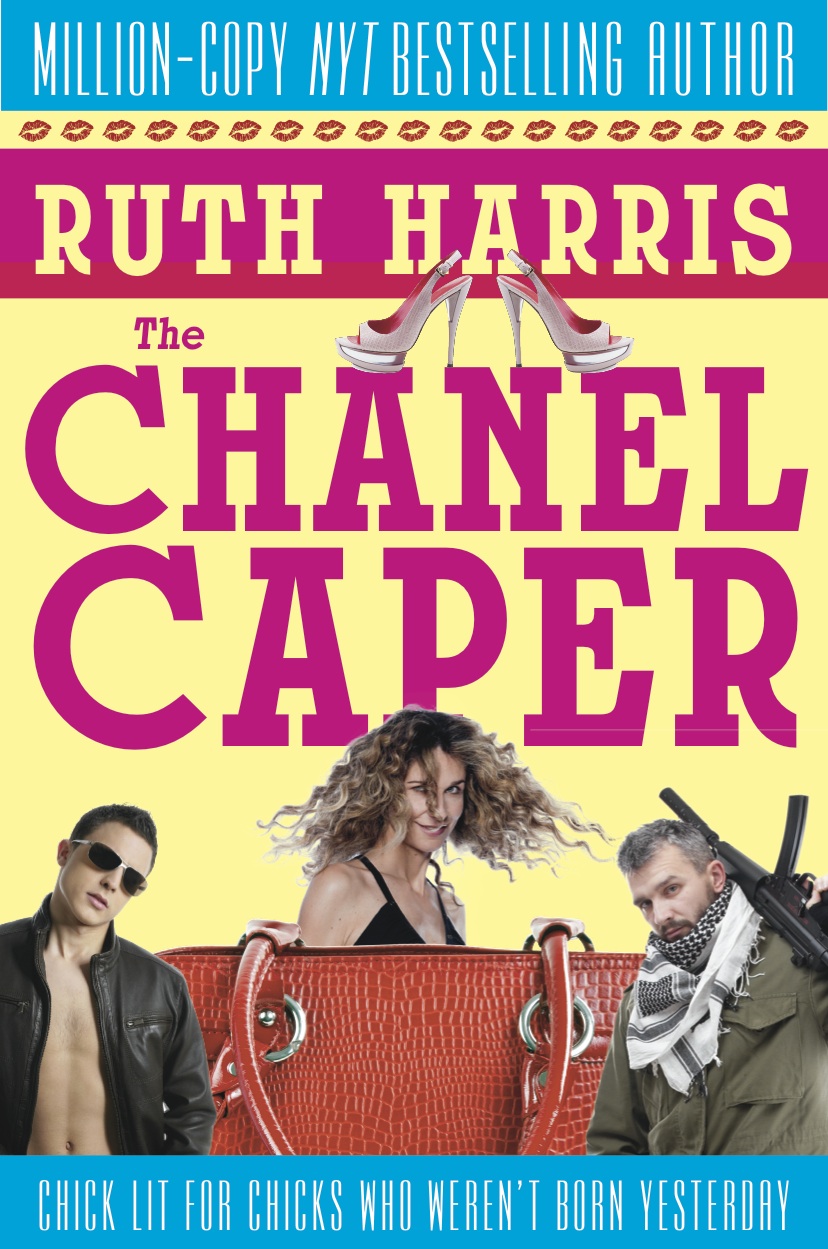
 Ruth Harris blogs here once a month. She is a New York Times bestselling author and former Big Five editor. Her latest book is The Chanel Caper: James Bond meets Nora Ephron...or is it the other way around? You can read more about her work at Ruth Harris's Blog.
This is such a great insight from Ruth! I realize I had a similar experience when Athena Roberts walked into Food of Love. All I wanted was a hairdresser for one scene. In walked this bald, 6-foot Lesbian Iraq War vet. She took no prisoners and took over the story--and energized a ho-hum ms. into an exciting thriller.
What about you, scriveners? Who are your favorite "difficult women"? Do you write about them? Could adding one to your WIP give your book the "oomph" it needs?
Opportunity Alerts
1) BiblioPublishing is looking for submissions of out-of-print or new books for publication through their small press. This 25-year-old press (formerly called The Educational Publisher) is branching out from educational books to other nonfiction and selected fiction. They're especially looking for self-help and sci-fi. They provide cover design, formatting and distribution, but ask your ms. be pre-edited. They publish in print as well as all ebook formats
2) Memoir Writing Workshop by bestselling memorist and Emmy-winning TV producer Fern Field Brooks with frequent blog commenter Phyllis Humphries. If you're a memoirist living in SoCal, you might want to look into this seminar to be held in Palm Desert on April 4th from 1-4 PM. For details email Fern at letterstomyhusband2011(at) gmail (dot) com.
3) Interested in having your short fiction recorded for a weekly podcast?There’s no pay, but it’s fantastic publicity if your story is accepted by SMOKE AND MIRRORS. They broadcast about three stories a week. Spooky, dark tales preferred. No previous publication necessary. They judge on the story alone.
4) Cash prizes for flash fiction. The San Luis Obispo NIGHTWRITERS are holding their annual 500-word story contest. Anybody from anywhere in the world is welcome to enter. Prizes are $200, $150 and $75. This is a fantastic organization that boasts a number of bestselling authors among their members, including Jay Asher, Jeff Carlson, and moi. (Well, some sell better than others :-) ) Deadline is March 31st.
February 24, 2013
Self-Editing 101—13 Questions to Ask Yourself about Your Opening Chapter
This is usually Ruth's week to post, but she's busy proofing galleys of her much-anticipated new novel The Chanel Caper. And next weekend, I'll be busy teaching THE TECH-SAVVY AUTHOR workshop. So we switched. On March 3rd, look for Ruth's post on why we like a tough, flinty heroine.
OK, let's talk editing. Editing our own work can be tedious. And painful. But it's essential. A paid editor can only do so much. We need to do most of the heavy lifting ourselves.
I've recently gone back to an old, multi-rejected project in hopes I can get my new publisher interested. Now that Boomer Lit is an up and coming genre, I'd love to get my comic Boomer novel, The Ashtrays of Avalon out there to readers.
Revisiting the old manuscripts (I had about 14 versions—tip: don't do this) I had to forget about being an artist and put on my editor's hat. It's always hard to block emotional ties to a work and imagine how a publisher might see the manuscript.
As usual, the opening chapter took the most work.
Introducing your reader to your characters and your fictional world may be the single trickiest job a novelist has. You have to present a lot of information at the same time you're enticing us to jump into the story. If you tell us too much, you’ll bore us, but if you tell us too little, you’ll confuse us.
An editor I respect a lot once told me to write my last chapter first and my first chapter last.
It sounded a little crazy, but I later realized what he meant is that it's a lot easier to get story momentum if you know where it's going—something I didn't do with this book—and your first chapter is going to need so much polishing that you shouldn't dwell on it when you're writing that first draft.
That's because when a writer is first diving into a novel, we’re not introducing the characters to a reader; we’re introducing them to ourselves.
All kinds of information about your protagonist will come up. Maybe she lives in a noisy apartment building in an ethnic neighborood of a city with a fascinating history. And her next door neighbor is a professional dominatrix. Or she feels a deep hatred for Justin Beiber. This stuff will spill out in your first chapters. Let it. That’s the fun part.
But be aware you’ll want to cut most of that information or move it to another part of the book when you edit.
It helps to remember this formula: first drafts are for the writer; revisions are for the reader.
Even if you’re not going the agent/publisher route, you need to keep your reader in mind. Self-publishers are judged, too, and reviewers and readers can be snarkier than any agent.
Here are some questions to ask yourself that should help in the revision process.
1) Do you have a Robinson Crusoe opening? That’s when your character is alone and musing. Robinson Crusoe is boring until Friday shows up. So don’t snoozify the reader with a character:
• driving alone in a car/wagon/boat
• musing while traveling on an airplane/bus/coach/spaceship
• waking up and getting ready for the day
• out on a morning jog
• looking in the mirror
Especially looking in the mirror. It’s not wrong, but it’s seriously overdone. (Yes, I started my first novel this way. I think a lot of us do, especially if we're writing romance.)
The easiest way to show your MC to your reader is to show how he interacts with the world. Two or three other characters is ideal: not too many or the reader will be overwhelmed.
2) Is your opener bogged down with physical description of the characters, especially of the police report variety? All we know about Elizabeth Bennett in Pride and Prejudice is that she has “fine eyes.” We don’t have to be told height, weight or hair/eye color unless it illuminates character (see #3.) Let us know what kind of person he/she is and the reader’s imagination fills in the blanks.
Unusual characteristics like Nero Wolfe’s size, Hercule Poirot’s mustache, and Miss Marple’s age show who these characters are and make them memorable. But we don’t need to know the hair/eye thing unless the characteristic is important to the story—like Anne of Green Gables hating her hair and dying it green. (And can you believe the idiots who pictured her as a hot blonde in this new edition of the public domain book?)
3) Does your MC have a goal? Are you letting the reader know what it is? Characters need goals in each scene. But the protagonist needs one goal to rule them all—a compelling, over-arching objective for the whole book. He can’t be easily satisfied. He must need something very badly. This especially important for memoir writers: “I was born and then some stuff happened and I met some people and then I had a catastrophe but I pulled myself out of my misery and now I love life and God and multilevel marketing”—is not going to keep readers turning the pages.
A novel or memoir needs to be about one big thing, and the character has to have one big goal. Too many goals? You may have a series. Nothing wrong with that, but figure out what the goal is for this particular book.
4) Does your MC have strong emotions we can identify with in the opening scene? We don’t have to identify with the situation, but with the emotion: If the character is furious because his roommate keeps playing to As Long As You Love Me over and over—even if you’ve never heard of Justin Beiber you’ll identify with the anger, because everybody’s been angry.
5) Have you started with a POV character about to be killed? Or facing a challenge in a dream or videogame that turns out not to be real? If you get us intrigued and then say “never mind”, the reader will feel his time and sympathy have been wasted.
6) Do you introduce your MC as close to page one as possible? Don’t waste time on long weather reports or descriptions of the setting. Although that was a convention in classic novels, it feels like filler now. Modern readers want to jump into the story and get emotionally involved.
A line or two about the setting or atmospheric conditions will set the mood, but a modern reader doesn’t need the kind of long descriptions of exotic weather or far off lands that Victorians loved. Even if we’ve never been there, we all know what London, or the Alps, or rain forests look like because we’ve seen them in films and on TV.
7) Does the chapter have the right tone and establish theme? You don't want to set up false expectations in your reader. If this is lighthearted chick lit, you don't want to start with a gruesome murder. You don't want chirpy dialogue at the beginning of your dark fantasy. If you're going to be dealing with a theme of climate change, drop in a few hints right away, like the penguins who just arrived on a Malibu beach. Or in psychological suspense, you can hint at the dark secrets of the hero's family with ominous noises coming from the basement or the locked door to the attic.
8) Does your MC come off as a Mary Sue? A Mary Sue (or Gary Stu) is the author’s idealized fantasy self—an ordinary person who always saves the day and is inexplicably the object of everyone’s affection. A Mary Sue will make your whole story phony, because a too-perfect character isn’t believable (and is seriously annoying.)
9) Do we know where we are? If the MC is thinking or talking to someone—where is he? As I said, we don’t want a long description of the scenery or the weather, but let us know what planet we’re on.
10) Have you started with dialogue? Readers want to know who’s speaking before they’ll pay much attention to what they say.
It’s just like real life: if strangers are shouting in the hallway, it’s noise. If you recognize the shouters as your boss and that dominatrix next door—you’re all ears.
11) Have you kept backstory to a minimum in your opener? Backstory can be dribbled in later in thoughts, conversations and mini-flashbacks—AFTER you’ve got us hooked by your MC and her story.
12) Have you plunged into action before introducing the characters? The introductions can be minimal, but they have to make us feel connected enough to these people to care
Example: If you hear some stranger got hit by a car—it’s sad, but you don’t have much curiosity about it. If you hear that dominatrix got hit bu a golf cart driven by a guy who looked like your boss, you want to know when, where, how...now!
13) Is that prologue REALLY necessary?
Sigh. I've got one in that novel I'm revising. Yup. I've got a dreaded prologue and I sent the book to my editor with it intact.
But the manuscript was also rejected more times than any sane person would want to admit. One of the biggest reasons agents gave? The prologue.
If you have a prologue and you want to go the agent route, it's best to rethink. If you're self-publishing, you can take your chances with your readers. If you're with a small press--well, my editor hasn't let me know if I can keep it yet.
Here are some reasons why agents hate prologues
• People skip them.
• The reader has to start the story twice. Just as she’s getting into the story, she’s hurled to another time or place, often with a whole new set of characters. Annoy a reader at your peril.
• When an agent or editor asks for the first chapter—or you have a preview of the book on Amazon—you’ve got a major dilemma. Do you send the actual chapter one—where the plot starts—or that poetic prologue?
• Agents hates the prologueses, precious, yesss:
From former agent Colleen Lindsay:
“In pages that accompany queries, I have only once found an attached prologue to be necessary to the story.”
From agent Jenny Bent:
“At least 50% of prologues that I see in sample material don't work and aren't necessary. Make sure there's a real reason to use one.”
From agent Ginger Clark:
“Prologues: I am, personally, not a fan. I think they either give away too much, or ramp up tension in a kind of "cheating" manner.”
From agent Andrea Brown:
“Most agents hate prologues. Just make the first chapter relevant and well written.”
From agent Laurie McLean:
“Prologues are usually a lazy way to give backstory chunks to the reader and can be handled with more finesse throughout the story. Damn the prologue, full speed ahead!”
Even usually ultra-tactful publishing guru Nathan Bransford says:
“A prologue is 3-5 pages of introductory material that is written while the author is procrastinating from writing a more difficult section of the book.”
Ouch.
I know you’re all wailing. But try removing the prologue. Read chapter one. Does it make sense? Could you dribble in that backstory from the prologue into the story later—while the actual plot is going on?
A prologue can sometimes be like a first draft—something for the writer, not the reader. Not the overture, but the tuning-up. Like a character sketch, a prologue usually belongs in your book journal—not the finished project.
Go ahead and write one to get your writing juices flowing. Use it to get to know your book’s basic elements. It can be mined later for character sketches, backstory and world building, but try to cut it in your final revision.
But I know. Sometimes you can't. I couldn't.
So what about you, scriveners? What do you want to read about a character first off? What makes you want to go on a journey with this character? What do you find difficult about introducing a character?
And the free tickets go to....
Random.org has spoken and the winners of two free tickets to the March 2nd TECH-SAVVY AUTHOR seminar I'm teaching with author Catherine Ryan Hyde, screenwriter/radio star Dave Congalton and a host of other tech-savvy folks are:
1) Janice Konstantinidis
2) David Schwab
Congrats, Janice and David!
Places are still available. More info in the "Opportunity Alerts" below.
Opportunity Alerts:
1) BiblioPublishing is looking for submissions of out-of-print or new books for publication through their small press. This 25-year-old press (formerly called The Educational Publisher) is branching out from educational books to other nonfiction and selected fiction. They're especially looking for self-help and sci-fi. They provide cover design, formatting and distribution, but ask your ms. be pre-edited. They publish in print as well as all ebook formats.
2) $2000 Grand Prize. NO entry fee. Call for Entries—The Flying Elephants Short Story Prize, sponsored by "Ashes & Snow" artist Gregory Colbert. AndWeWereHungry , a new online literary magazine, seeks literary short stories for its debut issue fiction contest. THEME: "And We Were Hungry....," or "Hunger." For isn't it, to quote Ray Bradbury, hunger or "lack that gives us inspiration?" Prize: One grand prize ($2000) + three finalists (each $1,000) + eight runner-ups. Deadline: March 31, 2013.
3) Interested in having your short fiction recorded for a weekly podcast?There’s no pay, but it’s fantastic publicity if your story is accepted by SMOKE AND MIRRORS. They broadcast about three stories a week. Spooky, dark tales preferred. No previous publication necessary. They judge on the story alone.
4) Cash prizes for flash fiction. The San Luis Obispo NIGHTWRITERS are holding their annual 500-word story contest. Anybody from anywhere in the world is welcome to enter. Prizes are $200, $150 and $75. This is a fantastic organization that boasts a number of bestselling authors among their members, including Jay Asher, Jeff Carlson, and moi. (Well, some sell better than others :-) ) Deadline is March 31st.
5) Tech-Savvy Author Workshop: If you live on the Central Coast of California and you’re interested in learning about blogging, building platform and everything a 21st Century author needs to know, Anne will be teaching at a seminar called THE TECH SAVVY AUTHOR with Catherine Ryan Hyde, screenwriter and radio personality Dave Congalton and a whole crew of smart techie folks on March 2nd. Students get in for half price.
6) FREE BOOK!!! FREE on Amazon Feburary 24-28. Jane Austen meets Little House on the Prairie ROXANNA BRITTON , a biographical novel about a real pioneer of the American west. The author is Shirley S. Allen, author of the bestselling mystery Academic Body and retired professor of creative writing from the University of Connecticut. (Also Anne's mom.) It's a delicious page-turner and a slice of real history based on family records and stories. Roxanna Britton was Anne's great, great, grandmother. This book is now available in e-book with a lovely new cover! This your chance to read it free.
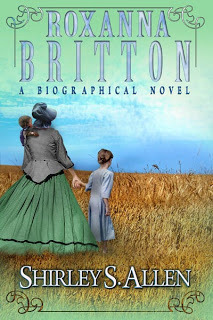 Free! Jane Austen meets Little House on the Prairie
This week Anne is visiting Alex South at Alex South's blog, Ten Stories High. for his "ten questions" interview.
And our blog has been nominated for "Most Useful Blog" in the Paying Forward Contest. You can vote for us--and your favorites in many categories at the above link. Thanks for the nomination, Misha!
OK, let's talk editing. Editing our own work can be tedious. And painful. But it's essential. A paid editor can only do so much. We need to do most of the heavy lifting ourselves.
I've recently gone back to an old, multi-rejected project in hopes I can get my new publisher interested. Now that Boomer Lit is an up and coming genre, I'd love to get my comic Boomer novel, The Ashtrays of Avalon out there to readers.
Revisiting the old manuscripts (I had about 14 versions—tip: don't do this) I had to forget about being an artist and put on my editor's hat. It's always hard to block emotional ties to a work and imagine how a publisher might see the manuscript.
As usual, the opening chapter took the most work.
Introducing your reader to your characters and your fictional world may be the single trickiest job a novelist has. You have to present a lot of information at the same time you're enticing us to jump into the story. If you tell us too much, you’ll bore us, but if you tell us too little, you’ll confuse us.
An editor I respect a lot once told me to write my last chapter first and my first chapter last.
It sounded a little crazy, but I later realized what he meant is that it's a lot easier to get story momentum if you know where it's going—something I didn't do with this book—and your first chapter is going to need so much polishing that you shouldn't dwell on it when you're writing that first draft.
That's because when a writer is first diving into a novel, we’re not introducing the characters to a reader; we’re introducing them to ourselves.
All kinds of information about your protagonist will come up. Maybe she lives in a noisy apartment building in an ethnic neighborood of a city with a fascinating history. And her next door neighbor is a professional dominatrix. Or she feels a deep hatred for Justin Beiber. This stuff will spill out in your first chapters. Let it. That’s the fun part.
But be aware you’ll want to cut most of that information or move it to another part of the book when you edit.
It helps to remember this formula: first drafts are for the writer; revisions are for the reader.
Even if you’re not going the agent/publisher route, you need to keep your reader in mind. Self-publishers are judged, too, and reviewers and readers can be snarkier than any agent.
Here are some questions to ask yourself that should help in the revision process.
1) Do you have a Robinson Crusoe opening? That’s when your character is alone and musing. Robinson Crusoe is boring until Friday shows up. So don’t snoozify the reader with a character:
• driving alone in a car/wagon/boat
• musing while traveling on an airplane/bus/coach/spaceship
• waking up and getting ready for the day
• out on a morning jog
• looking in the mirror
Especially looking in the mirror. It’s not wrong, but it’s seriously overdone. (Yes, I started my first novel this way. I think a lot of us do, especially if we're writing romance.)
The easiest way to show your MC to your reader is to show how he interacts with the world. Two or three other characters is ideal: not too many or the reader will be overwhelmed.
2) Is your opener bogged down with physical description of the characters, especially of the police report variety? All we know about Elizabeth Bennett in Pride and Prejudice is that she has “fine eyes.” We don’t have to be told height, weight or hair/eye color unless it illuminates character (see #3.) Let us know what kind of person he/she is and the reader’s imagination fills in the blanks.
Unusual characteristics like Nero Wolfe’s size, Hercule Poirot’s mustache, and Miss Marple’s age show who these characters are and make them memorable. But we don’t need to know the hair/eye thing unless the characteristic is important to the story—like Anne of Green Gables hating her hair and dying it green. (And can you believe the idiots who pictured her as a hot blonde in this new edition of the public domain book?)
3) Does your MC have a goal? Are you letting the reader know what it is? Characters need goals in each scene. But the protagonist needs one goal to rule them all—a compelling, over-arching objective for the whole book. He can’t be easily satisfied. He must need something very badly. This especially important for memoir writers: “I was born and then some stuff happened and I met some people and then I had a catastrophe but I pulled myself out of my misery and now I love life and God and multilevel marketing”—is not going to keep readers turning the pages.
A novel or memoir needs to be about one big thing, and the character has to have one big goal. Too many goals? You may have a series. Nothing wrong with that, but figure out what the goal is for this particular book.
4) Does your MC have strong emotions we can identify with in the opening scene? We don’t have to identify with the situation, but with the emotion: If the character is furious because his roommate keeps playing to As Long As You Love Me over and over—even if you’ve never heard of Justin Beiber you’ll identify with the anger, because everybody’s been angry.
5) Have you started with a POV character about to be killed? Or facing a challenge in a dream or videogame that turns out not to be real? If you get us intrigued and then say “never mind”, the reader will feel his time and sympathy have been wasted.
6) Do you introduce your MC as close to page one as possible? Don’t waste time on long weather reports or descriptions of the setting. Although that was a convention in classic novels, it feels like filler now. Modern readers want to jump into the story and get emotionally involved.
A line or two about the setting or atmospheric conditions will set the mood, but a modern reader doesn’t need the kind of long descriptions of exotic weather or far off lands that Victorians loved. Even if we’ve never been there, we all know what London, or the Alps, or rain forests look like because we’ve seen them in films and on TV.
7) Does the chapter have the right tone and establish theme? You don't want to set up false expectations in your reader. If this is lighthearted chick lit, you don't want to start with a gruesome murder. You don't want chirpy dialogue at the beginning of your dark fantasy. If you're going to be dealing with a theme of climate change, drop in a few hints right away, like the penguins who just arrived on a Malibu beach. Or in psychological suspense, you can hint at the dark secrets of the hero's family with ominous noises coming from the basement or the locked door to the attic.
8) Does your MC come off as a Mary Sue? A Mary Sue (or Gary Stu) is the author’s idealized fantasy self—an ordinary person who always saves the day and is inexplicably the object of everyone’s affection. A Mary Sue will make your whole story phony, because a too-perfect character isn’t believable (and is seriously annoying.)
9) Do we know where we are? If the MC is thinking or talking to someone—where is he? As I said, we don’t want a long description of the scenery or the weather, but let us know what planet we’re on.
10) Have you started with dialogue? Readers want to know who’s speaking before they’ll pay much attention to what they say.
It’s just like real life: if strangers are shouting in the hallway, it’s noise. If you recognize the shouters as your boss and that dominatrix next door—you’re all ears.
11) Have you kept backstory to a minimum in your opener? Backstory can be dribbled in later in thoughts, conversations and mini-flashbacks—AFTER you’ve got us hooked by your MC and her story.
12) Have you plunged into action before introducing the characters? The introductions can be minimal, but they have to make us feel connected enough to these people to care
Example: If you hear some stranger got hit by a car—it’s sad, but you don’t have much curiosity about it. If you hear that dominatrix got hit bu a golf cart driven by a guy who looked like your boss, you want to know when, where, how...now!
13) Is that prologue REALLY necessary?
Sigh. I've got one in that novel I'm revising. Yup. I've got a dreaded prologue and I sent the book to my editor with it intact.
But the manuscript was also rejected more times than any sane person would want to admit. One of the biggest reasons agents gave? The prologue.
If you have a prologue and you want to go the agent route, it's best to rethink. If you're self-publishing, you can take your chances with your readers. If you're with a small press--well, my editor hasn't let me know if I can keep it yet.
Here are some reasons why agents hate prologues
• People skip them.
• The reader has to start the story twice. Just as she’s getting into the story, she’s hurled to another time or place, often with a whole new set of characters. Annoy a reader at your peril.
• When an agent or editor asks for the first chapter—or you have a preview of the book on Amazon—you’ve got a major dilemma. Do you send the actual chapter one—where the plot starts—or that poetic prologue?
• Agents hates the prologueses, precious, yesss:
From former agent Colleen Lindsay:
“In pages that accompany queries, I have only once found an attached prologue to be necessary to the story.”
From agent Jenny Bent:
“At least 50% of prologues that I see in sample material don't work and aren't necessary. Make sure there's a real reason to use one.”
From agent Ginger Clark:
“Prologues: I am, personally, not a fan. I think they either give away too much, or ramp up tension in a kind of "cheating" manner.”
From agent Andrea Brown:
“Most agents hate prologues. Just make the first chapter relevant and well written.”
From agent Laurie McLean:
“Prologues are usually a lazy way to give backstory chunks to the reader and can be handled with more finesse throughout the story. Damn the prologue, full speed ahead!”
Even usually ultra-tactful publishing guru Nathan Bransford says:
“A prologue is 3-5 pages of introductory material that is written while the author is procrastinating from writing a more difficult section of the book.”
Ouch.
I know you’re all wailing. But try removing the prologue. Read chapter one. Does it make sense? Could you dribble in that backstory from the prologue into the story later—while the actual plot is going on?
A prologue can sometimes be like a first draft—something for the writer, not the reader. Not the overture, but the tuning-up. Like a character sketch, a prologue usually belongs in your book journal—not the finished project.
Go ahead and write one to get your writing juices flowing. Use it to get to know your book’s basic elements. It can be mined later for character sketches, backstory and world building, but try to cut it in your final revision.
But I know. Sometimes you can't. I couldn't.
So what about you, scriveners? What do you want to read about a character first off? What makes you want to go on a journey with this character? What do you find difficult about introducing a character?
And the free tickets go to....
Random.org has spoken and the winners of two free tickets to the March 2nd TECH-SAVVY AUTHOR seminar I'm teaching with author Catherine Ryan Hyde, screenwriter/radio star Dave Congalton and a host of other tech-savvy folks are:
1) Janice Konstantinidis
2) David Schwab
Congrats, Janice and David!
Places are still available. More info in the "Opportunity Alerts" below.
Opportunity Alerts:
1) BiblioPublishing is looking for submissions of out-of-print or new books for publication through their small press. This 25-year-old press (formerly called The Educational Publisher) is branching out from educational books to other nonfiction and selected fiction. They're especially looking for self-help and sci-fi. They provide cover design, formatting and distribution, but ask your ms. be pre-edited. They publish in print as well as all ebook formats.
2) $2000 Grand Prize. NO entry fee. Call for Entries—The Flying Elephants Short Story Prize, sponsored by "Ashes & Snow" artist Gregory Colbert. AndWeWereHungry , a new online literary magazine, seeks literary short stories for its debut issue fiction contest. THEME: "And We Were Hungry....," or "Hunger." For isn't it, to quote Ray Bradbury, hunger or "lack that gives us inspiration?" Prize: One grand prize ($2000) + three finalists (each $1,000) + eight runner-ups. Deadline: March 31, 2013.
3) Interested in having your short fiction recorded for a weekly podcast?There’s no pay, but it’s fantastic publicity if your story is accepted by SMOKE AND MIRRORS. They broadcast about three stories a week. Spooky, dark tales preferred. No previous publication necessary. They judge on the story alone.
4) Cash prizes for flash fiction. The San Luis Obispo NIGHTWRITERS are holding their annual 500-word story contest. Anybody from anywhere in the world is welcome to enter. Prizes are $200, $150 and $75. This is a fantastic organization that boasts a number of bestselling authors among their members, including Jay Asher, Jeff Carlson, and moi. (Well, some sell better than others :-) ) Deadline is March 31st.
5) Tech-Savvy Author Workshop: If you live on the Central Coast of California and you’re interested in learning about blogging, building platform and everything a 21st Century author needs to know, Anne will be teaching at a seminar called THE TECH SAVVY AUTHOR with Catherine Ryan Hyde, screenwriter and radio personality Dave Congalton and a whole crew of smart techie folks on March 2nd. Students get in for half price.
6) FREE BOOK!!! FREE on Amazon Feburary 24-28. Jane Austen meets Little House on the Prairie ROXANNA BRITTON , a biographical novel about a real pioneer of the American west. The author is Shirley S. Allen, author of the bestselling mystery Academic Body and retired professor of creative writing from the University of Connecticut. (Also Anne's mom.) It's a delicious page-turner and a slice of real history based on family records and stories. Roxanna Britton was Anne's great, great, grandmother. This book is now available in e-book with a lovely new cover! This your chance to read it free.
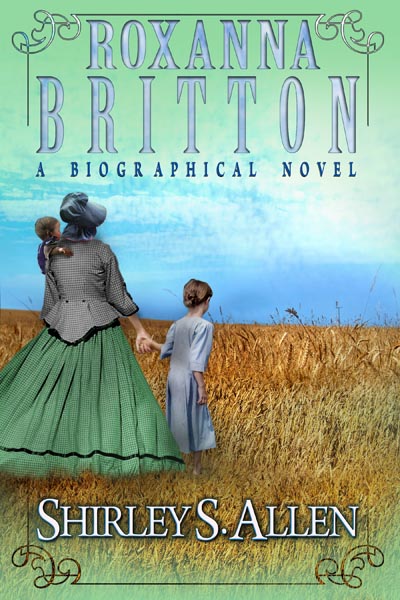 Free! Jane Austen meets Little House on the Prairie
This week Anne is visiting Alex South at Alex South's blog, Ten Stories High. for his "ten questions" interview.
And our blog has been nominated for "Most Useful Blog" in the Paying Forward Contest. You can vote for us--and your favorites in many categories at the above link. Thanks for the nomination, Misha!
February 17, 2013
12 Social Media Mistakes for Authors to Avoid
Are you "building platform" or just annoying people?
This week, author Mary W. Walters blogged that promoting your books on Facebook and Twitter is a total waste of time for book sales.
That's because Social Media is not for selling books. It's for making friends—friends we hope will help us in our careers sometime. It's for networking, not a direct sales tool.
Mary Walters is right when she says, "Most book-reading folk...aren’t interested in advertising and promotional copy, or in watching writers pat themselves on the backs for winning awards or getting great reviews. They are interested in discussions and opinions about books. They are interested in two-way exchanges about literary matters – not in one-way communications."
One-way communication is a misuse of Social Media—and that's why it doesn't sell books.
And why we find it so annoying.
Author Elizabeth Ann West rebutted Mary Walters' post in a comment on The Passive Voice . She pointed out: "The problem is most authors start using social media in a professional capacity for the first time when they publish and guess what? It takes a large amount of time the first few months to figure it out and test it out and make social connections."
In other words, they blindly jump in and start screaming "buy my book" at everybody instead of making friends with people who could then suggest your book to readers in your target demographic.
It's like going to a Chamber of Commerce mixer wearing a sandwich board advertising your restaurant instead of schmoozing a large company's event coordinator and getting her to use your restaurant's banquet room for future company parties.
Don't wear a sandwich board to a cocktail party. Be subtle. Make friends. Anything else is misusing the medium.
I've made a list of some of my unfavorite misuses of Social Media here. I admit upfront that this is a very subjective list, so please feel free to vent your own pet peeves in the comments.
And if things I find annoying have made zillions for you in book sales, we want to hear about that too.
I think authors have probably learned their most irritating habits from “marketing gurus” who tell them they’ll make more money if they’re just “bold” enough to use social media “like an expert.”
Be wary of "experts" in new tech fields that are constantly evolving. What was OK a few years ago can be deadly now because it’s been abused or overused. Yesterday's "surefire sales tool" can be today's spam.
So here is my subjective and by no means comprehensive list of what NOT to do in social media.
1) Spamming* somebody’s Facebook wall. A person’s Facebook "wall" is like their home. Posting something there is like putting up a billboard on their front yard. Do not do this without permission.
If you’d like somebody to share your promotional material or make a plea for charitable donations, send an email or DM. And don’t be surprised if they say no. I know your "Ban the Roach Brooch" cockroach rights foundation seems like the most important cause on the planet, but everybody has one and when they spam my wall, I make a note NEVER to give to any of these charities.
The only time it’s OK to post on a person’s wall is to send a personal message that's about THEM and will enhance their page. Stuff like: "Love all the cockroach cartoons on this page", "Congrats on your new book," "I’ll be at your book signing tomorrow—save me a cupcake."
2) Creating a Facebook page and Twitter account for every one of your books, short stories, launches, life events and rainy Mondays. No, I will not Like and Follow your 50 different Like pages and Twitter accounts. You are not respecting my time, so no—actually, I DON'T like you.
In my opinion, an author only needs one Twitter account, one blog and at most, two FB pages: one for yourself as an author and one for your personal page (FB now requires a personal page in order to comment on most pages, so the personal one is useful, if a little time consuming.)
But no matter how much you love to spend time on Facebook to avoid that WIP, chances are most of your readers don't. (Your ideal reader is busy reading books.)
But if you must put up a new FB page every time you finish a chapter of your WIP or whatever you consider to be a momentous occasion in your life, don't invite random fellow authors outside of your genre. We're busy promoting our own books.
Do join supportive, non-spammy writing groups like Indie Writers Unite —where membership is by invitation. But forming a group and automatically adding names without permission is not a good idea—no matter how good your intentions.
Which leads me to…
3) Creating an “event” or “group” and adding people’s names without permission. At least ten people I know launch a book in any given week. When you include me as a "member" of your launch "party" so I have to opt out and say why I'm "not going," I'm sorely tempted to tell you the actual reason. Don't push me.
I realize that FB encourages you to add the names of everybody you know to all your "events", and may even disguise the addition of names as "invitations," but don't go there. Mark Zuckerberg should not be anybody's role model for good manners.
Unless you know I’m a fan and a reader of your genre, don’t tell me about your book at all. I’m not your audience. I can cheer you on if you get a request from an agent or a great review, but I’m not going to read a whole page of your BUY MY BOOK ads.
If you spam me, I’ll remember you, but not in a good way.
4) Responding to Tweeted links without reading the article. If I tweet a link to a brilliant post at “Mystery Writing is Murder,” don’t tell me I’ve ruined your day because you just started writing a mystery novel and you don’t want to hear that it’s “murder.” That’s the name of a top-rated blog by Elizabeth S. Craig. If you don’t like the title of a blog or post, tell the blogger—ON THE BLOG.
If you want to start a Twitter discussion with me, say something like, “I just started writing a rom-com mystery novel like your Camilla books. Any tips?” Then—when I have time—I'll be happy to help.
But clueless arguing with a title isn’t going to make you any friends. And that’s why you’re on social media. To make friends. Not rack up a list of people who think you’re a jerk.
5) Tweeting as a fictional character and expecting people to respond as a character in your own personal fictional world. I’ve had people tweet to me in Pirate-speak and then get incensed that I didn’t Pirate-tweet back. And it wasn’t even Talk Like a Pirate Day.
Or they take offense at one of my general-audience tweets because it isn't about their fictional time period or planet. I am tweeting for anybody interested in the publishing industry—not for you in particular.
If you like to be twee, find other twee Tweeps to talk pirate or baby or aardvark or whatever language you like, but don’t expect professional writers to have time to play games with you.
These days, most people are on Twitter for information. It’s the best way to find out the most current news on a given topic, like the latest merger of the Big 6-5-4, that strange sonic boom in your neighborhood or whether your aunt’s neighborhood is under 30-foot drifts of snow.
When you send somebody an @ message that demands some sort of game-playing, you are behaving like a spoiled child grabbing Mommy’s arm and saying “Mommy, Mommy, look at my Barbie!” while she’s driving in rush hour traffic.
6) Blogging your WIP and asking for critiques and praise. If I see that anybody is blogging pieces of a novel in progress on a blog, I skip it. I figure they’re clueless beginners. (A WIP can never be traditionally pubbed if you give pieces away, even in rough draft. You are violating your own future copyright.)
This tends to be the same kind of newbie who will accuse you of “stealing his idea” of writing a novel about a lonely, brilliant, disaffected youth who can’t get published because the system is rigged against him.
When I catch a whiff of this kind of amateurism, I run.
If you want critique, join a critique group. I highly recommend CritiqueCircle.com
If you’re a published professional giving us free stories about your main characters, or edited-out scenes from a published novel, great—that’s for your fans and they’ll love it. (Although you'll want to run it by your agent or publisher first.)
But be aware where you are in your writing learning curve. Most people do NOT want to read a beginner’s practice fiction unless they're getting paid to.
7) Blaming people you’ve friended or circled because you’re getting email notifications whenever they post. Your notifications from Facebook and Google+ are YOUR responsibility.
Unfortunately the default mode for social media is they send you an email every time your friend’s cousin’s Beagle farts, so as soon as you sign up, go to your home page, go to “Privacy Settings” (via that tiny gear icon on the upper right.) Then click “notifications” and turn them off.
Some guy circled me on Google+ and I circled him back because he’s a writer. (I’m not doing that any more.) A week later I got a furious email from him saying I’d been spamming his inbox, so I should uncircle him. I did. Immediately.
But he kept getting my posts (I only post there once a day or less, but for some reason it was making him furious) and he kept emailing that I had to stop. Finally I told him that HE had to take me out of HIS circle (and turn off his notifications) and I had no control over his settings. It didn’t end well. He’s out of my circles and onto my list of Jerks to Avoid.
8) “Thanking” people for following you by sending spam. It might seem like good manners, but a thank-you for a follow is generally unwelcome. Especially if the “thank-you” is posted on somebody’s Facebook wall. Or loaded with spam. If you really want to thank somebody, retweet one of their tweets.
An automated message that says “Thanks for the follow, now you are my minion: so go like my FB Page, LinkedIN profile, circle me on Google+, follow my blog and BUY MY BOOK and I’ll teach YOU how to be the kind of successful author I imagine myself to be!! Bwahahah!!!” is not good manners in anybody’s world.
9) Following and unfollowing immediately after you get a follow back. People do this to rack up numbers on Twitter. Which is idiotic. Numbers on Twitter mean nothing without engagement.
It’s like re-calibrating your scale to show you weigh 30 pounds less and expecting that to make you fit into size zero jeans. Or turning off the fire alarm to put out a fire.
You want real people who respond and retweet your stuff. Not just ciphers you’ve duped into being one of your statistics.
10) Tagging a photo that’s an ad—or worse, porn—with the names of all your Facebook friends. People are doing this ALL the time. I don’t know if they mean to or if it’s one of those diabolical Facebook “games” where if you click on the answer to a stupid question, spam is immediately sent out to all your friends.
Never, ever tag a photo with a person’s name without thinking long and hard. Especially if the photo isn’t of that person. I guess it’s a way to game Facebook into posting the photo on that person’s wall—but what do you gain by that? Now somebody thinks you’re a moron. And that benefits you…how?
You can sign up to have no tagged posts go up on YOUR wall without your permission in your "Privacy" settings, but it will not stop that photo from being posted on a lot of other people’s walls.
And if the photo is unflattering or unprofessional, don’t tag it, ever. Ask the person first if they want to be identified in your photo. I’ve become a fat lady in middle age. Most photos of me are hideous. NEVER take a photo of me and put it on the Interwebz without my permission, or you're going on my $%*! list for a good, long time.
11) Not posting share buttons or your @Twitterhandle on your blog. Even if you’re not on any social medium but a blog, you can have a social media presence if your fans tweet your links and post them to FB, Google+, etc. But you make that very tough if you don’t have a “share” button (They’re available in your list of “gadgets” or “widgets” on your dashboard.) I have a bit.ly icon on my toolbar that I can use to share your posts, but most people don’t. (If you want the handy share function and url shortener on your toolbar, visit bit.ly.com for a quick download.)
Also, try not to make your title too lame to tweet. Even though your content is great, it’s not worth sharing if I have to take the time to make up a good title for you. Lame titles are things like "Blue Monday" or "Thoughts". Good titles are questions, lists and answers. Stuff like: "Can You Write a Publishable First Novel?" or "12 Tips To Get Out of the Slushpile".
And if you don’t have your Twitter handle on your blog, I can’t credit you and you won't even know I tweeted you.
12) Hiding your identity behind a whimsical name or avatar. Don’t put a picture of a baby rhinoceros in a tutu as your avatar. Or call yourself @HoneyBooBooFan or @SexyBeast247. If you’re an author who wants to succeed, you need to be professional. The Internet is not Kindergarten, a celebrity fan club, or your favorite bar. For a rant on bad avatars, read the quote from Porter Anderson in my Feb 3rd post.
Treat Cyberia as your workplace. Because that’s what it is. Look and act professional and show you’re proud of who you are. That means letting us know your name or pen name every time you Tweet or comment on a blog.
***
A word on *spamming. Most people know that Internet "spam" is an inappropriate, unsolicited advertisement for a product.
But a lot of things that can be perfectly appropriate in small doses are not when they show up too often.
Like newsletters.
I know that some people who are very savvy—like self-pub guru David Gaughran—say that newsletters are the best way to reach your fans.
They may be. But personally, I'm not fond of them. Partly because newsletters are one-way communication.
Also, I think they have been overused to the point they have become an annoyance. I only read one in about 50 and the rest go immediately into the trash—even the ones from big name authors. Some newsletters I may have actually signed up for when I had more time, but many come from people who just took my email address off my blog or a group email.
I figure if I hate having newsletters fill up my inbox, other people do too. We can say what we have to say here on the blog and people know where to find us.
But you might love newsletters. If you do, I really want to hear about it. I may be totally wrong on this. I’ve been wrong before. If you’d like a newsletter from Ruth and me, do speak up. In fact, if there’s anything you’d like to hear more or less of from us, let us know.
I agree with the statement Mary Walters made in her post, "As writers, we should focus our promotional efforts on trying to get people to talk about our books (review them, read and recommend them, give them awards, take them to their book groups, write articles or blog posts about them) instead of trying to get people to buy them."
What we really need to focus on is connecting with readers who aren't necessarily writers. Social media Jedi Kristen Lamb said it very well in an interview this week with Alex Laybourne. "We have to stop expecting “readers” to come to us and we need to go to them. We are talking about query letters and Smashwords and Amazon and agents and then wonder why we aren’t connecting with readers. Try talking about some stuff THEY like for a change. We need to start a dialogue on mutual ground, then that leads to a relationship which will eventually translate into sales... Spend less time being interesting and more time being INTERESTED.
And what about your pet peeves? Let us know what annoys you in social media. How about newsletters? Like or dislike?
If you have a comment and Blogger won't let you post for one of their unknown reasons (talk about annoying) don't hesitate to email me at annerallen dot allen at gmail dot com. I'll post your comment with my response.
WIN FREE TICKETS!!!
If you want to learn more about what to do and not do in building your platform, and you're in the vicinity of San Luis Obispo, CA, I'll be teaching a seminar called THE TECH-SAVVY AUTHOR with iconic author Catherine Ryan Hyde on March 2nd.
The organizers have given me two FREE TICKETS to give away this week! Each one is a $75 value and includes a yummy lunch. All you have to do is leave your email address in the comments or email me at annerallen dot allen at gmail dot com to say you'd like your name to be put in the drawing for the free tickets. I will then assign each of the contestants a number and go to Random.org on Saturday February 23rd to name the winners.
Contest closes at 6 PM Pacific time on February 23rd.
The winners will be announced in the post on Sunday, February 24th. More info on the workshop in the Opportunity Alerts below.
***
Milestone: This is the 250th post on this blog. Amazing. Especially since the first 50 or so were read by maybe a total of ten people. Now we have close to 1340 followers and a lot of very nice awards. Sticking with something really does pay off.
Opportunity Alerts:
1) BiblioPublishing is looking for submissions of out-of-print or new books for publication through their small press. This 25-year-old press (formerly called The Educational Publisher) is branching out from educational books to other nonfiction and selected fiction. They're especially looking for self-help and sci-fi. They provide cover design, formatting and distribution, but ask your ms. be pre-edited. They publish in print as well as all ebook formats
2) Tech-Savvy Author Workshop: If you live on the Central Coast of California and you’re interested in learning about blogging, building platform and everything a 21st Century author needs to know, Anne will be teaching at a seminar called THE TECH SAVVY AUTHOR with Catherine Ryan Hyde, screenwriter and radio personality Dave Congalton and a whole crew of smart techie folks on March 2nd. Students get in for half price.
3) Interested in having your short fiction recorded for a weekly podcast?There’s no pay, but it’s fantastic publicity if your story is accepted by SMOKE AND MIRRORS. They broadcast about three stories a week. Spooky, dark tales preferred. No previous publication necessary. They judge on the story alone.
4) Cash prizes for flash fiction. The San Luis Obispo NIGHTWRITERS are holding their annual 500-word story contest. Anybody from anywhere in the world is welcome to enter. Prizes are $200, $150 and $75. This is a fantastic organization that boasts a number of bestselling authors among their members, including Jay Asher, Jeff Carlson, and moi. (Well, some sell better than others :-) ) Deadline is March 31st.
This week, author Mary W. Walters blogged that promoting your books on Facebook and Twitter is a total waste of time for book sales.
That's because Social Media is not for selling books. It's for making friends—friends we hope will help us in our careers sometime. It's for networking, not a direct sales tool.
Mary Walters is right when she says, "Most book-reading folk...aren’t interested in advertising and promotional copy, or in watching writers pat themselves on the backs for winning awards or getting great reviews. They are interested in discussions and opinions about books. They are interested in two-way exchanges about literary matters – not in one-way communications."
One-way communication is a misuse of Social Media—and that's why it doesn't sell books.
And why we find it so annoying.
Author Elizabeth Ann West rebutted Mary Walters' post in a comment on The Passive Voice . She pointed out: "The problem is most authors start using social media in a professional capacity for the first time when they publish and guess what? It takes a large amount of time the first few months to figure it out and test it out and make social connections."
In other words, they blindly jump in and start screaming "buy my book" at everybody instead of making friends with people who could then suggest your book to readers in your target demographic.
It's like going to a Chamber of Commerce mixer wearing a sandwich board advertising your restaurant instead of schmoozing a large company's event coordinator and getting her to use your restaurant's banquet room for future company parties.
Don't wear a sandwich board to a cocktail party. Be subtle. Make friends. Anything else is misusing the medium.
I've made a list of some of my unfavorite misuses of Social Media here. I admit upfront that this is a very subjective list, so please feel free to vent your own pet peeves in the comments.
And if things I find annoying have made zillions for you in book sales, we want to hear about that too.
I think authors have probably learned their most irritating habits from “marketing gurus” who tell them they’ll make more money if they’re just “bold” enough to use social media “like an expert.”
Be wary of "experts" in new tech fields that are constantly evolving. What was OK a few years ago can be deadly now because it’s been abused or overused. Yesterday's "surefire sales tool" can be today's spam.
So here is my subjective and by no means comprehensive list of what NOT to do in social media.
1) Spamming* somebody’s Facebook wall. A person’s Facebook "wall" is like their home. Posting something there is like putting up a billboard on their front yard. Do not do this without permission.
If you’d like somebody to share your promotional material or make a plea for charitable donations, send an email or DM. And don’t be surprised if they say no. I know your "Ban the Roach Brooch" cockroach rights foundation seems like the most important cause on the planet, but everybody has one and when they spam my wall, I make a note NEVER to give to any of these charities.
The only time it’s OK to post on a person’s wall is to send a personal message that's about THEM and will enhance their page. Stuff like: "Love all the cockroach cartoons on this page", "Congrats on your new book," "I’ll be at your book signing tomorrow—save me a cupcake."
2) Creating a Facebook page and Twitter account for every one of your books, short stories, launches, life events and rainy Mondays. No, I will not Like and Follow your 50 different Like pages and Twitter accounts. You are not respecting my time, so no—actually, I DON'T like you.
In my opinion, an author only needs one Twitter account, one blog and at most, two FB pages: one for yourself as an author and one for your personal page (FB now requires a personal page in order to comment on most pages, so the personal one is useful, if a little time consuming.)
But no matter how much you love to spend time on Facebook to avoid that WIP, chances are most of your readers don't. (Your ideal reader is busy reading books.)
But if you must put up a new FB page every time you finish a chapter of your WIP or whatever you consider to be a momentous occasion in your life, don't invite random fellow authors outside of your genre. We're busy promoting our own books.
Do join supportive, non-spammy writing groups like Indie Writers Unite —where membership is by invitation. But forming a group and automatically adding names without permission is not a good idea—no matter how good your intentions.
Which leads me to…
3) Creating an “event” or “group” and adding people’s names without permission. At least ten people I know launch a book in any given week. When you include me as a "member" of your launch "party" so I have to opt out and say why I'm "not going," I'm sorely tempted to tell you the actual reason. Don't push me.
I realize that FB encourages you to add the names of everybody you know to all your "events", and may even disguise the addition of names as "invitations," but don't go there. Mark Zuckerberg should not be anybody's role model for good manners.
Unless you know I’m a fan and a reader of your genre, don’t tell me about your book at all. I’m not your audience. I can cheer you on if you get a request from an agent or a great review, but I’m not going to read a whole page of your BUY MY BOOK ads.
If you spam me, I’ll remember you, but not in a good way.
4) Responding to Tweeted links without reading the article. If I tweet a link to a brilliant post at “Mystery Writing is Murder,” don’t tell me I’ve ruined your day because you just started writing a mystery novel and you don’t want to hear that it’s “murder.” That’s the name of a top-rated blog by Elizabeth S. Craig. If you don’t like the title of a blog or post, tell the blogger—ON THE BLOG.
If you want to start a Twitter discussion with me, say something like, “I just started writing a rom-com mystery novel like your Camilla books. Any tips?” Then—when I have time—I'll be happy to help.
But clueless arguing with a title isn’t going to make you any friends. And that’s why you’re on social media. To make friends. Not rack up a list of people who think you’re a jerk.
5) Tweeting as a fictional character and expecting people to respond as a character in your own personal fictional world. I’ve had people tweet to me in Pirate-speak and then get incensed that I didn’t Pirate-tweet back. And it wasn’t even Talk Like a Pirate Day.
Or they take offense at one of my general-audience tweets because it isn't about their fictional time period or planet. I am tweeting for anybody interested in the publishing industry—not for you in particular.
If you like to be twee, find other twee Tweeps to talk pirate or baby or aardvark or whatever language you like, but don’t expect professional writers to have time to play games with you.
These days, most people are on Twitter for information. It’s the best way to find out the most current news on a given topic, like the latest merger of the Big 6-5-4, that strange sonic boom in your neighborhood or whether your aunt’s neighborhood is under 30-foot drifts of snow.
When you send somebody an @ message that demands some sort of game-playing, you are behaving like a spoiled child grabbing Mommy’s arm and saying “Mommy, Mommy, look at my Barbie!” while she’s driving in rush hour traffic.
6) Blogging your WIP and asking for critiques and praise. If I see that anybody is blogging pieces of a novel in progress on a blog, I skip it. I figure they’re clueless beginners. (A WIP can never be traditionally pubbed if you give pieces away, even in rough draft. You are violating your own future copyright.)
This tends to be the same kind of newbie who will accuse you of “stealing his idea” of writing a novel about a lonely, brilliant, disaffected youth who can’t get published because the system is rigged against him.
When I catch a whiff of this kind of amateurism, I run.
If you want critique, join a critique group. I highly recommend CritiqueCircle.com
If you’re a published professional giving us free stories about your main characters, or edited-out scenes from a published novel, great—that’s for your fans and they’ll love it. (Although you'll want to run it by your agent or publisher first.)
But be aware where you are in your writing learning curve. Most people do NOT want to read a beginner’s practice fiction unless they're getting paid to.
7) Blaming people you’ve friended or circled because you’re getting email notifications whenever they post. Your notifications from Facebook and Google+ are YOUR responsibility.
Unfortunately the default mode for social media is they send you an email every time your friend’s cousin’s Beagle farts, so as soon as you sign up, go to your home page, go to “Privacy Settings” (via that tiny gear icon on the upper right.) Then click “notifications” and turn them off.
Some guy circled me on Google+ and I circled him back because he’s a writer. (I’m not doing that any more.) A week later I got a furious email from him saying I’d been spamming his inbox, so I should uncircle him. I did. Immediately.
But he kept getting my posts (I only post there once a day or less, but for some reason it was making him furious) and he kept emailing that I had to stop. Finally I told him that HE had to take me out of HIS circle (and turn off his notifications) and I had no control over his settings. It didn’t end well. He’s out of my circles and onto my list of Jerks to Avoid.
8) “Thanking” people for following you by sending spam. It might seem like good manners, but a thank-you for a follow is generally unwelcome. Especially if the “thank-you” is posted on somebody’s Facebook wall. Or loaded with spam. If you really want to thank somebody, retweet one of their tweets.
An automated message that says “Thanks for the follow, now you are my minion: so go like my FB Page, LinkedIN profile, circle me on Google+, follow my blog and BUY MY BOOK and I’ll teach YOU how to be the kind of successful author I imagine myself to be!! Bwahahah!!!” is not good manners in anybody’s world.
9) Following and unfollowing immediately after you get a follow back. People do this to rack up numbers on Twitter. Which is idiotic. Numbers on Twitter mean nothing without engagement.
It’s like re-calibrating your scale to show you weigh 30 pounds less and expecting that to make you fit into size zero jeans. Or turning off the fire alarm to put out a fire.
You want real people who respond and retweet your stuff. Not just ciphers you’ve duped into being one of your statistics.
10) Tagging a photo that’s an ad—or worse, porn—with the names of all your Facebook friends. People are doing this ALL the time. I don’t know if they mean to or if it’s one of those diabolical Facebook “games” where if you click on the answer to a stupid question, spam is immediately sent out to all your friends.
Never, ever tag a photo with a person’s name without thinking long and hard. Especially if the photo isn’t of that person. I guess it’s a way to game Facebook into posting the photo on that person’s wall—but what do you gain by that? Now somebody thinks you’re a moron. And that benefits you…how?
You can sign up to have no tagged posts go up on YOUR wall without your permission in your "Privacy" settings, but it will not stop that photo from being posted on a lot of other people’s walls.
And if the photo is unflattering or unprofessional, don’t tag it, ever. Ask the person first if they want to be identified in your photo. I’ve become a fat lady in middle age. Most photos of me are hideous. NEVER take a photo of me and put it on the Interwebz without my permission, or you're going on my $%*! list for a good, long time.
11) Not posting share buttons or your @Twitterhandle on your blog. Even if you’re not on any social medium but a blog, you can have a social media presence if your fans tweet your links and post them to FB, Google+, etc. But you make that very tough if you don’t have a “share” button (They’re available in your list of “gadgets” or “widgets” on your dashboard.) I have a bit.ly icon on my toolbar that I can use to share your posts, but most people don’t. (If you want the handy share function and url shortener on your toolbar, visit bit.ly.com for a quick download.)
Also, try not to make your title too lame to tweet. Even though your content is great, it’s not worth sharing if I have to take the time to make up a good title for you. Lame titles are things like "Blue Monday" or "Thoughts". Good titles are questions, lists and answers. Stuff like: "Can You Write a Publishable First Novel?" or "12 Tips To Get Out of the Slushpile".
And if you don’t have your Twitter handle on your blog, I can’t credit you and you won't even know I tweeted you.
12) Hiding your identity behind a whimsical name or avatar. Don’t put a picture of a baby rhinoceros in a tutu as your avatar. Or call yourself @HoneyBooBooFan or @SexyBeast247. If you’re an author who wants to succeed, you need to be professional. The Internet is not Kindergarten, a celebrity fan club, or your favorite bar. For a rant on bad avatars, read the quote from Porter Anderson in my Feb 3rd post.
Treat Cyberia as your workplace. Because that’s what it is. Look and act professional and show you’re proud of who you are. That means letting us know your name or pen name every time you Tweet or comment on a blog.
***
A word on *spamming. Most people know that Internet "spam" is an inappropriate, unsolicited advertisement for a product.
But a lot of things that can be perfectly appropriate in small doses are not when they show up too often.
Like newsletters.
I know that some people who are very savvy—like self-pub guru David Gaughran—say that newsletters are the best way to reach your fans.
They may be. But personally, I'm not fond of them. Partly because newsletters are one-way communication.
Also, I think they have been overused to the point they have become an annoyance. I only read one in about 50 and the rest go immediately into the trash—even the ones from big name authors. Some newsletters I may have actually signed up for when I had more time, but many come from people who just took my email address off my blog or a group email.
I figure if I hate having newsletters fill up my inbox, other people do too. We can say what we have to say here on the blog and people know where to find us.
But you might love newsletters. If you do, I really want to hear about it. I may be totally wrong on this. I’ve been wrong before. If you’d like a newsletter from Ruth and me, do speak up. In fact, if there’s anything you’d like to hear more or less of from us, let us know.
I agree with the statement Mary Walters made in her post, "As writers, we should focus our promotional efforts on trying to get people to talk about our books (review them, read and recommend them, give them awards, take them to their book groups, write articles or blog posts about them) instead of trying to get people to buy them."
What we really need to focus on is connecting with readers who aren't necessarily writers. Social media Jedi Kristen Lamb said it very well in an interview this week with Alex Laybourne. "We have to stop expecting “readers” to come to us and we need to go to them. We are talking about query letters and Smashwords and Amazon and agents and then wonder why we aren’t connecting with readers. Try talking about some stuff THEY like for a change. We need to start a dialogue on mutual ground, then that leads to a relationship which will eventually translate into sales... Spend less time being interesting and more time being INTERESTED.
And what about your pet peeves? Let us know what annoys you in social media. How about newsletters? Like or dislike?
If you have a comment and Blogger won't let you post for one of their unknown reasons (talk about annoying) don't hesitate to email me at annerallen dot allen at gmail dot com. I'll post your comment with my response.
WIN FREE TICKETS!!!
If you want to learn more about what to do and not do in building your platform, and you're in the vicinity of San Luis Obispo, CA, I'll be teaching a seminar called THE TECH-SAVVY AUTHOR with iconic author Catherine Ryan Hyde on March 2nd.
The organizers have given me two FREE TICKETS to give away this week! Each one is a $75 value and includes a yummy lunch. All you have to do is leave your email address in the comments or email me at annerallen dot allen at gmail dot com to say you'd like your name to be put in the drawing for the free tickets. I will then assign each of the contestants a number and go to Random.org on Saturday February 23rd to name the winners.
Contest closes at 6 PM Pacific time on February 23rd.
The winners will be announced in the post on Sunday, February 24th. More info on the workshop in the Opportunity Alerts below.
***
Milestone: This is the 250th post on this blog. Amazing. Especially since the first 50 or so were read by maybe a total of ten people. Now we have close to 1340 followers and a lot of very nice awards. Sticking with something really does pay off.
Opportunity Alerts:
1) BiblioPublishing is looking for submissions of out-of-print or new books for publication through their small press. This 25-year-old press (formerly called The Educational Publisher) is branching out from educational books to other nonfiction and selected fiction. They're especially looking for self-help and sci-fi. They provide cover design, formatting and distribution, but ask your ms. be pre-edited. They publish in print as well as all ebook formats
2) Tech-Savvy Author Workshop: If you live on the Central Coast of California and you’re interested in learning about blogging, building platform and everything a 21st Century author needs to know, Anne will be teaching at a seminar called THE TECH SAVVY AUTHOR with Catherine Ryan Hyde, screenwriter and radio personality Dave Congalton and a whole crew of smart techie folks on March 2nd. Students get in for half price.
3) Interested in having your short fiction recorded for a weekly podcast?There’s no pay, but it’s fantastic publicity if your story is accepted by SMOKE AND MIRRORS. They broadcast about three stories a week. Spooky, dark tales preferred. No previous publication necessary. They judge on the story alone.
4) Cash prizes for flash fiction. The San Luis Obispo NIGHTWRITERS are holding their annual 500-word story contest. Anybody from anywhere in the world is welcome to enter. Prizes are $200, $150 and $75. This is a fantastic organization that boasts a number of bestselling authors among their members, including Jay Asher, Jeff Carlson, and moi. (Well, some sell better than others :-) ) Deadline is March 31st.
February 10, 2013
Are You Neglecting This Important Book Sales Tool? 5 Steps to a Great Product Description
Today we have some valuable advice from Mark Edwards, one of the superstar authors who made indie publishing the powerful movement it has become. He and Louise Voss made history when their self-pubbed books soared to the top of the UK bestseller lists and got them a big-money deal with HarperCollins.
One of the secrets to their success is their savvy use of the Amazon "product description" that goes on the Amazon buy page of your book. Here's Mark's advice on how to write brilliant book descriptions of your own.
PRODUCT DESCRIPTION A.K.A. THE BLURB: AN IMPORTANT SALES TOOL YOU MAY BE NEGLECTINGby Mark Edwards
When you’re trying to sell your masterpiece on Amazon or any of the other ebook platforms, you face two major challenges. The first is visibility. This is the big one. With all those millions of books, with many more being added every day, how do you even let people know your book exists?
 The second challenge – and the one I’m going to address here – is how to hook readers who catch a glimpse of your novel, or hear about it, and take a look to see if it’s something they want to read. They will look at the cover, look through the reviews and read the description – sometimes called the blurb.
The description is, in my opinion, an underrated sales tool. Back in 2011, when my co-written novel Killing Cupid was hovering just outside the top 100, Amazon showed you what percentage of visitors to your book page had bought it. I was able to hugely increase this percentage – and double sales – instantly by rewriting the description. I did this after spending a few weeks analyzing the descriptions of the books in the top ten. I realized my original description was too messy, unfocused, as much about the authors as the book.
With its new description, Killing Cupid eventually reached No.2 on Amazon.co.uk (and our second novel hit No.1 at the same time), helped us get a traditional book deal with HarperCollins, and a few weeks ago, Peter James, one of the UK’s most popular crime writers, named Killing Cupid as his book of the year. None of this would have happened if I hadn’t rewritten that description.
So how do you write a good one?
Decide who’s going to want to read the damn thing.
From the moment you conceive your book, unless you are writing for yourself (and if anyone else likes it, it’s a bonus) you need to think ‘Why would anyone want to read this?’ What’s the concept, the hook? What makes it different – or similar – to other books? Imagine you have to elevator pitch your novel – as you describe it, do you picture gasps of excitement or eyes glazing over? For every writer, this is an important step – before you spend months of your life working on this novel, think about who would want to read it, and why.
This will not only help you write a great description when it comes to it, but will help you write something lots of people will want to read!
Make it sizzle
There’s an old saying in advertising: sell the sizzle, not the steak. That means you need to tell your prospective customer how you are going to make them feel – excited, scared, heartbroken, stimulated (intellectually or otherwise!) But with book descriptions, you need to serve up some steak too – you have to set up the story, hook the potential reader and make them feel not only that this book is worthy of their precious time and money but that they are desperate to find out what happens.
My advice is to study the blurbs of successful books in your genre. Look at both self-published books and traditionally-published books. Study the bestsellers, and in particular look at first novels, or breakout books. Work out what it was about this book that made it a hit. What made Colleen Hoover and Hugh Howey break free of the pack and have monster hits?
Structure your blurb
When I write a description I break it down into five steps:
1. Intro sentence – sum up the book in one sentence.
This can be a tagline like you might see on the cover of a book, eg ‘Memories define us. So what if you lost yours every time you went to sleep?’ (Before I Go To Sleep). Or it could be a more straightforward description of the book: ‘Imagine if Dan Brown and Stieg Larsson sat down together to write a fast-paced medical conspiracy thriller, featuring rogue scientists, a deadly virus and a beautiful but vulnerable Harvard professor.’ (Catch Your Death)
Yes, namechecking similar authors is fine. Publishers do it all the time.
2. Set the scene – who is the main character and what is their situation at the start of the book?
The first sentence needs to set up the main character and where they are at the start. What is it about them that makes them interesting? Are they a spy, a frustrated housewife, a lonely orphan whose family lock him in a cupboard under the stairs?
Don’t make this too long, because you quickly need to get to the…
3. Call to action and initial problems – what sets the story moving, what is the initial problem our main character faces, introduce one or two other major characters (not too many or it will get confusing).
What happens straight away to get the story moving? In your book, the call to action, or inciting incident, needs to happen in the first couple of pages or the reader will quickly get bored.
Is a body found in the Louvre? Does someone from the past turn up? Does the virginal student meet a handsome billionaire? Tell us what happens in two or three sentences. You need to get people hooked into the story; it needs to be familiar but also original – why is this story the one that your reader should buy next?
4. Cliffhanger – what happens next, and what is the big problem/dilemma/danger that will hook the reader in and make them want to read on?
You can’t give too much away – you need to lead the reader up to the point where the protagonist is on the cusp of something exciting or dangerous or life-changing. You need to be intriguing and hint at gripping events, painful dilemmas, mind-bending puzzles or a life-changing journey.
5. Summary – seal the deal; tell the reader why this book is so great and why they should read it. What kind of book is it. Make them excited!
The final paragraph can be more factual: “CATCH YOUR DEATH is a fun, page-turning thriller that also asks serious questions about how much we can rely on the people we entrust with our lives.”
If you didn’t compare yourself to another author in the first line, you can do it here.
Now all you need to do is sit back and watch your book shoot up the bestseller lists…with a little luck!
 Mark Edwards is the co-author of Killing Cupid, Catch Your Death and All Fall Down. As well as being a novelist, he is a freelance marketer and copywriter. Download his FREE guide, Write the Perfect Book Description and Watch Sales Soar. You can find Mark on Twitter @mredwards. He is currently accepting new clients who want him to write their book description. To find out more, contact him here.
More on blurbifying in the archives here in Anne's post HOOKS, LOGLINES AND PITCHES.
What about you, Scriveners? How are your book describing skills? Mine could use an overhaul. I'm definitely going to work on mine using Mark's tips.
NEWS: Anne is all over the Interwebz this week:
At the RG2E: The Readers' Guide to E-Publishing talking about "bag lady syndrome" and the story behind NO PLACE LIKE HOME--leave a comment and win a FREE copy! At Ruth Harris's blog talking about the evils of dieting and the size-acceptance movement that inspired FOOD OF LOVE.Visiting Peggy Henderson's Blog on Monday February 11th for an interview about the romantic side of her work, and and give-away of a FREE copy of the Camilla Randall Mysteries Boxed Set. She's also FEATURED BLOGGER OF THE MONTH at the Writer's Knowledge Base, talking with Elizabeth S. Craig about all her new book plans. (She's planning a new book featuring the ghost of Richard III--newly released from that parking lot) You can hear a radio podcast interview with Anne and Barbara M. Hodges at BLOG TALK RADIO on February 14th, Valentine's Day. She'll be talking about NO PLACE LIKE HOME and doing a reading from the book. Whew!
NOTE: If you subscribed to get updates of HOW TO BE A WRITER IN THE E-AGE and haven't received them, just email Mark Williams international Digital Publishing and put "SUBSCRIBE TO HOW TO BE" in the header. Send it to markwilliamsauthor at gmail dot com. Let them know if you need mobi-Kindle, epub, PDF or some other format. If you bought the book but didn't subscribe--or you bought the paper book--state that and you can still get an updated ebook.
Opportunity Alerts:
1) Free Online Calendar for Your Book Events. Popular Soda—a watchdog site for indies—Is providing some great services for indie and small press authors. This free online calendar is open to any indie author events and contests, giveaways, and promotions that benefit the self-publishing community as well as ebook readers. If you are hosting a Goodreads event, a giveaway on your blog, or a writing contest, email admin[at]popularsoda[dot]com to have your event listed.
2) Worldwide Online Writers Conference. Kristen Lamb’s group my WANA (We Are Not Alone) is offering an online writers conference on February 22 and 23. (No I won’t be there. It’s my birthday weekend and I’m planning to take some time off from Cyberia.) But it looks great!
3) Workshop with Anne and Catherine Ryan Hyde: If you live on the Central Coast of California and you’re interested in learning about blogging, building platform and everything a 21st Century author needs to know, Anne will be teaching at a seminar called THE TECH SAVVY AUTHOR with Catherine Ryan Hyde, screenwriter and radio personality Dave Congalton and a whole crew of smart techie folks on March 2nd. (And it includes a great free lunch.)
4) Cash prizes for flash fiction. The San Luis Obispo NIGHTWRITERS are holding their annual 500-word story contest. Anybody from anywhere in the world is welcome to enter. Prizes are $200, $150 and $75. This is a fantastic organization that boasts a number of bestselling authors among their members, including Jay Asher, Jeff Carlson, and moi. (Well, some sell better than others :-) ) Deadline is March 31st
5) Learn to be a Ghostwriter! The only ghostwriting course in the world--via Cal State Long Beach extension ed. The term starts on Sat, Feb 16, 9-noon Pacific time. It's a live online class; i.e., they're on the phone and on a web interface every week for 15 weeks. The classes are seriously small, the information cannot be found anywhere else, and they say they have a blast every semester.
February 3, 2013
Why You Should Google Yourself: It's Not Vain—It's Good Business
First: Many thanks to Writers Digest editor Robert Lee Brewer, who put this blog in his list of "Blogs that Rock" in his BEST BLOGS FOR WRITERS TO READ IN 2013 this week.
Yes, you should do frequent Internet searches of your own name.
I have to laugh when I see writers apologizing on their blogs for Googling themselves.
They say stuff like "I'll bet you do it too" as if they were teen boys searching for MILFs and crush fetish pix.
It’s more like apologizing for balancing your checkbook.
As social media guru Kristen Lamb says “Your name is your brand.” How could it be “vain” to find out how your brand is doing?
Publishing is a business. Businesses need to take care of their brand's image. It’s why they hire public relations people. And advertisers.
I'm going to repeat Kristen's words again: YOUR NAME IS YOUR BRAND. New writers should make that their mantra. It's why you need to put your own name (or the name you write under) prominently on your blog. Preferably in the blog's header. It's why you need an "about me" page—with contact information. YOU are your product. Not a book. Not a setting. Not a genre. You.
NOTE: If you have a really common name like Anne Allen, use your middle name or initial on everything. Otherwise you disappear onto page 57 of a Google search.
When you think of bestselling writers, what pops into your head first: "Stephen King" or "that writer from Maine"? When you think of bestselling romance, do you think of "The Last Boyfriend" or "The Perfect Hope" or do you think "Nora Roberts"?
Stephen King, Nora Roberts, James Patterson, and Dan Brown are BRANDS. Not their genre, setting or titles. This doesn't mean "they're so vain." It means they're good business people.
You want to be a brand too. (Which means you have to use a pen name if your name actually is Stephen King or Nora Roberts.) You don't want to blog or tweet as @RomanceMomma or @PeoriaDude. Don't use a picture of a landmark, baby or the Tardis as your Twitter avatar. Don't name your blog, "Sweet Savage Surrender" or "The Rubens Code" (You can't copyright a title and chances are somebody's used it before. anyway.)
What you want to present to the world is YOU, the author.
Industry insider Porter Anderson is especially unfond of those baby-avatars. He didn't mince words when speaking of them on this week's Writing on the Ether. "When people use their (or someone else’s) childhood pictures as their avatars, it’s not cute, entertaining, funny, endearing, authentic, nor—and this is most important—informative. It’s just tedious. Would you walk around town with a picture of yourself at age five stuck on your face? No? Then why are you walking around the biggest city in history with a picture of yourself at age five stuck on your face?"
I love his description of the Interwebz as "the biggest city in history." We really are in the middle of a huge virtual city—and everything we do here is "in public." That means it's super-important to know exactly what image we're presenting—and make sure we don't have any virtual spinach stuck to our teeth.
So Google frequently to see how your image is faring. Don't count on Google alerts to keep you informed. They're pretty useless. I think I get an alert for maybe one in every 1000 mentions I get.
Here are some reasons why:
1) People may be saying nice things about you. They may like you, really like you. You want to get to know those people.
People may reference your blog, discuss something you said on Facebook, or retweet something you Tweeted.
When somebody compliments your blog or gives you a shout-out, go over and comment on their blog. I've made a lot of Internet friends by approaching bloggers who have mentioned me. It's really nice to know that somebody out there appreciates your work. Those are the people you want to connect with. It's why you're on social media in the first place: to socialize.
2) A reviewer may have reviewed your book.
They don’t always notify you. Even when it’s a rave. I just found a fantastic review of No Place Like Home I didn’t know I had. I found it doing a routine check on Topsy.com this week (more on Topsy below)
I also found somebody had left three stars on the book on Goodreads without a review. (So I asked some of my reviewers who liked it to go over to Goodreads and weigh in.)
If your review is three star or lower, do NOT comment or respond to the reviewer, except maybe a quick, polite thank-you. If they reviewed an earlier version that had glitches, it's okay to say there's another version with better formatting and you'll be happy to gift it to them. But otherwise, SAY NOTHING.
But you can learn a whole lot from reading your reviews, good or bad. I know there are "art for art's" sake writers out there who don't think writers should read their own reviews. They'd prefer to sit in an ivory tower and create art and not worry if anybody is buying it. That's fine if you have somebody else to manage your career.
But if you're your own career manager, it's important to see what people like and don't like, what works and what doesn't, and who your audience is or isn't. A bad review can tell you if you need a new editor or if your grammar skills need a refresher course. And they're valuable for choosing what to put in your next book and targeting your promotions .
3) Somebody may be dissing you or misquoting you.
This happened when I got all the negative comments about my post telling grandmas how to write reviews. In those days I didn't search for my name much. I got a heads-up from a nice Tweep who had been defending me. That prompted me to do a search of my name. I found out immediately that a few people had been whipping readers into frenzies with complete fabrications about me on Absolute Write and several blogs.
I stopped in to politely correct the mis-statements. I don't recommend doing this in every case. I did it there because 1) It was a moderated forum 2) Some lovely people were defending me and I wanted to support them.
But: big warning here—don’t say anything until you’ve calmed down and are able to do it with grace. I gave myself a couple of days and then tried to be a little humorous. One guy even thanked me for being a “good sport” after he’d lambasted me for something I didn’t say.
Sometimes it's best to say nothing. Just take names and bide your time. It's important to know your enemies but you don't always have to engage with them. It's wise to pick your battles.
A recent search turned up a forum where some students were saying idiotic things about me—that I'm an uneducated, self-published author (I'm trad-pubbed and went to Bryn Mawr and Harvard.) One claimed to have read one of my books and said it was terrible, but the title wasn't remotely like any of mine. Another took the first part of a humorous sentence from this blog and cut the punch line to show I was "arrogant."
But that time, I didn't respond. 1) Nobody was defending me. It was a dogpile perpetrated by an obvious bully and his sycophants. 2) They were caught up in a frenzy and seemed too irrational to enlighten. Some people only want something to be angry about. They'll get even more enraged if you take that away from them.
But I'm glad I found the discussion. Now I know who they are and I can be on guard and make sure the misinformation doesn't spread.
4) Piracy: Unauthorized sites may be selling your books.
Book pirates not only steal money from you, but they can get you in big trouble with Amazon.
I realized I hadn't been Googling my name enough when Amazon suddenly reduced one of my titles to 99 cents. I asked my publisher why, and he didn't have a clue. We finally found a pirate site was offering it for 99 cents, and somebody had reported it to Amazon, so the Zon price-matched.
In fact, a pirate can get you kicked off Amazon completely if you're in KDP Select, because of the non-compete agreement. Nobody else is allowed to sell your book—and it's YOUR job to find out if anybody else is selling it, legally or illegally.
Even if you're not in Select, you may get your book taken down because of piracy. Romance author Elaine Raco Chase discovered this when updating one of her book covers. She uploaded it, then got an email from Amazon saying someone else had written the book and it was on sale in a number of places. She was told to prove it was hers or it would be taken off Amazon. Luckily it was a title previously published by Harlequin and she had the reversion of rights letter. But if you have a 100% self-pubbed title, and you haven't officially copyrighted the book (which most of us don't bother to do) you're in deep do-do.
Some pirates will take your book down if you ask. They don't want a hassle. And if somebody else is selling your book on Amazon, the Zon will take it down quickly once you prove it's yours. But you can't do that if you don't know the pirated books exist.
Google your name and your titles. Often.
I also recommend using Topsy.com, which will tell you what impact you’re having right now. You can search your name for the last hour, couple of days, or month. Google is oddly anarchic when it comes to chronology, so Topsy is a must for me.
An occasional stop to Bing and Yahoo is good too. They can bring up a few things that may get lost in Google overload.
Also, a quick check at Klout.com and PeerIndex will give you an idea of your social media reach. It’s important to see how effectively you’re using your social media time.
I'm not pretending there aren't lots of annoying things about Klout, and it can feel like a Jr. High popularity contest, but it helps you see how to use social media better. By looking at my Klout stats, I discovered that sharing images is a better use of my Facebook time than posting the useful links to publishing blogs that people like on Twitter. Facebook people seem to prefer LOL Cats and cartoons and my Tweeple like links to breaking news stories about the industry.
I think it’s because Facebook is more of an entertaining, take-a-break place, and Twitter is more of an information center.
Another great resource for finding out the state of your brand is your blog stats. I don't recommend obsessing about them, because when you start out they can seem really dismal. (I got between 0-5 hits per post for most of the first year of this blog.)
But once you start getting hits, check where they're coming from. Look on your dashboard for "Overview, then "more stats" then "traffic sources."
When you suddenly get 55 hits from one blog address, that means a blogger has probably given you a shout-out. Go visit.
And check "audience" too. It can be fascinating. You can see what kind of device people are using to read your blog. And where they come from. Although the vast majority of our readers are from the US, last week we had a couple thousand from the UK, Russia, Canada, France, Germany, Romania, Portugal, Sweden, and Australia.
Hey there, non-Yanks, speak up! We want to hear from you. I'd love to hear in the comments where all of you are from.
Then run off and Google yourselves...
What about you, scriveners? Have you done a search on your name recently? Have you found any useful information? Have you run into any pirates? Argh. And where are you from?
News:
The 2013 version of HOW TO BE A WRITER IN THE E-AGE...AND KEEP YOUR E-SANITY is NOW LIVE. You can read an excerpt from the book on Catherine Ryan Hyde's blog this week. She points out that many people have got the wrong idea about the book. It's NOT another manual telling you how to self-publish. It's about how to prepare to be a published writer no matter what road you choose. Lots of info on how to research agents, deal with critiques, whether you should rewrite without a contract...and much more.
You can read an in-depth interview with Catherine Ryan Hyde and me about the new updates of How to Be a Writer in the E-Age...And Keep Your E-Sanity. It's over at You Read it Here First. Our wonderful interviewer is Joanna Celeste.
RUTH HARRIS'S BLOG will now have Thursday posts. Boomers, check out her hilarious "Boomer's Lament" this week. We'll both be posting over there, with more personal stuff and fun things about the stories behind our books. Next Thursday, February 7, I'll be talking about the cult of thinness and how the body size-acceptance movement sparked my novel Food of Love .
ANNE will be talking to Aussie romance writer Monique McDonell on February 5th at her blog. Plus I give the Secret Recipe for Leona's Chocolate Angel Pie from Food of Love.
NEXT WEEK: Mark Edwards, who is half of the superstar team that rode indie success to a major deal with HarperCollins with Killing Cupid, will be here. He's going to tell us HOW TO WRITE A KILLER PRODUCT DESCRIPTION—perhaps your most important sales tool in the digital age.
Opportunity Alerts:
#1 if & When--Literary Lines: Have you written brilliant lines you've never found the right novel or poem to put them in? Now you might be able get them published! A new literary magazine if & When, (pays in copies) is looking for your short fiction & creative nonfic (1500 words or less), poetry (50 lines or less, up to 5) and something I found intriguing: "Literary Lines": 1-2 original sentences that "you've been aching to use somewhere but never found the right project" (up to 5) Send your submissions to submissions@ifwhen.us in a word document, attached to an email with a subject line of “Genre, Last name.” Include first and last name, phone number and mailing address in the body of your email.
#2 Tech-Savvy Author Workshop: If you live on the Central Coast of California and you’re interested in learning about blogging, building platform and everything a 21st Century author needs to know, Anne will be teaching at a seminar called THE TECH SAVVY AUTHOR with Catherine Ryan Hyde, screenwriter and radio personality Dave Congalton and a whole crew of smart techie folks on March 2nd.
#3 Interested in having your short fiction recorded for a weekly podcast?There’s no pay, but it’s fantastic publicity if your story is accepted by SMOKE AND MIRRORS. They broadcast about three stories a week. Spooky, dark tales preferred. No previous publication necessary. They judge on the story alone.
#4 Cash prizes for flash fiction. The San Luis Obispo NIGHTWRITERSare holding their annual 500-word story contest. Anybody from anywhere in the world is welcome to enter. Prizes are $200, $150 and $75. This is a fantastic organization that boasts a number of bestselling authors among their members, including Jay Asher, Jeff Carlson, and moi. (Well, some sell better than others :-) ) Deadline is March 31st.
#5 $2000 Grand Prize. NO entry fee. Call for Entries—The Flying Elephants Short Story Prize, sponsored by "Ashes & Snow" artist Gregory Colbert. AndWeWereHungry , a new online literary magazine, seeks literary short stories for its debut issue fiction contest. THEME: "And We Were Hungry....," or "Hunger." For isn't it, to quote Ray Bradbury, hunger or "lack that gives us inspiration?" Prize: One grand prize ($2000) + three finalists (each $1,000) + eight runner-ups. Deadline: March 31, 2013.
January 27, 2013
DANGER: Writer at work...Where do Bestselling Authors Create their Masterpieces?
Oh, come on, you fantasized about the glamour, didn't you? When you first harbored those secret desires to be a writer, you pictured yourself in a little villa in the south of France, maybe? A woodsy cabin by a New England lake? At least an oh-so-romantically seedy flat in a major metropolitan area?
And there were the afternoons in Paris cafes. Jetting off to tropical climes to do a little deep sea fishing or big game hunting. Or maybe you'd get to solve crimes like TV's Jessica Fletcher or Richard Castle.
Thing is—have you ever seen those TV and film novelists actually writing books? Of course not. For the same reason they don't have TV shows about watching paint dry.
As Ruth Harris shows us this week, a lot of real writers' lives are pretty boring. And living with us can be kind of a pain. But she's found a few who have some exciting tales to tell...
DANGER: Writer at Work
by Ruth Harris
Anyone who has ever lived with a writer knows it ain’t easy.
Moody? Check.
Preoccupied? Check.
Cranky, quirky, obsessive, prone to long silences and short bursts of typing? Ditto.
And those are only the subclinical descriptions.
We kill people, make them miserable, give them impossible challenges, break their hearts, subject them to rainy days and stormy nights, vicious enemies, terrible wardrobe choices and soul-shriveling bad hair days not to mention fires, floods, avalanches and tornadoes. We do nothing but cause trouble and then pile on more. We’re dangerous for sure.
But what goes on behind the scenes? Are our own lives as dramatic and crisis-ridden as our characters? Do we live on the wild side? Do we battle zombies and assassins? Are our love lives as passionate as the characters we write about? I asked a few writers to confess their quirks, their routines, their oddball habits.
Some of us (Michael and me definitely included) are—there’s no other way to put it—b-for-boring. We stick to a regular routine, sit at our computers and beaver away. We’re soooo boring we’re not even competitive about it although Vanessa Kelly, bestselling author of Regency romance, claims she and her DH, Randy—they write romantic suspense as VKSykes—are THE most boring writers on the planet.
“We both write in our offices on our computers, and I sometimes write on my Alpha Smart. The only thing I’ll sometimes do is take notes or write when we’re driving in the car somewhere – Randy is doing the driving! We will brainstorm together when we go for a walk, but that’s about it. All the quirkiness seems to go on in our heads!”
Anne R Allen says: “I’m at the keyboard at 8:30 every morning, seven days a week, with a big cup of English Breakfast tea with almond milk and Stevia. If I'm writing something with an urgent deadline, I ignore the Internet entirely. Sometimes I ignore the entire world. For long periods. I remember one time going outside after a long intense writing session and wondering what weird weather pattern was going on now--all the trees were blossoming, and here it was November. Then I realized no: my book was set in November. In the real world, it was April.”
Mark Chisnell, thriller writer extraordinaire, is much more adventuresome. He races yachts and climbed halfway up Mount Everest in sneakers(!). “I work normal hours and I have a grown-up office with a desk, book shelves, filing cabinets but I wasn't always so organized. I wrote and rewrote my first novel,THE DEFECTOR, in a multitude of strange places, but the early draft was done in the South of France. It sounds idyllic and very Graham Greene, but I had gone down there to work for a magazine that went bust. So I was trapped in a rental agreement I couldn't escape, with no job and very little money in the bank.
"I wrote the novel to make the best use of a very bad situation, but circumstances had a lot in common with the freezing garret of legend. There was no desk in the room, so I improvised by using a chest of drawers—awkward as there was no gap for the knees. It was winter and the building was designed for summer residence, with thick brickwork to keep it cool, and no heating; every hour or so I would have to go outside to warm up enough to keep my fingers mobile and typing. I remember that the only time I was truly warm in that place was in the bath. I finished the novel just as I escaped the lease and fled back to England.”
DDScott, bestselling rom-com author and founder of WG2E, doesn’t fool around with English Breakfast tea: “I do luuuvvv to write in cocktail lounges while I'm enjoying Happy Hour. I actually fill my cocktail napkins with tons of ideas then take 'em home and slip 'em into a special box just for that very thing. Then, when I need an off-the-wall, over-the-top idea, I know just where to look. :-) Martinis and other such fabulous glasses full of liquid courage make for killer muse therapy!!!”
Some, like Claude Nougat, founder of a Goodreads group devoted to Baby Boomer fiction, even break the law. “I had a light bulb placed over the bath tub, thus going against every law in Italy (apparently it's unsafe to place a bulb there!!) because I used to love to read in the tub! I did try to take notes while I was in my bathtub but I had no pen and had to get out, dripping wet and cold, to get it. I slipped on the mat coming back into the tub. I slid into the (by now tepid) water but managed to splash some water drops on the paper, making half of it unusable. I tried to write but having forgotten to take along a slate or something hard, I couldn't do it. Just a couple of miserable squiggles. So I had to hold it up against the wall to try and write. More water seeped into the paper, leaving me no place to write anything beyond three or four words.
“By then, exasperated, I got out having thoroughly forgotten what I wanted to write. Yes, I hate bathtubs!”
In addition to Claude, the law-breaker, DD, the lounge lizard, and Mark, the broke and freezing writer who had better experiences in the bathtub than Claude, Roy Street, who writes Daphne du Maurier-award winning romance, mystery/suspense and paranormal genres with his wife Alicia, also lives—and writes—dangerously.
“Alicia and I like to keep physically active while we write, taking frequent breaks for things like push-ups or jogging in place. Having been a pro dancer, Alicia keeps a portable barre in the study where she works.
“I prefer shadow boxing. When we were working on a novel that featured a boxer I decided to up the ante to deepen the ‘show-don’t-tell’ aspects. I asked my friend Aubrey, who was an ex-pro boxer, to come over and spar with me. Not only did he graciously oblige, but he knocked me out. Fortunately, it took only a handful of minutes for me to revive and, yes, return to my keyboard. Loaded with inspiration . . . and a sore jaw.”
So, Scriveners it's YOU TELL US time: What are your writing quirks? Have you ever broken the law, gotten knocked out, or frozen in the South of France? Or are you just…sorry, but I don’t know how else to say this…the b word like Vanessa, Randy, Anne and Ruth?
We have 5 Opportunity Alerts this week:
#1 Tech-Savvy Author Workshop: If you live on the Central Coast of California and you’re interested in learning about blogging, building platform and everything a 21st Century author needs to know, Anne will be teaching at a seminar called THE TECH SAVVY AUTHOR with Catherine Ryan Hyde, screenwriter and radio personality Dave Congalton and a whole crew of smart techie folks on March 2nd.
#2 Interested in having your short fiction recorded for a weekly podcast?There’s no pay, but it’s fantastic publicity if your story is accepted by SMOKE AND MIRRORS. They broadcast about three stories a week. Spooky, dark tales preferred. No previous publication necessary. They judge on the story alone.
#3 Cash prizes for flash fiction. The San Luis Obispo NIGHTWRITERSare holding their annual 500-word story contest. Anybody from anywhere in the world is welcome to enter. Prizes are $200, $150 and $75. This is a fantastic organization that boasts a number of bestselling authors among their members, including Jay Asher, Jeff Carlson, and moi. (Well, some sell better than others :-) ) Deadline is March 31st.
#4 $3500 Grand Prize for literary short fiction. NO entry fee. The deadline for the Chicago Tribune's Nelson Algren Contest for short fiction is February 1st.
#5 $2000 Grand Prize. NO entry fee. Call for Entries—The Flying Elephants Short Story Prize, sponsored by "Ashes & Snow" artist Gregory Colbert. ::: AndWeWereHungry , a new online literary magazine, seeks literary short stories for its debut issue fiction contest. THEME: "And We Were Hungry....," or "Hunger." For isn't it, to quote Ray Bradbury, hunger or "lack that gives us inspiration?" Prize: One grand prize ($2000) + three finalists (each $1,000) + eight runner-ups. Deadline: March 31, 2013.
And there were the afternoons in Paris cafes. Jetting off to tropical climes to do a little deep sea fishing or big game hunting. Or maybe you'd get to solve crimes like TV's Jessica Fletcher or Richard Castle.
Thing is—have you ever seen those TV and film novelists actually writing books? Of course not. For the same reason they don't have TV shows about watching paint dry.
As Ruth Harris shows us this week, a lot of real writers' lives are pretty boring. And living with us can be kind of a pain. But she's found a few who have some exciting tales to tell...
DANGER: Writer at Work
by Ruth Harris
Anyone who has ever lived with a writer knows it ain’t easy.
Moody? Check.
Preoccupied? Check.
Cranky, quirky, obsessive, prone to long silences and short bursts of typing? Ditto.
And those are only the subclinical descriptions.
We kill people, make them miserable, give them impossible challenges, break their hearts, subject them to rainy days and stormy nights, vicious enemies, terrible wardrobe choices and soul-shriveling bad hair days not to mention fires, floods, avalanches and tornadoes. We do nothing but cause trouble and then pile on more. We’re dangerous for sure.
But what goes on behind the scenes? Are our own lives as dramatic and crisis-ridden as our characters? Do we live on the wild side? Do we battle zombies and assassins? Are our love lives as passionate as the characters we write about? I asked a few writers to confess their quirks, their routines, their oddball habits.
Some of us (Michael and me definitely included) are—there’s no other way to put it—b-for-boring. We stick to a regular routine, sit at our computers and beaver away. We’re soooo boring we’re not even competitive about it although Vanessa Kelly, bestselling author of Regency romance, claims she and her DH, Randy—they write romantic suspense as VKSykes—are THE most boring writers on the planet.
“We both write in our offices on our computers, and I sometimes write on my Alpha Smart. The only thing I’ll sometimes do is take notes or write when we’re driving in the car somewhere – Randy is doing the driving! We will brainstorm together when we go for a walk, but that’s about it. All the quirkiness seems to go on in our heads!”
Anne R Allen says: “I’m at the keyboard at 8:30 every morning, seven days a week, with a big cup of English Breakfast tea with almond milk and Stevia. If I'm writing something with an urgent deadline, I ignore the Internet entirely. Sometimes I ignore the entire world. For long periods. I remember one time going outside after a long intense writing session and wondering what weird weather pattern was going on now--all the trees were blossoming, and here it was November. Then I realized no: my book was set in November. In the real world, it was April.”
Mark Chisnell, thriller writer extraordinaire, is much more adventuresome. He races yachts and climbed halfway up Mount Everest in sneakers(!). “I work normal hours and I have a grown-up office with a desk, book shelves, filing cabinets but I wasn't always so organized. I wrote and rewrote my first novel,THE DEFECTOR, in a multitude of strange places, but the early draft was done in the South of France. It sounds idyllic and very Graham Greene, but I had gone down there to work for a magazine that went bust. So I was trapped in a rental agreement I couldn't escape, with no job and very little money in the bank.
"I wrote the novel to make the best use of a very bad situation, but circumstances had a lot in common with the freezing garret of legend. There was no desk in the room, so I improvised by using a chest of drawers—awkward as there was no gap for the knees. It was winter and the building was designed for summer residence, with thick brickwork to keep it cool, and no heating; every hour or so I would have to go outside to warm up enough to keep my fingers mobile and typing. I remember that the only time I was truly warm in that place was in the bath. I finished the novel just as I escaped the lease and fled back to England.”
DDScott, bestselling rom-com author and founder of WG2E, doesn’t fool around with English Breakfast tea: “I do luuuvvv to write in cocktail lounges while I'm enjoying Happy Hour. I actually fill my cocktail napkins with tons of ideas then take 'em home and slip 'em into a special box just for that very thing. Then, when I need an off-the-wall, over-the-top idea, I know just where to look. :-) Martinis and other such fabulous glasses full of liquid courage make for killer muse therapy!!!”
Some, like Claude Nougat, founder of a Goodreads group devoted to Baby Boomer fiction, even break the law. “I had a light bulb placed over the bath tub, thus going against every law in Italy (apparently it's unsafe to place a bulb there!!) because I used to love to read in the tub! I did try to take notes while I was in my bathtub but I had no pen and had to get out, dripping wet and cold, to get it. I slipped on the mat coming back into the tub. I slid into the (by now tepid) water but managed to splash some water drops on the paper, making half of it unusable. I tried to write but having forgotten to take along a slate or something hard, I couldn't do it. Just a couple of miserable squiggles. So I had to hold it up against the wall to try and write. More water seeped into the paper, leaving me no place to write anything beyond three or four words.
“By then, exasperated, I got out having thoroughly forgotten what I wanted to write. Yes, I hate bathtubs!”
In addition to Claude, the law-breaker, DD, the lounge lizard, and Mark, the broke and freezing writer who had better experiences in the bathtub than Claude, Roy Street, who writes Daphne du Maurier-award winning romance, mystery/suspense and paranormal genres with his wife Alicia, also lives—and writes—dangerously.
“Alicia and I like to keep physically active while we write, taking frequent breaks for things like push-ups or jogging in place. Having been a pro dancer, Alicia keeps a portable barre in the study where she works.
“I prefer shadow boxing. When we were working on a novel that featured a boxer I decided to up the ante to deepen the ‘show-don’t-tell’ aspects. I asked my friend Aubrey, who was an ex-pro boxer, to come over and spar with me. Not only did he graciously oblige, but he knocked me out. Fortunately, it took only a handful of minutes for me to revive and, yes, return to my keyboard. Loaded with inspiration . . . and a sore jaw.”
So, Scriveners it's YOU TELL US time: What are your writing quirks? Have you ever broken the law, gotten knocked out, or frozen in the South of France? Or are you just…sorry, but I don’t know how else to say this…the b word like Vanessa, Randy, Anne and Ruth?
We have 5 Opportunity Alerts this week:
#1 Tech-Savvy Author Workshop: If you live on the Central Coast of California and you’re interested in learning about blogging, building platform and everything a 21st Century author needs to know, Anne will be teaching at a seminar called THE TECH SAVVY AUTHOR with Catherine Ryan Hyde, screenwriter and radio personality Dave Congalton and a whole crew of smart techie folks on March 2nd.
#2 Interested in having your short fiction recorded for a weekly podcast?There’s no pay, but it’s fantastic publicity if your story is accepted by SMOKE AND MIRRORS. They broadcast about three stories a week. Spooky, dark tales preferred. No previous publication necessary. They judge on the story alone.
#3 Cash prizes for flash fiction. The San Luis Obispo NIGHTWRITERSare holding their annual 500-word story contest. Anybody from anywhere in the world is welcome to enter. Prizes are $200, $150 and $75. This is a fantastic organization that boasts a number of bestselling authors among their members, including Jay Asher, Jeff Carlson, and moi. (Well, some sell better than others :-) ) Deadline is March 31st.
#4 $3500 Grand Prize for literary short fiction. NO entry fee. The deadline for the Chicago Tribune's Nelson Algren Contest for short fiction is February 1st.
#5 $2000 Grand Prize. NO entry fee. Call for Entries—The Flying Elephants Short Story Prize, sponsored by "Ashes & Snow" artist Gregory Colbert. ::: AndWeWereHungry , a new online literary magazine, seeks literary short stories for its debut issue fiction contest. THEME: "And We Were Hungry....," or "Hunger." For isn't it, to quote Ray Bradbury, hunger or "lack that gives us inspiration?" Prize: One grand prize ($2000) + three finalists (each $1,000) + eight runner-ups. Deadline: March 31, 2013.
January 20, 2013
5 Blogging Rules Authors Can Ignore…and 5 You Can’t
Do all aspiring authors need to blog?
The answer used to be: Only the ones who want to get published.
Now, agents and publishers are letting up on the requirement.
Recently, agent Rachelle Gardner changed her stance on blogs.“A few years ago, the standard wisdom was that authors, both fiction and non-fiction, should have blogs in order to gather an audience and build relationships with readers. Now, not so much. As social media and online marketing have evolved, my thoughts on blogging have changed. I think each author needs to carefully consider whether blogging is an appropriate vehicle for them.”
But she added that you need to be on social media somewhere. She says Goodreads, Facebook, Pinterest, LinkedIn, or Google can help you establish yourself if you find blogging too daunting.
But if you’re a Boomer like me, you may find those other platforms MORE daunting. For the non-tech-savvy, blogging is the easiest to master. It’s also the social media platform that gives you the most control.
This week social media guru diva Kristen Lamb devoted a whole week of blogposts to explaining the reasons why “blogs are probably THE BEST use of an author’s time when it comes to building an author platform using social media.”
But some writers start to blog too early in their careers and find it’s a time suck that keeps them from their primary writing goals.
So when should you start blogging? I don't think you have to worry about blogging if—
You’re at a stage where you need to put 100% of your writing time into learning your craft and getting that WIP onto the page. You’re a student who loves your creative writing class and hopes to be a writer someday, but you’re not sure what genre you’ll want to write or if you'll want to write novels, screenplays, poetry or whatever..You’ve written a NaNo novel and a few short stories but you know you've got a lot to learn and you're not ready to start submitting things yet. You’ve been to a few writers conferences and you’re working madly on edits on your first novel and you’ve got this new idea you’re just dying to get on paper...
That’s not to say there’s anything wrong with blogging if you’re at any of those stages. For some of us, blogging is fun. Having fun with words is good at any stage of your writing career, as long as it doesn't keep you from your primary writing goals.
But don’t feel pressured to jump in yet. Blogging is a commitment. Don’t start if you don’t have the time or discipline to follow through.
When should you definitely think about a blog? When you’re sending out queries or getting ready to self-publish.
You will need a website anyway. (Sending out a query when you don’t have a website is shooting yourself in the font. Many agents and editors reject on that item alone.) A blog is a website—while a Facebook, Google , Twitter or Pinterest page is not. Nothing that requires membership counts. And a blog hosted by Blogger or Wordpress is free as well as being interactive—as opposed to a static website. So it counts as “social media.” It’s a two-bird stone.
I agree with Kristen Lamb. I think blogging provides the most effective long-term strategy for writers to get their names out there into the marketplace and interact with the public.Why?
You’re a writer. Blogging uses a skill you’ve already got: putting words together to make sentences. Other social media are subject to faddism and rapid changes. (Facebook has become much less effective now that you have to pay to reach more than a handful of readers. Other social media sites may follow suit.) Blogging is the social medium that gives YOU the most control over your brand.But blogger-authors usually make one huge mistake: we follow rules established by other types of bloggers.
I made this mistake myself. Thing is: as an author, you are not blogging to monetize, so a lot of those rules don’t apply. You're blogging to make yourself an interactive home on the Web—a place for agents/fellow writers/fellow bloggers/publishers/editors/readers to find you and communicate with you. It's a place to establish your brand.
And your brand is YOU.
This means:
1) You don’t have to blog every day.
Or even every week. Or on a schedule. (Although a schedule will give you a better chance of building a readership.) But it’s all good. For more on this, read my post on The Slow Blog Manifesto.
2) You don’t have to keep to 300-500 words.
Make your post as long as it needs to be to cover the subject. If you go over 3000 words, you’ll probably lose some readers, but Porter Anderson writes more than that in every one of his posts at Writing on the Ether and he's one of the most respected bloggers in the business
3) You don’t want a cutsie title that masks your identity.
The number one reason for an author to have a blog is to get name recognition, so for heaven’s sake, PUT YOUR NAME ON THE BLOG. I know I hammer away at this, but still 70% of the writing blogs I visit don’t have the author's name in the header—and almost that many don’t have an “about me” bio page to give us any idea of who heck they are.
The reason you’re blogging is the opposite of anonymity. You want people to be able to put your name (or pen name) into a search engine find you. Don’t make them rummage in their memory banks trying to remember if your blog is called “Songs from the Zombiepocalypse”, “Lost Marbles” or “MommiePornCentral". A whole lot more people will find you if they can just Google "Your Name."
Every minute you spend blogging anonymously is a minute wasted. Let the public know who you are and where you are and why we should be reading your stuff instead of the other 10 billion blogs out there.
And ALWAYS put your contact information prominently on the blog. If you’re selling a product, it’s just plain dumb not to tell people where to find it.
4) You don’t have to blog about any one subject. Your product is YOU.
For a long time, I believed all the stuff about how you have to have a niche. So this is a niche blog. It's serving us well, but it hems us in. We may try branching out into other territory in the coming months. Notice the new "Opportunity Alerts" at the end of the post.
Remember people surf the Web looking for two things: information and entertainment. Your blog can spin a good yarn, make people laugh, provide information, or all three, as long as you are putting it all out in your own honest, unique voice. (But I generally advise against fictional yarns—see below.)
A great example of a highly successful blogger is Nina Badzin, who blogs about books, parenting, religion, career choices, and so much more. Her posts are engaging and charming and often get picked up by the Huffington Post. Why? She’s smart, funny, honest, and totally herself.
One caveat: one of the least interesting topics to readers is your writing process. Hardly any potential reader wants to know your daily word count or your rejection sorrows. Other writers may stop by to commiserate, and you do want to network with other authors, but don’t make your writer’s block or attempts to get published the main focus of your blog.
You’re a writer, so they want your well-written observations on things: your unique voice talking about the things you feel passionate about. The research you’re doing on medieval armor. Your theories on why raccoons are going to take over the planet. The hilarious adventures of an erotica writer/PTA president.
NOTE: If you’re not a published author writing for an established fan base, DO NOT post bits of your WIP hoping to get praise or critique. That’s because:
You’re blogging to GIVE entertainment and information, not GET praise or free editing.If you’re not published, that book can never be sold, because you have given away “first rights.”5) You don’t need a lot of images.
Don’t waste lots of time looking for the right photo (or risk getting sued for using copyrighted material.) If your blog is about travel, or fishing, or antiquing, yes, take lots of photos, but if the post is about books or ideas—don’t sweat it. You’re a WRITER. The blog is going to be a showcase for what you can do with the written word. We’ve never used images on this blog, and we’re doing pretty well.
If you do use images, make sure they are in the public domain. Try Wiki Commons or WANA Commons
But there are some blogging rules you'd be wise to heed:
1) Learn to write good headers. A “good” header does a number of things:
Asks a question or provides an answer. Attracts search engines. Makes a good Tweet (even if you aren’t on Twitter, you want somebody else to tweet it and spread the word.) Promises the reader something of value: information or entertainment Note: One-word and enigmatic titles may delight your muse, but minimalism won’t attract blog readers. Also stuff that’s unfocused, doesn’t inform, and nobody’s likely to Google.
Titles like “Scribbles”, “Alone,” or “Sad Thoughts” are not going to get you many hits. These are not words or phrases people are likely to search for, and they don't entice or offer anything. Look at the titles of our top ten blogposts for ideas on what works in a blog header. Numbered lists and questions work best.
2) Always include share buttons Those little "f" "t", "g 1" and other buttons that allow people to share your brilliant words to their Facebook, Twitter and Google accounts are the way you will build a following. Put them up there even if you personally don’t use that kind of social media.
3) Always post a bio and contact info—and your @twitterhandle, if you have one. Also include a way for people to follow the blog as a “follower” or by email and rss feed. (All this stuff is available in your "gadgets" menu on your dashboard if you use Blogger.)
4) Remember social media is SOCIAL. Be welcoming to your visitors and visit other blogs. Respond to comments. Make commenting as easy as possible. You can’t control all the Blogger/Wordpress hoop-jumping, but if you haven’t had a barrage of spam, you can turn off the “word verification” or “CAPTCHA”. That will triple your comments. (Especially from people with older eyes who can’t read those %&*! letters to save our lives.)
And don't neglect your neighbors. Nobody’s going to know you’re there if you stay home all the time. Get out and visit. Social media is about networking. Choose a few high profile blogs to visit regularly and notice whose comments interest you. Go to their blogs. Eventually you’ll make some friends. Who knows—it could be a potential collaborator, blog partner, or somebody who’ll recommend you to a publisher or agent. Or just a great friend who can support you through the tough times.
5) Learn to write 21st century prose. People skim on the Internet. You need short paragraphs, bullet points, lists, bolding, and lots of white space. Draw the reader's eye through the piece.
What about you, Scriveners? Do you have a blog yet? When did you start to blog? Can you think of any other “conventional blogger wisdom” that’s not true for author-bloggers?
We have 5 Opportunity Alerts this week:
#1 Tech-Savvy Author Workshop: If you live on the Central Coast of California and you’re interested in learning more about blogging, building platform and everything a 21st Century author needs to know, I’ll be teaching at a seminar called THE TECH SAVVY AUTHOR with Catherine Ryan Hyde, screenwriter and radio personality Dave Congalton and a whole crew of smart techie folks on March 2nd.
#2 Interested in having your short fiction on a weekly podcast? There’s no pay, but it’s fantastic publicity if your story is accepted by SMOKE AND MIRRORS. They broadcast about three stories a week. Spooky, dark tales preferred. No previous publication necessary. They judge on the story alone.
#3 Cash prizes for flash fiction. The San Luis Obispo NIGHTWRITERS are holding their annual 500-word story contest. Anybody from anywhere in the world is welcome to enter. Prizes are $200, $150 and $75. This is a fantastic organization that boasts a number of bestselling authors among their members, including Jay Asher, Jeff Carlson, and moi. (Well, some sell better than others :-) ) Deadline is March 31st.
#4 Want to find out about the latest ebooks? TODAY'S E-READER BUZZ is a new way to read about the latest releases. When you subscribe, you could win a gift card or a copy of my new Camilla mystery, No Place Like Home.
#5 A Blog for the Multi-Talented. An interactive blog for your photos and stories. Different themes each month. STORIED IMPRESSIONS. In intriguing new blog from Gretchen Fogelstrom. (although I've told her she needs to make her name bigger!)
January 13, 2013
The Number One Mistake New Writers Make
Most complaints about authors by agents and editors as well as reviewers can be boiled down to the same offense. It's the major reason so many reviewers won't read self-published books by unknowns.
What is that mistake?
Rushing to publish too early.
Nobody wants to read a rough draft. Your story idea may be great, but wading through amateurish writing vs. reading professional work is the difference between grading a student paper and picking up your favorite author's book for a relaxing read.
Also—no matter how polished your writing—you're unlikely to get an agent or a readership unless you know something about the business of getting your work into the marketplace.
So if one of your New Year's resolutions is to get that NaNo book published, make sure you include the steps of writing a few more books and educating yourself about the business first.
Unprofessional gun-jumpers waste time for reviewers, readers, editors and agents. They can sabotage their careers by condemning themselves to the slushpile or no-sales hell—and risk branding themselves forever as mediocre writers. They can get themselves dismissed as ignorant whiners who can't take criticism and think writing a book is a magical get-rich-quick scheme.
How do I know this? Because I was a gun-jumper myself.
I totally relate to the huge pressure you've got to get this career on the road, NOW:
You’ve got the external pressure:
From your mom, who thinks the fact you’ve written 80,000 words of anything is so noteworthy she’s already written up the press releases.From your significant other, who wants to know when exactly his/her years of sharing you with that manuscript are going to start paying a few bills.From your friends, who are getting kind of embarrassed for you, when you keep telling them you’re a writer but have nothing to show for it. You hear stuff like, "How long can it take to write a book anyway? My mom can type 55 words a minute!"From your critique group, who are so tired of helping you revise that WIP …AGAIN, they’re screaming “Send it! Away! Immediately!”From online indie publishing zealots who say "every minute you're not published, you're wasting money."
And the internal pressure:From your battered self-esteem: How many more years can you take those eye-rolls you get every time you tell somebody at a party you’re “pre-published,” and you’re only delivering pizzas until you make it as a writer?From artistic insecurity: You won’t REALLY know you have talent unless you’re validated by having a published book, right?From financial insecurity: It’s tough to pay off the loans for the MFA when the only paying writing gig you’ve had since you got the degree is updating the menu for your brother-in-law’s fish and chips place.From your muse, who says: “This is pure brilliance. The world totally needs this book!”
We’ve heard them all. But I've finally learned the trick is learning to ignore them. We have to learn to listen instead for that small inner voice when it finally says:
“I’ve got a handful of polished books that will stand up to the snarkiest reviewer.”“My ego is enough under control that I can refrain from responding to the most clueless review—and I’m willing to rewrite again for my editor or agent."“I’m a professional. I know how the publishing industry works and I’m ready to turn out at least a book a year, promote it, and live my life on deadline.”At the beginning of the e-publishing revolution, some of the biggest self-publishing gurus hammered us with all that stuff about how, "every day your book isn't published, you're losing money." I think the gurus intended to speak to traditionally-published mid-listers who had out-of-print backlists.
Unfortunately, it became a mantra for every beginning writer with a practice novel in their files. Whatever the reason for the advice, it's not wise to follow it any more.The "bubble" in which the random amateur's 99-cent self-pubbed ebook could make the big time has deflated.
These days, every time you edit, you're giving yourself a better chance at a long-term successful career. (Up to a point. Don't re-edit the same book for a decade—a mistake I made. Write new ones. You'll get better with each manuscript, I promise.)
I cringe when I read comments from beginners who consider themselves qualified to write a novel or memoir because they know how to write legal briefs or medical reports or academic papers. These are entirely different skills from writing narrative. Grammar skills are necessary for a novelist, of course, but they're not at the core of storytelling.
Learning to craft book-length narrative is a long, intense process. As I've written before, a writer needs to put in Malcolm Gladwell's "10,000 hours" in order to develop real proficiency.
We also need proficiency in the business we're trying to enter. These days, being an author means not only knowing how to write, but understanding the business of publishing.
I was reminded of this recently because my publisher wants to look at some of my older manuscripts. I dug out the many drafts of the book I'd worked on for way too many years. It wasn't quite as bad as I feared, although it's still not ready for editorial eyes. (An editor can only clean up something that's already there. We can't expect them to work miracles.)
I can now see my biggest problem was ambition that exceeded my skills. Most first novelists can't handle sweeping sagas that span fifty years like my magnum opus.
But to my embarrassment, I also found some truly awful query letters I sent out on that book. I'd been querying without having a clue about genre or where my book would fit in the marketplace. Or what kind of writer I was or wanted to be.
Now I'm grateful for all those rejection letters. Not only was my book not ready—I was not ready.
Recently I saw a comment thread on a writing forum started by a young writer who is now about at the stage in her writing that I was when I wrote those letters.
But she had already self-published her book—and just received her first review: a two-star. I read the review and the "peek inside" sample and saw the reviewer had actually been kind. He said he liked the premise but the author didn't seem to know what a novel was.
The heartbroken author wrote, "I don't know how there can be anything wrong: my sister liked it just fine." When advised to unpublish and hire an editor, she said she couldn't afford one.
I remember thinking like that.
But at the same time, I would never have thought of trying to get a job styling hair without getting trained as a beautician. Or working as a chef without a long apprenticeship. Or going on a professional golf tour if I couldn't afford golf lessons.
This is the hard truth: we have to become professionals before we enter the marketplace.
I hope this young author will take the kind advice other authors offered up. (One suggested she try CritiqueCircle.com—which I've heard great things about, too. It's not a substitute for an editor, but it's a start.)
If she doesn't, she could get a few more bad reviews, no sales, and decide to give up. But if she goes back and spends a little longer learning the basics, she might have a great writing career ahead of her.
There's something to be said for the old query system that made me slog away for years before I found a publisher.
Easy self-publishing doesn't mean the learning process has been shortened. Learning to write narrative takes way longer than most people realized.
Self-publishing guru Kristine Kathryn Rusch put this very nicely in a recent post.
"Do you remember how much work you had to do to learn how to read a novel? It took you years to get to “big” books of more than 20 pages...It’s much easier to read a novel than it is to write one. Why do you think that writing a good one is possible on the very first try? If you want overnight success, this is not the profession for you. If you want a writing career, then learn it... It takes practice, practice, practice, learning, learning, learning, and patience, patience, patience.
And the wonderful Kristen Lamb also blogged about the subject this week. She points out that Malcolm Gladwell's 10,000 hours equal pretty much the length of time it takes to write three books. (That's how many I'd written before I got my first publisher.)
" ...all you indie/self-pub authors who put your first book up for sale and you haven’t sold enough copies to buy tacos? Keep writing. 10,000 hours. 3 books. Traditional authors? Three books. Rare is the exception."
This post isn't meant to discourage anybody. It's meant to urge you to learn to be the best writer you can be—so you can have that career you've always dreamed of—not one unpolished book languishing in agents' slushpiles or the Kindleverse, unwanted and unloved. You owe it to your book to do it right.
What about you, scriveners? Did you try to start your career too soon, the way I did? What advice do you have for eager new writers who are anxious to dive into the marketplace.
Blog News: I see that we've reached 1300 followers! I remember when I thought if I could just get 50 followers, I'd feel like a success. Everything is relative, isn't it? Welcome new followers!
Next month we'll have a guest post from bestselling indie phenom Mark Edwards, who with his writing partner Louise Voss rocketed to self-pub stardom and landed a major deal with HarperCollins. Mr. Edwards attributes their success equally to a compelling story and a compelling book description. He's going to tell us how we can learn to write professional copy to sell our own books.
January 6, 2013
Online Book Reviews: Games People Play
Last year I wrote a post about the importance of writing Amazon reviews that caused something of a poop-storm in the bookish corners of Cyberia. Although most readers—especially in my own Boomer demographic—were grateful for the post, a furious minority exploded in fits of high dudgeon.
I even got death threats from a handful of self-appointed Amazon vigilantes and anonymous enforcement-persons. I suppose this post may, too--and I may lose all my Amazon reviews as "punishment"--but I think the subject is important enough to take the risk.
At first, I was baffled by the enraged responses. As an avid reader, former bookseller, and newly-republished author, I only wanted to urge readers—especially older folks who aren’t so Web savvy—to take the time to write reviews because of the power they give us to speak to the marketplace.
At that point, Boomers were an ignored segment of the reading population. Now Boomer Lit is an up-and-coming genre—I think in part thanks to the voice that social media and online reviews gives us.
But I admit to extreme naiveté. I knew nothing of the rampant gaming of online book reviews or the bizarre culture of Amazon reviewing.
I still back every word I said: readers who write honest reviews are helping the reading community and enabling authors to write more of the kind of books their fans will like. Older people shouldn’t fear writing reviews, although it may seem daunting at first. (And we do need to be aware that “a gold star” isn’t an endorsement. You need four or five to say “I loved it,” if you did.)
In fact, it’s far more important for real customers to make their voices heard than I realized when I wrote that post thirteen months ago. But I feel readers need to branch out and post reviews on other sites beside Amazon. The Amazon review system seems to be irrevocably broken.
Since I wrote that post, a number of abuses of online reviews have come to light.
• Many Amazon reviews have been generated by paid review mills. Even big name authors have been using them.
• Other reviews have come from “sock puppets.” A handful of authors—again, many famous, traditionally published ones—have been writing rave reviews of their own books and scathing reviews of their “rivals” under assumed names. (More on the idea of “rival” authors below. I don’t believe most authors think in those terms, although R.J. Ellory obviously did.)
• A few authors have been playing a mutual “back-scratching” game where authors “review” each other without reading the books. I even heard of one writer who extorted good reviews from his colleagues by leaving a 5-star review on an author’s book, then demanding reciprocation—threatening to turn the 5-star to a one-star if the back-scratch isn’t forthcoming.
• Flash mobs of vigilantes have been using nasty Amazon “reviews” as a way of punishing perceived transgressions by authors, even if the transgression has nothing to do with the author’s books. When a misunderstanding about a book-lending site ended in a lot of complaints to Amazon last summer, vigilantes then attacked the Amazon pages of the complainers with scores of one-star reviews. Not exactly helpful to customers and seriously disrespectful to everybody in the book business.
• People who hate Amazon as a company are taking out their wrath on authors with one-star anti-Amazon "reviews" (which seriously drag down a book’s Amazon rankings and take money out of the author's pocket.) Other bizarre one-stars seem to be proliferating. More on that this week at the Writers Guide to E-Publishing. (The comments are especially interesting.)
I should add it’s not just Amazon that is having review problems.
• Goodreads suffered an attack of bullying via review that resulted in the formation of a posse of author-vigilantes who retaliated with even more bulling. That resulted on one big old dogpile of Mean Girls.
• Barnes and Noble isn’t immune either. Last August, authors found online gamers were sending messages to each other using nonsense phrases in reviews. (But to their credit, the gamers usually gave high star-ranks to their messages.)
Here’s an example from the B & N buy page of fantasy author M. Edward McNalley, all posted on August 16, 2012
(5 stars) Review title: Mistyclaw
Wat the click is happening?
(5 stars) Review title: Firepaw
He keeps charging prey always making a sonic boom. Sorry. Cant help it. Ill stop.
(4 stars) Review title: Mistystar
Um… I don't know, really?
Right. Dept. of WTF.
Barnes and Noble must have quietly cracked down on the cat-people since no more strange reviews have appeared after a flurry last summer. B & N has left the gamers’ reviews intact if the authors don’t complain, but the "reviews" don’t seem to be hurting anybody, although they may leave customers a tad confused.
Goodreads seems to have solved its bullying problem, too--or at least the brouhaha has quieted down. (This is good because Kobo plans to link to Goodreads reviews.)
Amazon, on the other hand, has responded with a draconian review purge that might have been engineered by King Herod of the Nativity story. Mr. Bezos and co. seem to have taken bad advice from people who know nothing about the publishing industry.
Some authors have seen every one of their reviews removed: legitimate reviews that were not paid for or solicited in any way.
Conscientious reviewers who have never been paid for a review have had every one of their reviews removed and were told they could never review in Amazon-town again.
The accused are simply told they have “violated Amazon guidelines” with no further explanation. Amazon allows no appeals and threatens to ban any author for life who complains.
It seems Amazon is removing any review perceived to be written by somebody who has a “relationship” with the author. For me that meant the removal of a couple of reviews written by somebody with the last name of Allen. (It’s a good thing my cousin Woody didn’t write me that review he promised, LOL.)
At the time, I didn’t mind sacrificing a few reviews to the cause of cleaning things up. But recent blogposts and news stories suggest the Zon has been throwing out a lot more babies than bathwater with their new policies.
They have declared all authors to be each others' “competitors”—especially authors in the same genre. Competitors are banned from reviewing each others’ products.
This makes sense with toasters, trucks or toothpaste. But it’s silly when it comes to books.
There’s more on this in the UK’s Telegraph this week. They interview a number of well-known authors who have suffered in the purge.
Joanne Harris, bestselling author of Chocolat, said, "One thing authors are able to do is articulate about books. They tend to read about books and their opinions... are listened to."Crime fiction author Mark Billingham said, “If they are targeting authors for no valid reason then that is a shame…The whole online review system is deeply flawed to me and has been for years…They need to tackle anonymous reviews as they cause all the trouble. They could easily ban those and all of this would go away.”Thriller author Jeremy Duns said: "It seems unfair and bizarre to target authors like that. There needs to be change but not like this."The reason they are so dismayed is that books have ALWAYS been reviewed by other authors.
If authors weren’t allowed to review, there would be no New York Times Book Review. No New York Review of Books. No Times Literary Supplement.
Can you imagine the San Francisco Chronicle asking some random tourist at Fisherman’s Wharf to review the latest Michael Chabon instead of hiring National Book Award finalist Jess Walter?
Or if the New York Review of Books had told John Updike he would be “unethical” to review Philip Roth?
Or if the New Yorker had banned Dorothy Parker from reviewing The House at Pooh Corner because they suspected she’d be “too nice” to A. A. Milne after meeting him at a cocktail party? (Her famous review under the byline "Constant Reader" said "Tonstant Weader fwowed up.")
This week I’ve heard that Amazon reviews are now being removed simply because the reviewer received the book as a gift—so if you got a book for Christmas, you might not want to review it on Amazon unless it was purchased somewhere else (and this is good for Amazon’s business…how?) They've declared it “unethical” to review any book you haven't personally paid for—especially if it came from an author or publisher.
Sorry, Zon, but this is just plain ignorant. Giving free review copies has been a standard practice in publishing since the industry began. I have no doubt Catullus's publisher gave Cicero a free scroll of the latest Lesbia poems in hopes Great Orator would rant about their licentiousness at Caesar's next orgy.
This is how the business of publishing has always worked.
And the ebook revolution has made it more important than ever to let authors review each other, because the line between "reader" and "author" has been blurred. Most readers dream of writing a book. A lot of them already are already at work. Easy self-publishing means a lot of them will be published. Is everybody who is working on a book banned from reviewing? If you ban every reviewer who has ever published or might do so in the future, you’re going to end up with a mighty small number of reviews.
In fact, the simple act of writing a review for an online site makes you a published writer, in the strictest sense. Perhaps Amazon should limit reviews to YouTube videos? Or compel reviewers to compose in wing-dings?
So how has Amazon got so off-base with their “guidelines”?
Some people theorize they are motivated by complaints from some of the cliques that dominate the Amazon forums. This makes sense to me. Many of the high-dudgeoners who threatened me over my grandma post identified themselves as members of an elite group of Amazon denizens.
And yet they had no knowledge of the book business and seemed to consider all writers their enemies. Many expressed outrage at the idea that writers wanted to be paid or cared about having an income.
I decided to do a little research. I discovered the Amazon forums (as opposed to the Kindleboards) predate the ebook revolution and its members tend to be anti-ebook. In fact some members aren't much into books at all. Although Amazon began as a bookstore, the early forums were apparently dominated by reviewers of videogames and electronic products other than books. Nothing wrong with that. Games need reviews too.
But a pugnacious atmosphere of rigid "us/them" thinking, paranoia, and bullying has persisted in the forums. You don't want to visit unless you've developed some callouses on your eyeballs. Disrespectful, cruel behavior may be common in online games--I admit to complete ignorance there--but it seems wildly out of place in the book world.
Let me be clear that I'm talking about a handful of people. The majority of the top Amazon reviewers are intelligent, literate book lovers who genuinely care about readers. I've met some personally and found them exceptionally wise, charming, and honorable. They don't like the nasty, territorial nature of the forum culture either.
I was recently warned by a fearful top reviewer about the extent of bullying that goes on. I was told I should beware of hitting the “useful” button on more than one or two reviews by any one Amazon reviewer, because that reviewer might be accused of using me to get her/him into the coveted top 100 category--and we'd both be banned from Amazon forever.
That's right: My simple act of appreciation--and using Amazon as it was intended--could get that reviewer (and me) banned--over some competition most of us know nothing about.
This shadowy group has that much power.
The reviewer's warning clicked on a brain-bulb for me: it would appear that the reviewing itself has become a game with the primary goal of "defeating" other reviewers. Authors and readers--and the entire publishing industry--are simply collateral damage.
Knowing this helps explain why I got death threats for urging grandmothers to write reviews and show appreciation for other reviewers. If Amazon has become a private online game, the players need to keep little old ladies from wandering onto their turf.
This knowledge also helped me understand the violent, irrational missives I got in response to my post. They might have made more sense if I’d known they came from people who spend more time playing Orcs and trolls in online games than schmoozing their favorite authors at booksignings.
Publishing's role-playing fringe of "fanboys, fantasists and basement dwellers, all leaking testosterone" makes for some hilarious comedy when Gary Trudeau satirizes it in the "Red Rascal" Doonesbury storyline.
But if these are the people who are rewriting the rules of our venerable profession, it's closer to tragedy.
This is an industry where people tend to be nice to each other. Some even think book people are too polite. In the non-Amazon world, most authors don’t consider other authors in their genres to be “rivals” at all. Successful authors write in genres they’ve been reading a long time, so they love to read and promote each other’s books. When the genre is doing well, all the authors do well. The rising tide elevates all boats.
Authors are much more likely to band together for events like Richard Castle's poker game, or the Rock Bottom Remainders than sabotage each others' sales. Most author-bloggers host and promote each other--especially authors in the same genre. Ruth Harris and I write for the same demographic and we not only promote each other, but we belong to a Goodreads group where Boomer Lit authors enthusiastically read and support the work of all Boomer Lit writers.
No author can write books fast enough that we could expect fans to read no books but our own. The whole idea is silly.
Not that we’re going to endorse every single book in our genre, because we want our fans to trust our judgment. That's why book review journals have traditionally hired authors to write their reviews.
And there's the simple fact that experienced authors know how to use language to convey ideas, so our reviews tend to be more informative than those of, say, that random tourist at Fisherman’s Wharf.
I know some people claim the banning of authors from Amazon reviewing is a good thing, because "authors have brought it on themselves" as if people who write are some sort of monolithic entity in which we're all privy to each other's actions. That kind of thinking would give everybody in Connecticut the death penalty because of the Newtown shootings.
It's all zooming fast into the realm of the absurd.
OK, so what can we do?
Joanne Harris calls for an overhaul to the Amazon review guidelines, particularly the "star system." As she said to the Telegraph, "To be honest I would just rather Amazon delete all their reviews as it has caused so much trouble.” She added, “It is a pity. Originally it was a good idea but…it has become inherently corrupt."
In spite of all this, I’m going to continue to urge you to write Amazon reviews (even if you have committed the terrible sin of writing a book or two of your own.) Some reviews are removed and some aren't-- based on those mysterious Amazon algorithms we mortals are not privy to. But I would add the caveat that you should ALWAYS post to several sites other than Amazon in case it gets removed.
Since Barnes and Noble seems to leave a review up forever, even if it’s nonsense from the mysterious Mistyclaw and her online cat-game friends, you can be pretty sure your review will be preserved there. Besides, Nook owners will thank you. If you’re a member of Goodreads, post your review there, too. Mostly it’s a nice community, if a little clunky to navigate. (I admit to difficulties finding my way around myself.)If the author is self-or small press-published, there’s a good chance the book is on Smashwords, where reviews are easy to post and the atmosphere is friendly. Mark Coker is a smart man and author advocate so I think anything we do to support him makes the book industry a better place. If you’re in the UK, you can look for the book on the Waterstones site and paste in your review there. Canada’s Kobo is an international site where your reviews will have a world-wide impact. I admit I’m not sure how to post reviews there, but it’s worth checking out.Read and support book review blogs. The dedicated book review bloggers who donate their time to read and write thoughtful reviews deserve our support and thanks. If you’re an author and would like to have a book review blogger consider your book, here’s a post on how to query them.I urge some entrepreneur out there to set up a site for book reviews like the Rotten Tomatoes site for film reviews. Because RT was set up as a site solely for review curation and not sales, it is the go-to site for most of us. I've got it on my browser toolbar. Wouldn't it be fabulous to have a site for books that had both professional reviews and customer reviews? If you’re an author, take screenshots of your reviews and save them. If your reviews disappear, you can contact the reviewer and ask to have the review posted at one of the more author/reviewer-friendly retail sites. Consider taking your book-shopping dollars/pounds/euros to other sites. Amazon isn't going anywhere, but healthy competition is always good for the marketplace. And who knows: they may just take notice and decide they can catch more flies with honey than the acid that flows through the Amazon forums.So what about you, scriveners? Have you had any reviews deleted—either reviews of your books or reviews you’ve written? Have you figured out how they could have been perceived as “violating” the guidelines of the Mighty Zon? Can you recommend book blogs we should follow in your genre? What other sites are good for finding honest reviews?


