
Anne R. Allen's Blog, page 67
August 12, 2012
How a 91-year-old Author's Debut Mystery Hit the Bestseller List
NEVER GIVE UP ON YOUR DREAMS!
Recently, my publisher, MWiDP, relaunched Shirley S. Allen’s cozy mystery, ACADEMIC BODY as an ebook. Sales had slowed for the print version published by Mainly Murder Press in 2010, but Mark Williams saw my ad for the book on this blog, read it and loved it. He saw a strong future for it as an ebook--especially in the international market, where classic mysteries still sell.
.jpg) Shirley S. Allen happens to be my mom, who turned 91 years old in May.
Shirley S. Allen happens to be my mom, who turned 91 years old in May. So this is an emphatic lesson for every aspiring writer out there: IT'S NEVER TOO LATE! Keep at it and your publishing dreams will come true.
The ebook of ACADEMIC BODY launched in June and had steady sales, but we were kind of disappointed in the numbers until last weekend, when Mark decided to give it some of the free days allowed to ebooks in Amazon’s KDP Select program.
I should note there’s a certain amount of controversy surrounding the concept of giving free ebooks. On the plus side, it’s great advertising that costs nothing. But the whole concept of free books rubs some authors the wrong way, since it seems to contribute to the devaluing of our product.
But with the advent of Amazon's KDP Select program last year, the freebie became the technique of choice for launching ebooks—both for self-publishers and small presses.
It worked brilliantly when Amazon algorithms gave free books the same boost in “popularity” as their regular inventory. Catherine Ryan Hyde had a huge success with KDP Select free days when launching her self-published novel WHEN I FOUND YOU. I wrote about Catherine’s phenomenal success last month in my post Social Media vs. A New York Times Book Review Cover: Which Sells More Books. After dismal initial sales, Catherine made her book free for three days and the subsequent bounce made her enough money to buy a Lexus. Not a brand new one, but a very, very nice car.
A change in the Amazon algorithms on May 3rd made cheap and free books much less bouncy, but still Catherine was able to launch her book DON’T LET ME GO with a two-day give-away that gave a nice boost to sales.
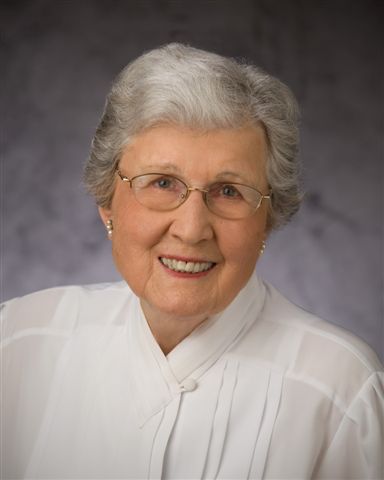 Author Shirley S. AllenCatherine and I did the same thing with our nonfiction book
HOW TO BE A WRITER IN THE E-AGE
. The freebie got us to #1 in free writing books for three days, ahead of the new Eisler-Konrath book, and two of agent Noah Lukeman’s offerings. But then sales went down to well below where they’d been before we went free. We not only got no bounce, but the freebie seems to have worked against us.
Author Shirley S. AllenCatherine and I did the same thing with our nonfiction book
HOW TO BE A WRITER IN THE E-AGE
. The freebie got us to #1 in free writing books for three days, ahead of the new Eisler-Konrath book, and two of agent Noah Lukeman’s offerings. But then sales went down to well below where they’d been before we went free. We not only got no bounce, but the freebie seems to have worked against us. Except that it got us some very nice reviews. Thanks to the lovely readers who took the time to write them. Free books that get thoughtful reviews are never wasted. (And it’s still only $2.99, everybody: great deal! And it tells you important stuff about launching your writing career that you won’t get anywhere else, whether you’re self-pubbing or going the traditional route. OK, end of commercial break.)
It was a learning experience. Nonfiction books with a limited audience do not seem to benefit from free give-aways.
In spite of this, we decided to go ahead and offer my mom’s book as a freebie last weekend. Quite frankly, our hopes weren’t that high. This book is a classic cozy set in a small New England town. It’s beautifully written and plotted, but the criminal activity is all offstage. There’s none of the mayhem, high body count or torture fashionable in today’s crime fiction. But it’s also not one of the crafty cozies that are currently popular with older readers: nobody knitted or tatted or made throw pillows out of dryer lint. The sleuths are a couple of sophisticated middle-aged married people who love each other--much more Nick and Nora Charles than Alex Cross or Stephanie Plum.
But what happened next was epic!
ACADEMIC BODY shot up to the top ten in the thrillers and suspense category. And it started to climb up the top 100 in the entire Kindle free store. By the second day, it was at #2 in thrillers—probably the most competitive fiction genre—and #30 of all free Kindle books. And it stayed there.
And, curse you Bob Mayer, it might even have gone to #1 if Bob’s new Black Ops thriller hadn’t been free the same weekend.
By the time ACADEMIC BODY went off its three free days, it had over 10,500 downloads. Remember how I said last month that the bump a book gets from a New York Times Book Review cover can be as little as 82 actual books sold? Compare that with moving 10,500 books!
Obviously the big difference is that the NYT author’s book cost money and my mom’s didn’t. But still, over 10K people decided to download her book to their Kindles. Considering how many 1000s of Kindle books are free at any given moment, and how many of us have Kindles already loaded than more books than we can read in the next 10 years, it’s pretty durn amazing.
So why did this particular free book climb to such heights?
Here are some things I suspect may have helped:
1) The Perfect Cover. The cover of ACADEMIC BODY, designed by Patricia L. Foltz of Mainly Murder Press, shows an inviting room bathed in amber light—lined with books—and just the legs of a deceased person in the shadowy foreground. It’s the classic “body in the library.” It immediately brings to mind Agatha Christie.
And those books in the library are so inviting and warm. Perhaps as we lose paper books to technology, we’re already getting a little nostalgic for them? To a reader, there’s hardly anything more inviting than a cozy room full of books.
The cover is a seductive invitation to read.
2) A Great Bio. I rewrote my mother’s bio for this book launch, adding material about her academic achievements. In the past, publishers haven’t wanted to advertise that she has a PhD in English Literature and wrote the definitive book on the life of London’s great 19th century Shakespearean actor-manager, Samuel Phelps. Her publishers were afraid she’d sound stuffy and boring.
But in today’s world of so much not-ready-for-prime-time self-publishing, I thought readers would like to know the author has a superb command of the English language. Plus the protagonist of ACADEMIC BODY is a theater director. I figure it’s a plus to know the author has in-depth knowledge of the subject matter.
3) An Established Social Network. No, my Mom isn’t spending her days on Facebook, Twitter and Tumblr. The network is mine. It was easy to use my own connections to promote her book. Plus I went to some senior sites and FB and LinkedIn pages for alums of Bryn Mawr—our alma mater. That allowed me to reach out to people who aren’t in the current writing scene and didn’t know about free Kindle ebooks, but were very interested in books about academia. And of course they wanted to support a fellow alum.
4) Serendipity. We didn’t think about the Olympics when we chose last weekend, but I think the games worked in our favor. Most of the people interested in action and sports were glued to the tube, watching the spectacular competitions in London—so the readers who might be more likely to buy an action-adventure type of thriller were otherwise occupied. The non-sports fans were at loose ends, looking for some less sweaty entertainment.
5) Writing in a Genre that’s Under-Represented by Mainstream Publishing. It seems readers still want classic mysteries. In fact, they may be starved for them. Contemporary mysteries usually fall into the James Patterson/Steig Larsson category (graphically violent serial killer thrillers) or Janet Evanovich types (rom-com mysteries like mine) or the crafty cozies I mentioned earlier.
But classic mysteries are puzzles that engage the mind and leave the reader satisfied that justice has prevailed. At the end of a classic mystery, all is right with the world. Evolved intelligence has prevailed over primitive brute force. Reading a classic mystery gives order to the universe--like listening to Mozart.
After the spectacular success of the freebie days, ACADEMIC BODY did get a nice bounce. Not enough for my mom to trade in her old Acura, but the book is selling much, much better than it did before the freebie days. And the paper version from Mainly Murder seems to be moving, too.
Does that mean giving away free books will work for everybody? No. As I say, it didn't work for our nonfic. book. And I’m not sure how much longer cheap and free books are going to be of benefit as marketing tools.
Mark Coker of Smashwords said in an interview with Forbes this week that he thinks many self-publishers are undervaluing their work. Like Amazon, Smashwords has changed its algorithm so it no longer counts free and 99-cent books as “sales” with the same weight as sales of books priced at $2.99 and up. Mr. Coker says he “found that the $2.99 to $5.99 price band appears to be the sweet spot for indie authors, those prices over-performed the average in terms of income for the author. But 99¢ and $1.99 under-performed.”
And free? It still seems to be working for some fiction right now--it sure did for my mom. Her next book—a historical—is due out next month and we'll see how that works out. But whatever happens, I know nothing's going to stand in the way of her dreams!
What about you, scriveners? Have give-aways worked to promote your work? Do you read a lot of free Kindle books? How do you feel about free ebooks? Do you have a dream you'll never give up on?
.jpg) Don’t forget the Central Coast Writers Conference in beautiful San Luis Obispo CA. It will be held on September 21st and 22nd on the campus of Cuesta College. Last year I got to meet Mark Coker in person there. This year will have an equally exciting roster of speakers and presenters (including yours truly.)
Don’t forget the Central Coast Writers Conference in beautiful San Luis Obispo CA. It will be held on September 21st and 22nd on the campus of Cuesta College. Last year I got to meet Mark Coker in person there. This year will have an equally exciting roster of speakers and presenters (including yours truly.) 


August 5, 2012
Terence Stamp: Actor, Writer, Publisher—His Journey from Academy Award Nomination to Unemployment and Back
 I'm so excited and honored to be hosting a superstar today! Terence Stamp is one of my favorite actors of all time. His career has spanned more than four decades, from his Academy-nominated and Golden Globe-winning title role in Billy Budd to his Cannes Film Festival Best Actor award winning role in The Collector to his portrayal of General Zod in the Superman movies, to Priscilla, Queen of the Desert and The Limey in the ‘90s to his more current work beside actors like Tom Cruise and Matt Damon.
 He’s an actor’s actor—every character nuanced and detailed —no two characterizations alike. And it turns out he’s an author as well. I’ve just started his third memoir, Rare Stamps , and it reads like a novel. A brisk, entertaining read. What a life he’s had! And it turns out he’s a neighbor—He lives in Ojai, CA about 150 miles south of Los Osos.
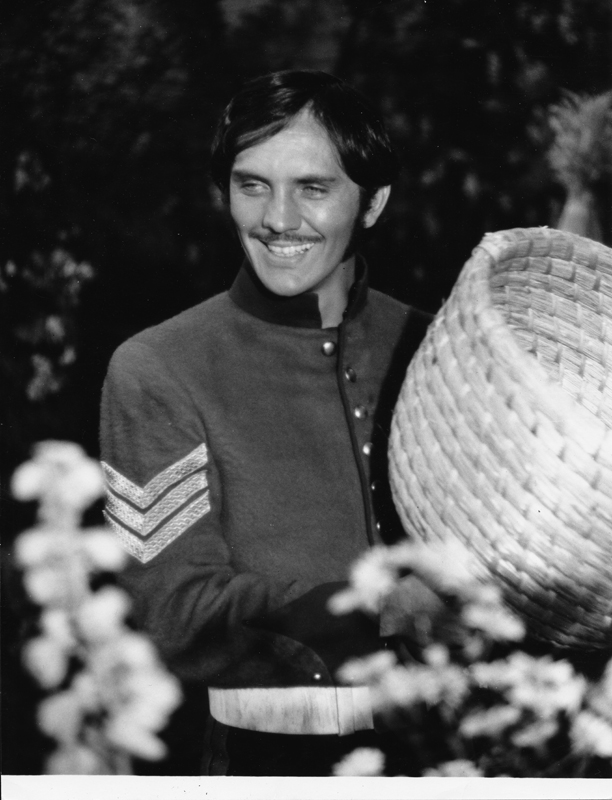 And he’s offering a giveaway! One lucky commenter can win a free CD of Mr. Stamp reading Rare Stamps in that famous voice. Just put “CD” in your comment and you’ll be in the running for the prize. The winner will be chosen by the number generator at Random.org and announced next Sunday, August 12.
 Terence is being interviewed today by Alicia Street, friend of the blog and an award-winning author in her own right. She is also a regular contributor to the WG2E blog and creator of Reader2Author interviews.
Interview with Terence Stamp, Author

Alicia: How does the process of writing differ from the process of acting?
Terence: When I am performing/acting at my best, the work is spontaneous; it exists in the moment. I am the character that I am portraying. Yet, when I am unable to get into the moment, for whatever reasons, I have fifty years of experience, or craft, to fall back and rely upon. So I can always get through ‘take’ or the film.
In writing, when it is going well, in the flow so to speak, it is the same. It is spontaneous, in the moment. But when it is not going well, I do not have my craft to rely on, as I am trained in performing, not writing. So I must stop. Wait for inspiration. It is a much more stop-and-go process.
Alicia: You have three memoirs. How did each affect you while mining the territory in those different phases of your life and career? For example, the first, Stamp Album, takes readers from your early days growing up on London’s East End, to rooming with fellow struggling actor Michael Caine, up to your initial success in the title role of Peter Ustinov’s film based on Herman Melville’s Billy Budd.
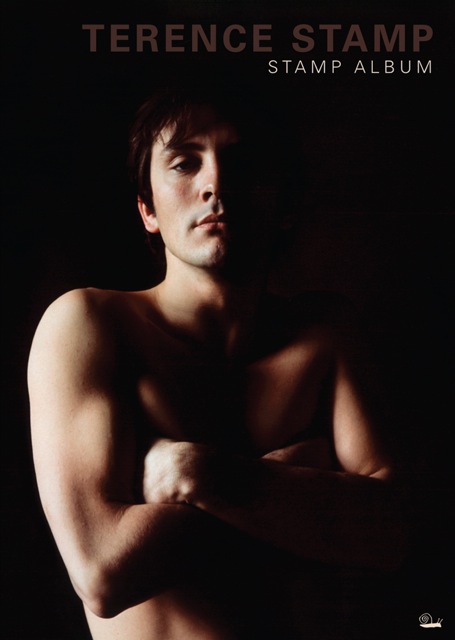 Terence: Stamp Album was like a therapy. I was on the set of Wall Street when my mother passed away. I was very close to her and the fact of her passing and me being on a different continent was difficult to bear. I began to write, in my hotel, during breaks in the film, anytime I could get the chance. Recalling the time we had spent and all the things we had done together, and how she had influenced my life and my art. The words just flowed out of me. It was my catharsis, my therapy, and the first memoir came rather easily.
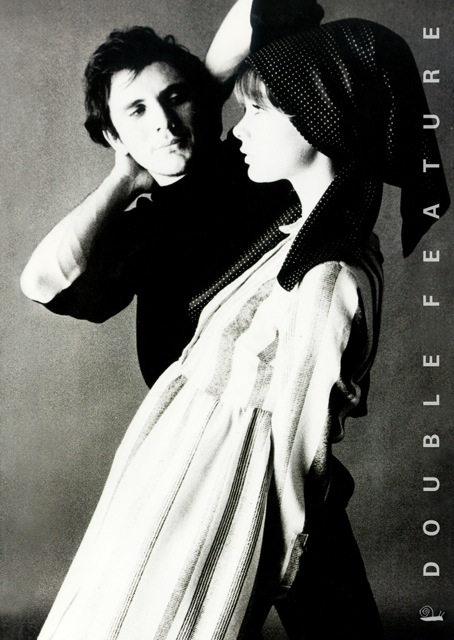
 Alicia: The second, Double Feature is about that special time when you were “the face” of the Sixties, an actor in demand and being seen with the beautiful people of Hollywood and London, that period when your career really took off.
Terence: Yes, Double Feature was actually a continuation of Stamp Album. I wrote it because the first was well received and people wanted to know what happened next in my life and in my career. Also, by then, I enjoyed the process of writing…when the words flowed, that is.
Alicia: What about the newest memoir, Rare Stamps? What inspired you to write that?
Terence: It was the idea of my friend Richard LaPlante. He kept talking about a book for young actors and other artists, something I would write from my own experience, which has included stints at the very top as well as the bottom of my profession, in other words from an Academy nomination to unemployment. He thought it would be inspirational, as well as reassuring, and it would give me an opportunity to talk about the various physical and mental disciplines that have sustained and developed me throughout the years. I took him up on the idea and went to work scribbling.
Alicia: Well, you certainly have had a long career, being born before the first WW II bomb hit London and you’re still working. I liked what you said at a press junket during the release of the film Valkyrie: “Hitler missed a big chance to prevent some of the dodgier movies I have made . . .” I know in addition to the big commercial films like Get Smart and The Adjustment Bureau, you like to do smaller, art films.
 Terence: Yes, I just finished Song For Marion, a small film in which I play an elderly pensioner who finds redemption through his voice and song. I was also genuinely moved by the screenplay.
Alicia: How does an author’s creation of a character differ from an actor’s creation of a character? (Note: this question was suggested by our own Ruth Harris.)
Terence: I have only written one novel, The Night, so my knowledge here is somewhat limited, but when I was writing it, my characters and scenes had to come right out of the ether. Everything was created from smoke, so to speak. Yes, my life experience and memories of people I have known helped in the shaping of characters and places, but it required me to conjure and project. In a screenplay, it’s all there. The screenwriter has already done the conjuring, the work. You may add a touch to his or her creation, but the basic form is already in front of you. Your job is to embody, not to pull the rabbit from the hat.
Alicia: Hmm. Pulling a rabbit from a hat. That’s a great metaphor for the act of writing fiction. Has writing had any influence on your acting?
Terence: There is probably a sub-conscious connection. You know, like being in the moment and going into the depths of your psyche to recall certain feeling and emotions, but generally, I don’t feel one as linked to the other. They, for me, are separate disciplines.
Alicia: Getting back to the memoir, I noticed that aside from giving the reader a behind the scenes look, you talk about the process of art and career itself.
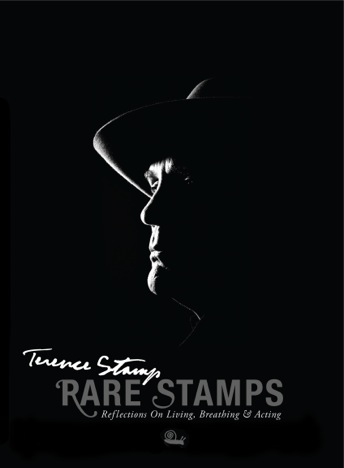 Terence: Richard pushed me to include ways in which I dealt with my own insecurities, including unemployment. And to write about my experiences in India, studying with various masters, and a lot of very personal stuff that molded me, not only as an actor, but also as a man.
 Alicia: I know you do yoga and have been into healthy eating for many years. Now you’re also involved in a publishing venture, right? Escargot Books. What’s the story on that?
Terence: Escargot Books was the brainchild of my friend Richard LaPlante, thriller writer and entrepreneur. He knew I had the rights to my earlier books. And he brought in another friend, author Peter Mayle, who had some older out-of-print works. It began as a small group of friends, all of a certain age and relatively successful in our various fields. But it is growing into an independent publishing company, with Richard as the editorial director, offering new books as well.
Alicia: Like the new memoir coming from another friend, Rolling Stones founder Andrew Loog Oldham. Before we stop, I just have to ask you—what was your favorite role?
Terence: From my early career, I would say the serial killer in The Collector. From the modern roles, it would be Wilson in The Limey, which took me back to my East End roots.
***
How about you, scriveners? Were you surprised to find out Mr. Stamp is an author and publisher? Alicia says she’ll stop by and answer our questions. Don't forget to put "CD" in your comments to be eligible to win the CD of Rare Stamps.
My question is: Is Escargot Books planning to reissue Mr. Stamp’s novel, The Night?
***
Don't forget the Central Coast Writers Conference is coming up next month. I'll be teaching a course based on my book with Catherine Ryan Hyde: HOW TO BE A WRITER IN THE E-AGE . The paper version of the book should be making its debut at the Conference.

July 29, 2012
How To Get Your Book Rejected: A Former Big 6 Editor Gives 5 Tips for Sure-Fire Rejection.
...Some lighthearted "advice" from Ruth Harris
First, a reminder: next week we're going to have a visit from a MOVIE STAR!

On August 5th,, Golden Globe Winner and Academy Award-nominated actor Terence Stamp, who is also a novelist and memoirist, will be here talking about his writing process and his new publishing company.
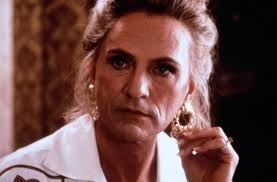 Yes, that Terence Stamp You know how I’m always talking about the importance of Social Media? Well here’s an example. An iconic movie star has asked to visit our little blog, because here in the e-age, blogs can be as important as The New York Times in reaching the public.
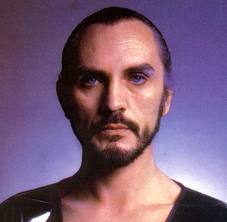 I'm talking about General ZodSee why you need to have a blog searchable by your own name, with your contact information displayed prominently? This week we have a lighthearted look at rejection from Ruth Harris, who had to tackle mountains of slush in her days as an editor at Dell, Bantam and Kensington.
We know you seasoned scriveners would never make these mistakes, but do pass on the info to your newbie friends out there. Everybody was a newbie once. And even though we laugh at this stuff now, I think we’ve all been guilty of a few of these. I know I did that thing with the heroine looking in the mirror in about 5 stories as well as my first novel.
Do notice that Ruth has hot new covers on her Romantic Women's fiction titles--and a new title for them. They're now the Park Avenue Series. Full of Mad Men-era Manhattan glitz and glamour. Sizzling summer beach reads!
--Anne
Crave Rejection?5 Never-fail, 100% Guaranteed Tips and Tricks To Absolutely, Positively Raise Your Anemic R-Quotient: by Ruth Harris
 Are your Rejection-levels too low? Is publication coming too easily? Did your publisher's promo/ad campaign turn your book into an overnight blockbuster? Did that mega-million movie deal just fall from the sky into your lap?
If the answer is yes, if you feel you are not paying your dues, if you are not receiving an adequate, soul-satisfying number of rejections, here are some sure-fire, failure-proof ways to pump up your faltering R-score.
1) Choose the Wrong Agent
You’ve written the best horror-thriller-mystery ever. Your villain makes Hannibal Lecter look like a pussycat. Your victims are so vulnerable, defenseless and forlorn a stone would weep. Your prose sparkles. Your grammar is of such flawless perfection a revision of Strunk & White is being written at this moment to acknowledge your excellence. Your manuscript has not one single typo. Your use of the Oxford comma and the activating hyphen are impeccable. Your ending will cause the reader’s hair to stand on end. You’ve worked for years, neglected your spouse and children, gone without food and sleep. The time has come at last for submission. Which lucky agent will get first look?If you are determined to add to your pile of rejection slips, the answer is obvious: send it to agent who specializes in Romance.
OTOH: If you might just conceivably be interested in avoiding rejection, why not do some research first? Find out which agent specializes in the genre you write. That agent will be up on all the latest developments in the market you’re trying to break into and will have close contacts with the editors who are looking for exactly what you write.
2) Embrace the cliché.
Oooooh, a dog! Everyone loves dogs. One who’s smart—or maybe a smart-ass. One who talks! Maybe even uses the f-word. Wow! A talking dog! A dog who talks dirty! You want to reach the widest readership possible. So you think of a plot in which the smart/smart-ass trash-talking dog helps the hero/heroine get the job/meet Mr. or Ms. Right. What could go wrong? Every agent and editor in town knows all about it. He/she has read that story a million times. He/she knows the ending from the first page. Yawn. Fidget. Rejection guaranteed.
More ideas straight out of cliché-ville:
Start your book with the MC looking into the mirror and contemplating The Meaning Of Life. Or the girl who wakes up to find bite marks on her throat and realizes—OMG!—her boyfriend is a vampire. And don’t forget the where-am-I? opening: the guy who opens the door to his house/condo/garage/office and steps over the threshold only to discover he’s shattered the time-space continuum and is lost in a strange, far-away galaxy.
Moral: Read, read and read. Become familiar with the work of the bestselling writers in your genre. Study—and then analyze—your market. Figure out what’s selling and what’s not selling. If the characters or plot have been done so many times they’ve reached cliché status, you must come up with the genius twist, the brilliant why-didn’t-I-think-of-that?
3) Work the phone.
Keep in contact! Make the connection!! That’s what phones are for, aren’t they? Call the agent you’ve just sent your manuscript to every morning and then again every afternoon. Be sure to track down his or her home phone/cell phone so you can call in the evening, too. Once at dinnertime so you can interrupt the meal. Then again later to wish him/her good night. And don’t forget 3AM so you can wake the agent up. All you want to know is if s/he has read your book and give him/her the opportunity to tell you how wonderful it is and how your book is going to change the future of publishing.
Is that too much to expect? They’re professionals, aren’t they? Their living depends on their writers, doesn’t it? Of course they want to hear from you. They’re been on tenterhooks waiting for you to call. Of course they’ll drop whatever they’re doing to talk.
Um, no. Of course they’re going to reject you.
Conclusion: Hands off the phone! No matter how anxious you are, no matter how desperate you feel, stifle that impulse. Go to the gym. Binge on ice cream. Watch reruns of Law and Order. Do the laundry. Do anything! Just stay away from the phone.
4) Have fun with anachronistic language.
You’ve written a Victorian-era romantic suspense novel. You’ve researched until your notes are longer than the manuscript. You’ve had to buy new glasses—your eyesight has deteriorated because of the time you’ve spent on Google and in the library. Every frill and furbelow on your heroine’s dress is accurately described. The descriptions of period architectural details from plinths to fasciated entablature would impress even Frank Lloyd Wright. You’ve researched period hairstyles in such depth that your characters—literally—never have a hair out of place.
Then they open their mouths to speak.
“Been there, done that,” says your elegant, gentleman of high birth.
“Whatever,” shrugs the heiress he’s courting.
Ooops.
You’re into nails-on-a-blackboard territory.
You want an agent to shriek in horror? You’re hoping an editor will cringe and reach for the smelling salts? You’re on the hunt for rejection?
Congratulations. You’ve just succeeded beyond your wildest dreams.
Lesson: Watch your language—and your dialogue. Just as fashion changes so does the way people speak. 1940’s slang is different from 1960’s slang and the way people talk today is different from the way they talked back in the 1950’s. Listen to what people say—and notice the way they say it. Vintage movies provide a guide to appropriate dialogue: whether your characters are soldiers in World War II, gangsters in the 1930’s or advertising executives in the 1950’s (Mad Men, anyone?).
5) Be a trend setter with grammar and punctuation!
Just because every grammar guru insists that subjects and verbs have to match doesn’t mean that you have to be a slave to “the rules.” You’re much more imaginative that that! You’re a creative person. You don’t follow trends. You start them!
Just because professional writers heed the suggestions of proofreaders doesn’t mean you have to. So what if “Sue” becomes “Margaret” halfway through your manuscript. The editor will know who you mean. After all, “Sue” and “Margaret” have the same color hair, don’t they?
Same thing with that tangle of it, its and it’s and their muddled thicket of antecedents. You know exactly what you mean and who you’re referring to. And if you know, so will the reader. Well, won’t they? Isn’t that their part of the job?
And just because Speed Kills, don’t for one minute think that applies to you! Go ahead. Send that manuscript out without editing, cutting, revision, proofreading. You’re different. Your first drafts are magic. Even your mother says so.
Last of all, on your pilgrimage as you search for ever more rejection, don’t ever ignore the always-reliable habits of the lazy writer:
Exclamation point infestation.Adverb excess and adjective overload.Repetition of the same words and phrases.Comma mistreatment and semi-colon abuse.Typo tolerance. So, fellow scriveners, if you find the experience—and the pain and resulting soul calluses—provided by rejection essential to your journey to success, now you know exactly what do to and how to do it to get more of what you need and want. Good luck!
How about you? Do you have some favorite rejection-getters of your own? Anything you used to do that you cringe about now?
***
Whether you're a newbie sending out your first queries or a seasoned writer who’s looking at all the publishing options open to today’s writers, there’s no better place to learn how to avoid doing embarrassing stuff than a writers conference. Anne will be teaching at the Central Coast Writers Conference in San Luis Obispo next September. Early Bird discounts are available if you register now.
Plus a FREE BOOK ALERT!! The elegantly plotted academic cozy ACADEMIC BODY, by Anne's mom, Shirley S. Allen, will be free for Kindle on Monday and Tuesday and Wednesday of this week. Also going free at the same time is my Kindle short story, BETTY JO STEVENSON RIDES AGAIN.

First, a reminder: next week we're going to have a visit from a MOVIE STAR!
On August 5th,, Golden Globe Winner and Academy Award-nominated actor Terence Stamp, who is also a novelist and memoirist, will be here talking about his writing process and his new publishing company.
Yes, that Terence Stamp You know how I’m always talking about the importance of Social Media? Well here’s an example. An iconic movie star has asked to visit our little blog, because here in the e-age, blogs can be as important as The New York Times in reaching the public.
I'm talking about General ZodSee why you need to have a blog searchable by your own name, with your contact information displayed prominently? This week we have a lighthearted look at rejection from Ruth Harris, who had to tackle mountains of slush in her days as an editor at Dell, Bantam and Kensington. We know you seasoned scriveners would never make these mistakes, but do pass on the info to your newbie friends out there. Everybody was a newbie once. And even though we laugh at this stuff now, I think we’ve all been guilty of a few of these. I know I did that thing with the heroine looking in the mirror in about 5 stories as well as my first novel.
Do notice that Ruth has hot new covers on her Romantic Women's fiction titles--and a new title for them. They're now the Park Avenue Series. Full of Mad Men-era Manhattan glitz and glamour. Sizzling summer beach reads!
--Anne
Crave Rejection?5 Never-fail, 100% Guaranteed Tips and Tricks To Absolutely, Positively Raise Your Anemic R-Quotient: by Ruth Harris
 Are your Rejection-levels too low? Is publication coming too easily? Did your publisher's promo/ad campaign turn your book into an overnight blockbuster? Did that mega-million movie deal just fall from the sky into your lap?
If the answer is yes, if you feel you are not paying your dues, if you are not receiving an adequate, soul-satisfying number of rejections, here are some sure-fire, failure-proof ways to pump up your faltering R-score.
1) Choose the Wrong Agent
You’ve written the best horror-thriller-mystery ever. Your villain makes Hannibal Lecter look like a pussycat. Your victims are so vulnerable, defenseless and forlorn a stone would weep. Your prose sparkles. Your grammar is of such flawless perfection a revision of Strunk & White is being written at this moment to acknowledge your excellence. Your manuscript has not one single typo. Your use of the Oxford comma and the activating hyphen are impeccable. Your ending will cause the reader’s hair to stand on end. You’ve worked for years, neglected your spouse and children, gone without food and sleep. The time has come at last for submission. Which lucky agent will get first look?If you are determined to add to your pile of rejection slips, the answer is obvious: send it to agent who specializes in Romance.
OTOH: If you might just conceivably be interested in avoiding rejection, why not do some research first? Find out which agent specializes in the genre you write. That agent will be up on all the latest developments in the market you’re trying to break into and will have close contacts with the editors who are looking for exactly what you write.
2) Embrace the cliché.
Oooooh, a dog! Everyone loves dogs. One who’s smart—or maybe a smart-ass. One who talks! Maybe even uses the f-word. Wow! A talking dog! A dog who talks dirty! You want to reach the widest readership possible. So you think of a plot in which the smart/smart-ass trash-talking dog helps the hero/heroine get the job/meet Mr. or Ms. Right. What could go wrong? Every agent and editor in town knows all about it. He/she has read that story a million times. He/she knows the ending from the first page. Yawn. Fidget. Rejection guaranteed.
More ideas straight out of cliché-ville:
Start your book with the MC looking into the mirror and contemplating The Meaning Of Life. Or the girl who wakes up to find bite marks on her throat and realizes—OMG!—her boyfriend is a vampire. And don’t forget the where-am-I? opening: the guy who opens the door to his house/condo/garage/office and steps over the threshold only to discover he’s shattered the time-space continuum and is lost in a strange, far-away galaxy.
Moral: Read, read and read. Become familiar with the work of the bestselling writers in your genre. Study—and then analyze—your market. Figure out what’s selling and what’s not selling. If the characters or plot have been done so many times they’ve reached cliché status, you must come up with the genius twist, the brilliant why-didn’t-I-think-of-that?
3) Work the phone.
Keep in contact! Make the connection!! That’s what phones are for, aren’t they? Call the agent you’ve just sent your manuscript to every morning and then again every afternoon. Be sure to track down his or her home phone/cell phone so you can call in the evening, too. Once at dinnertime so you can interrupt the meal. Then again later to wish him/her good night. And don’t forget 3AM so you can wake the agent up. All you want to know is if s/he has read your book and give him/her the opportunity to tell you how wonderful it is and how your book is going to change the future of publishing.
Is that too much to expect? They’re professionals, aren’t they? Their living depends on their writers, doesn’t it? Of course they want to hear from you. They’re been on tenterhooks waiting for you to call. Of course they’ll drop whatever they’re doing to talk.
Um, no. Of course they’re going to reject you.
Conclusion: Hands off the phone! No matter how anxious you are, no matter how desperate you feel, stifle that impulse. Go to the gym. Binge on ice cream. Watch reruns of Law and Order. Do the laundry. Do anything! Just stay away from the phone.
4) Have fun with anachronistic language.
You’ve written a Victorian-era romantic suspense novel. You’ve researched until your notes are longer than the manuscript. You’ve had to buy new glasses—your eyesight has deteriorated because of the time you’ve spent on Google and in the library. Every frill and furbelow on your heroine’s dress is accurately described. The descriptions of period architectural details from plinths to fasciated entablature would impress even Frank Lloyd Wright. You’ve researched period hairstyles in such depth that your characters—literally—never have a hair out of place.
Then they open their mouths to speak.
“Been there, done that,” says your elegant, gentleman of high birth.
“Whatever,” shrugs the heiress he’s courting.
Ooops.
You’re into nails-on-a-blackboard territory.
You want an agent to shriek in horror? You’re hoping an editor will cringe and reach for the smelling salts? You’re on the hunt for rejection?
Congratulations. You’ve just succeeded beyond your wildest dreams.
Lesson: Watch your language—and your dialogue. Just as fashion changes so does the way people speak. 1940’s slang is different from 1960’s slang and the way people talk today is different from the way they talked back in the 1950’s. Listen to what people say—and notice the way they say it. Vintage movies provide a guide to appropriate dialogue: whether your characters are soldiers in World War II, gangsters in the 1930’s or advertising executives in the 1950’s (Mad Men, anyone?).
5) Be a trend setter with grammar and punctuation!
Just because every grammar guru insists that subjects and verbs have to match doesn’t mean that you have to be a slave to “the rules.” You’re much more imaginative that that! You’re a creative person. You don’t follow trends. You start them!
Just because professional writers heed the suggestions of proofreaders doesn’t mean you have to. So what if “Sue” becomes “Margaret” halfway through your manuscript. The editor will know who you mean. After all, “Sue” and “Margaret” have the same color hair, don’t they?
Same thing with that tangle of it, its and it’s and their muddled thicket of antecedents. You know exactly what you mean and who you’re referring to. And if you know, so will the reader. Well, won’t they? Isn’t that their part of the job?
And just because Speed Kills, don’t for one minute think that applies to you! Go ahead. Send that manuscript out without editing, cutting, revision, proofreading. You’re different. Your first drafts are magic. Even your mother says so.
Last of all, on your pilgrimage as you search for ever more rejection, don’t ever ignore the always-reliable habits of the lazy writer:
Exclamation point infestation.Adverb excess and adjective overload.Repetition of the same words and phrases.Comma mistreatment and semi-colon abuse.Typo tolerance. So, fellow scriveners, if you find the experience—and the pain and resulting soul calluses—provided by rejection essential to your journey to success, now you know exactly what do to and how to do it to get more of what you need and want. Good luck!
How about you? Do you have some favorite rejection-getters of your own? Anything you used to do that you cringe about now?
***
Whether you're a newbie sending out your first queries or a seasoned writer who’s looking at all the publishing options open to today’s writers, there’s no better place to learn how to avoid doing embarrassing stuff than a writers conference. Anne will be teaching at the Central Coast Writers Conference in San Luis Obispo next September. Early Bird discounts are available if you register now.
Plus a FREE BOOK ALERT!! The elegantly plotted academic cozy ACADEMIC BODY, by Anne's mom, Shirley S. Allen, will be free for Kindle on Monday and Tuesday and Wednesday of this week. Also going free at the same time is my Kindle short story, BETTY JO STEVENSON RIDES AGAIN.
July 22, 2012
Cybermen, The Colorado Tragedy, and the Sociopath in the Comment Thread: Don't Add to the Crazy
We still know nothing of the motives of the demented gunman who perpetrated the horrors at the screening of The Dark Knight Rises on Thursday night—and my heart goes out to the victims of that tragedy.
But I think it’s important to note that earlier that day, the Rotten Tomatoes movie review site had to disable comments on the film The Dark Knight Rises because of death threats against movie reviewers who hadn’t loved the film.
Yeah. Death threats. Over reviews. People got so heated in the comment thread they were threatening to kill reviewers of a film they’d never even seen.
Mob behavior is always dangerous, but mobs form more easily out here in Cyberia. When they spill over into real life, real tragedy happens.
I’m not saying there was a cause and effect situation with the Rotten Tomato Dark Knight Rises death threats and the horrific event in Colorado, but in a larger sense they are linked. The guy didn’t choose to attack the audience at a screening of Magic Mike or Ted.
Violent acts are usually preceded by violent talk. And there’s an awful lot of it these days.
Since I’ve been urging new authors to become active in social media, I think it’s important to mention something about its perils. When I started interacting online a few years ago, I seriously didn’t have a clue about the evils that lurk in the dark corners of the Interwebz.
They are many. With the anonymity afforded by the Webz, people say things they’d never say in person. Especially if they’re using a “screen name” or posting as anonymice. (Radio host Dave Congalton had a great discussion about the dangers of anonymous comments on his show on July 17th. You can listen to a podcast here.)
For some the Web is the opposite of “Cheers”—it’s a place where nobody knows your name. Anonymous posters may feel as if they’re wearing cloaks of invisibility, and can do whatever comes into their heads and never suffer consequences because its’ “not real.” (Another reason I urge writers to use their own names in all their online activity.)
Anonymous posters may perceive the others they interact with as “invisible” too—after all, a series of digits is not a person. They forget those digits represent actual human beings with real feelings.
They can also represent real sociopaths.
In her bestselling self-help book, The Sociopath Next Door, Dr. Martha Stout says that one in every twenty-five people fits the DSM criteria for “anti-social disorder” –people defined as “sociopaths.” These are people who have no conscience and no capacity for empathy.
That means in every comment thread or forum with more than twenty-five entries, a sociopath could be lurking. Your hyperbolic comment or snarky post may be taken literally by a demented person—which can lead to tragedy.
So we need to weigh our words and check our facts just as carefully online as we do when we’re speaking in person.
Also, the anonymity of the Webz can make perfectly nice, sane people suspend their own empathy when they get riled into thinking they’re supporting a just cause, dissing a “public figure” and/or defending one of their own.
People will stop by a forum or a blog, let an incendiary remark spark their rage--and suddenly they’re part of an army of socipathic Cybermen bent on destroying everything in their path.
I’ve been swept up in some Cybermen armies myself, which I regret deeply. (For the non-Whovians out there, Cybermen are a fictional army of villainous cyborgs from the TV show Dr. Who. They have human brains, but no emotions aside from the occasional bout of rage.)
Some of my own Cyberperson behavior happened when I let myself go along with the crowd in a blog thread and didn’t check facts. Other times I got involved when I jumped in to defend someone.
Unfortunately, whatever our intentions, if we’re swimming in the cesspool, we’re part of the stink.
Sometime last year I saw a blogpost about an author who is one of my idols. He was accused of “unethical” behavior by a self-appointed group of amateur “literary police” who seem to be remarkably unschooled in the business of publishing. Dozens joined in the comment thread, each in higher dudgeon than the one before.
The result was a dogpile of stupid and nasty. A mass temper-tantrum. It made me furious. So I pounded off a comment to defend my hero.
Trouble was, I was so angry, I hit enter too soon and my comment sounded as if I was agreeing with the meanies.
I got an email a moment later from my idol. It said “Et tu, Anne?”
I don’t know when I have felt like such a worm. I went back to the post and tried to clear up what I had said, but the damage was done. The classy writer forgave me, but I didn’t really forgive myself.
A few months later I personally became the target of the same literary Cybermen army. Their rage had been sparked by posts and tweets by a few people who misinterpreted one of my pieces on this blog.
I endured a similar dogpiling of hate and self-righteous rage—almost all anonymous.
Including actual death threats sent to my home by people who said they were "watching me" and "had a gun."
This week I was introduced to one of the bloggers who had dissed me. She had no inkling of the tsunami of crazy she had unleashed. She’d simply meant to be snarky and funny and had believed the voices of “righteousness” who accused me of some sort of deviousness I hardly understood.
UPDATE: here's an absolutely awesome graphic by author Dalya Moon in response to this post. Dalya, you're my hero!

It’s important to remember we judge others by what we know. A kind and truthful person expects kindness and truth from others; a manipulator sees deviousness behind every smile; and a sociopath will project the contents of his own damaged soul onto the entire population. That means when you habitually accuse others, you’re saying more about yourself than you are about the people you accuse.
Luckily the snarky blogger turned out to be a kind and truthful person who had expected her sources to be the same. She apologized sweetly and publicly and I’m sure we’re going to be friends.
But unfortunately, words can’t be unsaid. I have to stay away from the places where the anonymous Cybermen army lurks. A lot of writers’ forums are off limits for me, because any mention of my name lets loose the verbal violence.
True sociopaths don’t mind being seen as evil—they’re usually pretty proud of it. But their Cybermen minions are convinced of their own righteousness, which justifies everything they do, no matter how cruel. They are not rational, so trying to reason with them is futile. They explode in rage when you show kindness to one of their victims or ask them to “have a heart”—because they don’t. They have disabled their own capacity for empathy.
I once saw a thread on a news story about a man who’d murdered his two year old baby in its crib. An anonymous commenter said it served the child right for not carrying a gun. Yeah. I wish I’d known how to do a screenshot then, because it was hard to believe my own eyes. I almost fired off a comment like “have you ever MET a two-year-old?” Until I realized either the guy was being ironic, or he was acting like a two-year old himself. And as any parent (or even an aunt) knows, you do not argue with a two year old. You give him a time-out.
That was when I stopped reading comments on news stories. It’s where the Cybermen live.
But if you’re dealing with social media, eventually you’re going to run into Cybermen, anonymous sociopaths, and even some armed two-year olds.
Here are two things to remember when you’re dealing with an Internet meme of “righteous rage”.
1) Never join in a brawl.
Joining in a barroom brawl just makes it bigger. Either you’ll appear to be joining in the attack on the victim, or you’ll be offering yourself as an even juicier target. (And the sheriff is going to haul the whole tootin' lot of you off to the hoosegow. Go watch some old Western movies.)
2) The old adage is right: “Never argue with a drunk or a fool.”
Of course I have no idea if the people making death threats on Rotten Tomatoes—or the armed two-year-old—were consuming alcohol, but they were drunk: on rage. So are the Cybermen armies. Psychologists who specialize in anger management say that anger can flood the brain with endorphins very like the high of alcohol or cocaine.
One in every 25 people may be a sociopath, but I’d say that here in Cyberia, even more than that will engage in sociopathic behavior. Certainly the people who attacked me (and my idol) didn’t show a shred of empathy.
I would urge everybody who interacts online to weigh your words as heavily as you would if speaking in person—because you’re closer to the “real world” than you think.
And if you see a dogpile of crazy heaping on some designated victim—whether it’s a reviewer, fellow writer, or even someone who's "fair game" like a celebrity or a politician—take a deep breath, step away from the keyboard and repeat the Golden Rule.
If you have turned into an empathy-free Cyberperson, and you don't believe that “others” deserve the same respect you want for yourself, get off the Internet. Go hang out with some real people in the real world. Or pet a real dog.
You aren’t actually a sociopath—remember? Your actions have consequences, even if you feel invisible.
What happened on Thursday night shows that we live in a world full of unspeakable violence.
Don’t let yourself add to it, online or off.
I’d love to have you weigh in here, scriveners. Let’s try to keep political and incendiary statements out, lest we activate an army of sociopathic Cybermen
***
On a much happier note: I have a spectacular announcement. On August 5th, we will have a very, very special guest on this blog. Academy Award-nominated actor Terence Stamp, who is also a novelist and memoirist, will be here talking about his writing process and his new publishing company.
Yes, that Terence Stamp You know how I’m always talking about the importance of Social Media? Well here’s an example. An iconic movie star has asked to visit the blog of little old moi because here in the e-age, blogs can be as important as The New York Times in reaching the public.
I'm talking about General ZodSee why you need to have a blog searchable by your own name, with your contact information displayed prominently?
Also: I've been making a few little tweaks to the template here, since some readers have pointed out the font and links have been a little hard to read. So I changed fonts and darkened the link color. Let me know what you think!

But I think it’s important to note that earlier that day, the Rotten Tomatoes movie review site had to disable comments on the film The Dark Knight Rises because of death threats against movie reviewers who hadn’t loved the film.
Yeah. Death threats. Over reviews. People got so heated in the comment thread they were threatening to kill reviewers of a film they’d never even seen.
Mob behavior is always dangerous, but mobs form more easily out here in Cyberia. When they spill over into real life, real tragedy happens.
I’m not saying there was a cause and effect situation with the Rotten Tomato Dark Knight Rises death threats and the horrific event in Colorado, but in a larger sense they are linked. The guy didn’t choose to attack the audience at a screening of Magic Mike or Ted.
Violent acts are usually preceded by violent talk. And there’s an awful lot of it these days.
Since I’ve been urging new authors to become active in social media, I think it’s important to mention something about its perils. When I started interacting online a few years ago, I seriously didn’t have a clue about the evils that lurk in the dark corners of the Interwebz.
They are many. With the anonymity afforded by the Webz, people say things they’d never say in person. Especially if they’re using a “screen name” or posting as anonymice. (Radio host Dave Congalton had a great discussion about the dangers of anonymous comments on his show on July 17th. You can listen to a podcast here.)
For some the Web is the opposite of “Cheers”—it’s a place where nobody knows your name. Anonymous posters may feel as if they’re wearing cloaks of invisibility, and can do whatever comes into their heads and never suffer consequences because its’ “not real.” (Another reason I urge writers to use their own names in all their online activity.)
Anonymous posters may perceive the others they interact with as “invisible” too—after all, a series of digits is not a person. They forget those digits represent actual human beings with real feelings.
They can also represent real sociopaths.
In her bestselling self-help book, The Sociopath Next Door, Dr. Martha Stout says that one in every twenty-five people fits the DSM criteria for “anti-social disorder” –people defined as “sociopaths.” These are people who have no conscience and no capacity for empathy.
That means in every comment thread or forum with more than twenty-five entries, a sociopath could be lurking. Your hyperbolic comment or snarky post may be taken literally by a demented person—which can lead to tragedy.
So we need to weigh our words and check our facts just as carefully online as we do when we’re speaking in person.
Also, the anonymity of the Webz can make perfectly nice, sane people suspend their own empathy when they get riled into thinking they’re supporting a just cause, dissing a “public figure” and/or defending one of their own.
People will stop by a forum or a blog, let an incendiary remark spark their rage--and suddenly they’re part of an army of socipathic Cybermen bent on destroying everything in their path.
I’ve been swept up in some Cybermen armies myself, which I regret deeply. (For the non-Whovians out there, Cybermen are a fictional army of villainous cyborgs from the TV show Dr. Who. They have human brains, but no emotions aside from the occasional bout of rage.)
Some of my own Cyberperson behavior happened when I let myself go along with the crowd in a blog thread and didn’t check facts. Other times I got involved when I jumped in to defend someone.
Unfortunately, whatever our intentions, if we’re swimming in the cesspool, we’re part of the stink.
Sometime last year I saw a blogpost about an author who is one of my idols. He was accused of “unethical” behavior by a self-appointed group of amateur “literary police” who seem to be remarkably unschooled in the business of publishing. Dozens joined in the comment thread, each in higher dudgeon than the one before.
The result was a dogpile of stupid and nasty. A mass temper-tantrum. It made me furious. So I pounded off a comment to defend my hero.
Trouble was, I was so angry, I hit enter too soon and my comment sounded as if I was agreeing with the meanies.
I got an email a moment later from my idol. It said “Et tu, Anne?”
I don’t know when I have felt like such a worm. I went back to the post and tried to clear up what I had said, but the damage was done. The classy writer forgave me, but I didn’t really forgive myself.
A few months later I personally became the target of the same literary Cybermen army. Their rage had been sparked by posts and tweets by a few people who misinterpreted one of my pieces on this blog.
I endured a similar dogpiling of hate and self-righteous rage—almost all anonymous.
Including actual death threats sent to my home by people who said they were "watching me" and "had a gun."
This week I was introduced to one of the bloggers who had dissed me. She had no inkling of the tsunami of crazy she had unleashed. She’d simply meant to be snarky and funny and had believed the voices of “righteousness” who accused me of some sort of deviousness I hardly understood.
UPDATE: here's an absolutely awesome graphic by author Dalya Moon in response to this post. Dalya, you're my hero!

It’s important to remember we judge others by what we know. A kind and truthful person expects kindness and truth from others; a manipulator sees deviousness behind every smile; and a sociopath will project the contents of his own damaged soul onto the entire population. That means when you habitually accuse others, you’re saying more about yourself than you are about the people you accuse.
Luckily the snarky blogger turned out to be a kind and truthful person who had expected her sources to be the same. She apologized sweetly and publicly and I’m sure we’re going to be friends.
But unfortunately, words can’t be unsaid. I have to stay away from the places where the anonymous Cybermen army lurks. A lot of writers’ forums are off limits for me, because any mention of my name lets loose the verbal violence.
True sociopaths don’t mind being seen as evil—they’re usually pretty proud of it. But their Cybermen minions are convinced of their own righteousness, which justifies everything they do, no matter how cruel. They are not rational, so trying to reason with them is futile. They explode in rage when you show kindness to one of their victims or ask them to “have a heart”—because they don’t. They have disabled their own capacity for empathy.
I once saw a thread on a news story about a man who’d murdered his two year old baby in its crib. An anonymous commenter said it served the child right for not carrying a gun. Yeah. I wish I’d known how to do a screenshot then, because it was hard to believe my own eyes. I almost fired off a comment like “have you ever MET a two-year-old?” Until I realized either the guy was being ironic, or he was acting like a two-year old himself. And as any parent (or even an aunt) knows, you do not argue with a two year old. You give him a time-out.
That was when I stopped reading comments on news stories. It’s where the Cybermen live.
But if you’re dealing with social media, eventually you’re going to run into Cybermen, anonymous sociopaths, and even some armed two-year olds.
Here are two things to remember when you’re dealing with an Internet meme of “righteous rage”.
1) Never join in a brawl.
Joining in a barroom brawl just makes it bigger. Either you’ll appear to be joining in the attack on the victim, or you’ll be offering yourself as an even juicier target. (And the sheriff is going to haul the whole tootin' lot of you off to the hoosegow. Go watch some old Western movies.)
2) The old adage is right: “Never argue with a drunk or a fool.”
Of course I have no idea if the people making death threats on Rotten Tomatoes—or the armed two-year-old—were consuming alcohol, but they were drunk: on rage. So are the Cybermen armies. Psychologists who specialize in anger management say that anger can flood the brain with endorphins very like the high of alcohol or cocaine.
One in every 25 people may be a sociopath, but I’d say that here in Cyberia, even more than that will engage in sociopathic behavior. Certainly the people who attacked me (and my idol) didn’t show a shred of empathy.
I would urge everybody who interacts online to weigh your words as heavily as you would if speaking in person—because you’re closer to the “real world” than you think.
And if you see a dogpile of crazy heaping on some designated victim—whether it’s a reviewer, fellow writer, or even someone who's "fair game" like a celebrity or a politician—take a deep breath, step away from the keyboard and repeat the Golden Rule.
If you have turned into an empathy-free Cyberperson, and you don't believe that “others” deserve the same respect you want for yourself, get off the Internet. Go hang out with some real people in the real world. Or pet a real dog.
You aren’t actually a sociopath—remember? Your actions have consequences, even if you feel invisible.
What happened on Thursday night shows that we live in a world full of unspeakable violence.
Don’t let yourself add to it, online or off.
I’d love to have you weigh in here, scriveners. Let’s try to keep political and incendiary statements out, lest we activate an army of sociopathic Cybermen
***
On a much happier note: I have a spectacular announcement. On August 5th, we will have a very, very special guest on this blog. Academy Award-nominated actor Terence Stamp, who is also a novelist and memoirist, will be here talking about his writing process and his new publishing company.
Yes, that Terence Stamp You know how I’m always talking about the importance of Social Media? Well here’s an example. An iconic movie star has asked to visit the blog of little old moi because here in the e-age, blogs can be as important as The New York Times in reaching the public.
I'm talking about General ZodSee why you need to have a blog searchable by your own name, with your contact information displayed prominently? Also: I've been making a few little tweaks to the template here, since some readers have pointed out the font and links have been a little hard to read. So I changed fonts and darkened the link color. Let me know what you think!
July 15, 2012
Social Media vs. a New York Times Book Review Cover: Which Sells More Books?
Yesterday Catherine Ryan Hyde and I spoke with a wonderful bunch of eager authors at the Digital Authors Seminar in San Luis Obispo. They were full of lots of great questions, some of which I’ll address here on the blog in coming weeks.
We talked about the two events that have caused a seismic shift in the publishing business in the last four years: the introduction of the e-reader and the rise of social media as a marketing tool.
Amazon, Facebook and Twitter: love ’em or hate ’em, they have turned the creaky old publishing industry on its ear.
The way books are marketed has been revolutionized as much as their delivery system.
As publishing insider Alan Rinzler said, on his blog last summer: “That $50K space ad in the New York Times? Forget it. It’s only for the author’s mother.”
Last week an article in Publishers Weekly backed up that statement with some hard evidence. They showed that even a favorable review on the cover of the NYT Book Review—one of the most coveted pieces of real estate in the publishing industry (and the object of most authors' most cherished fantasies) doesn’t do much to bump a book’s sales these days.
Most books they studied did double sales for a short time, usually not more than a week or two, and one quadrupled sales—but most didn’t show more than a modest influence.
And when I say modest, I mean just that. Arlie Russell Hochschild’s The Outsourced Self: Intimate Life in Market Times featured on the May 27th cover, had sold 52 copies the week before. With the NYT cover bump, it sold 134. That’s right: scoring a review on the cover of the NYT Book Review netted a sales increase of 82 actual books.
So let’s compare that with the e-age way of marketing: using social media and free book giveaways on places like Smashwords and Amazon’s KDP Select.
Catherine Ryan Hyde recently self-published her novels When I Found You and Don’t Let Me Go and put them into KDP Select.
For the uninitiated: KDP Select is a program on Amazon that allows members to borrow the book free and any customer to download the book free during 5 days in every 90-day period. (Authors are paid for downloads by members, but not for the general-public freebie days.)
Why do authors want to give their ebooks away free? Because it’s the best possible advertising (as long as you have a great product) and it costs nothing. Zip Zilch Nada.
Why doesn’t everybody do it? There’s one big obstacle. In order to put a book into KDP Select program, you have to give Amazon exclusive rights to sell that ebook. No B&N. No Smashwords. No Kobo. Not even sales from your own site.
OK, so back to Catherine. In the week before its freebie days, When I Found You was selling “in the tens” per month. After it zoomed to #1 on its free days, it continued to sell thousands.
Within a week, Catherine had earned enough on that book alone to buy a car. (A very nice car. A Lexus. I got to ride in it yesterday.)
Then let’s look at Ms. Hochschild, with her coveted NYT real estate. On a trad. pub royalty of 17% or so on 82 units, Ms. Hochschild could barely buy a set of Hot Wheels. (Not to criticize her book. It looks brilliant.)
So e-age marketing wins over the New York Times Book Review cover. (Aside from having something suitable for framing for your Mom.)
But: it’s important to note that Catherine couldn’t have achieved her success with a giveaway alone. An author can offer any number of free books, but if nobody knows they exist, nobody will download them.
That’s why your social media presence is so important. By the time you have a book to sell/give away, you need to have a network in place that can spread the word to thousands.
When Catherine’s second self-pubbed book, Don’t Let Me Go went free last weekend, Catherine tweeted it to her 1150 followers. Since I’m one of them, I retweeted to my 3200 followers. Two followers even thanked me—and because most people don’t thank for tweets—I assume many more downloaded it. I also assume they went on to broadcast the news to all their Tweeple.
This is why Twitter is probably your most important marketing tool. But you have to get that network established long before your book comes out. One of the best ways to do that is to tweet links to things that your readers might be interested in. Write sci-fi? Tweet links to trailers of new sci-fi films, sci-fi bloggers, etc. Write cookbooks? Tweet links to great recipes--not all your own. :-) Write women’s fiction? Tweet everything Jennifer Weiner says about valuing the genre.
The point is to have people in place who have a habit on clicking on your links for good content. Not just your own stuff.
Catherine also did a Facebook promotion coordinated by an outfit called Shindig: a two-hour chat that fans could attend for free. It was a rousing success—and Don’t Let Me Go shot to #1 in the whole Kindle Store and stayed there for three days. It’s now selling better than any of her other books.
This is why you need a social media presence. Yes, even if you do get that NYT review.
I’m aware that people in the know will say the freebie days on Amazon are not working as well as they used to—and may soon not work at all. The Amazon algorithms changed again recently, and the freebie bounce in real sales isn’t as high as it used to be. There’s also the serious drawback of the exclusivity demanded by Amazon to enroll in the KDP Select program that allows the free days.
But no matter what new promo comes up next, chances are pretty certain you’ll only be able to utilize it if you already have a social media platform. Just going on Twitter two weeks before launch and saying “buy my book” (Or worse, hiring somebody to tweet it for you) isn’t going to cut it.
You need to have a network in place. That’s why you want to start now. You don’t necessarily have to Tweet or be on Facebook (Although FB is kind of like the Yellow Pages these days. It’s where people will look for you first, so it’s usually worth it to have at least a “like” page.)
But you can grow your network anywhere: LinkedIn, Goodreads, RedRoom, Pinterest or Tumblr. Or Vlog on You Tube. Find one that works for you and then start making friends. Don’t spread yourself too thin by going on all of them. Check them out and then linger in places where you find kindred spirits.
Yes. Kindred spirits. People you like. Social media is social. So be sociable. It’s like being at a party. Don’t brag or talk about yourself or beat your chest and bellow. Talk about shared interests. Like what books you like to read. What music you like. Your obsession with Dr. Who.
So, even if you're a romance writer, don't just talk romance writing. Instead, you might start exchanging Dr. Who lore with a bunch of people on RedRoom, and pretty soon you’ll find a Whovian who also likes romance. Voila—a potential reader. And yes, it’s possible to relate hot romance with Dr. Who. Here’s a great post at Passionate Reads from Marilyn Campbell.
What about your blog? That’s social media, right? If you have a blog is it OK if you’re not on other social media?
Sure. As long as you use that blog to network—going to other blogs and commenting and making friends. Just sitting there in your lair writing about your book and attracting three hits a month isn’t going to help sell your book. For info on how to start an author blog, see my blogpost on How Not to Blog, or read my How to Blog series in the book I’ve written with Catherine, HOW TO BE A WRITER IN THE E-AGE.
Reminder: I strongly urge new and unpublished writers NOT to blog their WIP or post excerpts from an unpublished piece! That’s giving away your first rights and will limit your book’s publishability. It’s OK to blog about writing some of the time when you’re starting out--that’s a way to make friends with other writers and people in the industry. I know a number of authors who found their agents or publishers from recommendations from other writers they met through their blogs.
And I think I should mention this in every post, because about 90% of unpublished writers do this. Don’t forget to post an “about me” page that contains your CONTACT INFORMATION. Without a bio your blog is useless. For help on writing your author bio, read my post on Write Your Author Bio Now.
But blog about other things besides writing. Interview published authors. Review books or movies in your genre. Or network with other Whovians and blog about why the tenth Doctor is by far the best. (OK, I have a fondness for Eccleston, as well.)
Personally, I think a blog is a huge asset for a writer, because it allows you to have a flexible online home base where people can always find you and communicate. Whether it’s an agent who’s trying to decide whether to request your manuscript, a fellow writer who wants to respond to a comment you left on another blog, or a reader who loved your new book, a blog is useful at any stage of your career.
But the main purpose of whatever form of social media you choose is interaction. You need to communicate with other people. Otherwise, you might as well be sitting in your basement holding a sign. No matter how brilliant and beautiful the sign, it doesn’t do any good if nobody sees it. You’ll be wasting your time--and you'll be stuck in reruns of that fantasy where you land the cover of the NYT Book Review.
Which will probably only sell 82 books.
What about you, Scriveners? Do you have hot fantasies about the NYT Book Review? What form of social media works best for you? ***
 FREE July 15th and 16th!!
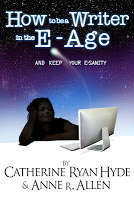
And now—ta-da! Speaking of KDP Select freebie days on Amazon, HOW TO BE A WRITER IN THE E-AGE…AND KEEP YOUR E-SANITY written by Catherine Ryan Hyde and yours truly is FREE FOR THE NEXT TWO DAYS ON AMAZON. That’s right.
You can download it here right now ABSOLUTELY FREE!! And here if you’re in the UK
If you don’t have a Kindle, you can download a FREE app for your computer, phone or tablet RIGHT THERE ON THE AMAZON BUY PAGE. And if you have a NOOK here’s how to download an app so you can get free Kindle books to download to your NOOK. If you are living in a country where you have no access to Amazon, please contact our publisher markwilliamsauthor (at) gmail (dot) com.
And remember, this ebook comes with free updates every six months! As of this writing, it's #1 in Writing Skills and closing in on #500 in the free Kindle Store.
And for you die-hard treeware lovers, the paper book is coming! A little slower than we hoped, but it is in the proofing process.
Tor those of you who signed up early for our mailing list, we promised we would award a copy of a signed first edition of Catherine Ryan Hyde's iconic novel PAY IT FORWARD to one lucky winner today. So the winner, chosen by the random number generator at random.org is CORA RAMOS!!! Congratulations, Cora!
And further congrats to longtime follower of this blog, children's author Lorie Brallier, who also attended the seminar yesterday--and today was offered representation by the Karen Grenick Literary Agency! Congrats, Lorie!
We talked about the two events that have caused a seismic shift in the publishing business in the last four years: the introduction of the e-reader and the rise of social media as a marketing tool.
Amazon, Facebook and Twitter: love ’em or hate ’em, they have turned the creaky old publishing industry on its ear.
The way books are marketed has been revolutionized as much as their delivery system.
As publishing insider Alan Rinzler said, on his blog last summer: “That $50K space ad in the New York Times? Forget it. It’s only for the author’s mother.”
Last week an article in Publishers Weekly backed up that statement with some hard evidence. They showed that even a favorable review on the cover of the NYT Book Review—one of the most coveted pieces of real estate in the publishing industry (and the object of most authors' most cherished fantasies) doesn’t do much to bump a book’s sales these days.
Most books they studied did double sales for a short time, usually not more than a week or two, and one quadrupled sales—but most didn’t show more than a modest influence.
And when I say modest, I mean just that. Arlie Russell Hochschild’s The Outsourced Self: Intimate Life in Market Times featured on the May 27th cover, had sold 52 copies the week before. With the NYT cover bump, it sold 134. That’s right: scoring a review on the cover of the NYT Book Review netted a sales increase of 82 actual books.
So let’s compare that with the e-age way of marketing: using social media and free book giveaways on places like Smashwords and Amazon’s KDP Select.
Catherine Ryan Hyde recently self-published her novels When I Found You and Don’t Let Me Go and put them into KDP Select.
For the uninitiated: KDP Select is a program on Amazon that allows members to borrow the book free and any customer to download the book free during 5 days in every 90-day period. (Authors are paid for downloads by members, but not for the general-public freebie days.)
Why do authors want to give their ebooks away free? Because it’s the best possible advertising (as long as you have a great product) and it costs nothing. Zip Zilch Nada.
Why doesn’t everybody do it? There’s one big obstacle. In order to put a book into KDP Select program, you have to give Amazon exclusive rights to sell that ebook. No B&N. No Smashwords. No Kobo. Not even sales from your own site.
OK, so back to Catherine. In the week before its freebie days, When I Found You was selling “in the tens” per month. After it zoomed to #1 on its free days, it continued to sell thousands.
Within a week, Catherine had earned enough on that book alone to buy a car. (A very nice car. A Lexus. I got to ride in it yesterday.)
Then let’s look at Ms. Hochschild, with her coveted NYT real estate. On a trad. pub royalty of 17% or so on 82 units, Ms. Hochschild could barely buy a set of Hot Wheels. (Not to criticize her book. It looks brilliant.)
So e-age marketing wins over the New York Times Book Review cover. (Aside from having something suitable for framing for your Mom.)
But: it’s important to note that Catherine couldn’t have achieved her success with a giveaway alone. An author can offer any number of free books, but if nobody knows they exist, nobody will download them.
That’s why your social media presence is so important. By the time you have a book to sell/give away, you need to have a network in place that can spread the word to thousands.
When Catherine’s second self-pubbed book, Don’t Let Me Go went free last weekend, Catherine tweeted it to her 1150 followers. Since I’m one of them, I retweeted to my 3200 followers. Two followers even thanked me—and because most people don’t thank for tweets—I assume many more downloaded it. I also assume they went on to broadcast the news to all their Tweeple.
This is why Twitter is probably your most important marketing tool. But you have to get that network established long before your book comes out. One of the best ways to do that is to tweet links to things that your readers might be interested in. Write sci-fi? Tweet links to trailers of new sci-fi films, sci-fi bloggers, etc. Write cookbooks? Tweet links to great recipes--not all your own. :-) Write women’s fiction? Tweet everything Jennifer Weiner says about valuing the genre.
The point is to have people in place who have a habit on clicking on your links for good content. Not just your own stuff.
Catherine also did a Facebook promotion coordinated by an outfit called Shindig: a two-hour chat that fans could attend for free. It was a rousing success—and Don’t Let Me Go shot to #1 in the whole Kindle Store and stayed there for three days. It’s now selling better than any of her other books.
This is why you need a social media presence. Yes, even if you do get that NYT review.
I’m aware that people in the know will say the freebie days on Amazon are not working as well as they used to—and may soon not work at all. The Amazon algorithms changed again recently, and the freebie bounce in real sales isn’t as high as it used to be. There’s also the serious drawback of the exclusivity demanded by Amazon to enroll in the KDP Select program that allows the free days.
But no matter what new promo comes up next, chances are pretty certain you’ll only be able to utilize it if you already have a social media platform. Just going on Twitter two weeks before launch and saying “buy my book” (Or worse, hiring somebody to tweet it for you) isn’t going to cut it.
You need to have a network in place. That’s why you want to start now. You don’t necessarily have to Tweet or be on Facebook (Although FB is kind of like the Yellow Pages these days. It’s where people will look for you first, so it’s usually worth it to have at least a “like” page.)
But you can grow your network anywhere: LinkedIn, Goodreads, RedRoom, Pinterest or Tumblr. Or Vlog on You Tube. Find one that works for you and then start making friends. Don’t spread yourself too thin by going on all of them. Check them out and then linger in places where you find kindred spirits.
Yes. Kindred spirits. People you like. Social media is social. So be sociable. It’s like being at a party. Don’t brag or talk about yourself or beat your chest and bellow. Talk about shared interests. Like what books you like to read. What music you like. Your obsession with Dr. Who.
So, even if you're a romance writer, don't just talk romance writing. Instead, you might start exchanging Dr. Who lore with a bunch of people on RedRoom, and pretty soon you’ll find a Whovian who also likes romance. Voila—a potential reader. And yes, it’s possible to relate hot romance with Dr. Who. Here’s a great post at Passionate Reads from Marilyn Campbell.
What about your blog? That’s social media, right? If you have a blog is it OK if you’re not on other social media?
Sure. As long as you use that blog to network—going to other blogs and commenting and making friends. Just sitting there in your lair writing about your book and attracting three hits a month isn’t going to help sell your book. For info on how to start an author blog, see my blogpost on How Not to Blog, or read my How to Blog series in the book I’ve written with Catherine, HOW TO BE A WRITER IN THE E-AGE.
Reminder: I strongly urge new and unpublished writers NOT to blog their WIP or post excerpts from an unpublished piece! That’s giving away your first rights and will limit your book’s publishability. It’s OK to blog about writing some of the time when you’re starting out--that’s a way to make friends with other writers and people in the industry. I know a number of authors who found their agents or publishers from recommendations from other writers they met through their blogs.
And I think I should mention this in every post, because about 90% of unpublished writers do this. Don’t forget to post an “about me” page that contains your CONTACT INFORMATION. Without a bio your blog is useless. For help on writing your author bio, read my post on Write Your Author Bio Now.
But blog about other things besides writing. Interview published authors. Review books or movies in your genre. Or network with other Whovians and blog about why the tenth Doctor is by far the best. (OK, I have a fondness for Eccleston, as well.)
Personally, I think a blog is a huge asset for a writer, because it allows you to have a flexible online home base where people can always find you and communicate. Whether it’s an agent who’s trying to decide whether to request your manuscript, a fellow writer who wants to respond to a comment you left on another blog, or a reader who loved your new book, a blog is useful at any stage of your career.
But the main purpose of whatever form of social media you choose is interaction. You need to communicate with other people. Otherwise, you might as well be sitting in your basement holding a sign. No matter how brilliant and beautiful the sign, it doesn’t do any good if nobody sees it. You’ll be wasting your time--and you'll be stuck in reruns of that fantasy where you land the cover of the NYT Book Review.
Which will probably only sell 82 books.
What about you, Scriveners? Do you have hot fantasies about the NYT Book Review? What form of social media works best for you? ***
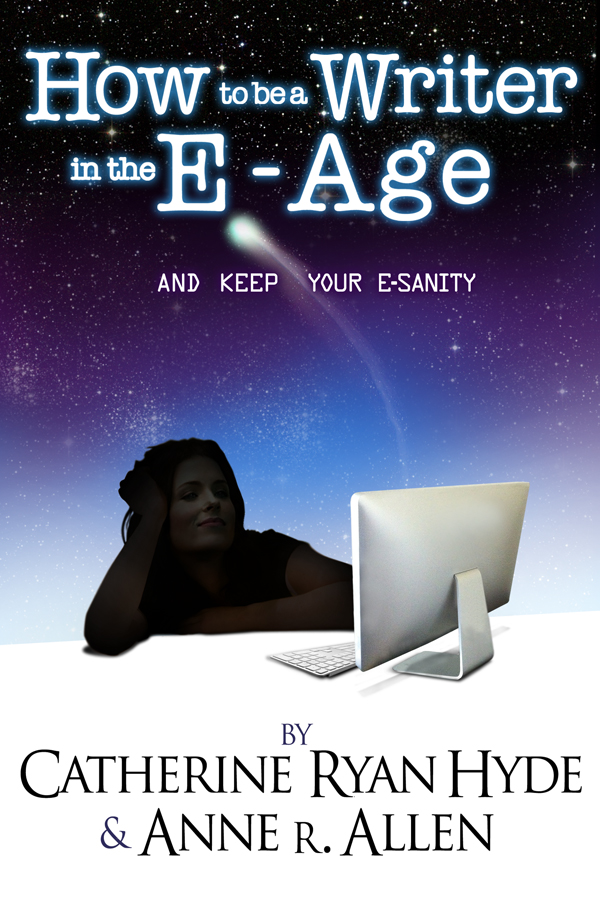 FREE July 15th and 16th!!
And now—ta-da! Speaking of KDP Select freebie days on Amazon, HOW TO BE A WRITER IN THE E-AGE…AND KEEP YOUR E-SANITY written by Catherine Ryan Hyde and yours truly is FREE FOR THE NEXT TWO DAYS ON AMAZON. That’s right.
You can download it here right now ABSOLUTELY FREE!! And here if you’re in the UK
If you don’t have a Kindle, you can download a FREE app for your computer, phone or tablet RIGHT THERE ON THE AMAZON BUY PAGE. And if you have a NOOK here’s how to download an app so you can get free Kindle books to download to your NOOK. If you are living in a country where you have no access to Amazon, please contact our publisher markwilliamsauthor (at) gmail (dot) com.
And remember, this ebook comes with free updates every six months! As of this writing, it's #1 in Writing Skills and closing in on #500 in the free Kindle Store.
And for you die-hard treeware lovers, the paper book is coming! A little slower than we hoped, but it is in the proofing process.
Tor those of you who signed up early for our mailing list, we promised we would award a copy of a signed first edition of Catherine Ryan Hyde's iconic novel PAY IT FORWARD to one lucky winner today. So the winner, chosen by the random number generator at random.org is CORA RAMOS!!! Congratulations, Cora!
And further congrats to longtime follower of this blog, children's author Lorie Brallier, who also attended the seminar yesterday--and today was offered representation by the Karen Grenick Literary Agency! Congrats, Lorie!
July 8, 2012
Bad Reviews—Six Reasons to Be Glad You Have Them
"What? Glad?" sez you. "There is nothing that makes a writer sadder than a bad review!"
That's true. They can feel like a sudden, nasty downpour on the biggest parade of your life.
Whether you self-pubbed or worked with a traditional publisher, the publication of your first book is a moment of personal triumph. You want to shout it from the rooftops: “HEY WORLD, LOOK WHAT I DID! I AM AN EFFING AUTHOR, PEOPLE!!”
And your book starts to climb up the charts. Wow. People are buying it. People you aren’t even related to!
Reviews start coming in. People like you. They really like you!!
But then…somebody doesn’t.
There it is, your first bad review, sitting there on Amazon or B&N or Goodreads, with its puny single star.
You feel like your head is going to explode. You’re not sure what will come out when it does--curses or tears--but it will probably be both. You want to fire off a response, saying what a moron the reviewer is because—well, first off—it’s not a zombie book. That’s why there are no effing zombies, OK??!! Don’t give me two stars because there are no zombies in my heartfelt story of a woman’s journey healing from her addiction to Hugh Grant movies, OK? And you say it’s too short? Almost like a novella? That’s because it IS a novella, you cretinous worm from Hell. It says so RIGHT THERE in the product information.
But of course you don’t write that down. That would be professional suicide. You know that.
You step away from the keyboard. You call your BFF/Sig. Other. You reach in the cupboard for your chocolate stash and eat a whole Lindor truffle bar while your BFF/Sig. Other is reciting platitudes about how you can’t please all the people all of the time and this too shall pass.
You hang up and get in the car. It’s Haagen Dazs time. And yes, you go to the store and rent “Notting Hill” one more time.
OK, it’s good to mourn. You need to get that stuff out of your system. If you live near a place where it’s safe to throw things, go do that. I find throwing rocks at the ocean surprisingly satisfying.
But you do have to face that computer sometime, and when you do, it’s still there, those three nasty sentences that stink up your whole Amazon page like somebody’s poodle took a dump on your life-is-a-banquet buffet table.
Your career is over. It’s ruined. Nobody will ever buy your book again!!
Not true.
Quite the contrary, in fact. Bad reviews can actually be good for sales.
How?
1) They show you’ve joined the big leagues.
All popular writers get bad reviews. Just go to any bestseller’s buy page.
Harry Potter and the Sorcerer’s Stone “nothing more than a shallow tale about a misfit who makes good.”
The Hunger Games “semi-familiar plot, predictable ending, eh not worth my time.”
The DaVinci Code “Highs: the French sentences are correctly spelled. Lows: everything else.”
Freedom “I started to dog-ear pages on which cringeworthy prose appeared, and I did damage to 90 percent of the book.”
Or even better, the classics.
Gone with the Wind “I use to feel bad about Sherman burning Atlanta, but that was before I read this book."
Pride and Prejudice “This is without question the worst book I've ever read in my entire life. The style is clumsy though the author strives to impress with an aristocratic pompousness so typical of social climbers of her day.”
The Great Gatsby “this book is twilight without the vampires, which by the way is an equally horrendous affront to intelligent readers…I don't need a book about stupid rich people.”
Great Expectations “a shapeless mess of a story…presented in the most abrasive fashion possible.”
(I especially love the irony of that uber-clumsy sentence about Jane Austen, don’t you? I think there is a good deal of what shrinks call "projection" in negative reviews. Some wannabe writers seem to see their own faults in everybody else's prose.)
2) They prove your reviews are genuine.
It’s no secret that some authors game the system by trading reviews or even buying them from unscrupulous review mills. Or they pressure everybody in their church Ladies’ Auxiliary to write versions of the same exclamation-laden rave.
BTW, I hear Amazon elves are making a sweep and removing lots of suspect reviews. Unfortunately, some legitimate reviews have been removed too. Be careful you follow Amazon’s guidelines to the letter. NOTE: don’t repeat a phrase from another review or the product description or you can get flagged as a phony reviewer even when you’re not.
The truth is most successful books do not have a full five-star rating. When readers see a page with nothing but five stars these days, they tend to feel skeptical.
3) They demonstrate what your book ISN’T.
Knowing what your book is NOT can be as useful to a reader as showing what it is. Sometimes a negative review comes from a person who got the wrong idea of your genre or subgenre. So the review will steer readers from buying the wrong book and generating more irate reviews. (One bad review hurts our feelings, but a whole bunch can seriously hurt sales.)
I had one reviewer call my rom-com thriller Food of Love “rubbish”, because, she said, “I read lots of lesbian romance and this was the worst I ever read.”
Well…yeah it probably was. That’s because it’s not a romance. And it’s not about lesbians.
All my work has strong, sympathetic GLBT characters, but anybody looking for hot girl-on-girl action is going to be seriously disappointed. So thank you, “rubbish” reviewer, for setting people straight (no pun intended.) Whoever told her FoL was a lesbian romance was misinformed—so I’m happy she’s cleared that up.
Another author I know got a one-star for her historical mystery because somebody ordered it thinking it was how-two book about medieval embroidery. OK, the one-star is a pain, but better than a whole bunch of one-stars from dozens of irate embroiderers.
4) They help you target your demographic.
A review that tells readers what group doesn’t like your book can actually encourage the right readers to buy.
I read a complaint from an author who said she got two stars from a reviewer “because the characters engage in pre-marital sex”.
Oooooh. There’s sex in it? So you’ve been identified as a writer who does not write for evangelical Christians who wear promise rings.
That shows you DO write for readers who like a little steam in their lattes. In a world where 50 Shades of Gray is the number one bestseller, that hurts you how?
I had a similar experience with a reviewer who said my mystery Ghostwriters in the Sky was “too complicated.” He said he “couldn’t tell who the bad guys were until the last page.”
Thank you! That tells readers who like a complex, unpredictable mystery they’re in the right place.
5) They rally the troops.
If an author is unfairly reviewed or attacked by trolls, the fans will be outraged, too. It might even get them to write that review they’ve been meaning to write forever. (If you need more encouragement to review your favorite authors, read my post on Amazon reviews here.)
I haven’t had a lot of time to read (or write reviews) during this marathon year, but one book I loved was Juliet, Naked by Nick Hornby. When I put it on my Goodreads page, I noticed a lot of clueless one-star reviews, obviously from people who didn’t realize it was about a minimally-produced record album like the Beatles’ famous “Let it Be…Naked”—and NOT about a lady with no clothes on. I made the time to write a review I probably would never have written otherwise. I hope I steered some of the right readers to the book.
Or there was the time I went to check out a new book mentioned in a Tweet and saw it had ten reviews already: all one-star—all attacking the author personally, saying nothing about the book.
It was an obvious example of cyberbullying. (For more on dealing with bullying in the trollosphere, Kristin Lamb has a fantastic post this week.)
Do you think I bought the book and, after enjoying it, gave it a good review? You betcha! (I also hit the "report abuse" button.) Plus I tweeted it to my followers and wrote an encouraging message to the author. Most humans are moved when we see a fellow human being persecuted.
6) They tell you what readers want
Elizabeth S. Craig has blogged about how she learns from her negative reviews, and she displays a healthy, professional attitude we all should learn to emulate. You can learn a lot from your readers, who will let you know if they were angry when you killed off Aunt Millie, or didn’t like it when your romantic interest turned into Snidely Whiplash in your last book.
And believe me, if you have any typos, or your work needs editing, they’ll let you know about that, too.
On the other hand—make sure you’re reacting to a majority opinion and not just a handful of people in a bad mood. You don’t want reviewers to change your voice or artistic vision any more than you want your critique group to do that.
In spite of all this, I do realize some reviews can be spiteful and useless.
Some of those may have been purchased. There are services that offer to leave bad reviews to bump authors ahead of you off the Amazon bestseller lists. (I’ve personally seen review mill sites, but they move around, so I don’t have a link right now.) On the plus side, their mostly illiterate “reviews” get taken down quickly. Amazon is on to them and will remove the review if you report abuse.
Then there is the segment of the population who invent reasons to criticize and find fault with everything because they get off on it—especially if they can work themselves up into a self-righteous rage to justify their cruelty. Rage can produce a high very like cocaine. (See my post on Trolls, Sockpuppets and Cyberbullies.)
Unfortunately the anonymity of the Internet is where they thrive.
I’ve observed that freebie books tend to get the most troll attacks. That’s partly because people devalue things they don’t pay for, partly because they’ll download free books in genres they don’t usually read, and also because a lot of people simply hate self-publishing (change is scary).
Some people assume all freebie books are self-published—they’re not, but nobody is accusing these people of being rocket scientists.
You can usually tell a troll attack from an honest review. Trolls make it pretty obvious they haven’t read the book and use generic phrases—usually including “riddled with typos” and “obviously in need of an editor” even when they’re reviewing Jane Austen. They often dump lots of identical one- and two-stars all over Amazon.
This is why Amazon has that “report abuse” button. (But never use it for an honest negative review.)
Sometimes a reader can leave a negative review because of something that has nothing to do with the quality of your book. Maybe your protagonist has the same name as the guy who just dumped her, or her own novel just got rejected by an agent who sat on the full for 18 months, or his mom just told him he he’s got to move out of the basement, and at 42, he really ought to find full time employment since he’s been working on that novel for 13 years now...
They aren't "abuse" in the Amazon sense, but do remember those rants aren’t reviews of your book. They’re verbal temper tantrums--the result of somebody having a bad day—or a bad life. You just happened to be in the line of fire. Smart readers can usually tell when the review is about the reviewer's issues, not the book.
And chocolate helps. Or throwing rocks at the ocean. Or maybe even watching a Hugh Grant movie.
What about you, scriveners? Have you seen clueless reviews of your favorite authors? Have you started to get bad reviews yet? Do you have any advice on how to cope with them? ***
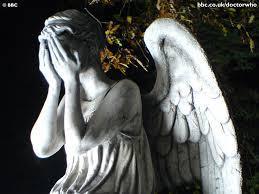 I have a bit of sad news this week. My US publisher, Popcorn Press, has closed its doors. But they have been incredibly gracious about handing all the files to me so I can re-publish with MWiDP. Thanks, Les—you’re a meticulous editor and fantastic book designer. And Kate—your covers are fabulous! Popcorn started as a poetry press and may be reborn as a poetry-only publisher some time in the future.
 FOOD OF LOVE is now live under the MWiDP imprint on Amazon US and Amazon UK as well as Barnes and Noble. THE BEST REVENGE should be up there by tomorrow. The one downside is that I’ve lost my Amazon rankings, so FOOD OF LOVE, which had been on the bestseller list for romcoms in the UK since December has lost its status. A few “likes” and tags would be helpful, if you have the time.
And YES, MWiDP will be re-publishing the Popcorn books in paper, AND, my other three mysteries should all be available in paper in the next few months. Yay treeware!***
And don't forget the Digital Age Authors Intensive on July 14th!
You can learn all about how to be a writer in the digital age from iconic author Catherine Ryan Hyde and author, screenwriter, and radio personality Dave Congalton, as well as tech wizards, marketing specialists...and me. So if you're going to be on the Central Coast of California next weekend, don't miss this. There are still a few places available. Go here to register.
And thanks to all of you who bought HOW TO BE A WRITER IN THE E-AGE last week and pushed us up the writing guide bestseller list into the top 20--ahead of the new Kindle edition of Strunk and White!

July 1, 2012
What if Hollywood Rewrites Your Book? Survival Tips from Catherine Ryan Hyde
First: The big day has arrived!The ebook version of HOW TO BE A WRITER IN THE E-AGE…And Keep Your E-Sanity which I wrote with my mentor Catherine Ryan Hyde is now available on Amazon from MWiDP. For a limited time, the e-book price will be $2.99 in the US and roughly the equivalent in the UK. (This book is for writers all over the world, not just the US, and we had a Brit for an editor—thanks Mark!--who steered us from the usual America-centric advice.)
Why did we write this book, when there are already so many writing books out there?
Because this one is different:
It isn’t a book about how to write, although we’ve got some great tips for self-editing and how to construct an opener that will grab readers and not let go. It’s also not a book on how to get published, although we have tons of info on how to find the right agent and how to write and format an e-query, as well as find publishers who don’t require an agent. It’s not a book on how to self-publish, although we provide the information to help you do that and decide if that’s the route you want to take. It’s not a book about building platform, although it includes my whole step-by-step “how to blog” series and tons of info on how to use Twitter, Goodreads, Pinterest and other social media sites to establish your author presence on the Web before you take the publishing plunge.
It IS a book about how to BE a writer. How to take care of yourself and avoid getting scammed; how to make sense of criticism; how to build platform without giving up too much of your writing time--and a whole lot more about how to navigate the treacherous waters of today's fast-changing publishing business.
Plus, when you buy the ebook now, you can sign up for FREE updates, which will be issued every six months—since half of what we say today may not be true by then.
You can win a free copy of the ebook of HOW TO BE A WRITER IN THE E-AGE if you comment on my post over at Meghan Ward's blog, Writerland before 9 PM Pacific time on Monday July 2nd.
Catherine had the life-changing experience of seeing her novel PAY IT FORWARD made into a major motion picture. The only problem: the screenplay made major changes to the story and characters. Like, for instance the powerful African-American hero became a wimpy white guy. The setting was changed from small town California to Las Vegas, and most of the characters were eliminated.
So Catherine is going to tell us what to do when your dream comes true…and turns into a nightmare. We all dream of our books becoming Hollywood films, don’t we? I'm sure you've done some fantasy casting in your head. Come on, admit it. I sure have.
But what do you do if they cast Danny DeVito as your hero instead of Johnny Depp? Move the setting from post-apocalyptic Detroit to Beverly Hills? And they want Eddie Murphy to play the Betty White part in a fat suit?
Catherine has the answers. Read on…
The drawing for the signed first edition of PAY IT FORWARD will be held at the launch of the paper edition of the book. You can still enter by signing up for our mailing list, either by leaving your email address in the comments or emailing me at annerallen dot allen at gmail dot com.
What to Do when Hollywood Rewrites Your Book: How to Survive a Writer’s Most Desirable Problemby Catherine Ryan Hyde
A big screen adaptation of your novel.
It IS possible. Likely, no. But possible.
If your book takes off and enjoys great sales, a big film company might step up and ask to option the rights. Which does not mean the movie will ever come to a theater near you.
Hundreds of properties are optioned yearly for every film that’s released. But it happens.
If you’re wondering how to make this happen, I’m sorry to say I’m not sure you can. It’s a bit like being struck by lightning (and often similarly painful). Lightning strikes happen to hundreds of people every year. And yet, if you’re looking for such an experience (you’re not, but go with me on this tortured simile) there’s no special path to finding it. My only advice is to stand outside in a lot of rainstorms. Lightning rarely strikes those sitting inside by their comfortable wood fires.
Maybe you have a film agent, or your literary agent has a subagent for film. And said agent is shopping it around. Good. That’s the equivalent of standing outside in a storm. Now all you need is a whole universe full of luck.
And then, in most cases, somewhere in the adaptation process, authors begin to wonder just how lucky they really are.
My novel Pay It Forward was adapted for film. I am commonly asked what I think of the movie version. My answer is always the same.
“I thought the book was better.”
Then again, I would, wouldn’t I?
When I say that, just about everybody says the same thing: "Oh, the book is always better than the movie." Which leads me to wonder why, as a society in general, we see so many movies and read so few books. But that’s another rant for another text.
I have theories as to why the book is always better.
Theory #1: The author is not a person responsible for recovering an investor’s fifty million dollars (or hundred million these days), and so spends less time second-guessing him- or herself. (Isn’t it nice to know there’s somebody on the planet doing more second-guessing than the writer?)
Theory #2: Most books have only one author. A Hollywood movie is like the textbook definition of too many cooks in the kitchen.
Theory #3: People don’t seem to realize that Hollywood will make whatever kind of movies we will support, and that we "vote" with our box office dollars.
If I had singlehandedly made the movie Pay It Forward:The world would actually have changed at the end; Reuben St. Clair, my African-American Viet Nam vet protagonist would have appeared in said film (Eugene who?); All the gay, transgender, physically large, or minority characters would not have turned thin, white and straight, or disappeared entirely (ah, Hollywood is a magical place!); I would have made sure that the only black and (arguably) Hispanic characters left were not gang-bangers and knife-wielding thugs.
Ah, you say. But it will be different with me. Because I will retain control.
Really? You think you can control a Hollywood film?
I’m not so sure.
First of all, if you’re not J.K. Rowling, attaching script approval might very well relegate your project to a shelf forever. But let’s say your work is hot, and you get what you want: script approval, or even collaboration on the screenplay.
Screenwriters do not control Hollywood films.
The director leaves fingerprints on it, calling it “A Fill-in-the-name-of-the-big-director Film” and making insane choices based on ego to prove it.
The actors come in with “script notes” (i.e., I just can’t see my character saying that). The bigger the actor, the harder it is for anyone to say no to the often rotten ideas.
New writers can be brought in to make new changes. Even if you could conquer those forces, a film editor can completely transform the feel of a film in post production. For better or for worse.
No matter what it says in your contract, a film is going to be out of the novelist’s control. So, if I had it to do over again, would I still sell them the rights?
You bet I would. In a Hollywood minute.
Let’s face it. This is what you call a high-end problem.
I know other fortunate writers will face similar happy disasters (I want to go on record as saying I wish this problem on each and every person reading this) so I’ll offer some tidbits of advice for the adaptation experience.
1) A useful mantra: "It’s not my hundred million dollars."
2) A great quote from Jacqueline Mitchard: "Where I come from, you can either take the money or you can moan about the process, but not both." My advice? Take the money. Moaning is not all its cracked up to be.
3) Remind yourself that they are not, as people will suggest, "changing your book." Go back and read your book. You will find it blissfully unchanged. This is not your book, it’s their movie. Separate the two in your brain for purposes of continued sanity.
4) If your problems feel overwhelming, complain to your writer friends who are still struggling to get published. (Example: "Boo hoo. They cast Kevin Spacey in my movie instead of Denzel Washington.”) They will help you regain perspective. Trust me. They will.
Just promise me that you won’t be that writer who gets everything he or she ever wanted, and is still unhappy. A big screen adaptation is the brass ring. It boosts your name recognition (and I don’t mean boosts like a booster seat, I mean boosts like a booster rocket via NASA) and sells more books. That title, plus your backlist if you have one, plus every other book you’ll ever write.
And let’s say they make a bad film. I mean a really bad film. Not like Pay It Forward, which I think of as a flawed film. I mean hold-the-nose-and-ask-for-your-ticket-price-back crappy. Then what will people say?
They’ll say, “Oh, don’t even bother with the movie. The movie sucks. Read the book. The book is much better.”
And this hurts the writer how?
Once Hollywood comes calling for your book, nothing they can do to it will ever be as bad, in my opinion, as the hurt caused when they don’t.
There are some very well-known writers who simply refuse to option their work for film because they know Hollywood is going to ruin it, and they know it’s going to hurt when they do. I’d advise you not to be one of them. This is the kind of pain we should all be happy to dive into. Put on your best grown-up suit and be prepared to let go.
As my old mentor Jean Brody used to say, “We should all have such problems!”
What about you scriveners? Have you cast all the major parts in your book with Hollywood actors? Have you dreamed of getting nominated for an academy award for the screenplay? And come on, haven’t you--at least once--rehearsed what you’re going to say when you get that Oscar? Are you going to go out and read the actual Pay It Forward now you know how different it is from the Kevin Spacey movie?
***
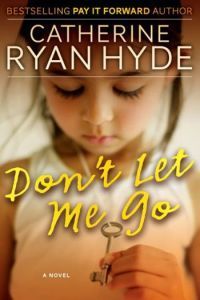 Catherine Ryan Hyde has two new books this week. Not only our joint effort, but her heartbreaking, funny, and life-affirming novel, DON’T LET ME GO, formerly only available in the UK. It's now available in ebook and paper at Amazon.com. Yesterday it hit #1 in Kindle books!
And if you live on the Central Coast of California, you can meet and learn from Catherine in person. She and I are giving a seminar in San Luis Obispo on July 14th on How to Be a Writer in the E-Age. (Isn't Bastille Day a perfect day to liberate yourself from the old publishing ways?) No matter what your level of writing expertise, we have information that will help you on your publishing journey, from how to write an e-query to how to deal with bad reviews. More info at Digital Age Authors. It's going to be a fun, positive learning experience!
If you want to hear a podcast of an interview with Catherine and me on the Dave Congalton show, you can hear it in the archives at KVEC for June 28th.
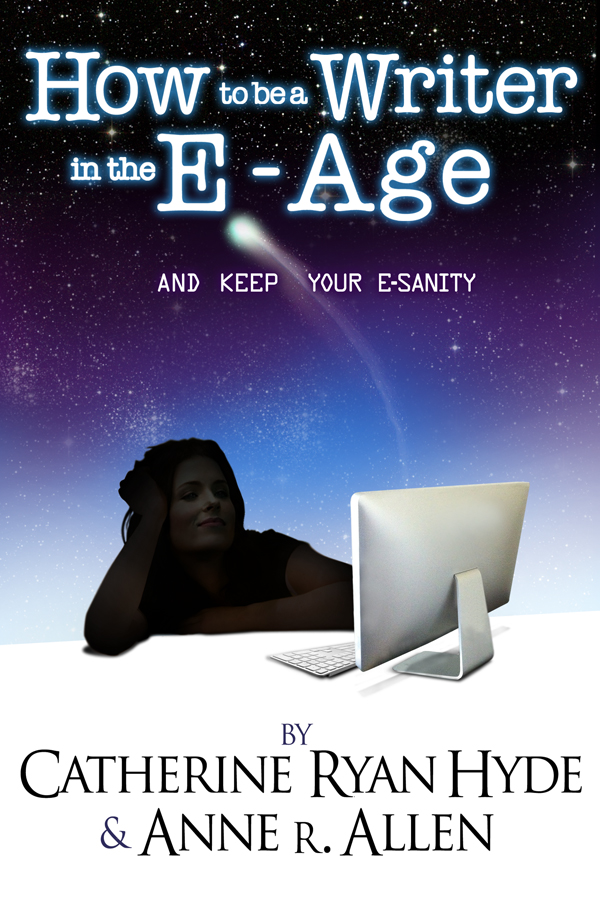
Why did we write this book, when there are already so many writing books out there?
Because this one is different:
It isn’t a book about how to write, although we’ve got some great tips for self-editing and how to construct an opener that will grab readers and not let go. It’s also not a book on how to get published, although we have tons of info on how to find the right agent and how to write and format an e-query, as well as find publishers who don’t require an agent. It’s not a book on how to self-publish, although we provide the information to help you do that and decide if that’s the route you want to take. It’s not a book about building platform, although it includes my whole step-by-step “how to blog” series and tons of info on how to use Twitter, Goodreads, Pinterest and other social media sites to establish your author presence on the Web before you take the publishing plunge.
It IS a book about how to BE a writer. How to take care of yourself and avoid getting scammed; how to make sense of criticism; how to build platform without giving up too much of your writing time--and a whole lot more about how to navigate the treacherous waters of today's fast-changing publishing business.
Plus, when you buy the ebook now, you can sign up for FREE updates, which will be issued every six months—since half of what we say today may not be true by then.
You can win a free copy of the ebook of HOW TO BE A WRITER IN THE E-AGE if you comment on my post over at Meghan Ward's blog, Writerland before 9 PM Pacific time on Monday July 2nd.
Catherine had the life-changing experience of seeing her novel PAY IT FORWARD made into a major motion picture. The only problem: the screenplay made major changes to the story and characters. Like, for instance the powerful African-American hero became a wimpy white guy. The setting was changed from small town California to Las Vegas, and most of the characters were eliminated.
So Catherine is going to tell us what to do when your dream comes true…and turns into a nightmare. We all dream of our books becoming Hollywood films, don’t we? I'm sure you've done some fantasy casting in your head. Come on, admit it. I sure have.
But what do you do if they cast Danny DeVito as your hero instead of Johnny Depp? Move the setting from post-apocalyptic Detroit to Beverly Hills? And they want Eddie Murphy to play the Betty White part in a fat suit?
Catherine has the answers. Read on…
The drawing for the signed first edition of PAY IT FORWARD will be held at the launch of the paper edition of the book. You can still enter by signing up for our mailing list, either by leaving your email address in the comments or emailing me at annerallen dot allen at gmail dot com.
What to Do when Hollywood Rewrites Your Book: How to Survive a Writer’s Most Desirable Problemby Catherine Ryan Hyde
A big screen adaptation of your novel.
It IS possible. Likely, no. But possible.
If your book takes off and enjoys great sales, a big film company might step up and ask to option the rights. Which does not mean the movie will ever come to a theater near you.
Hundreds of properties are optioned yearly for every film that’s released. But it happens.
If you’re wondering how to make this happen, I’m sorry to say I’m not sure you can. It’s a bit like being struck by lightning (and often similarly painful). Lightning strikes happen to hundreds of people every year. And yet, if you’re looking for such an experience (you’re not, but go with me on this tortured simile) there’s no special path to finding it. My only advice is to stand outside in a lot of rainstorms. Lightning rarely strikes those sitting inside by their comfortable wood fires.
Maybe you have a film agent, or your literary agent has a subagent for film. And said agent is shopping it around. Good. That’s the equivalent of standing outside in a storm. Now all you need is a whole universe full of luck.
And then, in most cases, somewhere in the adaptation process, authors begin to wonder just how lucky they really are.
My novel Pay It Forward was adapted for film. I am commonly asked what I think of the movie version. My answer is always the same.
“I thought the book was better.”
Then again, I would, wouldn’t I?
When I say that, just about everybody says the same thing: "Oh, the book is always better than the movie." Which leads me to wonder why, as a society in general, we see so many movies and read so few books. But that’s another rant for another text.
I have theories as to why the book is always better.
Theory #1: The author is not a person responsible for recovering an investor’s fifty million dollars (or hundred million these days), and so spends less time second-guessing him- or herself. (Isn’t it nice to know there’s somebody on the planet doing more second-guessing than the writer?)
Theory #2: Most books have only one author. A Hollywood movie is like the textbook definition of too many cooks in the kitchen.
Theory #3: People don’t seem to realize that Hollywood will make whatever kind of movies we will support, and that we "vote" with our box office dollars.
If I had singlehandedly made the movie Pay It Forward:The world would actually have changed at the end; Reuben St. Clair, my African-American Viet Nam vet protagonist would have appeared in said film (Eugene who?); All the gay, transgender, physically large, or minority characters would not have turned thin, white and straight, or disappeared entirely (ah, Hollywood is a magical place!); I would have made sure that the only black and (arguably) Hispanic characters left were not gang-bangers and knife-wielding thugs.
Ah, you say. But it will be different with me. Because I will retain control.
Really? You think you can control a Hollywood film?
I’m not so sure.
First of all, if you’re not J.K. Rowling, attaching script approval might very well relegate your project to a shelf forever. But let’s say your work is hot, and you get what you want: script approval, or even collaboration on the screenplay.
Screenwriters do not control Hollywood films.
The director leaves fingerprints on it, calling it “A Fill-in-the-name-of-the-big-director Film” and making insane choices based on ego to prove it.
The actors come in with “script notes” (i.e., I just can’t see my character saying that). The bigger the actor, the harder it is for anyone to say no to the often rotten ideas.
New writers can be brought in to make new changes. Even if you could conquer those forces, a film editor can completely transform the feel of a film in post production. For better or for worse.
No matter what it says in your contract, a film is going to be out of the novelist’s control. So, if I had it to do over again, would I still sell them the rights?
You bet I would. In a Hollywood minute.
Let’s face it. This is what you call a high-end problem.
I know other fortunate writers will face similar happy disasters (I want to go on record as saying I wish this problem on each and every person reading this) so I’ll offer some tidbits of advice for the adaptation experience.
1) A useful mantra: "It’s not my hundred million dollars."
2) A great quote from Jacqueline Mitchard: "Where I come from, you can either take the money or you can moan about the process, but not both." My advice? Take the money. Moaning is not all its cracked up to be.
3) Remind yourself that they are not, as people will suggest, "changing your book." Go back and read your book. You will find it blissfully unchanged. This is not your book, it’s their movie. Separate the two in your brain for purposes of continued sanity.
4) If your problems feel overwhelming, complain to your writer friends who are still struggling to get published. (Example: "Boo hoo. They cast Kevin Spacey in my movie instead of Denzel Washington.”) They will help you regain perspective. Trust me. They will.
Just promise me that you won’t be that writer who gets everything he or she ever wanted, and is still unhappy. A big screen adaptation is the brass ring. It boosts your name recognition (and I don’t mean boosts like a booster seat, I mean boosts like a booster rocket via NASA) and sells more books. That title, plus your backlist if you have one, plus every other book you’ll ever write.
And let’s say they make a bad film. I mean a really bad film. Not like Pay It Forward, which I think of as a flawed film. I mean hold-the-nose-and-ask-for-your-ticket-price-back crappy. Then what will people say?
They’ll say, “Oh, don’t even bother with the movie. The movie sucks. Read the book. The book is much better.”
And this hurts the writer how?
Once Hollywood comes calling for your book, nothing they can do to it will ever be as bad, in my opinion, as the hurt caused when they don’t.
There are some very well-known writers who simply refuse to option their work for film because they know Hollywood is going to ruin it, and they know it’s going to hurt when they do. I’d advise you not to be one of them. This is the kind of pain we should all be happy to dive into. Put on your best grown-up suit and be prepared to let go.
As my old mentor Jean Brody used to say, “We should all have such problems!”
What about you scriveners? Have you cast all the major parts in your book with Hollywood actors? Have you dreamed of getting nominated for an academy award for the screenplay? And come on, haven’t you--at least once--rehearsed what you’re going to say when you get that Oscar? Are you going to go out and read the actual Pay It Forward now you know how different it is from the Kevin Spacey movie?
***
 Catherine Ryan Hyde has two new books this week. Not only our joint effort, but her heartbreaking, funny, and life-affirming novel, DON’T LET ME GO, formerly only available in the UK. It's now available in ebook and paper at Amazon.com. Yesterday it hit #1 in Kindle books!
And if you live on the Central Coast of California, you can meet and learn from Catherine in person. She and I are giving a seminar in San Luis Obispo on July 14th on How to Be a Writer in the E-Age. (Isn't Bastille Day a perfect day to liberate yourself from the old publishing ways?) No matter what your level of writing expertise, we have information that will help you on your publishing journey, from how to write an e-query to how to deal with bad reviews. More info at Digital Age Authors. It's going to be a fun, positive learning experience!
If you want to hear a podcast of an interview with Catherine and me on the Dave Congalton show, you can hear it in the archives at KVEC for June 28th.
June 24, 2012
11 REASONS WRITERS GET REJECTED—AND WHY ONLY 3 OF THEM MATTER
by Ruth Harris
 I‘m a TradPubbed NYT bestselling author gone indie. I was also an editor for over 20 years (Macmillan, Bantam, Dell) and the Publisher of Kensington—so let me put rejection into a little perspective.
Let’s be clear: Manuscripts get rejected; not writers. Trust me. (Most of the time) it’s not personal. Let me count the ways.
1. THE BASICS: The reasons for rejection start with the basics, i.e. the ms. sucks. Author can't format/spell/doesn’t know grammar, is clueless about characterization, plotting and pacing.
Maybe, though, it's not that bad and with competent editing, it's publishable. But the days of Maxwell Perkins are long gone. These days, staff editors don't have the time and sometimes not even the necessary skills.
If you need an editor, hire one.
2. WILDLIFE INFESTATION: Occasionally, other hazards present themselves. Way back when I was a child working at Bantam, a would-be author showed up at the office, ms. box in hand.
As the least important, most expendable (what if this guy turns out to be a nut & has a gun?) warm body on the staff, I was sent out to Reception to find out what he was offering. Shook hands, introduced myself, he yackety-yacked, blabbity-blabbed about his masterpiece.
Then he opened the ms. box and a cockroach jumped out. True story. Ms. rejected. Politely, I’m pleased to say.
3. WOW, BULL’S EYE: Timely subject, credible characters, good plot, well-executed pacing. Lots of us really like it BUT...
Here’s only a partial list of the buts:
4. OVERLOAD: We have too many thrillers, Regency romances, zombie epics etc. already. We need to trim the inventory so right now we’re not buying any of your particular genre. Sorry. Right now it doesn’t fit our needs.
5. PMS/LOW TESTOSTERONE: The boss (or my secretary or DH or teen-aged kid) is giving me or the editor-in-question a hard time today & I'm/he/she is in such a lousy mood we'd turn down War & Peace. So fuddgetaboutit. You’re Tolstoy? Tough. You’re toast.
6. CAN’T SELL ICE TO ESKIMOS: The sales dept just informed us that books about trans-gendered pigmy werewolves in Lower Slobovia aren't selling the way they used to so we’re not going to make an offer for your (well-written, scary, hilarious, fabulous) novel about trans-gendered pigmy werewolves in Lower Slobovia. Sorry. Right now it doesn’t fit our needs.
 Africa. An Orphan. A love story. 7. SOMEONE YOU NEVER HEARD OF HATES IT: The boss (or his/her wife/husband/best friend/shrink/third cousin) hates (insert genre) so be glad your ms. got turned down because even if we bought it, it would be published badly.
Very badly. You’ll get a crappy cover, miniscule print run, zero advertising, promotion or publicity, positioning spine-out on a top shelf in the poorly-lit back of the unventilated, un-airconditioned third floor next to the men's room. You won’t be able to find your own book. Not even with a state-of-the-art GPS.
Your book is guaranteed to be a floperoo. You’ll be miserable and you’ll blame us and you’d be right.
So frame your rejection letter & be happy.
8. CASH CRUNCH: Of course we’re never going to admit it but the company’s in trouble, maybe even on the verge of bankruptcy & we’re not buying anything. Nada. Not right now and not for the foreseeable future. Not until/unless said crunch passes and the money’s flowing again.
Bottom line: you don’t know it and you never will but your timing sucks. Not your fault.
9. CORPORATE CANOODLING: A major “reorganization” has taken place. The decision has come down from somewhere Up There in Corporate and half the staff (at least) has been fired.
A new regime is hired & they hate all the genres & authors the previous regime loved. The new regime wants to prove that their predecessors were stupid, incompetent and a toxic blight to literacy and that they are going to turn the company around by doing exactly the opposite.
Not your fault, has absolutely nothing to do with you or your ms. but your ms. is going to get turned down.
10. OOPS: Plenty of times editors and publishers are just plain wrong...zillions of examples of that all over the place from J.K. Rowling to Steven King. We turned down your ms.? Maybe we made a mistake. We’ve made plenty of misjudgments in the past and we’ll make plenty more in the future and we know it. Turning down the ms. that becomes a hot bestseller is an occupational hazard. We don’t like it any more than you do but it’s a fact.
11. WE HATE YOU: Once in a while, it is actually personal. We’ve published you before or a friend at another publisher has and we know from experience (or the grapevine) that you’re a whiny, demanding, narcissistic, high-maintenance PITA. No one wants to take your phone calls and everyone who’s had the misfortune of working with you hates you.
We’ve had it with you and your diva-like tantrums and we’re never, ever, ever going to publish another book of yours again.
Except, of course, if you’re making us a boatload of money. Even then, we still hate you and we’ll tell everyone (off the record, of course) that your books “aren’t as good/aren’t selling as well as they used to.” Payback is a bitch.
Just like a lot of things, rejection isn’t always what it seems to be and writers need to put that stack of rejection letters into perspective. Self-published novelist Tracey Garvis Graves, whose debut romance, ON THE ISLAND, was rejected by fourteen literary agents, just signed a two-book deal with Penguin Group's Plume imprint for "seven figures, a good seven figures." We’re talking OVER A MILLION DOLLARS for a book no one wanted.
 I once got a form rejection letter for HUSBANDS AND LOVERS while it was on the NYT bestseller list.
No kidding.
Who knows why? I don’t and never will. My agent and I laughed our asses off and I went back to my computer and continued working on my next book.
You should do the same.
EXCEPT if you’re being rejected because your manuscript sucks (#1)—or your behavior does (#11) ...oh yes, and absolutely, positively check for wildlife before submitting (#3).
In the first case, re-read & re-write with a critical eye and/or hire an editor and pay attention to what s/he says. In the second case, remember the Golden Rule and Do Until Others As You Would LIke Them To Do Unto You. You know, just like your mother said…and maybe get out the Roach Motel?
***What about you, scriveners? Have you got a rejection you suspect was for one of these reasons? Have you got an outrageous rejection story to share? Does it help to know it’s not your book, it’s the editor’s hormonal imbalances?
Win a Signed First Edition of Catherine Ryan Hyde’s iconic novel PAY IT FORWARD
HOW TO BE A WRITER IN THE E-AGE, which Anne wrote with her mentor and favorite author, Catherine Ryan Hyde (author of the iconic PAY IT FORWARD, and 19 other published and forthcoming books) is coming out very soon!
 It contains Anne’s entire “how to blog for authors” series and a whole lot more stuff she’s discussed on this blog and elsewhere, plus wisdom from Catherine’s popular workshops and seminars. It offers material you won’t find in any other writing book.
It’s not a book about how to write, but about how to be a writer. It’s about how to cope with the increasing pressure to do too much, and learn what advice to listen to, what’s best to ignore, and how to make the choices that are best for you personally and professionally.
Mark Williams international Digital Publishing will publish it in ebook and, a few weeks later, in paper (available the US and internationally.) When you buy the book, you will automatically be signed up for those updates and you’ll be able to download them free.
On the official launch day, we will hold a drawing, and the winner will receive a signed first edition of Catherine’s iconic novel PAY IT FORWARD. The winner will be announced on the blog on July 15th.
If you’d like to be eligible for the drawing, just sign up for our email list. All you have to do is leave your email address in the comments You can write it like this to avoid spam annerallen (dot) allen (at) gmail (dot) com. Or send it to me at annerallen.allen@gmail.com (Some of you signed up in January, so you’re already in the running.)
Official Launch of HOW TO BE A WRITER IN THE E-AGE to be held at the Digital Age E-Authors Seminar in San Luis Obispo on July 14th
 Do you live near the Central Coast of California? Any chance you’ll be visiting around July 14th? If you do, you’ll have a chance to take a seminar with Anne R. Allen and Catherine Ryan Hyde, authors of HOW TO BE A WRITER IN THE E-AGE…And Keep Your E-Sanity! The seminar is hosted by radio personality Dave Congalton and features Charlotte Alexander, Josh Ernstrom and Deborah Bayles.
The one-day seminar will be held Saturday, July 14, 2012 at the Sands Inn & Suites, in San Luis Obispo, CA “the happiest town on earth” (according to Oprah.) So if you live in the area, or you’re planning a vacation on the Central Coast, Register at: Digital Age E-Authors.
Anne will be out visiting this week. On Tuesday, June 26th, she'll be stopping by Meghan C. Ward's Writerland. Anne will be talking about how to choose the publishing path that's best for you. On Wednesday, June 27th, she'll be visiting Catherine Ryan Hyde's blog to talk about the perils of blogging.
 I‘m a TradPubbed NYT bestselling author gone indie. I was also an editor for over 20 years (Macmillan, Bantam, Dell) and the Publisher of Kensington—so let me put rejection into a little perspective.
 Let’s be clear: Manuscripts get rejected; not writers. Trust me. (Most of the time) it’s not personal. Let me count the ways.
1. THE BASICS: The reasons for rejection start with the basics, i.e. the ms. sucks. Author can't format/spell/doesn’t know grammar, is clueless about characterization, plotting and pacing.
Maybe, though, it's not that bad and with competent editing, it's publishable. But the days of Maxwell Perkins are long gone. These days, staff editors don't have the time and sometimes not even the necessary skills.
If you need an editor, hire one.
2. WILDLIFE INFESTATION: Occasionally, other hazards present themselves. Way back when I was a child working at Bantam, a would-be author showed up at the office, ms. box in hand.
As the least important, most expendable (what if this guy turns out to be a nut & has a gun?) warm body on the staff, I was sent out to Reception to find out what he was offering. Shook hands, introduced myself, he yackety-yacked, blabbity-blabbed about his masterpiece.
Then he opened the ms. box and a cockroach jumped out. True story. Ms. rejected. Politely, I’m pleased to say.
3. WOW, BULL’S EYE: Timely subject, credible characters, good plot, well-executed pacing. Lots of us really like it BUT...
Here’s only a partial list of the buts:
4. OVERLOAD: We have too many thrillers, Regency romances, zombie epics etc. already. We need to trim the inventory so right now we’re not buying any of your particular genre. Sorry. Right now it doesn’t fit our needs.
5. PMS/LOW TESTOSTERONE: The boss (or my secretary or DH or teen-aged kid) is giving me or the editor-in-question a hard time today & I'm/he/she is in such a lousy mood we'd turn down War & Peace. So fuddgetaboutit. You’re Tolstoy? Tough. You’re toast.
6. CAN’T SELL ICE TO ESKIMOS: The sales dept just informed us that books about trans-gendered pigmy werewolves in Lower Slobovia aren't selling the way they used to so we’re not going to make an offer for your (well-written, scary, hilarious, fabulous) novel about trans-gendered pigmy werewolves in Lower Slobovia. Sorry. Right now it doesn’t fit our needs.
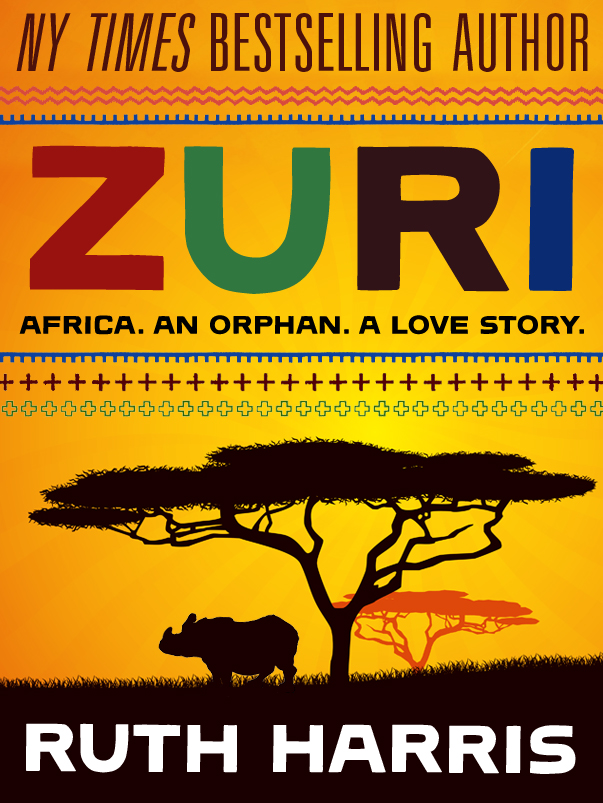 Africa. An Orphan. A love story. 7. SOMEONE YOU NEVER HEARD OF HATES IT: The boss (or his/her wife/husband/best friend/shrink/third cousin) hates (insert genre) so be glad your ms. got turned down because even if we bought it, it would be published badly.
 Very badly. You’ll get a crappy cover, miniscule print run, zero advertising, promotion or publicity, positioning spine-out on a top shelf in the poorly-lit back of the unventilated, un-airconditioned third floor next to the men's room. You won’t be able to find your own book. Not even with a state-of-the-art GPS.
Your book is guaranteed to be a floperoo. You’ll be miserable and you’ll blame us and you’d be right.
So frame your rejection letter & be happy.
8. CASH CRUNCH: Of course we’re never going to admit it but the company’s in trouble, maybe even on the verge of bankruptcy & we’re not buying anything. Nada. Not right now and not for the foreseeable future. Not until/unless said crunch passes and the money’s flowing again.
Bottom line: you don’t know it and you never will but your timing sucks. Not your fault.
9. CORPORATE CANOODLING: A major “reorganization” has taken place. The decision has come down from somewhere Up There in Corporate and half the staff (at least) has been fired.
A new regime is hired & they hate all the genres & authors the previous regime loved. The new regime wants to prove that their predecessors were stupid, incompetent and a toxic blight to literacy and that they are going to turn the company around by doing exactly the opposite.
Not your fault, has absolutely nothing to do with you or your ms. but your ms. is going to get turned down.
10. OOPS: Plenty of times editors and publishers are just plain wrong...zillions of examples of that all over the place from J.K. Rowling to Steven King. We turned down your ms.? Maybe we made a mistake. We’ve made plenty of misjudgments in the past and we’ll make plenty more in the future and we know it. Turning down the ms. that becomes a hot bestseller is an occupational hazard. We don’t like it any more than you do but it’s a fact.
11. WE HATE YOU: Once in a while, it is actually personal. We’ve published you before or a friend at another publisher has and we know from experience (or the grapevine) that you’re a whiny, demanding, narcissistic, high-maintenance PITA. No one wants to take your phone calls and everyone who’s had the misfortune of working with you hates you.
We’ve had it with you and your diva-like tantrums and we’re never, ever, ever going to publish another book of yours again.
Except, of course, if you’re making us a boatload of money. Even then, we still hate you and we’ll tell everyone (off the record, of course) that your books “aren’t as good/aren’t selling as well as they used to.” Payback is a bitch.
Just like a lot of things, rejection isn’t always what it seems to be and writers need to put that stack of rejection letters into perspective. Self-published novelist Tracey Garvis Graves, whose debut romance, ON THE ISLAND, was rejected by fourteen literary agents, just signed a two-book deal with Penguin Group's Plume imprint for "seven figures, a good seven figures." We’re talking OVER A MILLION DOLLARS for a book no one wanted.
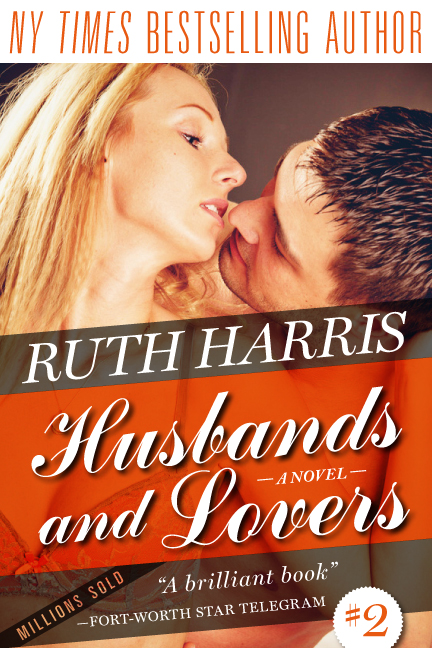 I once got a form rejection letter for HUSBANDS AND LOVERS while it was on the NYT bestseller list.
No kidding.
Who knows why? I don’t and never will. My agent and I laughed our asses off and I went back to my computer and continued working on my next book.
You should do the same.
EXCEPT if you’re being rejected because your manuscript sucks (#1)—or your behavior does (#11) ...oh yes, and absolutely, positively check for wildlife before submitting (#3).
In the first case, re-read & re-write with a critical eye and/or hire an editor and pay attention to what s/he says. In the second case, remember the Golden Rule and Do Until Others As You Would LIke Them To Do Unto You. You know, just like your mother said…and maybe get out the Roach Motel?
***What about you, scriveners? Have you got a rejection you suspect was for one of these reasons? Have you got an outrageous rejection story to share? Does it help to know it’s not your book, it’s the editor’s hormonal imbalances?
Win a Signed First Edition of Catherine Ryan Hyde’s iconic novel PAY IT FORWARD
HOW TO BE A WRITER IN THE E-AGE, which Anne wrote with her mentor and favorite author, Catherine Ryan Hyde (author of the iconic PAY IT FORWARD, and 19 other published and forthcoming books) is coming out very soon!
 It contains Anne’s entire “how to blog for authors” series and a whole lot more stuff she’s discussed on this blog and elsewhere, plus wisdom from Catherine’s popular workshops and seminars. It offers material you won’t find in any other writing book.
It’s not a book about how to write, but about how to be a writer. It’s about how to cope with the increasing pressure to do too much, and learn what advice to listen to, what’s best to ignore, and how to make the choices that are best for you personally and professionally.
Mark Williams international Digital Publishing will publish it in ebook and, a few weeks later, in paper (available the US and internationally.) When you buy the book, you will automatically be signed up for those updates and you’ll be able to download them free.
On the official launch day, we will hold a drawing, and the winner will receive a signed first edition of Catherine’s iconic novel PAY IT FORWARD. The winner will be announced on the blog on July 15th.
If you’d like to be eligible for the drawing, just sign up for our email list. All you have to do is leave your email address in the comments You can write it like this to avoid spam annerallen (dot) allen (at) gmail (dot) com. Or send it to me at annerallen.allen@gmail.com (Some of you signed up in January, so you’re already in the running.)
Official Launch of HOW TO BE A WRITER IN THE E-AGE to be held at the Digital Age E-Authors Seminar in San Luis Obispo on July 14th
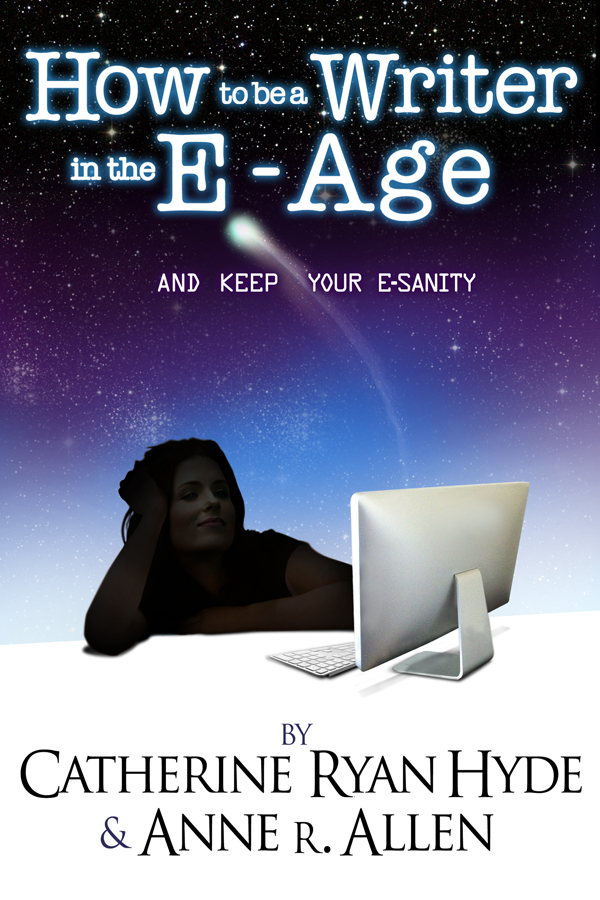 Do you live near the Central Coast of California? Any chance you’ll be visiting around July 14th? If you do, you’ll have a chance to take a seminar with Anne R. Allen and Catherine Ryan Hyde, authors of HOW TO BE A WRITER IN THE E-AGE…And Keep Your E-Sanity! The seminar is hosted by radio personality Dave Congalton and features Charlotte Alexander, Josh Ernstrom and Deborah Bayles.
The one-day seminar will be held Saturday, July 14, 2012 at the Sands Inn & Suites, in San Luis Obispo, CA “the happiest town on earth” (according to Oprah.) So if you live in the area, or you’re planning a vacation on the Central Coast, Register at: Digital Age E-Authors.
Anne will be out visiting this week. On Tuesday, June 26th, she'll be stopping by Meghan C. Ward's Writerland. Anne will be talking about how to choose the publishing path that's best for you. On Wednesday, June 27th, she'll be visiting Catherine Ryan Hyde's blog to talk about the perils of blogging.
June 17, 2012
Hello Darkness, My Old Friend: New Research Helps Writers Fight Depression
I started feeling it this last week: that dark heaviness lurking somewhere just below my conscious thoughts. It makes me burst into tears for no reason. I get clumsy and out of touch with my own body. I feel raw and unprotected. My joints ache. All I want to do is sleep, but sleep won’t come. My digestion gets wonky. Food has no taste.
Depression: I’ve had bouts with it all my life. It runs in my family. I lost my father and brother to suicide.
But I have better ways of fighting it than I used to. I now understand why it happens, and how to fight it off before it gets worse.
If you’re a writer who fights depression, know you’re not alone: a lot of great authors tend to be depressives. From Plato, who was reported to suffer from “melancholic disease,” to recent suicide David Foster Wallace, writing and depression seem inexorably linked. In Nancy Andreasen’s famous study at the Iowa Writers’ Workshop, 80% of writers surveyed met the formal diagnostic criteria for depression.
Until recently, nobody knew the reason for this. But new research is giving us fresh data on the anatomy and purpose of depression. In his bestselling new book Imagine, How Creativity Works Jonah Lehrer gives some fascinating information concerning what he calls the “common cold” of mental illness.
He says brain function researchers have discovered the part of the brain active in depressive episodes is the same area we use for complex thought.
That’s right: CREATIVE THOUGHT IS ANATOMICALLY IDENTICAL TO DEPRESSION.
As a result of the new research, some evolutionary psychologists are hypothesizing that humans developed depression—with its accompanying rumination and lack of interest in normal activities—as a mechanism for focusing on problem-solving.
In other words, when Gog’s BFF died trying to spear that saber-toothed tiger, Gog got sad, mooned around not eating, sleeping or making little Gogs, and…invented a longer spear.
So there’s a reason for the darkness: if humans are too happy to see there’s a problem, they can’t become problem-solvers.
These studies show depressed people have enhanced reasoning power. In an article in the New York Times on the subject, Lehrer quoted one researcher who said, “the results were clear: [depression] made people think better.”
This seems especially true for writers. Lehrer quoted another researcher who discovered “sadness correlates with clearer and more compelling sentences,” and Lehrer concluded, “because we’re more critical of what we’re writing, we produce more refined prose, the sentences polished by our angst.”
See—you’re not crazy, you’re just a really smart, creative writer!
Lehrer does admit: “To say that depression has a purpose or that sadness makes us smarter says nothing about its awfulness.”
Whether or not you buy the evolutionary cause-and-effect, this research gives us tools for understanding—and perhaps managing—the depression that overwhelms so many of us.
If we accept that depressive episodes are going to come with long periods of building complex worlds in our heads, maybe we can cope by making sure we take frequent breaks for physical activity, social interaction or non-cerebral tasks (who knew that boring day job was saving you from mental illness?)
It’s like those folktales about journeys to fairyland: you can only stay in there a certain amount of time, or you'll die/go mad. The land where magic happens is also full of demons.
I know exactly why depression has been attacking me: I’m about to launch my sixth book in less than a year. Nine if you count the anthologies and the Kindle single. I’m pushing to finish number seven/ten. I've been overusing that dark, creative part of my brain.
It’s ironic that my newest book is called HOW TO BE A WRITER IN THE E-AGE…AND KEEP YOUR E-SANITY!
I was starting to lose my own sanity—because I wasn’t taking my own advice. I've been spending too long in the brain territory where creativity lives side by side with the depression demons.
But I’m not going to get stuck there. Because of this new research, I’m not afraid of the darkness any more. Now I know it’s part of the creative process. When I see the pain as part of the package instead of a disease, I don’t have to label myself “crazy”—a sure-fire way to trigger the self-loathing that leads to severe depression.
I’m going to work with the darkness instead of medicating it away with pills. Those pills have always decreased my creativity and now I know why. If depression lives in the same place as creative thought, when you block out one, you’re going to interfere with the other.
NOTE: I’m not telling people with severe depression to forego the meds—they can be life-savers.
But to treat my incipient version of the disease, I’m going to lighten my load, spend more time away from the computer and shut out the noise that tells me that whatever I do isn’t enough. Last night I was invited to a fun party with a lot of creative, intelligent people. Earlier in the week, I decided I'd pass. I was supposed to bring a potluck dish--and it would be too much work and my digestion was a mess.
But as I started to think about this post, I realized I had to go. I knew it would be good medicine. And it was. My tummy is fine and I'm feeling amazingly more cheerful. Fun conversation and great food is one of the best ways to get out of your head and into the real world.
Of course I had to fight a little guilt.
When you spend most of your time on the Interwebz, you can feel as if you’re surrounded by superpersons who all have more hours in their days than you do. You’re bombarded by voices that say, “you can’t succeed unless you do this! And that! And these other 100 things! How dare you eat/sleep/read/have a family? You obviously don't really want to succeed!"
So you keep pushing yourself more and more. You become like the evil CEO who never hires new workers but expects a higher and higher productivity level from an ever more stressed-out staff.
So I've stopped being the evil CEO of my own body.
I came across a fascinating fact last week in a post from Robin LaFevers on Writer Unboxed:
Suzanne Collins has almost no Web presence.
Really. The phenomenal bestselling author has no Facebook page, no Twitter account, no Goodreads, Red Room, Library Thing, or Kindleboard profile. She’s got one tired website and has only written 8 books in her whole career.
But none of that seems to have hurt the sales of her HUNGER GAMES trilogy, does it?
So it IS possible to succeed as a writer in the 21st century without churning out a book a month and being online 24/7! You can be a successful author and take care of yourself, too.
This gives me hope.
And for any of you out there who are prone to depressive episodes, it should give you hope, too.
Depression is indeed awful. But it helps to know why it exists. And it helps even more to know that you can nip it in the bud by shutting out the voices who push you to stay too long in that creative place that is equally full of magic and danger.
What about you, scriveners? Have you ever had a bout with inner darkness? Did it come after a long period of intense thought? Are you feeling depressed by the demands that you do too much?
Win a Signed First Edition of Catherine Ryan Hyde’s iconic novel PAY IT FORWARD
HOW TO BE A WRITER IN THE E-AGE, which I wrote with my mentor and favorite author, Catherine Ryan Hyde (author of the iconic PAY IT FORWARD, and 19 other published and forthcoming books) is coming out very soon!
It contains my entire “how to blog for authors” series and a whole lot more stuff I’ve discussed on this blog and elsewhere, plus wisdom from Catherine’s popular workshops and seminars. We have material you won’t find in any other writing book.
It’s not a book about how to write, but about how to be a writer. It’s about how to cope with the increasing pressure to do too much, and learn what advice to listen to, what’s best to ignore, and how to make the choices that are best for you personally and professionally.
Mark Williams international Digital Publishing will publish it in ebook and, a few weeks later, in paper (available the US and internationally.) Although Catherine is mostly published Big Six publishers, we decided to go with a small, nimble international publisher for this book.
When you buy the book, you will automatically be signed up for those updates and you’ll be able to download them free.
On the official launch day, we will hold a drawing, and the winner will receive a signed first edition of Catherine’s iconic novel PAY IT FORWARD.
If you’d like to be eligible for the drawing, just sign up for our email list—which we will use only for important notifications about the book. All you have to do is leave your email address in the comments You can write it like this to avoid spam annerallen (dot) allen (at) gmail (dot) com. Or send it to me at annerallen.allen@gmail.com (Some of you signed up in January, so you’re already in the running.)
The official launch will be on July 14th in San Luis Obispo, at a Digital E-Authors seminar Catherine and I are teaching with radio personality Dave Congalton and his group of very knowledgeable tech and writing professionals.
The one-day seminar will be held Saturday, July 14, 2012 at the Sands Inn & Suites, in San Luis Obispo, CA “the happiest town on earth” (according to Oprah.) So if you live in the area, or you’re planning a vacation on the Central Coast, Register at: Digital Age E-Authors.

June 10, 2012
Hey, James Patterson Stole my Plot!
Plot theft. It tends to be on the minds of a lot of new writers.
You were planning to write that book some day. You had this brilliant plot. Now that *#%! Patterson/Nora Roberts/Stephen King has written a bestseller with the exact same premise.
Or the story is eerily similar to the one you pitched to an agent at a writer’s conference.
Or you're sure your plot will be stolen if you talk about your book online or in critique groups.
What should you do?
Nothing.
Writers have a lot to be wary of these days—bogus agents, inexperienced editors, overpriced coders/designers, scam publishers, draconian contracts, trollish critiquers—but plot-purloiners should not be high on the list.
Consider the old saying: “There are no new stories, just new ways of telling them.”
Experts don’t agree on the exact number of narrative plots, but there aren’t many:
· In the 19th century, Georges Polti listed 36 Dramatic Situations.· In 1993, Ronald Tobias counted 20 Master Plots.· In 2005, Christopher Booker compressed the list to Seven Basic Plots.· The legendary agent who used to blog as "Miss Snark” said there were six. · I found a 2010 article in Author Magazine that listed only five.
The number seems to be shrinking, but everybody agrees it is finite.
So—no matter how original your story feels to you, somebody has probably told it before.
Maybe a bestselling novelist like James Patterson.
They didn’t steal it. They thought it up just the way you did.
It’s amazing how often an idea that sprouts in your brain from the seeds of your own imagination can take root in other people’s brains at the same time. Human minds often respond in similar ways to prevailing news stories, music, weather patterns or whatever—and end up generating similar thoughts.
Evolutionary biologists call this phenomenon a “meme.” The term—from the Greek mimema—meaning something imitated—was coined by biologist Richard Dawkins in his 1976 book, The Selfish Gene. He observed that certain stories, melodies, catch phrases and fashions can flash through a whole culture in a short amount of time, changing and mutating as they go. Darwin and Wallace simultaneously came up with the theory of evolution while on different sides of the world. Newton and Liebnitz simultaneously invented calculus.
This explains why we can’t copyright ideas. Everybody has them. Very often the same ones at the same time.
Unfortunately, new writers don’t always realize this, and we can embarrass ourselves with plot-theft paranoia. That’s why you never want to mention copyright in a query letter. It red-flags you as an amateur.
Of course, if you’re having severe anxiety about it, you can indeed copyright your magnum opus, although it’s not necessary under current copyright laws. And if you’re really sure nobody ever thought of mixing classic 19thcentury fiction with B-movie paranormal creatures, you can even copyright that logline for “Silas Marner meets Gremlins.”
Just don’t mention this to industry professionals.
This is because delusions about the uniqueness of story ideas can get pretty off-the-wall.Victoria Strauss at WriterBeware wrote last year about some guy who was trying to sell his plot idea on eBay for ten million dollars. He said, “It can be compared to stories like Star Wars, Harry Potter, Lord of the Rings, Matrix, Indiana Jones…and will bring in endless fame and money to anyone who takes it.”
And he’s not the only starry-eyed doofus who’s combined delusions of grandeur with total cluelessness about the effort required to actually write a novel or screenplay.
In the thread of the same post at Writer Beware, children’s author Kathleen Duey said, “I have been approached so many times by people who want me to buy a story, or who are willing to share half the proceeds if I will just do the writing. I never know what to say. I am not rude, but...really? Try that split on any other kind of business person. ‘I think that a colony on Mars would be awesome and I am willing to give a 50% share of all eventual proceeds to anyone who can make it happen.’ I am always careful to walk away, if that's what it takes, to keep anyone from telling me the idea…just in case I ever write something similar by accident.”
I’ll bet a lot of writers have been approached in a similar way. I sure have.
I have a feeling this delusion is as old as writing itself. I imagine Virgil probably met a guy at the Emperor Augustus’s orgy who said, “You’re a writer? Hey, I’ve got this idea for a book about a guy who sails around the Mediterranean. Meets up with big storms. Monsters. Some hot nookie. You can write it down and we’ll split the proceeds 50-50.”
I hope Virgil had a good lawyer.
Kathleen Duey’s instinct to run is a good one. These people can get scary. (They’re more likely to resort to lawsuits than murder, but I used it as a plot device in my comic mystery set at a small publishing house: SHERWOOD, LTD.)
When somebody approaches me with this “proposition,” I say, “the going rate for ghostwriters is $50-$100 an hour. I don’t provide that service, but I can get you a referral.”
Thing is--most writers have plenty of story ideas of our own. Our biggest fear is not living long enough to write them all.
But what do you do when somebody big like Patterson does publish a book that’s similar to yours? Even if they didn’t literally “steal” it, you can feel kind of ripped off.
Don’t despair. Memes can work in your favor. If you’re writing the final draft of your version of your Silas Marner/Gremlins mash-up, and somebody else comes out with a Silas Marner/Poltergeist mash-up, you’re now part of a trend.
Readers tend to be sheep. If the first book is popular, they’ll want another. And if yours is better, you’re way ahead. It’s not about being first.
You can be pretty sure you’re not.
I’ll bet some guy told Virgil when he first pitched the Aeneid, “a lost dude sails around the Mediterranean after the Trojan War having adventures? Sorry, that’s been done. Haven’t you heard of that Homer guy’s story, the Odyssey?”
Hey, Virgil stole Homer’s plot!
I suppose he did--in a way. But it doesn’t seem to have hurt sales for either of them for the last couple of millennia.
It’s the telling that makes each story unique. And that’s going to be true of your story, too. It’s not about the plot. It’s about the writing. Nobody can steal that.
You should be more worried that your plot has been overdone.
Unfortunately, memes have short life spans. So it's important to keep up with what's selling in your genre. You need to know when the reader-sheep have moved on to greener pastures..
I'm not telling anybody to abandon a WIP with an well-used plotline. But be aware you're going to have to work a little harder to make it stand out. I thought I'd never want to see another vampire movie, and then Dark Shadows came out. And I laughed my head off watching Vampires Suck last night. You can always take something tired and make it fresh with humor. Or Johnny Depp.
Here are some overdone plots I see agents and readers complain about:
1) The thinly disguised memoir/rant
The Health-Crisis Survivor: The protagonist has cancer, lost a loved one, or has a disabled child—and after much agony, learns what’s important about life. Heart-wrenching, but misery won’t sell books unless you’re Joyce Carol Oates.
My Terrible Childhood: Child abuse is tragic stuff, but after somebody has seen 1000 versions Bastard Out Of Carolina, she gets calluses on her eyeballs.
Days of Wine and Roses: Too many addicts have twelve-stepped before you. It’s hard to make a story of “I was soooo f***ed up” sound fresh. Journal about it, and use your insights in other work.
The Government Sux: Most of what you’re ranting about will probably be old news by launch date, even if you self-publish. This is why we have blogs.
2) The wish-fulfillment road-trip fantasy
Me and Bobby McGee: Unappreciated husband leaves soul-stifling life for the freedom of the road. He picks up a sexy hitchhiker who teaches him what’s important about life and some nifty things to do in bed. Been there, read that.
Thelma and Louise: Unappreciated housewives leave soul-stifling lives for the freedom of the road. Sounds fun, but we all know how it ends.
Zen and the Art of… Same story, with motorcycle/sailboat/classic Corvette.
3) Obvious or copy-cat plot devices
Grail Quests: J. R. R. Tolkien provides some pretty stiff competition in the “searching for a magical object” category. If you saddle this old warhorse, make sure it takes you somewhere wildly original and/or funny.
Wardrobing to Narnia: I’ve seen a lot of agents kvetch about the proliferation of “portals” in SciFi/Fantasy queries. Pop your characters to fantasy worlds by magic toaster or something.
The Chosen Hero: the ordinary Harry Potter-type kid who doesn’t know he’s the anointed hero destined to fight the Evil One and save the school/civilization/planet. Old when young Arthur pulled the sword out of that stone.
Improbable high school love fantasies: Dorky new kid in school attracts the most popular kid of opposite sex. Been done. With sparkles. Just once, we’d like to see dork meets dork.
Creatures of the Night: The curtain has fallen on werewolves and vampires.
The Da Vinci Homage: If your hero has found a secret code or artifact that holds the key to a shocking revision of ecclesiastical history, you’d better set it on Mars or reveal the fetid meatballs at the Pastafarian heart of the Church of the Flying Spaghetti Monster, or you’re going to have a hard time.
A writer writing a novel: We’re told to write what we know, which is probably why most writers try this one. But you’ll do better with a story about your day job at the laundromat.
On the other hand, oldies can be goodies in the right hands. Nothing was more tired than the English boarding school melodrama before J. K. Rowling put her spin on it.
The way to avoid this is to read books in your genre before you start. It’s essential to know what’s out there. You may think you’re the first person ever to think of mashing up B-movies with classics, and unless you look at your local bookstore shelves and see Pride and Prejudice and Zombies, you won’t know it’s been done, and you’ll think “Seth Grahame-Smith stole my plot!” ***
What about you, scriveners? Have you ever had your brilliant plot show up in somebody else’s book? Have you had somebody try to sell you a plot or use their plot and split the proceeds 50-50? What did you do? Have you tried to write a book with one of the overdone plots? (I sure have: writer writing a novel—still have it in a drawer.)
You can Still Sign up to Win a Signed First Edition of Catherine Ryan Hyde’s iconic novel PAY IT FORWARD
HOW TO BE A WRITER IN THE E-AGE, which I wrote with my mentor and favorite author, Catherine Ryan Hyde (author of the iconic PAY IT FORWARD, and 19 other published and forthcoming books) is coming out very soon! This is not another book on self-publishing or a how-to-write book. It’s about how to be a writer: navigating the perils of the industry and keeping up with the latest information to save you time and money.
If you want be eligible to win a signed FIRST EDITION of Catherine’s iconic novel, PAY IT FORWARD, all you have to do is leave your email address in the comments or send me an email. You can write it like this to avoid spam annerallen (dot) allen (at) gmail (dot) com. Or send it to me at annerallen.allen@gmail.com
The official book launch and drawing will be on July 14thin San Luis Obispo, at a Digital E-Authors seminar Catherine and I are teaching with radio personality Dave Congalton and his group of very knowledgeable tech and writing professionals.
The one-day seminar will be held Saturday, July 14, 2012 at the Sands Inn & Suites, in San Luis Obispo, CA “the happiest town on earth” (according to Oprah.) So if you live in the area, or you’re planning a vacation on the Central Coast, Register at: Digital Age E-Authors. (But you don’t have to be there to win the first edition.)


