
Anne R. Allen's Blog, page 68
June 3, 2012
The Slow Blog Manifesto...and 8 Reasons Why Slow Blogging Will Help Your Career, Your Love Life, and Protect You From Angry Elephants
What is the Slow Blog Manifesto?
It’s an essay written in 2006 by Canadian software designer Todd Sieling at the height of the everybody-must-get-a-blog frenzy. You can read the Slow Blog Manifesto here. Slow Blogging is modeled on Alice Walker’s “slow food” movement (the opposite of McBurgerish “fast food.”) The point is quality over quantity.
Todd wrote:
“Slow Blogging is the re-establishment of the machine as the agent of human expression, rather than its whip and container. It’s the voluntary halting of the light-speed hamster wheel dictated in rules of highly effective blogging.”
He urged people to write a few thoughtful, well-researched posts a month rather than daily blabber. A number of influential journalists, technicians, and academics joined his movement. It built steam until mid-2008, when it merited an article in the New York Times.
It’s a principle that’s caught on. I see a lot of publishing industry bloggers cutting back on their number of posts—even uberbloggers like Nathan Bransford and Jane Friedman.
But unfortunately, not everybody has got the message. This week I saw a post on a popular writing blog telling new authors they should blog every single day.
I couldn’t disagree more. I think new authors, especially, need to limit their distractions. Yes, authors absolutely need social media these days, but we shouldn’t give it any more of our writing time than absolutely necessary. (Especially since we are all supposed to write 12 books a year—more on that nonsense in another post.)
Also, in order to get a readership in this saturated blogosphere, it seems to me we should be stressing quality over quantity. People don't want more stuff to take up their time.
If you aren’t quite sure what to blog about, check out How to Blog Part III: What Should You Blog About? in my "How to Blog for Authors" series.
BTW, you’ll find all of my "how to blog" posts—plus a huge amount of helpful, positive information in the new book I’ve written with Catherine Ryan Hyde: HOW TO BE A WRITER IN THE E-AGE—And Keep Your E-Sanity! Which will debut later this month. (Shameless plug below.)
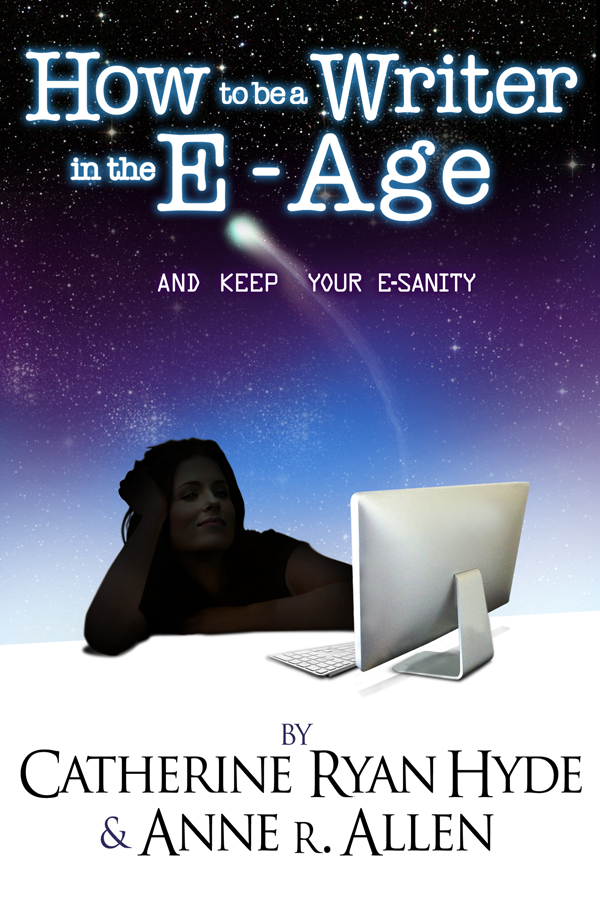 See below for more info on the launch!
I didn’t start out to be a Slow Blogger.
When I started this thing three years ago, I was simply too busy bloodying my knuckles on the doors of the publishing industry to have time to post more than once a week.
But now, largely thanks to this blog, I’m about to launch my sixth book in a year. Tenth if you count anthologies and singles. ( But no. I don’t intend to make a habit of that.) The blog has won dozens of awards—and even made the list of finalists for Best Publishing Industry Blog in the Association of American Publishers/Goodreads Independent Book Blogger Awards. (Many, many thanks to all of you who voted for us!)
I did this without blogging more than once a week. In fact, thanks to a wonderful blog partner (the spectacular Ruth Harris, who joined a year ago) plus some fabulous guest bloggers, I usually now blog only twice a month.
Which is why I get really annoyed when I see new authors getting hammered with advice to blog every day.
Don’t. Just don’t.
Need more reasons?
1) A slow blog has a longer life-span.
The average life span of a blog is three years. But you want your writing career to last longer than three years, don’t you? A neglected blog hanging in cyberspace is worse than none.
Of course some people can blog brilliantly every day. But I don’t know a lot who can sustain that pace AND write book-length narrative every day.
So you’ve got to plan a blog that’s going to beat the odds. A slow blog is more likely to do that.
Think marathon, not sprint: slow blog.
2) You reach more people by commenting on other people’s blogs than by madly posting on a blog nobody reads.
Author/publisher/social media guru Bob Mayer pointed out on his blog recently:
“One of the best networking tools is to go to people’s blogs and leave cogent comments.”
Yes, an author needs a blog—it’s more dynamic than a static website (and free) so it’s the best way to interact with readers and fellow writers. But it’s not your best sales tool, especially when you’re starting out—it’s more like your Internet home. If nobody knows you, they won’t come and visit.
Think of it this way: would you reach more people by sitting in your basement making a thousand signs, or by making one sign, standing in a public place, and getting it filmed for a clip on the nightly news?
So use your blogging time to visit other blogs, and only post on your own blog when you have something to say that you can tell people about on other blogs. Then they’ll come visit. See how that works?
Get your sign on the nightly news: slow blog.
3) Busy people are less likely to subscribe/follow a blog that’s going to clutter their email inbox/rss feed every day. I sure won’t. I don’t read ANYBODY’S blog every day. I’d be so glad if they’d only send notifications of the good ones. Or—even better—only write the good ones. (Which, um, is called “slow blogging.”)
When you write mostly good posts, people will know a visit to your blog is a valuable use of their time and they’ll spread the word. Then maybe an agent or publisher will visit and like it so much they’ll ask you to send them a novel and you’ll end up published. That’s what happened to me—twice. Seriously. Both my publishers contacted ME because they liked this blog.
So if you want to get published, slow blog.
4) Everybody has bad days. When you have to think of something to say on the day you got that nasty/clueless review/rejection, your emotions are going to leak out.
You’re going to write what you really think about that agent who has hair like Medusa and the literary taste of an orangutan. You’re going to call that agent Monkey Medusa on your blog. Then it will turn out she wasn’t actually the agent who rejected you. That was a different one at an agency down the hall. Monkey Medusa actually loves your book and was about to offer you representation. So she visited your blog to find out more about you and got seriously offended and you lost your big chance for a major book contract.
If you don’t want to lose out on a major book contract, slow blog.
5) Nobody can come up with that many interesting posts. When you slow blog, and you don’t have anything to say, you don’t have to say it.
But if you succumb to pressure to blog every day, you’re going to blather-blog. You’re going to talk about your stupid boss who’s been acting like b*** in heat since the hot new guy joined the department. And it will turn out your boss’s husband is an aspiring writer who subscribes to your blog, so he’s going to dump that b***. She’ll be so mad she’ll fire you. You will not be able to get another job in this economy and you’ll lose your apartment and end up moving in with your girlfriend who will be so PO’d at you for blogging all the time, she’ll break up with you.
Don’t blather-blog and wreck your relationship: slow blog.
6) Writing nonfiction—which is what you should be writing on your blog—uses a different part of your brain from fiction.
When you’re on a roll with a novel, and have to stop to write something perspicacious on the subject of sentence structure, you can stop that flow dead. Maybe you won’t ever get it back. Maybe you’ll have to give up your writing dream and join the circus. When you join the circus, you could get stepped on by an angry elephant.
Don’t get stepped on by an angry elephant: slow blog.
7) You write narrative--remember? The blog is supposed to be about getting your name out there as a creative writer. It’s an aid to your serious writing, not a substitute for it.
If you spend every day working on your blog, you’re going to neglect your novel. When you neglect your novel, you’ll forget why you wanted to be a writer. So you’ll accept that promotion at work where you have to work all hours with no overtime because you’re management now. You’ll wake up one day and discover you’re middle-aged and have nothing to show for it, so you’ll buy yourself a very fast, very expensive car. But you’ll be so exhausted from all that work that you’ll drive your fast, expensive car off a cliff and die in a fiery crash.
Don’t die a fiery crash: slow blog.
8) Trying to blog every day is impossible to keep up, so you’ll constantly feel guilty. Guilt is bad for your mental health. When you feel guilty you eat/drink/smoke too much and then feel guilty about that too.
See where this is going…?
My apologies to the people who write the Direct TV commercials for the “don’t do this…” silliness.
But seriously: slow blogging rules.
Yes, I am aware these comments aren’t true for everybody. There are always the superpersons who can do it all—and I’m in awe of them. But if you don't have tights and a cape in your closet, don’t succumb to the pressure.
Two examples of successful slow bloggers are:
The insightful Nina Badzin, whose thoughtful, eclectic blog has become wildly popular. In fact, her essays now appear in the Huffington Post. She’s recently discovered she’d rather blog than write fiction. (The world needs more thoughtful essayists, so this is a great thing.) But she continues to blog once a week.
My publisher, the esteemed Mr. Mark Williams of International fame, sometimes doesn’t post for six weeks. But when he does—he always informs, entertains and tells us stuff we never knew we needed to know. So his Alexa rating is higher than most daily bloggers.
And the late, great pseudonyminous agent, Miss Snark was all for slow blogging, too. In spite of all the pressure to “build platform,” she advised new writers to always put their writing first:
“Your job is to write…
…There's a lot to be said for sitting down with your ownself and writing. Nothing, literally NOTHING replaces that. Focus. You're wasting time.”
Tell that to the idiots who say you have to blog every day.****Win a Signed First Edition of Catherine Ryan Hyde’s iconic novel PAY IT FORWARD

HOW TO BE A WRITER IN THE E-AGE, which I wrote with my mentor and favorite author, Catherine Ryan Hyde is coming out very soon!
It contains my entire “how to blog for authors” series and a whole lot more stuff I’ve discussed on this blog and elsewhere, plus wisdom from Catherine’s popular workshops and seminars. We have material you won’t find in any other book for writers.
It’s not a book about how to write, but about how to be a writer. It’s about how to cope with the increasing pressure to do too much, and learn what advice to listen to, what to ignore, and how to make the choices that are best for you personally and professionally.
Mark Williams international Digital Publishing will publish it in ebook and, a few weeks later, in paper (available the US and internationally.) Although Catherine is mostly published by Big Six publishers, we decided to go with a small, nimble international publisher, because with the business changing so rapidly, a traditionally-published book would be out of date by the time it went to press. But the people at MWiDP will be able to update the book every six months.
So as an added perk, when you buy the book, you will automatically be signed up for those updates and you’ll be able to download them free. Plus we will supply information for an international as well as a US audience.
On the official launch day, we will hold a drawing, and the winner will receive a signed first edition of PAY IT FORWARD.
If you’d like to be eligible for the drawing, just sign up for our email list—which we will use only for important notifications about the book. All you have to do is leave your email address in the comments. You can write it like this to avoid spam "annerallen (dot) allen (at) gmail (dot) com." Or send it to me at annerallen.allen@gmail.com (Some of you signed up in January and February, so you’re already in the running.)
The official launch will be on July 14th in San Luis Obispo CA, at a Digital E-Authors seminar Catherine and I are teaching with radio personality Dave Congalton and his group of very knowledgeable tech and writing professionals.
The one-day seminar will be held Saturday, July 14, 2012 at the Sands Inn & Suites, in San Luis Obispo, CA “the happiest town on earth” (according to Oprah.) So if you live in the area, or you’re planning a vacation on the Central Coast, Register at: Digital Age E-Authors.


May 27, 2012
How Writers Can Learn to Cope: 6 No-Fail Strategies for Achieving Mental Toughness
Thanks to all of you who voted for our blog in the Association of American Publishers and Goodreads Independent Book Blogger Awards. We made it to the Finalist list for Best Publishing Industry Blog. 10,000 people voted in a field of over 800 nominees. The winner in that category is the uber-awesome Victoria Strauss of Writer Beware, so we're in some pretty impressive company. Congratulations to Victoria!
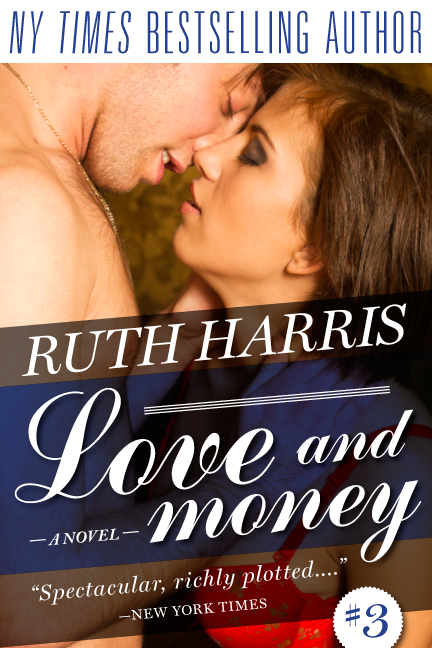 Also: Ruth has some HOT new covers for her books. Check them out in the sidebar.
Writers don’t tend to be tough people—but unfortunately, we’re in a tough business. We’re by nature a sensitive lot. We’re more tuned-in than most people—a necessary quality for our craft. But being open to stimuli also means we’re more open to hurt. How do we cope?
It’s a lot like learning to play guitar. You’ve got to build up some callouses in order to play in the band. The callouses are as important as learning to play the right notes. And you have to build them slowly--there are no shortcuts. That’s one of the reasons a first time writer shouldn’t immediately jump into the publishing fray.
It’s not just about learning to write well. It’s about learning to fail well. (See my post on “Three Questions to Ask Before You Jump on the Indie Publishing Bandwagon”.)
6 NO-FAIL STRATEGIES FOR HEALING THE HURT & ACHIEVING MENTAL TOUGHNESS: HOW WRITERS CAN LEARN TO COPE WITH REVERSES, SETBACKS & EFFING CATASTROPHES
By Ruth Harris
These are a few of the everyday, predictable set-backs that each and every writer is guaranteed to face:You ARE going to get terrible reviews.You WILL be rejected by the editor who “loves” you and your work.Agents WILL diss you.The book of your heart—the one you worked on for ten years—won’t find any takers.Not even if you buy it a gorgeous cover, get lavish praise from famous writers and celebrities, self-pub it and give it away free.No one wants it, no one “gets” it, no one—except you—gives a damn.Yes, it can be lonely out there. Not to mention miserable. And depressing.
Unfortunately, it’s part of the job. Comes with the territory. Better get used to it and better figure out How To Snap Back.
That’s where mental toughness comes in. Not tough like Clint Eastwood packing heat and snarling, “You feeling lucky, punk?”
But tough like the Yankees’ Mariano Rivera, the best reliever in baseball.
The New York Timesexplained:
“If a thick skin is the most important attribute a baseball closer can have, then Rivera is made out of leather. He holds the record for most career saves, has won five World Series titles and is thought by many to be among the most mentally tough athletes in baseball history. Nothing sticks to Rivera. Poor pitches are forgotten immediately, crushing losses go out with that day’s sweaty jersey. Rivera, long the Yankees’ safety net, is a master — the master — at moving on.”
The mental toughness that makes Rivera “the best” is a necessary quality for relievers—and for writers. If you get blocked or stymied at rejection, if you melt into a tearful/incoherent puddle at every bump and bruise, you need to develop a much tougher attitude. The qualities I’m talking about include:
1) THE ABILITY TO “SHRUG IT OFF” whatever the it is: your editor leaves & your book is stranded/orphaned, your agent fires you, your publisher goes bankrupt and everything you looked forward to—the ads, the TV appearances, the reviews, the copies in stores—ain’t gonna happen. No way Jose.
Solution: Think like Mariano. You blew the save? You gave up the game-winning home run? You walked in the winning run? In Game Seven of the World Series?
Remember the old Bud ad: Let it go, Louie.
One way or another, you need to regain your focus and move on: write the next book, think of a new ending for the old book, revise, rewrite, redouble your efforts.
2) TENACITY & FLEXIBILITY.Call it stubbornness or stick-to-itiveness but, if you think you’ve got a good idea, don’t give up. If your book doesn’t work as a mystery, maybe it will if you write it as a comedy. If your screen play doesn’t find a home in the movies or tv, maybe you should turn it into a novel—which is exactly what Lee Goldbergdid. (He's the creator of the great TV series Monk--A)
In his essay about the writing of KING CITY, recently published by Thomas & Mercer, Lee, details the long, obstacle-strewn path that led—finally—to success:
“KING CITY began as a TV series pitch that I took all over Hollywood four or five years ago. It generated some interest but ultimately didn't lead to anything. So I put it in a drawer and moved on.”
But the idea nagged at him and Lee didn’t give up. He rewrote, revised, cut, expanded, outlined—and then he did it all over again. You can read his detailed account of the process here.
3) FOCUS. Mental toughness also means the ability to concentrate and to lay down rules. Mariano Rivera did not allow himself to be distracted by crowd noise, an umpire’s bad call, shouted advice from leather-lunged fans or all the woulda’s-coulda’s-shoulda’s. Laser-like, he concentrated on the next pitch, the third strike and the last out.
Nora Roberts takes a similar approach: She was quoted as saying that her family knows that when she’s working, there are only two reasons to interrupt her: “blood or fire.” She’s one of the world’s best-selling writers, the author of 200 books and someone who obviously has a few good ideas about productive working conditions!
4) MISTAKES, BAD DECISIONS & TUITION. Not someone else’s screw-up but your own. The terrible contract you signed. The agent-who-couldn’t-sell-Gone-With-The-Windyou chose to represent you. The undercapitalized small publisher who disappeared in the dead of night. If the cost of your own poor judgment is financial, think of the price as tuition.
You’ve certainly learned something, most of all about yourself and also about the sharks and incompetents to beware of. The cost of that expensive knowledge is financial loss. It’s the tuition you paid to learn a valuable lesson.
5) HUMOR. Sometimes all you can do is laugh it off. Definitely a sign of mental strength. As a friend of mine—she’s a bestselling writer—once said when a guy she wasn’t even that crazy about dumped her: “Sometimes you can’t even get what you don’t even want.”
Black humor works wonders so don’t forget that looking through a noir lens can be a jolting brace of reality-adjustment (aka mental toughness).
6) THE LEFT/RIGHT BRAIN STRATEGY. Analyze the problem rationally and figure out coping strategies. You’ll feel much better.
Cozy mystery author Elizabeth S. Craig explains: “I’ve gone a step farther, too. Besides looking for data from reader emails, I’ve sought out and read my stinky reviews online…and analyzed them for a common thread. When I saw something mentioned repeatedly, I made a note of it. It’s not too hard to get past any hurt feelings when you’re being analytical—easier than it might seem, actually.”
Bottom line: Don’t wallow. Analyze!
Winston Churchill, who led England to victory in World War II, knew something about mental toughness: “Success is not final. Failure is not fatal: it is the courage to continue that counts.”
Also from the Brits: Keep calm and carry on.
You’re tougher, more resilient and flexible, more able to laugh at yourself and the world around you than you might think. After all, as Carlos Castaneda said, “We either make ourselves miserable, or we make ourselves strong. The amount of work is the same.”
What about you, scriveners? Have you been able to develop mental toughness? Do you have any tricks to share with your fellow writers who might not have been around long enough to build those callouses on their souls?

May 20, 2012
Who Are the Big Six? What Does “Indie” Really Mean? Answers to Not-So-Dumb Questions You Were Afraid to Ask
There’s much talk on the Interwebz about “Big Six, “small presses” and “indie publishing.” But a lot of newer writers aren’t quite sure what these terms really mean. None of us wants to sound dumb, so we usually don’t ask. So I’ll pretend you did. (And thanks, Yumi, for asking about the word “indie” in the comments last week.)Here’s a quick guide:The Big Six
These are the six multi-national corporations that control most of the Western world’s publishing. 1. Simon and Schuster 2. HarperCollins3. Random House 4. Macmillan 5. The Penguin Group6. Hachette Two are American: Simon and Schuster and HarperCollins, (although Harper is a division of Rupert Murdoch’s NewsCorp, so it’s pretty international.) Two are German: Random House is owned by Bertelsmann and Macmillan is owned by Holzbrinck. One (Penguin) is BritishOne (Hachette) is French. Some people include the Canadian Romance giant Harlequin when they’re talking about “big publishing” (which I guess would make them the “Big Seven.”)Most books you see in stores come from the Big Six/Seven. They have hundreds of imprints with familiar names like Little Brown, Knopf, Viking, NAL, Pocket, Scribner, St. Martins, Dutton, Avon, William Morrow, Crown, Tor, Zondervan, Grand Central, Dell, etc. but they’re all owned by one of those six corporations.In almost all cases, you need an agent to query the Big Six. There are a few exceptions, like Tor/Forge/Tom Doherty—which is a division of MacMillan—and some children’s divisions of the big houses. Five of the Big Six—all but Random House—have recently run afoul of the US Department of Justice because of their attempts to keep the price of ebooks artificially high. A lot of people think this means the Big Six are doomed. I’m not so sure about that. Multinational conglomerates tend to be rather good at hanging onto their trousers in a crisis. But there’s no doubt the ebook revolution is changing the face of publishing. Most of the changes the Big Six has come up with recently have NOT been author-friendly, but maybe they’ll learn from their mistakes. (We can hope.)
Mid-Sized publishers (sometimes called “small” just to confuse you)
This covers a lot of territory, from university presses to big international operations like Canada’s Harlequin(see above) and the UK’s Bloomsbury (which has branches in London, New York, Berlin, and Sydney.) When mid-sizers are successful, they tend to be bought up by the Big Six. (Thomas Nelson, the largest independent Christian publisher, was bought by HarperCollins in 2011.)There are many dozens of mid-sized houses. They often address particular niche markets. Here’s a sample list—by no means comprehensive. · Llewellyn:New Age nonfiction and mysteries (under their Midnight Ink imprint)· Chronicle Books: Art, food, pop culture (and some illustrated fiction like Griffin and Sabine.)· Perseus Books: Travel and other nonfiction genres. · Workman Publishing: Tends toward the literary. Imprints are Algonquin, Black Dog & Leventhal, Storey Publishing, Timber Press, Artisan Books, HighBridge Audio, Fearless Critic.· Sourcebooks: Formerly a publisher of financial guidebooks, it’s grown to include fiction in all genres in the last decade. · Sunset: Gardening, cookbooks and how-to· Poisoned Pen: (Maybe on the cusp of small and mid-sized.) One of the largest mystery publishers.· F + W Media/Writer’s Digest Books: How-to· Dorchester:Genre fiction. Now in bankruptcy. It was the premier mid-sized independent publisher of mass market paperbacks until 2010, when it suspended most paper operations and went to ebooks only (see below.) Its financial difficulties have given it a “not recommended” stamp from most writers’ organization. · Titan Books: UK publisher of movie and TV tie-ins as well as graphic novels. Took on Dorchester’s crime fiction imprint, Hard Case Crime· Houghton Mifflin Harcourt: Textbook publishers (merged with the Irish company Riverdeep in 2008)
Most mid-sized publishers want agented submissions, but not all. So check websites for submission guidelines. Midnight Ink no longer accepts unagented queries, but some Harlequin lines do. Right now, they include Harlequin Heartwarming, Kimani Press, Harlequin Historical Undone, and Nocturne Cravings . Here’s a database of midsized and small publishers compiled by Canadian thriller author Jack King .NOTE: Mid-sizers tend to pay smaller advances and lower royalties (that includes Harlequin.) They also tend to be the most financially precarious. So expect some of these to go the way of Dorchester if they don’t keep up with the times.
Retailer/publishers
Amazon is a bookstore that has become a book publisher. It has a number of lines in different genres: · Amazon Encore: Reprints of self-published and out of print books· Amazon Crossing: Books in translation· Thomas and Mercer: Thrillers · Montlake: Romance· 47 North: SciFi· New Harvest: General Fiction—which will be published in conjunction with Houghton Mifflin Harcourt (see how convoluted this all gets?)
You need great sales as a self-pubber to be approached by Amazon’s publishing wing, but agents are also selling directly to Amazon. Amazon has some of the most author-friendly deals around, BUT other bookstores are reluctant to carry their products because of the obvious conflict of interest. Other online retailers like iTunes/Apple may follow suit. Brick and mortar bookstores are also producing their own books. This isn’t new. City Lights in San Francisco has had its own publishing wing since 1955, but with POD technology, this may become a trend that will help bookstores stay alive.
Independent Ebook Publishers
These are new publishers like Ellora’s Cave and Samhain Press (with more start-ups all the time.) They publish primarily ebooks and usually appeal to a particular niche.Expect to see more and more of these. Because ebooks have low overhead, they can be more author friendly and often provide some marketing help for their authors. (Samhain is branching into print, although the bulk of their titles are ebooks.) These generally do not require an agent for submissions. But because this is a new industry, check them out thoroughly and try to get referrals from satisfied clients.
Small Presses
These are sometimes called “indie presses.” (Ten years ago, this is what people meant by “indie” publishing, but now self-pubbers have kind of taken over the word.) There are thousands of them. It’s hard to find useful listings because the number is never stable. They spring up and get knocked down like a literary version of Whac-A-Mole. Some, like Beacon Press, GrayWolf, and Copper Canyon Press are prestigious and have been around for decades. Some are regional and publish books specific to one area--like guidebooks and local history.Others address niche genres, like Canada’s SciFi publisher Edge , and noir mystery publisher BleakHouseBooks, or New England Cozy specialist Mainly Murder Press .They tend to focus on poetry and literary fiction, so if you're a literary writer, you may find your home here. Poets and Writers has a great database of literary small presses.Small presses are usually labors of love and nobody gets rich, but they’re often a good way to break in to print and lots of authors are very happy to stay with a small press where there is a more personal interaction with editors. Authors are responsible for their own marketing and there’s generally no advance, but higher royalties. These publishers generally don’t want to deal with agents—writers should query the editors directly. (Remember to check for submission guidelines on their websites.) But beware: Check them out thoroughly with sites like Writer Beware and Preditors and Editors and if they’re not well-established, contact other clients before you sign. And always have a lawyer or publishing professional look at the contract before you sign.
Micropresses
These are a tiny version of the small press—usually one or two-person operations, generally oriented toward the literary. They often publish chapbooks of poetry. They operate on a shoestring, and are usually run as a hobby. Often these are run by authors who are essentially self-publishers who also take on a few colleagues and friends. A micropress can be a friendly, supportive place for a writer to start out. But beware: they can also be clueless and unprofessional. There’sa horror story at Writer Beware this week about a writer who had her book rewritten without her permission by a “publisher” of this type. Some of these can be a great first step into publishing, but look for red flags. Grandiosity, unrealistic promises, negativity about the industry, and bad spelling/grammar on the website are tell-tale signs.
Vanity Presses
These are publishers who make their money from services to authors rather from sales of books. Before ebooks and POD (print on demand) technology, vanity presses were mostly pricey self-indulgences—although every so often a vanity-published book like 1990s phenomenon The Celestine Prophecy made it to mainstream readers.Two of the best known of the traditional vanity presses are Vantage and Dorrance. But as prices came down and self-publishing took off, the line between real publishers, printing services, and vanity presses has blurred. A lot of authors are taken in by vanity publishers posing as real publishers. But others successfully use vanity presses as printers for self-publishing and--with a lot of promotion--make the bestseller lists with books like The Christmas Box and Legally Blonde.
The problem is, most vanity publishers overcharge for services so their books are too pricey to be profitable for the author. And there can be other problems. For instance, PublishAmerica ties up the author’s copyright for seven years.
But vanity publishers are not all scammers, and they can be useful for books that aren't produced to be profitable, like family histories and recipes, memoirs and poetry collections.Here are some of the best known vanity publishers· PublishAmerica (aka Independence Books)· Tate Publishing· AuthorHouse (which has many imprints)· XLibris· iUniverse· Ivy House· Trafford Publishing· Poetry.com
Indie Publishing
True DIY publishing. You do everything yourself or hire somebody to do it for you. You can do this several ways:· Get help from a publishing facilitator like Smashwords or BookBaby, who for a flat fee will code your ebook and upload to different retail platforms and keep track of royalties. They also offer inexpensive cover design and other services.· Get shepherded through the process by an agent. A number of agents are actually helping authors become indie publishers these days—usually existing clients. Some industry purists consider this a conflict of interest, but the agented authors I know who have published through their agents have nothing but good things to say about this. · Hire your own private editor, cover designer, and coder and keep complete control. NOTE: “Complete control” does not extend to Amazon. Author-friendly as it is, the ’Zon has glitches that can’t be controlled by anybody, apparently. Ruth Harris has been trying to get Amazon to post the correct book cover art on her Amazon author page for six months now, to no avail, and Saffina Desforges had her bestselling thriller Sugar and Spicedisappear from Amazon.co.uk for over a month with no explanation—when you’re selling an average of 10,000 books a month, that’s a hefty price for some glitch. If you’re an indie publisher who wants your books printed in hard copy as well as electronic form, you’ll need the services of—
P.O. D. Publishing Service Providers
These are printer/distributors who use print on demand technology. This means that instead of having a huge print run for your book that has to be stored in a warehouse, the book is only printed when it is ordered. Most small presses use these providers, too.The primary POD providers are:
CreateSpace: Owned by Amazon. Printing with them gets you on Amazon, which owns a huge share of the book marketLightningSource: Owned by Ingram, the biggest book distributor in the US. Ingram supplies bookstores, so if you want to see your book in your local bookstore window, LS has the advantage. Lulu.com: The only printer I know of that doesn’t charge upfront fees. So even though they keep 20%, I’m putting them in the service provider category rather than with vanity presses. They'll sell your books on their own site (not terribly customer-friendly) and post them to Amazon, Barnes and Noble and other online retailers worldwide.For a great comparison between Lightning Source and CreateSpace, small press owner Robin Sullivan has a great analysis on her blog Write to Publish. ***The ebook revolution is rapidly shifting the old publishing paradigm, and nobody’s quite sure what’s coming next. Much of what I’ve written here will probably be obsolete by next year.But that doesn’t mean we should ignore the old guard. They may have life in them yet.. I think educating yourself about the industry as it is now will help you make decisions about what path might work best for you in the future. One of the best ways to learn about the industry is to subscribe to Publishers Lunch, a free newsletter from Publishers Marketplace.Yes, publishing companies do seem to merge and change partners like square dancers on speed, but they’re still very much with us. And they're learning to adapt with the changing times. (Some are learning faster than others, and I have no doubt some will fall to the e-revolution.)As I said last week, learn everything you can and don’t let anybody bully you into making a choice you’re not comfortable with. We live in an age when authors have more choices than ever before, and if you don’t like the choices you’re being offered right now, wait a few weeks and something new is bound to pop up!
What about you, scriveners? Did you know the names of the Big Six? How many mid-sized publishers can you name? (Let’s add some to my list. I hardly scratched the surface here.) And if you know of a great small publisher or ebook publisher, do leave that name, as well. If you’ve had experience with them, good or bad, we'd like to hear about it. Any additions, subtractions or caveats welcome.

May 13, 2012
Indie or Traditional Publishing? Don’t Take Sides: Take Your Time
For a new writer, this can seem like a terrifying time to be launching a career. Everything in the publishing industry is in upheaval. Bookstores are closing all around us. Publishers and online retailers are conducting high-profile battles in the legal system as well as the court of public opinion. (If you want a quick, sensible overview of the challenges in the publishing industry today, Nathan Bransford has a great post this week on the new era of publishing.)
The rules keep changing. Experts don’t agree on anything. The us/them, either/or arguments of "indie" self-publishers vs. “legacy” traditional publishers can be toxic.
If you regularly make the rounds of publishing blogs and writers’ forums, you may be feeling more and more confused—even bullied.
A whole lot of experts will tell you that if you’re not going indie, you’re a moron, and every minute your manuscript is sitting there unpublished, you’re throwing away potential zillions. They will tell you anybody who has an agent or publishes with the Big Six is a miserable slave who is contributing to the corporate takeover of the world: agents and publishers are all crooks, idiots, and meanies who are going to beat you up and eat your lunch.
A whole lot of other experts will tell you that if you’re publishing anywhere but the Big Six, you’re a moron who's contributing to the downfall of civilization and destroying the World as We Know It: self-publishers are all clueless, uneducated louts who have unleashed a tsunami of crap that is killing our bookstores, libraries and brain cells.
So what's a new writer to do?
Don't let anybody call you a moron, for one thing. The Internet age is also the age of irresponsible, anonymous snark and bullying.
My advice is shut out the noise, refuse to take sides, educate yourself, and take your time.
The ebook revolution isn’t about battles between warring "sides". It’s about the freedom to choose how we publish and what we read. Relish that freedom.
Change can be very scary. It’s like trying to go about normal business in the middle of an earthquake. There’s nothing solid to hang onto.
But you know what’s scarier than change?
No change.
Before the ebook, publishing was a calcifying industry. New writers were finding it tougher and tougher to break in. Successful career authors were dropped if they couldn’t produce annual blockbusters in spite of no marketing budget. The antiquated system of returns—in which every bookstore is a consignment shop—means publishers have been wasting a huge amount of money shipping books back and forth to warehouses and eventually pulping them.
The ebook is changing everything. Ditto social media.
Even if you’re a traditionalist, you don’t have to be afraid of the electronic revolution. It’s not killing literature. The truth is more people are reading now than ever before. They’re reading voraciously—on their laptops, tablets and phones—and yes, on dead treeware. In fact, nearly 70% of books sold are still made of paper. (And: Newsflash! Not everything published the old-fashioned way was great art. For grins, Google Amanda McKittrick Ros sometime.)
I love this joke Kristen Lamb posted on her blog this week:
“Great, thanks to that Gutenberg jerk, everyone can be published.”...Kristen Lamb
Just as Johannes Gutenberg took power from the ruling priestly caste and gave it to the people—who could then read the Bible and find out for themselves what it said—ebooks are taking power from the ruling publishing caste and letting the people find out for themselves what they want to read.
This means more power is now in the hands of readers and writers than any time in history. Thanks to ebooks and social media marketing, writers can now go directly to readers with fresh, innovative ideas and stories.
If and when we want to.
Here’s the thing: the electronic revolution doesn’t mean everybody has to self-publish. But the fact of the self-publishing option changes the playing field for everybody.
Your life is being changed for the better right now—
Even if you’ve never touched a Kindle—and you don’t intend to until they pry the world’s last moldering paperback from your cold, dead hands. Even if you’d rather endure waterboarding during a tax audit than try to make sense of a Twitter stream.Even if you stopped keeping up with technology when your last VCR went to that Great Techno-dump in the Sky. (Which probably means you’re reading this on a hard copy your granddaughter printed out for you—and that’s fine too.)But you now have choices that never existed before. And more choices are opening up all the time as the industry processes new ideas (Yes, some are slower to process than others, and may get trampled on the way to the tar pits of history, but I don’t think anybody should underestimate the survival skills of multinational corporations.)
If you try traditional publishing and get offered a rotten contract—you can walk away. If you self-publish and St. Martin’s comes calling with a seven figure deal—you can jump on it. If you publish with a small press and do well, you can still work at getting an agent who might make you an author-friendly deal with one of the new Amazon imprints. Plus a whole lot more things are sure to be possible in the near future. The next Jeff Bezos may be dreaming it up as you read this.
You can choose to self-publish. Or not.
You can choose to blog/Tweet/Facebook/Pinterest. Or not.
But you know what you can't choose? To edit a book that's already on somebody's Kindle.
Don’t let anybody rush you or push you onto one path or the other.
Everybody has a different tolerance for technology. You can mix and match as you wish. I’ve read that Twitter god Neil Gaiman writes his first drafts with a #2 pencil. I know successful Kindle authors who swear by their manual typewriters. Try things out and make the choices that work for you.
Remember it’s people who are most insecure in their own choices who will seek to control yours.
Besides, you may never have to choose.
Many successful authors are using self-publishing alongside of legacy publishing. We’ve had a number of guests on our blog who are doing both: Lawrence Block, Jeff Carlson, Catherine Ryan Hyde, and Kim Wright are all successful Big Six authors who are also self-publishing.
But there IS one thing you can do—no matter what path you take:
Use your freedom responsibly.
The truth is there is indeed something of a "tsunami of crap" hitting the online retailers--rough drafts are inundating the marketplace--manuscripts that might have been good books one day if the authors had taken the time to perfect their skills.
What's wrong with that?
For readers? Nothing.
Nobody can force us to read a bad book. (And there is that nice "peek inside" feature on most retail sites.)
Readers can find good books the same way we find good blogs. Without agents, marketers, or unpaid interns from Brown, we somehow find the blogs we want to read amongst the millions.
But when it's YOUR book--do you really want it to be part of the crap? Do you want to end your career before it starts by neglecting to make your book as good as it can be?
Even the best editor can't turn an amateur's first draft into a bestseller. And no newbie writer has any idea how bad his first draft is. Believe me, I queried a first novel that was appalling, but I was quite proud of it at the time. If you want to learn a bit from my mistakes, read my post on 12 Signs Your Novel isn't Ready to Publish.
So remember you also have the freedom to WAIT. Rachelle Gardner and Roz Morris both blogged brilliantly about the subject this week. And here’s a great quote from a surprising source:
“The biggest challenge [to authors today] is self-restraint. Publishing tools, like Smashwords make it fast, free and easy for any writer anywhere in the world to publish. But we don’t make it easy to write a great book. Many writers, intoxicated by the freedom to self-publish, will often release their book before it’s ready.”
…Mark Coker—Founder of Smashwords
(Thanks to Porter Anderson for that quote.)
Yeah. Mr. Smashwords is telling you NOT to use his service--not until you learn to be the most excellent writer you can be. You can’t buy excellence, no matter how much you pay an editor. (Victoria Strauss at Writer Beware gives a great run-down on how and when to use an editing service. And I’ve got a post on hiring an editor here.) Remember an amateur writer + an amateur editor = an amateur book & money wasted.
"I don't want to look at it any more" is not a good reason to publish a manuscript. It's a good reason to set it aside to edit in three-to-six months. Your fresh eyes may be as good as any editor's, and a whole lot cheaper.
This is a great time to be a writer. A year from now may be even greater. Don’t let anybody pressure you to do anything but put in your 10,000 Malcolm Gladwell hours, and become the best, most professional writer you can be.
When you’re really ready to publish, the publishing world may be a very different place from what anybody envisions, especially the battling bullies.
What about you scriveners? Have you felt bullied by people who have created two “sides” in the e-book revolution? Do you feel pressured to publish? Do you read self-published books? Do you think they are all crap? Do you have trouble figuring out who to believe? Any hints to give your fellow writers on how to shut out the noise?
***My big news this week is that I'm going to be honored at the Central Coast Writers Conference next September with the "Success Story" Award. Thanks to Judy Salamacha and all the good people at Cuesta College in San Luis Obispo who make this conference the "best value writers' conference in California" according to Sunset Magazine. Join agent Laurie McLean, book blogger Danielle Smith, and a whole lot of other great presenters at the conference September 21-22.

May 6, 2012
How to Blog VI: 15 Tips for Guest Bloggers
Guest posting on blogs is a great marketing tool. The frenzy for blog tours seems to have quieted down a bit recently, but whether you’re launching a new title, promoting an editorial service, or simply building platform, providing content for other people's blogs is still an effective way to reach potential new readers or customers in a personal, interactive way--and hey, it's free!
For writers who aren't comfortable with keeping a blog of your own, it's also a fantastic way to get yourself known in the blogosphere.
If you’re currently marketing a book, you've probably been urged to line up some guest blogging gigs. If you’re with a big publisher, you may have a publicist who will book a blog tour for you.
Guest blogging can be a lot of fun. You can meet fascinating new people and reach out to readers. I’m so grateful to the wonderful bloggers who have hosted me. I didn’t know all the ropes at first myself, so have to admit I’ve learned some of this stuff the embarrassing way.
Unfortunately, a lot of the information on the Interwebz about guest posting isn’t specific to publishing/ writing blogs. You may hear that you should search for blogs that contain certain keywords and mass query them—or only approach bloggers with a high traffic ranking. This advice can end up wasting your time.
And, um, make you look like a doofus.
You wouldn’t believe how many emails I get like this: “Hello Blogger: I see your blog, ANNE R. ALLEN’S BLOG has an Alexa rating under 300,000, and you once wrote a post on topic X on ANNE R. ALLEN’S BLOG so I (or “my client”) would like to guest blog on ANNE R. ALLEN’S BLOG next week. We’re offering this content free of charge, Blogger.”
Do I really have to explain why that gets our hackles up? The assumption is that we don’t have enough good content of our own, we don't plan ahead, and we’ll take any old content out of the blue, sight unseen. And—try a little Golden Rule stuff here, publicists—who do you know who likes to be addressed as a generic nobody by some robot?
We want posts from people who are familiar with our blog and have something valuable to offer you, our readers—not something to throw on Blogger so Ruth and I don’t have to write a post this week. And because we only post four times a month, every piece has to be fresh, hooky, and content-rich enough to keep our audience coming back. We also book our guests way in advance so we can drum up interest in the visit.
Here are some tips on how to avoid annoying the bloggers and get the most out of blog touring and guest-posting:
1) Don’t judge a blog by Alexa rating alone.You’ll only get a small piece of the picture.
Alexa is a Web analytics company that rates websites globally according to traffic. (You can download your own rating icon by going to Alexa.com.) Google rates a 1. Amazon has an 11. Top publishing sites like Nathan Bransford’s or Jane Friedman’s get around 140K. Ours hovers around 300K. Most author sites are in the millions.
But if you’re an author with a southern vampire saga, a blog with a small readership of Sookie Stackhouse fans can reach more actual readers than a major blog that focuses on something like Action-SciFi or Christian romance. I learned that on my own blog tour: the guest post that generated the most sales was for the blog with the “worst” stats. But the readers were in exactly the right demographic for my romantic comedy/thriller Food of Love.
On the other hand, if your own blog has an Alexa rating of 12 million, it’s not a good idea to approach somebody with much better rating—especially a stranger—and expect them to welcome you with open arms. If you don’t have a blog following of your own to bring to the table, you’ve got to have some spectacular content to offer.
2) Don’t expect a blogger to be impressed with “free.” That isn’t going to impress a blogger any more than it would impress the staff of the New Yorker. Most successful blogs have a very specific style and audience and not everybody is going to be a good fit. Most author blogs are not monetized, so we’re ALL working for free.
3) Don’t offer “content” that’s just an advertisement for your business or books. Offer something of real value to the reader. This is the #1 thing we run across in guest blog offers. If we monetized, a small ad on a site like this would easily cost $25 or more per day. Professional publicists know that, so when they breezily ask for what is basically a free, week-long, full-page advertisement, it’s insulting.
4) Make a strong pitch and show that your content is up to the expectations of this audience. Each post here averages about 3000 hits, but one mediocre post can permanently lose some of that audience for us. You’re asking us to take a risk. Convince us you’re worth it.
5) Address the blogger by name. And, um, if the blog is called “Anne R. Allen’s Blog…with Ruth Harris” this shouldn’t strain anybody’s brain cells.
6) Make requests by email, not Tweet or FB DM.Those get lost and people can’t find you again. A quick pitch in the blog comments is OK with me—as long as it’s on-topic—but be careful because not all bloggers feel the same way. To me it shows you read the blog and engage with other readers, so a dynamite (short) comment pitch might get a request for more info.
7) Um, VISIT THE BLOG! Read a few posts and comment. This should be no-brainer, but most of the people who query us don’t seem to have a clue what the blog is about.
It helps a lot if you’ve commented a few times, too.
NOTE: Commenting on blogs may actually be an even more effective tool than guest posting—and it sure is easier. Social Media guru Bob Mayer said on his blog last week:
“One of the best networking tools is to go to people’s blogs and leave cogent comments. People tend to read the comments on their own blogs. If you make sense, you will get noticed.”
8) Conform to the blog’s tone. This blog is lighthearted and fun. Doom and gloom and a “boot camp” mentality will totally annoy our readership. So will posts that tell them to spend a lot of money on services they don’t need.
9) Don’t offer off-topic content. Just because I once made a joke about airport security doesn’t mean we want to run a blogpost on the evils of the TSA. The blog header says “Writing about writing. Mostly.” If you don’t have content for writers, you’re wasting your time.
10) Always follow the blogger’s guidelines. Some bloggers are very kind and post them. Alex J. Cavanaugh has a great set of guidelines here. We don’t post ours, because with four posts a month, we take very few guests and we don’t want to be swamped with offers we have to turn down. Make sure you find out how soon they need the material (I like a long lead time, so I can pimp the post.) Also find out what the word count needs to be. (This varies widely, so always ask.)
11) Include pictures, bio and links and send your copy as an attachment. Don't make the blogger look up your buy pages, or go to your website for your publicity package. Your copy should contain live links, and you should attach a .jpg of your book cover and your author photo. You can also include a short blurb for your book, if you’re promoting one, but make it short and sweet. The blogger may not use your blurb, but it’s worth sending one along. NOTE: It's best to send your copy in a Word.doc (Word 2003) not a .docx, since some people still use programs that can't read a .docx.
12) Offer a free copy of your book as part of the promotion. Not every blog does give-aways (we don't do them often) but it's common practice, so be prepared to offer one.
13) Plan to be available to respond to commentson the day of the post and check in for several days after.
14) Promote the guest post on social media. Tweet, FB, and link from your own blog. You want people to read it, right?
15) Remember to thank the blogger, either in the comment thread or a follow-up email. They are giving you free advertising, so a little gratitude is in order.
The rules for queries are actually pretty much the same whether you’re querying an agent, a reviewer, a blogger or a potential boss: find out who the person is before you take up their time— then take up as little of it as possible.
Personally, who am I most likely to invite to guest post? Somebody who comments regularly and has interesting ideas, not just a product to sell.
Ruth and I do love our guest bloggers and we’ve had some of the best: Lawrence Block , Catherine Ryan Hyde , Samuel Park , Jeff Carlson , Elizabeth S. Craig , Roni Loren , Kim Wright , Michael Brandman , Michelle Davidson Argyle , Rick Daley , Danielle Smith, Mark Williams—and of course Ruth Harris (who was such a popular guest I wouldn’t let her leave) –thank you all!
We’d love to hear from you, scriveners. Do you like to read posts from guests? Do you like to have guests on your own blog? Do you think visiting other blogs helps sell your books? Do you have any tips to add?
This week I’ll be doing some guest blogging of my own—Laura Pauling is hosting me at her Spies, Murder and Mystery Marathon. My piece on the real-life Hollywood mystery that inspired THE GATSBY GAME will appear on Tuesday May 8h.

April 29, 2012
Has Publishing Become a Kinky Game? Ruth Harris Talks about Writer Masochism and How to Cure It
I have to admit that when Ruth Harris first talked to me about “writer masochism,” I cringed.
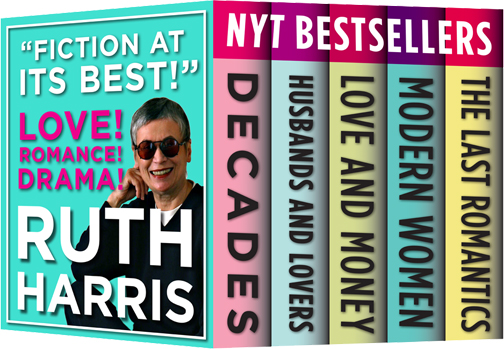 Ruth's new boxed set: 20th Century Women!I realized she was describing me.
Not so long ago, I fell so deeply into the writer-masochism pit, I couldn’t see a way out. I gave exclusives, signed onerous contracts, accepted puerile assessments of my work as gospel truth, and spent years feeling powerless and unworthy, begging for any publishing professional to let me lick his/her kinky boots.
And I’m not alone. The story of most writers’ forays into the dark world of publishing can read like a metaphorical Story of O.
Worst of all, a lot of writers tend to shame and bully each other into playing the assigned submissive role. I realize now the BDSM rule-enforcers were partly responsible for the nasty attacks I got when I tried to tell my fellow Boomers not to be afraid of writing Amazon reviews (More on Boomers’ fear of tech in a great post by Jane Friedman this week.)
After I wrote that, the self-appointed Writing Inquisition let loose the full force of its self-righteous fury, trashing my Amazon buy pages, vilifying me on forums, telling me I'd never sell a book in this Internet again--even emailing me death threats (Seriously. Some of these people had major mental health issues.) All because I told authors’ fans that Amazon reviews empower readers so they no longer have to play a submissive role to the publishing establishment. Heresy!!
Here are some quotes from the diatribes I got from the Writer-Masochists:
“Authors should never pay attention to reviews or book rankings. They should write for the pleasure of writing.” “Once I release a book, I truly release it. I cannot control if it's read, how it's reviewed, if it's reviewed, etc. and that's fine by me.” “Why would you read your own reviews? It’s none of your business if anybody likes your book.” “Authors who track their sales are narcissistic.” “It is unethical in all cases for friends or family members to review your book.” “I would never write to make money. You disgust me.” Can you imagine those things being said to members of any other profession?
“How dare you talk about billable hours, Ms. Lawyer! You should be practicing law for the pleasure of it!” “Once I finish a painting, I throw it out in the street. When it comes to selling my work, I am ignorant and powerless, and that’s fine with me.” “Why would a teacher read his class evaluations? It’s none of your business if your students are satisfied.” “Performers who pay attention to ticket sales are narcissistic.” “It is unethical for Real Estate/Insurance agents/stockbrokers/Avon ladies to sell to family and friends.” “I would never practice medicine for money. Doctors who expect to be paid disgust me.”
The sad thing is most of these quotes were from WRITERS. (I didn’t include the obscene and violent ones, because I deleted them right away. Sometimes I wish I’d kept them for proof of the extremes of writerly loonitude.)
Most of the above dogma is intended for published authors. But the rules for the Great Unpublished are just as bad. Maybe it’s not entirely a coincidence that our communications with the industry are called “submissions.”
How many times have you been told—
Don’t call us; we’ll call you.Learn patience: Expect us sit on your manuscript for several years with a 99% chance we’ll reject it. But it has to be an exclusive, so you can’t submit to anybody else during those years. I’ll only consider this if you remove all your gay/abused/racially-diverse characters and spend a year rewriting it as a Christian-thriller/vampire-werewolf-romance/post-apocalyptic-zombiefest—with no guarantee of representation.If you don’t hear from us in the next 6 months, it’s probably a no. But we won’t bother to tell you, even though we require paper submissions with an SASE. (What do they do with all those SASE’s, do you suppose?)You didn’t/did use italics/Oxford commas/Courier font, so it’s an automatic no. My 13-year-old unpaid intern says the plot/characters are too complex. (Speaking of abuse—what’s this with the unpaid-intern child-labor stuff?)Yes, last week I did say the query process is the best way to learn about the publishing business, and I still think it is. Not all agents and publishers are sadistic bullies. But when you go through it—remember you have choices. Don’t let the Inquisitors tell you it’s your duty to submit to abuse.
NOTE: This post is NOT telling everybody to run out and self-publish immediately in order to avoid masochistic behavior.
Ruth is saying the self-publishing revolution is turning the tables. Because of the massive changes brought about by the e-book, writers now have choices we’ve never had before. Because we now have the choice to walk away, publishers are going to have to learn respect or lose out.
Ruth has been on both sides of the publishing game: a NYT bestselling author and a Big Six editor. She knows what she’s talking about.
So any time you’re told it’s your duty to fall on your knees and obey your publishing masters, answer back: “NOT ANY MORE!
WRITER MASOCHISM: THE ROOTS, THE CAUSES, THE CURE by Ruth Harris
 I’ve seen it in myself, in other writers (even mega bestselling writers), in writers trying to get established—a learned masochism. In publishing the inevitable vulnerabilities and insecurities every human being is born with become the leverage by which publishers for several decades have ruled with an iron-fisted upper hand. WM is the reason publishers have been able to get away with screwing writers for so long: the shabby treatment, the unfair contracts, the declining advances, the pathetic royalty rates, and incomprehensible royalty statements.The writer-publisher relationship used to be much more equal. Paperbacks were sold in every drugstore, grocery store, supermarket, even in gas stations. To fill those almost-omnipresent racks, publishers needed writers & the work they created. There were lots of markets, lots of genres were routinely published, and editors & writers were colleagues who worked together coming up with new ideas or new twists on old ideas.More contracts were signed, more books were published and sold, more writers were able to make a living. When that massive distribution went away, publishers no longer needed to fill the racks and were no longer so dependent on writers. A complete power switch occurred in which the writer lost and became the beggar shaking his/her alms cup hoping for a crumb, a penny, a kind word.Over time, the writer was placed in the position of the relentlessly abused, rejected, criticized and undermined child—even though the parent (the publisher) would aver how much they “loved” you. Out of that unequal relationship a demon’s brew of writer masochism flowered.No matter what happened, every book that didn’t sell up to expectations—basically just about every book published—was ALWAYS the writer's fault.Never mind that the ad/promo/pub budget ranged from miniscule to non-existent.· Or that the one meager ad (that’s if you were lucky enough to get an ad) buried Allah-knows-where was, shall we say?, massively inadequate to the results expected.· Or that the cover had nothing to do with book.· Or that books weren't in bookstores even as the writer (me & plenty of others) was damn near killing herself/himself touring.· Or that no one bothered to use rave reviews to stir up excitement and interest. Those raves were just filed away to languish in oblivion, never to see the light of day.· Or that suggestions a writer (who you’d think might know a thing or two about her/his own book) made about how to sell her/his book were ignored.· Or that books—even books for which publishers competed & willingly paid large advances—were regularly published in secret, spine out somewhere in the back of the store on a bottom shelf next to the men’s room.Nope. Blame the writerThe book didn't sell so it must have sucked—even if the publisher willingly, eagerly paid a lot of money to acquire it. Even if the reviews were spectacular. Even if book clubs, paperback publishers, foreign publishers, and movie companies spent beaucoup to acquire the rights. In fact, by selling off sub rights and thus recouping the amount of the advance, publishers had even less motivation to aggressively sell the book in question.The publisher’s solution to the lackluster sales: Move on to the next book, the next writer. Then blame that one, too.And what did writers take away from the downbeat response, the blaming, the phone calls that weren’t returned, the memos containing suggestions or requesting information that were never answered? They became prisoners of the Stockholm Syndrome. Writers began to feel that the criticism was deserved, the disappointment was their fault, and that the way to a more rewarding outcome was to write a better book next time. Except, of course, that no one knew exactly what a “better book” was.I have never once heard a publisher of mine (or anyone else’s) ask what they could have done differently or admit in any way that their publishing effort had been lacking. When several of my books hit the New York Times bestseller list, the response was not pride or pleasure. It was a pout: “But it didn’t sell as much as we thought.”THE CURE: take control—and responsibility. With the advent of e-publishing, a second huge switch has taken place, this time, with the power going back to the writer. Now it’s publishers who are feeling threatened and being undermined. We hear the howls, we see how much they like it (NOT!) and how desperate they feel—just the way writers used to feel (because, back then, back in the bad old days, writers were the ones with no power and no choice).********What about you, scriveners? Have you ever been urged to practice masochistic behavior by publishing professionals or fellow writers? Have you ever got to the point where you believed writers deserve to be abused? Have you ever fought back?
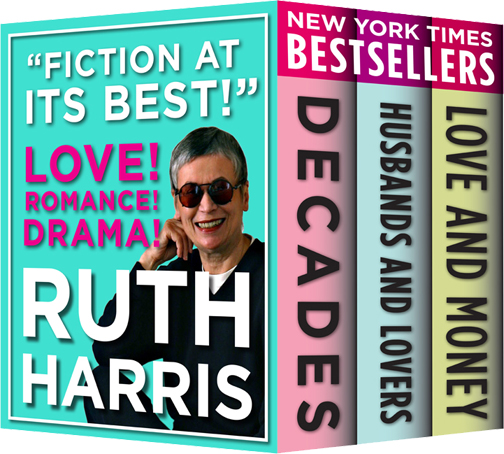
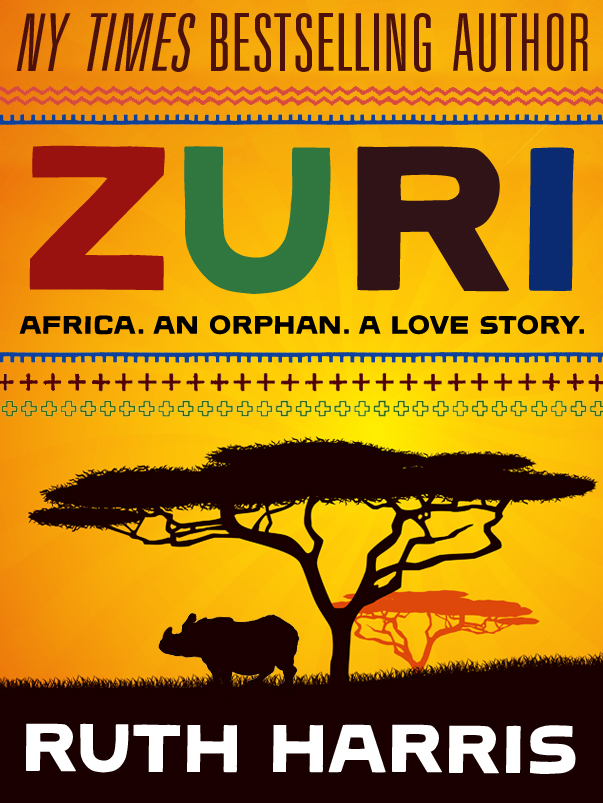 Ruth has more book news! She has two new boxed sets: A three-book set of the 20th Century Woman and a five book set that includes two more of her NYT bestsellers (and hit the top five in the recent history Kindle bestseller list this week.) And remember that ZURI is coming soon….
April 22, 2012
I’ve Written a Book. Now What? 22 Steps to Getting Published.
I’ve had a number of people ask me that "now what" question in the last few months. There’s tons of info out here in Cyberia, but not everybody knows how to access it. And along with the good info, there’s plenty of bad—especially from predatory vanity publishers and bogus agents.
So here are some basics for the newbies around here.
You’ll see I don’t get to the self-publishing option until #22. That’s because I think the query process is the best way to learn about the publishing business as well as hone your writing and sales skills. Learning to sell a book to an agent prepares you for selling your book to readers. Because promoting and selling books takes at least 50% of your writing time, I think you should write and polish at least two novels before you think about self-publishing.
Plus a good agent can help the self-publisher as well as the author who wants to be traditionally published. Most of the self-publishing gurus like J. A. Konrath, Barry Eisler and John Locke have agents. (And Eisler is married to one.)
NOTE: Don’t sign any agency contracts without having them looked at by a lawyer or somebody who knows intellectual property law. Some agencies have pretty bad contracts these days, and you don't want to sign one that gives them a cut of your profits even if you terminate the relationship.
So your book has been critiqued, edited, and polished to a glittering sheen. What do you do next?
1) Celebrate!
Break out the champagne, chocolate, fireworks, old Prince CDs, or whatever puts you in a festive mood. Contact a few people who remember who you are after your time in your writing cave, and toast your accomplishment. 80% of people in the US say they want to write a book. A fraction of a percent actually do. You’re one of them. Woo-hoo!!
2) Make sure you know your genre.
This isn’t always as easy as it sounds, but pick one to three genres as a tool to help agents and publishers—and especially, readers—know what kind of book they’re dealing with. When you’re querying, make sure you use established categories like “paranormal romantic suspense” not “vampire bunny western.” Creativity doesn’t work in your favor here.
But you are allowed change genres according to who you query. Genre boundaries are oddly flexible these days. Both Charlaine Harris’s “True Blood” vampire books and Lisa Lutz’s dysfunctional-family comedies are categorized as mysteries. Women’s fiction is an umbrella that covers everything from Danielle Steel to Margaret Atwood. And anything with a protagonist under 19 can be YA (the most sought-after genres are in YA these days.)
Two caveats here: 1. don’t call it “literary” unless the writing is to-die-for gorgeous (an MFA helps.) 2. Never use the term “chick lit” unless you’re querying a small press that specializes in the genre. You’ll find it listed on most query websites, but it’s still the kiss of death in New York.
3) Research and read the latest books in your genre(s) if you haven’t already.
It’s important to have an idea of the market. A query letter is more effective if you can offer “comps”—similar titles that are selling (but not blockbusters—that looks like bragging.) Also, the authors of these books may blog or Tweet and you can follow them and get advice. Network. Find out who represents them. Eventually you might even get a recommendation, which is a golden ticket out of the slushpile.
4) Write your synopsis, hook, author bio and a basic query letter template.
You can find helpful guides in any number of places. AgentQuery provides solid basics. Most agents have similar information on their websites.Nathan Bransford’s blog gives the info in a fun and friendly way, and Janet Reid's Query Shark Blog is a boot camp for query writers. A number of forums and agent blogs provide critiques of queries—as well as Public Query Slushpile I give the basics for writing an author bio here.
5) Start a blog or build a website if you don't have one already.
Don’t spend a lot of money on it. In fact, a free blog like this one makes a fine author website. If you want to blog, I’ve got all the skinny on how to start a blog here. On some blogging platforms you can even have a static first page just like a formal website.
But if you don’t want to deal with the responsibility blogging, and you don’t have a lot of money, you can build a simple website on a shoestring at GoDaddy, iPage , HostBaby or dozens of other hosts.
Even if you have the money for a drop-dead gorgeous design, this isn’t the time to do it. And you don’t want anything you can’t update yourself. Waiting until a designer is free to change things can make your site look dated very quickly.
All the site needs is a professional-looking photo and a simple bio, with your contact information and something about your book and/or other publications. Nothing fancy. No bragging. Nothing is sadder than a pretentious website for an unpublished writer. And don't post any excerpts from your work that you're trying to sell. You'll be publishing it and making it unmarketable.
Facebook, Goodreads or other social networking sites that require membership aren’t a substitute for a website. Be Googlable, reachable and professional.
6) Start researching agents.
You can do this by subscribing to WritersMarket.com, but you can also get free information at AgentQuery.com, which has a searchable database. You can put in your genre and immediately find what agents represent your work. Then check QueryTracker.net for further information on the agents you’ve chosen and get valuable comments from other queriers.
Then start Googling: look for interviews and profiles of agents to fine tune your queries.
If you write YA, a lot of the research has been done for you by the wonderful Casey McCormick and Natalie Aguirre. They have a blog called “Literary Rambles” that is a treasure trove of profiles of agents who rep YA (worth a check even if you don’t write YA, since many agents rep a wide spectrum of genres.)
Literary Rambles was named one of the top 101 Sites for Writers by Writers Digest! Very well-deserved!! Casey has been doing these profiles for a number of years and last year Natalie joined her on the blog. (Congrats, you two!)
7) Send out your first five queries.
You only do this after your book is finished, honed and polished. You knew that, right?
8) Start your next book.
Yes. Right now. Don’t sit around waiting to get rejected and depressed. Start writing when you’re feeling great about yourself for sending those queries.
9) Get rejections. Mourn.
Yup. You now are officially a member of the professional writing community. The one thing we all have in common? Rejections. For more on rejections, read Ruth Harris's great post on exactly what they mean: nothing
10) Send out five more queries.
Tip: If you join QueryTracker’s premium membership, you can track your queries on their site. It’s a useful service. And their forums are a great place to network. (No, I'm not affiliated with QueryTracker in any way. I'm just impressed with their great work and up-to-date information--most of which is free.)
11) See if you’ve had any silent rejections.
Go to the websites of agents who don’t send rejections. Under submission guidelines, it will say “if you haven’t heard from us within two months, it’s a no.” There will be some silent “no’s”.
Mourn. Fine tune your query. But NOT your book. Not yet anyway. Chances are your book is just fine. Queries, on the other hand, are worth taking a second (and third and fourth) look at.
12) Sent out five more queries.
Yeah. This time you think you really nailed that puppy. You’ve got it down to three paragraphs and your synopsis is 250 words of distilled brilliance.
13) Maybe get a request for a partial! (The first few chapters of your book.)
But before you send it, go to the agent’s website and double check guidelines for formatting and sending documents. Most formatting is pretty standard, and they will probably ask you to send it as a Word (.doc or .rtf) attachment. But some agents are quirky and will request something like “no italics” or “number your pages on the bottom of the page.” Do whatever they say, no matter how silly.
Celebrate.
14) Get the partial rejected.
Nobody gets their first partial accepted. This is part of the process.
It may come with a note. This will say something like “I couldn’t connect with these characters,” or “the protagonist wasn’t strong/sympathetic enough,” or “the plot is too complex/simplistic” or even “this is perfect, but I have no idea where to sell it.” DO NOT take these too seriously or start rewriting your book.
They’re mostly just polite words to say, “It didn’t give me screaming orgasms, so it’s not worth the energy it would take to sell it.”
Mourn.
15) Get a request for the full manuscript!!
Remember to check those guidelines. Some agents still want to see a ms. on paper. If so, put a big rubber band around it—do not bind—and mail it in a flat-rate box from the P.O. with a #10 stamped, self-addressed envelope inside for their reply. NEVER send it in an annoying way that requires a receipt.
Celebrate. Get the really good chocolate this time.
16) Send out more queries. Don’t wait for that full to be read. It may take a year. It will probably first be read by a young unpaid intern. If she likes it, she’ll give it to the busy agent, who will put it on her pile of 150 TBR manuscripts.
17) Get another partial rejected. And another. Start building calluses on your soul.
But—if the rejections start to sound the same—like everybody says the same thing about your unsympathetic, wimpipotamus hero, this is when you might give your ms. another once-over to see if you can figure out how to tweak things without doing serious damage to the book.
18) Get the full rejected.
You may get some more detailed feedback on this one. Pay attention, but don’t despair. It may not be your book that needs a rewrite. Maybe you’re targeting the wrong agents or pitching your book wrong. Maybe it turns out you’ve written a domestic drama (women’s fiction) not a romance. Try changing your query and hook before you change your book.
Mourn.
19) Finish book #2.
Woo-hoo! Don’t forget to celebrate. It may not feel as momentous as your first ms. But it’s a triumph. You’re now acting like a professional writer. That means you ARE a professional writer. Even if nobody’s paying you quite yet.
20) Start all over again with #2, but keep sending out #1 until it collects at least a few hundred rejections.
If you’re luckier than me, you may…
21) Land an agent somewhere along the way here.
22) If you don’t, you may want to consider a small press or self-publishing.
This isn’t “settling” or giving up. All this means is you’ve discovered your work isn’t part of the predicted trend curve at the moment and may not be what corporate marketers think is the hot item for next season.
This is the point at which people like Amanda Hocking, Saffina Desforges, and John Locke jumped into self-publishing. And look where they landed.
Some agents consider the successful self-pubbed ebook the best query these days, so if you’re good at marketing and you know you’ve got the best books you can write, go get yourself Kindlized. You could be the next self-pubbed millionaire. Just make sure you have some inventory before you start (Amanda Hocking had eight books completed before she self-published.)
Or if you’re a little more traditional like me, you might start querying presses that don’t require agents.
Even some bigger presses still take unagented work. If you write SciFi, you can still direct-query Daw (Penguin) or Tor (MacMillan). And for romance writers, a few Harlequin lines also take unsolicited manuscripts. There are also a number of mid-sized mystery publishers that welcome writers without agents. (Alas, Midnight Ink now requires an agent.)
Or start researching the smaller presses. There are hundreds of them. Here’s a list of presses that don’t require agents. Be sure you talk to other authors, though, and check Writer Beware and other watchdog sites before you query. They operate on shoestrings and can often go under, leaving your book in limbo and your royalties unpaid.
But I’m working with two small presses, and it’s working very nicely for me.
Just don’t let that book languish in a drawer!
What about you scriveners? Do you have advice for new writers who are beginning to learn the publishing ropes?
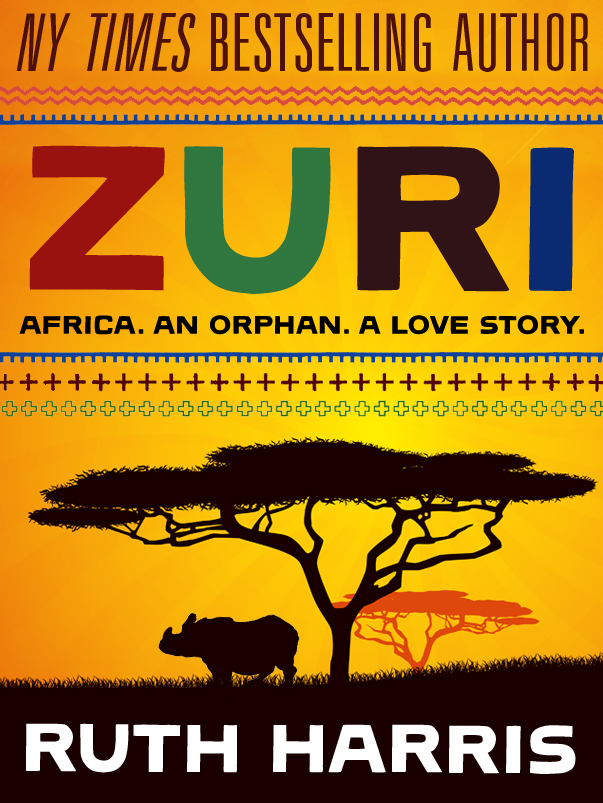 RUTH HARRIS NEWS!
Ruth has another new book coming soon!
It's something completely different:
Africa. An orphan. A love story.
INDIE CHICKS: There's one more post! Melissa A Smith's heartfelt piece about how losing her mother prompted her to become a writer. WRITING OUT THE GRIEF is on the Indie Chicks page.

April 15, 2012
Writers: Are You Taking Care of Your Emotional Health? 8 Tips to Keep From Going Batty as You Launch Your Career
First, a couple of announcements: This blog is up for a Goodreads “Independent Book Blogger” Award and we'd love your vote. If you’re a Goodreads member, you can vote through the vote button on the sidebar. Unfortunately the Goodreads icon seems to have been eaten by the Blogger elves, but the button works. You can vote once in each of four categories, Publishing Industry (that's us) Young Adult, Adult Fiction, and Adult Nonfiction.
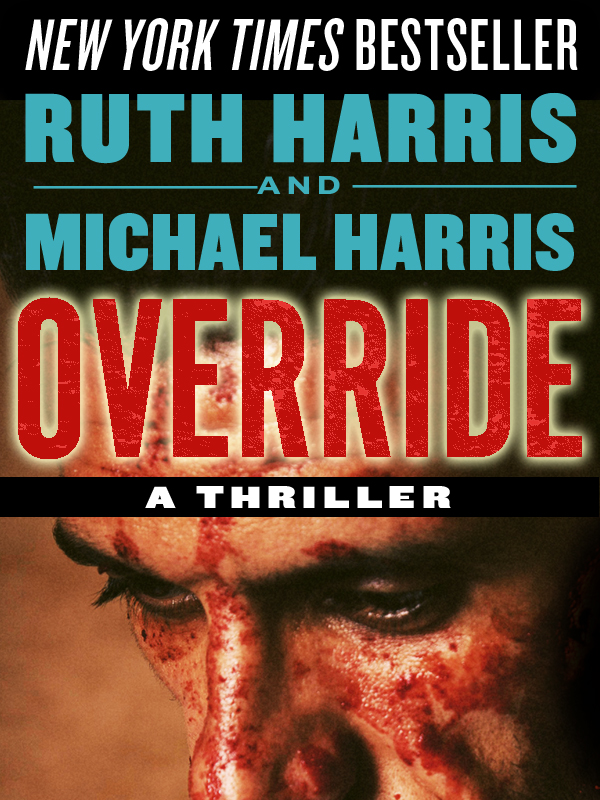 AND: Ruth Harris has a brand new book out! It’s OVERRIDE—another hold onto-your-hat, fast-paced thriller written with her husband, Michael Harris. More about it on Ruth’s Book Page.
This week we have a returning guest, literary author and college professor Samuel Park. Last year when he visited us, Samuel had just published his first novel, THIS BURNS MY HEART with Simon and Schuster. (And he told us NOT to kill our darlings.) His spectacular reviews are the kind most of us just fantasize about.) Now he’s preparing for the debut of the paperback. (I just love the new cover!)
Yes, there still are hardbacks and paperbacks coming out from the big publishers! And yes, there still are success stories like Samuel’s. People magazine and the Today show do still pay attention to debut authors. Congratulations, Samuel!
And how did he do it? Turns out he didn’t torture himself with overwork and 20-hour days filled with endless publicity gigs.
He took care of himself. He thinks you should, too.
Take Care of Yourself: (Emotionally) Healthy Living for Writersby Samuel Park
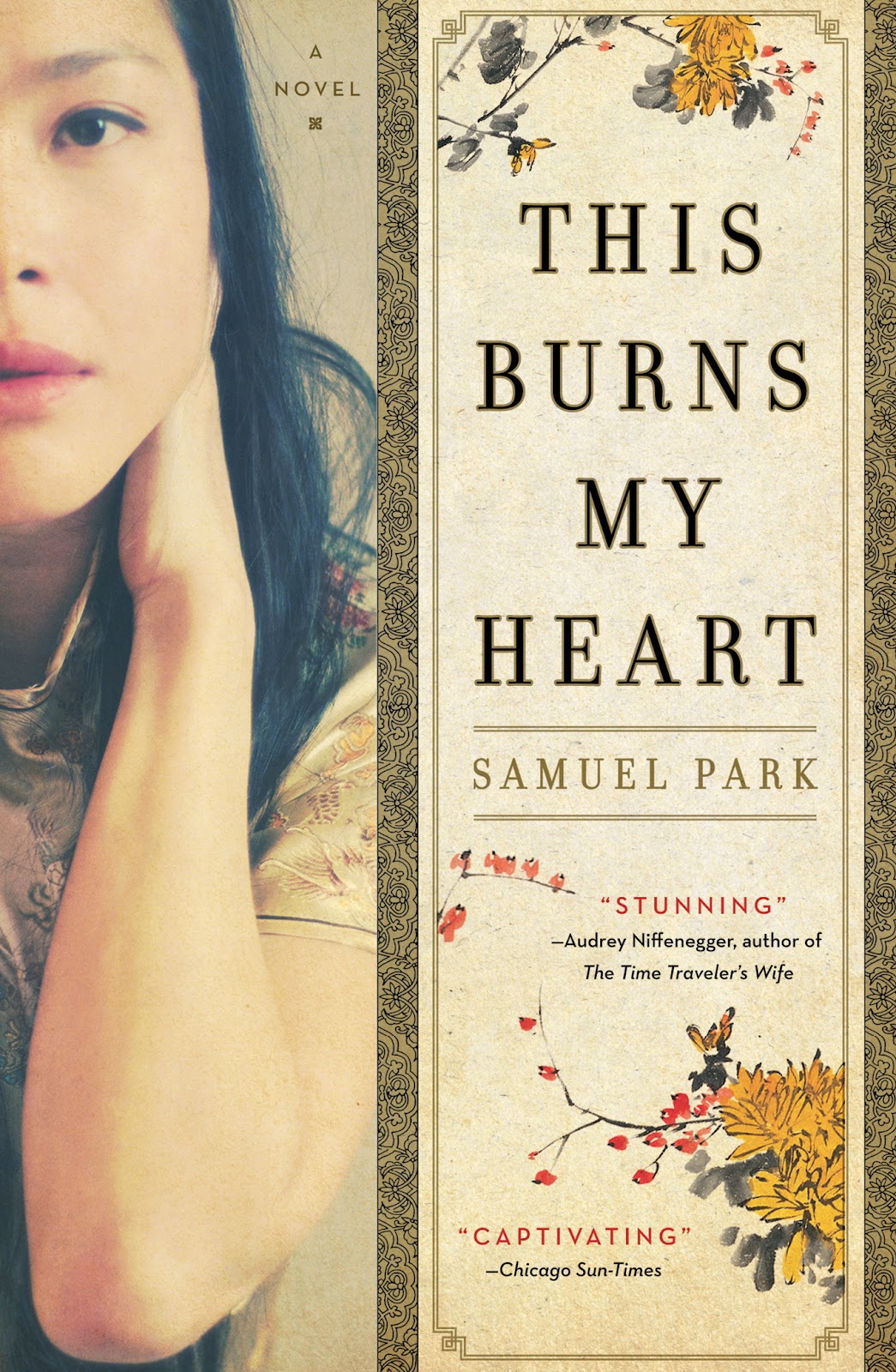 Being a writer is full of highs and lows, with lots of opportunities for anxiety. For instance, I can’t think of anything more frustrating than waiting to hear from an agent after a query. Or the emotional yo-yo of being in a relationship with your book—one prone to fits of joy, followed by bouts of self-doubt. Being a tortured used to be part of the persona of the artist, but these days, everybody wants happiness. Even writers.
 Here are 8 Tips for (Emotionally) Healthy Living:
1. Delegate Anxiety
If there’s a particular part of the process that sets your teeth on edge, see if you can get a spouse or friend to do it—somebody who is less emotionally invested than you are. If querying agents is getting you down, see if you can get someone to take care of that for you. That way you can avoid the emotional rollercoaster of waiting to hear back.
I’m not suggesting you hire someone—I don't believe in paying for that kind of service. And you absolutely have to write your own query. But if you can get a writer friend or spouse to manage the submission of the queries and the follow-up (maybe trade query duties with a fellow writer?), that'll remove you from the daily stress of the waiting game.
2. Be Delusional
According to what I’ve read, delusional people tend to be happier, richer, and more successful. For a writer, being deluded can be an effective antidote for writers’ natural propensity to be pessimists. It may, in fact, be the only way to have a more clear, truthful perspective on your situation. I have a friend who published book a few years ago and it didn’t do as well as she’d hoped. Recently, her former editor got in touch with her to find out what she was working on.
Because I was an impartial observer, I knew that the editor was checking in in the hopes of possibly snapping up my friend’s second book. My friend, however, read it as the editor simply being nice and feeling sorry for her. In this case, my friend thought she was being realistic. My advice for her was to be more delusional, and tell herself that she was brilliant, talented, and that editors were desperate for her next book.
In her case, “being delusional” actually provided a more accurate reflection of reality.
When writers act “delusional” and tell themselves that they’re fabulous, there’s a good chance the “delusion” is a necessary corrective for writers’ natural tendency to doubt themselves.
3. Use Up Your Brain Cells
Sometimes worry and frustration come from your writerly brain not having being used enough that day.
When I first started writing, my mentor Don Roos stressed to me that I should write for an hour a day every day (except weekends).
I thought it was for the sake of discipline and productivity, but he said it was actually to stave off the self-loathing that every writer feels when she hasn’t produced that day.
When you don’t write, the guilt starts inching forward, and makes you feel bad. When you do write, the world feels terrific. And the brain post-writing (and post-FLOW and post-high of creating) is too tired and spent to indulge in negative, self-sabotaging thoughts—its capabilities have been used up by the plotting and scheming for the day.
4. Let Out the Anger…But Don’t Become a Rage-a-holic
One of the easiest ways to escape the writer’s blues is to indulge in anger. If you’re feeling bad, you can probably start feeling good almost right away just by letting out your repressed anger.
The problem with that, though, is that you become an angry person. If a rejection from an agent stings, go right ahead and let out some expletives. It’ll make you feel better.
But for the sake of your friends and family, get out of that mode as soon as you can! Nobody wants to be around someone who is mad all the time.
5. Take Care of Yourself
Evolutionarily speaking, we weren’t born to work indoors all day, or to be writers in the modern sense of the profession.
Being sedentary and solitary may be conducive to producing work, but it’s not conducive to producing happiness.
Exercise; get vitamin D either by going outside, getting a sun lamp, or by taking multi-vitamins; be social, ideally in a “tribal” scenario—that is, with two or more other people; watch your favorite TV show; or better yet, do all of the above.
6. Avoid Avalanche Thinking
Being turned down by an agent is not bad if you maintain things in perspective.
But we’re writers, we have big imaginations, and it’s hard to resist avalanche thinking: “Agent X doesn’t want my manuscript, which probably means that Agent Y won’t either, and no agent will ever want me, and that’s because I have no talent, and if I have no talent, then I’ll never sell a book, and if I never sell a book no one will ever love me, and no one will ever love me then daddy was right when he called me a loser, and so on and so on.”
If an agent turned you down, all it meant was that he wasn’t right for your manuscript.
The right writer-agent combo is something worthy of a matchmaker, and dependent on personality, work styles, and temperament. It takes a while to find the right one.
Don’t read too much into things.
Avoid negative chains of thought; chop them off from the very beginning. If you’re prone to avalanche thinking, try reversing it by replacing it with a positive thought, or by feeling gratitude for something.
Think about something good that happened to you and focus on that in your mind, and focus on how you feel about the person who helped you or made that possible.
7. Take the Lesson Contained in the Conflict
I hate to sound like Polyanna, but every time we feel bad about ourselves or others, there’s a lesson there waiting for us.
The lesson may be to be more patient, or to write a better query letter, or to improve one’s writing by attending a conference.
Instead of dwelling on the rejection, rewrite it as a teaching moment, and try to squeeze a lesson out of it. And then focus on that lesson.
Instead of dwelling on what went wrong, focus on what will go right next time.
This will help you get over the negative emotions surrounding the event (disappointment, anger, frustration) and focus on the positive emotions that come from focusing on the future (hopefulness, more inner strength, satisfaction from self-improvement).
8. Think About Being Down When You’re Happy
When you’re happy, the last thing you want to do is think about the worries and frustrations of being a writer, but I’d argue that when you’re happy is the exact time to set these behaviors and habits into practice.
When you start feeling beat down is actually too late, because by then you’re in a funk, and it’s much harder to get out of a funk than to prevent one in the first place.
If you’re feeling bad, you won’t be able to gather the motivation to do any of these things. When you’re feeling good, you can’t imagine that you’re ever not going to feel good, but that’s a mistake.
Anticipate the inevitable lows of the writer’s life, and prevent them rather than ignore them.********
 Originally born in Sao Paulo, Brazil, Korean-American author Samuel Park graduated from Stanford University and USC, where he earned his doctorate in English. He is the author of THIS BURNS MY HEART, which was chosen as one of Amazon’s Best Books of 2011, a People magazine “Great Reads in Fiction,” and one of the Today Show’s “Favorite Things.” THIS BURNS MY HEART was also a Kirkus Reviews’ Best Fiction of 2011, a BookPage Best Book of 2011, an Indie Next List Notable Book, and a Starbucks Bookish Reading Club Selection. Translations of the book are forthcoming in Norway, Germany, China, and South Korea. He lives in Chicago, where he is an Associate Professor of English at Columbia College.********What do you think, scriveners? Do you feel better about yourself if you write every day? Do you think being delusional is helpful to writers? (I wonder if I’d have gone down this road if I hadn’t been a little delusional myself.) How about trading query duties with another writer? I never thought of that, but it sure would have made it easier. (Misery loves company.) Do you have any other tips for keeping your sanity in this crazy business?
INDIE CHICKS FANS: The final installment of the Indie Chicks anthology is from Michelle Muto. Read her inspiring story on the Indie Chicks page.

April 8, 2012
12 Myths About Being a Writer
When you're beginning to write, you're likely to be bombarded with advice from all quarters—your family, your friends, your hairdresser, and that know-it-all guy at work. I don't know why, but everybody who ever watched a few minutes of Oprah's show seems to think they know all about the publishing business.
But chances are pretty good they don't.
And chances are even better that whatever they may have heard is out of date. This is a business in a state of rapid change.
If you don't want your heart broken in this ever-more-complex, soul-crushing process, you need to keep those myths and outdated ideas from infecting your brain.
Here are twelve things to disregard when you hear them from those well-meaning friends and relations. (Be polite, but you might be forgiven a slightly condescending smile.)
1) Writers make big money.
How many times do you hear stuff like this? "You're a writer! Will you still talk to me when you're rich and famous?"
Tell them to rest easy. It's not likely to be a problem. Even "successful" writers need day jobs these days. Royalties and advances are shrinking at an amazing rate. Yes, J.K. Rowling is richer than the Queen, James Patterson lives in movie-star grandeur in Palm Beach, and Amanda Hocking and John Locke made buckets of bux self-publishing.
But they are superstars—the exceptions that prove the rule. And even if you become a star, like Pay it Forward author Catherine Ryan Hyde, and get a movie deal and six-figure advances, you're not necessarily on the road to becoming a one-percenter. (More on that to come in the book Catherine and I co-authored: How to be a Writer in the E-Age…and Keep Your E-Sanity! Which debuts in June.)
Of course you (or your hairdresser) can fantasize you'll become a superstar, too—we all do—but the odds are mighty slim.
2) Genre fiction is easy to write
People will tell you to start out with something "easy" like a romance/mystery/kid's book. Don't even try. If you don't love a genre and read it voraciously, you'll never write it well enough to publish.
3) Never write for free.
Professional freelancers will tell you this with the ferocity of union organizers, and they are absolutely right…when they're speaking to seasoned journalists (although even they aren't getting paid much these days.)
But it's a long way from writing your first essay to publishing in the New York Times. During your learning process, writing for free is good practice and a great way to get your name out there. Consider you're being paid in clips and platform-building. And the truth is, if you write literary fiction or poetry, you may never be paid for it. (Most literary writers make their money teaching.) But the lack of paying markets doesn't mean your work doesn't deserve an audience.
Plus, it's important to remember that literary agents work for free a lot of the time—sometimes for years when they're getting started, just like writers.
4) Don't waste time on short fiction.
People tell you short stories are a waste because you won't make any money, but that's all changed with the ebook and the advent of Kindle Singles (see last week's post: "Why you Should be Writing Short Fiction".)
Also, short stories are the best place to hone your skills. Publishing shorts makes you more attractive to agents and gives your self-confidence a boost. And it's a whole lot easier to publish a short story than a novel. There are thousands of literary magazines and contests in the US, but only six major book publishing houses.
5) Don't reveal your plot, because somebody will steal it.
Everybody's got a story. It's how you write it that matters. Since the copyright law reforms of the 1970s, copyrighting your work before it's published (especially a first draft) has been the mark of a paranoid amateur. It's copyrighted as soon as you type it onto your hard drive. (And BTW, you can't copyright a title.)
6)With talent like yours, you don't have to jump through all those hoops.
The old saw about 10% inspiration/90% perspiration is 100% true. Talent without skill is useless. That means skill at writing AND hoop-jumping. Learn the rules and follow them or nobody will ever find out about that talent of yours.
7) Spelling and grammar don't matter.
The only thing that's important is creativity, right?
When you're seven, maybe. Words are your tools. If you can't use them properly, nobody's going to hire you for the job.
8) Be extra creative so you'll stand out.
Sorry, but you won't get a book deal if you write your query with animated emoticons, invent a new genre, or try to bring back the papyrus scroll. At least not when you're a newbie. If you have any hopes of getting traditionally published, follow genre and word count guidelines. It's a very stodgy business and if you don't follow the rules, you won't get in the door.
And even if you're self-publishing, follow the three-act structure, and skip the show-offy rule-breaking, or you won't get read.
9) Don't read other writers' work or you'll imitate them.
Reading widely is essential to the growth of your craft. The more you read, the better your own work will be. If you imitate a bit when you're a beginner, no harm done. Traditionally, painters were trained by copying the masters. It's not a bad exercise for writers, either. Your own voice and style will emerge as you grow as an artist.
10) The sadder your personal history, the more publishers will be moved to buy your book.
In spite of what you've seen on Oprah, readers are not likely to be interested in your personal tragedies, unless you write beautifully and have something new to say that will benefit THEM. Do you enjoy listening to strangers complain about their problems?
Yeah. I didn't think so.
11) Sell yourself. Show them you're confident!
Confidence combined with cluelessness will not help your career—unless you're Will Ferrell and you do it in an elf suit.
In publishing, tooting your own horn is more likely to make you the butt of #queryfail snark on Twitter.
So when the office know-it-all claims you're "not trying" unless you query with lines like, "my poignant and exquisitely-written memoir will be bigger than the Hunger Games and Harry Potter books combined," smile politely and change the subject to his impending mortgage foreclosure.
12) You wrote a whole book! It deserves to be published!!
Uh, no. Almost all successful writers have a few practice books hidden away somewhere. Getting something published—especially book length fiction—is like getting to Carnegie Hall. It takes practice, practice, practice. *********
What about you, scriveners? What did you once believe about writing that turned out not to be true? Have any myths to add to the list?
Today I'm visiting the Book Luvin' Babes—talking about my real life bad boyfriend whose mysterious death inspired me to write THE GATSBY GAME.
INDIE CHICKS fans: This week's inspiration comes from Women's fiction author (and new mom) Talia Jager. Read it on the Indie Chicks page here.

But chances are pretty good they don't.
And chances are even better that whatever they may have heard is out of date. This is a business in a state of rapid change.
If you don't want your heart broken in this ever-more-complex, soul-crushing process, you need to keep those myths and outdated ideas from infecting your brain.
Here are twelve things to disregard when you hear them from those well-meaning friends and relations. (Be polite, but you might be forgiven a slightly condescending smile.)
1) Writers make big money.
How many times do you hear stuff like this? "You're a writer! Will you still talk to me when you're rich and famous?"
Tell them to rest easy. It's not likely to be a problem. Even "successful" writers need day jobs these days. Royalties and advances are shrinking at an amazing rate. Yes, J.K. Rowling is richer than the Queen, James Patterson lives in movie-star grandeur in Palm Beach, and Amanda Hocking and John Locke made buckets of bux self-publishing.
But they are superstars—the exceptions that prove the rule. And even if you become a star, like Pay it Forward author Catherine Ryan Hyde, and get a movie deal and six-figure advances, you're not necessarily on the road to becoming a one-percenter. (More on that to come in the book Catherine and I co-authored: How to be a Writer in the E-Age…and Keep Your E-Sanity! Which debuts in June.)
Of course you (or your hairdresser) can fantasize you'll become a superstar, too—we all do—but the odds are mighty slim.
2) Genre fiction is easy to write
People will tell you to start out with something "easy" like a romance/mystery/kid's book. Don't even try. If you don't love a genre and read it voraciously, you'll never write it well enough to publish.
3) Never write for free.
Professional freelancers will tell you this with the ferocity of union organizers, and they are absolutely right…when they're speaking to seasoned journalists (although even they aren't getting paid much these days.)
But it's a long way from writing your first essay to publishing in the New York Times. During your learning process, writing for free is good practice and a great way to get your name out there. Consider you're being paid in clips and platform-building. And the truth is, if you write literary fiction or poetry, you may never be paid for it. (Most literary writers make their money teaching.) But the lack of paying markets doesn't mean your work doesn't deserve an audience.
Plus, it's important to remember that literary agents work for free a lot of the time—sometimes for years when they're getting started, just like writers.
4) Don't waste time on short fiction.
People tell you short stories are a waste because you won't make any money, but that's all changed with the ebook and the advent of Kindle Singles (see last week's post: "Why you Should be Writing Short Fiction".)
Also, short stories are the best place to hone your skills. Publishing shorts makes you more attractive to agents and gives your self-confidence a boost. And it's a whole lot easier to publish a short story than a novel. There are thousands of literary magazines and contests in the US, but only six major book publishing houses.
5) Don't reveal your plot, because somebody will steal it.
Everybody's got a story. It's how you write it that matters. Since the copyright law reforms of the 1970s, copyrighting your work before it's published (especially a first draft) has been the mark of a paranoid amateur. It's copyrighted as soon as you type it onto your hard drive. (And BTW, you can't copyright a title.)
6)With talent like yours, you don't have to jump through all those hoops.
The old saw about 10% inspiration/90% perspiration is 100% true. Talent without skill is useless. That means skill at writing AND hoop-jumping. Learn the rules and follow them or nobody will ever find out about that talent of yours.
7) Spelling and grammar don't matter.
The only thing that's important is creativity, right?
When you're seven, maybe. Words are your tools. If you can't use them properly, nobody's going to hire you for the job.
8) Be extra creative so you'll stand out.
Sorry, but you won't get a book deal if you write your query with animated emoticons, invent a new genre, or try to bring back the papyrus scroll. At least not when you're a newbie. If you have any hopes of getting traditionally published, follow genre and word count guidelines. It's a very stodgy business and if you don't follow the rules, you won't get in the door.
And even if you're self-publishing, follow the three-act structure, and skip the show-offy rule-breaking, or you won't get read.
9) Don't read other writers' work or you'll imitate them.
Reading widely is essential to the growth of your craft. The more you read, the better your own work will be. If you imitate a bit when you're a beginner, no harm done. Traditionally, painters were trained by copying the masters. It's not a bad exercise for writers, either. Your own voice and style will emerge as you grow as an artist.
10) The sadder your personal history, the more publishers will be moved to buy your book.
In spite of what you've seen on Oprah, readers are not likely to be interested in your personal tragedies, unless you write beautifully and have something new to say that will benefit THEM. Do you enjoy listening to strangers complain about their problems?
Yeah. I didn't think so.
11) Sell yourself. Show them you're confident!
Confidence combined with cluelessness will not help your career—unless you're Will Ferrell and you do it in an elf suit.
In publishing, tooting your own horn is more likely to make you the butt of #queryfail snark on Twitter.
So when the office know-it-all claims you're "not trying" unless you query with lines like, "my poignant and exquisitely-written memoir will be bigger than the Hunger Games and Harry Potter books combined," smile politely and change the subject to his impending mortgage foreclosure.
12) You wrote a whole book! It deserves to be published!!
Uh, no. Almost all successful writers have a few practice books hidden away somewhere. Getting something published—especially book length fiction—is like getting to Carnegie Hall. It takes practice, practice, practice. *********
What about you, scriveners? What did you once believe about writing that turned out not to be true? Have any myths to add to the list?
Today I'm visiting the Book Luvin' Babes—talking about my real life bad boyfriend whose mysterious death inspired me to write THE GATSBY GAME.
INDIE CHICKS fans: This week's inspiration comes from Women's fiction author (and new mom) Talia Jager. Read it on the Indie Chicks page here.
April 1, 2012
Why You Should be Writing Short Fiction
First: The winners of last week's book give-away are Vera Soroka and Florence Fois! Congrats, you two. You've won copies of Ruth and Michael Harris's bestselling thriller, HOOKED! Contact Ruth at: rca dot harris at gmail dot com.
What—short stories? Aren't they just for writing classes? Why would I waste time on stuff that doesn't pay?
Because it does. And this isn't an April Fool joke.
Last week Amazon announced it has sold over two million "Singles" ebooks since the launch of their Singles program a little over a year ago. Yeah. 2 MILLION.
The short stories sell for between $. 99 and $1.99 and the authors keep a 70% royalty. Many of the top sellers are by name authors, like Lee Child, Stephen King, and Jodi Picoult, but others are by unknowns, according to Kindle Singles editor David Blum. (The 70% royalty is only for official Kindle Singles. If you self-pub, anything sold under $2.99 gets a 35% royalty.)
But this is where you should be doing a happy dance and shouting from the rooftops: THE SHORT STORY IS BACK! This is nothing but good news for authors no matter where you are in your career.
After three or four decades of evaporating markets, the short story has found a new home in the ebook.
OK, we're not reliving the halcyon days of the mid-20th century when short fiction in weeklies like The Saturday Evening Post paid more than the average book advance does today. But short fiction fits the ADD-attention-span lifestyle of the E-age, and people are willing to pay for it. (Which is yet another reason NOT to give away your fiction on your blog.)
I think it's time for all fiction writers to start re-thinking the short form. Personally, I know I haven't spent enough time on it. During the decade I spent writing and re-writing my "practice novel" I could have been building an inventory of short pieces that would be a gold mine now.
Unfortunately, most novice writers I know are still doing the same stuff I did. They're putting all their energy into book-length fiction or memoir and not bothering with short pieces, except maybe for a flash fiction contest or special event.
In fact, I visited a critique group not long ago where one writer complimented another with the misguided advice that he shouldn't "waste" his crisp little story—he should turn it into a novel.
In other words, she was telling the writer that instead of sending a 10,000 word short story to Amazon to sell for 99 cents, he should spend two years turning it into a 100,000 word novel, which he could sell on Amazon for…um, 99 cents. (OK, not all self-pubbed ebooks are priced that low, but even at $4.99, the bottom line news isn't good for the author. Especially if he puts money into editing and design.)
Of course, back in the Jurassic days when I started writing, that critiquer's advice would have been perfectly sound. In the 1990s, most magazines had stopped publishing fiction and short stories had all but disappeared from the publishing world. Mega bookstores were in their heyday: book-length fiction was happening.
So aspiring authors were told to keep our eyes on the big prize and put our energy into churning out novels in the popular genres like chick lit, cozy mysteries, and family sagas.
I've amassed quite a collection of half-finished books in those genres—all sadly out of fashion now. But if I had been writing short stories instead, I could be raking in the dough. (Not that any time spent writing is wasted. Everything we write improves our craft.)
But I didn't feel drawn to writing short stories. I write genre fiction. Back then, short stories were expected to be literary. Yes, there were still some paying gigs for genre stories in super-competitive markets like Women's World, Asimov's and Ellery Queen.
But mostly we were urged to write enigmatic tales of suburban angst and send them off to collect rejection slips from literary journals with a circulation of 26 and names like Wine-Dark Snowflakes of the Soul, or The Southeastern Idaho Pocatello Community Colleges North Campus Literary Review. All with the hopes we'd finally be rewarded with publication and payment of one free copy.
But ebooks have changed all that. Not just because of Kindle Singles. Short story anthologies are springing up all over. They don't all pay, but if you can get a story into an anthology with some well-known authors in your genre, you'll be paid in publicity that would be hard to buy at any price.
I've been offered a number of opportunities to publish fiction in anthologies this year that have really paid off. The Saffina Desforges Coffee Collection reached #1 on the anthology bestseller list as soon as it was released last December, and the Indie Chicks Anthology (which sent its profits to charity) has been a steady seller for six months—and now that it's free it's topping a whole lot of lists. Plus I look forward to having a story in the rom-com Martini Madness anthology coming next winter with the fabulous ladies from WG2E .
I'm not advising anybody to ditch that magnum opus—most novel writers get frustrated when forced to write exclusively in the short form. But I'm saying it makes sense to put an equal amount of energy into shorter pieces.
Instead of putting every idea that illuminates your brain into your novel, give a few of them a spin in short stories first. A few months ago on this blog, legendary mystery author Lawrence Block wrote about his success with self-publishing his inventory of short stories, and a few months before, Sci-Fi bestseller Jeff Carlson wrote about his success self-publishing a novella. It shot to number one in SciFi with no help from his agent or Big Six publisher.
But you don't have to be accepted at Kindle Singles or have a famous name to benefit from publishing short-form ebooks. Consider the following things I heard this week:
1) A bestselling author decided to put some of her old stories on Amazon. As an experiment, she didn't use her famous name. She told me she made about $500 on them last month. These were works she was told "had absolutely no commercial value." But she put them out there, "in case someone was interested." It seems they were—because "in spite of absolutely no promo...people are finding them and buying them."
2) An indie writer wrote me with this advice: "unless you have a break-out success with a novel, [the short story] is probably more lucrative as a return on time invested. I can make as much per sale on a ten page short story as on a 120,000 word novel." And I know many indies who use a short piece as a free download to introduce readers to their work.
3) My editor wrote that one of his authors recently self-published a short piece she wrote on a plane and "writing, formatting, cover, etc. took less than a day." It got 6500 downloads in the first week.
So the magic formula for writers right now might be "less is more."
I do want to stress that the above writers are all successful, published novelists with hard-earned expertise in their craft.
So I'm NOT advocating that new writers self-publish your fledgling short fiction. A few self-pubbed singles by a brand new writer won't get anybody's attention. (And they may embarrass your future self.)
To succeed in publishing—whether self- or traditional, you really need to put in your 10,000 Malcolm Gladwell hours.
But you can maximize your efforts by putting more of those hours writing short fiction. When it's time to make your professional debut, you're going to have some serious inventory.
If you're still unconvinced, consider that short fiction is much easier to adapt for the screen than novels. The following films began as short stories: A View to a Kill; The Birds; Breakfast at Tiffany's; Brokeback Mountain; Children of the Corn; The Curious Case of Benjamin Button; The Dead; Don Juan DeMarco; Don't Look Now; Double Indemnity. (And that's just from the A-D list on Wikipedia.)
The best thing is that while you're getting yourself established, you don't have to keep those stories in a drawer. One of the great things about short fiction is that it's re-usable. Most zines and journals only ask for first rights (And be very careful with the ones who want more.)
Gone are the days when those obscure college literary journals were the only game in town. New zines are springing up all the time, and there are contests everywhere online—some even have cash prizes. (I suggest subscribing to C. Hope Clark's newsletter, Funds for Writers for vetted info on contests.)
Contest wins and credits for a few stories published in some good online zines look very nice in a query letter or bio, too.
So forget the so-last-millennium advice to concentrate on novels. Polish those short pieces and prepare yourself for a 21st century audience.
If, like me, you can't kick your book-writing habit, try writing a short piece about a secondary character in your WIP. It's a great exercise for exploring your character's backstory, and once your novel is published, it can benefit you in lots of ways:
It could make you a nice chunk of change as an e-single.
It might go into an anthology where it could get you new readers.
You can offer it as a free download for some inexpensive publicity.
Hollywood might come calling. (Hey, you never know...)
Even if you're unpublished and have a long way to go before you publish your first novel, I suggest taking time to work on some stories and build your inventory. And I recommend you enter a few contests and submit to those zines. You might just win something.
"Award-winning writer" has a nicer sound than "unpublished novelist," doesn't it?
********
What about you, scriveners? Do you write short fiction? Have any of you had success with singles? We'd love to hear about it.
INDIE CHICK FANS: The Indie Chicks Anthology is now FREE and topping the freebie charts in memoir and fiction anthologies. And Indie Chicks are going places! Lizzy Ford just gota great review in USA Today , and Shea McLeod just signed a three book deal with Amazon's new romance imprint, Montlake. You can read this week's inspirational piece from YA author Julia Crane is here.

What—short stories? Aren't they just for writing classes? Why would I waste time on stuff that doesn't pay?
Because it does. And this isn't an April Fool joke.
Last week Amazon announced it has sold over two million "Singles" ebooks since the launch of their Singles program a little over a year ago. Yeah. 2 MILLION.
The short stories sell for between $. 99 and $1.99 and the authors keep a 70% royalty. Many of the top sellers are by name authors, like Lee Child, Stephen King, and Jodi Picoult, but others are by unknowns, according to Kindle Singles editor David Blum. (The 70% royalty is only for official Kindle Singles. If you self-pub, anything sold under $2.99 gets a 35% royalty.)
But this is where you should be doing a happy dance and shouting from the rooftops: THE SHORT STORY IS BACK! This is nothing but good news for authors no matter where you are in your career.
After three or four decades of evaporating markets, the short story has found a new home in the ebook.
OK, we're not reliving the halcyon days of the mid-20th century when short fiction in weeklies like The Saturday Evening Post paid more than the average book advance does today. But short fiction fits the ADD-attention-span lifestyle of the E-age, and people are willing to pay for it. (Which is yet another reason NOT to give away your fiction on your blog.)
I think it's time for all fiction writers to start re-thinking the short form. Personally, I know I haven't spent enough time on it. During the decade I spent writing and re-writing my "practice novel" I could have been building an inventory of short pieces that would be a gold mine now.
Unfortunately, most novice writers I know are still doing the same stuff I did. They're putting all their energy into book-length fiction or memoir and not bothering with short pieces, except maybe for a flash fiction contest or special event.
In fact, I visited a critique group not long ago where one writer complimented another with the misguided advice that he shouldn't "waste" his crisp little story—he should turn it into a novel.
In other words, she was telling the writer that instead of sending a 10,000 word short story to Amazon to sell for 99 cents, he should spend two years turning it into a 100,000 word novel, which he could sell on Amazon for…um, 99 cents. (OK, not all self-pubbed ebooks are priced that low, but even at $4.99, the bottom line news isn't good for the author. Especially if he puts money into editing and design.)
Of course, back in the Jurassic days when I started writing, that critiquer's advice would have been perfectly sound. In the 1990s, most magazines had stopped publishing fiction and short stories had all but disappeared from the publishing world. Mega bookstores were in their heyday: book-length fiction was happening.
So aspiring authors were told to keep our eyes on the big prize and put our energy into churning out novels in the popular genres like chick lit, cozy mysteries, and family sagas.
I've amassed quite a collection of half-finished books in those genres—all sadly out of fashion now. But if I had been writing short stories instead, I could be raking in the dough. (Not that any time spent writing is wasted. Everything we write improves our craft.)
But I didn't feel drawn to writing short stories. I write genre fiction. Back then, short stories were expected to be literary. Yes, there were still some paying gigs for genre stories in super-competitive markets like Women's World, Asimov's and Ellery Queen.
But mostly we were urged to write enigmatic tales of suburban angst and send them off to collect rejection slips from literary journals with a circulation of 26 and names like Wine-Dark Snowflakes of the Soul, or The Southeastern Idaho Pocatello Community Colleges North Campus Literary Review. All with the hopes we'd finally be rewarded with publication and payment of one free copy.
But ebooks have changed all that. Not just because of Kindle Singles. Short story anthologies are springing up all over. They don't all pay, but if you can get a story into an anthology with some well-known authors in your genre, you'll be paid in publicity that would be hard to buy at any price.
I've been offered a number of opportunities to publish fiction in anthologies this year that have really paid off. The Saffina Desforges Coffee Collection reached #1 on the anthology bestseller list as soon as it was released last December, and the Indie Chicks Anthology (which sent its profits to charity) has been a steady seller for six months—and now that it's free it's topping a whole lot of lists. Plus I look forward to having a story in the rom-com Martini Madness anthology coming next winter with the fabulous ladies from WG2E .
I'm not advising anybody to ditch that magnum opus—most novel writers get frustrated when forced to write exclusively in the short form. But I'm saying it makes sense to put an equal amount of energy into shorter pieces.
Instead of putting every idea that illuminates your brain into your novel, give a few of them a spin in short stories first. A few months ago on this blog, legendary mystery author Lawrence Block wrote about his success with self-publishing his inventory of short stories, and a few months before, Sci-Fi bestseller Jeff Carlson wrote about his success self-publishing a novella. It shot to number one in SciFi with no help from his agent or Big Six publisher.
But you don't have to be accepted at Kindle Singles or have a famous name to benefit from publishing short-form ebooks. Consider the following things I heard this week:
1) A bestselling author decided to put some of her old stories on Amazon. As an experiment, she didn't use her famous name. She told me she made about $500 on them last month. These were works she was told "had absolutely no commercial value." But she put them out there, "in case someone was interested." It seems they were—because "in spite of absolutely no promo...people are finding them and buying them."
2) An indie writer wrote me with this advice: "unless you have a break-out success with a novel, [the short story] is probably more lucrative as a return on time invested. I can make as much per sale on a ten page short story as on a 120,000 word novel." And I know many indies who use a short piece as a free download to introduce readers to their work.
3) My editor wrote that one of his authors recently self-published a short piece she wrote on a plane and "writing, formatting, cover, etc. took less than a day." It got 6500 downloads in the first week.
So the magic formula for writers right now might be "less is more."
I do want to stress that the above writers are all successful, published novelists with hard-earned expertise in their craft.
So I'm NOT advocating that new writers self-publish your fledgling short fiction. A few self-pubbed singles by a brand new writer won't get anybody's attention. (And they may embarrass your future self.)
To succeed in publishing—whether self- or traditional, you really need to put in your 10,000 Malcolm Gladwell hours.
But you can maximize your efforts by putting more of those hours writing short fiction. When it's time to make your professional debut, you're going to have some serious inventory.
If you're still unconvinced, consider that short fiction is much easier to adapt for the screen than novels. The following films began as short stories: A View to a Kill; The Birds; Breakfast at Tiffany's; Brokeback Mountain; Children of the Corn; The Curious Case of Benjamin Button; The Dead; Don Juan DeMarco; Don't Look Now; Double Indemnity. (And that's just from the A-D list on Wikipedia.)
The best thing is that while you're getting yourself established, you don't have to keep those stories in a drawer. One of the great things about short fiction is that it's re-usable. Most zines and journals only ask for first rights (And be very careful with the ones who want more.)
Gone are the days when those obscure college literary journals were the only game in town. New zines are springing up all the time, and there are contests everywhere online—some even have cash prizes. (I suggest subscribing to C. Hope Clark's newsletter, Funds for Writers for vetted info on contests.)
Contest wins and credits for a few stories published in some good online zines look very nice in a query letter or bio, too.
So forget the so-last-millennium advice to concentrate on novels. Polish those short pieces and prepare yourself for a 21st century audience.
If, like me, you can't kick your book-writing habit, try writing a short piece about a secondary character in your WIP. It's a great exercise for exploring your character's backstory, and once your novel is published, it can benefit you in lots of ways:
It could make you a nice chunk of change as an e-single.
It might go into an anthology where it could get you new readers.
You can offer it as a free download for some inexpensive publicity.
Hollywood might come calling. (Hey, you never know...)
Even if you're unpublished and have a long way to go before you publish your first novel, I suggest taking time to work on some stories and build your inventory. And I recommend you enter a few contests and submit to those zines. You might just win something.
"Award-winning writer" has a nicer sound than "unpublished novelist," doesn't it?
********
What about you, scriveners? Do you write short fiction? Have any of you had success with singles? We'd love to hear about it.
INDIE CHICK FANS: The Indie Chicks Anthology is now FREE and topping the freebie charts in memoir and fiction anthologies. And Indie Chicks are going places! Lizzy Ford just gota great review in USA Today , and Shea McLeod just signed a three book deal with Amazon's new romance imprint, Montlake. You can read this week's inspirational piece from YA author Julia Crane is here.


