
Anne R. Allen's Blog, page 66
October 21, 2012
What if J. K. Rowling had used a Pseudonym? Should Authors Use Different Names for Different Genres?
J.K. Rowling, the richest, most successful author on the planet, has been getting some pretty terrible reviews for her new novel, The Casual Vacancy. I won't quote them here. I think the Guardian's dismissal of it as "Mugglemarch" is probably one of the kinder ones.
A number of readers weighed in on The Passive Voice blog about it, and author Mary Sisson left this comment " If I were her I would have released this under a different name. All anyone is going to do is compare the book to Harry Potter, and then get upset because it’s not Harry Potter."
Other commenters agreed, saying things like,"The trouble with writing a series of such staggering success right off the bat is that inevitably everyone will be saying, 'It wasn’t as good as Harry Potter'."
But in the first three weeks, The Casual Vacancy has sold over one million copies.
So what if she had published it under another name, and kept the publishers from leaking her real identity? Would anybody be buying a pricey book with a ho-hum cover, bad formatting, and an unenticing title--from first-time author, Jo Nobody?
Or what if she'd started from scratch with a new identity, querying agents and editors like the rest of us? I haven't read the book, but I did look at the "peek inside" chapters on Amazon. I don't think the opener would have made it past most of those interns who read agents' slush piles these days. She breaks almost every one of the standard rules for novel openers: She's got a "Robinson Crusoe" opener with a lone character getting up in the morning, musing and flashbacking on page one. Then she kills off the P.O.V. character on page two.
Does that mean I won't read it?
Nope. I can't wait to get my hands on it.
Why?
Because she's J. K. Rowling, one of the world's greatest storytellers.
But if I heard the same stuff about Jo Nobody's book? I probably wouldn't bother.
So for me, the J.K. Rowling brand is the reason I'm going to read the book. And I'm pretty sure it's what motivated most of the million-plus buyers.
A pseudonym might have kept Ms. Rowling from getting those scathing reviews, but would it have got her any sales? Would it have kept her from being published at all?
It certainly would have kept The Casual Vacancy from that central spot in my local supermarket--usually reserved for exciting specials on seasonal Oreos and sugary cereal--instead of the back corner where they put their sad little shelf of books, along with the day-old bread and giant bags of dog food.
So what does this all mean for us mere Muggles? Should we use pseudonyms or not?
Lots of popular authors have done it. Stephen King sometimes wrote as Richard Bachman (complete with a phony book jacket photo reputed to be his agent's insurance agent.); Romance goddess Nora Roberts writes thrillers as J.D. Robb, and Dean Wesley Smith and his wife Katheryn K. Rusch write under dozens of pen names between them.
In fact, D.W.S. thinks authors who DON'T use pseudonyms are lazy and egotistical. He gives "not using a pen name" as his seventh way of "Killing Your Sales One Shot at a Time".
In another post, he gives the following reasons for using a pseudonym: (I've paraphrased here.)
1) You write "too fast" for traditional publishing and you're only allowed one book a year under your current contract.
2) You want your readers know exactly what to expect from your brand (s).
3) Your writing might adversely affect your day job. (You're a youth minister who writes hard-core erotica.)
4) Your sales didn't live up to your publisher's sales expectations. (You've been told you'll never write in this town again.)
5) You have family issues (You're telling the thinly disguised story of your Uncle Charlie's secret life as a cabaret singer named Chardonnay.)
6) Your real name is Stephen King.
7) You think this book isn't "good enough" for your brand.
8) You're writing work-for-hire in a branded series (Such as a Star Trek novel.)
Reasons #3, #5 and #6 are excellent arguments for writing under a name other than your own, but not for using MULTIPLE pen names.
Reasons #1, #4 and #8 only affect authors who are bound by old-school publishing contracts. These days, if you want to write fast, or don't fulfill your publisher's outsized expectations, you can simply self-publish. You can build on the brand name that you established as a traditionally-published author instead of going back to square one with a new name.
That leaves #2 and #7. Quite frankly, I don't get #7. Going to all the trouble of building a separate brand for a book you aren't proud of makes no sense to me. If the book isn't working, get an editor or collaborator or put the thing in a drawer and mine it for characters and short stories. I have at least a half dozen of them.
So the only compelling reason for MULTIPLE pen names is:
#2: You want to let readers know exactly what to expect when they pick up a book with that name on it.
But I feel you can show genre in other ways, like cover design. And you can put helpful text on there like, "Romantic Suspense by ..." or "A [Sleuth's Name Here] Mystery by..." in your metadata and cover text.
Even Dean Wesley Smith himself admits "sometimes readers will follow across genre lines. Give them the chance on a main website under a main name."
Certainly readers are crossing genre lines with J. K. Rowling. And other successful contemporary authors are luring their readers to cross those boundaries, too. Neil Gaiman writes everything from social satire to MG fantasy—and penned the screen adaptation of Beowulf--all under his own name. Literary prize-winner and Iowa M.F.A. Justin Cronin has recently moved from literary to horror with great success with The Passage.
Writing in multiple genres under one name is not a new idea.
Carl Sandburg wrote everything from poetry to historical biography to children's stories—all under the same name. Isaac Asimov famously wrote in "every category in the Dewey decimal system." Mary Stewart not only invented contemporary romantic suspense, but wrote some of the best high fantasy ever. And it may be that the digital era is changing things back to the way they were in earlier days. J.K. Rowling's success seems to show that brand trumps genre in today's world.
(And it also apparently trumps bad reviews.)
Plus the new publishing paradigm is blurring genre lines. And these days, position in a brick and mortar bookstore isn't the primary factor in selling books--name recognition is.
Writing in The Passive Voice comments on August 6th, epic fantasy author Tom Simon said:
"I’m highly suspicious of that advice about using pseudonyms for different genres; it may only be an artifact of the circumstances in which it originated. All data older than about three years is basically irrelevant to the new publishing model. It may be that the old advice still holds good — but if it does, it will have nothing to do with the original reason behind it. I would be very wary of assuming that the old practice is applicable in the new circumstances."
And: (my bolding.)
"I have not heard that anybody ever got mad because they bought Asimov’s Guide to Shakespeare and thought it was a science fiction novel. But a lot of people bought Asimov’s Guide to Shakespeare who would never have heard of it if it hadn’t been for Asimov’s SF. Note that Asimov built his reputation in the days before chain bookshops and computerized ordering — in other words, before multiple pseudonyms became useful as a way of gaming the system. It may be that the situation nowadays is more like the situation in 1965 than that in 2005."
Echoing his sentiments, author D.G. Sandru said in the same thread:
"Once you’ve got an author brand built, you can take it anywhere….Nowadays in the virtual book store at Amazon, with millions of titles, with millions of author names, for unlimited time, having a different pen name will diffuse your brand name. I’m in the process of writing a paranormal thriller and a true story. What are the chances that people that read my YA Fantasy under D.G. Sandru will find my other two books under two different names? Very slim. I would have to make three marketing efforts for three different names. Or instead of dedicating 100% to one brand name I would dedicate 33% to each pseudo name."
But another successful self-published author is very much in the Dean Wesley Smith camp. Regency romance author Anne Gallagher has recently published her contemporary women's fiction under a new name: Robynne Rand.
I understand her reasoning: her Regency brand is strongly traditional. She might lose readership if Anne Gallagher readers pick up a racy Robynne Rand novel and get offended. The same is true for most authors who write erotica as well as another genre.
Because pseudonyms are working for her, I asked Anne to weigh in on this discussion.
Why I Use Multiple Pen Namesby Anne Gallagher/Robynne Rand
ARA: Why did you decide to write your novels under different names?
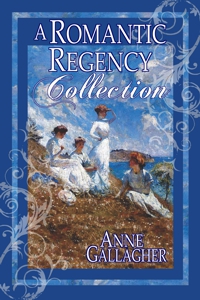 AG: I built my "brand" writing Regency romance under Anne Gallagher. I write sweet historicals (no hanky-panky). My romantic women's fiction under Robynne Rand is contemporary with swearing and adult issues. There's a marked difference between the two and I didn't want to offend anyone (my Aunt Elsie comes to mind) if they picked up Remembering You and thought it was going to be a light read like The Lady's Fate.
 ARA: Are you finding that marketing yourself as two different people takes more time from your writing than you'd like? Is one name taking more time than the other?
AG: Marketing under either name has always been a problem for me. I don't like tooting my own horn and any kind of promotion/marketing does take away from writing time. Robynne Rand is definitely harder to market. Even though it's still me, Robynne Rand is a newbie author. She doesn't have a huge fan base, (although my reviews are excellent) and I can't bang out books one right after the other like I do with my historicals. In writing historicals, there's a formula (more or less) I can follow. With my contemporaries, they're more complex, involving a deeper character arc. And truthfully, that's really the #1 marketing skill, just keep writing, keep publishing. A fan base will follow.
ARA:What are the benefits of writing under a pseudonym?
.jpg) AG: If branded correctly, people know what they're getting when they pick up your book. For instance, I love Nora Roberts. I know who she is, what she writes, and I'll read anything by her. I had no idea she was J.D. Robb for about a decade. And though I like her Robb books, I won't go out of my way to buy one. I'm just not into the genre.
AG: If branded correctly, people know what they're getting when they pick up your book. For instance, I love Nora Roberts. I know who she is, what she writes, and I'll read anything by her. I had no idea she was J.D. Robb for about a decade. And though I like her Robb books, I won't go out of my way to buy one. I'm just not into the genre. When people pick up an Anne Gallagher book, they know it's a Regency with a predictable HEA (Happy Ever After ending--ed.) I didn't want to confuse people thinking they were getting one thing when it was definitely another.
ARA: Do you have any advice for authors who are trying to decide whether to write under two or more names?
AG: Build your brands differently. Market yourself as two different people. If you look at my Anne Gallagher blog you'll see a lovely young lady reclining on a chaise under a blanket of blossoming trees. All very calming, looking very historical-ish. If you go to my Robynne Rand blog it's totally different, contemporary with a shot of the Mount Hope Bridge in Rhode Island.
And start as soon as you know you've chosen that route. My mistake was not starting the Robynne Rand blog sooner, before the book came out. Or getting on Twitter sooner. Not that Twitter spam sells books, but at least my presence there may have allowed people to get to know me a little better. They might not buy this book, but they might buy the next.
~
ARA: I guess I'm lucky to have a muse who pretty much writes in one genre. No matter what I've tried to write in the last three decades, everything turns out to involve murder and mayhem combined with fairly cerebral romantic comedy. When you pick up an Anne R. Allen mystery, you know there will be a screwball romance, some darker literary subtext, and probably at least one villain attacked with a designer shoe.
I suppose Dean Wesley Smith would say I'm just too lazy to write steampunk erotica, space westerns, and techno-thrillers in my spare time. However, this does mean I personally don't have to worry about pen names.
I do understand why Anne/Robynne made her choice. If I were in her shoes, I might have made the same one. But I recommend every author carefully weigh the pros and cons. It takes a crazy amount of work to establish even one brand these days and I'm all about writers keeping their sanity.
Book-buying habits are changing. I think the "different names for different genres" paradigm does belong to old-style publishing. Readers are beginning to "get" the new/old way of doing things.
I think if PEN/Hemingway Award winner Justin Cronin had published his horror novel under a pseudonym, he'd never have got the major ink in the New York Times that sets his work apart from every other vampire novel.
And if Jo Nobody had written The Casual Vacancy, I doubt Ann Patchett would have interviewed her in front of a crowd at Lincoln Center who got so excited that Ms. Patchett said she was "going to have to hand out sedatives."And certainly Jo Nobody wouldn't get to go on the Daily Show and convince Jon Stewart that the U.S. needs a monarch.
And I doubt she'd be working on her second million in sales in less than a month.
Personally, I'd rather tough out the bad reviews than give up the perks of an established brand. (Even if my brand doesn't quite have J. K. Rowling's clout.) But I'd love to hear from writers on both sides of the question in the comments.
Do you write under multiple names? Do you think it's worth multiplying your marketing work in order to keep from offending some readers? Have you written in different genres under the same name? What kind of results did you have? Do you know of other authors who have written in multiple genres with the same name?
.jpg) 99 cents for limited time!BOOK NEWS: For some reason unknown to me or my publisher, Amazon AND Barnes and Noble have chosen to reduce the price of my first Camilla Randall mystery,
THE BEST REVENGE
, to 99 cents. Practically FREE! So if you've wanted to check out one of my rom-com mysteries and you like a bargain--here's a chance to grab one cheap. you can find it on Amazon US , Amazon UK, and Barnes and Noble. Somehow it seems to have disappeared from Kobo. The ways of the Webz are mysterious indeed. But we will be trying to raise the price back to $2.99, so grab it while you can.
99 cents for limited time!BOOK NEWS: For some reason unknown to me or my publisher, Amazon AND Barnes and Noble have chosen to reduce the price of my first Camilla Randall mystery,
THE BEST REVENGE
, to 99 cents. Practically FREE! So if you've wanted to check out one of my rom-com mysteries and you like a bargain--here's a chance to grab one cheap. you can find it on Amazon US , Amazon UK, and Barnes and Noble. Somehow it seems to have disappeared from Kobo. The ways of the Webz are mysterious indeed. But we will be trying to raise the price back to $2.99, so grab it while you can.I WILL BE ON THE RADIO on Thursday evening, October 25th, 8 PM Pacific Time, talking with award-winning author Elaine Raco Chase on Triangle Variety Radio. Just click on the Triangle link and listen on your computer. I'll be talking about the real-life Hollywood mystery behind my mystery novel, THE GATSBY GAME, which is supposed to finally be available in paper this week. It isn't yet, and nobody knows what the hold-up is, but I've seen the proof and it's very nicely done. But as I said, the ways of the Webz are a mystery to us all...


October 14, 2012
Beware the Seven Deadly Writing Scams
We first ran into Lila Moore's scam-alerts at The Passive Voice. We visited her new watchdog site, PopularSoda.com and were impressed with all her savvy advice. Indie publishing has generated lots of new money-wasters and scams. Popular Soda adds an indie-focused viewpoint to other author-advocate voices like Writer Beware and Preditors and Editors. Whether you're traditionally published or indie, the following tips can help you avoid wasting your money, creative property, and time.
Seven Deadly Scamsby Lila Moore
These days, writers face a range of scams from mildly annoying to lethal. Deadly scams are ones which can destroy your bank account, your credibility, or your ability to profit from your work. Not all of these scams are perpetrated solely by malicious outsiders: some of these scams only work because the authors themselves are complicit and some of these scams are perpetrated by the authors themselves.
Here are the Seven Deadly Scams-- and how to avoid them.
1. Investing in Internet Points
Internet points can be anything from fake Twitter followers to a bump in your Klout score to more incoming links, or even paying to publish your work on a website highly ranked by Alexa To be clear, these are not things which encourage audience participation or even simulate the appearance of it. These are simply number bumps.
So what's so bad about this? It's backwards. Why would you pay for the appearance of engagement instead of actually engaging your audience?
You're spending real money to fill a stadium with cardboard cutouts.
An inflated number of Twitter followers does not create an equal increase in sales. A higher Klout score does not upgrade your level of fan devotion. It is mistaking the menu for the meal. The numbers don't really matter: readers do. And if you're providing value, connections, and fun for your audience, the numbers will follow.
2. Paying for Fake Book Reviews
There's been a lot of discussion about paid positive reviews since the NY Times' "The Best Book Reviews Money Can Buy". For me, part of the shock was realizing that fake reviews can and have been effective.
Positive, paid-for reviews worked for top-selling authors like John Locke. As a beginning author, you don't have the luxury of millions of sales and hundreds of fans. Being exposed for scam reviews can quickly catapult you into ebook notoriety.
Your career might benefit from the scandal. Or it may take a dive and never recover.
Using fake reviews can kill off your credibility quickly*, and you’ll also lose the perks of real feedback: readers get a full understanding of your work, and you, as a writer, benefit from new opinions on your writing.
It doesn't make sense from a moral standpoint, but it also doesn't make sense from a monetary perspective.
Positive reviews are expensive (they can be $100 each!) and there's no guarantee that you'll recoup the cost in sales. Take that money and put it towards editing, or a trip to a writing conference, or creative writing classes at a local college. Investing in yourself will help you grow as a writer; paying for positive book reviews only guarantees growing the reviewer's bank account.
(*Editor's note: Lila has a great post today with examples of real scam reviews and how to spot them. Also note: paying for negative reviews of "rival" authors is even worse. It's not just morally reprehensible but can destroy your career if you're found out. Beware ALL review mills.)
3. Giving Away First Rights for a Cheap Prize
Writers (or anyone, really) can be dazzled by flashy graphics and promises of publication, monetary prizes, and the glory of winning an award. However, you need to make sure the award is worth winning. Prizes can range from simple publication on a website to a thousand-book print run. That print run sounds like a pretty good prize. The shout-out on the website is not.
Here's why: First rights are incredibly important in publishing. Many large publications will not accept work that has already been published elsewhere, and a post on a blog counts as "elsewhere". If you're entering a contest or submitting to a publication, you need to be okay if that story never garners anything more than a token payment (if that) and an appearance in an unknown journal.
This seems pretty above-ground, so where does the scam fit in? First, some companies are intentionally misleading about what rights they are using. They may claim you will retain all rights to your work. This is impossible: you cannot be published and still retain first rights to the writing. Some journals have both print and electronic editions, which effectively means you're giving up both first rights and first electronic rights in one go. Some publications request all rights, which means you can never again profit from the piece and the publishing company will own it. Despite this, certain publications use overblown rhetoric to persuade you to sign over your rights for a few shekels and a smile.
Be smart. There's no downside for the publisher here: they can continue to profit from books, back issues, anthologies, and website traffic while giving up virtually nothing. Make sure you know exactly what you're giving up and what that means for the future. Aim your sights high and readjust a little lower if you're not getting any hits; don't start at the bottom and hope to climb to the top by....
4. Crowing about Cockamamie Credentials
Let's say a website calls itself innovative and groundbreaking, and claims to be one of the best places to publish. Let's say you fall for the slick marketing and submit. And let's say you get in, and let's say you put this credential in your official author biography.
What does that credential get you? If you're lucky, you might gain some respect and publicity. If you're not, you might end up worse off than if you never mentioned it. Flaunting credentials from an untrustworthy publication will make you look green at best. At worst, you'll signal to editors of established journals that you didn't research past publications before submitting, and there's no reason to believe you researched their publication, either.
Take a tailored approach to finding a suitable publisher: google the name of the publication with the word 'scam', read a few back issues, and look at the benefits to publishing there(avoiding Scam Number Three). If it seems like a good fit, then full steam ahead! But it's not worth winning space in an obscure journal just to see your name somewhere.
Some writers submit to these new or nameless publications because they simply want to take what they can get. But this exposes a logical inconsistency: If this is your best work, why aren't you submitting it to major, established, or reputable publications?
If it's not your best work, why are you--
1) not trying to improve it? 2) attaching your name to writing which doesn't accurately represent your abilities?
5. Pyramid Scheme Publications
Pyramid scheme publications are an interesting case, both because they've found a new form recently, and because they're not technically doing anything wrong. In the old model, like the well-known poetry.com scam, all submissions were accepted for publication. However, you'd have to pay for the book, for the inclusion of your biography, for a certificate, and for copies for family and friends. The scammer banked on your ignorance of the scam.
In the new model of pyramid scheme publications, they're still after your money, but more than that, they want your assistance in building credibility. Here's how it works:
They promise tons of exposure (but usually little to no pay) for publication in their new venture. Reviews are mostly positive, so you submit. Once you're accepted, you buy the issue and send the link to your loved ones. After all, it's only a few dollars. Because of your acceptance, you leave more positive reviews.
So where's the scam? The positive reviews were written by people just like you: writers with a vested interest in seeing the publication succeed, not independent readers who enjoy the content. When you encourage your friends and family to each drop a few dollars on the electronic version, you artificially inflate its sales figures, contributing to the revenue without seeing any benefit yourself.
To be sure, there are certainly reputable publications* which have strong marketing components and happy authors. But there is a world of difference between a publisher's selling books based on content and a company's relying on a growing stable of newbie authors to hawk the product like Cutco knives salesmen .
Before submitting, Google around and try to answer this question: is the publication praised by unbiased, independent readers or is it kept aloft by the efforts of naive new authors in a writing round-robin?
*Editor's Note I want to expand on what Lila says about REPUTABLE anthologies. Donating a free story to certain anthologies can be very much to your advantage. Charity anthologies, like the Indie Chicks Anthologies and the Literary Lab anthologies can offer great opportunities. Nobody makes money on these and all proceeds are donated to a specific charity, but they can be fantastic showcases for your work. Showcase anthologies can also be put together by author collectives or small publishers. If you're a beginning writer and some well-known authors are contributing to the same anthology, this can be a great way of reaching a much wider audience
6. Paying for Poor Publicity
There are sites which charge thousands for ebook marketing with no discernible result. These online marketing efforts can usually be grouped into three categories:
1) high prices for free services, 2) poorly targeted marketing efforts3) spam activities.
Let's go in order:
There are many, many ways to promote yourself for free online. You can send out press releases to free databases. You can create social media accounts to make connections and promote yourself. You can ask book review blogs to take a look at your work. You can pay to have those things done, of course, but make sure you're not paying hundreds of dollars for someone else to upload your press release to those free databases.
Additionally, it doesn't make sense to pay to market yourself on Twitter if you have no intention of going back on Twitter once your publicity stint is over.
Poorly targeted marketing efforts tie back into the previous scam: You don't want to market to other authors. Unless you're selling a book of writing advice, other authors are not your optimal audience. Not only are they in the same boat, they might be in a different genre.
Tweet-blasting your romance novel will not help if you're not reaching any romance readers. Some marketers promise exposure on dozens of blogs. Quality outranks quantity here.
A horror novel which gets a nod from a popular horror site will probably fare better than a horror novel mentioned on two dozen pet, beauty, or health food blogs (unless you're writing about a supermodel who rescues kittens and turns them into protein shakes). (I'm totally reading that book!--ed.)
Any of the above actions can be considered spammy if they're poorly executed. You might not have control over the delivery, frequency, or placement of ads. If a reader keeps getting unwanted information and ads about your book, they're going to start associating YOU with spam, even if you're not the one sending it out.
7. Indiscriminately Working for Free
Publications which expect free work are sometime snarkily called "for-the-luv" businesses. In the most malicious cases, a business-minded individual finds free workers by appealing to the authors' Higher Calling and Pursuit of their Personal Truth. It's fine to have such a lofty view of writing, but like I've said before, if you want to make money from writing, you have to treat it like a business.
And that means writing for free strategically.
As you may have noticed, this is a guest post. I wrote this for free. However, I only turned up on Anne's radar after my guest post on Duolit was picked up by The Passive Voice. Part strategic. Part luck. Part good writing, and part good timing.
So what's the benefit for me if I guest post for Anne? First, I'm making a connection with a real person. And yes, I will probably get some Internet points for this. But the connection came first. This is actual engagement, the meat and potatoes to fake Internet points' Diet Coke.
Internet points aren't the only previous Scams related to working for free. Low-budget startup publications also seem to think that free work is a fair trade for seeing your name on their site. Taking an internship at a reputable publication can benefit your career. It doesn't have to be a Big Six publisher-- even a respected regional publisher or local newspaper can net you some contacts and meaningful work experience. But that brand-new, non-paying, no-name publication that wants you to write and sign over the rights for five articles before letting you know if you got the job?
Hell no.
Lila Moore is a freelance writer and copy editor based in New Orleans. She has copy-edited a wide range of materials, from national advertising campaigns to cookbooks. Besides her passion for editing, Lila loves ebooks and founded PopularSoda.com to encourage professionalism and high standards in self-publishing. Lila previously blogged about writing-related scams for Duolit. And on the Passive Voice
.jpg) NEWS! On Monday, October 15th, Anne will be visiting the Readers Guide to E-Publishing site (RG2E). She'll be talking about the setting of her sp-o-o-o-o-ky comic mystery,
GHOSTWRITERS IN THE SKY
,--the Santa Ynez mountains of California (AKA Sideways Wine Country.)
NEWS! On Monday, October 15th, Anne will be visiting the Readers Guide to E-Publishing site (RG2E). She'll be talking about the setting of her sp-o-o-o-o-ky comic mystery,
GHOSTWRITERS IN THE SKY
,--the Santa Ynez mountains of California (AKA Sideways Wine Country.)What about you, scriveners? Have you run into any of these scams? Do you have other scams to report? Can you offer any exceptions to these rules like the charity anthology?

October 7, 2012
NaNoWriMo—Should You Join in the Silliness? 9 Reasons to Consider it.
First: full disclosure—I've never NaNo'ed. I'm a slo-o-o-w writer. My editor despairs. I've got a new Camilla Randall mystery due in November (No Place Like Home) which I've been working on for a year and haven't finished yet. (Yes, I've been writing, editing and launching six other books and two anthologies during the same year, but it's still not a great record. I write slow. I also read slow and blog slow. I even live in a place called SLO-town. )
But the world rewards fast writers. Look at Nora Roberts and James Patterson, who seem to turn out books at the rate Mrs. Smith produces pies.
Plus, even if you're fundamentally a slowpoke like me, NaNo is a great way to push through your blocks and self-doubt and get that novel out of your head and onto the page.
 For the uninitiated: NaNoWriMo is the National Novel Writing Month project. Started in 1999 by a young San Franciscan named Chris Baty—and 21 of his verbally ambitious friends—it challenges you to write a complete novel in a month. That month is November. Last year over 250,000 writers—called “WriMos”—joined in the merriment.
 Entering the contest—now run by Mr. Baty’s non-profit outfit, the Office of Letters and Light—is free. Anybody who finishes 50,000 words by midnight November 30th is a winner. No prize but a badge for your blog--and I think there are Tee-shirts you can buy this year--but completion of your novel is its own reward.
To enter, you register at NaNoWriMo's site so you can have your word count verified at the end of the month, and on November 1, start writing. It doesn't cost a thing.
But…don’t they write a lot of crapola?
Yup. And that’s the point.
It’s all about creating that awful first draft.
As Anne LaMotte wrote in her classic book for writers, Bird by Bird , “the only way [most writers] can get anything done at all is to write really, really, really shitty first drafts.”
NaNoWriMo forces you to get that dung onto the page.
Here are some benefits.
1) No time to agonize over your first chapter. You’ve read endless carping on blogs like this one about how the first chapter has to hook the reader, introduce all the major themes and plot elements, begin with the world’s most exciting sentence, etc. But when you’re writing your first draft, none of that matters. You’re introducing yourself to your characters and their world. You can worry about your reader when you start editing next January.
2) No frittering away time on research. If you’re one of those writers who has procrastinated for years, piling up reams of historical and biographical detail, this is your chance to actually write the *&%! book.
The truth is most of those details would bore the reader silly if you actually put them in your novel, anyway. You’re better off writing the book first and figuring out later whether your reader needs to know what they used for toilet paper in 13th century Scotland or what kind of underpants to put on Genghis Khan.
3) No time to censor yourself. You can’t afford to agonize over whether your brother–in-law/former teacher/ex-girlfriend will recognize him/herself. Or if your mom will find out you weren’t really at band camp that summer when you and your buddies took the road trip to Cabo. Besides you’ll be amazed how characters/situations inspired by real life take off on their own and create an alternate reality. And excuse me, when did your brother-in-law ever read a book anyway?
4) You won’t be tempted to save your best ideas for later. New writers are often terrified they’ll run out of ideas. But it’s amazing how many more will show up once you’re in the zone.
I recently read some great advice for writers in an article in Glimmer Train from author Josh Swiller: "Kitchen sink that first draft. Throw every damn thing in there. If you aren't sure something belongs, if you aren't even remotely clear what the point of a certain tangent is—in it goes. It can help to do this draft with pen and paper, in poor handwriting, so you can't be eying and judging what you've put down as you go along."
5) You’ll give up trying to control the process. If the story goes somewhere you didn’t expect it to go, or you can’t stick to your outline, you’ll have to run with it. When your muse is talking, you can’t take the chance of pissing her off for even a couple of days.
6) You’ll have a great excuse for skipping the family Thanksgiving with all those relatives whose politics make you despair for the future of the human race.
7) It’s fun—and a great way to meet other writers all over the world. Look in the NaNo website forums for online and in-person discussions and groups. More than 650 regional volunteers in more than 60 countries will hold write-ins, hosting writers in coffee shops,bookstores, and libraries. Write-ins offer a supportive environment, turning the usually solitary act of writing into a community experience.
8) Lots of very good writers do it. This week GalleyCat reported that 90+Books began as NaNoWriMo projects including Water for Elephants by Sara Gruen, The Night Circus by Erin Morgenstern, and Cinder by Marissa Meyer: all #1 NYT Best Sellers.
9) You'll get pep talks from famous writers Not only will successful WriMos like Marissa Meyer be standing by to cheer you on, but this year they've enlisted the likes of Nick Hornby and Lemony Snicket to give you helpful tips to keep you on track and pounding out those words.
If you decide to jump into the craziness, here are the NaNoWriMo rules:
Register at NaNoWriMo.Org before November 1
Write a novel (in any language) 50,000+ words long between November 1 and November 30. “Novel” is loosely defined. They say “If you consider the book you're writing a novel, we consider it a novel too!”Start from scratch. Previously written outlines & character sketches are OK—and highly recommended—but this can’t be a work already in progress to be an official NaNo novelBe the sole author. Although you can use the occasional quotation, you can't use other people's words, even if they're out of copyright. No collaborations allowed.Write more than one word. No repeating the same one 50,000 times.Upload your novel for word-count validation to the site between November 25 and November 30.
Chances are pretty good you aren’t going to write a polished, publishable novel in four weeks (although Charles Dickens is said to have written A Christmas Carol in six, four of which were in November, so there’s some precedent.)
But PLEASE don’t start querying agents or throw that puppy up on Amazon or Smashwords until you do a serious, in-depth revision. You’ll just add to the "tsunami of crap" self-pub-haters rant about, and/or you'll make agents and editors and their overburdened interns extremely cranky.
Oh, and if you are going the traditional publishing route, it’s not wise to reveal that the book began at NaNo—at least not in your initial query. Unfortunately, a lot of participants send off the unedited crapola.
Also, most publishers won’t look at a novel of less than 70,000 words, so even the Chuck Dickenses among you will have further work to do.
NaNoWriMo is now entering its 14th year and has become a respected institution in the writing community. GalleyCat is promoting it with a fun pre-NaNoWriMo contest.
 There's also now a NaNo for kids and a Camp NaNoWriMo for people who have more writing time in the summer, and a super-posh one-nightwriting-marathon party in San Francisco and all manner of tee shirts, mugs, and other fun NaNo paraphernalia.
 Last year 36,843 writers crossed the 50K finish line by midnight on November 30th, thus "entering into the annals of NaNoWriMo superstardom forever."
So if you have a book in your head, some spare time (and a very understanding family) you just might become one of those superstars this year!
For some tips on overcoming your blocks and getting that book out no matter what, you might want read this helpful and funny post by Delilah S. Dawson on how to barf a book.
So how about you, scriveners? Are you NaNo-ing this year? How much prep will you do? Have you ever "won" at NaNo? Have you tried and failed miserably, as I'd be sure to do? Did you fail miserably but still manage to get some good writing out of it? Do you think the whole thing is a bunch of batty San Francisco nonsense? (Sorry. I had to do the Baty/Batty thing somewhere. Old puns never die.)
Next week we're going to have a great post by Lila Moore from the watchdog site PopularSoda.com. She's going to tell us about "Seven Deadly Scams" being perpetrated on writers in this new publishing era. She's written about writing scams on Duolit and the Passive Voice, and provides warnings that all writers need to read.

September 30, 2012
An Awesome Award—Plus The Story that Took 50 Years to Write: an Interview with Michael Harris
Ruth and I are totally jazzed to announce that this blog has been named one of the Top 50 Blogs for Writers by Tribal Messenger Daily. To be up there with Konrath, Kristen Lamb, and Jane Friedman is an amazing honor. Here's what they said:

One stimulating blog, two of the most prolific digital and print authors of today– that’s the Anne R. Allen Blog with Ruth Harris. Together, they make time to impart their successful writing and publishing techniques with other budding writers. This blog is replete with industry updates and other information that will make writing in the digital age easier– although not without hard work– and more successful than most. Anne Allen is the author of five comic mysteries while Ruth Harris is a New York Times bestselling author and former editor. In this blog they take turns in sharing what helpful tips and updates they have to fellow writers.
So: A great big THANK YOU to the folks at Tribal Messenger Daily!!
When I spoke at the Central Coast Writers' Conference last weekend, somebody asked me why this blog has taken off when most don't. I didn't have an answer for her. Why does one blog or book take off when other great ones don't?
Nobody knows.
All we can tell you is that making money from writing—whether it's for a book or a blog—is tough, so don't do it if it's not fun. Writing has to be done for the love of the process.
My post last week produced some thoughtful comments on the Kindleboards about whether authors should blog at all. Blogging certainly doesn't generate direct sales. But it does raise your overall profile if you do it regularly.
This week in a great post asking "Would Hemingway Blog?" Social media guru Kristen Lamb said "blogging is probably the ONLY form of social media that 1) draws from a writer’s strengths and 2) doesn’t try to fundamentally change our personality."
That change in personality thing is what happens to me on Facebook and Twitter, where I feel I have to pretend to be an adolescent. Here Ruth and I get to be grown-ups. Maybe that's why this blog works.
That and the fact that we have such awesome readers. Thank you all!!
Speaking of grown-ups, we have a fascinating piece for you today on writing memoir. Michael Harris put off writing his story for longer than most of you have been alive. But it was a story he knew had to be told—about nuclear testing in the 1950s—and the horrors those tests created. He wrote about the experience at the time—smuggling manuscript pages from the secret test site at great risk (and this was in the days when there weren't even Xerox machines to back up your work.) But the book didn't come together for half a century. He'll tell you why.
Agents tell us memoir is the toughest genre to sell. It's also the toughest genre to write. It involves revisiting the most difficult scenes of your own past. Today we interview Mr. Harris and ask him about that process.
I find his last tip especially interesting: a third person omniscient voice can give you control over a shocking story. I usually advise against using omniscient voice, but in nonfiction, it can give you distance and authority.
Reliving Trauma in Memoir: Offering the Real Truth Vs. Fictionalizing Your Own History
...an interview with Michael Harris
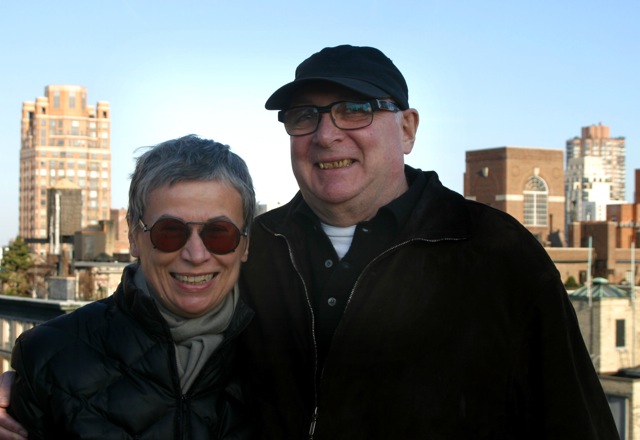 Ruth Harris and Michael Harris
Q. As a young Army draftee you were sent to the island of Eniwetok in the South Pacific during the U.S. H-bomb tests in 1956. What made you want to write about an experience that you’ve told me was very difficult?
M.H. I knew at the time that I was witnessing an important slice of American history at the Pacific Proving Ground during Operation Redwing. I wrote about the experience while I was still there, and a friend who left the island before I did "smuggled" the manuscript back to the States for me.
Q. Why did your friend have to smuggle out your manuscript?
M.H. Eniwetok was a security post. There were signs everywhere impressing on us that the work going on (I mopped floors, typed and filed requisitions and wrote movie reviews for the island newspaper: All The News That Fits We Print) was Top Secret. “What you do here, what you see here, what you hear here, when you leave here, leave it here.”
I was afraid they would confiscate the manuscript if they found it. My friend concealed the pages in the clothing in his luggage and luckily they weren’t discovered. When he got back to the States, he mailed it to my father.
Q. What happened when you got home?
M.H. When I read it, I was dissatisfied. In order to avoid disclosing classified information, I had written about my year as a novel — and left out too much. I wanted to rewrite the book, but I also wanted to forget what I had seen and experienced, a common response among veterans. I was happy to be home and I was determined to get on with my life.
Ten years later, I wrote a new version of my H-bomb year, once again as a novel. This too was a failure. I was using "fiction" not just to follow security regulations but to avoid the truth — I was also leaving out unclassified material.
1. I blocked out the anger and frustration I felt about the life-threatening incompetence I observed in the officers in charge.
2. I buried the fears that my health had been damaged and that my life was going to be cut short by my exposure to radiation.
3. I shrank from the lies I had been told about our safety (“There will never be any fallout on this island!”) and tried to forget the deadly mistakes, some of which led to radiation sickness and worse. I tried to forget the three-eyed fish swimming in the lagoon. And the men whose toenails glowed in the dark.
4. I was reluctant to confront a deeply disturbing personal incident — the only doctor on the all-male island (the man most responsible for our well-being) tried to force me into a sexual relationship and took vengeance when I refused.
Q. How did you come to terms with your experience?
M.H. My perspective gradually changed in the years after I married Ruth. An editor and best-selling novelist, she read what I had written and, in conversations with her, I began to remember what I had tried to forget:
1. We were told we had to wear high density goggles during the tests to avoid losing our sight but the shipment of goggles never arrived — the requisition was cancelled to make room for new furniture for the colonel's house.
2. We were told we had to stand with our backs to the blast — again to prevent blindness. But the first H-bomb ever dropped from a plane missed its target, and the detonation took place in front of us and our unprotected eyes.
3. Servicemen were sent to Ground Zero soon after Zero Hour wearing only shorts and sneakers and worked side by side with scientists dressed in RadSafe suits. The exposed military men developed severe radiation burns — and many died.
Using these memories, I wrote a new version — one that a number of editors admired — but wanted me to recast as a memoir. Once again I started over, but by now decades had passed. I had changed and certain important external realities had changed.
1. Top Secret documents about Operation Redwing were now declassified. I learned new details about the test known as Tewa: the fallout lasted for three days and the radiation levels exceeded 3.9 Roentgens, the MPE (maximum permissible exposure). Three ships were rushed to Eniwetok to evacuate personnel but were ordered back after the military raised the MPE to 7. That, they reasoned, made everyone safe.
2. I was finally able to confront my memory of the Eniwetok doctor and relate the incident to a long-repressed episode of sexual abuse in my childhood.
3. I made contact with other atomic veterans, some of whom I had known on Eniwetok. They told me about their own experiences and in some cases sent me copies of letters written to their families during the tests. As we talked, we also laughed: about officers who claimed Eniwetok was a one year paid vacation; about the officer who guarded the daily island newspaper by deleting "pinko propaganda," including a speech by President Eisenhower.
4. Finally Ruth, who by now knew the material almost as well as I did, was at my side and on my side, providing crucial input and detailed editing expertise.
I was finally able to pull all the strands together. I had overcome the anger, the self-pity and the knowledge that I and the men who served with me had been used as guinea pigs. At last I could understand my nuclear year in its many dimensions and capture the tragedy and the black humor that came along with 17 H-bomb explosions. After 50 years, I was able write the book I had wanted to in the beginning.
Q. Do you have any advice for someone who’s thinking of writing a memoir?
M.H. 1. Make sure you have enough distance from the experience so you have perspective on what happened. Sometimes it’s obvious right away as in my once-in-a-life moment of meeting the Beatles at the airport. The facts themselves tell the story and being objective is a matter of reporting. Exposure to radiation—anger, terror, incredulity—are powerful emotions that take time to process.
2. Figure out how to use (or keep away) from your own intense feelings. In the case of the H-Bomb tests, anger and self-pity were emotions to stay away from. So was the hope of somehow getting “revenge.”
3. Voice/Point of view. Sometimes the unexpected works:
Finding humor in a tragic situation: military incompetence in planning the H-Bomb tests.A third person omniscient narrative can be surprisingly effective if shocking facts are related in an understated way.
4. Figure out (by trial and error) how much or how little of yourself you want to reveal.
How about you, scriveners? Have you had to confront personal trauma in order to write a story you know needs to be told. Did you fictionalize it, or try to tell the whole truth and nothing but the truth? Do you think you're at the point where you can laugh at it the way Michael has? Ruth Harris will respond to your comments below. And don't forget, now Ruth has her own blog with daily links to fascinating articles.
Michael's memoir The Atomic Times is available on Amazon .
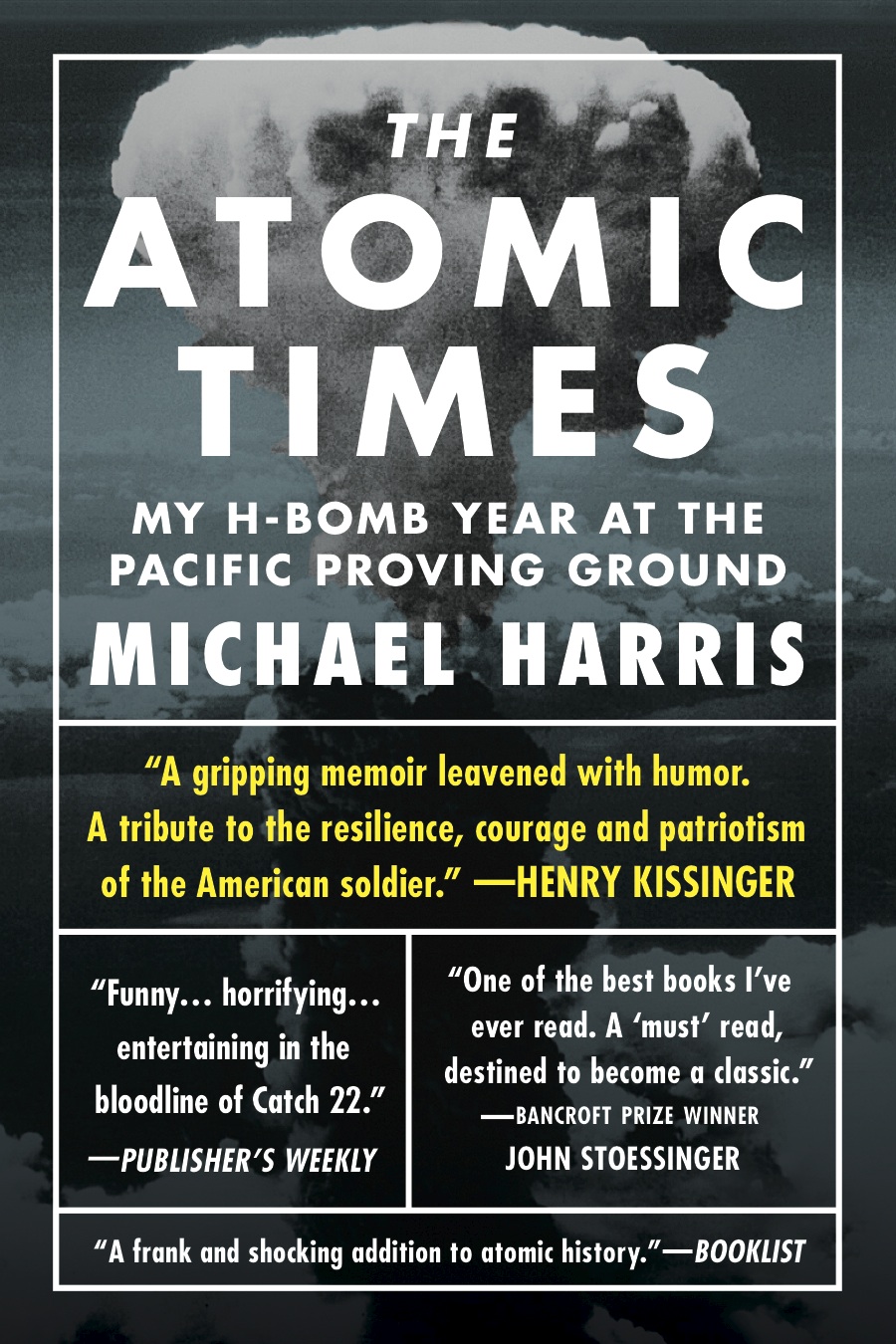
SHOCKING, FUNNY, SAD, RAUNCHY! Catch-22 with radiation! Area 51 meets Dr. Strangelove!
"A gripping memoir leavened by humor, loyalty and pride of accomplishment. A tribute to the resilience, courage and patriotism of the American soldier." Henry Kissinger
An entertaining read in the bloodline of Catch-22, Harris achieves the oddest of victories: a funny, optimistic story about the H-bomb."
Publisher's Weekly
"Brilliantly conceived, elegantly rendered and persuasively authentic."
Robert B. Parker, bestselling author of the Spenser and Jesse Stone series
Attention Email Subscribers! Feedburner is apparently no longer sending emails to many people subscribed to this blog. (Does anybody out there know what really happened to Feedburner? I hear so many conflicting stories.) Until I can figure out how to get a new email service to work on a Blogger blog, I'm making a list manually. So if you'd like to get notifications of new blogposts, and Feedburner has let you down, just send me an email at annerallen at yahoo dot com. I will put you on my list of personal blogfriends and send you a notice when the Sunday blogpost is up. (I promise not to spam you with anything else.)
Also Short Story Writers! I don't usually plug magazines here, but since I keep telling you how you should be writing short fiction, I thought I should tell you about a no-entry-fee contest that sounds like a great opportunity:
And We Were Hungry, a New Literary and Arts Online Magazine, Announces Inaugural Short Story Contest.
Four winning writers will share prize fund of $5,000 and publication in the inaugural Winter 2013 issue. Contest writing theme is “And We Were Hungry.” Top prize reserved for the short story that connects the theme with nature, in honor of the short story contest's sponsor, "Ashes and Snow" artist Gregory Colbert. No entry fee, deadline November 30, 2012. The Magazine publishes original creative writing in the form of fiction (more than 1000 words), flash fiction (1000 words or less), creative nonfiction, and poetry; as well as essays, photography and visual arts.

September 23, 2012
Top 10 Self-Sabotaging Mistakes of Author-Bloggers
Aspiring writers are told we should all be blogging. If you're willing to make the commitment, I do think it's the best way to start building platform and getting your name out there.
If you have no Web presence, agents, reviewers and readers are a lot less likely to take you seriously. The quickest, cheapest, and most reliable way to get that presence is to blog.
Before I started blogging, if you Googled my name, you'd find no mention of me until maybe page five. (I strongly suggest all authors Google themselves regularly to see what's happening to your name. It's not vain; it's more like checking in the mirror to see if there's any spinach on your teeth.) These days,If you Google "Anne R. Allen" you have to go the bottom of page 12 before you find an entry for somebody else. (Carrie-Anne R. Allen, I apologize.) Almost all those entries relate to my blog.
So blogging does work. Not as a direct sales tool, but as a way of building platform.
But you have to do it right.
That means you need to keep your goal in mind. If you are blogging to make a name for yourself as an author, then please, people, tell us what it is! I know this sounds like a no-brainer, but there are so many writers hiding behind cutsie monikers, I assume they're following somebody's bad advice. Don't listen to it! If you want to become a professional writer, DO NOT bop around the Interwebz pretending to be one of your characters, an anonymous pundit, or your dog.
Unless you're planning to publish your books under the pen name "Fido" or "Anonymous Snarkisaurus" you're going to be wasting your time.
On the other hand, if your real name is Marilyn Manson or Stephen King, choose yourself a good pseudonym NOW and blog with that name. Otherwise everything you do online is going to be promoting Mr. Manson or Mr. King and not you.
Here are some of the other ways I see new authors sabotaging themselves:
#1 NO BIO
Post a full ABOUT ME PAGE on the blog with a nice peppy bio and a good photo of yourself. Need help in writing your bio? Read my post on how to write an author bio here.
And for goodness' sake, put your name prominently on the blog, preferably in the header. I’ve visited writing blogs where I can’t even find the author’s name mentioned.
Do NOT expect people to know that “Scribblings on Sand” is written by Susie S. Sands, paranormal romance author. You're blogging to promote yourself as an author--not beach scribbling. So give the Google spiders a fighting chance at finding you.
When people want a Stephen King novel, they don't Google "horror novels set in Maine,"or "scary clowns." They Google his name.
Make your own name Googleable. That's the whole point.
REMEMBER: YOUR NAME IS YOUR BRAND!!!
#2 NO CONTACT INFO
I’d say at least 75% of writers do this. You don’t know how much time I’ve wasted combing blogs for your email address so I can contact you to ask a question about your blog, ask you to guest blog, or ask you to participate in something that might help you with book promotion.
Opportunity knocked and nobody was home.
There is no point in blogging if people can’t reach you!! If you want to be anonymous, write in your basement with a kerosene lamp and a #2 pencil. Nothing wrong with that. But if you want to be taken seriously as a professional author in the 21st century, offer your professional contact information.
The best place for your contact information is on your “ABOUT ME” PAGE.
#3 NO INFORMATION ABOUT YOUR BOOKS
Have books for sale? Tell us about them. List each book, give a synopsis, some review quotes and links so we can buy them. Your blog shouldn’t be one non-stop sales pitch for your books, but don’t go overboard the other way and neglect to mention them at all. Even if you have a separate website, you want to mention your books on your blog, too.
Contemporary consumers want things to be easy. This is why Amazon is so successful as a retailer. The one-click purchase is genius. So make it as easy as possible for people to buy your books.
I suggest all published authors have a book page on your blog or a link to your website's book page. If you want examples of book pages here's Ruth's Book Page and mine.
#4 TOO MANY BLOGS
How many is too many? For most writers, two is too many, because you end up neglecting one or the other 50% of the time. As Kristen Lamb says : "When do writers need multiple blogs? Um, never."
Unless you write erotica or extreme political stuff that’s not suitable for all readers, put all the stuff on one blog. Don’t make your readers jump through hoops to find your author blog.
If you want to blog about recipes AND zombies AND collecting floaty pens, use your pages. Blogger has 20 of them. Until you fill them all up, you do not need a second blog.
If you write books under different names, have a page for each. Ruth Harris and I share a blog. We don’t even write in the same genre. I write rom-com mysteries and she writes womens’ fiction and thrillers. But we are able to co-habit. We have a page for Ruth’s books and a page for Anne’s. We also have an About Ruth page and an About Anne page. And we still leave much of the blog unused.
If you write SciFi under the name Brad Goodyear and sweet romance under the name Beryl Goodwife, find a neutral color scheme and let Brad and Beryl share. Everybody who is trying to find you will be grateful.
#5 NOT LINKING YOUR BLOG TO YOUR WEBSITE AND OTHER PUBLISHED WORK
I don’t think most new authors actually need a separate website. If you have a professional-looking blog, it can provide all the information the media, publishers, agents and readers need. That way they don’t have to jump through extra hoops. Every time you make the reader click through to another site, you lose a goodly percentage of them.
I know not all people agree with me, but this is what I see when an author has a website as well as a blog: “Look, I have a fancy, expensive website. It duplicates all the information on my blog, but hey, I spent money on it so I’m a REAL writer.”
So Ruth Harris and I aren’t real writers? Neither is Nathan Bransford?
But if you do have both, for goodness' sake put a link prominently on both sites. It is amazing how many times I've read a blogpost and come to the end and discovered there's no way to find out anything about the person who wrote it except to leave the blog and Google the author's name. How many people are going to do that?
This is also true of your published work. Have you guest posted on other blogs? Give us a link. Have you published short stories, essays, or done interviews for online zines? Let us know. Don't make us go on a scavenger hunt to find out who you are.
#6 MAKING COMMENTING DIFFICULT
Moderating comments on new posts is a big barrier to commenters. So is the CAPTCHA (that word verification thing that proves you’re not a robot.)
Yes, when you’re well established, you may get a lot of trolls and spambots and have to turn on CAPTCHA and moderate more closely, but until you do, make it as easy as possible for people to comment. The CAPTCHA these days is often so difficult it can take 5 or 6 tries to get it right. Guess how many people are going to stick around that long? Three tries is my limit, people, no matter how good your post is.
I realize most new bloggers don’t even know the CAPTCHA is there, and you should be warned that even after you turn it off, the Blogger elves may turn it back on. So if your comments start falling off, ask a good friend to check for you to see if that sneaky CAPTCHA is back on your blog.
In Blogger, the place to turn off the CAPTCHA is in the “privacy” menu on the dashboard.
We're popular enough that we get a lot of spammers here, but I still have the CAPTCHA disabled and delete the spam by hand. Yes, it's a bit time consuming—but it's consuming MY time, not my readers'. I think that's one of the reasons people keep coming back.
#7 MESSY, CROWDED, UNREADABLE BLOGS
I usually won’t read a blog that’s “monetized” with a lot of flashy ads. Unless the content is spectacular and unique, it’s not worth the annoyance. And if you’re not making any money from it, why crowd your blog with a lot of detritus? Don't use loud, quarreling colors or lots of flashy graphics.
Also note that many of your readers, especially those of us over forty, find a light font on a dark background difficult to read.
(I am so grateful to my readers who pointed out that a too-light color for the links is an annoyance too. You can change the colors and fonts in the "advanced" section of your design template. I discovered it's pretty easy, and if you don't like it, you can change it back to the default design.)
Yes, I know Blogger offers that cool Goth-looking template, but realize that a dark blog with light lettering will drive away a good deal of your possible audience.
# 8 SLOW LOAD TIME
Yeah, that video of your cat trying to kill the garden hose may be really cute--but if it takes so long to load that you lose ¾ of your visitors before they read your content, it’s not going to be building platform for you.
If you're a writer, you want to showcase your writing, not your video-making skills.
Any kind of animation slows your load time. People like me who check out dozens of blogs a day are out of there before we can see all your cute stuff. I used to follow one writer’s blog regularly. He had great things to say. I’m sure he still does, but when he added animation, I had to drop him. We are all pressed for time.
Also, it’s good to be aware that Alexa rates blogs by loading time as well as number of hits.
#9 NOT BLOGGING TO A SCHEDULE
When people come back looking for a new post and don’t find one for a month, they’ll write it off as a dead blog.
But if you put a notice “Updated monthly” you eliminate the problem. You now have a schedule.
As most of you know, I advocate Slow Blogging (once a week or less: quality over quantity.) But of course daily blogs get popular faster and attract the Google spiders, so if you want to blog three days a week or more, go for it—just make sure you love blogging enough to make a long-term commitment to keep to that schedule.
The problem arises when you blog every day for a month, then leave the blog hanging for three. People stop coming back. But if you say initially that you’re going to blog once a week, nobody will be disappointed.
“No, No!” you say, raising hand to feverish forehead. “I’m not the kind of person who can be chained to an arbitrary schedule. I’m CREATIVE!”
Yeah, yeah, so are the rest of us. Write the posts when your blogmuse is in residence, and save up the posts to post on a schedule.
#10 NO TWITTER HANDLE ON YOUR BLOG
Don’t make people click through your tweety bird icon to go to Twitter and find it out. It should be right there on the page. In fact, we should all get in the habit of posting our Twitter handle along with our byline so people can tweet the post and give us credit for it. Porter Anderson wrote a great piece for Rachelle Gardner on the subject that’s a must-read.
Do I say all authors should blog? No. Some authors aren't suited to it. Writing a nonfiction piece every week can be tedious, especially when you're in the middle of writing a novel. Some people can't come up with enough ideas, or they're not quite sure what their genre or author "brand" is going to be.
That doesn't have to keep you from participating in the blogosphere. You can build a simple website landing page as your home base (which makes you searchable) and comment on other people's blogs. (Wix offers a simple free website that looks easy to use and Google-friendly.) Commenting on popular blogs is a great way to get your name known in the blogging community.
But that means you want to comment under your OWN NAME. I'm going to say it one more time: YOUR NAME IS YOUR BRAND. Anything you do on social media needs to be branded with whatever name you write under, or you might as well be in that basement with the kerosene lamp.
What about you, scriveners? What annoys you about author blogs? Do you blog under your own name? Do you have your name in your blog header? Do you think CAPTCHA is offensive to the robot community? Is your real name Marilyn Manson?
Attention Email Subscribers! Feedburner has apparently had a meltdown and is no longer sending emails to many people subscribed to this blog. This seems to be happening all over the blogosphere. Many bloggers are switching to other email programs, but since I'm a cybermoron, it's going to take time, sweat and copious tears to figure out how to switch to MailChimp (Plus I'd lose the subscribers who ARE still getting emails. It does work some of the time.) So if you'd like to get notifications of new blogposts, and Feedburner has let you down, just send me an email at annerallen at yahoo dot com. I will put you on my list of personal blogfriends and send you a notice when the Sunday blogpost is up. (I promise not to spam you with anything else.)

September 16, 2012
Writers Conferences: Are they Relevant in the E-age?
Oh, the lure of a Writers' Conference! A luxurious place where writers can polish craft, learn the latest publishing trends and hang with successful authors, agents and publishers--undistracted by mundane life.
It's a mini-university course that just might get you published.
With parties.
The modern writers conference began in the U.S. in the 1920s with Vermont's famous Breadloaf Conference, but you can now find them all over the world. They last from a day to several weeks, usually in an exciting or idyllic location.
But they can cost a hefty chunk of change. And at some of the bigger conferences you get a chance to book a personal pitch session with an agent—for even more money.
So are expensive conferences a shortcut to publishing success? Are they still relevant? What role does the writers’ conference have in this fast-changing publishing world?
Most agents and editors do recommend them. Many suggest attending a conference or two before even sending a query.
But these days, a lot of writers are bypassing the endless, frustrating agent-hunt system and going indie—either with small presses (once called indie) or self-e-publishing (the new definition of indie.) They’re totally over the whole idea of pitching to agents.
So conferences are catching up with the trend, and now provide more than just a course in traditional publishing. California's Central Coast Writers Conference, where I'll be teaching this weekend, featured Smashwords founder Mark Coker last year. And I read this week about the conference in York, England where Irish e-publishing guru David Gaughran and indie chick-lit superstar Talli Roland gave a joint workshop for self-pubbers.
Is a conference worth your time and money in the electronic age? Can't you get all of David Gaughran's advice in his book Let's Get Digital and learn from Talli at the Writers Guide to E-publishing?
Yes, you can--but real-world conferences have many other benefits. As a veteran of over a dozen, I can say each one was worthwhile for me—not because they helped me land an agent or publisher. But I got some solid instruction in how the industry works, plus some painful reality checks and a couple of ego boosts--and most importantly, I met great people.
I first got to know my co-author Catherine Ryan Hyde at a conference. I never would have dreamed back then that the author of Pay it Forward would ever want to co-write a book with me, and I'm sure she didn't suspect it either. But as both our careers have grown, we stayed in touch.
I've also had a chance to hang out with my idol, the ever-classy Nathan Bransford, and share wine with super-savvy "Agent Savant" Laurie McLean and get to know Danielle Smith, the Book Review blogger I knew from "There's a Book" (I had no idea she was my neighbor.) I also met dozens of wonderful not-yet-published authors. We scriveners are solitary animals, so connecting with members of our species in the real world helps keep us healthy.
But for those of you who can't afford to go to a conference this year, you can find a mini-writers' conference in the book I wrote with Catherine, HOW TO BE A WRITER IN THE E-AGE...AND KEEP YOUR E-SANITY. Which will be FREE for Friday and Saturday this week.
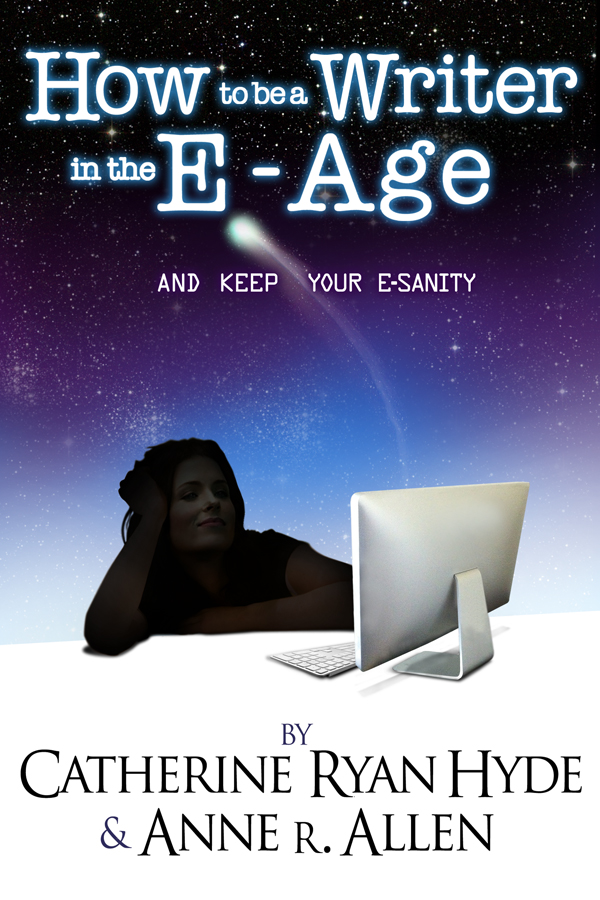 The E-Book Will Be FREE Sept 21-22!The paper book is now available from Amazon.com for under $10, and under £8 in the UK . And the ebook for Kindle will be absolutely FREE on Friday September 21st and Saturday, September 22nd in both the US and the UK (In October, it will be available for Nook and Kobo.)
We wanted to make the book free for people taking my course at the Central Coast Writers Conference--so we're also making it free for all of you!
So even if you can't come to beautiful San Luis Obispo for this weekend's conference, you can have a FREE virtual conference for your Kindle or computer's Kindle app.
But be aware that Writers’ Conferences come in all shapes and sizes—and one size does not fit all. Here are the basic categories you’ll have to choose from:
1) Scenic-Destination Literary Retreats
These can last a week or two and are the Maseratis of conferences. Held in lush resorts and exotic locales, they offer workshops from literary superstars and MFA professors. The emphasis is on Literature with a capital “L”, and applicants can be screened with Ivy League selectiveness.
But some turn out to be more like fantasy camps for Scott and Zelda wannabes than training grounds for professional writers. I’ve heard it’s cleaned up its act, but the revered Breadloaf Conference is also known as “Bedloaf” for a reason. In a famous 2001 article for the New Yorker, Rebecca Mead said, “The triple compulsions of Bread Loaf have, traditionally, been getting published, getting drunk, and getting laid.”
These big, luxurious conferences seem to be faltering in our belt-tightening age. The Maui Writers Conference has disappeared, and he grand old Santa Barbara Writer’s Conference—where I got to stroll on gorgeous beaches between lectures by the likes of Charles Schultz and Ray Bradbury—went on hiatus for a few years. Although I see it is reinventing itself and sprang back to life in 2012 as our economy recovers.
If you ever have a chance to go one of these, and money is no object, you’ll probably have a memorable time. I’ve heard the one in San Miguel de Allende is fantastic.
But will these fabulous vacations help you get a book published? Probably not.
2) National Genre Organization Conferences
These usually run three to five days and serve as the annual meetings of national organizations for writers of genre fiction like Mystery, SciFi/Fantasy, Christian, Children’s, Romance, etc. With professional organizations like RWA, MWA, SCBWI, SFWA you have to become a member of the organization to attend. Others, like Bouchercon and Left Coast Crime are for readers and fans as well as writers. Some are moveable feasts that set up camp in a different large city each year and others, like Washington D.C.’s Malice Domestic, have a permanent home.
These aren’t cheap, especially if you don’t happen to live in the city where they’re held, but they often provide a crash course in the publishing business in your particular area of the market. You’ll also have a chance to meet agents who are specifically looking for books in your genre.
One of the most important aspects of these national conferences is the awards. Being a finalist for an Anthony, Agatha, Nebula, or RITA award can make a career.
3) The Intensive Big-City Weekend Conference
More and more conferences are of this type—equally emphasizing “craft, commerce, and community” as the San Francisco Writer’s Conference advertises. Like the genre conferences, these are usually held in big city hotels.
The conferences themselves will probably cost between $600-$800, but on top of that you may have pitch-session and extra-workshop fees—and of course, your hotel bill. (And the tab from the bar from the night you tried to schmooze that agent.)
These can be exhausting and stressful—agent Betsy Lerner says she usually walks away from a conference “quasi-suicidal”—but you’ll meet fascinating people, learn a lot about the business, and the agent you treated to all those shots of single malt may remember you when you send your query.
4) Marketing Seminars
You’re not going to get any get-in-touch-with-your-muse writing workshops here. They’re all about selling.
a) Agent pitch-a-thons. New York’s Backspace Agent-Author Seminar is the pioneer in this cut-to-the-chase style conference, where you get “two full days of small-group workshops and panels with ONLY literary agents on the program.” At $500+, it’s a little pricey, but if you’re shopping for an agent, this is the place to meet them up close and personal.
b) “Boot Camp” sales-motivation talks. Some marketing conferences are mostly marathon sales pitches by direct marketers. These may have “boot camp” or “university” or “summit” in their name. They tend to be less like writers’ workshops and more like Amway Conventions or “Become a Real Estate Zillionaire with No Money Down” lectures. Their websites are often flashy and loud—and their approach is hard-core/hard-sell. Personally, I recommend staying away from these.
5) The Small Regional Conference: These are usually held at a local college campus and aimed at authors who can commute from home. Often they're aimed at a particular genre. They usually last no more than three days and are timed with the assumption the attendees have day jobs. They tend to be considerably less expensive and offer a lot of bang for your buck. The Central Coast Writers Conference has hosted great speakers like Nathan Bransford, Catherine Ryan Hyde, and Mark Coker. Because only a few hundred people attend, you get a chance for one-on-one chat with them.
If you want to learn more about specific conferences check out the Shaw Guide to Writers Conferences.
And if you do go, here are some tips to help you get the most out of your experience:
1) DON’T dress to impress. At one conference I attended, a woman came dressed as a tree. Shedding real leaves. Don’t do this. Also, dressing as one of your characters WILL get you noticed, but not in a good way. Wear neat but comfy clothes. The days will be long and intense.
2) DO wear something distinctive: a scarf, hat, or jacket every day that will help people remember you.
3) DON’T pitch your project unless you’re in a specified pitch session. (Especially when the pitch comes from the next stall in the ladies’ room. Don’t do this. Agent Janet Reid posted this hilarious video on how not to pitch a book at a conference.)
4) DO offer to get an agent or other presenter a cup of coffee or ask how she’s enjoying the conference. Or ask what books he reads for fun. It will give you great material for your query letter.
5) DON’T cart around all 800 pages of your magnum opus and try to thrust it upon faculty members. Something that can be helpful—if requested—is what’s called a “one sheet”. It’s mostly a convention in the Christian book world, but it’s useful for any kind of book gathering. It’s a printed page with your photo, bio, contact info and a short pitch for your book including word count, genre, target audience and short synopsis.
6) DO perfect your pitch beforehand, so you can tell an agent or editor in three sentences what your book is about. (See my post on “Hooks Loglines and Pitches.”) Then ask if you can query. (If you’re querying a novel or memoir, make sure to say if it’s complete.) If she says yes, you can put “REQUESTED” in the email header. A big plus.
7) DON’T compete for faculty attention like a needy two-year old. The accolades will come when you perfect that book and get into print.
8) DO bring a notebook, several pens—and if you are attending a hands-on critique session workshop—a first chapter, story, or a few poems. Business cards, if you have them, will help with networking. Also, bring some protein bars and energy drinks and/or water. Your breaks may be too short to grab real food.
9) DON’T forget to have fun. You’re there to make friends as well as learn. One of the most important aspects of a conference is meeting fellow writers.
10) DO remember agents and editors are people too. As the late, great Miss Snark said “It’s like visiting the reptile house. They're as afraid of you as you are of them. Honest.”
 I should warn that writers' conferences do have their dark side. I've seen a few instances of bullying and verbal abuse. Some workshop leaders seem to think "tough love" (skipping the "love" part) is the best way to teach a fledgling writer to produce great prose. Editor Victoria Mixon wrote a series of blogposts on bad writers' conference experienceslast month that's hilarious.
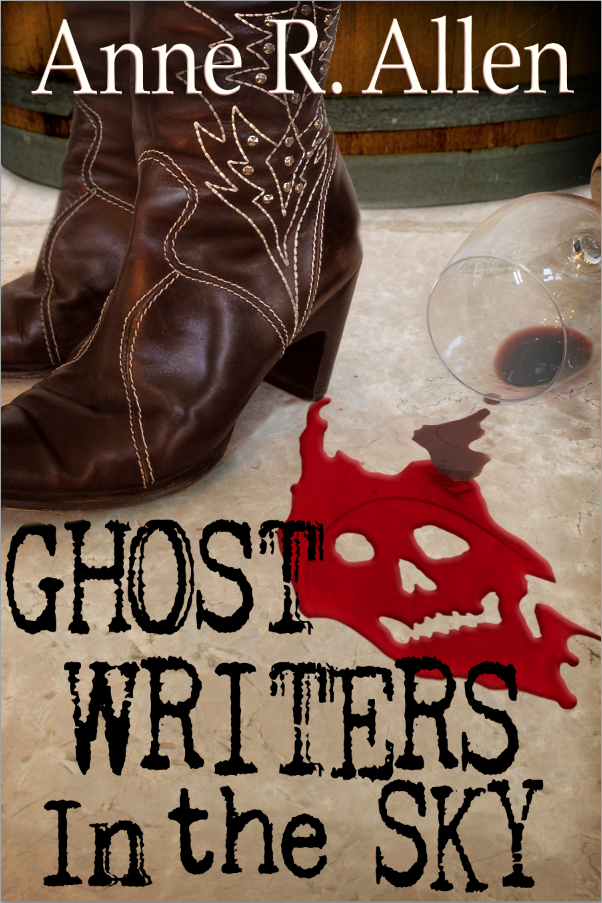
And at one conference, I witnessed an incident of workshop bullying that was so scarring it turned into the inciting incident of my mystery GHOSTWRITERS IN THE SKY. (If you'd like to know more about the dark side of writers conferences--and laugh at them a bit--GHOSTWRITERS is available at the US Amazon.com for $2.99 and the UK Amazon.co.uk and at Barnes and Noble for Nook and Kobo.)
How about you, scriveners? Have you had good or bad experiences with writers' conferences? Were they worth the money? We'd love if you'd share some of your stories. If you've never gone to one, are you planning to? What do you hope to get out of it?
Attention Email Subscribers! Feedburner has had a hissy fit and is no longer sending emails to many people subscribed to this blog. This seems to be happening all over the blogosphere. Many bloggers are switching to other email programs, but I'm such a cybermoron, I'm going to need to get some tech help. Meanwhile, if you'd like to get notifications of new blogposts, and Feedburner has let you down, just send me an email at annerallen at yahoo dot com. I will put you on my list of personal blogfriends and send you a notice when the Sunday blogpost is up. (I promise not to spam you with anything else.)

September 9, 2012
How to Write an Author Bio When You Don't Feel Like an Author…Yet
Maybe you've got a novel finished and you’ve been sending out queries. Lots. And you’re getting rejections. Lots. Or worse, that slow disappointment of no response at all.
Or maybe you write short fiction and poetry and you've got a bunch of pieces you've been sending out to contests and literary journals. You've won a few local contests, but so far you haven't had much luck getting into print.
You may still be afraid to tell more than a handful of people you're a writer. You'd feel pretentious calling yourself an "author."
But it might be time to start—at least privately.
Because one day, in the not too distant future, you'll open your email and there it will be:
The response from an editor: "You're the winner of our October 'Bad Witch' short story contest. We'd like to publish your story, Glinda: Heartbreaker of Oz in our next issue. Please send us your Author Bio ."
Or just when you were giving up hope, you get that reply from your dream agent: “I’m intrigued by your novel Down and Out on the Yellow Brick Road. Please send the first fifty pages, and an Author Bio .”
You're so excited you're jumping out of your skin, so you dash something off in five minutes and hit "send." Wow. You're going to be in print! Or maybe get an agent. Let's get this career on the road!
Whoa. You do NOT want to dash off an author bio in five minutes. Every word you send out there is a writing sample, not just those well-honed pages or stories.
So, write it now. Yes. Right now. Before you send off another query or enter another contest. Even though you've never published anything but the Halloween haiku that won second prize in your high school newspaper.
Actually, you want to write two bios: A paragraph suitable for a magazine byline, and a longer one-page version for sending to agents and later posting on your website, blog, etc.
How to Write an Author Bio
Title it only with your name. Write in third person. Keep to about 250 words: one page, double-spaced--or 1/2 page single-spaced, if you include a photo above it. (I advise against this unless it’s specifically requested or you have a great, up-to-date, professional photo that makes you look like a contestant on one of those Top Model shows.)
You’re aiming for a style similar to book jacket copy. The purpose is to make yourself sound professional and INTERESTING.
This may be perfectly accurate: “Mrs. H. O. Humm is a stay-at-home mom who lives in Middle America with her dentist husband, 2.4 children and a dog named Rex.”
But a bio is all about making yourself stand out. “Hermione Oz Humm was born in the Emerald City and is an expert balloonist, ventriloquist and voice-over performer.”
Things to consider including:
1) Whatever might make you newsworthy: OK, so you aren’t the baby who got rescued from that well forty years ago, and you never cheated on Robert Pattinson, but whatever is quirky or unusual about you, trot it out. Keep homing pigeons? Run marathons? Cook prize-winning chili? Put it in.
2) Work history: Here’s where you say you’re a welder or a fourth grade teacher or whatever, even if it isn’t related to the subject matter of your book.
NB: Don’t call yourself a “novelist” if you haven’t published one.
If you’re seriously underemployed and want to keep it to yourself, you can call yourself a “freelance writer,” but consider saying what else you do, even if it’s less than impressive. I remember when Christopher Moore’s first book, Practical Demonkeeping, came out and all the Central Coast papers ran stories about how a “local waiter” had just sold a book to Disney. If he’d called himself a “writer” there would have been no story.
3) Where you live: Your hometown might make a good focus for marketing. Plus people like to be able to picture you in your native habitat.
4) Education: This includes workshops or conferences as well as formal education—especially if you worked with a high-profile teacher. If you took a playwriting workshop with Edward Albee, even if it was 30 years ago, go ahead and say so.
5) Life experience and hobbies that relate to the book, or fascinate on their own: If you collect vintage Frisbees, and the book is about angsty teen werewolves at a Frisbee contest, include it. If you invented the Frisbee, it doesn’t matter what your book is about: toot that horn!
6) Travel/exotic residences: “Rudy Kipling once took a two-week tour of Asia,” meh. But “Mr. Kipling was born in Bombay and spent a year as the assistant editor of a newspaper in Lahore,” is something you want them to know.
7) Writing credentials/prizes: Here’s where you can list some of those credits in small presses and prizes that didn’t fit in your query. Include any books you’ve published, even if they were in a different field. If you're writing this for an agent or publisher, remember books that didn't sell well are going to work against you with a marketing department, so you might want to leave out self-published books if your sales weren't in the thousands. You should also skip older books self-published with a vanity press, unless your sales were spectacular.
8) Family: Use discretion here. If you write for children and have some of your own, it would be useful to mention them. If your family has an interesting claim to fame (like your sister just won an Olympic medal) or if family history has made you uniquely qualified to write this book (Your grandfather was Dwight Eisenhower's valet and you're writing about the Eisenhower/Kay Summersby affair.)
9) Performing history: It’s helpful to show you’re not paralyzed by the thought of public speaking. You can mention you’re the president of your local Toastmasters, or host a jug band program on a public access station, or you played the Teapot in last year’s production of Beauty and the Beast at the local community theater.
10) Your online presence: This is where you can mention your blog. Also put in your twitter handle and list what other social media you participate in.
How to Write a Short Author Bio
Again, write in third person. For the first sentence, this format works pretty well:
"Name is a ______ who lives in ______ and does ______. "
Then you can add one or two of the following:
1. S/he is a member of _____ (if you're a member of any writing organizations like RWA or SCBWI)
2. S/he has won_____ (writing awards—yes, you can mention the Halloween haiku.)
3. S/he has been published in _____ .
4. S/he has a degree in _____ from_______.
Then add something interesting and unique about yourself, preferably something related to the piece, like:
"S/he played Glinda the Good Witch in a Middle School production of The Wizard of Oz."
When writing these bios, think like a reporter. What would make good copy in a news release? Think unique, quirky or funny.
All set? Good. Now go look in the mirror and say, "hello, author!"
Then sit down at the computer and write those bios. Right now!
How about you, scriveners? Do you have those bios ready? Have you ever dashed off a quick bio and regretted it later? At what point do/did you start calling yourself an author?
NOTE: Neither of these author bios should go into a query letter. Only send a bio if it's specifically requested.
The paragraph about yourself in your query letter should be as short as possible and written in the first person. Unlike an author bio, a query shouldn't include any mention of what you do for bucks (unless it relates to the book.) Also leave out the fun stuff about family, pets, and personal history. Give only your most significant publishing credits plus your writing organizations or recent writing conferences you've attended*. Mention education only if it's directly related to your writing. ("I have a degree in creative writing from Pomona College, where I studied novel structure with David Foster Wallace.")
*Yes, I did say attendance at a writers' conference is a good thing to put in a query letter. Agents and editors want to know if you're educated in the publishing business. If you don't have any writing credits, attending a writers' conference is a great way to fill out that "about me" paragraph in your query. So, ahem, shameless plug here—if you're on the West Coast, do consider coming to the Central Coast Writers Conference. It will be held on the beautiful campus of Cuesta College in San Luis Obispo on September 21st and 22nd. Presenters include thriller author Jeff Carlson, book review blogger Danielle Smith, agents Laurie McLean, Pam Van Hylckama Vleig and Jill Corcoran. Oh, yes, and me.
Attention Email Subscribers! Feedburner has apparently had a meltdown and is no longer sending emails to many people subscribed to this blog. This seems to be happening all over the blogosphere. Many bloggers are switching to other email programs, but since Feedburner comes with a Blogger blog, I can't figure out how I can switch. (Plus I'd lose the subscribers who ARE still getting emails. It does work some of the time.)
So if you'd like to get notifications of new blogposts, and Feedburner has let you down, just send me an email at annerallen at yahoo dot com. I will put you on my list of personal blogfriends and send you a notice when the Sunday blogpost is up. (I promise not to spam you with anything else.)
 Just off the presses! The ebook of my mom's second novel, Roxanna Britton is now available on Amazon in the US and the UK. It's based on the true story of how my great, great grandmother pioneered in the American West, and it's also a charming romance and great women's fiction. Little House on the Prairie meets Jane Austen.

Or maybe you write short fiction and poetry and you've got a bunch of pieces you've been sending out to contests and literary journals. You've won a few local contests, but so far you haven't had much luck getting into print.
You may still be afraid to tell more than a handful of people you're a writer. You'd feel pretentious calling yourself an "author."
But it might be time to start—at least privately.
Because one day, in the not too distant future, you'll open your email and there it will be:
The response from an editor: "You're the winner of our October 'Bad Witch' short story contest. We'd like to publish your story, Glinda: Heartbreaker of Oz in our next issue. Please send us your Author Bio ."
Or just when you were giving up hope, you get that reply from your dream agent: “I’m intrigued by your novel Down and Out on the Yellow Brick Road. Please send the first fifty pages, and an Author Bio .”
You're so excited you're jumping out of your skin, so you dash something off in five minutes and hit "send." Wow. You're going to be in print! Or maybe get an agent. Let's get this career on the road!
Whoa. You do NOT want to dash off an author bio in five minutes. Every word you send out there is a writing sample, not just those well-honed pages or stories.
So, write it now. Yes. Right now. Before you send off another query or enter another contest. Even though you've never published anything but the Halloween haiku that won second prize in your high school newspaper.
Actually, you want to write two bios: A paragraph suitable for a magazine byline, and a longer one-page version for sending to agents and later posting on your website, blog, etc.
How to Write an Author Bio
Title it only with your name. Write in third person. Keep to about 250 words: one page, double-spaced--or 1/2 page single-spaced, if you include a photo above it. (I advise against this unless it’s specifically requested or you have a great, up-to-date, professional photo that makes you look like a contestant on one of those Top Model shows.)
You’re aiming for a style similar to book jacket copy. The purpose is to make yourself sound professional and INTERESTING.
This may be perfectly accurate: “Mrs. H. O. Humm is a stay-at-home mom who lives in Middle America with her dentist husband, 2.4 children and a dog named Rex.”
But a bio is all about making yourself stand out. “Hermione Oz Humm was born in the Emerald City and is an expert balloonist, ventriloquist and voice-over performer.”
Things to consider including:
1) Whatever might make you newsworthy: OK, so you aren’t the baby who got rescued from that well forty years ago, and you never cheated on Robert Pattinson, but whatever is quirky or unusual about you, trot it out. Keep homing pigeons? Run marathons? Cook prize-winning chili? Put it in.
2) Work history: Here’s where you say you’re a welder or a fourth grade teacher or whatever, even if it isn’t related to the subject matter of your book.
NB: Don’t call yourself a “novelist” if you haven’t published one.
If you’re seriously underemployed and want to keep it to yourself, you can call yourself a “freelance writer,” but consider saying what else you do, even if it’s less than impressive. I remember when Christopher Moore’s first book, Practical Demonkeeping, came out and all the Central Coast papers ran stories about how a “local waiter” had just sold a book to Disney. If he’d called himself a “writer” there would have been no story.
3) Where you live: Your hometown might make a good focus for marketing. Plus people like to be able to picture you in your native habitat.
4) Education: This includes workshops or conferences as well as formal education—especially if you worked with a high-profile teacher. If you took a playwriting workshop with Edward Albee, even if it was 30 years ago, go ahead and say so.
5) Life experience and hobbies that relate to the book, or fascinate on their own: If you collect vintage Frisbees, and the book is about angsty teen werewolves at a Frisbee contest, include it. If you invented the Frisbee, it doesn’t matter what your book is about: toot that horn!
6) Travel/exotic residences: “Rudy Kipling once took a two-week tour of Asia,” meh. But “Mr. Kipling was born in Bombay and spent a year as the assistant editor of a newspaper in Lahore,” is something you want them to know.
7) Writing credentials/prizes: Here’s where you can list some of those credits in small presses and prizes that didn’t fit in your query. Include any books you’ve published, even if they were in a different field. If you're writing this for an agent or publisher, remember books that didn't sell well are going to work against you with a marketing department, so you might want to leave out self-published books if your sales weren't in the thousands. You should also skip older books self-published with a vanity press, unless your sales were spectacular.
8) Family: Use discretion here. If you write for children and have some of your own, it would be useful to mention them. If your family has an interesting claim to fame (like your sister just won an Olympic medal) or if family history has made you uniquely qualified to write this book (Your grandfather was Dwight Eisenhower's valet and you're writing about the Eisenhower/Kay Summersby affair.)
9) Performing history: It’s helpful to show you’re not paralyzed by the thought of public speaking. You can mention you’re the president of your local Toastmasters, or host a jug band program on a public access station, or you played the Teapot in last year’s production of Beauty and the Beast at the local community theater.
10) Your online presence: This is where you can mention your blog. Also put in your twitter handle and list what other social media you participate in.
How to Write a Short Author Bio
Again, write in third person. For the first sentence, this format works pretty well:
"Name is a ______ who lives in ______ and does ______. "
Then you can add one or two of the following:
1. S/he is a member of _____ (if you're a member of any writing organizations like RWA or SCBWI)
2. S/he has won_____ (writing awards—yes, you can mention the Halloween haiku.)
3. S/he has been published in _____ .
4. S/he has a degree in _____ from_______.
Then add something interesting and unique about yourself, preferably something related to the piece, like:
"S/he played Glinda the Good Witch in a Middle School production of The Wizard of Oz."
When writing these bios, think like a reporter. What would make good copy in a news release? Think unique, quirky or funny.
All set? Good. Now go look in the mirror and say, "hello, author!"
Then sit down at the computer and write those bios. Right now!
How about you, scriveners? Do you have those bios ready? Have you ever dashed off a quick bio and regretted it later? At what point do/did you start calling yourself an author?
NOTE: Neither of these author bios should go into a query letter. Only send a bio if it's specifically requested.
The paragraph about yourself in your query letter should be as short as possible and written in the first person. Unlike an author bio, a query shouldn't include any mention of what you do for bucks (unless it relates to the book.) Also leave out the fun stuff about family, pets, and personal history. Give only your most significant publishing credits plus your writing organizations or recent writing conferences you've attended*. Mention education only if it's directly related to your writing. ("I have a degree in creative writing from Pomona College, where I studied novel structure with David Foster Wallace.")
*Yes, I did say attendance at a writers' conference is a good thing to put in a query letter. Agents and editors want to know if you're educated in the publishing business. If you don't have any writing credits, attending a writers' conference is a great way to fill out that "about me" paragraph in your query. So, ahem, shameless plug here—if you're on the West Coast, do consider coming to the Central Coast Writers Conference. It will be held on the beautiful campus of Cuesta College in San Luis Obispo on September 21st and 22nd. Presenters include thriller author Jeff Carlson, book review blogger Danielle Smith, agents Laurie McLean, Pam Van Hylckama Vleig and Jill Corcoran. Oh, yes, and me.
Attention Email Subscribers! Feedburner has apparently had a meltdown and is no longer sending emails to many people subscribed to this blog. This seems to be happening all over the blogosphere. Many bloggers are switching to other email programs, but since Feedburner comes with a Blogger blog, I can't figure out how I can switch. (Plus I'd lose the subscribers who ARE still getting emails. It does work some of the time.)
So if you'd like to get notifications of new blogposts, and Feedburner has let you down, just send me an email at annerallen at yahoo dot com. I will put you on my list of personal blogfriends and send you a notice when the Sunday blogpost is up. (I promise not to spam you with anything else.)
 Just off the presses! The ebook of my mom's second novel, Roxanna Britton is now available on Amazon in the US and the UK. It's based on the true story of how my great, great grandmother pioneered in the American West, and it's also a charming romance and great women's fiction. Little House on the Prairie meets Jane Austen.
September 2, 2012
How to Query a Book Review Blogger—and Combat Paid-Review Mills
The literary community was shaken this week by an article in the New York Times revealing how many "reader book reviews" are written for hire by book review mills. The most shocking revelation involved John Locke, one of the self-publishing movement's greatest stars.
Locke admitted to buying hundreds of reviews from a review mill because "it’s a lot easier to buy them than cultivating an audience."
But other people weren't all that surprised. The NYT article quoted University of Illinois data-mining expert Bing Liu, who said, "about one-third of all consumer reviews on the Internet are fake."
According to the article, Mr. Locke seemed to think purchasing reviews was OK, because he specifically asked the reviewers to be "honest." But once you're in review-buying territory, you're on a slippery ethical slope.
Things are complicated by the fact that Mr. Locke wrote a book about how to sell books in which he instructed writers in specific detail on how to go about "cultivating an audience." The book didn't mention this particular rung on his ladder to success.
To be fair, exchanging goods and services for book reviews is a time-honored practice. Most reviewers get free books, and reviewers in print publications are generally paid—not directly by the author, of course—but the publisher may have to purchase advertising in that publication in order to have that company's books considered for reviewing. And authors have always reviewed other author's books (not always favorably.) But there has always been an attempt to avoid a blatant quid pro quo in order to provide unbiased reviews.
When the respected Kirkus magazine started offering reviews for hire to self-publishers, a lot of people got uncomfortable. Does putting a price tag on a Kirkus review diminish its value to readers?
Some people think so. In the comment thread on an in-depth post on this subject on Porter Anderson's Writing on the Ether this week, Barbara Rogan said. "The only reason writers buy those reviews from Kirkus (at $425 a pop!) and the only reason readers respect them, is because of the reputation of the original Kirkus, respected for its (sometimes scathingly) honest reviews. They are degrading their own brand."
However, this is not only a self-publishing issue. Thanks to Nathan Bransford for pointing this out in his August 29th blogpost.
The traffic in fake raves is not the only way the review system is being abused. Fake negative reviews are up for sale too. And an article in the UK's Daily Mail this week reports some publishers are being sued for planting negative reviews for other publishers' books. Even academics are getting into the negative-online-review game, with rival scholars panning competitors' work on Amazon. The article also cites negative reviews given to books by somebody who dislikes the author's spouse or associates.
I've seen "reviews" like this myself. I have also seen sites for review mills that offer to write—for a slightly higher price—a batch of negative reviews for better-selling books in your genre.
Which brings me to what happened the day after the NYT article about the review mills came out:
A gang of cyber-vigilantes decided to voice their displeasure with Mr. Locke's behavior by writing one-star reviews of his books.
Um, people, how does abusing the review system give a message that abusing the review system is bad?
As the sensible Chuck Wendig pointed out Bad Author Behavior in Response to Bad Author Behavior is still Bad Behavior.
If you use Amazon reviews for ANYTHING other than giving your honest opinion of a BOOK, you are disrespecting the reader and further degrading the review system.
I don't care if the author is an ax-murdering, sulfur-spewing, puppy-eating alien from the planet Zog: using Amazon reviews as a tool for vigilantism is JUST PLAIN WRONG.
When you see this kind of abuse of the system, hit the "report abuse" button and let Amazon know. They are finally cracking down on the review mills, and they will crack down on the vigilantes, too. We all benefit from keeping customer reviews useful and relevant.
Amazon does seem to have been a little slow on the crackdown, and a new article by David Streitfeld on today's NYT blog says manufacturers have been steadily buying reviews for years with very few repercussions--like the Kindle Fire carrying case whose buy page exploded in 100s of ecstatic 5-star reviews last January. (Thanks to Jay Strouch for that link.)
But Amazon does respond to specific reports of abuse, so if you think an author (or a corporation) has done something unethical, do report it. And there are many other ways to voice your outrage. Rant on your blog. Tweet and Facebook about it until the steam comes out of your fingers. Start a petition to have the author censured by the professional organization of your choice.
But if you haven't read a book, don't review it. Full stop.
Instead, how about doing something positive to fight the degrading of book reviews? Here are some suggestions:
1) Write reviews of the books you read. If you like a book, say so. If you don't, say that. (Unless the book is simply not your cup of tea and you don't feel like giving it any more of your time.)
Every time you write an honest review—even a couple of sentences—you're helping to balance out the phony ones. If you're my age or older, it may seem daunting, but it's really pretty easy. It's not like writing those book reports you hated in grammar school. All you need is an Amazon account and twenty or more words.
2) If you're an author, revel in your one-star reviews. Don't complain. Welcome them. They're a badge of honor. A wonderful piece on Galley Cat this week pointed out that all the big bestsellers have hundreds of them.
When you get your first one-star, break out the bubbly—you're in the big time now. When you get over 400 one-stars, you'll be up there with George R. R. Martin and Steig Larssen. Get to 1300 and you might be the biggest bestseller ever, like E. L. James. A one-star shows your reviews are real. If you're good-humored about bad reviews, you're more likely to encourage honest reviewers.
3) Encourage review sites to change their policies if they require books to have a certain number of 4 and 5 star Amazon ratings to be featured. Sites like Pixel of Ink and Digital Book Today are great—but they insist on 10 four-or five-star Amazon reviews for a book to be considered for review. Not easy if you're a new writer launching a new book. Easy if you're a fat cat who uses a review mill. Because these ratings can now be purchased so easily, the arbitrary barriers do nothing but exclude new authors who don't cheat.
4) Read traditionally paid professional reviewers. Yes. They still exist. I still read the New Yorker reviews and even the NYT Book Review, (although I admit I skip a lot of the middle-aged male angsty stuff.) Let's hope these publications will join the 21st century and get out of the Big 6 pockets pretty soon. But some remnants of print culture are worth keeping. In this week's Guardian, Paul Laity wrote a great piece on the value of the professional critic. (Thanks, Porter Anderson, for the link.)
5) Hug an independent book review blogger today! Read their blogs!! Buy books by clicking through their ads!!! An honest, unbiased and independent reviewer is an author's best friend.
Most book review bloggers are not paid. They usually get the book free, or may receive a small click-through payment from Amazon or other retailer, but their work is mostly a labor of love.
However, I know reviewers who have received hate mail and threats after giving a less-than-stellar review. This is absurd, people. If you're that thin-skinned, you're not ready to publish.
I've recently had personal experience with the disrespect book review bloggers get. Since this blog was a finalist in the IBBA awards in June, I have been inundated by queries from publicists, agents, and publishers who don't bother to take the 20 seconds to click through to see this is a publishing industry advice blog, NOT a review blog. These people never personalize, never treat the blogger as an individual, and send a mass-query that says nothing but "review this book!"
No wonder book bloggers can sometimes sound a little cranky.
So how do you get a blogger to review your book?
That's supposed to be my subject for today, so I'll finally get to it.
Book Review Bloggers: How to Find Them and How to Treat Them Right
How do you find interested book bloggers?
The best way is to check similar books in your genre—especially those that have been recently released. Do a search for those titles with the word “review” and read as many reviews as you can. Make a list of the reviewers you like and read the review policy.
Almost no blogger will take all types of books. Some only read traditionally-published paper books; others want only indie ebooks for Kindle. Some specialize in Nook. They almost always have specific genre requests, so read carefully, and always follow them. Even if the blogger agrees to do a review outside their genre, you won’t reach the right readers. People don’t go to a chick lit review site to hear discover the latest zombie gore-fest.
How do you approach them?
You should make initial contact with a query—the same way you approach other gatekeepers like literary agents and editors. This means you send a professional letter—not a Tweet or wall post on Facebook.
Here are some general rules for scoring a review:
Read the guidelines carefully. Then, um, follow the guidelines carefully. Never send an unsolicited book: query first. Don’t query with books outside the prescribed genre. Personalize the query. Keep queries short and intriguing. Don’t take it personally if they turn you down. Reading takes a lot of time and most of them are swamped. Understand the review is for the READER, not the writer, so negative reviews happen. If you get a less than stellar review, mourn in private and move on. NEVER respond to a negative review.Last November I interviewed popular childrens' book blogger Danielle Smith of There's a Book, and she gave some great advice on how to get your book reviewed by a blogger. She says the best way to approach a book blogger is to keep your query professional, but show some personality.
Reviewer Danielle Smith's guidelines for authors:
Make sure you address the blogger by nameInclude a two to four sentence synopsis—no longerKeep personal information to a minimum. And don’t guilt-trip.Attach an image of the book coverGive the age range of the intended audienceInclude the page count (for print books)Provide the publication date and expected time frame of when you'd like to see the review posted for scheduling purposes.Don’t ask for a review outside the blogger’s genreDon’t query if you don’t have a website or a blog. (That screams “unprofessional” to a blogger.)In other words, treat the book blogger like a professional and she will reciprocate.
If you want to know more about book bloggers and how to approach them, Danielle Smith is leading a panel at the Central Coast Writers' Conference with several Book Bloggers, including Amy Riley of My Friend Amy, and Pam Van Hylckama Vleig aka Bookalicious Pam who is also an agent with San Francisco agency Larsen-Pomada.
And if you want to read some genuine, not-paid-for Amazon reviews, here are some hilarious ones for a set of Bic pens.
How about you, scriveners? Would you ever consider paying for reviews? Does this change your opinion of John Locke? Do you read book review blogs?

Locke admitted to buying hundreds of reviews from a review mill because "it’s a lot easier to buy them than cultivating an audience."
But other people weren't all that surprised. The NYT article quoted University of Illinois data-mining expert Bing Liu, who said, "about one-third of all consumer reviews on the Internet are fake."
According to the article, Mr. Locke seemed to think purchasing reviews was OK, because he specifically asked the reviewers to be "honest." But once you're in review-buying territory, you're on a slippery ethical slope.
Things are complicated by the fact that Mr. Locke wrote a book about how to sell books in which he instructed writers in specific detail on how to go about "cultivating an audience." The book didn't mention this particular rung on his ladder to success.
To be fair, exchanging goods and services for book reviews is a time-honored practice. Most reviewers get free books, and reviewers in print publications are generally paid—not directly by the author, of course—but the publisher may have to purchase advertising in that publication in order to have that company's books considered for reviewing. And authors have always reviewed other author's books (not always favorably.) But there has always been an attempt to avoid a blatant quid pro quo in order to provide unbiased reviews.
When the respected Kirkus magazine started offering reviews for hire to self-publishers, a lot of people got uncomfortable. Does putting a price tag on a Kirkus review diminish its value to readers?
Some people think so. In the comment thread on an in-depth post on this subject on Porter Anderson's Writing on the Ether this week, Barbara Rogan said. "The only reason writers buy those reviews from Kirkus (at $425 a pop!) and the only reason readers respect them, is because of the reputation of the original Kirkus, respected for its (sometimes scathingly) honest reviews. They are degrading their own brand."
However, this is not only a self-publishing issue. Thanks to Nathan Bransford for pointing this out in his August 29th blogpost.
The traffic in fake raves is not the only way the review system is being abused. Fake negative reviews are up for sale too. And an article in the UK's Daily Mail this week reports some publishers are being sued for planting negative reviews for other publishers' books. Even academics are getting into the negative-online-review game, with rival scholars panning competitors' work on Amazon. The article also cites negative reviews given to books by somebody who dislikes the author's spouse or associates.
I've seen "reviews" like this myself. I have also seen sites for review mills that offer to write—for a slightly higher price—a batch of negative reviews for better-selling books in your genre.
Which brings me to what happened the day after the NYT article about the review mills came out:
A gang of cyber-vigilantes decided to voice their displeasure with Mr. Locke's behavior by writing one-star reviews of his books.
Um, people, how does abusing the review system give a message that abusing the review system is bad?
As the sensible Chuck Wendig pointed out Bad Author Behavior in Response to Bad Author Behavior is still Bad Behavior.
If you use Amazon reviews for ANYTHING other than giving your honest opinion of a BOOK, you are disrespecting the reader and further degrading the review system.
I don't care if the author is an ax-murdering, sulfur-spewing, puppy-eating alien from the planet Zog: using Amazon reviews as a tool for vigilantism is JUST PLAIN WRONG.
When you see this kind of abuse of the system, hit the "report abuse" button and let Amazon know. They are finally cracking down on the review mills, and they will crack down on the vigilantes, too. We all benefit from keeping customer reviews useful and relevant.
Amazon does seem to have been a little slow on the crackdown, and a new article by David Streitfeld on today's NYT blog says manufacturers have been steadily buying reviews for years with very few repercussions--like the Kindle Fire carrying case whose buy page exploded in 100s of ecstatic 5-star reviews last January. (Thanks to Jay Strouch for that link.)
But Amazon does respond to specific reports of abuse, so if you think an author (or a corporation) has done something unethical, do report it. And there are many other ways to voice your outrage. Rant on your blog. Tweet and Facebook about it until the steam comes out of your fingers. Start a petition to have the author censured by the professional organization of your choice.
But if you haven't read a book, don't review it. Full stop.
Instead, how about doing something positive to fight the degrading of book reviews? Here are some suggestions:
1) Write reviews of the books you read. If you like a book, say so. If you don't, say that. (Unless the book is simply not your cup of tea and you don't feel like giving it any more of your time.)
Every time you write an honest review—even a couple of sentences—you're helping to balance out the phony ones. If you're my age or older, it may seem daunting, but it's really pretty easy. It's not like writing those book reports you hated in grammar school. All you need is an Amazon account and twenty or more words.
2) If you're an author, revel in your one-star reviews. Don't complain. Welcome them. They're a badge of honor. A wonderful piece on Galley Cat this week pointed out that all the big bestsellers have hundreds of them.
When you get your first one-star, break out the bubbly—you're in the big time now. When you get over 400 one-stars, you'll be up there with George R. R. Martin and Steig Larssen. Get to 1300 and you might be the biggest bestseller ever, like E. L. James. A one-star shows your reviews are real. If you're good-humored about bad reviews, you're more likely to encourage honest reviewers.
3) Encourage review sites to change their policies if they require books to have a certain number of 4 and 5 star Amazon ratings to be featured. Sites like Pixel of Ink and Digital Book Today are great—but they insist on 10 four-or five-star Amazon reviews for a book to be considered for review. Not easy if you're a new writer launching a new book. Easy if you're a fat cat who uses a review mill. Because these ratings can now be purchased so easily, the arbitrary barriers do nothing but exclude new authors who don't cheat.
4) Read traditionally paid professional reviewers. Yes. They still exist. I still read the New Yorker reviews and even the NYT Book Review, (although I admit I skip a lot of the middle-aged male angsty stuff.) Let's hope these publications will join the 21st century and get out of the Big 6 pockets pretty soon. But some remnants of print culture are worth keeping. In this week's Guardian, Paul Laity wrote a great piece on the value of the professional critic. (Thanks, Porter Anderson, for the link.)
5) Hug an independent book review blogger today! Read their blogs!! Buy books by clicking through their ads!!! An honest, unbiased and independent reviewer is an author's best friend.
Most book review bloggers are not paid. They usually get the book free, or may receive a small click-through payment from Amazon or other retailer, but their work is mostly a labor of love.
However, I know reviewers who have received hate mail and threats after giving a less-than-stellar review. This is absurd, people. If you're that thin-skinned, you're not ready to publish.
I've recently had personal experience with the disrespect book review bloggers get. Since this blog was a finalist in the IBBA awards in June, I have been inundated by queries from publicists, agents, and publishers who don't bother to take the 20 seconds to click through to see this is a publishing industry advice blog, NOT a review blog. These people never personalize, never treat the blogger as an individual, and send a mass-query that says nothing but "review this book!"
No wonder book bloggers can sometimes sound a little cranky.
So how do you get a blogger to review your book?
That's supposed to be my subject for today, so I'll finally get to it.
Book Review Bloggers: How to Find Them and How to Treat Them Right
How do you find interested book bloggers?
The best way is to check similar books in your genre—especially those that have been recently released. Do a search for those titles with the word “review” and read as many reviews as you can. Make a list of the reviewers you like and read the review policy.
Almost no blogger will take all types of books. Some only read traditionally-published paper books; others want only indie ebooks for Kindle. Some specialize in Nook. They almost always have specific genre requests, so read carefully, and always follow them. Even if the blogger agrees to do a review outside their genre, you won’t reach the right readers. People don’t go to a chick lit review site to hear discover the latest zombie gore-fest.
How do you approach them?
You should make initial contact with a query—the same way you approach other gatekeepers like literary agents and editors. This means you send a professional letter—not a Tweet or wall post on Facebook.
Here are some general rules for scoring a review:
Read the guidelines carefully. Then, um, follow the guidelines carefully. Never send an unsolicited book: query first. Don’t query with books outside the prescribed genre. Personalize the query. Keep queries short and intriguing. Don’t take it personally if they turn you down. Reading takes a lot of time and most of them are swamped. Understand the review is for the READER, not the writer, so negative reviews happen. If you get a less than stellar review, mourn in private and move on. NEVER respond to a negative review.Last November I interviewed popular childrens' book blogger Danielle Smith of There's a Book, and she gave some great advice on how to get your book reviewed by a blogger. She says the best way to approach a book blogger is to keep your query professional, but show some personality.
Reviewer Danielle Smith's guidelines for authors:
Make sure you address the blogger by nameInclude a two to four sentence synopsis—no longerKeep personal information to a minimum. And don’t guilt-trip.Attach an image of the book coverGive the age range of the intended audienceInclude the page count (for print books)Provide the publication date and expected time frame of when you'd like to see the review posted for scheduling purposes.Don’t ask for a review outside the blogger’s genreDon’t query if you don’t have a website or a blog. (That screams “unprofessional” to a blogger.)In other words, treat the book blogger like a professional and she will reciprocate.
If you want to know more about book bloggers and how to approach them, Danielle Smith is leading a panel at the Central Coast Writers' Conference with several Book Bloggers, including Amy Riley of My Friend Amy, and Pam Van Hylckama Vleig aka Bookalicious Pam who is also an agent with San Francisco agency Larsen-Pomada.
And if you want to read some genuine, not-paid-for Amazon reviews, here are some hilarious ones for a set of Bic pens.
How about you, scriveners? Would you ever consider paying for reviews? Does this change your opinion of John Locke? Do you read book review blogs?
August 26, 2012
Jumpstarting Fiction: How to Find Unique, Timely Ideas to Energize Your Creativity
We have a big announcement: Ruth Harris has started her own blog!
No, she’s not going to abandon us over here. Her new blog is a whole 'nother kettle of
I can tell you from experience how well the random newspaper article works as a writing prompt. Camilla Randall, the ultra-polite sleuth who stars in my comic mystery series, was inspired by an article I read in the New York Times that poked vicious fun at a young woman who had been named “debutante of the year.”
It was so condescending and mean-spirited, I wanted to stick up for the well-heeled teenager in question. So I sat down and rewrote the piece from her point of view. The result became the opening scene of my first Camilla book, The Best Revenge. One five-paragraph article jumpstarted three novels (with a fourth on the way.)
So check out Ruth’s blog. She links to fun, newsy ideas you can use to add punch to your fiction, as Ruth explains below.
But exercise caution, they can be addictive. Bet you can’t click on just one!
JUMPSTARTING FICTION & ENERGIZING YOUR CREATIVITY: AN EDITOR EXPLAINS WHAT TO READ AND HOW TO READ IT—BECAUSE YOU NEVER KNOW WHERE YOUR NEXT IDEA IS COMING FROM
by Ruth Harris
For quite a while, I’ve been thinking about starting a blog. Problem was, I couldn’t figure out what to blog about. I knew I wanted to create something for readers and writers. I wanted it to be unique, helpful and entertaining. But what, exactly, would that be--and how would I do it?
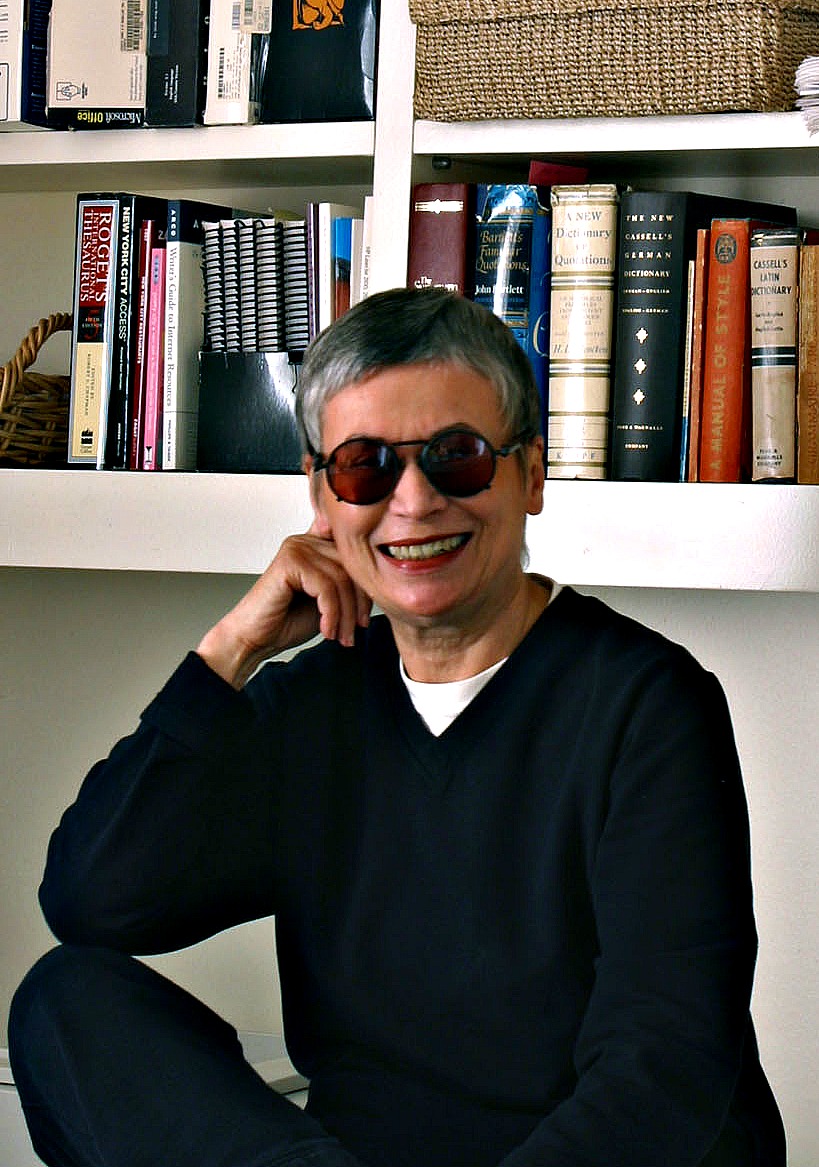 For years (decades) I was an editor during what is now called the “golden age” of publishing. In mass market paperback, we worked on a monthly publication schedule with ferocious demands for content. I couldn’t afford to wait for inspiration, I had to go out looking for it.
I haunted bookstores, inhaled the bestseller lists, got chummy with the sales department—they were mostly male, some very bright and college-educated. Others with practical on-the-ground experience had moved to the publishing side from distribution.
Plus one guy I suspected was a “made” man, a "dese" and "dems" guy straight out of The Godfather. How exactly he sold books I had no idea but there he was, stopping by my office with the newest jokes, the latest in industry gossip and accurate info on current sales trends.
All of this info gave me a good sense of what turned readers on (and what turned them off). The next step was working with writers to turn the raw material into books which meant I needed ideas and plenty of them.
I read books, of course—the ones I edited, plus books other editors enthused over and other publishers launched. Fiction and non-fiction, cookbooks, bios, history and how-to’s came through my office and, at minimum, I glanced at each one. In addition to books, I read magazines and newspapers—everything from Cosmopolitan, Scientific American and Playboy to The New York Times and the tabloids, the New York Post (cheeky and fun even in those days) and the Daily News which had—and has—terrific sports writers.
I went to the big international newsstands around the city in those days and bought foreign magazines in a search for the headline or the article or the picture that would trigger an idea. A friend supported herself writing for movie magazines and true confessions magazines. Another edited Confidential, sleazy but wildly popular. Through them, I kept up on pop culture.
I had lunch and dinner with writers and other editors. Impromptu phone conversations and office drop-by visits. Writers and colleagues suggested ideas and plots; so did I. My magpie reading added up. Bits of this and that, fragments half remembered or partially digested, a shocking or moving news article, wars and weddings all contributed.
As I was thinking about what kind of blog I would enjoy writing, I thought about those days and realized that out of that messy high-low stew, ideas bubbled and bloomed.
*ideas that led to a book, a plot, a title or a series
*ideas that solved plot problems
*ideas that sparked new ideas
I also learned not to dismiss or pre-judge anything because we—literally—never knew where out next terrific idea would come from.
Realizing in retrospect that it was that oddball potpourri that caused ideas to flow, I began to think about how I could recreate that creative energy in blog form. Why not share all the interesting, offbeat, repellent, lurid, provocative and enlightening content that rushes past in a torrent every day? With the huge plus that the internet adds a vital new dimension: the ability to link.
Writers are constantly being advised to read, read, read but not very many advisers are specific about exactly what writers should read and how their reading can help them. What I’ve decided to do is employ my editor’s eye and offer links to content that grabbed my attention with the thought that what got me thinking might also trigger ideas in others.
I want to make it clear that you should almost never take anything literally.
*Consider a link through the filter of your own interests, your genre or a genre you’re interested in trying.
*Whether you need a plot, a scene, a character, a setting or even a word, don’t wait around waiting for inspiration to strike. Instead, actively seek out inspiration.
*Be assertive but not impatient.
*Make allowances for the delayed reaction.
*Give yourself and your creativity time and space to process your reactions to what you’ve read, skimmed and/or experienced.
Here are a few examples of how reading something you never thought would interest you can increase your creativity:
*A link to an article about clothes/fashion/design might seem to be about the clothes--but look deeper. What about the designer him/herself? Or the man or woman wearing those clothes? Could a model in haute couture or a geek in a hoodie, a socialite in a fur or a club kid in shredded jeans suggest a new character, bring an existing character into clearer focus or even spark a brand new idea?
*A link to a review of a book about spies in New York might suggest a setting, a double cross, a killing or a ghost. What happens if a chick lit heroine moves into an apartment where Nazi secrets were once traded? Or what if a present-day spy learns from history and avoids a fatal mistake?
*The link to a story about butt lifts & millionaire mixers might suggest a character (or a few), a setting (for a crime or a romance), or how the millionaire at a mixer is really a billionaire. Or a complete con man. Or woman.
I love slang, lingo and shoptalk—so whenever I come across lively examples, I’ll share them because slang and shoptalk can jazz up the most workmanlike but necessary scene. For example:
*piaffes and gassers. (Translation for people as uninformed as Ruth’s blog partner: piaffes are steps in dressage and gassers are a sprints by football players. See what you’ll learn on Ruth’s blog?)
*And that gem, BOHICA. Military slang for: Bend Over, Here It Comes Again.
I hope you will think of this new blog as a springboard, a tool box or a bank, one from which you can borrow interest-free and keep going back for more. I hope it will spark new ideas or refurbish old ideas in a new way, and that the comments will be used to bounce ideas off me and other readers.
Last and most important of all, remember that you’re not looking for an idea. You’re looking for ideas that will generate other ideas—and lots of them.
What about you, scriveners? Have you found inspiration for your characters and plots in unlikely places? Do you have a favorite place to go to jumpstart your ideas?
WINNER! The WINNER of the Terence Stamp CD contest is Rose Zurkan! Congratulations Rose, Alicia will be in touch with you!

August 19, 2012
Should You Eliminate "Was" From Your Writing? Why Sometimes "the Rules" are Wrong.
No matter how much time and energy we put into querying agents and editors--or learning the ins and outs of self-publishing--it's all wasted if we don’t have a polished piece of work. One way to make sure your book is the best it can be is to brush up on your nuts-and-bolts writing skills. (Also a good way to save money in editing fees.)
 So In honor of the kids going back to school, I’ve got a grammar lesson today. (Puts on schoolmarm hat.)
As soon as you joined your first critique group, found a beta reader, or joined a creative writing workshop, somebody no doubt lectured you about avoiding the word “was.” In fact, you were probably admonished to eliminate all forms of the verb “to be” from your fledgling prose.
Your well-meaning mentors told you “was” is “passive,” so you must avoid it at all costs, along with adverbs, run-on sentences, and naming all of your characters “Bob”.
The people who told you this were repeating "The Rules" they heard from their own critique groups, beta readers, and workshop leaders when they started writing.
The problem is: they were wrong.
This particular rule has good intentions. But it’s based on a lack of understanding of the rules of grammar. The verb “to be” has many functions in modern English and some have nothing to do with the passive voice.
Sadly, English grammar seems to have disappeared from most schoolrooms and—unless you’ve studied another language—you may not have been taught the basics.
We have a number of past tenses in English:
Simple PastPresent PerfectPast Continuous (or “Progressive”)Present PerfectPast Perfect (or “Pluperfect”)Past Perfect Continuous.
Some of these tenses are created by using various forms of the verbs “to be” and “to have.” They’re called “auxiliary verbs” when they are used this way.
Simple past:
I barfed.
Present Perfect:
I have been barfing since I ate that squirrel-meat chili.
Here an action starts in the past and comes up to the present. (“Perfect” in grammar doesn’t mean the tense is awesome. “Perfect” just means it’s finished.)
Past Continuous:
I was barfing when Mrs. Poindexter arrived to invite me to tea.
A continuous action in the past gets interrupted by the simple past. “Was” is necessary to create this tense with the verb “to barf.” “Was” in this auxiliary function has nothing to do with the stand-alone meaning of the verb “was” meaning “existed in the past.”
Past Perfect:
I had barfed right before she came to the door.
An action happened in the past BEFORE the past of the story. “Had” is the auxiliary verb that creates this tense. This is different from the stand-alone meaning of the verb “had” meaning “possessed in the past”.
Past Perfect continuous:
I had been barfing for hours.
An action happened in the past over a period of time until it got interrupted by another action. The verbs “to have” AND “to be” are combined with the primary verb “to barf” to make this tense.
But these tenses have nothing to do with the Passive VOICE
Barfing was caused by squirrel chili.
In the Passive Voice, we use forms of "to be" when the object of the verb becomes the subject of the sentence.
Or, as my mother, the English professor, would say:
The passive voice is avoided whenever possible by good writers.
Then, just to be confusing, we have the Subjunctive MOOD. (Sometimes called the “Unreal Conditional” tense.)
If I were smarter, I’d have brought my own lunch.
It also uses the auxiliary verb “to be”. (It’s quite the multi-purpose word, isn’t it?) The word “were” doesn’t put us in the past. It tells us he’s not actually smart.
But what about this?
If I was even smarter, I’d have shot my uncle instead of the durned squirrel.
This is incorrect grammar, because the subjunctive uses “were,” not “was.”
So “was” should be eliminated here, right?
If you’re aiming for grammatical prose, absolutely, but if you’re writing fiction, it’s probably just fine. You don’t want all your characters to sound like college professors.
What does this all mean?
It means sometimes “was” and “were” are absolutely necessary for meaning and by no means “passive.”
I was just sitting there when the squirrel bit me.
This means something different from:
I just sat there when the squirrel bit me.
Eliminating "was" changes the meaning from “the squirrel bit me with no provocation,” to “I didn’t react when the squirrel bit me.”
However, your critique group didn’t steer you totally wrong when they told you to be wary of “was.” This isn’t because the word is always passive, but because it can be part of lazy sentence construction. Beginning writers tend to write flabby sentences like this:
There was a squirrel sitting on the picnic table and he was eating my peanut butter sandwich. He was looking at me like I was nobody to be scared of, so I decided it was time to get my shotgun.
That can be cleaned up by using simpler verbs:
A squirrel sat on the picnic table eating my peanut butter sandwich. He looked me in the eye without a speck of fear. I went for my shotgun.
See how that’s easier to read and gives a stronger, clearer image?
Another note on past tenses
Most readers say they prefer reading a book written in the past tense (although present tense is popular in some YA right now.) But writing in the past can be difficult when you get into the dreaded flashback.
Of course you can eliminate that problem by not writing any flashbacks, which I’m sure some writing teachers would recommend. But sometimes the story absolutely requires one. That’s when you go into the past perfect tense. But you don’t have to stay there, because it sounds awkward.
He hated squirrels. Last summer, he had been walking in the park when he had run into a gang of squirrels who had attacked him with giant acorns.
Actually, you only have to use the past perfect (the “had” construction) once or twice to introduce the flashback, then continue in the simple past and readers will automatically adjust.
He hated squirrels. Last summer, he had been walking in the park when he ran into a gang of squirrels who attacked him with giant acorns.
It’s all in the distant past, but we know that without all the extra “hads.”
So to answer the question I posed in the title: A search for “was” in your manuscript can indeed help clean up your prose. (What did we do before the days of the search and replace function?) But don’t say it’s because “was” is “passive” or you will make grammarians go totally squirrely.
For more on the subject of the passive voice, awesome mystery author and fellow grammar maven Elizabeth S. Craig has a great post on it this week, too. Check her out at Laura Howard's blog. I'd also like to thank the wonderful Aussie writer and "word nerd" Karin Cox for her input.
So Scriveners, have you been trying to eliminate the word “was” from your deathless prose? What other words have you been told to avoid? What other "Rules" turned out to be wrong for your writing?
UK's Superstar thriller writer Stephen Leather calls it "The best few dollars an aspiring writer can spend" HOW TO BE A WRITER IN THE E-AGE is NOW IN PAPERBACK for only $9.99 Kindle edition, $2.99.
One place to brush up on your skills is a writers conference. A great one is the Central Coast Writers Conference in beautiful San Luis Obispo CA. It will be held on September 21st and 22nd on the campus of Cuesta College. I'll be there, teaching about how to be a writer in the e-age.

 So In honor of the kids going back to school, I’ve got a grammar lesson today. (Puts on schoolmarm hat.)
 As soon as you joined your first critique group, found a beta reader, or joined a creative writing workshop, somebody no doubt lectured you about avoiding the word “was.” In fact, you were probably admonished to eliminate all forms of the verb “to be” from your fledgling prose.
Your well-meaning mentors told you “was” is “passive,” so you must avoid it at all costs, along with adverbs, run-on sentences, and naming all of your characters “Bob”.
The people who told you this were repeating "The Rules" they heard from their own critique groups, beta readers, and workshop leaders when they started writing.
The problem is: they were wrong.
This particular rule has good intentions. But it’s based on a lack of understanding of the rules of grammar. The verb “to be” has many functions in modern English and some have nothing to do with the passive voice.
Sadly, English grammar seems to have disappeared from most schoolrooms and—unless you’ve studied another language—you may not have been taught the basics.
We have a number of past tenses in English:
Simple PastPresent PerfectPast Continuous (or “Progressive”)Present PerfectPast Perfect (or “Pluperfect”)Past Perfect Continuous.
Some of these tenses are created by using various forms of the verbs “to be” and “to have.” They’re called “auxiliary verbs” when they are used this way.
Simple past:
I barfed.
Present Perfect:
I have been barfing since I ate that squirrel-meat chili.
Here an action starts in the past and comes up to the present. (“Perfect” in grammar doesn’t mean the tense is awesome. “Perfect” just means it’s finished.)
Past Continuous:
I was barfing when Mrs. Poindexter arrived to invite me to tea.
A continuous action in the past gets interrupted by the simple past. “Was” is necessary to create this tense with the verb “to barf.” “Was” in this auxiliary function has nothing to do with the stand-alone meaning of the verb “was” meaning “existed in the past.”
Past Perfect:
I had barfed right before she came to the door.
An action happened in the past BEFORE the past of the story. “Had” is the auxiliary verb that creates this tense. This is different from the stand-alone meaning of the verb “had” meaning “possessed in the past”.
Past Perfect continuous:
I had been barfing for hours.
An action happened in the past over a period of time until it got interrupted by another action. The verbs “to have” AND “to be” are combined with the primary verb “to barf” to make this tense.
But these tenses have nothing to do with the Passive VOICE
Barfing was caused by squirrel chili.
In the Passive Voice, we use forms of "to be" when the object of the verb becomes the subject of the sentence.
Or, as my mother, the English professor, would say:
The passive voice is avoided whenever possible by good writers.
Then, just to be confusing, we have the Subjunctive MOOD. (Sometimes called the “Unreal Conditional” tense.)
If I were smarter, I’d have brought my own lunch.
It also uses the auxiliary verb “to be”. (It’s quite the multi-purpose word, isn’t it?) The word “were” doesn’t put us in the past. It tells us he’s not actually smart.
But what about this?
If I was even smarter, I’d have shot my uncle instead of the durned squirrel.
This is incorrect grammar, because the subjunctive uses “were,” not “was.”
So “was” should be eliminated here, right?
If you’re aiming for grammatical prose, absolutely, but if you’re writing fiction, it’s probably just fine. You don’t want all your characters to sound like college professors.
What does this all mean?
It means sometimes “was” and “were” are absolutely necessary for meaning and by no means “passive.”
I was just sitting there when the squirrel bit me.
This means something different from:
I just sat there when the squirrel bit me.
Eliminating "was" changes the meaning from “the squirrel bit me with no provocation,” to “I didn’t react when the squirrel bit me.”
However, your critique group didn’t steer you totally wrong when they told you to be wary of “was.” This isn’t because the word is always passive, but because it can be part of lazy sentence construction. Beginning writers tend to write flabby sentences like this:
There was a squirrel sitting on the picnic table and he was eating my peanut butter sandwich. He was looking at me like I was nobody to be scared of, so I decided it was time to get my shotgun.
That can be cleaned up by using simpler verbs:
A squirrel sat on the picnic table eating my peanut butter sandwich. He looked me in the eye without a speck of fear. I went for my shotgun.
See how that’s easier to read and gives a stronger, clearer image?
Another note on past tenses
Most readers say they prefer reading a book written in the past tense (although present tense is popular in some YA right now.) But writing in the past can be difficult when you get into the dreaded flashback.
Of course you can eliminate that problem by not writing any flashbacks, which I’m sure some writing teachers would recommend. But sometimes the story absolutely requires one. That’s when you go into the past perfect tense. But you don’t have to stay there, because it sounds awkward.
He hated squirrels. Last summer, he had been walking in the park when he had run into a gang of squirrels who had attacked him with giant acorns.
Actually, you only have to use the past perfect (the “had” construction) once or twice to introduce the flashback, then continue in the simple past and readers will automatically adjust.
He hated squirrels. Last summer, he had been walking in the park when he ran into a gang of squirrels who attacked him with giant acorns.
It’s all in the distant past, but we know that without all the extra “hads.”
So to answer the question I posed in the title: A search for “was” in your manuscript can indeed help clean up your prose. (What did we do before the days of the search and replace function?) But don’t say it’s because “was” is “passive” or you will make grammarians go totally squirrely.
For more on the subject of the passive voice, awesome mystery author and fellow grammar maven Elizabeth S. Craig has a great post on it this week, too. Check her out at Laura Howard's blog. I'd also like to thank the wonderful Aussie writer and "word nerd" Karin Cox for her input.
So Scriveners, have you been trying to eliminate the word “was” from your deathless prose? What other words have you been told to avoid? What other "Rules" turned out to be wrong for your writing?
UK's Superstar thriller writer Stephen Leather calls it "The best few dollars an aspiring writer can spend" HOW TO BE A WRITER IN THE E-AGE is NOW IN PAPERBACK for only $9.99 Kindle edition, $2.99.
One place to brush up on your skills is a writers conference. A great one is the Central Coast Writers Conference in beautiful San Luis Obispo CA. It will be held on September 21st and 22nd on the campus of Cuesta College. I'll be there, teaching about how to be a writer in the e-age.


