Father Elisha's Blog, page 6
June 20, 2025
Pentecost 3 (Eastern): Our Relationship with the Holy Spirit
 The Spiritual Mysteries of the Divine Calendar: Our Relationship with the Holy Spirit ~ June 22–28, 2025 ~
 Our current Season of Salvation—the corporate season of the spiritual life—began with the Feast of Pentecost, which granted us a fresh infilling of the Holy Spirit. Then, last week, we saw how the Holy Spirit seeks to establish the gift we receive through the fiery testing of the Apostles’ Fast. In this third week of the Season of Pentecost, the Divine Calendar invites us to deepen our relationship with the Holy Spirit and to allow Him to become our teacher in prayer.
The Season of Pentecost is the time of year when God’s Spirit seals His specific work in our inner life. The Holy Spirit identified this area before Christmas, intensified His work of conquering sin during Great Lent, and we inherited Christ’s victory in this area of our lives between the Resurrection and Pentecost seasons.
Now, Jesus invites us to acquire more of the Holy Spirit—His receive infilling and anointing—specifically in the area God has been focusing on throughout the entire year.
The Key to Our Relationship with the Holy SpiritThe key to entering this experience is the Upper Room on Mount Zion in Jerusalem—the place where the apostles prayed and worshipped on the day of Pentecost. Whenever we gather with the faithful, let us not miss the opportunity to seek the Holy Spirit: to know His Person and ask for His infilling and anointing.
The goal is not merely to gain spiritual gifts or have our prayers answered—though these are blessed—but to live more like Jesus through the empowering that comes from our relationship with the Holy Spirit.
“And when they had entered, they went up into the upper room where they were staying […] These all continued with one accord in prayer and supplication, with the women and Mary the mother of Jesus, and with His brothers” (Acts 1:13). “When the Day of Pentecost had fully come, they were all with one accord in one place” (Acts 2:1).
Sunday Gospel for Our Relationship with the Holy Spirit: Matthew 4:18–23 (NKJV)And Jesus, walking by the Sea of Galilee, saw two brothers, Simon called Peter, and Andrew his brother, casting a net into the sea; for they were fishermen. 19 Then He said to them, “Follow Me, and I will make you fishers of men.” 20 They immediately left their nets and followed Him.
21 Going on from there, He saw two other brothers, James the son of Zebedee, and John his brother, in the boat with Zebedee their father, mending their nets. He called them, 22 and immediately they left the boat and their father, and followed Him.
23 And Jesus went about all Galilee, teaching in their synagogues, preaching the gospel of the kingdom, and healing all kinds of sickness and all kinds of disease among the people.
Our Relationship with the Holy Spirit Makes us Fishers of Men
Verses 18–19 in this week’s Sunday Gospel reads: “And Jesus, walking by the Sea of Galilee, saw two brothers, Simon called Peter, and Andrew his brother, casting a net into the sea; for they were fishermen. Then He said to them, ‘Follow Me, and I will make you fishers of men.’”
The disciples were highly skilled fishermen, yet the invitation of the charismatic Rabbi caused them to immediately leave their trade behind. How can that be? It must have been more than the honor of becoming a disciple of a Rabbi with a growing reputation for miracles.
Jesus lifted their eyes to see their lives in the light of a greater calling. He wanted to make them fishers of men. God would transfer their skills and abilities into His Kingdom through a process of healing, teaching, and formation (personal death and resurrection).
Jesus captivated their hearts by offering them a glimpse of a new life—one shaped by cycles of death and resurrection. They didn’t understand this yet, but the voice of His call stirred within them a deep thirst for a life that transcended the boundaries of their present reality.
“That I may know Him and the power of His resurrection, and the fellowship of His sufferings, being conformed to His death, if, by any means, I may attain to the resurrection from the dead. Not that I have already attained, or am already perfected; but I press on, that I may lay hold of that for which Christ Jesus has also laid hold of me” (Phil. 3:10–12).
Heavenly Homeland
How do we become fishers of men? How do we become the redeemed version of our former selves, where everything we have passed through serves to transform us into people who wait “for the city which has foundations, whose builder and maker is God” (Heb. 11:10)?
“For those who say such things declare plainly that they seek a homeland. And truly if they had called to mind that country from which they had come out, they would have had opportunity to return. But now they desire a better, that is, a heavenly country. Therefore God is not ashamed to be called their God, for He has prepared a city for them” (Heb. 11:14–16).
We become fishers of men by following the example of the disciples. In verse 20, we read: “They immediately left their nets and followed Him.” When we accept that we are no longer of this world, we recognize that we belong to Him who loved us and sacrificed His life for us.
Heavenly Family
“For the love of Christ compels us, because we judge thus: that if One died for all, then all died; and He died for all, that those who live should live no longer for themselves, but for Him who died for them and rose again” (2 Cor. 5:14–15).
This doesn’t always mean we must physically leave our families, but it does mean we must shift our identity from earthly to heavenly. We no longer belong to any family in this world—though our love and responsibilities toward them remain—but we have become members of God’s household.
This may sound radical, but if we are willing to leave our nets and follow Jesus, not only will we love our earthly families with deeper, truer love, but year by year, Jesus will reveal His true purpose for our lives. Nothing is more fulfilling than living the life Jesus has called us to live—and it is our relationship with the Holy Spirit that makes this possible.

Photo by Zoltan Tasi on Unsplash
Our Relationship with the Holy SpiritWithout the Holy Spirit, we can’t understand or receive the grace from the acts of salvation Jesus accomplished through His Incarnation, Crucifixion, Resurrection, Ascension, and the sending of the Holy Spirit.
The Holy Spirit takes from what belongs to the Father and the Son, and passes this onto us. “He will glorify Me, for He will take of what is Mine and declare it to you. All things that the Father has are Mine. Therefore I said that He will take of Mine and declare it to you” (John 16:14–15).
The Season of Pentecost—with its grace for fellowship with the Holy Spirit—is the Season that centers on the story of our lives. As we grow in our relationship with the Holy Spirit, we also come to know ourselves. He is our faithful Helper and Advocate, living within us, and He unveils the secrets that “eye has not seen, nor ear heard, nor have entered into the heart of man the things which God has prepared for those who love Him” (1 Cor. 2:9).
St. Cyril of Jerusalem (313–386) said that even though the Holy Spirit is simple in His nature, His actions are many and marvelous. The acts of the Holy Spirit are innumerable and it takes years to personally discover and experience the glorious person of the Holy Spirit—not just one journey through the Divine Calendar.
Our Relationship with the Holy Spirit: The Holy Trinity
As we grow in our relationship with the Holy Spirit, our interactions with Him become windows through which we gaze upon God, and doors through which we enter more deeply into our relationship with the Father and the Son. The Holy Spirit proceeds from the Father, rests upon the Son, and is the Promise of the Father.
“He will glorify Me, for He will take of what is Mine and declare it to you. All things that the Father has are Mine. Therefore I said that He will take of Mine and declare it to you.” (John 16:14–15).
“Therefore being exalted to the right hand of God, and having received from the Father the promise of the Holy Spirit, He poured out this which you now see and hear” (Acts 2:33).
“And I will pray the Father, and He will give you another Helper, that He may abide with you forever – the Spirit of truth […]” (John 14:16).
God’s goal in His plan of salvation—by sending Jesus Christ into our world to save us from our sins—was to restore our relationship with the Holy Trinity. Jesus revealed both the Father and the Holy Spirit, and the desire of the Promise of the Father—the Holy Spirit—is to increase our knowledge of, and deepen our life with, the Father and the Son, as chapters 13–17 in the Gospel of John recount.
Our Relationship with the Holy Spirit: His Role
“I still have many things to say to you, but you cannot bear them now. However, when He, the Spirit of truth, has come, He will guide you into all truth; for He will not speak on His own authority, but whatever He hears He will speak; and He will tell you things to come. He will glorify Me, for He will take of what is Mine and declare it to you. All things that the Father has are Mine. Therefore I said that He will take of Mine and declare it to you” (John 16:12–15).
The Holy Spirit is the Person of the Trinity who enables us to know more about Himself, the Father, and Jesus Christ. Moreover, the Holy Spirit reveals the relationship and actions among the three Hypostases (persons in God’s image) of the Holy Trinity.
There’s nothing more thrilling than discovering the Holy Trinity, and understanding how the three relate to one another and to creation. May God open our eyes to the unfathomable harmony within the Holy Trinity and help us grow in our relationship with the Holy Spirit.
We want to grow in our relationship with the Holy Spirit, because God sent Him to take us by the hand and lead us through our days. When we enter into a close relationship with the Holy Spirit, He reveals what we need to know in order to overcome challenges according to the Word of God.
The Holy Spirit accompanies us as a real Person, and there is a specific role in our lives that only He can fulfill. We see His activity clearly in Acts 2:1–39. The passage follows below, with comments. May the Word of God bring revelation and help us go deeper in our relationship with the Holy Spirit.
Acts 2:1–39 with CommentaryOur Relationship with the Holy Spirit: Diversity and Simplicity
“When the Day of Pentecost had fully come, they were all with one accord in one place. And suddenly there came a sound from heaven, as of a rushing mighty wind, and it filled the whole house where they were sitting. Then there appeared to them divided tongues, as of fire, and one sat upon each of them. And they were all filled with the Holy Spirit and began to speak with other tongues, as the Spirit gave them utterance.”
The Holy Spirit enabled the disciples to speak in other tongues. He is diverse in His works, but His nature—as a fire, or as a dove—is simple.
Our Relationship with the Holy Spirit: New Wine
Let us continue from Acts 2:5: “And there were dwelling in Jerusalem Jews, devout men, from every nation under heaven. And when this sound occurred, the multitude came together, and were confused, because everyone heard them speak in his own language. Then they were all amazed and marveled, saying to one another, “Look, are not all these who speak Galileans? And how is it that we hear, each in our own language in which we were born?
“Parthians and Medes and Elamites, those dwelling in Mesopotamia, Judea and Cappadocia, Pontus and Asia, Phrygia and Pamphylia, Egypt and the parts of Libya adjoining Cyrene, visitors from Rome, both Jews and proselytes, Cretans and Arabs—we hear them speaking in our own tongues the wonderful works of God.” So they were all amazed and perplexed, saying to one another, “Whatever could this mean?” Others mocking said, “They are full of new wine.”
Notice that it says new wine—not a familiar or ordinary kind. The Holy Spirit never repeats Himself. He always enjoys showing Himself in new and unexpected ways.
John 2:2–4,10: “Now both Jesus and His disciples were invited to the wedding. And when they ran out of wine, the mother of Jesus said to Him, ‘They have no wine.’ Jesus said to her, ‘Woman, what does your concern have to do with Me? My hour has not yet come.’ … And he [master of the feast] said to him [bridegroom], ‘Every man at the beginning sets out the good wine, and when the guests have well drunk, then the inferior. You have kept the good wine until now!’”
Our Relationship with the Holy Spirit: Our Voluntary Participation
Acts 2:14 onward reads: “But Peter, standing up with the eleven, raised his voice and said to them, “Men of Judea and all who dwell in Jerusalem, let this be known to you, and heed my words. For these are not drunk, as you suppose, since it is only the third hour of the day. 16 But this is what was spoken by the prophet Joel:
And it shall come to pass in the last days, says God, That I will pour out of My Spirit on all flesh; Your sons and your daughters shall prophesy, Your young men shall see visions, Your old men shall dream dreams.”
Once again, we see the manifold ways the Holy Spirit works, carrying out His will through our voluntary participation.
Our Relationship with the Holy Spirit: Understand the Times
We read in Acts 2:18 onward: “And on My menservants and on My maidservants I will pour out My Spirit in those days; And they shall prophesy. I will show wonders in heaven above and signs in the earth beneath: Blood and fire and vapor of smoke. The sun shall be turned into darkness, And the moon into blood, Before the coming of the great and awesome day of the Lord. And it shall come to pass That whoever calls on the name of the Lord Shall be saved.’
“Men of Israel, hear these words: Jesus of Nazareth, a Man attested by God to you by miracles, wonders, and signs which God did through Him in your midst, as you yourselves also know—Him, being delivered by the determined purpose and foreknowledge of God, you have taken by lawless hands, have crucified, and put to death; whom God raised up, having loosed the pains of death, because it was not possible that He should be held by it.
For David says concerning Him: ‘I foresaw the Lord always before my face, For He is at my right hand, that I may not be shaken. Therefore my heart rejoiced, and my tongue was glad; Moreover my flesh also will rest in hope. For You will not leave my soul in Hades, nor will You allow Your Holy One to see corruption. You have made known to me the ways of life; You will make me full of joy in Your presence.’
As we mature in our relationship with the Holy Spirit, we grow in our understanding of the times we are living in. “Surely the Lord God does nothing, unless He reveals His secret to His servants the prophets” (Amos 3:7).
Our Relationship with the Holy Spirit: Revealing Our Hearts
The last part continues from verse 29: “Men and brethren, let me speak freely to you of the patriarch David, that he is both dead and buried, and his tomb is with us to this day. Therefore, being a prophet, and knowing that God had sworn with an oath to him that of the fruit of his body, according to the flesh, He would raise up the Christ to sit on his throne, he, foreseeing this, spoke concerning the resurrection of the Christ, that His soul was not left in Hades, nor did His flesh see corruption. This Jesus God has raised up, of which we are all witnesses.
Therefore being exalted to the right hand of God, and having received from the Father the promise of the Holy Spirit, He poured out this which you now see and hear.
“For David did not ascend into the heavens, but he says himself: ‘The Lord said to my Lord, “Sit at My right hand, Till I make Your enemies Your footstool.’” Therefore let all the house of Israel know assuredly that God has made this Jesus, whom you crucified, both Lord and Christ.”
Now when they heard this, they were cut to the heart, and said to Peter and the rest of the apostles, “Men and brethren, what shall we do?” Then Peter said to them, “Repent, and let every one of you be baptized in the name of Jesus Christ for the remission of sins; and you shall receive the gift of the Holy Spirit. For the promise is to you and to your children, and to all who are afar off, as many as the Lord our God will call.”
The Holy Spirit reveals the secret intents of our hearts.

Photo by Fabien Bazanegue on Unsplash
Our Relationship with the Holy Spirit and What Only He Can DoWhen the Holy Spirit came upon the Apostles, Peter addressed the multitude, emphasizing the outcome of Jesus Christ’s Resurrection and Ascension. The Son of Man sat down at the right hand of the Father so that He could send the Promise of the Father.
Without the Holy Spirit, we can’t live a Christian life. The Holy Spirit is the breath of life for every believer. This Gift of gifts can change our circumstances in a moment.
According to God’s plan, He had gathered “in Jerusalem Jews, devout men, from every nation under heaven,” (Acts 2:5) and “about three thousand souls were added to [the church]” (Acts 2:41) through Peter’s sermon. What had happened to Peter? What a personal transformation—just fifty-two days after denying Jesus three times.
The change within the apostles is crucial. Their faith blazed and they acted without reservation—but how? The simple, personal words from the Holy Spirit, and His empowering presence within them, transformed their role.
Something entered deeply into the disciples and made them feel what could only be described as being “filled with the Holy Spirit.” Only He can utterly transform our lives and make our days a sweet journey—all because we have a relationship with the Holy Spirit.
Without understanding the truth that the Holy Spirit always accompanies us from within, we can easily misunderstand God and His ways. When we don’t have a relationship with the Holy Spirit, it is easy to become sidetracked.
Knowing Who We Pray To
The Gospel reading for the third Sunday of the Season of Pentecost (Luke 11:1–13), which falls one week into the Fast of the Holy Spirit, focuses on prayer.
One of Jesus’ disciples asked Him to teach them to pray as John the Baptist taught his disciples. Jesus taught them the Lord’s Prayer, and in the last verse of this passage, He said: “If you then, being evil, know how to give good gifts to your children, how much more will your heavenly Father give the Holy Spirit to those who ask Him!” This Sunday invites us to learn how to attract the Holy Spirit through prayer.
The best way to learn to pray is to know the Person to whom we pray. Once we gain a deeper understanding of who God is, our spirits ignite with joy, gratitude, humility, and boldness.
Just like in human communication, if we want to speak in a way that strengthens the relationship, we must know whom we are talking to. We speak differently to a child than to a colleague. And how we talk to our closest friends differs from how we would address the leader of our nation. How, then, would we speak to the King of kings?
Knowing the Holy Spirit to Make Jesus Known
As established above, the Holy Spirit is the Person of the Holy Trinity who reveals who God is. Jesus says this about the Holy Spirit: “He will glorify Me, for He will take of what is Mine and declare it to you” (John 16:14).
The Holy Spirit wants to glorify Jesus. How does that happen in a way that pleases the Holy Spirit? It happens when the Spirit reveals something about Jesus to us, and we then make it known. The Spirit desires to glorify Jesus through you and me, and therefore we seek a deeper relationship with the Holy Spirit.
He doesn’t want to write about Jesus in the clouds for the world to see—although signs will appear in the heavens at the end of our age—but rather, the Holy Spirit writes on our hearts so we can share our testimony, revelation, or experience. When we share with other about Jesus, we glorify Him by making known what the Holy Spirit has revealed to us.
“Then those who feared the Lord spoke to one another, and the Lord listened and heard them; So a book of remembrance was written before Him for those who fear the Lord and who meditate on His name” (Mal. 3:16).
“… this grace was given, that I should preach among the Gentiles the unsearchable riches of Christ, and to make all see what is the fellowship of the mystery, which from the beginning of the ages has been hidden in God who created all things through Jesus Christ; to the intent that now the manifold wisdom of God might be made known by the church to the principalities and powers in the heavenly places” (Eph. 3:8–10).
Our Relationship with the Holy Spirit and the Glorious Relationship
The Sunday Gospel begins with Jesus teaching His disciples to pray the Lord’s prayer: “Our Father in heaven, hallowed be Your name” (verse 2). Jesus desires to glorify the Father through us, just as the Holy Spirit wants to glorify Jesus through us. What a marvelous wonder of humility within the Holy Trinity! We are redeemed to enter into this glorious relationship.
In verses 5–13, after Jesus taught the disciples the Lord’s prayer, He emphasized that if we, as fallen human beings (Jesus called us “evil”), know how to give good gifts to our friends or children when they are in need, how much more will our Heavenly Father give the Gift of gifts—the Holy Spirit—to those who ask Him?
Jesus is saying we need to know Whom we pray to. Our Heavenly Father will give to those who ask, lead those who seek, and open the door for those who knock. “But without faith it is impossible to please Him, for he who comes to God must believe that He is, and that He is a rewarder of those who diligently seek Him” (Heb. 11:6).
The Fathers of the Church would say: Prayer is the Holy Spirit, and the Holy Spirit is prayer.
On this third Sunday of Pentecost, we receive grace to revitalize our prayer life. The Holy Spirit desires to reveal who God is, and that knowledge fuels and advances our prayers, releasing God’s work in our life. A new understanding of God unleashes a fresh stream of prayer.
Glory be to the Holy Trinity. Amen.
Concluding Our Relationship with the Holy SpiritLet us not fall into what the Apostle James warned about: “Yet you do not have because you do not ask. You ask and do not receive, because you ask amiss, that you may spend it on your pleasures” (James 4:2d–3).
Knowing Whom we talk to shows us how to pray, as Jesus taught His disciples in this Sunday Gospel. This week, the Holy Spirit grants us this grace. Let us pray, because “hope does not disappoint, because the love of God has been poured out in our hearts by the Holy Spirit who was given to us” (Rom. 5:5). Our relationship with the Holy Spirit is to know life—life in abundance (John 10:10).
Thank you for joining this journey through the Seasons of Salvation. Let us pray this week for the grace to hear Jesus’ voice calling us to leave our nets behind and follow Him. And may our life of prayer guide our steps as the Holy Spirit helps us to know Jesus more deeply.
If helpful, you can also review what we previously discussed regarding How Do I Keep the Fast of the Holy Spirit?
Also, if you attend a New Calendar parish, don’t miss the post on the Feast of the Nativity of John the Baptist, celebrated on June 24 (July 7 in Old Calendar Parishes).
Please leave a comment below—we’d love to hear your thoughts. If you found this post helpful, feel free to share it using the buttons at the top of the page.
Join the Journey Through the Seasons of SalvationJoin us on this weekly journey through the Seasons of Salvation as we walk in the footsteps of Jesus Christ through the key seasons of His life.
Sign up to receive this year’s Divine Calendar, which introduces the Seasons of Salvation and guides you through the journey ahead. As a welcome gift, you’ll also receive my young adult novel, The Legend of the Divine Calendar, delivered straight to your inbox.
Visit the Seasons of Salvation blog for insights into the coming week, posted every Saturday. We’d be honored to have you join us.
Save Your Prayer Card on Your Smartphone
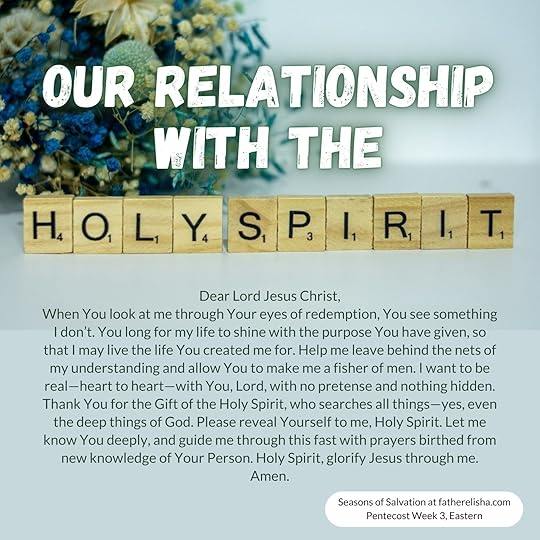
Photo by Alex Shute on Unsplash
The post Pentecost 3 (Eastern): Our Relationship with the Holy Spirit first appeared on Father Elisha: Let me take you on an intriguing journey..


Pentecost 3 (Western): Getting to Know the Holy Spirit
 The Spiritual Mysteries of the Divine Calendar: Getting to Know the Holy Spirit ~ June 22–28, 2025 ~
 Our current corporate season of the spiritual life began with the Feast of Pentecost, which granted us a fresh infilling of the Holy Spirit. Then, last week, we saw how the Holy Spirit seeks to establish the gift we receive through the fiery testing of the Fast of the Holy Spirit. In this third week of the Season of Pentecost, the Divine Calendar invites us to know the Holy Spirit more deeply and to allow Him to become our teacher in prayer.
The First FruitsInterestingly, the Divine Calendar overlaps with the agricultural calendar (or crop year) in ancient Israel, which ends around late August or early September.
At Pentecost (the Feast of Weeks), the people of Israel celebrated the first fruits of the harvest. “And you shall observe the Feast of Weeks, of the first fruits of wheat harvest …” (Ex. 34:22).
Jesus, being “the Lord of the harvest” (Matt. 9:38), gathered the first fruits of the nations to His Father on the day of Pentecost. “Then those who gladly received his word [Peter’s sermon] were baptized; and that day about three thousand souls were added to them” (Acts 2:41).
On our ongoing journey of sanctification and being conformed to the image of Christ (Rom 8:29), the Season of Pentecost begins by bringing to completion God’s work of salvation for this year. At this point, God begins to gather the first fruits of His saving work in our lives.
In September—the beginning of the next Divine Calendar (liturgical year)—we will look back on the months from June to August and recognize their importance. These eleven weeks, from Pentecost until early August, including the current Fast of the Holy Spirit (the Apostles’ Fast), naturally focus on us getting to know the Holy Spirit, as well as the mission of the Church.
Sunday Gospel for Getting to Know the Holy Spirit: Luke 11:1–13 (NKJV)Now it came to pass, as He was praying in a certain place, when He ceased, that one of His disciples said to Him, “Lord, teach us to pray, as John also taught his disciples.” 2 So He said to them, “When you pray, say:
Our Father in heaven, hallowed be Your name. Your kingdom come. Your will be done on earth as it is in heaven. 3 Give us day by day our daily bread. 4 And forgive us our sins, for we also forgive everyone who is indebted to us. And do not lead us into temptation, but deliver us from the evil one.”
5 And He said to them, “Which of you shall have a friend, and go to him at midnight and say to him, ‘Friend, lend me three loaves; 6 for a friend of mine has come to me on his journey, and I have nothing to set before him’; 7 and he will answer from within and say, ‘Do not trouble me; the door is now shut, and my children are with me in bed; I cannot rise and give to you’?
8 I say to you, though he will not rise and give to him because he is his friend, yet because of his persistence he will rise and give him as many as he needs.
9 “So I say to you, ask, and it will be given to you; seek, and you will find; knock, and it will be opened to you. 10 For everyone who asks receives, and he who seeks finds, and to him who knocks it will be opened. 11 If a son asks for bread from any father among you, will he give him a stone? Or if he asks for a fish, will he give him a serpent instead of a fish? 12 Or if he asks for an egg, will he offer him a scorpion?
13 If you then, being evil, know how to give good gifts to your children, how much more will your heavenly Father give the Holy Spirit to those who ask Him!”
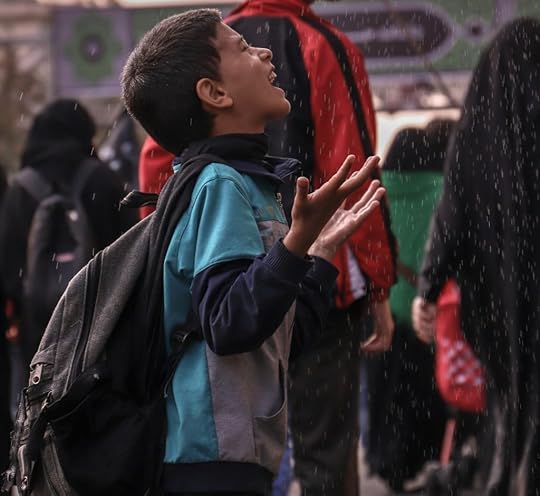
Photo by Fateme Alaie on Unsplash
Getting to Know the Holy SpiritWithout the Holy Spirit, we can’t understand or receive the grace from the acts of salvation Jesus accomplished through His Incarnation, Crucifixion, Resurrection, Ascension, and the sending of the Holy Spirit.
The Holy Spirit takes from what belongs to the Father and the Son, and passes this onto us. “He will glorify Me, for He will take of what is Mine and declare it to you. All things that the Father has are Mine. Therefore I said that He will take of Mine and declare it to you” (John 16:14–15).
The Season of Pentecost—with its grace for fellowship with the Holy Spirit—is the Season that centers on the story of our lives. As we come to know the Holy Spirit, we also come to know ourselves. He is our faithful Helper and Advocate, living within us, and He unveils the secrets that “eye has not seen, nor ear heard, nor have entered into the heart of man the things which God has prepared for those who love Him” (1 Cor. 2:9).
St. Cyril of Jerusalem (313–386) said that even though the Holy Spirit is simple in His nature, His actions are many and marvelous. The acts of the Holy Spirit are innumerable and it takes years to personally discover and experience the glorious person of the Holy Spirit—not just one journey through the Divine Calendar.
Getting to Know the Holy Spirit: The Holy Trinity
As we come to know the Holy Spirit, our interactions with Him become windows through which we gaze upon God, and doors through which we enter more deeply into our relationship with the Father and the Son. The Holy Spirit proceeds from the Father, rests upon the Son, and is the Promise of the Father.
“He will glorify Me, for He will take of what is Mine and declare it to you. All things that the Father has are Mine. Therefore I said that He will take of Mine and declare it to you.” (John 16:14–15).
“Therefore being exalted to the right hand of God, and having received from the Father the promise of the Holy Spirit, He poured out this which you now see and hear” (Acts 2:33).
“And I will pray the Father, and He will give you another Helper, that He may abide with you forever – the Spirit of truth […]” (John 14:16).
God’s goal in His plan of salvation—by sending Jesus Christ into our world to save us from our sins—was to restore our relationship with the Holy Trinity. Jesus revealed both the Father and the Holy Spirit, and the desire of the Promise of the Father—the Holy Spirit—is to increase our knowledge of, and deepen our life with, the Father and the Son, as chapters 13–17 in the Gospel of John recount.
Getting to Know the Holy Spirit: His Role
“I still have many things to say to you, but you cannot bear them now. However, when He, the Spirit of truth, has come, He will guide you into all truth; for He will not speak on His own authority, but whatever He hears He will speak; and He will tell you things to come. He will glorify Me, for He will take of what is Mine and declare it to you. All things that the Father has are Mine. Therefore I said that He will take of Mine and declare it to you” (John 16:12–15).
The Holy Spirit is the Person of the Trinity who enables us to know more about Himself, the Father, and Jesus Christ. Moreover, the Holy Spirit reveals the relationship and actions among the three Hypostases (persons in God’s image) of the Holy Trinity.
There’s nothing more thrilling than discovering the Holy Trinity, and understanding how the three relate to one another and to creation. May God open our eyes to the unfathomable harmony within the Holy Trinity and allow us to know the Holy Spirit anew.
We want to know the Holy Spirit more, because God sent Him to take us by the hand and lead us through our days. When we enter into a close relationship with the Holy Spirit, He reveals what we need to know in order to overcome challenges according to the Word of God.
The Holy Spirit accompanies us as a real Person, and there is a specific role in our lives that only He can fulfill. We see His activity clearly in Acts 2:1–39. The passage follows below, with comments. May the Word of God bring revelation and help us know the Holy Spirit more deeply.
Acts 2:1–39 with CommentaryTo Know the Holy Spirit: Diversity and Simplicity
“When the Day of Pentecost had fully come, they were all with one accord in one place. And suddenly there came a sound from heaven, as of a rushing mighty wind, and it filled the whole house where they were sitting. Then there appeared to them divided tongues, as of fire, and one sat upon each of them. And they were all filled with the Holy Spirit and began to speak with other tongues, as the Spirit gave them utterance.”
The Holy Spirit enabled the disciples to speak in other tongues. He is diverse in His works, but His nature—as a fire, or as a dove—is simple.
To Know the Holy Spirit: New Wine
Let us continue from Acts 2:5: “And there were dwelling in Jerusalem Jews, devout men, from every nation under heaven. And when this sound occurred, the multitude came together, and were confused, because everyone heard them speak in his own language. Then they were all amazed and marveled, saying to one another, “Look, are not all these who speak Galileans? And how is it that we hear, each in our own language in which we were born?
“Parthians and Medes and Elamites, those dwelling in Mesopotamia, Judea and Cappadocia, Pontus and Asia, Phrygia and Pamphylia, Egypt and the parts of Libya adjoining Cyrene, visitors from Rome, both Jews and proselytes, Cretans and Arabs—we hear them speaking in our own tongues the wonderful works of God.” So they were all amazed and perplexed, saying to one another, “Whatever could this mean?” Others mocking said, “They are full of new wine.”
Notice that it says new wine—not a familiar or ordinary kind. The Holy Spirit never repeats Himself. He always enjoys showing Himself in new and unexpected ways.
John 2:2–4,10: “Now both Jesus and His disciples were invited to the wedding. And when they ran out of wine, the mother of Jesus said to Him, ‘They have no wine.’ Jesus said to her, ‘Woman, what does your concern have to do with Me? My hour has not yet come.’ … And he [master of the feast] said to him [bridegroom], ‘Every man at the beginning sets out the good wine, and when the guests have well drunk, then the inferior. You have kept the good wine until now!’”
To Know the Holy Spirit: Our Voluntary Participation
Acts 2:14 onward reads: “But Peter, standing up with the eleven, raised his voice and said to them, “Men of Judea and all who dwell in Jerusalem, let this be known to you, and heed my words. For these are not drunk, as you suppose, since it is only the third hour of the day. 16 But this is what was spoken by the prophet Joel:
And it shall come to pass in the last days, says God, That I will pour out of My Spirit on all flesh; Your sons and your daughters shall prophesy, Your young men shall see visions, Your old men shall dream dreams.”
Once again, we see the manifold ways the Holy Spirit works, carrying out His will through our voluntary participation.
To Know the Holy Spirit: Understand the Times
We read in Acts 2:18 onward: “And on My menservants and on My maidservants I will pour out My Spirit in those days; And they shall prophesy. I will show wonders in heaven above and signs in the earth beneath: Blood and fire and vapor of smoke. The sun shall be turned into darkness, And the moon into blood, Before the coming of the great and awesome day of the Lord. And it shall come to pass That whoever calls on the name of the Lord Shall be saved.’
“Men of Israel, hear these words: Jesus of Nazareth, a Man attested by God to you by miracles, wonders, and signs which God did through Him in your midst, as you yourselves also know—Him, being delivered by the determined purpose and foreknowledge of God, you have taken by lawless hands, have crucified, and put to death; whom God raised up, having loosed the pains of death, because it was not possible that He should be held by it.
For David says concerning Him: ‘I foresaw the Lord always before my face, For He is at my right hand, that I may not be shaken. Therefore my heart rejoiced, and my tongue was glad; Moreover my flesh also will rest in hope. For You will not leave my soul in Hades, nor will You allow Your Holy One to see corruption. You have made known to me the ways of life; You will make me full of joy in Your presence.’
As we come to know the Holy Spirit, we grow in our understanding of the times we are living in. “Surely the Lord God does nothing, unless He reveals His secret to His servants the prophets” (Amos 3:7).
To Know the Holy Spirit: Revealing Our Hearts
The last part continues from verse 29: “Men and brethren, let me speak freely to you of the patriarch David, that he is both dead and buried, and his tomb is with us to this day. Therefore, being a prophet, and knowing that God had sworn with an oath to him that of the fruit of his body, according to the flesh, He would raise up the Christ to sit on his throne, he, foreseeing this, spoke concerning the resurrection of the Christ, that His soul was not left in Hades, nor did His flesh see corruption. This Jesus God has raised up, of which we are all witnesses.
Therefore being exalted to the right hand of God, and having received from the Father the promise of the Holy Spirit, He poured out this which you now see and hear.
“For David did not ascend into the heavens, but he says himself: ‘The Lord said to my Lord, “Sit at My right hand, Till I make Your enemies Your footstool.’” Therefore let all the house of Israel know assuredly that God has made this Jesus, whom you crucified, both Lord and Christ.”
Now when they heard this, they were cut to the heart, and said to Peter and the rest of the apostles, “Men and brethren, what shall we do?” Then Peter said to them, “Repent, and let every one of you be baptized in the name of Jesus Christ for the remission of sins; and you shall receive the gift of the Holy Spirit. For the promise is to you and to your children, and to all who are afar off, as many as the Lord our God will call.”
The Holy Spirit reveals the secret intents of our hearts.

Photo by Chris Lawton on Unsplash
To Know the Holy Spirit and What Only He Can DoWhen the Holy Spirit came upon the Apostles, Peter addressed the multitude, emphasizing the outcome of Jesus Christ’s Resurrection and Ascension. The Son of Man sat down at the right hand of the Father so that He could send the Promise of the Father.
Without the Holy Spirit, we can’t live a Christian life. The Holy Spirit is the breath of life for every believer. This Gift of gifts can change our circumstances in a moment.
According to God’s plan, He had gathered “in Jerusalem Jews, devout men, from every nation under heaven,” (Acts 2:5) and “about three thousand souls were added to [the church]” (Acts 2:41) through Peter’s sermon. What had happened to Peter? What a personal transformation—just fifty-two days after denying Jesus three times.
The change within the apostles is crucial. Their faith blazed and they acted without reservation—but how? The simple, personal words from the Holy Spirit, and His empowering presence within them, transformed their role.
Something entered deeply into the disciples and made them feel what could only be described as being “filled with the Holy Spirit.” Only He can utterly transform our lives and make our days a sweet journey—all because we know the Holy Spirit.
Without understanding the truth that the Holy Spirit always accompanies us from within, we can easily misunderstand God and His ways. When we don’t know the Holy Spirit, it is easy to become sidetracked.
Knowing Who We Pray To
The Gospel reading for the third Sunday of the Season of Pentecost (Luke 11:1–13), which falls one week into the Fast of the Holy Spirit, focuses on prayer.
One of Jesus’ disciples asked Him to teach them to pray as John the Baptist taught his disciples. Jesus taught them the Lord’s Prayer, and in the last verse of this passage, He said: “If you then, being evil, know how to give good gifts to your children, how much more will your heavenly Father give the Holy Spirit to those who ask Him!” This Sunday invites us to learn how to attract the Holy Spirit through prayer.
The best way to learn to pray is to know the Person to whom we pray. Once we gain a deeper understanding of who God is, our spirits ignite with joy, gratitude, humility, and boldness.
Just like in human communication, if we want to speak in a way that strengthens the relationship, we must know whom we are talking to. We speak differently to a child than to a colleague. And how we talk to our closest friends differs from how we would address the leader of our nation. How, then, would we speak to the King of kings?
Know the Holy Spirit to Make Jesus Known
As established above, the Holy Spirit is the Person of the Holy Trinity who reveals who God is. Jesus says this about the Holy Spirit: “He will glorify Me, for He will take of what is Mine and declare it to you” (John 16:14).
The Holy Spirit wants to glorify Jesus. How does that happen in a way that pleases the Holy Spirit? It happens when the Spirit reveals something about Jesus to us, and we then make it known. The Spirit desires to glorify Jesus through you and me, and therefore we seek to know the Holy Spirit.
He doesn’t want to write about Jesus in the clouds for the world to see—although signs will appear in the heavens at the end of our age—but rather, the Holy Spirit writes on our hearts so we can share our testimony, revelation, or experience. When we share with other about Jesus, we glorify Him by making known what the Holy Spirit has revealed to us.
“Then those who feared the Lord spoke to one another, and the Lord listened and heard them; So a book of remembrance was written before Him for those who fear the Lord and who meditate on His name” (Mal. 3:16).
“… this grace was given, that I should preach among the Gentiles the unsearchable riches of Christ, and to make all see what is the fellowship of the mystery, which from the beginning of the ages has been hidden in God who created all things through Jesus Christ; to the intent that now the manifold wisdom of God might be made known by the church to the principalities and powers in the heavenly places” (Eph. 3:8–10).
Know the Holy Spirit and the Glorious Relationship
The Sunday Gospel begins with Jesus teaching His disciples to pray the Lord’s prayer: “Our Father in heaven, hallowed be Your name” (verse 2). Jesus desires to glorify the Father through us, just as the Holy Spirit wants to glorify Jesus through us. What a marvelous wonder of humility within the Holy Trinity! We are redeemed to enter into this glorious relationship.
In verses 5–13, after Jesus taught the disciples the Lord’s prayer, He emphasized that if we, as fallen human beings (Jesus called us “evil”), know how to give good gifts to our friends or children when they are in need, how much more will our Heavenly Father give the Gift of gifts—the Holy Spirit—to those who ask Him?
Jesus is saying we need to know Whom we pray to. Our Heavenly Father will give to those who ask, lead those who seek, and open the door for those who knock. “But without faith it is impossible to please Him, for he who comes to God must believe that He is, and that He is a rewarder of those who diligently seek Him” (Heb. 11:6).
The Fathers of the Church would say: Prayer is the Holy Spirit, and the Holy Spirit is prayer.
On this third Sunday of Pentecost, we receive grace to revitalize our prayer life. The Holy Spirit desires to reveal who God is, and that knowledge fuels and advances our prayers, releasing God’s work in our life. A new understanding of God unleashes a fresh stream of prayer.
Glory be to the Holy Trinity. Amen.
Concluding Getting to Know the Holy SpiritLet us not fall into what the Apostle James warned about: “Yet you do not have because you do not ask. You ask and do not receive, because you ask amiss, that you may spend it on your pleasures” (James 4:2d–3).
Knowing Whom we talk to shows us how to pray, as Jesus taught His disciples in this Sunday Gospel. This week, the Holy Spirit grants us this grace. Let us pray, because “hope does not disappoint, because the love of God has been poured out in our hearts by the Holy Spirit who was given to us” (Rom. 5:5). To know the Holy Spirit is to know life—life in abundance (John 10:10).
Thank you for joining this expedition through the Fast of the Holy Spirit (the Apostles’ Fast). Last week, the Divine Calendar warned us about our evil adversary’s testing of the grace we have received. But this week, we are given the weapon to pass through this final trial:
The Holy Spirit grants us new knowledge about God to energize and renew our prayer. Prayer with God’s Word is our weapon to overcome. May God bless you and lead you into this new week.
If helpful, you can also review what we previously discussed regarding How Do I Keep the Fast of the Holy Spirit?
You might also find the post on the Feast of the Nativity of John the Baptist, celebrated on June 24, interesting.
Please leave a comment below—we’d love to hear your thoughts. If you found this post helpful, feel free to share it using the buttons at the top of the page.
Join the Journey Through the Seasons of SalvationJoin us on this weekly journey through the Seasons of Salvation as we walk in the footsteps of Jesus Christ through the key seasons of His life.
Sign up to receive this year’s Divine Calendar, which introduces the Seasons of Salvation and guides you through the journey ahead. As a welcome gift, you’ll also receive my young adult novel, The Legend of the Divine Calendar, delivered straight to your inbox.
Visit the Seasons of Salvation blog for insights into the coming week, posted every Saturday. We’d be honored to have you join us.
Save Your Prayer Card on Your Smartphone
Photo by Doug Bagg on Unsplash
The post Pentecost 3 (Western): Getting to Know the Holy Spirit first appeared on Father Elisha: Let me take you on an intriguing journey..
June 13, 2025
Pentecost 2 (Eastern): The Apostles’ Fast
The Spiritual Mysteries of the Divine Calendar: The Apostles’ Fast ~ June 15–21, 2025 ~ A two-to-five-week period known as the Apostles’ Fast begins in the second week after the Feast of Pentecost. This fast concludes with the Feast of the Apostles (St. Peter and St. Paul) on June 29 on the new calendar and July 12 on the old calendar. These weeks offer an opportunity for a renewed infilling of the Holy Spirit and a deepening of our fellowship with Him.
The Season of Pentecost ends with a five-week period focused on the mission of the Church and our ministry among the nations.
After the Ascension of Jesus, we read in Acts 1:12–14: “Then they returned to Jerusalem from the mount called Olivet, which is near Jerusalem, a Sabbath day’s journey. And when they had entered, they went up into the upper room where they were staying: Peter, James, John, and Andrew; Philip and Thomas; Bartholomew and Matthew; James the son of Alphaeus and Simon the Zealot; and Judas the son of James. These all continued with one accord in prayer and supplication, with the women and Mary the mother of Jesus, and with His brothers.”
The Apostles’ Fast and the Upper RoomFrom the Feast of Ascension through the entire Season of Pentecost, the Upper Room becomes the key that unlocks these two months. It is a time for the people of God to gather in worship and prayer. As we read above, “These all continued with one accord in prayer and supplication.”
The grace and gift of the Ascension gather us, as followers of Jesus, in one Spirit—naturally leading us into the key of Pentecost: being of “one accord in prayer and supplication” in the Upper Room.
“In whom the whole building, being fitted together, grows into a holy temple in the Lord, in whom you also are being built together for a dwelling place of God in the Spirit” (Eph. 2:21–22).
This season inspires us to focus more deeply during worship and to abide in Christ through prayer. When we do, we welcome the Holy Spirit, who fills the newly expanded rooms within our spirits. He searches our depths and draws us into deeper relationship with Himself.
As we seek the Holy Spirit in this way, we receive release, equipping, and anointing for the specific work He has prepared for us in His Kingdom.
“As they ministered to the Lord and fasted, the Holy Spirit said, ‘Now separate to Me Barnabas and Saul for the work to which I have called them.’ Then, having fasted and prayed, and laid hands on them, they sent them away” (Acts 13:2).
Sunday Gospel for the Apostles’ Fast: Matthew 10:32–33, 37–38; 19:27–30 (NKJV)32 “Therefore whoever confesses Me before men, him I will also confess before My Father who is in heaven. 33 But whoever denies Me before men, him I will also deny before My Father who is in heaven.
37 He who loves father or mother more than Me is not worthy of Me. And he who loves son or daughter more than Me is not worthy of Me. 38 And he who does not take his cross and follow after Me is not worthy of Me.
27 Then Peter answered and said to Him, “See, we have left all and followed You. Therefore what shall we have?” 28 So Jesus said to them, “Assuredly I say to you, that in the regeneration, when the Son of Man sits on the throne of His glory, you who have followed Me will also sit on twelve thrones, judging the twelve tribes of Israel.
29 And everyone who has left houses or brothers or sisters or father or mother or wife or children or lands, for My name’s sake, shall receive a hundredfold, and inherit eternal life. 30 But many who are first will be last, and the last first.

Photo by Ryan Cryar on Unsplash
The Apostles’ FastThe Divine Calendar dedicates the Apostles’ Fast to the descent of the Holy Spirit at Pentecost. Until now, all fasts in the Calendar have preceded a feast as preparation—but this fast follows the outpouring of the grace from the feast. Why?
We have just spent fifty days in a rich period of feasting following Resurrection Sunday, during which the Holy Spirit was building the new human nature of Christ into our soul. For forty days, we received the grace of the Resurrection, and for the final ten, the grace of the Ascension.
Then came the Gift of Pentecost—the Holy Spirit Himself—and a fresh infilling of the Holy Spirit. Through the Apostles’ Fast, we seek to be filled as much as possible, that the Holy Spirit may completely fill the new man He has formed within us.
The Purpose of the Apostles’ Fast: To be filled with the Holy Spirit.To be prepared for a new journey in our fellowship with the Holy Spirit.For the Holy Spirit to open and expand our external circles of influence in the nation(s). This fast also serves as the initial preparation for the Season of the Kingdom of God—the first Season of Salvation in the Divine Calendar, from September to November.
The first Season of Salvation focuses on two parallel movements: building our inner man (the Kingdom of God within) and embracing an external responsibility from God in His Kingdom through ministry and servanthood.
To receive revelation from the Holy Spirit about how grateful we can be, and how indebted we are, to Jesus for His amazing work of salvation. As our Savior and Redeemer, He has brought us with Him to the bosom of the Father.Also, to receive new understanding of how Jesus continuously intercedes for us—His work of salvation continues. Jesus is our Savior every single day, embracing us and continually giving of Himself.
We want to know the Holy Spirit more. The Holy Spirit comes inside us to sanctify us. He is with us as a defender against the adversary. And the Spirit is upon us as an anointing for ministry.What the Apostles’ Fast Reveals
Jesus ascended so that He could send the Holy Spirit to teach and remind us: “But the Helper, the Holy Spirit, whom the Father will send in My name, He will teach you all things, and bring to your remembrance all things that I said to you” (John 14:26).
Also, we need to know more about what the Holy Spirit is offering us: “I still have many things to say to you, but you cannot bear them now. However, when He, the Spirit of truth, has come, He will guide you into all truth; for He will not speak on His own authority, but whatever He hears He will speak; and He will tell you things to come. He will glorify Me, for He will take of what is Mine and declare it to you” (John 16:12–14).
During the past nine months of the Divine Calendar, we have come to know God the Father, who sent His Son to restore our original image—the image of Christ. We have focused our attention on our journey with Jesus, getting to know Him from His birth in Bethlehem until He sat down at the right hand of His Father in Heaven.
For the remaining part of the Divine Calendar, we seek to know the Holy Spirit more deeply. The Spirit reveals Himself and leads us into a richer fellowship with the Holy Trinity.
“But as it is written: ‘Eye has not seen, nor ear heard, nor have entered into the heart of man the things which God has prepared for those who love Him.’ But God has revealed them to us through His Spirit. For the Spirit searches all things, yes, the deep things of God” (1 Cor. 2:9–10).
Why the Apostles’ Fast?
After Jesus received His messianic anointing during His baptism in the Jordan—when “the Holy Spirit descended in a bodily form like a dove upon Him” (Luke 3:22)—the Holy Spirit led Him into the wilderness to be tempted.
The Apostle’s Fast carries a warning for us: after receiving the seal of all the gifts this year—the Holy Spirit Himself—the devil comes to test and tempt us severely.
This fast prepares us for that temptation. Just as fire tests every gift before it is sealed, the Holy Spirit anointed Jesus at the Jordan as the Messiah—yet before He began His public ministry, the devil tempted Him for forty days.
If we follow Christ, we too will experience similar trials—though, of course, on a much smaller scale than what Jesus endured.
Sealing the Work of Redemption
We read in Luke 4:1–2a: “Then Jesus, being filled with the Holy Spirit, returned from the Jordan and was led by the Spirit into the wilderness, being tempted for forty days by the devil.”
And the two verses following the Sunday Gospel reads: “Then Jesus returned in the power of the Spirit to Galilee, and news of Him went out through all the surrounding region. And He taught in their synagogues, being glorified by all” (Luke 4:14–15).
This is why the Divine Calendar appoints a fast after we have received the Gift of the Holy Spirit at Pentecost. Through this final trial during this Fast, the new formation of Christ in our inner man is settled and completed once and for all.
The redemption and recreation of the specific area of our soul—highlighted by the Holy Spirit at the beginning of the Divine Calendar, during the Season of the Kingdom of God—now reaches its completion and is sealed.
The principalities in the heavens take notice and challenge us: “Where did you get this Gift? Do you think you are mature enough to keep it?”
But the very thing that helps us overcome this testing fire of the Apostles’ Fast is our new and deepened relationship with the Spirit of God.
Burning Confession
We have received the grace of Pentecost—a new outpouring of the Holy Spirit—and that changes our lifestyle and identity. In this week’s Sunday Gospel, we see the dramatic change that follows the confession of our faith, as “no one can say that Jesus is Lord except by the Holy Spirit” (1 Cor. 12:3).
When “the love of God has been poured out in our hearts by the Holy Spirit who was given to us” (Rom 5:5), there is a new desire born in us to glorify Jesus Christ and honor Him with our lives. This is what the Holy Spirit loves to do. “He will glorify Me, for He will take of what is Mine and declare it to you” (John 16:14).
When we testify about Jesus before others—glorifying Him—it immediately impacts them, either for better or worse. “For we are to God the fragrance of Christ among those who are being saved and among those who are perishing. To the one we are the aroma of death leading to death, and to the other the aroma of life leading to life” (2 Cor. 2:15–16).
But our confession of Jesus—no matter how it is received in this life—Jesus brings to our Heavenly Father, as our Sunday Gospel tells us: “Therefore whoever confesses Me before men, him I will also confess before My Father who is in heaven. But whoever denies Me before men, him I will also deny before My Father who is in heaven” (Matt. 10:32–33).
When Other Things Fade
The rest of the passage for this week shows the radical change in the believer’s heart when “the love of God has been poured out in our hearts by the Holy Spirit who was given to us” (Rom 5:5). Because of the divine love burning within us, the love expressed in our closest human relationships fades in comparison. Also, this love carries us through our trials and tribulations (Matt. 10:37–38).
And if God calls us to leave behind things that are major parts of our lives, whether “houses or brothers or sisters or father or mother or wife or children or lands,” (Matt. 19:29), we “shall receive a hundredfold, and inherit eternal life” (Matt. 19:29).
Let us try to be sensitive to the Holy Spirit during this first week of the Apostles’ Fast, that we may recognize how He stirs us to glorify Jesus in prayer, worship, and in encounters with others. It is the strongest confession of our faith, burning with zeal.

Photo by Elena Mozhvilo on Unsplash
How Do I Keep the Apostle’s Fast?June 16–28 (Eastern: New Calendar) / June 16 – July 11 (Eastern: Old Calendar)1. Fasting
As we have said before, Jesus said, “Moreover, when you fast, do not be like the hypocrites” (Matt. 6:16). Jesus didn’t say if you fast, but when. Fasting has a long tradition in all parts of Christianity.
Fasting doesn’t earn us anything, nor do we prove ourselves before God as being worthy to receive His grace. “He who eats, eats to the Lord, for he gives God thanks; and he who does not eat, to the Lord he does not eat, and gives God thanks. […] Therefore, whether we live or die, we are the Lord’s” (Rom. 14:6, 8b).
The heart of this fast is deepening our fellowship with the Holy Spirit. “Thus says the Lord: ‘Let not the wise man glory in his wisdom, let not the mighty man glory in his might, nor let the rich man glory in his riches; But let him who glories glory in this, that he understands and knows Me, that I am the Lord, exercising lovingkindness, judgment, and righteousness in the earth. For in these I delight,’ says the Lord” (Jer. 9:23–24).
Fasting will not impress God. Instead, it constricts our fallen human nature and releases our spirit to easier receive impressions and grace from the Holy Spirit. Fasting simply helps us to focus and tune in on the work of the Holy Spirit, so the grace He brings from Jesus’ life enters our souls and into “a noble and good heart” (Luke 8:15).
Traditional View of Fasting
Many view fasting as abstaining from food or drink for a day or longer. However, the traditional way of fasting is a fasting lifestyle. We choose to not eat dairy products and meats for a period.
A vegan diet three times a day is still fasting. Even though we eat, we restrict the instinct of our fallen human nature by not eating as we normally do. This voluntary restriction will, even after a few days, produce spiritual vigilance as if we didn’t eat at all for a day or two.
If you have experience with fasting, and maybe already have a fasting lifestyle, you simply increase what you normally do during the Apostles’ Fast. Maybe postpone your first meal until 10 a.m., depending on how God’s grace sustains your fasting. If you have been fasting regularly for more than five years, you may consider extending your fast until noon or even 3 p.m. on some weekdays.
We maintain the fasting diet during the weekend, but we do not postpone any meals during Saturdays and Sundays. So, if you eat breakfast at 10 a.m. from Monday through Friday, you would have your breakfast as normal during the weekend.
The main reason for reducing the fast on the weekend is to celebrate the grace of Resurrection on Sunday and create a break in the rhythm of fasting. Each Monday then becomes a fresh start—a renewed offering of sacrifice through fasting. This pattern helps prevent fasting from becoming habitual or stagnant.
The goal of fasting is not to impress God or ourselves, but restriction, emptying, and repentance, and hence welcoming the Holy Spirit. “As they ministered to the Lord and fasted, the Holy Spirit said…” (Acts 13:2a)
Final Comments
Fasting is like tightening a spiritual belt around our waist—one that carries new equipment to help us remain spiritually alert.
Fasting allows us to receive the grace of Pentecost in a different way—not because God rewards our fasting by pouring out more of the Holy Spirit, but because we are preparing our souls to receive what is already available during this Fast. God offers us the same grace whether we fast or not, but our capacity to receive increases through the discipline of fasting.
“If you then, being evil, know how to give good gifts to your children, how much more will your heavenly Father give the Holy Spirit to those who ask Him!” (Luke 11:13)
Will we lose in the end then, if we do not fast? Not necessarily. God is God. He can defeat our fallen human nature whether we fast or not, but… “Blessed are those who hunger and thirst for righteousness, for they shall be filled” (Matt. 5:6). And “without faith it is impossible to please Him, for he who comes to God must believe that He is, and that He is a rewarder of those who diligently seek Him” (Heb. 11:6).
Lastly, a warning for every eager soul: Never fast beyond what grace allows. If we push ourselves—often because we want to impress ourselves or feel good about our achievements—our fasting will have the opposite effect.
Unbalanced fasting actually blocks our spirit rather than releasing it. This happens because the power of the flesh (our ego) drives exaggerated fasting, fueling our pride instead of opening us to the Holy Spirit.
2. The Apostles’ Fast and Prayer
Fasting frees up time to nourish our inner man through prayer and Bible reading. When we fast, let us replace our meal with prayer. It is helpful to use Scriptures about the Holy Spirit as a starting point for our prayers. Combining prayer with the Word of God focuses our mind and spirit, unlocks prophetic inspiration, and strengthens our inner man.
3. Bible Reading
During the Apostles’ Fast, it is beneficial to slightly increase our Bible reading in order to fill ourselves with the Word of God—just as Jesus defeated Satan in the wilderness by quoting Scripture. Reading John chapters 14–16 regularly is especially helpful, as these passages contain Jesus’ teaching about the Holy Spirit. The Book of Acts is also an excellent choice, since this fast is known as the Fast of the Apostles.
4. Giving
Selfless acts of giving our time, energy, abilities, and finances to help others support the battle against the old human nature within our souls. These acts of mercy and love put to death our ego and bless the world with the love of Christ.
5. The Apostles’ Fast and Silence
Silence means more than simply not talking. While we still need to communicate, we can choose to engage in less unnecessary conversation and spend less time on media in order to increase our sensitivity to the voice of the Holy Spirit.
If we have the time and opportunity, setting aside moments in a private space for literal silence can lead us into deep, interior, and wordless prayer.
6. The Apostles’ Fast and Repentance
Last but not least, all the spiritual practices listed above stir the Holy Spirit to lead us into deep, revelatory repentance—and repentance is actually more important than fasting. Repentance is our strongest weapon in the battle against our fallen human nature, because “if we confess our sins, He is faithful and just to forgive us our sins and to cleanse us from all unrighteousness” (1 John 1:9).
A helpful practice we mentioned during the Incarnation Fast is to “settle accounts” at the end of the day. Before going to sleep, we can spend a few minutes in prayer and ask the Holy Spirit to review the day with us.
Then we confess whatever stirs our conscience, receive forgiveness under the Blood of Jesus, read and pray a Scripture verse that communicates the opposite truth of the sin, and finally ask for God’s guidance to complete the repentance by taking any needed steps to repair the damaged caused.
In addition to this, if we notice our old man rising up during the day, it is good to repent immediately, if possible. Even a simple mental prayer—like the Jesus Prayer: “Lord Jesus Christ, Son of God, have mercy on me, a sinner”—welcomes the Holy Spirit when prayed with focus and love for the name of Jesus.
“For thus says the High and Lofty One Who inhabits eternity, whose name is Holy: ‘I dwell in the high and holy place, with him who has a contrite and humble spirit, to revive the spirit of the humble, and to revive the heart of the contrite ones’” (Isa. 57:15).
These six pillars—fasting, prayer, Bible reading, giving, silence, and repentance—lead us swiftly into deeper fellowship with the Holy Spirit.
Concluding the Apostles’ FastThank you for being on this journey through the Seasons of Salvation. It is truly my joy. God is faithful to all hungry hearts that seek Him. May you find much help in the weeks ahead. I pray that God blesses you richly.
Glory be to the Holy Trinity. Amen.
Please leave a comment below—we’d love to hear your thoughts. If you found this post helpful, feel free to share it using the buttons at the top of the page.
Join the Journey Through the Seasons of SalvationJoin us on this weekly journey through the Seasons of Salvation as we walk in the footsteps of Jesus Christ through the key seasons of His life.
Sign up to receive this year’s Divine Calendar, which introduces the Seasons of Salvation and guides you through the journey ahead. As a welcome gift, you’ll also receive my young adult novel, The Legend of the Divine Calendar, delivered straight to your inbox.
Visit the Seasons of Salvation blog for insights into the coming week, posted every Saturday. We’d be honored to have you join us.
Save Your Prayer Card on Your Smartphone
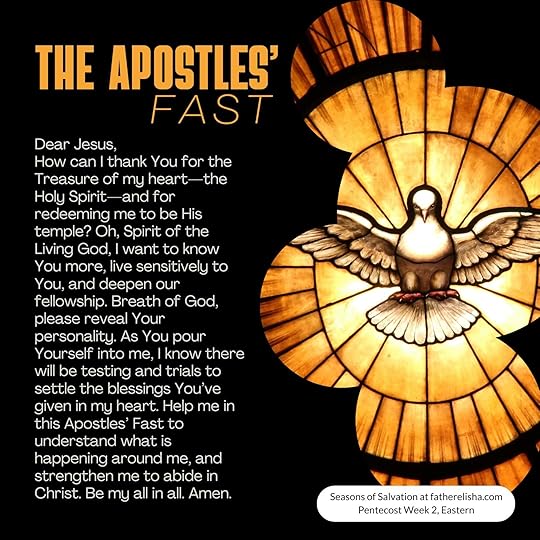
Photo by Serge Taeymans on Unsplash
The post Pentecost 2 (Eastern): The Apostles’ Fast first appeared on Father Elisha: Let me take you on an intriguing journey..
Pentecost 2 (Western): The Fast of the Holy Spirit
The Spiritual Mysteries of the Divine Calendar: The Fast of the Holy Spirit ~ June 15–21, 2025 ~ A two-to-five-week period known as the Fast of the Holy Spirit (the Apostles’ Fast) begins in the second week after the Feast of Pentecost. This fast concludes with the Feast of the Apostles (Peter and Paul) on June 29. These weeks offer an opportunity for a renewed infilling of the Holy Spirit and a deepening of our fellowship with Him.
The Season of Pentecost ends with a five-week period focused on the mission of the Church and our ministry among the nations.
After the Ascension of Jesus, we read in Acts 1:12–14: “Then they returned to Jerusalem from the mount called Olivet, which is near Jerusalem, a Sabbath day’s journey. And when they had entered, they went up into the upper room where they were staying: Peter, James, John, and Andrew; Philip and Thomas; Bartholomew and Matthew; James the son of Alphaeus and Simon the Zealot; and Judas the son of James. These all continued with one accord in prayer and supplication, with the women and Mary the mother of Jesus, and with His brothers.”
The Holy Spirit and the Upper RoomFrom the Feast of Ascension through the entire Season of Pentecost, the Upper Room becomes the key that unlocks these two months. It is a time for the people of God to gather in worship and prayer. As we read above, “These all continued with one accord in prayer and supplication.”
The grace and gift of the Ascension gather us, as followers of Jesus, in one Spirit—naturally leading us into the key of Pentecost: being of “one accord in prayer and supplication” in the Upper Room.
“In whom the whole building, being fitted together, grows into a holy temple in the Lord, in whom you also are being built together for a dwelling place of God in the Spirit” (Eph. 2:21–22).
This season inspires us to focus more deeply during worship and to abide in Christ through prayer. When we do, we welcome the Holy Spirit, who fills the newly expanded rooms within our spirits. He searches our depths and draws us into deeper relationship with Himself.
As we seek the Holy Spirit in this way, we receive release, equipping, and anointing for the specific work He has prepared for us in His Kingdom.
“As they ministered to the Lord and fasted, the Holy Spirit said, ‘Now separate to Me Barnabas and Saul for the work to which I have called them.’ Then, having fasted and prayed, and laid hands on them, they sent them away” (Acts 13:2).

Photo by Marek Piwnicki on Unsplash
Sunday Gospel of the Fast of the Holy Spirit: Luke 4:1–13 (NKJV)Then Jesus, being filled with the Holy Spirit, returned from the Jordan and was led by the Spirit into the wilderness, being tempted for forty days by the devil. And in those days He ate nothing, and afterward, when they had ended, He was hungry.
And the devil said to Him, “If You are the Son of God, command this stone to become bread.” But Jesus answered him, saying, “It is written, ‘Man shall not live by bread alone, but by every word of God.’ ”
Then the devil, taking Him up on a high mountain, showed Him all the kingdoms of the world in a moment of time. And the devil said to Him, “All this authority I will give You, and their glory; for this has been delivered to me, and I give it to whomever I wish. Therefore, if You will worship before me, all will be Yours.” And Jesus answered and said to him, “Get behind Me, Satan! For it is written, ‘You shall worship the Lord your God, and Him only you shall serve.’ ”
Then he brought Him to Jerusalem, set Him on the pinnacle of the temple, and said to Him, “If You are the Son of God, throw Yourself down from here. For it is written: ‘He shall give His angels charge over you, to keep you, and, ‘In their hands they shall bear you up, lest you dash your foot against a stone.’ ” And Jesus answered and said to him, “It has been said, ‘You shall not tempt the Lord your God.’ ”
Now when the devil had ended every temptation, he departed from Him until an opportune time.
The Fast of the Holy Spirit
The Divine Calendar dedicates the Fast of the Holy Spirit to the descent of the Holy Spirit at Pentecost. Until now, all fasts in the Calendar have preceded a feast as preparation—but this fast follows the outpouring of the grace from the feast. Why?
We have just spent fifty days in a rich period of feasting following Resurrection Sunday, during which the Holy Spirit was building the new human nature of Christ into our soul. For forty days, we received the grace of the Resurrection, and for the final ten, the grace of the Ascension.
Then came the Gift of Pentecost—the Holy Spirit Himself—and a fresh infilling of the Holy Spirit. Through the Fast of the Holy Spirit, we seek to be filled as much as possible, that the Holy Spirit may completely fill the new man He has formed within us.
The Purpose of the Fast of the Holy Spirit: To be filled with the Holy Spirit.To be prepared for a new journey in our fellowship with the Holy Spirit.For the Holy Spirit to open and expand our external circles of influence in the nation(s). This fast also serves as the initial preparation for the Season of the Kingdom of God—the first Season of Salvation in the Divine Calendar, from September to November.
The first Season of Salvation focuses on two parallel movements: building our inner man (the Kingdom of God within) and embracing an external responsibility from God in His Kingdom through ministry and servanthood.
To receive revelation from the Holy Spirit about how grateful we can be, and how indebted we are, to Jesus for His amazing work of salvation. As our Savior and Redeemer, He has brought us with Him to the bosom of the Father.Also, to receive new understanding of how Jesus continuously intercedes for us—His work of salvation continues. Jesus is our Savior every single day, embracing us and continually giving of Himself.
We want to know the Holy Spirit more. The Holy Spirit comes inside us to sanctify us. He is with us as a defender against the adversary. And the Spirit is upon us as an anointing for ministry.What the Fast of the Holy Spirit Reveals
Jesus ascended so that He could send the Holy Spirit to teach and remind us: “But the Helper, the Holy Spirit, whom the Father will send in My name, He will teach you all things, and bring to your remembrance all things that I said to you” (John 14:26).
Also, we need to know more about what the Holy Spirit is offering us: “I still have many things to say to you, but you cannot bear them now. However, when He, the Spirit of truth, has come, He will guide you into all truth; for He will not speak on His own authority, but whatever He hears He will speak; and He will tell you things to come. He will glorify Me, for He will take of what is Mine and declare it to you” (John 16:12–14).
During the past nine months of the Divine Calendar, we have come to know God the Father, who sent His Son to restore our original image—the image of Christ. We have focused our attention on our journey with Jesus, getting to know Him from His birth in Bethlehem until He sat down at the right hand of His Father in Heaven.
For the remaining part of the Divine Calendar, we seek to know the Holy Spirit more deeply. The Spirit reveals Himself and leads us into a richer fellowship with the Holy Trinity.
“But as it is written: ‘Eye has not seen, nor ear heard, nor have entered into the heart of man the things which God has prepared for those who love Him.’ But God has revealed them to us through His Spirit. For the Spirit searches all things, yes, the deep things of God” (1 Cor. 2:9–10).
The Testing Fire of the Fast of the Holy Spirit
The Sunday Gospel this week speaks about the temptation of Jesus in the wilderness but from a different perspective than during Lent. It warns us that after we receive the seal of all the gifts this year—the Holy Spirit Himself—the devil will come to test and tempt us severely.
This Sunday’s Gospel prepares us for that temptation. Just as fire tests every gift before it is sealed, the Holy Spirit anointed Jesus at the Jordan as the Messiah—yet before He began His public ministry, the devil tempted Him for forty days.
If we follow Christ, we too will experience similar trials—though, of course, on a much smaller scale than what Jesus endured.
Sealing the Work of Redemption
We read in Luke 4:1–2a: “Then Jesus, being filled with the Holy Spirit, returned from the Jordan and was led by the Spirit into the wilderness, being tempted for forty days by the devil.”
And the two verses following the Sunday Gospel reads: “Then Jesus returned in the power of the Spirit to Galilee, and news of Him went out through all the surrounding region. And He taught in their synagogues, being glorified by all” (Luke 4:14–15).
This is why the Divine Calendar appoints a fast after we have received the Gift of the Holy Spirit at Pentecost. Through this final trial during this Fast, the new formation of Christ in our inner man is settled and completed once and for all.
The redemption and recreation of the specific area of our soul—highlighted by the Holy Spirit at the beginning of the Divine Calendar, during the Season of the Kingdom of God—now reaches its completion and is sealed.
The principalities in the heavens take notice and challenge us: “Where did you get this Gift? Do you think you are mature enough to keep it?”
But the very thing that helps us overcome this testing fire of the Fast of the Holy Spirit is our new and deepened relationship with the Spirit of God.

Photo by Thalia Ruiz on Unsplash
How Do I Keep the Fast of the Holy Spirit?June 16–28, 20251. Fasting
As we have said before, Jesus said, “Moreover, when you fast, do not be like the hypocrites” (Matt. 6:16). Jesus didn’t say if you fast, but when. Fasting has a long tradition in all parts of Christianity.
Fasting doesn’t earn us anything, nor do we prove ourselves before God as being worthy to receive His grace. “He who eats, eats to the Lord, for he gives God thanks; and he who does not eat, to the Lord he does not eat, and gives God thanks. […] Therefore, whether we live or die, we are the Lord’s” (Rom. 14:6, 8b).
The heart of this fast is deepening our fellowship with the Holy Spirit. “Thus says the Lord: ‘Let not the wise man glory in his wisdom, let not the mighty man glory in his might, nor let the rich man glory in his riches; But let him who glories glory in this, that he understands and knows Me, that I am the Lord, exercising lovingkindness, judgment, and righteousness in the earth. For in these I delight,’ says the Lord” (Jer. 9:23–24).
Fasting will not impress God. Instead, it constricts our fallen human nature and releases our spirit to easier receive impressions and grace from the Holy Spirit. Fasting simply helps us to focus and tune in on the work of the Holy Spirit, so the grace He brings from Jesus’ life enters our souls and into “a noble and good heart” (Luke 8:15).
Traditional View of Fasting
Many view fasting as abstaining from food or drink for a day or longer. However, the traditional way of fasting is a fasting lifestyle. We choose to not eat dairy products and meats for a period.
A vegan diet three times a day is still fasting. Even though we eat, we restrict the instinct of our fallen human nature by not eating as we normally do. This voluntary restriction will, even after a few days, produce spiritual vigilance as if we didn’t eat at all for a day or two.
If you have experience with fasting, and maybe already have a fasting lifestyle, you simply increase what you normally do during the Fast of the Holy Spirit. Maybe postpone your first meal until 10 a.m., depending on how God’s grace sustains your fasting. If you have been fasting regularly for more than five years, you may consider extending your fast until noon or even 3 p.m. on some weekdays.
We maintain the fasting diet during the weekend, but we do not postpone any meals during Saturdays and Sundays. So, if you eat breakfast at 10 a.m. from Monday through Friday, you would have your breakfast as normal during the weekend.
The main reason for reducing the fast on the weekend is to celebrate the grace of Resurrection on Sunday and create a break in the rhythm of fasting. Each Monday then becomes a fresh start—a renewed offering of sacrifice through fasting. This pattern helps prevent fasting from becoming habitual or stagnant.
The goal of fasting is not to impress God or ourselves, but restriction, emptying, and repentance, and hence welcoming the Holy Spirit. “As they ministered to the Lord and fasted, the Holy Spirit said…” (Acts 13:2a)
Final Comments
Fasting is like tightening a spiritual belt around our waist—one that carries new equipment to help us remain spiritually alert.
Fasting allows us to receive the grace of Pentecost in a different way—not because God rewards our fasting by pouring out more of the Holy Spirit, but because we are preparing our souls to receive what is already available during this Fast. God offers us the same grace whether we fast or not, but our capacity to receive increases through the discipline of fasting.
“If you then, being evil, know how to give good gifts to your children, how much more will your heavenly Father give the Holy Spirit to those who ask Him!” (Luke 11:13)
Will we lose in the end then, if we do not fast? Not necessarily. God is God. He can defeat our fallen human nature whether we fast or not, but… “Blessed are those who hunger and thirst for righteousness, for they shall be filled” (Matt. 5:6). And “without faith it is impossible to please Him, for he who comes to God must believe that He is, and that He is a rewarder of those who diligently seek Him” (Heb. 11:6).
Lastly, a warning for every eager soul: Never fast beyond what grace allows. If we push ourselves—often because we want to impress ourselves or feel good about our achievements—our fasting will have the opposite effect.
Unbalanced fasting actually blocks our spirit rather than releasing it. This happens because the power of the flesh (our ego) drives exaggerated fasting, fueling our pride instead of opening us to the Holy Spirit.
2. The Holy Spirit and Prayer
Fasting frees up time to nourish our inner man through prayer and Bible reading. When we fast, let us replace our meal with prayer. It is helpful to use Scriptures about the Holy Spirit as a starting point for our prayers. Combining prayer with the Word of God focuses our mind and spirit, unlocks prophetic inspiration, and strengthens our inner man.
3. Bible Reading
During the Fast of the Holy Spirit, it is beneficial to slightly increase our Bible reading in order to fill ourselves with the Word of God—just as Jesus defeated Satan in the wilderness by quoting Scripture. Reading John chapters 14–16 regularly is especially helpful, as these passages contain Jesus’ teaching about the Holy Spirit. The Book of Acts is also an excellent choice, since this fast is known as the Fast of the Apostles.
4. Giving
Selfless acts of giving our time, energy, abilities, and finances to help others support the battle against the old human nature within our souls. These acts of mercy and love put to death our ego and bless the world with the love of Christ.
5. The Holy Spirit and Silence
Silence means more than simply not talking. While we still need to communicate, we can choose to engage in less unnecessary conversation and spend less time on media in order to increase our sensitivity to the voice of the Holy Spirit.
If we have the time and opportunity, setting aside moments in a private space for literal silence can lead us into deep, interior, and wordless prayer.
6. The Holy Spirit and Repentance
Last but not least, all the spiritual practices listed above stir the Holy Spirit to lead us into deep, revelatory repentance—and repentance is actually more important than fasting. Repentance is our strongest weapon in the battle against our fallen human nature, because “if we confess our sins, He is faithful and just to forgive us our sins and to cleanse us from all unrighteousness” (1 John 1:9).
A helpful practice we mentioned during the Incarnation Fast is to “settle accounts” at the end of the day. Before going to sleep, we can spend a few minutes in prayer and ask the Holy Spirit to review the day with us.
Then we confess whatever stirs our conscience, receive forgiveness under the Blood of Jesus, read and pray a Scripture verse that communicates the opposite truth of the sin, and finally ask for God’s guidance to complete the repentance by taking any needed steps to repair the damaged caused.
In addition to this, if we notice our old man rising up during the day, it is good to repent immediately, if possible. Even a simple mental prayer—like the Jesus Prayer: “Lord Jesus Christ, Son of God, have mercy on me, a sinner”—welcomes the Holy Spirit when prayed with focus and love for the name of Jesus.
“For thus says the High and Lofty One Who inhabits eternity, whose name is Holy: ‘I dwell in the high and holy place, with him who has a contrite and humble spirit, to revive the spirit of the humble, and to revive the heart of the contrite ones’” (Isa. 57:15).
These six pillars—fasting, prayer, Bible reading, giving, silence, and repentance—lead us swiftly into deeper fellowship with the Holy Spirit.
Concluding the Fast of the Holy SpiritWe are entering the final phase of the Divine Calendar, and in three months we will reach the end of this year’s journey—only to continue forward into a new cycle. It is my honor to travel this road with you.
May the grace of this Sunday make us alert, so that we may lean on the grace of Pentecost to journey through this fast and emerge victorious through the testing.
Glory be to the Holy Trinity. Amen.
Please leave a comment below—we’d love to hear your thoughts. If you found this post helpful, feel free to share it using the buttons at the top of the page.
Join the Journey Through the Seasons of SalvationJoin us on this weekly journey through the Seasons of Salvation as we walk in the footsteps of Jesus Christ through the key seasons of His life.
Sign up to receive this year’s Divine Calendar, which introduces the Seasons of Salvation and guides you through the journey ahead. As a welcome gift, you’ll also receive my young adult novel, The Legend of the Divine Calendar, delivered straight to your inbox.
Visit the Seasons of Salvation blog for insights into the coming week, posted every Saturday. We’d be honored to have you join us.
Save Your Prayer Card on Your Smartphone

Photo by GR Stocks on Unsplash
The post Pentecost 2 (Western): The Fast of the Holy Spirit first appeared on Father Elisha: Let me take you on an intriguing journey..
June 6, 2025
Pentecost 1 (Western & Eastern): The Feast of Pentecost
The Spiritual Mysteries of the Divine Calendar: The Feast of Pentecost ~ June 8, 2025 ~ From the Feast of Mid-Pentecost onward, the Divine Calendar focuses on a mystery of our salvation concerning our relationship with God the Father: through the mystery of the Incarnation, Jesus brought our human nature with Him in His Ascension and presented us before His Father. Now, at the Feast of Pentecost, the Father is ready to grant His Son the promise He gave Him before Jesus entered the world.
Only after Jesus ascended into Heaven could we receive the grace of Pentecost—the Gift of the Holy Spirit. Before the Ascension, only the twelve apostles received a foretaste, but the rest of the believers received the Holy Spirit on the fiftieth day after Jesus’ Resurrection—the Feast of Pentecost.
Jesus revealed the Father to us and appeared before the Father with us in Him—as we discussed last Sunday. Without Jesus being in the bosom of the Father, and without us being in Christ, the Holy Spirit could not reenter the human spirit.
These hidden mysteries are glimpses into unfathomable heavenly realities, and even just a tiny perception impacts our spiritual life and growth immensely. Our relationship with the Holy Spirit is the main outcome and goal of the Christian life. No matter our church background or denomination, Jesus lifted us into fellowship with God the Father in Heaven through His spiritual (pneumatized) body, and we now experience this fellowship through the Holy Spirit.
Jesus’ appearance before the Father—with us in Him—released the fulfillment of the Promise of the Father: the Holy Spirit, the Gift of gifts. “Behold, I send the Promise of My Father upon you; but tarry in the city of Jerusalem until you are endued with power from on high” (Luke 24:49).
The Seal of the PromiseLet us read two passages from the Book of Acts: “And being assembled together with them, He commanded them not to depart from Jerusalem, but to wait for the Promise of the Father, ‘which,’ He said, ‘you have heard from Me; for John truly baptized with water, but you shall be baptized with the Holy Spirit not many days from now’” (Acts 1:4–5).
“Therefore being exalted to the right hand of God, and having received from the Father the promise of the Holy Spirit, He poured out this which you now see and hear. For David did not ascend into the heavens, but he says himself: ‘The Lord said to my Lord, “Sit at My right hand, Till I make Your enemies Your footstool”’” (Acts 2:33–35).
The Western Gospel passage for the Feast of Pentecost (John 15:26–16:15) centers on the Promise of the Father—and who can lay hold of this Promise except Jesus Christ? Therefore, we must be in Christ, who brought us to the Father’s bosom, before we can receive the Father’s Promise of the Spirit.
The end goal of the Divine Calendar is to restore our relationship with the Holy Trinity and to refashion the original image we lost in the fall. The Holy Spirit is the seal of this restored relationship with the Holy Trinity.
“In Him [Jesus] you also trusted, after you heard the word of truth, the gospel of your salvation; in whom also, having believed, you were sealed with the Holy Spirit of promise, who is the guarantee of our inheritance until the redemption of the purchased possession, to the praise of His glory” (Eph. 1:13–14).
Western Gospel Passage for the Feast of Pentecost: John 15:26–16:15 (NKJV)“But when the Helper comes, whom I shall send to you from the Father, the Spirit of truth who proceeds from the Father, He will testify of Me. 27 And you also will bear witness, because you have been with Me from the beginning.
16:1 “These things I have spoken to you, that you should not be made to stumble. 2 They will put you out of the synagogues; yes, the time is coming that whoever kills you will think that he offers God service. 3 And these things they will do to you because they have not known the Father nor Me. 4 But these things I have told you, that when the time comes, you may remember that I told you of them. “And these things I did not say to you at the beginning, because I was with you.
5 “But now I go away to Him who sent Me, and none of you asks Me, ‘Where are You going?’ 6 But because I have said these things to you, sorrow has filled your heart. 7 Nevertheless I tell you the truth. It is to your advantage that I go away; for if I do not go away, the Helper will not come to you; but if I depart, I will send Him to you.
8 And when He has come, He will convict the world of sin, and of righteousness, and of judgment: 9 of sin, because they do not believe in Me; 10 of righteousness, because I go to My Father and you see Me no more; 11 of judgment, because the ruler of this world is judged.
12 “I still have many things to say to you, but you cannot bear them now. 13 However, when He, the Spirit of truth, has come, He will guide you into all truth; for He will not speak on His own authority, but whatever He hears He will speak; and He will tell you things to come. 14 He will glorify Me, for He will take of what is Mine and declare it to you. 15 All things that the Father has are Mine. Therefore I said that He will take of Mine and declare it to you.
Eastern Gospel Passage for the Feast of Pentecost: John 7:37–52; 8:12 (NKJV)On the last day, that great day of the feast, Jesus stood and cried out, saying, “If anyone thirsts, let him come to Me and drink. 38 He who believes in Me, as the Scripture has said, out of his heart will flow rivers of living water.” 39 But this He spoke concerning the Spirit, whom those believing in Him would receive; for the Holy Spirit was not yet given, because Jesus was not yet glorified.
40 Therefore many from the crowd, when they heard this saying, said, “Truly this is the Prophet.” 41 Others said, “This is the Christ.” But some said, “Will the Christ come out of Galilee? 42 Has not the Scripture said that the Christ comes from the seed of David and from the town of Bethlehem, where David was?” 43 So there was a division among the people because of Him. 44 Now some of them wanted to take Him, but no one laid hands on Him.
45 Then the officers came to the chief priests and Pharisees, who said to them, “Why have you not brought Him?” 46 The officers answered, “No man ever spoke like this Man!” 47 Then the Pharisees answered them, “Are you also deceived? 48 Have any of the rulers or the Pharisees believed in Him? 49 But this crowd that does not know the law is accursed.”
50 Nicodemus (he who came to Jesus by night, being one of them) said to them, 51 “Does our law judge a man before it hears him and knows what he is doing?” 52 They answered and said to him, “Are you also from Galilee? Search and look, for no prophet has arisen out of Galilee.”
8:12 Then Jesus spoke to them again, saying, “I am the light of the world. He who follows Me shall not walk in darkness, but have the light of life.”
Photo by Mateus Campos Felipe on Unsplash
The Feast of Pentecost Concludes the Story of Our SalvationThrough the Feast of Pentecost, we reach the final act of salvation that Jesus Christ accomplished for mankind before His Second Coming: the sending of the Holy Spirit from the Father. That means we are still in the age of Pentecost. Therefore, this sixth Season of Salvation, is the spiritual season set within our phase of history. (One could also argue that the final Season of Salvation in the Divine Calendar—the Second Coming—is more relevant than ever.)
We usually think of the Feast of Pentecost in terms of tongues of fire, spiritual gifts, and the birth of the Church. This is, of course, correct—but there is much more to Pentecost. Our salvation can be summarized in five mains acts that Jesus accomplished for us: the Incarnation, Crucifixion, Resurrection, Ascension, and Pentecost—the descent of the Holy Spirit. Let us summarize the story of what happens in our inner lives during the Divine Calendar.
The Season of the Kingdom of God
During September and October, the Holy Spirit highlights a dark area in our souls that God desires to redeem in the upcoming Seasons of Salvation. This means there is a specific part of us that still lacks the presence of King Jesus.
The key to this spiritual season is Repentance. “In those days John the Baptist came preaching in the wilderness of Judea, and saying, ‘Repent, for the kingdom of heaven is at hand!’” (Matt. 3:1–2)
The Season of Incarnation
From November to January, we receive the cure for our condition, planted directly into the darkened place within our souls. King Jesus Christ Himself—present in the potential of a spiritual seed of His divine-human nature—comes to our inner man through the weeks of the Advent fast and the Feasts of the Incarnation.
We begin to receive the life of the Incarnated Christ in our inner man from this divine seed, and the spiritual key is the Empty Manger. “And she brought forth her firstborn Son, and wrapped Him in swaddling cloths, and laid Him in a manger, because there was no room for them in the inn” (Luke 2:7).
The Season of Crucifixion
The third Season of Salvation, usually during February and March, includes the fast of Lent, culminating in the Holy Week and the death and resurrection of Jesus Christ. Throughout this time, we complete the battle with the fallen area of the soul that immediately opposed the divine seed of the Incarnated Christ.
The key to unlocking the mysteries of this Season is the Wilderness. “Then Jesus, being filled with the Holy Spirit, returned from the Jordan and was led by the Spirit into the wilderness, being tempted for forty days by the devil” (Luke 4:1–2a).
The Season of Resurrection
During April and May, we replaced the defeated old human nature with the new divine-human nature in Christ, contained in the divine seed of the Incarnate Christ. We receive the life of the resurrected Christ into our inner man.
In the Season of Resurrection, we complete our battle to regain our new position in the Heavenly Places in Jesus, which is the key to entering the spiritual riches of the Resurrection. “And raised us up together, and made us sit together in the heavenly places in Christ Jesus” (Eph. 2:6).
The Season of Ascension
For the last ten days of the Season of Resurrection, we enter the Season of Ascension. Our relationship with God the Father is restored, and we become priest and kings with Christ in the heavenly places.
On the Mount of Olives—the key to this Season of Salvation—Jesus blessed us with a new priesthood. He enabled us to minister with Him in Heaven for His pleasure and called us to intercede for all nations and make them His disciples.
Yet we had to wait for one more act of salvation to take place … “Now when He had spoken these things, while they watched, He was taken up, and a cloud received Him out of their sight. And while they looked steadfastly toward heaven as He went up, behold, two men stood by them in white apparel, who also said, “Men of Galilee, why do you stand gazing up into heaven?” (Acts 1:9–11a)
The Season of Pentecost
In June and July, beginning with the Feast of Pentecost, the new nature we received as a divine seed during the Season of Incarnation has sprouted in our inner man. Jesus has been formed to a greater degree in this specific area of our life—and our inner man continues to mature.
Now, we need the Seal of completion to protect, anoint, and release this area so it may bear lasting fruit for the glory of the Father. This is the work of the Promise of the Father—the Holy Spirit.
Christ has been formed in the very part of our soul that the Holy Spirit highlighted during the Season of the Kingdom of God, through the redeeming work of Christ. Sin has been dethroned, and Christ has been enthroned.
At the Feast of Pentecost, Jesus is anointed as King by the coming of the Holy Spirit. The presence of the King expands within our souls. Jesus Christ is King! “Now He who establishes us with you in Christ and has anointed us is God, who also has sealed us and given us the Spirit in our hearts as a guarantee” (2 Cor. 1:21–22).
The Grace of the Feast of Pentecost: The Pouring and Infilling of the Holy Spirit
The major grace of the Feast of Pentecost is the pouring and infilling of the Holy Spirit. It is helpful to distinguish between these two expressions.
The Pouring of the Holy Spirit
We read about the pouring of the Holy Spirit in Acts 2:2–4; this is the act of salvation that follows the Ascension of Jesus. “Therefore being exalted to the right hand of God, and having received from the Father the promise of the Holy Spirit, He poured out this which you now see and hear” (Acts 2:33). The Holy Spirit was poured out upon the Church.
The pouring is the constant, indwelling presence of God’s Spirit and the restoration of the unbroken communion with God that humanity lost in Paradise—not merely a visiting presence or a temporary anointing.
“And when He had said this, He breathed on them, and said to them, ‘Receive the Holy Spirit’” (John 20:22). “That which is born of the flesh is flesh, and that which is born of the Spirit is spirit. Do not marvel that I said to you, ‘You must be born again’” (John 3:6–7).
“But when the kindness and the love of God our Savior toward man appeared, not by works of righteousness which we have done, but according to His mercy He saved us, through the washing of regeneration and renewing of the Holy Spirit” (Tit. 3:4–5).
The Infilling of the Holy Spirit
Then, in Ephesians 5:18b, we read about the infilling of the Holy Spirit: “but be filled with the Spirit.” This refers to a continuous pouring—an ongoing need in the Christian life. Our souls are like elastic water bottles with holes: we must both plug the leaks and continually refill the bottle with the water of the Holy Spirit.
The infilling comes to our spirit, because there is no place for the Holy Spirit in the old human nature. Only the new man—“Christ in you, the hope of glory” (Col. 1:27)—can receive the infilling of the Holy Spirit. During the previous Seasons of Salvation, the elastic bottle of our inner man expanded, and now we can hold a greater measure of living water. When we grow spiritually, our capacity to contain the Holy Spirit also increases. That is when we need a fresh infilling to fill the new empty space.
The grace of the Feast of Pentecost is the pouring of the Holy Spirit—the Promise of the Father. But in this Feast, the grace of the infilling of the Holy Spirit is also more accessible to us than at other times of the year. Let us pray that the Holy Spirit comes and fills the new space prepared in our souls.
The Grace of the Feast of Pentecost: The Tongues of Fire
Let us read the account of the descent of the Holy Spirit: “When the Day of Pentecost had fully come, they were all with one accord in one place. And suddenly there came a sound from heaven, as of a rushing mighty wind, and it filled the whole house where they were sitting. Then there appeared to them divided tongues, as of fire, and one sat upon each of them. And they were all filled with the Holy Spirit and began to speak with other tongues, as the Spirit gave them utterance (Acts 2:1–4).
“Then there appeared to them divided tongues, as of fire.” This points to two fundamental characteristics of the Church: she brings unity among the nations (tongues), and the Holy Spirit guides her (fire).
The Tower of Babel
In the story of the Tower of Babel (Gen. 11:1–9), we read that God confused the languages and scattered humanity across the earth. At the Feast of Pentecost, we see the Holy Spirit uniting the nations by enabling the apostles to speak to a diverse multitude outside the upper room.
“And how is it that we hear, each in our own language in which we were born? Parthians and Medes and Elamites, those dwelling in Mesopotamia, Judea and Cappadocia, Pontus and Asia, Phrygia and Pamphylia, Egypt and the parts of Libya adjoining Cyrene, visitors from Rome, both Jews and proselytes, Cretans and Arabs—we hear them speaking in our own tongues the wonderful works of God” (Acts 2:8–11).
The wisdom of this world drove the construction of the Tower of Babel—which led only to confusion. Now, however, as the nations are united through love as the Church, the Holy Spirit guides redeemed humanity with heavenly wisdom. “But the wisdom that is from above is first pure, then peaceable, gentle, willing to yield, full of mercy and good fruits, without partiality and without hypocrisy” (James 3:17).
The Spirit Gives Utterance
In Acts 2:4, we read, “… as the Spirit gave them utterance.” The spiritual fathers of the Church teach that we should speak as the Spirit gives us words and leads us.
A recent great man of God, St. Silouan the Athonite (1866–1938) responded when another spiritual father asked him how the perfect speak: “The perfect never say anything of themselves. They only say what the Spirit inspires them to say.” (Archimandrite Sophrony [Sakharov], Saint Silouan the Athonite, [Tolleshunt Knights, Essex: Stavropegic Monastery of St John the Baptist, 1991] p. 57.)
Since it is the Feast of Pentecost, let us pray for the grace of unity and for the Holy Spirit’s leadership, as God sent the Holy Spirit with these desires in mind. In the coming weeks, we will continue to explore the grace of Pentecost, the work and the Person of the Holy Spirit, and the mysteries of the Season of Pentecost.
Photo by Adrien Olichon on Unsplash
The Season of PentecostThis Season of Salvation begins with the Feast of Pentecost, passes through two main periods, and concludes around the beginning of August:
The Season of Pentecost: The Holy Spirit. This phase usually lasts three to six weeks, depending on the year and whether you follow the Western or Eastern calendars. It comprises the Feast of Pentecost, the Bright Week of Pentecost, and the Fast of the Holy Spirit (The Apostle’s Fast). This period ends with the Feast of the Apostles, St. Peter and St. Paul on June 29 / July 12.The Season of Pentecost: Our Mission. The period of Our Mission lasts for five weeks. This phase ends during the Fast of Consecration (The Dormition Fast / the Fast of Virgin Mary).To Bear Witness
The Feast of Pentecost commemorates the descent of the Holy Spirit (Acts 2:1–4), as the prophet Joel prophesied in Joel 2:28–32 and the prophet Isaiah predicted in chapter 44:3–5 of his writings. As we have already established, the Holy Spirit is the Promise of the Father (Luke 24:49) and the Gift of gifts (Acts 2:38).
Just as Jesus was incarnate through the body of the Virgin Mary to bring salvation to mankind, the Holy Spirit incarnates a witness of Jesus Christ through the body of believers to bear witness to Christ’s salvation to all nations—thus birthing the Church, the Body of Christ.
The Fasts and the Persons of the Holy Trinity
The Fathers of the Church originally established three fasts throughout the Divine Calendar: the Incarnation Fast (also known as the Advent or Nativity Fast), Great Lent, and the Fast of the Holy Spirit (the Apostle’s Fast). A fourth fast was added later to deepen the consecration of our hearts.
These fasts, in addition to preparing us for their respective feast, help us come to know each Person of the Holy Trinity more.
The Church established the Incarnation Fast so that we might deepen our knowledge of God the Son, Jesus Christ, since the following feasts focus on His Incarnation.
Great Lent helps us to know God the Father in new ways through Jesus’ unique fellowship with the Father during His temptation in the wilderness. Jesus’ fellowship with the Father was His source of strength throughout His forty-day fast.
The Bright Week and the Fast of the Holy Spirit
Just as the first week after the Nativity and the Resurrection served as an extended “day” of the feast, so too is the week following the Feast of Pentecost an extended “day” of Pentecost. In this mystical Bright Week, we can continue to receive the grace of the feast.
One week after the Feast of Pentecost begins the Fast of the Holy Spirit (also known as the Fast of the Apostles), which is closely associated with the descent of the Holy Spirit.
The entire Season of Pentecost is an invitation to receive a fresh infilling of the Holy Spirit, to deepen our fellowship with the Holy Trinity—especially in our relationship with the Holy Spirit—and to receive a renewed commission for ministry in the Kingdom of God.
Celebrate with a Fast
Another reason we celebrate the descent of the Holy Spirit with a fast after the Bright Week—a practice unique in the Divine Calendar—is that, after John the Baptist baptized Jesus in the Jordan and the Holy Spirit anointed Him as the Messiah, the Spirit then led Jesus into the wilderness for His forty days of fasting.
“And immediately, coming up from the water, He saw the heavens parting and the Spirit descending upon Him like a dove. Then a voice came from heaven, ‘You are My beloved Son, in whom I am well pleased.’ Immediately the Spirit drove Him into the wilderness. And He was there in the wilderness forty days, tempted by Satan …” (Mark 1:10–12)
When we receive a new infilling of the Holy Spirit and new anointing—whether for a new calling or the unfolding of an existing one—that anointing must be tested and rootled deeply in our inner man. Through this testing, the anointing becomes established in our lives and begins to bear lasting fruit. This often takes place during a season of fasting. That is why we celebrate with a fast after the Feast of Pentecost.
And last but not least, the Season of Pentecost carries a special grace to bear witness to the resurrected Christ to those around us.
The Key to the Feast of Pentecost and Its Following Season
The atmosphere of the fifty days between the Resurrection and Pentecost is the heavenly places. As we explored during those weeks, understanding the replacement that took place in the heavenly places served as the key to unlocking the mysteries of the Season of Resurrection.
The Season of Ascension introduced another key: the Mount of Olives. There, Jesus ascended to the Father, taking with Him the hearts of His disciples. As their inner eyes gazed toward Heaven, a transformation began—the Ascension changed the disciples.
The Crucifixion scattered the disciples, and they hid behind locked doors. The Resurrection gathered them again—but with incomplete understanding of what was taking place. They ocellated between faith and doubt; their weaknesses still troubled them, and several needed special care and encounters with the Risen Lord. Many needed healing, but during this time, Jesus taught them much about the things pertaining to the Kingdom of God.
But it was the Ascension that united the disciples in heart, soul, and mind.
“And when they had entered, they went up into the upper room where they were staying […] These all continued with one accord in prayer and supplication, with the women and Mary the mother of Jesus, and with His brothers” (Acts 1:13–14).
The Upper Room
After they returned from the Mount of Olives, the disciples went back into Jerusalem and entered the Upper Room—where Jesus had washed their feet, instituted the Sacrament of Holy Communion, and proclaimed the New Covenant in His blood. With collected minds and hearts, they remained in the Upper Room for ten days until the Feast of Pentecost. Then, the Holy Spirit descended—and He came with fire.
“When the Day of Pentecost had fully come, they were all with one accord in one place. And suddenly there came a sound from heaven, as of a rushing mighty wind…” (Acts 2:1–2a) Therefore, the Upper Room carries the spiritual atmosphere and serves as the key to unlocking the mysteries of the Feast and Season of Pentecost.
In the Upper Room, the Holy Spirit came with His distinct atmosphere, transforming the disciples’ standard of life. They changed from being timid and poorly educated fishermen into courageous, humble, and bold apostles—lions who spoke with wisdom, knowledge, conviction, signs, and power.
The Holy Spirit entered the Upper Room with His heavenly warmth, guidance, and power. The Upper Room carries the atmosphere of being filled with the Holy Spirit. Therefore, during this Season of Pentecost, let us gather and pray for a fresh infilling of the Holy Spirt.
Let us seek to know the Person of the Holy Spirit more. And let us have a collected mind, in love being united in worship and prayer, waiting with humility, faith, and expectation for His coming. When the Holy Spirit comes, He changes everything.
“Behold, how good and how pleasant it is for brethren to dwell together in unity! It is like the precious oil upon the head … [the Holy Spirit] (Psalm 133:1–2).
The Feast of Pentecost: The Final Consummation of the Redemption Cycle
Pentecost is Christ’s final work of redemption within us. It is the promised restoration of our fellowship with the Holy Trinity and our union with God. “Nevertheless I tell you the truth. It is to your advantage that I go away; for if I do not go away, the Helper will not come to you; but if I depart, I will send Him to you” (John 16:7).
If we journey through the Seasons of Salvation every year and cooperate with what the Holy Spirit is doing in our lives, His presence grows and immerses new areas of our souls, Season after Season. The final picture is union with the Holy Trinity:
Christ is formed in our inner man (Gal. 4:19);and where Christ is, the Father is also (John 10:30, 38);and the Holy Spirit rests on the Son: “And because you are sons, God has sent forth the Spirit of His Son into your hearts, crying out, ‘Abba, Father!’” ( 4:6. In this verse we see a reference to the three Persons of the Holy Trinity.)The First Fruits
Our heavenly and eternal life, and our identity as sons and daughters of God, is increasingly becoming a reality here and now. We are not of this world (John 17:16), but we are sojourners (Ps. 84:5), awaiting our eternal city from Heaven (Heb. 11:10; 13:14).
The Jewish feast of Pentecost celebrates the first fruits of the new wheat harvest (Lev. 23:16; Ex. 34:22). We are the first fruit of the new creation (Rom. 8:29–30; 2 Cor. 5:17), and a proclamation and prophetic sign of the new heaven and the new earth (Rev. 21:1).
As the Holy Spirit fills the Church more and more (Eph. 1:23), she becomes the Bride of Christ, with one prayer to Christ and one message to the world: Come! (Rev. 22:17)
Who Fills All in All
“Which He worked in Christ when He raised Him from the dead and seated Him at His right hand in the heavenly places, far above all principality and power and might and dominion, and every name that is named, not only in this age but also in that which is to come. And He put all things under His feet, and gave Him to be head over all things to the church, which is His body, the fullness of Him who fills all in all (Eph. 1:20–23).
What—or Who—is that who fills all in all? It is the Holy Spirit.
Jesus accomplished every act of salvation needed to restore fallen humanity and all creation to its original image. The Holy Spirit is the One who applies this work in our lives, teaches us about salvation, and leads us every step of the way. When the Holy Spirit comes and remains with us, our lives are never the same.
“O Heavenly King, the Comforter, the Spirit of Truth, Who art everywhere and fillest all things; Treasury of Blessings, and Giver of Life—come and abide in us, and cleanse us from every impurity, and save our souls, O Good One.” (Liturgical prayer instituted by the Church to commemorate the descent of the Holy Spirit on the day of Pentecost.)
Glory be to the Holy Trinity. Amen.
Concluding the Feast of PentecostThank you for following this journey through the Seasons of Salvation. It has been a long journey, and while this is not the end of the Divine Calendar, it marks the final Season related to Christ’s five acts of Salvation. May the Gift of the Holy Spirit fill you and bless you. Amen.
If helpful, you can also review what we previously discussed regarding How Do I Feast?
Please leave a comment below—we’d love to hear your thoughts. If you found this post helpful, feel free to share it using the buttons at the top of the page.
Join the Journey Through the Seasons of SalvationJoin us on this weekly journey through the Seasons of Salvation as we walk in the footsteps of Jesus Christ through the key seasons of His life.
Sign up to receive this year’s Divine Calendar, which introduces the Seasons of Salvation and guides you through the journey ahead. As a welcome gift, you’ll also receive my young adult novel, The Legend of the Divine Calendar, delivered straight to your inbox.
Visit the Seasons of Salvation blog for insights into the coming week, posted every Saturday. We’d be honored to have you join us.
Save Your Prayer Card on Your Smartphone
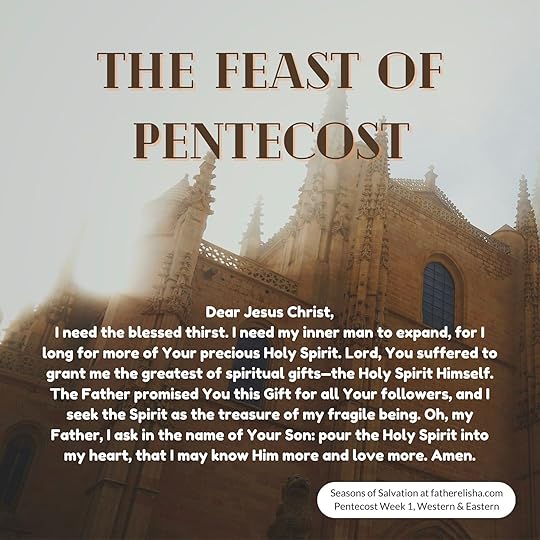
Photo by Bruce Tang on Unsplash
Other Recommended Scriptures For MeditationAlongside to the designated Gospel passages for the Feast of Pentecost, these Scriptures are great to read, meditate on, and pray with in order to receive the grace of the Feast:
Number 11:16–17 (NKJV)So the Lord said to Moses: “Gather to Me seventy men of the elders of Israel, whom you know to be the elders of the people and officers over them; bring them to the tabernacle of meeting, that they may stand there with you. 17 Then I will come down and talk with you there. I will take of the Spirit that is upon you and will put the same upon them; and they shall bear the burden of the people with you, that you may not bear it yourself alone.
Number 11:24–29 (NKJV)So Moses went out and told the people the words of the Lord, and he gathered the seventy men of the elders of the people and placed them around the tabernacle. 25 Then the Lord came down in the cloud, and spoke to him, and took of the Spirit that was upon him, and placed the same upon the seventy elders; and it happened, when the Spirit rested upon them, that they prophesied, although they never did so again.
26 But two men had remained in the camp: the name of one was Eldad, and the name of the other Medad. And the Spirit rested upon them. Now they were among those listed, but who had not gone out to the tabernacle; yet they prophesied in the camp. 27 And a young man ran and told Moses, and said, “Eldad and Medad are prophesying in the camp.”
28 So Joshua the son of Nun, Moses’ assistant, one of his choice men, answered and said, “Moses my lord, forbid them!” 29 Then Moses said to him, “Are you zealous for my sake? Oh, that all the Lord’s people were prophets and that the Lord would put His Spirit upon them!” 30 And Moses returned to the camp, he and the elders of Israel.
Ezekiel 36:24–28 (NKJV)For I will take you from among the nations, gather you out of all countries, and bring you into your own land. 25 Then I will sprinkle clean water on you, and you shall be clean; I will cleanse you from all your filthiness and from all your idols.
26 I will give you a new heart and put a new spirit within you; I will take the heart of stone out of your flesh and give you a heart of flesh. 27 I will put My Spirit within you and cause you to walk in My statutes, and you will keep My judgments and do them. 28 Then you shall dwell in the land that I gave to your fathers; you shall be My people, and I will be your God.
Joel 2:23–32 (NKJV)Be glad then, you children of Zion, and rejoice in the Lord your God; For He has given you the former rain faithfully, and He will cause the rain to come down for you—
The former rain, and the latter rain in the first month. 24 The threshing floors shall be full of wheat, and the vats shall overflow with new wine and oil.
25 “So I will restore to you the years that the swarming locust has eaten, the crawling locust, the consuming locust, and the chewing locust, my great army which I sent among you. 26 You shall eat in plenty and be satisfied, and praise the name of the Lord your God, who has dealt wondrously with you; and My people shall never be put to shame.
27 Then you shall know that I am in the midst of Israel: I am the Lord your God and there is no other. My people shall never be put to shame. 28 “And it shall come to pass afterward that I will pour out My Spirit on all flesh; your sons and your daughters shall prophesy, your old men shall dream dreams, your young men shall see visions. 29 And also on My menservants and on My maidservants I will pour out My Spirit in those days.
30 “And I will show wonders in the heavens and in the earth: Blood and fire and pillars of smoke. 31 The sun shall be turned into darkness, and the moon into blood, before the coming of the great and awesome day of the Lord. 32 And it shall come to pass that whoever calls on the name of the Lord shall be saved. For in Mount Zion and in Jerusalem there shall be deliverance, as the Lord has said, among the remnant whom the Lord calls.
Acts 2:1–4 (NKJV)When the Day of Pentecost had fully come, they were all with one accord in one place. 2 And suddenly there came a sound from heaven, as of a rushing mighty wind, and it filled the whole house where they were sitting. 3 Then there appeared to them divided tongues, as of fire, and one sat upon each of them. 4 And they were all filled with the Holy Spirit and began to speak with other tongues, as the Spirit gave them utterance.
The post Pentecost 1 (Western & Eastern): The Feast of Pentecost first appeared on Father Elisha: Let me take you on an intriguing journey..
May 30, 2025
Ascension 2 (Eastern): The Sunday of the Fathers & Appearing Before God the Father
 The Spiritual Mysteries of the Divine Calendar: Sunday of the Fathers & God the Father ~ June 1–7, 2025 ~
 We will soon continue our focus on the mystery of the Ascension of Jesus and our appearance before God the Father in Him. But first, let us reflect on this Sunday in the Divine Calendar, which is dedicated to the Church Fathers of the First Ecumenical Council.
Gospel for the Sunday of the Fathers: John 17:1–13 (NKJV)Jesus spoke these words, lifted up His eyes to heaven, and said: “Father, the hour has come. Glorify Your Son, that Your Son also may glorify You, 2 as You have given Him authority over all flesh, that He should give eternal life to as many as You have given Him. 3 And this is eternal life, that they may know You, the only true God, and Jesus Christ whom You have sent.
4 I have glorified You on the earth. I have finished the work which You have given Me to do. 5 And now, O Father, glorify Me together with Yourself, with the glory which I had with You before the world was.
6 “I have manifested Your name to the men whom You have given Me out of the world. They were Yours, You gave them to Me, and they have kept Your word. 7 Now they have known that all things which You have given Me are from You. 8 For I have given to them the words which You have given Me; and they have received them, and have known surely that I came forth from You; and they have believed that You sent Me.
9 “I pray for them. I do not pray for the world but for those whom You have given Me, for they are Yours. 10 And all Mine are Yours, and Yours are Mine, and I am glorified in them. 11 Now I am no longer in the world, but these are in the world, and I come to You. Holy Father, keep through Your name those whom You have given Me, that they may be one as We are.
12 While I was with them in the world, I kept them in Your name. Those whom You gave Me I have kept; and none of them is lost except the son of perdition, that the Scripture might be fulfilled. 13 But now I come to You, and these things I speak in the world, that they may have My joy fulfilled in themselves.
Sunday of the Fathers of the First Ecumenical Council
As the persecution of Christians ended during the fourth century, the enemy changed his tactics. When he failed with persecuting the Christians from the outside, he began his evil work within the ranks of the Church.
One major representative of this new destructive approach was the very first version of a heresy that has repeated itself throughout history—and even has roots in some sects today. This is the false teaching that Jesus is not equal to the Father, but merely a created human being. Robbing the divine nature from Jesus makes Him unable to atone for our sins, because only God can restore the divine image within man that was destroyed in the fall.
If Jesus is just a morally good man with revolutionary teaching, He can’t save us from our sins. Only Divinity can restore our divine nature, because a fellow human being, no matter how morally perfect, still bears the inheritance of Adam’s fall.
A priest named Arius in Alexandria, Egypt promoted this false teaching, and in 325 AD, Emperor Constantine gathered 318 bishops in Nicaea from various nations to address the heresy. The outcome was the Orthodox Creed—the Nicene Creed—to affirm the humanity and divinity of Jesus Christ.
As we shall see in this final part of unfolding the mysteries of the grace of resurrection, Jesus is both fully God and fully man.
Building Our New Man: Unfolding the Mysteries of the Grace of Resurrection:The Appearance Before God The Father (John 16:23–33)“And in that day you will ask Me nothing. Most assuredly, I say to you, whatever you ask the Father in My name He will give you. 24 Until now you have asked nothing in My name. Ask, and you will receive, that your joy may be full.
25 “These things I have spoken to you in figurative language; but the time is coming when I will no longer speak to you in figurative language, but I will tell you plainly about the Father. 26 In that day you will ask in My name, and I do not say to you that I shall pray the Father for you; 27 for the Father Himself loves you, because you have loved Me, and have believed that I came forth from God. 28 I came forth from the Father and have come into the world. Again, I leave the world and go to the Father.”
29 His disciples said to Him, “See, now You are speaking plainly, and using no figure of speech! 30 Now we are sure that You know all things, and have no need that anyone should question You. By this we believe that You came forth from God.”
31 Jesus answered them, “Do you now believe? 32 Indeed the hour is coming, yes, has now come, that you will be scattered, each to his own, and will leave Me alone. And yet I am not alone, because the Father is with Me. 33 These things I have spoken to you, that in Me you may have peace. In the world you will have tribulation; but be of good cheer, I have overcome the world.”
The Appearance Before God The Father
What do we mean by this title? Who is meeting God the Father? Verse 23: “And in that day you will ask Me nothing. Most assuredly, I say to you, whatever you ask the Father in My name He will give you.” Shall we ask nothing of Jesus, but only ask the Father in His name?
Also, we read in verse 26: “In that day you will ask in My name…” What day is Jesus referring to? It is the day when Jesus will appear before His Father in Heaven. In this passage, Jesus speaks in figurative language. The “day” Jesus refers to had not yet come when He said this, because it was before His crucifixion and the resurrection.
“That day” refers to Jesus’ work of salvation in His Ascension. Jesus said in verse 33: “In the world you will have tribulation; but be of good cheer, I have overcome the world.” We have tribulation in the world, but Jesus concluded: “but be of good cheer, I have overcome the world.”
The grace in these words not only preserves our mood, but helps us overcome the world. Yet who can truly say with integrity, “I have overcome the world”? We deeply need these words to strengthen us in these dark days.
Ask in My Name
Jesus speaks mysteriously about a future day, and when it comes, Jesus will achieve something for us. He will help us understand what He did for us so we can follow in His footsteps. Verses 23–24 reads: “… I say to you, whatever you ask the Father in My name He will give you. Until now you have asked nothing.” The disciples asked a lot from God, but not in the name of Jesus.
In verse 24, we read: “Until now you have asked nothing in My name. Ask, and you will receive, that your joy may be full.” Jesus wants us to receive the fullness of joy. If we ask the Father in Jesus’ name, He will keep us in good cheer, and we will know that Jesus has overcome the world.
We read in verse 25: “These things I have spoken to you in figurative language; but the time is coming when I will no longer speak to you in figurative language, but I will tell you plainly about the Father.” Jesus is about to unfold this mystery and repeats it in verses 26–27: “In that day you will ask in My name, and I do not say to you that I shall pray the Father for you; for the Father Himself loves you, because you have loved Me, and have believed that I came forth from God.”
The Ascension of Our Human Nature
Jesus makes sure the disciples understood what He meant by “coming from God” (John 8:42; 13:3) in verse 28: “I came forth from the Father and have come into the world. Again, I leave the world and go to the Father.”
In the Ascension, Jesus ascended into Heaven with His glorious, resurrected body. This is the same body He took from our humanity in the miraculous conception, but the Resurrection transformed it into a glorious state. Jesus ascended with our body to His Father and sat down at the right hand of God. Jesus returned to the bosom of the Father, from whom He had come at the time of His Incarnation.
“He was received up into heaven, and sat down at the right hand of God” (Mark 16:19b). “I came forth from the Father and have come into the world. Again, I leave the world and go to the Father” (John 16:28). “The only begotten Son, who is in the bosom of the Father, He has declared Him” (John 1:18b). Meeting God the Father becomes possible for us as well.

Photo by Aswin on Unsplash
Before God The Father: Through the Incarnation of JesusThe divine nature of Jesus always abides in union with the Holy Trinity (John 1:18b) and Jesus—in His divinity—never separated from the Godhead when He became man. However, at the Incarnation of Jesus, He left the bosom of the Father in His human nature through His indescribable self-emptying and humility.
“Who, being in the form of God, did not consider it robbery to be equal with God, but made Himself of no reputation, taking the form of a bondservant, and coming in the likeness of men. And being found in appearance as a man, He humbled Himself…” (Phil. 2:6–8a). “No one has ascended to heaven but He who came down from heaven, that is, the Son of Man who is in heaven” (John 3:13).
The Son of Man was always in Heaven by His divine nature, united with the Godhead; yet He came down from Heaven in His human nature, remaining one person—Jesus Christ. How great is the mystery of the Incarnation and His love toward us.
Through His human nature, Jesus left the bosom of the Father to unite Himself with humanity. By His death and resurrection, Jesus lifted the human nature from the darkness of death and Hades. And finally, by His Ascension, Jesus brought humanity back into the bosom of the Father in the uncreated light of the Holy Trinity. Paradise—our ancient delight—has been opened to us once more, and our meeting with God the Father is now a continual reality.
Before God The Father: Through Pneumatization
In the Ascension, Jesus’ body went through pneumatization. According to the Apostle Paul, the resurrection is neither merely the return of life to the body, nor the creation of a new body out of nothing.
The resurrection is a radical transformation of the mortal body through an act of creation. Apostle Paul speaks of Christ’s pneumatization—the transformation from a mere bodily form to a spiritual body. As Paul writes: “It is sown a natural body, it is raised a spiritual body. There is a natural body, and there is a spiritual body” (1 Cor. 15:44).
To be pneumatized means “to become spiritual.” Christ’s pneumatization resulted from the Holy Spirit’s miraculous work on His body, giving it transparency and illumined it with glory.
The Mystical Body of Christ
The Ascension mystically enlarged Jesus’ body so that He could contain all of humanity. We say that the Church is the Body of Jesus Christ, and that all believers are its members. “Now you are the body of Christ, and members individually” (1 Cor. 12:27).
The Body of Christ is all over the world, but simultaneously in the bosom of the Father and by His right hand—meaning a place of rest, strength, and authority. Still, this mystical body is the very body of Jesus, which He took from our humanity through the Virgin Mary, by the Holy Spirit.
“Or do you not know that your body is the temple of the Holy Spirit who is in you, whom you have from God, and you are not your own? For you were bought at a price; therefore glorify God in your body and in your spirit, which are God’s” (1 Cor. 6:19–20). “I have been crucified with Christ; it is no longer I who live, but Christ lives in me” (Gal. 2:20a).
“Which He worked in Christ when He raised Him from the dead and seated Him at His right hand in the heavenly places, far above all principality and power and might and dominion, and every name that is named, not only in this age but also in that which is to come. And He put all things under His feet, and gave Him to be head over all things to the church, which is His body, the fullness of Him who fills all in all” (Eph. 1:20–23).
To Be With Him
Through pneumatization, Jesus’ body could contain us and the entire world. So where is Jesus today? He sits in the bosom of the Father and by His right hand. Therefore, after His pneumatization and meeting God the Father, Jesus made it possible for us to be with Him in the same place: in the bosom of the Father and at His right hand. This is the cosmic truth of our salvation.
Now we see how important the Ascension is for us, and what this salvific act has accomplished. The work of His Ascension is what Jesus referred to when He spoke to His disciples of “that day” (verse 26). That day is when Jesus brought you and I into the bosom of the Father and seated at His right hand — meeting God the Father.
Do we need to have reached full spiritual maturity (Eph. 4:13) and have Christ fully formed in our inner man (Gal. 4:19) before we can be at the right hand of the Father? No. While Christ is being formed within us, we rest in the bosom of the Father. What heavenly grace! What magnificent salvation God has given us!
Before God The Father: The Privileges
Jesus revealed to the disciples their privileges in John 16:26–27: “In that day you will ask in My name, and I do not say to you that I shall pray the Father for you; for the Father Himself loves you, because you have loved Me, and have believed that I came forth from God.”
And in verse 23, we read: “And in that day you will ask Me nothing. Most assuredly, I say to you, whatever you ask the Father in My name He will give you.” Also, the end of verse 24: “… that your joy may be full.”
So, does this mean we can ask for anything and the Father will grant us as much as we are able to bear? Yes, and no. Yes, because this happens when we are in Christ. So, no—we have to activate our position by working out this part of our salvation (Phil. 2:12).
What we need to do to make our position in the Father active is precisely what the previous Feast of Mid-Pentecost and the Sundays have prepared us for. Now, on the last Sunday of the Season of Resurrection and Ascension, our message is: “Nothing is impossible for the believer.”
If we understand the depths of our salvation, and how to activate this privilege in our inner lives; if we fully understand and believe that Christ ascended and that He is still in His resurrected and ascended body—which contains you and me—and that Jesus is currently in the bosom of the Father, nothing will be impossible for us. By meeting God the Father, we will continuously grow in love and maturity as His children.
Granted Every Good Gift
As we grow in our faith, and Christ is formed within, we pray with the mind of Christ according to the will of God and He grants our requests. “For ‘who has known the mind of the Lord that he may instruct Him?’ But we have the mind of Christ” (1. Cor. 2:16). The Father knows us and loves us, and He cannot withhold anything we truly need from His sons and daughters.
“Ask, and it will be given to you; seek, and you will find; knock, and it will be opened to you. For everyone who asks receives, and he who seeks finds, and to him who knocks it will be opened. Or what man is there among you who, if his son asks for bread, will give him a stone? Or if he asks for a fish, will he give him a serpent? If you then, being evil, know how to give good gifts to your children, how much more will your Father who is in heaven give good things to those who ask Him!” (Matt. 7:7–11)
Notice that the Father, because He is a good, won’t grant His children what is bad for them—even though the children might perceive those things as good.
“If you then, being evil, know how to give good gifts to your children, how much more will your heavenly Father give the Holy Spirit to those who ask Him!” (Luke 11:13) The Father can give anything—any good thing—and we won’t even ask Jesus. Instead, we will pray: “In the name of Jesus…” because we are in the Father through Jesus Christ as the Son ascended with us up to His Father’s throne. In continually meeting God the Father, we learn what to ask for.
Rest
As long as we are members of Christ’s Body, we are in the Father. Nothing will be impossible. “With men this is impossible, but with God all things are possible” (Matt. 19:26b). Through meeting God the Father in Christ, we discover that we can endure even the most turbulent storms in our lives with deeply anchored peace.
If we rest in Jesus and He has found His rest in us, we won’t be afraid or desire anything. Can Jesus find rest in us as He found rest in the house of Lazarus in Bethany? We might remember from Holy Week that their house was His house of rest. “And Jesus said to him, ‘Foxes have holes and birds of the air have nests, but the Son of Man has nowhere to lay His head’” (Luke 9:58).
During Holy Week, Jesus spent the nights in Bethany. He found rest there, and people who understood His heart—even though their sanctification was not yet complete. “And Jesus went into Jerusalem and into the temple. So when He had looked around at all things, as the hour was already late, He went out to Bethany with the twelve. Now the next day, when they had come out from Bethany…” (Mark 11:11–12). “Then He left them and went out of the city to Bethany, and He lodged there” (Matt. 21:17).
Even though we are not yet fully Christlike, and still have battles to fight against our old human nature—nor have discovered all that we are called to—Christ can still find rest in us.
What differentiates one local church or group from another? It is this: has Jesus found rest there? Can Jesus rest His head in our church, in our home, and in our individual lives?

Photo by Greg Jenkins on Unsplash
Before God the Father: How Can We Do This?How can we make our lives a place of rest for Jesus so we can rest with Him in the bosom of the Father, activating our position in Heaven? The previous talks about the Living Light (Sunday of the Blind Man), the Living Way (Sunday of the Paralytic), and the Feast of Mid-Pentecost showed us how.
1. The Feast of Mid-Pentecost (John 7:14–30)
In the Feast of Mid-Pentecost, we talked about how Jesus came to do the will of His Father, and that our relationship with God the Father only comes from Jesus’ relationship with His Father.
We also discussed how the teaching of Jesus carried a unique authority—one that enlightened our minds and spirits to see even our weaknesses as strengths through the divine-human nature of the resurrected Christ.
Instead of being defeated by our weaknesses, the grace of Resurrection uses them to create opportunities for us to pray and witness the Father’s miraculous intervention. By meeting God the Father, the outcome of our trials will not end in failure, but in a deepened experience of being in the Father.
2. Sunday of the Blind Man and the Mystery of the Living Light, The Living Word (John 12:35–50)
On the Sunday about the Living Light, Jesus actually spoke about the way to the Father.
Let us read from John 12:44–50: “Then Jesus cried out and said, ‘He who believes in Me, believes not in Me but in Him who sent Me. And he who sees Me sees Him who sent Me. I have come as a light into the world, that whoever believes in Me should not abide in darkness. And if anyone hears My words and does not believe, I do not judge him; for I did not come to judge the world but to save the world.
‘He who rejects Me, and does not receive My words, has that which judges him—the word that I have spoken will judge him in the last day. For I have not spoken on My own authority; but the Father who sent Me gave Me a command, what I should say and what I should speak. And I know that His command is everlasting life. Therefore, whatever I speak, just as the Father has told Me, so I speak.’”
Jesus spoke about the Father in verse 44: “Then Jesus cried out and said, ‘He who believes in Me, believes not in Me but in Him who sent Me.’” His listeners could not understand who had commissioned Him, but through His Ascension, Jesus gave us a personal experience of meeting God the Father—the One who sent Him.
A Mystery of the Holy Trinity
In John 12:45, we read: “And he who sees Me sees Him who sent Me.” And verse 49: “For I have not spoken on My own authority; but the Father who sent Me gave Me a command, what I should say and what I should speak.” How can Jesus say He has not spoken in His own authority when He is God? It is because the Father told Jesus everything He should say.
Jesus abides in union with the other two Persons of the Godhead and dwells with the Father all the time. The Persons of the Holy Trinity do not lose their identity and uniqueness in this unity. Jesus cannot be separated from the Father, and in perfect divine humility, the Persons of the Holy Trinity humble themselves and put the other in front all the time.
“And I know that His command is everlasting life. Therefore, whatever I speak, just as the Father has told Me, so I speak” (verse 50). The will of Jesus is the will of the Father. The will of Jesus and the Father is one, without losing their divine distinctiveness.
Just as in today’s Sunday gospel of Appearing Before God the Father, if we desire to be filled with joy and overcome the world, then we have to do like Jesus: dwell in the bosom of the Father and by His right hand. In the Sunday gospel of the Living Way (Point 3 below), Jesus says plainly: “He who has seen Me has seen the Father; so how can you say, ‘Show us the Father’? Do you not believe that I am in the Father, and the Father in Me?” (John 14:9b–10a)
Doing the Father’s Will
Jesus submitted all His powers and desires to the will of the Father. But through this humility, the Father was always with Jesus, guiding Him and providing for Him in deep communion.
Likewise, after completing the work of salvation and ascending with our human nature, Jesus made it possible for us to be with the Father—if we surrender to Him as He surrendered to His Father. We activate our privilege of meeting God the Father when we live as Jesus lived with His Father during His days on earth.
“Jesus answered and said to him, ‘If anyone loves Me, he will keep My word; and My Father will love him, and We will come to him and make Our home with him’” (John 14:23). The Greek word translated “home” also means “residence,” “abode,” and “dwell”—a place of rest.
If we seek to always do the will of the Father, Christ finds rest in us. Then we find our rest in Jesus, in the bosom of the Father.
“A little while longer and the world will see Me no more, but you will see Me. Because I live, you will live also. At that day you will know that I am in My Father, and you in Me, and I in you. He who has My commandments and keeps them, it is he who loves Me. And he who loves Me will be loved by My Father, and I will love him and manifest Myself to him” (John 14:19–21).
3. Sunday of the Paralytic and the Mystery of the Living Way (John 14:1–11)
On the Sunday about the Living Way, we read in John 14:1–2: “Let not your heart be troubled; you believe in God, believe also in Me. In My Father’s house are many mansions; if it were not so, I would have told you. I go to prepare a place for you.”
Jesus addresses His relationship with the Father. How is Jesus going to prepare a place for us, and where? This is the place in the bosom of the Father. How will this happen? The Ascension of Christ.
In John 14:3, we read: “And if I go and prepare a place for you, I will come again and receive you to Myself; that where I am, there you may be also.” We can see Jesus’ desire for us to be with Him in the Father—first through pneumatization during the Church Age, and ultimately at His Second Coming.
We read in John 14:4–5: “‘And where I go you know, and the way you know.’ Thomas said to Him, ‘Lord, we do not know where You are going, and how can we know the way?’” The disciples understood nothing, so Jesus gently answered Thomas in John 14:6: “Jesus said to him, ‘I am the way, the truth, and the life. No one comes to the Father except through Me.’”
It seems like the graces of the Resurrection are linked to meeting God the Father. Why is this? Because Jesus came so that we might know the Father as He knows Him.
Experiencing the Answer
In John 14:7–8, we read: “‘If you had known Me, you would have known My Father also; and from now on you know Him and have seen Him.’ Philip said to Him, ‘Lord, show us the Father, and it is sufficient for us.’” Phillip asked this in his excitement because every Jew knew it was written: “You cannot see My face; for no man shall see Me, and live” (Ex. 33:20).
Jesus answered Philip in verse 9: “Jesus said to him, ‘Have I been with you so long, and yet you have not known Me, Philip? He who has seen Me has seen the Father; so how can you say, “Show us the Father”?’” On the day of the Ascension, the disciples received their answer when Jesus lifted their hearts with Him to Heaven, allowing them to experience meeting God the Father.
John 14:10 reads: “Do you not believe that I am in the Father, and the Father in Me …?” If we are in Jesus, we will be in the Father in our heavenly place. John 14:11: “Believe Me that I am in the Father and the Father in Me, or else believe Me for the sake of the works themselves.” When Jesus repeats something, He emphasizes those words. Everything Jesus says here leads us to the Father.
Concluding the Appearance Before God The Father
The Gospel passages of the Feast of Mid-Pentecost, the Living Light, and the Living Way prepared us for the Feast of Ascension to the Father. Also, the key to enter the Season of Resurrection—the heavenly places—contained a mystical aspect compared to the more concrete keys to the other Seasons of Salvation. We are moving from what we know in the earthly realm into the heavenly and our new divine-human nature—completely new territory for us.
If we do what Jesus does—doing only the will of the Father—we will be transformed into the most joyful people. We will have everything we need to live a good life pleasing to the Father. And we will ask in the name of Jesus, and the Father immediately grants our requests. This is our place in the bosom of the Father and by His almighty right hand.
How can we summarize the practical points for living in the bosom of the Father?
Doing the will of the Father. (John 7:17, the Feast of Mid-Pentecost.)Asking for the Father to be glorified. (John 7:18, the Feast of Mid-Pentecost.)Live and act in righteousness. (A major theme in the messages on the Sundays of the Living Light [allowing light to reveal and expel darkness] and the Living Way [make our conducts and customs like Jesus’ righteous way of life].)Concluding the Season of Resurrection and Ascension
We will conclude the Season of Resurrection and Ascension with Mary Magdalene:
“Now when she had said this, she turned around and saw Jesus standing there, and did not know that it was Jesus. Jesus said to her, ‘Woman, why are you weeping? Whom are you seeking?’ She, supposing Him to be the gardener, said to Him, ‘Sir, if You have carried Him away, tell me where You have laid Him, and I will take Him away.’ Jesus said to her, ‘Mary!’ She turned and said to Him, ‘Rabboni!’ (which is to say, Teacher). Jesus said to her, ‘Do not cling to Me, for I have not yet ascended to My Father; but go to My brethren and say to them, “I am ascending to My Father and your Father, and to My God and your God.”’ Mary Magdalene came and told the disciples that she had seen the Lord, and that He had spoken these things to her” (John 20:14–18).
Here, Jesus reveals the mystery of the Ascension. Through His Ascension to the Father—with us present in Him—Jesus became our Brother, and His Father became our Father. In Christ, the Ascension lifts us up and restores us to our original dignity and glory.
“For it was fitting for Him, for whom are all things and by whom are all things, in bringing many sons to glory, to make the captain of their salvation perfect through sufferings. For both He who sanctifies and those who are being sanctified are all of one, for which reason He is not ashamed to call them brethren” (Heb. 2:10–11).
The Promise of the Father
We can almost hear the excitement in the voice of Jesus as He arrives Heaven after His Ascension: “Here am I and the children whom God has given Me” (Heb. 2:13b). Jesus declares His victory in the presence of the Holy Spirit and the angels around the Father’s throne.
Jesus said to Mary Magdalene: “Do not cling to Me, for I have not yet ascended to My Father.” Mary wanted to know Jesus and stay close to Him, but Jesus had even greater things to accomplish for her and us all. Jesus humbled and denied Himself to the extreme by dying on a cross, and He entered Hades so He could bring us back into a relationship with the Holy Trinity—Father, Son, and Holy Spirit.
“And Jesus came and spoke to them, saying, ‘All authority has been given to Me in heaven and on earth. Go therefore and make disciples of all the nations, baptizing them in the name of the Father and of the Son and of the Holy Spirit, teaching them to observe all things that I have commanded you; and lo, I am with you always, even to the end of the age.’ Amen” (Matt. 28:18–20).
Jesus wanted to restore us to the state of Paradise.
We can almost imagine Jesus says to Mary Magdalene: “Just wait. Rather, cling to Me when I ascend, so we can go together to the Father. Up there, I will give you the Promise of the Father, the Holy Spirit.”
Without understanding the mysteries and graces of the Resurrection and Ascension of Jesus Christ, so many realities of our faith remain hidden. May the Holy Spirit come and guide us into all truth.
Glory be to the Holy Trinity. Amen.
Thank youMay God reward your hunger if you have reached the end of this way-too-long post. Thank you for investing so much time. It is my joy to be on this journey together. Let us pray for the grace to deeply enter our position in Christ, in the bosom of God the Father. God bless you.
Please leave a comment below—we’d love to hear your thoughts. If you found this post helpful, feel free to share it using the buttons at the top of the page.
Join the Journey Through the Seasons of SalvationJoin us on this weekly journey through the Seasons of Salvation as we walk in the footsteps of Jesus Christ through the key seasons of His life.
Sign up to receive this year’s Divine Calendar, which introduces the Seasons of Salvation and guides you through the journey ahead. As a welcome gift, you’ll also receive my young adult novel, The Legend of the Divine Calendar, delivered straight to your inbox.
Visit the Seasons of Salvation blog for insights into the coming week, posted every Saturday. We’d be honored to have you join us.
Save Your Prayer Card on Your Smartphone
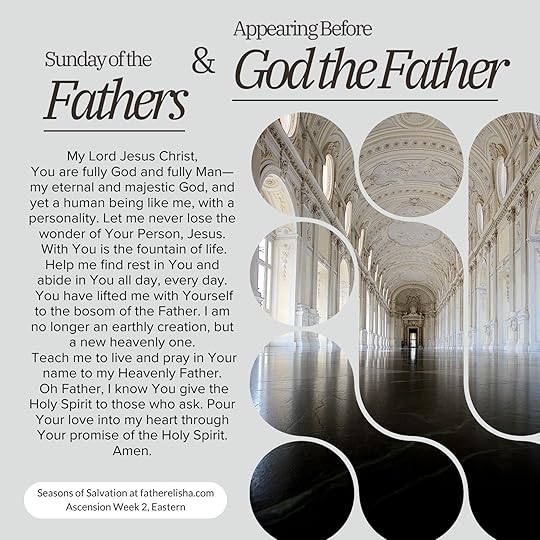
Photo by Paolo Chiabrando on Unsplash
The post Ascension 2 (Eastern): The Sunday of the Fathers & Appearing Before God the Father first appeared on Father Elisha: Let me take you on an intriguing journey..
Ascension 2 (Western): Meeting God the Father
The Spiritual Mysteries of the Divine Calendar: Meeting God the Father ~ June 1–7, 2025 ~ We have reached the last Sunday in the Season of Resurrection before the fiftieth day—the Feast of Pentecost—with its spiritual theme of meeting God the Father, when Jesus appeared before the Father after His ascension.
From the Feast of Ascension until Pentecost, we continue to celebrate both the Resurrection and the Ascension of Jesus Christ. This Sunday links closely to the Feast of Ascension, the Feast of Mid-Pentecost, and the Sundays of the Living Light and the Living Way. And as we explained on the Feast of the Mid-Pentecost, this midpoint marked a shift of focus within the Divine Calendar toward God the Father.
After we have talked about the Sunday Gospel of this Sunday, we will rewind our journey to see how previous two Sundays foreshadowed today’s message. We will see Jesus—and us in Him—meeting God the Father and what this signifies for us. Then at the end of this post, we will conclude the Season of Resurrection and Ascension.
Sunday Gospel of Meeting God the Father: John 16:23–33 (NKJV)“And in that day you will ask Me nothing. Most assuredly, I say to you, whatever you ask the Father in My name He will give you. 24 Until now you have asked nothing in My name. Ask, and you will receive, that your joy may be full.
25 “These things I have spoken to you in figurative language; but the time is coming when I will no longer speak to you in figurative language, but I will tell you plainly about the Father. 26 In that day you will ask in My name, and I do not say to you that I shall pray the Father for you; 27 for the Father Himself loves you, because you have loved Me, and have believed that I came forth from God. 28 I came forth from the Father and have come into the world. Again, I leave the world and go to the Father.”
29 His disciples said to Him, “See, now You are speaking plainly, and using no figure of speech! 30 Now we are sure that You know all things, and have no need that anyone should question You. By this we believe that You came forth from God.”
31 Jesus answered them, “Do you now believe? 32 Indeed the hour is coming, yes, has now come, that you will be scattered, each to his own, and will leave Me alone. And yet I am not alone, because the Father is with Me. 33 These things I have spoken to you, that in Me you may have peace. In the world you will have tribulation; but be of good cheer, I have overcome the world.”
Meeting God the Father
What do we mean by this title? Who is meeting God the Father? Verse 23: “And in that day you will ask Me nothing. Most assuredly, I say to you, whatever you ask the Father in My name He will give you.” Shall we ask nothing of Jesus, but only ask the Father in His name?
Also, we read in verse 26: “In that day you will ask in My name…” What day is Jesus referring to? It is the day when Jesus will appear before His Father in Heaven. In this passage, Jesus speaks in figurative language. The “day” Jesus refers to had not yet come when He said this, because it was before His crucifixion and the resurrection.
“That day” refers to Jesus’ work of salvation in His Ascension. Jesus said in verse 33: “In the world you will have tribulation; but be of good cheer, I have overcome the world.” We have tribulation in the world, but Jesus concluded: “but be of good cheer, I have overcome the world.”
The grace in these words not only preserves our mood, but helps us overcome the world. Yet who can truly say with integrity, “I have overcome the world”? We deeply need these words to strengthen us in these dark days.
Ask in My Name
Jesus speaks mysteriously about a future day, and when it comes, Jesus will achieve something for us. He will help us understand what He did for us so we can follow in His footsteps. Verses 23–24 reads: “… I say to you, whatever you ask the Father in My name He will give you. Until now you have asked nothing.” The disciples asked a lot from God, but not in the name of Jesus.
In verse 24, we read: “Until now you have asked nothing in My name. Ask, and you will receive, that your joy may be full.” Jesus wants us to receive the fullness of joy. If we ask the Father in Jesus’ name, He will keep us in good cheer, and we will know that Jesus has overcome the world.
We read in verse 25: “These things I have spoken to you in figurative language; but the time is coming when I will no longer speak to you in figurative language, but I will tell you plainly about the Father.” Jesus is about to unfold this mystery and repeats it in verses 26–27: “In that day you will ask in My name, and I do not say to you that I shall pray the Father for you; for the Father Himself loves you, because you have loved Me, and have believed that I came forth from God.”
The Ascension of Our Human Nature
Jesus makes sure the disciples understood what He meant by “coming from God” (John 8:42; 13:3) in verse 28: “I came forth from the Father and have come into the world. Again, I leave the world and go to the Father.”
In the Ascension, Jesus ascended into Heaven with His glorious, resurrected body. This is the same body He took from our humanity in the miraculous conception, but the Resurrection transformed it into a glorious state. Jesus ascended with our body to His Father and sat down at the right hand of God. Jesus returned to the bosom of the Father, from whom He had come at the time of His Incarnation.
“He was received up into heaven, and sat down at the right hand of God” (Mark 16:19b). “I came forth from the Father and have come into the world. Again, I leave the world and go to the Father” (John 16:28). “The only begotten Son, who is in the bosom of the Father, He has declared Him” (John 1:18b). Meeting God the Father becomes possible for us as well.

Photo by Cristina Gottardi on Unsplash
Meeting God the Father: Through the Incarnation of JesusThe divine nature of Jesus always abides in union with the Holy Trinity (John 1:18b) and Jesus—in His divinity—never separated from the Godhead when He became man. However, at the Incarnation of Jesus, He left the bosom of the Father in His human nature through His indescribable self-emptying and humility.
“Who, being in the form of God, did not consider it robbery to be equal with God, but made Himself of no reputation, taking the form of a bondservant, and coming in the likeness of men. And being found in appearance as a man, He humbled Himself…” (Phil. 2:6–8a). “No one has ascended to heaven but He who came down from heaven, that is, the Son of Man who is in heaven” (John 3:13).
The Son of Man was always in Heaven by His divine nature, united with the Godhead; yet He came down from Heaven in His human nature, remaining one person—Jesus Christ. How great is the mystery of the Incarnation and His love toward us.
Through His human nature, Jesus left the bosom of the Father to unite Himself with humanity. By His death and resurrection, Jesus lifted the human nature from the darkness of death and Hades. And finally, by His Ascension, Jesus brought humanity back into the bosom of the Father in the uncreated light of the Holy Trinity. Paradise—our ancient delight—has been opened to us once more, and our meeting with God the Father is now a continual reality.
Meeting God the Father: Through Pneumatization
In the Ascension, Jesus’ body went through pneumatization. According to the Apostle Paul, the resurrection is neither merely the return of life to the body, nor the creation of a new body out of nothing.
The resurrection is a radical transformation of the mortal body through an act of creation. Apostle Paul speaks of Christ’s pneumatization—the transformation from a mere bodily form to a spiritual body. As Paul writes: “It is sown a natural body, it is raised a spiritual body. There is a natural body, and there is a spiritual body” (1 Cor. 15:44).
To be pneumatized means “to become spiritual.” Christ’s pneumatization resulted from the Holy Spirit’s miraculous work on His body, giving it transparency and illumined it with glory.
The Mystical Body of Christ
The Ascension mystically enlarged Jesus’ body so that He could contain all of humanity. We say that the Church is the Body of Jesus Christ, and that all believers are its members. “Now you are the body of Christ, and members individually” (1 Cor. 12:27).
The Body of Christ is all over the world, but simultaneously in the bosom of the Father and by His right hand—meaning a place of rest, strength, and authority. Still, this mystical body is the very body of Jesus, which He took from our humanity through the Virgin Mary, by the Holy Spirit.
“Or do you not know that your body is the temple of the Holy Spirit who is in you, whom you have from God, and you are not your own? For you were bought at a price; therefore glorify God in your body and in your spirit, which are God’s” (1 Cor. 6:19–20). “I have been crucified with Christ; it is no longer I who live, but Christ lives in me” (Gal. 2:20a).
“Which He worked in Christ when He raised Him from the dead and seated Him at His right hand in the heavenly places, far above all principality and power and might and dominion, and every name that is named, not only in this age but also in that which is to come. And He put all things under His feet, and gave Him to be head over all things to the church, which is His body, the fullness of Him who fills all in all” (Eph. 1:20–23).
To Be With Him
Through pneumatization, Jesus’ body could contain us and the entire world. So where is Jesus today? He sits in the bosom of the Father and by His right hand. Therefore, after His pneumatization and meeting God the Father, Jesus made it possible for us to be with Him in the same place: in the bosom of the Father and at His right hand. This is the cosmic truth of our salvation.
Now we see how important the Ascension is for us, and what this salvific act has accomplished. The work of His Ascension is what Jesus referred to when He spoke to His disciples of “that day” (verse 26). That day is when Jesus brought you and I into the bosom of the Father and seated at His right hand — meeting God the Father.
Do we need to have reached full spiritual maturity (Eph. 4:13) and have Christ fully formed in our inner man (Gal. 4:19) before we can be at the right hand of the Father? No. While Christ is being formed within us, we rest in the bosom of the Father. What heavenly grace! What magnificent salvation God has given us!
Meeting God the Father: The Privileges
Jesus revealed to the disciples their privileges in verses 26–27 of the Sunday Gospel: “In that day you will ask in My name, and I do not say to you that I shall pray the Father for you; for the Father Himself loves you, because you have loved Me, and have believed that I came forth from God.”
And in verse 23, we read: “And in that day you will ask Me nothing. Most assuredly, I say to you, whatever you ask the Father in My name He will give you.” Also, the end of verse 24: “… that your joy may be full.”
So, does this mean we can ask for anything and the Father will grant us as much as we are able to bear? Yes, and no. Yes, because this happens when we are in Christ. So, no—we have to activate our position by working out this part of our salvation (Phil. 2:12).
What we need to do to make our position in the Father active is precisely what the previous Feast of Mid-Pentecost and the Sundays have prepared us for. Now, on the last Sunday of the Season of Resurrection and Ascension, our message is: “Nothing is impossible for the believer.”
If we understand the depths of our salvation, and how to activate this privilege in our inner lives; if we fully understand and believe that Christ ascended and that He is still in His resurrected and ascended body—which contains you and me—and that Jesus is currently in the bosom of the Father, nothing will be impossible for us. By meeting God the Father, we will continuously grow in love and maturity as His children.
Granted Every Good Gift
As we grow in our faith, and Christ is formed within, we pray with the mind of Christ according to the will of God and He grants our requests. “For ‘who has known the mind of the Lord that he may instruct Him?’ But we have the mind of Christ” (1. Cor. 2:16). The Father knows us and loves us, and He cannot withhold anything we truly need from His sons and daughters.
“Ask, and it will be given to you; seek, and you will find; knock, and it will be opened to you. For everyone who asks receives, and he who seeks finds, and to him who knocks it will be opened. Or what man is there among you who, if his son asks for bread, will give him a stone? Or if he asks for a fish, will he give him a serpent? If you then, being evil, know how to give good gifts to your children, how much more will your Father who is in heaven give good things to those who ask Him!” (Matt. 7:7–11)
Notice that the Father, because He is a good, won’t grant His children what is bad for them—even though the children might perceive those things as good.
“If you then, being evil, know how to give good gifts to your children, how much more will your heavenly Father give the Holy Spirit to those who ask Him!” (Luke 11:13) The Father can give anything—any good thing—and we won’t even ask Jesus. Instead, we will pray: “In the name of Jesus…” because we are in the Father through Jesus Christ as the Son ascended with us up to His Father’s throne. In continually meeting God the Father, we learn what to ask for.
Rest
As long as we are members of Christ’s Body, we are in the Father. Nothing will be impossible. “With men this is impossible, but with God all things are possible” (Matt. 19:26b). Through meeting God the Father in Christ, we discover that we can endure even the most turbulent storms in our lives with deeply anchored peace.
If we rest in Jesus and He has found His rest in us, we won’t be afraid or desire anything. Can Jesus find rest in us as He found rest in the house of Lazarus in Bethany? We might remember from Holy Week that their house was His house of rest. “And Jesus said to him, ‘Foxes have holes and birds of the air have nests, but the Son of Man has nowhere to lay His head’” (Luke 9:58).
During Holy Week, Jesus spent the nights in Bethany. He found rest there, and people who understood His heart—even though their sanctification was not yet complete. “And Jesus went into Jerusalem and into the temple. So when He had looked around at all things, as the hour was already late, He went out to Bethany with the twelve. Now the next day, when they had come out from Bethany…” (Mark 11:11–12). “Then He left them and went out of the city to Bethany, and He lodged there” (Matt. 21:17).
Even though we are not yet fully Christlike, and still have battles to fight against our old human nature—nor have discovered all that we are called to—Christ can still find rest in us.
What differentiates one local church or group from another? It is this: has Jesus found rest there? Can Jesus rest His head in our church, in our home, and in our individual lives?

Photo by Sabine Ojeil on Unsplash
Meeting God the Father: How Can We Do This?How can we make our lives a place of rest for Jesus so we can rest with Him in the bosom of the Father, activating our position in Heaven? The previous Sunday gospels and the Feast of Mid-Pentecost showed us how.
1. The Feast of Mid-Pentecost (John 7:14–30)
In the Feast of Mid-Pentecost, we talked about how Jesus came to do the will of His Father, and that our relationship with God the Father only comes from Jesus’ relationship with His Father.
We also discussed how the teaching of Jesus carried a unique authority—one that enlightened our minds and spirits to see even our weaknesses as strengths through the divine-human nature of the resurrected Christ.
Instead of being defeated by our weaknesses, the grace of Resurrection uses them to create opportunities for us to pray and witness the Father’s miraculous intervention. By meeting God the Father, the outcome of our trials will not end in failure, but in a deepened experience of being in the Father.
2. Sunday of The Living Light, The Living Word (John 12:35–50)
On the first Sunday after Mid-Pentecost, Jesus actually spoke about the way to the Father.
Let us read from John 12:44–50: “Then Jesus cried out and said, ‘He who believes in Me, believes not in Me but in Him who sent Me. And he who sees Me sees Him who sent Me. I have come as a light into the world, that whoever believes in Me should not abide in darkness. And if anyone hears My words and does not believe, I do not judge him; for I did not come to judge the world but to save the world.
‘He who rejects Me, and does not receive My words, has that which judges him—the word that I have spoken will judge him in the last day. For I have not spoken on My own authority; but the Father who sent Me gave Me a command, what I should say and what I should speak. And I know that His command is everlasting life. Therefore, whatever I speak, just as the Father has told Me, so I speak.’”
Jesus spoke about the Father in verse 44: “Then Jesus cried out and said, ‘He who believes in Me, believes not in Me but in Him who sent Me.’” His listeners could not understand who had commissioned Him, but through His Ascension, Jesus gave us a personal experience of meeting God the Father—the One who sent Him.
A Mystery of the Holy Trinity
In John 12:45, we read: “And he who sees Me sees Him who sent Me.” And verse 49: “For I have not spoken on My own authority; but the Father who sent Me gave Me a command, what I should say and what I should speak.” How can Jesus say He has not spoken in His own authority when He is God? It is because the Father told Jesus everything He should say.
Jesus abides in union with the other two Persons of the Godhead and dwells with the Father all the time. The Persons of the Holy Trinity do not lose their identity and uniqueness in this unity. Jesus cannot be separated from the Father, and in perfect divine humility, the Persons of the Holy Trinity humble themselves and put the other in front all the time.
“And I know that His command is everlasting life. Therefore, whatever I speak, just as the Father has told Me, so I speak” (verse 50). The will of Jesus is the will of the Father. The will of Jesus and the Father is one, without losing their divine distinctiveness.
Just as in today’s Sunday gospel of Meeting God the Father, if we desire to be filled with joy and overcome the world, then we have to do like Jesus: dwell in the bosom of the Father and by His right hand. In the Sunday gospel of the Living Way (Point 3 below), Jesus says plainly: “He who has seen Me has seen the Father; so how can you say, ‘Show us the Father’? Do you not believe that I am in the Father, and the Father in Me?” (John 14:9b–10a)
Doing the Father’s Will
Jesus submitted all His powers and desires to the will of the Father. But through this humility, the Father was always with Jesus, guiding Him and providing for Him in deep communion.
Likewise, after completing the work of salvation and ascending with our human nature, Jesus made it possible for us to be with the Father—if we surrender to Him as He surrendered to His Father. We activate our privilege of meeting God the Father when we live as Jesus lived with His Father during His days on earth.
“Jesus answered and said to him, ‘If anyone loves Me, he will keep My word; and My Father will love him, and We will come to him and make Our home with him’” (John 14:23). The Greek word translated “home” also means “residence,” “abode,” and “dwell”—a place of rest.
If we seek to always do the will of the Father, Christ finds rest in us. Then we find our rest in Jesus, in the bosom of the Father.
“A little while longer and the world will see Me no more, but you will see Me. Because I live, you will live also. At that day you will know that I am in My Father, and you in Me, and I in you. He who has My commandments and keeps them, it is he who loves Me. And he who loves Me will be loved by My Father, and I will love him and manifest Myself to him” (John 14:19–21).
3. Sunday of The Living Way (John 14:1–11)
On this previous Sunday, we read in John 14:1–2: “Let not your heart be troubled; you believe in God, believe also in Me. In My Father’s house are many mansions; if it were not so, I would have told you. I go to prepare a place for you.”
Jesus addresses His relationship with the Father. How is Jesus going to prepare a place for us, and where? This is the place in the bosom of the Father. How will this happen? The Ascension of Christ.
In John 14:3, we read: “And if I go and prepare a place for you, I will come again and receive you to Myself; that where I am, there you may be also.” We can see Jesus’ desire for us to be with Him in the Father—first through pneumatization during the Church Age, and ultimately at His Second Coming.
We read in John 14:4–5: “‘And where I go you know, and the way you know.’ Thomas said to Him, ‘Lord, we do not know where You are going, and how can we know the way?’” The disciples understood nothing, so Jesus gently answered Thomas in John 14:6: “Jesus said to him, ‘I am the way, the truth, and the life. No one comes to the Father except through Me.’”
It seems like the graces of the Resurrection are linked to meeting God the Father. Why is this? Because Jesus came so that we might know the Father as He knows Him.
Experiencing the Answer
In John 14:7–8, we read: “‘If you had known Me, you would have known My Father also; and from now on you know Him and have seen Him.’ Philip said to Him, ‘Lord, show us the Father, and it is sufficient for us.’” Phillip asked this in his excitement because every Jew knew it was written: “You cannot see My face; for no man shall see Me, and live” (Ex. 33:20).
Jesus answered Philip in verse 9: “Jesus said to him, ‘Have I been with you so long, and yet you have not known Me, Philip? He who has seen Me has seen the Father; so how can you say, “Show us the Father”?’” On the day of the Ascension, the disciples received their answer when Jesus lifted their hearts with Him to Heaven, allowing them to experience meeting God the Father.
John 14:10 reads: “Do you not believe that I am in the Father, and the Father in Me …?” If we are in Jesus, we will be in the Father in our heavenly place. John 14:11: “Believe Me that I am in the Father and the Father in Me, or else believe Me for the sake of the works themselves.” When Jesus repeats something, He emphasizes those words. Everything Jesus says here leads us to the Father.
Concluding Meeting God the Father
The Gospel passages of the Feast of Mid-Pentecost, the Living Light, and the Living Way prepared us for the Feast of Ascension to the Father. Also, the key to enter the Season of Resurrection—the heavenly places—contained a mystical aspect compared to the more concrete keys to the other Seasons of Salvation. We are moving from what we know in the earthly realm into the heavenly and our new divine-human nature—completely new territory for us.
If we do what Jesus does—doing only the will of the Father—we will be transformed into the most joyful people. We will have everything we need to live a good life pleasing to the Father. And we will ask in the name of Jesus, and the Father immediately grants our requests. This is our place in the bosom of the Father and by His almighty right hand.
How can we summarize the practical points for living in the bosom of the Father?
Doing the will of the Father. (John 7:17, the Feast of Mid-Pentecost.)Asking for the Father to be glorified. (John 7:18, the Feast of Mid-Pentecost.)Live and act in righteousness. (A major theme in the messages on the Sundays of the Living Light [allowing light to reveal and expel darkness] and the Living Way [make our conducts and customs like Jesus’ righteous way of life].)Concluding the Season of Resurrection and Ascension
We will conclude the Season of Resurrection and Ascension with Mary Magdalene:
“Now when she had said this, she turned around and saw Jesus standing there, and did not know that it was Jesus. Jesus said to her, ‘Woman, why are you weeping? Whom are you seeking?’ She, supposing Him to be the gardener, said to Him, ‘Sir, if You have carried Him away, tell me where You have laid Him, and I will take Him away.’ Jesus said to her, ‘Mary!’ She turned and said to Him, ‘Rabboni!’ (which is to say, Teacher). Jesus said to her, ‘Do not cling to Me, for I have not yet ascended to My Father; but go to My brethren and say to them, “I am ascending to My Father and your Father, and to My God and your God.”’ Mary Magdalene came and told the disciples that she had seen the Lord, and that He had spoken these things to her” (John 20:14–18).
Here, Jesus reveals the mystery of the Ascension. Through His Ascension to the Father—with us present in Him—Jesus became our Brother, and His Father became our Father. In Christ, the Ascension lifts us up and restores us to our original dignity and glory.
“For it was fitting for Him, for whom are all things and by whom are all things, in bringing many sons to glory, to make the captain of their salvation perfect through sufferings. For both He who sanctifies and those who are being sanctified are all of one, for which reason He is not ashamed to call them brethren” (Heb. 2:10–11).
The Promise of the Father
We can almost hear the excitement in the voice of Jesus as He arrives Heaven after His Ascension: “Here am I and the children whom God has given Me” (Heb. 2:13b). Jesus declares His victory in the presence of the Holy Spirit and the angels around the Father’s throne.
Jesus said to Mary Magdalene: “Do not cling to Me, for I have not yet ascended to My Father.” Mary wanted to know Jesus and stay close to Him, but Jesus had even greater things to accomplish for her and us all. Jesus humbled and denied Himself to the extreme by dying on a cross, and He entered Hades so He could bring us back into a relationship with the Holy Trinity—Father, Son, and Holy Spirit.
“And Jesus came and spoke to them, saying, ‘All authority has been given to Me in heaven and on earth. Go therefore and make disciples of all the nations, baptizing them in the name of the Father and of the Son and of the Holy Spirit, teaching them to observe all things that I have commanded you; and lo, I am with you always, even to the end of the age.’ Amen” (Matt. 28:18–20).
Jesus wanted to restore us to the state of Paradise.
We can almost imagine Jesus says to Mary Magdalene: “Just wait. Rather, cling to Me when I ascend, so we can go together to the Father. Up there, I will give you the Promise of the Father, the Holy Spirit.”
Without understanding the mysteries and graces of the Resurrection and Ascension of Jesus Christ, so many realities of our faith remain hidden. May the Holy Spirit come and guide us into all truth.
Glory be to the Holy Trinity. Amen.
Thank youIf you have reached the end of this longest post so far (and it became far too long—forgive me), may God reward your hunger. Thank you for investing your time. It is my joy to be on this journey with you. Let us pray for the grace to deeply enter our place in Christ, in the bosom of the Father. God bless you.
Please leave a comment below—we’d love to hear your thoughts. If you found this post helpful, feel free to share it using the buttons at the top of the page.
Join the Journey Through the Seasons of SalvationJoin us on this weekly journey through the Seasons of Salvation as we walk in the footsteps of Jesus Christ through the key seasons of His life.
Sign up to receive this year’s Divine Calendar, which introduces the Seasons of Salvation and guides you through the journey ahead. As a welcome gift, you’ll also receive my young adult novel, The Legend of the Divine Calendar, delivered straight to your inbox.
Visit the Seasons of Salvation blog for insights into the coming week, posted every Saturday. We’d be honored to have you join us.
Save Your Prayer Card on Your Smartphone
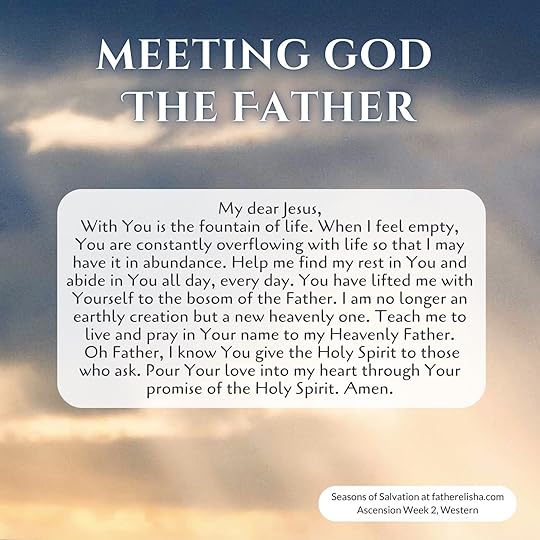
Photo by Pete F on Unsplash
The post Ascension 2 (Western): Meeting God the Father first appeared on Father Elisha: Let me take you on an intriguing journey..
May 23, 2025
Ascension 1 (Western & Eastern): The Feast of the Ascension
The Spiritual Mysteries of the Divine Calendar: The Feast of the Ascension ~ May 29, 2025 ~ Today we celebrate another well of salvation (Isa. 12:3) in Jesus’ story of redemption. Though inseparable from the Season of Resurrection, the Ascension is a distinct season in the Divine Calendar. The Season of Ascension comprises the final ten days of the fifty-day period between Pascha (Resurrection Sunday) and Pentecost, beginning with the Feast of the Ascension.
For ten days, we celebrate the Resurrection and Ascension together. The key that unlocks the spiritual atmosphere and riches of grace in this brief season remains the heavenly places. “And raised us up together, and made us sit together in the heavenly places in Christ Jesus” (Eph. 2:6).
But the Feast of the Ascension adds another key to these ten days. Jesus ascended from the Mount of Olives, less than one mile from Jerusalem, forty days after He rose from the dead. Therefore, the Mount of Olives is the key that unlocks this feast and this brief ten-day season.
The Key to the Feast of the Ascension: The Mount of Olives“Now when He had spoken these things, while they watched, He was taken up, and a cloud received Him out of their sight. And while they looked steadfastly toward heaven as He went up, behold, two men stood by them in white apparel, who also said, ‘Men of Galilee, why do you stand gazing up into heaven? This same Jesus, who was taken up from you into heaven, will so come in like manner as you saw Him go into heaven.’”
“Then they returned to Jerusalem from the mount called Olivet, which is near Jerusalem, a Sabbath day’s journey. And when they had entered, they went up into the upper room where they were staying: Peter, James, John, and Andrew; Philip and Thomas; Bartholomew and Matthew; James the son of Alphaeus and Simon the Zealot; and Judas the son of James. These all continued with one accord in prayer and supplication, with the women and Mary the mother of Jesus, and with His brothers.” (Acts 1:9-14)
We just read how the apostles gazed up into heaven: “And while they looked steadfastly toward heaven as He went up … Men of Galilee, why do you stand gazing up into heaven?”
We may conclude that they gazed in astonishment as they saw Jesus being lifted from the ground—and they certainly did—but something else happened as well. When Jesus ascended, He took their hearts, spirits, and identities with Him upwards.
The Spiritual Ascension of Redeemed Humanity
When Jesus ascended, He mystically brought humanity with Him into Heaven and presented mankind with Himself before the Father, spotless and renewed. “For it was fitting for Him, for whom are all things and by whom are all things, in bringing many sons to glory, to make the captain of their salvation perfect through sufferings. For both He who sanctifies and those who are being sanctified are all of one, for which reason He is not ashamed to call them brethren” (Heb. 2:10–11).
The apostles received the Holy Spirit already after the Resurrection of Jesus, and for forty days (Acts 1:3) they received the breath of the Holy Spirit: the breath of the new humanity. They didn’t have the energy to ascend with Jesus—their feet still touched the ground—but Jesus lifted their spirits toward Heaven.
As they kept ascending, their attention—their gazing—got more and more steadfast. When Jesus reached the Father in Heaven, they found themselves in a new spiritual realm, even though their feet stood on the Mount of Olives—the key to the Season of Ascension.
It is the mystical gaze at Jesus, as He ascends with our spirits into the presence of the Father in Heaven, that releases the spiritual atmosphere of this season—echoing the key of the heavenly places from the Season of Resurrection.
The Gaze
The Greek word emblepo translated “gazing” (Acts 1:11) means “to observe fixedly” or “to observe absolutely, to discern clearly.” In Acts 1:10, the Greek word atenizo translated “looked steadfastly” comes from two Greek words meaning “union” and “to stretch.” Therefore, this is more than natural sight—it is spiritual eyesight.
After His Ascension, Jesus sat down at the right hand of the Father. “Which He worked in Christ when He raised Him from the dead and seated Him at His right hand in the heavenly places” (Eph. 1:20). That is where we are—in Him—and so we celebrate on the Feast of the Ascension.
Gospel of the Feast of the Ascension: Luke 24:36–53 (NKJV)Now as they said these things, Jesus Himself stood in the midst of them, and said to them, “Peace to you.” 37 But they were terrified and frightened, and supposed they had seen a spirit. 38 And He said to them, “Why are you troubled? And why do doubts arise in your hearts? 39 Behold My hands and My feet, that it is I Myself. Handle Me and see, for a spirit does not have flesh and bones as you see I have.”
40 When He had said this, He showed them His hands and His feet. 41 But while they still did not believe for joy, and marveled, He said to them, “Have you any food here?” 42 So they gave Him a piece of a broiled fish and some honeycomb. 43 And He took it and ate in their presence.
44 Then He said to them, “These are the words which I spoke to you while I was still with you, that all things must be fulfilled which were written in the Law of Moses and the Prophets and the Psalms concerning Me.” 45 And He opened their understanding, that they might comprehend the Scriptures.
46 Then He said to them, “Thus it is written, and thus it was necessary for the Christ to suffer and to rise from the dead the third day, 47 and that repentance and remission of sins should be preached in His name to all nations, beginning at Jerusalem. 48 And you are witnesses of these things. 49 Behold, I send the Promise of My Father upon you; but tarry in the city of Jerusalem until you are endued with power from on high.”
50 And He led them out as far as Bethany, and He lifted up His hands and blessed them. 51 Now it came to pass, while He blessed them, that He was parted from them and carried up into heaven. 52 And they worshiped Him, and returned to Jerusalem with great joy, 53 and were continually in the temple praising and blessing God. Amen.

Photo by Varshil Changani on Unsplash
The Feast of the Ascension: An OverviewWe will look at the Feast of the Ascension of Jesus Christ through these points:
The Feast of the Ascension & Our Heavenly FatherThe Feast of the Ascension & Our Heavenly Identity and LifeThe Feast of the Ascension & Our Inner LifeThe Feast of the Ascension & Our MinistryResurrection & Ascension: The State of ParadiseHow Do We Ascend?1. The Feast of the Ascension & Our Heavenly Father
Before Jesus died on the cross and the veil in the temple rent in two (Matt. 27:51), humanity’s access to God was extremely limited because of our sin. Among all the nations, God gave only Israel the privilege to approach Him directly through the temple service. Yet, God has always been within reach for all of humanity everywhere.
“And He has made from one blood every nation of men to dwell on all the face of the earth, and has determined their preappointed times and the boundaries of their dwellings, so that they should seek the Lord, in the hope that they might grope for Him and find Him, though He is not far from each one of us” (Acts 17:26–27).
Through the Law, the Commandments, and the Aaronic priesthood, Israel could approach God with their sins covered. The intimate knowledge of God the Father still felt distant from the average Israelite. They only knew about Him, seeing His awesome acts and miracles, but the personal communion lay out of reach.
“And the LORD said to Moses: ‘Tell Aaron your brother not to come at just any time into the Holy Place inside the veil, before the mercy seat which is on the ark, lest he die; for I will appear in the cloud above the mercy seat. […] This shall be an everlasting statute for you, to make atonement for the children of Israel, for all their sins, once a year.’ And he did as the LORD commanded Moses” (Lev. 16:2, 34).
The Blessing
Once a year, the high priest entered behind the veil into the Holy of Holies and made atonement for the sins of Israel. But in verses 50–51 in the Gospel of the Feast of the Ascension, a huge change takes place: “And He led them out as far as Bethany, and He lifted up His hands and blessed them. Now it came to pass, while He blessed them, that He was parted from them and carried up into heaven.”
Jesus’ act of blessing just before He ascended was familiar to the Jews. The priests blessed the people of Israel this same way. “Then Aaron lifted his hand toward the people, blessed them, and came down from offering the sin offering, the burnt offering, and peace offerings” (Lev. 9:22).
When Jesus lifted His hands and blessed the disciples, He proclaimed His new priesthood. A transition of blessing happened from the priesthood of Aaron (which Jesus completed on the cross as a blameless sacrifice, and the veil in the temple torn from top to bottom) to the new priesthood according to the order of Melchizedek.
Priests in Christ
“Who has come, not according to the law of a fleshly commandment, but according to the power of an endless life. For He testifies: ‘You are a priest forever according to the order of Melchizedek.’ […] Therefore He is also able to save to the uttermost those who come to God through Him, since He always lives to make intercession for them” (Heb. 7:16–17, 25).
In Christ, we are all priests. “You also, as living stones, are being built up a spiritual house, a holy priesthood, to offer up spiritual sacrifices acceptable to God through Jesus Christ” (1. Pet. 2:5, see also 1 Pet. 2:9 and Rev. 1:5–6). From the event we celebrate on the Feast of the Ascension, every person from every nation, by faith in Jesus Christ, can access the Holy of Holies in Heaven. Christ’s ascension opened the way to our Heavenly Father.
“Seeing then that we have a great High Priest who has passed through the heavens, Jesus the Son of God, […] Let us therefore come boldly to the throne of grace […]” (Heb. 4:14, 16)
The grace from the Feast of the Ascension includes the gift of getting to know our Heavenly Father more. But as we shall see on Pentecost, we also get access to the endless mysteries of the Holy Trinity. As priests in Christ, we have fellowship with the Holy Trinity and we minister to God from within the Trinity while on earth. Jesus’ work of salvation granted us limitless spiritual treasures far beyond our understanding.
“For through Him we both have access by one Spirit to the Father. Now, therefore, you are no longer strangers and foreigners, but fellow citizens with the saints and members of the household of God” (Eph. 2:18–19).
2. The Feast of the Ascension & Our Heavenly Identity and Life
Here are some practical points about the grace we receive through the Feast of the Ascension:
A. Jesus Ascended to Prepare a Place for Us“In My Father’s house are many mansions; if it were not so, I would have told you. I go to prepare a place for you. And if I go and prepare a place for you, I will come again and receive you to Myself; that where I am, there you may be also” (John 14:2–3).
The ascension of Jesus reminds us that our actual home is in the heavens. We are here on Earth only for a purpose. All of us are missionaries from Heaven, sent to accomplish our mission on Earth and return home to Heaven.
“I came forth from the Father and have come into the world. Again, I leave the world and go to the Father” (John 16:28). “As You sent Me into the world, I also have sent them into the world” (John 17:18). “So, Jesus said to them again, ‘Peace to you! As the Father has sent Me, I also send you’” (John 20:21).
B. Jesus Ascended to Draw Us UpwardThis heavenly attraction can overcome any earthly attraction. Preoccupations with earthly tasks in our own strength, our responsibilities separated from our fellowship with God, clinging to earthly possessions, and opening our lives for the spirit of the world strengthens this earthly attraction. “And I, if I am lifted up from the earth, will draw all peoples to Myself” (John 12:32).
C. Jesus Ascended to Raise Our Minds Upward and Cleanse Them of Earthly Wisdom and Thoughts“If then you were raised with Christ, seek those things which are above, where Christ is, sitting at the right hand of God. Set your mind on things above, not on things on the earth” (Col. 3:1–2).
D. Jesus Ascended to Proclaim Our Heavenly Hometown and Citizenship, and to Set Us Free from the Fear of Losing Our Earthly Life“For we know that if our earthly house, this tent, is destroyed, we have a building from God, a house not made with hands, eternal in the heavens” (2 Cor. 5:1). “For our citizenship is in heaven, from which we also eagerly wait for the Savior, the Lord Jesus Christ” (Phil. 3:20).
E. Jesus Ascended to Give Us Victory and Rest in Our Battle Against the Enemy and Our Old Human NatureJesus lifts us above our current battlefield in the Spirit, allowing us to remain untouched by our previous battles. To be seated implies both rest and authority. We are seated in Christ, in the Spirit, and in the heavenly places.
“And raised us up together, and made us sit together in the heavenly places in Christ Jesus” (Eph. 2:6). “For he who has entered His rest has himself also ceased from his works as God did from His. Let us therefore be diligent to enter that rest, lest anyone fall according to the same example of disobedience” (Heb. 4:10–11).
F. Through Christ’s Ascension, We Experience Peace That Transcends All Understanding“Be anxious for nothing, but in everything by prayer and supplication, with thanksgiving, let your requests be made known to God; and the peace of God, which surpasses all understanding, will guard your hearts and minds through Christ Jesus” (Phil. 4:6–7).
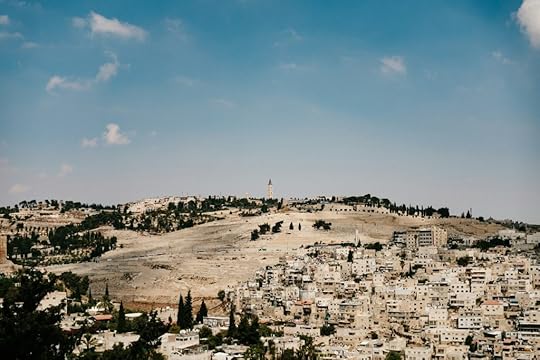
Photo by Adam Kring on Unsplash
3. The Feast of the Ascension & Our Inner LifeWhen Moses ascended Mount Sinai in Exodus 19, he received the Law and the Commandments. The scene of thunder, lightning, the sound of the trumpet, and the smoking mountain (Ex. 20:18) instilled the fear of God in man. “Then they said to Moses, ‘You speak with us, and we will hear; but let not God speak with us, lest we die’” (Ex. 20:19).
But this fearful picture of God is far from the complete revelation of His person. God is holy and righteous, and He desires the human heart, cleansed of sin, for Himself. Moses returned from the mountain with the Law: a revelation of how to live righteously (Ex. 20–31). In Exodus 32, we are shocked by the sin of the golden calf. Moses gets angry and breaks the stone tablets (Ex. 32:19) as he saw how the people broke the commandments.
When Moses returned to God to intercede (Ex. 32:30), he expected an angry God. But in Exodus 34, God told Moses to go up the mountain with two new stone tablets. Then God revealed a new side of Himself:
“And the LORD passed before him and proclaimed, ‘The LORD, the LORD God, merciful and gracious, longsuffering, and abounding in goodness and truth, keeping mercy for thousands, forgiving iniquity and transgression and sin, by no means clearing the guilty, visiting the iniquity of the fathers upon the children and the children’s children to the third and the fourth generation’” (Ex. 34:6–7).
New Understanding of God’s Character
Unexpectedly, God revealed a new side of Himself, but Moses didn’t understand. Moses understood God was righteous, and Moses was angry at his people. But that God was merciful and gracious, longsuffering and abounding in goodness and truth was beyond what Moses could comprehend.
God wanted Moses to see His mercy and righteousness work together. God communicated new understanding about Himself that entered Moses’ spirit. This new revelation of God’s Person made Moses’ face shine so the people couldn’t look at him (Ex. 34:29–33), and Moses covered his face with a veil.
By the grace from the Feast of the Ascension, we can climb the mountain of prayer and fellowship with God. Up there, we will receive new light, a new personal revelation of God. This transforms us more into His image.
4. The Feast of the Ascension & Our Ministry
Jesus has prepared a place for us in the heavens (Eph. 2:6; John 14:2–3). As we said, we are on Earth for a purpose as missionaries from Heaven.
The grace from the Feast of the Ascension helps us enter our priestly calling. God said to Moses when he climbed Mount Sinai the first time: “‘And you shall be to Me a kingdom of priests and a holy nation.’ These are the words which you shall speak to the children of Israel” (Ex. 19:6).
After Israel spent 430 years in Egypt and crossed the Red Sea, God revealed His priority: Israel’s identity and function among the nations as a “kingdom of priests and a holy nation.” The grace of ascension allows us to serve as priests together with our High Priest, the ascended Lord Jesus. “Therefore, holy brethren, partakers of the heavenly calling, consider the Apostle and High Priest of our confession, Christ Jesus” (Heb. 3:1).
The Holy Spirit teaches us through the grace from the Feast of the Ascension to intercede effectively according to God’s mind. “For ‘who has known the mind of the Lord that he may instruct Him?’ But we have the mind of Christ” (1 Cor. 2:16). The Book of Hebrews reveals our priestly calling and is an excellent book to read during the ten days of the Season of Ascension.
“As they ministered to the Lord and fasted, the Holy Spirit said, ‘Now separate to Me Barnabas and Saul for the work to which I have called them’” (Acts 13:2). The Greek word leitourgeo, which is translated “ministered,” means “to perform religious or charitable functions” as well as “worship.” This word is used for ministry and worship—the same word.
Ministry and Worship
When we pray and worship on Earth, we do ministry for God in the Spirit in the heavenly places together with our High Priest, Jesus. And when we minister the Word of God to people on Earth, we stand in God’s sight in the Spirit, offering worship to Him. “For we are not, as so many, peddling the word of God; but as of sincerity, but as from God, we speak in the sight of God in Christ” (2 Cor. 2:17).
In these days of the end-times, we need more than anointing to genuinely impact people—we need divine energy. The anointing impacts listeners and makes them listen, but divine energy moves the listeners into action. Nowadays, ministers often have anointing but lack divine energy as a charge of grace that impacts the heavenly places above people.
Our ministry becomes effective when we learn to start in prayer and worship. We receive God’s mind and compassion for the people we serve. When we learn to ascend, discern the assignment that lies ahead, minister to God in worship, and intercede for the assignment together with our High Priest, then we will do the work according to God’s heart with both anointing and divine energy in word and action.
“Then Aaron lifted his hand toward the people, blessed them, and came down from offering the sin offering, the burnt offering, and peace offerings. And Moses and Aaron went into the tabernacle of meeting, and came out and blessed the people. Then the glory of the LORD appeared to all the people, and fire came out from before the LORD and consumed the burnt offering and the fat on the altar. When all the people saw it, they shouted and fell on their faces” (Lev. 9:22–24).
5. Resurrection & Ascension: The State of Paradise
The Cross and the Resurrection alone does not overcome our wrestling with our old human nature and the spirit of the world. Our flesh is vulnerable to earthly ambitions, cares, desires, and so on. We need the grace from the Feast of the Ascension to lift us above the previous battlefield of the Season of Crucifixion and Lent, and into the glorious reality of living in the divine presence of Christ at the right hand of the Father.
This completes God’s work of salvation and leads us to the state of Paradise—a sinless state in unbroken sweet communion with God. “Now this, ‘He ascended’—what does it mean but that He also first descended into the lower parts of the earth? He who descended is also the One who ascended far above all the heavens, that He might fill all things” (Eph. 4: 9–10).
We won’t be able to remain in the state of Paradise in this life, but we can taste it through the perfect redemption we have in Christ.
Worship in the Upper Room
During the ten days between Ascension and Pentecost, the disciples stayed in the upper room, fasting and praying, waiting for the power from on high (Luke 24:49).
“Then they returned to Jerusalem from the mount called Olivet, which is near Jerusalem, a Sabbath day’s journey. And when they had entered, they went up into the upper room where they were staying: Peter, James, John, and Andrew; Philip and Thomas; Bartholomew and Matthew; James the son of Alphaeus and Simon the Zealot; and Judas the son of James. These all continued with one accord in prayer and supplication, with the women and Mary the mother of Jesus, and with His brothers” (Acts 1:12–14).
The Divine Calendar encourages us to do the same. Let us seek to worship and pray in fellowship with others during these ten days so that we may express our desire to ascend in Jesus and our deep thirst for the Spirit of the Living God.
6. How Do We Ascend?It is most important to believe that the Lord is the One who ascended in order to make us ascend. “Jesus said to her, ‘Do not cling to Me, for I have not yet ascended to My Father; but go to My brethren and say to them, “I am ascending to My Father and your Father, and to My God and your God”’” (John 20:17).This ascent requires us to intentionally set ourselves apart more for the Lord. It is impossible for the spirit of the world and the Kingdom of God to reconcile. We need separation from the world to ascent. But then we move from this world into another—one governed by the special rules of the eternal, heavenly realm.Our heart needs to be cleansed of anything that may have entered during the past year and now opposes life in the Spirit. We need to say with the bride: “A garden enclosed … A spring shut up, a fountain sealed” (Song of Songs 4:12). Sometimes we allow unclean things that do not please the Bridegroom to enter our hearts. Let us repent and release our spirits for ascension.We need to learn perseverance. When Mary Magdalene went back to the tomb the second time, Peter and John were with her. After looking into the tomb, Peter and John returned to their homes—but Mary remained by the tomb. God always rewards the patience of fervent love. “Now when she had said this, she turned around and saw Jesus standing there …” (John 20:14)Cutting the ties that bind us to Earth. These ties form when we give responsibilities, relationships, possessions, reputation, and ministry too much space in our hearts. If we handle them in our own strength—separate from God and not as gifts from Him—they soon tie us to Earth. Our view of the Heavenly Kingdom and seeing things through the eyes of God get constricted.
But if we identify these ties, the grace of ascension gives us the right perspective. As we ascend, earthly and lesser important things shrink, and the heavenly and eternal expand, rearranging our priorities to align with what pleases our Heavenly Father.
Blessed Feast of the Ascension!
If helpful, you can also review what we previously discussed regarding How Do I Feast?
Concluding the Feast of the AscensionThe Book of Hebrews reveals our priestly calling and is a brilliant book to read during the ten days of the Season of Ascension.
Thank you again for taking the time to read. It’s my joy to journey with you and to share what my spiritual community has taught me. I honor my spiritual father and the senior monks who have taught me about the Feast of the Ascension of Jesus Christ.
Please leave a comment below—we’d love to hear your thoughts. If you found this post helpful, feel free to share it using the buttons at the top of the page.
Join the Journey Through the Seasons of SalvationJoin us on this weekly journey through the Seasons of Salvation as we walk in the footsteps of Jesus Christ through the key seasons of His life.
Sign up to receive this year’s Divine Calendar, which introduces the Seasons of Salvation and guides you through the journey ahead. As a welcome gift, you’ll also receive my young adult novel, The Legend of the Divine Calendar, delivered straight to your inbox.
Visit the Seasons of Salvation blog for insights into the coming week, posted every Saturday. We’d be honored to have you join us.
Photo by Ziliang Gao on Unsplash
Other Recommended Scriptures For MeditationAlongside to the designated Gospel passage for the Feast of the Ascension, these Scriptures are great to read, meditate on, and pray with in order to receive the grace of the Feast:
Isaiah 2:2–3 (NKJV): Now it shall come to pass in the latter days that the mountain of the Lord’s house shall be established on the top of the mountains, and shall be exalted above the hills; and all nations shall flow to it. 3 Many people shall come and say, “Come, and let us go up to the mountain of the Lord, to the house of the God of Jacob; He will teach us His ways, and we shall walk in His paths.” For out of Zion shall go forth the law, and the word of the Lord from Jerusalem.
Isaiah 62:10–12 (NKJV): Go through, go through the gates! Prepare the way for the people; build up, build up the highway! Take out the stones, lift up a banner for the peoples! 11 Indeed the Lord has proclaimed to the end of the world: “Say to the daughter of Zion, ‘Surely your salvation is coming; behold, His reward is with Him, and His work before Him.’ ” 12 And they shall call them The Holy People, the Redeemed of the Lord; and you shall be called Sought Out, a City Not Forsaken.
Isaiah 63:1–3 (NKJV): Who is this who comes from Edom, with dyed garments from Bozrah, this One who is glorious in His apparel, traveling in the greatness of His strength?—“I who speak in righteousness, mighty to save.” 2 Why is Your apparel red, and Your garments like one who treads in the winepress? 3 “I have trodden the winepress alone, and from the peoples no one was with Me. For I have trodden them in My anger, and trampled them in My fury; their blood is sprinkled upon My garments, and I have stained all My robes.
Psalm 68:18–19 (NKJV): You have ascended on high, You have led captivity captive; You have received gifts among men, even from the rebellious, that the Lord God might dwell there. 19 Blessed be the Lord, who daily loads us with benefits, the God of our salvation! 20 Our God is the God of salvation; and to God the Lord belong escapes from death.
Acts 1:9–11 (NKJV): Now when He had spoken these things, while they watched, He was taken up, and a cloud received Him out of their sight. 10 And while they looked steadfastly toward heaven as He went up, behold, two men stood by them in white apparel, 11 who also said, “Men of Galilee, why do you stand gazing up into heaven? This same Jesus, who was taken up from you into heaven, will so come in like manner as you saw Him go into heaven.”
The post Ascension 1 (Western & Eastern): The Feast of the Ascension first appeared on Father Elisha: Let me take you on an intriguing journey..
Resurrection 6 (Eastern): The Living Light and the Sunday of the Blind Man
 The Spiritual Mysteries of the Divine Calendar: The Living Light ~ May 25–31, 2025 ~
 During the Season of Resurrection, we discover deeper mysteries about the work of the grace of resurrection. The light of Resurrection — the Living Light — is shining. This marvelous grace works intricately until it reaches its ultimate fulfillment in the future resurrection of our physical bodies at the Second Coming of Jesus Christ.
On Holy Pacha, the theme was resurrection and life. The second Sunday, Thomas Sunday, unveiled the living faith. Then followed the Sunday of the Myrrh-bearing Women and we looked at the living bread. The Sunday of the Paralytic showed us the living way. Last Sunday, the Sunday of the Samaritan Woman, revealed the living water. On this Sunday before the Feast of Ascension, we will look at how the grace of resurrection works as the living light and the living word.
While we take a deep dive into these mysteries, there is an overall theme running through these Sundays—a simple yet practical and important point. Even if these deeper mysteries may be hard to comprehend, if we apply this major theme, we will be perfectly prepared for the crown: the Feast of Pentecost at the end of the Season of Resurrection.
The major theme is stirring spiritual thirst for Jesus and the pouring of the Holy Spirit. We see this repeated, yet again, on the Sunday of the Blind Man.
Sunday of the Blind Man and the Living Light (John 9:1–38)In John 9:6–7, we read: “When He had said these things, He spat on the ground and made clay with the saliva; and He anointed the eyes of the blind man with the clay. And He said to him, ‘Go, wash in the pool of Siloam’ (which is translated, Sent). So he went and washed, and came back seeing.”
We see the reference to a pool—water. This living water of the Holy Spirit heals our inner paralysis, no matter if this refers to something in our body, mind, will, or abilities. This water cleanses, heals, and creates the blessed thirst we need. Through this thirst, the Holy Spirit reaches deep within us and takes the place of our need to be united with another person. God created this inner need to keep us united to Himself, but in our fallen state, we seek attachment to material things or people. But the Holy Spirit wants to come and quench our thirst and deep inner need by uniting us to Jesus Christ.
The living water comes to work deep inside us and to replace our thirst for earthly things. We become truly free, liberated from a distorted craving.
Also, the Holy Spirit opens our inner eyes to see the direction we need to walk to follow God’s plan for us. He enables us to steadfastly follow the footsteps of the Crucified One, the Living Light, overcoming the trials along the way.
The Manifold MysteriesThe beautiful journey through the Season of Resurrection contains manifold mysteries. As we have seen in the previous weeks, the grace flowing from the resurrection of Jesus Christ powerfully impacts our lives through visible changes that emerge from within. But this grace also works invisibly in our souls—and in our position in Christ in the heavenly places, which is the key to this season. “And raised us up together and made us sit together in the heavenly places in Christ Jesus” (Eph. 2:6). But the Living Light, Jesus Christ, also gives us the grace to comprehend what is happening deep within the layers of our souls.
The grace given to us by the Holy Spirit on Resurrection Sunday (Pascha) continues to unfold in our lives week after week, even if we don’t recognize the Spirit’s activity. “As each one has received a gift, minister it to one another, as good stewards of the manifold grace of God” (1 Pet. 4:10).
We need this hidden work of the grace of the resurrection, so the unknown parts in our inner man resurrect and become known to us as the new man. “And that you put on the new man which was created according to God, in true righteousness and holiness” (Eph. 4:24).
The State of Paradise
As Christians, we’re not called to be an earthly people, but without the Resurrection of Christ that is what we are. “For our citizenship is in heaven, from which we also eagerly wait for the Savior, the Lord Jesus Christ” (Phil. 3:20). After God created Adam, “the Lord God planted a garden eastward in Eden, and there He put the man whom He had formed” (Gen. 2:8). Since the beginning of the Season of Crucifixion and the fast of Lent, we have spoken of the journey back to the state of Paradise—a foretaste of full communion with the Holy Trinity.
We scratch the surface of the state of Paradise during Lent, but in the Season of Resurrection we taste our new resurrected humanity in the Risen Christ. “And as we have borne the image of the man of dust, we shall also bear the image of the heavenly Man” (1 Cor. 15:49).
The Living Light: Comprehending the Resurrection of Jesus Christ
We need the grace of the Resurrection to transform us at every level of our being. The early fathers of the church, through the Divine Calendar, guide us through the longest feasting period. For forty days we exercise our living faith (John 20:29), eat the Bread of Life that came down from Heaven (John 6:33), drink from the spring of resurrection (John 4:14), and on the fortieth day we arrive the Feast of the Ascension of Jesus Christ.
“… all that Jesus began both to do and teach, until the day in which He was taken up, after He through the Holy Spirit had given commandments to the apostles whom He had chosen, to whom He also presented Himself alive after His suffering by many infallible proofs, being seen by them during forty days and speaking of the things pertaining to the kingdom of God” (Acts 1:1–3).
During these days, it is helpful to focus on the Resurrection of Jesus Christ in worship and prayer. Our resurrection is in Him. During the three days Jesus lay in the grave, He freed all the souls in Hades from when God sealed off Paradise until He gave up His spirit on the cross. His resurrection from the dead is an immensely powerful action. No one witnessed the exact moment when the heart of Jesus began to beat and He opened His eyes, drew His breath, and left the grave clothes behind. But soon after, the angels removed the rock from the tomb and He appeared to Mary Magdalene.
This action that redirected the course of history is so rich that we need forty days to celebrate, study, and meditate to comprehend the Resurrection. We need the Living Light to shine.
Building Our New Man: Unfolding the Mysteries of the Grace of Resurrection:The Living Light, The Living Word (John 12:35–50 NKJV)
Then Jesus said to them, “A little while longer the light is with you. Walk while you have the light, lest darkness overtake you; he who walks in darkness does not know where he is going. 36 While you have the light, believe in the light, that you may become sons of light.” These things Jesus spoke, and departed, and was hidden from them.
37 But although He had done so many signs before them, they did not believe in Him, 38 that the word of Isaiah the prophet might be fulfilled, which he spoke: “Lord, who has believed our report? And to whom has the arm of the Lord been revealed?” 39 Therefore they could not believe, because Isaiah said again: 40 “He has blinded their eyes and hardened their hearts, lest they should see with their eyes, lest they should understand with their hearts and turn, so that I should heal them.”
41 These things Isaiah said when he saw His glory and spoke of Him. 42 Nevertheless even among the rulers many believed in Him, but because of the Pharisees they did not confess Him, lest they should be put out of the synagogue; 43 for they loved the praise of men more than the praise of God.
44 Then Jesus cried out and said, “He who believes in Me, believes not in Me but in Him who sent Me. 45 And he who sees Me sees Him who sent Me. 46 I have come as a light into the world, that whoever believes in Me should not abide in darkness. 47 And if anyone hears My words and does not believe, I do not judge him; for I did not come to judge the world but to save the world. 48 He who rejects Me, and does not receive My words, has that which judges him—the word that I have spoken will judge him in the last day. 49 For I have not spoken on My own authority; but the Father who sent Me gave Me a command, what I should say and what I should speak. 50 And I know that His command is everlasting life. Therefore, whatever I speak, just as the Father has told Me, so I speak.”

Photo by Jong Marshes on Unsplash
The Living Light: the Light of LifeUnknown for most of us, our talents and gifts hide in deep shrunken parts of our souls, and if we tried to operate in these gifts while shrunken, we would find ourselves unable. “I am a shy person, so I can’t do this and that…” This area of the souls thirsted for Living Water—any other water only made it smaller and more thirsty. “For My people have committed two evils: They have forsaken Me, the fountain of living waters, and hewn themselves cisterns—broken cisterns that can hold no water” (Jer. 2:13).
Now we have arrived at the sixth Sunday in the Season of Resurrection, and we need the Living Light to shine into the deep layers of our souls.
The Living Light & The Living Word
“Your word is a lamp to my feet and a light to my path.” (Ps. 119:105)
This Sunday Gospel (John 12:35–50) is the longest passage in the New Testament where Jesus speaks about Himself as the Light.
In addition to this passage, we can read John 3:19–21: “And this is the condemnation, that the light has come into the world, and men loved darkness rather than light, because their deeds were evil. For everyone practicing evil hates the light and does not come to the light, lest his deeds should be exposed. But he who does the truth comes to the light, that his deeds may be clearly seen, that they have been done in God.”
Also, John 8:12: “Then Jesus spoke to them again, saying, ‘I am the light of the world. He who follows Me shall not walk in darkness, but have the light of life.’” Therefore, the theme of this study is the Living Light, the Living Word of God, Jesus Christ.
This passage speaks about Jesus as the light. We also see the words of John 8:12 “… He who follows Me shall not walk in darkness …” repeated twice (John 12:35, 46). However, in John 8:12, we see these words added: “… but have the light of life.”
The Living Light Versus the Darkness
We may never fully know how delicately the grace of resurrection works in our lives. Yet through the grace of this Sunday, we receive more light—and understanding—about how God is resurrecting the specific area of our souls that He has chosen to redeem during this year’s cycle of the Divine Calendar.
The darkened spot in our life that we formerly knew through its manifested weaknesses has now changed. We are more or less aware that this area simply needs heavenly nutrition through the grace of resurrection—the Living Bread to satisfy, and the Living Water to expand and nullify shame. We may have realized how this darkness actually spread more darkness to other parts of our inner man. We need the Living Light to counteract this.
This darkness comprises three major layers, and the grace of resurrection helps us understand ourselves so we can counteract these levels. The resurrection of Jesus sends the Living Light of Jesus Christ Himself, into our soul, a gentle power of healing light. This unique light reveals Jesus, the Holy Trinity, and even ourselves. Suddenly, we understand what actually happened in this specific area in our inner man, and what our need is.
Unfortunately, darkness from the old man lingers within us, and the work of the enemy and his evil powers always happens in the darkness. Once the grace of resurrection births the new nature of Christ—the new man—in a part of our soul, the enemy flees because the resurrection of Jesus defeated the enemy and the power of death.
Scripture References
“This is the message which we have heard from Him and declare to you, that God is light and in Him is no darkness at all. If we say that we have fellowship with Him, and walk in darkness, we lie and do not practice the truth … If we say that we have no sin, we deceive ourselves, and the truth is not in us. If we confess our sins, He is faithful and just to forgive us our sins and to cleanse us from all unrighteousness” (1 John 1:5–6, 8–9).
“Again, a new commandment I write to you, which thing is true in Him and in you, because the darkness is passing away, and the true light is already shining. He who says he is in the light, and hates his brother, is in darkness until now. He who loves his brother abides in the light, and there is no cause for stumbling in him. But he who hates his brother is in darkness and walks in darkness, and does not know where he is going, because the darkness has blinded his eyes” (1 John 2:8–11).
“To open their eyes, in order to turn them from darkness to light, and from the power of Satan to God, that they may receive forgiveness of sins and an inheritance among those who are sanctified by faith in Me” (Acts 26:18). “Giving thanks to the Father who has qualified us to be partakers of the inheritance of the saints in the light. He has delivered us from the power of darkness and conveyed us into the kingdom of the Son of His love” (Col. 1:12–13). “And have no fellowship with the unfruitful works of darkness, but rather expose them” (Eph. 5:11).
The Three Layers of Darkness
All the activity of the old man within is darkness, and it works through darkness under the protective umbrella of darkness. In this season, God enlightens us to discover this darkness, and the Living Light pierces the main clusters of darkness. Jesus, the Living Word and the Living Light, wants to deal with the source that kept darkness present within us.
How to recognize the three major levels of darkness:
Blindness and Disbelief in the Signs of GodCompromising our Relationship with GodDarkness Leading to Condemnation and JudgmentFirst Level of Darkness: Blindness and Disbelief in the Signs of God
In verses 35–37 of the Sunday Gospel, we read: “Then Jesus said to them, ‘A little while longer the light is with you. Walk while you have the light, lest darkness overtake you; he who walks in darkness does not know where he is going. While you have the light, believe in the light, that you may become sons of light.’ These things Jesus spoke, and departed, and was hidden from them. But although He had done so many signs before them, they did not believe in Him.”
This first depth of darkness centers around ourselves, and how we cannot understand ourselves or God. Many times, God speaks directly with clear signs through our circumstances, but because of this type of darkness, we can’t recognize God’s voice.
A wise man said if God opened our eyes to see what He does with us, even for a single day, it would shock us to see all the miracles surrounding us every day. We would know so much more about God’s character, and our faith in Him would change dramatically. The Living Light can startle us.
The activity of the enemy preserves the darkness in the human soul. This darkness is not like a tangible substance we can feel or touch. The Bible means by darkness the opposite of light. Darkness cannot recognize or be reconciled with light; it is completely oblivious to it. “In Him was life, and the life was the light of men. And the light shines in the darkness, and the darkness did not comprehend it” (John 1:4–5).
The Power in the Living Light
Darkness can’t recognize the light, even if God revealed miracles all the day. It is blind to light and truth. “And this is the condemnation, that the light has come into the world, and men loved darkness rather than light, because their deeds were evil. For everyone practicing evil hates the light and does not come to the light, lest his deeds should be exposed” (John 3:19–20).
The darkness prevents us to know Jesus, but the light of resurrection, the Living Light, assures us of what Jesus can do through His power. We receive fresh energy of faith that God can do everything in our lives, our circumstances, our ministries, and our circles of influence, if we pray with the power of Christ’s resurrection. “[A]nd what is the exceeding greatness of His power toward us who believe, according to the working of His mighty power which He worked in Christ when He raised Him from the dead …” (Eph. 1:19–20).
Because of the darkness, these areas of our lives struggle to believe that God is who He says He is—the Light of the world (John 8:12). He protects us, enables us to fulfill our calling, and opens every necessary door. Our minds may know about God’s power, but we often lack the strength to live out what we believe.
We can’t understand the nature of the darkness unless the Living Light exposes it. The devil wants to destroy us, keep us in darkness, and ultimately kill us, but Christ seeks to resurrect everything the devil has accomplished in our souls. “The thief does not come except to steal, and to kill, and to destroy. I have come that they may have life, and that they may have it more abundantly” (John 10:10).
Photo by Cam Ferland on Unsplash
Second Level of Darkness: Compromising our Relationship with GodWe read in verses 42–43 in today’s Sunday Gospel: “Nevertheless even among the rulers many believed in Him, but because of the Pharisees they did not confess Him, lest they should be put out of the synagogue; for they loved the praise of men more than the praise of God.”
The first layer of darkness concerned ourselves, and what we believe God can do. “Lord, I believe; help my unbelief!” (Mark 9:24) The second level of darkness is between us and other people. This darkness keeps us away from God and hinders our progress in the spiritual life.
Often we don’t understand each other, and we fear the opinion of others more than we should at the expense of honoring God. If we are pleasing the people around us, are we also pleasing Jesus? “For do I now persuade men, or God? Or do I seek to please men? For if I still pleased men, I would not be a bondservant of Christ” (Gal. 1:10).
Sometimes we don’t understand how to remain loyal to God while loving others. We can achieve this if we humble ourselves beneath the other, without making a relationship only based on emotional needs to nurture our souls with self-esteem and so on—it is a broken cistern (Jer. 2:13). In a strictly soulish relationship where God’s position is secondary or excluded, we prioritize it higher than our relationship with God. It means we love this relationship more than we love God, and neither His Word nor His voice holds authority over it.
The Living Light Sets God First
This second level of darkness makes us compromise our relationship with God to gain an emotional or material benefit from another person. We seek a person to fill the weakness in our soul—a weakness the grace of resurrection seeks to heal through the Living Light.
Several good rulers among the Pharisees believed in Jesus. They realized Jesus was the Messiah, but fear made them confess their conviction about Jesus as the Messiah in secret. Fearing what the other rulers in the synagogue would say, they reasoned: “We must be wise and not offend anybody…”
We often don’t understand what we do because of this darkness. But when the Feast of Resurrection comes—and extends into these forty days—the Living Light enters and sets everything in its proper place. We realize what is horribly wrong in our lives and what priorities we have turned upside down or inside out. The Living Light awakens us, and the grace of resurrection gives us the power to put everything in order.
Sometimes we sense that we’re doing something wrong, but we don’t understand how we keep falling into these same mistakes—or how to break free from them. This happens because we lack the Living Light to confront these weaknesses in a wise and balanced way. How can we put God first in everything? We simply don’t know how—unless the light of the Resurrection exposes and drives out this second kind of darkness.
Third Level of Darkness: Darkness Leading to Condemnation and Judgment
Verses 44–46 of today’s Sunday Gospel reads: “Then Jesus cried out and said, ‘He who believes in Me, believes not in Me but in Him who sent Me. And he who sees Me sees Him who sent Me. I have come as a light into the world, that whoever believes in Me should not abide in darkness [“but have the light of life,” John 8:12 added].’” And verse 47: “And if anyone hears My words and does not believe, I do not judge him; for I did not come to judge the world but to save the world.”
We might wonder why Jesus said He did not come to judge the world, when He said in John 5:22: “For the Father judges no one, but has committed all judgment to the Son.” Jesus actually said that He did “not come to judge the world but to save the world.”
We read in John 8:10–12a: “When Jesus had raised Himself up and saw no one but the woman, He said to her, ‘Woman, where are those accusers of yours? Has no one condemned you?’ She said, ‘No one, Lord.’ And Jesus said to her, ‘Neither do I condemn you; go and sin no more.’ Then Jesus spoke to them again, saying, ‘I am the light of the world …’”
Let us look at one of the last verses of this week’s Sunday Gospel: “He who rejects Me, and does not receive My words, has that which judges him—the word that I have spoken will judge him in the last day” (verse 48).
Jesus will not judge any person on the Day of Judgment, but the words He has spoken will. “Now out of His mouth goes a sharp sword, that with it He should strike the nations” (Rev. 19:15)
The Word I Have Spoken
What does this mean? Jesus only spoke the words of the Father (John 12:29), which our conscience bears witness is the truth (Rom 2:15–16). Jesus is the Living Light and the Living Word. He came to save every person by declaring the words of the Father—which direct the internal judgment of our conscience—and proclaiming the gospel of forgiveness for our sins.
Every person will stand before Jesus, believers and unbelievers, at different points during Christ’s second coming. The Light of Jesus will uncover the darkness that each person has not accepted to be exposed (meaning the person knows about this darkness but has not repented) during the totality of the person’s life.
Our inner man will stand before our Creator and everything will be exposed before the sight of God. The person outside of the new covenant in the blood of Christ will realize and agree without self-justification: “I am condemned. Jesus is not condemning me, because He is perfect and wrapped in brilliant light, but His light and my conscience condemns me. I am convicted.”
For those covered under the blood of Christ, Jesus atoned for our darkness. But if we consciously do works of darkness, unwilling to repent our entire life, we play a dangerous game with our salvation and eternity, and we will suffer loss when our life passes through the cleansing fire.
Scripture References
“And have no fellowship with the unfruitful works of darkness, but rather expose them. For it is shameful even to speak of those things which are done by them in secret. But all things that are exposed are made manifest by the light, for whatever makes manifest is light. Therefore He says: ‘Awake, you who sleep, arise from the dead, and Christ will give you light’” (Eph. 5:11–14).
“Each one’s work will become clear; for the Day will declare it, because it will be revealed by fire; and the fire will test each one’s work, of what sort it is. If anyone’s work which he has built on it endures, he will receive a reward. If anyone’s work is burned, he will suffer loss; but he himself will be saved, yet so as through fire” (1 Cor. 3:13–15).
“For God so loved the world that He gave His only begotten Son, that whoever believes in Him should not perish but have everlasting life. For God did not send His Son into the world to condemn the world, but that the world through Him might be saved” (John 3:16–17).
“He who believes in Him is not condemned; but he who does not believe is condemned already, because he has not believed in the name of the only begotten Son of God. And this is the condemnation, that the light has come into the world, and men loved darkness rather than light, because their deeds were evil. For everyone practicing evil hates the light and does not come to the light, lest his deeds should be exposed. But he who does the truth comes to the light, that his deeds may be clearly seen, that they have been done in God” (John 3:18–21).
In essence, we condemn ourselves when we refuse to enter the light of God’s Word for the entirety of our lives. Jesus has no need to condemn those who refuse to repent and come to Him in faith, for they will condemn themselves before the Great White Throne.
The Living Light and Everlasting Life
This third level of darkness is a critical type of darkness in our souls, and it is characterized by not knowing Jesus at all. We will experience, if we willfully sin and refuse to repent (turning to Jesus) as a lifestyle, that the enemy will condemn us and God will allow judgement to enter our life. God doesn’t send judgment to His adopted children to destroy, but to restore. Judgement is God’s last remedy after continuous and gradually severe warnings.
The third level of darkness means that we are not willing to repent. It is an area in our life we are fully aware of, yet we persist in sinning. “In the name of our Lord Jesus Christ, when you are gathered together, along with my spirit, with the power of our Lord Jesus Christ, deliver such a one to Satan for the destruction of the flesh, that his spirit may be saved in the day of the Lord Jesus” (1 Cor. 5:4–5).
These words may seem harsh, but when God sees that we are still turning away from Him after many warnings, He may allow disaster to come upon us. This does not mean that every personal tragedy is the result of unrepented sin. But it does mean that if we persist in sinning over a significant period of time, catastrophe may come.
This is the same kind of darkness as not believing in Jesus as Lord, God, and Savior. “But even if our gospel is veiled, it is veiled to those who are perishing, whose minds the god of this age has blinded, who do not believe, lest the light of the gospel of the glory of Christ, who is the image of God, should shine on them” (2 Cor. 4:3–4).
Praise Jesus for His Precious Blood
This darkness leaves condemnation on the shoulder of the unbeliever until Judgment if the person doesn’t turn to Jesus. We can’t escape the light of the Resurrection. And we reject the reality of the resurrection of Jesus, the Living Light will follow us, engulf us, and expose everything on the last day. A soul that is willing to repent when God exposes any hidden darkness is turned with open arms toward Jesus. But a soul that refuses to repent has its back turned toward Jesus, our Savior—who stands with open arms.
Praise Jesus for His precious Blood and how He has written our names in the Book of Life (Rev. 3:5; 20:12–15). And even though our souls may contain darkness that we have not uncovered when we stand before His glorious throne, still His sacrifice on the cross is sufficient.
Let us conclude with the last verses of today’s Sunday Gospel, verses 49–50: “For I have not spoken on My own authority; but the Father who sent Me gave Me a command, what I should say and what I should speak. And I know that His command [the word granting light] is everlasting life [light linked with life]. Therefore, whatever I speak, just as the Father has told Me, so I speak.”
Christ is Risen!
Indeed He is Risen!
Concluding the Living Light and the Sunday of the Blind ManLet us pray for the grace of the Living Light to pierce every level of darkness, bringing it to our attention. May we nourish these areas of our lives through the Living Bread and Living Water—Holy Communion, God’s Word, prayer, and worship.
Also, this Thursday is the Feast of the Ascension. Make sure you don’t miss the post on this magnificent celebration. Thank you for taking the time to read. It’s my honor to journey with you.
Since the Season of Resurrection is not a season of fasting but of feasting, it might be helpful to review what we previously discussed regarding How Do I Feast?
Please leave a comment below—we’d love to hear your thoughts. If you found this post helpful, feel free to share it using the buttons at the top of the page.
Join the Journey Through the Seasons of SalvationJoin us on this weekly journey through the Seasons of Salvation as we walk in the footsteps of Jesus Christ through the key seasons of His life.
Sign up to receive this year’s Divine Calendar, which introduces the Seasons of Salvation and guides you through the journey ahead. As a welcome gift, you’ll also receive my young adult novel, The Legend of the Divine Calendar, delivered straight to your inbox.
Visit the Seasons of Salvation blog for insights into the coming week, posted every Saturday. We’d be honored to have you join us.
Save Your Prayer Card on Your Smartphone
Photo by Christian Holzinger on Unsplash
The post Resurrection 6 (Eastern): The Living Light and the Sunday of the Blind Man first appeared on Father Elisha: Let me take you on an intriguing journey..
Resurrection 6 (Western): The Way of Life
The Spiritual Mysteries of the Divine Calendar: The Way of Life ~ May 25–31, 2025 ~ From Thomas Sunday to this Sunday of the Way of Life, we find the theme of faith and belief in Jesus Christ throughout the passages we are studying on the mystery of the Resurrection.
The Living Faith (Thomas Sunday): “Jesus said to him, ‘Thomas, because you have seen Me, you have believed. Blessed are those who have not seen and yet have believed.’” (John 20:29) The Living Bread : “And Jesus said to them, ‘I am the bread of life. He who comes to Me shall never hunger, and he who believes in Me shall never thirst.’” (John 6:35) The Living Water : “Jesus answered and said to her, ‘If you knew the gift of God, and who it is who says to you, “Give Me a drink,” you would have asked Him, and He would have given you living water.’” (John 4:10) The Light of Life : “I have come as a light into the world, that whoever believes in Me should not abide in darkness.” (John 12:46)The Way of Life (this week): “Let not your heart be troubled; you believe in God, believe also in Me. … Jesus said to him, ‘I am the way,’” (John 14:1,6)To believe accompanies every action of the Resurrection as the Divine Calendar reveals its workings throughout the Season of Resurrection. From now it is even more necessary to have faith and believe because the focus of these passages about the mystery of the Resurrection pull us more and more up into the heavens, the key to this Season of Salvation.
Sunday Gospel of the Way of Life: John 14:1–11 (NKJV)“Let not your heart be troubled; you believe in God, believe also in Me. 2 In My Father’s house are many mansions; if it were not so, I would have told you. I go to prepare a place for you. 3 And if I go and prepare a place for you, I will come again and receive you to Myself; that where I am, there you may be also. 4 And where I go you know, and the way you know.”
5 Thomas said to Him, “Lord, we do not know where You are going, and how can we know the way?” 6 Jesus said to him, “I am the way, the truth, and the life. No one comes to the Father except through Me. 7 “If you had known Me, you would have known My Father also; and from now on you know Him and have seen Him.” 8 Philip said to Him, “Lord, show us the Father, and it is sufficient for us.”
9 Jesus said to him, “Have I been with you so long, and yet you have not known Me, Philip? He who has seen Me has seen the Father; so how can you say, ‘Show us the Father’? 10 Do you not believe that I am in the Father, and the Father in Me? The words that I speak to you I do not speak on My own authority; but the Father who dwells in Me does the works. 11 Believe Me that I am in the Father and the Father in Me, or else believe Me for the sake of the works themselves.

Photo by Anisur Rahman on Unsplash
The Way of Life: The Necessities for LifeBread and water are the necessities for life, and the Resurrection is essentially life and light. “In Him was life, and the life was the light of men” (John 1:4).
Accompanied with the life and light of Jesus Christ, we need the living faith. If we receive these three major facets of the grace of the Resurrection—life, light, and faith—the Holy Spirit leads us on the way, a Living Way, that leads to the Father.
“Therefore, brethren, having boldness to enter the Holiest by the blood of Jesus, by a new and living way which He consecrated for us, through the veil, that is, His flesh” (Heb. 10:19–20).
“…where I am, there you may be also. And where I go you know, and the way you know” (John 14:3b–4).
The Way to God the Father
In the reference above, Jesus talks about three things:
Where I am, you will be. The disciples might ask: “Are you leaving us, Jesus? How can we be where you are?”Where I go you know. They might ask again: “So, we know where you are going? Where is it?”And the way you know. They might ask: “Really, Lord, when did you show is the way? We can’t remember.”In John 14:5–6, we read: “Thomas said to Him, ‘Lord, we do not know where You are going, and how can we know the way?’ Jesus said to him, ‘I am the way, the truth, and the life. No one comes to the Father except through Me.’”
We often quote this passage, yet it contains deep mysteries we may not have discovered. Beginning with the Feast of Mid-Pentecost, Jesus spoke of His Father, and next Sunday, we will see how He appears before the Father on behalf of all mankind, paving the way of life for us.
We begin this mystical journey today, and will only focus on two things Jesus said, because this topic unfolds further in the Feast of the Ascension.
Jesus said: “I am the way.”Jesus said: “I am the truth.”The Way of Life: “I am the way”
In John 14:6a, Jesus said to Thomas: “I am the way, the truth, and the life.” Jesus Himself is what connects the way, the truth, and the life. This passage of John 14:1–11 talks about the Way of Life or the Living Way.
Jesus is the Way of Life. He is the way that leads to Himself. His lifestyle—Jesus’ way of life—leads us to the place where He is so that we may be with Him. “Father, I desire that they also whom You gave Me may be with Me where I am” (John 17:24a).
Jesus is also the only way to the Father. “Do you not believe that I am in the Father, and the Father in Me?” (John 14:10) “No one comes to the Father except through Me” (John 14:6b).
So, we know Jesus sits on the throne in Heaven. “But this Man, after He had offered one sacrifice for sins forever, sat down at the right hand of God” (Heb. 10:12–13). And we also know that the way to Him—the way of life—is to imitate Jesus, to love Him, and to keep His commandments. “Jesus answered and said to him, ‘If anyone loves Me, he will keep My word; and My Father will love him, and We will come to him and make Our home with him’” (John 14:23).
Knowing our Ways
But something is unclear—there is something our intellectual mind can’t fully understand. We can perceive these words by Jesus in two ways: a direct meaning and an indirect meaning.
The direct meaning is that Jesus is our way of life and without faith in Him, knowing Him, and believing in His resurrection from the dead, we cannot reach Jesus, or the Father, or receive the Holy Spirit. This is the truth, and we know this. Jesus is our truth. Jesus is our life.
But there is another perspective on the effects of the resurrection of Jesus that helps us see another dimension behind these words. The indirect meaning is that these words cast light upon our ways. How does our ways look like? And how far away are we from Him? Let us not stop with discovering the distance between our way and His way of life, but let us make our ways as His ways. Jesus said: “I am the way.” Are our ways straight like His? Are they as clear as His?
Make His Paths Straight
Let us look at the specific area in our souls that God works to redeem throughout this year’s cycle of Seasons of Salvation. This area of the soul—both hungry, thirsty, and darkened—looks crooked and not straight like the Way of Life, Jesus. “Behold, I send My messenger before Your face, who will prepare Your way before You. The voice of one crying in the wilderness: ‘Prepare the way of the Lord; make His paths straight’” (Mark 1:2b–3).
We rarely notice the crooked things within us and their source. This is because we lack a righteous way of living. Righteousness means a straight way. Even though we have received Christ’s righteousness by grace, we suffer and make our ways crooked when we don’t live out the grace we received.
“Yet indeed I also count all things loss for the excellence of the knowledge of Christ Jesus my Lord, for whom I have suffered the loss of all things, and count them as rubbish, that I may gain Christ and be found in Him, not having my own righteousness, which is from the law, but that which is through faith in Christ, the righteousness which is from God by faith; that I may know Him and the power of His resurrection…” (Phil. 3:8–10a)
Jesus is our righteousness. “But of Him you are in Christ Jesus, who became for us wisdom from God—and righteousness and sanctification and redemption” (1 Cor. 1:30). “It shall be imputed to us who believe in Him who raised up Jesus our Lord from the dead, who was delivered up because of our offenses, and was raised because of our justification” (Rom. 4:24b–25). (The Greek word dikaiosis translated “justification” comes from a word meaning to “be righteous.”)

Photo by Justin Ackison on Unsplash
Aligning Our Crooked Ways with the Way of LifeThe grace of the Resurrection brings to our attention the ways in our lives that differ from the ways of Christ, and the grace of resurrection can straighten our way. To make our ways like the Way of Life is something we try to do for the entirety of our lives. Our ways refer to our manner of behavior, repeated habits, priorities, and how we handle everything related to our life.
We might know people that are exceptional examples. Some might say they are close to perfection, but there is still something this person does, even just related to a small part of daily life, that is different compared to the proper righteous way of Jesus Christ.
This shouldn’t depress or discourage us, because every human being suffers from the crooked ways as a result of the fall of man—the very fall Jesus resurrected us from. Year by year, God points to a specific part of our souls related to our behavior and personality. We already felt Jesus drew our attention to this place of our souls during Great Lent and He encountered us there. Jesus was with us during Holy Week. And now, in the Season of Resurrection, God works on our way of dealing with things, our way of understanding, and our way of reacting to things.
Jesus, Our Role Model
This work of straightening our crooked ways is important, because God’s way differs from our ways. “Let the wicked forsake his way, and the unrighteous man his thoughts; let him return to the Lord, and He will have mercy on him; and to our God, for He will abundantly pardon. ‘For My thoughts are not your thoughts, nor are your ways My ways,’ says the Lord. ‘For as the heavens are higher than the earth, so are My ways higher than your ways, and My thoughts than your thoughts’” (Isa. 55:7–9).
Jesus is the way, and we seek to straighten our ways to become more like the Way of Life. The most humble and Christlike person might still deal with finances, or administrative things—or driving on the road—in a way different to the straight and true way of Jesus. Everyone is still on their journey to become more like Christ.
The grace of the Resurrection shows us the way of Jesus Christ, so that it may become our way to Him. We can receive from His ways, the Way of Life Himself. The Holy Spirit can open and enlighten our eyes to see our lifestyle in a different light—we receive grace to discern.
We need the pattern of the life Jesus paved for us to be before our eyes. Sometimes we compare ourselves with other men and women of God, but Jesus is our role model—always and in all ways.
The Way of Life: “I am the truth.”
Jesus said to Thomas: “I am the way, the truth, and the life” (John 14:6a).
The Son of God connected this saying of Him being the way with the truth. He is the truth—outside of Him, there is no truth. Many things can be good, but not the full truth—false, not genuine. As Jesus exposes our unrighteousness in the light of His righteous ways, we discover lies, what is artificial, counterfeits, and what is mixed—things that are not the full truth. But Jesus is the way and the truth and the life—the Way of Life.
Through the resurrection of Jesus, we discover what is not true regarding our ways, customs, and habits. “‘For this cause I was born, and for this cause I have come into the world, that I should bear witness to the truth. Everyone who is of the truth hears My voice.’ Pilate said to Him, ‘What is truth?’” (John 18:37c–38a)
The upcoming week of the Way of Life marks the end of the Season of Resurrection—but not really. This Thursday is the Feast of Ascension, and for ten days, we’ll celebrate both the Resurrection and the Ascension of Jesus.
The remaining verses 7–11 of John 14 speak about the Father, leading us directly into the topic of next Sunday.
Christ is Risen!
Indeed He is Risen!
Concluding the Sunday of the Way of LifeLet us pray for the grace to comprehend our ways and prepare the way of the Lord in our lives. Jesus is the Way of Life, leading us to the Father. Let us set our minds on things above.
It is my joy to walk this journey with you. May this week be a blessing to you—and be sure not to miss the upcoming post on the magnificent Feast of the Ascension.
Since the Season of Resurrection is not a season of fasting but of feasting, it might be helpful to review what we previously discussed regarding How Do I Feast?
Please leave a comment below—we’d love to hear your thoughts. If you found this post helpful, feel free to share it using the buttons at the top of the page.
Join the Journey Through the Seasons of SalvationJoin us on this weekly journey through the Seasons of Salvation as we walk in the footsteps of Jesus Christ through the key seasons of His life.
Sign up to receive this year’s Divine Calendar, which introduces the Seasons of Salvation and guides you through the journey ahead. As a welcome gift, you’ll also receive my young adult novel, The Legend of the Divine Calendar, delivered straight to your inbox.
Visit the Seasons of Salvation blog for insights into the coming week, posted every Saturday. We’d be honored to have you join us.
Save Your Prayer Card on Your Smartphone
Photo by Micro Wenzel on Unsplash
The post Resurrection 6 (Western): The Way of Life first appeared on Father Elisha: Let me take you on an intriguing journey..