
Pamela D. Toler's Blog, page 18
May 20, 2024
Anita Berber: Dance Hard, Die Young

Unlike the “Blond Hans,” who made regular appearances in Sigrid Schultz’s letters and memoirs, Schultz mentioned Expressionist dancer, cabaret artist, and actress Anita Berber (1899-1928) only once. A year after Berber’s death, Schultz described Berber as “the wild woman of inflation days—who burned away her great dancing talent with dope and wild parties, portraying her feverish time in a mask of green and purple make-up.”*
Berber made her debut at the Blüthnersaal, one of Berlin’s major performance venues, on February 24, 1916, at the age of sixteen, as a part of a performance by Rita Sacchetto’s dancing school.** Sacchero’s pieces alluded to classical antiquity in their titles and relied on a modern movement vocabulary and scanted costumes.

She quickly made a name for herself in Berlin and was working in movies by 1918. Dancing on her own, or with her second husband and dance partner, Sebastian Droste, Berber’s work moved beyond the mild titillation of Sacchero’s choreography, creating works that were overtly sexual and often transgressive. She appeared as a dancer and actress in at least twenty-four silent films between 1918 and 1925, occasionally nude and always provocative.
Berber’s costumes ranged from cross-dressing tuxedos*** to complete nudity. She wore heavy dancer’s make-up, which appears as jet-black lipstick and charcoal-circled eyes in the black and white photographs of the period, though Schultz’s description suggests a more colorful palette.

She was as famous for being a wild child as she was for her art. According to her contemporary, actor and choreographer Joe Jencik, “The public never appreciated Anita’s artistic expression, only her public transgressions in which she trespassed the untouchable line between the stage and the audience.” Her bisexuality, heavy alcohol consumption, and drug use were the fodder for gossip columns, as was her generally scandalous behavior. In addition to taking cocaine, opium and morphine, she reportedly combined chloroform and ether in a bowl, stirred them with a white rose, and then ate the rose petals. It is hard to know which details are true, or what they meant. Berber was a proto-performance artist who often fused her life and art in dramatic gestures on and off stage.
Berber was diagnosed with tuberculosis in 1928 at the age of 29 while performing abroad. After collapsing in Damascus, she returned to Germany, where she died.
She is best known today because expressionist Otto Dix painted her portrait as a sensuous lady in red.

* Hyperinflation hit Germany in 1923, creating an economic frenzy that paralleled the social frenzy of Germany’s Jazz Age. In the summer of 1922, the exchange rate was 400 marks per dollar. By January 1, 1923, the mark’s value had dropped to 7,000 marks per dollar and sank at an increasing speed thereafter. By mid-November, the rate was 1.3 trillion marks to the dollar. It was 1925 before the economy settled into a brief golden age before the Great Depression.
**Rita Sacchetto (1880-1959), whose work was inspired by that of American dance pioneers Isadora Duncan and Loie Fuller, was a leader of the expressive dance style that [bloomed] in Germany during this period.
***Well before Marlene Dietrich did the same.
***
I don’t know whether Sigrid Schultz met Anita Berber, or even saw her perform.

And speaking of Sigrid Schultz, The Dragon From Chicago is available for pre-order wherever you buy your books. You can get a signed copy for yourself or your favorite wild child from my neighborhood bookstore, the Seminary Coop: https://www.semcoop.com/dragon-chicago-untold-story-american-reporter-nazi-germany . Use the special instructions box to tell me how you want it signed.


May 16, 2024
From the Archives: Rival Queens

Nancy Goldstone has made a career of telling the often forgotten and always dramatic stories of powerful women in medieval Europe.* In The Rival Queens: Catherine de’ Medici, Her Daughter Marguerite de Valois, and the Betrayal That Ignited a Kingdom, Goldstone turns her attention to Renaissance France and its role in the growing struggle between Catholics and Protestants across Europe.
The betrayal to which the title refers is the infamous St. Bartholomew’s Day Massacre, in which thousands of French Huguenots were killed when they gathered in Paris to attend the unwilling Marguerite’s wedding to her Protestant cousin, Henry of Navarre. In fact, the massacre is only the most extreme of the betrayals–personal and political alike–which Goldstone describes.
Goldstone overturns the ruling historical evaluation of Catherine as an able, if Machiavellian, ruler and Marguerite as a sensual dilettante. Instead, she shows Catherine manipulating her children in order to maintain her power in France. Marguerite stands in counterpoint to her, growing into a woman of courage and integrity. Goldstone makes a compelling case for both portrayals, using first-hand accounts from the period, including Marguerite’s memoir.
Firmly rooted in history, The Rival Queens combines the pageantry and passion of a Philippa Gregory novel with the Byzantine plot and violence of A Game of Thrones. It is a story of intra-family rivalry taken to the level of “scheming and conspiracy, treason and treachery”. Religion is its battlefield; sex, tale bearing and the withholding of maternal love its primary weapons.
*Including The Maid and the Queen, yet another contemporary retelling of Joan of Arc’s story.
May 13, 2024
Ellen Church: “Sky Girl”

Ellen Church was born in 1904, a year after the Wright Brothers took their first flight at Kitty Hawk. As a young girl, she saw airplanes perform at the country fair near her hometown of Cesco, Iowa. She decided that she wanted to learn to fly.
After graduating from high school, she moved to the Twin Cities, where she earned a degree in nursing. From there, she moved to San Francisco, where she worked as a hospital nurse and finally earned her pilot’s license.*
In 1930, she decided to try to turn her love of flying into a career. She applied for a job at Boeing Air Transport,** which had the contract to fly the mail between San Francisco and Chicago. They turned her down—like other airlines B.A.T. only hired male pilots. During her “interview,”the manager at the San Francisco office, Steve Simpson, told her that the airline planned to hire male stewards—a new idea that some European airlines were testing.
Airlines in the United States had begun offering passenger service only a few years earlier, in 1926. The planes carried a pilot, a co-pilot and twelve passengers. The co-pilot had the job of handing out box lunches and taking care of passengers who were frightened or airsick—both common conditions at the time because plane rides were bumpy. The addition of a steward as a third crew member meant that the co-pilot could concentrate on his primary job and passengers could received more attention.
Church argued that women with nursing degrees would make passengers more comfortable than a male steward. Simpson agreed to give her a three month trial, and the authority to hire seven other nurses to work on the planes. B.A.T. called them “Sky Girls.”
The trial was a great success and other airlines began to hire young nurses to work as stewardesses, or air hostesses. By 1933, 100 women worked as stewardesses.
In addition to being nurses,*** stewardesses had to be single. They could weigh no more than 115 pounds and be no taller than 5’ 4” tall. The upper age limit was 25. In addition to caring for sick or frightened passengers, their duties included taking tickets, handling luggage, passing out lunches, cleaning the inside of the plane, and tightening the bolts that held the seats to the floor.
Church’s career as a Sky Girl only lasted eighteen months, due to an automobile accident. But she entered a second stage in her aviation career in World War II. When the United States entered the war, she joined the Army Nurse Corps. She helped evacuate wounded soldiers from Africa and Italy by air and trained other evacuation nurses in preparation for the D-Day invasion of Normandy. Captain Ellen Church received the Air Medal,in recognition of her “meritorious achievement in aerial flight,” the European-African-Middle Eastern Campaign Medal with seven bronze service stars, the American Theater Campaign Medal, and the Victory Medal.
*A generation after the first American women pilots got their licenses.
**A predecessor of United Air Lines
***The requirement that stewardesses have a nursing degree ended with the beginning of World War II, when the military’s need for nurses was more important than the airlines desire to hire nurses as stewardesses.In fact, the military’s need for nurses was so great that Congress debated whether or not to draft nurses in 1945.
May 9, 2024
“The Blond Hans”
One of the ideas that appears over and over again in the statements made by her contemporaries about Sigrid Schultz is that she “knew everyone.” Working through her letters and draft memoirs, it certainly seemed to be true. I found correspondence from people like novelist Paul Gallico and dancer and choreographer Ted Shawn that made my fan girl heart flutter.
I quickly learned to track down names I didn’t recognize, especially those of German performers and artists. Most of them were famous at the time. And even if they didn’t make it into the final version of the book,* learning about them gave me a richer picture of the world Sigrid moved in.
I had a hard time reducing German actor Hans Albers (1891-1960) down to a single walk-on line.

Albers was a cabaret comic and singer, whose 1928 revue Zieh Dich Aus (Undress Yourself) was one of the hottest shows in Berlin, both in terms of popularity and what Schultz called “spiciness.” He was famous for his clever improvising as well as his charismatic stage presence.
Albers went on to become one of the most popular German movie star between 1930 and his death in 1960. After parts in more than 100 silent films, he starred in the first German talking picture, The Night Belongs to Us (1929)—a romance with a race car theme. Later that year, he had an important role in The Blue Angel, the film which made Marlene Dietrich an international star. Albers found his own breakout role in The Copper (1930), a German-British crime film in which he played Scotland Yard Sergeant Harry Cross.** He became known for roles as a dashing hero in adventure movies and occasional westerns.***
When the Nazis came to power, “the blond Hans,” as he was known, was so popular that the Nazi regime overlooked his long-standing relationship with Jewish actress Hansi Burg for several years.**** Despite the fact that he frequently opposed the Nazis, his acting career flourished under the Third Reich. Instead of playing overtly Nazi heroes, Albers took roles as heroic Germans of the past and romantic leads. After the war, he moved successfully into roles as wise, fatherly figures.

*So many stories got cut in the final big revision before I turned my manuscript in last May. This happens when you need to reduce your word count by 40,000.
**The film was remade in 1958, with Albers once again the the leading role.
*** Thanks to novelist Karl May, pulp-styleWestern adventure were very popular in Germany in the years between the two world wars.
****When it became too dangerous for her to stay in Germany, Burg fled Germany with some help from Sigrid, who arranged for her to marry a Norwegian, Erich Blydt, thereby making her eligible for a visa to Norway. Burg returned to Germany, and Albers, after the war, again with help from Sigrid, who undertook what she described as “a kind of Cupid act.”
****
And speaking of Sigrid Schultz, The Dragon From Chicago is available for pre-order wherever you buy your books. You can get a signed copy for yourself or your favorite tough cookie from my neighborhood bookstore, the Seminary Coop: https://www.semcoop.com/dragon-chicago-untold-story-american-reporter-nazi-germany . Use the special instructions box to tell me how you want it signed.
May 6, 2024
A Q & A with Historical Novelist Judith Lindbergh
When I saw the book teaser for Judith Lindbergh’s newest novel, I was hooked:
A nomad woman warrior of the Central Asian steppes must make peace with making war. Akmaral is a foray into the ancient past, inspired by Greek myths of Amazon women warriors and archaeology that proves that they were real.

Judith is not a newcomer to writing fiction about women in the distant past. Her debut novel, The Thrall’s Tale, about women in the first Viking Age settlement in Greenland, was an IndieBound Pick, a Borders Original Voices Selection, and praised by Pulitzer Prize winners Geraldine Brooks and Robert Olen Butler. She received a 2024 Fellowship from the New Jersey State Council on the Arts. Judith is the Founder/Director of The Writers Circle, a creative writing center based in New Jersey. She contributed to the Smithsonian Institution’s exhibition Vikings: The Norse Atlantic Saga and provided expert commentary on two documentary series for the History Channel, including MANKIND: The Story of All of Us. (Which gave us a “wow, small world!” moment since I wrote the companion book for the series.)

Akmaral is coming out May 7 (today!) I’m delighted to have her here on the Margins to talk about the book and how she wrote it.
What inspired you to write a story about a nomadic woman warrior of the ancient Asian steppes?
The inspiration for Akmaral began with a PBS documentary about the amazing Siberian Ice Maiden. She was discovered in the Altai Mountains of Central Asia, a stunning landscape of high, lonely mountain pastures, which is probably why she laid virtually untouched in the permafrost for over 2400 years. Her body was so well-preserved that even her skin was intact, covered with ornate tattoos. Most were stylized wild animals, including a “flying deer” on her shoulder—an iconic symbol that now graces the cover of my book. Archaeologists also found a bronze mirror in her grave. For these ancient people, mirrors weren’t objects of vanity. They seem to indicate an important spiritual leader, perhaps even a shamaness.
Using DNA testing, they discovered that the Ice Maiden was actually European, despite being buried thousands of miles away. This intriguing breadcrumb provided a direct, biological connection to the Amazons of ancient Greece. The historian Herodotus tells that, after their defeat in the Trojan War, the Amazons joined with a group of Scythian warriors and eventually formed a new tribe, the Sauromatae. That’s how the Amazons became my characters’ ancestors.
But I wasn’t finished following the research’s trail. Akmaral truly took form when I learned about the “Issyk Gold Man” discovered in Kazakhstan in the 1960s. Along with thousands of gold, arrowhead-shaped ornaments, this body was buried with weaponry, so archaeologists assumed that it was male. But more recent scholars believe that the warrior may have been female. This possibility set my imagination on fire. Soon I discovered more hard evidence of women warriors all across the steppes. As I put together each remarkable discovery and countless other artifacts, Akmaral—a woman warrior and destined leader of her people—took shape in my mind.
What kinds of sources did you rely on to create rich fictional characters from a largely undocumented period of history?
Akmaral’s group, the Sauromatae, are part of a larger nomadic culture, the Scythians, who lived on the steppes from modern day Ukraine all the way to Mongolia and southern Siberia. The Scythians left no written record, so we only know about them through what others wrote down. Most of what we know comes to us from Herodotus who is often called the world’s first historian. But some scholars question how much of what he wrote was fact and how much was hearsay, skewed by the Greek perspective that Amazons were salacious and aberrant, warnings to Greek women who were expected to stay home and care for the children.
With so little, possibly unreliable documentary evidence, I didn’t have much to work with. But my inspiration hadn’t started with Herodotus. I knew that archaeology would help me find a story in the bones.
I combed through countless archaeological reports on kurgan (mound) burials from the Scythian period from around 800 – 300 BCE. I visited museums and perused exhibition catalogues when I couldn’t see the artifacts in person. I toured the virtual galleries of The Hermitage’s extraordinary collection of Scythian and Altai Bronze and Iron Age materials. And I used Google Earth to zoom down on ground level. (At the time, my children were young and I couldn’t leave them to travel to Central Asia myself.)
Beyond artifacts and landscape, I turned to modern descendants of these Iron Age nomad tribes for my characters’ daily life. People still practice traditional horse herding in Mongolia and Kazakhstan. And they celebrate archery, wrestling, and eagle hunting in their annual nomad games—a sort of Olympics for Central Asian traditional culture. Hunting and horse-back archery can be traced all the way back to prehistoric times through petroglyphs scattered around the region.
Finally, to give Akmaral authentic spiritual roots, I turned to the Bronze Age deer stones, mysterious vertical pillars carved with the same “flying deer” shapes as the Siberian Ice Maiden’s iconic tattoo. And I borrowed traditions from shamanism—a traditional healing practice connected to ancestor workshop that are still practiced by modern people in these regions today.
How do you walk the line between historical fact and fiction in your novels?
I work very hard to respect the research and not speculate beyond what seems reflected in the stones and bones. But relying on archaeology doesn’t provide many historical events to anchor my plot. I leaned on Herodotus’s tale of the Sauromatae’s origins to construct a backstory for Akmaral’s people. Also useful was the requirement that an Amazon warrior must kill in battle before she could bear a child. That one thought anchored the plot for the first act of my novel, where my characters must cope with this heavy responsibility.
I also wanted to honor the evidence of the burials that inspired Akmaral. I knew that the Ice Maiden had died young; she was only around thirty. And yet she was buried with six horses—a huge sacrifice—and countless other valuable grave goods. This shows that her death was a great loss and that she was very important to her people. Beyond that, I had no idea what she went through. Here’s where fiction comes in, as I use these archaeological anchors to tie together the artifacts and research until they begin to form characters and a story in my mind.
While this particular interpretation of the archaeology is clearly my own, the creativity comes in how I bring it to life. Akmaral is neither the Siberian Ice Maiden nor the Issyk Gold Man nor any of the other burials I studied. She is her own person with struggles that are unique to the circumstances and relationships I invented for her. The facts create the backdrop of culture, contacts, landscape, and belief, but the story is all her own.
What was most exciting about researching women in this period in history?
What I loved about writing Akmaral was the opportunity to consider a world where women were implicit equals. How would a world like that work? And what would be the consequences of that unique standing?
Since the beginning of recorded history and in countless cultures, women have rarely had agency over their own lives. Except for a few outliers—extraordinary women who broke barriers and defied social norms to achieve greatness or notoriety.
But Akmaral presented me with a unique opportunity to focus on a time and place when women were not marginalized. It is clear from the archaeology that these women were trained in military skills. Their thighbones are bowed from lifetimes spent on horseback and their finger bones are contorted from drawing their bows. Many died of battle wounds and were buried with their weaponry. This is undeniable, physical evidence that these warrior women existed. They were not fantasy heroines. And they weren’t anomalies. There are simply too many burials to claim that. That is what makes Akmaral’s setting and story remarkable.
What work of women’s history (fictional or non-fiction) have you read lately that you loved? Or for that matter, what work of women’s history have you loved in any format?
I’m thinking first of general nonfiction for readers of Akmaral who might want to dig deeper. I adored Adrienne Mayor’s The Amazons, which is an in-depth study of evidence of women warriors in the ancient world and beyond. Another great book is The Silk Roads by Peter Frankopan which dives into the complex history of the trade routes that have crossed from Europe to Asia for millennia.
As far as fiction, my favorite historical novels of late are Hamnet by Maggie O’Farrell and Hester by Laurie Lico Albanese. Both take the point of view of a woman in the shadow of an important male figure in history and elegantly tell the other side—how women are needed, perhaps loved, but often under-appreciated, neglected, or cast aside—and how the women find their own strength to survive.
***
Interested in learning more about Judith Lindbergh and her work?
Visit her website: https://judithlindbergh.com
Follow her on Instagram: https://www.instagram.com/judithlindbergh/
Follow her on Facebook: https://www.facebook.com/JudithLindberghAuthor
BUY AKMARAL at https://books2read.com/Akmaral
May 2, 2024
From Portable Pianos to Portable Organs
Earlier this week My Own True Love and I were at an event at an aviation history museum in Poplar Grove, Illinois.* In the course of chatting with the executive director, the GI Steinway (aka the Victory Vertical) came up. The director mentioned that another museum in the community had a portable organ made for army chaplains. Once again down the rabbit hole. I went**

Army chaplain Thomas Eugene West, plays the organ during the singing of a hymn by members of the Japanese-American 422 Division combat team at the Sunday services at Camp Shelby
It turns out that the army was a late player in the production of portable reed pump organs. The first portable organs were invented in the late nineteenth century for use by missionaries,*** traveling evangelists, and, and, at the other end of the musical social spectrum, by traveling musicians who played at dances. The organs had a shorter keyboard than a regular reed organ and folded up into a box roughly the size of a large suitcase.**** Unlike the military pianos produced by Steinway in the Second World War, portable organs were designed to be carried by one strong person: they weighed 90 pounds in the carrying case.
By World War II, Etsey and other organ manufacturers were producing folding organs in olive drab boxes as part of the standard chaplain’s kit and continued to be part of the kit through the Korean War.
*The Poplar Grove Vintage Wings and Wheels Museum: https://www.wingsandwheelsmuseum.org/ If aviation history is your thing and you find yourself in northern Illinois, it’s worth a stop.
**If you decide to follow this up further, I will point out something that confused me for a bit: The Etsey Organ Company was the major manufacturer of reed organs in the United States, portable and otherwise, for roughly 100 years. There are also several listings of chaplain organs on Etsy. You’re welcome.
***The Etsey Organ Company developed an “Acclimatized Organ” in the 1880s which was designed to withstand tropical weather, possibly pioneering some of the techniques used to weatherproof pianos for military use in the Pacific Theater.
****One source describes it as the size of a child’s coffin, which is vivid but misses the point that the organ was portable.
April 29, 2024
Late to the Party: Independent Bookstore Day
In the United States, the last Saturday of April is Independent Bookstore Day—a nationwide party for book lovers. (Here in Chicago, the independent bookstores host a bookstore crawl, which is far more dangerous than a pub crawl as far as I’m concerned.)
For the past few years, I’ve run a blog post the day the event before reminding book lovers (which I assume includes most of you) not only of the event, but of the importance of supporting independent bookstores. This year I missed it—in both meanings of that word. It slipped past my radar, so I didn’t run my annual love letter to independent bookstores. I had a conflicting event that meant I couldn’t even make it to my neighborhood bookstore, let along running around downtown to as many other bookstores as I could manage. And once I realized that I was going to miss it in the physical sense, I missed it in the emotional (spiritual?) sense.
That said, it’s never too late to support bookstores.
I’m lucky enough to live within walking distance of my two of my favorite stores: the very academic Seminary Coop Bookstore and its more commercial sibling, 57th Street Books. Once there, I browse. I chat about books with booksellers. I check to see if my own books are on the shelves. I check to see if my friends’ books are on the shelves. I attend an occasional reading when the stars are in alignment. I resist the temptation to buy books I don’t need, because at this point I already own several hundred thousand books I have not yet read. And I give in to the temptation to buy more books because with bookstores it’s a case of use them or lose them.
If you’re lucky enough to have an independent bookstore near you, stop by and show them some love. If not, you can adopt an independent bookstore somewhere else*—most of them ship. Or you can buy your books through Bookshop.org, an online bookseller that supports independent bookstores.
*I am happy to recommend the Seminary Coop, where you can preorder signed copies of The Dragon From Chicago**and most any other books your heart desires.
**I’ve said it enough times here that by now you know what to do: https://www.semcoop.com/dragon-chicago-untold-story-american-reporter-nazi-germany
April 25, 2024
Pianos for Victory
This story has been brought to my attention twice in the last 48 hours from two different sources.* Sometimes the universe says “You need to write a blog post about this!” in a very clear voice.
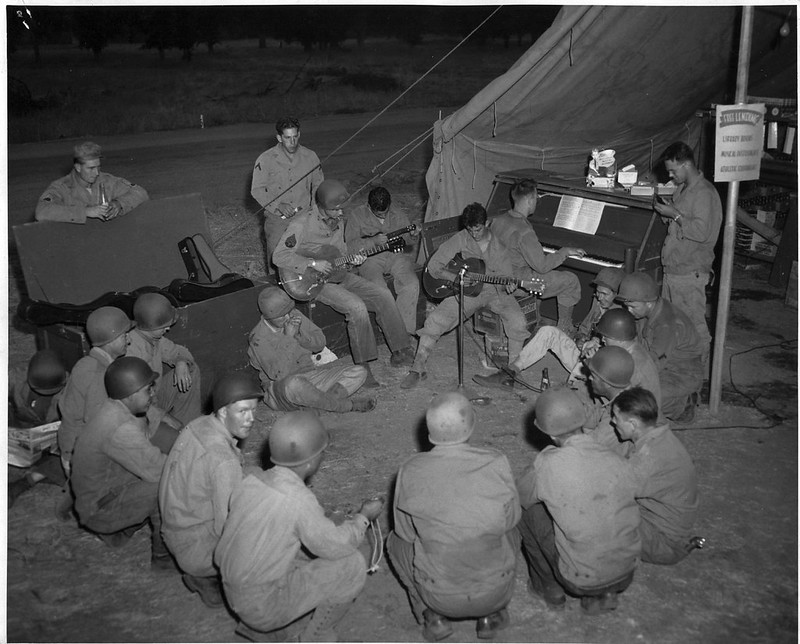
When the United States entered World War II in 1941, raw materials of all sorts were diverted to the war effort and manufacturers retooled their plants to produce war material. (Typewriters were an interesting example of this.)
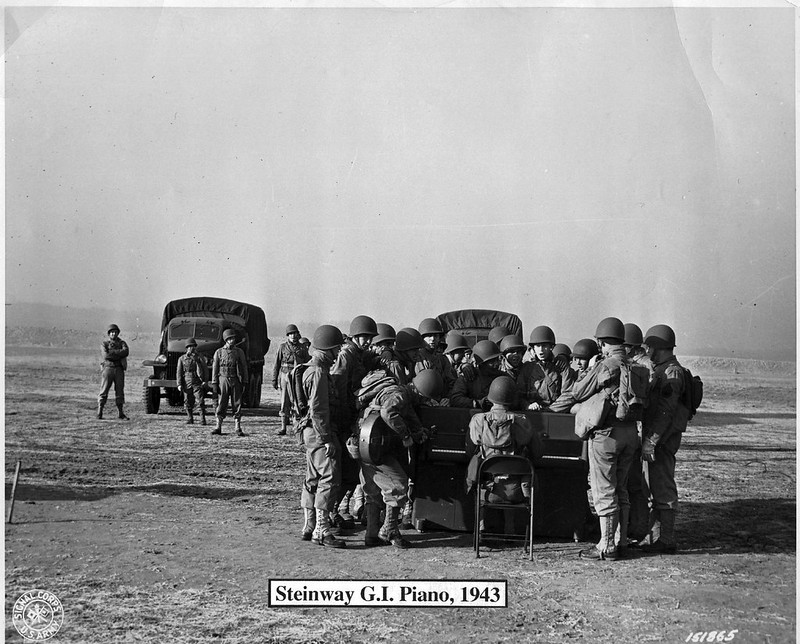
At first, the Steinway piano company used its capacity for making big wooden boxes to manufacture tails and wings for gliders for troop transport and coffins for bringing casualties home. Late in 1941, the company received a request from the War Production Board to design a small upright piano that could be made inexpensively and shipped in a crate to soldiers in the field. The first prototypes were ready by June, 1942.
The pianos were designed to stand up to wartime conditions, without access to the materials the company would normally use. They didn’t have front legs because legs might have broken off when airdropped. They used only one-tenth the metal of a regular Steinway. (Just because the government ordered the pianos didn’t mean Steinway had access to the metals they used to make pianos in peacetime.) They had celluloid keys instead of ivory. The wood was treated with insect repellent and the glue was water resistant.
Known as “Victory Vertical” pianos and “G.I. Steinways,” the pianos were 40-inches tall and weighed 455 pounds. They were made with handles under the keybed and in the back, making it easy for four soldiers to carry them. They were shipped, and sometimes airdropped onto the battlefield, with a set of tuning tools, instructions for using them, spare parts, and sheet music, including current popular music for sing-alongs, Protestant hymns, and boogie-woogie tunes.
The first shipment of 405 olive drab pianos were greeted with enthusiasm, and were quickly followed by more. Later pianos were painted in olive drab, blue, or gray depending on the service to which they were shipped.
The Steinway company shipped more than 3,000 Victory Vertical pianos between 1943 and 1953, when production ended. The last of the pianos went into service in 1961, when the captain of the newly built nuclear submarine USS Thomas A. Edison requested that one be installed in the crew’s mess area. It remained on board until the sub was decommissioned in 1983 and is now on display in the Navy Historical Center in Washington, D.C.
*With thanks. Keep those stories coming, y’all.
April 23, 2024
From the Archives – Shin-kickers from History: Joan of Arc
Several months ago, I asked a group of family and friends to tell me what they knew about Joan of Arc, aka St. Joan, aka the Maid of Orleans–no stopping to look up the details. I needed to know how familiar the average smart, well-read, non-specialist is with her story.* The accuracy and detail of the answers varied, though everyone knew she was French and no one said “Joan who?” ** As I read the answers, one thing stood out: the people who remembered the most were all women who had been fascinated by her story at that age, somewhere between 9 and death, when smart girls look for historical role models to tell them that it’s okay to be tough/mouthy/opinionated/different.***
I was one of those girls. I’m still fascinated by Joan, and other warrior women. And I was delighted when two new biographies of the Maid of Orleans landed on my book shelves in recent months.
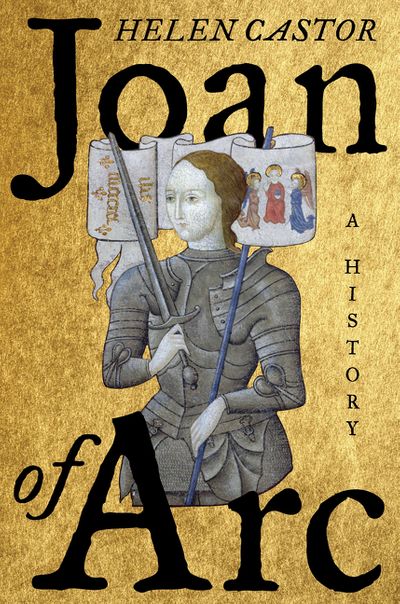
In Joan of Arc, historian Helen Castor returns to the subject of powerful medieval women that she explored so successfully in She Wolves. Castor brings a new twist to a familiar story, signaled in the use of “a history” rather than “a biography” as a sub-title. Instead of starting with Joan, she begins with the turbulent history of fifteenth century France, placing Joan’s achievements within the context of the bloody civil war that began with the assassination of Louis, Duke of Orleans, at the instigation of his brother, the Duke of Burgundy, in 1407. ****
Castor takes the reader step-by-step through the labyrinthine story of a France divided between Burgundians, the supporters of the French royal family, and the opportunistic claims of England’s Henry V to the French crown. Joan appears in the narrative one-third of the way through the book, when all hope of the French dauphin claiming his throne seems lost. Even after she appears, Castor never loses sight of the larger picture, placing Joan’s story within the context of previous French visionaries, politics within the French and English courts, and the realities of fifteenth century warfare.
Written with both scholarly rigor and the narrative tension of a historical thriller, Castor’s Joan of Arc makes the story of St. Joan more understandable, more complex, and more extraordinary. Or as cultural historian and mythographer Marina Warner put in in her own study of St. Joan: “so grand, so odd, so stirring.”
One of these days I’ll get to Kathryn Harrison’s Joan of Arc: A Life Transfigured. Then it will be time for compare and contrast.
* Note to self, next time you have this kind of question, post it on the blog. *Headsmack*
**My favorite answer captured the essence of the legend without reference to historical detail: “She was that sturdy girl that wore armor, carried a sword, fought the bad guys, stormed their castles, was burned at the stake for her troubles, and smiled while burning…thus Sainthood. ???????????”
***I’d love to think that modern pre-teens didn’t need these role models the same way we did in the Dark Ages before the women’s movement of the late 1960s and early 1970s, but I’m afraid it’s not true. Hence the popularity of the A Mighty Girl website and the #LikeAGirl campaign.
****That assassination was the subject of another book I loved, Eric Jager’s Blood Royal. Read together, the two books illuminate not only the period, but each other. It’s thrilling when that happens.
April 19, 2024
Talkies, or “You Ain’t Heard Nothin’ Yet”
Recently I’ve been dipping into the early days of talking pictures. As usual, a very specific question led me down unexpected rabbit holes. For once, I wasn’t surprised by the depth of my ignorance. Everything I knew about the first “talkies” came from the film Singin’ in the Rain—a movie that I love but that I assumed was not a good historical source.*
Here are some bits that caught my imagination:
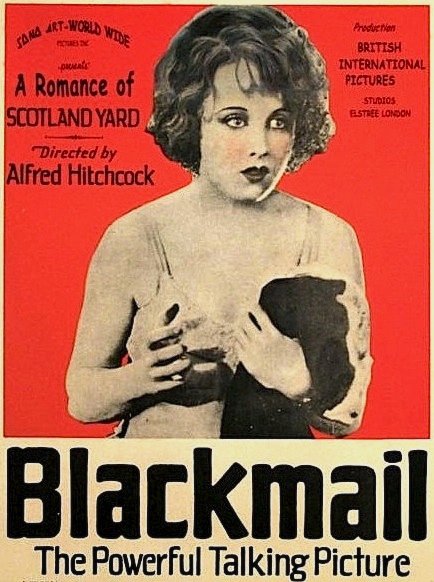
The Jazz Singer (1927), which in the shorthand version of film history is considered the first commercial talking picture, in fact used elements of both silent and talking pictures. Recorded using “sound on disc” technology, the sections of the film that included sound were relatively short, and were mostly devoted to Al Jolson singing—an obvious intermediate step between phonograph records and silent movies. The recordings also caught several improvised comments by Jolson, which the director chose to keep in the final soundtrack and which generated much of the excitement about the film. In my opinion, one of those lines sums up the place of The Jazz Singer in film history: “You ain’t heard nothing yet!” I can’t help but wonder if Jolson wasn’t thinking of the process of making films when he said it.Singin’ in the Rain used one piece of “talkie” history to great affect, revealing one of early Hollywood’s technical secrets in the process. To my surprise, the use of aspiring actress Kathy Seldon (Debbie Reynolds) to dub the lines for silent film Lina Lamont (Jean Hagen) because Lamont’s voice was, let’s just say unpleasant,** reflected a real technique used when silent film actors attempted to make the leap to sound. The technique was used not only to cover for voices that were too shrill, too nasal, too soft or just, “too,” but also to hide strong European accents. Only two years after The Jazz Singer, Alfred Hitchcock used the technique effectively in Blackmail (1929), in which actress Joan Barry dubbed lines for Czech Anny Ondra, whose accent was considered unacceptable for English-speaking audiences.***Introducing sound into movies using the first viable “sound-on-disc” and “sound-on-film” technologies**** forced movie makers to find a way to mask unwanted sounds. Ironically, the biggest problem was the sound of the cameras themselves. At first cameras were isolated in heavy sound-proof cabinets, sometimes called “iceboxes,” to mute the sound of their motors, which limited directors’ ability to move their cameras. I don’t remember seeing such a thing in the on-set scenes in Singing in the Rain. Perhaps it’s time to watch it again?*Though in fact, Singin’ in the Rain came out only 25 years after The Jazz Singer, something I hadn’t realized until I went down this particular rabbit hole. The film’s creators may have known more about movie history than I gave them credit for.
**In an interesting twist, Hagen “dubbed” her own spoken lines. .
***This surviving clip of a sound test with Hemingway makes it clear that her accent was, in fact, quite light. (It also makes clear that Hitchcock was a bit of a jerk.)
****Sound-on-film ultimately won, but for a time movies were produced in both formats to accommodate the fact that theaters had different set-ups. During this period, some studios also produced parallel silent versions of films because smaller theaters were slow to catch up.


