
Gary R. Ryman's Blog, page 9
August 16, 2013
More you might be a Redneck Firefighter if….
The soda machine in the station is actually loaded
with Genesee, Iron City or insert low end beer here.
Four guys get off a piece of apparatus and three of
them are related (whether they know it or not).
The portables still have extendable antennas.
The “donations” from filling pools with the tanker
are a major source of department income.
The Memorial Day Chicken Barbeque at the station is
the social event of the year.
A call comes in at 7:00 AM on the first day of deer
season and the only one who moves are the deer.
One of the first line pieces still has coats, boots,
and helmets hanging from a rack on the side.
The port-a-pond doubles as the town swimming pool on
hot summer days.

with Genesee, Iron City or insert low end beer here.
Four guys get off a piece of apparatus and three of
them are related (whether they know it or not).
The portables still have extendable antennas.
The “donations” from filling pools with the tanker
are a major source of department income.
The Memorial Day Chicken Barbeque at the station is
the social event of the year.
A call comes in at 7:00 AM on the first day of deer
season and the only one who moves are the deer.
One of the first line pieces still has coats, boots,
and helmets hanging from a rack on the side.
The port-a-pond doubles as the town swimming pool on
hot summer days.


August 10, 2013
Dilbert and the Fire Department
The cartoon “Dilbert” wouldn’t be so funny if it
weren’t so situationally accurate which long ago led me to develop one of
“Ryman’s Rules” relating to the strip. This one is not a law of physics, but a
sociological paradigm which states that: Morale of any organization is
inversely proportional to the number of Dilbert cartoons hanging on the
walls. With that in mind, how many of
these comic strip worthy situations have you seen or experienced?
Pulling into a fire scene with an assignment to lay
a supply lie and finding the hose bed empty, the line having accidentally laid
during the response. Funny how that never happened when we rode
the back step; oh well.
Watching a hose bed turn into silly string when the
pump operator charges the wrong line—the one not pulled.
Getting ready to drain the drop tank and finding the
drain placed on the uphill side.
Extending the “blue line” with yellow hose and
handing it to a new crew who then asks for the “yellow line” to be charged. The reason I hate color coded lines.
Scanning mobile and portable radios—the important
information always gets cut off. Enough
said.
Pump operators who think “100 pounds is good enough
for everything.”
Did you ever notice the same five guys who always have
to leave for work the minute it’s time to wash the rigs and hose after a run?
The company responding for RIT that calls out with
five and shows up with a driver and four juniors.
The officer, who when in charge of a training night,
waits until everyone arrives and then says “so what do you guys want to do
tonight?”
Fire Police who drive like Jeff Gordon for some
reason assuming it is critical they be the first on scene—in order to direct
traffic.
The citizen who on an annual basis, waits for the
windiest day of the year to burn trash, resulting in a 5 acre brush fire, and
then acts surprised when he gets yelled at.
Looking at the personal vehicles parked during the
inevitable call on the afternoon of the first day of buck season and marveling
that there is more firepower present than that possessed by the entire local
police department. Actually true most any
day for rural departments.
The local cop who on an automatic fire alarm offers
to shoot the lock off the door instead of waiting for the apparatus or key
holder. His offer was turned down.
The guy with more state class patches on his sleeve
than a Sergeant Major has stripes—who won’t go inside.
The guy with the two door subcompact car and a blue
light bar so big it extends feet beyond the sides of the car. So big you wonder if the car will rotate
when the lights are turned on.
The guy who carries three pagers and two portable
radios—all on his belt at the same time. Note:
The three above are often the same guy.
The brush fire in a two acre field with only a
single solitary tree located right in the center—which the brush truck driver
hits while backing up.
You know you’re really in trouble when three pieces
of apparatus, all responding to the same call, reach the same intersection; and
one turns left, one goes straight, and the third turns right.
Last, but certainly not least, (insert favorite personal activity here) with your significant other
is invariably interrupted by the pager.


weren’t so situationally accurate which long ago led me to develop one of
“Ryman’s Rules” relating to the strip. This one is not a law of physics, but a
sociological paradigm which states that: Morale of any organization is
inversely proportional to the number of Dilbert cartoons hanging on the
walls. With that in mind, how many of
these comic strip worthy situations have you seen or experienced?
Pulling into a fire scene with an assignment to lay
a supply lie and finding the hose bed empty, the line having accidentally laid
during the response. Funny how that never happened when we rode
the back step; oh well.
Watching a hose bed turn into silly string when the
pump operator charges the wrong line—the one not pulled.
Getting ready to drain the drop tank and finding the
drain placed on the uphill side.
Extending the “blue line” with yellow hose and
handing it to a new crew who then asks for the “yellow line” to be charged. The reason I hate color coded lines.
Scanning mobile and portable radios—the important
information always gets cut off. Enough
said.
Pump operators who think “100 pounds is good enough
for everything.”
Did you ever notice the same five guys who always have
to leave for work the minute it’s time to wash the rigs and hose after a run?
The company responding for RIT that calls out with
five and shows up with a driver and four juniors.
The officer, who when in charge of a training night,
waits until everyone arrives and then says “so what do you guys want to do
tonight?”
Fire Police who drive like Jeff Gordon for some
reason assuming it is critical they be the first on scene—in order to direct
traffic.
The citizen who on an annual basis, waits for the
windiest day of the year to burn trash, resulting in a 5 acre brush fire, and
then acts surprised when he gets yelled at.
Looking at the personal vehicles parked during the
inevitable call on the afternoon of the first day of buck season and marveling
that there is more firepower present than that possessed by the entire local
police department. Actually true most any
day for rural departments.
The local cop who on an automatic fire alarm offers
to shoot the lock off the door instead of waiting for the apparatus or key
holder. His offer was turned down.
The guy with more state class patches on his sleeve
than a Sergeant Major has stripes—who won’t go inside.
The guy with the two door subcompact car and a blue
light bar so big it extends feet beyond the sides of the car. So big you wonder if the car will rotate
when the lights are turned on.
The guy who carries three pagers and two portable
radios—all on his belt at the same time. Note:
The three above are often the same guy.
The brush fire in a two acre field with only a
single solitary tree located right in the center—which the brush truck driver
hits while backing up.
You know you’re really in trouble when three pieces
of apparatus, all responding to the same call, reach the same intersection; and
one turns left, one goes straight, and the third turns right.
Last, but certainly not least, (insert favorite personal activity here) with your significant other
is invariably interrupted by the pager.
Dilbert and the Fire Department
The cartoon “Dilbert” wouldn’t be so funny if it
weren’t so situationally accurate which long ago led me to develop one of
“Ryman’s Rules” relating to the strip. This one is not a law of physics, but a
sociological paradigm which states that: Morale of any organization is
inversely proportional to the number of Dilbert cartoons hanging on the
walls. With that in mind, how many of
these comic strip worthy situations have you seen or experienced?
Pulling into a fire scene with an assignment to lay
a supply lie and finding the hose bed empty, the line having accidentally laid
during the response. Funny how that never happened when we rode
the back step; oh well.
Watching a hose bed turn into silly string when the
pump operator charges the wrong line—the one not pulled.
Getting ready to drain the drop tank and finding the
drain placed on the uphill side.
Extending the “blue line” with yellow hose and
handing it to a new crew who then asks for the “yellow line” to be charged. The reason I hate color coded lines.
Scanning mobile and portable radios—the important
information always gets cut off. Enough
said.
Pump operators who think “100 pounds is good enough
for everything.”
Did you ever notice the same five guys who always have
to leave for work the minute it’s time to wash the rigs and hose after a run?
The company responding for RIT that calls out with
five and shows up with a driver and four juniors.
The officer, who when in charge of a training night,
waits until everyone arrives and then says “so what do you guys want to do
tonight?”
Fire Police who drive like Jeff Gordon for some
reason assuming it is critical they be the first on scene—in order to direct
traffic.
The citizen who on an annual basis, waits for the
windiest day of the year to burn trash, resulting in a 5 acre brush fire, and
then acts surprised when he gets yelled at.
Looking at the personal vehicles parked during the
inevitable call on the afternoon of the first day of buck season and marveling
that there is more firepower present than that possessed by the entire local
police department. Actually true most any
day for rural departments.
The local cop who on an automatic fire alarm offers
to shoot the lock off the door instead of waiting for the apparatus or key
holder. His offer was turned down.
The guy with more state class patches on his sleeve
than a Sergeant Major has stripes—who won’t go inside.
The guy with the two door subcompact car and a blue
light bar so big it extends feet beyond the sides of the car. So big you wonder if the car will rotate
when the lights are turned on.
The guy who carries three pagers and two portable
radios—all on his belt at the same time. Note:
The three above are often the same guy.
The brush fire in a two acre field with only a
single solitary tree located right in the center—which the brush truck driver
hits while backing up.
You know you’re really in trouble when three pieces
of apparatus, all responding to the same call, reach the same intersection; and
one turns left, one goes straight, and the third turns right.
Last, but certainly not least, (insert favorite personal activity here) with your significant other
is invariably interrupted by the pager.
weren’t so situationally accurate which long ago led me to develop one of
“Ryman’s Rules” relating to the strip. This one is not a law of physics, but a
sociological paradigm which states that: Morale of any organization is
inversely proportional to the number of Dilbert cartoons hanging on the
walls. With that in mind, how many of
these comic strip worthy situations have you seen or experienced?
Pulling into a fire scene with an assignment to lay
a supply lie and finding the hose bed empty, the line having accidentally laid
during the response. Funny how that never happened when we rode
the back step; oh well.
Watching a hose bed turn into silly string when the
pump operator charges the wrong line—the one not pulled.
Getting ready to drain the drop tank and finding the
drain placed on the uphill side.
Extending the “blue line” with yellow hose and
handing it to a new crew who then asks for the “yellow line” to be charged. The reason I hate color coded lines.
Scanning mobile and portable radios—the important
information always gets cut off. Enough
said.
Pump operators who think “100 pounds is good enough
for everything.”
Did you ever notice the same five guys who always have
to leave for work the minute it’s time to wash the rigs and hose after a run?
The company responding for RIT that calls out with
five and shows up with a driver and four juniors.
The officer, who when in charge of a training night,
waits until everyone arrives and then says “so what do you guys want to do
tonight?”
Fire Police who drive like Jeff Gordon for some
reason assuming it is critical they be the first on scene—in order to direct
traffic.
The citizen who on an annual basis, waits for the
windiest day of the year to burn trash, resulting in a 5 acre brush fire, and
then acts surprised when he gets yelled at.
Looking at the personal vehicles parked during the
inevitable call on the afternoon of the first day of buck season and marveling
that there is more firepower present than that possessed by the entire local
police department. Actually true most any
day for rural departments.
The local cop who on an automatic fire alarm offers
to shoot the lock off the door instead of waiting for the apparatus or key
holder. His offer was turned down.
The guy with more state class patches on his sleeve
than a Sergeant Major has stripes—who won’t go inside.
The guy with the two door subcompact car and a blue
light bar so big it extends feet beyond the sides of the car. So big you wonder if the car will rotate
when the lights are turned on.
The guy who carries three pagers and two portable
radios—all on his belt at the same time. Note:
The three above are often the same guy.
The brush fire in a two acre field with only a
single solitary tree located right in the center—which the brush truck driver
hits while backing up.
You know you’re really in trouble when three pieces
of apparatus, all responding to the same call, reach the same intersection; and
one turns left, one goes straight, and the third turns right.
Last, but certainly not least, (insert favorite personal activity here) with your significant other
is invariably interrupted by the pager.
August 3, 2013
Fire Archaeology: Still Salvaging After All These Years
The
stories of most major fires concentrate on the immediate impact; the deaths and
injuries which resulted. Just over 40
years ago, a fire occurred which caused no deaths or serious injuries, the
impact from which is still being felt.
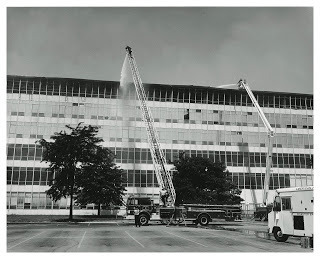
Just after midnight on July 12, 1973, fire broke out on the sixth floor
of the National Personnel Records Center in Overland, Missouri.
Construction
work on this building to hold military service records was completed in
1956. When the original studies were
conducted during the design phase, conflicting advice was received from
archivists and personnel at other government records retention facilities. Some strongly recommended the inclusion of
automatic sprinklers and others argued against.
Not surprisingly, since we are talking about this fire forty years
later, the anti-sprinkler forces won. Storage
of paper records in folders and boxes packed on metal shelves and file cabinets
filled the building—a massive fire load.
The
fire response exceeded 6 alarms. The
interior attack was abandoned at 3:15 AM that morning due to deteriorating
conditions, but the exterior attack continued for days. On the 14th, firefighters
re-entered the building to begin final extinguishment and overhaul on the sixth
floor; a task complicated by partial structural collapse of the roof. By the 16th of July, a single
company remained on scene.
Following
fire extinguishment began a salvage operation which continues even today. Computer tapes and microfilm records were
among the early transfers to an off-site facility. All six floors of the building experienced
substantial water damage, and the recovery of water soaked records was a
massive operation. Wet records were
re-boxed and the escalator railings used as a slide to move them to the ground
floor for transport. Setting up a
temporary facility at the nearby Civilian Personnel Records Center, plastic
milk crates, eventually 30,000 of them, were used for open shelf drying, but a
better solution was on the horizon.
A
vacuum drying chamber was located at the McDonnell Douglas Aircraft plant in
St. Louis. The chamber was originally
constructed for space simulation as part of the Apollo moon program. Once archivists confirmed the technology
worked, two additional chambers at the Sandusky, Ohio NASA facility were located
and used as well. Wet records were
placed in the plastic milk crates, which were stacked nine high on wood
pallets, and the records loaded into the chamber, which was sealed. Air was evacuated from the chamber and the
temperature lowered to freezing. Hot dry
air was then introduced until the wetted materials reach 50 degrees F. Depending upon how wet the material was,
multiple cycles could be needed to dry the records. With a single chamber capable of holding
2,000 milk crates, nearly eight tons or 2000 gallons of water could be removed
during a run.
The
charred and burned materials recoverable from the sixth floor created another
challenge. Luckily, this material was
not disposed of following the fire, but stored as “B” files, as improvements in
technology have made the information from some of these materials usable
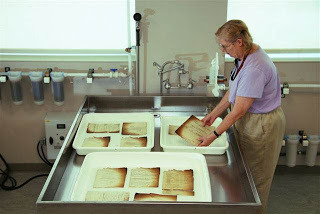
again. Today a team of thirty uses the
latest restoration techniques to recover information from these documents. Working
in latex gloves, this group represents an archival CSI for documents; cleaning
mold and debris and utilizing digital technology, scanners, and specialized
software, some information from burned sections can be revealed and
recovered.
This
information remains important. Requests
are received from veteran’s families for information needed to obtain various
programmatic government benefits along with on-going work by genealogists and
historians. The meticulous work the
recovery team does, like archaeologists unearthing an ancient village filled
with information, is critical in helping these servicemen.
Sprinkler
protection became an important component for all such government facilities
following this fire; a lesson learned like many others, through disaster. While we will likely never know how many
records were lost in the fire, the cause of which remains undetermined, that
recovery and restoration continues forty years later is nothing short of
miraculous.


stories of most major fires concentrate on the immediate impact; the deaths and
injuries which resulted. Just over 40
years ago, a fire occurred which caused no deaths or serious injuries, the
impact from which is still being felt.
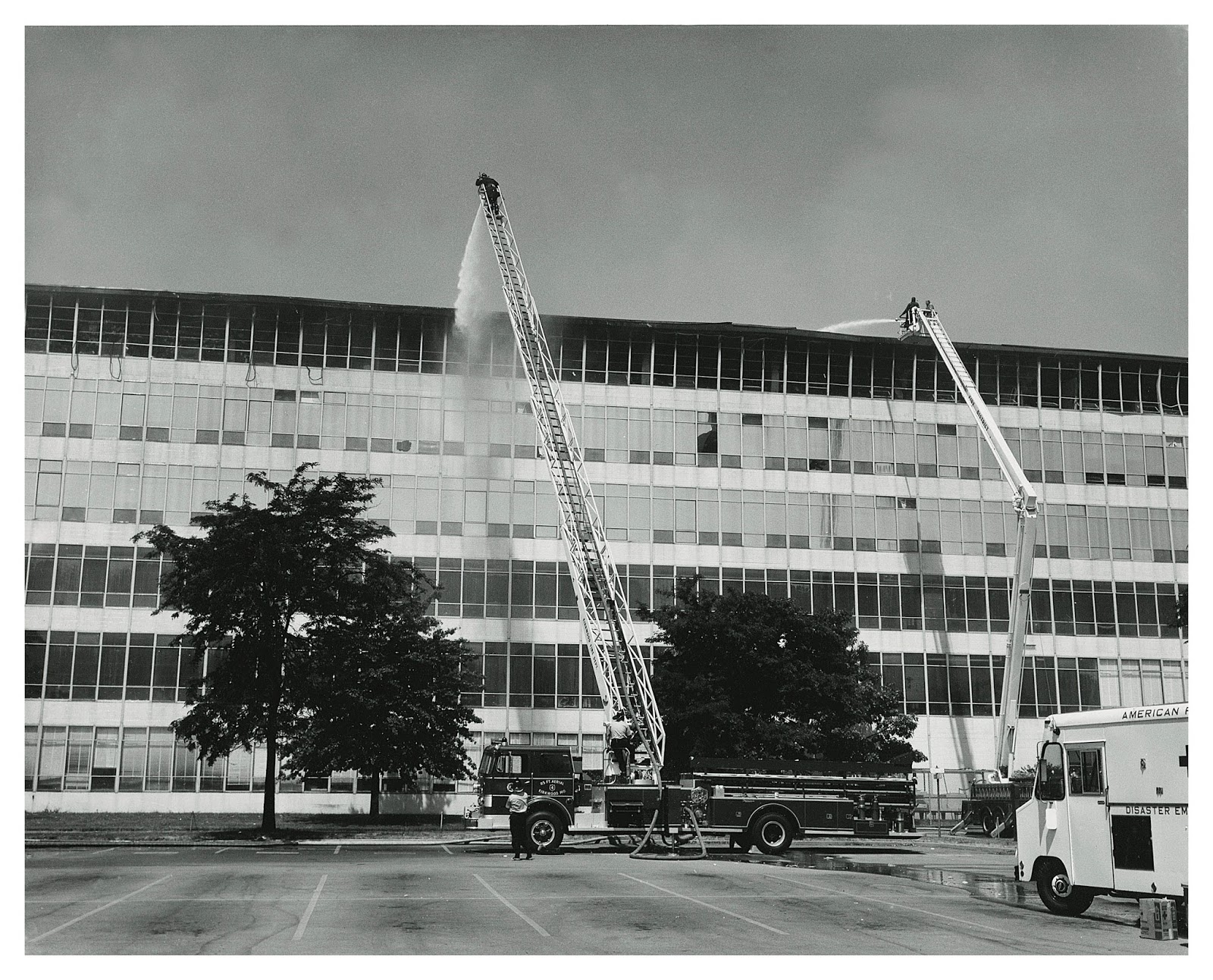
Just after midnight on July 12, 1973, fire broke out on the sixth floor
of the National Personnel Records Center in Overland, Missouri.
Construction
work on this building to hold military service records was completed in
1956. When the original studies were
conducted during the design phase, conflicting advice was received from
archivists and personnel at other government records retention facilities. Some strongly recommended the inclusion of
automatic sprinklers and others argued against.
Not surprisingly, since we are talking about this fire forty years
later, the anti-sprinkler forces won. Storage
of paper records in folders and boxes packed on metal shelves and file cabinets
filled the building—a massive fire load.
The
fire response exceeded 6 alarms. The
interior attack was abandoned at 3:15 AM that morning due to deteriorating
conditions, but the exterior attack continued for days. On the 14th, firefighters
re-entered the building to begin final extinguishment and overhaul on the sixth
floor; a task complicated by partial structural collapse of the roof. By the 16th of July, a single
company remained on scene.
Following
fire extinguishment began a salvage operation which continues even today. Computer tapes and microfilm records were
among the early transfers to an off-site facility. All six floors of the building experienced
substantial water damage, and the recovery of water soaked records was a
massive operation. Wet records were
re-boxed and the escalator railings used as a slide to move them to the ground
floor for transport. Setting up a
temporary facility at the nearby Civilian Personnel Records Center, plastic
milk crates, eventually 30,000 of them, were used for open shelf drying, but a
better solution was on the horizon.
A
vacuum drying chamber was located at the McDonnell Douglas Aircraft plant in
St. Louis. The chamber was originally
constructed for space simulation as part of the Apollo moon program. Once archivists confirmed the technology
worked, two additional chambers at the Sandusky, Ohio NASA facility were located
and used as well. Wet records were
placed in the plastic milk crates, which were stacked nine high on wood
pallets, and the records loaded into the chamber, which was sealed. Air was evacuated from the chamber and the
temperature lowered to freezing. Hot dry
air was then introduced until the wetted materials reach 50 degrees F. Depending upon how wet the material was,
multiple cycles could be needed to dry the records. With a single chamber capable of holding
2,000 milk crates, nearly eight tons or 2000 gallons of water could be removed
during a run.
The
charred and burned materials recoverable from the sixth floor created another
challenge. Luckily, this material was
not disposed of following the fire, but stored as “B” files, as improvements in
technology have made the information from some of these materials usable
again. Today a team of thirty uses the
latest restoration techniques to recover information from these documents. Working
in latex gloves, this group represents an archival CSI for documents; cleaning
mold and debris and utilizing digital technology, scanners, and specialized
software, some information from burned sections can be revealed and
recovered.

This
information remains important. Requests
are received from veteran’s families for information needed to obtain various
programmatic government benefits along with on-going work by genealogists and
historians. The meticulous work the
recovery team does, like archaeologists unearthing an ancient village filled
with information, is critical in helping these servicemen.
Sprinkler
protection became an important component for all such government facilities
following this fire; a lesson learned like many others, through disaster. While we will likely never know how many
records were lost in the fire, the cause of which remains undetermined, that
recovery and restoration continues forty years later is nothing short of
miraculous.
Fire Archaeology: Still Salvaging After All These Years
The
stories of most major fires concentrate on the immediate impact; the deaths and
injuries which resulted. Just over 40
years ago, a fire occurred which caused no deaths or serious injuries, the
impact from which is still being felt.
Just after midnight on July 12, 1973, fire broke out on the sixth floor
of the National Personnel Records Center in Overland, Missouri.
Construction
work on this building to hold military service records was completed in
1956. When the original studies were
conducted during the design phase, conflicting advice was received from
archivists and personnel at other government records retention facilities. Some strongly recommended the inclusion of
automatic sprinklers and others argued against.
Not surprisingly, since we are talking about this fire forty years
later, the anti-sprinkler forces won. Storage
of paper records in folders and boxes packed on metal shelves and file cabinets
filled the building—a massive fire load.
The
fire response exceeded 6 alarms. The
interior attack was abandoned at 3:15 AM that morning due to deteriorating
conditions, but the exterior attack continued for days. On the 14th, firefighters
re-entered the building to begin final extinguishment and overhaul on the sixth
floor; a task complicated by partial structural collapse of the roof. By the 16th of July, a single
company remained on scene.
Following
fire extinguishment began a salvage operation which continues even today. Computer tapes and microfilm records were
among the early transfers to an off-site facility. All six floors of the building experienced
substantial water damage, and the recovery of water soaked records was a
massive operation. Wet records were
re-boxed and the escalator railings used as a slide to move them to the ground
floor for transport. Setting up a
temporary facility at the nearby Civilian Personnel Records Center, plastic
milk crates, eventually 30,000 of them, were used for open shelf drying, but a
better solution was on the horizon.
A
vacuum drying chamber was located at the McDonnell Douglas Aircraft plant in
St. Louis. The chamber was originally
constructed for space simulation as part of the Apollo moon program. Once archivists confirmed the technology
worked, two additional chambers at the Sandusky, Ohio NASA facility were located
and used as well. Wet records were
placed in the plastic milk crates, which were stacked nine high on wood
pallets, and the records loaded into the chamber, which was sealed. Air was evacuated from the chamber and the
temperature lowered to freezing. Hot dry
air was then introduced until the wetted materials reach 50 degrees F. Depending upon how wet the material was,
multiple cycles could be needed to dry the records. With a single chamber capable of holding
2,000 milk crates, nearly eight tons or 2000 gallons of water could be removed
during a run.
The
charred and burned materials recoverable from the sixth floor created another
challenge. Luckily, this material was
not disposed of following the fire, but stored as “B” files, as improvements in
technology have made the information from some of these materials usable
again. Today a team of thirty uses the
latest restoration techniques to recover information from these documents. Working
in latex gloves, this group represents an archival CSI for documents; cleaning
mold and debris and utilizing digital technology, scanners, and specialized
software, some information from burned sections can be revealed and
recovered.
This
information remains important. Requests
are received from veteran’s families for information needed to obtain various
programmatic government benefits along with on-going work by genealogists and
historians. The meticulous work the
recovery team does, like archaeologists unearthing an ancient village filled
with information, is critical in helping these servicemen.
Sprinkler
protection became an important component for all such government facilities
following this fire; a lesson learned like many others, through disaster. While we will likely never know how many
records were lost in the fire, the cause of which remains undetermined, that
recovery and restoration continues forty years later is nothing short of
miraculous.
stories of most major fires concentrate on the immediate impact; the deaths and
injuries which resulted. Just over 40
years ago, a fire occurred which caused no deaths or serious injuries, the
impact from which is still being felt.
Just after midnight on July 12, 1973, fire broke out on the sixth floor
of the National Personnel Records Center in Overland, Missouri.
Construction
work on this building to hold military service records was completed in
1956. When the original studies were
conducted during the design phase, conflicting advice was received from
archivists and personnel at other government records retention facilities. Some strongly recommended the inclusion of
automatic sprinklers and others argued against.
Not surprisingly, since we are talking about this fire forty years
later, the anti-sprinkler forces won. Storage
of paper records in folders and boxes packed on metal shelves and file cabinets
filled the building—a massive fire load.
The
fire response exceeded 6 alarms. The
interior attack was abandoned at 3:15 AM that morning due to deteriorating
conditions, but the exterior attack continued for days. On the 14th, firefighters
re-entered the building to begin final extinguishment and overhaul on the sixth
floor; a task complicated by partial structural collapse of the roof. By the 16th of July, a single
company remained on scene.
Following
fire extinguishment began a salvage operation which continues even today. Computer tapes and microfilm records were
among the early transfers to an off-site facility. All six floors of the building experienced
substantial water damage, and the recovery of water soaked records was a
massive operation. Wet records were
re-boxed and the escalator railings used as a slide to move them to the ground
floor for transport. Setting up a
temporary facility at the nearby Civilian Personnel Records Center, plastic
milk crates, eventually 30,000 of them, were used for open shelf drying, but a
better solution was on the horizon.
A
vacuum drying chamber was located at the McDonnell Douglas Aircraft plant in
St. Louis. The chamber was originally
constructed for space simulation as part of the Apollo moon program. Once archivists confirmed the technology
worked, two additional chambers at the Sandusky, Ohio NASA facility were located
and used as well. Wet records were
placed in the plastic milk crates, which were stacked nine high on wood
pallets, and the records loaded into the chamber, which was sealed. Air was evacuated from the chamber and the
temperature lowered to freezing. Hot dry
air was then introduced until the wetted materials reach 50 degrees F. Depending upon how wet the material was,
multiple cycles could be needed to dry the records. With a single chamber capable of holding
2,000 milk crates, nearly eight tons or 2000 gallons of water could be removed
during a run.
The
charred and burned materials recoverable from the sixth floor created another
challenge. Luckily, this material was
not disposed of following the fire, but stored as “B” files, as improvements in
technology have made the information from some of these materials usable
again. Today a team of thirty uses the
latest restoration techniques to recover information from these documents. Working
in latex gloves, this group represents an archival CSI for documents; cleaning
mold and debris and utilizing digital technology, scanners, and specialized
software, some information from burned sections can be revealed and
recovered.
This
information remains important. Requests
are received from veteran’s families for information needed to obtain various
programmatic government benefits along with on-going work by genealogists and
historians. The meticulous work the
recovery team does, like archaeologists unearthing an ancient village filled
with information, is critical in helping these servicemen.
Sprinkler
protection became an important component for all such government facilities
following this fire; a lesson learned like many others, through disaster. While we will likely never know how many
records were lost in the fire, the cause of which remains undetermined, that
recovery and restoration continues forty years later is nothing short of
miraculous.
July 27, 2013
Farm Spayer to Fire Truck
If you stay around long enough,
you’ll see that many things in the fire service are cyclical. In the late 1930s, an orchard owner noticed
his neighbor’s house burning, and dragged his sprayer, manufactured by a guy
named Bean, over to fight and ultimately extinguish the fire. From this developed the high pressure fog
system for fire apparatus. It was not unlike many pieces of equipment
which had their start in other applications—think high lift jacks and positive
pressure ventilation fans—so did high pressure, adapted from agricultural
use. In the 1940s and 1950s, the use of
high pressure fog was a common tactic and its face was the ubiquitous John Bean, at least one of which was
seemingly owned by every rural or suburban department.
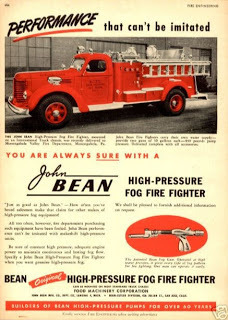
The pumps operated at 650-800 psi
at low flow through gun type nozzles.
Useful on indirect attack situations, there were weaknesses in other
applications. Overtaken by volume pumps
and larger lines, they slowly faded from use on structure fires. The parent company, FMC Fire Apparatus, ultimately
ceased operations in 1990 following a failed expansion into ladder trucks.
Today, the technology is rearing its
head again in the form of ultra-high pressure.
Pumps for low flow 18-22 gpm
handlines delivering water at 1100-1400 psi are now being manufactured by HMA
Fire. As with many “new” technologies,
it is being suggested for a variety of applications from ARFF to woodland, and
yes, even structural fires. Where it
will go is unclear, but the fire service trip around the circle is virtually
complete.
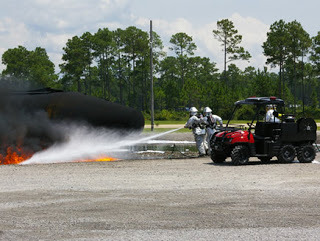

you’ll see that many things in the fire service are cyclical. In the late 1930s, an orchard owner noticed
his neighbor’s house burning, and dragged his sprayer, manufactured by a guy
named Bean, over to fight and ultimately extinguish the fire. From this developed the high pressure fog
system for fire apparatus. It was not unlike many pieces of equipment
which had their start in other applications—think high lift jacks and positive
pressure ventilation fans—so did high pressure, adapted from agricultural
use. In the 1940s and 1950s, the use of
high pressure fog was a common tactic and its face was the ubiquitous John Bean, at least one of which was
seemingly owned by every rural or suburban department.

The pumps operated at 650-800 psi
at low flow through gun type nozzles.
Useful on indirect attack situations, there were weaknesses in other
applications. Overtaken by volume pumps
and larger lines, they slowly faded from use on structure fires. The parent company, FMC Fire Apparatus, ultimately
ceased operations in 1990 following a failed expansion into ladder trucks.
Today, the technology is rearing its
head again in the form of ultra-high pressure.
Pumps for low flow 18-22 gpm
handlines delivering water at 1100-1400 psi are now being manufactured by HMA
Fire. As with many “new” technologies,
it is being suggested for a variety of applications from ARFF to woodland, and
yes, even structural fires. Where it
will go is unclear, but the fire service trip around the circle is virtually
complete.
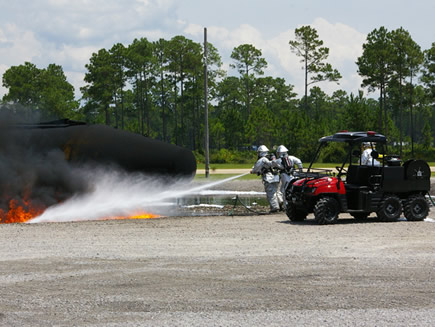
July 20, 2013
James Bond—Nope, More Like Maxwell Smart: The Jet Axe
The
side compartment of the vehicle was opened and the rectangular package removed
and carried to the ladder located in front of the smoking building. The action hero briskly climbed to the roof
and brought his burden to near the ridge line, carefully laying it with the
long axis perpendicular to the peak.
He
punched a hole in the cover, pulling a hidden control box connected to the
package by a wire harness from the interior.
Retreating to the safety of the ladder, he climbed below the eave to
shield himself, tempted to yell out “fire in the hole.” Pushing the button on the control in his
hand was thrilling. The noise from the
explosion caught the attention of all those nearby. Smoke poured from the opening in the roof, a
perfectly cut rectangle in the shape of the package, not from the explosion, but
from the fire below.
Ventilation
without a saw; what a concept. This
isn’t Bond, Schwarzenegger, Stallone, or Bruce Willis, nor is it a USFA
development project for 2017. This is
technology from the middle of the last century; the Jet Axe.
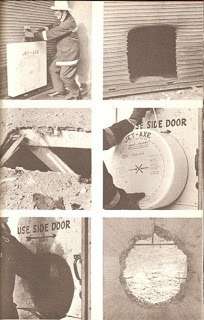
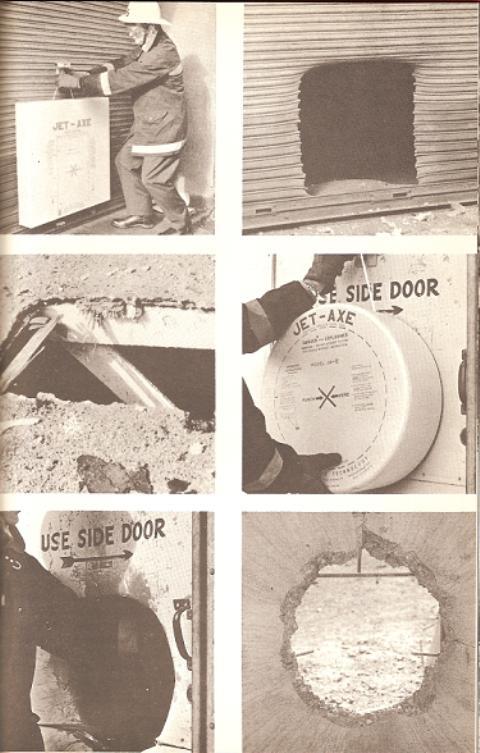
The
Jet-Axe wasn’t just for ventilation; it could be used for forcible entry as
well. Developed using military style
explosives, and designed to focus the blast in a narrow area, it came into use primarily
in the late 1960s, and out shortly thereafter.
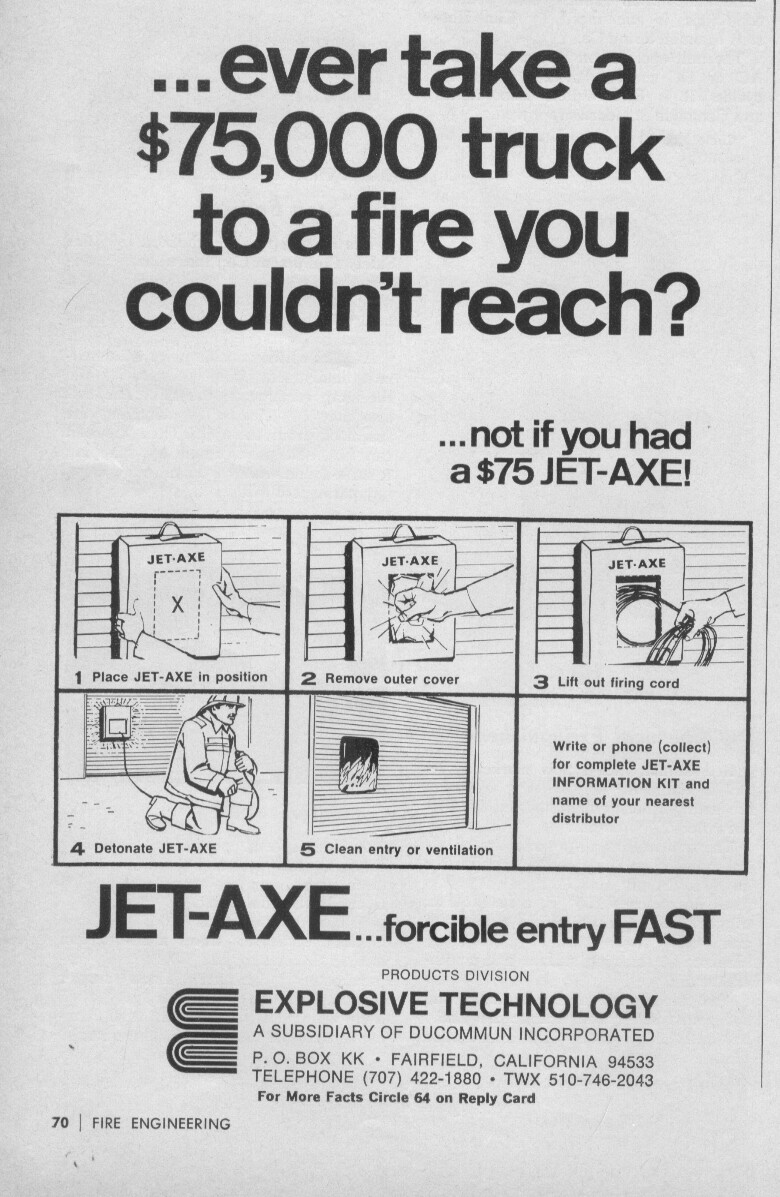
The manufacturer apparently did not account for the explosive contents
becoming unstable over time and bouncing about in ladder truck compartments.
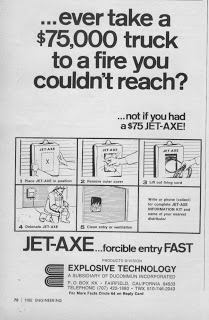
Legend
has it that the problem first reared its head in San Francisco when an
unsuspecting truck company had a new hole where a compartment door previously
resided--a Jet-Axe “operated” while the ladder truck was underway. Word spread quickly, and most were removed
from service promptly.
For
those of an inventive nature, research shows that the trade-mark on the name
expired in 2001 (making it available again) and was last owned by Explosive
Technology, Inc. in Fairfield, California.
Lots of things in the fire service are cyclical in nature; maybe this
will be another...

side compartment of the vehicle was opened and the rectangular package removed
and carried to the ladder located in front of the smoking building. The action hero briskly climbed to the roof
and brought his burden to near the ridge line, carefully laying it with the
long axis perpendicular to the peak.
He
punched a hole in the cover, pulling a hidden control box connected to the
package by a wire harness from the interior.
Retreating to the safety of the ladder, he climbed below the eave to
shield himself, tempted to yell out “fire in the hole.” Pushing the button on the control in his
hand was thrilling. The noise from the
explosion caught the attention of all those nearby. Smoke poured from the opening in the roof, a
perfectly cut rectangle in the shape of the package, not from the explosion, but
from the fire below.
Ventilation
without a saw; what a concept. This
isn’t Bond, Schwarzenegger, Stallone, or Bruce Willis, nor is it a USFA
development project for 2017. This is
technology from the middle of the last century; the Jet Axe.
The
Jet-Axe wasn’t just for ventilation; it could be used for forcible entry as
well. Developed using military style
explosives, and designed to focus the blast in a narrow area, it came into use primarily
in the late 1960s, and out shortly thereafter.
The manufacturer apparently did not account for the explosive contents
becoming unstable over time and bouncing about in ladder truck compartments.
Legend
has it that the problem first reared its head in San Francisco when an
unsuspecting truck company had a new hole where a compartment door previously
resided--a Jet-Axe “operated” while the ladder truck was underway. Word spread quickly, and most were removed
from service promptly.
For
those of an inventive nature, research shows that the trade-mark on the name
expired in 2001 (making it available again) and was last owned by Explosive
Technology, Inc. in Fairfield, California.
Lots of things in the fire service are cyclical in nature; maybe this
will be another...
July 13, 2013
The Firefighter Trampoline
Jumping from a burning building has long been, and remains,
the last resort of a desperate victim, usually with less than optimum
results. But on November 10, 1904, two girls jumped
from an overcrowded fire escape platform, and this time things were
different. They were caught by New York
City firefighters using an unusual circular fabric device, a safety net. Now more recognized in comedic videos and
seen in museums, the Browder Safety Net was at one time a common piece of
equipment for ladder companies.
Developed by a Civil War veteran by the name of Thomas F. Browder in
1887; he continued to evolve and improve the design, adding additional patents
in 1900.
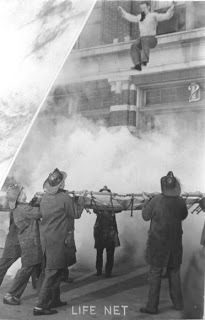
There were other successes, including one in 1901 in New
York City in which twenty people reportedly leaped to safety. Failures, though, were common as well. In Newark in 1910, four women jumped
simultaneously from an upper floor of a factory and tore through the net. Although two deployed nets saved a few, a
similar situation occurred at the infamous Triangle Shirtwaist factory fire and
many more jumpers were missed. Additional stories on other fires abound of
individual victims who jumped, but missed the net or hit the edge, sometimes
injuring firefighters.
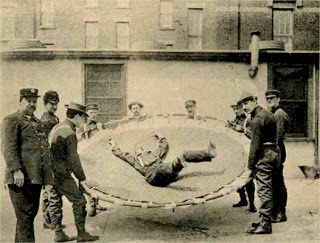
Ladder trucks carried the net folded and typically mounted
vertically on the side of the apparatus.
It could be deployed in seconds, but required at least ten or more firefighters
holding it at shoulder height, in the right place and time. With the fabric center and springs connecting
it to the circular frame, it was a portable man held version of the circus
trampoline, but with less bounce.
The ideal way in which to jump was with the legs straight
out in a seated-like position, and arms crossed in front of the torso with the
objective being to land on the small of the back or buttocks. While a firefighter could easily be taught
this during a routine training session, a victim at a fourth floor window with
smoke pouring from around them or flames nipping at their heels would not be a
receptive student. The firefighters on
the ground would catch them, or try to, in any orientation in which they
jumped.
As time passed and the length of aerial ladders increased,
the need for the Browder net decreased.
Concerns over its safety and effectiveness grew and in the 1950s
departments began to phase out their use.
These nets are now little more than a curiosity, displayed in museums,
fire stations, and at least one firefighter’s home bar. If keeping a fire scene from being a “circus”
is a good thing, no longer bringing our own trampoline probably helps.

the last resort of a desperate victim, usually with less than optimum
results. But on November 10, 1904, two girls jumped
from an overcrowded fire escape platform, and this time things were
different. They were caught by New York
City firefighters using an unusual circular fabric device, a safety net. Now more recognized in comedic videos and
seen in museums, the Browder Safety Net was at one time a common piece of
equipment for ladder companies.
Developed by a Civil War veteran by the name of Thomas F. Browder in
1887; he continued to evolve and improve the design, adding additional patents
in 1900.

There were other successes, including one in 1901 in New
York City in which twenty people reportedly leaped to safety. Failures, though, were common as well. In Newark in 1910, four women jumped
simultaneously from an upper floor of a factory and tore through the net. Although two deployed nets saved a few, a
similar situation occurred at the infamous Triangle Shirtwaist factory fire and
many more jumpers were missed. Additional stories on other fires abound of
individual victims who jumped, but missed the net or hit the edge, sometimes
injuring firefighters.
Ladder trucks carried the net folded and typically mounted
vertically on the side of the apparatus.
It could be deployed in seconds, but required at least ten or more firefighters
holding it at shoulder height, in the right place and time. With the fabric center and springs connecting
it to the circular frame, it was a portable man held version of the circus
trampoline, but with less bounce.
The ideal way in which to jump was with the legs straight
out in a seated-like position, and arms crossed in front of the torso with the
objective being to land on the small of the back or buttocks. While a firefighter could easily be taught
this during a routine training session, a victim at a fourth floor window with
smoke pouring from around them or flames nipping at their heels would not be a
receptive student. The firefighters on
the ground would catch them, or try to, in any orientation in which they
jumped.
As time passed and the length of aerial ladders increased,
the need for the Browder net decreased.
Concerns over its safety and effectiveness grew and in the 1950s
departments began to phase out their use.
These nets are now little more than a curiosity, displayed in museums,
fire stations, and at least one firefighter’s home bar. If keeping a fire scene from being a “circus”
is a good thing, no longer bringing our own trampoline probably helps.

July 5, 2013
From Triumph to Tragedy: The Legendary Phelim O’Toole
An otherwise ordinary evening was followed by tragedy and
heroism in the early morning hours of April 11, 1877. The elegant Italianate style six story Southern
Hotel, almost a football field in length faced Walnut St. in downtown St.
Louis. At about twenty minutes after one
in the morning, a fire was discovered in the basement. Notification of the fire department was
delayed by upwards of ten minutes due to a lost key to the fire alarm box,
allowing the fire to spread to the upper floors via vertical shafts.
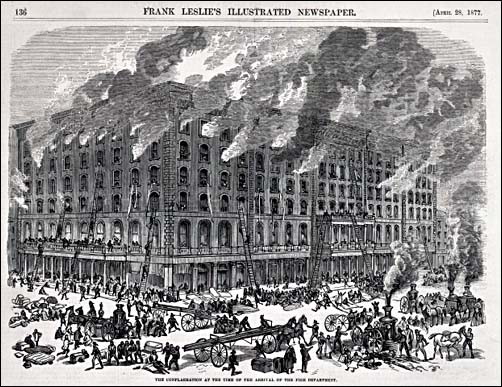
The first alarm brought six engine and two truck companies
for the fire which ultimately would go to three alarms and requirel the
response of every piece of apparatus in the city. The first arriving ladder company, a “Skinner
Escape Truck,” was led by Foreman Phelim O’Toole. O’Toole was an Irish immigrant who was hired
by the St. Louis Fire Department at the age of 18, about ten years before that
night.
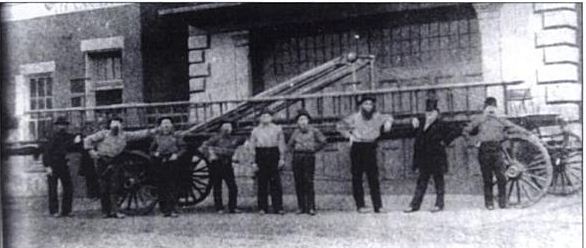
Upon arrival, O’Toole noted fire on the upper floors and
almost a dozen occupants yelling from windows.
Positioning the truck was difficult due to obstructions, but when in the
best position possible, they extended the ladder and O’Toole began to
climb. Fully extended, Phelim found
himself five feet short of the 6th floor window sill.
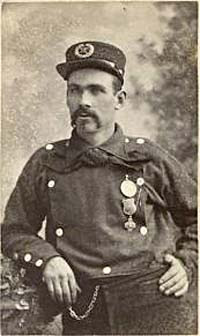
Accounts vary some, but by most, O’Toole had the occupants
tie bed sheets together as a rope, securing their end to a bedframe, and then
lower the other end from the window. He
swung out on a rope from the ladder tip to the dangling bed sheets, and climbed
to the upper window sill, and began to lower the victims to firefighters on the
waiting ladder. Moving from window to
window, he is credited with saving over a dozen people. Conditions continued to deteriorate, but the
last reachable victim was removed just before the building collapsed, taking
twenty one remaining occupants with it.
It was following the Southern Hotel fire that the Pompier
Corps of the St. Louis Fire Department was developed. Pompier Corps
O’Toole received a $500 award from the city, which he
donated to assist orphans. This was a sizable sum when compared to his monthly
salary of $75.00.
The Southern Hotel was not O’Toole’s last experience at the
end of a rope. A serious fire erupted in
the dome of the County Courthouse.
Phelim climbed the dome with an axe, rope, and hoseline. After chopping through the roof, he tied off
the rope and entered through the hole.
Dangling from the rope, he attacked the fire with the handline.
Shortly after, on July 6, 1880, O’Toole died in the line of
duty. It was not another dramatic scene,
but a “routine” cellar fire in a vacant house.
He entered the building with a hand held extinguisher, and when he began
to operate it, the casing exploded, pieces tearing into his chest, fatally
injuring him at 32 years of age.
His funeral service was as big as his reputation with an
estimated 20,000 people attending. Gone
but not forgotten, the St. Louis Fire Department continues to honor his memory,
christening the marine unit fire boat the “Phelim O’Toole” in 1994.


June 28, 2013
Not Sexy but Necessary: Overhaul
There are few jobs on the fire ground less sexy than
overhaul. That said, it is right up
there with laddering the building, ventilation, and the like in terms of
importance. Long before I was old enough
to wear bunker fear for more than cute pictures, I heard my father, “generation
one,” repeat one of his main firefighting philosophical tenets on the subject
multiple times: “There is no such thing
as a rekindle.”
Overhaul can be hard, dirty, nasty work. It’s a time when many tired firefighters get
injured. On heavily damaged structures
it can be highly challenging. One bad
habit some departments get into is substituting the use of Class A foam for
good overhaul practices. “Just soak the
hell out of it. The foam will take care
of it,” is something I’ve heard more than once.
Sorry, but there is no substitute for good overhaul—period. This is not
a “how to” piece, just a suggestion to refocus on an important ingredient in
the recipe.
It can present a great learning opportunity for
inexperienced firefighters. They can
learn about fire behavior, travel, construction types, cause and origin, and
myriad other topics. Nothing says that
the officer supervising them has to remain silent. He or she can talk about all these things
while the crew works, using things they find as examples. We have great tools today, unavailable years
ago, such as thermal imaging cameras, but even this can be a crutch for proper
overhaul if you let it.
The building is in the basement and not safe or
accessible? Don’t just go home and wait
for the neighbors to call in the “rekindle.”
Leave a single company or make arrangements to send one out at a set
time to take care of the anticipated flare-ups.
You may need to do either or both for days, depending upon the
building.
Whatever the fire situation, don’t just call it out and go
home because everybody is tired. There’s
no such thing as a rekindle—only the fire that didn’t get put out the first
time.
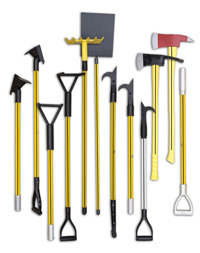

overhaul. That said, it is right up
there with laddering the building, ventilation, and the like in terms of
importance. Long before I was old enough
to wear bunker fear for more than cute pictures, I heard my father, “generation
one,” repeat one of his main firefighting philosophical tenets on the subject
multiple times: “There is no such thing
as a rekindle.”
Overhaul can be hard, dirty, nasty work. It’s a time when many tired firefighters get
injured. On heavily damaged structures
it can be highly challenging. One bad
habit some departments get into is substituting the use of Class A foam for
good overhaul practices. “Just soak the
hell out of it. The foam will take care
of it,” is something I’ve heard more than once.
Sorry, but there is no substitute for good overhaul—period. This is not
a “how to” piece, just a suggestion to refocus on an important ingredient in
the recipe.
It can present a great learning opportunity for
inexperienced firefighters. They can
learn about fire behavior, travel, construction types, cause and origin, and
myriad other topics. Nothing says that
the officer supervising them has to remain silent. He or she can talk about all these things
while the crew works, using things they find as examples. We have great tools today, unavailable years
ago, such as thermal imaging cameras, but even this can be a crutch for proper
overhaul if you let it.
The building is in the basement and not safe or
accessible? Don’t just go home and wait
for the neighbors to call in the “rekindle.”
Leave a single company or make arrangements to send one out at a set
time to take care of the anticipated flare-ups.
You may need to do either or both for days, depending upon the
building.
Whatever the fire situation, don’t just call it out and go
home because everybody is tired. There’s
no such thing as a rekindle—only the fire that didn’t get put out the first
time.
.jpg)
Gary R. Ryman's Blog

- Gary R. Ryman's profile
- 3 followers
Gary R. Ryman isn't a Goodreads Author
(yet),
but they
do have a blog,
so here are some recent posts imported from
their feed.

