
Gary R. Ryman's Blog, page 13
August 24, 2012
Three Years Ago Today.....

In the early morning hours of August 24th, 2009,
the Buffalo Fire Department was dispatched to 1815 Greene St. for a commercial
building fire with reported people trapped.
The building was heavily secured, but crews were able to access the
first and second floors to conduct primary searches which were negative. Access to the basement, however, presented
difficulties due to a heavy steel door with multiple deadbolts.
Thirty minutes into the incident, firefighters were ordered
out to regroup and make a specific attempt to breach the basement door on the
bravo side of the building. Lieutenant
Charles “Chip” McCarthy from Rescue 1 and two other firefighters entered the
first floor Deli area from the alpha side to verify that previous crews had
exited the building. McCarthy was ahead
of the other two firefighters and following a hose line when a collapse
occurred. The Lieutenant fell into the
basement. Shelves fell onto the other
two firefighters who also noted deteriorating conditions, and exited the
building, unaware that McCarthy had fallen into the fire below. Lieutenant McCarthy activated his PASS alarm
and made several MAYDAY radio calls, but his identification and location were
not known.
Firefighter John “Simeon” Croom of Ladder 7, part of the
rapid intervention team (RIT), reportedly believed he knew where the Lieutenant
was located and entered the structure while other team members worked on the
bravo side. Other firefighters followed
the hose line in on the alpha side and discovered the collapse.
Lieutenant McCarthy was identified as the missing firefighter
during the first accountability check, but Firefighter Croom was not identified
as missing until a third such check fifty plus minutes after the initial
MAYDAY. Ultimately, three alarms were
struck for the fire. For the next three
hours, a major effort was made to reach the collapse area. Fire conditions and structural concerns
limited the ability to reach the victims.
The wall on the delta side was breached to gain access to the collapse
area and the department worked to shore this exterior wall and the floor in the
deli area.
After control of the fire, Lieutenant McCarthy and
Firefighter Croom were located, side-by-side in the basement without face
pieces on and with SCBA bottles empty. A
subsequent NIOSH report included the following recommendations.
·
Ensure that all personnel are aware of the
dangers of working above a fire, especially a basement fire, and develop,
implement, and enforce a standard operating procedure (SOP) that addresses
strategies and tactics for this type of fire.
·
Ensure that the incident commander (IC)
receives interior status reports and performs/continues evaluating
risk-versus-gain.
·
Ensure that crew integrity is maintained at
all times on the fireground.
·
Ensure that the incident commander (IC) receives
accurate personnel accountability reports (PAR) so that he can account for all
personnel operating at an incident.
·
Ensure that a separate incident safety
officer, independent from the incident commander, is appointed at each
structure fire.
On
the third anniversary of their passing, may the brothers’ rest in peace.
http://www.youtube.com/watch?v=gyo04LiRCHw&feature=player_embedded
http://www.youtube.com/watch?v=oCGyGYt4Wy8&feature=player_embedded
http://www.youtube.com/watch?NR=1&v=EWr2bsLc_A4&feature=endscreen
http://www.youtube.com/watch?v=UZjD1X_U920&feature=related


August 19, 2012
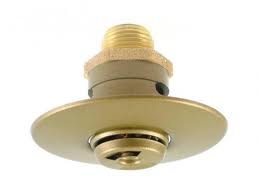
The Continuum of Change: Residential Sprinklers vs the “Good” Fire
One sentence from a recent conversation continues to stick
in my mind. “If it weren’t for that
sprinkler in the townhouse, we would’ve had a good fire.” It was stated only partly in jest, the young
firefighter, like many, always wanting more of the challenge of a “good”
fire. No one, save the psychotic, wants
to see someone else’s property destroyed much less anyone injured; but this is
juxtaposed with the firefighter’s inherent desire to perform their craft and
test themselves in that environmental nightmare we call “inside.”
We need a partial shift in balance to begin better educating
the younger firefighters as to the desirability of residential sprinklers. For the most part, their response to
commercial sprinkler alarms and fires is something they accept as common and
normal. The expansion of residential
sprinklers, however, is newer and something which reduces the size and number
of their bread and butter—the house fire.
Understanding is one thing, but acceptance is another. Sliding the scale so these aggressive young men
and women buy into the importance and value of these systems is a critical
leadership task.
It is difficult to see, accept, and support technology which
if (or hopefully when) it becomes widespread, can eliminate much of the reason
many of us came into this business to begin with. It’s like the people version of steam
replacing the sail or the car replacing the horse; not gone, but much
reduced. Just the same, pushing for
these systems over the construction industry lobbyists and their pocket politicians
should be continued. That, and educating
the younger generation of firefighters— so they can succeed where we haven’t.


August 10, 2012
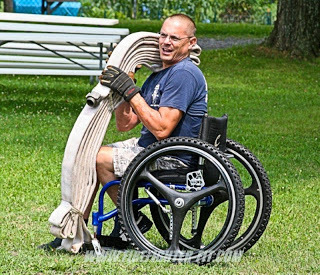
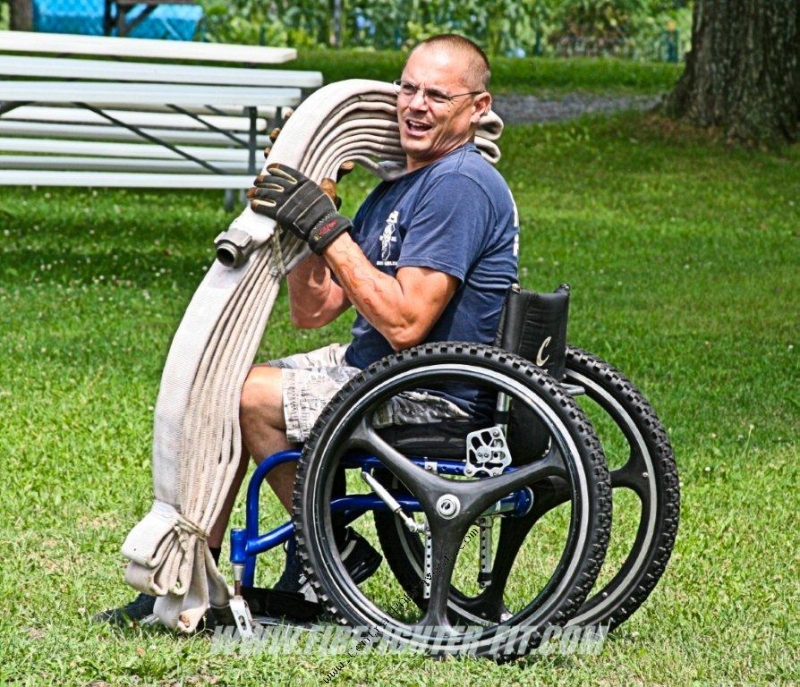
A Firefighter Who Won't Quit
I recently saw a marvelous story by Firefighter Matt Miles from
CentralPABravest that I had to share.
Matt writes. “Yesterday while at a FireFighter-Fit workout
session in the Village of Muir, Station 650 Schuylkill County, PA I was lucky
enough to meet a man that re-inspired me in many ways. He was such an inspiration
I asked him if I could share his awesome story on our websites www.CentralPABravest.com
and www.FireFighter-Fit.com
Mark was diagnosed with Transverse Myelitis at the young age of 14 after not
being able to get out of bed one morning for school, Transverse Myelitis is a
viral infection that inflamed Mark’s spinal cord and landed him in a wheel
chair for life. This did not stop Marks curiosity of becoming a firefighter at
the young age of 15, only one year after being confined to a wheel chair. Mark
did so well and enjoyed the work we do so much he ended up holding the
positions of President, Vice President and his current position on the House Committee.
Mark also takes an important position on the fireground with Accountability,
Safety and changing SCBA cylinders out. It was also reported to me that Marks
Brothers chocked his wheels at a working fire and he was able to flow a line
and knock down some fire at a defensive operation!!
Along with taking physical fitness very seriously Mark is also a huge advocate
of education in the fire service and holds numerous certifications. But Mark
has a request for the State Fire Commissioner Edward Mann. Mark has a serious
desire to be able to obtain the Certification of Firefighter 1. Mark
understands he is limited due to his disability and will go to any lengths to
work for his practical portion of the certification. Mark wants this for
personal and one other reason, to hold other firefighters accountable on
getting their FF1 and set an example that anyone can do it!
Thanks for your dedication to the Fire Service Mark, I am sure you will
Motivate and Inspire MANY!”
Thanks to Matt for sharing this great story.


CentralPABravest that I had to share.
Matt writes. “Yesterday while at a FireFighter-Fit workout
session in the Village of Muir, Station 650 Schuylkill County, PA I was lucky
enough to meet a man that re-inspired me in many ways. He was such an inspiration
I asked him if I could share his awesome story on our websites www.CentralPABravest.com
and www.FireFighter-Fit.com
Mark was diagnosed with Transverse Myelitis at the young age of 14 after not
being able to get out of bed one morning for school, Transverse Myelitis is a
viral infection that inflamed Mark’s spinal cord and landed him in a wheel
chair for life. This did not stop Marks curiosity of becoming a firefighter at
the young age of 15, only one year after being confined to a wheel chair. Mark
did so well and enjoyed the work we do so much he ended up holding the
positions of President, Vice President and his current position on the House Committee.
Mark also takes an important position on the fireground with Accountability,
Safety and changing SCBA cylinders out. It was also reported to me that Marks
Brothers chocked his wheels at a working fire and he was able to flow a line
and knock down some fire at a defensive operation!!
Along with taking physical fitness very seriously Mark is also a huge advocate
of education in the fire service and holds numerous certifications. But Mark
has a request for the State Fire Commissioner Edward Mann. Mark has a serious
desire to be able to obtain the Certification of Firefighter 1. Mark
understands he is limited due to his disability and will go to any lengths to
work for his practical portion of the certification. Mark wants this for
personal and one other reason, to hold other firefighters accountable on
getting their FF1 and set an example that anyone can do it!
Thanks for your dedication to the Fire Service Mark, I am sure you will
Motivate and Inspire MANY!”
Thanks to Matt for sharing this great story.
August 6, 2012
My Wish List for the Next Generation of Firefighters
Communications integrated into the helmet and face
piece. The tinny speakers in masks never
worked right and it’s ridiculous to try to talk through face pieces. Extension microphones are actually getting
bigger, not smaller, unlike every other piece of technology in the world.
An infrared heads up display in the face piece. There are no reasons that every firefighter
shouldn’t have a camera, and no reason you should have to carry the thing.
Apparatus designs in which hose and equipment can be reached
from the ground. This isn’t so much reengineering
as it is going retro. When I started, you
could reach the pre-connects in the rear from the ground, and standing on the
tailboard, you could see the driver.
There is no reason we need ladders on apparatus to reach our own
equipment. You shouldn’t have to
practically set up scaffolding to reload the hose bed.
C’mon folks; we had guys walking around on the moon in 1969;
there is no reason we can’t have these simple items on a cost effective, and
importantly, firefighter proof configuration.


piece. The tinny speakers in masks never
worked right and it’s ridiculous to try to talk through face pieces. Extension microphones are actually getting
bigger, not smaller, unlike every other piece of technology in the world.
An infrared heads up display in the face piece. There are no reasons that every firefighter
shouldn’t have a camera, and no reason you should have to carry the thing.
Apparatus designs in which hose and equipment can be reached
from the ground. This isn’t so much reengineering
as it is going retro. When I started, you
could reach the pre-connects in the rear from the ground, and standing on the
tailboard, you could see the driver.
There is no reason we need ladders on apparatus to reach our own
equipment. You shouldn’t have to
practically set up scaffolding to reload the hose bed.
C’mon folks; we had guys walking around on the moon in 1969;
there is no reason we can’t have these simple items on a cost effective, and
importantly, firefighter proof configuration.
July 28, 2012
The Times Have Changed…Maybe Not
I recently came across a fascinating historical
document. The rules and regulations for
the Los Angeles Fire Department from 1901 are, in many respects, not much
different than those in place in many departments today, a century
removed. One major difference was
apparatus propulsion, the turn of the century still being what we view as the
romantic era of the horses. Contrary to
the opinion of the third generation, his father (me) and grandfather had no
actual experience in the horse drawn days.
After reading the policies relating to the care for the diesel engines
of the day, one wonders if the brothers then viewed them with the fond
nostalgia we do. The rules show the
importance of the animals was paramount
RULE 13.
CARE OF HORSES, APPARATUS, HOSE, ETC.
SECTION
1. Horses shall be fed not more than four quarts of grain and about twenty
pounds of hay daily, and twice a week shall be fed a bran mash.
SEC.
2. Hours for feeding horses shall be 6.30 A.M. and 4.00 P.M., and must be
watered at least thirty minutes before feeding time.
SEC.
3. Horses shall be thoroughly groomed every morning, their hoofs picked out and
cleaned, their manes and tails washed with soap and water once every week and
thoroughly dried after washing; the sheath shall be washed every two weeks.
Grey or white horses may have stains sponged off with warm water and soap, but
must be thoroughly dried immediately. White legs may be washed in the same
manner, otherwise the legs must never be washed. Washing horses is strictly
forbidden, unless by permission of the Chief Engineer, and then only with
bucket and sponge.
SEC.
4. On returning from an alarm, horses' mouths and nostrils must be sponged out,
and may be given a few swallows of water, and, if warm, must be scraped, rubbed
dry, and blanketed. Sweat should be removed from around the eyes and under the
tail with a damp sponge. Horses must never be given grain while hot after a run
or exercise.
SEC.
5. Teasing or annoying horses, or teaching them tricks is strictly forbidden.
SEC.
6. Horses shall be exercised daily within three blocks of the house, for a
period of not less than one-half-hour, hitched to the apparatus (Sundays
excepted). In wet weather the horses shall be exercised without the apparatus.
SEC.
7. A bucket must not be used to catch the horse's urine in, nor shall they be
taught any like peculiarities. If a horse is staining to urinate, straw should
be shaken under him. The stall should be washed out immediately and all manure
must be removed immediately.
SEC.
8. If a horse is injured or shows signs of sickness the commanding officer of
the company must be notified at once.
SEC.
9. Horses must be treated kindly, taught by kindness to come promptly to their
place and perform their part of the service without the unnecessary use of the
whip. The unnecessary use of a whip by any member will subject the offender to
suspension or dismissal.
Morning check-out, washing rigs, changing fluids, filters,
adding fuel, waxing (grooming); reporting mechanical problems or
accidents—maybe things haven’t changed much after all.
1901 LAFD Rules & Regulations


July 20, 2012
Upcoming TV Appearance on PA Live!
I will be appearing Friday, July 27th on PA Live on WBRE Channel 28 with Dave Kuharchik and Monica Madeja to talk about "Fire Men." Tune in at 4:00 PM....

WBRE PA Live


WBRE PA Live
July 7, 2012
Cats, Bats, and Stubbed Toes
We’ve all heard the stories of people visiting Emergency
Rooms for stubbed toes—this is real—I have personally responded on an ambulance
call for a person with a stubbed toe.
The fire department equivalent, again real, is the stereotypical cat
stuck in the tree. My father had the
best response I’ve ever heard when the dispatcher would call with a report from
a citizen of a feline atop a sapling.
“Tell the caller we’ve never seen a cat skeleton in a tree yet. When the kitty gets hungry enough, it’ll come
down.” End of discussion. Other animal control calls for squirrels or
bats in houses get filed in this miscellaneous category.
Less amusing was a recent incident I heard about where a
citizen broke a fire truck windshield; literally beat a spider web of cracks in
it with his bare hands, because the fire department couldn’t make his power
come back on after a storm.
What some members of the public fail to remember at times is
that it costs money every time a fire truck turns a wheel. Fuel, wear and tear, and indirect costs like
insurance are all part of the equation every time a piece of apparatus
moves. That’s the mechanical side; more
importantly there is wear and tear on people too. Ill maintained and malfunctioning alarm
systems are the bane of our existence. No
fine or penalty seems sufficient after the third straight night of a false
alarm at the same place at 3:00 AM.
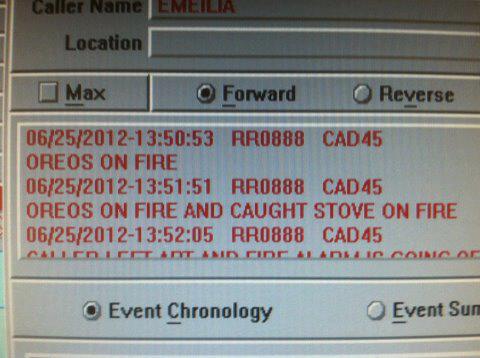
The unnecessary, abusive, and downright strange calls
continue to make up more than their fair share of any department’s call
volume. You have to go, though, ‘cause
that’s what we do.


July 1, 2012
Portable Radios: A Sarcastic History
I have seen an evolution in portable radios which goes from the Paleozoic to Bill Gates. One of the first portable radios I ever used
was a single channel RCA model about the size of a squished loaf of bread, but
weighing considerably more. Unless you
had hands the size of a linebacker, it took two to actually use the thing; one
to hold it and the other to key the transmit button. The next generation was a four channel
Motorola, two of which we didn’t need, slightly bigger than a brick and about
the same weight. They were damn good
radios that took a licking and kept on ticking.
Extension microphones came next which put the most important parts of
the radio on your collar, the speaker and the mic itself. All you had to do is turn your head, mash the
button on the side and talk.
Initially, only Chiefs had portables, then company
officers, and now everyone. The rapid
expansion in radio availability turned the fire ground from a nice quiet,
pleasant place, into a cacophony of noise, squeals, screamers, and those that
loved the sound of their own voice.
Eventually, most places establish communications policies that reined in
the worst offenders, but you can still hear the white noise in some areas.
Interoperability became the next buzz word, with the so
called need to be able to talk to the world, and as the size of radios
decreased, the channel capacity increased until the hundred channel radio
became ubiquitous. Most of these units
would live, die, and be replaced with the next latest and greatest model
without ever having used more than ten percent of the channels they contained,
but it was critical to have the secondary fire police channel of some
department three counties away that you had never, in the history of the
department, ever run with.
Now the radios will talk to you, Siri-like, although they
won’t answer questions –yet, or tell you where to get a good pizza on the way
back to the station (hint, hint Mr. Motorola—just kidding). The radio lady, Sophie I’ll call her, tells
you what channel you’re on. Good thing,
cause it’s not like I can remember who or what is on channel 63.
The extension mics have started to grow also, and now are
almost as big as the radios they are attached to. Speaker and mic button aren’t enough now;
volume controls and a mayday alert, all of which supposedly can be worked by
gloved hands in the dark. Good
luck. Makes me wonder why we need the
extension mics anymore—just attach the radio to the collar.
Technology is a wonderful thing, but the complexity has
reached the level that I pine for the days when you didn’t need an electrical
engineering degree to use a portable. Maybe, just maybe, RCA will start making radios again.


June 24, 2012
Micro Manager Metric Maniacs
The overwrought alliteration shows my disdain. They are everywhere, but they use code words
to describe themselves. I’m “detail
oriented” they say. Never will one
introduce themselves and say, “hi, I’m a micromanager.” Their involvement in every aspect of
operations is necessary, because no one can live up to their expectations.
One chief who was an administrative nightmare to work for
had many of these characteristics. I
called him a “shotgun manager.” He never
met an idea he didn’t like, so there were a hundred projects all in progress at
the same time. Because of this and the
necessity for his involvement in everything—he couldn’t delegate to save his
life—that meant that nothing ever was completed. Since everything was a priority, nothing
was. Luckily, he wasn’t like this on the
fire ground (fire ground micromanagers are even more scary) , and to this
chief’s credit, he eventually evolved, changed, and improved, but that is the
exception with this type of manager, not the rule.
The data collectors are worse. They never met a metric or measurement they
didn’t like. Just because an activity is
quantifiable doesn’t mean it should be.
The argument is that the “workers” only do well what is checked—so these
guys check everything. When we measure
everything, the same shotgun result occurs.
Since everything is a priority, nothing really is.
My contention has long been there are typically four or five
big important things that make an organization successful. Measure and take good care of those, and
everything else—the details—will take care of themselves. I never thought it was rocket science, but
maybe it is. Einstein said “not
everything that can be counted counts, and not everything that counts can be
counted.”


June 12, 2012
An Open Letter to a New Fire Officer
You are about to take that first
important jump in rank. It might get you
a different color helmet. It definitely
will change other things.
You’re
a good firefighter, but you’re young and will be moving up over more
experienced firefighters, some of which are your friends. There are mixed emotions. How you respond to this is a test in your
capacity for greater responsibility. Not
everyone wants promotion, and reaching a level of satisfaction is not a bad
thing. Some of your friends are content
at their present level and job.
The
important and difficult part of managing your buddies is perspective and
balance. You can’t let them get away
with murder on the one hand, but a domineering heavy hand is no good on the
other. Finding the balance point is
easier said than done, and will take time, trial, and error. Anyone who tells you they know exactly where
that is, well, they’re lying to you. The
good guys under you will want you to succeed.
Those that don’t, and they are out there, will be easily
identified. Even though some will
attempt to undermine your authority, treat them fairly. That doesn’t mean you let them succeed with
their obstructionism, but by not lowering yourself to their level, others will
notice.
Lead
by example, both in the station and on the fire ground. Show, don’t tell. A good officer doesn’t have to talk a lot to
earn respect and get others to follow.
Treat the firefighters under you the way you wanted officers to treat
you.
At
every level, somebody moves up, and others do not; it is how it is. By now you’ve seen good, bad, and great
officers. Take the characteristics of those
you like and respect, and emulate them. As
importantly, avoid those of the officers you don’t.
Be
accepting of change, but not unthinkingly.
All change isn’t bad, but it isn’t all good either. The rookies will frustrate you at times. Some may not progress as quickly as you think
they should. Try to learn patience. Everyone learns in different ways and
rates. Mentoring is a long game, and
sometimes goes into overtime.
You
know already that the right people don’t always get the promotions, and so does
everyone else. Putting on a new helmet
doesn’t make you an officer. Your
actions and attitude do that.

important jump in rank. It might get you
a different color helmet. It definitely
will change other things.
You’re
a good firefighter, but you’re young and will be moving up over more
experienced firefighters, some of which are your friends. There are mixed emotions. How you respond to this is a test in your
capacity for greater responsibility. Not
everyone wants promotion, and reaching a level of satisfaction is not a bad
thing. Some of your friends are content
at their present level and job.
The
important and difficult part of managing your buddies is perspective and
balance. You can’t let them get away
with murder on the one hand, but a domineering heavy hand is no good on the
other. Finding the balance point is
easier said than done, and will take time, trial, and error. Anyone who tells you they know exactly where
that is, well, they’re lying to you. The
good guys under you will want you to succeed.
Those that don’t, and they are out there, will be easily
identified. Even though some will
attempt to undermine your authority, treat them fairly. That doesn’t mean you let them succeed with
their obstructionism, but by not lowering yourself to their level, others will
notice.
Lead
by example, both in the station and on the fire ground. Show, don’t tell. A good officer doesn’t have to talk a lot to
earn respect and get others to follow.
Treat the firefighters under you the way you wanted officers to treat
you.
At
every level, somebody moves up, and others do not; it is how it is. By now you’ve seen good, bad, and great
officers. Take the characteristics of those
you like and respect, and emulate them. As
importantly, avoid those of the officers you don’t.
Be
accepting of change, but not unthinkingly.
All change isn’t bad, but it isn’t all good either. The rookies will frustrate you at times. Some may not progress as quickly as you think
they should. Try to learn patience. Everyone learns in different ways and
rates. Mentoring is a long game, and
sometimes goes into overtime.
You
know already that the right people don’t always get the promotions, and so does
everyone else. Putting on a new helmet
doesn’t make you an officer. Your
actions and attitude do that.
Gary R. Ryman's Blog
- Gary R. Ryman's profile
- 3 followers
Gary R. Ryman isn't a Goodreads Author
(yet),
but they
do have a blog,
so here are some recent posts imported from
their feed.

