
Gary R. Ryman's Blog, page 15
February 25, 2012
Firefighting Zoology
Mixing animals and firefighters usually results in a memorable incident.
The house was going good with fire in the basement and on the first floor. On the line in the basement, we made quick work of the fire there, much less than on the floor above. Exiting, we dragged the line over to go in and help on the first floor. On of the chiefs tapped me on the shoulder.
"Did you see a snake down there?" That got my attention.
"No, if I had you wouldn't see me now. What kind of snake?" Snakes are not my favorite creature.
"One of those big fat South American types. Apparently it's missing from its container."
The fire instantly became a defensive exterior attack, at least for me. I had no desire to assist the brothers on the first floor any longer. Luckily they had things well under control. Overhaul was out of the question as well, and Rehab was looking good—it was well away from the house. Luckily the owner quickly located the missing reptile, which I learned while contently sipping coffee with the EMS folks.
EMS calls are not exempt. We had just started to examine a man experiencing chest pains when his dog decided to make an appearance. This was not our typical friendly pet lap dog. This was Cujo's twin; a snapping snarling beast with dog goo dripping from his snout as he growled at us. We backed slowly away, and the animal herded us like the sheep we were away from his owner. Making it through an opening into an adjacent room, we slammed the door and then opened it just a crack to see what was happening. There sat our patient while the $5000 (in those days) Life Pak we had abandoned was being turned into an expensive chew toy. Our dog mace was in its normal spot, secured to the visor in the front of the rig—located on the opposite side of our captor. We had little choice but to wait until the victim's wife took the now docile mutt from the room. It made us wish for a hand line. As nasty as Cujo looked, there was no way he could've swallowed 150 gallons per minute.
Larger animals can be less frightening, but troublesome in different ways. At a silo fire, we needed to get the cows out of the attached barn in case of extension. A slap on the ass got most of them moving, but one was a bit stubborn. Jim and I each took an end—which didn't matter as there is no really desirable end to a cow—and began pulling and pushing. While you would think two chief officers would be smarter than and able to direct a simple cow, you would be wrong. We had as much influence on the bovine creature as we did over department dinosaurs (another interesting species). Eventually the cow tired of our attempts and decided on her own to join her cohorts in the pasture.
Animals and emergencies—such a fun combination.

The house was going good with fire in the basement and on the first floor. On the line in the basement, we made quick work of the fire there, much less than on the floor above. Exiting, we dragged the line over to go in and help on the first floor. On of the chiefs tapped me on the shoulder.
"Did you see a snake down there?" That got my attention.
"No, if I had you wouldn't see me now. What kind of snake?" Snakes are not my favorite creature.
"One of those big fat South American types. Apparently it's missing from its container."
The fire instantly became a defensive exterior attack, at least for me. I had no desire to assist the brothers on the first floor any longer. Luckily they had things well under control. Overhaul was out of the question as well, and Rehab was looking good—it was well away from the house. Luckily the owner quickly located the missing reptile, which I learned while contently sipping coffee with the EMS folks.
EMS calls are not exempt. We had just started to examine a man experiencing chest pains when his dog decided to make an appearance. This was not our typical friendly pet lap dog. This was Cujo's twin; a snapping snarling beast with dog goo dripping from his snout as he growled at us. We backed slowly away, and the animal herded us like the sheep we were away from his owner. Making it through an opening into an adjacent room, we slammed the door and then opened it just a crack to see what was happening. There sat our patient while the $5000 (in those days) Life Pak we had abandoned was being turned into an expensive chew toy. Our dog mace was in its normal spot, secured to the visor in the front of the rig—located on the opposite side of our captor. We had little choice but to wait until the victim's wife took the now docile mutt from the room. It made us wish for a hand line. As nasty as Cujo looked, there was no way he could've swallowed 150 gallons per minute.
Larger animals can be less frightening, but troublesome in different ways. At a silo fire, we needed to get the cows out of the attached barn in case of extension. A slap on the ass got most of them moving, but one was a bit stubborn. Jim and I each took an end—which didn't matter as there is no really desirable end to a cow—and began pulling and pushing. While you would think two chief officers would be smarter than and able to direct a simple cow, you would be wrong. We had as much influence on the bovine creature as we did over department dinosaurs (another interesting species). Eventually the cow tired of our attempts and decided on her own to join her cohorts in the pasture.
Animals and emergencies—such a fun combination.


February 24, 2012
Gary talks Rural Water 101 at Central PA Bravest
Central PA Bravest
February 24, 2012
Rural Water 101
by Gary R. Ryman
Rural water supply operations can be successfully conducted in a variety of ways and much depends on the equipment available in a particular area. Different jurisdictions use tanker task forces, rural box alarms, and for some, these operations are part of their every day bread and butter.
Innovation and ingenuity are the catch words for these operations, but these are useless without knowledge and training. Knowing the accessible water sources, static or otherwise in your first due area is critical. Every fill site is different and setting up for the best access and maximum flexibility is always a challenge. Pre-planning and training at these sites helps to establish the most efficient positioning and fill site set-up configuration. Conducting these sessions with the neighboring departments, who will most likely be assigned this responsibility, and doing the same in their areas, makes the system work.
The rules of thumb I have found successful are based on the use of large tankers, defined as 3000 gallon and up; all designed to both fill and dump quickly. A differing equipment mix could change the equation. Committing the first due tanker or "burying" it with the first due engine has some advantages. With both pieces in close proximity, a cheater can supply and supplement the attack engine tank water. Realistically, on a one or two room fire, this should be sufficient for a knock down. Murphy, however, works everywhere.
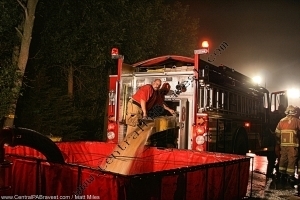 If the situation is such that a shuttle is implemented, the utilization of the first tanker in this manner allows it to act as a safety or reserve. Once the shuttle supply has been established, re-filling the first tanker is a priority. Over the course of an extended incident, something inevitably will interrupt the operation. Losing prime, a mechanical breakdown, or any other number of things can impair the supply. With the first tanker full, operations can continue and if an interior attack is underway, allow time to affect a controlled withdrawal if the gremlins cannot be promptly corrected.
While distance, flow requirements, and tanker size, can all be used to calculate specific needs, standard rules of thumb are usually easier. For example, a separate fill and dump site for every five tankers in use is typically desirable. Stacking tankers up at either end is inefficient, and two or three tankers waiting to fill means water is not moving. Dump sites can be entirely separate or simply additional drop tanks in tandem. Such situations are tailor made for jet siphons between tanks. Having one or two extra tankers in the mix helps minimize interruptions for breakdowns. The same goes for engines.
The officer with the overall water supply assignment should coordinate closely with the incident commander on the desired flow requirements. This will help determine the number of tankers, fill and dump sites, etc. Knowing secondary and tertiary sources is important in case of problems with the primary or a larger flow is needed. Getting the water supply operation onto a separate radio channel will help keep the increasingly crowded airway clearer for fire ground personnel. Given the choice of a pumper relay from a static source or a shuttle, the relay is the default choice if distances are manageable. It takes less moving parts and hence is inherently more reliable. This is another area where training is important. Trying to set up a relay operation without having trained on it previously is a recipe for disaster. What sounds easy to do in the book is anything but at three in the morning; particularly trying to get three or four engine companies who haven't worked together to lay and pump an extended line in a timely manner.
Dry hydrants are a big plus, but need to be installed correctly and maintained afterward with annual back flushing. Sources other than ponds and creeks should not be forgotten. Swimming pools are a great possibility. Even if not apparatus accessible, a portable pump and five minutes work can provide a nice supplementary supply. Field expedient drop tanks can be put together with ladder and salvage covers. Run off from the incident, if channeled and dammed can be collected and sent back into the fray via a portable pump. You can't get much more efficient on the fire ground than by using the same water more than once.
Even if you only have small non hydranted areas or seldom conduct these operations, they are entirely manageable with some forethought and training.
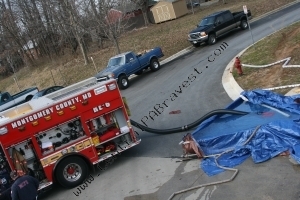
No Porta Pond - No Problem!
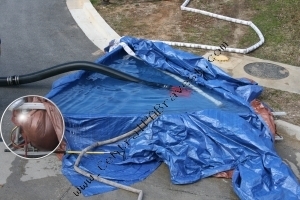
Secure 3 roof ladders with their hooks and some rope and throw a salvage cover over top.

February 24, 2012
Rural Water 101
by Gary R. Ryman
Rural water supply operations can be successfully conducted in a variety of ways and much depends on the equipment available in a particular area. Different jurisdictions use tanker task forces, rural box alarms, and for some, these operations are part of their every day bread and butter.
Innovation and ingenuity are the catch words for these operations, but these are useless without knowledge and training. Knowing the accessible water sources, static or otherwise in your first due area is critical. Every fill site is different and setting up for the best access and maximum flexibility is always a challenge. Pre-planning and training at these sites helps to establish the most efficient positioning and fill site set-up configuration. Conducting these sessions with the neighboring departments, who will most likely be assigned this responsibility, and doing the same in their areas, makes the system work.
The rules of thumb I have found successful are based on the use of large tankers, defined as 3000 gallon and up; all designed to both fill and dump quickly. A differing equipment mix could change the equation. Committing the first due tanker or "burying" it with the first due engine has some advantages. With both pieces in close proximity, a cheater can supply and supplement the attack engine tank water. Realistically, on a one or two room fire, this should be sufficient for a knock down. Murphy, however, works everywhere.
If the situation is such that a shuttle is implemented, the utilization of the first tanker in this manner allows it to act as a safety or reserve. Once the shuttle supply has been established, re-filling the first tanker is a priority. Over the course of an extended incident, something inevitably will interrupt the operation. Losing prime, a mechanical breakdown, or any other number of things can impair the supply. With the first tanker full, operations can continue and if an interior attack is underway, allow time to affect a controlled withdrawal if the gremlins cannot be promptly corrected.While distance, flow requirements, and tanker size, can all be used to calculate specific needs, standard rules of thumb are usually easier. For example, a separate fill and dump site for every five tankers in use is typically desirable. Stacking tankers up at either end is inefficient, and two or three tankers waiting to fill means water is not moving. Dump sites can be entirely separate or simply additional drop tanks in tandem. Such situations are tailor made for jet siphons between tanks. Having one or two extra tankers in the mix helps minimize interruptions for breakdowns. The same goes for engines.
The officer with the overall water supply assignment should coordinate closely with the incident commander on the desired flow requirements. This will help determine the number of tankers, fill and dump sites, etc. Knowing secondary and tertiary sources is important in case of problems with the primary or a larger flow is needed. Getting the water supply operation onto a separate radio channel will help keep the increasingly crowded airway clearer for fire ground personnel. Given the choice of a pumper relay from a static source or a shuttle, the relay is the default choice if distances are manageable. It takes less moving parts and hence is inherently more reliable. This is another area where training is important. Trying to set up a relay operation without having trained on it previously is a recipe for disaster. What sounds easy to do in the book is anything but at three in the morning; particularly trying to get three or four engine companies who haven't worked together to lay and pump an extended line in a timely manner.
Dry hydrants are a big plus, but need to be installed correctly and maintained afterward with annual back flushing. Sources other than ponds and creeks should not be forgotten. Swimming pools are a great possibility. Even if not apparatus accessible, a portable pump and five minutes work can provide a nice supplementary supply. Field expedient drop tanks can be put together with ladder and salvage covers. Run off from the incident, if channeled and dammed can be collected and sent back into the fray via a portable pump. You can't get much more efficient on the fire ground than by using the same water more than once.
Even if you only have small non hydranted areas or seldom conduct these operations, they are entirely manageable with some forethought and training.
No Porta Pond - No Problem!

Secure 3 roof ladders with their hooks and some rope and throw a salvage cover over top.
February 19, 2012
Country Firefighting Physical Fitness or....You Might Be A Redneck if...
The increased emphasis on firefighter fitness is certainly a positive and something we could all wish to emulate. The firefighter combat challenge and various local events and in-house tests include items such as rescue drags, stretching hose lines up stairwells and the like. These are good simulations of fire ground activities.
Out in the country, however, sometimes things are a little different. I've come up with a few physical and dexterity tests from my own experience that might form the basis for a new challenge.
Ladder Throws: This isn't your standard carry the ladder to the building and put it up. Mine requires the weather complexities regularly seen in the northern portions of the country. The contestant must carry, place, and extend a 24 ft. ground ladder to a building, but….must do it through two feet of snow, around three pick up trucks and an old tractor with four foot drifts in pitch black darkness. Try to avoid stepping in the forgotten child's plastic swimming pool now filled with snow and ice.
Find the O2 Wrench: This test of dexterity is conducted in the back of a dimly lit ambulance going over a pot hole filled one lane dirt road at considerable velocity. The contestant must locate, pick up, and utilize an O2 wrench from the floor of the bouncing rig which is slick from melted snow, ice and other unmentionable liquids commonly found with nauseous patients. Hands will naturally be sheathed in latex gloves…..a minimum of one size too large—'cause the ambulance captain figures one size fits all.
The Brush Fire Jog: This is done with boots, bunker pants, helmet, gloves, and a full five gallon metal Indian tank. Contestants will compete over a two mile smoke filled course with burning stumps and logs, along with ground hog holes and the ubiquitous cow pies; up hill (both ways). Weather conditions for this will include high 90s in both temperature and humidity. The contestant who holds the nozzle low to allow the tank to drain out may not win, but is definitely the smartest.
Country Hose Load: Pack 1000 feet of semi frozen 5 inch supply line in the back of a pick-up truck to take back to the station to thaw and reload. Gloves and bunker gear will be frozen and the pick-up driver will be sure to mention how warm it is in the cab every three minutes or so. The contestant will be judged on how quickly the mass of spaghetti can be piled into the truck. Points will be deducted for lengths lost while returning to the station. Needless to say this is another night time event.
I'm sure any "seasoned" country firefighter could add to this list, and hopefully new and more challenging (and evil) tests will arise. If you've experienced any or all of the above….you might be a redneck firefighter.

Out in the country, however, sometimes things are a little different. I've come up with a few physical and dexterity tests from my own experience that might form the basis for a new challenge.
Ladder Throws: This isn't your standard carry the ladder to the building and put it up. Mine requires the weather complexities regularly seen in the northern portions of the country. The contestant must carry, place, and extend a 24 ft. ground ladder to a building, but….must do it through two feet of snow, around three pick up trucks and an old tractor with four foot drifts in pitch black darkness. Try to avoid stepping in the forgotten child's plastic swimming pool now filled with snow and ice.
Find the O2 Wrench: This test of dexterity is conducted in the back of a dimly lit ambulance going over a pot hole filled one lane dirt road at considerable velocity. The contestant must locate, pick up, and utilize an O2 wrench from the floor of the bouncing rig which is slick from melted snow, ice and other unmentionable liquids commonly found with nauseous patients. Hands will naturally be sheathed in latex gloves…..a minimum of one size too large—'cause the ambulance captain figures one size fits all.
The Brush Fire Jog: This is done with boots, bunker pants, helmet, gloves, and a full five gallon metal Indian tank. Contestants will compete over a two mile smoke filled course with burning stumps and logs, along with ground hog holes and the ubiquitous cow pies; up hill (both ways). Weather conditions for this will include high 90s in both temperature and humidity. The contestant who holds the nozzle low to allow the tank to drain out may not win, but is definitely the smartest.
Country Hose Load: Pack 1000 feet of semi frozen 5 inch supply line in the back of a pick-up truck to take back to the station to thaw and reload. Gloves and bunker gear will be frozen and the pick-up driver will be sure to mention how warm it is in the cab every three minutes or so. The contestant will be judged on how quickly the mass of spaghetti can be piled into the truck. Points will be deducted for lengths lost while returning to the station. Needless to say this is another night time event.
I'm sure any "seasoned" country firefighter could add to this list, and hopefully new and more challenging (and evil) tests will arise. If you've experienced any or all of the above….you might be a redneck firefighter.
February 15, 2012
Educating the Public...Or the Local Pastor Meets the Live-ins
The fire department board of directors had a position available for a public representative. This gave the board members the benefit of some outside civilian advice and simultaneously provided the opportunity for non-affiliated community members to gain an understanding and education of the work of the emergency responders.
The new year brought a new community member to the board, the pastor of a local church. The lady minister was enthusiastic about her new responsibilities and appreciative of the services the firefighters provided.
On Valentines Day, she decided to show this appreciation by giving each of the live-in firefighters small goody bags. Rather than leave the bags in the kitchen or at the watch desk, she wanted to deliver them herself, and so proceeded into the bunk room. She walked through the open portion, already vacated earlier that morning, to a row of individual rooms assigned to some of the live-in firefighters.
She began hanging the bags on the knob of each door. One of the items in the goody bags was a container of silly string, not a great selection for a group of mischievous young firefighters. As she proceeded, one young bleary eyed live-in opened his door, rubbing the sleep from his eyes, to find the bag. Watching the good lady, he saw one of his fellow live-ins exit his room as well. The underwear clad firefighter stunned the pastor, her eyes opening wide. Her education had begun…….

The new year brought a new community member to the board, the pastor of a local church. The lady minister was enthusiastic about her new responsibilities and appreciative of the services the firefighters provided.
On Valentines Day, she decided to show this appreciation by giving each of the live-in firefighters small goody bags. Rather than leave the bags in the kitchen or at the watch desk, she wanted to deliver them herself, and so proceeded into the bunk room. She walked through the open portion, already vacated earlier that morning, to a row of individual rooms assigned to some of the live-in firefighters.
She began hanging the bags on the knob of each door. One of the items in the goody bags was a container of silly string, not a great selection for a group of mischievous young firefighters. As she proceeded, one young bleary eyed live-in opened his door, rubbing the sleep from his eyes, to find the bag. Watching the good lady, he saw one of his fellow live-ins exit his room as well. The underwear clad firefighter stunned the pastor, her eyes opening wide. Her education had begun…….
February 5, 2012
Want Good Food? Follow an Ambulance....
Driving through a neighboring town on a Friday evening, I spotted the local ambulance parked in front of a small restaurant. "They must have great food, and probably cheap," I told my wife.
"How do you know that?" She asked.
"EMS people don't eat anywhere bad, or expensive," I told her. "It's like the old cliché on how cops know where the best coffee and doughnuts are."
We always ate good back in the day when I did my time on an ambulance. The group of us that typically covered the Saturday 11-7 shift in the late 1970s were all young guys, growing boys with healthy appetites. Down the block from our squad room was a bar called Kelly's that also made fantastic pizza. Occasionally, someone would place a takeout order and fail to pick it up. When that happened, our phone would ring. Upon answering, a deep guttural voice would immediately begin talking with no pleasantries or discussion. "It's Kelly. Got a pie for you. Come get it." We'd jump in the rig and run down and he would give us whatever pizza had not been picked up. You never knew what it would be, what toppings, etc. But we got it for free. You couldn't beat it.
Along with the Saturday 11-7 shift, we would regularly take the 7 a.m. to 12 noon shift on Sunday morning so we could sleep in if we didn't get a run. When we finally got up at 9:30 or 10 a.m., we'd take the ambulance and go to breakfast at a nearby Friendly's restaurant where they liked us. We'd take our time and enjoy a nice leisurely breakfast. There was an ulterior motive to this beyond good food. If we got a run while eating breakfast, obviously we would have to leave. When we returned, they would give us a new breakfast, but we'd only be charged for one. We didn't get the two for one every week, since we couldn't predict our calls, but we got it often enough that we made sure we were regulars there. Cops like donut shops. We liked just about anything.

"How do you know that?" She asked.
"EMS people don't eat anywhere bad, or expensive," I told her. "It's like the old cliché on how cops know where the best coffee and doughnuts are."
We always ate good back in the day when I did my time on an ambulance. The group of us that typically covered the Saturday 11-7 shift in the late 1970s were all young guys, growing boys with healthy appetites. Down the block from our squad room was a bar called Kelly's that also made fantastic pizza. Occasionally, someone would place a takeout order and fail to pick it up. When that happened, our phone would ring. Upon answering, a deep guttural voice would immediately begin talking with no pleasantries or discussion. "It's Kelly. Got a pie for you. Come get it." We'd jump in the rig and run down and he would give us whatever pizza had not been picked up. You never knew what it would be, what toppings, etc. But we got it for free. You couldn't beat it.
Along with the Saturday 11-7 shift, we would regularly take the 7 a.m. to 12 noon shift on Sunday morning so we could sleep in if we didn't get a run. When we finally got up at 9:30 or 10 a.m., we'd take the ambulance and go to breakfast at a nearby Friendly's restaurant where they liked us. We'd take our time and enjoy a nice leisurely breakfast. There was an ulterior motive to this beyond good food. If we got a run while eating breakfast, obviously we would have to leave. When we returned, they would give us a new breakfast, but we'd only be charged for one. We didn't get the two for one every week, since we couldn't predict our calls, but we got it often enough that we made sure we were regulars there. Cops like donut shops. We liked just about anything.
January 27, 2012
Response Challenges...Or What To Do When Your Ladder Truck Catches Fire
A recent story was a great reminder of the never quit attitude of most firefighters, especially truckies. The box alarm had the ladder truck assigned first due on the reported building fire. The response was normal until the cab began filling with smoke. Not a light mist, but nasty, banking down from the ceiling stuff. The driver and officer quickly determined it was emanating from the mobile radio, but the off switch didn't help. There was no plug to pull as it was hardwired. The response continued. A burning radio wasn't going to stop them on a first due structure.
The officer rolled down his window, attempting some ventilation with only marginal success. Over the now extra loud screams of the siren, the driver yelled over.
"I'm starting to have a hard time seeing."
"Well roll your fucking window down," the officer yelled back. More ventilation couldn't hurt. The small dash mounted fan was turned on with no effect; this wasn't to be a PPV fire. The officer began blowing on the radio like a birthday candle, trying to extinguish the fire burning within.
The truck continued, the crew refusing to cancel. Eventually, it went out; whether from the efforts of the truck officer or the circuit protection operating, we don't know, a knock is a knock. Finally, the smoke began to lift.
A few minutes later, the truck arrived on scene to find a fire on a deck; likely less smoke than they had battled just getting there.
Let a fire in the rig keep you from getting there? Not a true truck company.

The officer rolled down his window, attempting some ventilation with only marginal success. Over the now extra loud screams of the siren, the driver yelled over.
"I'm starting to have a hard time seeing."
"Well roll your fucking window down," the officer yelled back. More ventilation couldn't hurt. The small dash mounted fan was turned on with no effect; this wasn't to be a PPV fire. The officer began blowing on the radio like a birthday candle, trying to extinguish the fire burning within.
The truck continued, the crew refusing to cancel. Eventually, it went out; whether from the efforts of the truck officer or the circuit protection operating, we don't know, a knock is a knock. Finally, the smoke began to lift.
A few minutes later, the truck arrived on scene to find a fire on a deck; likely less smoke than they had battled just getting there.
Let a fire in the rig keep you from getting there? Not a true truck company.
January 22, 2012
Interior or Exterior, The Debate Continues...
There is a continuing debate on the offensive fire attack, particularly with the spread of lightweight construction. The volume and animosity between sides at times resembles our current political spectrum. One extreme argues that other than in highly limited circumstances, attacks should be initiated and conducted from the exterior until the bulk of the fire is extinguished in order to better ensure firefighter safety. The other extreme advocates interior attacks unless structural collapse has begun or is imminent in order to ensure that a primary search is completed for unknown victims.The safety extreme seems to see the other side as dinosaurs. The interior attack proponents view the safety side as radical (to be kind). This is not an age issue; there are younger and "seasoned," firefighters as I prefer to refer to them, on both sides.
I've looked carefully at the arguments on both sides and after careful consideration, I agree with…..neither.
I'm all for safety in an inherently dangerous job, but a common sense middle ground needs to be struck. The question needs to be asked are conditions tenable in areas of the structure that a live victim could survive. If not, then initiation of the attack from the exterior may be warranted; especially as if conditions are not survivable for people, there is also likely little property to save. Conversely, if the answer is yes, an interior attack and search should be started.
There is a significant flaw in the extreme safety position. In their scenario, they allow for entry for rescue of a known victim. The problem is this: where will the entry teams obtain the experience and more importantly, judgment to understand the interior conditions they will be facing in such a high stress and challenge situation if it is as rare as the perfect diamond. In reality, such a process increases the potential for injury or death because such crews would be inherently inexperienced and lacking in situational awareness and—that word again—judgment; something which they can only attain through repetition.
The flaw on the other side is obvious. If conditions are such that the presence of a survivable victim is not possible, and granted, this too is a judgment call, why take the risk? The argument that such a decision can't be made accurately is ludicrous.
Are there buildings today we go into which we shouldn't? Absolutely. Is the reverse true? I've frustratingly seen more than a few of these as well.
What I would suggest at this juncture is that the rhetoric on this question be dialed back and that we remember we're all on the same team with the identical desired outcome. That we are talking about these things is good. However, a little common sense and restraint could go a long way in these debates.

I've looked carefully at the arguments on both sides and after careful consideration, I agree with…..neither.
I'm all for safety in an inherently dangerous job, but a common sense middle ground needs to be struck. The question needs to be asked are conditions tenable in areas of the structure that a live victim could survive. If not, then initiation of the attack from the exterior may be warranted; especially as if conditions are not survivable for people, there is also likely little property to save. Conversely, if the answer is yes, an interior attack and search should be started.
There is a significant flaw in the extreme safety position. In their scenario, they allow for entry for rescue of a known victim. The problem is this: where will the entry teams obtain the experience and more importantly, judgment to understand the interior conditions they will be facing in such a high stress and challenge situation if it is as rare as the perfect diamond. In reality, such a process increases the potential for injury or death because such crews would be inherently inexperienced and lacking in situational awareness and—that word again—judgment; something which they can only attain through repetition.
The flaw on the other side is obvious. If conditions are such that the presence of a survivable victim is not possible, and granted, this too is a judgment call, why take the risk? The argument that such a decision can't be made accurately is ludicrous.
Are there buildings today we go into which we shouldn't? Absolutely. Is the reverse true? I've frustratingly seen more than a few of these as well.
What I would suggest at this juncture is that the rhetoric on this question be dialed back and that we remember we're all on the same team with the identical desired outcome. That we are talking about these things is good. However, a little common sense and restraint could go a long way in these debates.
January 8, 2012
Turning Back the Clock
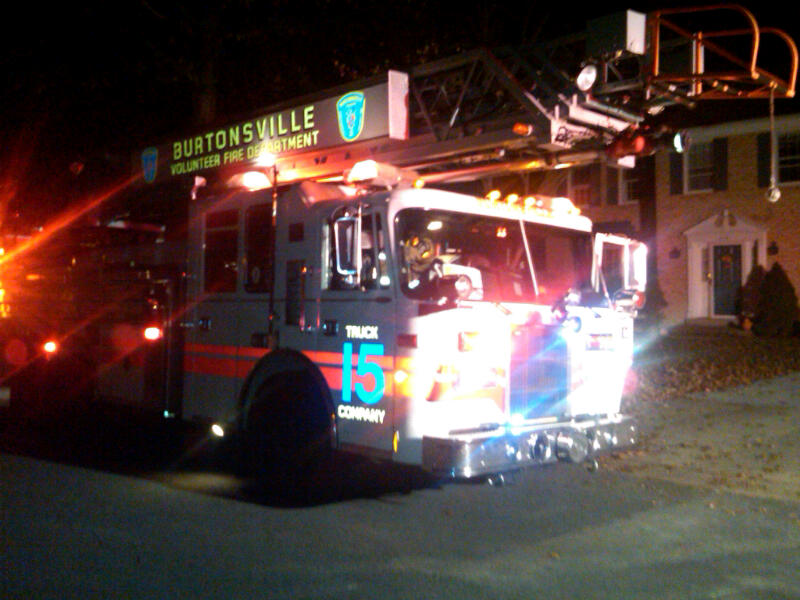

Before Thanksgiving, I had the opportunity to turn the clock back; seeing Michael and doing a ride-along at the station he lives in. It was a marvelous experience; not just to see him again, but the entire visit.
The battalion chief working that day had been a young firefighter at Station 24 when I was a college live-in there, and Mike had mentioned my visit to him. He stopped by the station and we told more than a few stories which seemed to enthrall our small audience, both career and volunteers. The hug we exchanged as he left caught them by surprise. I suspect they saw a little different side of the Chief.
The runs started about 5:00 PM and for the next ninety minutes were non-stop. We never made it back to the building. Another would come in just as we were clearing the previous. These rush hour calls were all medical assists. I rode in the back of the squad, a large walk-in rescue, and Mike had the seat. Recently promoted to Firefighter III on the county integrated command list and with no officers or Master firefighters available to ride as the officer; it put him in the seat.
Later that evening, we took the ladder truck, a 100 ft. rear mount straight stick, down to a local restaurant which was sponsoring a fund raiser for the station. Luckily, but unusually, we were able to finish eating before the next call came in. A box in Prince Georges County was sounded with us as the second due ladder truck. Starting up Route 29, power call yelping, Mike hammered the Q and air horn. The traffic took me back, six and eight cars deep in all lanes at intersections. The Master driving skillfully "encouraged" drivers to move. They scattered like ants, some straight through the light, some left, a few right. Shortly before arrival, command placed all units in service, the source of the smoke at the apartment complex having been located and mitigated.
Back at the station while we were shooting the breeze, the station alert sounded for an adaptive response. More than an investigation but less than a full box, two engines and a truck were dispatched for the odor of smoke. The ladder truck with Mike in the seat again, was first arriving and positioned on Side A while the engine laid out from the closest hydrant. Seconds after I had exited the truck, two ladders were up on the A side of the house and the engine company was beginning to stretch an attack line, the four inch supply line trailing back to the plug. The second due engine from PG came in and stood by the hydrant. It was wonderful to watch; poetry in motion. It wasn't anything special, but it was fabulous to watch the basics perfectly executed with no conversation or orders. With only a burned up electrical socket to deal with, we were back in service in just a short time.
Our last run of the night was about 1:00 AM; a nice night for the truck crew. That doesn't mean I slept. Unfamiliar with the station alerts, I woke up for every engine, ambulance, and medic run the balance of the night, of which there were several.
It was a great visit and one I hope to repeat in the spring……with a hotel room waiting for me to sleep in.


December 30, 2011
New Years Eve
With New Years Eve upon us, thoughts turn to previous ones. They can be action packed nights filled with wrecks, EMS calls, and fires. There is also the "contest" to see which unit catches the first call after the ball drops, and who the "winner" will be.
I remember running nasty wrecks with entrapment, fires, and loads of drunks. It's a night which brings out the best and worst in people. Many years ago, we pulled a teenage girl out of a tiny bathroom. She was face down, and so intoxicated she had stopped breathing. We got her going again, and she survived to see the sunrise, and hopefully many more.
I now hope for a calm and boring night in which as much time as possible passes before someone is injured or property is damaged or destroyed. A night without roaring diesel engines and in which the only flashing lights are on the remaining Christmas decorations.
So here's a toast to a quiet night of reasoned revelry and a safe New Year.......

I remember running nasty wrecks with entrapment, fires, and loads of drunks. It's a night which brings out the best and worst in people. Many years ago, we pulled a teenage girl out of a tiny bathroom. She was face down, and so intoxicated she had stopped breathing. We got her going again, and she survived to see the sunrise, and hopefully many more.
I now hope for a calm and boring night in which as much time as possible passes before someone is injured or property is damaged or destroyed. A night without roaring diesel engines and in which the only flashing lights are on the remaining Christmas decorations.
So here's a toast to a quiet night of reasoned revelry and a safe New Year.......
December 23, 2011
1st Responder News review of "Fire Men"
1st Responder News
December 23, 2011
Fire Men: Three Stories from Three Generations of a Firefighting Family
by John Malecky
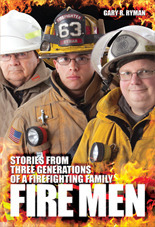 ON THE BOOK SHELF
By John M. Malecky February, 2012
Fire Men
Stories from three generations of a
firefighting family
By Gary R. Ryman
Available from:
Price: $10.95
This is a soft cover book measuring 5 ½ inches by 8 ½ inches and has 279 pages. It is the stories of three generations of firefighters spanning a 30 year period of service. The author is the second generation. He served in three states, New York, Maryland and Pennsylvania. Currently he is a fire protection engineer. These stories, which take up 20 chapters take place in the volunteer ranks, although for a time, while attending the University of Maryland, he rode with career firefighters in a "live-In" program. The stories begin with the author being young and tagging along with his father who was a volunteer fire chief in New York State. I must say he is a man of my own heart because it was at the ago of 10 that I had decided I wanted to be a fireman. It came from reading a merit badge book on the Firemanship merit badge and successful testing to achieve it. The author had the advantage of being able to respond with his father. My father was not a firefighter although my uncle was but we both lived in cities with career firefighters and riding with my uncle to fires was not possible. Anyway I identify with the author and throughout his 20 chapters he writes with a professional technique that even though they were volunteers, you would think that he was reminiscing on fires and emergency calls in big cities with career departments (although as mentioned earlier he did ride with career firefighters in Maryland.) The imagery of his writing puts you there with him especially if you are in emergency services. While many of the incidents are fires, many others are vehicle accidents including where life is lost. Having been a battalion chief and knowing what has to be assessed on the fireground, he leaves no question in my mind that he's "on the money" when it comes to incident command. Of course, not every call goes well. Mistakes are made and things happen when we have no control over them. But the author write in a honest way and points these things out when stuff goes bad, making this book realistic, not portraying the players as heroes that always win! It has been said that volunteers do not always enter burning buildings, some say because they are not being paid to do it, but in this book they do and the details of their operating under adverse conditions leaves little to the imagination! From structure fires to rural tanker shuttles to operating the Jaws at a car accident, there isn't a moment of "ho hum" when reading this book! The chapters are generally 10 to 15 pages long and the rapidity in which you go through this book is strictly based on how much time you have to spend reading. In some incidents you have what the news media would describe as "graphic" but as emergency workers we know that these things are always a possibility when we answer a call. When we wear the uniform of helping others we must condition ourselves to keep calm so we can plan strategy and tactics. This is what is expected of us!

December 23, 2011
Fire Men: Three Stories from Three Generations of a Firefighting Family
by John Malecky
ON THE BOOK SHELFBy John M. Malecky February, 2012
Fire Men
Stories from three generations of a
firefighting family
By Gary R. Ryman
Available from:
Price: $10.95
This is a soft cover book measuring 5 ½ inches by 8 ½ inches and has 279 pages. It is the stories of three generations of firefighters spanning a 30 year period of service. The author is the second generation. He served in three states, New York, Maryland and Pennsylvania. Currently he is a fire protection engineer. These stories, which take up 20 chapters take place in the volunteer ranks, although for a time, while attending the University of Maryland, he rode with career firefighters in a "live-In" program. The stories begin with the author being young and tagging along with his father who was a volunteer fire chief in New York State. I must say he is a man of my own heart because it was at the ago of 10 that I had decided I wanted to be a fireman. It came from reading a merit badge book on the Firemanship merit badge and successful testing to achieve it. The author had the advantage of being able to respond with his father. My father was not a firefighter although my uncle was but we both lived in cities with career firefighters and riding with my uncle to fires was not possible. Anyway I identify with the author and throughout his 20 chapters he writes with a professional technique that even though they were volunteers, you would think that he was reminiscing on fires and emergency calls in big cities with career departments (although as mentioned earlier he did ride with career firefighters in Maryland.) The imagery of his writing puts you there with him especially if you are in emergency services. While many of the incidents are fires, many others are vehicle accidents including where life is lost. Having been a battalion chief and knowing what has to be assessed on the fireground, he leaves no question in my mind that he's "on the money" when it comes to incident command. Of course, not every call goes well. Mistakes are made and things happen when we have no control over them. But the author write in a honest way and points these things out when stuff goes bad, making this book realistic, not portraying the players as heroes that always win! It has been said that volunteers do not always enter burning buildings, some say because they are not being paid to do it, but in this book they do and the details of their operating under adverse conditions leaves little to the imagination! From structure fires to rural tanker shuttles to operating the Jaws at a car accident, there isn't a moment of "ho hum" when reading this book! The chapters are generally 10 to 15 pages long and the rapidity in which you go through this book is strictly based on how much time you have to spend reading. In some incidents you have what the news media would describe as "graphic" but as emergency workers we know that these things are always a possibility when we answer a call. When we wear the uniform of helping others we must condition ourselves to keep calm so we can plan strategy and tactics. This is what is expected of us!
Gary R. Ryman's Blog

- Gary R. Ryman's profile
- 3 followers
Gary R. Ryman isn't a Goodreads Author
(yet),
but they
do have a blog,
so here are some recent posts imported from
their feed.

