
Gary R. Ryman's Blog, page 14
June 3, 2012
You Might Be A Redneck Firefighter if....
Fire is fire regardless of where you work, and fire
departments are full of folks with unusual personalities. My experiences in fighting fire in a rural
area have given me an appreciation for the unique characteristics of the
country. So, with that in mind, you
might be a redneck firefighter if…….
The soda machine in the station is actually filled with
Rolling Rock.
There is a sign-out sheet in the station to show who
borrowed the engine battery for their tractor.
The tanker port-a-pond doubles as the community pool during
the summer.
The dirt in front of the station looks like black top….from
tobacco “juice.”
The station has the manual from the department's 1958 engine—sold 20 years
ago—and the envelope was never opened.
One of the towns founding families has three roads named
after them—all the same.
Cow versus car is almost as common in the run log book as
car versus deer.
You would need mutual aid from three counties to get a
single engine out for a car fire one day a year—the opening of deer
season.
The helmet you wear is older than half your members.


May 24, 2012
"Old" Guy Stuff
Okay, this doesn’t go back to the horses, but if you experienced many of these (I did all of them), then you might be a “seasoned” firefighter if……
You rode the back step (and put you gear on while doing it) Only once…..that was scary…and stupid.
Rode an engine from which you could actually see the driver from the back step.
Wore ¾ boots inside
Wore a Scott I with no bell
Wore “red ball” gloves.
Know what a Plectron is—and had one—with tubes.
Remember using the 10-codes.
Wore a cotton duck coat.
Remember the introduction of “safety straps” for the back step.
Taken a 2 ½ inside. Something that should still be done, but isn't much.
Cut off a pair of leaky ¾ boots for your first set of bunker pants.


You rode the back step (and put you gear on while doing it) Only once…..that was scary…and stupid.
Rode an engine from which you could actually see the driver from the back step.
Wore ¾ boots inside
Wore a Scott I with no bell
Wore “red ball” gloves.
Know what a Plectron is—and had one—with tubes.
Remember using the 10-codes.
Wore a cotton duck coat.
Remember the introduction of “safety straps” for the back step.
Taken a 2 ½ inside. Something that should still be done, but isn't much.
Cut off a pair of leaky ¾ boots for your first set of bunker pants.
May 18, 2012
Old "Rules" Aren't Necessarily Wrong
Fire Chief’s, like Presidents, are often proudest of what didn’t happen on their watch. That thought reminded me of a few rules my father taught me from day one in the “business” which in the subsequent decades, I have not found reason to question.
The first rule was “there ain’t no water damage if the building burns down.” Put enough water on the fire and it goes out. Try to “save” water, and you end up with a long day.
The second was “there is no such thing as a rekindle.” The fire you didn’t fully extinguish via complete overhaul is not a rekindle, and Class A foam is not a substitute for properly conducting this important component of extinguishment.
Old fashioned? Maybe; but old isn’t necessarily wrong.

The first rule was “there ain’t no water damage if the building burns down.” Put enough water on the fire and it goes out. Try to “save” water, and you end up with a long day.
The second was “there is no such thing as a rekindle.” The fire you didn’t fully extinguish via complete overhaul is not a rekindle, and Class A foam is not a substitute for properly conducting this important component of extinguishment.
Old fashioned? Maybe; but old isn’t necessarily wrong.
May 7, 2012
Go Lackawanna
May 6, 2012
A story worth telling
Care...
Go Lackawanna
May 6, 2012
A story worth telling
Career firefighter participates in Writers Showcase at New Visions
by Rich Howells
Gary R. Ryman’s three-decade career as a firefighter may have given him pride and a wealth of knowledge to pass on to his son, but it also earned him a lot of stories.
The second of three generations of firefighters, the 50-year-old Scott Twp. resident spent over 30 years risking life and limb in several states, including a run as chief of the Scott Twp. Hose Company, and has been employed as a fire protection engineer for over 25 years. Now in the “twilight” of his career as firefighter, Ryman spent about four years chronicling his family’s tales in the “Fire Men: Stories from Three Generations of a Firefighting Family,” released in April 2011.
“I wanted to write down some of the stories, some of my stories and some of the stories from my father, essentially just to capture them. I had no real reason, and I thought maybe it would be something down the road that my kids and maybe their kids would ultimately be interested in. So I kept writing down the individual stories, and when I had a little over 100 pages and a lot more stories yet to tell, it started to dawn on me that maybe this was really just a book trying to get out,” Ryman explained.
“I was exposed to (firefighting) as I was growing up. It was something that I always wanted to do, enjoyed immensely once I was able to get involved with it, and something that I just continued to do ever since.”
With a bachelor’s degree in Fire Science from the University of Maryland, he spent his early career in upstate New York learning from his fire chief father, later battled flames in the suburbs of Washington, D.C., and presently mentors his son in the “family business.”
“Every area can have unique challenges. I think, for example, in the area that I was in when I went to school in Maryland, we had a lot more multiple residencies – in other words, garden apartment buildings, townhouses, high-rise apartment buildings, and the like. That can be contrasted with Scott Township, where one of the major issues that we have to deal with is water because of lack of fire hydrants,” Ryman noted.
“Friends of mine who are in the fire service have read it and they liked it because it made them remember their own experiences and their own stories, and it brought back things for them. I’ve had people read it without fire service experience and what they liked about it was essentially being able to learn what we really do and some of the things that we really see that they had no earthly idea about.”
Despite his accomplishments, he admitted that he didn’t believe his book was going to be published until he wrote his name on the contract after several changes in agents, editors, and publishers, finally publishing with Tribute Books in Archbald.
“There were a lot of stories that aren’t in the book that I wrote. I just tried to pick the ones that I thought would help to paint the overall picture. Obviously, some are hopefully amusing, some are tragic, and some are kind of in between. That was also part of it, trying to get a balance or a mix. It wasn’t designed, obviously, to be a complete humor book, but on the other side of the coin, I don’t think anybody would want to sit down and read a book that was just filled with accident and trauma after accident and trauma,” he recalled about the writing process.
“I think anybody in the fire service that experiences any kind of serious incident, particularly those involving children or neighbors or people they know or anything like that, is affected by it in one way or another. I think that to a certain degree it, and I talked about this in the book a little bit, hardens you to certain things, and on the other side of the coin, it makes you want to avoid certain things. For example, you have to work through these incidents and you have to remain focused on them in order to do the job, but because of doing all this, I guess, I don’t find movies or TV shows where the boy’s dog gets shot entertaining. Sad things like that I just avoid because I’ve seen enough real world tragedy that I really don’t go looking for it on TV for entertainment.”
The finished product, however, has a happy ending.
“My son had not that long before (he) turned 18, which meant he was of age to be able to ‘go inside,’ as we put it – go into the building. You don’t know when that first time is ever going to come as far as a real situation, and I didn’t know if I would be around when that happened, as far as being on that particular incident with him,” he continued.
“So when it turned out that I was and actually got to be on the line with him his first time inside, that was, to me, almost like a fairytale way of being able to end the book. But it really did happen!”
While he has done several signings, the fourth free Writers Showcase at New Visions Studio and Gallery on Saturday, May 12 will mark the first time that the author will read excerpts from his book aloud to a live audience, and Ryman continues to tread on “entirely different” territory as he pursues a master’s degree in American History, researches his thesis, and begins work on a fiction novel about his soon-to-be former profession.
“I think it’ll be fun. I hope it gets a good reaction,” Ryman said of the reading.
“All I can really bring is just my stories, and I hope that people find them interesting.”

May 6, 2012
A story worth telling
Career firefighter participates in Writers Showcase at New Visions
by Rich Howells
Gary R. Ryman’s three-decade career as a firefighter may have given him pride and a wealth of knowledge to pass on to his son, but it also earned him a lot of stories.
The second of three generations of firefighters, the 50-year-old Scott Twp. resident spent over 30 years risking life and limb in several states, including a run as chief of the Scott Twp. Hose Company, and has been employed as a fire protection engineer for over 25 years. Now in the “twilight” of his career as firefighter, Ryman spent about four years chronicling his family’s tales in the “Fire Men: Stories from Three Generations of a Firefighting Family,” released in April 2011.
“I wanted to write down some of the stories, some of my stories and some of the stories from my father, essentially just to capture them. I had no real reason, and I thought maybe it would be something down the road that my kids and maybe their kids would ultimately be interested in. So I kept writing down the individual stories, and when I had a little over 100 pages and a lot more stories yet to tell, it started to dawn on me that maybe this was really just a book trying to get out,” Ryman explained.
“I was exposed to (firefighting) as I was growing up. It was something that I always wanted to do, enjoyed immensely once I was able to get involved with it, and something that I just continued to do ever since.”
With a bachelor’s degree in Fire Science from the University of Maryland, he spent his early career in upstate New York learning from his fire chief father, later battled flames in the suburbs of Washington, D.C., and presently mentors his son in the “family business.”
“Every area can have unique challenges. I think, for example, in the area that I was in when I went to school in Maryland, we had a lot more multiple residencies – in other words, garden apartment buildings, townhouses, high-rise apartment buildings, and the like. That can be contrasted with Scott Township, where one of the major issues that we have to deal with is water because of lack of fire hydrants,” Ryman noted.
“Friends of mine who are in the fire service have read it and they liked it because it made them remember their own experiences and their own stories, and it brought back things for them. I’ve had people read it without fire service experience and what they liked about it was essentially being able to learn what we really do and some of the things that we really see that they had no earthly idea about.”
Despite his accomplishments, he admitted that he didn’t believe his book was going to be published until he wrote his name on the contract after several changes in agents, editors, and publishers, finally publishing with Tribute Books in Archbald.
“There were a lot of stories that aren’t in the book that I wrote. I just tried to pick the ones that I thought would help to paint the overall picture. Obviously, some are hopefully amusing, some are tragic, and some are kind of in between. That was also part of it, trying to get a balance or a mix. It wasn’t designed, obviously, to be a complete humor book, but on the other side of the coin, I don’t think anybody would want to sit down and read a book that was just filled with accident and trauma after accident and trauma,” he recalled about the writing process.
“I think anybody in the fire service that experiences any kind of serious incident, particularly those involving children or neighbors or people they know or anything like that, is affected by it in one way or another. I think that to a certain degree it, and I talked about this in the book a little bit, hardens you to certain things, and on the other side of the coin, it makes you want to avoid certain things. For example, you have to work through these incidents and you have to remain focused on them in order to do the job, but because of doing all this, I guess, I don’t find movies or TV shows where the boy’s dog gets shot entertaining. Sad things like that I just avoid because I’ve seen enough real world tragedy that I really don’t go looking for it on TV for entertainment.”
The finished product, however, has a happy ending.
“My son had not that long before (he) turned 18, which meant he was of age to be able to ‘go inside,’ as we put it – go into the building. You don’t know when that first time is ever going to come as far as a real situation, and I didn’t know if I would be around when that happened, as far as being on that particular incident with him,” he continued.
“So when it turned out that I was and actually got to be on the line with him his first time inside, that was, to me, almost like a fairytale way of being able to end the book. But it really did happen!”
While he has done several signings, the fourth free Writers Showcase at New Visions Studio and Gallery on Saturday, May 12 will mark the first time that the author will read excerpts from his book aloud to a live audience, and Ryman continues to tread on “entirely different” territory as he pursues a master’s degree in American History, researches his thesis, and begins work on a fiction novel about his soon-to-be former profession.
“I think it’ll be fun. I hope it gets a good reaction,” Ryman said of the reading.
“All I can really bring is just my stories, and I hope that people find them interesting.”
April 27, 2012
My Path to Publication
Just a Girl
April 27, 2012
My Path to Publication
hosted by Heidi Ruby Miller
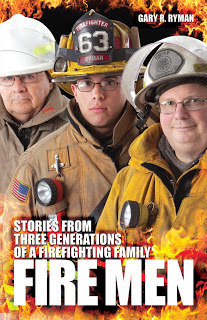
The book Fire Men
started as nothing more than wanting to record some of the experiences
that my father and I had in the fire service and which my son Michael
was starting to have. Writing of one incident often brought back
memories of others and the list of individual stories of calls grew.
After I had a hundred plus pages, it became clear that there was more
than a pile of vignettes—there was a book there trying to get out. The
writing was cathartic as well. It made me smile and laugh and took me
back to less pleasant experiences—some still painful to recall even with
the passage of time.
Eventually, a so-called first draft was complete and some friends
encouraged me to try to obtain an agent and the querying process began.
Lightning struck with surprising quickness and a young agent from a
large New York City firm agreed to work with me. I know now this was an
incredible stroke of luck as the manuscript wasn’t remotely ready. She
provided great feedback and suggestions as I worked my way through a
second draft. This revision much improved the book and she offered more
suggestions to help fine tune the work.
The manuscript was one final pass from the point at which she was
planning to send it to some editors she believed would be interested
when calamity, at least for me, struck hard. My agent accepted a
position as an editor at a big six house, which orphaned me. Yes, she
passed the manuscript to another agent at her firm, but he wasn’t
interested, and so two years after the start, the query roller coaster
began running again. This time I decided to widen my view and include
some of the fine small publishers in the business as well.
After a period of ups and downs with manuscript requests and rejections,
a yes came in the door from a wonderful publisher, Nicole Langan of Tribute Books ( www.tribute-books.com ).
Her assistance and guidance through the final edits was invaluable.
The cover and artwork she and her staff designed was beyond my wildest
expectations. At the release and continuing now, she has been a great
cheerleader; helping to push the book in conventional and unconventional
ways. With a huge social media presence, she has been a tremendous
teacher in how to use this medium.
Doing events and book signings has resulted in new friends and
opportunities to re-connect with old ones. As much fun as the whole
experience has been, I will never forget holding that first printed copy
in my hand.
--Gary Ryman
April 2012
Gary Ryman is the middle
of three generations of firefighters or the center of the Oreo. His
book Fire Men: Stories from Three Generations of a Firefighting Family
is available on Amazon and Barnes & Noble.com in paperback as well
as in all eBook formats. Visit www.fire-men-book for more information.
Buy Fire Men online at these links:

- http://www.amazon.com/Fire-Men-Stories-Generations-Firefighting/dp/0982256590/ref=tmm_pap_title_0

- http://www.barnesandnoble.com/w/fire-men-gary-r-ryman/1100719030?ean=9780982256596&itm=1&usri=gary+ryman


April 27, 2012
My Path to Publication
hosted by Heidi Ruby Miller

The book Fire Men
started as nothing more than wanting to record some of the experiences
that my father and I had in the fire service and which my son Michael
was starting to have. Writing of one incident often brought back
memories of others and the list of individual stories of calls grew.
After I had a hundred plus pages, it became clear that there was more
than a pile of vignettes—there was a book there trying to get out. The
writing was cathartic as well. It made me smile and laugh and took me
back to less pleasant experiences—some still painful to recall even with
the passage of time.
Eventually, a so-called first draft was complete and some friends
encouraged me to try to obtain an agent and the querying process began.
Lightning struck with surprising quickness and a young agent from a
large New York City firm agreed to work with me. I know now this was an
incredible stroke of luck as the manuscript wasn’t remotely ready. She
provided great feedback and suggestions as I worked my way through a
second draft. This revision much improved the book and she offered more
suggestions to help fine tune the work.
The manuscript was one final pass from the point at which she was
planning to send it to some editors she believed would be interested
when calamity, at least for me, struck hard. My agent accepted a
position as an editor at a big six house, which orphaned me. Yes, she
passed the manuscript to another agent at her firm, but he wasn’t
interested, and so two years after the start, the query roller coaster
began running again. This time I decided to widen my view and include
some of the fine small publishers in the business as well.
After a period of ups and downs with manuscript requests and rejections,
a yes came in the door from a wonderful publisher, Nicole Langan of Tribute Books ( www.tribute-books.com ).
Her assistance and guidance through the final edits was invaluable.
The cover and artwork she and her staff designed was beyond my wildest
expectations. At the release and continuing now, she has been a great
cheerleader; helping to push the book in conventional and unconventional
ways. With a huge social media presence, she has been a tremendous
teacher in how to use this medium.
Doing events and book signings has resulted in new friends and
opportunities to re-connect with old ones. As much fun as the whole
experience has been, I will never forget holding that first printed copy
in my hand.
--Gary Ryman
April 2012
Gary Ryman is the middle
of three generations of firefighters or the center of the Oreo. His
book Fire Men: Stories from Three Generations of a Firefighting Family
is available on Amazon and Barnes & Noble.com in paperback as well
as in all eBook formats. Visit www.fire-men-book for more information.
Buy Fire Men online at these links:

- http://www.amazon.com/Fire-Men-Stories-Generations-Firefighting/dp/0982256590/ref=tmm_pap_title_0

- http://www.barnesandnoble.com/w/fire-men-gary-r-ryman/1100719030?ean=9780982256596&itm=1&usri=gary+ryman
April 11, 2012
Indian Tanks and the Big Bang

The spring brush fire season, a particularly nasty one this year in northeastern and central Pennsylvania, brings thoughts to one of the most important of "Ryman's Rules." It's actually not a rule—not part of the philosophy of managing firefighters. It is actually a theory or law of physics; something for the Big Bang boys to debate.
The theory or law goes like this: Water weight in an Indian Tank increases one pound per gallon for every year you are over forty.
For more years than I will admit, I have found this to be true, hence my long standing position, both physically and metaphorically, anywhere which does not include the necessity of wearing said Indian Tank.
Let the debate begin…..


April 1, 2012
Gary Talks Chief Officers at Central PA Bravest
Central PA Bravest
April 1, 2012
A Few Thoughts for the Chief Officer of the Volunteer House
by Gary R. Ryman
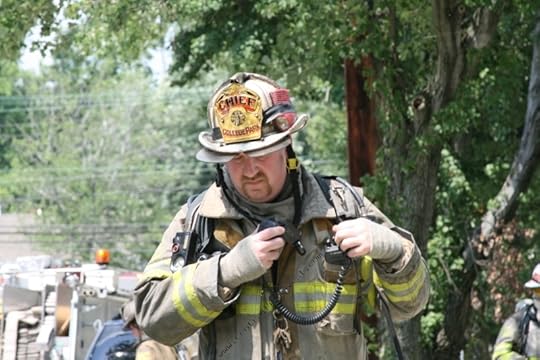 There are rules, and then there are rules. Here are some I've tried, not always successfully, to follow.
Ryman's Rules: A Volunteer Chief's Philosophy
1. You are responsible. You are responsible 365 days a year, 7 days a week, 24 hours a day. If you are there or 3,000 miles away. You are responsible. You can delegate authority, but not responsibility.
2. The chief is always right. Invite input, debate, etc. from the officers. However, once the decision is made, that's it. In public, the officers must show solidarity.
3. The officers are always right. If an officer makes a decision you disagree with, in public or with the other firefighters, that decision was right. You talk about what you would have done differently in private.
4. Delegate, delegate, and delegate. You can't be involved in every activity, nor should you be. Give the junior officers responsibilities and hold them accountable. If they follow through, give them more and more. If they don't, let them know about it and don't give them any additional work.
5. Try to develop a command presence. Your presence at an emergency should send a message to the firefighters that everything is going to be okay. Regardless of how badly something is going, try to maintain a calm exterior. Motivate your people. This is done differently for each individual. If you give an order or tell them to get into a building, they should totally believe that you believe they can do it. Never tell a firefighter to do something you wouldn't or couldn't do yourself. Chiefs give orders on incomplete information regularly. Even if you have doubts about it, give the order as if you are 100% confident about it. Your confidence is a force multiplier.
6. Let them have fun. Nobody is getting paid for this. The younger guys have to enjoy themselves. At the same time, know when to pull in the reins, and when you do, jerk them hard. They still have to be professionals. You can't be their buddy anymore. You are the man, and they have to recognize it as such.
7. Pace of change. Keep them sullen but not mutinous. The pace of change has to be fast enough that the young guys see progress, but not so fast that the dinosaurs get riled up. As long as both groups are slightly unhappy, you're doing fine.
8. Don't be afraid to piss somebody off. If you're not pissing somebody off once in a while, you're not doing your job.
9. Encourage training certifications. Push the guys to get their Firefighter 1 and other certificates. The time is fast coming when what you are able to do, and what positions you can hold in a fire department virtually anywhere will be determined by these certificates. At the same time, work to keep things in perspective. Firefighter 1 or 2 does not equal "super firefighter".
10. Develop junior officers. The greatest legacy a chief can have is by the officers he leaves behind.

April 1, 2012
A Few Thoughts for the Chief Officer of the Volunteer House
by Gary R. Ryman
There are rules, and then there are rules. Here are some I've tried, not always successfully, to follow.Ryman's Rules: A Volunteer Chief's Philosophy
1. You are responsible. You are responsible 365 days a year, 7 days a week, 24 hours a day. If you are there or 3,000 miles away. You are responsible. You can delegate authority, but not responsibility.
2. The chief is always right. Invite input, debate, etc. from the officers. However, once the decision is made, that's it. In public, the officers must show solidarity.
3. The officers are always right. If an officer makes a decision you disagree with, in public or with the other firefighters, that decision was right. You talk about what you would have done differently in private.
4. Delegate, delegate, and delegate. You can't be involved in every activity, nor should you be. Give the junior officers responsibilities and hold them accountable. If they follow through, give them more and more. If they don't, let them know about it and don't give them any additional work.
5. Try to develop a command presence. Your presence at an emergency should send a message to the firefighters that everything is going to be okay. Regardless of how badly something is going, try to maintain a calm exterior. Motivate your people. This is done differently for each individual. If you give an order or tell them to get into a building, they should totally believe that you believe they can do it. Never tell a firefighter to do something you wouldn't or couldn't do yourself. Chiefs give orders on incomplete information regularly. Even if you have doubts about it, give the order as if you are 100% confident about it. Your confidence is a force multiplier.
6. Let them have fun. Nobody is getting paid for this. The younger guys have to enjoy themselves. At the same time, know when to pull in the reins, and when you do, jerk them hard. They still have to be professionals. You can't be their buddy anymore. You are the man, and they have to recognize it as such.
7. Pace of change. Keep them sullen but not mutinous. The pace of change has to be fast enough that the young guys see progress, but not so fast that the dinosaurs get riled up. As long as both groups are slightly unhappy, you're doing fine.
8. Don't be afraid to piss somebody off. If you're not pissing somebody off once in a while, you're not doing your job.
9. Encourage training certifications. Push the guys to get their Firefighter 1 and other certificates. The time is fast coming when what you are able to do, and what positions you can hold in a fire department virtually anywhere will be determined by these certificates. At the same time, work to keep things in perspective. Firefighter 1 or 2 does not equal "super firefighter".
10. Develop junior officers. The greatest legacy a chief can have is by the officers he leaves behind.
March 25, 2012
A Chief's Philosophy
There are rules, and then there are rules. Here are some I've tried, not always successfully, to follow.
Ryman's Rules: A Volunteer Chief's Philosophy
1. You are responsible. You are responsible 365 days a year, 7 days a week, 24 hours a day. If you are there or 3,000 miles away. You are responsible. You can delegate authority, but not responsibility.
2. The chief is always right. Invite input, debate, etc. from the officers. However, once the decision is made, that's it. In public, the officers must show solidarity.
3. The officers are always right. If an officer makes a decision you disagree with, in public or with the other firefighters, that decision was right. You talk about what you would have done differently in private.
4. Delegate, delegate, and delegate. You can't be involved in every activity, nor should you be. Give the junior officers responsibilities and hold them accountable. If they follow through, give them more and more. If they don't, let them know about it and don't give them any additional work.
5. Try to develop a command presence. Your presence at an emergency should send a message to the firefighters that everything is going to be okay. Regardless of how badly something is going, try to maintain a calm exterior. Motivate your people. This is done differently for each individual. If you give an order or tell them to get into a building, they should totally believe that you believe they can do it. Never tell a firefighter to do something you wouldn't or couldn't do yourself. Chiefs give orders on incomplete information regularly. Even if you have doubts about it, give the order as if you are 100% confident about it. Your confidence is a force multiplier.
6. Let them have fun. Nobody is getting paid for this. The younger guys have to enjoy themselves. At the same time, know when to pull in the reins, and when you do, jerk them hard. They still have to be professionals. You can't be their buddy anymore. You are the man, and they have to recognize it as such.
7. Pace of change. Keep them sullen but not mutinous. The pace of change has to be fast enough that the young guys see progress, but not so fast that the dinosaurs get riled up. As long as both groups are slightly unhappy, you're doing fine.
8. Don't be afraid to piss somebody off. If you're not pissing somebody off once in a while, you're not doing your job.
9. Encourage training certifications. Push the guys to get their Firefighter 1 and other certificates. The time is fast coming when what you are able to do, and what positions you can hold in a fire department virtually anywhere will be determined by these certificates. At the same time, work to keep things in perspective. Firefighter 1 or 2 does not equal "super firefighter".
10. Develop junior officers. The greatest legacy a chief can have is by the officers he leaves behind.

Ryman's Rules: A Volunteer Chief's Philosophy
1. You are responsible. You are responsible 365 days a year, 7 days a week, 24 hours a day. If you are there or 3,000 miles away. You are responsible. You can delegate authority, but not responsibility.
2. The chief is always right. Invite input, debate, etc. from the officers. However, once the decision is made, that's it. In public, the officers must show solidarity.
3. The officers are always right. If an officer makes a decision you disagree with, in public or with the other firefighters, that decision was right. You talk about what you would have done differently in private.
4. Delegate, delegate, and delegate. You can't be involved in every activity, nor should you be. Give the junior officers responsibilities and hold them accountable. If they follow through, give them more and more. If they don't, let them know about it and don't give them any additional work.
5. Try to develop a command presence. Your presence at an emergency should send a message to the firefighters that everything is going to be okay. Regardless of how badly something is going, try to maintain a calm exterior. Motivate your people. This is done differently for each individual. If you give an order or tell them to get into a building, they should totally believe that you believe they can do it. Never tell a firefighter to do something you wouldn't or couldn't do yourself. Chiefs give orders on incomplete information regularly. Even if you have doubts about it, give the order as if you are 100% confident about it. Your confidence is a force multiplier.
6. Let them have fun. Nobody is getting paid for this. The younger guys have to enjoy themselves. At the same time, know when to pull in the reins, and when you do, jerk them hard. They still have to be professionals. You can't be their buddy anymore. You are the man, and they have to recognize it as such.
7. Pace of change. Keep them sullen but not mutinous. The pace of change has to be fast enough that the young guys see progress, but not so fast that the dinosaurs get riled up. As long as both groups are slightly unhappy, you're doing fine.
8. Don't be afraid to piss somebody off. If you're not pissing somebody off once in a while, you're not doing your job.
9. Encourage training certifications. Push the guys to get their Firefighter 1 and other certificates. The time is fast coming when what you are able to do, and what positions you can hold in a fire department virtually anywhere will be determined by these certificates. At the same time, work to keep things in perspective. Firefighter 1 or 2 does not equal "super firefighter".
10. Develop junior officers. The greatest legacy a chief can have is by the officers he leaves behind.
March 17, 2012
Some Great Comments on "Fire Men"
"A few days ago a friend threw the book FIRE MEN at me. It took just a few days to read this terrific recollection interwoven with a personal physical trauma. I thought it was great!
What is so amazing is how many experiences the Rymans had in structural fire and motor vehicle incidents were ones closely compared to many I've experienced in my 42 years on the job. One of the best was one of the guys trying to "pull" a tongue and groove ceiling. When my hook hit the same in dense smoke it made the same thump. I knew this was different.
I have since thrown the book at other friends in the job to enhance their understanding of this great profession.
Thanks again."
Battalion Chief Harry Cohoon
St. Charles, Missouri

What is so amazing is how many experiences the Rymans had in structural fire and motor vehicle incidents were ones closely compared to many I've experienced in my 42 years on the job. One of the best was one of the guys trying to "pull" a tongue and groove ceiling. When my hook hit the same in dense smoke it made the same thump. I knew this was different.
I have since thrown the book at other friends in the job to enhance their understanding of this great profession.
Thanks again."
Battalion Chief Harry Cohoon
St. Charles, Missouri
March 2, 2012
Gary Talks Grocery Store Fires at Central PA Bravest
Central PA Bravest
March 1, 2012
Grocery Store Fires - Not Just Bread, Butter and Beans
by Gary R. Ryman
Milk, eggs, coffee; the next time you visit the local grocery store, look up from your list at this common occupancy and the fire suppression issues presented. Grocery stores are carrying a wider variety of merchandise in bigger quantities than every before. Beyond food items, there is lighter fluid, motor oil, Styrofoam cups and plates, and other high fire challenge commodities. In larger stores, stock values exceeding ten million dollars are not unusual. Generally in a fully sprinklered grocery store, a fire would be expected to be quickly controlled by sprinklers, usually five heads or less. There are, however, a few areas of these stores which can cause some interesting challenges for firefighters.
Rear stockrooms are becoming smaller and more congested. The trend toward increased sales space and smaller support areas increases the density of storage and fire challenge in these areas, and periods right after a delivery will be the worst. This can make reaching the seat of a stock room fire far more difficult. In addition, it could result in delays in controlling utilities, as electrical panels and access to the switchgear which are typically located here may be obstructed.
The front canopy of many stores appears like an innocuous cover for shopping carts and sale flyers and a place to display a large sign or insignia for the store brand. In many cases, the interior is plywood, resulting in a sizeable combustible concealed space attached to the main store. The strip center stores in which many grocery stores are present, have similarly constructed canopies. Few of these are provided with sprinkler protection. Fires can be ignited by lights, signs, or other electrical ignition sources, and are not uncommon. If there are openings between the rear of the canopy and the main store, fire can and will spread into the main store. Even if cut off by a rated separation, extensive smoke can be expected in areas of the store. Extensive opening up of the canopy front, and from below is critical for water application along with interior crews to check the extension of fire into the store.
Reaching this area inside the store can be difficult, particularly in smoky conditions. Most stores have not easily located stairwells to this level. Offices, break rooms, and similar support areas are usually present along a corridor adjacent to the canopy. Some older stores have walkways or catwalks with observation posts for Security personnel. Others have extensive storage of seasonal displays and similar items, increasing access difficulties. At a minimum, an Engine and Truck company should be assigned to this area and a thermal imaging camera can be invaluable. The on duty store manager can provide timely assistance in locating the stairway, and providing some information on the layout which will be encountered.
As with many public occupancies, search can be challenging. Each aisle should be quickly covered. Don't forget restrooms; not easily located in many stores, which you know if you've ever needed to use one while shopping. Food preparation areas around the perimeter walls such as bakeries, deli, and the like also need to be checked along with the rear stock area.
As in any commercial structure, the sprinkler protection is your best friend. Ensure that one of the first arriving engines ties into the fire department connection to supplement the system. Make sure sprinkler control valves are open and don't close them prematurely.
Smoke removal by the standard methods is important. Beyond the life safety implications, overall damage can be reduced by prompt ventilation.
If power needs to be cut for an extended period, refrigeration will be down. Salvage covers or tarps over the open case freezers commonly found in stores can help reduce the temperature increases in these units and improve salvage potential.
Grocery store fires can present some interesting challenges. The layout can differ from store to store even within the same chain, so don't assume one is identical to another. Familiarity increases the likelihood of a safe and successful operation. Pre-incident knowledge of your first due grocery stores can help make a fire there into a bread and butter incident.

March 1, 2012
Grocery Store Fires - Not Just Bread, Butter and Beans
by Gary R. Ryman
Milk, eggs, coffee; the next time you visit the local grocery store, look up from your list at this common occupancy and the fire suppression issues presented. Grocery stores are carrying a wider variety of merchandise in bigger quantities than every before. Beyond food items, there is lighter fluid, motor oil, Styrofoam cups and plates, and other high fire challenge commodities. In larger stores, stock values exceeding ten million dollars are not unusual. Generally in a fully sprinklered grocery store, a fire would be expected to be quickly controlled by sprinklers, usually five heads or less. There are, however, a few areas of these stores which can cause some interesting challenges for firefighters.
Rear stockrooms are becoming smaller and more congested. The trend toward increased sales space and smaller support areas increases the density of storage and fire challenge in these areas, and periods right after a delivery will be the worst. This can make reaching the seat of a stock room fire far more difficult. In addition, it could result in delays in controlling utilities, as electrical panels and access to the switchgear which are typically located here may be obstructed.
The front canopy of many stores appears like an innocuous cover for shopping carts and sale flyers and a place to display a large sign or insignia for the store brand. In many cases, the interior is plywood, resulting in a sizeable combustible concealed space attached to the main store. The strip center stores in which many grocery stores are present, have similarly constructed canopies. Few of these are provided with sprinkler protection. Fires can be ignited by lights, signs, or other electrical ignition sources, and are not uncommon. If there are openings between the rear of the canopy and the main store, fire can and will spread into the main store. Even if cut off by a rated separation, extensive smoke can be expected in areas of the store. Extensive opening up of the canopy front, and from below is critical for water application along with interior crews to check the extension of fire into the store.
Reaching this area inside the store can be difficult, particularly in smoky conditions. Most stores have not easily located stairwells to this level. Offices, break rooms, and similar support areas are usually present along a corridor adjacent to the canopy. Some older stores have walkways or catwalks with observation posts for Security personnel. Others have extensive storage of seasonal displays and similar items, increasing access difficulties. At a minimum, an Engine and Truck company should be assigned to this area and a thermal imaging camera can be invaluable. The on duty store manager can provide timely assistance in locating the stairway, and providing some information on the layout which will be encountered.
As with many public occupancies, search can be challenging. Each aisle should be quickly covered. Don't forget restrooms; not easily located in many stores, which you know if you've ever needed to use one while shopping. Food preparation areas around the perimeter walls such as bakeries, deli, and the like also need to be checked along with the rear stock area.
As in any commercial structure, the sprinkler protection is your best friend. Ensure that one of the first arriving engines ties into the fire department connection to supplement the system. Make sure sprinkler control valves are open and don't close them prematurely.
Smoke removal by the standard methods is important. Beyond the life safety implications, overall damage can be reduced by prompt ventilation.
If power needs to be cut for an extended period, refrigeration will be down. Salvage covers or tarps over the open case freezers commonly found in stores can help reduce the temperature increases in these units and improve salvage potential.
Grocery store fires can present some interesting challenges. The layout can differ from store to store even within the same chain, so don't assume one is identical to another. Familiarity increases the likelihood of a safe and successful operation. Pre-incident knowledge of your first due grocery stores can help make a fire there into a bread and butter incident.
Gary R. Ryman's Blog
- Gary R. Ryman's profile
- 3 followers
Gary R. Ryman isn't a Goodreads Author
(yet),
but they
do have a blog,
so here are some recent posts imported from
their feed.

