
Gary R. Ryman's Blog, page 25
May 17, 2011
From Chapter Thirteen - Kids Are The Worst
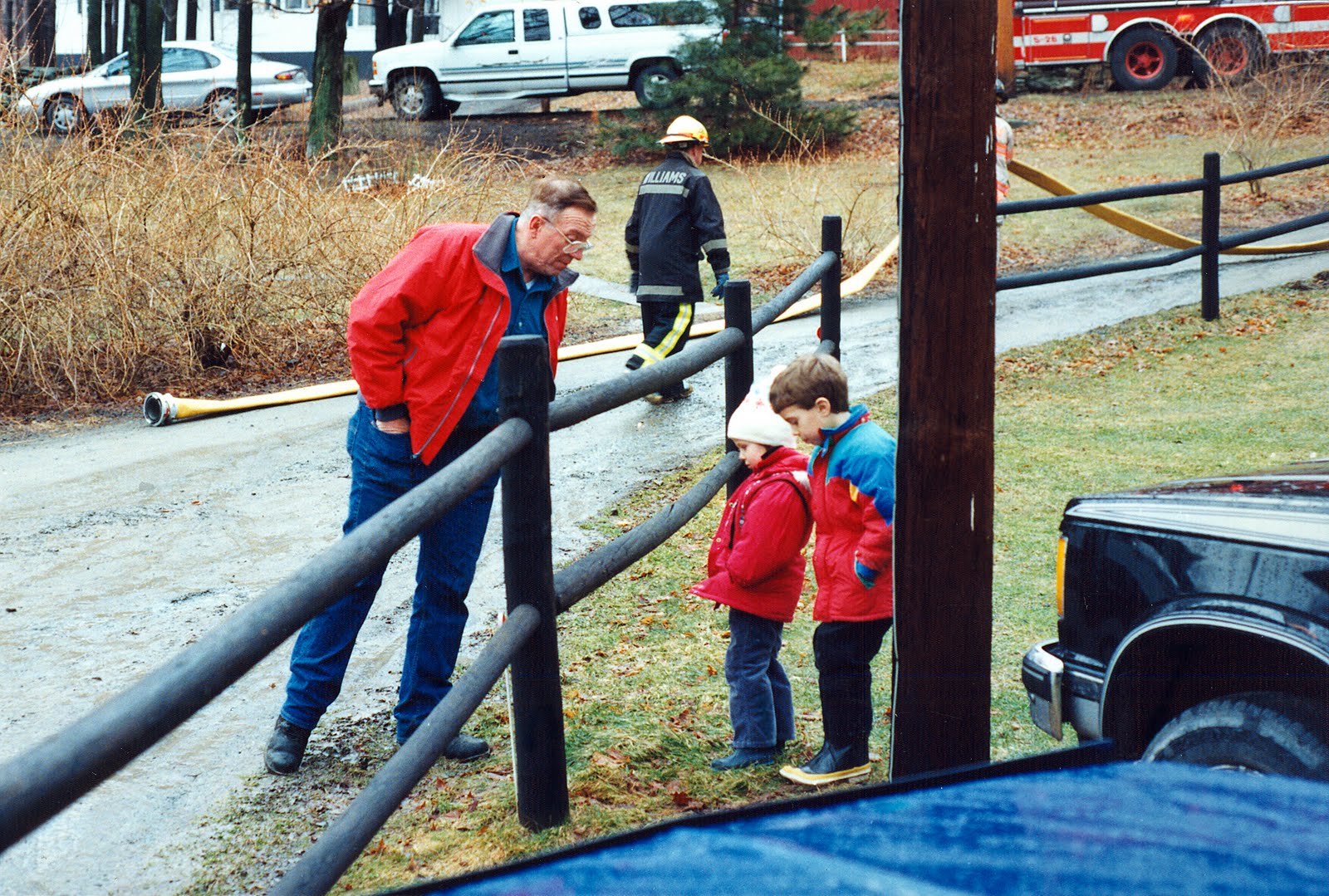 I walked up to the road and the kids were still watching from the car, wide-eyed, under Smackie's supervision. Conditions were safe enough that I could take them down with me and they could stand next to the engine and watch. One on each side, we held hands and walked down. They stood perfectly still next to the engine while I dealt with the details of the fire. Soon we were able to start returning companies and began breaking down the fill and dump sites.
Both kids were polar opposites at that age. Mike was shy and didn't talk much while Megan, like her mother, would talk to a dead man. Actually, not much has changed since then. After a while, Billy, the pump operator, took a break and bent over to talk to the kids. I didn't hear any of the conversation but when he stood back up he was laughing. Later I learned he had asked how they were doing. Mike was silent, knowing his little sister would talk for both of them. She proudly announced in her three-year-old voice, "This is my first structure fire." It wasn't the last.


May 16, 2011
From Chapter Twelve - Learning the Country Style
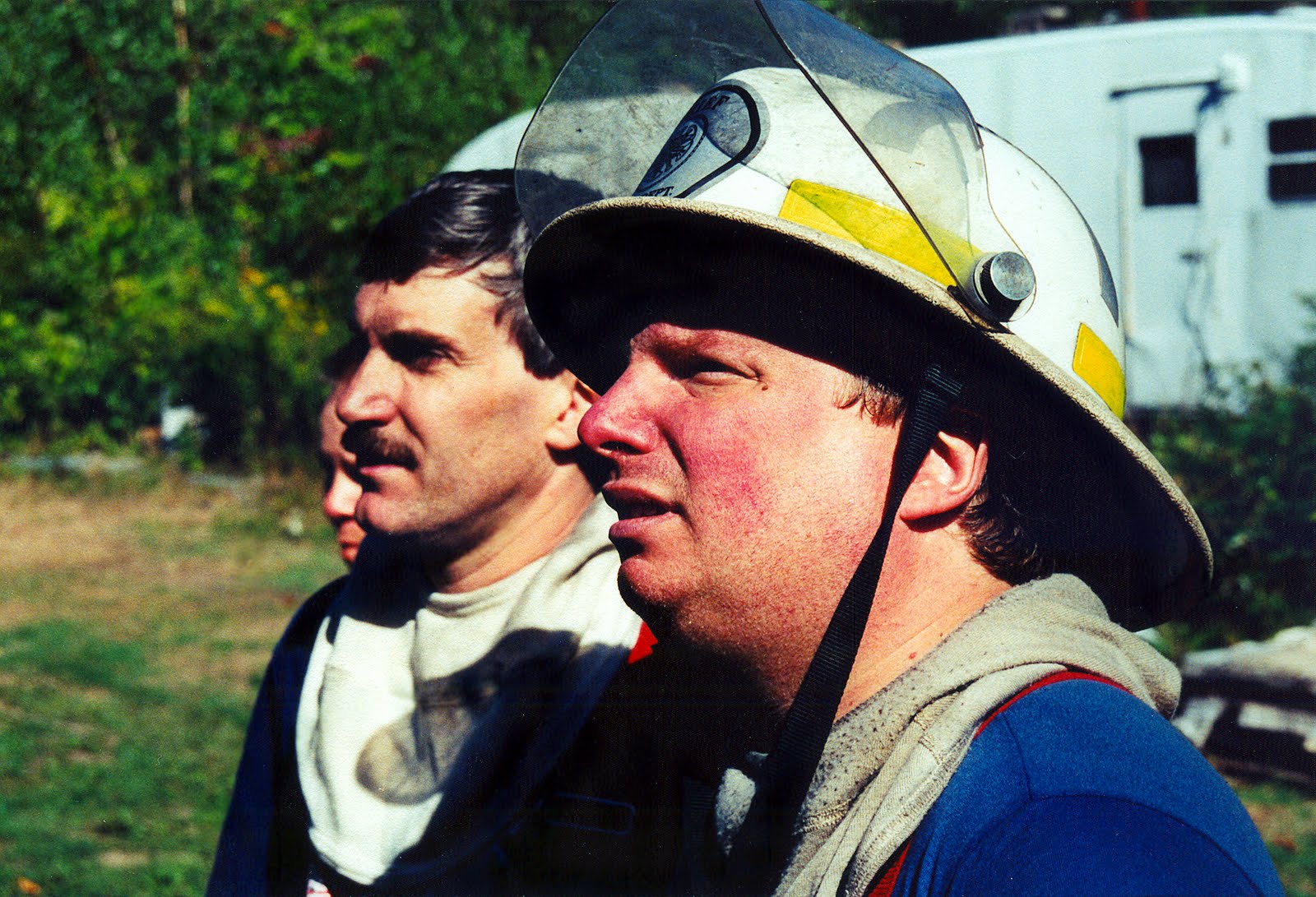 One fine Saturday morning, we were working on an addition to Steve's house. We all worked on each other's home improvement projects over the years. It was free labor supervised by someone who actually knew what they were doing. I was part of the free labor portion of the crew.
We were putting up board insulation for a cathedral ceiling and not having fun fastening it in place. Each missed hammering of a nail, which was easy to do when hammering upside down at an angle on the underside of the roof, created a hole in the insulation. Misses were as common as hits, and our frustration was building.
Bang–miss. Damn.
Bang–miss. Shit.
Bang–miss. Fuck.
Our pagers all went off simultaneously, a cacophony of shrill beeps in the confined room, the dispatcher announcing a house fire in Fleetville. Tool belts clattered to the floor where they lay abandoned as we headed for our vehicles, deciding who would ride with whom.
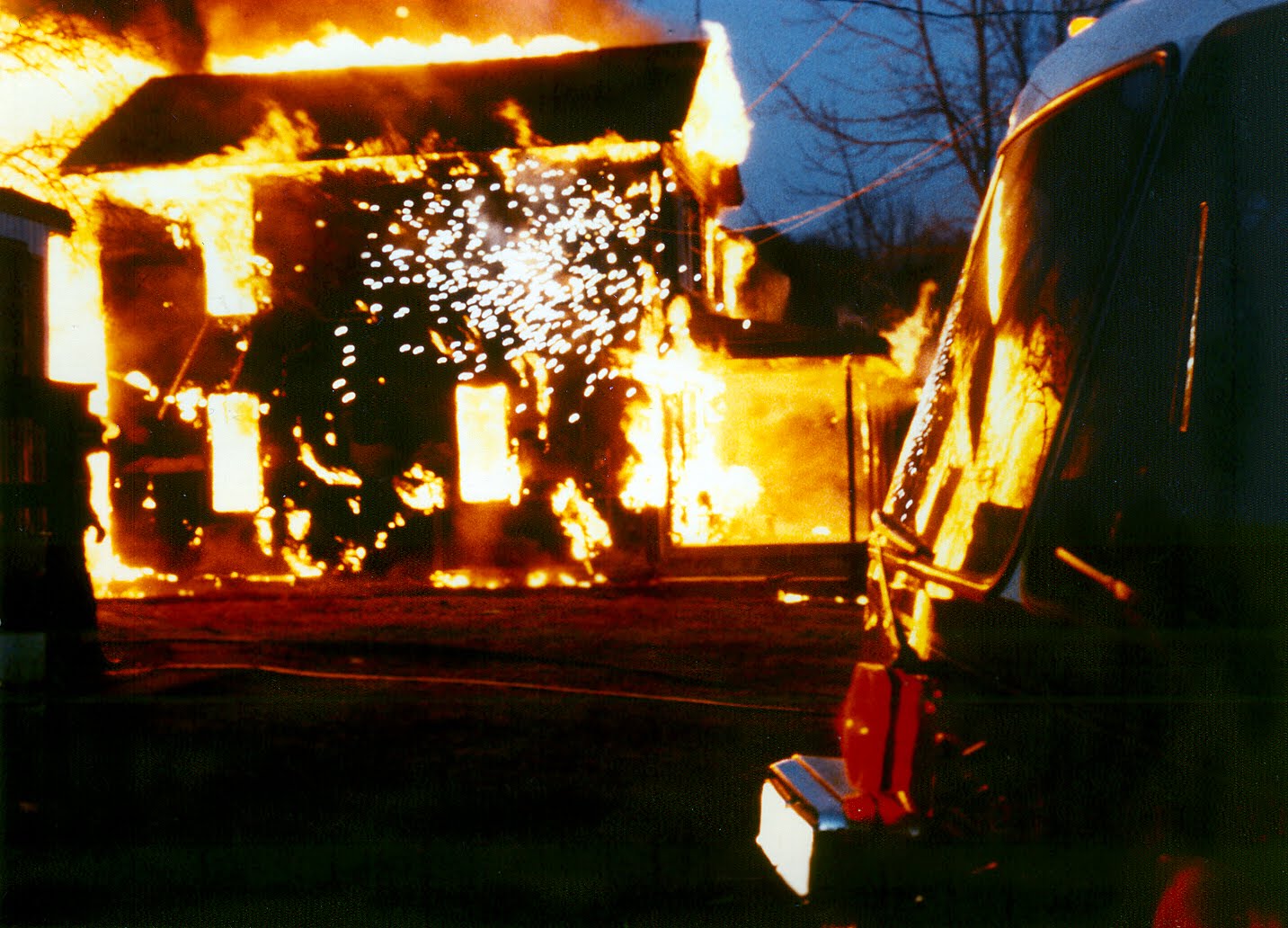
Only a couple miles from the scene, we arrived to find an old two story farmhouse with heavy fire blowing from the windows on the first floor. It probably was on the second as well, but we couldn't tell at this point. We put on our gear while awaiting the first engine.


May 13, 2011
From Chapter Eleven - Pennsylvania Bound
 After graduating from college in 1983, I worked a few part time gigs for about a year and a half, teaching first aid and CPR and working shifts as a fire technician for a large computer company, back home in Endicott. Eventually, I got a real job as a fire protection engineer in early 1985, and moved to a beautiful rural area in Northeastern Pennsylvania in 1986. Naturally, one of the first things I did was put in an application at the local fire department in Scott Township.
A week or two after I applied, I received a call to meet with the membership committee, which consisted of about six firefighters. When we all sat down together, Nicky, one of the assistant chiefs, asked me about my background and experience, so I told them a little bit about myself. Nicky was not a big guy, but was built like a plow horse, which was not surprising, since he came from a long line of farmers.
"Are you sure you live here?" Nicky asked with an ironic smile on his face. "'Cause we get people like you walking in the door just about every day." I assured him that I did actually live nearby and, with that, my probationary year began.


May 12, 2011
From Chapter Ten - Firefighting 101
 The station was a terrific place to live, particularly for a college student. Free room and cheap board–I could buy into the meals with the career guys if I wanted–made it more affordable than dorm living. Studying Fire Science at the University of Maryland was a great experience, thanks to the first rate professors, but maintaining the balance between school and firefighting was a challenge. It was good to be young, as I slept eight hours straight only about one night a week. The rest of the nights were either interrupted by calls or by late night bullshit
sessions.


May 11, 2011
From Chapter Nine - A Move to Maryland
 Wasted college fuck. That was one of the nicer names I was called when I moved into the fire station in Montgomery County. The career guys put the new college live-ins or bunkers through a sort of mental boot camp. The first semester, I was the only "wasted load" at the station. If you can't take the verbal abuse, you certainly don't belong there.
I understood it then, and to this day, I have no problem with it. Look at it from their perspective, every year or two some strange new kid shows up. After he familiarizes himself with the equipment on the engine and truck–in my case it took about forty-five minutes–this rookie is riding a jump seat alongside them. In their shoes, I wouldn't trust a wasted college fuck, either.
I realized the best thing to do was to keep my mouth shut and ears open. I gained their trust by doing anything they asked around the station and doing a good job on my first few fires. Once they could see I wasn't going to get one of them killed, they began to accept me.


May 10, 2011
From Chapter Eight - Working for Dad
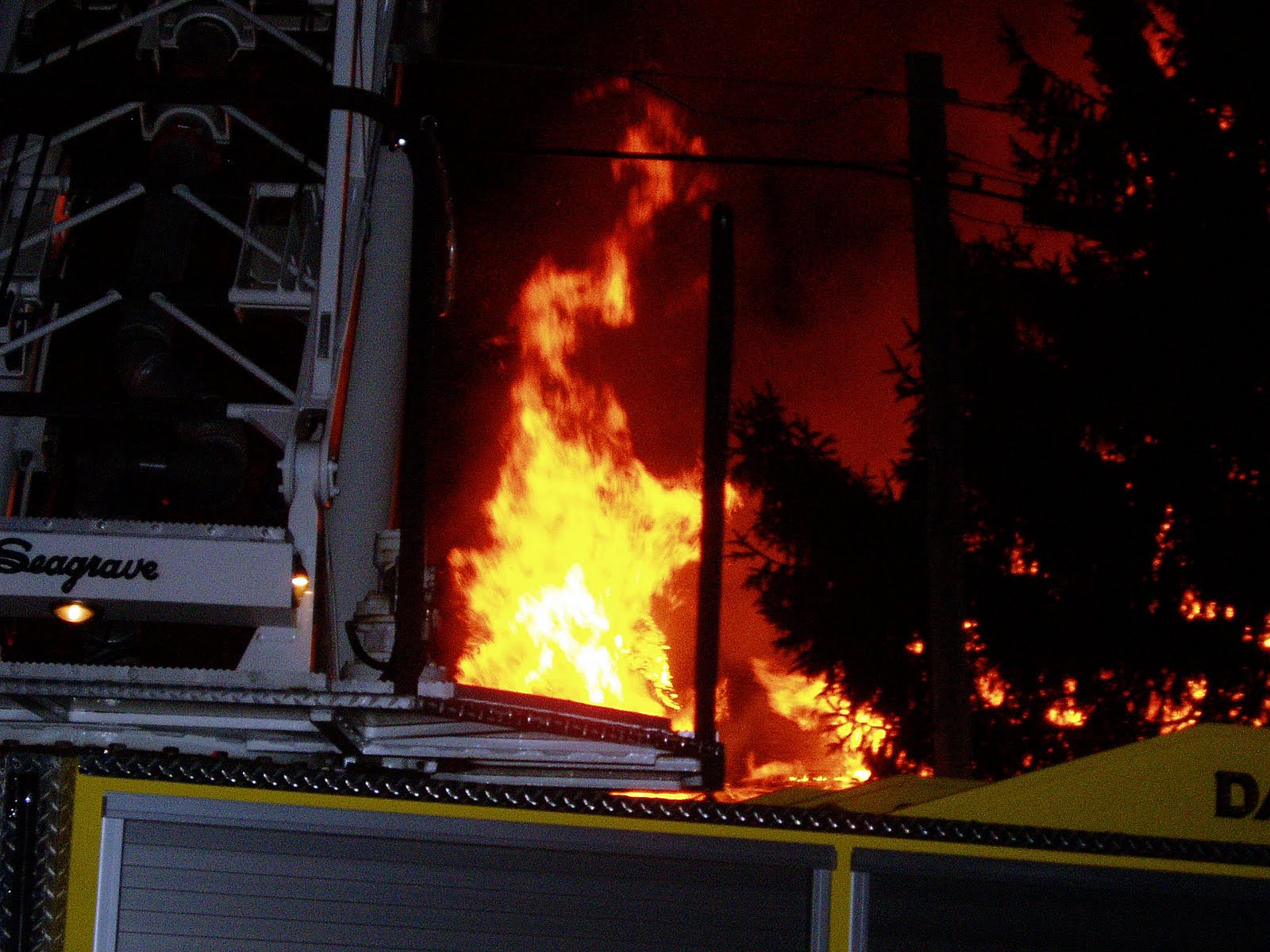 I made a smart ass comment about his lack of an air pack. He tapped the front of my helmet.
"What does that say?"
"Lieutenant," I answered.
He tapped the front of his helmet. "What does this say?"
"Chief," I answered again.
"Go back and do your damn job," he ordered. There wasn't much to add, so I pulled up another five feet of hose and went back to Dennis. I never did understand how he could breathe smoke like that and not cough. I didn't buy his desire for more information; he was checking up on how I was doing, but he would never admit it.


May 9, 2011
From Chapter Seven - First Time Inside
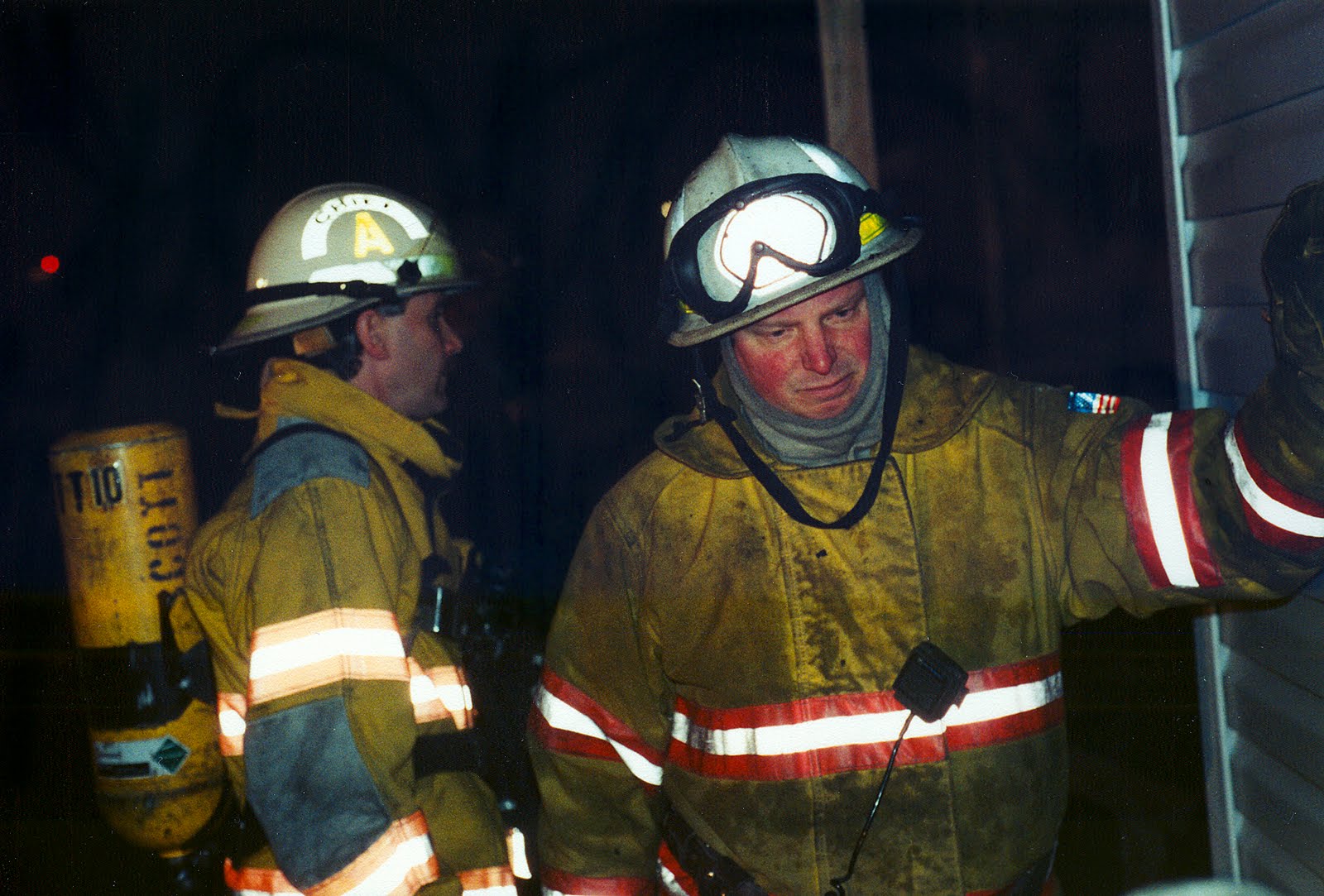 The other firefighter about to go in with me was also new. As rookies, we had no business being inside together, but I had waited too long for this moment to complain. Taking the nozzle in my hands, we crawled inside. It was black to the floor with smoke, but there was no visible fire in the first room we entered. We worked our way in by feel, stopping so I could work on what felt like a door. Still zero visibility; the only sounds were the raspy rapid inhalation and exhalation of air through our mask face pieces. Prying for a minute or so, I got the door open and realized it was a kitchen cabinet. We pushed further in and through the doorway to the living room. This room was fully engulfed in flames. I opened the nozzle and started hitting it, whipping it in circles as I'd been taught. Damn, this is fun.

May 6, 2011
From Chapter Six - Characters
 The emergency services are full of talented and unusual people and some of those people I've worked with are unforgettable. Hubie was my first ambulance captain. He was a gregarious, happy guy with a ready smile and a unique high-pitched laugh heard regularly around the squad room. He was a perfect manager for us young guys; he knew exactly how much of the reins to give us before yanking them back hard. His normal smile would instantly disappear, replaced with a cold, hard stare and raised eyebrows. You didn't quickly forget the lecture that would follow. I learned a lot about the care and feeding of young pups by watching Hubie. He never held a grudge and after whatever stupidity we had committed was over, it was over for good.
Hubie was truly a great medic; his only weakness was vomit. Not that any of us liked it, but he truly hated it. If a patient was puking, he could handle it and work through it, but you'd hear Hubie gagging right along with them.


May 5, 2011
From Chapter Five - Ambulance Runs Aren't Always Sad
 Along with the Saturday eleven to seven shift, we would regularly take the seven to noon shift on Sunday morning so we could sleep in if we didn't get a run. When we finally got up at nine thirty or ten a.m., we'd take the ambulance and go to breakfast at a nearby Friendly's restaurant where they liked us. We'd take our time and enjoy a nice leisurely breakfast. There was an ulterior motive to this. If we got a run while eating breakfast, obviously we would have to leave. When we returned, they would give us a new breakfast, but we'd only be charged for one. We didn't get the two for one every week, since we couldn't predict our calls, but we got it often enough that we made sure we were regulars there. Cops like donut shops. We liked just about anything.

May 4, 2011
From Chapter Four - EMS Days
 Emergency rooms save people every day but that doesn't mean mistakes don't happen. You learn this quickly on the EMS side of the business.
One day we brought in a possible heart attack victim. He was unconscious, but had a rhythm. After we left him in the treatment room still very much alive, we went to restock the drug box, replacing the items we had used on the call. Walking back toward the front desk, I passed the treatment room again, and saw the staff doing CPR on our victim. I watched for a minute or two and then noticed one of the leads to the heart monitor had become disconnected from the pasty on his chest. Walking into the room, I tapped one of the nurses on the shoulder and pointed out the discrepancy.
"Oops," the nurse responded as she reconnected the lead. They stopped compressions to check the rhythm and he did indeed have one. One of the first things they teach you when becoming an EMT is that doing compressions on someone who has a heartbeat is a bad thing.


Gary R. Ryman's Blog

- Gary R. Ryman's profile
- 3 followers
Gary R. Ryman isn't a Goodreads Author
(yet),
but they
do have a blog,
so here are some recent posts imported from
their feed.

