
Gary R. Ryman's Blog, page 6
August 17, 2014
Coming Soon! "Mayday! Firefighter Down"
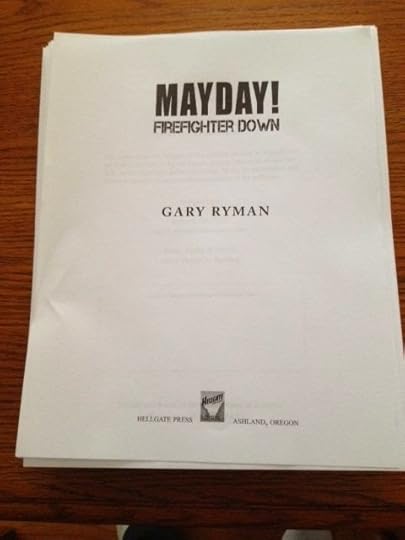
Working through the final edits and corrections on the draft layout for Mayday! Firefighter Down.


July 3, 2014
Get Out of Your Comfort Zone: More Advice for the New Fire Officer
Comfort zones are a wonderful thing. Avoid yours. One of the most important, and difficult, things to do is get avoid simple acceptance of the status quo. “We’ve always done it that way” are some of the most dangerous words out there. On the flip side of the coin, change simply for its own sake, can be just as problematic. The newest, latest, greatest, hottest change in tactics, tools, or techniques, isn’t always.
Always what? Well it’s not always great, or in some cases, actually new. Recycling old ideas or techniques with new names and calling it progress has been part of the culture for a long time.
So what is a new fire officer (or any fire officer for that matter) to do? How about this for a radical idea—think.
Think for yourself. Don’t blindly accept either the status quo or the latest greatest. Examine both with a high degree of rigor. I’m not suggesting blatant disregard of standard operating procedures, whether existing or new, but there’s nothing wrong with looking at them critically.
Challenge yourself. Specifically select articles, blogs, and authors to read with whom you inherently disagree, and then try to read them with an open mind. Evaluate their arguments dispassionately. Look behind the data. How was it developed? Was the methodology valid or do you perceive flaws?
They may not change your mind, but you will better understand the arguments others are making on a particular topic. Reading in this way also opens you up to the possibility that in some cases, you might need to acknowledge your own pre-conceived notions may not be correct.
Try to find a few fellow officers, peers and superiors, with whom you can have a wide ranging, non-judgmental dialogue on fire service issues. A few adult beverages (the operative word being few) can sometimes help lubricate these discussions. The response “that’s #($*& stupid and so are you,” is not the type of conversation you are shooting for. An open and respectful debate can sharpen thought processes, expose unanticipated flaws in policies and procedures, and overall, be valuable for all participants.
I would be remiss if I didn’t point out; all of this is easier said than done. Comfort zones are called that for a reason. They’re nice enjoyable places to stay where you don’t have to think. Critical thinking in this manner is one of the most important tools of the fire officer and leader. Get out of your comfort zone and try it.
Always what? Well it’s not always great, or in some cases, actually new. Recycling old ideas or techniques with new names and calling it progress has been part of the culture for a long time.
So what is a new fire officer (or any fire officer for that matter) to do? How about this for a radical idea—think.
Think for yourself. Don’t blindly accept either the status quo or the latest greatest. Examine both with a high degree of rigor. I’m not suggesting blatant disregard of standard operating procedures, whether existing or new, but there’s nothing wrong with looking at them critically.
Challenge yourself. Specifically select articles, blogs, and authors to read with whom you inherently disagree, and then try to read them with an open mind. Evaluate their arguments dispassionately. Look behind the data. How was it developed? Was the methodology valid or do you perceive flaws?
They may not change your mind, but you will better understand the arguments others are making on a particular topic. Reading in this way also opens you up to the possibility that in some cases, you might need to acknowledge your own pre-conceived notions may not be correct.
Try to find a few fellow officers, peers and superiors, with whom you can have a wide ranging, non-judgmental dialogue on fire service issues. A few adult beverages (the operative word being few) can sometimes help lubricate these discussions. The response “that’s #($*& stupid and so are you,” is not the type of conversation you are shooting for. An open and respectful debate can sharpen thought processes, expose unanticipated flaws in policies and procedures, and overall, be valuable for all participants.
I would be remiss if I didn’t point out; all of this is easier said than done. Comfort zones are called that for a reason. They’re nice enjoyable places to stay where you don’t have to think. Critical thinking in this manner is one of the most important tools of the fire officer and leader. Get out of your comfort zone and try it.
June 20, 2014
Generation 3 Moves Up
From a great post on Facebook....
"A well earned promotion. Lt. Ryman has responded to 602 emergency calls so far this year, logging over 3,500 hours of service and leading over 100 drills/training exercises. He does this while maintaining a full college load, in pursuit o...f his Master's Degree in Emergency Management.
He is a proven unit officer and driver of all apparatus. He has extensive fire service classes, including: Fire Officer III, Fire Service Instructor III, Hazardous Materials Technician, Rope Technical Rescuer I & II, Vehicle and Machinery Technical Rescuer I & II; Confined Space Technical Rescuer I & II; Trench Technical Rescuer I & II; Health and Safety Officer; Incident Safety Officer; Incident Safety Officer-Fire Suppression; Incident Safety Officer-Technical Rescue; Incident Safety Officer-Hazardous Materials; Incident Safety Officer- Emergency Medical Services Operations; and Structural Collapse Technical Rescuer I & II."
From the 1st Battalion page....
"Congratulations Lt. Michael Ryman.
Congratulations to Master Firefighter Michael Ryman of the Burtonsville VFD (Co 15) on his recent promotion to Lieutenant. Lieutenant Ryman has been a member of Burtonsville since 2010 and joined the department after having four years of e...xperience in Pennsylvania.
The Burtonsville VFD is the most active volunteer department in the 1st Battalion and LT Ryman has been one of their most active riding members having completed all of the requirements to drive apparatus and serve as Unit Officer. Congratulations."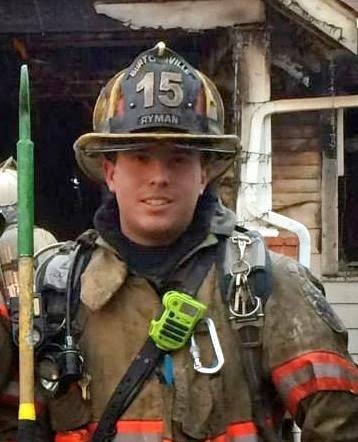

"A well earned promotion. Lt. Ryman has responded to 602 emergency calls so far this year, logging over 3,500 hours of service and leading over 100 drills/training exercises. He does this while maintaining a full college load, in pursuit o...f his Master's Degree in Emergency Management.
He is a proven unit officer and driver of all apparatus. He has extensive fire service classes, including: Fire Officer III, Fire Service Instructor III, Hazardous Materials Technician, Rope Technical Rescuer I & II, Vehicle and Machinery Technical Rescuer I & II; Confined Space Technical Rescuer I & II; Trench Technical Rescuer I & II; Health and Safety Officer; Incident Safety Officer; Incident Safety Officer-Fire Suppression; Incident Safety Officer-Technical Rescue; Incident Safety Officer-Hazardous Materials; Incident Safety Officer- Emergency Medical Services Operations; and Structural Collapse Technical Rescuer I & II."
From the 1st Battalion page....
"Congratulations Lt. Michael Ryman.
Congratulations to Master Firefighter Michael Ryman of the Burtonsville VFD (Co 15) on his recent promotion to Lieutenant. Lieutenant Ryman has been a member of Burtonsville since 2010 and joined the department after having four years of e...xperience in Pennsylvania.
The Burtonsville VFD is the most active volunteer department in the 1st Battalion and LT Ryman has been one of their most active riding members having completed all of the requirements to drive apparatus and serve as Unit Officer. Congratulations."

June 6, 2014
Upcoming Novel "Mayday! Firefighter Down"
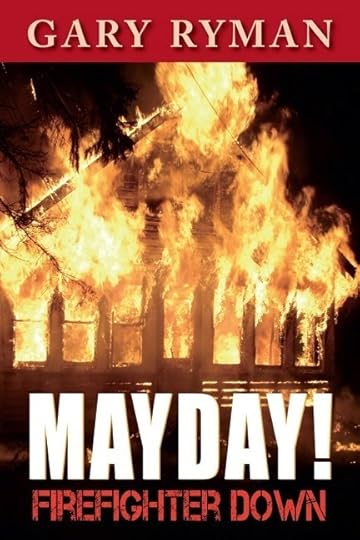
More announcements in the upcoming months, but....here is the first shot of the cover of my new book the novel Mayday! Firefighter Down tentatively scheduled for release by October of this year. The publisher is thrilled and excited with the work they did on the cover, and I agree with them. Can't wait to hold the first copy in my hands.

May 10, 2014
Great New 5 Star Review for "Fire Men."
"Strike the box" is a term from the not too-distant past, used when fire fighters arrived at the scene of a reported car fire only to discover that it's a house that' on fire, and a full "box assignment" of three engines and a ladder truck is needed. Well, not only did Mr. Ryman strike the box of my expectations when I began reading "Fire Men," he went right to the second, third and fourth alarms.
Mr. Ryman begins his series of tales by putting the reader into a comfortable bed, only to jar them awake with a blaring alarm, getting them hurriedly attired in turn-out gear, and inside a house that's on fire--only to amp it up when a backdraft threatens his life and that of an already horribly-burned colleague. And I was right there alongside him, not only because of his powerful narrative voice but also because I've been there--as a fire fighter during the 1970s I was caught in a backdraft almost identical to the one Mr. Ryman describes, and I can say with a certain degree of authority that Ryman ain't lyin' about what it was like for him inside that inferno.
"Fire Men" has a tactile feel to it. As I read the various tales he tells I could smell the smoke, feel the leather helmet on my head, could hear the shrill screams of the mechanical 'Federal Q' sirens and the stutters of the air horns. I also felt the fire's heat along with the fear. Mr. Ryman begins with a literal bang and then falls into a series of random stories - and that was what he should've done, because it evokes what being a fire fighter is all about . . . of boredom one moment, empathy for the dead in the next, followed by sheer terror when all around it seems that everything is coming down upon your head.
"Fire Men - Stories from Three Generations of a Fire Fighting Family" is a well-crafted book that kept me turning the pages all the way until I reached its very satisfying ending. Buy it, read it and above all, hang-on as you ride the roller-coaster ride that "Fire Men" is."
Mr. Ryman begins his series of tales by putting the reader into a comfortable bed, only to jar them awake with a blaring alarm, getting them hurriedly attired in turn-out gear, and inside a house that's on fire--only to amp it up when a backdraft threatens his life and that of an already horribly-burned colleague. And I was right there alongside him, not only because of his powerful narrative voice but also because I've been there--as a fire fighter during the 1970s I was caught in a backdraft almost identical to the one Mr. Ryman describes, and I can say with a certain degree of authority that Ryman ain't lyin' about what it was like for him inside that inferno.
"Fire Men" has a tactile feel to it. As I read the various tales he tells I could smell the smoke, feel the leather helmet on my head, could hear the shrill screams of the mechanical 'Federal Q' sirens and the stutters of the air horns. I also felt the fire's heat along with the fear. Mr. Ryman begins with a literal bang and then falls into a series of random stories - and that was what he should've done, because it evokes what being a fire fighter is all about . . . of boredom one moment, empathy for the dead in the next, followed by sheer terror when all around it seems that everything is coming down upon your head.
"Fire Men - Stories from Three Generations of a Fire Fighting Family" is a well-crafted book that kept me turning the pages all the way until I reached its very satisfying ending. Buy it, read it and above all, hang-on as you ride the roller-coaster ride that "Fire Men" is."
May 2, 2014
Exciting Announcement
I've signed a contract for the next book, a novel, currently titled Mayday! Firefighter Down to be published this fall (hopefully) by Hellgate Press
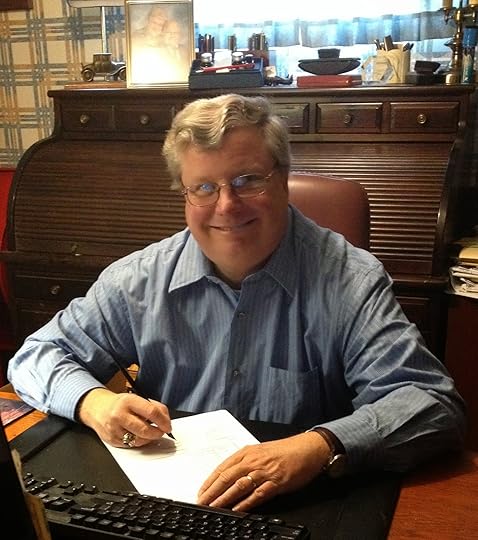
This new novel will be the first of what is planned as a series of three.
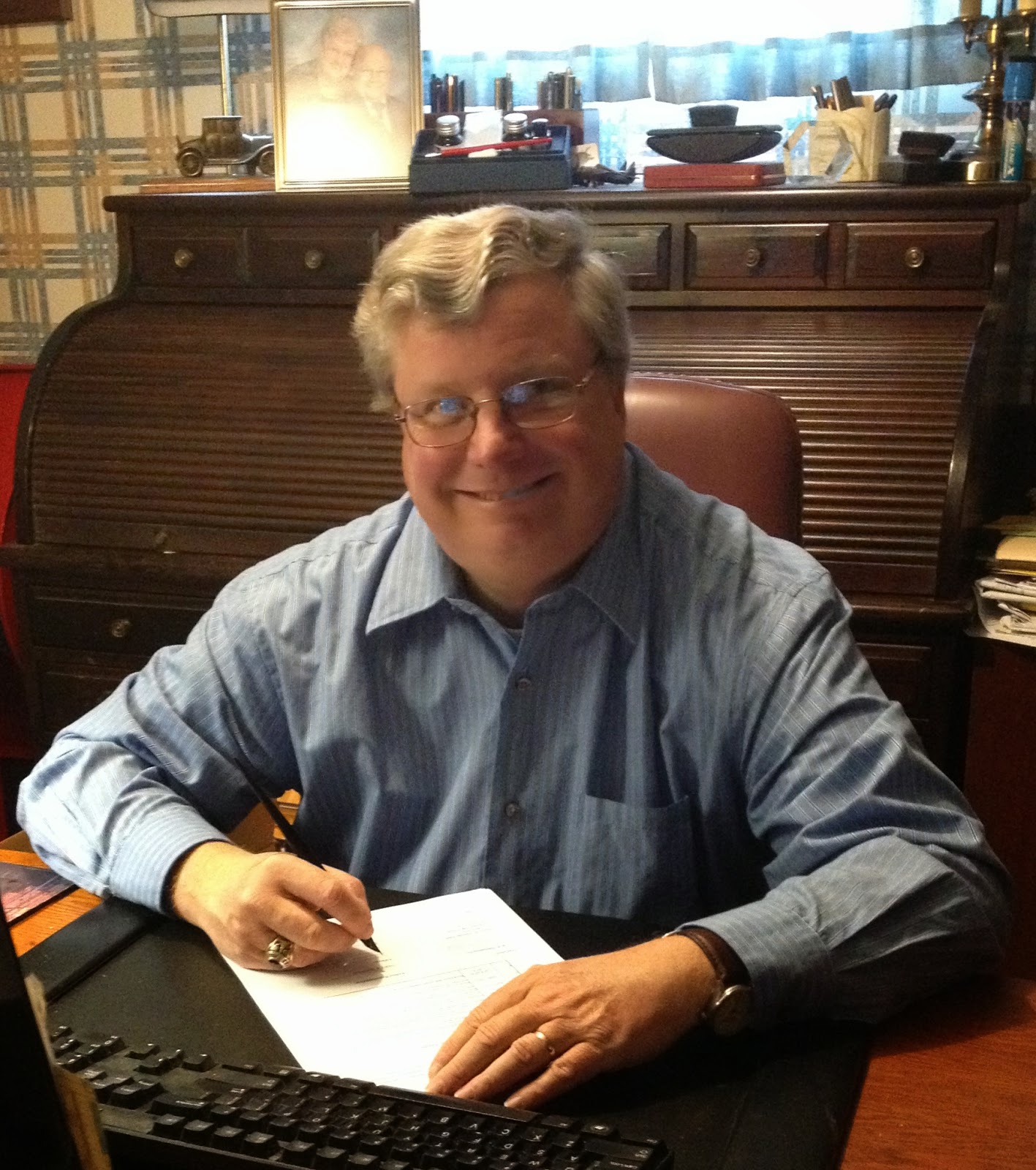
This new novel will be the first of what is planned as a series of three.
April 6, 2014
The Maltese Cross
Although many fire department tools and symbols still in use have historical origins, the Maltese Cross goes back a bit further than most. Around 1113 AD, a Benedictine Monk founded the Order of Knights Hospitaller, subsequently known as the Knights of St. John.
Originally a charitable organization, the Knights were drawn into battle to defend their city against attacking Saracens. The Saracens hurled containers filled with flammable liquids onto the defenders, followed by flaming torches. The Knights were flamboyant in dress, wearing crimson capes over their armor. The knights rode among their burning brethren, using their capes to extinguish the fires, demonstrating courage and gallantry.
As a reward, the Knights were given the Island of Malta and the eight pointed symbol became known as the Maltese Cross, one of valor and protection. Regularly used on badges, patches, and apparatus, the nearly thousand year old emblem has a lineage of honor.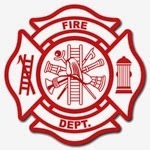

Originally a charitable organization, the Knights were drawn into battle to defend their city against attacking Saracens. The Saracens hurled containers filled with flammable liquids onto the defenders, followed by flaming torches. The Knights were flamboyant in dress, wearing crimson capes over their armor. The knights rode among their burning brethren, using their capes to extinguish the fires, demonstrating courage and gallantry.
As a reward, the Knights were given the Island of Malta and the eight pointed symbol became known as the Maltese Cross, one of valor and protection. Regularly used on badges, patches, and apparatus, the nearly thousand year old emblem has a lineage of honor.

March 14, 2014
The most important six inches on the fire ground
General James Mattis, USMC (Ret.) would have made one hell of a fire chief if he had so chosen. Revered by fighters from private to four stars and probably disliked as much by those less aggressive, the forty-one year veteran was a lead from the front commander who went out with patrols and got blood on his boots as a General. His radio sign—“Chaos.” His command philosophies included sincere concern for those he was tasked to protect and liberate and a consummate scorn for our countries enemies.
Highly quotable, many of his pronouncements in the area of leadership and others are applicable to the fire service. With just a few paraphrasing liberties, here are some of my favorites. “I don’t lose any sleep at night over the potential for failure. I cannot even spell the word.” “Fight with a happy heart and a strong spirit.”“You cannot allow any of your people to avoid the brutal facts. If they start living in a dream world, it’s going to be bad.” “Powerpoint makes us stupid.” And if you remember none of the others, keep in mind the most valuable one.“The most important six inches on the [fire ground] is between…your ears.”

Highly quotable, many of his pronouncements in the area of leadership and others are applicable to the fire service. With just a few paraphrasing liberties, here are some of my favorites. “I don’t lose any sleep at night over the potential for failure. I cannot even spell the word.” “Fight with a happy heart and a strong spirit.”“You cannot allow any of your people to avoid the brutal facts. If they start living in a dream world, it’s going to be bad.” “Powerpoint makes us stupid.” And if you remember none of the others, keep in mind the most valuable one.“The most important six inches on the [fire ground] is between…your ears.”

March 9, 2014
From the Hayloft to the Horses: The Birth of the Fire Pole
Getting out of the station fast and first isn’t a new or even recent interest for firefighters. It’s something the brethren have worked on for over a century. In the 1800s, multi-floor stations were the rule rather than the exception; a necessary configuration in the days of the horses. Fast and effective methods for harnessing the teams, almost as quick as firing a diesel engine, had been developed.
A hitch in the process of getting out the door as fast as possible remained, some thought. Getting from the bunkroom on an upper floor to the apparatus was slowed by the common use of circular stairs which were in place to keep the horses from trying to leave the first floor.
At Engine 21 in Chicago, Captain David Kenyon saw one of his firefighters slide a wooden binding pole, typically used on a hay wagon during transport, which had been temporarily stored vertically in the loading area of the hayloft, when a call was received while he was working in the third floor loft. Recognizing a great idea when he saw it, Captain Kenyon arranged for a hole from the second floor bunk room to the apparatus floor, and the crew took a Georgia pine beam and rounded and sanded it to 3 inch diameter. Varnished and coated with paraffin wax, it was ready for service.
Firefighters at the other stations laughed until they saw Engine 21beating them to fires, and eventually the Chief decided to have poles installed in all Chicago stations. In 1880, the Boston Fire Department installed the first brass pole, which became the standard going forward.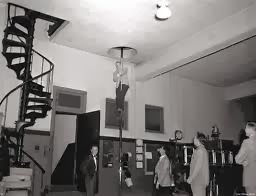
The poles became part of fire department heritage, memorialized on television and in movies—think Batman and Ghostbusters. Now gone from most stations, another of the classic era trappings fading from use, the pole remains a memory of an important period which will hopefully not be forgotten.
A hitch in the process of getting out the door as fast as possible remained, some thought. Getting from the bunkroom on an upper floor to the apparatus was slowed by the common use of circular stairs which were in place to keep the horses from trying to leave the first floor.
At Engine 21 in Chicago, Captain David Kenyon saw one of his firefighters slide a wooden binding pole, typically used on a hay wagon during transport, which had been temporarily stored vertically in the loading area of the hayloft, when a call was received while he was working in the third floor loft. Recognizing a great idea when he saw it, Captain Kenyon arranged for a hole from the second floor bunk room to the apparatus floor, and the crew took a Georgia pine beam and rounded and sanded it to 3 inch diameter. Varnished and coated with paraffin wax, it was ready for service.
Firefighters at the other stations laughed until they saw Engine 21beating them to fires, and eventually the Chief decided to have poles installed in all Chicago stations. In 1880, the Boston Fire Department installed the first brass pole, which became the standard going forward.
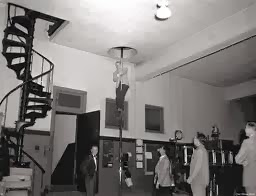
The poles became part of fire department heritage, memorialized on television and in movies—think Batman and Ghostbusters. Now gone from most stations, another of the classic era trappings fading from use, the pole remains a memory of an important period which will hopefully not be forgotten.
February 21, 2014
From 10-Codes to Texting...
A few years from now, our text messaging generation will have taken over the fire departments across the land. They can talk faster with their thumbs than I can verbally. My prediction is that with blurring speed, thumbs will become the primary communications mechanism and the use of mobile radios to communicate with dispatchers and other units will dwindle. Tablets mounted in the apparatus cab will have taken over. I can see what this looks like now…..
Both routine transmissions and size-up will be different. E41 AFK 4 fuel BRB.
T25 OTS 2 sto sfd OMG! WRKR!
Planning lunch could be interestingT51 2 E51 WRUD 4 Lunch?
E51 2 T51 711 Subs
T51 2 E 51 Yuck
E51 2 T 51 YMMV
The fire ground will “sound” different as well. Batt 4 2 Cnty. HV 2nd Alm stge out.
E51 RU in Staging?
E51 Affirm ZZZZ
And the occasional confusion or differences over water supply assignments….E15 2 E12 PU My line @ 3265 NY Ave
E12 2 E15 Hv my own hydt, BLNT!
E15 2 E12 WTFMakes one fondly recall the days of the 10 codes……..

Both routine transmissions and size-up will be different. E41 AFK 4 fuel BRB.
T25 OTS 2 sto sfd OMG! WRKR!
Planning lunch could be interestingT51 2 E51 WRUD 4 Lunch?
E51 2 T51 711 Subs
T51 2 E 51 Yuck
E51 2 T 51 YMMV
The fire ground will “sound” different as well. Batt 4 2 Cnty. HV 2nd Alm stge out.
E51 RU in Staging?
E51 Affirm ZZZZ
And the occasional confusion or differences over water supply assignments….E15 2 E12 PU My line @ 3265 NY Ave
E12 2 E15 Hv my own hydt, BLNT!
E15 2 E12 WTFMakes one fondly recall the days of the 10 codes……..

Gary R. Ryman's Blog

- Gary R. Ryman's profile
- 3 followers
Gary R. Ryman isn't a Goodreads Author
(yet),
but they
do have a blog,
so here are some recent posts imported from
their feed.

