Mark Boss's Blog, page 10
February 19, 2012
Tiny Chameleons Discovered in Madagascar
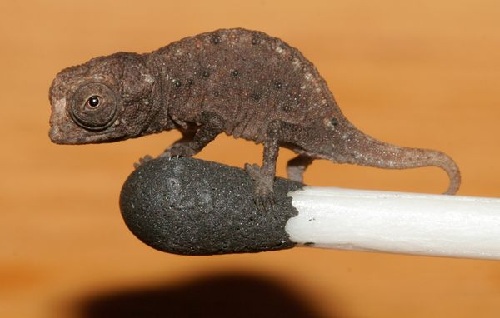
Creepingby flashlight through the forest of Madagascar at night, scientists foundchameleons so tiny they can sit on a match head.
Theteam of scientists, including three from Germany and one from the UnitedStates, discovered the creatures sleeping in plants just inches above theforest floor. For vertebrates (animalswith a spine like mammals, fish, birds, reptiles and amphibians), there areprobably limits to how small they can be and still have parts like complex eyesand organs. However, it seems that everyfew years scientists find a new fish or frog or chameleon that is smaller thanthey thought possible.
Thefour new species of chameleons are from northern Madagascar, and includeBrookesia confidens, Brookesia desperata, Brookesia micra, and Brookesiatristis. While all of them appearsimiliar, they are so small it's hard to see their differences with the nakedeye. Testing revealed that the four havesignificant genetic differences.
Foundon an small island, the B. micra only reaches a total length of 1 and 3/16th ofan inch or 30mm and makes an argument for the theory of island dwarfism--someanimals may adapt to the confines of island life by being little and using lessresources.
Loggingin Madagascar reduces the available habitat for these creatures, and they aretoo small and slow to escape chain saws and falling trees. However, now that we are aware of thesechameleons, it's possible steps may be taken to save them. I noted on the National Geographic site thatcomments were made on how cute the chameleons are. While it's unfair to judge a creature (or aperson) by their looks, it might motivate people to help.
(Here is the scientificpaper on Plos One, an article in the Christian Science Monitor, and NationalGeographic. The photograph is by FrankGlaw, a scientist from Munchen, Germany who helped discover the chameleons.)


February 14, 2012
Our Fascination with Secret Codes

Lastweek a helpful reader sent me a link to a website about secret codes. The site, run by Elonka Dunin, hasinteresting stories about codes and ciphers, both the solved and the unsolved.
Fora novel writer, the concept of a code is difficult to understand. We write stories, and then try to share themwith readers. Most novelists strive forclarity--we want the reader to understand the story so we work hard to make itclear. And the more people that read it,the better.
Acode is something very different. Whether it's a secret message between lovers or governments or criminalconspiracies, there is a deliberate effort to make sure others don't readit. Should the message fall into thewrong hands, the coders hope their methods are strong enough to resist beingcracked.
It'sa very odd mindset, and yet secret codes stir our imagination. And people have been using codes for a verylong time. In some cases what we label acode may simply be an ancient language system we haven't figured out. For example, the Phaistos Disc or Linear A,both discovered on clay tablets on the island of Crete from about 1800 BC. Or the Indus Script, which contains 400 signsfrom the Indus Valley civilization of 2600 to 1800 BC. These may be ancient languages rather thanpurpose-built secret codes.
Butmost codes are designed to hide information. The famous Voynich Manuscript is a good example of a code we've yet tosolve. The manuscript is named after abook dealer named Wilfrid Voynich, who discovered it in a collection of ancientmanuscripts in Italy in 1912.
TheVoynich Manuscript not only has pages of text in a language no one has everseen, it also has strange drawings of plants, astronomy, and people. One drawing looks like seven naked women in alarge hot tub, which may mean this is the oldest known example of an eighthgrade boy's spiral notebook.
However,the Voynich Manuscript also contains an interesting spiral drawing that isclose to a mirror image of our galaxy, the Milky Way. Even the history of the manuscript isodd. A mysterious stranger arrived atthe court of King Rudolph II of Bohemia in 1586 with an old, indecipherablemanuscript. Now Rudolph was fond ofastrology and other forms of weirdness, so he paid the stranger 300 gold piecesfor the book. A note with the manuscriptstated that Roger Bacon, the English astronomer of the 13th century, hadwritten the coded work.
Fourhundred years later, and we still don't know who wrote it or what it says. But some codes have been solved.
EdgarAllan Poe was fascinated with codes, and issued challenges in magazines toother amateur cryptographers in the late 1830s. Poe eventually released two ciphers in a magazine, claiming they'd beensent in by a reader, but he may have designed them himself. These two codes remained unbroken until 1992,when the first was solved, and 2000 for the second code.
Ithink this is part of the lure of codes--that clever amateurs can design theirown and crack those of others. It's nota realm completely restricted to governments and their vast resources. Anyone who has an interest can learn about codesand try to make their own.
Orattempt to solve a historical code that has confounded others for hundreds ofyears. Maybe you'll solve one.
(By the way, there are no hiddencodes in this blog post. Sorry. However, you can find Elonka's interestingsite here, plus an article on the Voynich Manuscript, and one on Poe'schallenge and how it was solved. The pictureis from Bokler and shows E. A. Poe's second code.)

February 10, 2012
Liars and Outliers: Thoughts on Societal Trust in Bruce Schneier's New Book

Thesub title of Liars and Outliers is "Enabling the Trust that Society Needsto Thrive," and it's a good explanation of the author's direction. He looks at how trust mechanisms work,whether you're ordering products online from people you've never met, or you'repaying a neighborhood kid to mow your lawn. In order for commerce to function, there must be a certain level oftrust.
Buthow do we build these trust models? And what do we do when someone cheats us? Schneierlabels those who don't cooperate in society as 'defectors' because they goagainst the rules. Normally we might associatetheir behavior with lying, cheating, and stealing, but in Schneier's model,defectors can play a role in changing societies that are unjust, such as withslavery or apartheid. I think thisapproach may confuse the issue somewhat, since the main point of the book istrust in a commercial sense--can you safely do business with this person orcompany?
Thefour sections of the book take us from early human culture in Part 1: The Science of Trust, to societal pressuresin Part 2: A Model of Trust. He goes on to Part 3: The Real World and Part 4: Conclusions. I think readers may find Part 2 particularly interesting because itdeals with the variety of pressures in society to conform to acceptablebehavior.
Pressureexists in several forms, including: Societal Pressure, Moral Pressure, Reputational Pressure, and InstitutionalPressure. And with humans being the waythey are, we tend to combine all these factors in a given situation,calculating risk versus reward, and considering what may happen if we 'defect'in both the short term and the long term consequences.
Gametheory comes into play here. Forinstance, there's the Prisoner's Dilemma. Two burglars are caught and the police put them in separateinterrogation rooms. They are each givena set of options:
1. testify against your partner and he'll do 10years in prison and you'll go free
2. if you both talk, we don't need yourtestimonies and you both get 6 years in prison
3. if neither burglar talks, they both go tojail for 1 year on a lesser charge.
Thesmart thing for each to do is not talk, and trust their partner to do thesame. One year in jail is far betterthan 6 or 10 years. But the chance at nojail time means each burglar will feel compelled to act in their owninterest--which means both will talk and both will do 6 years.
Thesekind of mental games can make your head hurt, and they aren't perfect models,but they do give us some starting points. And that's the strength of this book--it makes you think.
AndSchneier, like many a college professor, is given to colorful examples that mayseem like tangents but actually illustrate his points. Everything from the brain's use of oxygen andblood, to vampire bats, and Brazilian leafcutter ants show up in weird butuseful ways.
Thereare all sorts of fascinating nuggets. Like after the 2011 earthquake and tsunami in Japan, people turned inlost wallets, safes, and cash worth $78 million USD. Or the fact that only 10% of the cells in thehuman body are really us, the other 90% are various symbionts that may benefitor harm us.
Ina followup post, we'll look at Parts 3 and 4 of Liars and Outliers, and examineSchneier's conclusions.
(Thanks to Lori at theThePRFreelancer.com for the advance copy of this book.)

February 6, 2012
Facebook Stock Offering

Facebookhas filed the paperwork to go public and will begin an initial sale of stocksthis spring, perhaps as early as May. This is an interesting intersection of business and social networking,and the sheer numbers involved in terms of both people and money has caught theattention of the media.
Iam not an expert on stocks, but as a casual Facebook user I am curious aboutthe whole thing and asked my pals about it. We came up with a few questions that I think are worth addressing forboth potential investors and Facebook users.
Howwill this affect my use of Facebook? How will Facebook make money? Can I get inon the stock sale? Did Facebook wait too long?
Thefirst two questions are linked. Becauseone of the key ways Facebook makes money is through advertising, andadvertising may affect the way you see and use Facebook. An article in the Huffington Post has aninformative breakdown of how some Internet-dependent companies make moneythrough advertising, based on how much money they generate per user.
Yahoomakes $7 per user, AOL makes $10, Google makes $30 to $35, and Facebook (FB)makes $4.39. Now the data may be skewedby the fact that FB has 845 million users, but even so, it would seem they'dneed to raise that 'per user' number. And since most (about 85%) of their money is made from advertising, I suspectFB users are going to see more ads, and better-targeted ads.
Beforewe freak out too much, consider Google and their services. Google does a lot of advertising, and theiralgorithms are pretty good at targeting the ads. So it's possible FB's new ads won't be tooobtrusive, or will at least be useful.
Remember,we've all been using this service for free since 2004, and that's 8 years ofdata collection. It's possible this datamay be manipulated in ways users are not happy with. After all, businesses are in the business ofmaking money, and investors expect dividends.
CanI get in on the stock sale? I have no idea. Perhaps FB will find a way to get users involved by offering us a chanceto buy shares. The Internet is busy withrumors and advice on this, but I don't think anyone outside of FB knows forsure.
DidFacebook wait too long? Remember MySpace? Know anyone who still uses it? Itseems like everyone moved to FB. Now itfeels like everyone is over on Twitter. Twitterisn't the same as FB, but FB has a more similar competitor in Google's newsocial network Google+. Twitter has 383million users and is growing fast, especially in countries like Brazil andIndonesia. However, FB is growing fastin India, which is a huge market.
SoI don't know if FB waited too long, but it certainly gave its competition likeTwitter and Google+ time to grab large shares of the market. However, it's useful to remember that thegroups may overlap since a user might be active on both Twitter and FB orGoogle+.
Atthis point, the Earth has about 7 billion people and some 2 billion Internetusers. So there is plenty of room forgrowth for all the social networks. Facebookusers can probably expect to see a lot more advertising, but maybe they won'tmind if FB lets them in on the stock purchase.
(Huff Post article byMichael Liedtke titled "Facebook S-1 Filing Raises Question Of HowFacebook Will Increase Profits Without Losing Users." And an Economic Times article about FB growthin India. Another Huff Post article,"FB: Facebook S-1 Filing: Everything You Need To Know About The SocialNetwork's Proposed IPO." And a PCMagazine article by Leslie Horn titled, "Brazil Passes Japan as Number TwoCountry on Twitter." The pic isfrom: mini-bricks.com)

February 2, 2012
Save Your Brains!
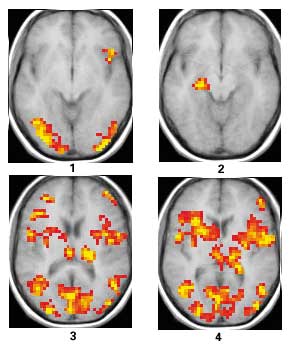
No,a zombie apocalypse has not begun, thank God. For now, your brain will remain safely inside your skull. But what condition will your brain be in?
Thisweek at the public library, I found a book titled, THE PLAYFUL BRAIN by RichardRestak, with puzzles by Scott Kim. Thesubtitle of the book is, "The Surprising Science of How Puzzles ImproveYour Mind."
I'mnot very good at crossword puzzles or sudoku, but I love mazes--the kind yousolve with a pencil, not the kind where you wander until your run out of water anda minotaur eats your face. While theinitial idea of exercising my brain with puzzles didn't appeal to me, thescience behind it did.
Inthe book's introduction Dr. Restak writes, "Gradually I became convincedthat puzzles can help enhance specific brain functions and, as studies suggest,actually help ward off mental deterioration." In the past, doctors and scientists couldreally only learn what parts of the brain did what by looking at injuredpeople. If some poor guy had a railroadspike through his head, what parts of his vision or memory or math skills didit affect?
However,the use of PET (Positron Emission Tomography) and fMRI (functional MagneticResonance Imaging) has changed brain studies. Now we can see which parts of the brain 'light up' when they're workingon a certain task.
Restakwrites about a fascinating study of London cabdrivers which revealed thatlearning the complex grid of streets actually enlarged part of their brains,and that portion continued to grow based on the number of years a cabbie drovethe city. So the brains of adults areflexible enough to grow in response to the tasks they're given. Which makes solving puzzles, or most anyunfamiliar task, an opportunity to keep your brain tuned up and even improveit.
Ihaven't finished THE PLAYFUL BRAIN yet (the puzzles slow me down), but readingit triggered some thoughts on brain health you may consider.
1. Brain deterioration, often in the form ofAlzheimer's or dementia, is very scary, and it's a good idea to sit down withyour older relatives and learn about your family history. If these conditions are common in your familytree, it's important to know so you can be prepared to deal with them.
2. Alcohol and drugs damage your brain.
3. Keep track of your concussions. If you play (or played) contact sports andsuffered concussions, keep track of them and talk to a doctor if you havelingering symptoms. For students ofmartial arts or those in combat sports, if you take a hard shot to the head insparring and go home with a severe headache, you may have done some damage. Also, learn to tap out. Chokes work by cutting either the blood flowor oxygen flow to the brain. Gettingchoked out in practice is probably bad for your brain.
4. If your daily work is repetitive, think aboutways to exercise your brain. Take adifferent route to work. Try learning amusical instrument. Make your peanutbutter and jelly sandwich with your opposite hand. Whatever. Just keep learning.
5. Read those long, dull printouts of theprescription medications you take. Andkeep a close eye on your elderly relatives' prescriptions. Drug interactions can leave people confusedand 'out of it,' which can seem a lot like Alzheimer's but isn't.
6. Exercise. Eat as best you can. Stayhydrated. Get as much sleep as youcan. These are good rules for generalhealth, but they can also help your brain. If you're sleepy, dehydrated and you haven't eaten, I guarantee yourbrain won't work well.
Inlife, we're all fighting our genetics, injuries, bad habits and the lure of thecouch and television. Take care of yourbrain and keep exercising it, so you can take care of yourself and the peoplearound you.
(The pic is from a UCBerkeley page and shows how the brain lights up when they asked the patient toremember a face, think about the face, and compare it to another face. I think it looks like a rabbit. On fire.)

January 29, 2012
Up Tweets, Widget Creep, and You

Fromtime to time, we here at Chimp add new features to the blog. On the top of the column to your right, youcan see a new button for 'Up Tweeting.'
Ifyou:
A. Use Twitter.
and
2. Enjoy one of the posts you read here atChimpwithpencil
then
c. Pleasehit the Up Tweet button and share it with your friends on Twitter.
Thiswill help spread the post and soon everyone will be talking about Miller'sGrizzled Langur. Or ElectronicPrivacy. Or Neutrinos.
Whenthe demands made on an army during a war keep expanding, they call it 'missioncreep.' And when management keeps addingfeatures to a piece of software, the programmers call it 'feature creep.'
Atthe risk of widget creep, I added this button because I think people like toshare stuff that interests them with their friends. So why not make it easy to do that?
Stunyour friends with your new knowledge and help a brother out with an UpTweet.
Thank you.

January 26, 2012
Search Engine Privacy
Googleemailed me today about their new privacy policy. I clicked on the links and did somereading. On the one hand, I'm happy thatinstead of having a separate privacy policy for each of their differentproducts, they've written one policy to cover them all. On the other hand, reading the list of datathey collect when you use their products is scary.
Iuse Google's Gmail for email, Blogger for this blog, and YouTube. Plus I just started using their AdWordsproduct to advertise my novels. I alsouse their search engine, but I don't use it exclusively. It's particularly helpful for finding theimages I use on Chimpwithpencil.
ButI also believe in each individual's right to privacy, whether it concerns theirtreatment from corporations, governments or other people.
Thisis a very broad issue and there are entire books about Internet privacy, so asan experiment I narrowed it down to search engines and privacy. But this is also a big topic, and one I donot have a full understanding of. So Inarrowed it down to one question: Doesthe search engine you use collect your IP address?
Whyis this important? Every device that connects to the Internet has a uniquenumber to identify it. So whether yourconnection is through a router or direct from your computer, that device has anIP address. A static IP is one that doesn'tchange. Some Internet service providersassign dynamic IP addresses that change each time you use the Internet.
Asearch engine company collects information about you when you use theirservice. And one of the useful pieces ofdata is your IP address. If it's static,their work is easy. If it's dynamic,they can still combine the IP with user ID cookies to track your behavior. Most of the time, this information will beused to market products to you.
However,for privacy advocates, the realization that companies are building a profile ofyour interests, buying habits, medical issues, political and religious beliefs,and more is very disturbing. Thisinformation can be sold to other companies, and governments can force searchengines companies to reveal your search history.
Solet's get back to our question: Does thesearch engine you use collect your IP address?
Ivisited several search engines and read their privacy policies, which arealternately dull then frightening. Google collects your IP. Bingdoes too, but they get rid of the IPs after 6 months, and delete the cookiesafter 18 months. Bing provides thesearch results for Yahoo, but states they do "full deletion of the IPAddress from most log files" in 3 months.
Gigablastdoesn't list a privacy policy, just a 'coming soon' page. Lycos and Ask record your IP. As an example, here's what Ask gathers:
** *Informationwe collect about your computer or mobile device when you use the Ask service
•IPaddress of computer
•Browsertype (Internet Explorer 8, etc.)
•Browserlanguage setting
•Otherbrowser information (e.g. size, connection speed)
•Operatingsystem or platform (Mac, Windows XP, etc.)
•IDnumber of mobile device
Informationwe collect about your use of the Ask service
•TheURL of the last webpage you visited before visiting Ask.com
•Allof your activity on the Ask.com website and Ask mobile applications (yourqueries, questions, answers, comments, search results selected, clicks, pagesviewed, etc.)
Weuse cookies, pixel tags and mobile device IDs to collect and store thisinformation.** *
Thisis just for random people who open a search page to look for stuff. If you're a registered user, they collecteven more. Reading the long list abovemay alarm you, but it's fairly typical of what the search engine providerscollect.
Thereare other search engines out there. Iuse Duckduckgo and recently found Startpage. Both these sites take privacy seriously. With Duckduckgo I don't always get the search results I'd hoped for, though. I haven't used Startpage enough yet to havean opinion on its results. You mightalso consider Ixquick and Scroogle.
Iam not trying to bash Google or Bing or any other service. These are businesses and they are in businessto make money. So profiling people tobetter target them for advertisements makes sense. But I do worry about the amount of data theycontrol, and if this data might be shared with governments or othercorporations.
Sowhile I continue to use Google products as well as services and software fromother companies, I urge Internet users to be aware of how data is collectedabout them. Read some of the privacypolicies and use caution. Big Brother ismost definitely watching.
(The links above shouldtake you to the privacy policies for the individual search engines, or to their start pages.)
Iuse Google's Gmail for email, Blogger for this blog, and YouTube. Plus I just started using their AdWordsproduct to advertise my novels. I alsouse their search engine, but I don't use it exclusively. It's particularly helpful for finding theimages I use on Chimpwithpencil.
ButI also believe in each individual's right to privacy, whether it concerns theirtreatment from corporations, governments or other people.
Thisis a very broad issue and there are entire books about Internet privacy, so asan experiment I narrowed it down to search engines and privacy. But this is also a big topic, and one I donot have a full understanding of. So Inarrowed it down to one question: Doesthe search engine you use collect your IP address?
Whyis this important? Every device that connects to the Internet has a uniquenumber to identify it. So whether yourconnection is through a router or direct from your computer, that device has anIP address. A static IP is one that doesn'tchange. Some Internet service providersassign dynamic IP addresses that change each time you use the Internet.
Asearch engine company collects information about you when you use theirservice. And one of the useful pieces ofdata is your IP address. If it's static,their work is easy. If it's dynamic,they can still combine the IP with user ID cookies to track your behavior. Most of the time, this information will beused to market products to you.
However,for privacy advocates, the realization that companies are building a profile ofyour interests, buying habits, medical issues, political and religious beliefs,and more is very disturbing. Thisinformation can be sold to other companies, and governments can force searchengines companies to reveal your search history.
Solet's get back to our question: Does thesearch engine you use collect your IP address?
Ivisited several search engines and read their privacy policies, which arealternately dull then frightening. Google collects your IP. Bingdoes too, but they get rid of the IPs after 6 months, and delete the cookiesafter 18 months. Bing provides thesearch results for Yahoo, but states they do "full deletion of the IPAddress from most log files" in 3 months.
Gigablastdoesn't list a privacy policy, just a 'coming soon' page. Lycos and Ask record your IP. As an example, here's what Ask gathers:
** *Informationwe collect about your computer or mobile device when you use the Ask service
•IPaddress of computer
•Browsertype (Internet Explorer 8, etc.)
•Browserlanguage setting
•Otherbrowser information (e.g. size, connection speed)
•Operatingsystem or platform (Mac, Windows XP, etc.)
•IDnumber of mobile device
Informationwe collect about your use of the Ask service
•TheURL of the last webpage you visited before visiting Ask.com
•Allof your activity on the Ask.com website and Ask mobile applications (yourqueries, questions, answers, comments, search results selected, clicks, pagesviewed, etc.)
Weuse cookies, pixel tags and mobile device IDs to collect and store thisinformation.** *
Thisis just for random people who open a search page to look for stuff. If you're a registered user, they collecteven more. Reading the long list abovemay alarm you, but it's fairly typical of what the search engine providerscollect.
Thereare other search engines out there. Iuse Duckduckgo and recently found Startpage. Both these sites take privacy seriously. With Duckduckgo I don't always get the search results I'd hoped for, though. I haven't used Startpage enough yet to havean opinion on its results. You mightalso consider Ixquick and Scroogle.
Iam not trying to bash Google or Bing or any other service. These are businesses and they are in businessto make money. So profiling people tobetter target them for advertisements makes sense. But I do worry about the amount of data theycontrol, and if this data might be shared with governments or othercorporations.
Sowhile I continue to use Google products as well as services and software fromother companies, I urge Internet users to be aware of how data is collectedabout them. Read some of the privacypolicies and use caution. Big Brother ismost definitely watching.
(The links above shouldtake you to the privacy policies for the individual search engines, or to their start pages.)
January 23, 2012
Rare Monkeys Found in Borneo!
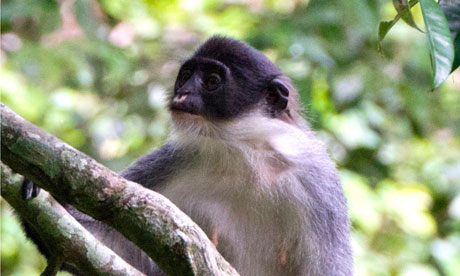
Here at Chimpwithpencil, we like monkeys. So imagine how excited I was when an alert reader sent a link about how scientists found a monkey thought to be extinct. (Thanks, Olaf!)
Scientists, working in Indonesia in the forests of eastern Borneo, planted motion-sensor triggered cameras at salt licks where animals gather. They hoped to get pictures of big cats like leopards and large primates such as orangutans, but instead caught pictures of Miller's grizzled langur (Presbytis hosei canicrus), a type of monkey thought to be extinct. (In general, langurs are lanky-shaped monkeys with long tails.)
Initially, the scientists weren't sure they could positively identify the monkeys because there are few photographs available, so they resorted to descriptions of museum specimens.
As mining and agriculture have expanded in Indonesia, there is less forest to support langurs and other creatures. While rare today, these monkeys were once found throughout Indonesia and up into the Malaysian peninsula.
Beyond loss of habitat, humans pose another type of danger to these monkeys. People once hunted the grizzled langur because of the bezoar stones in their stomachs or intestines. These bezoar stones were mistakenly thought to cure poison. This is similar to the case of rhino horns or tiger organs, whose use in traditional Asian medicine threatens these animals' existence.
By working together, scientists and students from Canada, Indonesia and the United States have re-discovered a creature thought to be dead. This opens up the real possibility of saving Miller's grizzled langur.
(Here are articles from The Guardian and Science Daily. The pic is from Eric Fell/AP.)

January 19, 2012
The Business of Electronic Spam

Last September, I wrote a post titled "Referrer Spam." It was in response to a flood of spam this blog received, and an explanation of what referrer spam is.
If you haven't encountered it before, referrer spam works like this:
A spammer in Country X controls a computer in Country Y. The computer in Country Y runs a program that automatically visits sites around the Internet, like your business website (or this blog). Google Statistics notes the pageview from Country Y and the URL address is listed as a referring URL. When you read the statistics for your blog, you notice the odd traffic, click on one of the mysterious referring URLs, and find a site full of Cyrillic letters and pornography. And maybe your computer picks up a new virus.
Essentially, spammers have tricked you into visiting their site. But it only works if you click on that referring URL and go to that site. Eventually, Google (or whoever your service provider is) will figure out what's going on and block these sites, forcing the spammers to try somewhere else.
On this site, the spamming went away for a while. But lately it's started up again, and chimpwithpencil has received hundreds of mysterious pageviews from the Ukraine. Due to Google's detailed tools, you can even see which blog post the spam bots are hitting.
Guess which post my new spam friends are reading?
Yup. "Referrer Spam." That single post has gotten over 100 hits in the last week. I admit these guys have a sense of humor. In fact, I hope that instead of using bots to visit my site, they'll come take a look themselves and actually read some of the posts. They may enjoy them.
However, setting this hacker humor aside, why does spamming persist?
An article by Gene Marks in Forbes back in October 2011 is titled "How Spam Was Solved." It points out that due to cooperation between companies, increased awareness among users, and better technology, email spam is much more likely to be blocked. Marks made the interesting point that a lot of spam is now caught at the server level before it ever reaches individual users.
Marks also wrote about the benefits of cloud-based, web browser email: "Google and Microsoft alone are hosting email services for millions of companies. Cloud based computing has centralized e-mail data onto the servers of companies who are well positioned to deal with spam. They have their own security built into these servers in the cloud, deleting and quarantining risky messages before they're even viewed by users."
Yet spam continues to evolve. In an articleabout the top five malware threats he predicts for 2012, Andrew Brandt wrote, "If the spam we've seen is any indication, malicious spam we receive in 2012 will come in every available delivery method — email, social networks, IM — and continue to take every conceivable form: shipping confirmations, missed deliveries, reversed credit warnings, utility bills, credit card statements, complaints about you to the Better Business Bureau (whether or not you operate a business), online order confirmations from small boutique etailers, bank statements, electronic funds transfer rejection notices, poorly-spelled 'friend notification' emails from a wide variety of social networking sites."
This sounds more like a fresh barrage than the feeble struggles of a defeated enterprise. Brandt also writes about the threat of zipped malware attached to messages, as well as links to hostile pages and driveby downloads.
While I think Marks is right that we've gotten much better in dealing with email-centered spam, the spammers have figured out other ways to reach us. Like referrer spam. And I think the increased use of cellular telephones to access online banking and shopping makes them the current big target for hackers.
If spam didn't work, why would hackers keep using it? I think the answer is that it must work well enough to encourage them to keep trying. Which means the constant struggle will continue.
In the meanwhile, my new Ukrainian guests can read this post and laugh. I just wish they'd quit spamming me.
(The pic is of a coastal town in the Ukraine that looks very nice. It's from hotstudy.com, which is hopefully about studying abroad and not something else.)

January 15, 2012
Rise of the Super Ants!
 (Regular ant on left. Super soldier ant on right.)
If you read comic books or watched the Captain America movie, you're familiar with the term 'super soldier.' A super soldier is designed to be stronger and faster than regular soldiers, and is usually brought about in fiction through some formula or scientific process.
But in the ant kingdom, ants have the potential to build super soldiers built right into their genetic structure.
There are 12,000 species of ants, and at least 1,000 of these have the DNA necessary to produce super soldiers, yet scientists have only found 8 species that actually do.
Rajee Rajakumar of Montreal's McGill University found a colony of ants on Long Island, New York, containing super soldiers. Normally, the supers are only found in northern Mexico and the neighboring American southwest. Naturally, this made Rajakumar wonder how the ants created super soldiers and why?
Further research revealed that many species of ants possess the potential for super soldiers, not just the few that actually produce them. This genetic code goes back to ants living 35 to 65 million years ago--ants that are the predecessors of modern ants.
Ming Huang of the University of Arizona believes environment plays a key role in whether an ant colony produces super soldiers. Ants that are able to sufficiently defend their colony wouldn't need supers, and some ants have learned to simply move their colony farther from rival ants and avoid warfare. But colonies that are hard pressed may still be able to call up that ancient genetic code for super soldiers.
In the lab, Rajakumar applied a specific hormone to ants still developing in their larvae stage. This hormone spurred a growth spurt in the ants that produced giant warriors with massive heads useful for plugging a tunnel entrance against attack by other ants or insects.
Of course you wouldn't want one of these super ants to sting you. In fact, the Schmidt Pain Scale of Insect Stings may need to be adjusted for these creatures. While the Bullet Ant currently occupies the top of the 0 to 4 scale with a rating of 4.0+ and a duration of 12 to 24 hours of pain, I wonder how a Super Bullet Ant bite would feel?
I also wonder, if ants have this potential locked in their genes, what might humans and other animals carry in their DNA?
(The main source was this article from Popular Mechanics. The Weird Animal Report taught me about the Schmidt index, along with the hilariousdescriptions found here. The pic is from Gizmodo.)