Mark Boss's Blog, page 5
October 24, 2012
Protecting Your Smartphone
We call them smartphones, but what you're really carrying around is a little computer that can also make telephone calls. You protect your desktop at work and your laptop at home from viruses and malware, but are you protecting your smartphone?
How is your smartphone vulnerable? When you download apps, receive text messages, use public Wi-Fi or a Bluetooth connection, your phone can be attacked.
You're probably familiar with viruses, worms, Trojan horse attacks and spyware because these are what attack your other computers. But with smartphones, these threats make up a small part of the problem. (According to security software maker Lookout, only about 5% of Droid phones are infected with something.)
For now at least, the threats on your smartphone deal with your privacy and your money. Applications you thought you downloaded for free (and skipped reading the User Agreement), may have hidden charges and bombard you with advertisements.
Have you ever left your keys or wallet somewhere? Now think about all the information in your smartphone. Not just your contacts list, but your banking info and online bill paying and so forth. If you lost the phone or it was stolen, a criminal could gather a lot of data on you.
That's where mobile security software comes in. These security apps not only perform anti-virus and anti-spyware duty, but some can scan apps for malware you may not realize sneaked in with them. If you've lost your phone, you can use its GPS to find its location, and even lock your phone in the meantime. If the worst happens and you can't retrieve your phone, most security software enables you to wipe the phone's memory.
So before you download that next app, or leave your phone in a restaurant, consider loading up some security software. You're not just protecting your smartphone, you're protecting yourself.
* * * (Here's an article by Sara Yin at PCMag that lists security software and some helpful utility programs. Also, this chart at Top Ten Reviews compares the most popular security suites, their features and prices.)

How is your smartphone vulnerable? When you download apps, receive text messages, use public Wi-Fi or a Bluetooth connection, your phone can be attacked.
You're probably familiar with viruses, worms, Trojan horse attacks and spyware because these are what attack your other computers. But with smartphones, these threats make up a small part of the problem. (According to security software maker Lookout, only about 5% of Droid phones are infected with something.)
For now at least, the threats on your smartphone deal with your privacy and your money. Applications you thought you downloaded for free (and skipped reading the User Agreement), may have hidden charges and bombard you with advertisements.
Have you ever left your keys or wallet somewhere? Now think about all the information in your smartphone. Not just your contacts list, but your banking info and online bill paying and so forth. If you lost the phone or it was stolen, a criminal could gather a lot of data on you.
That's where mobile security software comes in. These security apps not only perform anti-virus and anti-spyware duty, but some can scan apps for malware you may not realize sneaked in with them. If you've lost your phone, you can use its GPS to find its location, and even lock your phone in the meantime. If the worst happens and you can't retrieve your phone, most security software enables you to wipe the phone's memory.
So before you download that next app, or leave your phone in a restaurant, consider loading up some security software. You're not just protecting your smartphone, you're protecting yourself.
* * * (Here's an article by Sara Yin at PCMag that lists security software and some helpful utility programs. Also, this chart at Top Ten Reviews compares the most popular security suites, their features and prices.)


October 17, 2012
The Long Now Foundation

ConspiracyI first read mention of the Long Now Foundation in Wired magazine, and jotted the name in my notebook. Time passed and eventually I got around to visiting their website. The conspiracy theorist in me hoped for a cabal of sorcerers experimenting with cryogenic freezing chambers and plans for world domination.
Instead, I found something much weirder.
The website states, "The Long Now Foundation was established in 01996 to creatively foster long-term thinking and responsibility in the framework of the next 10,000 years."
Whaaat? Yeah, dude, in 10,000 years I'll be long dead and probably just getting out of Purgatory.
Do the Math
And what's with the 01996? We won't need that extra digit on our dates for another 7,988 years. Way in the future.
But that's kind of their point. These folks are thinking about the future. The rest of us are watching Hunger Games and worrying about the price of gasoline. To us, the future will be some wretched dystopia where everyone is muddy and zombies try to eat us.
The Long Now site refers to an excellent article by Michael Chabon where he writes about how people don't believe in the future anymore. The future is out of style, and out of our thoughts. Once writer William Gibson told us the future was already here, he gave up writing near-future science fiction and started telling us stories about the present.
Star Trek better happen
I always depended on Star Trek for the future. Gene Roddenberry's optimistic vision told us we'll be exploring the galaxy quadrant by quadrant, meeting all sorts of aliens, and playing poker with our shipmates when we aren't on duty. Hey, sign me up.
But Star Trek isn't on television anymore, and the last Trek movie didn't feel like the future--it was more like Star Wars, a fast-paced series of events that took place in a galaxy far away.
Enter the Long Now Foundation. In an effort to get people thinking about the future, they're building a giant clock inside a mountain in Texas. A clock designed to run 10,000 years, in a place where very few people will ever see it. Frankly, it's one of the crazier ideas I've run across, even on the Internet. At least when people built giant clocks in the past, they put them up in towers where everyone could see and hear them.
I think the money for the giant clock would be better spent feeding hungry people who are starving right now and don't care what time it is. On the other hand, if a collection of wealthy eccentrics want to get people thinking about the future, this is one whacky way to do it.
After all, they got me thinking.
I'm hungry. What time is it?
(To be fair, Long Now has a Rosetta Stone language preservation project that sounds very worthy, and much less crazy than the giant, hidden clock.)
(The pic is of Big Ben, in London. A clock that people could both see and hear, built in an age where lots of folks could not afford their own clocks or watches. The pic is from: hotelesyalojamiento.blogspot.com)

October 10, 2012
What is Asymmetric War?
 When the news covers the conflicts in the Middle East and North Africa, they often use the term 'asymmetric war.' It sounds smart, but what does it mean? Let's start with 'symmetric war,' which is your classic open war between enemies with roughly the same resources, equipment and strategy. For instance, in World War 2, both the Axis and the Allies had ships, airplanes, tanks and troops. In an asymmetric war, the two sides may be unbalanced, at least on paper. In Afghanistan, ISAF (International Security Assistance Force) has satellites, air power, armor, artillery and well organized infantry. The Taliban have no planes, few vehicles, and fight in irregular groups using improvised bombs. This brings in the second definition of asymmetric war--it can be a war where the enemies use very different strategies and tactics. I don't think these two definitions are really separate, because what tools you have and where you're fighting often dictate your strategy. While some analysts label this 4GW (fourth generation warfare), guerrilla tactics and insurgency are very old. The interesting part is how the better armed powers of the West are responding. It's easy for us to picture military history in a simple way, with massive, colorful Napoleonic armies slamming into each other on a field somewhere in Belgium. Or Union and Confederate troops slugging it out in an orchard. But when we think of Jihadist groups like al Qaeda or Boko Haram, we imagine them as hard-to-locate terrorists slinking through a city at night, planting bombs. But the truth is that during all wars, just finding your enemy can be difficult. Even large armies can miss each other. Two ways to learn about your enemy are scouts and spies. Scouts find your enemy and protect your own force from surprise attacks. Spies tell you about your enemy. In the current wars, the Western countries face enemies who go beyond guerrilla tactics and into political and religious terrorism. The West has great technology and well-trained militaries, but often doesn't know who an enemy is until after they strike. Identifying our foes is where spy work is key. Terrorist groups enjoy many advantages, including endless targets because they are eager to kill civilians. They hide among the very population they intend to kill. But they are still vulnerable to scouts and spies. Ever wonder about the drone strikes in the news? A US drone fires a missile into a car load of terrorists on a remote road somewhere. How did we know who was in the car, or that they were terrorists, or which road they would take? On the opposite end, you have the Taliban in the mountains of Afghanistan, who are able to ambush ISAF forces and then disappear. They may be poorly equipped, but they are apparently very good at scouting. Whether it's a spy satellite high overhead, or an agent with a cell phone, or a special forces soldier with binoculars, scouts and spies do the difficult work of identifying and locating enemies. Somehow militaries drift away from this concept, and it seems we have to relearn it every time a new war begins. The technology has changed, but the principles have not. I think every war is asymmetric. (This Asymmetric Warfare page has a bunch of papers, but I didn't see anything more recent than 2007. I found this article particularly interesting, "On Boyd, Bin Laden, and Fourth Generation Warfare as String Theory" by Col. Dr. Frans Osinga.) (The pic is a scene from the Peloponnesian War in ancient Greece. The Athenians had a fine navy, but the Spartans had a better army, so I'd call that conflict asymmetric. I found the pic at Grand Strategy.)
October 3, 2012
Nice review of DEAD GIRL
This week my urban fantasy novel DEAD GIRL received a nice review by author Milinda Jay. She posted her review to Amazon and to her personal website, where it's filed under "Books Worth Reading 2012." It's in some pretty good company on her site, and I'm glad she enjoyed the story.
For an author, reviews are a tricky thing. Everyone tells you reviews will help your sales, so you're eager to get them. But you're also kind of worried because you never know if you'll get a good review or a bad one.
Either way, my advice to fellow authors is to never react to reviews. If it's a good review, then they enjoyed the story and you should simply say, "Thank you for reading my book." If it's a bad review, nothing you say is going to change their mind, so don't spend the energy trying to defend yourself. Go work on your next book.
For an author, reviews are a tricky thing. Everyone tells you reviews will help your sales, so you're eager to get them. But you're also kind of worried because you never know if you'll get a good review or a bad one.
Either way, my advice to fellow authors is to never react to reviews. If it's a good review, then they enjoyed the story and you should simply say, "Thank you for reading my book." If it's a bad review, nothing you say is going to change their mind, so don't spend the energy trying to defend yourself. Go work on your next book.
September 26, 2012
Meet the Lesula Monkey!
 In 2007, scientists working in the remote forests of the Democratic Republic of Congo spotted an unusual monkey in a village. The monkey had a beautiful golden mane and amazing eyes, and it lived with a 13-year-old girl named Georgette. Apparently, the people of that area of the Congo were already familiar with this type of monkey because they hunt them. The local name for the monkeys is lesula. However, scientist John Hart and other researchers from the Lukuru Wildlife Research Foundation understood the possibility that this was a species of primate new to science. It took five years of work, but Hart and his team proved that the lesula is a new species, making it only the second new type of monkey found in the last 28 years. The lesula's formal name is Cercopithecus lomamiensis. One startling thing that sets them apart is the males have bright blue rear ends. Unlike their loud colors, though, lesula tend to be shy animals who forage by themselves or in small groups. They spend a lot of time on the ground rather than up in trees, and eat fruit, flowers and bugs. Adult male lesula may weigh up to 7 kilograms or about 15 pounds. In their detailed paper published in PLOS One, scientists describe how they found one lesula who'd just been attacked by an eagle. The eagle flew away and left the wounded monkey up in a tree, where she soon died. Her body was collected for study. But humans are a more serious threat to lesulas. Despite living in very remote forests, the lesula may be in trouble because of the bush meat trade. When farm animal meat isn't available, people in the Congo and other parts of Africa will buy meat of almost any type. This meat may not be healthy to eat and may come from endangered animals. It would be a shame to lose the lesula so soon after finding it. (Here's the detailed article published in PLOS One, and a shorter article found on Yahoo. The photograph is by Maurice Emetshu. Thanks to Torger, who alerted me to this discovery.)
September 19, 2012
Crowdsourcing Follow Up
Readers who enjoyed the post on crowdfunding will find this interesting. Thanks to Peter Kim for emailing me about this graphic from OnlineBusinessDegree.org.
If you're considering a crowdfunding project, no matter which site you use, this information may help.
Please Include Attribution to OnlineBusinessDegree.org With This Graphic

If you're considering a crowdfunding project, no matter which site you use, this information may help.
Please Include Attribution to OnlineBusinessDegree.org With This Graphic
September 12, 2012
The day after 9/11
Yesterday was the eleventh anniversary of the evil terrorist attacks on America that killed nearly 3,000 people. I wanted to write something meaningful about that dark day, but every sentence I wrote felt completely inadequate and I gave up. So all day long I avoided the news and tried to immerse myself in work.
I decided I'd get up on 12 September and write something hopeful. Remind Americans that the towers may have fallen, but America got up and hit back. That we're still here, while many of the terrorist thugs are dead. That the terrorists didn't win. We did. Because life in America continued.
But this morning's news about the murder on our diplomats in Libya and the attacks on the embassy in Egypt are brutal reminders that the war on terror continues. Their actions make it clear that these Islamic fascists are intolerant, barbaric and evil.
Evil never rests, so we must always have the courage to confront it.

September 8, 2012
New Dead Girl Cover

I published DEAD GIRL back in May. Thanks to all of you, a number of people downloaded it. But I realized the first cover didn't tell readers much about the book or its genre, so Tony and I went back to work.
Tony designed the cover you see above, and I think it's severely cool. To promote this re-launch, I reset the price to a very reader-friendly .99 USD.
So if you like fantasy, young adult, science fiction and horror, now might be a good time to check out DEAD GIRL.
Thanks!
-- Mark

September 3, 2012
Tablet computers: Nexus vs Fire vs iPad
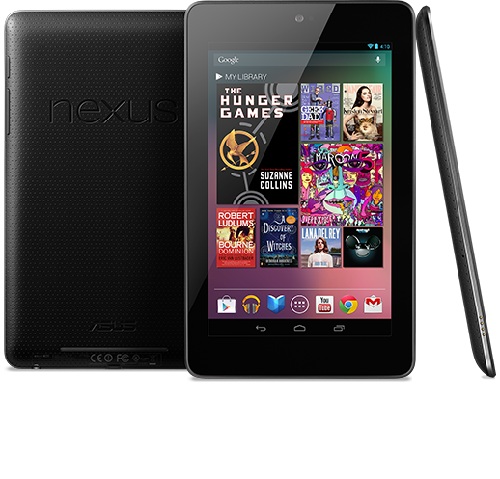 If you've used Google search lately, you've probably seen the advertisement for their new Nexus 7 tablet computer (pictured above). I don't remember there being a Nexus 1 through 6, but the point is that the already competitive tablet market just got tougher. Amazon has their Fire, Apple the iPad, and now Google enters the arena. There are also several other tablets, usually running some version of the Android operating system. With the ongoing legal battle between Apple and Samsung, I don't know what will happen with the Samsung tablets. You Look Familiar One appeal of the Google tablet is familiarity. If you're like me, you already use Google products--I use Blogger, Gmail and Google docs--so the transition should be easy. Which brings up a side issue: How come Windows-based tablets aren't more popular when so many people use Windows? Show Me the Numbers So how do we compare these three tablets? Their specifications list all sorts of factors, but I narrowed it down to memory, battery life and price. Although it's hard to make straight apples to apples comparisons since they use different chips and different measurements. Memory: The Nexus has 1 GB RAM, and two levels of storage, either 8 GB or 16 GB. The Fire has an unspecified dual core processor with 8 GB of storage, and new iPad (iPad 3?) has 16 GB storage and an A5x processor. Battery Life: You can compare battery life in several ways, but I tried to find the times for web browsing. Nexus will do 10 hours, as will the iPad, with the Fire listed at 8 hours. Price: The 8 GB Nexus is $199 USD, and the 16 GB is $249. The Fire is also $199, whereas the iPad is listed at $499. The Magic 8 Ball says: What tablet you buy should depend on what tasks or entertainment you plan to use it for, but familiarity will also be a consideration. While I'm tempted to say price will be the strongest component in the marketplace, Apple has repeatedly proven that the Apple 'cool factor' outweighs pure functionality for many consumers. And Apple has a big head start in terms of an established customer base. So the question may not be if the Fire and Nexus can beat the iPad, but rather how much of a niche can they carve from the iPad's market? (The specs for each tablet: Amazon's Kindle Fire, Apple's iPad, and Google's Nexus 7. The pic of the Nexus 7 is from Google.)
August 28, 2012
The Keurig One Button Time Machine

I love the Keurig coffee maker. Seriously, if it talked like Siri, I would marry it.
But why? There are lots of coffee makers. I have others sitting in the cupboard. The Keurig is better because it saves time. You dump the water in, feed a K-cup to the disturbing Alien mouth, and by the time you've got the milk and sugar, your coffee is ready.
There are two things at work here. Time and simplicity. You make a product that has both and you've created magic. Coffee + Time + Simple = Genius
Time isn't just money, it's way more valuable than that. In a recent blog post, Nathan Kontny wrote, "Many businesses create innovation by simply moving time." (He also writes about the Keurig, which is cool and means I'm not crazy.)
Kontny makes the point that the time he would have spent putting a filter in a coffee machine and measuring out the correct number of scoops of loose coffee and all that is now shifted to the Keurig people. They put the right amount of coffee in a tiny plastic bucket that has a filter built in. You're paying for them to save you time, and for many people that trade is totally worth it. I'm a morning zombie
The second factor is simplicity. How many buttons does an iPhone have? (Okay, that's kind of cheating because the touchscreen can have a whole keyboard, but stay with me.) The Keurig Mini Plus model has one button, labeled "Brew." It also has an "On/Off" button, but it shuts itself off in 90 seconds, so you really only turn it on.
Now Keurig also makes their Vue system where you can control the water pressure, the air flow, the brew strength and 50 other things. I don't want to do all that. I want to press one button and get my coffee.
Why do cops, soldiers and civilians carry Glock pistols? Glocks don't have an external hammer you have to thumb back, or a switch you have to throw to select "Fire." It's a one button system. You pull the trigger, it goes bang. Simple. Perfect for when you're under stress, or you haven't had your coffee.
If you look in the Comments section under the Keurig Mini Plus, the number one favorable factor is "Easy to use." 323 people felt that was the machine's best feature. 217 labeled it "Fast." (229 also found it "Stylish," but since it already saves time and is simple, style is just bonus points.)
Whether you are looking to buy a new product or make a new product, consider 'time' and 'simplicity' in your design. What product do you use that's simple and saves time? Leave a comment and spread the word. Non Anonymous Sources
(Here is Nathan Kontny's blog, which is titled Ninjas and Robots. I don't know Nate, but he likes Keurig and his blog title is funny. Here's the Keurig site if you want to join the cult. I found the pic of H.G. Wells's Time Machine at Immortal Muse, which appears to be about poetry.)