Mark Boss's Blog, page 6
August 20, 2012
Drones at Sea: Unmanned vessels on our oceans
 We all know about drones in the sky because we've seen footage of military drones like the Predator and Reaper. And we've seen police use bomb disposal robots on land, but how about drones at sea?
 I'd never given it much thought, but drones may be a good solution on the water (or under it) for the same reasons they're helpful in the air or on land. When the task is risky due to weather or environment, or dangerous because of enemies, or simply tedious and expensive, drones are sometimes the solution.
The US and Israeli navies both use drones in the form of small boats equipped with sensors and weapons. Piloted from shore or a nearby ship, these small boats can operate in dangerous weather and approach pirates, drug runners, and terrorist vessels without endangering a human crew.
The Protei project is a completely different approach (see picture above). Protei is an open-source, sailing drone that's in development. The idea is to use these drones to clean the oceans of oil spills and floating garbage. The drones could also be used for science: monitor algae blooms, study coral reefs and fisheries, and take data on water temperature and weather. There are so many applications possible.
Protei goals are ambitious. According to their site, they want the boats to be: unsinkable, self-righting, safe, unmanned, autonomous, green, affordable and able to act in swarms. The swarm behavior is especially interesting because the developers have planned a series of steps where the drones move from being controlled by a human operator to working autonomously, alone or in groups. They even have the neat idea of letting people control drones using smart phones, and play a game of ocean clean up.
Personally, I wonder if drone lifeguards might be possible. Something about the size of a jet ski, with handles to grab onto, and maybe even an arm that could pluck a drowning person out of the water.
Someday you may be out fishing and see a boat pass you in the fog and realize there's no one on board. But it's not a ghost ship. It's a drone.
(Here are two links to The Unmarked Van, where you can find articles about US and Israeli naval drones. Here's the Protei site. In a weird bit of interconnectivity, Protei is a Kickstarter project, and the guy who formed Protei (Cesar Harada) gave a TED talk--two things we've talked about here recently at Chimpwithpencil. Yup. Everything is connected.)
(The pic is from the Protei site.)


August 13, 2012
Quora: A Question and Answer, Social Networking Site
Sometimes you hear something mentioned and file it away in your brain to look up later. And if you're me, you scribble it on the back of an envelope. Then you forget about it, lose the envelope, and go make a sandwich.
I've seen Quora mentioned in magazines, on the Internet and someone may even have asked me about it, so eventually I grew curious. Quora is a question-and-answer site, with a social focus. Or maybe it's a social network with a question-and-answer format.
It's like the Quora designers looked at Facebook, Twitter, Yahoo Answers and a half dozen other sites, then copied the features they thought would be helpful. The primary way to interact on Quora is to post a question. People with similar interests can respond, and the most popular answers get voted to the top in a Digg-like system.
The Quora login page is very simple, and reads, "Quora connects you to everything you want to know about." Wow, that's a pretty big claim. Especially if you have odd interests. Until the user base grows into the hundreds of millions, you're probably not going to find answers to your more esoteric questions.
But for popular Quora areas like 'start-ups,' 'entrepreneurship,' 'food,' 'science' and 'venture capital,' you can get lots of answers. It's also telling that many of the articles written about other Q&A sites say that they're like Quora.
One interesting feature on Quora is the ability to create 'boards,' which Quora describes as "lightweight blogs or personal notes." This may provide people with a place to post something meatier than a Tweet, but still quick and easy for others to digest.
People tend to seek out (and find) others online with similar interests, whether it's crazy political beliefs and or a deep love of wombats. Social networks may streamline that search process, but I wonder if they are really much different from the online forums and bulletin boards of years ago.
(Here's an article on Mashable by Jolie O'Dell that has helpful graphics. This article in PCMag by William Fenton does a good job of explaining what Quora is and how it works. And here's a page from Tech Crunch that mentions Quora in multiple articles.)
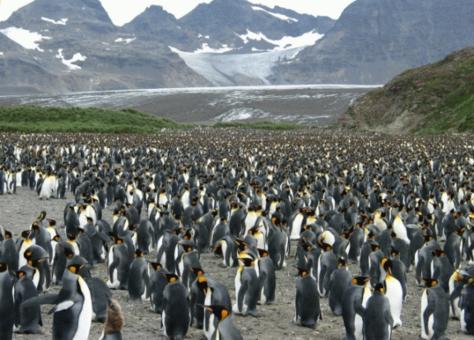
(The pic is of penguins and it's from:igougo.com)

August 7, 2012
Play the crowdsourced game EteRNA
 Every time I read Wired magazine, I find something intriguing. The July 2012 issue mentioned a game called EteRNA. Sadly, I don't play many video games anymore. Modern games are so involving that they might destroy my writing productivity, so I only play when I'm with friends.
But the idea behind EteRNA caught my attention. We talked about crowdfunding here recently, and EteRNA is an example of another method: crowdsourcing.
You're probably used to crowdsourcing both online and in person. Someone asks for help or asks a question, and everyone jumps in with answers and advice. You see it in wikis and chat rooms and forums, too.
The EteRNA project is an effort to build a library of synthetic RNA. RNA is ribonucleic acid, the key component of all cells, including yours. Instead of computers making these molecules, EteRNA puts the tools in your hands.
Four nucleotides (conveniently color- and symbol-coded in the game) make up RNA, but it's how you link them together that matters. In nature, there are good RNAs like the ones that help cells synthesize proteins, and the bad ones like the retroviruses that make up hepatitis and HIV. The ones you make in EteRNA are synthetic, so they may be new things not found in nature.
What is the ultimate goal of this project? Well, they want to make breakthroughs in biochemistry, and they want to understand how crowdsourcing works. But I wish the website was a little more specific as to the applications of these synthetic RNA designs. I'm not sure they have an endgame in mind here, but if they do, they should share it. I think a clear goal would encourage people.
I'm still working my way through the tutorial, but if you want to try it out, don't let the talk of nucleotides and such deter you. So far I've concentrated on simply matching colors and forming links. The game is relaxing, and more like a crossword puzzle than a game of Tetris. So hit the site and give it a try.
(The information is from the EteRNA site. The pic is not from the game, but is rather an RNA from mySDscience.)

August 2, 2012
The Future of Cell Phone Security
 Sometimes ideas collide and produce solutions. And sometimes they produce more questions. Consider these:
1. A drug cartel in Mexico constructed its own radio network of 160 antennas to provide itself with secure communications.
2. Espionage now includes remotely turning on an enemy's cell phone to pick up audio and video of what they're up to.
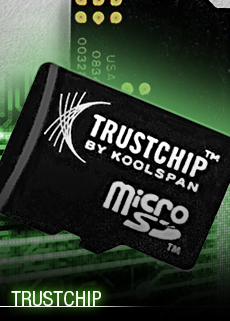
3. You can buy a MicroSD chip (just like the one in your camera), plug it into your cell phone, and have encrypted messages and conversations.
How are these three things related?
It's all about communications. Not just for cool government agents or high-tech hackers, but for businesses and individuals who want to protect their intellectual property and their privacy.
Most of us don't need our own secure network of radio towers, and we don't have billions in cash like drug cartels. But think about what you say over your cell phone. We treat them like land line phones, but they are not the same. Or consider what you send out in text messages.
Most of what you communicate is probably innocuous, but if you're in a business where you want to protect your ideas, it's worth considering that someone may be interested in stealing them. Not only is corporate espionage real, we frequently have cases of governments stealing from businesses to give their country a competitive edge.
Suddenly the idea of plugging a security chip into your smartphone sounds kind of useful. I'll bet your cell phone provider will offer this as an extra feature bundled in with the next smart phone you buy.
(The first I heard about the cartel communication network was this TED talk by Marc Goodman, but he may have said it was a cell phone network. Still, this article in Business Insider and this one in Gizmodo make it clear the cartel had a pretty impressive system. This wikipedia article has a thorough explanation of MicroSD cards and related tech. Koolspan makes the TrustChip for cell phones I wrote about, but I first saw it mentioned in Technology Review.)
(The pic of the TrustChip MicroSD is from Koolspan.)

July 29, 2012
Book report on WORM: The First Digital World War
 Mark Bowden's nonfiction Worm is about the sophisticated Conficker malware that infected millions of computers on the Internet in 2008, 2009 and onward. It tells the movie-like story of how a group of programmers, network specialists and tech insiders (all civilians) came together to fight Conficker.
But in a way, it's not really about computers at all. It's about people. After all, people created the Conficker malware, and people banded together to stop it. It wasn't a war in the sense of terse declarations from presidents and troops massing on borders. Governments and their agencies played little role in the conflict, mostly due to ignorance and indifference.
This was more like a little town in an old Western movie where the locals join together to stop a group of bank robbers. (Historical note: this actually happened in the Old West, and the townies often won.) In this case, though, the people involved were not only very smart, they were experts in their field. Inevitably, egos and agendas clashed.
Another human angle to this is the idea that millions of people use the Internet, but most of us have little idea how it works (especially some of our elected officials). Ask someone to explain how the vast 'network of networks' functions, and they'll wave their hands and try, but they won't make much sense.
Most people can't tell you what year they first used the Internet. It's such a part of our lives now that it's hard to separate it from the rest of history. Younger people will struggle with this question because they've always had the Internet, and have trouble imagining a world without it.
Bowden does a good job of humanizing the technical conflict between 'white hat' hackers and 'black hat' hackers. The explanations are sometimes long, but always helpful, and you don't need to be expert to enjoy the book.
A small side note: Writers try to find and fix all the editing errors in their books, but with hundreds of pages and thousands of words to search, it's a difficult task. I was surprised to see a half dozen simple editing errors, though, because publishers like Grove Atlantic are usually good at producing error-free books. (I know I've had errors in my own books, so I'm not throwing stones here.)
I read Mark Bowden's books because he picks interesting topics, and then finds the right people to tell him what happened. Worm follows that pattern, and I look forward to more like this.
(The cover pic is from Grove Atlantic.)

July 24, 2012
What is a TED conference?
Sometimes I see a TED conference mentioned in technology or business news, and I've always wondered: What is TED? No, not the movie with the talking bear.
TED stands for Technology, Entertainment and Design, and according to their website, the conferences are all about 'ideas worth spreading.' Since 1984, people from these three industries and more have met to give, and listen to, short talks about ideas. The conference now holds two annual meetings--one in Edinburgh, Scotland, and the other in Long Beach and Palm Springs, California, USA. The Sapling Foundation, a private non-profit, owns TED.
I'm not sure how you get invited to TED. About 1,500 people attend the Long Beach conference, but how are they chosen? According to the TED site, they give preference to people who, "have done something fascinating with their lives, show evidence of creativity, innovation, insight, or brilliance, are well placed to help make a difference in the world, and have made a contribution to the TED community (for example, by supporting a TED Prize wish)."
I guess you can't just buy a ticket and show up. Besides, the price for the 2013 conference in Long Beach is $7,500.00 USD, and $2,500 USD for the Palm Springs portion.
TED's 32-person advisory committee has some names you're probably familiar with: Larry Page and Sergey Brin from Google, Bill Gates of Microsoft, Jeff Bezos from Amazon, plus various physicists, futurists and gurus. Corporate partners include biggies like IBM, Sony and Delta.
A neat feature of TED is you can watch the 18-minute TED talks on iTunes, Hulu, Netflix or YouTube, with subtitles in a variety of languages. They also give out prizes, sponsor fellowships, and have smaller, regional TEDx events.
The part of me that enjoys conspiracy theories might see TED as a sort of Geek Illuminati. Like maybe all the tech billionaires sit in a room around a big table, and one wears a fez, and another holds a Persian cat and they talk about building a secret moon base.
Strangely, you can't find much information on the Internet about TED, that is a non-TED supplied. Which is odd. Then again, how many bloggers have ever been to a TED conference, so we can really only speculate. Although I did chuckle when I went to their forums page--one of the commenters used a familiar image as their picture--a Guy Fawkes mask. Hmm. What if TED joined forces with Anonymous? Now that would send me right for my foil hat.
(Here is the link to the TED site. I really couldn't find much else, and besides, I had to stop writing and go to a meeting. No, not a TED meeting. It was AIM, or maybe Hydra. I forget which--I'm in both.)
TED stands for Technology, Entertainment and Design, and according to their website, the conferences are all about 'ideas worth spreading.' Since 1984, people from these three industries and more have met to give, and listen to, short talks about ideas. The conference now holds two annual meetings--one in Edinburgh, Scotland, and the other in Long Beach and Palm Springs, California, USA. The Sapling Foundation, a private non-profit, owns TED.
I'm not sure how you get invited to TED. About 1,500 people attend the Long Beach conference, but how are they chosen? According to the TED site, they give preference to people who, "have done something fascinating with their lives, show evidence of creativity, innovation, insight, or brilliance, are well placed to help make a difference in the world, and have made a contribution to the TED community (for example, by supporting a TED Prize wish)."
I guess you can't just buy a ticket and show up. Besides, the price for the 2013 conference in Long Beach is $7,500.00 USD, and $2,500 USD for the Palm Springs portion.
TED's 32-person advisory committee has some names you're probably familiar with: Larry Page and Sergey Brin from Google, Bill Gates of Microsoft, Jeff Bezos from Amazon, plus various physicists, futurists and gurus. Corporate partners include biggies like IBM, Sony and Delta.
A neat feature of TED is you can watch the 18-minute TED talks on iTunes, Hulu, Netflix or YouTube, with subtitles in a variety of languages. They also give out prizes, sponsor fellowships, and have smaller, regional TEDx events.
The part of me that enjoys conspiracy theories might see TED as a sort of Geek Illuminati. Like maybe all the tech billionaires sit in a room around a big table, and one wears a fez, and another holds a Persian cat and they talk about building a secret moon base.
Strangely, you can't find much information on the Internet about TED, that is a non-TED supplied. Which is odd. Then again, how many bloggers have ever been to a TED conference, so we can really only speculate. Although I did chuckle when I went to their forums page--one of the commenters used a familiar image as their picture--a Guy Fawkes mask. Hmm. What if TED joined forces with Anonymous? Now that would send me right for my foil hat.
(Here is the link to the TED site. I really couldn't find much else, and besides, I had to stop writing and go to a meeting. No, not a TED meeting. It was AIM, or maybe Hydra. I forget which--I'm in both.)
July 19, 2012
What is the hacker group Anonymous?
 I'm reading Mark Bowden's interesting non-fiction book, WORM, and it got me thinking about the Internet, malware and hacking. This led me to consider the well-known hacker group Anonymous.
What is Anonymous?
According to most reports, Anonymous isn't so much a single group as it is a loose coalition of hacktivists (hacker activists) who organized in 2003. Anonymous is international, distributed, technically savvy, and...anonymous. What makes analysis tricky here is that anyone can 'join' Anonymous simply by saying their activities take place under the Anonymous umbrella.
Depending on where you get your news, they may be labeled 'anarchists,' 'hacktivists,' 'terrorists,' or 'vigilantes.' I think it's always more instructive to examine what someone does, rather than what they say (try this technique on politicians.) So let's look at some of their operations.
Operations
2008 Staged protests against Scientology, centered around Scientology censorship on the Internet.
2009 Online attack against the International Federation of the Phonographic Industry because of their battle against online file sharing. This was an anti-censorship move--some Anonymous members obviously support file sharing sites. In 2012, the file share site Megaupload was also an issue.
2010 Anonymous targeted credit card companies Visa and Mastercard after they froze Wikileaks accounts. Known as Operation Avenge Assange.
2011 Anonymous launched online attacks against a large child pornography trading site. They may also have been responsible for attacks on government websites in Algeria, Chile, Colombia, Egypt, Iran, Libya, and New Zealand.
2012 During the SOPA protests, Anonymous may have attacked websites at the FBI, Department of Justice, Recording Industry Association of America, and the Motion Picture Association of America. They also urged Occupy Wallstreet protestors to remain peaceful, made threats against Facebook, and may have made online attacks against the Pentagon.
Are they terrorists?
I define terrorism as a deliberate attack against civilians for a political or religious purpose. Generally, I think of this as a physical attack. For example, the attack on the twin towers in New York in 2001--these were buildings filled with office workers. I classify 9/11 as a terrorist attack.
Collateral damage is not the same because the intent is different. For example, if US forces in Afghanistan attack a building containing Taliban, and accidently kill some civilians during the battle, it's not a terrorist action. I think US forces make an enormous effort to prevent civilian casualties, but it is impossible to completely avoid them when the enemy hides among the populace.
How about indirect harm? If an online attack takes down your credit card company it's an inconvenience and a probably a crime. If they take down the power grid supplying electricity to a hospital, it's terrorism.
I don't know the detailed damage of every one of Anonymous's online attacks, but I don't see evidence they've physically harmed people, so I don't view them as terrorists. Many governments may categorize their activities as criminal, but that's not the same thing as terrorism.
Surprising Conclusions
In researching this post, I was surprised to find that I agree with some of Anonymous's actions. I am against child pornography and if governments won't take action against these websites, vigilantes should.
In my opinion, Scientology is a scam designed to take money from people. I am against censorship, but have mixed feelings on file sharing--as a writer who works hard on my books, I don't like the idea of people pirating them. On the other hand, if you purchase an ebook or a song, you should be able to make backup copies for yourself.
I am against SOPA because its benign name hid an agenda of censorship and anti-free speech. And finally, going after repressive governments in places like Iran, Egypt and Libya makes sense to me.
I don't understand their opposition to Facebook and New Zealand, or their support for Julian Assange. But the loose nature of Anonymous and its deliberate lack of leadership means that individuals may act in their own particular interests, and then claim they were working on behalf of Anonymous. (Which makes me wonder how they handle that, and do they self police?)
It's up to you to make up your own mind about Anonymous and other hacker groups. Some people fear them, others see them as the future. But I suspect we will see more groups like this in the years ahead--I just hope they use their skills for good and not evil.
As Spiderman says, "With great power comes great responsibility."
(Here is a detailed Wikipedia article about Anonymous, and a Yahoo News article about their attack on child pornography. And an NPR audio(with transcript) that provides some views from other hackers. The picture is from: beforeitsnews.com)

July 14, 2012
Book Review: UNWIND by Neal Shusterman
 I read a lot of books. Or it's more accurate to say I start to read a lot of books. But sometimes the story doesn't keep my attention, or the idea has already been done a dozen times before, and I stop.
So it was refreshing to read a novel packed with new ideas. Not themes. Ideas. Ideas that make you think. Here's Shusterman's blurb from the back of UNWIND:
"The Second Civil War was fought over reproductive rights. The chilling resolution: Life is inviolable from the moment of conception until age thirteen. Between the ages of thirteen and eighteen, however, parents can have their child 'unwound,' whereby all of the child's organs are transplanted into different donors, so life doesn't technically end. Connor is too difficult for his parents to control. Risa, a ward of the state, is not talented enough to be kept alive. And Lev is a tithe, a child conceived and raised to be unwound. Together, they may have a chance to escape--and to survive."
Most novels that use their characters and plot as simple vessels for their ideas aren't much fun to read. They get preachy because the author clubs you over the head with their agenda.
UNWIND is fun to read. The characters matter. It reminds me of the best of the old school of science fiction, where writers like Isaac Asimov and Ray Bradbury explored new avenues and provoked thought and discussion.
When an author is able to blend ideas and entertainment with a fresh approach, I think they're working at a high level. Yet UNWIND is an accessible read, with characters people can relate to.
If the description above intrigues you, give UNWIND a try.
(Thanks to my friend Shannon for telling me about this book, and then loaning me her copy.)

July 11, 2012
What is Crowdfunding?
 The other day a buddy of mine mentioned Kickstarter, an online crowdfunding business. But what exactly is crowdfunding, and how does it work?
Let's say you're ten-years-old and you want to open a lemonade stand. The problem is you need money to buy lemons, a pitcher, plastic cups, a table, and materials to make a sign.
In the traditional model, your parents supply all this stuff, so they are responsible for your startup costs. After you sell enough lemonade, maybe you can pay them back. Or a thunderstorm comes, you pack up and go inside, and your sales are less than your parents' costs.
In crowdfunding, you ask people to front you the money for your supplies. They pledge money in different amounts, and after you get your stand set up, you owe them a cup of lemonade, or two cups, or however much they paid for.
People use crowdfunding for everything from art and movies, to cell phone applications, video games, political campaigns and medical costs. The one thing in common is that these are all projects, not long-term businesses.
Kickstarter is probably the most well-known site, but there are many others. The way they make money is by charging fees (such as fees for processing credit card transactions), and by taking a percentage of the money you raise. Indiegogo says on their site that they have the lowest prices, and their cut is 4%. (I haven't checked every site, so I don't know who has the lowest fees.)
Next time someone asks you if you're interested in crowdfunding their private space trip to Mars, you may want to ask what service they're using and what fees they're paying. And if you get a seat on the ship.
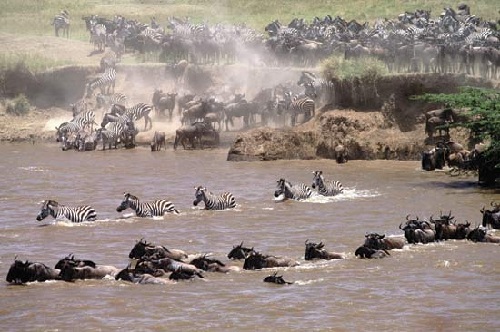
(This wiki about crowdfunding was helpful. It lists 10 sites ranked by their web traffic, and explanations of many others. The pic is from: kids.britannica.com)

July 8, 2012
What is the Higgs boson?
This past week, scientists at CERN laboratories in Switzerland announced they'd found the elusive Higgs boson (or at least a Higgs-like boson). Great news! But what the heck is a Higgs boson? Let's break this question down.
Who is Higgs?
Peter Higgs is a particle theorist--a physicist who specializes in studying the tiny particles that serve as building blocks for everything. In the 1960s, Higgs and five others came up with a theory, and a theoretical particle to go with it.
What is a boson?
A boson is a sub-atomic particle. Say you have a water molecule--that's two hydrogen atoms and one oxygen atom (or H2O.) A boson is smaller than those atoms.
What does the Higgs boson do?
When you get down to the really small scale in physics, you talk about how particles interact with fields. In this case, the Higgs Field is a field that gives particles mass as they move through it. Higgs bosons are the sort of currency of the Higgs Field.
The Higgs Field and its associated boson fit in with what scientists call the Standard Model in physics. The field and boson help provide an explanation of how things have mass.
So what does finding the Higgs boson mean?
Well, if the boson they found is a Higgs boson, it would appear to confirm the Higgs Field part of the Standard Model. What can you do with a Higgs boson? I'm not sure. Just as the boson is a tiny particle that is a building block for bigger things, I think this discovery is a building block for bigger discoveries. We can't stop to rest now. Finding the Higgs boson is just a good start.
If you could tackle any problem in science, what would you pick?
(For an interesting audiointerview with Peter Higgs, visit this post by Matin Durrani at Physics World. This article in Yahoo News by Natalie Wolchover gives a good explanation of the Higgs Field. And this article by Hamish Johnston at Physics World tells about CERN's big discovery.)
Who is Higgs?
Peter Higgs is a particle theorist--a physicist who specializes in studying the tiny particles that serve as building blocks for everything. In the 1960s, Higgs and five others came up with a theory, and a theoretical particle to go with it.
What is a boson?
A boson is a sub-atomic particle. Say you have a water molecule--that's two hydrogen atoms and one oxygen atom (or H2O.) A boson is smaller than those atoms.
What does the Higgs boson do?
When you get down to the really small scale in physics, you talk about how particles interact with fields. In this case, the Higgs Field is a field that gives particles mass as they move through it. Higgs bosons are the sort of currency of the Higgs Field.
The Higgs Field and its associated boson fit in with what scientists call the Standard Model in physics. The field and boson help provide an explanation of how things have mass.
So what does finding the Higgs boson mean?
Well, if the boson they found is a Higgs boson, it would appear to confirm the Higgs Field part of the Standard Model. What can you do with a Higgs boson? I'm not sure. Just as the boson is a tiny particle that is a building block for bigger things, I think this discovery is a building block for bigger discoveries. We can't stop to rest now. Finding the Higgs boson is just a good start.
If you could tackle any problem in science, what would you pick?
(For an interesting audiointerview with Peter Higgs, visit this post by Matin Durrani at Physics World. This article in Yahoo News by Natalie Wolchover gives a good explanation of the Higgs Field. And this article by Hamish Johnston at Physics World tells about CERN's big discovery.)