Mark Boss's Blog, page 7
July 1, 2012
Did you back up your brain today?
100 gigabytes. That's how much it takes to store your entire genetic sequence. The amazing double helixes of your DNA--the code that holds your hereditary pattern.
Between pictures, music and movies, you're probably using a lot more than 100 gigabytes of storage. The computer I'm writing this on has a 600 gigabyte hard drive. You can go out and buy a terabyte or more right now.
50 years ago, or 20 years, or maybe even 10, this would have sounded like science fiction. The DNA double helix was discovered in 1953, but it wasn't until 1977 that the first genome was completely sequenced, and that was for a bacteria.
Now you can store your entire genetic pattern on a hard drive. In the future, will scientists and doctors be able to take this code and build another you? They've cloned sheep, and despite the ethical questions involved, I think it's a short matter of time before they clone a person.
Even if that clone had all your same physical attributes, it wouldn't be you because it hasn't had your experiences, your memories. But what if we could store memories on a hard drive? How much space would that take?
Scientists estimate there are 100 billion neurons in the brain. That sounds like an impossibly large number, until you consider how our concept of numbers is changing. The first computer I used in school had 16 kilobytes of memory. As the years rolled by, they went to 512KB, then one megabyte, and onward in relentless lockstep with Moore's Law.
Perhaps the day will come when you can back up your brain on a hard drive. Then if you walk out the door and a falling satellite crushes you, your relatives could pay to have your memories installed on a 'blank'--a clone body with a brain empty of any experiences.
But would it be you? Are we simply the sum of our DNA pattern coupled with our memories?
(The 100gb number came from the May/June 2012 issue of Technology Review. I checked the DNA dates on Wikipedia, and the neuron number on Wolfram Alpha.)
Between pictures, music and movies, you're probably using a lot more than 100 gigabytes of storage. The computer I'm writing this on has a 600 gigabyte hard drive. You can go out and buy a terabyte or more right now.
50 years ago, or 20 years, or maybe even 10, this would have sounded like science fiction. The DNA double helix was discovered in 1953, but it wasn't until 1977 that the first genome was completely sequenced, and that was for a bacteria.
Now you can store your entire genetic pattern on a hard drive. In the future, will scientists and doctors be able to take this code and build another you? They've cloned sheep, and despite the ethical questions involved, I think it's a short matter of time before they clone a person.
Even if that clone had all your same physical attributes, it wouldn't be you because it hasn't had your experiences, your memories. But what if we could store memories on a hard drive? How much space would that take?
Scientists estimate there are 100 billion neurons in the brain. That sounds like an impossibly large number, until you consider how our concept of numbers is changing. The first computer I used in school had 16 kilobytes of memory. As the years rolled by, they went to 512KB, then one megabyte, and onward in relentless lockstep with Moore's Law.
Perhaps the day will come when you can back up your brain on a hard drive. Then if you walk out the door and a falling satellite crushes you, your relatives could pay to have your memories installed on a 'blank'--a clone body with a brain empty of any experiences.
But would it be you? Are we simply the sum of our DNA pattern coupled with our memories?
(The 100gb number came from the May/June 2012 issue of Technology Review. I checked the DNA dates on Wikipedia, and the neuron number on Wolfram Alpha.)


June 28, 2012
Customize Your Chimp
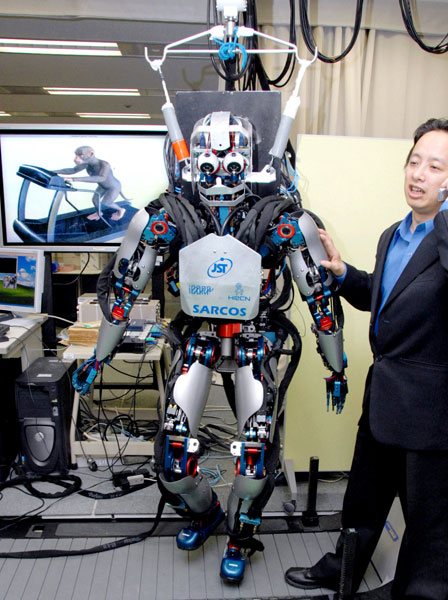
A few weeks ago, a reader here at Chimpwithpencil asked if I would install an email subscription button since she doesn't use RSS feeds. I'd never thought of it until she brought it up--thanks, May!
I want to make it as easy as possible for you to get your Chimp content. And to get it the way you want it. So here are a few options.
How do you want your steak cooked?
On the right of this page, near the top, is the Email Subscription. Enter your email, click 'Submit,' and get the latest post sent right to you. Just like me throwing your newspaper onto your front steps.
If you prefer RSS Feeds, scroll down to "Subscribe to Chimp" and you can pick Posts, or Posts and Comments.
Two sides come with that.
Facebook. If you're always on FB, maybe you'd like to hit my author page and share your thoughts. Search for: Author Mark Boss.
Twitter. I promise not to Tweet every time I make a snack. Because I snack a lot. @markbosswriter
See the row of tiny boxes under each post? You can click those to Email the post, Blog it, Twitter, Facebook or Google +1 it. If you find a post interesting, your friends might, too. So share. That's what makes the Internet fun.
Did you save room for desert?
If you want to try my novels, hit the "Learn About My Novels" button next to the huge cover of DEAD GIRL. Or click the individual covers--they take you to Amazon, where you can download a free sample. Sample first. If you don't like, you haven't lost any money and you won't be bitter.
Goodreadsusers can find reviews I've written of other books that are often a lot better than mine.
I hope these options help, and if you have other suggestions, please leave a Comment.
Thank you.mark@chimpwithpencil.com
(The pic is of a robot monkey. I found it on Crofty'sBlog. The best part of the picture is the guy standing next to the robot, talking on his cell phone. He's like, "Hey, dude, guess what? I built a robot monkey! No, seriously. Why? Um...'cause...uh...Dude, I built a robot monkey!")

June 23, 2012
The Materials Genome Initiative: or How Long Will the Battery on My New Cell Phone Last?
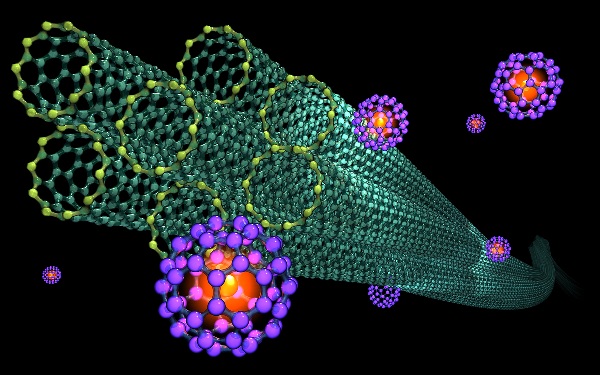 WHAT IS IT?
Okay, the Materials Genome Initiative (MGI) sounds like an episode of the SyFy show "Eureka," but it's real. In June of 2011, the President of the United States and the Office of Science and Technology Policy committed $100 million dollars to improve the discovery and applied use of new materials.
We associate genome with human DNA, but in this case we're talking about the chemical composition of new materials. Advanced materials can be used for all sorts of things, from more efficient solar power, to better batteries for your phone and laptop, to lighter, stronger components for vehicles. The problem is that creating and testing new materials takes a long time, and it may be 18 to 20 years before a new material reaches the marketplace as a product.
The idea of MGI is to speed this process up. One way to do this is to run virtual tests on computers for hundreds or even thousands of chemical combinations, rather than running physical tests on everything. If you can narrow down the material combinations that look most promising, then you can do full tests on those.
SHOULD WE DO IT?
As you know from reading this blog, l love science and technology. But when there are people going hungry, I'm not sure putting $100 million of taxpayer money into a government program like this is wise. I'd rather see innovation come from the private sector. Let the corporations develop their own materials.
However, the basic idea of getting materials from the idea phase to the applied phase faster is sound. The initial funding was slated for four agencies: Department of Defense, Department of Energy, National Institute of Standards and Technology, and the National Science Foundation. Overall, the idea is for government to work with universities, private companies, and professional societies to share information and techniques.
IT'S BEEN A YEAR, SO WHAT'S BEEN DONE?
A government report from May 2012 details some of MGI's progress. On the government side, $17 million went to the Department of Defense for research, and $12 million to the Department of Energy to combine computational and experimental tools.
In academia, partners include Johns Hopkins University, Harvard, the University of Utah and the Berkeley National Lab. They will work with both government and corporate partners on various projects.
For instance, Johns Hopkins is joining with the Department of Defense to, "develop new materials that have been predictably and reliably designed to protect Soldiers in extreme dynamic environments." (Fact Sheet: Progress on Materials Genome Initiative, May 14, 2012) Other partners include Lockheed Martin's work on carbon nanostructures, and General Electric's Summit on Additive Manufacturing.
Will the eventual results justify the spending of taxpayer money? I have no idea, but I hope so. I know I wish our troops overseas had better protective gear and bomb-resistant vehicles. I wish cars here at home were safer. And yes, I wish the battery in my cell phone lasted longer.
If you invented a new material, what would you use it for?
(Feel free to Comment or use the buttons below to share on your social network.)
(Sources include: Office of Science and Technology, MaterialsInnovation, and Fact Sheet: Progress on Materials Genome Initiative. The pic of a carbon rope and some buckyballs is from: britishcarbon.org)

June 18, 2012
Time Watch: How knowing what time it is changed everything, and nothing.

"Time wasted is existence, used is life." -- Edward Young
The quote above may make you pause and think. It's like the old story about a lieutenant preparing to lead his troops into battle. He told them, "I won't waste your lives, but I will spend them to accomplish this mission."
Minutes, hours, and days are your troops. How you spend them is up to you, but you must not waste them.
These days you have to know what time it is. What time you do have to be at work? How many hours did you work this week? What time is your child's school play? How many seconds are left in the game? How many days until your next chemotherapy treatment?
Time as measured is rigid, but time as perceived is flexible. A boring flight seems to take forever. A fun day at the beach feels like it's over too soon. Travel west and your day gets longer. Go east and your day gets shorter.
Time is one of the most valuable things you have, and yet for most of human existence, no one knew what time it was. It's only in recent history that people could even organize their time, agree on how it should be measured, and establish devices to keep track of it.
In the third century BC in Egypt, Eratosthenes used sundials set in Alexandria and Aswan to make a surprisingly accurate estimate of the Earth's circumference. Yet it wasn't until 1335 AD that one of the earliest public clocks was placed in a church tower in Milan, Italy.
CLOCKS AND WATCHES by Johann Willsberger contains an introduction by Arnold Toynbee. Toynbee describes sailing ships' necessity for precise chronographs to navigate the seas because the sun and stars only tell your latitude, not your longitude.
In 1714, the British government offered a huge prize of 20,000 pounds to anyone who could build a chronograph capable of keeping time for a voyage lasting six months. The prize wasn't awarded until 48 years later!
During the Middle Ages, Christians relied on church bells to guide them through the Liturgy of the Hours, and Muslims waited to hear the call to prayer to know when to face Mecca and pray. In the last few centuries, people checked public clocks found in church or government towers, and listened for chimes and bells.
As the technology spread and costs came down, businesses and then homes purchased clocks, and eventually pocket watches and wrist watches. It's weird to think that watches only had one hand until the 1700s. The first quartz crystal clock wasn't built until 1929, and the first battery-powered wrist watch came out in 1957.
Now calendars and clocks rule our lives, and we all have access to personal timepieces--items previously affordable only to kings and queens. Technology has provided us a means to measure our time, but not a way to control it.
We have to choose how we spend our hours on this Earth. Will we use them, or waste them? That's up to you.
(Sources include THE HISTORY OF CLOCKS AND WATCHES by Kenneth F. Welch, and CLOCKS AND WATCHES by Johann Willsberger. The pic of the public clock in St. Mark's square in Venice, Italy, is from: traveljournals)
(Please note: Just under the Welcome on the right is a new widget that enables you to follow Chimp via email. Just type in your email address. Thanks!)

June 14, 2012
Try Something New
Last night while I sat eating soup in Panera Bread, I spotted a writer pal of mine. He told me he'd just uploaded his first ebook to Amazon. Ed has written for years, but like me, he didn't have much luck with the conventional route of agents and big publishing houses. But he kept writing, and taught himself to format his work for ebooks, and now he has a book out--THE PHANTOM CADET.
I really admire Ed's determination. It's a quality you see in creative people who work outside the usual big-business framework. You see it in musicians, artists, writers and more. Today at chimpwithpencil, I'm putting up links for folks who are hard-working independents.
Do you like art? Check out Jayson Kretzer's work. You can see a bunch of samples on his Deviant Art page, plus he has a web comic, Wannabe Heroes. Also check out Melike Acar. Like Jayson, she does some amazing sketch card work. Sketch cards are small art that pack a big punch!
You're reading this blog, so I suspect you may like blogging. (Yes, I have Sherlock Holmes-level deductive powers.) BookedUp is a book blog that features a lot of self-published novels with thoughtful reviews. For a combo platter of recipes, books and sewing, visit Milinda Jay's site. If you're into crime fiction and writing, take a look at AshEdit by writer and editor, Elaine Ash.
Visit Meow Press and see what writer/editor Anthony Buoni is up to. I know he's taking submissions for his next anthology of ghost stories, and he has a new screenplay/novel out titled CONVERSION PARTY (warning: site contains stuff not suitable for folks under age 18.)
Delve into the world of blogger/writer Tony Simmons on his site The Word. I particularly recommend his novel THE BOOKOF GABRIEL. If you want to try some of what I'd call Southern Gothic literature, see Nick May's novels MEGABELT and MINUTEMEN. For a taste of the traditional American South, see THE LADY AND HER PORCH by Carole Bailey.
In their own way, each of these people is working to put their creative work into your hands, so help them out.
(I probably forgot someone, so if I left you out, I apologize. It's hard to keep track of everyone and their current projects.)
I really admire Ed's determination. It's a quality you see in creative people who work outside the usual big-business framework. You see it in musicians, artists, writers and more. Today at chimpwithpencil, I'm putting up links for folks who are hard-working independents.
Do you like art? Check out Jayson Kretzer's work. You can see a bunch of samples on his Deviant Art page, plus he has a web comic, Wannabe Heroes. Also check out Melike Acar. Like Jayson, she does some amazing sketch card work. Sketch cards are small art that pack a big punch!
You're reading this blog, so I suspect you may like blogging. (Yes, I have Sherlock Holmes-level deductive powers.) BookedUp is a book blog that features a lot of self-published novels with thoughtful reviews. For a combo platter of recipes, books and sewing, visit Milinda Jay's site. If you're into crime fiction and writing, take a look at AshEdit by writer and editor, Elaine Ash.
Visit Meow Press and see what writer/editor Anthony Buoni is up to. I know he's taking submissions for his next anthology of ghost stories, and he has a new screenplay/novel out titled CONVERSION PARTY (warning: site contains stuff not suitable for folks under age 18.)
Delve into the world of blogger/writer Tony Simmons on his site The Word. I particularly recommend his novel THE BOOKOF GABRIEL. If you want to try some of what I'd call Southern Gothic literature, see Nick May's novels MEGABELT and MINUTEMEN. For a taste of the traditional American South, see THE LADY AND HER PORCH by Carole Bailey.
In their own way, each of these people is working to put their creative work into your hands, so help them out.
(I probably forgot someone, so if I left you out, I apologize. It's hard to keep track of everyone and their current projects.)
June 9, 2012
Brain Eaters: Parasites and Amoeba in Your Brain
 (Picture of tapeworm brain cysts from Theodore E. Nash, M.D.)
The new science-fiction movie "Prometheus" just arrived in theaters. The movie is an Alien prequel, and the Aliens movies always bring to mind the image of the alien face-sucker latched on to some poor dude's face. He screams and tries to peel it off, but can't, and it implants an alien in him.
It's the sort of thing that makes your stomach hurt.
The good news is we haven't encountered any such aliens (yet). The bad news is we have plenty of weird creatures here on Earth waiting to invade your brain. Let's look at some examples!
Ever eaten undercooked pork? Next time you're eating barbeque, make sure it's cooked done. In the usual process, a person who eats undercooked pork may also eat tapeworm cysts found in the meat. Eventually, these cysts grown into tapeworms in the person's intestines.
But here's the twist. As that infected person poops, their poop contains tapeworm eggs. And if the person has those eggs on their hands when they prepare food for others (whether at home or in a restaurant), the eggs get into people's food. The eggs then travel through the bloodstream where they can end up in your brain. They grow into cysts that can cause blindness, fluid on the brain, seizures, coma and even death.
According to the National Institute of Health (NIH), there are millions of cases of this disease worldwide. (The formal name is neurocysticercosis.)
What's more fun on a hot summer day than plunging into your local swimming hole? You may want to pinch your nose or wear a nose clip. Naegleria fowleri is an amoeba that can enter through the noses of people who swim in warm, stagnant ponds. Although rare, if this amoeba works its way up to your brain, it causes flu-like symptoms, followed by seizures and loss of balance. Without medical attention, the victim will die in less than two weeks.
(On a side note, doctors now warn Neti pot users to use distilled or boiled water to flush their sinuses, and to keep the Neti pot clean and air dried.)
Parasites and amoeba can do more than just kill us. They can also affect our brains in less lethal ways. If you eat unwashed vegetables with cat poop on them, or eat raw or undercooked meat, you might also get toxoplasmosis (or Toxoplasma gondii). Toxo is a parasite that can form brain cysts.
Toxo affects the production of dopamine, which is an important chemical in your brain. There is a statistical link between cases of the mental illness schizophrenia and toxo, and dopamine plays a role in both. Healthy people may carry this parasite and be unaffected, but pregnant women and people with weakened immune systems are at risk. This is why doctors tell pregnant women not to change the cat litter box.
What can you do? Well, this information may freak you out, but it shouldn't. A lot of these problems can be avoided by washing your hands, washing your food, and cooking your food until it's done.
Above all, avoid visiting planets full of alien face-suckers.
(Here's Discover magazine and ABC news on tapeworms. ABC news on amoeba. Science Daily and The Atlanticon toxo.)

June 5, 2012
Catch an Iridium flare and see a satellite!

The other night I went for burgers with friends. While we sat talking, I noticed my buddy, Patrick, monkeying with his phone. He consulted an application, and told us the Chinese space station would pass over in 4 minutes, and an Iridium satellite would flare in 11 minutes.
All of us jumped up at the same time. We stood outside the restaurant and consulted phones, maps, apps and the North Star to get us pointed in the right direction. Upon seeing a half dozen guys staring up at the night sky, various random people came over to see what we were doing. Our explanations produced blank looks and the random people wandered off.
Honestly, although I knew about the Chinese station, I'd never seen it. And while I'd seen flares from the International Space Station (ISS), I'd never watched an Iridium satellite flare. There were scattered clouds that night, so we didn't see the Chinese station, but the Iridium satellite treated us to brief, but bright show.
What is a satellite or space station flare? When an object in orbit above the Earth turns at just the right angle to the sun, it reflects the sun's rays and is visible from the ground.
With the ISS, you have an object as long as a football field floating in space. But with the Iridium satellites, the antenna providing the reflection is only about the size of a door. It's pretty amazing to think you can see the flash of a door-sized object that's 485 miles (or 780 kilometers) up in space.
If you'd like to see a space station or a satellite flare, go to Heavens Above and enter your location. This site provides the time the satellite will pass over your location, plus the magnitude (or brightness), the altitude and the azimuth (or direction.) Strangely, when it comes to magnitude, negative numbers are better, so look for flare events that are listed as -2 to -7.
There are applications for smart phones that will help you find a flare in your area. With over 80 Iridium satellites still in orbit, flares happen frequently, so as long as it isn't cloudy where you live, you can probably see one this week.
(Here is a site called "Catch a Flaring/Glinting Iridium" which explains Iridium satellites and their flares in detail. Astrosat also has an explanation and data for observation from major world cities. The cool picture is from:epod.usra.edu by photographer Sean M. Sabatini. The cool idea for this post is from Patrick.)
(If you enjoyed this article, please leave a Comment, or hit one of the buttons in the box below and share it on Facebook or Twitter. Thanks!)

May 31, 2012
The Flame program: Its purpose, features and threat.

What is the Flame program we're seeing so much in the news this past week? Various media have labeled the Flame a cyber weapon, an espionage tool, malware, a worm, and a virus. For this article, let's call it a 'program,' because if you separate the code from the intent, it's simply an interesting computer program.
What brought Flame into the open? Depending on which source is accurate, Flame may have infected computers in Austria, Egypt, Hong Kong, Hungary, Iran, Israel, Lebanon, Palestine, Russia, Saudi Arabia, Sudan, Syria, and the United Arab Emirates. One of Flame's features is that it can be turned off, so it doesn't spread blindly. This controlled spread and the fact that it's most prevalent in Iran, led some people to see it as an Israeli or joint Israeli/USA operation against Iran's infrastructure and oil industry.
Flame has several interesting features separated into different modules. It can: record keystrokes (commonly called a 'keystroke logger'); be turned on/off; wipe hard drives; take screen shots; collect data and send it to a remote computer; use the computer's onboard microphone as a recorder; use a 'packet sniffer' to scan traffic on the computer's local network; and even activate a Bluetooth connection with cellular telephones. Flame can be customized with some 20 different plugins.
While having all these options makes Flame a flexible tool, it also makes it a big program, far larger than programs like DuQu or Stuxnet. In the past, worms and viruses were written to be as lean as possible--they ran fast and didn't take up much space. But Flame seems like they just kept adding features and the program grew bigger and bigger.
Many in the media and computer world speculate that either a country developed Flame, or paid a group of programmers to write it. It's odd to see that just like with commercial software, when clients keep demanding more features, the program experiences 'feature creep' and quickly grows in size and complexity. It's usually a big headache for the programmers who have to keep up with it all.
Some articles are quite alarmist, declaring use of Flame as cyberwar and making dire predictions. But Flame has probably been loose on the Internet since 2010. And components like keystroke loggers and packet sniffers are not new things--they've been around a while. What makes Flame interesting is that it has so many tool options, and it doesn't appear to spread indiscriminately. By slowing the spread of Flame, its controllers kept it undetected for a longer period of time.
When computer experts encounter these type programs, they take them apart to figure out how they work. So if Country A fires off a program at Country B, it may not be too long before Country A gets hit with their own weapon. If you shoot a bullet at someone and miss, then can't pick it up, load it in their gun and fire it back at you. But a program can be studied and modified. It's a copycat world, so I predict we'll see something similar to Flame in the near future.
(Odd historical note: The ancient Romans, being the practical folk they were, made the necks of their spears out of soft iron. So when the Romans threw their spears at enemies, the points would stick in enemy shields and drag them down. But the soft iron also bent, which meant the enemy couldn't throw them back. Clever Romans.)
* * *(Here is a good article at Wired, and this one at FoxNews, and this one, too. The pic is from: http://blog.zlti.com/)

May 28, 2012
Memorial Day 2012
Here in the USA, it is Memorial Day, where we remember our military dead, and hopefully pray for the living still in the midst of war.
As a writer, I hope to write things that will make readers think and feel, or to make them aware of other writers whose work does so. With that in mind, I encourage you to read this article by Lily Burana. The article is well-written, and it contains two truly haunting photographs--one of a young military widow and a Marine guarding her husband's casket through the long night; the other of passengers on an airplane watching a casket unloaded from the cargo hold beneath them.
I also encourage you to visit Milblogging and read what our troops say in their own words, without the spin and agendas of politicians and the media.
No matter what country you're from, every nation has experienced the horror of war, and it's important to remember those who fell and those who still fight.
God bless our troops.
As a writer, I hope to write things that will make readers think and feel, or to make them aware of other writers whose work does so. With that in mind, I encourage you to read this article by Lily Burana. The article is well-written, and it contains two truly haunting photographs--one of a young military widow and a Marine guarding her husband's casket through the long night; the other of passengers on an airplane watching a casket unloaded from the cargo hold beneath them.
I also encourage you to visit Milblogging and read what our troops say in their own words, without the spin and agendas of politicians and the media.
No matter what country you're from, every nation has experienced the horror of war, and it's important to remember those who fell and those who still fight.
God bless our troops.
May 22, 2012
My new novel DEAD GIRL

On May 24, 25, and 26, my new novel DEAD GIRL will be free to download from Amazon.com. If you enjoy urban fantasy, whether it's Harry Potter or Harry Dresden, I think you'll like this story.
Click the Amazon link on the right of this page, and please tell your friends.
Thank you!
* * *
DEAD GIRL is the story of sixteen-year-old Dahlia Grove, who is trapped in the Shadow Lands, a parallel reality where packs of feral children battle monsters for survival in a haunted city.
She has one week to escape. If she fails, she dies. DEAD GIRL.
* * *Here's a brief excerpt:
Dahlia lay still in the easy chair in her trashed apartment.
There were no cars rolling by on the roads below the apartment building. No engine noises. No horns. No sirens. Andrew wasn't thumping up and down the hallway. Dad wasn't singing in the shower. No smell of coffee. No sound of her mother's voice.
Outside the door in the hallway, something grunted.
What was that?
She sat up fast. Opened her eyes.
Damn. Still here in the Shadow Lands.
The front door shuddered. The chair she'd jammed beneath the door handle shook.
Dahlia pulled the ice pick from her pocket, crept around the broken glass to the door, and looked out the peephole.
A fat monster wriggled along the hallway, nose to the floor, sniffing. The creature looked like a long-haired walrus. It oozed by. She heard it snuffle, then it curled around on itself and came back.
Hell.
It thumped against the door. Dahlia jumped back.
This is the only way out.
The monster grunted louder and smashed into the door. The chair's legs snapped and the door swung wide. The monster's head came down on the broken chair. It spotted her and growled.
The fat creature filled the entire doorway.
Dahlia ran to the window and pushed aside the plastic blinds.
No sun shone, just a flat, uneven gray light, diffused by heavy cumulus clouds.
The creature knocked the chair aside. Its swollen body wriggled through the doorway.
Dahlia flicked the latch on the window and yanked up, but the window wouldn't budge.
The monster surged along the short hallway toward the living room.
She grabbed the fireproof safe off the floor and flung it through the window, shattering the lower glass.
Poked her head out of the broken window and looked down forty eight feet.
She looked back. The monster reached the living room carpet and spread its jaws wide.
She swung a leg out over the window sill. Her boot found the ledge, hit a pile of glass, and slipped.
She steadied herself. The creature roared and surged forward.
* * *Find out what happens next. Read DEAD GIRL.