Mark Boss's Blog, page 3
December 16, 2013
Free chapter of DEAD GIRL
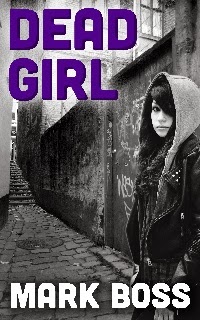
Winter is a good time to curl up with a warm pet and an exciting book. So here's the opening chapter from my novel DEAD GIRL. (You have to supply your own pet.)
* * *
DEAD GIRL by Mark Boss
A mob rushed her, feet and elbows flying.
Dahlia Grove dodged her attackers and kicked the soccer ball to center field. She caught a forearm to the ribs as she cut back and ran down the sideline. "Go right," she yelled and the midfielders and forwards shifted.
Her teammate Jessica corralled the ball and took it up field, but defenders swarmed her. She hooked her left foot around and passed the ball high to Dahlia.
The ball soared through the night air. A girl went up to head the ball, and Dahlia leaped, too. Their heads crashed together, skull to skull.
The ball flew out of bounds. A whistle blew.
While the other girl sank to one knee, Dahlia shook her head and staggered to the ball. As she raised the dew-slick ball above her head, she saw her parents and little brother, Andrew, in the stands, eyes wide. She winked at them. I'm fine.
She slung the ball into play and watched the Ivanovich sisters pass it back and forth on their way to the goal. She jogged back onto the field, still shaking the stars out of her head from the collision. Her ponytail of long, black hair came loose and she stopped to pull it tight.
Something behind her left eye popped--a sudden, sharp lance straight into her brain. Her legs buckled. What the hell?
The world turned sideways as she fell. Wet grass tickled her right cheek. The pain spiked. Then nothing...
* * *
Margaret left the elevator and hurried down the hallway, her black rubber clogs clopping on the waxed floor. As she walked, the short nurse tugged on latex gloves to hide the half-healed chemical burns on her hands.
When she entered the hospital room, Robin pounced on her. "Where have you been?" Robin asked.
"I was on my lunch break," Margaret said as she slinked past her supervisor. The double occupancy hospital room was a mess, and there was a new patient in the bed by the door. "What happened?" she asked.
"Mrs. Barrow flat lined," Robin said. "We revived her, but she's barely holding on." The tall nurse rubbed hand sanitizer between her fingers. "She's your patient. You should have been here."
Margaret shrugged. "I have to eat." She unwrapped a piece of sour apple gum to cover the double-layered smell of Lysol and human waste.
Robin stood at the foot of the other bed, where a lean girl with long, dark hair lay in a coma. As Robin checked the girl's vitals, Margaret asked, "Who's the dead girl?"
"Don't call her that. She has a name--Dahlia Grove." Robin flipped through the girl's chart. "She came in last Saturday for a concussion and they found a brain tumor. Doctors say she won't last a week."
Margaret took the TV remote from Mrs. Barrow's nightstand and clicked it. A long scream came out of the television mounted on the wall, then a deep voice said, "Evil lurks in America's heartland."
"Oh, Heartland Serial Killers is on. I love this show," Margaret said.
"Really?" Robin looked up from Dahlia's chart.
"Come on, they can't hear it." Margaret waved at the comatose patients.
"Show some respect." Robin reached up and mashed the TV's power button. "Mrs. Barrow needs a fresh IV, her bag is almost empty. I have to go get meds."
"Okay, sorry, gosh." Margaret dumped a pot of dead flowers in the trash. "Could you grab me an IV bag while you're getting meds? They're on the top shelf and I can't reach them."
"Fine." Robin opened the door to the hallway. "I'll be back in a minute."
As soon as the wide door swung shut, Margaret took a flat stone carved with a symbolic glyph from her pocket. She rubbed the enchanted stone to activate it, and slipped it under Mrs. Barrow's mattress. Margaret walked to Dahlia's bed and stood smacking her wad of gum. She watched the dark-haired girl breathe.
* * *
The Shadow Lands
Eyes shut, Dahlia took a deep breath of cold air and caught the faint scent of sour apples.
And the smell of something else. Something thick and coppery.
She opened her eyes and stared up at an unlit fluorescent ceiling panel. When she brushed her long, dark hair out her eyes, her face felt greasy.
Where am I?
She sat up, but a wave of dizziness hit her. She put out her hands to steady herself and felt a tug. A clear tube was taped to one wrist.
Why do I have an IV? Ah, crap, I'm in a hospital. What happened?
She looked over her shoulder. The medical monitors behind her were blank. The power is out. Don't hospitals have emergency generators?
The wide metal door on her right was shut. To the left, a gauzy curtain hung from a track on the ceiling. Beyond the fabric, gray light seeped through a window on the far wall.
Something moved on the other side of the curtain, but it wasn't close enough to make a silhouette. She heard a low smacking sound.
She pushed the bed covers aside and a fat cockroach ran from under the sheet. She flinched and the bed creaked.
The smacking sound paused. Dahlia froze. She inhaled the scent of salt and old pennies.
The sound resumed, wet and crunchy, like someone munching celery.
She eased her legs off the bed. The cold tile floor shocked her bare feet. She looked down. A thin, red ribbon rolled along a grout line between the tiles toward her toes.
That's blood.
The ribbon trickled toward her. She moved her feet apart and it ran under the bed. Looked at the bedside table and saw a landline phone and an empty plastic tray. She reached for the phone, then saw the big, red emergency button on the wall and pressed it.
She expected to hear an alarm or voices from the hall, but nothing happened.
Something splashed onto the floor beyond the curtain, and the thick scent of human waste made her gag.
Run.
She lurched up, but her head spun. Reached out to catch herself as she fell and caught a handful of curtain.
The curtain tore away and she fell to her knees.
Looked up.
Eight feet away an old woman lay in a bed identical to hers. A hunchbacked monster the color of pus straddled the woman. Its jaws burrowed into her chest cavity. Blood and feces dripped to the floor.
Dahlia tried to scream but only hissed.
The old woman's head turned. Her eyes found Dahlia's. Her lips moved. "Help me."
The monster retracted from the woman's ribcage. Its bloody head rotated on a boney, elongated neck. Small, hard eyes glared at her. The monster's mouth split into a red smile.
This time Dahlia screamed.
She scrambled up and around her bed, tearing the IV from her wrist.
The multi-limbed monster flowed to the floor like a giant millipede.
She grabbed the door handle and pulled. The monster oozed forward.
She ran into the corridor and shouted, "Help! Someone help!"
Dahlia took three steps and stopped.
There were no people--no nurses, no patients, no visitors. The electricity was out. Weak gray light from the windows showed brown smears on the walls, and wide blooms of black mold. Wires dangled from the ceiling. She stood in a puddle of cold, slimy water.
A low moan sounded behind her. The monster poked its head out the door, sniffed, and entered the hallway.
She ran.
* * *
If you enjoyed this sample, you can download the complete novel at Amazon. Thanks for reading!


November 6, 2013
Author Tony Simmons talks zombies

In this post my friend and fellow author, Tony Simmons, visits to talk about his new zombie book.
Mark: What are the title and the topic of your new book?
Tony: "Tales of the Awakening Dead" is a collection of zombie short stories. Each one takes a different approach to the genre, and the "rules" of the zombies are different from tale to tale. I enjoyed trying different voices and approaches, and I hope readers find it a fresh take.
Mark: Where is it available and in what format?
Tony: The collection is available through Amazon.com for Kindle devices and apps at only 99 cents, and a real-world print edition is also available for under $5.
And anyone interested can "like" the Facebook page.
Mark: I think zombies have transitioned from being a cultural fad to a full sub-genre of science fiction. Why is that? What is our continuing fascination with them?
Tony: They're a cultural shorthand now. We see them in commercials, where they're used to comic effect. Mainstream movies are made on the "Romeo and Juliet" model about zombies. It's important to note that these are Romero-style undead creatures, not traditional voodoo zombies; these things are more like the old concept of the ghoul, hungry for human flesh. And I think that's important because, while the idea of losing our mental faculties to enslavement by a witch doctor is pretty awful, the prospect of losing our humanity -- or losing our loved ones to such a terrible death -- is what haunts us.
Also, I remember being a kid and seeing one of the Universal movies about the mummy, and realizing that no matter where the protagonists ran to hide, this slow-moving creature would never tire, and it would find them. There's something of that in our fear of the zombies. They just don't stop, and there's always more of them.
Mark: In some ways, people seem to find zombies more accessible than vampires. Vampires are powerful, immortal and often glamorous. I don't think most of us feel like that. However, we see zombies, and that zombie is still wearing her uniform from work, and the zombie over there is wearing a tool belt and hardhat, and we see these reflections of us--ordinary citizens. Somehow, that makes them easier to relate to. Is that what gives them their staying power in our culture?
Tony: I think that's a good possibility. They are us, but broken. So many people feel isolated these days; we barely know our neighbors, and it would be no surprise to discover them massing to feed on our flesh, the mindless psychopaths that they probably are. I mean, have you seen the mess in their back yards? The way they dress their kids? They could be capable of just about anything. I'm watching.
Mark: We see a lot of apocalypse and dystopia in books and movies right now, and some people think that's because of the long economic stagnation, and the endless wars, and terrorism. But the original Star Trek debuted in 1966, during the Viet Nam war, when the nation was probably as badly divided as it is now. Yet Star Trek is a very positive look at the future, where humans have overcome their differences and are now exploring the galaxy. It's science and exploration, not gritty survival. Why do you think we're reacting differently now to tough times?
Tony: I don't know that zombies are so much a product of the times, as much as an idea whose time has come. Look at the Depression-era popular literature, and you find Doc Savage standing a head taller than all the others, a paragon of morality and individuality. Superman came out of that same cultural stew.
And your point about the original Star Trek is spot-on. Difficult times, at least in America, seem to bring us hopeful visions or heroes to emulate. Granted, we live in a more jaded world, a post-9/11 culture bombarded by images of violence in all its sordid forms. But I just don't think it's that easy to draw a straight line from economy and politics to zombies.
How do you explain the Ancient Astronauts and Big Foot mania of the mid- to late 1970s in those terms? The vampire chic of the 1990s? Hair bands? I think it may be that Romero-style zombies have had a generation to gestate in the collective unconscious and simply may have dug themselves into the light.
Mark: Last question. What's the next project?
Tony: That's also difficult to define. As you know, I just completed a Southern Gothic/urban fantasy/Lovecraftian Horror novel that is in the editing stage. I'm close to finishing the initial draft of 'This Mortal Flesh,' which is a novel of 'The Awakening Dead' teased in this collection, which includes the novel's first chapter. My next full-on "new" project will be a sequel to the SG/UF/LH novel now being edited, which I hope to make a big dent in during NaNoWriMo; I'm thinking of it in terms of a Hammer horror film, as our young Native American hero finds himself in a modern Welsh village full of nice folks who secretly are Satan worshipers, mixed with an ancient vampire that was also a mummy, and a certain mage's manservant with a slight case of lycanthropy. Also, there's this girl...
Mark: Thanks to Tony for this interview.
Now hit those links and gobble up some zombie goodness!
October 25, 2013
Book review of YOU by Austin Grossman

I read YOU by happy accident. Being a comic book guy, I'd heard of Grossman's first novel, SOON I WILL BE INVINCIBLE, but hadn't got around to reading it because...because I was reading actual comics with real supervillains. (That came out wrong. Anyway...)
YOU is about a law-school dropout who goes to work for his old high school pals at a video game developer. It starts with Russell (the protagonist) going through an awkward interview at Black Arts Games. Anyone who has ever had to work for (not with) a friend, knows how weird it can be. They're not your buddy anymore, they're your boss. And it's weird.
There are plot lines all over the place. Programmers would call it 'spaghetti code,' but man this is some tasty spaghetti. Did Russell's old pal, eccentric genius Simon kill himself? Does Lisa, a math and programming wizard with the social skills of a snapping turtle, like Russell? Is someone sabotaging their newest game? And why are there three times as many chairs as there are employees at the office?
This isn't a plot driven novel. If you're looking to solve a murder mystery, seek a different dungeon. Where Grossman excels is characterization. He takes us back and forth in time with Russell--from the awkward interview to high school group projects, to computer camp and back into the current crisis at work. We see Russell grow, and yet he is always believably himself. Whether you first cracked your knuckles and began to type on a TRS-80, or a Commodore 64, or a 512k Mac, lovers of computers, video games and the RPGs (role playing games) they derived from, will enjoy this. Although as a writer, gamer, and lapsed programmer, I'm pretty much this book's smartbomb target. (I failed a Saving Throw against Loving This Book.)
(The book cover is from Amazon.com)
August 18, 2013
Hunting "The Bear" with William Faulkner
My introduction to William Faulkner took place over a short story in high school, and we did not make friends. His writing was dense, and felt labored and 'writerly' to me. I vaguely recall watching an adaptation of one of his stories, wherein Tommy Lee Jones played a redneck arsonist.
My introduction to hunting stories was far different. I read about bear hunts in Alaska, safaris in Africa, and friendships formed in freezing duck blinds in the colorful pages of Outdoor Life magazine. Authors like Robert Ruark, Jack O'Connor and Ernest Hemingway wrote about the woods, the hunt, and the lessons learned with authenticity and humility, and often humor.
Years back, a friend urged me to read Faulkner's long short story "The Bear." I didn't get around to it until last week, when something made me search out Faulkner in the public library, where I found an old edition of "Big Woods: The Hunting Stories of William Faulkner," with excellent illustrations by Edward Shenton.
"The Bear" is dense--long sentences in long paragraphs, broken only by a few lines of dialogue and the barking of dogs on the scent, and the roar of a shotgun, and the sound of a great bear running through deep leaves. It is epic, and sad and beautiful, and I take back everything negative I ever said about William Faulkner.
I don't know much about Faulkner's life, but I know that no one could write a story like "The Bear" unless they'd walked those deep Mississippi woods. Suffered in the heat, endured in the cold, pulled their boots free of the mud one hard step at a time. "The Bear" isn't just about Old Ben, the near mythical, giant black bear. Or Lion, the only dog brave enough to chase Old Ben. Or even the boy and his friends, who are white, black, red and mixed. But it is about recognizing our place in the world, appreciating the quiet moments, accepting the things beyond our control, and respecting the land and the creatures that inhabit it.
You need not hunt to appreciate the woods, or recognize courage, or mourn the passage of time and friends dead but not forgotten. These things, and more, make "The Bear" worth your time and consideration.
* * *
Note: Fellow writer Lynn Wallace first told me I should read "The Bear." What spurred me to finally go find and read it was a reference to Faulkner's mythical Yoknapatawpha County on author Nick May's website.
May 30, 2013
What do you do when every object is Internet connected?
Actually, there is a spoon.
Welcome to the future where everything collects data, not just your car, your phone and your Fuel band, but your toilet. Yeah, your toilet knows you're slightly dehydrated and you don't eat enough fiber, and it already called your nurse practitioner. Check your messages.
But what do we do when everything is connected?
So we're collecting all this data, and storage keeps getting cheaper. Heck, the biowizards at Harvard stored 700 terabytes on a single gram of DNA, so stop worrying about storage.[1] The problem is you.
You can't push a pumpkin through a garden hose.
What?
The three-pound engine at the top of your neck is a bottleneck. Everything around you is going to be spewing data, and you will have no idea what to do with it because you don't know how to process it all.
Hurricanes and hedge funds.
We analyze complex systems every day with the fastest computers and the best brains, but we don't understand them. So we collect more data and pile it deeper, but we can't process it all. We have more data, not better choices.
In "How Hurricane Forecasting Got So Good," Sarah Fecht wrote, "Hurricane forecasting begins with lots and lots of data. More data than weather modelers know what to do with, really." Yet when a hurricane is just two days from landfall, our predictions miss by an average of 100 miles. During Superstorm Sandy, we outdid ourselves and called it within 50 miles. Wow.[2]
Was our data on Sandy incomplete? No, our analysis was.
Buy. Sell. Jump.
Complex systems. The stock market is complex. Lotsa numbers, but computers are good at numbers and we have plenty of computers. Yet every investment group pays Stock Analysts to figure out what all that data means and distill it down into something they can understand and act on.
Hedge funds deal in billions of dollars. There are at least 30 different recognized hedge fund strategies, but many of them boil down to considering a single factor. All that data, and some hedge fund manager is looking at interest rates. Only interest rates.
In Running Money, hedge funder Andy Kessler wrote, "Because information is distributed in milliseconds, there is no time advantage anymore. You have to be ahead of news."[3] Someone has to sit down and analyze all this stuff, because the guy across the street has access to all the same data you do. So why do some hedge funds make money and others don't? Better analysis.
The Plans for the Death Star
We already collect more data than we know how to process. When all the objects in your life start chatting with you and each other, you'll be drowning in data. It's time to plan ahead.
The same computers that collect and store this stuff are not built to analyze it. There are numbers and letters and charts, but which ones are important and what do they tell us?
We need to build ourselves some new tools that can help us analyze this flood. Then we need to ask these tools the right questions so they can give us good advice. Because data is useless if we can't put it to work.
Sources:
[1] "Harvard cracks DNA storage, crams 700 terabytes of data into a single gram" by Sebastian Anthony for ExtremeTech. http://www.extremetech.com/extreme/13... [2] "How Hurricane Forecasting Got So Good" by Sarah Fecht for Popular Mechanics. http://www.popularmechanics.com/scien...
[3] Running Money by Andy Kessler. HarperCollins Publishers Inc. www.andykessler.com. www.harpercollins.com.
Welcome to the future where everything collects data, not just your car, your phone and your Fuel band, but your toilet. Yeah, your toilet knows you're slightly dehydrated and you don't eat enough fiber, and it already called your nurse practitioner. Check your messages.
But what do we do when everything is connected?
So we're collecting all this data, and storage keeps getting cheaper. Heck, the biowizards at Harvard stored 700 terabytes on a single gram of DNA, so stop worrying about storage.[1] The problem is you.
You can't push a pumpkin through a garden hose.
What?
The three-pound engine at the top of your neck is a bottleneck. Everything around you is going to be spewing data, and you will have no idea what to do with it because you don't know how to process it all.
Hurricanes and hedge funds.
We analyze complex systems every day with the fastest computers and the best brains, but we don't understand them. So we collect more data and pile it deeper, but we can't process it all. We have more data, not better choices.
In "How Hurricane Forecasting Got So Good," Sarah Fecht wrote, "Hurricane forecasting begins with lots and lots of data. More data than weather modelers know what to do with, really." Yet when a hurricane is just two days from landfall, our predictions miss by an average of 100 miles. During Superstorm Sandy, we outdid ourselves and called it within 50 miles. Wow.[2]
Was our data on Sandy incomplete? No, our analysis was.
Buy. Sell. Jump.
Complex systems. The stock market is complex. Lotsa numbers, but computers are good at numbers and we have plenty of computers. Yet every investment group pays Stock Analysts to figure out what all that data means and distill it down into something they can understand and act on.
Hedge funds deal in billions of dollars. There are at least 30 different recognized hedge fund strategies, but many of them boil down to considering a single factor. All that data, and some hedge fund manager is looking at interest rates. Only interest rates.
In Running Money, hedge funder Andy Kessler wrote, "Because information is distributed in milliseconds, there is no time advantage anymore. You have to be ahead of news."[3] Someone has to sit down and analyze all this stuff, because the guy across the street has access to all the same data you do. So why do some hedge funds make money and others don't? Better analysis.
The Plans for the Death Star
We already collect more data than we know how to process. When all the objects in your life start chatting with you and each other, you'll be drowning in data. It's time to plan ahead.
The same computers that collect and store this stuff are not built to analyze it. There are numbers and letters and charts, but which ones are important and what do they tell us?
We need to build ourselves some new tools that can help us analyze this flood. Then we need to ask these tools the right questions so they can give us good advice. Because data is useless if we can't put it to work.
Sources:
[1] "Harvard cracks DNA storage, crams 700 terabytes of data into a single gram" by Sebastian Anthony for ExtremeTech. http://www.extremetech.com/extreme/13... [2] "How Hurricane Forecasting Got So Good" by Sarah Fecht for Popular Mechanics. http://www.popularmechanics.com/scien...
[3] Running Money by Andy Kessler. HarperCollins Publishers Inc. www.andykessler.com. www.harpercollins.com.
March 27, 2013
What's the difference between Green, Black and White Tea?
 (This photograph is from Andrew McRobb, RBG Kew, at Kew Gardens) Humans have been using tea leaves for some 4,000 years, and making hot tea for at least 1400 years. I've been drinking tea for slightly less than that. But I have no idea what the difference between green tea and black tea and white tea is. Perhaps you don't either? Let's sort this out. Most tea is either from China or India, but both are the same Camellia sinensis plant. Green, black and white tea are all from this same plant. It's how they are processed that makes them different. To make white tea, farmers pick the leaves from the tea shrub early in the year while its buds are still closed. The leaves are dried, and sometimes baked, but otherwise not processed. This makes a very light tea. Green tea leaves are pan fired or steamed, but not allowed to ferment. Although this process means less caffeine, green tea has the advantage in that it contains the super antioxidant HGCG. The most processed version is black tea, where the leaves are allowed to ferment, then are dried and packaged. Black tea is also the strongest of the teas in caffeine. Tea (hot or cold) is one of the most popular drinks in the world, and is safe and healthy when used in moderation. Want to learn more? Kew Gardens in the UK has a good site, and here are helpful explanations at Tazo Tea and Tea Laden. (If you find this article useful, please support this blog by purchasing one of my novels. Thanks.)
February 27, 2013
Book Review: HOSOI by Christian Hosoi

Actually, the full title of this biography is HOSOI: My life as a Skateboarder Junkie Inmate Pastor. That's an accurate summary of his life progression, and like the multiple descriptions in the title, this book is a window into several different cultures--skate culture, the California party scene, drug culture, prison culture and Christian life (including some hardcore outreach).
In the book, Hosoi details his journey from a kid who liked to skateboard and smoke weed, to turning pro at age 13 and later becoming the highest paid skater in the world. Like so many young sports stars with a sudden flood of money, he went wild and partied his way into eventual addiction. The cool club kid and athlete became a middle-aged junkie on the run from the police, and from himself.
The sheer excess in the early chapters of the book may make you want to quit reading, especially because it's so obvious that he's wrecking his life and rushing toward doom. By the time Hosoi ends up in prison, you're as tired and depressed as he was. But the way he embraces Christianity and how it transforms him is amazing. You have to hang on to the end of the book to realize the full story of his redemption.
Although the book examines a specific time (1980s and 1990s) and scene (skateboarding culture and its unnecessary connection with drugs), the story of how God turned a man's life around is inspiring and timeless.
(The book cover is from Harper Collins publisher.)
February 12, 2013
Seed Vaults and Food Security

When we see terms like 'security' and 'strategy,' we might think of armies and navies or missiles and satellites. But what about seeds?
If people can feed themselves, they make a big step towards their own security. They don't have to rely on imports of food, or trade partners raising prices, or shipments of food being hijacked. However, crops suffer in the same situations that humans do. When there are droughts, or wars, or flooding, crops can not only be damaged, but totally wiped out.
A seed vault is a safe storage area where seeds can be preserved for future use. It's like putting your money in a bank rather than under your bed. One of the best-known examples is the Svalbard Seed Vault in Norway. This vault is a simple, sturdy underground facility carved into the permafrost.
Svalbard's location, design and temperature make it an almost ideal place to store seeds. It houses over 750,000 different types of seeds from countries around the world. This is a significant percentage of the estimated 2,000,000 total types of distinct seeds held in the world's 1,400 seed banks.
If, for instance, a war in a country destroyed its rice crop, seeds from the vault could be used to start over. However, storing only one type of rice would limit what farmers can do because different types grow better in different climates. Some plants handle lack of rain better, or grow in sandier soil, or resist insects and diseases. The more choices farmers have to work with, the better they can adapt to changing conditions and even tastes.
Maybe you have an apple tree or a fig tree in your yard that you enjoy. Wouldn't you like to be able to grow a new tree if a storm knocked your favorite tree down?
If you could preserve a certain seed, what would you pick?
(Here's the site for the Svalbard Seed Vault. I got the idea for the story from an article in the February 2013 issue of Popular Mechanics. The pic is from the Svalbard site.)
February 1, 2013
Try a steel water bottle.
A few years ago I ordered a steel water bottle because I'd read about them, or seen a cute girl at the gym carrying one--maybe both. Anyway, last week I ordered another. Not because the original is worn out, but because I wanted a larger bottle for when the hot weather gets here.
You should try a steel bottle. Here's why:
Whether you're taking it to work or taking it on a hike, steel bottles are sturdy. Like 'drop it off a cliff' sturdy. I'm pretty sure if a bear attacked, I could wedge my steel bottle in its mouth and then run. On Tuesday at the park a duck attacked my shoe laces, but I didn't use the bottle trick. The duck might have flown off with my bottle.
In the past, I used disposable bottled water and recycled the bottles, but energy wise I think a single steel bottle is more efficient. At a rate of four bottles a week multiplied by 52 weeks, I used 208 bottles per year (which is 6.5 of those 32-bottle cases you buy at the grocery store).
I've tried special plastic bottles that aren't supposed to leach toxic chemicals into your stomach, but plastic sometimes picks up a weird taste and are easier to break. They make aluminum bottles that are cheaper (and lighter) than the steel ones, but the aluminum ones have a plastic liner because aluminum isn't good for you.
A good stainless steel bottle is sturdy, your water won't taste funny and you won't need to make as many trips to the recycling center. So try one.
(I use Klean Kanteen steel water bottles, but there are lots of manufacturers. Pick what's right for you.)
You should try a steel bottle. Here's why:
Whether you're taking it to work or taking it on a hike, steel bottles are sturdy. Like 'drop it off a cliff' sturdy. I'm pretty sure if a bear attacked, I could wedge my steel bottle in its mouth and then run. On Tuesday at the park a duck attacked my shoe laces, but I didn't use the bottle trick. The duck might have flown off with my bottle.
In the past, I used disposable bottled water and recycled the bottles, but energy wise I think a single steel bottle is more efficient. At a rate of four bottles a week multiplied by 52 weeks, I used 208 bottles per year (which is 6.5 of those 32-bottle cases you buy at the grocery store).
I've tried special plastic bottles that aren't supposed to leach toxic chemicals into your stomach, but plastic sometimes picks up a weird taste and are easier to break. They make aluminum bottles that are cheaper (and lighter) than the steel ones, but the aluminum ones have a plastic liner because aluminum isn't good for you.
A good stainless steel bottle is sturdy, your water won't taste funny and you won't need to make as many trips to the recycling center. So try one.
(I use Klean Kanteen steel water bottles, but there are lots of manufacturers. Pick what's right for you.)
January 24, 2013
Don't Multi Task
The idea that doing several things at once is somehow better than doing one thing at once continues to spread. I guess people think if they're doing three things, they must be working harder. And we all want to be hard workers--we especially want others to acknowledge us as hard workers. So we do three things at once. We multi task.
When you do three things at once, are you doing any of them well?
Seriously, stop and think about it. You're checking your email and your co-worker is asking you a question. Which one are you focused on? Maybe both, but then you're only giving each half your attention.
Computer science teaches that computers don't truly do three things at the same time. They do Task A, then jump to Task B, then Task C. Computers switch back and forth very rapidly, giving the illusion that they're multi tasking.
Most people don't realize this. Instead they see their computer running three apps at the same time and figure they can do, too. But we're not computers.
Pick one task and focus on it. Do it to the best of your ability. Focus is key, especially if it's a creative task or something you're still learning to do. Don't stop to answer the phone or check Twitter. Finish the task, or if it's a big job, take a break and walk around.
Consider quality over quantity. Doing something well versus doing ten things poorly. Now go try it.
(The term multi tasking probably wasn't invented when Joe Hyams wrote ZEN IN THE MARTIAL ARTS, but this little book is full of lessons on being in the moment. Lifehacker Tim Ferriss has also addressed the problem of multi tasking in his books and blog.)
When you do three things at once, are you doing any of them well?
Seriously, stop and think about it. You're checking your email and your co-worker is asking you a question. Which one are you focused on? Maybe both, but then you're only giving each half your attention.
Computer science teaches that computers don't truly do three things at the same time. They do Task A, then jump to Task B, then Task C. Computers switch back and forth very rapidly, giving the illusion that they're multi tasking.
Most people don't realize this. Instead they see their computer running three apps at the same time and figure they can do, too. But we're not computers.
Pick one task and focus on it. Do it to the best of your ability. Focus is key, especially if it's a creative task or something you're still learning to do. Don't stop to answer the phone or check Twitter. Finish the task, or if it's a big job, take a break and walk around.
Consider quality over quantity. Doing something well versus doing ten things poorly. Now go try it.
(The term multi tasking probably wasn't invented when Joe Hyams wrote ZEN IN THE MARTIAL ARTS, but this little book is full of lessons on being in the moment. Lifehacker Tim Ferriss has also addressed the problem of multi tasking in his books and blog.)