Mark Boss's Blog, page 8
May 17, 2012
The Virtues of Cats

For the last seven months, I've been feeding a feral cat that lives in my neighborhood. It's a young cat, quite skinny, and very stealthy. I named it 'Ninja' because it will slip up, gobble the food from its bowl, and run. It is wary of humans, probably by instinct and also because some misguided neighbors tried to trap it. Apparently, they do not understand the benefits of having cats around.
When I was school boy, we learned the Egyptians domesticated cats 3,000 or 4,000 years ago. More recent evidence indicates the human and cat partnership may reach back 10,000 years to the Fertile Crescent in Mesopotamia. Ancient farmers adopted cats because they kept rats out of the grain stored up for the winter, and chased birds and other creatures from vegetable gardens. Cats are also good at keeping ships and boats free of rats. Anyone who's ever had birds eat the strawberries in their garden, or rats and mice gnaw holes in their walls understands the value of cats.
I have never petted Ninja. I feed her not because she cuddles in my lap, but because she is hungry. Between the steady supply of food and fresh water I put out, she appears much healthier. And the partnership works both ways. Last week she went under a neighbor's shed, killed a large rat, and brought it back to my yard.
Some historians speculate that part of the reason the Bubonic Plague (or Black Death) spread so quickly in medieval Europe was because superstitious people killed off so many cats. In their panic to find a cause for the plague, people also killed dogs, which eliminated another defense against rats. Without a healthy cat and dog population to keep the rats in check, the rats (and the fleas they carried on them) mixed with the human population and spread the plague.
People may debate the whole cat or dog thing and which makes a better pet or companion, but it's an unfair comparison. Both cats and dogs are predators, but they evolved in different ways and each is suited for different tasks. And while we categorize cats as being domesticated like sheep or cows, I wonder how deep this domestication runs? How many generations of cats being born without human contact would it take before we list them as undomesticated?
While scientists figure this out, I recommend you do a few helpful things. If you have cats, get them fixed and keep up to date on their rabies shots. If you see a feral cat in your neighborhood, don't grab it unless you want a nasty bite and a trip to the hospital. Don't run them over or trap them, unless you like having rats and mice in your yard--and maybe your house.
(This article explains about cats and the medieval plagues. I found the picture of the cat here.)


May 11, 2012
Can you get smarter? Brain training, Nootropics and Intelligence.
People love super hero movies and comics. Many of us wish we could pick up a car like the Hulk, or wield a magic hammer like Thor, but I suspect a lot of us also admire Tony Stark. As Iron Man, Stark can fly and shrug off bullets, but when he takes off the armor suit, he's still a genius. Batman is similar. Take away the Kevlar suit and the wonderful toys, and Bruce Wayne is still the World's Greatest Detective.
Being very intelligent is a sort of super power in its own right.
Most of us would like to be smarter. At some point in our lives we tackled a problem at school or work that brought us to the limit of our intelligence, and that's a humbling moment.
But what if we could get smarter?
Companies are pursuing that idea in two ways--drugs and brain training.
Nootropics, also called smart drugs, are drugs that are supposed to make people smarter. Well, sort of. Drug makers claim nootropics do all sorts of things, including improve your memory, up your attention span and concentration, and even make you smarter.
Testing these claims is not easy. It's difficult for scientists, doctors and the rest of us to even agree on what intelligence is. After all, there isn't just one type of IQ test, but rather many tests. And taking a drug that makes you feel more alert isn't the same thing as actually being smarter. In fact, with many of these products, it would be more accurate to say they are 'productivity enhancers' rather than smart drugs. In the same way that a big cup of coffee or a bottle of Mountain Dew is a productivity enhancer.
Among the drugs there are all sorts of approaches, including vitamins and herbs, recreational drugs, stimulants, blood flow enhancers, mood stabilizers, etc. And like any pharmaceutical maker, these companies are looking to make money.
People tempted to experiment with Nootropics might consider that in many cases, there are no long-term studies of their effects, and little regulation of their safety and dosage.
Brain training appears to be the safer route. No nasty chemicals in your head, and scientists keep telling us that the brain is like a muscle. Various companies offer training regimens that claim to increase our working memory, fluid intelligence and brain plasticity.
I think if you train at a specific task, you generally get better at it. You can practice counting cards in a Blackjack game or memorizing as many digits of Pi as you can, and you'll get better at that task. But is this the same as being smarter?
Maintaining what you have may be a more realistic goal. People that do crossword puzzles or study a new language or learn to play a musical instrument are definitely helping their brains stay sharp. But I call that maintenance, not an increase in actual intelligence.
People looking for a magic pill or program to make them smart will probably be disappointed. As the authors of SMART DRUGS 2 point out:
"In practice, the first and most boring advice is often the most important. Many potential users of smart pills would be better and more simply advised to stop taking tranquillisers (sic), sleeping tablets or toxic recreational drugs; eat omega-3 rich foods, more vegetables and generally improve their diet; and try more mentally challenging tasks.
One of the easiest ways of improving memory, for instance, is to increase the flow of oxygenated blood to the brain. This can be achieved by running, swimming, dancing, brisk walking,..."
That sounds like pretty smart advice to me.
* * *(Sources: Wikipedia overview of Nootropics. An article in The Atlantic wherein the author self-experiments with Nootropics. The "Smart Drugs 2" page. And a company called Lumosity that offers brain training.)
Being very intelligent is a sort of super power in its own right.
Most of us would like to be smarter. At some point in our lives we tackled a problem at school or work that brought us to the limit of our intelligence, and that's a humbling moment.
But what if we could get smarter?
Companies are pursuing that idea in two ways--drugs and brain training.
Nootropics, also called smart drugs, are drugs that are supposed to make people smarter. Well, sort of. Drug makers claim nootropics do all sorts of things, including improve your memory, up your attention span and concentration, and even make you smarter.
Testing these claims is not easy. It's difficult for scientists, doctors and the rest of us to even agree on what intelligence is. After all, there isn't just one type of IQ test, but rather many tests. And taking a drug that makes you feel more alert isn't the same thing as actually being smarter. In fact, with many of these products, it would be more accurate to say they are 'productivity enhancers' rather than smart drugs. In the same way that a big cup of coffee or a bottle of Mountain Dew is a productivity enhancer.
Among the drugs there are all sorts of approaches, including vitamins and herbs, recreational drugs, stimulants, blood flow enhancers, mood stabilizers, etc. And like any pharmaceutical maker, these companies are looking to make money.
People tempted to experiment with Nootropics might consider that in many cases, there are no long-term studies of their effects, and little regulation of their safety and dosage.
Brain training appears to be the safer route. No nasty chemicals in your head, and scientists keep telling us that the brain is like a muscle. Various companies offer training regimens that claim to increase our working memory, fluid intelligence and brain plasticity.
I think if you train at a specific task, you generally get better at it. You can practice counting cards in a Blackjack game or memorizing as many digits of Pi as you can, and you'll get better at that task. But is this the same as being smarter?
Maintaining what you have may be a more realistic goal. People that do crossword puzzles or study a new language or learn to play a musical instrument are definitely helping their brains stay sharp. But I call that maintenance, not an increase in actual intelligence.
People looking for a magic pill or program to make them smart will probably be disappointed. As the authors of SMART DRUGS 2 point out:
"In practice, the first and most boring advice is often the most important. Many potential users of smart pills would be better and more simply advised to stop taking tranquillisers (sic), sleeping tablets or toxic recreational drugs; eat omega-3 rich foods, more vegetables and generally improve their diet; and try more mentally challenging tasks.
One of the easiest ways of improving memory, for instance, is to increase the flow of oxygenated blood to the brain. This can be achieved by running, swimming, dancing, brisk walking,..."
That sounds like pretty smart advice to me.
* * *(Sources: Wikipedia overview of Nootropics. An article in The Atlantic wherein the author self-experiments with Nootropics. The "Smart Drugs 2" page. And a company called Lumosity that offers brain training.)
May 5, 2012
The timeless "Endless Summer"
Last month, Turner Classic Movies showed beach movies night after night for about a week, and I watched Endless Summer for the first time. I'm not a surfer, and I really didn't know what to expect. For instance, I didn't realize that it's a documentary, or that it was director/narrator Bruce Brown's seventh movie, but the first to see wide release in the US.
Brown began surfing in California in the 1950s at age 14, and was hooked. He made several documentaries about the sport he loved, including "Barefoot Adventure" and "Surf Crazy," but "Endless Summer" was different. The movie's concept of flying around the world, following the summer weather and chasing perfect waves, is the ultimate beach fantasy.
The movie's budget was probably about $50,000 USD, but that money took them from California to Hawaii, Tahiti, Australia, New Zealand, South Africa and West Africa. Along the way, we the viewers learn not only about surf culture, but something about the local cultures as well. We see that the playful nature of surfing captures people's imagination no matter where they live. We also see some amazing surf footage. Both surfing and camera equipment have changed in the 45 years since "Endless Summer" was released in 1966, but it's still thrilling to watch.
The best wave the surfers find in their journey is on a deserted beach--Cape St. Francis in South Africa. The interesting thing is their definition of perfect. The waves at St. Francis aren't these towering monsters that make for such dramatic photographs. What made the wave perfect for them was its form, duration and rideability. As Brown said in a 2010 interview, "At Cape St. Francis that day, anyone could have surfed it."
That attitude of looking for a good ride and a fun day permeates this G-rated movie. I think anyone could watch it and smile because it contains an innocent charm. It's not trying to make a big thematic point and clobber you over the head with it. "Endless Summer" is about the joy of surfing and the camaraderie of surfers the world over. And about the magic of catching that one perfect wave on that one perfect day--a memory that will stay will you for a lifetime.
(Sources include: Internet Movie Database, the interview at Daily Stoke, the Endless Summer homepage, and Bing Movies. The trailer is from YouTube.)

April 28, 2012
Space X to resupply the International Space Station

This past week the world enjoyed images of the retired space shuttle Enterprise headed for New York city. It was a nice finish to that long program, but also a reminder of coming changes in how Earth conducts space missions.
Space Exploration Technologies, better known as SpaceX, will test fire its Falcon 9 rocket's engines on 30 April. Then on 7 May it will attempt to launch into space, and then possibly dock with the International Space Station (ISS). The Dragon vehicle on top of the Falcon rocket will carry a load of supplies for the ISS, in case the docking maneuver is successful. If it all works, the Earth will enter a new era in space where private companies may replace government programs.
Right now, the ISS relies on Russian, European and Japanese vehicles for resupply. Having three options is a good thing, but the costs per mission are high, and none of the three vehicles are re-useable. The advantage of SpaceX's Dragon vehicle is that it is re-useable, and less expensive. For instance, the European ATV cargo ship costs 300 million USD to build, while SpaceX will charge NASA only 133 million per resupply run. If the Falcon can dock with the ISS, SpaceX is slated to carry out 12 of these missions, designated Commercial Resupply Services (CRS).
What's particularly remarkable is that SpaceX only formed their company ten years ago, back in March 2002. In 2010, they became the first private company to launch a vehicle into orbit and then return it safely to Earth. This fast-paced development makes one wonder what they can do in the next decade, and if private companies can work in space more efficiently than government programs.
There are a lot of 'ifs' here. If the Falcon can dock with the ISS and unload its supplies, it will mean the ISS won't have to rely on the Russian, European and Japanese vehicles. The bigger picture is that space exploration may transition from a government-only arena to a partnership between private companies and governments. Will this lead to private corporations dominating space? Or will governments always think that national security interests force them to remain involved? A lot of interesting questions will be answered.
[On 30 April, SpaceX.com will feature a webcast of the engine tests on the Falcon 9 rocket at 2:30pm ET.](This post uses data from the SpaceX website, and this article from Dave Klingler at Ars Technica. The pic of the Falcon 9 rocket is from SpaceX.)

April 24, 2012
The CISPA Bill and the Threat to Your Rights
It hasn't been long since the SOPA bill failed in the US congress, and yet our elected officials have already brought forth a new bill: the Cyber Intelligence Sharing and Protection Act or CISPA (HR 3523).
CISPA is about sharing your information between the US government and private sector entities. A key provision is that the bill says both the government and the private companies cannot be held liable for any harm that comes to you because of this sharing.
Instead of getting a search warrant from a judge, this new bill allows the government to 'encourage' companies to cooperate freely in sharing your online data. This isn't just about reading your email to make sure you're not a terrorist. Consider the data flow when you use Internet banking, or pay your health insurance online, or read favorite news sites, or shop on eBay or Amazon, or post on Twitter, or watch funny cat videos on YouTube. Is that anyone's business besides yours?
Yet the bill already has over 100 sponsors in the House of Representatives. What are they thinking?
Ever notice how often you hear the words "...for security purposes..." And not just in the airport. We hear that a lot now. Everything is "for security purposes." It uses the threat of terrorism to justify the loss of privacy and individual rights, and apparently this ploy is very effective with members of Congress.
A particularly interesting point is the list of companies that supportCISPA. Do you have phone service with ATT or Verizon? Do you have a Facebook page? Essentially, these companies are saying they don't care about protecting your data. Other members of the list include the huge contracting companies in the military/industrial complex like Boeing and Lockheed Martin. These companies rely on the constant flow of cash from the US government to develop new technologies and weapon systems.
If you are a US citizen, take a moment and hit this link to the Electronic Frontier Foundation. It has a handy tool where you can enter your zip code and send a Twitter message to your congress person. Or you can scroll down and read a graphic explaining CISPA.
If you're not a US citizen, take a moment to think about the laws in your own country. Are they making you safer, or simply giving your government more power over you?
I am against terrorism. Attacking innocent people to achieve political or religious goals is wrong. But in the rush to secure ourselves we are giving up our freedoms. And governments around the world are using the threat of terrorism to exert more control over their citizens. Trading safety for tyranny is a bad choice.
Read more at the EFF site here.
CISPA is about sharing your information between the US government and private sector entities. A key provision is that the bill says both the government and the private companies cannot be held liable for any harm that comes to you because of this sharing.
Instead of getting a search warrant from a judge, this new bill allows the government to 'encourage' companies to cooperate freely in sharing your online data. This isn't just about reading your email to make sure you're not a terrorist. Consider the data flow when you use Internet banking, or pay your health insurance online, or read favorite news sites, or shop on eBay or Amazon, or post on Twitter, or watch funny cat videos on YouTube. Is that anyone's business besides yours?
Yet the bill already has over 100 sponsors in the House of Representatives. What are they thinking?
Ever notice how often you hear the words "...for security purposes..." And not just in the airport. We hear that a lot now. Everything is "for security purposes." It uses the threat of terrorism to justify the loss of privacy and individual rights, and apparently this ploy is very effective with members of Congress.
A particularly interesting point is the list of companies that supportCISPA. Do you have phone service with ATT or Verizon? Do you have a Facebook page? Essentially, these companies are saying they don't care about protecting your data. Other members of the list include the huge contracting companies in the military/industrial complex like Boeing and Lockheed Martin. These companies rely on the constant flow of cash from the US government to develop new technologies and weapon systems.
If you are a US citizen, take a moment and hit this link to the Electronic Frontier Foundation. It has a handy tool where you can enter your zip code and send a Twitter message to your congress person. Or you can scroll down and read a graphic explaining CISPA.
If you're not a US citizen, take a moment to think about the laws in your own country. Are they making you safer, or simply giving your government more power over you?
I am against terrorism. Attacking innocent people to achieve political or religious goals is wrong. But in the rush to secure ourselves we are giving up our freedoms. And governments around the world are using the threat of terrorism to exert more control over their citizens. Trading safety for tyranny is a bad choice.
Read more at the EFF site here.
April 20, 2012
University of Chicago's robot-powered Mansueto Library
In May, the University of Chicago's new Joe and Rika Mansueto Library will open to the public. What's special about this library? Robots. Robots retrieving books from a 55-foot deep underground facility. (Please see video above.)
The library is really two physical parts--an above ground reading room that can hold 180 people, and a below ground storage area. The reading room is a glass-enclosed ellipse with tables and computers. The storage area is a chilly 60 degrees Fahrenheit warehouse that looks like something from the movie The Matrix.
Just as there are two physical parts, there are two approaches to resources--traditional books, and digitized books. Like several other universities, University of Chicago has partnered with Google to digitize their collection, but they now have the capability to digitize their own books. This process will typically take about 30 minutes. They also have the equipment to clean and preserve old books, and even rebind them if they're falling apart.
What's interesting is that while they're embracing the future, they aren't abandoning the past. Some schools have moved their printed collections to off sites, but this makes retrieval slow. The Mansueto Library uses a high-density storage technique to hold the equivalent of 3.5 million volumes in one seventh of the space it would take in conventional rows and stacks. Also, warehousing the books underground makes it easier to maintain the right temperature and humidity level to preserve them long term.
You wouldn't want a human to have to climb a 50-foot ladder to grab a book, but a robotic crane can do so quickly and safely. When a student requests a book from storage, it only takes about fifteen minutes for the system to retrieve and process it.
A lot of people will visit this new library, however, only librarians are allowed to go down into the underground storage area. I wish the library would offer tours, and let guests can see how the robot cranes work. It would help people imagine how robots might help in their own lives and businesses.
(The library site is here. The video is from YouTube.)

April 15, 2012
Google, Its Future, and the Business Cycle

I read an article titled "The Education of Larry Page" by Brad Stone in the Bloomberg Businessweek magazine that made me think about two things: the future of Google, and the business cycle.
For people like me who use Gmail, Blogger, and Google Search, the future of Google matters. Larry Page came back to lead the company he co-founded with Sergey Brin, and it's interesting to see how his vision for this industry giant will play out.
Under Page, Google has reorganized itself into seven divisions: Search, Ads, YouTube, Android, Chrome, Commerce, and Social Networking. To some degree, these correlate with what you see on the Google start page--above the search window and the button to download the Chrome navigator, you see You+, Search, Images, Maps, Play, YouTube, News, Gmail, Documents, Calendar, and More.
Since 50% of smartphones use the Android operating system, Google appears to be doing well in the phone arena. Also, they're trying to buy Motorola Mobility for $12.5 billion, probably for the many patents that deal would bring. Google is also still the dominant search engine, which means their Advertisements division is making them lots of money.
In other areas, the giant has staggered. While their Google+ social network already has 100 million members, those members only spend 3 to 4 minutes per month on the service. Whereas Facebook members spend 7.5 hours a month, and Facebook has 850 million users.
There is also controversy--Google's move to combine results from their search engine with Google+ content raised concerns at the US Federal Trade Commission. In both Europe and the US, there are questions on whether their search engine results favors their own content, which may pose an anti-trust problem. Even their Street View cars have become suspect because these roving vehicles may have gathered data from the wireless home networks they pass.
If you go to the More section of the Google start page and click "Even More," you'll see all sorts of interesting products and services, many of which are Google versions of other popular applications. As a company with a lot of smart people (30,000 employees) backed by a lot of money, they can afford to experiment with all sorts of things. But just because you can doesn't mean you necessarily should. It's funny that on their "What we believe" page, number 2 on their list of maxims is, "It’s best to do one thing really, really well." And yet over the last several years, it appears they've tried to do 50 different things well.
All of this leads me to a question: Are the cycles of business like the lives of animals (including humans)? Is there a predictable cycle of birth, growth, stability (and perhaps even dominance), then decline, replacement and death?
Companies grow so fast now. In the late 1990s, Google was the cool new search engine that only hard core techies knew about. Now it's a corporate colossus facing tough competition, and the suspicion of governments and privacy advocates. Has the entire cycle sped up in the Information Age? In the 1800s if someone built a railroad empire or a shipping company, it took time, and some day their grandchildren would end up running it. Now companies rise fast, but do they fall fast, too?
(The Bloomberg magazine is the April 9 to 15 issue. The pic is from maasaimara.com, and yes, I used Google Images to search for it.)

April 10, 2012
Math Makes Our World Work
Isaw a brief video on New Scientist and it made me think of the movieThe Matrix. Inside the Matrix,everything Neo saw was the product of a vast program. But outside the Matrix, the free people watchednumbers trickle down their computer screens and knew the Matrix was all justmath and lines of code.

Thevideo is a quick overview of some of the formulas that enable our world tofunction. Like citizens of the Matrix,we can't see these invisible math calculations, and yet they constantly takeplace all around us.
Ifyou have a cellular telephone, you can't see the signal between the cell towerand the phone, yet you hear your friend's voice. You can't see the signal your satellite TVdish receives, yet you watch your favorite team play. And inside your house, the small router nextto your computer sends out its unseen WiFi signal to your laptop, ereader ortablet.
Mathenables all these invisible transactions.
Thevideo discusses waves because so many things we do involve the sending andreceiving of signals in wave form, like radio. To enable this, we needed the contributions of mathematicians Fourier, Bernoulliand d'Alembert, plus Maxwell's work on electricity and magnetism. They in turn used principles of physics fromNewton. Each generation builds on thehard work of those who came before.
Sonext time you use your cell phone, realize that math is useful for all sorts ofcool things. And encourage those aroundyou to learn more about math.
(The pic is from the MatrixOnline game from back in about 2005. Found here at IGN. Also Wolfram Alpha has the actual equations, but not much explanation.)

Thevideo is a quick overview of some of the formulas that enable our world tofunction. Like citizens of the Matrix,we can't see these invisible math calculations, and yet they constantly takeplace all around us.
Ifyou have a cellular telephone, you can't see the signal between the cell towerand the phone, yet you hear your friend's voice. You can't see the signal your satellite TVdish receives, yet you watch your favorite team play. And inside your house, the small router nextto your computer sends out its unseen WiFi signal to your laptop, ereader ortablet.
Mathenables all these invisible transactions.
Thevideo discusses waves because so many things we do involve the sending andreceiving of signals in wave form, like radio. To enable this, we needed the contributions of mathematicians Fourier, Bernoulliand d'Alembert, plus Maxwell's work on electricity and magnetism. They in turn used principles of physics fromNewton. Each generation builds on thehard work of those who came before.
Sonext time you use your cell phone, realize that math is useful for all sorts ofcool things. And encourage those aroundyou to learn more about math.
(The pic is from the MatrixOnline game from back in about 2005. Found here at IGN. Also Wolfram Alpha has the actual equations, but not much explanation.)
April 5, 2012
Chip and PIN Credit Cards: Why your next credit card will have a chip in it.
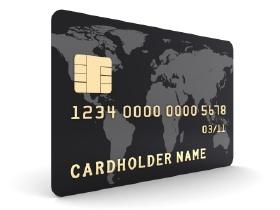
Ifyou take your credit card out of your purse or wallet and look at it, you'llsee it has a magnetic strip on the back. You're probably used to this because you have to line the card up thecorrect way when your swipe it through the reader at the gas station or ATM. But if you live in Europe, your credit card hasa chip in it, and when you use the card you must enter a PIN number with it.
Whydo Visa cards in America have a strip, but in the United Kingdom or Italy theyhave a chip? (On the card above, the chip is the gold rectangle in the upper left.)
Yearsago, Europay, Mastercard and Visa joined forces to produce the EMV standard--anew type of card with a microprocessor chip embedded in it that storesencrypted data. Their idea was to fightfraud. For instance, in an Americanrestaurant you hand the server your card, and they take it off to the register,swipe it, and bring you the bill to sign. In Europe, the server brings a mobile reader to your table, you zip yourcard through, and input your PIN number to pay the bill.
Whenthe EMV system was introduced in the United Kingdom, it made a big dent infraud, or at least forced criminals to try other methods. So why hasn't it come to the United States?
Thereare two reasons, and of course they have to do with money.
Thefirst is the cost. If every merchant,from the small mom-and-pop pet store to the huge grocery store chain, has toreplace their current readers, the cost of the new EMV reader is a realconcern.
Anotherproblem is that producing a card with a chip costs more than producing a cardwith a magnetic stripe. Multiply thatcost by the number of customers you have, and you can see how banks might bereluctant to replace all those cards.
Thesecond big reason is liability. Currently in the US, if someone steals your credit card number, you'reonly liable for the first $50.00. Andoften your bank covers that cost to keep you happy so you won't switch toanother bank. The banks would like toshift that cost off their backs and onto the stores and you.
Byissuing a new EMV style card with a magnetic strip as a backup, banks willcover themselves. The cards will work onthe new machines around the world, and if they're put into an old machine, themagnetic strip will serve as a backup so the sale will still go through. The key is that the bank will no longer takeresponsibility for fraud if the magnetic strip was used, and will shift thecost to the individual store. And if yourPIN is misused, the bank will charge you for the loss.
Thereis also the question of whether the chip and pin cards are truly moresecure. A card with a chip in it willprobably be harder to clone than a simple magnetic strip card, which may helpcut fraud. Also, if someone steals yourEMV card, they can't use it if they don't know the PIN number.
Willthis eliminate fraud? No, criminals will always try new techniques. For instance, in countries that use chip andpin cards, fraudsters have learned to do 'card not present' scams by using thecard over the phone or the Internet. Butthis is a never ending cycle, and does not invalidate the gains made by usingthe encrypted EMV card.
Customersin the US will be seeing these cards soon. Visa plans to issue EMV cards in 2012, and Mastercard in 2013.
Iimagine EMV will finally become the worldwide standard, but how long will itlast as more people use their smart phones to make purchases?
(Ifound very helpful material in articles in The Economist, Bankrate, and PCMagazine. The picture is from: MerchantAccount.)(For a fascinating look atthe criminal practice of credit card cloning and fraud, read KINGPIN by KevinPoulsen.)

April 2, 2012
What is the Deep Web?

Duringresearch for my recent post about Dark Nets, I came across the term Deep Weband wondered what that meant.
TheDeep Web is the part of the Internet that is not indexed or catalogued bysearch engines. In other words, search'bots for services like Bing and Google and Duckduckgo haven't crawled throughthese areas and noted their addresses and locations, so they don't show up in searchengine results.
Apicture of an iceberg is often used to illustrate this idea, with the smaller,above-water section representing the Internet we all use, and the larger, below-watersection as the Deep Web. It's a usefulimage, but I don't know if it's accurate because no one seems to know how bigthe Deep Web is. It may be bigger orsmaller than the regular Internet.
Whatdoes the Deep Web contain? While the articles I found all agreed that beingnon-indexed defines Deep Web content, they did not agree on what that contentis.
Forinstance, one article explained that much of the content is dynamic--pages thatare constantly updated and changed like airline flight information or breakingnews stories--while much of the regular Internet is static. An example of this is a database where youcan only retrieve information with a query.
Thereare also fee-based sites that you must pay for before being able toaccess. The article mentionssubscription services used by libraries, but I would guess a lot of pay sitesare for pornography. The article alsopoints out the dynamic content of social networking sites like Facebook andTwitter, but users must only be friends or followers to access them.
Thisall sounds fairly benign. In contrast, anotherarticle I found describes a far different Deep Web in which anonymity is king,and criminal transactions for drugs, credit card numbers and child pornographythrive. The article has a screen shotfrom a popular drug sale site that lists all sorts of illegal drugs for sale invarying amounts from anonymous vendors. The author also wisely warns people that if they go wandering around theDeep Web they may find sickening child pornography.
Thusthe Deep Web may be anything from a business database to an illegal filesharing site. While I normally supplylinks to my sources, in this case I'm not because some of them provideinstructions that will only tempt people to explore. The regular Internet is vast, with manyresources available to you, so you need not view the Deep Web as somethingyou're missing out on. And if what Iread about much of the content is true, you're better off avoiding italtogether.
(The pic of a sewer is from: benmayfield.wordpress.)