Save Your Brains!
No,a zombie apocalypse has not begun, thank God. For now, your brain will remain safely inside your skull. But what condition will your brain be in?
Thisweek at the public library, I found a book titled, THE PLAYFUL BRAIN by RichardRestak, with puzzles by Scott Kim. Thesubtitle of the book is, "The Surprising Science of How Puzzles ImproveYour Mind."
I'mnot very good at crossword puzzles or sudoku, but I love mazes--the kind yousolve with a pencil, not the kind where you wander until your run out of water anda minotaur eats your face. While theinitial idea of exercising my brain with puzzles didn't appeal to me, thescience behind it did.
Inthe book's introduction Dr. Restak writes, "Gradually I became convincedthat puzzles can help enhance specific brain functions and, as studies suggest,actually help ward off mental deterioration." In the past, doctors and scientists couldreally only learn what parts of the brain did what by looking at injuredpeople. If some poor guy had a railroadspike through his head, what parts of his vision or memory or math skills didit affect?
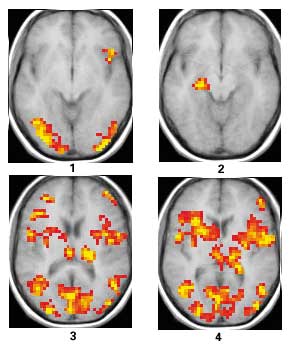
However,the use of PET (Positron Emission Tomography) and fMRI (functional MagneticResonance Imaging) has changed brain studies. Now we can see which parts of the brain 'light up' when they're workingon a certain task.
Restakwrites about a fascinating study of London cabdrivers which revealed thatlearning the complex grid of streets actually enlarged part of their brains,and that portion continued to grow based on the number of years a cabbie drovethe city. So the brains of adults areflexible enough to grow in response to the tasks they're given. Which makes solving puzzles, or most anyunfamiliar task, an opportunity to keep your brain tuned up and even improveit.
Ihaven't finished THE PLAYFUL BRAIN yet (the puzzles slow me down), but readingit triggered some thoughts on brain health you may consider.
1. Brain deterioration, often in the form ofAlzheimer's or dementia, is very scary, and it's a good idea to sit down withyour older relatives and learn about your family history. If these conditions are common in your familytree, it's important to know so you can be prepared to deal with them.
2. Alcohol and drugs damage your brain.
3. Keep track of your concussions. If you play (or played) contact sports andsuffered concussions, keep track of them and talk to a doctor if you havelingering symptoms. For students ofmartial arts or those in combat sports, if you take a hard shot to the head insparring and go home with a severe headache, you may have done some damage. Also, learn to tap out. Chokes work by cutting either the blood flowor oxygen flow to the brain. Gettingchoked out in practice is probably bad for your brain.
4. If your daily work is repetitive, think aboutways to exercise your brain. Take adifferent route to work. Try learning amusical instrument. Make your peanutbutter and jelly sandwich with your opposite hand. Whatever. Just keep learning.
5. Read those long, dull printouts of theprescription medications you take. Andkeep a close eye on your elderly relatives' prescriptions. Drug interactions can leave people confusedand 'out of it,' which can seem a lot like Alzheimer's but isn't.
6. Exercise. Eat as best you can. Stayhydrated. Get as much sleep as youcan. These are good rules for generalhealth, but they can also help your brain. If you're sleepy, dehydrated and you haven't eaten, I guarantee yourbrain won't work well.
Inlife, we're all fighting our genetics, injuries, bad habits and the lure of thecouch and television. Take care of yourbrain and keep exercising it, so you can take care of yourself and the peoplearound you.
(The pic is from a UCBerkeley page and shows how the brain lights up when they asked the patient toremember a face, think about the face, and compare it to another face. I think it looks like a rabbit. On fire.)


No comments have been added yet.