Michelle Ule's Blog, page 88
November 29, 2013
Traveler’s Tales: Amusing Signs in Europe

I hope you all had a wonderful Thanksgiving. Since I’m still enjoying myself, here are photos of amusing signs spied on our recent trip to the United Kingdom and France. Enjoy!
We assumed this meant danger!
A walk around London brought us past this row of townhouses with a humorous sign. “Busking” is a British term for “street performing,” and this spot facing the Thames River obviously wasn’t interested in entertainment!

 The Borough Market is a large open air market featuring all sorts of foods. Beadles are lay people in synagogues of parish churches who keep order. We were there on a Saturday morning with crowds of shoppers, none of whom looked religious.
We didn’t notice a church that might be overseeing the market, but we did see  another sign that made us smile.
The exotic burgers sign also includes mention of ostrich meat. No surprise, ostrich
feathers were sold in the stall beside it!
A sign at the Underground seemed designed to console people who might flinch at reporting a crime.
 “Mind the gap” warnings, of course, were everywhere in the Underground.
And a neon light warned against dangerous persons visiting the Hard Rock Café! Since I was traveling with a nuclear engineer, we did not stop in.
Paris had graffiti artists with religious concerns:

But it was there that we saw the friendliest one of all: 
Happy Thanksgiving!

The post Traveler’s Tales: Amusing Signs in Europe appeared first on Michelle Ule, Author.


November 26, 2013
Traveler’s Tales: A London Walk
 It’s Thanksgiving week and I’m sure we’re all busy, so I’m going to post photos from a recent London walk.
Some of these I thought were funny, others quirky. You tell me what you think!
(And if you need a Thanksgiving story, please see Turkey on the Beach!)
The last time we were in London, we took a photo of my daughter in a red phone booth talking on her cell phone.
Things have changed in four years. I laughed aloud when I saw this booth:

London is such an historical town that everywhere you turn, you can see references to famous people who have lived or visited.

Or companies known the world over.

Architecture is always interesting. Just up Fleet Street from Twinings, I saw this interesting duo–undoubtedly of a building that once houses wire services, newspapers or other news-worthy businesses.

We happened to be there on the 96th anniversary of the day nurse Edith Cavell was shot by the Germans for helping soldiers escape Belgium to England. They called her a spy, but the outcry at killing a woman was so huge, it changed the opinion of many–to the negative–toward the Kaiser’s Germany.
Red poppies were at the base of her statue.
We saw signs of British royalty:
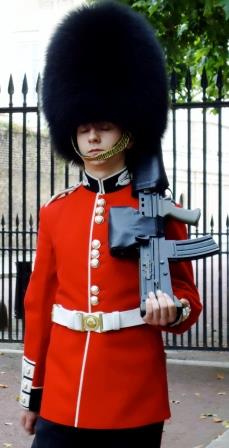

And common food.
 We also learned how British schoolteachers keep track of their students while on field trips!

It was a lovely day in London and while we carried an umbrella, we never got wet!
Happy Thanksgiving!

The post Traveler’s Tales: A London Walk appeared first on Michelle Ule, Author.
November 22, 2013
No Thanksgiving Invite? Does Anyone Know?
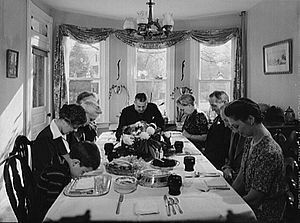
For many people, Thanksgiving can be fraught with uncomfortable memories.
The holiday may be filled with loneliness more than familial happiness.
Pressure can mount for a great meal or conviviality. It could underscore what’s missing in your life. Thanksgiving can be downright depressing.
One Thanksgiving long ago was headed toward the miserable. My husband was out to sea and the toddlers and I had nowhere to go.
My Navy wife pals–my natural tribe–had gone home weeks before and that left the three of us on our own in Connecticut.
My Italian family–for whom Thanksgiving is a big family reunion because they never say no to a lonely friend or ex-relative–was indignant. “Come home.”
California was a long expensive trip away, besides the USS Skipjack was due home a week after Thanksgiving. No way.
The weekend before Thanksgiving, however, self-pity got the best of me and I wondered, “Why doesn’t anyone invite us over for Thanksgiving dinner?”

Then it dawned on me. No one in my other tribe– Bishop Seabury Episcopal Church– knew we didn’t have a place to go.
I volunteered in the nursery that Sunday, but before I signed in, I swallowed my price and
asked the pastor if he would mind making an announcement: “Sea widow and children in need of a Thanksgiving dinner.”
“No one has invited you?” He looked around. “Where’s my wife?”
I laughed. “Let’s see if anyone else at church has room for us first.”
Four sets of hands went up in the congregation when he made the appeal. “I told them whoever gets to you first can have you over for dinner.”
A sweet couple I barely knew invited us. I felt weak with gratitude and blinked back tears.
Thanksgiving morning the kids and I drove through empty streets to a rural Rhode Island home carrying a bottle of California wine and the most elaborate dessert I could create. The couple’s children played with my little boys–ages two and four that year–and I shared stories with the couple and a visiting grandparent. The food was delicious and while I still felt homesick, it didn’t stab as sharp.
We even got to take home leftovers. :-)
My husband’s family shook their head when they heard the story. My mother-in-law often invited stray sailors from the Long Beach Navy base for holiday meals. They always had extra people around their Thanksgiving dinner table.
I learned a lesson about pride that Thanksgiving. I could have stayed quiet and sulked, wondered about my popularity and served grilled cheese sandwiches instead of a feast.
Instead, I chose to believe the best of the people I worshipped with–that they would reach out in love to help. Click to Tweet
They did.
When my husband spent Christmas under the water on his submarine the following year, I took the initiative early and invited the boat wives to dinner at our house. Two women and two children came. I didn’t know them before the day, but I knew them well by the end.
Sometimes a need isn’t fulfilled because it isn’t known.
I try to remember that every year.
If you haven’t gotten an invitation to Thanksgiving dinner, ask yourself if anyone knows you need one. You’d be surprised how many people would be happy to invite you–at least at my church!
What’s the best Thanksgiving you ever had? The worst?
No invite for Thanksgiving? Tell someone! Click to Tweet

The post No Thanksgiving Invite? Does Anyone Know? appeared first on Michelle Ule, Author.
November 19, 2013
Oswald and Biddy Chambers’ Solemn Promise

The Light of the World (Manchester Art Gallery) (Photo credit: Wikipedia)
While in London recently, we visited St. Paul’s Cathedral to view the site of a solemn promise.
It wasn’t a promise we’d made–but one pledged between Oswald Chambers and Gertrude Hobbs on November 13, 1908.
Oswald and Biddy–as he nicknamed her (Oswald had a sister named Gertrude so Miss Hobbs became “Beloved Disciple” shortened to BD, chuckled to Biddy)–loved fine art and music and certainly St. Paul’s glorious cathedral had both. But they were particularly drawn to one painting: Holman Hunt’s 1856 ”The Light of the World.”
You know this painting, or at least one similar to it, in which Jesus stands at a door knocking. The Scripture passage inspiring it comes from Revelation 3:20:
“Behold, I stand at the door and knock; if any man hear my voice and open the door, I will come in to him and will sup with him, and he with me.”
The door has no doorknob. Jesus cannot come in unless he’s invited in by you (or me, or anyone) opening the door of our heart to him.
Jesus wears kingly robes in this painting, carries a lantern representing himself as the light of the world, and he wears the crown of thorns mockingly thrust upon him prior to his crucifixion.
“The Light of the World” is on the northeastern wall of the nave, not far from the floor of the Sir Christopher Wren dome and where prayers are offered hourly and services daily in the magnificent Anglican cathedral.
The Chambers courtship involved several continents and many years. Oswald knew he had little to offer the talented Miss Hobbs beyond his love of the Lord. Click to Tweet
But that, of course, is everything.
Fortunately for him, Biddy shared his passion for serving Jesus Christ, and as their romance flourished–it involved prayers, church meetings, poetry, music, letters and little time together–it became clear their goals were similar.
As David McCasland notes in Oswald Chambers: Abandoned to God, beginning an engagement in front of this painting was no coincidence:
He and Biddy were pledging their love, first and foremost, to Jesus Christ, and to His work in this dark world. Their commitment went far beyond a hope for personal happiness to embrace a calling to belong first to God, and then to each other.
Oswald gave her a ring set with three tiny diamonds.

Oswald and Biddy Chambers wedding day; courtesy Wheaton College Special Collections Library
They were married eighteen months later on May 25, 1910.
The marriage lasted until Oswald’s death on November 15, 1917 and took them from the England to the United States, back to London and ultimately to Egypt. Not much money, but a life rich in love, ministry, teaching and laughter.
It also produced a daughter Kathleen.
My husband and I, who have traveled far and weathered much in our long married life together, wanted to honor a young couple who so long ago made a solemn promise to each other and to God.
Before “The Light of the World,” in 2013, chairs are arranged for prayer. It’s tricky to get a good look at the paining owing to the curious lighting and the altar in front of it. We stood, however, and admired and remembered Oswald and Biddy.
Oswald Chambers and Gertrude Hobbs promised, together, to follow God, to provide their utmost to accomplish God’s highest plans.
It amuses me to see what devotional Biddy chose for May 25 in My Utmost for His Highest. Here it is in part:
As soon as you begin to live the life of faith in God, fascinating and luxurious prospects will open up before you, and these things are yours by right; but if you are living the life of faith you will exercise your right to waive your rights and let God choose for you.
Is that how she viewed her marriage?
I think God chose well for Oswald Chambers and Gertrude Hobbs 106 years ago, how about you?
Tweetables
Oswald and Biddy Chambers make a solemn promise at St. Paul’s Cathedral Click to Tweet
The Light of the World painting inspires Oswald Chambers. Click to Tweet

The post Oswald and Biddy Chambers’ Solemn Promise appeared first on Michelle Ule, Author.
November 15, 2013
Hunting Oswald Chambers in Clapham Common

I’m recently returned from a research trip in which I went hunting for Oswald Chambers in London’s Clapham Common.
Obviously, not for the man himself, he’s been dead since 1917.
But I was looking for his environs–where he lived during the four years he spent in London as principal of the Bible Training College. I’m writing a book that touches on his life and I needed some first hand information.
I had the address where the Bible Training College (BTC) was housed: 45 Clapham Common, and with my intrepid patron of the arts (my husband) caught the Underground for Clapham Common itself.
By chatting with a worker, I learned that particular line, the Northern, was the oldest and thus one the Chambers family–that would include wife Biddy and daughter Kathleen–would have taken. It’s also the tube station BTC students who did not live there would have ridden.
Small matters, but pertinent to my tale.
Clapham Common is the largest park in London and the northern side is lined with beautiful townhouse mansions overlooking the park. Nearby Speke Hall was where the League of Prayer conducted their meetings. Oswald Chambers spoke there often in the first decade of the twentieth century.
During those early years, Chambers traveled about the British Isles speaking. He journeyed to the United States and also Japan. He spent six months teaching and working with God’s Bible School in Cincinnati, Ohio, and while there savored the experience of actually living in community with other believers.
Author David McCasland in Oswald Chambers: Abandoned for God, recounts how the Ohio time changed Chambers’ thoughts on teaching about the Christian life:
“Oswald’s months at God’s Bible School had brought home the value of day-by-day interaction in an atmosphere of commitment to God. In community living, more was “caught” than “taught.” During every Cincinnati camp meeting he had been most impressed by the unselfish work of the students who cooked and cleaned. In a class he could teach people to study and preach. In a home he could help them learn to serve.”
Members of the Prayer League agreed with him and decided to fund such a school in London, where some 25 students could live with Oswald, Biddy and Kathleen and study God’s word in depth. They found a beautiful home at 45 Clapham Common called The Cedars, according to Katherine Ashe in her booklet The Book of the College.
We found it, too.
 It’s a lovely building, three stories high, and no surprise, has a giant cedar tree between it and the busy park road. Between the tree limbs, you can glimpse Clapham Common stretching to the south.
I walked up the steps (two down from those potted plants) and stood at the bright red door, feeling something like a stalker, until I noticed a simple blue British Heritage marker affirming I’d found the right spot.
I admired what view there was and tried to imagine Oswald, Biddy and Kathleen going up and down the cement steps, not to mention all the BTC folks whose names have become so familiar to me: Eva Spinks, Katherine Ashe, Mary Riley, Gladys Ingram and Jimmy Hanson.
Other than the cars going past, it was a quiet building, the air cool on a sunny day. And yet, for four years students sat under Oswald Chambers’ tutelage–students who went on to work as missionaries throughout the world.
I suppose this was an Oswald Chambers pilgrimage under the guise of research. Click to Tweet
I took photos of the shops along the street, trying to image life here 100 years ago.
And then we walked away to find another spot important to Oswald and Biddy Chambers. London looked different with someone else’s life in mind.

Kathleen Chambers at 45 Clapham Common, 1914; Wheaton College Special Collections
Do you like to visit the spots where people you admire lived or worked? Is it a pilgrimage if you just stop in?
Tweetables
A London hunt for Oswald Chambers Click to Tweet
The Bible Training College’s London home Click to Tweet

The post Hunting Oswald Chambers in Clapham Common appeared first on Michelle Ule, Author.
November 12, 2013
Traveler’s Tales: An Oxford Walk
I took a walk in Oxford recently, strolling the lanes and sauntering through some of the colleges located in that most ancient of towns.
I admired sunlight glancing off stone, gawked with the Japanese tourists at the spirals and towers spinning against a vivid blue sky. Dedicated students (is that an oxymoron?) darted by wearing black robes we Americans most often associate with graduation, not matriculation.
Cobblestones tripped me up on some of the lanes, and I peeked through openings to see into green-lawned interiors. School was just in session and large signs warned me away.
As I climbed stairs to the top of University Church of St. Mary’s, I found several items that made me smile. (That graffiti IS from 1612. I also saw 1811 carvings . . )


 On that Oxford walk, I ducked down narrow corridors, and chuckled at funny street titles. (That’s Magpie Lane)

I shook my head a store still exists in the world dedicated to the pen, particularly the nibs.
I stopped to stare at an ancient building towering over a tent canopy advertising free Domino’s Pizza–which reminded me this WAS a college town!

I encountered students of all races, but most with distinctive British accents. I was told the only people running through town were Americans, and I’ve often noticed in Europe that you can tell the Americans by their shoes. The grocery store was mobbed in the late afternoon by students buying “take away” food to eat in their “flats.”
One of the southern most colleges in this university town with over forty colleges and self-governing bodies, is Christ Church College. It’s the one with the large Tom bell in the tower, and the Christ Church Cathedral opposite. What amused me about Christ Church was the imposing and dignified appearance of the gate in which you enter.
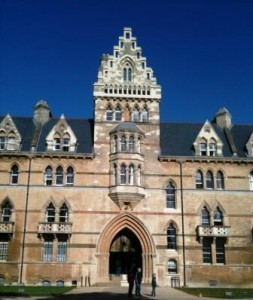
I turned around and took another photo. Wouldn’t you love to attend a school overlooking a meadow?

This sundial amused me as well. I wonder how long it’s been telling time?
I finished the day, appropriately, at Blackwell’s Bookshop, in business since 1879. It’s enormous inside, multiple tilting floors and stuffed, of course, with books. I bought too many, including British editions of Harry Potter, and some Tolkien posters.
I also got into a discussion with the religious books manager about Oswald Chambers . . .
What do you like to see when you visit a university town? Can you imagine a shop devoted to only pens?
Tweetables
Oxford Graffiti: literally carved in 1612 Click to Tweet
Amusing photos from a recent walk through Oxford Click to Tweet
Really? A shop devoted to pen nibs? Only in Oxford Click to Tweet

The post Traveler’s Tales: An Oxford Walk appeared first on Michelle Ule, Author.
November 8, 2013
The Library: Bodleian, in fact
 Did you ever wonder about the history of a library?
Once arrived in Oxford, I made a beeline to the Bodleian Library, to honor, admire and to marvel!
The Bodleian Library is one of the premier libraries in England. Books were first gathered about 1320 and housed in a room above the Oxford University Church of St. Mary the Virgin. It wasn’t a large room and it didn’t have many books–they were precious and hard to come by–but it was a start. The books, of course, were ecclesiastical in nature.
(You can see it when you climb the steps to the church tower. It’s a nondescript room now used as a vestry and meeting room for the church).
That first little library was expanded in 1444 when Humfrey, Duke of Gloucester (and younger brother of King Henry V), donated his collection of more than 281 manuscripts. 281 books, the entire library for Oxford University.
How many of you have more than 281 books?
Such a “vast” number couldn’t fit into the library, so in 1478 officials began building the “new” library just north of the church. Reading went on in the library until 1550 when legislation passed by King Edward VI (that would be Henry VIII’s only son) went into affect–designed to purge the English Church of Catholicism.
They burned most of the books.
The only ones that were saved had been “checked out” to a handful of people, who then hid them.
 Things turned around some fifty years later when Elizabeth I was on the throne and one of her courtiers, Sir Thomas Bodley decided to do something about the situation when he retired from public life.
He “set up my staff at the library door in Oxon; being thoroughly persuaded, that in my solitude, and surcease from the Commonwealth affairs, I could not busy myself to better purpose, than by reducing that place (which then in every part lay ruined and waste) to the public use of students.”
Using his own money and books, as well as that of friends, Bodley organized the refurbishment the old library. They bought and collected 2500 books!
How many of you have more than 2500 books? 
Bodley also negotiated an agreement with the Stationers’ Company of London in which a copy of every book published and registered would be donated to the library.
That arrangement continues on to this day, making the Bodleian Library the British equivalent (or perhaps inspiring example) of the  US Library of Congress.
It also makes for a storage problem . . .
The library has dug basements, organized auxiliary libraries (the colleges all have their own libraries), built new buildings and still more books arrive.
Can you imagine what someone from 1500 would say to see the Bodleian Library today?
I had a long conversation with the tour guide, who explained that books once were so precious, they were chained to the stacks. A researcher had to sit in front of the shelves of books attached by heavy metal chains, to a reading stand that ran the length of the book shelf.
The reading, obviously, only could be done in the library and within a few feet of where the book belonged.
Shelvers through the ages could appreciate that!
Bodleian currently is undergoing another expansion and books are kept in a storage warehouse 28 miles west. You order your book and it shows up, usually within a day.
I asked him about digitizing the vast collection and he said they had started doing so, but the cost became prohibitive–a British pound a page, basically, to cradle the old books and scan them. The other issue became how long a specific method of storing the books would last. (See my post on floppy disks).
“But would you say there’s a difference in how you respond to a book if you’re holding it, or reading a digitized version?” I asked. “For research, I like to use digitized because it’s easier to search for what I want.”
“True.” The guide waved his hand at the chained books in the oldest section of the library (books that are still used, by the way). “But these books have been here, and read, for several hundred years. We’ve never had to worry about not being able to read them.”
Which is important when you have 11 million books!
How many of you have . . . never mind!
 Which do you prefer to read: digitized or physical books? What difference does it make to you in how you read?
Tweetables
Bodleian Library: 281 books to 11 million in only 600 years! Click to Tweet
A visit to Bodleian Library Click to Tweet

The post The Library: Bodleian, in fact appeared first on Michelle Ule, Author.
November 5, 2013
Visiting Oxford’s Christ Church Cathedral
 Several years ago I took my daughter-in-law to visit a cathedral, St. Giles Cathedral in Edinburgh.
She’d not traveled a great deal and had grown up in non-denominational church settings. When we entered the tall church, she began to cry. She’d never seen such a beautiful place to worship God before.
I remembered her appreciation during a recent visit to Oxford University’s Christ Church Cathedral. I stepped into the ancient church as part of my tour of Christ Church College. A kind woman greeted me at the door and reminded me I was entering a church, not a tourist attraction.
I thanked her. “It’s wonderful to think Christians have been worshipping God on this site for nearly 1500 years.”
She smiled and suggested I stay for the service.
The patron saint of Oxford, St. Frideswide founded the first church on that site circa 680–nearly a thousand years before later Oxford graduates arrived in Virginia! The building I visited was constructed circa 1200 as a monastery church.
 What must those earlier builders and worshippers have been like? How did they come to build some a beautiful building? And how had it survived the ages?
I looked down the long row of choir stalls to the high altar, and wondered where the “common” people sat. It seems such a long stretch, so far from where the communion service would take place. Music is always central to worship and the choir stalls would house young boys in long robes, singing to the glory of God. 
The carved stalls themselves included details that must have taken a long time to make, and yet were given to the glory of God. I paused to admire the angels, but how many others have done the same in the centuries since the cathedral was built?
Cathedrals usually have stained glass windows. Christ Church had several. The Jonah Window created in 1630 by Abraham van Linge, stood just inside the nave. The colors looked modern to me.
 A more recent window, the St. Frideswide Window, was made by Edward Burne-Jones in 1858. Full of bright colors, it tells the story of the eighth century local saint and included touches of the whimsical: dogs. On leashes no less!

The vault above the chancel (where the choir stalls are located) was designed circa 1500 by William Orchard. It’s made of stone carved into a star-shaped pattern to create an image of heaven. 
Gravestones dot the floor, monuments to former students line the walls. A sarcophagus gave me pause, as they so often do. A large box carved in stone, a stone woman lay across the top, her hands neatly folded. While she was complete, and dead since 1354, the figures of her child which lined the side of her sarcophagus have been beheaded.
Oliver Cromwell’s men at work three hundred years later.
I sat for a time in the cathedral, listening to the music, thinking about this structure as a place of worship. Years ago, I’d asked a docent in another Christchurch Cathedral, what the life of the church was like.
“It’s not lived here in the cathedral,” she explained. “Real Christian community takes place outside of this large building.”
Several of the cathedrals I visited on this trip had large posters explaining what Christianity is, who Jesus is, what baptism means. I was impressed that they didn’t leave the building alone to explain God to tourists.
A cathedral is tall, magnificent and reflective of people’s devotion to God–in this case for more than a millennium. The expense and beauty put into it were designed to make people think of how grand God is, how awesome he is. In a community of people struggling to life, a magnificent structure such as these gave them a place to feel proud. The church life was the center of their existence.
Colleges in Oxford were originally set up to study religion. The cathedral was the center.
The reality of a church body is a body–a warm, living being. Other Christians are who point you to God. The building is a mere reflection of how people honor and revere him. I enjoy walking through cathedrals and feeling a sense of historical unity with all those who have gone before. The organs sound beautiful. The art work is glorious. I’ve heard excellent sermons preached.
But, I have to say, when it’s time to worship my Creator, I’d rather do it in my smaller, plainer church back home.
Stained glass windows and all.
Where would you rather worship God? In a large empty beautiful cathedral, or in a smaller, plain church filled with enthusiastic believers? Click to Tweet
Worshipping God for 1000 years in the same spot Click to Tweet
Do dog stained glass windows belong in a cathedral? Click to Tweet
I think so. How about you?

The post Visiting Oxford’s Christ Church Cathedral appeared first on Michelle Ule, Author.
November 1, 2013
A Surprise in Oxford
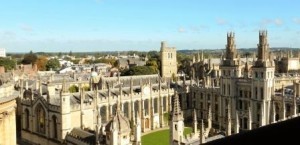
As I rode the train from Reading to Oxford, I opened the Kindle app on my phone and began to reread Carolyn Weber’s lovely Surprised by Oxford .
It’s the memoir of her first year as an Oxford graduate student in English Literature 20 years ago, when Weber thought she was meeting the great writers of the canon (which did happen), but in which she also met the great lover of her soul: Jesus.
Beautifully written in her lyrical style, full of poetry and populated with memorable characters, Surprised by Oxford received awards and was my favorite book of 2011.
When I realized the opportunity to spend a day wandering the ancient university town myself, I thought I’d bone up a bit on the story and look for some of the memorable places she described in her memoir.
No surprise to me, many were the same only 20 years later. And why not? The town has been housing university students for over 1000 years!
What did surprise me, was my reaction to the ancient seat of learning. I only have a bachelor’s degree in English Literature from the University of California, Los Angeles. It’s a good degree and I worked hard to earn it, but I’ve always craved academic distinction. A Master’s degree would have helped, a PhD, even more so (though in History, not English Literature!).
When I took our children to visit colleges, the longing to spend a concentrated period of time just learning, was palpable. When my husband attended the Naval Post Graduate School (thank you, American taxpayers), I could scarcely visit the campus I so yearned to be a student myself.
So, I went to Oxford to acknowledge my admiration for learning and with some personal trepidation. I anticipated being overwhelmed by envy when young women rode by on bicycles, basket full of books, black gown and long hair flying behind, off to a tutorial with a professor. According to Weber, on the graduate level those weekly classes would have been at most three students and a professor discussing their subject matter over tea or sherry (depending on the time of day).
How I would have loved that!
 How I love it now when I get into lengthy discussions on my subject matter. (Current subject: Oswald Chambers and World War I; but I’ve others in my arsenal).
Long ago, I came to understand that I probably would never get a graduate degree. Time and circumstances, money and logic tripped me up. Still, I read.
On and on and on
at the library across subjects, genres and the entire Library of Congress numerical shelving system.
Taking a deep breath and adjusting my bag, I climbed off the train and stepped onto the cobbled byways and walks of Oxford. Bicycles rattled by. Tour buses overshadowed me (though not as many as in summer). Blackwell’s Bookstore beckoned (spent too much money there) and tour guides hawked ”Harry Potter tours” to “daytrippers” like me.
I was tempted to tour, but instead, strode toward the spiraling towers to experience the place with my own ideas.
It was early October, the first week of “term.” I wasn’t the only novice in town.
I saw a lot of young women on bicycles.
Many scholars passed by clutching books and wearing the black robes Americans only see on graduation days (or when watching an H. Potter film and Hogwarts is in term). I smiled at them all.
(I did encounter a bevy of Japanese tourists, but as we learned from our Hawai’i days, they’re harmless and earnest. I got inveigled into taking a photo, but it was the least I could do.)
What a wonderful day walking along those ancient walls and staring at those buildings dedicated to knowledge.
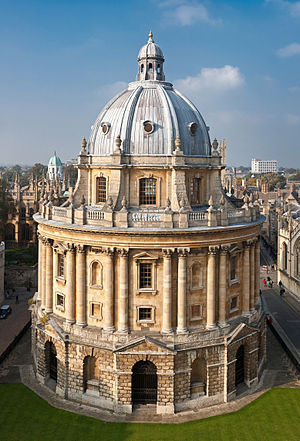
What a satisfying feeling to realize, for once, I did not feel envy.
I was surprised by joy, instead.*
As I marveled at that surprising reaction to Oxford, I realized I may finally have turned a personal corner.
This year all four books I’ve written have been published.
All that research, all that reading I’ve done over the years, has received the acknowledgment of professional value: publication.
I don’t have to have a master’s degree. I don’t have to go back to college. My intellect has been validated.
Sort of.
Because, of course, my mind and abilities were validated the day I was born. I just didn’t recognize that fact.
God creates each of us for His purposes, to give Him glory, and to provide the world He places us in with a blessing.
Your gifts, talents and abilities, like mine, are not tossed out into a void. It’s not a surprise to God where you are today with your skills and abilities. Your talents, and how God put them in you, are valuable–whether a book comes of it or not.
Carolyn Weber took her admirable talents and abilities to Oxford to pursue knowledge for the sake of beauty and the lyricism of words. God was not surprised, even if she was, by the Truth she found there as well.
You don’t have to visit Oxford, or watch a Harry Potter movie, or even earn a degree to be of great value to the Creator of the Universe.
The good news is, He loves you and the person he created you to be, just as much as he loves me.
I just hope you don’t have to travel as far and for as long, as I did to realize that truth.
Do you love to acquire knowledge, to read, and to learn? If so, why? Click to Tweetem>
*Not to be confused by C. S. Lewis’ Surprised by Joy which also took place here!

The post A Surprise in Oxford appeared first on Michelle Ule, Author.
October 29, 2013
Graves and Memorials along the Western Front
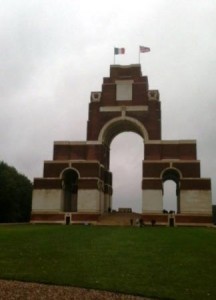
Graves and memorials along the western front of World War I abound.
They range from the enormous Villers–Bretonneux Australian National Memorial (those are adults standing at the base of the stairs), to gravestones and markers to unknown soldiers.
There were many unknown soldiers in northeastern France 1916-1918.
Some were unknown because spates of machine gun bullets obliterated their bodies. Some disappeared into the miserable quicksand mud that swallowed men, horses and cannon whole. Some, of course, were so disfigured by wounds as to be unrecognizable.
But most were loved by someone and those who lost men remembered them well with memorials and handsome gravestones. If it weren’t so very sad, it would be awe-inspiring.
The Australian National Memorial towers above the countryside, a huge monument listing names and remembering battles fought. It flies the flags of both France and Australia. Rows of white marble gravestones line up before it to the north. A haunting view of the countryside from the east looks over the fields were so many died.
We walked among the gravestones in the High Woods Cemetery, pondering the people and their units. The carving was beautiful.
 The Dragon signified a Welsh regiment soldier. A gravestone marked with Poseidon and
  a trident was from a unit of sailors who were drafted to fight in the Somme. The Maple leaf signified a Canadian soldier.
The gravestone of a Jewish soldier included the star of David, with three pebbles on top.
We walked beside the graves and memorials along the western front in silent memory on a quiet drizzly afternoon. The green of the countryside looked fresh and smelled clean. The occasional bird flit past, but mostly it was a serene setting.
 While the guide’s explanations were vivid, it was hard to put together his stories with what we saw. The Delville Wood South African memorial stood in a stately park of trees–none more than 99 years old–that once was the vicious battlefield.
Along with the memorial, which is now a museum, the former battlefield contains one tree, referred to as “the last tree,” the only tree that survived after the battle was done. It, of course, is the larges tree in the battlefield forest.
We traveled to the Somme River area to see where the ANZAC (Australian and New Zealand Army Corps) troops fought because in the novel I’m writing, one of the heroes is a New Zealand soldier. (They weren’t called Kiwis just yet).
I chose a New Zealand soldier because ten years ago when my family traveled in New Zealand, I was struck by how each little village we drove through included a monument to a World War I soldier. Often, a metal soldier stood high on a granite pedestal, glancing out over the roof tops toward the sea and thus the land where he died. New Zealand lost, proportionate to population, more soldiers than any other Commonwealth land.
I wanted to remember them.
The day we visited the Somme, few others met us in the cemetery. Some in our party were looking for a lost grandfather, but he was not found. The dead rest quietly in their graves and memorials along the western front.
It was a privilege to honor them.
What’s a good way to honor the ultimate sacrifice soldiers make in war? Click to Tweet
Tweetables
Graves and memorials along the western front Click to Tweet
Hard to believe so many died here 100 years ago Click to Tweetem>

The post Graves and Memorials along the Western Front appeared first on Michelle Ule, Author.