Michelle Ule's Blog, page 92
August 16, 2013
The Dogtrot Christmas–original Chapter Three
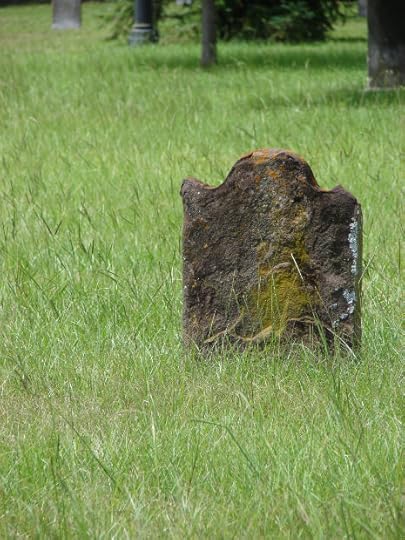 It’s moving week for me, and I’ve spent it providing the backstory–first three chapters–to my novella The Dogtrot Christmas–which is part of The New York Times best-selling A Log Cabin Christmas Collection.
I wrote the original three chapters on a warm summer day three years ago. I haven’t looked at them since. Rereading these chapters has been surprising–the sad story line but, also, the power of my (?) writing. I wept as I read chapter three.
Weep if so moved, but mostly, I pray you would use this opportunity to think about what is important in life.
Tomorrow, I’ll provide the opening chapter to The Dogtrot Christmas so you can catch a glimpse of where and how Molly and Jamie–not to mention the baby–survived.
If you missed the first two chapters, you can read Chapter 1 here and Chapter 2 here.
Chapter Three
Years later in the brush camp meetings Pappy Hanks would describe hell as fire and brimstone, weeping and wailing and gnashing of teeth.
But when Molly thought of hell she remembered the months after Syntha died; when all life went to silence and cold, shot through with the terror of a baby who might starve and languish for lack of his ma.
Jamie sat with Syntha’s body growing cold and stiff in the long night of her death. Pappy Hanks read aloud from out of the book of Psalms with tears dripping down his rugged face.
Ma Hanks and Kizzie washed the body and combed out Syntha’s hair long and straight. When Molly entered the tent to pay her respects, Syntha looked waxen and motionless, all the vivid laughter vanished along with her rosy cheeks.
The tent felt empty even with the ones who loved her best gathered around.
Molly clutched the tiny baby wrapped in a blanket and sleeping with a stillness that nearly matched his dead ma’s. When he finally stirred deep in the night, she didn’t know what to do.
Kizzie took him. “We’ll thank God I still have milk,” and unbuttoned her breast to give the babe some feed.
He scarcely had the strength of a kitten, yet suckled to her like a trap snapping on.
They buried Syntha the next morning on a knoll not far from the camp site. Kizzie’s Willie marked it off and he and Jamie dug the hole down deep.
Everyone from the wagon train except the scouts and watchers, gathered around as they lowered Syntha in wrapped in a sheet strewn with Ma Hanks’ dried lavender. Pappy Hanks striped the thin gold wedding band from her finger and handed it to Jamie, whose face crumbled into grief like a tired leaf trampled underfoot.
Pappy Hanks quoted the passage from Isaiah 61 from memory; “The Spirit of the Lord God is upon me; because the Lord hath anointed me to preach good tidings unto the meek; he hath sent me to bind up the brokenhearted.”
Sobs broke from the crowd as he continued in his deep voice, “To comfort all that mourn; to appoint unto them that mourn in Zion, to give unto them beauty for ashes, the oil of joy for mourning, the garment of praise for the spirit of heaviness; that they might be called trees of righteousness, the planting of the Lord, that he might be glorified.”
Pappy Hanks only preached the Scriptures. He didn’t add one word. They stood around that gravesite until drizzle seeped through the trees.
Then Ma Hanks picked up a handful of damp dirt. She put it into Jamie’s hand and indicated the hole. He shook his head. “I can’t put dirt on my beauty’s face.”
“She’s not here, Jamie,” Ma Hanks spoke in her gentle way. “Her soul’s detached from this place and gone home. You’re in different places now, like two rooms of a dog-trot cabin. You will never forget her, but for now, there’s a porch that separates you for the spirit to move on through. Just like the kitchen is separate from the sleeping spot because it’s not safe for them to share, you need to separate yourself from her and let her go.”
He shuddered.
She gave him a push, real nice and soft, and he dropped the dirt onto the sheet. Ma Hanks nodded and her children, all boys save Kizzie now, reached for dirt to toss into that grave.
The babe in Molly’s arms stirred and cried out, and she fell to shaking. Willie Colwell took the baby. “You need to help your brother.”
Molly scraped up a handful of soil. She let it dribble through her fingers into the grave and felt an icy chill ripple through her soul. How many times had they heard these words and stood beside a grave? Molly counted them off on her dirt-encrusted fingers: Ma, Pa, Mary, John, James and Andrew.
“Where did the family go?” he whispered.
“Like Ma Hanks said.” Molly squeezed his arm so he could feel her presence. “They just stepped across the dog trot to heaven. We’ll see them again someday.”
“Not soon enough for me.”
He blew out his cheeks and opened his fingers. They watched the soil dot the sheet. Eli Parker and John Stewart picked up shovels.
Pappy Hanks stood at the head of the grave, his string tie flapping in the wind and the rain, the tears falling, with his big black Bible clutched to his chest as if to keep his heart in place.
As soon as the marker was affixed, Pappy Hanks stirred himself and called the wagon master. “Time to move out.”
Jamie didn’t want to leave.
Ma Hanks tugged him. “You ride in our wagon today. I’ll have my Joshua take yours. The baby will go with Kizzie.”
Kizzie beckoned to Molly. “With my four little ones, I can’t manage alone. You and I will have to keep this scrap of baby alive. I’m going to need you. Can you help me?”
Molly looked toward Jamie, but he scarcely heard. “Yes, ma’am, I’ll do my best.”
Kizzie’s red eyes looked bleak as she gazed past Molly to Jamie. “He’s going to need you, too; him and the baby both. You’ve shown yourself strong Molly Faires. Can you do this hard thing?”
Molly wrinkled her nose and thought back to all the grief in the Tennessee woods. “I can do anything I put my heart and soul to, ma’am.”
Kizzie looked down at the baby in her arms and thrust him into Molly’s. “Good, because it’s only going to get harder.”
~~~~
Join me tomorrow for a sneak peak of what happened to Molly and Jamie!
Related articles
 The Dogtrot Christmas – original Chapter Two
 The Dogtrot Christmas – Original First Chapter!
 The Dogtrot


August 14, 2013
The Dogtrot Christmas–original Chapter Two
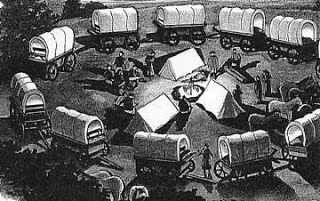 As this is a moving week for me, I’m providing the original three chapters for my novella “The Dogtrot Christmas” soon to be re-released in Barbour Publishing’s A Log Cabin Christmas Collection. Chapter one ran on Monday and can be read here: Chapter One.
Chapter Two takes us to a more dramatic moment where it puts Molly’s emotional response to her family, her brother Jamie, and her nephew, into perspective.
Chapter Two
“Jamie, is the baby here yet?” Molly tossed the braid over her shoulder and whispered into the white canvas tent. She could hear rustling but Syntha’s moaning had eased some.
Her brother stepped out, running his fingers through his sandy-colored hair and blinked several times. “Not yet and Kizzie’s getting worried. She wants me to send scouts out for Ma Hanks.”
“Why?” Molly could smell the sweat rolling off him and something worse, a heightened fear they already knew too well.
His whip-thin body suggested adolescence more than fatherhood, but her brother thrust his shoulders back and his chin out. “Syntha’s having trouble. Kizzie thinks the baby may be too big.” He looked down at her from his six-foot height. “She don’t look very good.”
Molly touched his arm. “You don’t think?”
“I don’t know what to think. The Hankses always know best. I’m going to find Ma Hanks. And to tell Pappy Hanks to start praying.”
“God always listens to Pappy Hanks. Even the Texas Mexicans are afraid of him.”
Hope and indecision crossed Jamie’s face, but he nodded. “I’ll find ‘em now.”
Molly watched him thread his way between the handful of tents and the dozen wagons. Three children ran by chasing a yellow hound with a stick in his mouth and she could hear the milk cows bellowing. Coming soon to be milking time and the men should be back from scouting out the trail ahead through theArkansas swamps. Everyone was getting worried. All the good land might be taken up; they needed to get toTexas to lay claim as soon as they could.
“Molly, that you out there?”
She heard Kizzie’s quick voice. “Yes ma’ am.”
Kizzie leaned out of the tent and thrust an iron pot into Molly’s hands. “We need more hot water. Get it from the cauldron on the fire and then find a bucket and draw cool water, too.”
Molly took off in the same direction as her brother. “How’s Syntha doing?” asked a young woman rocking a babe of her own.
Molly shrugged. “Baby’s coming.” She handed the pot to a hollow-eyed woman minding the smoky fire.
“Taking a long time,” the woman said. “We be praying.”
“Thank you. Jamie just went for Pappy Hanks.”
“Ma Hanks going to be unhappy she went with Pappy Hanks today.”
“Syntha’s baby wasn’t due for another month.” Molly held out the pot.
“I know he’s been praying for his girl. That Syntha’s the light of his eye, his baby girl.”
“Yes, ma’am. Kizzie needs more water, though.”
“Aye. I’ll fill it up.” The woman lifted off the lid from the blackened cauldron and ladled in hot water.
Molly hurried as best she could without spilling any of the precious water down her brown homespun skirt. It was hard to keep clean on the trail and she only had the two dresses. She walked carefully to not scuff up any dirt and managed to arrive at the tent with most of the water still in the pot. “I’m here, Kizzie.”
“Thank ye.” Kizzie look harried as she grabbed the metal wire handle.
“Can I see her?”
Kizzie held her sky-blue eyes closed a moment as if to rest. When she opened them, she stared unblinkingly at Molly. “How old ye be now? Seventeen?”
“Yes, ma’am.”
“You’re old enough to know, especially if that Parker boy is still swanning around. Come in, but be quick about it.”
Jamie’s bride lay on a tick of old corn stalks. Her face looked pallid and drawn in the dusky light. Kizzie crooned softly as she wiped a damp cloth across Syntha’s forehead. “The baby’s coming soon, you just need to push and use all your strength.”
Syntha moaned and Molly saw the cords that bound her head to her neck strain. She reared her back into an arch and let out a stifled cry. “That’s it,” Kizzie whispered. “Let it out. Ease down there, push from up here, and scream if you need to.”
Molly backed toward the flap just as Ma Hanks bustled in. “We be back. The scouts thought they saw Indians. I’m grieved I wasn’t here.” She drew back the sheet from Syntha’s knees and Molly slipped out of the tent. Molly picked up a water bucket and hurried to fill it at the cool chattering creek. This time she didn’t care if her dress got wet when she scurried from the bank.
Pappy Hanks returned with Jamie, carrying a lantern the woman quickly took into the tent. The two men sat on a log beside Molly as night fell and the flitting movement of bats crossed the sky. Pappy Hanks held his thick hard-covered Bible in his large hands, but he did not open it. His eyes were closed and his lips moved as he invoked the blessings of his powerful God on behalf of his youngest daughter.
Jamie hung his hands between his knees and stared at the ground, flinching every time Syntha moaned. Molly wanted to run away from the noise and the fear, but love for her frightened brother kept her beside him.
“It is woman’s lot to suffer in childbirth,” the Reverend Hanks said once. “But that doesn’t make it any easier. “
They heard the great horned owl soar overhead and the scent of the pine tree woods seemed to intensify in the dark. Families called good night and the cows lowed in their make-shift corrals. A knot of women gathered just outside the lantern glow of the tent and Molly could see the tension in their shoulders.
When at last the thin wail of new life slipped out of the tent to their grateful ears, Molly felt joy break through her heart. Her niece or nephew was here! After so long being a twosome, she and Jamie had another blood member in their family.
Ma Hanks came out of the tent carrying a bundle and her fierce voice broke. “Jamie, Tom, come. We’re losing her.”
Molly jumped to her feet after the men. When she reached the tent Ma Hanks thrust the bundle into her arms. Under the thin light from the cusp of a moon and against the dying rasps of Syntha’s breath, Molly looked for the first time at her nephew’s red, scrunched up face. What were they going to do without his mother?
August 13, 2013
A Two-Book Launch Summer; the Bittersweet Humility of My Name on the Cover
 Two summers ago, I worked hard to get myself organized for the launch of my first novella, “The Dogtrot Christmas,” which appeared in Barbour Publishing’s A Log Cabin Christmas Collection.
It felt like a dream come true and when it went on to make the New York Times October 2, 2011 best-seller’s list, I was simply stunned.
(And really, given this tiny last name– 2/3 vowels– don’t you think I should be a clue in The NYTimes crossword puzzle? Or would that be just a little over-the-top?) 
This September 1, A Log Cabin Christmas Collection is being rereleased–the same gorgeous cover, deckled pages and great price.
But a second Christmas book with my name on it also is being released on the same day: A Pioneer Christmas Collection.
This is an embarrassment of riches.
But it also provokes an interesting dilemma: how to market two similar books at the same time?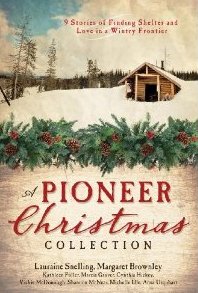
(I’m not alone in this; Margaret Brownley has stories in both books, too.)
Over the next month, you’ll have ample opportunity on this website to read about my stories, the other novella writers, their Christmas stories; and even take a chance at winning a fantastic gift basket (offered by the Log Cabin writers) or a signed copy of A Pioneer Christmas.
For today, a moving day for me, I’d like to repeat a post I wrote about what it meant to me to be published.
Thanks for reading.
The Bittersweet Humility of a Published Book
 Several years ago I sat in my rocking chair to “have it out with God.” I was tired of talking about writing and trying to write. I needed to know if this desire to write was from God, or was something I only wished was from God.
I was willing to set it aside and do something else–getting a Ph.D. in American history has always been the fallback–if this wasn’t something God wanted me to pursue.
I’d been reading about prayer and one book exhorted us to “dream big,” and “ask for the impossible.” We also were advised to scrub our hearts and desires to determine what we really wanted.
While I’m not a “name it and claim it,” Christian, I decided to ask for the one desire of my heart.
“Okay, Lord, I want to write a book.”
Ping. The light went on in my brain. I’d already written several books.
“Okay, Lord, I need to revise that. I want to publish a book that makes a difference in someone else’s life.”
I don’t think God said this, but I laughed at myself–was that my second request?
I don’t worship a genie God who waves His hands and gives me the desires of my heart. I worship a God who gave me gifts that He might be glorified through them. The honor and acclaim needs to be His, not mine.
That’s easy to say, but what does it really mean? I needed to confront my reasons for wanting to write.
So what was the state of my heart? Why did I want to write a book?
I hated to admit it, but the real, honest truth, hidden deep in the recesses of my soul was, I want to prove a point.
Unfortunately, the people I most wanted to impress were dead. Long dead and will never know I actually wrote a book that was published.
Mom’s sacrifices
My mother always expected me to amount to something–she put up with a lot to make sure I had a secure and happy childhood. If I wanted to be a writer, she wanted to make sure I had the opportunity. I’m sorry she’ll never know my name appeared on the cover of A Log Cabin Christmas Collection, A Pioneer Christmas Collection, Bridging Two Hearts and The Texas Brides Collection.
She lived long enough to see my name on the masthead of the UCLA Daily Bruin and to get a copy of Military Lifestyles Magazine when I won the grand prize short story contest. She saw the biography I wrote about my grandmother and of her parents. She knew I was writing Pioneer Stock, but never learned it ended up in the Library of Congress, much less in genealogical libraries around the country.
I’m sorry, Mom, it took me so long.
What do you have to write about?
Aunt Rosie gave me a Webster’s Dictionary for my tenth birthday. I loved words even then and still have it, the pages brown and spotted with age. She asked one day when I was in college what I planned to do.
“I want to write.”
She laughed. “Really? What do you have to write about?”
“My thoughts and stories.”
She sniffed.
Aunt Rosie lived long enough to read Travels with Jeanette, a story I wrote about touring Europe with my mother. Not published, but complete. She liked it, as did her brother, because it brought my mother alive again for them.
Aunt Arly, read Travels with Jeanette as well, and liked the parts about my mother but wanted me to write a mystery next.
They’re gone now, and never held my books in their hands.
So, what else was I trying to prove?
I spent twenty years following my naval officer husband around the world, raising our children in a variety of locales, teaching Bible study and doing little professional work. Unlike my children’s godmothers, I did not hold a job. To publish a novel would demonstrate all my fine IQ points were not wasted on raising children.
Except I know, as many of you know, that I didn’t waste all those years raising children, making a home and teaching Bible study–not to mention working at pregnancy counseling centers, volunteering as a Navy Relief budget counselor and all the hours at eleven different school districts.
I know.
You know.
But I didn’t feel accomplished.
After that day praying, I knew there was no point in God answering the desire of my heart to be published if I thought being published would be the pinnacle of my life. I needed to recognize I have worth in God’s eyes beyond what I can produce. Click to Tweet
Intellectually, I understood completely. Emotionally, I struggled.
When A Log Cabin Christmas arrived, I held the book in my hands and looked at the green embossed title, my own name in small letters on the bottom line. I flipped through the pages and marveled at seeing words I typed on this computer, printed into a book.
It felt humbling and marvelous.
It reminded me of holding a new baby: the joy, the awe, the wonder.
But you know what?
A baby is more valuable than a book. Click to Tweet
I am honored, now, to have four books with my name on the cover. I wish my parents and my aunts had lived to see it.
But more importantly, I know my parents and my aunts lived long enough to see my four children and my happy marriage.
They thought I was a success, even then.
Thanks be to God.
What defines success in your life?

August 12, 2013
The Dogtrot Christmas–Original First Chapter!

Photograph Ad Meskens of painting by Newbold Trotter
I’m moving this week, so I’ve been rummaging through the cellars and attic to find all my possessions.
In honor of that, I’ve unearthed the original opening chapter for my The Dogtrot Christmas.
When I was given the opportunity to “audition” a story for the collection, I sat down that afternoon and put together my proposal and three chapters. I passed them on to my agent immediately.
My agent, Janet Grant, kindly wrote back to say, “you’ve written a novel, not a novella.”
I had to shorten my story considerably.
To that end, I just moved forward 18 months in the story line and that became The Dogtrot Christmas.
My agent and Barbour liked them and accepted my story.
The Dogtrot Christmas is one of nine novellas in Barbour Publishing’s A Log Cabin Christmas Collection. The collection will be re-released on September 1, for those looking for Christmas short stories already loved by many, many people.
But these three early chapters provide insight and powerful backstory to the person Molly Faires became in the published novella. Here’s chapter one with chapters two and three coming on Wednesday and then Friday.
(This is a bonus feature, as if the novella was a DVD . . .)
Enjoy!
The Dogtrot Christmas
original chapter
Chapter One
Molly Faires tossed a thick golden braid over her shoulder as she walked through the two- room homestead one last time. She stood on the puncheon floor and remembered her pa laying down the boards and her ma fashioning a new broom to sweep them.
She pulled the shutters closed and in the darkened room strained to remember the laughter and voices now long dead and gone. Surely she could smell the corn pone cooking on the fire, the salty deer jerky they ate in the winter? But it was time to move on and she was ready to go. She hungered for her parents, her big brothers, and especially her sister. The youngest in the family never got enough time.
“Time to go. Are you ready?” The sweet voice of her new sister, one year married to Molly’s lone remaining brother, drifted between the two rooms and found her melancholy ear.
Molly walked out of the sleeping half of the dog-trot to meet Syntha Faires, whose ruddy cheeks gleamed with exertion on that surprisingly warm day. “I took my knife and I cut you these.” Syntha held out a dozen twigs from the lilac bush pa planted back near the outhouse when he first built the homestead. “I don’t know if they will grow inTexas, but we can try.”
Syntha had the gift of encouragement and a surge of thankfulness made Molly hug her close. Against her middle, she could feel the soft push of her niece or nephew responding with Syntha to Molly’s hug. “Thank you. I’m so glad you thought to take the slips.”
“We’re going to make us a home, just like this one.” Syntha gestured to the house. “I want Jamie to make a me a dog-trot just like your Pa built for your Ma. Pappy says it gets right hot inTexasand we need to keep the cookhouse separated from the living spaces. We’ll find a piece of land in that hill country and place the dog-trot just so it catches the breeze. We’ll put the sleeping space on the right and the kitchen far enough away that two people and a dog can walk between.”
“With a roof on top covering it all.” Molly admired the style with her.
“Point of fact yes.” Syntha patted her expanding belly. “And that’s where I’ll raise my young’en and you can live over the rise with yours.”
“I’ll like that,” Molly said.
“Good. That’s why we’re going with Pappy. Here comes Jamie now, we need to join the wagon train.”
They’d sold all the livestock, save the oxen and the last milk cow Jamie tied to the back of the tidy wagon. “We’re ready to go. They’ve already started crossing the ford.” The lanky 22 year-old scrutinized his younger wife. “Are you going to ride or walk?”
Syntha set the lilac twigs into the back of the wagon. “Ma says I should walk, so Molly and I will stroll fromTennesseetoTexas.”
Jamie grinned. “You will? You gonna stop somewhere along the way to have your baby?”
“Only if we don’t make good time.” She took Molly’s arm and they sashayed down the road in front of Jamie’s “gee-haw” to the two oxen.
Down the road they could see a dozen wagons fording shallowMauryCreek. “We better hope the stepping stones are high today or we’re gonna get our feet wet before we even start,” Syntha said.
“You’re braver today than I am.” Molly looked back to the only home she had ever known.
“There’s no choice. My whole family is going toTexas, there’s nothing left for me here inTennessee. And you’re my family now. Everything is ahead of you. You’ll find some handsome man to settle down with and love and have a new family of your own.” Syntha put a dimple in her left cheek. “This is our adventure. We need to enjoy it.”
A young man in deerskins spurred his bay horse across the creek in one jump and rode toward them, the horse’s hooves sparking up chinks of mud. Molly leaned to protect Syntha, but Eli Parker had his mount under control.
“Isn’t it exciting Molly? We’re finally on our way. To a place where we can claim new land, fight off the Injuns and put together a life they way we want. What do you think?”
“I think you’re still wild Eli Parker,” Molly said, but she leavened her words with a tilt of her chin and a smile.
He reached down and ran his gloved index finger along her chin. “Wild enough to protect you out there, Miss Molly.”
“You be on your way,” Syntha ordered. “I see Pappy is waving for you.”
Eli narrowed his eyes. “I’m good enough for her, Miz Faires.”
“Are you washed in the blood of the Lamb yet? I ain’t seen no baptism. I’ll be waiting for it and rejoicing with all the angels when you go under the water, Eli Parker.”
He wheeled his horse and tossed his head toward the woods, then clenched his knees to pause the animal. Eli leaned forward to stare.
Molly shivered. The Indians were still seen in these woods, and the stories from her family always made her nervous. Ma had warned her many times, you never saw them until it was too late.
They watched him ride like a scout, wide to the north, as they continued to the ford. “You be careful with him. Don’t lead him on. There be plenty of good men in search of wives inTexas. Pappy knows plenty of Hardshells, you don’t need to be mooning over someone whose following religion of the mild kind.”
Molly nodded. Eli may not be the right man for her, but he sure was good looking.
When the reached the ford, John Stewart and his wife Katrina were urging the oxen into the water. Katrina’s red face looked fit to burst.
“Let me help you.” Molly reached for the lead rope.
“Thank ye.” Katrina gave her the rope and hurried to the side where she retched into the pokeweed.
Syntha took the hands of the two Stewart toddlers. “Ye be in the family way?”
Molly saw the woman nod before she bent over again.
“Thank ye, Miss Molly,” John boomed. A hulking genial Scot who wore a ginger beard, he urged his oxen forward with a firm and loud voice. The creek water spilt over the tops of Molly’s boots and her skirts got wet, but she focused on the job. Her face felt the gust of oxen breath as they lumbered across the rocky bottom of the creek and then climbed the bank beyond. “The first one creek crossed, hundreds to go. Hey, Johnny!”
Stewart’s five-year old son leaped from stepping stone to stone, nimbly crossing without a splatter. He grinned when he reached their side and swatted his father’s muddy leg. Together they led the oxen down the road following the rest of the wagon train. When they reached a wide spot, Stewart spoke to the boy. “You stay here with Miss Molly while I help your ma across.”
Molly gazed to the woods. She thought she caught the flash of movement behind some of the leafy trees. She pulled Johnny close to her, though he squirmed away. The oxen lowed, the dust rose to clog her nose and Molly wondered just where this adventure would lead.
The Colwell wagon came next and Syntha’s confident sister Kizzie strode up the road, one babe in arms and three trailing behind. Willie drove his oxen from the wagon seat, assured the well-trained animals would obey. Kizzie showed a rueful smile when she reached Molly.
“He always has show Pappy he can be in control. We’ll see what he does when we hit real water. Are you looking forward toTexas?”
“Yes, ma’am.” Molly stood as upright as she knew how.
Kizzie’s eyes bored into her. “Pappy’s made some converts on the other side of theBrazos. Some of those Mexican-American believers have got some nice spreads. Make sure you keep your options open until you get toTexas.”
“Yes, ma’am.”
The older woman’s face turned sober. “But don’t leave my sister just yet. She may need help with a babe on the road.”
“I won’t. I love Syntha like my own sister.”
Kizzie’s face trembled, just a tic, but she patted Molly’s shoulders. “I miss your sister, too. Come along children.” The Colwell family moved up the road.
Molly watched after them and then remembered the little boy who wanted to get away. “I don’t want a husband yet, Johnny.”
He squinted at her. “Why not, Miss Molly? Everybody needs a man to protect ‘em in the newRepublicofTexas. ”
“Don’t you believe in God, Johnny?”
“Yes, ‘em. But I like him best with skin on and a gun.”
Molly laughed. “We’re going to need God and a gun both where we’re going.”
Tweetables:
The backstory to a novella that made The NY Times best sellers list. Click to Tweet

August 9, 2013
The Hunt for Order and Sin’s Thwart
(I’m moving today, so this is a pertinent reprise of a past post)
 My colleague Wendy Lawton and I share a major belief. We both think if we can find an orderly system of management, our life will become simpler, more controllable and efficient.
I’m not sure why Wendy is so convinced, but my past as a military wife bears some responsibility for my dream. Thirteen times we moved. Thirteen times I stood in a house surrounded by my possessions all neatly boxed up and stackable. Life was in total order and not even a surly two-year-old could throw anything around.
Similarly, I loved marrying an engineer who, I thought, had a place for everything and everything should go in its place. I rejoiced with Adrian Monk when he fell in love with a woman because her garage was totally organized. While Natalie, the Captain and Randy passed incredulous looks, I sighed with contentment. Everything in its place.
Where did this desire for order come from? Why are some “messies” and others obsessive compulsives? And what about the rest of us in between? Why am I looking for order and management to gain control over my life?
Ah, maybe that’s the real crux: control?
We worship an orderly God. He tells us “come now, let us reason together,” in Isaiah 1:18. That reference is in conjunction with our sin, but can’t you make a case that sinning is getting out of order? That when we sin, some of us are allowing a base need or desire to control our Godly sense?
God created order out of chaos when he divided the dark from the light in the opening chapter of Genesis. He put continents in their places (somewhat flexibly as earthquakes demonstrate) to give a boundary to the sea. He set up his laws so we could understand the difference between sin and not-sinning.
When an old friend asked why I would base my life on the Bible, I told her I saw the Scriptures as a framework. God gave us boundaries and limits and then we are free to live our lives within that order. Knowing what’s sin enables me to avoid it, and thus to keep the chaos of guilt at bay.
We live in a world of variables and most of them are out of our control. But Wendy and I optimistically believe that if we could set up systems to keep the variables unusual rather than the norm, we could get our work done more effectively. The exceptions should be the exceptions, not the rule.
How can you put enough systems into play to keep the chaos at bay?
You start by examining the entire situation–what causes things to get out of order. Those that can be contained, should be contained. Those that can’t (like a two-year-old), need boundaries erected and a recognition that dealing with them is, by nature, uncontrollable. If you can anticipate what you can’t control, you’re halfway to figuring out how to deal with it in an orderly fashion.
Similarly, I’m going to sin today. In fact, I’ve already sinned today in several corners of my life. That’s not surprising to God and alas, not surprising to me either. It will probably happen tomorrow as well.
The key, though, is how I deal with that sin, that lack of control, that choice, to be disorderly?
Come now, let us reason together. God has given us a way.
Lamentations 3:20-23 reminds us of what it feels like to fall out of order, and it gives us hope.
My soul still remembers And sinks within me.
This I recall to my mind, Therefore I have hope.
Through the LORD’s mercies we are not consumed, Because His compassions fail not.
They are new every morning; Great is Your faithfulness.
God created the night and the day; he put order into the world. The sun comes up in the east and it goes down in the west. Every day is a new day, full of his mercies and forgiveness.
Which means I can wake up each morning knowing order is in the world–somewhere–and that even when things fall apart, His mercy and faithfulness remains secure and we’ll get through this, perhaps not efficiently, but under God’s control.
At least Wendy and I bank on that.
Thanks be to God.
Tweetables:
Is sin allowing a base need or desire control our Godly sense? Click to Tweet
Steps to keeping sin’s chaos at bay. Click to Tweet

August 6, 2013
A Life in Chapters–Part 2
We’re moving this week. I’ve spent most of the summer packing up our life and getting ready for the next chapter.
This new chapter is bittersweet. My husband and I are closing the door on the richness of a family home and moving into a DINK house–you know, double income, no kids.
I suppose this is an easy move for some, but for us it’s been laden with minefields.
How many bookshelves do you really need to have? (Hey, I’ve given away 200 books in the last month).
Do we need our stereo anymore if we only listen to music on the I-pod or the classical radio station?
Do I really want to haul the UCLA grandfather clock I took from my parents’ home that has never worked?
What do we do with all my father-in-law’s Shakespeare books and rare Elizabethan research paraphernalia now that we won’t have the extra bonus room?
How many containers of Christmas ornaments do we need to have?
Why can’t the kids take all their stuff with them?
Why don’t we just take a picture and throw it away?
Here’s another example:
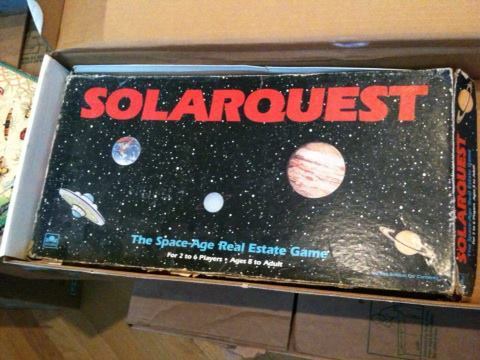
This is not my game. I never even liked to play this game. But look how beaten up it is. Obviously, it’s important to someone in the family.
What does it really represent?
The sifting reminds me of when my brothers and I sorted through our parents’ possessions. We easily tossed things into the requisite piles: keep, pass along, throw away. We were in agreement.
Until we came to a distorted plastic container in the kitchen.
“Uh,oh.” One brother looked at me out of the corner of his eyes.
“I know. What will we do?”
“You take it,” said the other brother.
I laughed. “I live in Hawai’i. I’m not taking this across the ocean.”
“But how can we throw it away?”
It was an old white Tupperware pitcher, the lid long melted away in the dishwasher. It wobbled narrow and upright, a little discolored, but we had made Kool-Aid in it throughout our childhood.
We had the presence of mind to realize we weren’t debating the value of plastic trash, but really, about our memories, our summers, and making a mess in the kitchen. How could we throw that away?
Three tall adults circled this item, now placed square in the middle of the kitchen. “We should just throw it away,” the oldest brother said.
I smiled at him. “Go ahead.”
Six feet, five inches slumped.
I pointed at the other brother. “You take it home and give it to Lynda. She’ll throw it away without a second thought.”
We laughed.
That’s exactly what happened. My sister-in-law is good in situations like that one.
Who does it belong to, really?
The Solarquest game is not my children. It’s not even their childhood. It’s just a piece, a chapter they’ve now long outgrown and one I only vaguely remember.
I don’t have any problem throwing it away.
Except, I sent them all a photo and an email this morning: “Speak now or forever hold your peace.”
One of them spoke.
It’ll be moving soon; but not with me!
How do you manage your memories and old toys?
Tweetables:
Possessions are not people; take a photo of the old item and throw it away. Click to Tweet
Three things to do with possessions: keep, toss or give away. Click to Tweet

August 3, 2013
Four Ways to Determine God’s Will
 I stood a long time before the mailbox’s open maw, the manila envelope poised on the lip.
Were we doing the right thing by our sons?
I reviewed the endless discussions: finances, education, family, car-pooling, fears, Hawai’i, dreams, God, and still didn’t know.
How do you decide a question that could change your child’s life forever?
I went to my source of comfort and prayed something like this:
“Lord, I don’t know the plans you have for my children. I don’t know the future and what’s best for them, but I know you do. So, I pray you would put the boys in the school you’ve chosen for them, no matter what I think. Amen.”
A push, a rusty squeak and the envelope disappeared into God’s hands.
Twenty years later, my son confirmed that “decision” changed his life. “Everything about me, where I am, where I went to college, what I do, who I married, would have been different if I hadn’t gone to Punahou School.”
Which wasn’t my first choice.
I’ve been reflecting on that decision-making process this week as my husband and I juggle and confront yet another big decision. On one hand, it looks obvious. On the other, my heart lurches and yearns for comfort. A tiny feather of fear whispers.
Ultimately it comes down to this: How do you decide the will of God? Click to Tweet
Here are four steps I use to weigh my choices after I’ve prayed for God’s direction.
1. Does this violate Scripture?
The first step, obviously, is to make sure what I’m considering is not contrary to God’s law as spelled out in the Bible. We’re buying a house– is our heart in the right spot? Do we have sufficient resources? Are we choosing this house out of greed, pride, or any other non-fruit of the spirit?
2. What do the circumstances look like? Does it make sense?
God doesn’t always operate in the rational, but there should be some sense of “rightness” about this decision. In our case, the timing, the stewardship issue, the reasons this house works for our ministries play a big factor.
Even if I don’t care for this decision, I need to weigh these factors. I may not be happy about this particular house, but I need to see where it makes some sort of sense.
3. What do those in spiritual authority/ those who know you/those who love you/ those who will be effected by this choice . . . think?
I have sought counsel and God has provided me with several wise people to listen and affirm what we’re doing. My husband and I have spent endless hours considering, crying (me), talking, debating, comparing, and wrestling with information. Our family has been listening to this with mixed emotions, but they’re excited about our options–all of them.
My prayer has been that whatever the decision, my husband and I will be in unity.
4. Where does you heart tug?
Emotions should never be the defining “deal breaker,” but they should be examined. My husband and I tend to make decisions like Mr. Spock–totally rational and dismissive of emotions. But we’ve learned over the years that we need to look at the emotions and talk them through. Sometimes fears just need to be aired and once out in the open, they dissipate like a wisp of fog under the sun.
In the case of my children’s Hawai’ian schooling, my emotions took me away from Punahou. In the current housing case, my emotions tug me to a different spot.
While my emotions have been validated–heard–they’ve also been soothed by the discussion and through the prayers from close friends.
It certainly makes me feel better . . .
Bonus. How has God worked in your life in the past?
Remembering the Hawai’ian schooling situation has helped me work through the current housing situation. God worked to the good in ways I could not have guessed before we stepped out in faith. In hindsight, I can see the wisdom in that decision. Remembering the positive outcomes of our time at Punahou strengthens my trust in God’s leading this time.
I remember another momentous situation in my past where I considered passing on a tremendous gift because of emotional uncertainty. I took a step of faith in trusting God, and the blessings that have flowed to me and so many others, are overwhelming.
And another time.
It forces me to ask the question “Why not take this proffered blessing, even if I don’t feel worthy?”
This is where reading biographies and testimonies of others who have trusted God in extraordinary, and ordinary, circumstances can help. I’ve received plenty of blessings from the following:
Edith Schaeffer‘s The Tapestry
Elisabeth Elliot‘s Through Gates of Splendor
Corrie Ten Boom’s The Hiding Place
Dabney Hedgard’s When God Intervenes
Robin Jones Gunn‘s Victim of Grace
Tweetables:
Four Steps to Determine God’s Will Click to Tweet
Five Books to Remember God’s Faithfulness Click to Tweet
Learning to Trust God Through the Past Click to Tweet

July 30, 2013
Why Did God Let Oswald Chambers Die So Young?
 A reader voiced a concern over my recent post about Oswald Chambers:
Oswald Chambers might not have died if he had sought immediate medical attention when he began having abdominal pain. He went all noble and refused to take up a bed that might be needed by a wounded soldier. By the time he was operated on, his appendix had ruptured and he died of peritonitis. Biddy and Kathleen lived in poverty for years after his death.
That is one way of looking at the facts concerning Oswald Chamber’s death.
His appendix did rupture in late October 1917. Oswald delayed going to the hospital several days, believing he merely had a stomach virus (they were in Egypt) and because he did not want to take a hospital bed from a needy soldier.
He survived the appendectomy, rallied, and everyone believed he would recover.

Photo courtesy Wheaton College Special Collections
The above photo is of Oswald in his prime. To the right is a photo of Oswald Chambers in late summer, 1917. Note the hollow cheeks and tired eyes.
Oswald had been preaching, teaching, studying and counseling round the clock for two very long years in desert conditions. He was exhausted.
Eva Spinks, a young woman working with him at the time, praised God in her diary “for Thy keeping of my beloved two [Oswald and Biddy] in bringing him through safely.”
According to biographer David McCasland in Oswald Chambers: Abandoned to God, on November 4, Oswald “suffered a serious relapse from a blood clot in his lung. He rallied from it only to be hit with another more serious attack the next day.”
While Biddy clung to a verse “this sickness is not unto death,” the nurses told her there was no hope.
Oswald recovered and began to regain strength. His four year-old Kathleen visited. Another encouraging week went by, but on Tuesday, November 13, his lungs hemorrhaged. He died at seven in the morning on November 15, 1917.
Biddy wired home to close friends and family: “Oswald in His Presence.”
Why did God let Oswald Chambers die? Click to Tweet
In Psalm 139:16, the psalmist records:
Your eyes saw my substance, being yet unformed.
And in Your book they all were written,
The days fashioned for me,
When as yet there were none of them.
Conventional Christianity takes this to mean God determines the length of our days. He decides when we will be born and when we will die.
That is what Oswald and Biddy Chambers believed. It’s what I believe, too.
The Chambers dedicated their lives to God’s disposal for His purposes and His timing. Did Chambers want to die?
I don’t think so. He loved his wife, daughter, friends and ministry passionately.
But not as passionately as he loved and trusted his God.
What was the result of Oswald’s early death?
Biddy Chambers elected to stay on and continue her husband’s ministry–because it was hers as well. An accomplished stenographer, she had taken shorthand notes of all Oswald’s lectures from his time at the Bible Training College, through his work in Egypt. She had many notes.
She also had a young daughter to raise. A daughter who believed what she had been told, that though her father was no longer present with her, he was with Jesus and that was cause to rejoice.
Some nine months after her husband’s death, Biddy wrote to a friend the following:
“Living with Oswald and seeing his faith in God and knowing that ‘by his faithfulness he is speaking to us still’ is the secret of life these days, and I feel as if it will be overwhelming to one day see what God has wrought, and one will only be sorry not to have trusted more utterly.”
Biddy had notes and a typewriter and a ministry. With the help of the YMCA and trusted friends, she transcribed and put together Oswald’s sermons and teachings into pamphlets. After she and Kathleen relocated back to England following the war, Biddy spent the rest of her life producing some 30 books using Oswald’s teachings, the most important of which is My Utmost for His Highest.
First published in 1927, My Utmost for His Highest has never been out of print.
Poverty for wife and child?
Biddy ran a boarding house when she returned to England. She fed countless people who came to her door, worked on the writings and mailings, raised her daughter and worshipped her God.
She never remarried.
Was Biddy disappointed in her financial situation?
Long before their marriage, Oswald advised her: “I have nothing to offer you but my love and steady lavish service for Him.”
 His focus was on Jesus, even as he loved Biddy.
When the time was right by his understanding of God’s lead, Oswald took Biddy to St. Paul’s Cathedral in London. They stood before Holman Hunt’s painting “The Light of the World,” and became engaged.
McCasland wrote about the painting and the moment:
“Christ came at night carrying light and a gentle request for entrance to a door that could be opened only from the inside. The meaning was clearly and skillfully portrayed on the canvas. He and Biddy were pledging their love, first and foremost, to Jesus Christ, and to His work in this dark world. Their commitment went far beyond a hope for personal happiness to embrace a calling to belong first to God, and then to each other.”
Biddy knew what she was getting into when she married such a man as Oswald Chambers.
The result?
We cannot know how God will use whatever circumstances He brings us into. But believers like Oswald and BIddy Chambers, and I hope myself, know that their lives have been poured out for one purpose only: to glorify God.
The Westminster Catechism spells it out:
“Q. What is the chief end of man? A. Man’s chief end is to glorify God, and to enjoy him forever.”
Do you believe God has been glorified as a result of Oswald Chamber’s death?
My Utmost for His Highest would not have been published in its present format if Oswald Chambers had lived. Click to Tweet

Biddy and Kathleen; photo courtesy of Wheaton Special Collections Library
Did Biddy and Kathleen miss Oswald Chambers? Did his friends?
Of course.
Did they grieve?
Of course.
But Biddy was a wise woman who knew the God she worshipped well. It’s interesting to note the Scripture passage she chose in My Utmost for His Highest for the day her husband died, John 21:21-22: “Peter . . . said to Jesus, ’But Lord, what about this man?’ Jesus said to him, ’. . . what is that to you? You follow Me’.”
The beginning of that November 15 devotional using Oswald’s words explains much:
One of the hardest lessons to learn comes from our stubborn refusal to refrain from interfering in other people’s lives. It takes a long time to realize the danger of being an amateur providence, that is, interfering with God’s plan for others.
Who are we to question what God did in Oswald, Biddy and Kathleen Chambers’ lives? They accepted God’s will.
Why did Oswald Chambers die so young?
So God could be glorified. So Biddy could produce works that pointed people to Jesus for 86 straight years and counting.
Do you think God been glorified in spite of Oswald Chambers’ early death?
.

July 26, 2013
Snelling, France, Books and the Silverdale, Washington Connection

Olympic Mountains with their winter coat of snow, as seen from Port Orchard, Washington (Photo credit: Wikipedia)
Several years ago I got into conversation with author Lauraine Snelling in which I mentioned my family had visited Washington while on vacation.
“What part of Washington?”
“Silverdale. It’s on the Kitsap peninsula across Puget Sound from Seattle.”
Lauraine grinned. “I know it well. I grew up there.”
My family lived there for four years and so we swapped stories. Inevitably, I asked where she lived in a town that was still pretty small during our residence.
“On Old Frontier Road, the west side. I used to ride my horse into town,” Lauraine said.

Lauraine Snelling
Of course she did. Old Frontier Road isn’t far from town. I knew that because we lived on Old Frontier Road!
Old Frontier Road is not that long, maybe three or four miles, and Lauraine’s family had a farm on the northern end. I could picture the house. We lived there many years later in a new house on the south end of the rural road.
I love these “what a small world” connections!
Nine month later, my family traveled to France to celebrate our son’s graduation from college. We spent a day in Normandy where we hired battlefield guide Ellwood von Seibold to walk us along the beaches stormed on D-Day. It was a sobering, and enriching experience of thoughtful reflection.
But the guide overbooked, and five women joined us on this expedition. When we realized we’d be spending the day together, I introduced my family and started a conversation while von Seibold sorted out the transportation.
The women were leading a five-day prayer retreat starting the next day. Normandy was the only “fun” excursion they had planned.
I was pleased we’d spend a long day with women of like minds.
But even more like-minded then I suspected.
They were absolutely charmed to meet a new graduate of the University of Washington.
Where were they from?
Washington.
What part?
Silverdale. “A town on the Kitsap peninsula across Puget Sound from Seattle.”
It only took us three or four tries to find mutual friends.
But when I described where we had lived, one woman’s eyes got wide.
You guessed it. She lived on Old Frontier Road!
Of course she knew my house.
“I don’t understand,” the battlefield guide said when he returned. “I thought you people didn’t know each other.”
“We’re from the same town.”
“What?” He got over the surprise, but the look on his face was priceless. (The tour, by the way, was excellent. We recommend him!)
We had a splendid day together. Lauraine laughed when I told her.
I thought about that connection when Lauraine and I (along with seven others) signed to write novellas for The Pioneer Christmas Collection coming out in September. In honor of our mutual past, I opened my story in Silverdale, Washington, though The Gold Rush Christmas moved to Alaska by chapter three.
I chortled over that first chapter until I did my final research to make sure all the historical data was correct. My three young adventurers needed to be desperate to leave behind their childhood home and head for the excitement of the Alaskan gold rush.
Alas. Silverdale was not a town in 1897. They could not have come from there.
So, I moved the setting south to Port Orchard, Washington, home of another acquaintance, Debbie Macomber. Port Orchard had the mill job a frustrated Peter detested.
I’m just sorry our beloved Silverdale (now the shopping center of the region) didn’t fill the bill.
I love surreptitious encounters like my Silverdale tales. Have you ever met people in unexpected places?

July 23, 2013
Five Things I Love About Sin
 “So what brought you to our church?” the genial pastor asked. “We’ll go around the circle and tell us who you are and why you want to become a member.”
Many new members mentioned the terrific music, the friendly people and the wise pastors.
All true, but I had another answer: ”I really appreciate how I can confess sin every Sunday during the service.”
He burst out laughing. “No one has ever said that before!”
It’s true. Every week I stand with a group of like-minded people before God and confess that I am sinful and unclean.
I make that confession because I am sinful. I can’t help myself–sort of–and confessing makes me feel better. It also enables God to hear my prayers.
Sin, of course, is falling short of the mark–failing to live up to God’s will or his design for my life. Violating the Ten Commandments set out by God through Moses, is sin. The Bible has many examples, but the one I’m frequently guilty of–almost a “besetting sin“– is the attitude of my heart.
If God looks at the attitude of my heart and it does not line up with His desire for me–to live full of love, joy, peace, gentleness, faithfulness, patience and longsuffering–I’ve committed sin.
Unfortunately, that happens often.
When I realize my behavior is sin, I have a choice: I can pretend I’m not sinning or I can deal with.
I prefer to deal with the issue, because by so doing, I get my relationship with God in the right order.
Jesus is the key, of course.
These are the five things I love about sin: Click to Tweet
1. Everyone does it, so I’m not alone in my personal failures. Click to Tweet
“For all have sinned and fallen short of the glory of God.” (Romans 3:23)
Being sinful unites me with humanity. When I remember I’m sinful, I can’t so harshly judge others because “there but for the grace of God go I.”
“For we do not have a high priest [Jesus] who is unable to empathize with our weaknesses, but we have one who has been tempted in every way, just as we are—yet he did not sin. (Hebrews 4:15)
Jesus did not sin, but he knew temptation, therefore he’s not surprised when I succumb to a sinful choice. 
2. Sin’s easy to recognize once I bother to look for it. Click to Tweet
Once I’m willing to admit that I fall short of what God has designed my life to be, it becomes easier to recognize when I make mistakes that afront God. The best way for me to do this is to reflect on the passages of the Bible I read.
I like my Life Application Bible because the bottom notes often ask me questions about my soul-full reaction to verses like “be angry but sin not.” (Ephesians 4:26)
3. It’s simple to confess sin and be forgiven. Click to Tweet
1 John explains,
“If we say we have no sin, we deceive ourselves and the truth is not in us. But if we confess our sin, God who is faithful and just will forgive our sin and cleanse us from all unrighteousness.”
All I have to do is tell God I’ve sinned against him–by thought, word and deed–and I’m sorry. Jesus’ death on the cross was deliberately done so my sins could be forgiven. I’m often embarrassed that some of my more petty sins required Christ’s atonement, but he gave it freely and I’m redeemed.
4. There is no sin too big to be forgiven. Click to Tweet

English: Zambrów – the monument of Jesus Christ in the front of the church of the Holy Spirit Italiano: Zambrów – statua di Gesù Salvatore davanti alla chiesa della Spirito Santo Polski: Zambrów – figura Chrystusa Zbawiciela przed wejściem do kościoła pw. Św. Ducha, ustawiona w 2002 r. (Photo credit: Wikipedia)
God will forgive any sin–no matter what it is, no matter how many people are affected, no matter how heinous. Some will point out the problem with “the sin against the Holy Spirit,” but if you’re worried about commiting that one, chances are very good you have not done so.
The point is, abortion is a forgivable sin. Murder is a forgivable sin. Theft is a forgivable sin. Adultery is a forgivable sin. Gossip is a forgivable sin. Gluttony is a forgivable sin.
“Nothing can separate us from the love of God that is in Christ Jesus.” (Romans 8:38)
5. Confession and accepting forgiveness makes me feel better. Click to Tweet
It’s an awful, gut-wrenching, hand sweating, feeling to realize the depths of your sin–particularly against another person.
It’s humiliating and miserable to gather up your courage to face someone you have harmed and ask for forgiveness.
Mortifying, dangerous and heart palpitating to say the words, “I have sinned against you in this way ____________. I don’t deserve your forgiveness, but I ask for it anyway.”
And what bliss when, said even in sorrow, the person forgives.
I’m often weeping with gratitude–the undeserved favor known as grace–bestowed by someone I have wronged.
That includes God, Jesus, and the Holy Spirit.
So I guess the five things I love about sin are not about sin per se, but about the release that comes from
1. Recognizing I’m a sinner
2. Understanding that while my choice to sin is my choice, I still can bring any behavior/action/sin to God and ask for forgiveness.
3. Accepting I’m forgiven despite what I’ve done.
4. Realizing that once forgiven, God doesn’t remember my sin.
5. Knowing that while I’m likely to sin, that forgiveness is always available.
Thanks be to God.
Is this list complete? How have you dealt constructively with sin?
(In case you can’t figure out what constitutes a sin, here’s a list of “all the sins” in the Bible.)