Michelle Ule's Blog, page 86
February 7, 2014
Novel Writing Ideas from the Pew Rack

I get some of my best novel writing ideas while sitting in the pew at church.
Is this a Satanic effort to distract me from the teaching?
Or is my soul going into overload while worshiping and God feels free to speak to my mind with plot ideas?
A lot of times a great idea occurs while I’m singing–usually the praise songs, not the hymns.
(That may be the result of the theological content of hymns versus praise songs. You can argue that on your own).
All I know is, I make use of the convenient little pencils in the pew rack and scribble notes onto my bulletin almost every week.
The picture at the top is a good example of what my bulletin looks like by the time I get home from church every Sunday. (I could plead for my white space in the bulletin, but that feels like cheating).
This particular Sunday included plot points for my current novel, writing ideas for blog posts (five!), a reminder to contact a friend, and Google search information for a subject I’m covering in the story (that came from the sermon).
I scribble them down so I can remember them and continue to worship. One little note, and then I’m back in the service singing with the rest of the congregation. No one knows except the people sitting on either side of me and they’re usually too polite to ask.
Is it rude to scribble plot ideas during church?
Which would be better? A writer struggling to remember that brilliant writing idea and not paying attention, or a writer who scribbles a note, tucks it away, and returns to attention?
Some Sundays I only get a couple ideas.
Other Sundays, the bulletin is in and out of the pew rack so many times, my husband finally notices.
I transcribe when I get home, often expanding the idea and sometimes writing the whole chapter. It’s as if when I release my brain to pay attention to spiritual material, the boys in the basement go into overdrive to come up with writing ideas.
Even when I pray before the service that I would be focused on what God wants me to learn during that day’s service.
Draw your own conclusions.
Do the writing ideas only come when I’m working on spiritual-themed manuscripts?

My spiritual life informs all my writing, so I cannot say for sure. Many times the ideas that come have no connection that I can see with the service I’m attending.
That wasn’t necessarily true when I wrote my spiritual memoir Loving God Without a Label. In that instance, specific songs, seasons of the liturgical year and occasionally sermons, pricked memories from the past. I know where I was when I learned specific songs. Often, I could hear the specific song leader who first sang a praise song, when I replayed it in my mind. That would open my mind to memories of that specific church setting which brought up all sorts of things I might have forgotten otherwise.
Writing ideas as Satanic distractions?
At first I thought Satan might have been behind those distractions, but once I started writing them down –to get them out of my head–I came to see the plot points were more like the fruit of the spirit full of love, joy, peace, gentleness, faithfulness and power. They added to my story, or sent me on a positive rabbit trail to something else.
Since I so often pray that God will illuminate my heart and mind as I worship him, I’ve come to accept novel writing can really start in the church pew. Click to Tweet
Tweetables
Do church services inspire writing ideas? Click to Tweet
Where are you physically, when ideas tend to prick your mind? Click to Tweet
Bonus question: Do you get more writing ideas from praise music or hymns?  Click to Tweet

The post Novel Writing Ideas from the Pew Rack appeared first on Michelle Ule, Author.


February 4, 2014
Skunks in My Life

Western spotted skunk By NPS [Public domain], via Wikimedia Commons
I’ve had a number of encounters with skunks in my life.
The real ones, not just old Pepe LePeau.
I saw one ramble past our new house this morning and shrieked. My patient husband looked at me. “Did you want me to do something about it?”
“No. I’m just pointing out they’re here.” Surely he would get the connection between a fat skunk wandering past the side of the house where we’ve been hearing mysterious scratching for the last couple months?
We had most of our skunk run-ins while living in the Washington woods.
One rainy cub scout day, we adjourned to the garage to work on a project. Halfway through the meeting, I tossed something into the lid-less trash can.
It rocked.
I peered inside, grabbed the lid and clamped it down.
More rocking, and then a familiar, bitter, rancid, horrible odor we all recognized.
“Let me see the skunk!” cried one of the scouts.
I dragged the trash can a distance from the house.
Since my husband was on a business trip (of course!), my truck-owning neighbor took it far away to release.
“That was a strange skunk,” he said later. “It wouldn’t leave the trash can, so I had to throw rocks at the can before it finally climbed out.”
Sigh.
Spotted skunks standing on their head to spray?
“I’ve seen skunks come out of the garage,” my eight-year-old exclaimed. “It had spots and stood on its head.”
Spots? Standing on its head? We consulted an expert in those pre-Internet days: Ranger Rick magazine.
Sure enough. We had western spotted skunks skulking around our property. When agitated, they stand on their heads and spray.
It’s a good thing my son didn’t stick around to learn more, up close and personal, shall we say.

English: Western spotted skunk threatens to spray me. In Spanish they are called zorillo. (Photo credit: Wikipedia)
One night my husband jumped out of bed shouting. “There’s a skunk in the house!”
He stalked about, flicking on lights and opening windows as he followed the pungent aroma downstairs to the door leading to the garage.
My husband reached into the garage and hit the garage door opener.
Our black cat zoomed into the house, bringing the scent with her.
Obviously, she had met the skunk up close and personal. My husband caught her and she spent the night outside.
The next morning, I bathed her in tomato juice (I used two cans on a ten pound cat. I did it twice) followed by Johnson’s baby shampoo. She was not happy.
We stashed potpourri all over the house, but it still took a week for the smell to diminish!
Several months later when my husband rushed me to the hospital to give birth, he chose to leave the garage door up as we zoomed away.
A skunk followed us out into the warm sunshine.
He was standing on his head.
It was better I didn’t know.
What have you used to get rid of skunk scent from a pet?
We’ve had fair luck with our large dog by pouring coke over his coat and rubbing it in. In theory the acid in the cola drink breaks down the smell. I then washed her several times with deskunking dog shampoo and dried her off. She still spent most of the day outside, but at least she didn’t smell quite so bad.
Or, maybe that way didn’t work so well because of the stickiness of the Coke–though she would lick it off. Another means was mixing hydrogen peroxide, baking soda and dishwashing soap. That helped.
Both remedies are discussed here.
With the cat, I used tomato juice because I could contain and control the cat better in the sink. Putting tomato juice on the dog resulted in her shaking her coat and getting tomato juice all over the bathroom, leaving it like a scene from Psycho . . .
Tweetables
Adventures with skunks–the spotted kind Click to Tweet
How about Coke and Hydrogen Peroxide to deskunk a dog? Click to Tweet

The post Skunks in My Life appeared first on Michelle Ule, Author.
January 31, 2014
Personal Issues and Writing Exercises
 I learned a long time ago that I need to examine my personal issues through writing.
In my younger years it was through wildly passionate letters full of emotional outbursts. To one correspondent in particular, I’d often begin this way:
“I don’t really know what I think about this situation, so I’m going to write you a letter spelling it out with the hopes I’ll know what I to do by the end.”
Away my fingers first wrote, and then typed, multi-paged letters.
It usually worked.
(But pity the poor correspondent on the other end expecting a cheerful tale of a fun-filled life!)
The same thing, of course, happens while writing a novel.
A counselor I know was fascinated to learn I was writing a novel. “Tell me the story,” she said.
I was wary. “You know, this manuscript is going really well. I’m not sure I want you to hear the story. You might point out things I don’t recognize.”
“Just tell me until you feel uncomfortable. We can stop at any point.”
I told her the story.
She liked it.
She then told me who all the characters really were.
Dumbfounded, I stared at her.
My brain raced.
Good heavens! She was right.
While on one level, I had been conscious I was working out some issues–money mostly–she saw right through to the fundamentals: the emotional and family issues I was dissecting.
Her words were gentle. “How do you want your story to turn out?”
I didn’t even have to think about it. “Happily.”
(Unhappily, this exercise put me off finishing the novel for a good six months. However, the novel and my personal issues, did have a happy ending!)
What’s really going on with your story?
Since that particular novel writing experience, I’ve been more conscious of what the underlying stories of my life have been to the novels I’ve worked on. I knew Getting to Theo’s Wedding was explaining my financial quirkiness to my family. I know Bringing My Baby Back Home is about missing my husband and a poor choice made when a baby was offered to me for adoption.
Waking Dreams of Hope is about coming to terms with motherhood over a graduate degree. The Reflection Ark grapples with an almost Greek-tragedy type question: how to resolve the high price you may pay to get the desires of your heart?
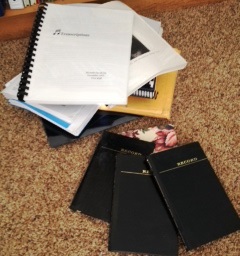
Transcriptions explored grief, money, bitterness and the effect of music to change everything.
In most of these cases, I only gradually came to understand the personal issues pushing the wordsmithing.
Eventually, I set all those novels aside and wrote a spiritual memoir, which was far healthier.
(The memoir also allowed me to see how God had been busy in my life while I thought I was doing something else!)
Curiously, the three novellas and one novel I’ve had published did not spring from personal issues.
The Dogtrot Christmas and An Inconvenient Gamble incorporated elements of my family history (including my great-great-grandfather and my great-great-great-grandfather as characters). Bridging Two Hearts sprang from a friend’s fear of bridges and what she did about it.
The Gold Rush Christmas came out of a trip to Alaska 22 years ago.
Or did it?
When I reread the book in published form, I saw something else.
A brother and a sister.
Could it be?
Well, what would you do if your brother asked you?
Does writing down your thoughts help you make sense of personal issues? Click to Tweet
Have you ever been surprised by what you’ve seen about your life in your own writing?
Do novels reflect author’s personal issues? Click to Tweet

The post Personal Issues and Writing Exercises appeared first on Michelle Ule, Author.
January 28, 2014
Adventures in Novel Writing

Ernest Hemingway Writing at Campsite in Kenya – NARA – 192655 (Photo credit: Wikipedia)
What sort of adventures do you get into when writing a novel?
It depends if you’re the writer or the character.
Take Trish:
“Trish sat on the board in the attic and crossed her legs trying to avoid the itchy insulation material. “Lord, am I out of my mind?”"
What do you think? She’s been stuck in the attic since March 29, 2011, when I abandoned her to do the edits on my The Dogtrot Christmas novella.
I think about her from time to time, a little guilty, yearning to at least get her out of the precarious position her brother, a well-know woodwinds professor at, gasp, USC, convinced her she needed to take.
I turn the story, The Lion and the Blackbird, over in my mind and remember her father’s unnecessarily harsh words and the emotional duel he’s put her through.
And I remember another gruff and ailing elderly man.
Trish needs to stay up there awhile longer.
Like grief, novel writing can take you to places you don’t expect to go.
As the author, you’re God. You’ve got your story at least slightly planned and you know where you’re going to end up. What you can’t necessarily foretell is the emotional bumps you may hit as you go along.
For example, Susan and her four year-old went into the chicken coop to feed the birds.
“Luke poked the hen. A scuffle. The little boy began to shriek– the high-pitched scream every mother fears.
“Blood streamed down his face, apparently from his eye. He held the bloody mess and ran to Susan, other arm outstretched. She snatched him up, shoved the baying dog aside and bolted out the door. It crashed shut behind her.
“Let me see, let me see,” Susan begged once they got into the sunshine.”
Like Luke and Susan, I didn’t see that attack coming. Even as I typed, tears welled in my eyes. I plucked my hands off the keyboard and cried.
Getting to Theo’s Wedding is about an earnest penny-pinching Navy wife whose husband has been gone to sea too long. I wrote it 15 years after my husband’s last submarine deployment, but in typing those words the searing loneliness, fear, and pain from poorly-timed separations, overwhelmed.
Story will do that to you.
Even one you wrote yourself.
Why do some writers need alcohol to fuel their words? Ernest Hemingway, William Faulkner, F. Scott Fitzgerald, even Zelda Fitzgerald, were driven by demons to tell their stories. To cut their imaginary veins and let the words pour out like blood–just as sticky, just as red, just as harrowing as the emotions they’d bottled up inside.
It takes tremendous courage to expose those often long-hidden emotions for the world to see, pick apart, or for the author themselves to recognize.
I didn’t expect novel writing to ambush me with emotional booby traps.
Susan’s story has a happy ending. That accident with the chicken prompted a reconciliation within her family. I finished writing the manuscript
Indeed, I return to Getting to Theo’s Wedding when I feel homesick for the ridiculous things that happened when my little boys’ dad was out to sea. I wrote the novel so my family would understand my life and the quirkiness I acquired because of it. I read it now to remember all those adventures, plus the ones novel writing added to the story. (We’ve never owned chickens).
As for Trish, well, she’s still up in the attic hunting for the lost oboe.
I may even let her find it someday!
I just need to be ready to deal with those emotions, first.
If you’re a writer, has writing a novel provided you with any personal, maybe unexpected, adventures?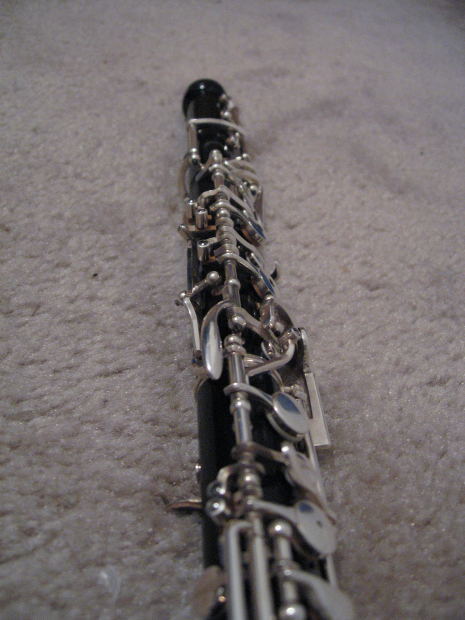
If you’re a reader, what emotions has a novel tricked out of you?
Tweetables
Emotional Adventures in Novel Writing Click to Tweet
Novel writing can even surprise the author Click to Tweet

The post Adventures in Novel Writing appeared first on Michelle Ule, Author.
January 24, 2014
So What if The Author gets a Fact Wrong?

Research books
Does it bother you if you find a fact wrong in a book?
How about a magazine article or even a blog post?
Do you think, “well, anyone can make a mistake,” and let it go? Or do you even pay attention?
I’m a stickler for facts. Maybe it’s because I trained as a newspaper reporter where, if nothing else, we were to make every effort to get the facts right. Wrong facts doomed the story and if you turned in enough articles riddled with error, you’d be fired.
Reporters and writers are supposed to get the facts right.
I think it’s even more important for an author. We aren’t caught in the fluid moments of an unfolding news story. We’re expected to be the experts on our particular field–whether it’s a novel or a history book.
That’s why I spend so much time checking and rechecking my facts. Because I’m currently writing a book set in World War I and I’m not an expert on that time period, I must google and search the Internet for every three or four paragraphs I write. I cannot abide wrong facts–it’s sloppy writing and probably slopping thinking.
What’s your reaction when you find a fact wrong in a book?
The first time I see an error, I usually crick my neck and think, “what?”
I assume the author has done his homework and so I wonder, “maybe I didn’t remember that right.”
But finding a possible error makes me uneasy and I become alert. Sometime I look up the fact and if I discover I’m right and the author wrong, my emotions are mixed.
I feel smug. I also feel disappointed.
But I’m also irritated if not irrationally angry.
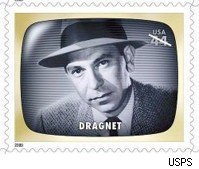
“Just the facts, Ma’am.”
It’s the writer’s job to get their facts right.
Obviously in writing fiction, authors are making up the story. The words and actions come from their mind. But unless they’re writing fantasy or science fiction (and often even if they are), the setting needs to be based in fact. Gravity pulls things down. The sky is overhead. Water runs to the sea. George Washington was the first president of the United States. The Atlantic Ocean separates north American from Europe.
Of course I don’t want to be bored with just facts, like some sort of Joe Friday Dragnet story, I want and need color. But there’s a difference between telling a story in an imaginative way and muffing the obvious.
Don’t make me not trust you.
Some of this, of course, is the editor’s responsibility to question the author and make sure they’ve done their homework. As I’m writing my current book, I’m making notes of pertinent facts that might be questionable, citing the reference when necessary.
That, however, is a story for another day. You can read Editor Jamie Chavez’s opinion right here.
Breaking the author-reader trust.
I’m currently working my way through a best-selling book right now; I’m in chapter six.
I didn’t know much about one historic character used for background and I got excited about how I could use the stories as research for my own book.
The famous author’s main subject, however, is one I’ve studied for most of my adult life. I know the facts very well.
I bet you know a lot of them, too.
The author got paid a lot of money, but he’s getting his facts wrong.
I don’t trust him any more.
Which makes the book so less enjoyable. I have to read it. I need to know the information. But how can I know if the things I don’t know are correct or not?
There’s the rub for me.
How about for you?
If the author gets basic facts wrong, why trust the rest of the book?

The post So What if The Author gets a Fact Wrong? appeared first on Michelle Ule, Author.
January 21, 2014
Ending a War Without Firing a Shot: the USS Nautilus

USS Nautilus’ (SSN-571) (Photo credit: Wikipedia)
The USS Nautilus (SSN-571) was commissioned 60 years ago today.
The first atomic-powered submarine, probably atomic-powered anything, she cruised under the oceans for an unbelievable amount of time–because her nuclear reaction did not require her to “snorkel,” come up to take in air.
When she put out to sea for the first time, she radioed her status: “underway on nuclear power.” Such a description had never been heard before.
The Nautilus was the technological marvel of the time and set all sorts of records.
Wikipedia describes one:
On 10 May, she headed south for shakedown. Submerged throughout, she traveled 1,300 miles from New London, Connecticut to San Juan, Puerto Rico. She covered 1,381 miles in less than ninety hours. At the time, this was the longest submerged cruise by a submarine and at the highest sustained speed (for at least one hour) ever recorded.
She also was the first ship to sail under the North Pole.
The first I heard of the Nautilus submarine was in Jules Verne’s Twenty Thousand Leagues Beneath the Sea (SSN-571 was named for both the boat in this book and also an earlier US submarine of the same name. SSN, by the way, stands for Submarine Ship Nuclear–she, obviously was the first boat so designated. Submarines are boats, NOT ships.).
I saw the movie based on Neville Shute‘s On the Beach (terrifying). I rode on the Nautilus submarine at Disneyland. I watched Voyage to the Bottom of the Sea as a child.
I thought knew about submarines until my husband became a submariner.
(By the way, submarines do NOT have any windows and sharks do NOT live in a moat around a nuclear reactor in a submarine’s engine compartment? Hollywood!)
I have many thoughts and feelings about submarines, but about the USS Nautilus I have two stories.

English: USS Nautilus (SSN-571) in New York harbor, 25 August 1958. Nautilus recently made a trans-polar voyage under the Arctic ice. (Photo credit: Wikipedia)
Romance and the USS Nautilus
After the Nautilus joined the fleet, it was sent on a series of exploits to demonstrate the marvel of being run by a nuclear reactor and thus not needing to be refueled (see those records above). This was during the Cold War and she often called on important cities and allowed for tours. It was an exciting time.
She called at New York City for a period of time and tourists routinely came through the boat. One day, the young Officer of the Deck (OOD) looked up to see a beautiful model coming through. He stopped her and chatted, made a date and later, reader, married her. He went on to become an admiral and she a Bible Study Fellowship leader in Virginia. Lovely people and a romantic story–who would have guessed that from a port call?
Decommisioning and the USS Nautilus
We were stationed at Mare Island when the time came to decommision the Nautilus. She was 25 years old, a little older than me.
This was an historic occasion. I sat in a chair on the quay beside the boat, now stripped of her reactor and about to undergo a long transformation that would turn her into a tourist attraction.
(As it happened, I was living in Groton, Connecticut when she was towed up the Thames River to her final resting place alongside the Navy Submarine Museum. We’ve toured her several times over the years).
The Nautilus was lauded for her historic accomplishments, lists of famous submariners who served on her were read. She sat an empty hulk beside us her exploits imaginable and astonishing.

English: The USS Nautilus permanently docked at the US Submarine Force Museum and Library, Groton, CT (Photo credit: Wikipedia)
The one fact that stood out, however, was the pride in her accomplishment. She never fired a shot, a missile, in war.
Perhaps that one fact, is the most important thing to know about the USS Nautilus.
Tweetables
Two stories about the USS Nautilus Click to Tweet
The Nautilus and Romance Click to Tweet
Ending the Cold War without Firing a Shot Click to Tweet

The post Ending a War Without Firing a Shot: the USS Nautilus appeared first on Michelle Ule, Author.
January 17, 2014
What to Do With the Bible Study Books?

What do you do with your old Bible study books?
You know, the workbooks where you read a passage of scripture, answered some questions and either applied what you learned to your life, or discussed it with others, later.
I’ve been in Bible study since I became a Christian at 15. At Trinity Lutheran Church under the direction of Larry Christenson and Paul Anderson, we did a straight forward study: read the passage, discuss.
Any notes I had were ones I took myself, usually in a blue notebook.
After I graduated from college, however, Bible studies turned into workbooks. I guess this made it easier for the leader–all they had to do was read the question and discussion could begin.
It never was that simple for me when I was the leader–I still did an exhaustive study along the order of Kay Arthur‘s Precepts ministry. I’d print out the passage and attack it like an editor–marking repeated words, underlining important concepts and writing personal reactions to the verses.
Then I’d fill out the questions in the Bible study book.
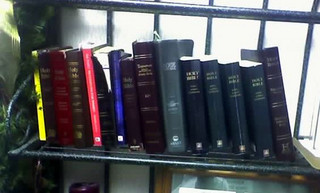
bibles (Photo credit: fancycwabs)
That’s been going on for 36 years.
Which brings me to the question: what do I do with all those filled-in Bible study books? The workbooks full of carefully considered answers fill two large boxes.
Do I dare throw them away? What if I forget something and need to check it in the workbook?
(Am I likely to do that?)
So what did you eat for breakfast?
Our friend Jon Schultz talked about the need to daily study the Bible once. “You should read it every day because of what the discipline of reading does to you, and whether you remember it or not.”
I screwed up my face.
“What did you have for breakfast on September 23, 1985?”
“I don’t remember.”
“But you ate breakfast?”
“Of course.”
His point was, I may not have remembered what I ate for breakfast that morning, but breakfast fueled that day. I didn’t remember what specific Bible passage I read that day (since I don’t keep a journal), but did I read something? Probably.
The word of God entering my heart did something on September 23, 1985, just as it does every day. If I wrote in a Bible study book, some lesson, some insight, some relationship wonder, was transmitted to my brain and my soul. Just because I can’t tell you specifically what that was, doesn’t mean God did not work in my heart using his word.
All the hours I’ve spent answering the Bible study book questions have served a purpose in my life–teaching me about God. They’ve deepened my relationship with him as I’ve learned about him.
Some questions I can call to mind and discuss. Most were just a way for me to get to know my God better.
And that’s, always, a good thing.
I don’t know what my husband ate for breakfast on September 23, 1985 either. But if he was home from sea, I cooked it. It helped fuel him for the day, but it also played a part in our relationship. Communing with him, spending time with him, means I knew him better.
Just like it works with God.
I am a better person because of all those Bible studies. The Word of God has come into my soul and is near me because of the time I spent reading, asking questions, thinking and honoring God with my time.
It’s enough.
Can I recycle those two boxes?
Well, what would you do?
Tweetables
What to do with old Bible study books? Click to Tweet
Is there any value in old Bible study books? Click to Tweet
Feel free to throw away your used Bible study workbooks! Click to Tweet

The post What to Do With the Bible Study Books? appeared first on Michelle Ule, Author.
January 14, 2014
Travel Guides and Writing Historical Fiction

I’ve been consulting the travel guides recently as I write a novel set in World War I Egypt.
I’ve personally visited the other locations in my novel, but I won’t be able to travel to Cairo anytime soon, perhaps never. That doesn’t, however, get me off the hook for writing intelligently about a land far away that many people think they know.
You say Egypt and people think pyramids, King Tut and, possibly, Luxor; all the famous places tourists have been visiting for years. Some will add Aswan Dam and desert. Jews and Christians will remember Moses and pharaoah.
Since we know the pyramids have been there forever, I turned to a guide book to give me a sense of the where and what–as in, where are these tourist spots and what do people eat, think of the weather, and know about the geography? I focused on the timeless–what would have been the same in 1914 as it is today.
So I checked travel guides–they’d tell me the basic information I need and provide maps, along with perspective. I started with Lonely Planet‘s Egypt.
Lonely Planet’s travel guide gave me an overview of the entire country, along with history and explanations for things like when Cairo was built. It comes with an index that enabled me to look up items pertinent to my story: like just where the pyramids are in relation to Old Cairo, for example. It included a glossary of common terms an English speaker might need, including how to pronounce it.
مرحبا That, for example, is hello: ah-lan.
Many people understand “baksheesh,” and the begger’s desire for a tip, but did you know, according to Lonely Planet Egypt
Another signal often misinterpreted by foreigners is a loud hissing sound. No, that guy isn’t commenting on your looks–he’s trying to get your attention so you don’t get trampled by his donkey cart coming down the narrow lane. Interpret a hiss as ‘watch out–coming through!’
I’ll be able to work a hiss into my story, easy, and it will add verisimilitude to my tale.
The travel guide that really excited me, however, was found through Google books: Baedecker‘s 1914 Egypt. Best of it, I could download it directly to my Ipad.
The font is peculiar and I have to guess at some words, but just last night I learned the name of an occulist; which tram to catch to Heliopolis and how much it cost (along with the schedule); that crows and kites live in the few city parks; the Fishmarket (which is not close to the Nile) is a disreputable quarter and soothsayers squat beside the road to tell fortunes by consulting the sand!
This was the guide used by people living 100 years ago to tour the Middle East. It provided the names of shipping firms (including the ships that sailed between Southampton and Alexandria); explained how to catch the train and described the dusty exhibits in the Egyptian Museum–all information I can use.
From Baedecker, I learned the streets were filled with the sounds of “cracking driver’s whips, jingling money at the table changers and the rattling of the brazen vessels carried by water carriers.” I’d never have imagined those sensory details.
He spares us information on the smells, but does provide a list of restaurants in Cairo and includes warnings about places respectable ladies should not visit. It’s perfect.

All Giza Pyramids in one shot. Русский: Все пирамиды Гизы на изображении. Español: Las Pirámides de Guiza (Egipto). Français : Les Pyramides de Gizeh (Egypte). Català: Les Piràmides de Giza, a Egipte. (Photo credit: Wikipedia)
Travel guides might not be the first choice for a writer, but their overviews and insights can make all the difference in providing details that make a story come alive. I hope I’ll be able to put the information to good use.
Have you ever used a travel guide as a research tool? What surprising information did you find?
Tweetables
Verisimilitude with Baedecker’s 1914 Guide to Egypt Click to Tweet
How travel guides provide invaluable research for historical novels Click to Tweet

The post Travel Guides and Writing Historical Fiction appeared first on Michelle Ule, Author.
January 10, 2014
To Throw Away a Book

I threw away a book today.
I tossed it in the trash can and shut the door. I don’t want to be tempted to rescue it, no matter how beautiful the cover.
I’ve only thrown away a couple books in my lifetime, but it’s always been done for the same reason.
I couldn’t run the risk of someone I love finding the book and thinking I approved.
Today’s book was one I picked up at a writer’s conference. I trusted the publishing house and the publisher. The guilty will go unnamed here.
I read it all the way home on the plane, with my heart racing and my brain arguing, “Really? I don’t think so.”
It was a fictionalized version of a famous Bible story. I didn’t know the author, but I knew the story well. I thought this book painted an extraordinary picture of the setting and it gave me insight into another time and place. I set it on the shelf when I got home and admired the beautiful cover every time I went up the stairs.
I happened to read some reviews of this book on Amazon recently, and was reminded what my spiritual scruples had screamed about months before. While some people loved the story, many had serious complaints–mostly about the liberties the author took with Biblical canon.
Legitimate complaints, not cranky complaints.
So, my brow furrowed when I went past the beautiful cover. I reminded myself what I had taken away from the story, how it had changed my point of view on current events. That a good enough reason to own a book, right?
But I gave away 400 books in 2013. I didn’t have to own a book that had spiritual problems with it, did I?
If I got rid of it was I becoming a narrow-minded stereotype, rather than an open-minded literary appreciator–a writer in my own right?
How would I feel if someone had a moral objection to one of my books and threw it away? Click to Tweet
How would you feel?
If I had rewritten a Biblical narrative in such a way as to undermine someone’s faith, would I mind if someone threw away the book?
Uh, no.
Which brings me back to this morning. I hadn’t read that particular passage of Scripture in some time, but everyone knows the story. Today when I read it, though, visions planted by that novel arose that were not complimentary to the Biblical characters. Some of the novel’s casual facts distorted my understanding of the Scripture.
I knew the novel was wrong, so I set aside my worries.
Reading the Bible and discussing it with God.
As often happens, reading the Bible became a discussion session between me and God. As I read a sentence, I stopped to think about what it meant. I tried to picture what happened. I asked myself if the attitude of my heart reflected the same negativity I saw in this passage. I then asked God to forgive me, to help me change.
I felt much better.
I read a couple more sentences, considered them, saw no application and moved along.
A question arose about who someone was, and I read the notes at the bottom of the page (My friend Gary Warren calls these references, “BOB” for “bottom of the Bible.”). I remembered the slant taken on this issue in the novel.
“What would your grandchildren learn about this passage if they picked up that novel with the beautiful cover and read the story?”
(That assumes, of course, they could read so we’re talking about a future event).
I hate it when a question seems to come in through one ear, cross the front of my brain and disappear out the other while I grapple with the implications.
I appreciate it, too, which means I love it when God speaks to me in such a way.
The answer: they would be confused, the message distorted, and their concept of God harmed.
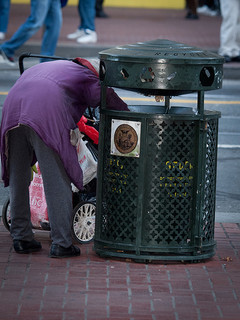
Homeless woman rummaging through a trash can (Photo credit: Franco Folini)
I went upstairs, paused to admire the beautiful cover, and then I threw away the book.
I retrieved the book from the trash can and placed it in the recycle bin.
Something good, now, can come of it.
Tweetables
Have you ever thrown away a book? Click to Tweet
Is a book that challenges your beliefs worth keeping just because of the questions it asks? Click to Tweet
How do you decide to throw away a book?

The post To Throw Away a Book appeared first on Michelle Ule, Author.
January 7, 2014
The Secret Life of an Alter Persona

It’s been going on as long as I can remember, this sense I can have an alter persona.
Not just one. Lots of them depending on the time, place and what I’m currently working on.
I may be walking down the street, looking like any other middle-aged woman to passersby.
But in my mind, I could be anybody–a lithe young woman with hair blowing in the breeze and a sense of purpose: I’m on my way to a conquest!
Or perhaps I’m a worried elderly woman, shuffling along, uncertain of what I’ll find when I turn the corner.
I could be a dancing ten year-old with tight braids and a skip in my step because my friend is waiting.
Or maybe I’m a haunted doctor, head down against the frigid wind blowing across an Afghani plain as I hike to an outpost of Doctors Without Borders.
I could be anybody–in my mind.
When I wasn’t being a “normal” person, I lived in a story land-filled with alter personas, plotting other places to be, adventures far beyond my current location.
Was it my imagination or just boredom with routine life? (Though my life has seldom been boring). Was it the result of watching too many movies as a kid, or simply reading too many books that made me perceive life as story and a need to keep the narrative moving?
I’ve not seen the recent version of The Secret Life of Walter Mitty, but I know the Danny Kaye-starring movie and love the idea that at a moment’s notice Walter could be switching into an alter persona.
All it takes is imagination.
I don’t go so far as Water does to try to convince others I’m something I’m not.
Though, there was the time I sobbed and carried on–the picture of a woman terrified she’d been misunderstood– so the bank manager would okay our mortgage.
I can also be deadly on the phone with officious people after I’ve been on hold for a long time–I usually time it and report the number–but I always feel badly afterwards.
Sometimes I even feel the need to confess sin.
But really, if you can make the story interesting, why tell it straight? (See Big Fish) Click to Tweet
I used to tell people doing laundry was my hobby, “because a hobby is anything you spend a lot of time doing,” and that was certainly my life.
But who could think anyone would love doing laundry, particularly in a family boasting three fun boys? My long-suffering husband, however, took me at my word. “You always said you loved doing laundry,” the logical engineer explained with puzzlement in his face and voice.
“I was being ironic!”
“Why didn’t you say so?”
I didn’t mutter, “tone of voice,” but I thought it.
For years, I used romantic moments in movies to point out to the children how I met their father. Since I’d raised them myself, I thought they’d caught the absurdity of those statements and recognized them as irony.
But then one day I overheard my adult son trying to explain to his wife how his parents met.
“I’m not sure,” he said. “It had something to do with playing volleyball (true), but then apparently there was this ice rink where my dad raised her over his head (Winter Olympics, ice skating gold medals)–I never figured that out because they lived in Los Angeles–but then she’d say something like, “but we’ll always have Paris,” (Casablanca) and break into song (pick your musical). So, I guess I’m not really sure, though they couldn’t have met during the Civil War (Gone With the Wind).”
This son is the only non- scientist in the family besides me.
My daughter-in-law raised her eyebrows and looked in my direction.
“I was trying to give him a sense of the romance, the emotional feeling, the metaphor, not the actual event.”
“Oh.”
Scriptures warn us our “yes” needs to be “yes,” and our “no” needs to be “no.” Obviously, lying is a violation of the Ten Commandments. But life can be so mundane, I always wanted to make it more interesting–ironic, clever, witty. Most of the time, my friends and family understood. But one day I was telling a story to our pastor, who smiled as I talked and when I finished, nodded his head.
“Don’t you think so?” I said with a laugh.
His answer was slow. “I actually don’t know you well enough to know if you’re teasing or telling the truth.”
Aghast, I stammered out, “telling a story.”
“Okay.” He laughed.
But I’ve always tried to be careful–particularly with people I don’t know very well–ever since.
It’s all in the tone you see.
Or the imagination.
Do Walter Mitty‘s extravagant alter personas make sense to you?

The post The Secret Life of an Alter Persona appeared first on Michelle Ule, Author.