Michelle Ule's Blog, page 110
December 6, 2011
Culling the Books
King Solomon opined long ago, "of the making of books there is no end."
Of the owning of books there is no end, either, or at least it seems that way to me.
After emptying the living room to paint, we're now refilling the bookshelves and that means we're culling the books at our house.
We're throwing away the out-of-date (a 1962 24-volume Encyclopedia Brittanica), passing along the outgrown (art I no longer like), and shaking our heads over the outlandish ("who bought this book?"). It's an exhausting process. I've gone through three boxes so far and now have one empty box, one full box and piles of books to be reexamined.
27 boxes to go.
Some of these books simply stump me. What do I do with 35 years of Bible study materials? I've got notebooks filled with lessons I've written and taught, spiral-bound studies I've filled with ideas and all the lecture notes from Precepts, Lifelight, BSF, countless IVP studies and Romans in several different formats.
I wrote my name on the inside front page of all these studies and included the location and date. To browse the pages is to return to my past: plumeria scent from the Hawai'i studies; efficient organization from the Monterey classes; the realization I'm rebellious at heart from the BSF classes in Washington.
And here's a dated study in a dull gold notebook: 1970′s Philosophy of Christian Womanhood.
The first month we were married, I joined this study in Orlando, Florida and as a newlywed, got lessons on such topics as "The Male Ego," "The Man's Role," "When Things Go Wrong" and "The Christian Woman Herself."
After 35 years, I don't think I need this anymore.
I've decided to pass along a lot of the Christian books to our church library. With all the moving we did over the years, I seldom passed on books that were important to me–for fear I'd never find them again. But we've been here 10 years now. I think I can safely give them to our current church with confidence they'll be available if I should ever remember something I need to look up.
My thoughts on some subjects have changed over the years. I'm going to throw away all the Frank Schaeffer books since he's disowned them himself. I'm going to pass long the dictionaries–I've not cracked open a dictionary in years since it's so much easier to highlight, right click and have the definition appear. I'm not sure about the Strong's Concordance–I look up everything on-line these days, but Bible Gateway doesn't handle word usage as well as I like.
One shelf is easy: comfort novels and books I've loved. I've got Mary Stewart, Anne Morrow Lindbergh, Robert K. Massie, Elisabeth Ogilvie, Eva Ibbotson, Olga Ilyin and Mary Elgin. Some of these books are tattered and torn from rereading. A number are spiral-bound copies of books out of print.
I'm pleased to have one shelf devoted to books written by people I know: Gayle Roper, Sarah Sundin, Jill Eileen Smith, Lynn Vincent, Jane Gangi, Richard Peck.
And now we're laughing we should reserve a spot for my own book. "Keep working on filling that shelf," my husband said this evening.
It's hard to let go, though, of books I've loved but which I have no use for now. I'm looking at the Solzhenitsyns and wondering if I'll ever read them. Shouldn't I pass them along, then, to someone who will?
But someday, I may break a leg and need to spend weeks lying down with my leg. Shouldn't I hang on to books to read then, just in case I can't find anything else?
Many of the books currently stacked in the "let's think about this one" pile may end up back on the shelves.
Sometimes it's just too hard to say good bye to an old friend.





December 2, 2011
Seeing the Familiar in the Foreign
 I dropped my son off at the airport for his final quarter at the University of Washington, and laughed with glee. "See you in Paris!"
He grinned back. "Right."
His graduation gift was a trip to Paris and London with a side outing to the beaches of Normandy. We had a terrific time.
One of the moments I savored the most, however, was standing in the dusty shadows of a Paris pensione to watch my child negotiate with a taxi driver, in French, about the charge from Charles de Gaulle airport. We flew in the day before Stargazer arrived and he had traveled half way around the planet alone. Standing there that evening, I saw him in flashes: a little boy, a grown man, my child, my son, chatting as a world traveler in a foreign tongue.
I loved it.
I wrote last time about the joy of finding my relatives on a bus in Columbia, but I've had other fun meetings in foreign lands. Last summer I traveled to Romania to attend my godson's wedding party. As Bucharest sounded too dangerous a place to arrive alone, I organized my trip to rendesvous with the groom's parents at London's Heathrow airport and travel east with them. I hadn't seen my friends in over a year, and I approached the gate with anticipation.
Bob caught sight of me thirty feet away and nodded with a big smile on his face. He pointed and the woman in front of me turned around. I'd walked right behind Mary and didn't recognize her! We flung our arms around each other and laughed. She looks good in Europe.
During college, I spent a summer with Swiss relatives and learned what it meant to be part of a European family. I wilted beneath the rigidity of a Swiss dentist and the sharp pronouncements of a Sicilian businessman. They were tired of me, too. When my own first cousin turned up wearing a backpack, we all fell upon him with shouts of joy.
When my cousin and I had a moment alone, we surveyed each other. "How's it going?" he asked.
"I'm ready to go home."
He laughed. "I'll bet."
Just seeing him made me feel better; so immersed in the family drama, I'd almost forgotten there was a normal life outside of the Swiss alps.
I thought about all this recently when I visited Stargazer, now working on his PhD in Astronomy, and spent the day following him around. He lives from our family and I wanted to observe him in his current environment. That meant I took him grocery shopping, we visited his favorite bookstore, I used the computer at his apartment and, best of all, I sat in on a class he taught.
Oh, my. My baby was the teacher of all these college students. I tried to see him through their eyes–Stargazer as authority figure.
I'd seen him in that role in the past when he led the boy scouts or bossed his sister around, but these were people paying money for information he had to teach them. Fascinating.
He returned tests, discussed grades, set up experiments and answered questions, just like a real Teaching Assistant. I don't recall now if they called him by his first name or not, but I did notice he never took off his ballcap.
A little boy wearing a hat, a student speaking French, a young man explaining science ideas using his rotating hand. I saw all those images as I watched him in a setting unusual for the two of us together.
I loved it. I'm proud of him. He's a good teacher, even if I am his mother.
How do you set yourself apart to be objective about people you love? Do you gain insight on loved ones when you see them in foreign spots?






November 29, 2011
A Glimpse of Heaven on a Cali Bus
 We traveled to another continent five years ago to attend a family wedding. As my husband, daughter and I flew southeast, then further south, the culture changed from the friendly color of Costa Rica, to the financial powerhouse of Panama to the sultry drama of the world's center of narco-terrorism: Cali, Colombia.
My husband is an old hand in South America, having traveled there three times on a submarine during the 1980′s when the Shining Path guerilla group regularly slaughtered innocent bystanders. He wasn't worried at all.
I was.
The bride and groom met us at the airport the first night and escorted us to our hotel. They warned us not to leave the hotel without one of the bride's Colombian relatives. The hotel guard cradling an AK-47 at the lobby entrance convinced me not to set foot out the door. We were safe inside.
At the appointed hour the next morning we met the bride and groom in the lobby. After a quick kiss and hug they waved us out the door. "Turn the corner and climb on the bus."
The sun felt warm and suspiciously inviting. Cars drove past, horns honked, pedestrians hurried by. The guard shifted his machine gun and pointed to an idling bus. We couldn't see in the darkened windows, but when the door opened, I grabbed a handrail and climbed in. Blinking in the narrow aisle, I paused while my daughter pushed in behind me.
I gasped.
People I loved filled the seats.
My aunt and uncle, three cousins, several second cousins, even the sister of a cousin-in-law. Two friends and several Colombian relatives-to-be. My brother showed up later.
They rose to greet us with hugs, kisses, greetings, and a babble of laughter. My husband shook hands, we reintroduced my daughter to people she barely remembered.
Tears started in my eyes and my cheeks ached from smiling.
All I could think was, "this must be what heaven will be like."
I'd been swept away from all I knew, taken to a place where I didn't speak the language or know the customs. I'd been afraid and uneasy, uncertain of what to expect. The bride and groom were friendly, of course, and reassure us. I knew we were in Cali for a celebration. I just didn't see it until the moment I climbed on that bus.
And there the joy began.
When I think about dying and going to heaven, I often feel uneasy. I've read about it in the Bible. I know what will come. I expect a celebration and an aura of welcoming love. No more tears, no more pain. Heaven is a wonderful place.
Don't you relish how God gives us a taste of what will come from the loving care of people in our lives? The Cali bus filled with my family brushed aside fear and uncertainty into confidence and security. Just as entering heaven will for those who believe.
As they say in Colombia, and other points south: "El amor perfecto echa hacia fuera todo el miedo."
Perfect love casts out all fear–even on this side of heaven.





November 25, 2011
Turkey on the beach
 Most of my Thanksgiving dinners look like the mob on the left. Those are my Sicilian relatives and Thanksgiving is the annual reunion.
My nuclear family makes it to dinner with them every couple years, but we know we're always invited. Indeed, this year half of my family attended and I autographed copies of my book!
During our Navy years, we often lived too far away to stop by–even if we could see all 50+ relatives in one swoop. Most Thanksgivings we shared the meal with friends off our submarine, from our church, with our neighbors and periodically with the other side of the family.
But one year, we decided to take our six-member family on the road and caught a plane to Moloka'i where we ate Thanksgiving dinner on the beach.
I baked the turkey and Aunt Arly's potatoes in my Pearl Harbor kitchen the night before. Hawaiian Airlines allowed you to carry coolers on the plane and so we checked our luggage and two coolers–one carrying warm food from the microwave: sliced turkey, Aunt Arly's potatoes, rolls and some sort of vegetable; all in plastic containers. The other cooler carried cranberry jello salad, frozen milk (to keep things cool), butter and something for dessert. You're not allowed to carry ice, so that frozen milk served two purposes.
 The flight from Honolulu took twenty minutes. We picked up our rental car–one of only four parked off the runway–and headed to a beach on the south side of the island. We wanted to eat the meal before it cooled too much.
We didn't realize the wind never stops blowing on Moloka'i. White caps whipped up on the ocean and the palm trees practically bent over in enthusiasm. We found a sheltered spot and spread out the food on a sheet tossed over a picnic table.
The food tasted as good as always, the balmy weather meant Hawai'ian shirts and sandals, the dramatic views pleased.
Somehow it just wasn't the same.
We didn't spend much time at the beach, it felt too lonely. We packed up the food and headed to a rental condo and went swimming. We ate leftovers for dinner.
And breakfast.
And lunch.
At that time, there was only one grocery store on Moloka'i and it was closed for the holidays.
The mini-mart at our condo complex didn't sell much to eat beyond bread.
The children got hungry. We couldn't find a place to eat!
Everywhere we went, residents asked us if we had come to Moloka'i for the rodeo. We didn't know anything about it but as dinner time loomed, we thought we'd stop in. Surely they would sell food at the rodeo?
They did. Hawai'ian barbeque. It tasted great. We had plenty of leftovers for the next day.
That Thanksgiving went down in our family lore as the holiday when we nearly starved.
Not really, of course, but it sure felt like it!






November 21, 2011
Will No One Invite Us to Thanksgiving?
 For many people, Thanksgiving can be fraught with uncomfortable memories. The holiday may be filled with loneliness more than familial happiness.
Pressure can mount for a great meal or conviviality. It could underscore what's missing in your life. Thanksgiving can be downright depressing.
A Thanksgiving when we lived in Groton, Connecticut was headed toward the miserable. My husband was out to sea and the toddlers and I had nowhere to go.
Our closest relatives were in Chicago, 1000 miles away. Everyone else lived in California. My Navy wife pals were all out of town that weekend since the boat was gone and that left the three of us alone. The weekend before Thanksgiving self-pity got the best of me and I wondered, "Why doesn't anyone invite us over for Thanksgiving dinner?"
Then it dawned on me. No one knew we didn't have a place to go.
I volunteered in the church nursery that weekend and before I signed in, I asked the pastor if he would mind making an announcement: "Sea widow and children in need of a Thanksgiving dinner."
"No one has invited you?" He looked around. "Where's my wife?"
"It's okay, you've got your family coming. I'm sure someone in the church will have room for us."
He told me later that when he mentioned the need, four different sets of hands went up in the congregation. "I told them whoever gets to you first can have you over for dinner."
A sweet couple I barely knew invited us. I felt weak with gratitude and had to blink back tears.
Thanksgiving morning the kids and I drove through empty streets to a rural home, carrying a bottle of California wine and the most elaborate dessert I could create. The couple's children played with my little boys–ages two and four that year–and I shared stories with the couple and a visiting grandparent. The food was delicious and while I still felt homesick, it didn't stab as sharp. We had a lovely time and took home leftovers. :-)
My husband's family shook their head when they heard the story. My mother-in-law often invited stray sailors from the Long Beach Navy base for holiday meals. They always had extra people around their Thanksgiving dinner table.
When my husband spent Christmas under the water on his submarine the following year, I took the initiative and invited the boat wives to dinner at our house. Two women and two children came. I didn't know them before the day, but I knew them well by the end. My beaming mother-in-law was with us that Christmas.
Sometimes a need isn't fulfilled because it isn't known. I try to remember that every year.
If you haven't gotten an invitation to Thanksgiving dinner, ask yourself if anyone knows you need one. You'd be surprised how many people would be happy to invite you–at least at my church!
Happy Thanksgiving.





November 17, 2011
Traveler's Tales: Was I a Slave?
 Back in the closing years of the last century, my children and I drove across the entire state of Tennessee in one day. We were on a mission to get from Annapolis, MD to Santa Monica, CA in the shortest possible time, so we didn't do much sightseeing along the way. On day 2, however, I decided we needed to get out of the car and walk around a little, so we stopped to visit President Andrew Jackson's former home just north of Nashville: The Hermitage.
I'd read a biography of Old Hickory and wanted to see the place. The four children were good sports–anything to be out of the car–and they handled the guided tour and their mother's questions of the tour guide with their usual aplomb. Some were not enthusiastic about viewing the outer buildings, but I wanted to look at the slave's quarters.
I think it's important to be a witness to history–to pay homage to those who have suffered in the past, or lived through difficult circumstances through no fault of their own. (See my post on the Terror House in Budapest for more).
My daughter was just shy of five that summer and she poked through the house with me but was puzzled. "What's a slave, Mom?"
I explained the slaves were people owned by the wealthy people who lived in the big house long ago. They did the cleaning, laundry, cooking, cared for the children and tended the property.
In all innocence, she asked a pertinent question. "Then are you a slave, Mom?"
Her older brothers laughed while I frantically tried to think of something to say.
My husband, of course, was not with us.
"No, I'm not. I chose to marry your father and take care of my family. I'm not owned by your father. I can do anything I want, including not do the chores if I decide not to."
"Okay. Will you make lunch now?"
I told the children to make their own sandwiches, but I did pull the cooler out of the van.
Slavery troubles me. In doing the family genealogy, I discovered my great-great-grandfather owned 28 slaves in Texas at the start of the Civil War. I couldn't believe my father had never told me. When I asked, Dad protested he didn't know. I had no reason to doubt him, but I still wonder how in two generations a family can forget they owned slaves?
Indeed, my ancestors owned slaves as early as 1700 and perhaps before. For over 150 years, some members of my family owned other people who served them.
Over on World Magazine's blog, we've been talking about slavery and the Confederacy, trying to understand the mentality of slave owners, particularly Christian ones. One of the posters reminded us of the book of Philemon and the discussion of Onesimus as a slave. Several passages in the Bible seem to indicate slavery was a norm and was not condemned, though in Philemon, the implication is Onesimus should be freed–for he was a brother in Christ.
It's not fair to evaluate history through current mores, but it troubles me every time I read about my family's dealing with slaves. I want to shake the family, I want to apologize to the slaves. I don't have survivor guilt–the slaves were long freed before I came along–but I wish it wasn't part of my family's history.
And no, my life loving my children, caring for my family by cooking, cleaning and providing, is nothing akin to slavery. It was a pleasure to serve the people I love.
All these years later, I'm happy to say daughter thinks so, too.





November 14, 2011
Joyfully Researching history
 That scream of glee coming from the San Francisco bay area recently is actually me doing research for an historical novel. I've got some confederates in Tennessee who are aiding and abetting me and the cyber connections are hot with our enthusiasm.
It's so much fun to research history this way–with friends–but also when it is simply, so easy.
When I started my genealogical research in 1995, our family owned two computers. Both spent most of their waking hours keeping America safe for democracy as my husband and three sons wiped out aliens and other potential invaders. They also played games like Civilization and Colonization, "history, mom, see?" but I felt pretty sure most of the time they were vigilant shooters in various galactic realms.
When I could get on, I wrote, put together newsletters and kept the checkbook. One day I brought home a Family Tree Maker program and began to imput genealogical information. Fascinating how the computer could keep track of it so much better and more efficiently than I could!
Life changed in early 1997 when my brother convinced us to "get e-mail for heaven's sake." We signed up for AOL.
What an amazing experience that was: the excitement and thrill of that "hee-haw" sound logging on to the telephone lines. And look at all the things you could do: check out real estate in Washington D. C. (we were due for orders out of Hawai'i), send messages to friends and relatives and, what's this? meet fellow genealogists?
In those ancient days, we used clogged phone lines to access the net. It could take a long time to log on and I spent hours on line because I had people researching the same family lines.
One in particular, a single Physics professor in Louisiana was hot on the trail of the same folks. We're related somehow, but figuring that out seemed too intimate with a stranger, so I just egged him on as he dug up article after census record after family history. It was so much fun to log on at 5:15, Hawai'i time, and read the latest dispatches from the deep south as the sun rose over the Koo'lau Mountains. One weekend, he drove all over the southern states visiting libraries and historical centers. Together we pieced together the information he found into one satisfying whole.
The joy of having someone to share the information with, to consider angles and work out the puzzle, became addicting and a sheer pleasure.
I'm having the same fun with my new confederates, but now the tools are so incredibly powerful, I can't help but scream in glee. You've heard it before, but the items available on the Internet are stunning! Census records I poured over microfilm for hours to decipher, can be found in four clicks on the screen. And you can blow them up to read them better, as well. Astonishing!
Indeed, genealogy is so easy these days, I'm not sure why the whole world hasn't found all their roots.
Just yesterday, I read the Harper's Weekly magazine from the Civil War. I pulled up newspaper articles from the 1903 San Jose newspaper. I read through an 1871 San Francisco newspaper article about my subject–primary resource material it would have taken me weeks to find otherwise.
Do you guys know how lucky you are?
Using my Sonoma County Library card, I can access all the census records available on line for free. Using my friend's Sonoma State library card number, I downloaded an entire book. Google books (which I do not approve of as a writer, but which I love as an historical researcher), gives me snippets and sometimes the majority of the out-of-print books I need.
If I'd had this information available 15 years ago, my family history would not have taken 5 years and countless dollars to research!
But fun though the technology tools are, the best part is having people to share the information with. My husband smiles politely and occasionally provides some military background, but the thrill of the hunt, the joy of the discovery, the satisfaction of theories, is run past two women sitting at computer screens across the country. It's like working with Justin again and I'm loving it.
Even if these aren't my relatives, this time. :-)
I love to read history and discover new facts, but it's so much more satisfying and joyful to do it with friends.
Have any of you had a similar experience? What's the most thrilling and satisfying fact you've found on the Internet?





November 11, 2011
Writing Historical Fiction with a Family Flair: Blog Hop Day #5
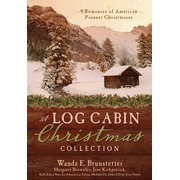 Thanks for joining us for day #5 of A Log Cabin Christmas bloghop!
You can read the official rules page, for those of you still trying to figure out this bloghop contest, here.
I'm the author of The Dogtrot Christmas, based on events in my family history. In addition to being a novelist, I'm also a well-known genealogist in some of the more obscure corners of the Internet. I self-published my massive family history, Pioneer Stock, in 2000. You can find copies in genealogical libraries around the country and in the big mama of them all, The Library of Congress. If you're related to me, you ought to take a peek, otherwise, I wouldn't bother.
I've already described how I "used" my family's story in a number of places in cyberspace. You can read about my writing this book here, here and here.
But what is the draw of historical fiction, whether you're related to me or not?
"They" say that if you want to know facts, you should read history books. But if you want to know social history as well as sensory reactions to events, you should read historical fiction. I've thought long and hard about that statement and when I came to finally putting all my genealogy down into one fat book, I determined to write a narrative history of my family, not just charts and diagrams.
A lover of history, I wanted to understand my family's life within the context of their times. I gained no insight when I wrote the dates 1770-1815 for someone's life until I realized that native of Maryland lived through both the Revolutionary War AND the War of 1812. Surely those events affected her in some way or another?
And, worse, did she own slaves?
That detailed look at what happened during my ancestor's lifetime came to fruition when I wrote The Dogtrot Christmas. While I was delighted to learn the Rev. Thomas Hanks was a circuit riding preacher into Texas (who suspected such a thing in the family I grew up in?), the reality of his life didn't make a lot of sense until I learned he was riding into Mexico long before the Republic of Texas, much less Texas as a part of the United States. His forays into the wilderness out of Tennessee, meant that when he baptized people, married them or preached over their funerals, he was breaking the law.
Rev. Thomas Hanks was a Primitive Baptist preacher, not a Catholic priest. In the 1820s, the only religion recognized in Texas was Roman Catholicism.
But he was a good man, so 10 years later, once the Republic of Texas established itself, he rode around to all the farms where he had presided over illegal nuptials, and remarried everyone. This provided a humorous story in one setting.
After Rev. Thomas Hanks explained his visit to the tired, harried, worn-out housewife, she looked at him with sunken eyes while the children screamed and whooped about her.
She sighed. "Well, I'll do it, but only because it's you that's doing the asking, Pappy Hanks. If I had known then what I know now, I never would have married him."
People come alive with stories like that one, and it gives us insight into their personalities–plus enables us to connect with them as people just like us.
Sure, the bustle may have come and gone and hoop skirts never sounded like a good idea to me, but if I can relate to a shared emotion or reaction, I see historical characters in their humanity. Whether they're my ancestors or the heroine of my story, I can relate to hunger, fear, the excitement of a new surrounding, a handsome man to love me, a dog to protect me, a fire to warm me. It's the human elements that resonate within that make historical fiction approachable and enjoyable–whether you know the people or not.
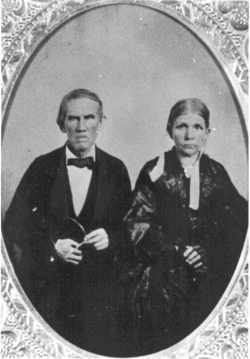
Of course the best moments as an historical novelist and a genealogist is when you find an authentic photo of your character. Try as I might, none of the Hanks genealogists had a photo of Rev. Thomas Hanks. But I have got a picture of his odd brother Elijah Hanks, as well as his son, my great-great-grandfather, James Steele Hanks. You also can compare them to a modern day Tom Hanks (an extremely distant cousin, he and my brother compared notes). See if you can imagine what the real Rev. Hanks looked like.


What do you like best about historical fiction? Can you name some of your favorite titles?
The bloghop will rest this weekend, and return on Monday with Margaret Brownley's comments at Words of Encouragement.
For a look at the first three chapters of my original proposal for The Dogtrot Christmas, see my posts here and here.
Happy reading!





November 8, 2011
The Dogtrot Christmas BONUS–Chapters 2-3
 In honor of the Blogroll/ Bloghop the authors of A Log Cabin Christmas Collection will be running next week, I am posting the original first chapters for what became my story The Dogtrot Christmas. Chapter one was in the last post, today's post includes chapters two and three.
While featuring characters from The Dogtrot Christmas, these "bonus" features provide insight into Molly Faires' life in what is essentially backstory. Enjoy!
Chapter Two
"Jamie, is the baby here yet?" Molly tossed the braid over her shoulder and whispered into the white canvas tent. She could hear rustling but Syntha's moaning had eased some.
Her brother stepped out, running his fingers through his sandy-colored hair and blinked several times. "Not yet and Kizzie's getting worried. She wants me to send scouts out for Ma Hanks."
"Why?" Molly could smell the sweat rolling off him and something worse, a heightened fear they already knew too well.
His whip-thin body suggested adolescence more than fatherhood, but her brother thrust his shoulders back and his chin out. "Syntha's having trouble. Kizzie thinks the baby may be too big." He looked down at her from his six-foot height. "She don't look very good."
Molly touched his arm. "You don't think?"
"I don't know what to think. The Hankses always know best. I'm going to find Ma Hanks. And to tell Pappy Hanks to start praying."
"God always listens to Pappy Hanks. Even the Texas Mexicans are afraid of him."
Hope and indecision crossed Jamie's face, but he nodded. "I'll find 'em now."
Molly watched him thread his way between the handful of tents and the dozen wagons. Three children ran by chasing a yellow hound with a stick in his mouth and she could hear the milk cows bellowing. Coming soon to be milking time and the men should be back from scouting out the trail ahead through theArkansasswamps. Everyone was getting worried. All the good land might be taken up; they needed to get toTexasto lay claim as soon as they could.
"Molly, that you out there?"
She heard Kizzie's quick voice. "Yes ma' am."
Kizzie leaned out of the tent and thrust an iron pot into Molly's hands. "We need more hot water. Get it from the cauldron on the fire and then find a bucket and draw cool water, too."
Molly took off in the same direction as her brother. "How's Syntha doing?" asked a young woman rocking a babe of her own.
Molly shrugged. "Baby's coming." She handed the pot to a hollow-eyed woman minding the smoky fire.
"Taking a long time," the woman said. "We be praying."
"Thank you. Jamie just went for Pappy Hanks."
"Ma Hanks going to be unhappy she went with Pappy Hanks today."
"Syntha's baby wasn't due for another month." Molly held out the pot.
"I know he's been praying for his girl. That Syntha's the light of his eye, his baby girl."
"Yes, ma'am. Kizzie needs more water, though."
"Aye. I'll fill it up." The woman lifted off the lid from the blackened cauldron and ladled in hot water.
Molly hurried as best she could without spilling any of the precious water down her brown homespun skirt. It was hard to keep clean on the trail and she only had the two dresses. She walked carefully to not scuff up any dirt and managed to arrive at the tent with most of the water still in the pot. "I'm here, Kizzie."
"Thank ye." Kizzie look harried as she grabbed the metal wire handle.
"Can I see her?"
Kizzie held her sky-blue eyes closed a moment as if to rest. When she opened them, she stared unblinkingly at Molly. "How old ye be now? Seventeen?"
"Yes, ma'am."
"You're old enough to know, especially if that Parker boy is still swanning around. Come in, but be quick about it."
Jamie's bride lay on a tick of old corn stalks. Her face looked pallid and drawn in the dusky light. Kizzie crooned softly as she wiped a damp cloth across Syntha's forehead. "The baby's coming soon, you just need to push and use all your strength."
Syntha moaned and Molly saw the cords that bound her head to her neck strain. She reared her back into an arch and let out a stifled cry. "That's it," Kizzie whispered. "Let it out. Ease down there, push from up here, and scream if you need to."
Molly backed toward the flap just as Ma Hanks bustled in. "We're be back. The scouts thought they saw Indians. I'm grieved I wasn't here." She drew back the sheet from Syntha's knees and Molly slipped out of the tent. Molly picked up a water bucket and hurried to fill it at the cool chattering creek. This time she didn't care if her dress got wet when she scurried from the bank.
Pappy Hanks returned with Jamie, carrying a lantern the woman quickly took into the tent. The two men sat on a log beside Molly as night fell and the flitting movement of bats crossed the sky. Pappy Hanks held his thick hard-covered Bible in his large hands, but he did not open it. His eyes were closed and his lips moved as he invoked the blessings of his powerful God on behalf of his youngest daughter.
Jamie hung his hands between his knees and stared at the ground, flinching every time Syntha moaned. Molly wanted to run away from the noise and the fear, but love for her frightened brother kept her beside him.
"It is woman's lot to suffer in childbirth," the Reverend Hanks said once. "But that doesn't mean it is any easier. "
They heard the great horned owl soar overhead and the scent of the pine tree woods seemed to intensify in the dark. Families called good night and the cows lowed in their make-shift corrals. A knot of women gathered just outside the lantern glow of the tent and Molly could see the tension in their shoulders.
When at last the thin wail of new life slipped out of the tent and to their grateful ears, Molly felt joy break through her heart. Her niece or nephew was here! After so long being a twosome, she and Jamie had another blood member in their family.
Ma Hanks slipped out of the tent carrying a bundle and her fierce voice broke. "Jamie, Tom, come. We're losing her."
Molly jumped to her feet after the men. When she reached the tent Ma Hanks thrust the bundle into her arms. Under the thin light from the cusp of a moon and against the dying rasps of Syntha's breath, she looked for the first time at her nephew's red, scrunched up face. What were they going to do without his mother?
Chapter Three
Years later when in the brush camp meetings Pappy Hanks would talk about hell, he'd describe it as fire and brimstone, weeping and wailing and gnashing of teeth. But when Molly thought of hell she remembered the months after Syntha died; when all life went to silence and cold, shot through with the terror of a baby who might starve and languish for lack of his ma
Jamie sat with Syntha's body growing cold and stiff in the long night. Pappy Hanks read aloud from out of the book of Psalms, the whole time tears dripped down his rugged face. Ma Hanks and Kizzie washed the body and combed out Syntha's hair long and straight. When Molly entered the tent to pay her respects, Syntha looked waxen and motionless, all the vivid laughter lost along with her rosy cheeks. The tent felt empty even with the ones who loved her best gathered around.
Molly still clutched the tiny baby wrapped in a blanket and sleeping with a stillness that nearly matched his dead mama's. When he finally stirred deep in the night, she didn't know what to do. But Kizzie took him. "We'll thank God I have still have milk," and unbuttoned her breast to give the babe some feed.
He scarcely seemed to have the strength of a kitten, yet suckled to her like a trap snapping on.
They buried Syntha the next morning on a knoll not far from the camp site. Kizzie's Willie marked it off and he and Jamie dug the hole down deep. All the members of the train except the scouts and watchers, gathered around as they lowered Syntha in wrapped in a sheet strewn with her mama's dried lavender. Pappy Hanks striped the thin gold wedding band from her finger and handed it to Jamie, whose face crumbled into grief like a tired leaf trampled underfoot.
Pappy Hanks quoted the passage from Isaiah 61 from memory; "The Spirit of the Lord God is upon me; because the Lord hath anointed me to preach good tidings unto the meek; he hath sent me to bind up the brokenhearted, to proclaim liberty to the captives, and the opening of the prison to them that are bound."
Sobs broke from the crowd as he continued in his deep voice, "To proclaim the acceptable year of the Lord, and the day of vengeance of our God; to comfort all that mourn; to appoint unto them that mourn in Zion, to give unto them beauty for ashes, the oil of joy for mourning, the garment of praise for the spirit of heaviness; that they might be called trees of righteousness, the planting of the Lord, that he might be glorified."
Pappy Hanks only preached the Scriptures. He didn't add one word. They stood around that gravesite until drizzle began to seep through the trees. Ma Hanks picked up a handful of damp dirt. She put it into Jamie's hand and indicated the hole. He shook his head. "I can't put dirt on my beauty's face."
"She's not here, Jamie," Ma Hanks spoke in her gentle way. "Her soul's detached from this place and gone home. You're in different places now, like two rooms of a dog-trot cabin. Your love is like a roof that stretches from your past to your future. It will never forget her, but for now, there's a porch that separates you for the spirit to move on through. Just like the kitchen is separate from the sleeping spot because it's not safe for them to share, you need to separate yourself from her and let her go."
He shuddered. She gave him a push, real nice and soft, and he dropped the dirt onto the sheet. Ma Hanks nodded and her children, all boys save Kizzie now, reached for dirt to toss into that grave. The babe in Molly's arms stirred and cried out, and she fell to shaking. Willie Colwell took the baby. "You need to help your brother."
Molly scraped dirt from the ground. She let it dribble through her fingers into the grave and felt an icy chill ripple through her soul. How many times had they heard these words and stood beside a filled grave? Molly counted them off on her dirt-encrusted fingers: Ma, Pa, Mary, John, James and Andrew.
"Where did the family go?" he whispered.
"Like Ma Hanks said." Molly dug her fingers into his arm so he could feel her presence. "They just stepped across the dog trot to heaven. We'll see them again someday."
"Not soon enough for me."
He blew out his cheeks and opened his fingers. They watched the soil dot the sheet. Eli Parker and John Stewart picked up shovels to fill in that hole. Pappy Hanks stood at the head of the grave, his string tie flapping in the wind and the rain, the tears falling, with his big black Bible clutched to his chest as if he was protecting it from the rain, or perhaps using it to keep his heart in place.
As soon as the wooden cross was affixed, Pappy Hanks stirred himself and called the wagon master. "Time to move out."
Jamie didn't want to leave. Ma Hanks tugged him away. "You ride in our wagon today. I'll have my Joshua take yours. The baby will ride with Kizzie."
Molly didn't much know where to go other than to follow the wagon. Kizzie beckoned her. "With my four little ones, I can't manage alone. You and I will have to keep this scrap of baby alive. I'm going to need you with my wagon. Can you help me?"
Molly looked toward Jamie, but he scarcely heard. "Yes, ma'am, I'll do my best."
Kizzie's red eyes looked bleak as she gazed past Molly to Jamie. "He's going to need you too, him and the baby both. You've shown yourself strong Molly Faires. Can you do this hard thing?"
Molly wrinkled her nose and thought back to all the grief in theTennesseewoods. "I can do anything I put my heart and soul to, ma'am."
Kizzie looked down at the baby in her arms and thrust him into Molly's. "Good, because it's only going to get harder."





November 6, 2011
The Dogtrot Christmas BONUS features–Chapter One
Starting Friday, the nine novella authors of A Log Cabin Christmas Collection will be blog hopping around the Internet for two weeks. In honor of my participation, I'm going to post the three chapters I originally wrote for what became my story The Dogtrot Christmas.
Once written, I sent the three short chapters to my agent, Janet Grant, who kindly wrote back to say, "you've written a novel, not a novella." I had to shorten my story considerably.
To that end, I just moved forward 18 months in the story line and that became The Dogtrot Christmas. But these three early chapters provide insight and powerful backstory to the person Molly Faires became in the published novella. Here's chapter one, with chapters two and three coming in the next couple days.
(This is the bonus feature, as if our book was a DVD . . . )
Enjoy!
The Dogtrot Christmas
(original chapters)
Chapter One
Molly Faires tossed a thick golden braid over her shoulder as she walked through the two- room homestead one last time. She stood on the puncheon floor and remembered her pa laying down the boards and her ma fashioning a new broom to sweep them.
She pulled the shutters closed and in the darkened room strained to remember the laughter and voices now long dead and gone. Surely she could smell the corn pone cooking on the fire, the salty deer jerky they ate in the winter? But it was time to move on and she was ready to go. She hungered for her parents, her big brothers, and especially her sister. The youngest in the family never got enough time.
"Time to go. Are you ready?" The sweet voice of her new sister, one year married to Molly's lone remaining brother, drifted between the two rooms and found her melancholy ear.
Molly walked out of the sleeping half of the dog-trot to meet Syntha Faires, whose ruddy cheeks gleamed with exertion on that surprisingly warm day. "I took my knife and I cut you these." Syntha held out a dozen twigs from the lilac bush pa planted back near the outhouse when he first built the homestead. "I don't know if they will grow inTexas, but we can try."
Syntha had the gift of encouragement and a surge of thankfulness made Molly hug her close. Against her middle, she could feel the soft push of her niece or nephew responding with Syntha to Molly's hug. "Thank you. I'm so glad you thought to take the slips."
"We're going to make us a home, just like this one." Syntha gestured to the house. "I want Jamie to make a me a dog-trot just like your Pa built for your Ma. Pappy says it gets right hot inTexasand we need to keep the cookhouse separated from the living spaces. We'll find a piece of land in that hill country and place the dog-trot just so it catches the breeze. We'll put the sleeping space on the right and the kitchen far enough away that two people and a dog can walk between."
"With a roof on top covering it all." Molly admired the style with her.
"Point of fact yes." Syntha patted her expanding belly. "And that's where I'll raise my young'en and you can live over the rise with yours."
"I'll like that," Molly said.
"Good. That's why we're going with Pappy. Here comes Jamie now, we need to join the wagon train."
They'd sold all the livestock, save the oxen and the last milk cow Jamie tied to the back of the tidy wagon. "We're ready to go. They've already started crossing the ford." The lanky 22 year-old scrutinized his younger wife. "Are you going to ride or walk?"
Syntha set the lilac twigs into the back of the wagon. "Ma says I should walk, so Molly and I will stroll fromTennesseetoTexas."
Jamie grinned. "You will? You gonna stop somewhere along the way to have your baby?"
"Only if we don't make good time." She took Molly's arm and they sashayed down the road in front of Jamie's "gee-haw" to the two oxen.
Down the road they could see a dozen wagons fording shallowMauryCreek. "We better hope the stepping stones are high today or we're gonna get our feet wet before we even start," Syntha said.
"You're braver today than I am." Molly looked back to the only home she had ever known.
"There's no choice. My whole family is going toTexas, there's nothing left for me here inTennessee. And you're my family now. Everything is ahead of you. You'll find some handsome man to settle down with and love and have a new family of your own." Syntha put a dimple in her left cheek. "This is our adventure. We need to enjoy it."
A young man in deerskins spurred his bay horse across the creek in one jump and rode toward them, the horse's hooves sparking up chinks of mud. Molly leaned to protect Syntha, but Eli Parker had his mount under control.
"Isn't it exciting Molly? We're finally on our way. To a place where we can claim new land, fight off the Injuns and put together a life they way we want. What do you think?"
"I think you're still wild Eli Parker," Molly said, but she leavened her words with a tilt of her chin and a smile.
He reached down and ran his gloved index finger along her chin. "Wild enough to protect you out there, Miss Molly."
"You be on your way," Syntha ordered. "I see Pappy is waving for you."
Eli narrowed his eyes. "I'm good enough for her, Miz Faires."
"Are you washed in the blood of the Lamb yet? I ain't seen no baptism. I'll be waiting for it and rejoicing with all the angels when you go under the water, Eli Parker."
He wheeled his horse and tossed his head toward the woods, then clenched his knees to pause the animal. Eli leaned forward to stare.
Molly shivered. The Indians were still seen in these woods, and the stories from her family always made her nervous. Ma had warned her many times, you never saw them until it was too late.
They watched him ride like a scout, wide to the north, as they continued to the ford. "You be careful with him. Don't lead him on. There be plenty of good men in search of wives inTexas. Pappy knows plenty of Hardshells, you don't need to be mooning over someone whose following religion of the mild kind."
Molly nodded. Eli may not be the right man for her, but he sure was good looking.
When the reached the ford, John Stewart and his wife Katrina were urging the oxen into the water. Katrina's red face looked fit to burst.
"Let me help you." Molly reached for the lead rope.
"Thank ye." Katrina gave her the rope and hurried to the side where she retched into the pokeweed.
Syntha took the hands of the two Stewart toddlers. "Ye be in the family way?"
Molly saw the woman nod before she bent over again.
"Thank ye, Miss Molly," John boomed. A hulking genial Scot who wore a ginger beard, he urged his oxen forward with a firm and loud voice. The creek water spilt over the tops of Molly's boots and her skirts got wet, but she focused on the job. Her face felt the gust of oxen breath as they lumbered across the rocky bottom of the creek and then climbed the bank beyond. "The first one creek crossed, hundreds to go. Hey, Johnny!"
Stewart's five-year old son leaped from stepping stone to stone, nimbly crossing without a splatter. He grinned when he reached their side and swatted his father's muddy leg. Together they led the oxen down the road following the rest of the wagon train. When they reached a wide spot, Stewart spoke to the boy. "You stay here with Miss Molly while I help your ma across."
Molly gazed to the woods. She thought she caught the flash of movement behind some of the leafy trees. She pulled Johnny close to her, though he squirmed away. The oxen lowed, the dust rose to clog her nose and Molly wondered just where this adventure would lead.
The Colwell wagon came next and Syntha's confident sister Kizzie strode up the road, one babe in arms and three trailing behind. Willie drove his oxen from the wagon seat, assured the well-trained animals would obey. Kizzie showed a rueful smile when she reached Molly.
"He always has show Pappy he can be in control. We'll see what he does when we hit real water. Are you looking forward toTexas?"
"Yes, ma'am." Molly stood as upright as she knew how.
Kizzie's eyes bored into her. "Pappy's made some converts on the other side of theBrazos. Some of those Mexican-American believers have got some nice spreads. Make sure you keep your options open until you get toTexas."
"Yes, ma'am."
The older woman's face turned sober. "But don't leave my sister just yet. She may need help with a babe on the road."
"I won't. I love Syntha like my own sister."
Kizzie's face trembled, just a tic, but she patted Molly's shoulders. "I miss your sister, too. Come along children." The Colwell family moved up the road.
Molly watched after them and then remembered the little boy who wanted to get away. "I don't want a husband yet, Johnny."
He squinted at her. "Why not, Miss Molly? Everybody needs a man to protect 'em in the newRepublicofTexas. "
"Don't you believe in God, Johnny?"
"Yes, 'em. But I like him best with skin on and a gun."
Molly laughed. "We're going to need both where we're going."