Michelle Ule's Blog, page 109
January 13, 2012
Walking on Water? Why Not?
 We're studying the book of James in my glorious, terrific, fun, witty and intriguing Lifelight Bible study at church.
The first week (yesterday) we had an excellent question, comparing James 1:6 "But let him ask in faith, with no doubting, for he who doubts is like a wave of the sea driven and tossed by the wind" to the section in Matthew 14:22-34 where Peter jumps out of the boat and walks across the water to Jesus.
You all know the story–Jesus was left behind to pray, the disciples were sent ahead in the boat to the other side of the Sea of Galilee. In the fourth watch of the night, just before dawn, the winds blew up and the waves grew high. The disciples were frightened and then they saw him: Jesus walking across the water toward them.
But wait, was it Jesus or a ghost? Fear hit them yet again.
"Be of good cheer," Jesus called. "It's me. You don't have to be afraid."
Peter had sharp eyes. "Lord, if it's you, call me out of the boat to come to you on the water."
You can almost hear Jesus laughing. "Sure, come on out."
Peter clamored out of the boat, undoubtedly getting the bottom of his soles wet, and walked toward Jesus. He didn't seem surprised to be walking on the water–perhaps even with water lapping about his ankles–but once he got out of the boat and saw how huge the waves were, "boisterous," Matthew said, he became afraid all over again.
Notice he focused on the height of the waves, not on the miracle that he wasn't sinking. Except, in his fear, he forgot about the outrageous fact he was standing on water. When he felt water climbing his legs, perhaps to his knees, he turned to Jesus in horror and shouted, "Lord, save me!"
Immediately, Jesus stretched out his hand and caught him, chiding with a gentle, "Oh, you of little faith, why did you doubt?"
What's important here is the familiar lesson that when Peter took his eyes off Jesus and looked at his circumstances, his faith faltered and his life was endangered.
When he clung to his Lord, peace fell and his faith returned. The circumstances didn't change, just Peter's focus. As long as he was "walking" with Jesus, he was safe.
Here's what caught my attention: When did the wind ease and the waves fade?
As soon as Jesus caught Peter?
No.
Verse 32: "When they got into the boat the winds stopped."
How long did Jesus and Peter stand on the Sea of Galilee?
The text doesn't say.
Focusing on Jesus in the midst of boisterous circumstances is where we find peace–not after he puts us in a secure place.
The temptation for me when I'm in difficulties is to confront the challenge and examine the circumstance looking for a solution. I often end up flustered, my mind anywhere but on the One who provides the peace that passes all understanding.
Sure, Jesus took Peter back into the boat to join the other disciples and the weather calmed. They all worshipped Him. But the Lordship of Jesus was evident and real to Peter even as he stood on a miraculous sea with the waves crashing around him.
Which was easier for Peter–walking on the water or confronting his fear?
As long as Jesus was holding on to him, I don't think it mattered.





January 10, 2012
Turning a Chore Back to Joy with the Right Tool
 I've been playing my Linton clarinet for 43 years, longer than I've driven a car. My father gave me a fine quality wooden instrument and it has served me well–and more than paid him back. My parents got into a lot of UCLA football games for free because I played that clarinet in the band.
The clarinet sat in its case for many years, but our current church needed a second clarinetist ten years ago and I got the part. We play once a month. The music isn't difficult so I don't have to practice, but it's generally in my "sweet spot" and I love it.
The instrument has been tweaked a couple times–new pads put on the keys because some invisible moth likes to chew them. Other than that, it's been the same instrument from the beginning. My father chose well.
Except about a year ago, I noticed I had to blow harder to keep the tone pure. By the end of two services, I felt wiped out. Nothing had changed with the clarinet. I figured the problem was me and I needed to work harder.
Six months later, I no longer could hit the lower register with confidence. Squeaking–the bane of the beginner–shanghaied me in too many services. It was embarrassing and irritating, not to mention a distraction from the music. I played tentatively, and after muddling along for a couple months, finally took the instrument to Gary to be repaired. He replaced a pad–those microscopic moths again– and my clarinet and I played beautifully–for one service.
I switched reeds, I prayed, I focused harder. I loosened my embrasure; I tightened it. Nothing improved, joy fled and a month ago I pondered giving up.
In despair, I returned to Gary. He put his mouthpiece on the instrument and played the clean, clear, warm low notes of a fine instrument. When I put my mouthpiece on, I felt humiliated all over again. I had to blow hard, my tone airy and juvenile–more like fizzing pop than aged brandy. I switched reeds, more of the same. I couldn't meet his eyes.
Gary is a tuba player.
He suggested a new mouthpiece.
Why? This one had worked fine for 43 years. It looked exactly the same, how could a piece of newer black plastic make a difference?
I told him I'd think about it.
When my twenty-something son heard the story, he bought me a new clarinet mouthpiece for Christmas. 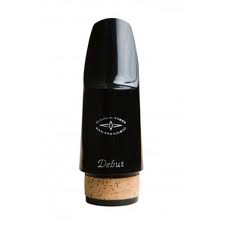
(Kind of looks like Darth Vader, doesn't it?)
The first time I blew into the new mouthpiece with the new reed, the tone sounded clear, strong and effortless. I nearly cried.
Playing with the right tool, I was a musician again.
We're all like my clarinet, intended for a purpose. God gifts us with talents and abilities suited to us, and us alone. He puts us in a time and place to glorify Him with our lives. But sometimes what we've done in the past–the "jobs" we've performed for God's kingdom– don't play so well in the present. We need to be tweaked.
It was hard to let go of that old mouthpiece–I'm not sure I would have done it on my own. I needed my son to hear the story, see the obvious solution, and present me with a new mouthpiece. Beautiful music, using the same old musician but with an improved tool/clarinet, was the result.
That makes me wonder if sometimes God calls me to do something in a slightly altered method and I don't want to try a different way. It worked my way in the past, why try something new? It doesn't look worn out, why should I replace it?
Because sometimes just playing the right tool can turn a chore back into a pleasure..





January 6, 2012
Overcoming a Fear of Flying
 The fear of flying is a common phobia. I struggled with it for years.
It wasn't helped by Christian urban legends about devout folks who suddenly had a premonition the flight they were sitting on would go down. According to the stories, they then managed to talk their way off the plane, including their luggage, and were amazed when the flight did, in fact, crash.
Those stories always bothered me and provided me with a particularly bad flight from Los Angeles to Oakland once when I became convinced I was on a doomed flight and didn't have the nerve to talk my way off.
Something about not being able to decide what I feared most: dying or making a scene.
As the plane roared over the Pacific Ocean on take-off, I fretted and worried and confessed every sin I could imagine–just in case we went down. After I exhausted my list of sins, I realized those on the plane with me were going to crash, too, and since I had no idea what their salvation situation was, I should pray for them as well.
So I did. All the way to Oakland, where we landed safely and I went on to fly countless more times without incident.
Thanks be to God.
One day as I fretted about an upcoming flight, I remembered the words from Matthew 10:28-32:
"28And do not fear those who kill the body but cannot kill the soul. . . 29 Are not two sparrows sold for a copper coin? And not one of them falls to the ground apart from your Father's will. 30 But the very hairs of your head are all numbered. 31 Do not fear therefore; you are of more value than many sparrows."
Similarly, Psalm 94 talks about God numbering our days, which I've always taken to mean God knows how long my life will be.
If God knows the day I'm going to die does it make any difference how I die?
I considered that concept and realized I could just as easily be killed walking down the street as die in an airplane. Whatever day my life ends will be determined by God. So, why be more afraid of an airplane?
Indeed, statistics say I'm more likely to be killed in an auto accident than an airplane crash.
Frankly, the idea cheered me up considerably and while I still pray on take off, I'm not a wreck anymore about flying.
I can trust the one who created to me to bring me home anyway, and any day, he chooses.
Some church friends had reservations on one of the 9/11/01 Boston to California flights. They got to Boston a day early, however, and decided they were tired of traveling, and caught a flight home on September 10.
My eyes went wide when Al told me the story. "How do you live your life after being spared like that?"
"Very thankful to God," he said.
No surprise. He's not afraid of flying at all.





January 3, 2012
Traveler's Tales: Does God Want Me to Take This Trip?
My fear of flying has finally been grounded–and I'll speak of that another time–but I still run through a gamut of emotions when it comes time to plan a trip. I've frequently allowed my love of travel–it's genetic for my family–to get ahead of my prayer life and I've volunteered to take a trip before praying. That often leaves me scrambling to match my spiritual peace-of-mind, to my non-refundable already purchased tickets.
My poor husband has been plagued too many times with my fearful question: "Do you think God wants me to take this vacation?"
Our big 2010 trip was to Italy–a promised gift to celebrate our daughter's high school graduation. That seemed straight forward enough–return to my family's homeland. We could savor Italian cuisine and slip over the border into Slovenia to finally meet my husband's relatives in his ancestral homeland. I borrowed my niece's Italian language book, practiced mi lengua skills and ciao! We were ready.
Except a month before we left, my husband and I received a glorious invitation to our godson's August wedding–in Brasov, Transylvania, Romania.
I went to the obvious course of action first: could we extend our Italian trip and go to the wedding?
Uh, our Italian trip ended June 14 and the wedding wasn't until August. Sorry.
But a wedding in Romania? How often would that opportunity arise?
My husband didn't want to go. Strike one.
My daughter was headed to Nicaragua on a mission's trip in July and didn't want to go. Strike two.
I couldn't justify a second trip to Europe in one summer (after only visiting once in the previous 25 years) just for me and I certainly didn't want to travel by myself . . . but if I met up with the parents of the groom and went with them?
Too over-the-top even for an experienced, eager traveler like myself.
Still, something tugged at me. Did God want me to go on this trip?
I prayed for a little imagination. Was there someone else I could take?
My daughter-in-law lost her job about this time. She had not had a summer vacation in over ten years, had worked her way through college, had supported my son and been a good sport through it all. She was moving to our town and had decided to take some time off before hunting a new job.
Was this a sign from God?
I don't live in a vacuum. Everything I do must have a component of giving glory to God, or there's no point. It's amazing how much easier it is on my mind if I know I travel with God's blessing–and it's awfully fun to see the results as well.
How do you know the will of God and how did it relate to my Transylvania trip?
1. Is it Scriptural? God calls us to rejoice with those who rejoice and to enjoy our families. There wasn't anything unScriptural about attending a wedding–Jesus went to them!
2. What are the circumstances? I had the money, the opportunity, the time and most important, a family member to take with me. Check.
3. What counsel do you get from those in authority over you? Or, those with a vested interest? My husband told me to enjoy myself. I did.
4. Do you have peace when you pray about the situation? I did.
I put the proposition to A this way:
"I realize the opportunity to spend a week's vacation with your mother-in-law in Transylvania probably doesn't sound like a lot of fun, but if you'll come with me to meet these strangers, I'll sweeten the deal with a stop in the British Isles, both going and coming."
She said, "I'd love to."
We had a wonderful time, got to know each other better, enjoyed all my friends in Transylvania, loved Scotland and saw three plays in London.
Spending time with A was priceless and a total treat.
Obviously, God wanted us to take the trip.
How about you? How do you know if a trip is part of God's will for your life?





December 27, 2011
Tintin, Snowy the Dog and My Boys' Childhood
 We'll be viewing the Tintin movie this week and everyone is excited about the chance to see Tintin and Snowy on the big screen. My boys grew up with him and my daughter caught their infectious enthusiasm, along with inheriting the books, as a little girl.
I first glimpsed Tintin while traveling in Europe as a teenager. We didn't have money for books nor did I read French, so I didn't meet the intrepid newspaper reporter in 1970. It took three sons to bring him to my attention.
My oldest son found the books in the children's section of the Bangor Naval Submarine Base library. The boys ran to the graphic book section at every visit, hoping to find an over-sized Tintin paperback they'd not read before. (This was before they learned how the reserve system worked).
I have a vivid picture of the three boys and my godson, all four under eleven-years-old. They had checked out seven Tintin books and refused to enter the commissary with me–preferring to sit outside on a bench and reread the books. They spent the entire evening before an Alaskan camping trip, lolling around with Tintin and discussing their favorite scenes.
Eventually they convinced their grandmother to buy them copies of the book–they were harder to come by in those years–and a half-dozen dog-leafed pages still sit on our shelf. Tintin provided hours of intrigue, adventure and excitement in colorful pages with more sophisticated language than usually found in a comic book. My boys loved the intrepid Belgian reporter.
I prefered the clever Snowy myself.
Tintin has detractors–many think author Georges Remi, Herge, was racist and therefore the cartoon stories should not be read to children. I asked my boys about the racism and while they recognized it, they could separate the inflammatory words from the story. "It was written a long time ago, Mom. Things are different now."
Their favorite was Red Rackham's Treasure, two-thirds of the boys agreed because of how it opened their minds to the thrill of adventure on the high seas (having a father who sailed under the seas, apparently was not exciting enough!). "I dreamed about being on a raft on the ocean and surviving difficult events," my one son said. "I thought about adventures for weeks after that, wondering what was possible."
This may have been the inspiration for our youngest son, four when they began reading the books, who also dreamed of seeing things people had never viewed before (and got his wish fulfilled this year when, as an astronomy graduate student, he saw a planet only one other person had ever seen before).
Books will do that to you: open your mind to possibilities never dreamt of before and fun to think about.
Poking through a used bookstore last week, I came upon a display of Tintin books related to the movie premier. The volumes looked smaller and not as old fashioned as the books that traveled so far with my children. But there in the stacks among the older versions was a title I'd never checked out of the library; indeed, I'd never seen it before.
Of course I bought it.
The title isn't particularly glamorous: Tintin in the Land of the Soviets, but the mere fact of a Tintin book they'd not read is bound to cause excitement Christmas morning. I had to flip a coin to decide which son to give it to. I just hope they'll remember how to share . . .
But no worries. They're wealthier now. One brother gave his siblings the entire collection for Christmas. All except Tintin in the Land of the Soviets!
Happy dreaming!





December 23, 2011
Christmas: God on Earth in a Baby; the First Time.
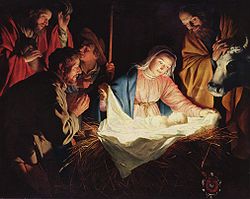 I grew up in a secular family for whom Christmas was an event featuring a holiday scene across the mantlepiece, a tree hauled into the house on my father's birthday and Coke in the stocking found leaning across the hearth Christmas morning. When we got older, we attended a perfunctory mass on Christmas Eve, joined a big party at a friend's house and awoke the next morning to presents and an hour-long trip to Grammy's house.
We're Sicilian. We had pasta for Christmas dinner and always chocolate pie for Joan.
The Christmas I was fifteen, however, my attitude changed. I spent time at a local Lutheran church because of the cute teenage guys and the hard volleyball games the youth played on Friday nights. The Lutheran's excitement over Jesus' birth differed from my own family's, "oh, yeah, it's Christmas, I need to buy presents."
Shocked to realize the babe in the manger was really the Creator of the Universe purposefully limited to the body of an infant, I began to reconsider Christmas details. While I naturally was familiar with Jesus, until that 1972 Christmas, I never actually KNEW Jesus.
The glorious musical canon proclaimed at Trinity Lutheran Church in San Pedro, California, drew me to the congregation. I had never "worshipped" in a service where folks broke into four-party harmony and sang with such gusto. As a small church with a homey wooden interior, Trinity Lutheran had an intimate, warm feel. The elegant soaring marble walls of the Catholic Church I attended with some of my family, felt almost cold and impersonal in contrast.
But at the center of both was the same Jesus. He just seemed more accessible to me the way the Lutherans told the story.
"Oh, come. Oh, come, Emmanuel–God with us." I hadn't known the meaning of the name Emmanuel. "God with us rang" in my ears–a soul awakening to the notion the baby in the manger wasn't just a story but the changer of the world who ransomed me away from the sin that bound me to a life of unease.
Jesus' birth, life and death seemed more significant the more time I spent with people who actively sought to know Jesus and to read what the Bible said about him.
That Christmas I heard new carols–as well as Handel's Messiah for the first time. My heart soared with the words. Even today, the chorus of "Hark the Herald Angels Sings," shimmers with a joy excelsis. I remember the piney smell of evergreen wreaths mixing with the rosy scent of candles lit to celebrate birth. The Advent wreath symbolized a church body looking forward to salvation and rejoicing along the way.
And there in the middle, the focus of all, was Jesus.
Confounding all mankind with the simplicity of his birth, the humility of his coming and the promise of redemption.
I staggered all through that first Christmas alive to the Gospel. Everywhere I turned, the halos shown, the angels sang, the shepherds celebrated.
And so did I.
Rejoice!
Emmanuel is come to us. Glory in the highest.
Or,
Merry Christmas.





December 20, 2011
Still Looking for Good Books to Give for Christmas?

Most years I've ended my annual Christmas letter with a list of the best books I read during the year. This year I've got too many adorable grandchildren antics to describe, so I ran out of room.
But I've got room here. If you're still looking for some book ideas as Christmas gifts, 2011, here are a few of my favorites read in the last twelve months. (Photo on the left is of author Liz Johnson's Christmas "tree").
Inspirational
Surprised by Oxford by Carolyn Weber. I loved this memoir of Weber's first year as a scholarship student in English Literature at Oxford. Spinning her title off C. S. Lewis' Surprised by Joy for excellent effect, her beautiful prose tells the story of a lost love, a found love, and a future love for glorious satisfaction. A terrific choice for book-loving Christians who love C.S. Lewis, Oxford, literature, memoirs and testimonies.
Biographical
 Unbroken: A World War II Story of Survival, Resilience and Redemption by Laura Hillenbrand. Awe-inspiring, horrific, engrossing, absorbing and rich, this story of Olympic athlete Louis Zamperini's experiences during World War II is a masterpiece. It was the best book I read this year and had me on the edge of whatever seat I could take fast enough to read a few pages. All the readers I know devoured it and talked about it with undisguised pleasure. Truly an amazing tale of derring-do, near misses and extraordinary courage.
Fiction
The Paris Wife by Paula McLain. I wrote my college thesis on Ernest Hemingway, focusing on his A Moveable Feast, and this tour de force was a total delight. More gorgeous writing and insight into the difficulties of living with genius, told through the point of view of the first Mrs. Hemingway: Hadley. I hated to see the book end, even as I knew the sadness to come.
Non-Fiction

Empire of the Summer Moon by S. C. Gwynne. I only picked this one up because it had been on the best-seller list for so long but quickly became absorbed by the tragic tale of Native Americans. I had no idea the Commanches were considered the finest calvary in the history of the world until I read this book. Beautifully written, horrifying in detail, enormously important and insightful.
Mystery
The Beekeeper's Apprentice by Laurie R. King. Recommended by a friend, this book has been around a long time but I'd never heard of it. I've never read Sherlock Holmes, so I didn't catch all the clever references, but it was enjoyable for this novice. Good mysteries, strong characters, absorbing read.
Spiritual/Insightful/Memoir/Terrific
 The Pastor by Eugene Peterson. I love Peterson's beautiful writing and this memoir was so full of wisdom and thoughtful words, I actually underlined sections (I never underline, even the Bible). Telling the story of his spiritual walk through youthful missionary jaunts with his mother in Montana, through his years in the pastorate in Maryland and now full circle back to retirement in Montana, this book has plenty of spiritual meat to keep anyone busy.
Beloved Reread
Waiting for Snow in Havana by Carlos Eire. I've written about this book in the past, along with the sequel published this year, Learning to Die in Miami, but I reread this old favorite while on a mission trip to Nicaragua. It was as delightful in 2011 as it was the first time I read it. Full of rich language and stories told with a Latin flair, I laughed aloud time and again and was surprised to discover how I had taken his outrageous stories and expanded them to fit my own imagination. Terrific.
I'm always on the look out for a good, no, a great book. What did you like this year?





December 16, 2011
Gift Giving: Matching the Books with the Reader
 "Oh, look," my teenage niece said. "Aunt Michelle gave me a book and a movie. What a surprise."
I looked at her and smiled as pleasantly as I could despite my hurt. I had given a lot of thought to what book and movie she would enjoy. Apparently I guessed wrong. I didn't buy her a book or a movie for years afterwards. Frankly, I think she got the raw end of that deal.
No surprise I give books for gifts–I'm a writer, I work in publishing, I love books and with many of my relatives living so far away for so many years, books and movies made gifts simpler to ship. The trick, however, is matching the book to the reader and sometimes I've done well and other times I've flopped.
In the interest of helping those of you hitting Amazon.com today in a last minute flurry, I'm going to provide some "how to choose" suggestions, based on past experience.
1.Think about the loved one's interests. Basic, I know, but give this one a little consideration. And don't just think about their list: "Cars II, please," but consider their interests and how they spend their time. With a young person, see if you can choose a book that honors their dreams, or at least tickles their imagination.
When that aforementioned niece grew up a little, she became a highly-recruited rower (and now crews for UC Berkeley). I scoured the Internet and found a terrific book: The Red Rose Crew: A True Story of Women, Winning, and the Water. The story of how women's crew became a part of the Olympics and the determination to get there, was a good choice for an ambitious young woman.
2. Consider their near-future plans. Another teenaged niece was headed to France for the summer where she would be immersed in culture by living in a family with three younger girls. I laughed with glee with this idea: An American in Paris DVD coupled with Harry Potter et l'ecole des Sorciers (Harry Potter and the Sorcerer's Stone). The first book in the series was written in simple enough language, her skills could handle it. Plus, the older daughter in the French family enjoyed the book, too. Très bon!
3. Ask yourself what they really need from a book. One of my relatives needed nothing more than to sit on the beach and get immersed in a story. I thought about her background in eastern Europe, considered my shelf-full of comfort novels, remembered her personal brilliance but also the M.M. Kaye novels she'd read as a young woman. I sent her Eva Ibbotson's The Morning Gift--the romance of a beautiful genius woman spirited out of 1940 Vienna in a marriage of convenience. Full of wit, scientific terms, romance, and fun, it was just what she needed.
4. Get the latest from their favorite author. Astrophysicist Hugh Ross publishes a new book every September, which happens to be my husband's birthday month. I call them up in August and order Hugh's latest book, whatever it is. My husband has been happy every year. Why change a good thing?
5. Relive a shared experience, or one on their own. My brother and nephew spent two weeks at Philmont Ranch hiking with the boy scouts last summer, a trip of a lifetime. Earlier this week, Warren Cole Smith published a book about a similar experience: I Wanna Go Back: Stories of the Philmont Rangers. With four Eagle scouts in our family, I've given away several copies of Legacy of Honor: The Values and Influence of America's Eagle Scouts.
6. Share one of your favorites. Everyone knows the world's best gift for a two-year-old is P.D. Eastman's Go, Dog. Go! (You knew that, didn't you?). My own family with four children, went through four copies–we all loved the book so much. (We don't really need copies anymore, we can quote the entire book verbatim). I bought a copy for my adorable grandson and we snuggled together in glee to read it for the first time. As soon as I finished, he got off my lap and handed the book to his father. Who, to my delight, read it aloud with similar inflections. When it came time to go, he picked up the book and slipped it into his diaper bag. I sent it home with him and bought another copy the next day.
7. Canvas your friends. Among the books I'm giving this year: Unbroken by Laura Hillenbrand; The Magic of Ordinary Days by Ann Creel Howard; The Yearling by Marjorie Rawlings; The Sweetest Bible by Diane Stortz; A Distant Melody by Sarah Sundin; A Field Guide to New Mexico; Hidden Treasures in the Book of Job by Hugh Ross; and A Log Cabin Christmas Collection by Me!
How about you? Any suggestions for books this Christmas?





December 13, 2011
Writing Done by Real People?
 I was playing on the floor in Bruce Zike's bedroom when I learned that "real" people wrote for publication. Real people in the sense of the neighbor's mom getting what I –15 years later–learned was called a "by-line" in a magazine.
Tracy ran in waving the magazine for us to admire. She flipped through the already dog-eared pages to show us the article. "See? My mom's a writer!"
Bruce barely looked up from the blocks, but I felt the rush of excitement and jaw-dropping surprise. I touched the sleek pages, it was a woman's magazine I'd seen before, The Ladies Home Journal. Tracy ran off to show Mrs. Zike and I returned to a world that had just upended itself into a different focus. Mothers could write for magazines. Mothers probably could write books. Would it be possible for me?
And thus at the age of five a dream was born. Maybe, someday, I could see my name in print, too.
I already knew how to read–the siren call of books and words had caught me early. Perhaps because my father read so intensely every night, sitting in a pool of light beside the radio listening to classical music and turning the pages of huge tomes or The Wall Street Journal. When he discovered I had figured out how to read, he invited me to snuggle close and pick out words on the newsprint. I could have done that all evening long, the delight of having my busy father's attention, the joy of sounding out the longest words he could find on the page, the thrill of learning.
I'm feeling it all over again, nearly a half century later, and on my late father's birthday.
We didn't know any writers, though my parents had a college friend who dabbled in Sci Fi (and what an odd man he was) and my father's penchant for writing my mother poetry. It still seemed such a mystery, to write stories people you didn't know would read and enjoy. The power!
Fortunately, I loved Little Women and Jo March taught me about scribbling women, the maturing nature of rejection and the overwhelming awe of seeing your name in print. It finally happened to me on a regular basis when I got to college and I became a reporter for The UCLA Daily Bruin.
Amazing to see my name in black print on a newspaper page. I confess, I loved the days I had a front page story and would pause when I saw students reading the paper–taking in MY writing, MY words, MY thoughts.
Oh, the power.
It got even better when I became the crime columnist and I'd hear people reading my stories out loud. One of the best days was at the dorm front desk when the clerk picked up the paper and cried, "Great! Here's Crime and Punishment, my favorite column in the whole paper!"
"You're just saying that because I'm here," I said.
He looked puzzled. "What difference does that make?"
I pointed at my name. "That's me."
"Really?" He looked down at the article. "Why don't you write more punishment?"
The critics are always with us.
The Internet and blogs, of course, give us all opportunities to see our names in cyber-ink. Do you feel that same excitement at knowing your words are read by people you don't know?





December 9, 2011
On Starting a Collection with Ozma of Oz
 The culling continues at my house. I have two boxes of books for church, one large box for the public library, one box for my husband to examine and four boxes of binders full of notes. I don't even want to look at the other three boxes. The encyclopedias are waiting beside the recycle bin.
I've been ruthless–or at least as strict as I can be. If I haven't looked at the book in years or if I'm not sure if I should keep it, I've tossed it into a box to be passed along. Shuddering as I do so.
As I've sorted through all these books, I found myself wondering when it all began. What started this collection that flows into every room in my house except the bathrooms?
Last night I found it: Ozma of Oz by L. Frank Baum, a gift for my seventh birthday. It was the first book I ever owned, along with Nancy Drew #2, The Hidden Staircase, which I also received at that same birthday party. I gave away all the Nancy Drews 21 years ago, having given up hope I'd ever have a reading daughter.
(Gave up too soon!)
48 years ago Ozma was new with a shiny golden jacket. Today the cardboard cover is flaking off and I doubt anyone but me would want to open the book. Do I even want to open it?
Ozma looks as young as always, and there on the fly leaf I find the pride of a young owner, and then one a little older practicing her cursive writing. How many books have I bought or received since Ozma and Nancy entered my life?
Countless.
I remember being so proud of the collection I amassed in a family that believed in going to the library, not visiting a book store. We only had one bookshelf in our house until I finally needed one of my own. I was like a hungry person handed a platter, any opportunity to own a book, I took–whether the book was worthwhile or not.
Some people took notice, though not my parents who stoutly maintained anything worth reading could be checked out of the library (though not those Nancy Drews back in the dark ages of my childhood). My aunt gave me a dictionary for my tenth birthday, and it's snuggled up against Ozma right now. The cardboard cover still holds together on that book, but the spine is a piece of packing tape. I wrote my name in that one, too.
It almost pains me to see my name written so carefully in these books, with the admonition to "please return to," me. I felt so important to own a volume. Curious how it's the little things that twist the heart.
Some of my favorite books were at the library and I checked them out time and again. One in particular, Elizabeth of the Mayflower–an historical fiction about Elizabeth Tilley, one of the first pilgrims–caught my imagination and my heart. I remember the day I went to the library and it was gone, never to be seen again.
 But the Internet is a wonderful contraption for hunting down the joys of our youth. I found it on line a couple years ago and bought a copy. It wasn't quite the rich read I remembered, but it felt satisfying to have it on my shelf.
Until I discovered my old friend Beth Bardo is a descendent of Elizabeth Tilley and John Alden. I gave her the book. I can always go visit it when I start to feel nostalgic. I didn't write my name in that one.
What was the first book you owned as a child? Do you still have it?