Michelle Ule's Blog, page 105
June 5, 2012
On Venus, the Big Bang and a Boy Explorer
 Reblogged from Finding God's Fingerprints in Daily Life:
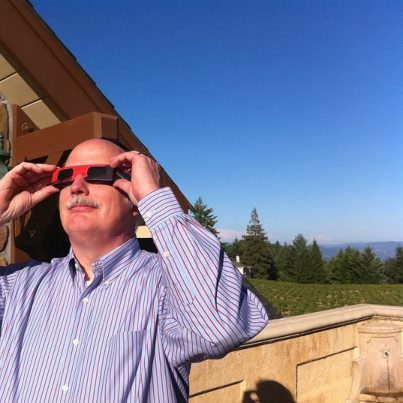
Today is the day Venus will fly in front of the sun. It won’t happen again until 2117, so get out there Tuesday afternoon, June 5, if you want to see it.
We’ll be looking through the cool glasses my husband’s alma mater sent him to watch the solar eclipse two weeks ago. Being old school myself, I carried two pieces of paper–one with a pin hole in it–so I could see it without looking at the sun.
On Venus, the Big Bang and a Boy Explorer


On Venus, the Big Bang and a Boy Explorer
 Today is the day Venus will fly in front of the sun. It won’t happen again until 2117, so get out there Tuesday afternoon, June 5, if you want to see it.
We’ll be looking through the cool glasses my husband’s alma mater sent him to watch the solar eclipse two weeks ago. Being old school myself, I carried two pieces of paper–one with a pin hole in it–so I could see it without looking at the sun.
His glasses worked much better.
We pay attention to events in the sky because our son is an astronomer. We call him Stargazer. He works at Apache Peak Observatory and peers at the universe through a computer screen, while searching the heavens for new planets.
Psalm 19 reminds us the heavens are telling of the glory of God and when the expanse of stars spools out before me–colored by computer so you can view them better and figure out the temperature degrees (I don’t remember why that’s important–time?)–I feel very small indeed.
It’s hard for me to realize my son is an astromer. Whenever I think about the stars I get confused by gravity–why they don’t they all fall to the bottom?
Stargazer’s amused. “Bottom of what?”
I’m whimpering even now because I don’t know. The universe?
(We spend a lot of time with the folks at Reasons.org, and they’re very helpful on all these subjects. Here’s one about a recent discovery of seeing before the big bang!)
My son became interested in astronomy during his years as a boy scout. Far away from city lights, he examined the stars from the clearer darker air of the high sierras. He knew most of the constellations and could wax lyrical for hours about the stars to his troop mates.
Stargazer told me recently when he was a little boy he always wanted to be an adventurer or an explorer. He wanted to see things no one had ever seen before.
“You know what, Mom?” Stargazer said recently. “Last month one of my colleagues found a new planet. I was the second person to ever see it.”
That reminds me of something I’ve long said about how God works in our personal lives. Just because I can’t see it–just because I don’t recognize God at work in my life–doesn’t mean He isn’t there and busy.
Just like the stars and the planets.





June 1, 2012
The Healing Power of the Arts
 I know a widower raising an eight-year-old daughter. He’s concerned because six-months after his wife’s death, his daughter hasn’t said a word about her. Certainly, I’ve continued to pray for these two, but I also was heartened by the girl’s extracurricular activities and her summer plans.
Because, to my mind, it’s all about using the arts to heal.
The girl has chosen to swim on a team, take art lessons and continue on the piano.
I say, “thanks be to God,” because I believe that’s where she is working out her grief.
At least in my opinion, and that’s all the rest of this blog post is–it’s not about this particular little girl, but about how creating art can help us heal.
Even when we don’t realize it.
Think about my favorite book of the Bible, the Psalms. I love how David pours out his emotion in his songs/poetry. So many times he starts out angry and violent with his imprecatory psalms, calling down all of God’s powers to destroy someone who has hurt or wronged him.
You can see how venting his emotion helps. In several psalms, he begins in a forlorn spot feeling sorry for himself and whines, as in Psalm 13:
How long, O Lord? Will You forget me forever?
How long will You hide Your face from me?
But while he starts there, David moves on to explain his thoughts and fears, works through his emotions, and chooses wholeness by the end:
I have trusted in Your mercy;
My heart shall rejoice in Your salvation.
I will sing to the Lord,
Because He has dealt bountifully with me.
That’s the power of art to heal.
In the case of the little girl above, think how helpful a swim team would be. All that anger can be churned out in the water–swimming to exhaustion– and the pain will ebb. That’s why I usually clean house when I’m upset or when I’m grieving. I tell myself, if all else fails, I’ll use this energy to good purpose.
It’s amazing how much better I feel afterwards, not to mention the house is clean or cookies are baked.
My daughter used to bang tennis balls against the side of the house, perfecting her game. At the same age, I played the piano by the hour–pouring out my frustrations in the dramatic Beethoven, the mournful Chopin or sometimes in a dark, low-noted piece I wrote and pounded out myself.
Honestly, my family should have been able to figure out how I felt by the piano music!
Maybe they did.
Edvard Munch’s “The Scream,” depicted at the top of this post, has been used (and misused) to demonstrate the horror of a shriek against evil. You can feel the emotion in that painting.
Francis Schaeffer used to talk about Pablo Picasso’s paintings and how you could see the deconstruction of his life in the type of paintings he did. During his early years he was happy–the painting he made of his wife nursing a baby is a familiar one.
But as his life began to fall apart and he broke up his family, his paintings began to shatter–and reflect the confusion in his normal. I’ve always thought he was painting out an anguish few could see–and then, of course, people bought it as art.
I’m happy to report the little girl above is an amazing artist, truly stunning for her age. And the pictures are happy ones: a cat, a bird, flowers. Maybe someday she’ll process her grief in a different way, but right now I think she’s doing just fine.
And by giving her the tools, and the permission to grieve in her own way and in her own timing, I think this family sets an example for all of us.
God gave us emotions to express–the question is, how can we use art to heal and express them best?





May 29, 2012
Zumba and Scotland; Music and Memory
 Do you ever find your mind wandering from something your body is doing and wake up to discover you’re thinking of something completely out of context?
How does the brain make make connections and why do they sometimes seem completely off?
I ruminate on this oddity often at six o’clock in the morning while taking my Zumba class.
We dance to Latin music or pop tunes with a strong beat and once I get the steps down, I confess, my mind often wanders.
But why does it take me so often to the Edinburgh train station?
If I’m stepping to a quick salsa, or even cumbria-ing with my hands in the air, why is my memory drifting to the grocery where we picked up food for the train, or the news stand where we hunted for books?
Of course, realizing this oddity, I veer off into musing on memory and I’ve concluded that whatever the song is that takes me there, it must have been playing over the loudspeakers when I was in Scotland.
I never think about the Central and South American countries I’ve visited when I’m samba-ing like a combination of Woody and Buzz from Toy Story.
When the instructor puts on Forever, I’m right there with the Youtube wedding dance sensation and savoring the joy all over again–that at least makes sense.
As we sweated yesterday, I thought about the busy corner store that serves “the best ice cream in Budapest,” according to one of the relatives.
That had nothing to do with the mambo, other than the wild ride down the street–or my flailing arms as I tried to dance.
Music is said to tame the wildest beast, but it also has other unconscious effects on the body. It can make time seem to shorten, speed up your heart rate, improve your rhythm, and it can even touch your soul.
(And it can do that in odd ways. See this post: The Five Weirdest Ways Music Can Mess with the Human Brain).
I took a skiing lesson many years ago and at the end of the lesson, the instructor launched us on our own. But he didn’t want us to head down the hill without assistance, so he told us sing whatever song came to mind and let the music help us.
When we got to the bottom, he asked us our choices. Most had sung a Beatles tune or something popular.
I had slalomed with joy and ease all the way down and he was impressed. “What did you sing?” he asked.
I had to think a moment before I laughed. “Amazing Grace.”
“No one has ever sung that before!”
Maybe not, but the reassuring words that I was saved helped me get down the hill without a wipe out!
And that song, at least, had something to do with my physical activity!
What music has slid into your mind during unusual moments? Where do you suppose it came from?





May 25, 2012
Traveler’s Tales: London Theatre
 When you don’t live in big city, visiting a place like London or New York means one thing: theater!
I’ve attended the theatre in London seven times in the last three years and have a couple pointers for those interested in visiting the West End.
1. Don’t expect familiar musicals to be exactly what you’re used to.
We saw Les Miserables the first night in the city with a crowd of tourists–I’m assuming the thirty Japanese school girls in uniform were tourists. I’d seen it before in Seattle and Honolulu but this was a first for my youngest children and they were very excited–particularly since we’d just been in Paris.
Unfortunately, the two females leads that night were not in good voice and I’ve heard the music so many times, I knew when they missed. They also were in a rush–we got out of that show in two hours and ten minutes. It’s always been three hours before.
2. Marvel at the difference between prose and song
Wicked whiplashed me–something was a little odd, but what? The same gorgeous costumes, astonishing arias and clever story thrilled us but I kept shaking my head trying to figure out what was different.
During intermission we finally put it together. They were singing in American accents and speaking in British ones!
3. See something off-beat.
 In our case it was The Thirty-Nine Steps, which I liked so much the first time, I took my daughter-in-law to see it two years later!
How can a play based on a book by John Buchanan and made into a film noire by Alfred Hitchcock be funny, much less have all the parts played by only four people?
How indeed? We laughed ourselves silly.
4. Take in a classic.
We never timed our trips properly to see a Shakespeare play, much less visit the Globe Theater, so we had to make do with another old standby: Agatha Christie’s The Mousetrap. Dated and played in a tiny theatre (we’re tall and could barely fit into our seats–our knees were a tangle to accomodate), it’s still a treat and they offered the cheapest tickets we could buy. (But they weren’t cheap)
5. Check out the cheap ticket booth, but don’t have high expectations for getting seats to something you really want to see.
I wanted to have one sure bet, so I bought those tickets in advance. We used several different techniques when we sought tickets. We used the concierge at our hotel, bought tickets last minute at the theatre, and purchased them on-line before we left the states.
Other than Les Miserables (bought in advance), we were happy with everything we saw.
After all, the play’s the thing.
What experiences have you had at the theatre and have you got anything to share, particularly about London?





May 22, 2012
Holding My Happiness: the Biographies of Powerful People
In 1983 I decided to start reading the biographies or memoirs of people who held my happiness in their hands. I figured if I knew something about –usually–the man who had such an influence, I might better roll with the punches delivered to innocent me.
 My husband was the youngest Lieutenant Commander in the US Navy and about to become chief engineer on the oldest nuclear submarine in the Atlantic Ocean in 1983. One man controlled my husband’s time and how he did his job: Rear Admiral Hiram Rickover.
So I read his biography, Rickover: Controversy and Genius. I learned that the admiral’s passion for excellence knew no bounds where nuclear safety was concerned. He demanded hard work and long hours from his nukes because the Navy couldn’t risk a nuclear accident.
It helped to know that, particularly the year my husband was physically away from home 75% of the time.
Sort of.
In 1993, I read Virginia Clinton Kelley’s Leading With My Heart, to learn something about my husband’s Commander in Chief. The Clintons themselves hadn’t written anything yet, so I figured the president’s mother would be an interesting source of information.
She was.
It turns out no one in the Clinton family thought the laws applied to them. For generations back, the “good times are for us,” clan skirted the law and pretty much did what they pleased.
Very interesting.
 Elisabeth Elliott’s books about her husband, Jim Elliott, and her work with the Waodani Indians of Ecuador were fascinating. From a woman I considered a mentor, I learned a lot about faith. Her example helped straighten my spine during difficult times–because from my reading, I knew Elisabeth would ask, “you’re not indulging in self-pity, are you?”
Of course not, Elisabeth. I wouldn’t dare.
Through Gates of Splendor and Shadow of the Almighty showed me how to walk in obedience to God despite how things looked.
I enjoyed Barack Obama’s beautifully written Dreams from My Father. But like all memoirs, it’s notable for both what it includes and what it omits. Even while reading it, I kept asking questions–where were you between college and law school? What happened to these six years of your life? Why can’t I nail down how you really thought about these issues?
The author felt like a cipher, and I never got definitive answers to questions I thought were important.
Curious.
I’m working my way right now through Walter Isaacson’s biography of Steve Jobs. I’m thrilled with my I-touch and I-pad. I’m the same age as the late Jobs and I have friends who worked in Silicon Valley when Apple got its start. A lot of this material seems familiar to me–and it’s fascinating to move through memory lane with computer systems! (An Osborne here, pre-windows logging on there. You can almost hear the “hee-haw, hee-haw” of AOL starting up).
This one is disconcerting. I knew some things about Jobs, but he made such a difference to my life through computer systems, Pixar and the tools I have, I was curious about his motivations.
 He wanted to change the world. Who can blame him?
But he was a mercurial man to work for, and often cruel.
Bummer.
The book that really did change my life was Edith Schaeffer’s The Tapestry. Another spiritual mentor to me, Edith provided a window into God-led decision-making. I was struck the day I read it, that whenever Edith and her husband Francis had a difficult decision to make, they always took the hard one.
I’m not sure I would have realized that without reading their memoir.
That day, I made a vow. “The next time I have to make a choice, Lord, I’ll take the hard one.”
It walked in the door an hour later.
I swallowed and said, “yes.”
And it made all the difference.
Thanks, Edith.
What memoirs or biographies have you read that changed your life, or at least gave you a different perspective on your personal happiness?





May 17, 2012
Research or Voyeurism?
 When is it research and when is it voyeurism?
That’s the question I’ve been asking myself as I’ve read through some of the diaries and letters I obtained during my recent swing through the south.
The heroine’s sister made me question the decision to read other people’s personal accounts when she scrawled a stern warning on the opening page of her diary, written when she was 18:
“Whoever reads a single line in this book without the writer’s permission will forfeit her love and respect forever . . . strictly private. For me alone.”
Well . . . she’s been dead for 125 years and her grandchildren sold the diary to the University of North Carolina. Who’s the guilty one here if I read what she herself calls “the innocent outpourings of a child’s heart?”
I’m reading it for factual purposes–she provides me with dates and locations of her sister, my true heroine. There’s nothing particularly shocking in this young woman’s diary. I’m safe.
I’m not worried about reading letters written by people long dead who have been the subjects of several books. As I explained earlier, I even got lucky and found a typed transcript of a number of the important letters–thus enabling me not only to understand my hero better, but actually to read his words with ease.
And he was quite a writer, a romantic man, when he wrote his wife.
That’s when I began to feel unease.
Writing from prison to an ailing pregnant wife, he poured out his love across the miles and sitting before my computer screen, I started to squirm. The words are beautiful, my heart pounded. Yours will, too, at thoughts like the following:
In talking about their baby he wrote: “I am so very impatient to see it, will it not be sweet, Love? I shall eat it up.”
“I have so many things to tell you, my Angel, that I cannot write . . . My life shall be devoted to you, and my only pleasure will be in making you happy. Would that you could see some of the many pictures my imagination paints, the would all delight and some astonish you.”
Or,
“How fortunate I have been the last week, it seems as if a hand had opened and thrown, suddenly upon me a hand full of sunbeams. Separated from you nothing affords me half the pleasure as receiving a letter from my Idol.”
And then we have references to trying “to peep at her cluster of grapes,” as she washed up.
I’ll leave that one to your imagination.
Our heroine’s children spoke of her going to the carriagehouse alone and spending hours rereading the old letters. Their father warned them she needed to spend time with the memories of her first husband. One day they looked out and saw smoke coming up from behind the outbuilding.
She burned her diary. They thought she burned her letters.
I don’t think she could bring herself to burn her first husband’s beautiful letters. They’re hard for me to read in their beauty–of hopes and dreams that would only be realized for a short time amid a dreadful war. But they remind me, too, that the hearts and souls of men and women through the ages follow the same flights of joy and fancy back to the ones who love them best of all.
Just like love and romance, poetic words, do for you and me.
So, am I a voyeur?
Or merely the chronicler of a beautiful love story?
Only history will tell.





May 14, 2012
What’s the Point of Reading Literature, Anyway?
 Long ago and far away when I was a senior in high school, my AP English teacher stopped in the middle of a lecture to scold us.
“Do you know why we read great works of literature?” Mr Lagesse demanded. “It’s because you cannot experience everything in one lifetime. Literature enables you to learn how to act and behave when you confront a new situation because you’ve read about how someone else lived through the experience. It’s a tool for life.”
I was paying attention that day and intrigued by the idea I could prepare ahead for whatever life would throw me by reading. Sort of like cribbing for the final. So I read more widely and with greater enthusiasm because, well, you never know what life, God, the Navy or even your brother, will throw at you.
While pregnant with my first child and my husband sailed the seas of the Cold War, I fell in love with Olga Ilyin’s White Road. A fictionalized memoir of a poet in 1917 Russia–she fled her family home with a two-week old baby, a babushka, two bottles and all her jewelry sewn into her underwear–Olga spent years sledding across frozen Siberia trailing after her White Russian husband. A member of the dashing cavalry, he fought off the Bolsheviks until ultimately reaching the sea in Vladivostok. She and the baby, of course, had gotten lost along the way.
The language, the story, the horror, the astonishing blessed conclusion. As soon as I finished it, I turned to the first page and started over again.
But what did I, another new mother/military officer’s wife in 20th century Groton, Connecticut take away from Olga’s experience?
“I’m going to need sufficient jewelry to live on for at least two years,” I explained to my lieutenant when he finally battled the Atlantic Ocean home in his nuclear submarine.
He coughed.
But he did present me with a splendid opal necklace.
I returned to the books and joy of reading but didn’t think much more of Mr. Lagesse’s admonition until years later when my mother died.
Somehow in the midst of that shocking grief, without thought, I knew how to act.
It was as if someone had taken over, put words in my mouth and allowed the numbness of my soul to behave in a presentable fashion. Sitting in the mortuary discussing caskets with my father, brother and the mortician, I noted in fascination how my voice modulated, my knees clenched together, my back never touched the chair and I remained in total control through the most horrific conversation of my life.
I remember feeling gentle, kind and tender–while I wanted to scream with rage and grief.
But I knew the men were looking to me. I knew that if I fell apart they would not be able to hold themselves together. Perhaps that day we were most solicitous of each other because the fragile crystals that bound us had been shaken to the atom and if we took one more hit would shatter into irreparable shards.
That night, alone in my parent’s guest room, I tried to think how I knew to behave. What part was I playing?
Marmee? How had she managed Beth’s death?
Melanie in Gone With the Wind?
I’ve never been able to peg it definitely, other than to know that what I had read in the past helped me to move with grace in the present.
Perhaps that’s why I approach books, memoirs in particular, with a lively curiosity about what I can learn from them. Even a novel has to have a positive take-away for me to appreciate it. If I’m not a better person, or have gained a new perspective on something as the result of reading a book, why bother? There’s certainly easier entertainment out there.
Which is probably why the Bible, at least, makes the safest reading if I’m looking for a point. Nothing in it returns void.
Solomon reminds us that of the making of books there is no end, but have there been some books in particular that have materially changed how you’ve lived your life?
Other than the need to own jewelry, of course.
(And no, I don’t have sufficient jewelry to supply two years worth of living expenses . . . )





May 8, 2012
Traveler’s Tales: House Touring
 We’ve always enjoyed the scene in A&E’s Pride and Prejudice where Elizabeth Bennett tours Mr. Darcy’s mansion and shocks both of them by meeting him down by the lake.
Apparently even 200 years ago, visiting the large unique homes of the wealthy was a tourist past time.
Touring homes, however, is something I don’t do out here in California.
But I have done it on the east coast and in the south where, apparently, more mansions are open to the public–you know, Mt. Vernon, The White House, Arlington House, Paul Revere’s house, to name a few.
And while I was in Tennessee and Kentucky recently, I visited more.
The first stop was the most thrilling: the home where my general and his wif e honeymooned. I walked into the center hall and thought, “they were here. They knew this staircase and the view toward the river.”
And of course we saw the actual room!
My heroine had spent time at the house as a child. She had stepped off her horses onto the same “upping stone” where I sat. The house had the same footprint and bricks from 1814. Only the kitchen wing and carport were relatively new.

To run my hand along a bannister she knew, to feel the breeze pick up my hair across the fields just as it would have for her, were sobering moments in which she came alive again in a hoop skirt and a bonnet. I could position her, geographically in my mind, by seeing a place where she lived.
You would have recognized the goosebumps.
Ten days later I visited the home where the general lived as a young man. Ran my hand down the bannister, looked out the window at the gardens–neatly trimmed just as they were kept 160 years ago. I visited the family church, saw the famous neighbor’s law office and admired a painting of the man over the fireplace.
This was home to him, and I needed to hold it in my mind and breathe the air.
What difference did it make? The people have been dead and gone over 125 years, yet the house lives in.
When you spend hours and days reading books and letters on microfilm, you begin to get a sense of your characters as real people. As a novelist, of course, I’ll flesh them out with words, actions and emotions to tell their story. But in my case, I’m writing a book based on real people–I need to fix them in time and space to better see them and understand just who they were.
Elizabeth Bennett tells her sister Jane she first began to love Mr. Darcy upon seeing his house at Pemberly–when she, perhaps, more fully grasped who he really was.
Places will do that for you.
Of course, they also can turn up unexpected perspectives as well. We visited Andrew Jackson’s famous home, The Hermitage, in Nashville, Tennessee when my daughter was just shy of five. I’d read a biography and wanted to see this house, but I also wanted to view the slave quarters–I thought it would be insightful to the man and his time.
“What is this place?” my kindergartner asked.
“This is where the slaves lived.”
“What’s a slave?”
I looked at her shining, innocent face and answered slowly. “A slave is a person who takes care of the chores at the big house.” I gestured toward the glorious brick structure not far away. “They do the cooking, cleaning, sewing, gardening and they tend the children.”
“Oh,” she said. “That’s like you. You’re a slave.”
Perspective. That’s what you get when you visit a new locale.
Where was her father, anyway?
“No,” I explained. “I chose to marry your father and take care of you. A slave doesn’t have a choice, they’re bought, owned, by a master. I’m not a slave.”
Right?

Standing in the old log cabin, looking up at the Hermitage, however, I could begin to grasp the distance from a life of service to the manor house.
Perspective, turning the prism, learning who your characters might have been because of the place they lived.
Sometimes it can be a bit of a shock.





May 4, 2012
Serendipity and Research
 I’m just back from a two-week swing through Tennessee and Kentucky where I spent six days in libraries and the rest of the time hunting up sites and experiences related to my historical characters.
I’m a lover of travel stories and two weeks ago I found myself in the middle of one of those serendipitous meetings of unusual people linked to my tale.
I drove through the gloriously green rolling farmlands of middle Tennessee, passing horses grazing in the sunshine and brick houses standing square amid seas of grass. Birds flit across the pasturelands: a flash of red cardinal here, a sparkling of swooping sparrows there.
My destination was a moderate-sized town reputed to have my heroine’s wedding dress on display in the county museum. Unfortunately, my GPS did not recognize the town hall’s address and I got lost pretty quickly.
I ended up at the library where the kind librarian suggested I check out their genealogy section and then turn left out the driveway and continue another mile down the road. I wouldn’t be able to miss it. Look at that photo at the start of this post–imposing building on a hill, you bet!
Hidden in the dark basement, the county museum was a small affair that did not include our heroine’s wedding dress. It did, however, have the wedding portrait on the wall and in a glass case, a ring made for her while her husband languished in prison.
A ring he had held, with a stone chipped from his cell, which she wore on her finger, resting on her handkerchief. Oh, my!
But where in this town had she lived?
The county clerk called the archives and the archivist invited me down: he’d be able to help me with lots of information.
So I headed to the archives. Tom was a pleasant and helpful man and to my shock, is one of those sainted folks who transcribe public records into books. An entire wall full! He actually couldn’t help me from his archives, but as a fellow genealogist, I saluted him and took his photo. 
Disappointed he couldn’t find the address, Tom gave me a phone number for my heroine’s great-grandson. Unfortunately, WP was traveling, but my archivist had another card up his sleeve: “you need to stop in and see Jack.”
Why?
“He knows all the stories about your general.”
The directions were a little vague: “Turn right at the light, go down two blocks, turn left headed toward the cemetery, you’ll pass by the monuments. Jack’ll be across the street next to the Mexican food store.”
I’m from California, the only part of the directions that made sense was the Mexican food store. “Is this Jack’s house? What sort of monument?”
“You’ll see. Stop in to see Jack.”
I wasn’t going to do it, but when I drove down the street headed to the cemetery, I saw a yard of headstones and across the street a Mexican grocery store. Why not? I pulled in and found a glass door with Jack’s name in white lettering.
It was like walking back into my childhood–odd furniture, chairs, an elderly woman behind the desk, an 81 year-old man with cataracts sitting upright in a chair. The only difference is my father’s “office” did not include three walls of Civil War tomes.
Jack was a little suspicious at first, but then started in with the stories. His great-grandmother had led my general to safe haven during a battle. I knew that story, didn’t I?
Ur, um, I suggested he tell them all to me.
And thus began a fun hour of reminiscing for him, note taking for me, and quiet chuckling from his wife. He ended with, “let me drive you down to the cemetery and I’ll show you the graves.”
I demurred–I didn’t want to take up all his time.
He was insulted, Southern hospitality demanded it.
I gave in and we got into his Cadillac for a drive down the street.
Even as I tightened the seat belt, tight, I wondered what in the world I was doing. Should I text someone to tell them where I was and who I was with?
No time, Jack got behind the steering wheel and we took off.
He regaled me with stories of that famous battle as we drove down the very road. Private Whitlaw was the hero that day, and we paused to pay respects at his grave. We admired the Confederate headstones and then he took me to my heroine and her daughter.
 Blue sky stretched overhead, dabbed with white clouds. Springs birds trilled in the trees and a slight wind rustled the grass. I’d been following my heroine’s story all week; I knew how it ended 125 years ago. Yet there before her headstone I felt a poignancy that put its arm around my shoulders for a squeeze of tears.
Jack didn’t say much as we drove back to his office. He had me on the lookout like Private Whitlaw as we inched through the rock pillared cemetery exit. His wife gave me a sweet smile as we shook hands goodbye.
The serendipity of research is what makes it rich. The fanatics who still follow the details of stories lived 150 years ago make the tales come alive with a richness you can’t always find in books. The unsung heroes for historians are the archivists like Tom, the county clerks like Jean, the librarians and the history lovers like Jack.
I just hope I can write my story well enough to satisfy them.