Michelle Ule's Blog, page 108
February 17, 2012
Finishing a Novel: Take a Break
 I'm 43,000 words into my 50,000 word planned novel and it's time to take a break while relatives visit.
I'd hoped to have the rough draft done yesterday, two months before the deadline, but life intervened . . .
Still, it's a good spot to pause with the ending outlined in my brain, and let the story marinate for a week. Writer James Scott Bell calls this "letting the boys in the basement do their work." (On googling for the exact quote, I see Jim cribbed this line from Stephen King's most excellent book, On Writing.)
The idea is, my subconscious will come up with other ideas that will deepen my story line, often in unexpected ways. I love it when that happens.
A writer often knows more than she thinks she does, and even more strangely for me, circumstances and facts often seem to turn up that make all the difference in the story.
For example, my character is struggling with a phobia. I googled phobias and virtual reality. Bingo. A company exists in San Diego, where my story takes place, that treats phobias with cutting edge, virtual reality. 80% of their works is done with military personnel–which would include my hero.
How could I possibly have known that?
It's not the first time for me a surprising fact has opened up a novel in a previously-unconsidered way. Characters show up unexpectedly as well and the whole story changes.
Madeleine L'Engle told of writing The Arm of the Starfish and getting three-quarters done when a young man turned up she'd never thought of before. She was as shocked as her hero to find Joshua Archer in his hotel room and as she followed and learned about this new guy, realized she had to completely rewrite the book!
For me it was a chicken, but that's a different story.
It'll be fun to see how those boys in the basement work virtual reality therapy into the story . . . though I have a fair idea, already, of course.
Next week when I pick up the manuscript again, I'll start at the beginning and read it all the way through. Two reasons for that–one, to refresh my mind as to where I've been and where I'm going (i.e., to remember the story!), but second to get a feel for what I need to do to end it in a satisfactory way.
Of course I have ideas, a map and a synopsis.
But you never know.
And that's why taking a break can be the very best strategy when you reach the end of a novel.
By the way, how should the story end? :-)
Tell me about your favorite ending to a romance, either a movie or a book.
Your story could inspire those boys in the basement.





February 14, 2012
Choosing Characters' Names
Thanks to all who contributed to the discussion last time of the fat woman getting a massage. She turned out to be a more minor character than I anticipated owing to a medical crisis with another minor character nicknamed Flip. You can't always control your characters when writing a novel.
But in discussing her name (Camilla, BTW, with no nods to the Duchess of Kent), I revisited another name that is far more important, and thus more problematic: that of the hero.
When I originally wrote the synopsis, my hero's name was Josh Murphy. For reasons I cannot now recall, I altered it to Dave Murphy when I started writing Bridging Two Hearts. I'm sure I had a good reason, but it's not working.
I'm writing this 50,000 word book fast–I'm nearly done after a month–but I keep stumbling over Dave. Somehow it just doesn't seem right and I keep having to stop and ask myself, "What's his name again?"
Obviously, there's a mismatch here.
I thought about going with the Irish trend–maybe Patrick? Sean? But those names don't match either. Josh seems a better choice for several reasons.
Let me tell you why.
Names are important, as any parent contemplating a baby name book will tell you. With our diminuative last name, I scanned all the names in the baby book we had and made special note of the three syllable names–because to my English-major musician trained brain, the scansion–the beat–of saying the names sounded better when the rhythm went DA-di-di DA.
Say them aloud with me CHRIS to pher ULE, JON a than ULE, NICH o las ULE, CAR o lyn ULE. Hear that?
I loved the meanings, too: Christ bearer, Beloved of God, Victorious, Little woman.
Joshua, a perennial favorite, particularly in the 1980s when my hero would have been born, means "the Lord is my salvation," and the Biblical character was a brave warrior. My hero is struggling with fear, even though he's a brave Navy SEAL. The name just works better, even with Murphy as a last name.
But what comes to mind when you hear the name Josh, or even Josh Murphy? How do you picture the character?
According to the dictionary, the word josh means "to tease, to say humorously, to banter." That fits my character's personality very well.
Josh is short, to the point and can be stretched to the magic three syllable JOSH u ah, if need be. Perfect.
Of course it's been a popular name for thirty years and so Josh Murphy sounds pretty bland and almost run-of-the-mill. But you know what? My SEAL doesn't want to stand out. He wants a name that comes and goes and doesn't stick in your brain.
I just did it. Opened up Word, went to "Find and Replace" and typed in Dave and Josh. It feels so much better–369 times better, in point of fact.
How about you? How would you decide to name a character? And does a name make that big a difference when you read a book?





February 10, 2012
The Name's the Sweet Thing–Sometimes
 Two-thirds of the way through my novel yesterday, I needed to introduce a minor character who was getting a massage from my heroine (a massage therapist). Because massage is an intimate experience, many therapists ask for the client's name. So I needed a name real quick.
Did I mention my client weighed over 300 pounds?
Does that make a difference with the name? You tell me.
The first name that swam to my head was easy, until I remembered that friend recently had weight-loss surgery and probably wouldn't appreciate her name being used, even in a fictional setting.
Same with the next one. What was going on here? What was my mind doing?
The client was about 40 years old and nervous. I needed to find a name that would help my reader understand the type of woman my heroine was assisting.
That means she was born about 1972. Could she be a Jessica?
But aren't all Jessica's svelte and curvy like in Who Framed Roger Rabbit? (Or tall and slim like the beautiful Jessie I know?)
I didn't want to give her a name like Elda or Gertrude, because my point wasn't to make fun of her (Alas, those two names are seldom regarded as beautiful any more. Sorry). Indeed, it's a poignant scene where the woman doesn't want to undress because she's embarrassed by her weight. My heroine, Amy, treats her with respect and courtesy. I actually wanted to play off type, if I could only get my brain engaged.
Choosing names is difficult when you're a writer. That sounds ridiculous, but I don't know how many times I've turned to my family and said, "Give me a name. Any name."
I probably would have better luck just opening the phone book and pointing. I've done that, too. (And then rejected the name for not meeting whatever my criterion were).
In some cases, the best place to visit is a baby name book or website.I like a site like this , that gives you meanings, provides lists of different nationality names and sometimes even makes me laugh.
Years ago, I reviewed charts as part of my job. Pregnant at the time and scouting names for my baby, I paid close attention to the names. And couldn't believe what I read.
(Note to parents: an unusual name CAN be a beautiful gift, but PLEASE, for the sake of your child, give the name a simple spelling. Even basic names–I've been spelling Michelle my entire life).
Back to my story. I ran through people I knew, or sort of knew, or had seen, or my kids knew and finally chose a name that would work. I may switch it–any suggestions from you?
But in the meantime, this precious woman who is so vulnerable and needs to be relaxed through the work of a massage therapist who tells her she has value no matter what her size, shape, color, age or creed is–
Camilla.
(But wait! Does that make you think of Prince Charles' wife . . . ooh, I may have to change it . . . )
How do you choose a name? And do your characters smell just as sweet no matter what their name is? :-)





February 7, 2012
Detailing the Place Without Scent
 As mentioned in my last post, I'm just back from three exquisite days in Coronado, California, the setting for my next novel, Bridging Two Hearts. I went with a purpose: to pick up local color, talk to natives and make note of details–particularly scents and sounds.
While some like to say the devil is in the details, the facts that make a good story rich, also are found in the details.
Sensory details add an experience to a good read. I wasn't too concerned about the feel of the ocean, or sand underfoot or even the heaviness of the air when fog rolls in. I grew up in a port town and know those things instinctively. Fog can carry a salty scent and somehow air feels even colder when you can't see through the mist.
And everyone knows the tang of salty air at the beach, right?
I didn't smell any of it last week in Coronado.
I'm married to a sailor and as we walked up the soft sand and breathed the ocean breeze, I asked him why it didn't smell salty. Was I just used to it?
"It's a clear day and there's not much mist in the air. You aren't going to smell the salt."
Who would have guessed that?
From my childhood at the beach, I knew about rubbery seaweed and sour decomposing items on the beach. But none of those were apparent on the sandy strand before the Hotel del Coronado, much less further down the Silver Strand toward the beach where the SEALs work out. It was clean–both to the nose and to the eye.
That's in front of a pristine hotel–and a bucket truck pulling two telephone poles to smooth the sand could have been part of the reason.
But no scent really turned my head except the Sweet William growing in the flower beds at the Hotel Del.
It reminded me of something Barbara Kingsolver wrote about in her book The Poisonwood Bible. Her heroine had just returned from Africa through the Atlanta airport, and recognized she was back in America because there was no smell.
The concept intrigued me and ever since, I'll pause and ask myself, "what am I smelling?"
Often, the answer is nothing.
Indeed, I've wondered more than once if I just have a problem with my nose–maybe I can't smell anything?
But an infant grandchild sitting on my lap can disprove that concern.
Old wood, paint, barnacles, the scent of fear?
None of that was evident at the beach last week. Nothing turned up our noses.
Does that mean I have no sensory details for my book?
Well–it's fiction. If I can't describe the expected, I guess I'll just have to make something up.
Oh, the tangy salt spray from the sea mixing with the baking white sands against the cry of the gull . . .
you get the picture. :-)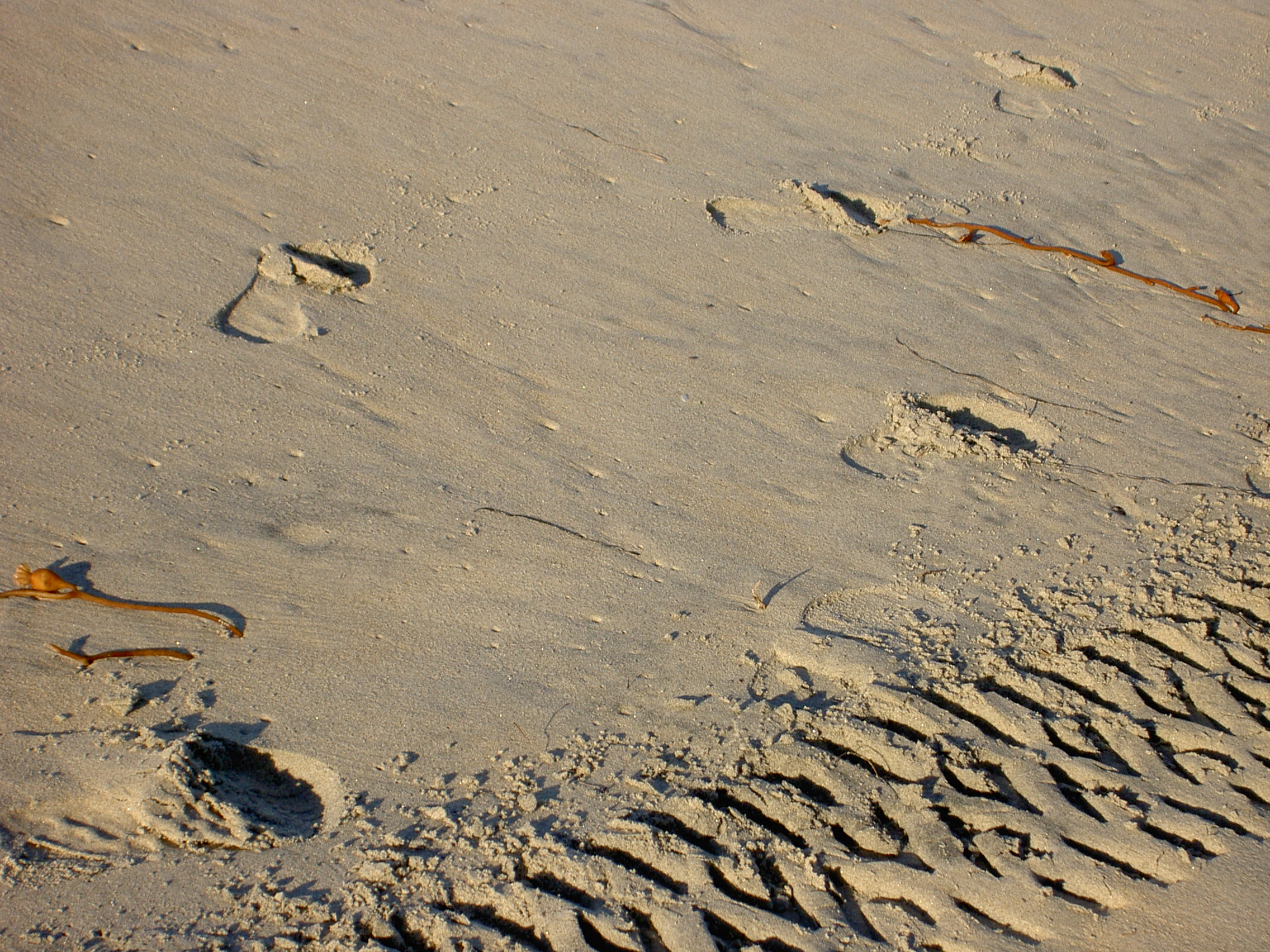





February 3, 2012
Maps and Fiction
 I've been working on a novel the last month that takes place on Coronado "Island", a long narrow sand spit just west of San Diego proper. It's connected to the "main land" via the infamous Coronado Bridge (third highest suicide bridge in the US) or an isthmus at Imperial Beach to the south.
I've been there once, visiting a friend who lived in Navy housing at the Navy Amphibious Base. I remember the island as a cluttered small town with plenty of traffic in the California sunshine. It seems to me there was a roundabout before we got on the bridge returning to the airport and I know I caught a glimpse of the red cone roof of the Hotel del Coronado. That's about it.
Bridging Two Hearts takes place at the Hotel del and in the village. As I've now written 60% of the story, I think it's time to go down and refresh my memory and check my facts. So off we go.
It's curious how when you write a book, you run into all sorts of people who have an interest in your subject matter. The optometrist fitter, a guy at church, my walking partner, relatives and a dear friend, all love Coronado and are enchanted I'm writing about it. I've been picking their brains about local sites I can include in my story to make it seem more real.
They've got plenty of ideas, but no one can seem to remember any names. I laughed as someone described "this park," and I fired back with, "Tidelands Park?"
"Was that the name? I don't really remember. Why do you know?"
My church friend couldn't remember the name of his favorite pizza restaurant, he even fired up his smart phone. "It's near this beach . . . Coldstone's is not far away."
Me: "Is it by the ferry landing? Coldstone's is up there."
"Ferry landing? I'm not sure. There's this little beach. How do you know?"
How do I know? I have access to Google maps.
And so do you if you're reading this on the Internet! (That is NOT a shot from google maps, here. Click on the link instead.)

Other than the vague stories from my friends, everything I know about Coronado comes via search engines. I've spent a lot of time at the Coronado Visitor's Center web site. I should bookmark the Hotel Del Coronado website, I've been there so much.
I've hunted for the homes where my characters live by examining local real estate websites. I've learned the bar where Navy SEALs like to hang out, discovered all sorts of activities that take place during the year my characters can participate in, and found a terrific spot for breakfast. Frankly, it's a little disturbing all the things I've been able to find out from this very computer.
But it's the map that has been the most helpful, enabling me to see what the main street looks like–through the "traffic" view feature. I can plot where in Coronado my characters should live to be close to their places of employment. I've learned where they probably would go out to dinner, and how long it would take them to drive through Imperial Beach back to San Diego. I can look closely at the bridge and guess at how high the barriers are. I've found the fire station and discovered the city pool is not far away.
Checking on a fact from one of the SEAL memoirs I've read, I actually saw the rock cropping just south of the Hotel del, where so many men have struggled during Hell Week.
A friend who vacationed in Palm Springs described a book she enjoyed that took place there. "It was so fun to read about the places the main character went to, and then find them ourselves when we were in town. You could follow his route, walk down this street and turn right here. It made our vacation so much more fun."
That's why I like to meld maps with fiction. It's a great way to add verisimilitude—hard truth–to your story in a soft way.
Happy reading! I'm at the beach today–if you look real close you might be able to find me!





January 31, 2012
Traveler's Tales: Transylvania and the Nightmare of Reading Dracula
 The invitation from the groom's mother may have been intended as a casual bit of FYI: my godson was getting. Did I want to attend the wedding?
How often do you get to spend time with old friends you haven't seen in ages?
How often do you get invited to a week-long wedding celebration in Romania?
Of course I wanted to attend.
The only thing I knew about Romania was Nicolae Ceauşescu's reign of terror, several orphans adopted by friends, and the terrific gymnasts during the cold war. Oh, and Hannah Pakula's The Last Romantic: a Biography of Queen Marie of Romania, which I had enjoyed 20 years ago.
As is my custom, I read up on the country: memoirs about growing up during World War II, another book about Queen Marie, stories about pilgrimages throughout the land. Rick Steves' website didn't have much information about the country and I was horrified to read rabies immunizations were recommended if you were spending much time in the capital, Bucharest.
Rabies? I've never visited any country–including China–that suggested a rabies vaccination!
I contacted my good friend, the groom's mother, who also happens to be a doctor.
Nothing to worry about; we'd only spend one day in Bucharest before moving on to Brasov for the festivities.
I looked up Brasov. It's in Transylvania.
You know exactly where my mind went. I could almost hear the eerie music and see Bela Lugosi's toothy grimace as Count Dracula.
Translyania actually has a history of churches and valiant peasants standing up to Communists, Nazis and even the Turks. Vlad the Impaler, also known as Dracula (Son of the Dragon) was a mad ruler who lived in their neighborhood some 600+ years ago. A vicious, blood thirsty man in the sense that he slaughtered tens of thousands of people often by impaling them, Vlad's armies warred against the advancing Ottoman Empire and the Turks. (Some of you will remember the Ottoman Empire reached the gates of Vienna–from which they were turned back in 1529, thus allowing western Europe to remain Christian).
Few people shed tears when he died in 1486 and his head was sent to Constantinople as a trophy.
But that was all in the past. Brasov, the closest major town to his castle, is a walled medieval city of universities and hard working Romanians. We actually attended an organ recital in the Black Church (now Lutheran, built circa 1477) our first night in town.
 Everywhere I went, however, I saw signs, tourist trinkets or pictures of Dracula. Some were as historically accurate as the painting on the left, others were as grim as the vampire novels that became Bram Stoker's legacy. Naturally, I decided I should read Dracula while I was in his homeland.
I'm sorry I did.
My husband stayed home, but he read the book at the same time on the Kindle. (I was reading it on my I-touch using the Kindle ap). The curious story drew me in at first; I thought I knew it but soon realized my only experience with Dracula was from the 1948 movie farce Abbot and Costello Meet Frankenstein.
The book is very different.
Disturbing in fact.
I didn't like it. I recognized some Christian aspects, but rather than comforting me, they left me uneasy. I didn't want to continue, but felt I had to as a good traveler, English major, adult.
About this time, I chatted with my husband via Skype (using that same impressive I-touch). He was disturbed with Dracula as well, but had read further into the book. When I told him of my misgivings–the spiritual aspects of this novel were very troubling to me–he told me to quit. "It's only going to get worse and I don't think I'm going to finish it."
So I turned off my I-touch. The nightmares I had about the story just confirmed the wisdom of that decision.
Not all Christians have a problem with Bram Stoker's Dracula. Novelist Mike Duran, in particular, wrote a long blog post about the possibility Dracula is really a Christian novel. You can read Mike's thoughts: here.
As for me, we took a trip to Dracula's castle not far from Brasov. We wandered through the rooms and came to a section that made me feel completely comfortable: Queen Marie of Romania's personal rooms in her summer home at Castle Bran. The woman whose life first introduced me to Romania provides a sillier, yet much more comfortable sense of welcome to Romania.
As for my godson, he and his bride are living happily ever after.
In Bucharest.





January 27, 2012
The Kindness of Navy Seals, Part 2
 Because I'm working on a romance novel, that features a Navy SEAL, I've been doing a lot of research.
(Bridging Two Hearts is the story of a massage therapist at the Hotel Del Coronado who is afraid of bridges, who falls in love with a Navy SEAL who isn't afraid of anything. Coming later this year.)
It's tricky to get first-hand information about Navy SEALs, so I've been doing a lot of reading–novels and memoirs, though I do have The Official United States Navy Seal Workout, revised edition, here at hand. (I can't do anything in it except the stretches . . . )
The best book by far was Chuck Pfarrar's Warrier Soul, a beautifully written memoir of a very difficult life.
But the most poignant story was told in Howard Wasdin and Stephen Templin's controversial Seal Team Six: Memoirs of an Elite Navy Seal Sniper.
Wasdin was involved in the infamous Black Hawk Down tragedy in Mogadishu, Somalia. Prior to that firefight, he spent several months in Somalia and part of his job involved patrolling the roof of their safe house with his partner. The first night, a wretched scent filled the air. They pulled kerchiefs over their noses and tried to find what had died and left such a stench.
They found it: a teenaged boy with an amputated leg and missing a foot, full of gangrene and left to sleep on the rooftop of a hovel not far away.
The kindness of Navy SEALs–while they were there on a deadly mission, they couldn't stand by while a kid suffered within eyesight. Howard and his partner approached the command: could they take medical supplies and clean up the kid's wounds?
No. Doing so would compromise the mission.
Every night they pulled something over their noses. Every night the teenager got worse.
A week into this, they took matters into their own hands. Wasdin, his partner and a sympathetic medic dressed in black put on their balaclavas, picked up their machine guns and skulked into the night.
They did a "hard entry" –kicked in the front door, flexicuffed the boy's family and forced them, gently, against a back wall in the house. While the family watched with eyes round as saucers, one of SEALs climbed on the roof and brought down the boy. Laying him on the floor so the parents could see what they were doing, they scrubbed the boy's wounds with betadine. They had to put their hands over the kid's mouth so his screams wouldn't alert the neighborhood. Eventually he passed out from shock and pain. They gave him IV antibiotics, bandaged his wounds, and gave him injections to stop the infection.
"Then we vanished."
They did the same a week later. The family put out their hands to be handcuffed as soon as the men entered. An elderly woman brought tea in gratitude and then held out her hands. This time the Americans brought an interpreter to explain how to care for the boy, who was much improved. They left the family with amoxicillin for ten days, but the medic also noticed the boy had scurvy. The next day Wasdin brought a bag of oranges.
Eventually, their CO told the CIA that the boy was related to one of the local "assets," even though the family had nothing to do with the Americans. They got him a pair of crutches and Howard requested a wheelchair.
The family was beyond grateful.
Wasdin ended his story this way: "It was my most successful op in Somalia, and I had to disobey direct orders to get it done. Better to ask forgiveness than permission."
They may have to act as steely-eyed killers, but the kindness of Navy SEALs can also be an extraordinary gift.





January 24, 2012
Finding a Good Book for My Trip
 I went to Budapest last year with some relatives. We spent a week visiting their relatives and seeing the sights of that beautiful city on the Danube. Glorious.
I purchased the requisite Rick Steves' book, Rick Steves' Budapest, and went through with a highlighter, marking the places I particularly wanted to see. I've written about what I saw here and here and here.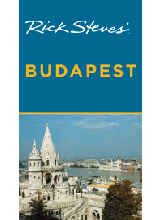
A guide book provides plenty of information, the places worth visiting, a history of the place, where to eat dinner. But it can't always give you a feel for what it's like to actually live in the city. For that sort of information, I turn to novels.
Rick Steves' website gives you plenty of information, including suggestions for what to read on your trip by country. As I perused the titles, one recent one stood out: The Invisible Bridge by Julie Orringer. But someone described it on Amazon.com as a 400 page book crammed into 600 pages–I didn't want to waste my time on a lugubrious read.
Fortunately, a woman in my aerobics class had just finished the book and raved over it. "I couldn't put it down," she said. "I took it with me everywhere and constantly opened it up to see what was happening next."
On her recommendation, I purchased the book for my Kindle. I'm so glad I did.
As it happened, Orringer's story of World War II life mirrored that of my "outlaws," which gave me plenty to discuss with them. But more than that, the book provided touch points that made the entire visit very rich. I felt like I was on two different trips: the fictional journey each night with the novel, and the day time visits, in person, to the locales described in the book. Absolutely charming–when it wasn't just a bit confusing.
Here was the Jewish Ghetto where the outlaws went to school, bullet holes from 1944 still visible in the walls. The main characters from The Invisible Bridge lived there, too. We spent a terrific afternoon floating in Széchenyi Baths which our hero visited as soon as he returned to Budapest after living in Paris. We marveled at the Byzantine look of the Dohány Street Synagogue and that night I read about the hero and heroine's wedding there.
 I felt like I lived a parallel life: walking the streets and hearing the stories from outlaws during the day, and reading about the emotions (which the outlaws did not want to discuss) in the novel at night. Sometimes I got confused between the stories–but it all melded together into a sense of Budapest as a beautiful, well-loved city with a tragic past.
I'd read other books before I flew halfway around the world–memoirs and a history book. I've since read Kati Marton's Enemies of the People, describing her parents' arrest by Hungarian authorities in 1955. Reading about the places I had seen with my own eyes, enriched that tragic tale as well.
How do you decide what books you'll take when you travel? Do you try to match the theme of your trip with the place you're visiting? Do you like to read novels about your vacation spot once you're there, before you go, or after you return? Have you read anything that mirrored my experience with The Invisible Bridge?





January 20, 2012
On Books and Baby Christians
 I became a Christian while attending Trinity Lutheran Church. A Lutheran church was a great spot for me because it married a love of music, learning and history and focused it on God. While the church of my youth also spoke of God and Jesus, tradition was more important than explanation.
I needed both.
I was unaware of religious books beyond the Bible, and my knowledge of the Word of God was sketchy at best. I started there, of course, and attended Bible study under the very capable leading of the smart, funny, and devoted Mrs. Hahn. But this particular church had a bookstore, and there I first saw books about Christianity. Up front was the best-selling The Christian Family, written by Larry Christenson–the pastor of the church.
I obviously saw Pastor Christenson's lime green book around a lot, but there was another that intrigued me more. Also in paperback though with a dark green cover, the title alone caught my attention along with the author's complex name: The Cost of Discipleship by Dietrich Bonhoeffer. I just liked the sound of that name sloshing around in my mouth.
I was not a theology-minded person even as a teenager, so I didn't get around to tackling Bonhoeffer's tome until my twentieth summer when I traveled to Europe with just a few English books to read. There, by the shores of Lake Como, I dipped into a way of thinking and a call to devotion the like of which I had never dreamed After all, what do you do with the pointed words: "Christ bids you come and die"?
Even then the pages of my book were brown and spotted with age, the paragraphs long and dense. The concepts were not extraordinary but the application required much thought. What did I really believe? How far did my devotion to this Jesus go? Was I ready and willing to die to my self–particularly in unfair situations?
I didn't know, but Bonhoeffer's siren words and his powerful life story, drew me to a spiritual place far removed from the pettiness of my surroundings.
All these years later, what remains most vivid from The Cost of Discipleship is the concept of cheap grace.
"Cheap grace is preaching forgiveness without requiring repentance, baptism without church discipline, Communion without confession. … Cheap grace is grace without discipleship, grace without the cross, grace without Jesus Christ, living and incarnate."
It was a good lesson to learn as a young Christian because time and again, I've been forced to confront my sinful nature when I want to slide into the ease of cheap grace. But grace is only cheap to me– Jesus paid with his life that grace might be extended to my sinful heart every time I ask. A powerful, life-saving, humbling and enormous gift, that grace. And one that I can cheapen into trash by a casual attitude or the flip words, "Jesus will save me no matter what."
Jesus loves me; this I know. I know because the Bible–a book–tells me so.
The book of John explains Jesus was the Word with God, who is God. Almost like a book–and the only real food a baby Christian, or any Christian, needs.
Thanks be to God.





January 18, 2012
The Life-Changing Affect of a Book; or Two.
 40 years ago tonight I felt wretched, guilt-ridden and afraid.
It was a book's fault. Maybe two books. Both recommended by a local church.
A 15-year-old sophomore in high school, I had begun playing volleyball at the Lutheran church around the corner from my home. I'd followed the lure tossed by my next door neighbor: "Guys play volleyball with us on Friday nights." I figured it was time to meet some guys, so I went.
A lot of high school guys played volleyball (indeed, I met my husband), but ideas also flourished at that church and I heard about God from a slightly different point of view.
I thought I knew a lot about God and Jesus before I visited Trinity Lutheran church, but it turns out my concept of God was an intellectual one–not a personal one engaged in conversation with someone who responded. Trinity opened my eyes, heart, ears and mind to understand a loving God cares about me.
The Bible told me so.
I appreciated that.
But 40 years ago tonight, I wasn't sure what it meant that God loved me and had a plan for my life. I didn't know how to shake guilt from my shoulders and not feel condemned when I made mistakes. I'd been given a book to read–The Late Great Planet Earth by Hal Lindsey– and read about end times with terror.
I didn't learn about dispensationalism for many years. I didn't know Lindsey's book has nothing to do with the doctrine of many church bodies. All I knew was his descriptions of the end of the planet frightened me and convinced me the only way to not be annihilated was to become a Christian.
I knew enough about prayer that I appealed to the one who could do something about the guilt and fear which left me shaking that night. "If you're real, God, change my heart and make me yours. I don't want to live through the events described in this story and end up in hell."
I woke up the next morning, January 18, my mother's birthday, feeling peaceful for the first time in a long time. I was changed. Reborn into a girl who didn't have to fear her eternal destiny. Saved.
But what I appreciated the most then, and a great deal even today, is that I finally had something to do with my guilt. I wasn't afraid to admit mistakes anymore because I knew God, who is faithful and just, would forgive me of all my sins and I would feel clean again.
That happened 40 years ago. And the next day. And the next day, and everyday in between up until right now. I can deal with my sin and my guilt by handing them over to God, accepting His forgiveness and walking forward forgiven.
And all because of a book.
Or two.
Thanks be to God.