Michelle Ule's Blog, page 107
March 27, 2012
Do You Base Your Characters On Real People?
Do I base my characters on real people?
Sort of.

This is Ben. He's in the Navy and his encounter with SEALs prompted my story Bridging Two Hearts. He is NOT the hero, but the hero is like him in a few strategic ways: fun-loving, loyal, determined and brave. Ben's adventures in Afghanistan also provided a kernel of an idea for my latest Christmas novella.
I take those kernels–attributes of people I know–mix them in with others and my imagination and come up with a unique character. Sometimes I'm surprised, though, when they talk like their inspiration. 

Nancy's a homeschooling mom in Hawai'i. I'm using a woman like her in A Bridal Lei for Happiness. Nancy also provided me with information I need to make the story up-to-date. Confirming the kernel of that story is still valid: the bridal couple on the right.

This is an unnamed Elvis impersonator. One of these characters takes a literary agent hostage in The Reconciliation Garden.

 Megan is a wonderful teacher who has lost 90 pounds (she credits Weight Watchers). She's an inspiration in a lot of ways, but particularly in my story about the 2004 tsunami: A Girl of Great Worth.
It took all three of the next characters, combined, to produce one impudent bespectacled four-year-old, Luke, in Getting to Theo's Wedding. I used their confidence, logic and willingness to reduce an older sibling to tears . . . 


A young James Earl Jones made the cut, too. He plays the part of Navy Lieutenant Theo, in Getting to Theo's Wedding! His voice has turned up in several other roles in my stories.
I use historical characters, as well. Elijah Hanks' brother, the Reverand Thomas Hanks, my great-great-great-grandfather appeared as himself in The Dogtrot Christmas. Unfortunately, I don't have a photo of Thomas, so his younger brother and sister-in-law will have to do. 
And, finally, of course, there's only one real hero in all my stories: my husband:





March 23, 2012
Life as a Book
 Perhaps I read too much, but I tend to see my life as a book. You know: chapters, index, footnotes.
We all can figure out the chapters in our life book: natural demarcations when our life changed in a significant way.
I perhaps have more chapters than the average person because we moved 13 times during my husband's Navy career. So in addition to all the usual chapters like school and marriage, I have all the places I lived (and often can only identify the baby in the photo based on the house in the background), the churches I attended, and the libraries I frequented.
That makes indexing my life both easy and more complicated. If I think of a friend, I usually have to work through a matrix of how, where and when I knew them–to put them into context in my life.
And the footnotes? Those are the "whys" of how I know them: soccer teams, boy scouts, Bible study, fellow dog owner, walker, and so forth.
Because of all those moves (thank you, American taxpayers), I have good friends spread across the country. I lived with them for pockets of time–usually the length of a chapter–and then we moved on. Sometimes it takes me completely aback to realize they've been happily living their lives all those years since I last saw them. The children actually grew up and are no longer doing their homework and playing computer games in the family room.
And yet the friends are as familiar to me as if I had walked around the block with them yesterday.
It may be the result of how I've lived my life; how I'm emotionally handled all those friendships and separations. Wonderful volumes of life lived and then put on the shelf as a cherished memory.
I used to liken my husband's deployments to reading a book. When the pages are open on your lap, you're in the midst of the story–breathing, living, responding to the main character. But when you closed the book and moved on with your day-to-day life, that character with whom you've been so involved disappeared and you didn't actively engage with them: they weren't in the conscious, focused part of your life and mind.
Back when my husband sailed under the seven seas, we had little contact with him once the submarine sank beneath the waters. 30 words a month for a family gram–a radio message sent out in electronic spurts and picked up by all the subs in the fleet–were all I could send him. He could not respond.
I got used to him disappearing for weeks and months at time with no contact beyond a note or two he'd left behind.
One day, we walked down the long rough Connecticut driveway to the mailbox. There among the magazines and the bills was a letter in an unknown hand with an odd stamp. When I opened it, a poloraid photograph fell out. The note read, "I thought you would like this," and was signed by a name I didn't recognize.
When I turned the photo over, I saw my husband wearing his uniform stepping through a hatch, a wide grin on his face.
My heart leaped and I gasped, "He's alive!"
The toddlers looked up in confusion. "Who's alive?"
I laughed. "Here's what daddy looked like just the other day!"
They danced about my feet and giggled, but my heart leaped and I couldn't stop smiling.
Even though I knew he'd return and I'd see him again, I'd closed the book and forgotten that he lived on somewhere else.
As do my friends.
Some people will tell you the reason they look forward to heaven is the opportunity to see loved ones again. That will be a wonderful day but for me, right now, I liken it to a book with more terrific stories and lives than I could even imagine here on this side.
I already have the joy of seeing my loved ones–friends and family alike–in the book held snug to my heart just waiting to be opened and relived.
And I like to think I've still got some favorite chapters ahead of me and splendid characters to love.
How about you?





March 20, 2012
Paperback Bible
 I did not grow up in a Bible-reading home. Indeed, the only Bible we owned was a decaying, brown-paged Gideon's Bible my father swiped from a hotel room.
It anchored the bookshelf on the far right, pushed back and half hidden by the more important family books: a dog-eared, spine-broken atlas and a fat unappealing dictionary. The rest of the shelf held The Golden Home and High School Encyclopedia my mother purchased one volume at a time at the grocery store.
I was in and out of that shelf all the time looking up everything in the encyclopedia but I never touched the moldering pages of the holy book. Raised in a pseudo-Catholic household, I somehow knew I wasn't supposed to read the Bible, so I didn't.
The summer I was fifteen, however, I went on a Madeleine L'Engle kick and read everything she wrote that the local library owned. More than once, L'Engle commented about the need for readers and writers to read the Bible so they could better understand the literary culture of western civilization.
That sounded like a plan to me, so I dug out the old Bible and took it with us on a camping trip to Canada. When I had exhausted all the other books I brought with me, I opened it up to the first chapter of the New Testament and ran into all those begats.
I didn't even last one chapter, slammed the musty volume shut and reread another Madeleine L'Engle.
But later that year, I started playing volleyball with some Lutherans around the corner from my house. One thing led to another, and I began to attend their Wednesday night Bible study. Obviously, I needed a Bible.
The old stolen Bible was unappetizing, but someone in the household had acquired a paperback called Good News for Modern Man. It was just the New Testament, but that was okay because we were studying the book of Romans, which someone told me was in the New Testament.
I opened it up. I loved the line drawings. I saw all those begats, but they looked so much more appealing in large type with simple drawings and white pages.
Okay, like my father I stole it, but I read that Bible, so easy on the eyes and soul, for the next year.
A cheap paperback (even now it only costs $7.45), the binding broke and pages fell out. I held it together with a green rubber band.
I found that Good News for Modern Man tonight, still on a shelf but with the rubber band long disintegrated. In between the pages, some of which were turned upside down when last stuffed between the shiny cover, was a written reflection from the first retreat I attended.
I committed in writing on that retreat to read the Bible and to pray.
And so I have. For 40 years.
Madeleine L'Engle may or not have approved of that paperback Bible. She urged English majors in particular, to read the gorgeous words in the 1621 King James version. The 1966 Good News for Modern Man gave me the stories, paraphrases of the original translation, not the beautiful words.
But it was enough to start with it and those words, sharper than a two-edged sword have not returned void.
After all, it's the Who found in the Word that's important, not the how I read about Him.
What was your first Bible like?





March 16, 2012
Stereotypes, Wild Girls and Grace
Stereotype: A fixed and oversimplified image or idea of a particular type of person or thing.
As a writer, I sometimes work in shorthand, to keep my characters set in my mind while I do other things with them. I can label them as "this" or "that" and more easily predict what they will do. Stereotypes can be very helpful in a culture because then a writer doesn't have to spell everything out.
When I say Harvard professor, you may think tweed jacket with patched elbows, erudite air and liberal opinions. If I say plumber, you may think muscular man in pristine clothing, neatly dressed and thin.
Or would you?
(I would because that described Rick our plumber).
See, you have to be careful because stereotypes don't always work.
And they really don't work in real life.
Once when the world was young, I attended junior high school with a girl whose family had fallen onto hard times. She followed suit, and while she was smart, she hung out with the wilder side of kids in our port town. The mascara got thicker, the gum chewing intensified, the skirts rose high and language . . . she managed to stay in check in class.
I steered clear of her and my mother, a teacher at the school, watched with troubled eyes as this promising girl went down ugly paths.
One day she annouced she had become a Christian.
A young Pharisee myself, I said, "I'll believe that when I see her in heaven."
In my mind, she was a Wild Girl.
And she stayed that way for years and years, even as I, too, became a Christian and joined her church. We were in each other's weddings, welcomed each other's children and visited over long distances.
But I always, in the unspoken back of my mind, stereotyped her as a wild girl.
Even when she wasn't.
One day I realized I had carried that image of her as a 13-year-old hurting girl, for over 20 years. Wild Girl was a wise and courageous woman of God. I needed to let that ridiculous stereotype go–especially since she had given me so much life-changing advice! So I did. There's still a little wild girl in her, of course–the fun part, but Wise Woman is a more accurate description.
Picturing people as stereotypes gets in the way of loving them. My sister-in-law is politically and religiously about as far removed from me as you can get. She's also brilliant, funny, charming and loyal. But it took me a long time to see that because I was so fixated on the stereotype of who she was.
I kept her at an arm's distance for several years after she married my brother. But when she announced her pregnancy, I knew I had to set aside our profound differences and focus on what we had in common. After all, she was the mother of my niece or nephew.
When I reached out to her, she met me. I focused on motherhood, books, laughter, irony and truth. We never discussed religion or politics; we made a silent pact.
Was that wrong?
Twenty-three years later, I love my sister-in-law. I still adamently disagree with her and we rarely go near the Molotov cocktail issues. We share books, proud stories of my parent's grandchildren, family news and irony.
It's a rich relationship I value, though I wish she'd change her mind on . . .
All because I chose to set aside the stereotype of what I thought she was and looked for the soul, the real person, behind her eyes.
We live in a society that emphasizes stereotypes and then invites us to deride the people we've labeled. It's easier that way; faster, more efficient.
As a Christian, I cannot afford to use a stereotype as shorthand in my relationships. God calls me to "love one another as I have loved you." When Jesus stopped at the noontime well and met a woman drawing water, he knew what she was: a five times married woman shunned by her community. But Jesus stopped to really look at her, to see into her heart and soul. As the Son of God, He knew what she needed: life water, forgiveness of sin and grace.
I love to turn the prism of my point of view and try to see someone from a slightly different angle. When I do that, the stereotype changes. What I see as one person when confronted head-on, looks completely different in profile.
That's true of the soul, as well as the body. May God grant us the grace to see past the wild girl stereotypes to the person within.
Because you never know who you'll find waiting.





March 13, 2012
Writing and Gardening
 Since childhood, I've cherished the scene in Frances Hodgson's The Secret Garden, where the three children stand outside the door in the wall they've uncovered. The rusty key goes into the ancient lock and they push into an overgrown garden, full of surprises, birds, animals and thick with promise.
Life is good–I had the same experience as an adult, though we knew the garden was there. We could see the thick, thatchy overgrown orchard through the deer fencing.
In our case, the whole family stood outside the gate as my husband shoved it open. Armed with pruners, lopers, saws, gloves, and masks, we pushed in with curiosity. What types of trees grew in that orchard seven years neglected?
I'm remembering it all today because I have another garden that needs pruning: the recently completed rough draft of my novel Bridging Two Hearts.
Ringing in my ears are the valiant words of a teaching assistant from my freshman composition class at UCLA: "Cut out the dead wood!"
I didn't understand her meaning, though I cut darlings, until I faced an overgrown orchard. Suddenly it all made sense.
To grow good fruit, trees need to be pruned regularly. The arborist wants to get light and air into the center, the heart, of the tree. Pulling off small fruit early in the production cycle, "thinning", allows the remaining fruit to receive more light, water and air thus to grow larger and more succulent. Sweeter, too.
I spent thirty hours in that orchard, armed with saws and pruners. I stood back and considered each tree in turn. What wood was healthy? What boughs and limbs needed to go?
The more I cut away, the clearer it became.
Some trees gave up their dead wood easily, relieved to have it lopped off. Others trees were not so sure and the saw bit and plowed hard to cut limbs that pulled the tree down, distracted from the tree's beauty, or simply made it hard to reach healthy fruit.
Some trees looked spindly and denuded when I finished.
Others looked relieved.
The next year, we got a bumper fruit crop.
I'm reading through my manuscript now, making notes, changing things, recognizing angles I put in unawares, and relentlessly cutting out all the dead writing–words that clutter the read, rather than make it refreshing.
No saws this time, unless I have to remove an entire scene. Right now it's niping and tucking, trying to get a sense of the overall story and how the plot interacts.
On a tree, you have to choose between overlapping limbs. Which one is the healthiest? Which will let in the most light?
It's the same with a manuscript: this line may be terrific but if it rubs against another, or undercuts a third. It's my task to figure out the strongest, healthiest line–the one that moves my story forward in the best way.
I was 2500 words over my target of 50,000, so obviously some severe prunning, even lopping, needed to be done. I found several paragraphs that went nowhere, or duplicated other scenes. The saw came out, er, the highlight and delete, and the wordcount fell.
As in my garden, I began slowly, thinking as I went. I did a "find" search of words I overuse: really, so, some, very, that. I looked at each sentence containing those words and considered how to strengthen the sentence, or maybe pull it out all together. Just those words and other minor alterations, reduced the word count by 1700 words.
I can now see the manuscript as a whole, better, and I'm ready to pull out, reorganize and cut more.
It feels good.
In The Secret Garden, the children grew stronger and healthier the more time they spent in the garden. And while pruning and clearing, they stumbled upon the joy of small things: bulbs pushing up through ancient soil, birds pulling worms and trilling with song.
As I cull through my manuscript, I find similar things: turns of phrase I'd forgotten, multiple layers of meaning I hadn't realized I wrote.
It's all joy.
Especially now that I've thinned enough to see it in fullness. Sweet.
How do you clean up a manuscript? Are there words you over use? How do you decide which subplots should stay and which should go. And how do you feel when you're done?





March 9, 2012
Traveler's Tales: May the Force Be With You
 Here's the set up: I was invited once to a family wedding in Cali, Columbia.
All I knew about Cali was its reputation as the center of world narco-terrorism.
I'm a coward.
But my brother dared me.
Fortunately, my husband is a good sport and he agreed to come, along with our teenage daughter. Besides, the family promised they'd keep us safe.
No problemas.
Still, the city's reputation left me feeling nervous.
My mother, a teacher, taught us knowledge is the key to everything, including combating fear. I studied Spanish in college, back in the Dark Ages, and because I live in California, the language feels familiar. I figured the trip would be much smoother if I could get my language skills up to speed.
So I bought the requisite language on CD program from Costco and set to work. Vocabulary returned quickly.
I listened to the news on a local Spanish radio station, where I quickly realized I needed a more radical approach. I might be able to slowly parse out what someone wrote down, but once rapido words came at me, I was lost.
I tried listening to audio cassettes, but while perusing our DVD collection one night, I discovered nearly one-third of our DVDs had a Spanish language option.
Muy bien!
We started watching movies in Spanish!
I began with children's films, figuring a simple story might be easier to follow. Dumbo taught me this lilting phrase: "You credo que veo todos, quando you veo un elefante velando." It would be hard to work the line into conversation, "I thought I'd seen everything when I saw an elephant fly," but it sure tripped off the tongue beautifully.
I found it worked best if we watched a movie we knew well so I could focus on trying to understand the spoken words, rather than figuring out the story line. Groundhog Day was the best choice–the same story over and over again, with plenty of vocabulary to learn.
My husband, who doesn't speak Spanish, loved Pride and Prejudice in Spanish: "Mrs. Bennett sounds even more believable with Latin hysteria."
We watched all our Jane Austen movies in Spanish after that.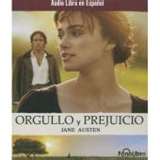
When the vocabulary CDs started teaching me selva, jungle, and estrangular, to strangle, I figured I was up for Bridge on the River Kwai. I added commandante, Commander, and esculpa–to escape. If we were kidnapped, I might be able to figure something out. Even though the story is dramatic, we found it laughable to hear Japanese soldiers muttering "hola" and "alto (stop)."
Eventually, we added Spanish subtitles to the movies so I could follow the vocabulary by ear and eye. Sometimes they used different words, which only increased my knowledge base.
When the time came, I felt comfortable with a foreign tongue, though theres nothing like trying to figure out what to say to someone chatting in local colloquialisms. I tried my elephant line, which got laughs, but everyone's favorite, of course, came from Star Wars: "pueda la fuerza contigo."
You all know it and it pertains: "may the force be with you."
Hasta la vista!





March 6, 2012
Fish and Bitterness

I've long been interested in the concept of generational sin–a problem, usually like alcoholism or anger–that begins when one person makes a choice and the ripples from that poor choice reverberate all through the lives of family members.
Studies have demonstrated time and again the value of making moral choices not only for your own sake, but also for your family.
Curiosity about some of my family's challenges is what propelled me, personally, into a five-year genealogy study–I wanted to know the roots of odd family behavior.
As I peeled back the stories and interviewed far distant cousins, I learned family secrets that affect my family to this day. Some of the drama became more understandable when I realized that out of four grandparents, only one grew up with a mother. The other three great-grandmothers died when their children were much too young.
That explained a lot.
But one of the stories I unearthed astounded me because a simple menu non-selection made out of spite, has affected my entire life in a silly way.
I was raised in the port of Los Angeles. I married a Navy guy and have never lived far from the sea. And yet this girl who grew up in a fishing town smelling of tuna from the canneries, didn't eat fish.
One day I realized the reason why: my mother never cooked fish.
She never cooked fish because her mother, who grew up in a fishing village in Sicily, never cooked fish.
My grandmother never cooked fish because her father loved fish and she was angry her father refused to let her go to school. (1912 Sicily–he sent her to tailoring school instead and she had to learn to read and write on the sly).
So, I never learned how to prepare fish and we never ate it at home. When confronted with a scaly creature from the sea, I wrinkled my nose and turned away. All those tiny bones, that round eye, and the fishy smell. No thanks.
But when I learned the reason for distaste, I changed my mind. My life and that of my children should not be limited just because my great-grandfather was a bully. I needed to break the "generational curse."
I've now learned how to barbeque swordfish, bake salmon and make tuna salad for sandwiches. I feel triumphant every time.
My children eat fish now.
And I always order it at a restaurant.
Do you have something small and seemingly insignificant in your life that may have a curious root?
Or, can you see how your attitude on a possible minor matter could affect your grandchildren?
How do people break generational curses?





March 1, 2012
On Computer Death and Other Anticipated Hardships
 My Facebook post summed it up best: We hauled the corpse into the store where it was pronounced DOA. Happily we were able to confirm we're saved. No attempts to resurrect. This apple was rotten to the core.
Because it held 6,000 photos, the potential crash of that Mac was of great concern. We already were on our second hard drive and we'd lost all the 2009 Europe photos (except the ones posted on Facebook) when the first one went down. But after considerable trial and error, we copied them onto an auxiliary hard drive and I could sleep at night.
When the screen began to routinely freeze last week, I asked my husband for a concerted effort to copy all the documents as well–particularly my current novel, 90% written, and all the data for the next novel.
He pulled it off. We were saved!
Raising children and running computers in our household over the last 29 years has meant lots of agony. Somehow, in ways no one could ever explain, every time a new game was loaded on the machines–something no doubt dedicated to keeping America safe from aliens–the need for more memory always seemed to mean MY writing got deleted.
It almost became a routine Victorian household drama: disbelief, crying, gnashing of teeth and Michelle to bed with vapors of indignation.
But, Mom, we destroyed all the aliens!
I can laugh about it now.
(As writer Mary Ellis once said, "you can't exactly dislike a child you've borne and bred, but you can have a very good try.")
My in-house engineer likes to remind me machines are fallible, you have to expect them to fail at some point and be prepared. I routinely e-mail my manuscript in progress to myself–AOL can keep track of it. I'd been worried about losing all the Civil War data I've collected for the next project and burned a CD of the material months ago. I mailed it to my researcher friend Kim, just in case.
Our PC is backed up every day to Mozy's cloud.
It's not just machines that can fail us, however, and we need to anticipate other problems.
I live in a high fire zone, one mile west of the San Andreas fault in California. I've copied family photos onto CDs and sent them to my brothers. I probably should upload them to Picassa or Picknik so they're available on the cloud should California disappear.
In the inside cupboard door above the telephone, I've posted a list: Things to Take in a Fire, in descending order of importance and with a note of where to find them in the house. I probably should run a fire drill to learn how much I can gather in 10 minutes.
Thankfully, so much information can now be stored on line, I'm not so worried about losing financial data, IRS records or even my passport photo, because it can be retrieved electronically now.
(Note on passport–I scanned the first pages of our passports and e-mailed them to myself. If I ever lose my passport ina foreign country, I just need to access e-mail again to prove who I am. I even have a copy on my I-touch. )
But perhaps the most important hardship is one I can count on: I'll die someday.
I take my vitamins, I go to the gym. I drink a lot of water and I've never touched a cigarette. I'm going to die one day, anyway.
Which brings me back around to resurrection and being saved.
I'm prepared. Are you? :-)
Any other tips on anticipated difficulties we can prepare for in advance?





February 23, 2012
Finding the Perfect Souvenir–or Maybe Not?
 "Trust me," said the plump woman behind the counter in a Queenstown's boutique. "You don't want to buy that sweater."
"Sure I do," I replied. "I want a fun souvenir from New Zealand and I can alway use a sweater."
"Unless you are a ridiculous kindergarten teacher, you will take that sweater home and wonder what you were thinking."
"I think it's funny. I love the irony." I couldn't believe I was arguing with a shopkeeper about purchasing something.
"I cannot let you buy this. It will reflect poorly on my country and you will look silly. Don't buy it."
The colorful sweater was a bit pricey, and she was correct I don't usually wear such bright colors. But still, it was funny.
"Don't waste your money," my husband said and I moved along, ultimately not purchasing anything for myself in New Zealand.
Ten years later, I know I made the right decision.
But how do you choose a suitable souvenir from a place you may never see again? And why DO we get caught up with local "crafts" while traveling and completely forget to use our brains?
Normally, I choose useful souvenirs. My favorite was the terrific beach towel we bought 30 years ago in Nantucket and fought over every time we went to the beach afterwards. It was a beautiful design, quality construction and a sensible reminder of a fun visit. I'd show you a photo, but we wore it out.
 Usually, I purchase small items you can't buy anywhere else, especially if I've got the adorable grandchildren in mind: a whistle from Nicaragua, an Olympics tee-shirt from Beijing. Lately, I've been buying pens with the city's name on it–San Francisco pens to hand out when I go, London or Paris pens to bring back for the family. I got a great deal on Raphael's angel umbrellas at the Uffizi art museum several years ago that were very popular. (But not so the pen with a photo of Michelangelo's David. "What will my boyfriend say?" asked the recipient, "I can't use a pen with a naked man on it!").
But every so once in awhile, insanity reigns. Two years ago, I debated the wisdom of purchasing a pair of bagpipes in an Edinburgh music shop. My daughter-in-law's eyebrows went up and she laughed, "sure, why not?"
Why not, indeed? I'm a musician. I like the reedy sound. I enjoyed hearing bagpipe music throughout the streets of Scotland and I don't have a lot of neighbors who would be troubled by the grinding, groaning sound of a plaid bagpipe.
 Should I get the real thing, or just the cheap tourist version for $10? If all else failed, I could give it to my adorable grandchild.
My daughter-in-law, meanwhile, was on a quest for small bottles of whiskey for her husband. Neither one of us knew how to choose, so we just went with the Hay family tarleton and the box of three different varieties–based on the cuteness of the bottle.
Hey, he was happy.
I sent my husband an e-mail about the bagpipes.
He laughed. So, I posted my question on Facebook: "should I buy some bagpipes?"
The usual suspects, fellow musicians in my Haugen quintet, all said, "sure," while sensible members of my family asked me if I had lost my mind.
I could not decide and finally examined the real thing, a good "instrument" rather than a piece of junk made in the aforementioned China. It was beautiful. The store owner produced a gorgeous sound.
Nah. We were at the beginning of our trip; I'd have to carry it all through Europe. I let it go.
Today, I'm glad I did.
So are the neighbors.
My mother always used her travels (118 countries before she died) to buy Christmas ornaments. We've got ornaments from all over the world on our tree every year as a result. Small, relatively practical and good reminders of pleasant visits. I like that idea, too.
All we need, now, is a New Zealand sheep to go with our bungee jumping Kiwi doll . . .
Tell me about a fun, silly souvenir you brought home from a trip. How do you choose? And do you ever regret what you brought home?





February 21, 2012
Writing for the Harried Reader
 I just took off a week from writing my novel, Bridging Two Hearts, because the adorable grandchildren came to stay. I knew my mind, heart and body would be occupied elsewhere and saw no need to pressure myself to try to finish my book in the tiny widgets of free time I might have.
As in, next to none.
I haven't picked it up in a week and once I'm done here, will nestle into my comfortable pink chair and return to Coronado Island and a massage therapist who is afraid of the bridge. Our hero, Josh, has picked up a couple more aphorisms or cliches, with which to torment Amy, the heroine, so this should be amusing–slipping them into the most (dis)advantaged spot in the text.
I haven't been down to chat with the boys in the basement to learn what they've come up with yet, but I have made several observations of my own. Finding time to read when you have toddlers in the house, a dog, a cat, a husband, a border, a job and laundry to do–can be a challenge. If this was my normal existence (it was for 30 years), what types of books would I want to read? I answered some of those questions on the Books & Such blog last Friday.
Time, of course, is of the essence.
A book needs to "hook" the reader from the minute she (for the sake of ease) sits down and opens it. In this google-brained world, activity needs to happen; chapters need to be relatively short and the story needs to move. Writers know how to craft sentences to keep the reader's mind from straying, and there usually needs to be some sort of question at the end of each chapter.
When I sit down with the manuscript for Bridging Two Hearts this afternoon, I'll be checking for those elements, along with the most crucial one: does the story work?
The harried reader doesn't want to waste time on a story that isn't meaningful. I need to make sure the discussion of fear doesn't drag down the plot and the ending resolves in a satisfying way.
It's all about the reader–what does the person who'll pay for this book really want?
Mine is a romance, so I know readers are looking for love, affection, cross purposes, and a happily ever after. Easy. That's what I like, too.
But I'm also writing to convey some truth–whether spiritual truth or life-truth. In this case, both, with a finger pointed at how to deal with fear.
I want my readers to laugh at Josh's foibles and understand Amy's frustration. I want them to enjoy Coronado Island's sunshine, and to experience–in writing– a massage at the Hotel del Coronado.
I want them to understand and appreciate the personal, physical and emotional sacrifices Navy SEALs make to defend our country.
All wrapped up in a 50,000 word novel they can read in a couple hours.
That doesn't sound too difficult, does it?
I've just printed it out. I'm about to find out if it works!
When you have a lot going on and only a limited amount of time to read, what type of a book do you like? What are you really looking for in a novel? And who does it the best? :-)