
Yanis Varoufakis's Blog, page 115
November 18, 2017
On the neo-Nazi Resurgence in Europe and why “ISIS Loves Donald Trump” – in conversation with Amy Goodman
AMY GOODMAN: You heard in this introduction the tax plan that has been put forward. And you’re here in this country, and this is your specialty. You’re an economist. You taught at what? University of Texas, Austin?
YANIS VAROUFAKIS: That is right.
AMY GOODMAN: And you’re at University of Athens now in Greece. You’re the finance minister, former finance minister in the Syriza government. President Trump calls this a Christmas gift for the American people. What is your assessment of it? And then, fit it into the picture of global capitalism.
YANIS VAROUFAKIS: He has a very interesting definition of the American people. He considers the set of the American people to be exactly the same as the set of his friends.
Look, it’s déjà vu. We’ve seen it all before. It all began in the 1980s under Ronald Reagan, this mass redistribution of income from the have-nots to the haves. We saw it under George W. We’re seeing it again. But there is a difference now. The difference is that American capitalism has exhausted its capacity to reproduce itself through a process of tax cuts — the trickle-up effect of wealth rising from the bottom to the top 0.1 percent. In the 1980s, when Ronald Reagan first applied this kind of tax cut-based policy, the United States was still in control of what I call the recycling of global profits and surpluses. The United States economy was, if you want, the engine of growth internationally. The tax cuts in this country were fueling demand for the net exports of Japan, back then, Germany, Holland, later China. And this was keeping capitalism globally in that state of irrational exuberance, if you remember.
But then, after 2008, those pyramids collapsed. The American economy does not have that capacity anymore. The increase of the federal budget deficit, that supposedly the Republicans are all against — nevertheless, they are going to boost it magnificently now — are at the very same time, Amy, as they are antagonizing China, that owns a large chunk of American public debt, which now they’re going to keep increasing in order to line the pockets of their mates. You couldn’t design a more catastrophic economic policy than that — boosting the budget deficit by lining up the pockets of the rich, continuing to stagnate the incomes of the middle class and the working class, and antagonizing your main creditors. I rest my case.
AMY GOODMAN: So, President Trump is headed to Asia, and he’s going to visit a number of countries. He’s going to start off by playing golf —
YANIS VAROUFAKIS: It’s very frightening, isn’t it? Yes.
AMY GOODMAN: — with Shinzo Abe in Japan, and he’s going to China, the country you were just talking about right now. The significance of all of this? And, of course, in the midst of this, you have the escalation of the crisis with North Korea. You have the pope just giving a speech saying we’re heading toward war.
YANIS VAROUFAKIS: Well, it’s a very dangerous game that the United States administrations of the last 10, 15 years have been playing, by antagonizing China through an alliance with Mr. Abe in Japan and his predecessors. It’s a very dangerous game, because — and, actually, very irrational game, because the United States completely and utterly depends on China. Let’s face it. The only reason why the 2008 collapse of the financial sector did not lead to a Great Depression in this country is twofold. One is the Fed, that kept printing money, and they’re floating the banking sector, Wall Street, down the road from here. And the other is China. The Chinese boosted their own credit production, their own bubble, credit bubble, in China, intentionally, from something like 140 percent of their total income, GDP, to 280 percent. They did this on purpose, because they were facing the prospect of an additional 40 million unemployed people. And by doing this, they stabilized American capitalism, to a very large extent. Now, we have an administration in Washington, DC, which simultaneously is ganging up with Prime Minister Abe in Japan against China while increasingly needing China to keep rebalancing the global and the American economy. This is precisely what the global economy and the American economy do not need.
AMY GOODMAN: I want to ask you something about language. I mean, you’re here in New York, not far from Zuccotti Park, where, what, six years ago was the massive protests, Occupy Wall Street. They changed the language. You say the word “1 percent,” you say “99 percent,” everyone knows what you’re talking about. So I want to talk about the language used now around the tax bill. We use language like “tax cuts,” “tax relief.” But is there another way to describe, to refer to the one-and-a-half trillion dollars in austerity?
YANIS VAROUFAKIS: Class war. It’s an out-and-out class war waged against the poorest, the weakest, the disenfranchised — the very same people that Donald Trump appealed to in order to get elected.
This piece was reprinted by Truthout with permission or license. It may not be reproduced in any form without permission or license from the source.
Amy Goodman is the host and executive producer of Democracy Now!, a national, daily, independent, award-winning news program airing on more than 1,100 public television and radio stations worldwide. Time Magazine named Democracy Now! its “Pick of the Podcasts,” along with NBC’s “Meet the Press.”


Εκδικητικός, γεμάτος μικρότητα, νεο-αντι-φιλελευθερισμός – ΕφΣυν 18 Νοεμβρίου 2017
Όταν τα στοιχεία της Φύσης, το νερό και η φωτιά, ξεσπούν εναντίον των ανθρώπων, το ξέσπασμά τους σκοτώνει συστηματικά φτωχούς ανθρώπους.
Ποτέ δεν ανασύρθηκαν δεκάδες πνιγμένοι από την Εκάλη ή τη Βουλιαγμένη. Ποτέ δεν συνέβη να δούμε σορούς καμένων στο ακριβό Χόλαντ Παρκ, όπως εκείνες τις σορούς δεκάδων κατοίκων της παραμελημένης εργατικής πολυκατοικίας Γκρένφελ που τους κατάπιε η πυρκαγιά πριν από λίγους μήνες στο Λονδίνο.
Ταξική βροχή; Ταξική φωτιά; Οχι βέβαια. Απλά, αβάσταχτα ταξικές κοινωνίες.
«Τι το καινούργιο;» «Τι το πρωτότυπο;» μπορεί να αναρωτηθείς εύλογα αναγνώστη. Οι φτωχοί πάντα ζούσαν στα παραπήγματα που η Φύση τα συμπαρέσυρε όταν θύμωνε με μια ανθρωπότητα που αγνοεί τους κανόνες της (μπαζώνοντας τα ρέματά της, στοιβάζοντας εκατοντάδες σε εύφλεκτες τρώγλες, δηλητηριάζοντας την ατμόσφαιρα με αποτέλεσμα να αυξάνεται η θερμοκρασία και να φουσκώνουν οι θάλασσες κ.λπ.).
Κι οι ισχυροί, οι κατέχοντες, πάντα ζούσαν σε ασφαλή κτίσματα, σε στέρεα, στεγνά εδάφη την ώρα που οι πολιτικοί τους αντιπρόσωποι έκαναν τα πάντα για να αποδυναμώσουν τις όποιες μορφές αντίστασης των φτωχών στις πολιτικές που τους καταδίκαζαν στη «μοίρα» τους.
Κι όμως. Αν και αυτή η πραγματικότητα ίσχυε προ αμνημονεύτων χρόνων, κάτι άλλαξε, κάτι είναι καινούργιο: η ανάδυση μιας παράλογης εκδικητικότητας των ισχυρών απέναντι στους αδύναμους. Αυτό είναι το πραγματικά νέο που φέρνει στον μισανθρωπισμό των ταξικών κοινωνιών μας η παγκόσμια κρίση του 2008, η οποία συνεχίζεται με αμείωτη ένταση λαμβάνοντας νέες εκφάνσεις καθημερινά.
Οταν η Μάργκαρετ Θάτσερ σήμανε (υπό τον ιδεολογικό μανδύα του λεγόμενου νεοφιλελευθερισμού) τη γενικευμένη επίθεσή της στις μεταπολεμικές κατακτήσεις των αδυνάμων (π.χ. συλλογικές διαπραγματεύσεις υπό την αιγίδα ισχυρών συνδικάτων, φτηνές και καλής ποιότητας εργατικές κατοικίες, δωρεάν πρόσβαση στα πανεπιστήμια), το έκανε για συγκεκριμένο σκοπό, ο οποίος, ανεξάρτητα πώς τον κρίνουμε πολιτικά ή ηθικά, είχε μια λογική.
Οσο η Σοβιετική Ενωση μαγνήτιζε το φαντασιακό των φτωχών της Ευρώπης τα πρώτα μεταπολεμικά χρόνια (π.χ. με την παροχή κοινωνικών υπηρεσιών υγείας, παιδείας, θέσεων εργασίας), η βρετανική άρχουσα τάξη αποδέχθηκε (με μεγάλη διστακτικότητα, βέβαια) την ανάγκη για υποχωρήσεις στο κοινωνικό κράτος και στον ρόλο των συνδικάτων.
Στα τέλη όμως της δεκαετίας του 1970, δεδομένης (α) της συρρίκνωσης της κερδοφορίας των πλουσίων και (β) της απαξίωσης του «υπάρχοντος σοσιαλισμού» στα μάτια ακόμα και των λαϊκών στρωμάτων της Δύσης, η άρχουσα τάξη της Βρετανίας δεν έβλεπε γιατί έπρεπε να συνεχίζει να μοιράζεται με τους αδύναμους μέρος της υπεραξίας «της».
Η κ. Θάτσερ, ως γνήσια εκφραστής αυτής της τάσης, κήρυξε πόλεμο βαθιά ταξικό στην οργανωμένη έκφραση της εργατικής τάξης, των αδυνάμων. Μέσω στυγνών πρακτικών, κέρδισε κατά κράτος. Εφαρμόζοντας την τακτική τού «αν θες να εξολοθρεύσεις τα ψάρια άδειασε τη γυάλα», με σκοπό να εξολοθρεύσει τα συνδικάτα μετάλλου και άνθρακα, δεν δίστασε να κλείσει για πάντα τα εργοστάσια παραγωγής χάλυβα και τα ανθρακωρυχεία.
Επρόκειτο για ταξικό, ολοκληρωτικό πόλεμο, με κυνική και αδυσώπητη χρήση των δυνάμεων κρατικής καταστολής, από τη μία, και των μέσων μαζικής παραπληροφόρησης, από την άλλη. Οι οπαδοί της Θάτσερ, που θεωρούσαν τα συνδικάτα και όλες τις μορφές οργάνωσης της εργατικής τάξης ως τον «εσωτερικό εχθρό» (σ.σ.: πρόκειται για έκφραση της Σιδηράς Κυρίας), τον γιόρτασαν ως την απαρχή μιας βρετανικής ανάκαμψης από τη μεταπολεμική παρακμή της χώρας. Οι της αντίπερα ιδεολογικής όχθης τον καταδικάσαμε ως πισωγύρισμα στη Βρετανία του Ντίκενς.
Δεν θα ασχοληθώ εδώ με το ποιος είχε δίκιο. Ο,τι και να πιστεύει κανείς για εκείνον τον πόλεμο, είχε τη λογική του: την ανατροπή της μεταπολεμικής κοινωνικής ισορροπίας υπέρ των πλουσίων μέσω μιας ιστορικής ήττας συνδικάτων και άλλων συλλογικοτήτων των φτωχότερων.
Και ύστερα; Υστερα, η πλήρης επικράτηση των ισχυρότερων των ισχυρών, π.χ. των τραπεζιτών, αποχαλίνωσε τον βρετανικό και, αμέσως μετά, τον ευρωπαϊκό καπιταλισμό – καθώς το μοντέλο της κ. Θάτσερ ξεπατικώθηκε πλήρως στην ηπειρωτική Ευρώπη (με πρωτοστατούσα την Ευρωπαϊκή Επιτροπή).
Αποτέλεσμα αυτής της αποχαλίνωσης ήταν οι πυραμίδες χρέους και οι «φούσκες» που έσκασαν το 2008 με αποτέλεσμα μια νέα φάση στον ταξικό πόλεμο εναντίον των αδυνάμων – με τη λιτότητα ως το όπλο μαζικής καταστροφής που εξασφάλισε την κυνικότατη μεταφορά των ζημιών της άρχουσας τάξης (ιδίως των τραπεζών) στους ώμους των ισχνότερων πολιτών.
Ως εδώ «καλά». Λογικά όλα αυτά, όσο τρισάθλια και να ήταν. Ομως κάπου εκεί, στα 2010 (το γενέθλιο έτος της ελληνικής καθίζησης) παρατηρούμε μια νέα τάση των ισχυρών: αντί για τον ολοκληρωτικό, ορθολογικά μισανθρωπικό ταξικό πόλεμο της Θάτσερ, παρατηρούμε ακολουθία πληγμάτων επί των ανίσχυρων, επί των φτωχών, άνευ μιας σοβαρής ταξικής λογικής.
Πλήγματα που τα χαρακτηρίζει η χωρίς λόγο βαθιά κακία, η στενομυαλιά, εν τέλει η μικρότητα. Τα παραδείγματα πάμπολλα. Θα αναφερθώ μόνο σε τέσσερα· αρκούν όμως για να σκιαγραφήσουν τη νέα ιδεολογία των εχόντων: εκδικητικός, γεμάτος μικρότητα, νεο-αντι-φιλελευθερισμός.
Μια και αναφέρθηκα στη Βρετανία, το πρώτο παράδειγμα έρχεται από εκεί: η φόρμα που πρέπει να συμπληρώσουν οι άνεργοι ή οι εργαζόμενοι φτωχοί για κάποιο επίδομα και η οποία περιέχει υπεύθυνη δήλωση την οποία υποχρεούνται να υπογράψουν.
Το κειμενάκι της δήλωσης αναφέρει μεταξύ άλλων: «Δηλώνω ότι υπαίτιος για το γεγονός ότι χρειάζομαι βοήθεια είμαι μόνο ο ίδιος. Το μόνο μου εμπόδιο στη βελτίωση των συνθηκών μου είμαι εγώ». Πρόκειται για αποκρουστική δήλωση μετανοίας του φτωχού για τη φτώχεια του, στερούμενης καν ταξικής λογικής. Μόνος στόχος της είναι ο εξευτελισμός του φτωχού, ο αυτο-διασυρμός του ως προαπαιτούμενο για το επίδομα.
Τα επόμενα δύο παραδείγματα βγαίνουν από συζητήσεις που είχα με κορυφαίους τροϊκανούς το 2015 και αφορούν το ΕΚΑΣ και τα φαρμακεία. Ηταν εντυπωσιακή η απέχθεια που ζωγραφιζόταν στα πρόσωπά τους όταν αναφέρονταν σε αυτό το μικρό επίδομα στους φτωχότερους των συνταξιούχων μας.
Η πλήρης αναντιστοιχία μεταξύ της συνολικής δαπάνης για το ΕΚΑΣ και της μανίας τους να το καταργήσουν δεν συνάδει καν με την ταξική λογική τους. Οπως δεν συνάδει η άλλη τους μανία, να μπει λουκέτο στα συνοικιακά φαρμακεία της χώρας ή στα ανεξάρτητα βιβλιοπωλεία. Εκεί που η Θάτσερ στοχοποιούσε πραγματικά κραταιά συνδικάτα, τα οποία με τη δράση τους στερούσαν από την άρχουσα τάξη σημαντικό μέρος υπεραξίας, το ΕΚΑΣ και τα φαρμακεία μας αντιπροσώπευαν ψίχουλα. Προς τι το μένος των τροϊκανών;
Η απάντηση είναι τόσο απλή όσο και αποκρουστική: Δεν άντεχαν τον συμβολισμό του ΕΚΑΣ επειδή στερείται αγοραίας λογικής, «ανταποδοτικότητας». Δεν μπορούν να δεχτούν ότι στην Ελλάδα έχει «κολλήσει» η διαδικασία προλεταριοποίησης των φαρμακοποιών οι οποίοι, αντί να εργάζονται υπάλληλοι σε μια πολυεθνική αλυσίδα, εξακολουθούν να διατηρούν (με τη βοήθεια του κράτους) ανεξάρτητη, μικρή επιχείρηση.
Το τελευταίο παράδειγμα έρχεται από το πρόσφατο νομοσχέδιο-δώρο στον ΟΠΑΠ για τα VLT – «φρουτάκια». To 2015 είχα επιβάλει μέγιστο όριο ημερήσιας ζημιάς ανά μηχάνημα τα 80 ευρώ με στόχο την προστασία των φτωχών (μια και οι πλούσιοι τζογάρουν σε πολυτελή καζίνα), τους οποίους ο ΟΠΑΠ στοχοποιεί για να τους στερήσει όσο έχει μείνει από μια πενιχρή σύνταξη ή έναν κουτσουρεμένο μισθό.
Μετά την παραίτησή μου, το όριο ανέβηκε στα… 500 ευρώ ημερησίως. Πριν από μερικές μέρες, νέο νομοσχέδιο ορίζει πως το όριο θα τίθεται από τον ίδιο τον παίκτη! Δηλαδή, το θύμα των φρούδων ελπίδων, του πυρετού του τζόγου, ο συνταξιούχος (ή ο εγγονός του που πήρε τη σύνταξη του παππού για να την παίξει) θα… αυτοπροστατεύεται καθώς το κράτος νίπτει τας χείρας του.
Πρόκειται για άλλο ένα πλήγμα στον αδύναμο ήσσονος ταξικής σημασίας. Είναι σαν τρόικα και κυβέρνηση να ομολογούν: τους χτυπάμε επειδή μπορούμε.
Συνοπτικά, η ολιγαρχία έχει περάσει από τον ολοκληρωτικό, διεκδικητικό ταξικό πόλεμο (π.χ. Θάτσερ) σ’ έναν διακατεχόμενο από απίστευτες μικρότητες εκδικητικό νεο-αντι-φιλελευθερισμό. Το μόνο καλό είναι ότι, ίσως, αυτή η «μετάβαση» είναι ο προπομπός μιας νέας φάσης αντίστασης των κοινωνιών στον άκρατο μισανθρωπισμό.
November 14, 2017
Aus den Schaltzentralen der europäischen Macht: Yanis Varoufakis erzählt “Die ganze Geschichte” – video DAS ERSTE-ARD
Als griechischer Finanzminister löste Yanis Varoufakis 2015 eine der spektakulärsten und kontroversesten Auseinandersetzungen der jüngsten politischen Geschichte aus, als er versuchte, die Beziehung seines Landes mit der EU neu zu verhandeln. Trotz massiver Unterstützung, nicht nur in der griechischen Bevölkerung, sondern auch in der Obama-Administration, bei konservativen britischen Ökonomen, bei Emmanuel Macron, der damals noch französischer Finanzminister war und sogar bei Christine Lagarde, der Chefin des IWF, hat sich Varoufakis mit seinen Analysen und Konzepten nicht durchsetzen können. Dabei sind sie, bei aller Komplexität, bestechend logisch und einfach.
Um das Video anzusehen, klicken Sie hier
Stattdessen blieb das Image eines Rock’n’Rollers, der sich auf der politischen Bühne verirrt hatte. Er, der Wirtschaftsmathematiker und Spieltheoretiker, wurde als Zocker hingestellt, der vom politischen Geschäft keine Ahnung habe – ein Linker, der mit seinen schönen theoretischen Ideen spätestens an Wolfgang Schäuble scheitert und sein Land nur tiefer in die Schuldenkrise gerissen habe. Nun legt Yanis Varoufakis einen spannend geschriebenen 500-Seiten Bericht über diese Zeit vor, ein Protokoll der EU-Krisenpolitik aus intimster Nähe, wörtlich aufgezeichnet mittendrin im Zentrum der politischen Macht.
Zig Milliarden für ein bankrottes Land
Was passiert mit unserem Kontinent? Was wird aus Europa? Wir besuchen den größten Anhänger der Europäischen Union. Und den schärfsten Kritiker ihrer fehlerhaften Konstruktion. Yanis Varoufakis hat einen Politthriller geschrieben, ein einzigartiges Zeitdokument aus dem innersten Zentrum der europäischen Macht. “Ich kann Ihnen versichern, wenn ich unterschrieben hätte auf der gepunkteten Linie und mehr genommen hätte von Euren Milliarden, dann wäre ich sofort wahrgenommen worden als verantwortungsvoller Finanzminister, der es hinkriegt, seine theoretischen Vorlieben zu überwinden und wäre mit Respekt behandelt worden”, sagt er.
Er fand es wahnsinnig, zig Milliarden neue Schulden zu machen, die sein Land nie würde zurückzahlen können. Sein Land sei bankrott, hatte er gesagt, und das sollte die EU anerkennen.
“Ein Spiel, das nur Verlierer produziert”
Gerade ist sein Buch in Griechenland erschienen. Zur Präsentation kommt der bedeutendste Filmregisseur des Landes, die Kinolegende Costa Gavras. Er will Varoufakis Whistleblower-Bericht verfilmen. In dem alle nur das Beste wollten, am Ende aber eine Tragödie herauskam.
“Wenn man ein Spiel entwickelt, das nur Verlierer produziert, dann können die Personen, die in dem Spiel gefangen sind, nur in eine Tragödie laufen. Man sollte nicht die beteiligten Personen beschuldigen, schuld sind die Regeln des Spiels, dieses grausamen Spiels, das gespielt wurde. Die griechischen Rettungspakete, das war eine Monstrosität – diese unglaubliche Idee, den größten Kredit in der Menschheitsgeschichte zu geben an den bankrottesten Staat. Unter der Bedingung, dass die Einnahmen sinken und die Bevölkerung verarmt. Das soll Probleme lösen? Sinnlos! Und jeder, der an dieser Täuschung beteiligt war, an dieser Farce, wo sie von Effektivität reden, der Einhaltung von Regeln usw., wird am Ende mit einem sehr armen historischen Zeugnis dastehen, so Varoufakis.
Sie wollten radikale Reformen, neue Steuergesetze, aufräumen mit der schrecklichen Misere, die ihre oligarchischen Vorgängerregierungen hinterlassen hatten. Raus aus dem Schuldgefängnis, in dem die Kredite immer gigantischer und unbezahlbarer würden. Eine Umschuldung und einen Masterplan, um wieder wachsen und Schulden zurückzahlen zu können.
“Rettungspaket für Deutsche Bank und Paris Bas etwa”
Yanis Varoufakis hatte mit seinen Konzepten viele Unterstützer, konservative britische Ökonomen, die Obama-Administration und manchmal sogar Christine Lagarde, die IWF-Chefin. Aber er hatte auch mächtige Feinde. Den heimlichen Chef der Eurogruppe, Wolfgang Schäuble, Mario Draghi, den Chef der EZB und vor allem Jeroen Djisselbloem. Sie wollten einen Milliarden schweren Kredit an Griechenland vergeben, der – so Varoufakis – gar nicht für Griechenland bestimmt war: “Also gab es ein zweites Rettungspaket für die Deutsche Bank und die französischen Banken, wie Paris Bas, das getarnt wurde als ein Akt der Solidarität mit Griechenland. Sie sehen, das ist wie bei Macbeth, das ist wie Shakespeare. Wenn du einmal ein Verbrechen gegen die Logik begehst, dann begehst du ein zweites, um das erste zu vertuschen, und dann ein drittes.”
Varoufakis sagt, dass die Bundesregierung, nachdem sie während des Finanzmarktzusammenbruchs der Wall Street bereits 500 Milliarden Euro an Steuergeldern für die Bankenrettung vom Bundestag bewilligt bekommen hätte, nicht ein zweites Mal nach Bankenrettungsgeldern hätte fragen können.
“Das hätte für Angela Merkel und Wolfgang Schäuble bedeutet, dass sie vor dem Bundestag und ihren CDU Mitgliedern des Parlaments hätten gestehen müssen, dass sie gelogen haben”, so Varoufakis. “Dass es kein Rettungspaket für Griechenland gab, sondern dass es ein Rettungspaket für die deutschen und französischen Banken war. Und kein Politiker will so was tun, wenn er es vermeiden kann. Ich beschuldige Angela Merkel und Wolfgang Schäuble nicht. Von der europäischen Perspektive wäre es gut gewesen, wenn sie Führungsstärke bewiesen hätten. Ich mache ihnen keine Vorwürfe. Ich werfe unserer Regierung vor, dass sie es unterschrieben hat. Weil, wären wir standhafter gewesen, hätten wir den deutschen Bürgern in die Augen gesehen und gesagt: Sie zwingen uns, mehr von eurem Geld zu nehmen um vorzutäuschen, dass wir nicht bankrott sind. Bei sinkenden Einkommen und schwindender Fähigkeit, etwas zurückzuzahlen. Helft uns.”
“Was wir haben, ist eine Systemkrise”
Immer wieder beschreibt Varoufakis in seinem Buch, das die Hoffnungen seiner Regierung sich auf Angela Merkel richten, darauf, dass sie Wolfgang Schäuble doch noch zu einer vernünftigen Lösung überredet. Aber es kommt anders. Angela Merkel baut ein vertrauliches Verhältnis zu Alexis Tsipras auf und landet am Ende den entscheidenden Coup. Sie verspricht dem griechischen Regierungschef, dass sie Schäuble zurückzieht, wenn er Varoufakis entlässt. Damit hatte Varoufakis verloren.
Aber ihm ging es nicht nur um Griechenland: “Was wir haben, ist eine Systemkrise – so wie der Klimawandel. Klimawandel ist eine Krise für unseren Planeten, eine singuläre Krise. Aber sie hat viele Erscheinungsformen. Wir haben Waldbrände in Sibirien und Überschwemmungen in Australien. Aber wenn du es behandelst wie ein Problem von Überschwemmungen in Australien oder Feuer in Sibirien, dann hast du das Problem nicht verstanden. Und unser politisches Establishment in Europa legt Wert darauf, das Problem nicht zu verstehen. Konsequent und schon seit fast zehn Jahren. Und alle, Frau Merkel, die französische Regierung, die griechische Regierung hören nicht auf, vorzutäuschen, dass sie mit einer Krise des Systems fertig werden auf unsystematische Weise. Europa wird zerstört von zentrifugalen Kräften, die es zerreißen. Wir haben wachsende Fremdenfeindlichkeit, Rassismus in all unseren Ländern. Und die Europäer verlieren den Glauben in die europäische Union. Das ist der größte Verlust für uns alle.”
“Emigration unserer Jüngsten und Klügsten”
Für die Griechen besteht in der Zwischenzeit nur noch wenig Hoffnung, jemals aus der Schuldenspirale wieder raus zu kommen: “Die größte Gefahr für die Hoffnung ist ein Phänomen, das einzigartig ist”, so Varoufakis. Und das ist die Emigration unserer jüngsten und klügsten Jungen und Mädchen, Frauen und Männer. Das Establishment in Europa nennt das eine Erfolgsgeschichte. Wenn die Hälfte der Bevölkerung geht, dann nimmt die Arbeitslosigkeit natürlich ab. Bei uns bleiben die Alten und die lokale Mafia, die das hier ausbeutet. Das halte ich nicht für ein gutes europäisches Entwicklungsmodell.”
“Fehlerhafte Architektur der Euro-Zone”
Aber wohin steuert Europa? Es kann als Insel der Demokratie in der Welt nicht funktionieren, solange wir zwar eine gemeinsame Währung haben, aber keine gemeinsame Regierung, die sie steuert. Alle Hoffnungen liegen derzeit, auch für Yanis Varoufakis, beim französischen Präsidenten Macron: “Macron hat exzellente Ideen zur Europäisierung Europas, die identisch sind mit denen meiner paneuropäischen Bewegung DIEM 25. Aber: Das Herz der Probleme in Europa ist die Euro-Zone, unsere gemeinsame Währung. Bis wir das nicht geregelt haben, werden alle diese brillanten Ideen, dass wir unseren Kinder viele Sprachen beibringen und 20 paneuropäische Universitäten haben, alle diese Ideen werden scheitern. Wenn wir die wirtschaftlichen Probleme nicht überwinden, die durch die fehlerhafte Architektur der Euro-Zone verursacht werden und durch die Weigerung der Europäischen Union, anzuerkennen, dass es eine falsche Architektur ist.”
Varoufakis hofft darauf, dass wir die europäische Demokratie erneuern, bevor es zu spät ist.
Bericht: Edith Lange
Yanis Varoufakis “Die ganze Geschichte: Meine Auseinandersetzung mit Europas Establishment”
650 Seiten, € 30,00
Verlag Antje Kunstmann, September 2017
November 12, 2017
UK needs ‘Norway-style’ deal post-Brexit, says Varoufakis – The Irish Times
The UK should stay within the single market for five years after Brexit and Northern Ireland beyond that under “nominal” control from the UK, former Greek finance minister Yanis Varoufakis has said.
Speaking on a visit to Ireland, Mr Varoufakis, who was Greece’s finance minister in 2015, said Britain should apply for a five-year transitional arrangement to remain with the European Economic Area under “a Norway-style agreement” at the end of the three-year Brexit negotiations.
“That will give everyone a sigh of relief and an opportunity primarily for the House of Commons in London to debate amongst themselves what on earth they want to do in the post-Brexit world,” he told The Irish Times before appearing at the Kilkenomics economics and comedy festival in Kilkenny on Friday night.
Mr Varoufakis called on British prime minister Theresa May to end “these phony article 50 [Brexit] negotiations, which are not really negotiations” and to seek EEA status for five years to allow for the “restoration of sovereignty to the House of Commons”.
‘Impossible positions’
“If I were sitting here in Dublin, I would be pushing both Brussels and London in the direction of climbing down from their respective impossible positions,” said the 56-year-old economist.
A transitional model – similar to that Norway, which, as an EEA member, operates within the single market but is not a member of the EU – would be “ideal” for Ireland, Britain and Europe, he said.
Brexit negotiations were stuck in “a never-ending loop”, he said, and the only way Ms May can respect Brexit and create certainty was to secure the short-term EEA arrangement.
This would provide the EU and London with an opportunity “to alter their positions and come up with solutions that are now absolutely impossible”.
His “plan B” would involve telling London: “Either that, folks, or you have to accept that Northern Ireland is going to remain in the single market, and Mrs May, sort it out with the DUP.”
Ms May relies on the Democratic Unionist Party for a parliamentary majority at Westminster.
Beyond the five-year period, Mr Varoufakis said Northern Ireland could, with enough goodwill, remain within the single market with “nominal” jurisdiction and sovereignty from London.
“We need to be innovative,” he said. “We need to create new forms of sovereignty.”
Belfast Agreement
He described the Belfast Agreement as a “very innovative agreement” that allowed Northern Ireland to have “a complicated sovereignty regime.” By 2025 this could be taken further to allow Northern Ireland to remain long-term within the single market, he said.
Establishing a hard Border in Ireland would be “absolutely unheard of and despicable”, he said.
Assessing the state of the Irish economy, Mr Varoufakis said there were two Irelands: one connected to the booming tech sector and the other “going back to another cycle of boom and bust”.
Repeating his criticisms of Irish Government responses to the banking crisis, Mr Varoufakis described as “a major crime against logic” the State bailout of bondholders in banks that “were already dead and buried” and the Irish public being saddled with the debt.
“Even though we are in a boom situation, personally I cannot see how this legacy is going to augur well once the next downturn begins,” he said.
Click here for the original website.
November 9, 2017
How Trump rose to power (in 2’33”) – Business Insider video
Yanis Varoufakis, former finance minister of Greece and author of “Adults in the Room: My Battle with the European and American Deep Establishment,” explains that the rise of Donald Trump and the alt-right is a symptom of the failure of the establishment and liberal capitalism. Following is a transcript of the video.
Yanis Varoufakis: My name is Yanis Varoufakis. I’m a failed finance minister of a failed state called Greece. I’ve written a book, “Adults in the Room.”
Donald Trump is a symptom. He’s a symptom of the failure of the establishment. He’s a symptom of the failure of liberal capitalism to deal with a crisis of its own making.
In the European Union, the Euro crisis, which was a comedy of errors. Every time the great and the good in Europe in the European Union Council and the Eurogroup met since 2008, 2009, they compiled one gross error upon the next. The result being that now there is absolutely no leadership in Europe.
Angela Merkel had a splendid opportunity to be the leader that unites Europe, that turns us into United States of Europe, because effectively the moment you start unifying different disparate economies by means of a common currency, that should be a first step towards federation. Instead we are having the opposite process of fragmentation.
The alt-right, both in the United States and in Europe, is a symptom. It’s a symptom of our generation’s 1929, which of course took place in 2008, and of the establishment’s spectacular, colossal failure to deal with the challenges by this, first the financial sector collapse and secondly, inability of our market societies to rise up to the occasion and to find ways of recovering a kind of equilibrium between savings and investment so as to create the prospects and the jobs — good quality jobs – that are the only real antidote to the rise of xenophobia populism.
You’ve got to remember, we have to remember, that deflationary periods, like the 1930s, breed political monsters. So when the great and the good, and the Obama administration has a share of this blame, failed to deal with the crisis that started in 2008, failed to boost investment in things that humanity needs and things that can restore hope, effectively created the circumstances for their own demise and for the rise of the Donald Trumps and the Marine Le Pens and the xenophobic, racist populace around the so-called civilized world.
November 8, 2017
“BREXIT: What must be avoided and what must be done, now!” – Speech at the Royal Society, London, 7 NOV 2017
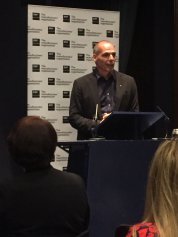 No venue is better suited for a detoxifying discussion on Brexit than The Royal Society, whose motto (Nullius In Verba – On No One’s Word) ought to be the foundation of all rational debate. I was, thus, moved and deeply honoured by the EEF’s (*) invitation to deliver their annual lecture on Brexit in The Royal Society.
To listen to the talk, which I delivered in the evening on 7th November 2017, click media player below
https://www.yanisvaroufakis.eu/wp-content/uploads/2017/11/Royal-Society-Audio-08112017-18.21.mp3
November 5, 2017
Η Ευρώπη είναι το «πρόβλημα», αλλά και η «λύση» – ΕφΣυν 5 Νοεμβρίου 2017
Tο πολιτικό και οικονομικό μοντέλο στη βάση του οποίου οικοδομήθηκε η Ευρωπαϊκή Ενωση την περίοδο 1950-2000 κατέρρευσε φυσιολογικά με την τραπεζική κρίση του 2008. Η μετέπειτα ραγδαία υποχώρηση της εμπιστοσύνης των Ευρωπαίων προς την Ευρωπαϊκή Ενωση, καθώς και η καθίζηση του πολιτικού «κέντρου» δεν ήταν παρά τα φυσιολογικά συμπτώματα αυτής της φυσιολογικής κατάρρευσης.
Στον οικονομικό τομέα η χρεοκοπία των τραπεζών (2008-2009) ανέδειξε τη σαθρή θεμελίωση της ευρωζώνης καθώς τα κράτη (χωρίς κεντρική τράπεζα που να δικαιούται να τα βοηθήσει) ανέλαβαν τη διάσωση των τραπεζών με δανεικά ποσά που απλά δεν είχαν τη δυνατότητα να αποπληρώσουν. Ετσι η τραπεζική χρεοκοπία έφερε τη χρεοκοπία κρατών που, για να λάβουν τα μη βιώσιμα δάνεια εκ μέρους των τραπεζών, αποδέχτηκαν όρους λιτότητας οι οποίοι συρρίκνωσαν τις επενδύσεις και συνεπώς εκμηδένισαν και την τελευταία ελπίδα αποπληρωμής τους.
Στον πολιτικό τομέα ο συνδυασμός
α. της γιγάντιας ποσότητας χρεών που φορτώθηκε στους πολίτες,
β. του αποπληθωρισμού που έπληξε τους μικρο-αποταμιευτές του ευρωπαϊκού Βορρά (λόγω πλεοναζουσών αποταμιεύσεων, που δεν επενδύονταν),
γ. της εξαφάνισης προοπτικών και θέσεων εργασίας στον ευρωπαϊκό Νότο (και εκεί λόγω των χαμηλών επενδύσεων) και
δ. της κατάργησης της λαϊκής κυριαρχίας επί της οικονομικής και κοινωνικής πολιτικής στις περισσότερες χώρες (βλ. τρόικα), απαξίωσε τη λεγόμενη «ευρωπαϊκή ιδέα». Πιο συγκεκριμένα έθεσε τέλος στον παραδοσιακό τρόπο οικοδόμησης της Ε.Ε. (μέσα από συμφωνίες των ελίτ, ερήμην των πολιτών) και κατέστησε το σύνθημα «Περισσότερη Ευρώπη» απωθητικό ακριβώς τη στιγμή που μόνο η Ευρώπη μπορεί να δώσει λύση στα προβλήματα που δημιούργησε το κατεστημένο της.
Μόνιμη κρίση χρέους
Η ισχυρότερη ένδειξη ότι ένα σύστημα, ένα καθεστώς, πνέει τα λοίσθια έρχεται όταν παρατηρούμε γιγαντιαία αναντιστοιχία μεταξύ (α) της πραγματικότητας και (β) της επίσημης εκδοχής της πραγματικότητας. Αυτό συνέβαινε τη δεκαετία του 1980 στη Σοβιετική Ενωση, το ίδιο συμβαίνει σήμερα στην Ευρωπαϊκή Ενωση.
Πράγματι, ποτέ στην ιστορία της Ε.Ε. δεν υπήρξε μεγαλύτερη σύγκρουση, μεγαλύτερη αναντιστοιχία, μεταξύ των πραγματικών οικονομικών δεδομένων και του κυρίαρχου αφηγήματος: το 2017, τη χρονιά που μονιμοποιήθηκε η ευρωπαϊκή οικονομική κρίση, είναι η χρονιά που το ευρωπαϊκό κατεστημένο γιορτάζει την… υπέρβασή της.
Το ότι η ευρωπαϊκή κρίση έχει πλέον μονιμοποιηθεί διαφαίνεται από δύο εντυπωσιακά ανησυχητικούς αριθμούς:
Τα 3 τρισεκατομμύρια ευρώ των «κόκκινων» δανείων» στην ευρωζώνη, δημόσιων και ιδιωτικών – δηλαδή χρεών κρατών και ιδιωτών που απλά δεν μπορούν να εξυπηρετηθούν.
Το 1 τρισεκατομμύριο ευρώ που «λείπουν» από τις τράπεζες της ευρωζώνης (σε τεχνικούς όρους, το ποσό που απαιτείται για την ανακεφαλαιοποίησή τους).
Παρά το γεγονός ότι από το 2015 η Ευρωπαϊκή Κεντρική Τράπεζα «τύπωσε» πάνω από ένα τρισεκατομμύριο ευρώ για να κρατήσει την ευρωζώνη εν ζωή (μετακυλίοντας τα χρέη τραπεζών, ιδιωτών και κρατών – πλην Ελλάδας βεβαίως!) αγοράζοντας έτσι χρόνο, οι δύο αυτοί αριθμοί παραμένουν αμετάβλητοι από το 2013, αποδεικνύοντας ότι η ΕΚΤ δεν μπορεί να λύσει το βαθύτερο πρόβλημα της χρεοκοπίας (το οποίο, προφανώς, δεν λύνεται με τη μετακύλισή του στο μέλλον).
Υπάρχει κι ένας τρίτος αριθμός που και αυτός παραμένει σταθερός από το 2013, επιβεβαιώνοντας ότι η κρίση έχει πράγματι μονιμοποιηθεί: τα περίπου 2 τρισεκατομμύρια ευρώ αποταμιεύσεων (πολιτών και εταιρειών στην Ευρωπαϊκή Ενωση) που δεν επενδύονται σε παραγωγικές διαδικασίες – χρήμα που απλά «γυροφέρνει» εντός του χρηματοοικονομικού συστήματος αλλά διστάζει να «μετατραπεί» σε μηχανήματα, έρευνα, νέες τεχνολογίες, θέσεις εργασίας.
Οσο αυτοί οι τρεις αριθμοί θα παραμένουν σταθεροί, η οικονομική κρίση θα κρατά καλά (ανεξάρτητα από το τι λένε οι μαζορέτες των Βρυξελλών) και θα υπονομεύει τις δυνατότητες της Ε.Ε. να παράσχει πραγματικές λύσεις σ’ ένα πρόβλημα το οποίο μόνο σε πανευρωπαϊκό επίπεδο μπορεί να επιλυθεί.
Δύο λύσεις
Από το 2010, αρχής γενομένης με το δικό μας μνημονιακό δάνειο, η «επίσημη» Ευρώπη επιδίδεται σε μια άπελπι προσπάθεια εξαπάτησης αγορών και πολιτών συγκαλύπτοντας την πολλαπλή χρεοκοπία μέσα από μη βιώσιμο δανεισμό και αδιέξοδες μετακυλίσεις χρεών. Εν έτει 2017 αυτή η προσπάθεια συνεχίζεται, αλλά με μια διαφορά: επιτέλους άρχισε μια συζήτηση για πραγματική επίλυση. Αυτό είναι το καλό μαντάτο. Το δυσάρεστο είναι ότι η συζήτηση αυτή φαίνεται να μην οδηγεί πουθενά, ιδίως μετά τις τελευταίες ομοσπονδιακές γερμανικές εκλογές.
Δύο είναι οι λύσεις που συζητιούνται, ιδίως μετά την εκλογή του Εμανουέλ Μακρόν στη γαλλική προεδρία:
1. Η ομοσπονδοποίηση της ευρωζώνης έτσι ώστε να αμοιβαιοποιηθούν τα χρέη και οι τραπεζικές ζημιές με αποτέλεσμα: (α) να «σπάσει» ο θανάσιμος εναγκαλισμός των χρεοκοπημένων κρατών και των χρεοκοπημένων τραπεζών της περιφέρειας και (β) να ενεργοποιηθούν οι πλεονάζουσες αποταμιεύσεις Βορρά και Νότου μετατρεπόμενες σε επενδύσεις.
2. Η ρευστοποίηση των «κόκκινων» δανείων του ιδιωτικού και του δημόσιου τομέα, ουσιαστικά το κούρεμα ή, πιο ευγενικά, η αναδιάρθρωσή τους.
Τη λύση της ομοσπονδοποίησης την έβαλε στο τραπέζι των ισχυρών ο πρόεδρος Μακρόν (με τον πρόεδρο της Ευρωπαϊκής Επιτροπής, Ζαν-Κλοντ Γιούνκερ, να συνηγορεί μέσω δικών του προτάσεων για το πώς η Επιτροπή «του» θα μπορούσε να μετεξελιχθεί σταδιακά στην ομοσπονδιακή κυβέρνηση της Ευρώπης). Πριν αλέκτορα φωνήσαι, το Βερολίνο απέρριψε μετ’ επαίνων τις προτάσεις Μακρόν για ομοσπονδοποίηση αντιπροτείνοντας τη λύση της ρευστοποίησης.
Πιο συγκεκριμένα, το Βερολίνο αντιπροτείνει τη μετατροπή του Ευρωπαϊκού Μηχανισμού Σταθερότητας (ΕΜΣ) σε μηχανισμό κουρέματος του δημόσιου χρέους σε περίπτωση χρεοκοπίας κρατών-μελών (δηλαδή αυτό που αρνούνται στην Ελλάδα από το 2010) και τραπεζικούς κανόνες που περιορίζουν τις δυνατότητες των τραπεζιτών μιας χώρας να δανείζουν την κυβέρνησή τους.
Τόσο η μία όσο και η άλλη «λύση» είναι καταδικασμένες, στη σημερινή συγκυρία, στην αποτυχία. Η γερμανική «λύση», την οποία υποστηρίζουν μετά μανίας τόσο το Κόμμα των Ελεύθερων Δημοκρατών (το FDP, το οποίο είναι σοϊμπλικότερο του κ. Σόιμπλε, με αποτέλεσμα να αναλαμβάνει το ομοσπονδιακό υπουργείο Οικονομικών) όσο και η νέα ολλανδική κυβέρνηση, αφορά την αποφυγή της… επόμενης κρίσης του ευρώ, χωρίς να απαντά στο τι θα γίνει με τις ήδη πτωχευμένες τράπεζες και τα κράτη που αδυνατούν να εξυπηρετήσουν το χρέος τους (ιδίως μετά τη διακοπή της πολιτικής αγοράς χρεών από την ΕΚΤ). Είναι ως εάν ο μόνος στόχος του Βερολίνου να είναι η άρνηση της πρότασης του Μακρόν.
Από την άλλη μεριά η πρόταση του Μακρόν, ακόμα και να γινόταν αποδεκτή από το Βερολίνο, αφορά μια τόσο ισχνή ομοσπονδία που δεν θα αρκούσε για να εξαλειφθεί ικανό ποσοστό των «κόκκινων» ευρωζωνικών δανείων (ιδιωτικών και δημοσίων) ώστε η Ευρώπη να υπερβεί την οικονομική και πολιτική της κρίση.
Η τρίτη λύση που προτείνει το DiEM25
Δεδομένου του παρατηρούμενου αδιέξοδου, η Ευρώπη είτε θα συνεχίσει να αποδομείται είτε θα υιοθετήσει μια τρίτη λύση, σαν αυτή που περιέχεται στη Νέα Συμφωνία για την Ευρώπη του DiEM25 και την οποία θα καταθέσουμε στην κρίση των Ευρωπαίων πολιτών στις επικείμενες ευρωεκλογές τον Μάιο του 2019:
1. Βραχυπρόθεσμα ενεργοποίηση της ΕΚΤ και του ΕΜΣ ώστε να αναδιαρθρωθούν τα δημόσια και ιδιωτικά «κόκκινα» δάνεια εντός των ισχυόντων κανόνων, με παράλληλη συμμαχία ΕΚΤ και Ευρωπαϊκής Τράπεζας Επενδύσεων ώστε να ενεργοποιηθούν οι πλεονάζουσες αποταμιεύσεις.
2. Εντός έτους μια πανευρωπαϊκή συμφωνία να χρησιμοποιηθούν τα κέρδη της ΕΚΤ και των λοιπών κεντρικών τραπεζών ώστε να χρηματοδοτηθεί πρόγραμμα καταπολέμησης της φτώχειας σε όλη την ήπειρο.
3. Μετά το 2019, εκκίνηση πανευρωπαϊκής διαδικασίας διαλόγου και από τα κάτω συγγραφής σχεδίου του Ευρωπαϊκού Δημοκρατικού Συντάγματος που απαιτεί η δημοκρατική ομοσπονδία, η οποία είναι η μόνη διέξοδος από την κρίση (οικονομική και πολιτική) της σημερινής ολιγαρχικής, βαθιά αντιδημοκρατικής Ε.Ε.
Παρά το γεγονός ότι από το 2015 η Ευρωπαϊκή Κεντρική Τράπεζα «τύπωσε» πάνω από ένα τρισεκατομμύριο ευρώ για να κρατήσει την ευρωζώνη εν ζωή, τα «κόκκινα» δάνεια και τα ποσά που απαιτούνται για την ανακεφαλαιοποίηση των ευρωπαϊκών τραπεζών παραμένουν στα ίδια επίπεδα από το 2013, αποδεικνύοντας ότι η ΕΚΤ δεν μπορεί να λύσει το βαθύτερο πρόβλημα της χρεοκοπίας.
November 3, 2017
On Catalonia, the Muslim Ban and a Sustainable World Order
We continue our conversation with economist and former Greek Finance Minister Yanis Varoufakis. His new book is entitled Adults in the Room: My Battle with Europe’s Deep Establishment.
On Nazi Resurgence in Europe & Why ISIS Loves Donald Trump – On Democracy Now tv
 We speak with former Greek Finance Minister Yanis Varoufakis about the rise of the far-right Golden Dawn party in his country and how their policies “have infiltrated the mainstream” in European politics, including anti-immigrant measures similar to those proposed by Trump. Varoufakis says Trump’s vow to crack down on immigration after the attack in New York City will only inspire more attacks, noting that ”ISISloves Donald Trump.”
On Global Capitalism & How Trump’s Tax Plan is Class War Against the Poor – On Democracy Now tv
President Trump and House Republicans have unveiled their long-promised proposal to reform America’s tax code, with Trump calling it a “big, beautiful Christmas present” for the American people. Critics say the gift is a tax cut for the richest Americans. We discuss the proposal with economist and former Greek Finance Minister Yanis Varoufakis, who argues, “It’s an out-and-out class war waged against the poorest, the weakest, the disenfranchised—the very same people that Donald Trump appealed to in order to get elected.”
Yanis Varoufakis's Blog

- Yanis Varoufakis's profile
- 2451 followers

