Gamal Hennessy's Blog, page 7
October 29, 2013
How Do We Choose the Books We Buy?
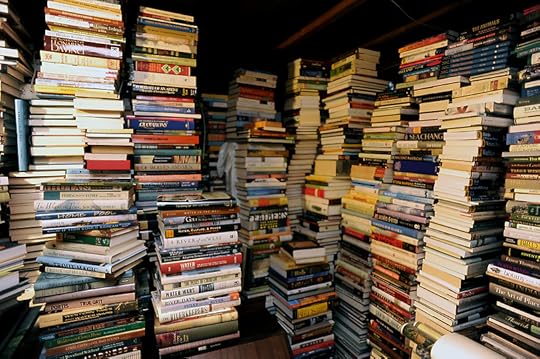
Independent publishers are constantly looking for ways to sell more books. But in our never-ending quest to sell, we might be missing an important part of the equation; buyer behavior. Without a buyer, selling can't happen so if we don't sell in a way that fits the way buyers buy, we might be shooting in the dark.
Market Evolution
In the past, people roamed book stores or read bestseller lists to find books. The arbiters of taste were few and selection was based largely on the inventory of our local bookstore. Amazon, Nook and their contemporaries have changed the game. That means we need to change our methods.
A Case Study in Book Buying
I will readily admit that I don't have a qualitative flowchart model on the modern consumer book buying process. If I did have one, I'm probably not smart enough to understand it. I do know how I buy books. I'm going to bet that my process is similar enough to other regular readers. We all have the enviable problem of too many books to read, not enough time to read them and everyone clamoring for our limited attention. Based on that, I'm going to extrapolate my experience as typical enough for this exercise. Please let me know if I'm way off the mark.
Disclaimer
Please keep in mind that I'm not suggesting that my process is better than anyone else or should be the standard in the way books are selected. This is simply a description of my personal method. My prejudices and biases are cooked into this, so it may not match your preferences at all.
How I Choose a Book
Based on my own observation, I currently have a four step process for buying a book. I'll refer to these steps as notice, choice, testing and purchase.
Notice
I don't buy books that I never see or hear about, so a book has to cross my radar and get noticed before I can consider it. As a reader and writer, there are several ways that I might notice a book. These are generally in order of influence:
Suggestions from Amazon based on my previous purchasesTitles on specific subjects that I search for on AmazonBrowsing physical bookstoresNews articles about books that pop up in my researchRecommendations from my favorite authors that I'm friends with on FBSuggestions from Good ReadsWhat doesn't work: There are many books that I notice and then reject because of the way I found out about them. I generally don't consider books:
on general bestseller lists, random social media messages that say "please check out my book", book review websites, book press releases social media comments that are simply thinly veiled attempts to add links for the author's book.book ads in newspapers, trains or on websitesChoice
After a book gets my attention, there are several factors that will influence whether I will give it a try. Sometimes this choice is subconscious and amorphous, but the selection factors include:
Seeing the name of an author that I have read and enjoyed beforeAn interesting cover designThe book blurbThe format the book is available in (paperback, e-book, audio book)The average rating for the book (if applicable)Things that don't work: In general, there are several factors that I know are supposed to influence my choice but don't. These include:
Any reference to other books the author wroteAny reference to the author being a "bestseller"Other readers specific reviews onlineExcerpts of critical reviews on the back coverGeneric elements of cover design (i.e. the ubiquitous male shadow running away from the White House or the Capitol Building for thrillers)Cliche elements in the book blurb (I read a lot of spy fiction, but I instantly stop reading the blurb when I find out the protagonist is "a burned out cop on the edge", "a maverick FBI/ CIA agent" or "the special forces soldier who answers only to the president")Testing
Once I weed out all the possible books I see, I get a sample of the book to see if the elements hinted in the blurb and the cover are actually in the book. Amazon's "try a sample" is a fantastic tool for this, but a couple times per year I'll grab a stack of books in B&N and peruse them for content. I read the first chapter and determine if the book needs to be acquired.
What doesn't work: Unless it's one of my favorite authors (See Bloody Inspiration 4: My Top Five Thriller Authors) with a strong blurb, I don't buy books without a sample. So when publishers don't make it available, I assume they don't want me to buy it.
Purchase
The decision to purchase is based on my level of excitement during the test.
Low excitement after testing means the book gets dropped. A moderate level of interest means the book will get put on the Amazon/ Good Reads wish list where it might be read later or not at all. A high level of interest means an immediate or impeding purchase and insertion of the book into my audio, e-book or print book cue. At that point the author has succeeded in making money off me. Whether I read more of their work later is based on my reaction to this book and the next thing they decide to write about.
What doesn't work: When a book feels like it's priced too high for my level of excitement, I have aborted purchases. I can buy a book on a whim for $5.99 or less. A price point of $9.99 is about as high as I will go for an e-book. Anything beyond that kills my interest. Also, limiting the format is another reason I'll drop a book. I rarely buy physical books anymore. My first preference is audio, then e-book, then paper. If the publisher insists on limiting my choices, I'll probably choose not to buy.
What I Plan to Change
After taking a long look at my own buying preferences, there are several things I plan to change in my marketing of A Taste of Honey. I had a process that I used for Smooth Operator (See Marketing the Independent Novel) that I'll modify as follows:
Offer the book on multiple platforms to increase potential noticeIncreased target ads to improve notice potentialIncreased advanced book reviews to increase positive choosingOffer the first quarter of my novel for free to encourage testingCompetitive pricing to increase potential purchaseElimination of Twitter feed purchases on launch dayElimination of book press releases on launch dayMy hope is by focusing on how I actually buy books, I will increase my chances of selling books.
What Do You Think?
Am I missing something in my thought process? Do you buy books in ways that I don't take into account? Do you sell books in a method that I don't mention? If you're willing to share your secret sauce, please leave a comment below.
Have fun.
Gamal


October 21, 2013
Hearts and Minds: How to Connect Your Readers to Your Story

One of my beta readers ended her analysis of my new novel with the following statement:
"I didn't really feel an emotional connection to the characters. I kept reading mostly because I really wanted to know what happened next."
While this isn't the most ideal situation, it does highlight something that writers should be aware of as they build their narrative. There are two ways for readers to connect with your story, one is intellectual the other is emotional.
Mental Connection and the Spoiler Alert
When you hook a reader's mind, they become invested in the outcome of your story. They want an answer to the universal question "How does this story end?" In the best case scenario, the events of your story are magnetic and hypnotic. Readers keep turning the pages long past their bedtime because they want to know what happens next.
The best way to understand this is to look at the concept of spoilers. The popularity of many books, movies and TV shows hinge on the mystery of the outcome. Some people feel their story experience is ruined if they find out the ending of the story before they see it unfold. In 2013, this can lead to extreme behavior as people avoid their social media, entertainment news and their real world friends to preserve the unknown quality of the story.
Emotional Connection and the Titanic Effect
There are some stories that don't need a mysterious or shocking ending. They are popular in spite of, or perhaps because, we know how the story will end. Stories that transfer the pleasure or pain of the characters to the reader have emotional resonance rather than mystery. A high level of both empathy (where the reader relates to who the character is and what they want) and sympathy (the reader wants the character to achieve their goals) creates that emotional bond that people return to over and over again.
Films often capture this idea best, and Titanic is the ultimate example. (Spoiler Alert!) Everyone who ever went to see that movie knows the boat sinks at the end. When the movie starts, you already know who lives and who dies. But people went to see the movie anyway. Hundreds of thousands of people saw it multiple times. It is one of the highest grossing films ever and it is based on an inherent spoiler. Holiday movies like a Christmas Story and classics like Casablanca tug on the emotions, but none of them have the effect of the sinking ship.
The Best of Both Worlds
Of course, as writers we would love to capture the hearts and minds of our readers at the same time. We want to create the mental curiosity that makes them blast through the book in one night and the emotional link that drives them to tell their friends far and wide about your genius. (See On Champions, Tastemakers and True Fans). The problem is that I don't have some kind of formula for doing that. My best guess is that creating a relatable protagonist in search of universal goals is the best way to capture heats. Putting that character in a complex conflict that creates true dilemma is the path that can capture minds. The art lies in weaving both together seamlessly, without cliché or a heavy hand. I'm still working on that part. Sometimes I hit the head, sometimes I hit the heart. Hopefully at some point I’ll hit the bull’s eye.
So what do you think? Is there another way to maintain a reader's connection to your book? How do you keep the pages turning and readers rooting for your characters? Feel free to share your comments below.
Have fun
G
P.S. If you'd like to get updates on the business, craft and lifestyle of independent publishing, please sign up for the Independent Publisher newsletter here
October 14, 2013
One Novel, Four Books: The Case for Episodic Novels

Question: How does the independent publisher maximize their writing output and maintain fresh exposure in the market?
Answer: You have two choices. You can quit your day job and spend every minute writing or you can release episodic novels.
According to several independent publishers that I've listened to over the past few weeks, releasing a novel in parts might be the best option. While there is some logic to this method, there are some potential drawbacks too. I'd like to explore the idea here to give you something to think about for your own books. Hopefully writing this out will also help me wrap my head around the idea too.
What is an Episodic Novel?
Let's say you wrote an amazing novel of about 75,000 words. In a standard novel, you release the whole thing at once. The story succeeds or fails in the market and you move on to the next project. This method has worked for books since Gutenberg launched his printing press start up and is a completely viable method today.
But the same story could also be an episodic novel. You could take the 75,000 story and break it into several smaller segments. It could be three sequential 25,000 word novellas corresponding to the beginning, middle and end of the story (See Build a Better Novel: The Narrative Framework). In extreme cases, you could have one release for each chapter, breaking your 75,000 word book into 20 or more short story releases. The final configuration is up to you and the appetite of your readers.
While it might sound strange, episodic story telling is standard in certain types of media. Television and comics are just two media models based on a story that develops over several episodes and then sold as a collection when the story is done. Movies also had this format in the past, where a hero would jump from one ten minute cliffhanger to the next. Many independent publishers are also starting to embrace this method, creating different positive and negative results.
The Benefits of the Episodic Novel
You increase the size of your catalog without having to write any faster.You create multiple points of entry in the market for potential readers to find you.You create anticipation among your established readers as they anticipate each new release.You can generate several revenue streams for the same story.You constantly have new product in the market which raises your chances for sales.Each shorter story can be priced lower than a full novel
The Downside of Episodic Novels
The cost of producing each novel increases, since you need to pay for marketing (See Marketing the Independent Novel) and cover design (See Judging a Book by its Cover) for several releases instead of just one. Your potential audience may shrink with each subsequent release if the narrative doesn't maintain the momentum to keep people coming back. Your writing style might not be conducive to natural breaks needed in episodic writingYour readers might balk at having to pay several times to get one story.
My Approach to Episodic Novels
My writing style lends itself to episodic writing. Working for companies like Marvel, and organizing my stories into a detailed plot structure (See Building a Better Novel: Plot Construction) works to my advantage here. I write so that each chapter and each act is a story in and of itself. It's connected to the larger narrative, but I try to make them able to stand on their own.
Based on that, I've decided to try the episodic approach with my next novel, A Taste of Honey (See Taste of Honey Beta Request) with the following plan:
Have the novel edited as one unit to keep some of the costs fixed (See How Much Does It Cost to Publish a Book)Separate the novel into three different books, making it clear in the subtitle that the books are relatedRelease the first book for free to attract new readers in February (See Selling Books like a Drug Dealer)Release the next two books one month apart (in March and April), focusing my marketing budget on one book at a timeRelease the entire story in print and e-book as a full novel, one month after the third book comes out. As an extra incentive, the full novel will be cheaper than buying all three books and will include an extra bonus short story.
Feedback
So what do you think as a writer? Does it make sense for you to release a standard novel or an episodic one?
What do you think as a reader? Do you want standard novels, or would you prefer smaller, cheaper releases over time?
Have fun.
Gamal
P.S. If you'd like to get updates on the business, craft and lifestyle of independent publishing, please sign up for the Independent Publisher newsletter here!
October 9, 2013
Sign Up Now for the Independent Publisher Newsletter!

Response to the new Independent Publishing Page (See Welcome to the Independent Publishing Page) has inspired me to expand the concept. Starting next week, I'll be posting a companion newsletter called the Independent Publisher.
If you'd like to sign up, just add your e-mail address here
What You Can Expect: The Independent Publisher will cover the business, craft and lifestyle of modern writing. It will include my own perspectives on the industry and well as links to news, blogs and podcasts that I feel will help you with your own writing. There will also be announcements about books on sale from my company, but that won't be the bulk of the coverage.
What You Wont Get: I have no intention of using the Independent Publisher for third party ads, book promotion or spam. I want this to be a resource and a forum where independent writers and publishers can share ideas. It might not the the Algonquin Roundtable, but most of us can't meet to discuss writing over a three martini lunch. (Wouldn't that be great, though?)
I hope you sign up for the newsletter. If there are any topics you'd like us to tackle or resources you think we should use, please let me know.
Have fun.
Gamal
October 2, 2013
Bloody Inspiration Part 4: My Top Five Thriller Authors

News of Tom Clancy's death today got me thinking about the writers who have consciously affected my craft. I'm sure that my writing has been influenced by dozens of writers on a subconscious level, but I'm going to stick to the ones that I'm aware of, because I don't want to spend hours in psychoanalysis just to write a blog post.
Here they are in order of importance to me:
1) Barry Eisler
Signature book: Winner Take All (Rain Storm)
Signature character: John Rain
The stories set in the John Rain universe resonate with detailed tradecraft and sudden violence. Eisler conveys a sense of realism that is missing from many testosterone driven espionage thrillers. He also delivers a sense of characterization and true character (See Creating Complex Characters) that is unique in a genre of cookie cutter assassins, maverick FBI agents and special forces tropes. If there is anyone I want to compare my books to, it's Eisler's.
2) John Le Carre
Signature book: Tinker, Tailor, Soldier, Spy
Signature character: George Smiley
Where other authors treat spies as modern day daredevil adventurers, Le Carre offers a vision of agents and case officers that is much more human. Flawed personalities, personal distrust and institutional apathy hover over everything in his work. But there is also a charm and a wit that he will use to turn a phrase or describe a situation that is amazing to experience, whether he is lifting you up or bringing you down. I hope one day to have both Le Carre's gift of language and his grounded characters.
3) Greg Rucka
Signature book: A Gentleman's Game (Queen and Country Book 1)
Signature character: Tara Chace
Rucka's Queen and Country story has found success both as a series of novels and comics. Rucka combines the bureaucratic infighting and troubled spies of Le Carre with the action and high body counts of James Bond. He also focuses on a female protagonist, something that is sadly rare in the espionage genre. Fortunately, I'm trying to change that with my novels.
4) Brian Azzarello
Signature book: 100 Bullets
Signature character: Agent Graves
Unlike everyone else on this list, Azzarello makes comics, not novels. But that doesn't diminish his craft in any way. 100 Bullets weaves crime, conspiracy, politics, sex, violence and social commentary seamlessly in a story that stretches from the discovery of America to the present. The visual nature of the story enhances the raw beauty of it in a way that prose can't accomplish on its own, no matter how much I try.
5) Tom Clancy
Signature book: A Clear and Present Danger
Signature character: Jack Ryan
Clancy's books don't really have a strong influence on my writing. I consciously avoid the type of highly technical descriptions that often left me confused and pulled out of the story when I read his work years ago. I also try to avoid the super patriotic undertones of good vs. evil that he fostered and the impossibly high, end of the world stakes that were common place in his books.
I do draw a lot of inspiration from the universe he created. It was through books like Patriot Games and The Sum of All Fears that I learned to appreciate the complex relationship between the US military and its intelligence services. His books taught me the importance of set ups and payoffs in a narrative that are pure art when done his way. Most of all, I constantly look to the work derived from the Ryan series and expressed in games like Rainbow Six, Ghost Recon and Splinter Cell. Clancy may not have invented Sam Fisher, but he is the godfather of the techno thriller and characters like Fisher couldn't exist without him.
So who are your favorite thriller authors? Who influences what you write and read today? I'm always looking for new authors, so please provide a book title if you can.
Have fun.
Gamal
See Also Bloody Inspiration Part 1: Twenty one films that have influenced my writing Bloody Inspiration Part 2: Ten inspirational comics Bloody Inspiration Part 3: Top Books for 2012
September 26, 2013
The Taste of Honey Beta Reader Request

I'm currently looking for beta readers for my second novel, A Taste of Honey.
If you're not familiar with the beta reading process, don't worry. Beta readers act as a focus group for books. They help the publisher predict audience reaction to a story by getting feedback from a small segment of the market (See On Using and Being a Beta Reader)
If you enjoy crime thrillers or spy stories, consider this premise:
A Taste of Honey
Nikki Siriene is a spy who uses seduction as her main tool of deceit. Her latest target is a shipping magnate suspected of running a huge weapons smuggling operation in Argentina.
Tempting a man is easy for Nikki. Dealing with his paranoid business partner and mysterious wife will make her assignment harder. Sabotage within her own team makes the mission dangerous. But it’s her divided loyalties and emotional vulnerability that could kill her.
If you're interested in being a beta reader for A Taste of Honey,please send an e-mail to gamalhennessy@gmail.com and I'll give you all the dirty details.
Thanks for playing.
Have fun.
G
September 24, 2013
Dreams, Blood, Sweat and Tears: The Four Stages of Novel Development

Since this is my 100th post on this blog, I think it makes sense for me to take a step back from the minutiae of independent publishing and look at my overall process from beginning to end. Hopefully, you'll find something here to steal for your own work, or at least look at your creative process a different way.
Like everything else I've done, this process isn't original. I've borrowed some elements from my days working at a Japanese animation studio and some ideas came from watching the creative process unfold when I worked at Marvel Comics. The workflow I use could be valid for creating all types of commercial entertainment, but I don't have enough experience to confirm that.
The Four Stages
Novel development at Nightlife Publishing has four phases: pre-production, production, post-production and launch. I'll try to describe each one in order and link to other relevant articles that I have posted.
Stage 1: Pre-Production (The Dreaming Stage)
This is where we think up stories. We gather ideas, follow inspiration and collect research for our half dreamed masterpiece. For those of us who plot, this is where the building blocks of the story are laid out. For those of us who don't plot, the writing might begin at the first spark of an idea. All of us see a work of art taking shape in the fog of our imagination.
Related articles:Building a Better Novel Part 3: Plot Construction
Building a Better Novel Part 2: The Narrative Framework
Building a Better Novel Part 1: The Foundation
How Much Inspiration Do You Need to Write?
Plotter vs. Pantser: Which Road Did You Choose?
Stage 2: Production (The Sweat Stage)
This is where the fantasy of ideas meets the reality of writing. Here, we wrestle with setting, characters, pace, plot, conflict, dialogue, language and the gap between expectations and results. Some of us produce a steady word count every day in a dedicated writing space. Others squeeze chapters out on our smartphones during our morning commute. This is the first major obstacle for a novel. Anyone can get an idea for a story. Fewer people have the stamina and willpower to forge an idea into a manuscript.
Related articles:Creating Complex Characters
The Secret Struggle for the Magic ItManaging Emotional Points of View
Stage 3: Post-Production (The Blood Stage)
The rough shaped gem we've mined from the depths of our subconscious needs to be honed before it will be a jewel that sits alongside other best-sellers. Self-editing, beta testing, professional editing, formatting and other quality control measures give our books a professional polish.
This can be a painful stage for two reasons. First, many of our cherished dialogue, characters and concepts might not survive this stage. Second, this is where the book transforms from a low cost creative expression to a project that costs money.
(Ouch. That's why I refer to it as the blood phase.)
Related articles:Using and Being a Beta Reader
Judging a Book by Its Cover How Much Does it Cost to Publish a Novel Anyway?
How to Find an Editor Without Going Insane
Stage 4: Launch (The Tears Stage)
At a certain point, our creation needs to leave the protective nest of our computer and rise or fall as a published work. We can help it along with marketing, advertising and social media, but at some point your readers will be alone with your work to measure it on its own merits.
This stage can produce two types of tears. You might experience tears of joy when you get good reviews, positive feedback, sales, fame, fortune and immortality. You might simply cry tears of pain because people reject your book, regardless of how much work you put into it. In my experience, both types of tears come with every book.
Related articles:Marketing the Independent NovelThe Modern Marketing Audience
Selling Books Like a Drug Dealer
Learning to Love the Bad Review
The Benefits of Rejection, Indifference, Ridicule, Hate, Envy, Exploitation and Insecurity for Writers
Manipulating the Process
The main reason I created a process for publishing my work is to improve efficiency. Each stage of the process requires a different level of time, energy and money. By spreading my work out across each stage, I can increase my library of titles without using up any one resource.
For instance, I currently have one novel that was recently released (launch stage), one novel that is going out to beta readers this week (post production), one that I'm 20% done with the first manuscript (production) and three books that are in various stage of development (pre-production). When time and circumstances permit, I flow back and forth from one project to another. Everything works out, as long as I'm always doing something but not trying to do everything at once.
Stealing a Good Idea
This process won't work for everyone. Some people won't have the time. Others might feel it is too industrial and counter to the way their creativity works. There's no problem with that. I put together something that works for me. If you'd like to steal it, be my guest. If not, I still make the same amount of money from posting this (i.e. nothing).
If you'd like to share your own publishing process, I'd like to hear it. I'm not above stealing a good idea.
Have fun.
G
September 16, 2013
Improving on Perfection: Self Editing the Independent Novel

Writing a novel is often a transcendent experience. Words flow from the writer onto the screen of their own free will. The author becomes possessed by their muse. The process itself might be a blur when you reach the last page, because your characters took you someplace that you never intended to go.
Once the dust settles and you regain your sanity, you need to go back and find out if your muse made any damn sense when it was in control. Very few books can go out into the world after the first draft (See Is the Self-Published Book Always Inferior?). I'm working on a self-editing process that will hopefully improve the quality of my work without collapsing into a cycle of endless rewriting. I have four levels of self-editing, each with its’ own form and function.
Step 1: Take a Step Back
The first thing I do after a novel is done is to leave it alone. This idea has been echoed by publishing icons like Stephen King and writing manuals of all types. We wait to give our brains a chance to distance themselves from the text. As soon as the book is done, you know what you wanted to say. If you try to edit too soon, you won't read what is on the page. You will read what you meant to write. This leads to missing all sorts of structural and narrative mistakes.
Other authors recommend rest times of anywhere from a couple days to a couple months. I wait four to six weeks, because that gives me time to put some projects in pre-production (See Building a Better Novel) and other novels in post-production (See Marketing the Independent Novel). By the time I go back to the manuscript, I'm anxious to rediscover the work, like an old friend I haven’t seen in a while. Step 2: Plugging Holes
When the words are flowing well in the first draft, I hate to interrupt myself to look up a bit of trivia. I also get ideas for events in later chapters that require setups earlier in the narrative. Whenever I reach one of those moments (and it happens quite a bit), I make a parenthetical note and keep going.
The first thing I do when I start to edit is deal with all these notes. I simply do a word search for every "(" and take the time to flesh it out. Sometimes it's something simple like looking up what kind car a character should be driving or what wine she should be drinking. Other times I have to find the proper place to insert a setup that will feel natural when the payoff comes later. When this step is done, the manuscript should have consistent details that help paint the picture in the readers mind.
Step 3: The Audio Review
The third and most important step for me is to read the story from start to finish out loud. I don’t mean silently to myself or mumbling under my breath. I read it out as if I were reading it to a crowd. Unless you are into improvisational theater, you might want to do this step in private.
Reading the story out loud helps in several ways:It reveals what is actually on the page, not what you think you wrote.It helps you see where you are telling instead of showing.It helps you focus on which character perspective you're working with at any given time to ensure you’re not inadvertently mixing them upIt helps you hear when sentences are too long, too convoluted or unclear.It helps you identify cases where you use the same word too often or if a particular word breaks the flow of the sentence.It helps you alter dialogue that doesn't sound natural or isn't the right voice for a particular character.It will show you if the story makes sense.
Out of all these steps, I've found this one to be the most helpful. It also takes the most time, so you need to be comfortable with the sound of your own voice. I love to hear myself talk, so this isn't a problem for me.
Step 4: Spell Check
The last major editing stage is a grammar check. At this point, you’ve probably dealt with most of the grammar and spelling issues in the previous stages, but it doesn't hurt to take one more pass. Spell check doesn't catch everything, but again, it doesn't hurt.
No Rewrites
The one editing step that I don't do is a rewrite the story. In my writing method (See Articles on the Craft of Writing) I plot out every beat in every scene before I sit down to write the manuscript. If a story fails (and many of them do) it fails in the pre-production phase, not after I spent months writing. After that, I trust the inspiration of the muse to see where the story goes. I have at least four novels scheduled for release in my publishing plan between 2012 and 2015. I don't have the time or the patience to rewrite an entire novel. The book might get crushed during the beta test (See On Beta Readers), but as a rule I don't second or third guess myself when it comes to the story.
Time Frames
The self-editing method I use takes about twelve weeks assuming a 50,000-75,000 word manuscript:Rest period: 6 weeksNotes: 1 weekAudio check: 4-5 weeks (assuming 20-40 pages per writing session)Grammar: <1 week
You might have more steps or different steps, but three months seems to be a reasonable period in an independent publishing program to polish a story before it goes deeper into post production.
Next Steps
Post Production in my company involves several steps after the self-editing:Beta Review (See On Beta Readers)Professional Editing (See Finding and Editor Without Going Insane)Cover Design (See Judging a Book by its Cover)
Each step polishes your novel until it is a work that you are proud to put your name on and release into the world. Self-editing isn’t the only quality check that you do, but it might be the most important because it allows you to solidify your vision before other eyeballs read your work. Only you can fully be sure of what your muse was trying to tell you during your creative trip. Self-editing can ensure you got the message.
So what editing techniques do you use? Comment below and let me know.
Have fun.
Gamal
September 12, 2013
Some Thoughts on the Life of the Independent Publisher

This is my last installment of the new independent publishing page (See: Welcome to the Independent Publishing Page). It collects the articles I've written about the mental, emotional and psychological aspects of going into independent publishing. This isn't always a fun or easy road, but for those who have the passion to write, nothing else will do.
Independent Publishing Life Articles
So You Wrote a Novel, Now What?
Do You Need to Quit Your Day Job?
Why Your Writing Routine is Like Your Exercise Routine.
How Do You Define a Successful Writer?
Learning to Love the Bad Review
The Other Benefits of Independent Publishing
The Artist's Struggle with Normal
Great Expectations
The Benefits of Rejection, Indifference, Ridicule, Hate, Envy, Exploitation and Insecurity for Writers
Next week I'll try to go back to original articles and offer something useful for you. Until then
Have fun.
Gamal
September 11, 2013
A Collection of Articles on the Craft of Writing

This is the second installment of my introduction to the new independent publishing page (See Welcome to the Independent Publishing Page). This compilation of articles covers the craft of writing:
Independent Publishing Craft Articles
Managing Emotional Points of View
Building a Better Novel Part 3: Plot Construction
Building a Better Novel Part 2: The Narrative Framework
Building a Better Novel Part 1: The Foundation
How Much Inspiration Do You Need to Write?
Plotter vs. Pantser: Which Road Did You Choose?Using and Being a Beta ReaderFictional Seduction in Five Easy Steps
Sex as a Window to the Soul
Creating Complex Characters
The Secret Struggle for the Magic It
Erotica as a Literary Pariah
I hope you find something that helps your writing.
Up next, thoughts about the life of the independent writer.
Have fun.
Gamal