Gamal Hennessy's Blog, page 9
July 7, 2013
A New Novel from Gamal Hennessy Called Smooth Operator Goes on Sale July 31st
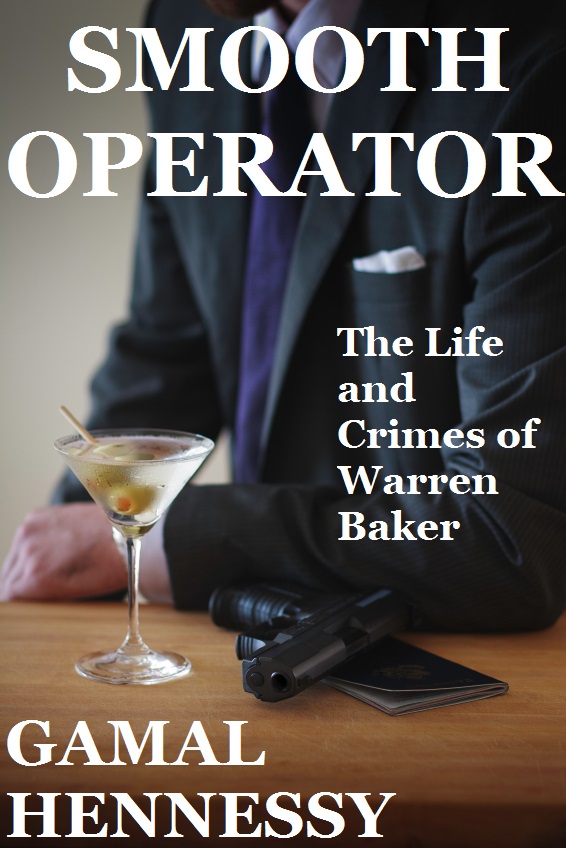
He knows what you want… Born into privilege, wounded by war, and skilled in the art of manipulation, Warren Baker works like a spider. He weaves plans and plots, drawing people into his web until they accomplish his goals without ever knowing he was involved.In some cases, his influence is as delicate as a woman's smile. In others, he is a blunt instrument ruthlessly pursuing his goals. All the stories reveal insights into this complicated man and his mysterious quest for power.
Smooth Operator is ultimately about our desires, and how they define us. From ambition to passion, from blood lust to vengeance, our motivations do more than shape what we are willing to do; they reveal who we are as people. When you are faced with a critical life choice, what you are capable of?The Kindle version of Smooth Operator will be FREE to Amazon Prime members beginning on July 31st, 2013. The sale price for the Kindle version is $2.99. The sale price for the paperback version is $4.99.Everyone who reviews Smooth Operator on the Amazon Page is eligible for a FREE GIFT! Details are coming soon.Have fun.Gamal


July 2, 2013
Building the Better Novel, Part Three: Plot Construction

I apologize for jumping between my essays on plot development (See Part 1: Foundation and Part 2: Framework) and independent publishing issues (See Finding an Editor and The Cost of Independent Publishing). In a perfect world, I would write these as two distinct series and not mixed together. In the real world, I'm releasing one novel and plotting another while a third manuscript waits for editing. I write essays based on what I'm working on at the time, hence the bouncing from one subject to another. The world of an independent publisher isn't perfect, but it is fun.
Before I got sidetracked, I broke down my plot development process into the foundation where the book is conceptualized and the framework where the broad outline of the book is laid out. The next step in my process is to add structure to the frame through the use of beats, chapters, and acts. By linking each one of these parts into the framework of the overall concept a plot can take shape.
The Beat
According to Robert McKee's Story, a beat is an process of action and reaction. For example, a man and a woman are having a pleasant dinner when, he gets down on one knee and proposes marriage. The proposal is the action. Her response is the reaction.
Not all beats need to be that momentous or interpersonal. A woman who decides to hit the snooze button instead of getting out of bed. The alarm is the inanimate action and her snooze is the reaction. If a man washes his car and it starts to rain, it is an extrapersonal action reaction of cruel irony.
The Chapter
Existence is full of random beats, but writers who plot use the beats to move the story forward. A chapter is a series of beats that alters the conditions or situation of the characters. In our dinner chapter above, we have the action of the proposal and her reaction of saying yes or no. This sequence of events changes the situation of the characters and moves the story. She says yes and he experiences marriage. She says no and he faces rejection. She says maybe and he faces doubt. Any way you slice it, his situation changes and propels the story forward.
There one thing I have been taught about chapters is that the condition of the characters has to change on some level. In screenwriting I've heard this referred to as "turning the scene". If everything is the same for the character at the end of the chapter as it is in the beginning, then the chapter does not move the story and is what's called non event that doesn't need to be in the story. For example, the shower that the man took before the proposal dinner and the ride he took to the restaurant don't move the story, so they are non events that can be skipped over. Putting in a non event kills the momentum and interest in the story in almost all cases.
Ideally, a chapter serves as a mini story with a beginning, a middle and an end. The characters are in one position at the start of the chapter. They move through beats and levels of conflict that are either internal, interpersonal, extra personal or all three at once. The situation at the end of each chapter becomes the beginning of the next chapter. It is similar to episodic television, where the overarching plot is broken down into smaller events that move toward the endgame. One of the reasons I started writing short stories before I tackled a novel was to get the feel of building a beginning middle and end in only a few pages (You can read some of my short fiction for here)
The Act
An act is a series of scenes that represent major milestones in a story. In the same way we discussed the beginning middle and end (See Framework), the acts can loosely represent this progression.
Story talks about absolute irreversible change between acts, where the level of conflict and the level of willpower and effort increases with each act, so that the protagonist can't go back to lesser effort or lesser actions in the pursuit of their desire. I don't know if this is true in all cases and genres, but I have adopted it for my use.
Most stories can be defined by the number of acts they have. A short story often has one. The novella has two. The novel has at least three. But some stories break this convention. Shakespeare's work often has five acts, Raiders of the Lost Ark has seven. You can have any number of acts that fit your work, but because of the beginning, middle, end concept, three is the norm for most novels.
How I Build a Plot
I layout my foundation and my framework in front of me to show where the acts are and where I'm going. Then I map out the chapters to show me how I'm going to get there. Next I build in the beats for each chapter with one sentence descriptions of action and reaction.Once I've gone through the whole story I work backwards.
I look at each beat and make sure it fits within the logical framework of the foundation of the story and its overall direction. I examine the structure of each chapter to figure out what goes where, what happens before or after something else and where the subplots, if any, need to go. Finally, I look at the acts and see if the pace and flow of the story works.At that point I make myself a drink because I have a plot.
There are certain things that I put in the plot and things I always leave out. The goal of the protagonist in each chapter is explicitly stated in each chapter of the plot. Their emotions as the beats move also gets written down. Any research I need to do, hints or foreshadowing that needs to occur, and implications for other chapters is duly noted. Description, dialogue or other spontaneous details don't go in the plot. I save that for later.
The plot is highly adaptable and fluid at this stage. New subplots and chapters can be added in. Many chapters can be split up, combined or thrown away completely. The beginning, middle and end can change quickly and easily. Anything can change if it serves the story. Characters sit next to you and offer their opinions. 'I would try to do this', 'I would never say that.' New connections are made and seeds are planted not just for this novel but for other stories down the line. It is like building with Lego. I've got a good idea of what it's supposed to look like, but I'm free to add, subtract and adapt.
Controlling Ideas
As the plot takes shape, the theme or controlling idea comes into focus. The controlling idea is the overall statement describing what they story is about. It is not just a stated value like love, truth or justice. It is a statement that states why a value undergoes change. Once I understand this idea, it will influence everything that I think of as I actually write the manuscript.
Write the Damn Book Already
Once the foundation has been established, the framework has been laid out and the plot has been based on that work, writing the book can actually happen. This three part preparation often takes time, but it makes the actual writing much easier for me. For my last manuscript it took about eight months of working on it off and on to go through all three steps. Writing the actual manuscript took six months or about 3,000 words per week. I still altered the plot while I was writing, but I never had writer's block or wrote myself into a place I couldn't get out of. I plan to start writing the next novel in January. It should be ready for beta reading by May.
I know this process isn't for everyone (See Plotter vs. Pantser). Many writers are struck with a flash of inspiration and rush to the computer. They write for as long as the Muse guides them and the results are based largely on spontaneous creativity (See How Much Inspiration Do You Need?). There is nothing wrong with that. This is the process that works for me. It's not better or worse, it's just different. If you find something here worth stealing, please be my guest. If not, at least you got some idea of how the other half writes.
Have fun.
G
June 27, 2013
Just How Much Does It Cost to Publish a Book Anyway?

One of the growing clichés in independent publishing is that getting a book to market is cheap and easy. The reality can often be quite different, although it is certainly cheaper to go out on your own than it was five or ten years ago. The problem is I haven't seen many stories that define exactly what "cheap" means. Many of the comments on my last essay (See How to Find an Editor Without Going Insane) revolved around the cost of my editor. Since there might be a shortage of independent publishing economics out there, it makes sense for me to expand my costs beyond editing to the entire publishing process for my upcoming book Smooth Operator.
Disclaimer: Prices may vary. Past performance does not guarantee future results. Prices do not include tag, title or taxes. Check with your local dealer for details.
The Elements of Book Publishing
When I was in house counsel for an anime and manga company, the price we paid to sell comics and video (what real business people refer to as the cost of goods sold) were divided into five parts; acquisitions, production, advertising, sales and finance. I decided to break my costs down the same way.
Acquisition in this context means the creation of the manuscript. I set this cost at $0, even though there is a significant number of man hours put into the process (See Building the Better Novel series of posts). In addition there is an associated opportunity cost for lost wages that I could have made doing something else. I'm not smart enough to figure what that cost is, so I set it at zero to keep things simple.
Production has four costs:Editing: $1,200 from Create Space (See How to Find an Editor). Other editors charged per word or per page for a 75,000 word manuscript and most of the prices were in this range.Cover Design: $10 I do my cover design in house for the most part (because it's cheaper and kind of fun to do), but I get royalty free images from istockphoto.com and $10 covers the licensing cost of a decent sized image.Formatting: $40 from a program I called Jutohthat can create e-books in most major formats. Because I plan to use this program for all my books, I could amortize the cost across all titles, but for the sake of this exercise, I'll count the entire cost here.Printing: $250 Create Space offers printing on demand, but there is an initial set up fee for this service (Note: if you only release an e-book, this cost is zero. I'm only adding it in because vanity compels me to put my books on my shelf.)Production Subtotal: $1,490
Advertising has two costs: Online Advertising: $50. This will be split between Google and FB ads for a week after the launch of my book to specific demographic groups that are interested in my genre (See the Secret Struggle for the Magic It)Press Release: $60 through pr.com on the day the book launches. Again this will be a targeted release that will improve the SEO of the book as well as notify the relevant journalists and bloggers.Advertising Subtotal: $110
Sales: $0 When people say independent publishing is cheap, this is what they mean. I'm planning to use Kindle Direct Press for at least one cycle, but even if you use Smashwords, Kobo or Nook, there are no upfront costs for registration, distribution, shipping, storage, returns, or all the other little costs that publishers normally deal with. Of course, online book outlets take a significant percentage the revenue from each sale, but everybody has to eat somehow.
Finance: $0 I have a separate account for my publishing company and there are fees associated with maintaining that, but I don't factor that in here because I'd be paying those fees either way and this is complicated enough already.
Total Cost to publish Smooth Operator: $1,600
Of course, each of these costs could be boiled down to almost zero or expanded to tens of thousands of dollars depending on the writer. The key is to find a cost that fits within your budget and helps you create the best book possible.
Profit, Loss and Breakeven
Once I know how much my book costs, I can figure out how many books I need to sell for it to be financially successful. A book breaks even when the number of books sold equals the cost of making the book. When I was at Marvel, they had a complicated spreadsheet (called a P&L or Profit and Loss statement) that laid this out in great detail. My method is similar, but not as fancy because again, my brain capacity is limited.
The formula is simple: Breakeven number of books = Revenue per book/ $1,600
If my book sells for $2.99 and my share of each Amazon sale is 70%, I make about $2 per book. If that's true, then I need to sell 800 books to breakeven. Every book sold after that is pure profit that I can horde in my basement and swim around in like Scrooge McDuck from Duck Tales. It also follows that the more I can reduce my costs the fewer books I need to sell to break even. A higher per book price also reduces that number, but you don't want to set the price so high that readers won't take a chance on you.
Business vs. Pleasure
Now, I don't have a basement. And I won't be swimming in a pool of money from the sale of Smooth Operator. In fact, the chances that the book will breakeven are quite small. But that's OK. By definition, independent publishing is not a cash cow. If I just wanted to make money, I'd invest in the defense industry or start a meth lab. There are many other reasons to publish besides money (See The Other Benefits of Independent Publishing), but that doesn't mean the profits and losses don't matter. Understanding the financial aspects of independent publishing are just as useful as learning to build web pages or understand social media. Publishing can become a vehicle for broad types of learning, even if you can't make a swimming pool out of the profits.
As always, please let me know what you think of my random rambling.
Have fun.
Gamal
June 17, 2013
How to Find an Editor Without Going Insane
"The first draft of anything is shit." Ernest Hemingway
Every writer, no matter how brilliant, needs an editor. Throwing books out into the world without professional review is not advisable (See Are Self Published Books Always Inferior?). When you have a traditional publishing deal, you work with the editor attached to your publishing house. They may be brilliant or horrible, but you don't bear the burden of choosing that person.
In the evolving world of independent publishing, it is your job to find the editor. It is your responsibility to find the good instead of the horrible. Like many aspects of this world, there are few established norms on how to do it the right way. This essay describes the process I used to find an editor for my upcoming book Smooth Operator and the results of that process.
Step 1: Request for Proposals
I went through a three step process to find prospective editors:First, I posted my request on my blog and placed links on Facebook, Linked In, Good Reads and Craigslist (See Nightlife Publishing is Looking for an Editor). Second, I asked writers that I looked up to which editors they could recommendFinally, I sent inquiry letters to larger companies that provided editorial services as part of their business. Overall, these three methods produced seven proposals and seven random posts that didn't qualify as proposals.
Step 2: Selection Criteria
I used a process of elimination when it came time to make my choice. I did a Google search on each viable editor proposal and then cut the list down based on the following factors:I kicked out any editor who sent an incomplete proposal or didn't provide what I asked for.I removed any editor whose price was radically higher or lower than the rest of the field.I rejected any editor that had questionable information or reviews in their Google search.The process of elimination left one candidate standing; CreateSpace editorial services.
Siding with the Borg that is Amazon
You might have a philosophical or political aversion to CreateSpace. The company is owned by Amazon, and some independent authors and sellers feel that Amazon is creating monopolies within the publishing world that are as bad as (or worse than) the system put in place by traditional publishers.
Your venom towards Amazon/ Createspace/ Audible might have increased since the company announced plans to purchase Good Reads or when the sock puppet scandal broke (See Life, Death and Sock Puppets). You might consider Amazon an evil Borg like entity bent on consuming all of independent publishing.
All of that might be true. It might also be true that Amazon is in a position to manipulate prices, reviews and other the factors that I used to make my choice. The brand name of Amazon itself and my experiences with other aspects of the company could have influenced my decision as well. I acknowledge all those things. But I'm not running my publishing company to make a philosophical or political point. I'm trying to make the best book I can create. Based on the results, I have no regrets about the process.
Step 3: The Editorial Experience
This is what happens when you sign up with CreateSpace:They take your money first; all of it. The full fee is due before the work starts. Once they separate you from your cash, they ask you to fill out a questionnaire describing your book and what you are trying to say. A few days later you upload your manuscript. A few days after that you talk to your content manager who discusses your book, the way the process works and the due date for getting the edited book back to you. You don't have direct contact with the editor, but if you have any questions you can talk to the content manager. Then you wait. Working on another project is the best way to pass this time, but you could just wait if you want.Step 4: The Results
Three weeks and $1,200 dollars later, I got my manuscript back. It arrived earlier than the date that I was quoted, but the Borg has a long standing policy of managing expectations by delivering things ahead of schedule. You send them one document and they send back two.
The first is an editorial letter. The letter contains the editor's overall impression of the work and a detailed opinion of your use of character, setting, genre, plot progression and many of the other elements that go into writing a book (See Building a Better Novel Part 1). The second document is the edited manuscript with the edits visible in MS Word format. From there, it is your job to accept or reject each edit and move on to the next part of your publishing process.
Opinion
I found several positives about working with CreateSpace:The editor clearly has experience and comfort in my genre. Her edits went beyond just the grammatical. She displayed a good feel for the theme, tone and mood that I was going for.The editorial process itself was clear and comfortable. While there were many layers to it and many people to talk to because of the corporate structure, I never felt like my book was just grist for their mill. Of course, Smooth Operator is just another project to them, but they never made me feel that way and I appreciate the customer service.There are two downsides with using Create Space:The lack of contact with the editor. I was very impressed with the woman who reviewed my book. I'd like to use her again for my next few novels, but there is no way to contact her directly (I tried to find her using social media without success). I can see why the Borg doesn't want a swarm of anxious and nervous writers harassing the editorial staff. I just hope I can request the same author again when my next book is ready this winter.The cost of each editorial round. I mentioned before that CreateSpace's $1,200 price for a 75,000 word manuscript was in line with other proposals. It is worth mentioning that I believe that price is the cost per round of edits. I don't recall if the independent editors charged per round, but I don't think they did. I only purchased one round of editing and I don't think Smooth Operator needs more than that. If it did, CreateSpace's prices would be much higher than everyone else.Conclusion
If you are an independent publisher looking for an editor, CreateSpace is an option worth looking into. If you are anti-Amazon or you need direct conversations with your editor or multiple rounds of editing, they might not be for you. But I'm happy with the way the process turned out. I hope the editorial quality is reflected in the final product.
Have fun.
G
June 13, 2013
Building a Better Novel, Part 2: The Narrative Framework

On the road to creating my next novel I've discussed inspiration (See How Much Inspiration Do You Need?), building characters (See Creating Complex Characters) and developing the fundamental building blocks of story (See Building a Better Novel: The Foundation). Now I'd like to take a look at the next step I take before I create a plot; creating the frame for the story.
Pieces of a Dream
In the screenwriting method of writing, a story has four parts:An Inciting Incident that disrupts the protagonist and propels them toward their Object of Desire (See The Foundation)A Spine that follows the Protagonist's unconscious desire into progressive complications through the Levels of Conflict (See The Foundation)A Crisis Climax that pits the Protagonist against the greatest Force of Antagonism (See Foundation), reveals their True Nature (See Creating Complex Characters), and either fulfills his Desire or takes whatever he has Risked (Foundation)A Resolution that explains the impact of the Climax on the Protagonist and possibly the wider world around them.
In the simplest storytelling terms (when you take the Climax and Resolution as one part) a story has three parts; a beginning, a middle and an end.
Extra Credit
Of course, a story is often more complex than this basic structure. An inciting incident might need to be set up by a subplot or a prologue to achieve the greatest emotional effect. Subplots can also be added to alternate mood, contradict or enhance the central theme or further complicate the main plot. Flashbacks can be used as subplots to dramatize character or juxtapose the main plot. Multiple protagonists can pursue different and often contradictory goals. The variations are endless, but they are all based on the concept of beginning, middle and end.
Bare Bones
The basic narrative framework by itself cannot produce a great story. It is a tool that has to be combined with genre conventions (See The Secret Struggle), a supreme understanding of the characters and the world they live in through research and practice, and the creativity to take these bare bones and adorn them with description, dialogue, pacing, subtext and all the other elements that enrich a good story. But all these other tools support the basic narrative framework. Much like building a house, it makes no sense to worry about decorations like curtains and lampshades when the foundation of the house isn't stable enough to keep the whole thing from falling down.
Have fun.
Gamal
June 5, 2013
Building a Better Novel, Part 1: The Foundation

One of the most interesting things to come out of the discussions that I've had about writing techniques (See Plot vs. Pants: Which Road Did You Choose?) is the realization that most writers I'm connected to online do not plot their stories. I'm in the middle of plotting my 2014 novel, so I decided to share my own creative process in a series of essays, partially so you can see how the other half writes and partially to reinforce this aspect of the craft in my own head.
Note: I modeled my process on Robert McKee's story, tweaking it for my particular disposition.
Building Blocks
In the beginning, there is no plot. There is only a jumbled series of thoughts and inspiration swirling around in my head like a room full of discarded toys. Once I decide it is time to write, I lay out the broad concepts that I plan to work with:
Genre: The broad creative conventions (or combination of conventions) that will shape the story (See the Secret Struggle for the Magic It). Genre in this sense is less about market positioning and more about the elements of story design. Your choice of genre(s) will influence many other story elements. Even if you decide to break convention to take the genre in a new direction, you need to understand what conventions you are breaking.
Premise: This is Stanislavski’s "magic if" that poses the underlying question of a story. For example, the premise of Blade Runnercould be described as 'What if a burned out cop was forced to hunt down a group of rouge androids?'
Conceiving the Protagonist(s): deciding who is going to be the central character of the story including characterizations, true nature and empathetic qualities that will connect them to the reader (See Creating Complex Characters)
Conscious Desire of the Protagonist: defining the Protagonist's stated goal
Unconscious Desire of the Protagonist: defining the more powerful unstated, goal that is in direct opposition to the stated goal.
The tension between conscious and unconscious goals is a powerful story driver. For instance, in Aliens the conscious goal of Ripley is to help the colonists escape the aliens and avoid them at all costs, but it is her unconscious goal is to face the aliens and her own fears. It is the unconscious goal that drives her to fight and kill the queen.
Object of Desire: the person, item or situation that will satisfy the Protagonist's conscious (or unconscious) desire. For example in almost all spy stories, obtaining the "magic it" is the main object of desire. (See the Secret Struggle for the Magic It)
Levels of Conflict: Deciding on what level the Protagonist will face resistance in attaining the Object of Desire. Conflict can come from one of three levels; internal(physical, mental or emotional), interpersonal(other people) and extra personal. The more complex the story, the more varied the levels of conflict. For example, if an Israeli boy wanted to marry a Palestinian girl, he might have to overcome his own shyness, her other suitors and the society around them that rejects such a union.
Forces of Antagonism: The quality of forces opposing the Protagonist. The stronger the forces against the Protagonist, the more she has to struggle and the stronger the story becomes. The Protagonist represents the positive value of the story. The forces against her could be contrary, negative, and in the most powerful stories doubly negative. For example, in Star Wars, Luke represents Good and is the positive quality. Han and the other mercenaries are selfish, but not evil. They are contrary to Luke, but could be with him or against him. Vader represents Evil. He is literally the dark side to Luke. But the double negative is not Luke vs. Vader. It is the internal conflict of Luke vs. Luke turning to the Dark Side himself. It is the lure of embracing evil rather than fighting it that elevates Star Wars above almost all other science fiction franchises.
Risk: what the protagonist might lose if they do not attain the object of desire. This could be very personal (loss of identity) to a loss affecting an entire planet (worldwide destruction), anything in between or a combination of several risks. A smaller risk doesn't mean a more trivial or uninteresting risk. It simply changes the focus of magnification of the story being told.
The Arguments Against Plot
There are many writers who reject plotting for philosophical reasons.They claim that it is mechanical as opposed to being organic.They say that it is antithetical to creativity and sucks the joy out of the creative process.They protest that it is a waste of time that could better be spent diving into the story.
All of this may be true for writers who simply plug the same elements into every story, changing only the names and the locations to complete as many books as possible.
But planning and creativity are not mutually exclusive. I don't want to go to a movie where the director just put everyone in front of the camera and said 'do something cool'. I don't want to see a play where no one knows their lines or even what the story is about and I don't want to write a story if I don't know what the story is about, who is driving it, what they want, why they want it and what they are up against. The beauty of plot is that it creates enough order and structure to allow the freedom of artistic creativity to flow without running around without direction.
But these building blocks are not a plot. This is only the beginning. My next post will discuss the framework of the story, using the elements I wrote about here as a creative blueprint.
Please let me know your thoughts and impressions of this concept, especially if you don't plot in your own work.
Have fun.
Gamal
May 26, 2013
On the Make: Nightlife as a Lifeless Sham

On the Make takes a critical look at image management in the nightlife setting. Using Philadelphia as a case study, the book explores the motivations and tactics of various groups to deceive, manipulate and hustle people for various ends. While the book does offer insight into the intrigues of social interaction, the tone drains almost all pleasure from the actors. It leaves you wondering why anyone would engage in the experience at all.
The central idea behind On the Make is that nightlife can be seen as a series of con jobs or hustles. These are designed by the con artist to separate the victim from something valuable by offering them something worthless (or very close to it) in exchange. Club owners create artificial environments and force their employees to engage in false friendship or flirting to separate the patrons from their money. Public relations companies, local media and promoters make up flimsy events and pay celebrities to show up at venues in the hopes of luring the naïve and desperate. Men engage in complex rituals to solicit sexual contact from women and prove their masculinity to men. Women use more complex (and more successful) tactics to counteract lecherous men, acquire drinks and special treatment and pursue their own sexual conquests. Everyone participates in and has knowledge of a thinly veiled façade designed to create and control image. In nightlife, no one and nothing is what it seems.
There is a significant portion of every urban population that avoids the club scene because they see it as "artificial." That group will find a lot of ammunition for their position in this book. Most of the work paints a negative, predatory picture of nightlife culture. It also largely ignores two important facts. First, image management or hustles are not exclusive to nightlife. They are the common mode of conduct in everyday life. The way most of us act at school, work or at home on a daily basis is as much of an act of deceit as anything that happens in nightlife. Avoiding nightlife in an attempt to avoid fake people or because you don't want to put on an act is futile. Those people and that act are part of your everyday life.
The other thing that Mr. Grazian and other nightlife opponents ignore is the cultural components of nightlife that are fundamental to the experience. Even if you eliminate or discount the musical, fashion, and gastronomic contributions of nightlife culture, the social aspect cannot be discounted. The interaction between people for camaraderie, sexuality and self-expression can be exercised in nightlife in ways that are not acceptable in professional or family life. More importantly, the pleasure and release that can come from nightlife culture does not occur in other aspects of life. Nightlife may in fact be an illusion, but it is an illusion that makes reality worthwhile for the people who enjoy it.
Have fun.
G
How Much Inspiration Do You Need?

My essay last week on plotting vs. spontaneous writing generated a lot of debate online (See Plot vs. Pants). It also raised a deeper question for me about ideas and inspiration; how much inspiration does a writer need to start creating a novel?
In the BeginningThe start of my own creative process is a mental Frankenstein. It could start with from a book, movie or video game (See Bloody Inspiration Film, Graphic Novels and Books). Then add in something that I haven’t seen that I’d like to create. Throw in a real world issue that catches my eye and season it with my own philosophical perspective. Bake for several days or weeks and presto…I’ve got my inspiration.
For example, my next novel Smooth Operator is definitely a cobbled together concept. Books like Rain Fall and 100 Bullets inspired the tone and the characters. My own interest in corporate spy companies and new forms of organized crime channeled my focus. The tactics and world view of Robert Greene and Machiavelli rounded out the message to create the Life and Crimes of Warren Baker.
But I don’t start writing a novel with just an idea. I spend some time developing it into a story. I imagine the beginning, the middle and the end (actually, the process works better when I think up the end, the beginning and the middle). I look at the characters, including their motivations, conflicts and resources. I cut the story into acts, the acts into chapters and the chapters into beats. I get a feel for the genre, setting, time period and the duration of the story. If all the idea can remain viable after it goes through that plotting process, then I start writing my novel. If not, it goes into the idea file to be played with at a later date.
Are Six Words Enough?Writers who plot might recognize some of their own method in the process I described. But what happens if a writer creates by the seat of their pants? Several writers have told me that they follow an idea and start writing to see where the idea takes them. How much of an idea gets them going? Is it a detailed nightmare or a recurring dream? Is it a photo in a magazine or an overheard conversation? Is it a character imagined over time or a phrase as simple as a woman walks into a bar? I know ideas can’t be measured like pounds of chocolate or gallons of whiskey, but I am intrigued to find out if spontaneous writers have a threshold of inspiration that guides them to creativity.
Can you share your idea to writing process? If so, please feel free to share.
Have fun.
G
May 19, 2013
Plotter vs. Pantser: Which Road Did You Choose?

Humans are predisposed to creating "Us vs. Them" dynamics. We divide ourselves according to race, religion, nationality, ideology and dozens of other factors. None of these contrasts matter in the end because we all share a fundamental humanity, except when it comes to writing fiction. That is completely different (insert sarcasm here).
The Two Travelers
I have found two great paradigms in the craft of writing. Each has its strengths and weaknesses. On one side we have the pantser who writes "from the seat of their pants". They begin with an idea and a blank screen. Then they start writing. Their idea and their inspiration lead the way and to a larger extent, the writer follows. There are several well-known proponents of this method. Stephen King and Tom Clancy write in this style and quite a few independent writers I know also support it.
On the other hand, the plotter starts with an idea, but then builds some kind of road map as a guide before writing the manuscript. Some writers call it a plot. Others call it an outline or a script. Robert McKee explored this method in depth in his book Story and I have found that motion picture and graphic novel writers are much more comfortable with the plot method.
In short, a panster is like an archaeologist who "finds" their story as they write it, never completely sure of what they will pull from their subconscious until it’s done. They are like the traveler who takes a trip with the expressed goal of getting "lost" and reveling in the adventure of what they discover.
By contrast, a plotter is closer to an architect who "builds" their story out of models and plans, unwilling to begin construction until they know what the structure will look like. They are the traveler who takes a trip with a map, a GPS, a guidebook and an itinerary of some kind.
I'm not trying to advocate one method over another, because every writer has to find the method and the practice that works with their temperament and lifestyle. I can explain why I plot and how it helps me, in the hopes that this can help you understand your own method better.
The Method to My Madness
All my professional writing has included some kind of plotting. Creating contracts as a lawyer, understanding the development of comics or the production of films all required outlines of various sorts. Now that I publish independently, plotting enhances my structure and my timing.
When I write from a plot I can work from the inside out. I understand how each character relates to the others and how the narrative will flow. I can build each beat within a chapter, each chapter within an act and each act within a story. A script might take three months to a year to write, but when I'm finally ready to write the book the writing goes very fast.
In my wild youth, I tried to write a novel by the seat of my pants. It took me ten years to finish and it was such a hot mess at the end that I tossed the entire thing. By contrast, the plot for my upcoming novel A Taste of Honey took nine months to write. The first draft of the novel itself only took seven months.
My plots save me time in the long run because I avoid writing myself into a place I can't get out of. If the story doesn't work on the plot or pitch level, it can be reworked or abandoned without much time lost. I'd hate to start something and then have to revamp the whole idea after a year or two of writing. It would be worse to write most or all of a story before figuring out that it needs to be chucked. I've got a lot of plots floating around that I can play with at my leisure. When one ripens, I know it’s a project I can actually finish.
The Map Is Not the Journey
Some might think that writing a plot before writing a novel is less organic and more formulaic. That might be true for some writers, but only if they are too rigid with the plot. As I write, it is normal for my characters and situations to deviate from the original script. I don't see that as a problem. It's a natural part of the journey. Just because you have a map doesn't mean you can't take a detour. The plot is still helpful when this happens, because it will show me where I can regain the narrative thread and where previous material needs to be changed to conform to the logic of this new direction.
Creating a plot is writing by the seat of your pants in an efficient, low risk way. I can play with ideas and see where they take me without trying to manage setting, dialogue, grammar, description and sentence flow at the same time. It's like taking a trip and getting lost in a plane rather than on foot.
Being a plotter instead of a panster is not a superior writing method or a guarantee for success. No matter how you write the first draft, a manuscript still needs multiple rounds of editing and polish. But creating a plot can be helpful if it suits you. I don't think I would write any other way.
So how do you write your novels? Please leave a comment and let me know.
Have fun.Gamal
May 13, 2013
The Future of Independent Publishing

What will the world of independent publishing look like in 2018?
Fellow author Emily McDaid asked me to look into my crystal ball and come up with an answer to this complex question.
Writers love to speculate, so instead of one answer, I came up with eleven.
If you want a look at the future, click here.
Have fun.Gamal