Gamal Hennessy's Blog, page 11
February 23, 2013
London Twist: A Book Review

When I decided to become an independent publisher, Barry Eislerwas the one of the modern writers who inspired me most. I wanted to capture the lethal complexity of his characters and the world they live in. I strive to emulate the visceral depth that he brings to both his tactical descriptions and his combat scenes without parroting his style. London Twist marks both a slight departure from his established conventions and an expansion of his creativity that achieves very pleasant results.
Readers familiar with the John Rain series will recognize Rain's former lover and honey trap Delilah. It is her first solo operation that provides the catalyst for the new direction. But Mr. Eisler doesn't simply change the gender of his protagonist and continue on his merry way. In Twist, seduction replaces murder as the method of choice without sacrificing the tactical element that makes Mr. Eisler's writing so enjoyable. The seductive and erotic scenes are handled with just as much meticulous rigor as his previous combat descriptions and this time they come off as much less desperate and violent as his earlier sex scenes. Of course, the deception, paranoia and double crosses that consume the Rain series are on every page of this novella, but with London Twist, Mr. Eisler proves he can write about both sex and violence skillfully.
My upcoming spy novel also focuses on the consequences of combining intimacy and deception and once again, Barry Eisler has inspired me with his latest work. It is a short and sweet alternative to John Rain that you will enjoy if you appreciate the intelligent thriller.
Have fun.Gamal


When I decided to become an independent publisher, Barry ...
When I decided to become an independent publisher, Barry Eislerwas the one of the modern writers who inspired me most. I wanted to capture the lethal complexity of his characters and the world they live in. I strive to emulate the visceral depth that he brings to both his tactical descriptions and his combat scenes without parroting his style. London Twist marks both a slight departure from his established conventions and an expansion of his creativity that achieves very pleasant results.
Readers familiar with the John Rain series will recognize Rain's former lover and honey trap Delilah. It is her first solo operation that provides the catalyst for the new direction. But Mr. Eisler doesn't simply change the gender of his protagonist and continue on his merry way. In Twist, seduction replaces murder as the method of choice without sacrificing the tactical element that makes Mr. Eisler's writing so enjoyable. The seductive and erotic scenes are handled with just as much meticulous rigor as his previous combat descriptions and this time they come off as much less desperate and violent as his earlier sex scenes. Of course, the deception, paranoia and double crosses that consume the Rain series are on every page of this novella, but with London Twist, Mr. Eisler proves he can write about both sex and violence skillfully.
My upcoming spy novel also focuses on the consequences of combining intimacy and deception and once again, Barry Eisler has inspired me with his latest work. It is a short and sweet alternative to John Rain that you will enjoy if you appreciate the intelligent thriller.
Have fun.Gamal
February 20, 2013
Batman and Psychology: A Book Review

There are few pop culture icons that are more well known than Batman. His popularity transcends comics, TV and movies and has been built up for more than 80 years. While there have been many books written about the cultural impact of this character, the most recent one explores the underlying psyche of Batman and how readers relate to him. Batman and Psychology isn't an overly technical book, but it does shed some new light on this well known shadow.
Travis Langley's book serves two audiences very well; it exposes fans of Batman to basic concepts about psychology and introduces the Batman mythos to people who have a background in psychology. Langley achieves this balance by using the 80 years of Batman's "post industrial mythology" as the case studies for various mental conditions and experiences including:Post traumatic stress disorder, the stages of grief and childhood development - Bruce Wayne watching his parents killedAnti-social, sociopathic and psychotic behavior - The JokerThe impact of symbolism and identity issues - Creating the bat tailsman and wearing the maskIntimacy issues - Batman's romantic endeavors and lack of deep connectionFamily dynamics including surrogate parents, adopted children and birth order dynamics - Batman's relationship with Alfred, Commissioner Gordon and the various Robins
One of the most interesting aspects of the book is the exploration of how these stories remain popular. Langley explores the effects that the stories have on the psychology of fans including discussions of Jungian archetypes, the hero's journey and plausible escapism. Once you reach the end of the book, you come away with a greater appreciation of the impact that Batman in particular and comics in general have on popular culture.
As a writer, I can't hope to create a world that will be as enduring in popularity as Batman, but I can apply the lessons of his character development to my work and imagine the possibilities of my characters becoming cultural icons if I just keep writing.
Have fun.Gamal
February 19, 2013
People We Want to Know: Creating Complex Characters

Question: What do Hannibal Lecter (Silence of the Lambs), Ellen Ripley (Aliens) and Rick Blaine (Casablanca) have in common?
Answer: Each of these heroes gained enduring popularity based on the complexity of their character.
All great fictional characters from Hamlet to Harry Potter hold our interest because their characterizations contradict their true natures. As a writer and student of the craft, I want to look at this contradiction in depth.
Characterization vs. True NatureIn his screenwriting guide Story, Robert McKee defines characterization as “the sum total of all knowable qualities about a character.” This means the physical, intellectual, social, financial and spiritual traits that a writer can describe about the individuals they create. True character (or as I like to call it, true nature) is a product of the character’s interaction with your plot, because the choices they make under pressure reveal their fundamental personality. As McKee states, “what they choose is who they are”.
In the most complex and interesting characters, the true nature is in direct contradiction to the characterizations. For example:Hannibal Lecter is a calm, polite, and intelligent gentleman until the FBI lies to him and sends him to suffer at the hands of a sadistic warden. He escapes by revealing a cunning, ruthless and cannibalistic nature that has shocked audiences for years after the film was first released.Ellen Ripley is a terrified, burned out engineer until she loses her surrogate child to xenomorphs. She saves the child by revealing a courageous survivor with an intense maternal instinct.Rick Blaine is an aloof and mercenary bar owner until the love of his life returns with the Nazis on her tail. This is when he reveals his true character as a patriotic and sentimental hero.
Fallen HeroesMany weak characters fail to capture our imaginations because they have little depth; their characterizations and their true character are essentially the same. This is especially true in adventure and spy novels. At the beginning of the story, the protagonist projects the image of a bad ass. The plot progresses and the protagonist goes through the motions of proving he’s a bad ass. The story ends. There is no revelation. There is no depth of character for us to enjoy. The hero is a clichéd caricature of every Tom Cruise or Steven Segal action hero; flat and interchangeable.
Lessons LearnedBoth novels I plan to release this year strive to have revelations of true nature vs. characterizations for both the protagonist and the antagonist. As the events of the story place the characters desires into conflict, the development of the plot will not only resolve the story but provide insight into who these people really are. In some ways, I hope that reading about my characters will illuminate something about the reader as well as the writer. That is the goal of any artist.
So who are your favorite characters?
How does their complexity play into your desire to read about them?
For the writers out there, how do you create complex characters in your own writing?
Have fun.G
February 12, 2013
Is This How We Treat Our Soldiers?

There is a story that came out this week about the Navy SEAL who shot Osama bin Laden. According to a story from the Center for Investigative Reporting and Esquire Magazine, this highly decorated combat veteran currently has no pension, no health care and no job.
I’ve spent most of the week trying to wrap my head around this concept. It was hard for me to imagine one of our most elite operators killed the most wanted man on the planet and we give him nothing. We offer him no reward, no safety net, no transition into civilian life. We toss him aside like a used condom.
Is this how we treat our soldiers?
As I listen and talk to more people about this story, I’m coming to the conclusion that it is not unique. Another former SEAL, being interviewed for The Takeaway said that it has always been this way ‘In the US military, the moment you stop being an asset, you become a liability’ and we get rid of you like soiled toilet paper.
Is this the fate that we want for our protectors?
Consider the sacrifice that elite special forces have to endure to even do their job. Most of them give up their bodies, sanity, relationships and families. Some of them give up their lives. Now consider the rewards that they get; elite training that they can’t use in the civilian world, stories they can’t tell, medals they can’t show, poverty, pride and the enduring connection to the people they served with. The satisfaction and camaraderie that these shooters enjoy comes at an extremely high price. Based on the way we repay them, our country hardly deserves their sacrifice.
Is this how we treat our heroes?
What does this state of affairs say about America, a country that leans so heavily on our military strength? What does this say about you and I who are citizens of this country? Jaded shame is the only honest response I can feel. Shame because I benefit from something fundamentally unfair and jaded both because I’m not really surprised and I know that I won’t care enough about this issue long term to do anything to change it.
As a writer, I try to use the news to enhance my work. The rejection mentality that these men feel will definitely play a role in the mentality of my characters. For some, it will be fear of civilian life. For others it will reveal itself as pessimistic mercenary greed. If this Esquire story is true, then in many ways our soldiers are too good for us. The least I can do is recognize their experience with my craft.
Have fun.G
January 28, 2013
Free E-Book Promotion Extended Two More Weeks!

In the past six months, more than a thousand people have downloaded my short stories and given me a lot of positive feedback. I was planning to end the free promotion for these books on February 1st, but as a show of appreciation to all my readers, I’ve decided to extend the free promotion another two weeks for the following titles:Broken Glass: A not-so-good Samaritan picks the wrong girl to rescue.Date with a Devil: Two urban predators use murder and manipulation as tools for flirting.Family Affair: A gang initiation gone wrong sends a killer on a path of revenge.Dead on Arrival: A simple favor descends into an assassination plot.
The promotional period for my other titleswill continue, but as of February 15th, these titles will be gone. Read them now for free while you can!
I plan to release a new novel called Smooth Operator later this year. Until then, I hope you enjoy everything in the Nightlife Publishing catalog.
Have fun.Gamal
January 21, 2013
Fact vs. Fiction: Which Is More Real?

As a writer of crime and spy novels, I often think about the impact of deception in our lives. Recent events offer a lot of material to consider:Major media is consistently manipulated by government, corporations and powerful individualsFalse identities like catfish and sock puppets proliferate onlineStatistics and “scientific” studies are biased to serve narrow political or economic interests“Independent” bloggers are bought and controlled by sponsorsThe Met even had an exhibit on the doctoring of photographs that took place long before Photoshop was invented, destroying the historical myth that “the camera doesn’t lie.”
All this leads to the central philosophical question; what is real?How do I know that the French really invaded Mali, or why? How do I know how many troops we have in Afghanistan or how many guns are actually in America? Does anyone really know? Can they prove it?
The lack of knowable facts isn’t limited to what we learn from traditional and social media. There are plenty of instances in your own everyday life that are more appearance than fact. For example, let’s say I go to a bar and start a conversation with an attractive woman. At some point, she mentions that she has a boyfriend. A gentleman even comes up and is introduced as said boyfriend.
Now, under normal circumstances this seems perfectly reasonable, but in espionage language, what I just found out is referred to as single source information. That means that during this brief exchange, I have very little independent confirmation on the reality of this woman’s relationship status. It might sound farfetched to think this is anything other than what it seems, but a deception like this isn’t just the province of spies and criminals. My female friends have pretended that I was their boyfriend, boss, cousin or other short term role with very little preparation on my part or scrutiny on the part of our audience. Appearances often carry much more weight than reality, online and off.
Fiction, as opposed to news, is also by definition not real. But it has two qualities that often make it more honest. First, while fiction attempts to be realistic to one degree or another, it does not pretend to depict objective reality in a way that manipulates us with a false sense of singular importance. Second, if it is done well, fiction captures real emotion. It helps bring meaning to our lives and connects us to our shared humanity. It is often the power of fiction that exposes the human condition in ways that are stronger than whatever we are told is real.
I have come to the obvious conclusion that while facts are more real than fiction, verifying facts isn’t possible in most cases. The willing suspension of disbelief that we need to enjoy fiction needs to be balanced with the unwilling suspension of belief when we encounter news or alleged fact. In this life, what we ultimately believe about our world and ourselves is just as likely to come from fiction as from fact. As a writer and storyteller, I plan to keep this power in mind as I pursue my craft.
Have fun.G
January 17, 2013
Mantai Te’o, Catfishing and the Evolution of Deception

Everything we hear is an opinion, not a fact. Everything we see is a perspective, not the truth. Marcus Aurelius
As a writer who creates stories about modern spies and criminals, the Te'o catfish story is fascinating. At this point, very few people know what really happened, but if you think about the big picture, the ultimate truth doesn’t really matter. The implications of what we do collectively going forward could be much more profound than whatever winds up happening to a single football player.
Of course, this isn’t the first time that someone has been manipulated with a false identity. Catfishing is an online phenomenon that is probably as old as social networks and online dating. Hackers constantly use social engineering to get people to reveal their passwords. Con artists have duped marks for centuries by pretending to be someone who didn’t exist. Spies and undercover agents have fabricated fake identities since the Trojan Horse. Te’o’s case isn’t unique on its own. The importance of this case lies in the effect it could have on us, not the effect it will have on him.
When you take a wide view of the Te’o story, it becomes special whether you look at it from a William Gibson, Marshall McLuhan, Kevin Mitnick, or Robert Greene perspective. The evolution of media that was the foundation of both Gibson’s and McLuhan’s work is highlighted by the way this one player’s story could shape and mold both traditional and social media with no facts to back up his statements. The emotional investment that Te’o allegedly put into this hoax is something that would impress even an elite hacker like Mitnick. And the act of seducing a man without ever meeting him in person is a feat that embodies everything that Robert Greene discussed in his books. This story has so many layers that we might not understand its full effects for a long time.

Te’o will stay with us because his imaginary girlfriend could alter the way we interact. The story is still developing, but it's going to have an impact on social interactions, manners, psychology and what we believe concerning the people we meet and read about. This doesn’t apply just for journalists, but for anyone who creates content online or off, even if it’s just a dating profile on Plenty of Fish. Understanding the motivations of the catfish and the fallout across social and traditional media is going to be intense, no matter what the truth of the Te’o story is. All of us might become a little more suspicious and a little more cynical about who we chat with and what we read online. Ultimately, that might be a good thing. The suspension of disbelief is critical for enjoying fiction. In real life, it has a definite downside.
Just ask Manti Te’o.
Have fun.Gamal
January 13, 2013
Django Unchained Is the Next Great American Spy Film
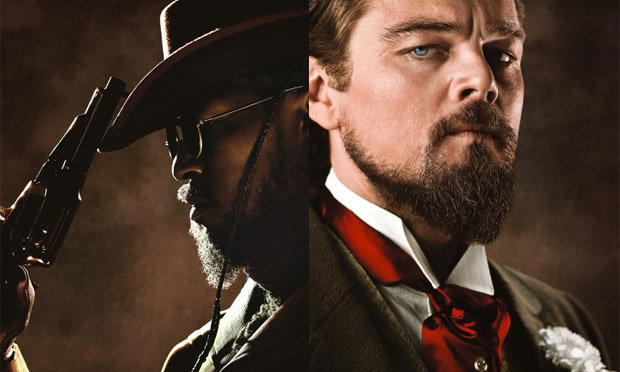
Much has been written and discussed about Quentin Tarantino's latest project. Django Unchained has garnered praise, criticism and awards as a race film, a western and a spaghetti western. But after seeing the movie last night, it is clear to me that Tarantino did something else. He successfully realizes all of the classic elements of a spy film in a uniquely American setting.
As I wrote in an earlier post (How to Write Spy Fiction), every spy story boils down to the secret struggle for a magic It. The plot of Django is easy to fit into the classic spy formula when it is looked at from this perspective. Without revealing any spoilers, consider the following milestones that occur in many spy stories and also happen in the film;The spy is recruited into his profession by an older, experienced mentor.He learns his trade and struggles with the morality of what he is doing as his skills improve.He engages in some form of deception to manipulate his opponent and get closer to his goal because his opponent has superior strength, numbers and society on his side.Some form of counterintelligence is used against him to reveal his plot.He is forced to engage in another spontaneous deception, surpassing his mentor to secure the Magic It.
All of these elements were defined and structured well in Django Unchained. They are difficult to see if you’re not looking for them because Tarantino uses a controversial setting and an atypical protagonist to tell his story. But this is just as much a good spy film as Argo, Skyfall or Zero Dark Thirty and should be appreciated in that vein.
It could be that Django is easier to define as a spaghetti western than a spy film. It might be more popular to focus on how many times the word nigger was used in the script or how graphically violent the film was. It wouldn’t be far-fetched to say that because I’m in the middle of writing a spy novel I see every movie or story in those terms. But none of that takes away from what Django reveals. By shining a light on America near the end of Slavery, Tarantino gives us a look at a struggle that was just as treacherous as the Cold War or the War on Terror. Not every spy story that deserves to be told concerns only the evils of the modern Middle East. Some stories can clearly be found in the systemic human trafficking of America’s own past.
Have fun.G
How Do You Define a “Successful” Writer?

The explosion of independent publishing has created a niche market of books all claiming to help you become a better writer. Some of them focus on the craft of writing. Others focus on the business aspects. All of them purport to transform you into being a successful.
But what exactly does that mean?
Is it defined by sales? I doubt that. A poorly written book could have great sales and a well written book could have poor sales for any number of factors that have nothing to do with the writing. There have been many great writers who died penniless. Does that make them failures?
Does it come from critical acclaim? Perhaps, but good reviews could come from friends, connections, reciprocal good reviews or sock puppets. At the same time, a great book might not have any reviews at all. There is very little direct correlation between good reviews and success.
Must a successful writer possess enduring value? Are you successful only if your work is used by English professors decades after your dead? Does your name have to rise to the pantheon of authors like Poe, Hemingway and Shakespeare? This feat surely marks you as a successful writer. The only problem with this benchmark is that you probably have to be dead before it kicks in. Who wants to wait for all that?
What if your book brings you a large amount of notoriety? That doesn’t make you a successful writer. You may simply be writing about a timely, controversial topic. You might have a magnetic, extroverted charm that the media is drawn to. Fame doesn’t make you a successful writer any more than it makes Honey Boo Boo a good actress.
So it’s not sales, reviews or notoriety. It’s not awards, volume of output or likes on Facebook. It’s not the ability to make a living as a writer, especially if you’re miserable. It’s not even the technical polish of a professional manuscript. So what makes a successful writer? Ultimately, every writer has to define this for themselves based on their goals and expectations, but I’ve come up with a definition that I plan to use going forward;
A successful writer has the ability to consistently increase one or more of their resources through the creation and distribution of their craft.
By “resources”, I mean your intellectual, financial, social or physical capital. So if writing broadens your mental horizons, increases your financial status, widens your social circles or improves the quality of your life over time, then you are a successful writer. I will admit that it is not the most measurable criteria in the world, but it’s better than waiting until English professors start forcing kids to read my books.
So how do you define a successful writer?
Have fun.Gamal