Gamal Hennessy's Blog, page 14
October 24, 2012
Bloody Inspiration: The 21 Films That Have Influenced My Writing


Every artists and writer is influenced by their background, environment and what they are exposed to. I’m sure that there are hundreds of things that I have seen, heard and read that have shaped the way I write. I grew up in a movie culture, so there are probably dozens of movies that guide the way I envision character and create dialogue. I’m sticking with 21 for this list because they match the tone and genre that I enjoy the most and because I can’t spend days on this blog post. In any event, if you enjoy these 21 films, I think you will enjoy my writing. The American (2010): a minimalistic spy thriller; one of the few times the movie was better than the book. Basic Instinct (1992): the most well known example of the erotic thrillerBlade Runner (1982): an amazing blend of noir and sci-fi that defined cyberpunk Brick (2005): a well done noir detective story set in high school Chinatown (1974): defined noir drama for an entire generationEnter the Dragon (1973): its never considered a espionage film due to the excessive ass kicking, but that’s what it is at it’s coreFight Club (1999): we don’t talk about fight club… Heat (1995): a very stylish example of the heist film Inception (2010): a beautifully structured combination of sci-fi and espionage La Femme Nikita (1990): a classic European espionage film that spawned a good TV show, a bad TV show and an awful American remake Layer Cake (2004): a British crime drama with a good plot and a good castLock, Stock and Two Smoking Barrels (1998): strong characters and stronger dialogue Memento (2000): the crime drama that redefined the use of the flashback Miami Vice (2006): a spy thriller pretending to be a remake of an 80’s cop movieReservoir Dogs (1992): I wish all the dialogue in my writing was this goodRonin (1998): a crime drama that manages to be both subtle and over the topSeven (1995): easily one of the best film endings of the past 20 yearsSpy Game (2001): an excellent example of the career of a master spy The Talented Mr. Ripley (1999): nice film adaptation of a classic bookThe Usual Suspects (1995): a great cast a great script and the best villain in years Way of the Gun (2000): a systematically brutal with a twisted pessimism and questionable motives all aroundWhat are your favorite crime dramas or spy thrillers? I’m always looking for good material. Let me know what I should add to my Netflix queue.Have fun. G


October 22, 2012
2012 Writers Alive Interviews Gamal Hennessy
 Last week I sat down with author and publisher John Byk to discuss working at Marvel Comics, the power of flawed characters and my first novella Asset Management. You can listen to audio from the interview here.
 Have fun.Gamal

October 18, 2012
Surveillance Countermeasures: A Book Review

by Gamal HennessyOne element that often comes up in my writing is surveillance. Ria Marlen stalks a pedophile from the shadows or Harrison Trent takes complex steps to detect and avoid a tail. In spy fiction, surveillance is as common as chase scenes in action films. It doesn’t matter if you’re talking about The Pavement Artists in John Le Carre’s classics or the SDR’s of Barry Eisler. There is an art and a science to being followed. One of the books that I’ve used to inform my writing is Surveillance Countermeasures (SC). Released by Paladin Press in 1994, this book approaches counter surveillance as a skill not just for spies but for business executives working abroad, victims of stalkers and others. While the book does go into a lot of theory and practice for avoiding observation on foot, in a vehicle or even in the home, it makes several assumptions that reduce its effectiveness for a wide audience.The book starts by explaining the difference between surveillance detection (figuring out you are being followed or watched), surveillance avoidance (eluding someone who is trying to follow you) and counter surveillance (following the people who are following you). Then SC walks you through the process of detecting, avoiding and countering observation in a variety of scenarios including day, night, on foot, in a car, in urban, sub urban and rural areas. It even tries to provide a small section on detecting microphones and video cameras in your home, although that section lost me and I doubt it is as relevant now as it was in 1994.For all the good information that SC provides, it has its limitations. The main one is that it assumes you are being shadowed by professionals over a long period of time. This gives you a chance to detect patterns of movement or behavior during the course of your daily life. That premise makes perfect sense for the scenarios that I write about, where professional operators and terrorists have the patience to put their schemes in motion. It isn’t as applicable for the woman being stalked by her jealous boyfriend or the potential crime victim being followed by an opportunistic criminal. I don’t think this reduces the utility of this book overall, but the audience it can serve isn’t as broad as it claims.
 The other minor point is that SC was written in 1994, so it doesn’t take technological advances into account. A new version that I haven’t read was released in 2008. While that might be dated as well anyone interested in SC should probably pick up the updated version. I would also suggest picking up Marc MacYoung’s Street E&E book to get a more visceral perspective on the subject. I think my descriptions of surveillance have been enhanced by this book. I recommend it to anyone who is interested about this art. Have fun.
Gamal

October 15, 2012
Who Is Gamal Hennessy?
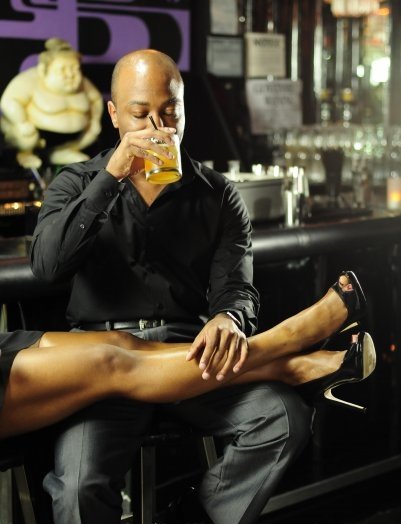
I'm getting ready to do a radio interview this week, which means I have to be ready for hard questions like "Who the hell are you?" In an effort to prepare for this probing inquiry, I decided to revise my author bio. Then I realized that not everyone will get to hear the radio show (I'll try to post a link to it next week) and you might be reading this and still not know who the hell I am, so I decided to share the bio with you...
Author Biography for Gamal Hennessy
Gamal Hennessy is an author, entertainment attorney and nightlife advocate in New York City. He began his professional career at a Japanese animation company before moving to the corporate offices Marvel Entertainment. After leaving Marvel, Gamal began writing about the culture of New York nightlife and published a book about it called Seize the Night in 2010. Now Gamal writes stories from the shadows, bringing his readers into a world of deception, seduction and violence.
Gamal describes his fiction writing as the Usual Suspects meets Jason Bourne with a little sex thrown in to spice things up. Many of his readers agree, calling his work “gritty, chilling and provocative”. Some see a dark ambiance reminiscent of the Harvey Keitel’s Bad Lieutenantand or the Burke series from Andrew Vachs. All of them say the writing is “well crafted, fast paced and immersive”. New readers can get free digital copies of his work to form their own opinions while he plans his first novel.
Now when all your friends ask "Who is Gamal Hennessy?" you'll be able to tell them.
Have fun.G

October 8, 2012
Trade of Innocents: A Film Review

Hollywood franchises like Taken use human trafficking as the back drop for their car chases and gun fights. A thread in my own writing explores the impact of sexual slavery as part of the overall narrative. While films like Taken don’t raise the overall awareness of modern slavery they do acknowledge its existence. A much smaller independent film tackles the same subject with more sensitivity and fewer explosions. Trade of Innocents explores the complexity of the subject but its refusal to make hard narrative choices prevents the story from being truly satisfying.
The main story revolves around a former US military officer and his wife who have just relocated to Cambodia. The couple has recently lost their daughter to a pedophile kidnapper and now they are travelling around the world trying to prevent other children from being sold into sexual slavery. In their struggle to stop the pimp in a particular town the couple runs into corruption within the police department, villagers fearful of reprisals, cultural bias against girls, extreme poverty and American pedophiles that will pay any amount of money to rape children. They also have to come to terms with the loss of their own child. The strain that their daughter’s death puts on the wife and on their relationship could have been a problem more emotionally draining than fighting systemic prostitution.
Unfortunately,the traditional Hollywood movie structure hijacks this film and drains most of the life out of it. The conflict between the couple is conveniently resolved without any real effort. There are chase scenes and fist fights that don’t need to be there. The characters that you do care about never feel like they are in any real danger and the climactic opportunity for growth in the wife’s character is replaced by a predictable hero coming to save the day.
The most powerful and nuanced performance of the film is in the subplot of the American pedophile. We learn more about the root causes of sexual slavery and the depths of its perversion from this side story than in any platitude or tearful revelation of the main story. If Trade of Innocents explored more of this world it could have been a much better film. As it stands, it is a more thoughtful version of Taken even if it isn't executed as well.
Have fun.
G

October 4, 2012
Learning to Love the Bad Review

Absorb what is useful, discard what is not, add what is uniquely your own.” Bruce Lee
One of the milestones in your artistic journey is rejection. You spend months or years focusing your energy and imagination to create something and express an aspect of yourself. Then a critic comes along and tells you it sucks. This is not a small thing to most artists. It is a blow to even the strongest of egos. It is also inevitable. So how do you deal with a scathing review that rejects every aspect of your art? The tactic I have developed is an attempt to answer this question.
What a bad review does for you:
First, let’s accept that no matter how a bad review makes you feel, it does serve useful purposes. Critical analysis helps your art (and art in general) evolve by:Counterbalancing possible review bias: There are several reasons why you might get a good review that have nothing to do with your book. It could be based on the reviewer’s relationship to you or for work you’ve done in the past. If you only get good reviews your ego will swell and your growth will stagnate. It’s true that you could also get bad reviews for reasons that have nothing to do with your writing. It could be based on the readers need for ego gratification or traffic (as a Yelp reviewer, I can confirm that bad reviews get much more attention than good ones). But if you get bad reviews that have constructive criticism you can learn from your mistakes and you will improve your craft. Evaluating your story from a new perspective: You know your vision and what you’re trying to say. You’re sure that what you put out conveys that message. But a negative review might point out that you’re not getting your message across. Or it could point out that people don’t embrace or agree with your vision. Either way, you find out just as much about yourself and what you’ve created by a negative review as you do from a positive one. You might learn more from a negative review.Tests your resolve to write: Some bad reviews are nothing more than personal attacks or desperate cries for attention masquerading as constructive criticism. But if the opinions of other people are enough to stifle your creativity, then it might be better for you to not write at all. There will always be people who try to project their failures and discontent onto you. Don’t let that stop you from expressing yourself.
Other advice for dealing with a bad reviewThere are many methods for dealing with the inevitability of bad reviews. The best one for you is the one that fits your personality and writing style. Here are to good examples that I have found:Lindsay Buroker Realize that everybody gets bad reviewsDon’t let the bad comments outweigh the good onesDon’t look at the reviewsIntergalactic Medicine ShowThink about what the critic is saying. Don't read reviews: Stay cool. Remember, it's not personal. Both these methods include a suggestion to avoid reading any reviews, but that sacrifices a chance to learn. My alternative attempts to get something useful out of a review.
My method for dealing with a bad review
The inspiration for this is the same type of intelligence analysis my characters go through in my stories.
Step 1: Review the review: When I get a bad review with specific criticisms, I break down the review into discreet parts and figure out if there is anything there that I can use to improve my writing. This gives me the sense of taking control of my work back from the critic. It also helps me separate useful criticism from useless posturing.
Step 2: Get independent confirmation: Single source information is never as reliable as corroborated information. Once I find potentially useful observations of my work from a critic, I take that information to other reliable sources to see if they can confirm or deny the critical findings.
Step 3: Act upon the conclusions: If you find constructive criticism and confirm that it is useful from third parties then incorporate it into your future work. It is natural to make mistakes when creating art, but you don’t have to keep repeating the same mistakes.
Step 4: Keep writing: Don’t obsess over a bad review (or a good review). Remember the reasons you are writing and maintain the resolve to keep writing in the face of criticism. Your art can grow and thrive in the midst of critics. It can’t grow if you give up.
Have fun.G

October 1, 2012
The Horror That Lives Just Around the Corner

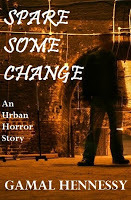
 When I was learning to write, I was taught about the distinctions between different types of fiction. Horror, of course, was one of the main genres and came in two varieties. It was broken down into natural horror (stories based on threats like criminals, sociopaths and the violently insane) and supernatural horror (stories based on unproven concepts like vampires, zombies and ghosts). Right now the craze in horror is completely of the supernatural variety. All you have to do is look at all the media devoted to the zombie apocalypse to see what I’m talking about. But in spite of the current trend, I write natural horror because I believe that it makes the stories much more frightening.I have three urban horror stories currently available for sale: The Replacements is a story about three high school boys who are forced to face their worst fears when they get involved in the sex trade. Spare Some Change reverses the power dynamic between an urban yuppie and a homeless man deep in the tunnels under New York City. Finally, Afraid of the Dark is set in a near future society where government sponsored killers roam the streets answering to no authority but their own. I try to create a sense of realism in my horror that infects the mind of the reader. I don’t want you to imagine a theoretical horror. I want you to think “This could happen to me.” That’s when you get scared. That’s when horror works.I know Halloween is traditionally about supernatural horror. I know that vampires and zombies have a lot of cache in modern entertainment. But I don’t relate to supernatural horror, so I don’t have any inspiration to write about that. Stories about being terrorized by homeless maniacs or slave traders might not be in fashion now, but I’m not writing about fashion. I’m trying to tap into primal fears and the fear of someone who might be just around the corner is more powerful than the fear of something that might only exist in our collective imagination.
Have fun.G

September 24, 2012
Read This New Erotica (Because Everyone Should Get a Second Opinion)
A new erotic story from Nightlife Publishing goes on sale this week. Here is a look at the cover and a preview of the story.
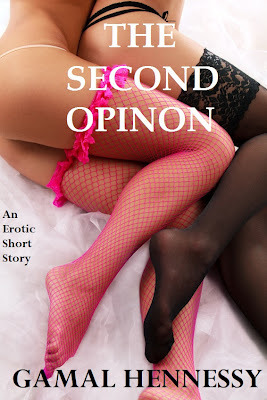
The Second OpinionHe wants to celebrate his birthday and forget his advancing age by spending a night with his lover. When she shows up with her friend, does that mean the end of their night of passion or the start of something else? Authors, book reviewers and bloggers who want to write a review for this or any other Nightlife Publishing title should contact me directly at gamalhennessy@gmail.com for press copies.Have funGamal

The Second OpinionHe wants to celebrate his birthday and forget his advancing age by spending a night with his lover. When she shows up with her friend, does that mean the end of their night of passion or the start of something else? Authors, book reviewers and bloggers who want to write a review for this or any other Nightlife Publishing title should contact me directly at gamalhennessy@gmail.com for press copies.Have funGamal
Read a Little Urban Horror and Your Train Ride Will Never Be the Same
A new urban horror story from Nightlife Publishing goes on sale this week. Here is a look at the cover and a preview of the special story I’ve written for Halloween.
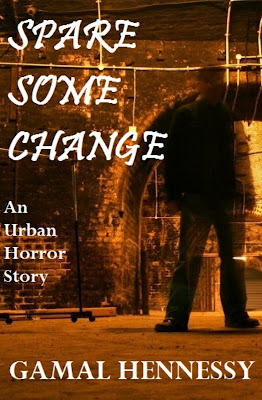 Spare Some ChangeMartin is young, arrogant and drunk when he decides to harass a homeless man on the train. But he doesn't realize the power that the old man wields in the tunnels. He can't escape from the wrath of the deranged torturers who want to punish him for the sins of everyone who has ever abused them. Will he be able to live through their brutality and see the outside world again?Authors, book reviewers and bloggers who want to write a review for this or any other Nightlife Publishing title should contact me directly at gamalhennessy@gmail.com for press copies.Have fun.Gamal
 Spare Some ChangeMartin is young, arrogant and drunk when he decides to harass a homeless man on the train. But he doesn't realize the power that the old man wields in the tunnels. He can't escape from the wrath of the deranged torturers who want to punish him for the sins of everyone who has ever abused them. Will he be able to live through their brutality and see the outside world again?Authors, book reviewers and bloggers who want to write a review for this or any other Nightlife Publishing title should contact me directly at gamalhennessy@gmail.com for press copies.Have fun.Gamal
September 13, 2012
Erotica as the Literary Pariah

“Writing ought either to be the manufacture of stories for which there is a market demand -- a business as safe and commendable as making soap or breakfast foods -- or it should be an art, which is always a search for something for which there is no market demand, something new and untried, where the values are intrinsic and have nothing to do with standardized values.” - Willa Cather My writing has not generated much interest or discussion over the past four months. I haven’t yet figured out the proper marketing methods that will allow the eager masses hungry to read my masterpieces. But what little discussion my writing has generated has all been about my erotica. I can write about conspiracy, murder or torture and there is no ripple within my social circle. Stories about sex on the other hand, forces people to turn away in silent rejection or (I think) alter the way they see me as a writer and a person. The reaction that I’ve received has inspired me to think more about what I am writing and why in relationship to the mind of my potential audience.The American Relationship to the Erotic In spite of the summer flurry around Fifty Shades of Gray and the deluge of BDSM erotica that tried to ride that long tail, erotic writing is still a repressed art form in America. We are trapped between our Judeo-Christian Protestant morality and our obsession with sex as a tool of commerce and power. We willingly exploit the concept that “sex sells” but reject any insightful public discussion about seduction or sexual expression. Our collective response to sincere sexuality is avoidance, disdain, ridicule, silence or backhanded suggestions of mental imbalance. Thankfully, the reaction to my erotica hasn’t been that aggressive but it is disconcerting to discover the people in my life conform, to one extent or another, to the same attitudes towards sexual expression as the rest of society. This makes sense. They are functioning members of the community they live in. It is understandable that they share the beliefs of that group. I had no reason to expect anything different but somehow I hoped it would be. Controlling the Image I don’t have illusions about the way people interact with each other. I know that each of us holds onto an image of every person in our lives. We project attributes, titles and values onto the people that we know and then assume those qualities will be fairly consistent over time. Any information that alters or upsets the image we create is resisted and rejected. If a revelation doesn’t conform to our defined social relationship then we don’t want to hear about it. By and large, most of your family, friends and co-workers don’t want to know anything about your sexual expression because it upsets their image or you and falls outside the realm of acceptable information. Writing erotica, whether it is autobiographical or not, is a revelation about your sexual expression and your sexual philosophy. That makes it a subject not to be discussed or explored. Living in this world, only a total stranger or an intimate confidant is willing to learn about you that way. No one else you know has any interest in the subject.I’m not trying to invite everyone I know into every sexual moment of my life or warp their image of me so much that they go insane from over exposure. At the same time, my sexual expression is a large part of the definition of who I am as a person. To push that part of me away or to repress it would be rejecting a facet of my life that I’m not ashamed of. Inserting erotica into my work makes as much sense to me as including humor, wit or complexity. It is fundamental to my art and to my life. If I didn’t put it in because other people weren’t comfortable with it, then my writing wouldn’t be mine any more. My life wouldn’t be mine any more.Pushing Boundaries through ArtJust before I started releasing my work, I read a book from Susie Bright called How to Write a Dirty Story. The book was quite good partially because it helped me see my role as a writer both in terms of erotica and in terms of other aspects of writing. Her advice, like Ms. Cather’s above, was to use my craft to push the boundaries of society and not just relax within the comfortable framework of acceptable commercial work. I have no interest in writing the most shocking, perverted or controversial book ever. Marquis de Sade already did that. My goal is much more insidious. I want to embed the erotic in other types of stories so deeply that one can’t be separated from the other. I want to construct scenes that are arousing not because of their graphic explicitly, but because of their realistic intensity. Hopefully when I’m done, the erotic elements of writing will be as engaging as the conspiracy and murder. Until then…Have fun.G