Gamal Hennessy's Blog, page 10
May 5, 2013
Sam and Twitch: A Book Review
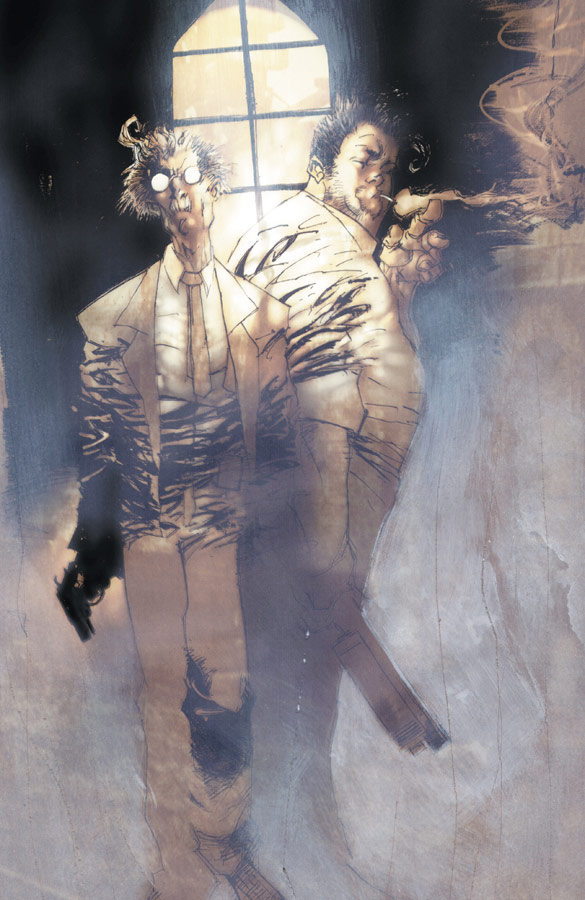
Real life cops have to deal with a lot of problems: violence, tragedy, bureaucracy and the media are just some of the challenges as is the constant physical, mental and emotional stress. Fictional cops have to deal with all that and they have to contend with assassins, advanced technology, mutants, aliens, supernatural nightmares and the occasional zombie. In the fictional world, cops more often play cannon fodder rather than heroes.
Sam & Twitch are two cops that find themselves in the unenviable position of policing in the world of supernatural phenomenon. Supporting characters in the once popular Spawn universe, these partners start their “Ukadu” story line back on the force after a self-imposed exile. They are on the job less than a day before they are thrown into a simmering mob war, characterized by rampant corruption and an army of shadowy killers. When you throw in their domestic strife and interpersonal friction, you have a story with tension and conflict on every page.
The presentation is very well done. The art style of the book captures both the characters and the mood in a way that supports the dark and twisted tone of the story. The use of shadows and odd camera angles make you feel like you are looking into a world that is in some sort of perpetual nightmare. The dialogue and pacing also work very well. The mix of mystery, tension, drama and action are balanced and all the elements help to drive the story.
The problem with the story lies in the unanswered questions. Ukadu does a good job of setting the tone and telling the “why” events unfold the way they do. It just never stops to explain “how”. The book left me wondering how organized crime figures came into possession of their powerful weapons. It didn’t even attempt to explain who the major antagonist was or how they got that way. Maybe cops in a superhero universe take things like that for granted, but as a reader I felt that unanswered question made the story weaker than it could have been.
If you are a fan of police drama or crime stories you should definitely read Sam and Twitch. If you don’t want to mix your police procedurals with aliens, ninjas and zombies, this might not be your cup of tea.
Have fun.Gamal


May 1, 2013
Do You Really Need to Quit Your Day Job?

When I look at writer’s forums online, I often get the impression that every writer is striving for the day when they can quit their day job and spend the whole day with their craft. I know the feeling. I’d love to wake up around noon, write for a few hours and then meet friends for happy hours that would turn into late night drinking sessions and dancing. It seems like a natural goal to pursue.
But how realistic is it?
I came across this graphic today while I was wasting time on Facebook. I don’t know if it is true or not, but for some reason it made me happy. Maybe it validates all of us who write and work a day job. Maybe it elegantly separates the quality of writing from financial success. Maybe it’s a warning to any of us who think we’re going to get rich just by being good writers. (See the Other Benefits of Independent Publishing)
I’m sharing this with you because I’m pretty sure you have a day job as you pursue your dreams as a writer. Congratulations. You are in very good company.
Have funG
April 28, 2013
See No Evil: A Book Review

I write stories about spies and espionage because it’s the subject that interests me the most. One of the side benefits of writing in this genre is being able to read memoirs of former case officers and calling that activity “work”. I’ve had Robert Baer’s See No Evil on my radar for years, but I was finally able to devote time to it this month. Baer did a good job in explaining how the CIA declined since the end of the Cold War, but his personal entanglements muddle his overall message.
See No Evil is written in four parts; Baer’s introduction and training in the CIA, his time in the field as a case officer, the decline of the agency and his involvement in the campaign financing fiasco during the Clinton years. The first half of the book felt very candid. Baer doesn’t describe himself as a patriot from birth who always wanted to work for the CIA. He’s just a struggling student with an agenda of his own. He details many of his mistakes and frustrations during his postings in India and Lebanon. It felt as if Baer has a lot of nostalgia for the Cold War years, if only because he felt his agency was in better shape then.
The third part of his book covered familiar ground for anyone who has read CIA memoirs from the past decade (See the Art of Intelligence Review), but the frustration that Baer puts into it makes the failings of the CIA more profound. It has been well established that the CIA strayed from its mission for three reasons;A rejection of human intelligence in favor of satellite and computer technologyAn aversion to risk that undermined intelligence gathering and promoted career minded bureaucrats and,A capitulation to the interests of Washington lobbyists at the expense of national security
Baer goes into maddening details about how his own career was crushed in the machinery of the Beltway. If his life was the only casualty of this debacle, it would be disturbing. The fact that disinterest and neglect within the intelligence community contributed to 9/11 is crippling.
By the time I got to the last section of the book and the illegal oil deals, questionable campaign financing and the transformation of the CIA from an intelligence agency to a publicly funded manhunt company, I was numb. I was sure Baer felt the same thing. Then why did he stay, when so many of his colleagues left? Why did he get caught up in things that he had no interest or experience in? Is See No Evil his way of fighting back? It is hard to imagine devoting decades of your life to a cause, only to see it fail on so many different levels.
Hopefully Baer’s writing is keeping him sane. I think his experience and insight will definitely influence the stories I write.
Have fun.Gamal
April 21, 2013
On Writing: A Book Review
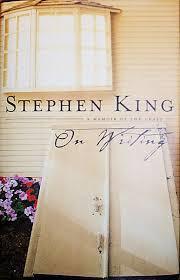
I've never been a Stephen King fan. Sure, I've seen The Shining, Misery, Thinner, Carrie and the first thirty minutes of the Tommyknockers but that's it. I never read a King book. I've never related to his genre, his characters or the small American towns where his novels seem to be set. More than that, his books are huge! I never found the incentive to invest that kind of reading effort on a story that was bigger than a college text book.
I carried all this baggage with me when I started to read On Writing . I picked it up because several other authors sang its praises. I normally ignore other people's opinions on things like books and movies, but without a formal teacher of my own I was willing to steal good ideas from anyone. King is successful, right? That had to count for something.
I realized that King is one of the most well known writers of the last century for a reason. He has a gift for telling a story and he knows a hell of a lot about the craft.
The book is broken into four parts; his past as a struggling writer, his battles with addiction, his insight into writing and a post script about the car accident that almost killed him. The first and final parts of the book capture King as a storyteller. I listened to the audio version of the book. King became that eccentric uncle who can sit on the porch and hypnotize you for hours with his stories. The style was fantastic, even when describing the fear and pain he suffered being hit by a truck.
The third section touched on a variety of concepts around writing. Some of them made perfect sense to me. I stole those ideas. Others made no sense and I rejected them with more than a little malice. Because the book was written in 1999, it doesn't address independent publishing, e-books or social media. That aspect of the book made the whole thing feel dated, but not so much that it reduced the quality of the advice.
The second portion of the book felt like a cautionary tale. Like other celebrities, fame and fortune were followed by addiction. His struggle for success was replaced by a struggle to stay sober. I walked away from that part of the book understanding that there will always be something to struggle with as a writer whether it is in your craft, your finances, your relationships or your health. The type of struggle might change but successful writers have problems too. (See The Benefits of Rejection)
On Writing is not my favorite book on the subject; that title is reserved for McKee's Story . But King has given writers a great gift with this book. If you can only read one Stephen King book, make it this one.
Have fun.
G
April 14, 2013
How Your Writing Projects Are Just Like Your Gym Membership

People who don't do it make excuses about why they can't.Everyone can benefit from it.
Everyone does it a little differently.
Everyone can get better at it.
There is a whole subculture built around it.Some people have to pay to do it.
Some people have professional support.
Some people can make money doing it.
Fewer people can make a career out of it.
A handful of people can become millionaires doing it.
The preceding statements apply whether you are talking about writing or exercise. While there might not be a lot overlap between members of each community, they both share a common goal; self improvement. The major difference between the obsessive writer and the gym rat is the level of frustration that writers seem to carry around. (See The Benefits of Rejection)
Common Ground
Everyone who exercises on a regular basis can improve their health and overall life experience. They find the routine that works for them. They can connect with the fitness community. They can join a gym and get a trainer. Some of them will make extra money by entering competitions or becoming an amateur athlete. A few of them will make fitness a career as a personal trainer or professional athlete. A select few will become mega stars selling exercise programs or landing mega contracts. There are many places fitness can take you, but the core benefits are the same.
Everyone who writes on a regular basis can improve their creativity and overall life experience (See the Other Benefits of Independent Publishing). They find the routine that works for them. They can connect with the writing community. They can join a writing group and get an editor. Some of them will make extra money by entering competitions or publishing a book or two. A few of them will make writing a career publishing independently or traditionally. A select few will become mega stars on the best sellers list or landing mega contracts. There are many places writing can take you, but the core benefits are the same.
Seeing Success
What makes your exercise experience successful? Does it make sense for people to stop exercising because they can't get a flawless body immediately? If only a small group of people appreciate your new body, does that make the effort pointless? If you didn't invent P90x or Cross Fit, does that mean that your years of exercise were wasted? If you never get to quit your job so you can spend all day at the gym, does that mean there was no point going to the gym? Clearly, the logical answers to all these questions is no.
Why is writing so different? Does it make sense to see your writing as a failed experiment if you don't have an "overnight best seller"? If only a small group enjoys your work, does that diminish its value (See Champions, Tastemakers and True Fans)? If you're not the author of Fifty Shades or Harry Potter, does that mean you can't write? If you are never going to be able to quit your day job and spend the whole day writing, does it makes sense to stop writing and go do something else? For me the answer to all these questions is the same as the answer to the questions about exercise.
In past essays, I've argued that a successful writer is one whose writing broadens their mental horizon, or increases their financial status or widens your social circles or improves the quality of your life over time. (See How Do You Define a Successful Writer?) A few writers will get all of these things. Most of us will only get a couple. That's fine. I might be unfairly depicting both the writing and fitness communities. Maybe most writers don't obsess about sales and reviews. Maybe gym rats spend all their time trying to invent the next Taebo. If so, I am happy to be wrong. If not, then there might be something that the writers can learn at the gym.
Have fun.
G
April 7, 2013
Beta Testing: On Using and Being a Beta Reader

A few months back, I suggested that independent publishers could improve the quality of their books by using a quality control process that was similar to systems used by the major publishing houses. Now that my company is preparing to release its first full length book, I decided to take my own advice and recruit a team to help me. This is the story of my first use of beta readers and what I learned from them.
Beta readers have always been common in publishing for both new and established authors. Stephen King uses them, Anais Nin used them. Shakespeare probably had a few beta readers testing his stuff out. I see it as part taste test, part marketing focus group and part reality check. While every publisher does it differently, I decided my beta test would combine different types of people. I thought that would give me the most honest assessment of the manuscript.
The Test Group for Smooth OperatorThe group consisted of seven adults; four women and three men.Half the group I knew personally, the other half I only knew from linked in and good reads.A few were older than me, the rest were younger.Some expressed an avid interest in crime thrillers, some didn't read very much in the genre.About half the group consisted of writers or editors themselves, the other half were purely readers.
I gave everyone about a month to read the book (about 75,000 words) and asked five focused questions about their opinions. I gave them the option to write more, but I felt the questions would be a good guide for feedback. None of the beta readers were paid.
1) On a scale of 1-5, I would rate this book a: ___2) Would you be satisfied with this book if you paid $3.99 for it? ____3) Would you read the sequel to this book? ____4) Would you recommend this book to a friend or enemy? ___5) If there is any author that this book reminds you of, please name that author (none is a completely acceptable answer) ____
The ResultsHalf the group (4 people) read the book and completed the survey. The rest didn't have a chance to read or finish it.The response was positive across the board in terms of the overall quality of the prose with one minor exception, namelyThere was a split of opinion concerning the introduction. This is worth mentioning for two reasons. First, I tried to do something different by breaking the fourth wall to generate more interest. One reader liked it, the other disliked it and the last two didn’t bring it up at all. The second reason why that is worth mentioning is based on my reaction to the split. Stephen King's opinion in his book On Writing when it comes to differing views between beta readers is that "the tie goes to the writer." so I decided to leave the intro the way it is and see what happens when the book is released.
Finally, one beta reader went so far as to take me out for drinks so we could discuss his thoughts and feelings on Smooth Operator in depth. This is the best kind of beta reader. A writer loves nothing more than to spend hours discussing his work over whiskey.
The Takeaway
I learned three things from my beta test.More readers are better because you can't count on 100% participation.A beta test can be a confidence booster and a chance to expose your work to the light of day without a huge amount of risk.The actual makeup of the group is no indication of who will actually respond.
Turning the Tables
I mentioned earlier that some of my beta readers are also writers. One of them is also working on a novel now and asked me for a reciprocal beta read of her book. I never beta read before, but it felt inappropriate to turn her down after she just agreed to do me the same favor.
I decided the best way to help my fellow author was to deconstruct her novel and analyze the elements in the same way a critic reviews a book or movie. I analyzed the structural elements of the plot, the characterization of the main characters and the relationship between character and plot. I even looked at the composition of chapters and the relationships among the characters and how that impacted the plot. For each comment I made, I gave her an example or a reference book that might help improve the narrative. I wasn't able to get through the whole novel with this method, but she seemed very happy with the three pages of notes I delivered on the book, so I think I did OK.
I have come to the conclusion that beta testing is an important element of the publishing process. Not only can it improve your book, it can improve your connection with your writing community and can even lead to a good night of drinking. Quality control doesn't get much better than that.
Have fun.
G
March 31, 2013
Nightlife Publishing Is Looking for a Copy Editor

Nightlife Publishing is currently seeking a copy editor for its upcoming novel.
The specifics of the work are as follows:Title: Smooth Operator: The Life and Crimes of Warren BakerGenre: Crime, Espionage, ThrillerWord Count: approximately 75,000 words (245 pages)Scheduled Release Date: Summer 2013Release Format: Ebook
Interested professional editors may submit a written proposal. Please include all of the following information with your submission: Please describe your previous work in the crime, espionage or thriller genres.Please indicate which style guide you follow.Please attach a 1-2 page sample of your previous work with both the original and edited pages.Please list three professional references from authors you have worked with in the past, including the titles you worked on for them and their email addresses.Please let us know the estimated number of weeks it would take you to complete a 75,000 word assignmentPlease describe your fee structure including payment timing and methods of payment.
The final date for submitting a proposal is April 20th, 2013. We are planning to make a selection on or before May 10, 2013. If you have any questions, please contact me directly at gamalhennessy at gmail dot com.
Thank you in advance.
Have fun.Gamal
March 24, 2013
Fictional Seduction in Five Easy Steps

Spring is (almost) in the air, and with it comes the traditional season of love and romance. I’ve been discussing the role of fictional seduction over the past two weeks, so this is a good time to walk through the seductive process and how it comes into play in writing.
Why Is This Important?
It is helpful for writers, readers and people in general to understand the elements of seduction in the same way they benefit from understanding the elements of story. Seduction, in fiction or reality, is a story with a distinct beginning, middle and end. It might only be a subplot of a story and it might not have any sexual component at all, but when it is well written, a seduction can be as satisfying as any good mystery, horror story or dramatic prose.
Sources and Methods
I’m not trying to suggest that I am an expert in seducing women. I have had far more failures than successes in my life. I have become a student of the seductive process and this essay is derived from some prominent writing on the subject including Robert Greene’s Art of Seduction, Ellen White’s Simply Irresistible, Erik Von Markovik’s Mystery Methodand Ovid’s Art of Love. Each of these books approaches the process from a different angle, and this distillation is not an exhaustive description, but it’s a good primer for understanding the process.
Please note, that for our purposes the person doing the seducing is referred to as the artist and the person being seduced is referred to as the muse. Either person can be male or female. The time frame is open ended depending on the circumstances and the people involved.
The Seductive Process
Part 1 The Approach: Introduction leads to curiosity In this element, the lovers do not know each other, or they know each other but do not see each other as potential partners yet. The key here is for the artist to stand out from the rest of the world in a way that captures the muse’s attention long enough to lead them into the next element.
Part 2 The Lure: Curiosity leads to attractionOnce a muse notices the artist, it is essential for them to find reasons to be drawn to and interact with them. The reasons can be artistic, financial, mental, sexual, social, spiritual or a combination of any of these depending on the lovers. The key is for the artist to find out what the muse wants and then showing that the artist can satisfy those needs. The primary connection here is intellectual because the lovers are engaging their imagination about what the affair could be.
Part 3 The Expression: Attraction leads to affectionAt some point a love affair must feed the intimate needs of the lovers. This element often refers to sexual expression, but not every love affair includes sex between the lovers. Every form of expression does include an intense intimate connection that brings the lovers together while at the same time fulfills a basic emotional need. The primary connection here is sensual because the lovers are now engaging on a more physical level.
Part 4 The Bonding: Affection leads to connection After the intense connection created by expression, lovers often feel safer sharing more of their individuality. This moves the love affair beyond the physical. Communication between them increases in breadth and intensity. Bonding doesn’t occur all at once. Often it is a process that occurs over many types of communication over an extended period of time. The key here is building trust that is essential for a deeper love affair. The primary connection here is emotional because both lovers are more vulnerable once the lovers move past the initial expression.
Part 5 The Comfort: Connection leads to integration In a long term love affair, the lovers become part of each other’s lives. The initial novelty and uncertainty is replaced with complexity and intimacy. It is important to realize that comfort does not mean complacency. It does not mean a reduction in effort or an assumption that the lover will never leave no matter what you do. If anything, both lovers have the chance and the challenge to pursue and explore each other in ways that they would never be comfortable with in the earlier stages. The primary connection here is spiritual because it is at this point where the lover begins to define themselves in relation to the loved one.
Seduced by the Seductive Process
I have been fascinated by the seductive process ever since my divorce nine years ago. My two upcoming books both explore the seductive process in different ways. Smooth Operator focuses on the way money, ideology, coercion and excitement can be used to seduce, depending on the muse. A Taste of Honey goes deeper into the seductive process and how it can be used to deceive both the muse and the artist. I hope both books will be enlightening about this fundamental human connection as well as being entertaining.
Stay tuned.
Have fun.
Gamal
March 19, 2013
Like a Spy to Honey: Sexual Seduction in Real and Fictional Espionage

A story is making the news this week about a US military contractor who is accused of passing nuclear weapons secrets to his Chinese girlfriend. This story is the latest episode in one of the most subtle and successful kinds of operations; the honey trap. But while this type of spy tale is titillating, it does not get the attention it deserves in modern espionage thrillers.
When Truth is Stranger than Fiction
In espionage parlance, a honey trap (or a honey pot) is the use of sexual seduction to recruit agents, either through blackmail or emotional manipulation. The use of honey traps can be traced back to ancient civilizations. Cleopatra’s seduction of Julius Cesar and later Mark Anthony to improve diplomatic relations between Egypt and Rome is one of the early honey traps. Casanova also used his seductive skills as a spy (as well as for general recreation).
Modern honey traps are also well documented. Dozens of military and diplomatic officers including Clayton Lonetree, Sharon Scranage and James Smith gave up secrets to their honey traps. One of the more bizarre cases occurred when a male Chinese opera singer named Shi Pei Pu pretended to be a woman, seduced a French diplomat and convinced him that “she” was pregnant to entrap him. This might be the most famous honey trap story of all because it was fictionalized into the play M. Butterfly.
A Bit of Honey
Honey traps have had a mostly minor role in spy fiction. Vesper Lyndis recruited by a male honey trap in Casino Royale. Nikita sometimes acts as a honey trap in La Femme Nikita. A honey trap poses as a prostitute to kill one of the assassins in Munich. The Fionacharacter in Burn Notice and her historical counterpart Cinnamon Carterin Mission Impossible act as short term honey traps in their respective teams. Most recently, Barry Eisler has shined the spotlight on his own honey trap, Delilah, in the novella London Twist. In the vast majority of espionage fiction, the honey traps act as love interests for the protagonist, rarely getting their own time in the sun.
A Taste of Honey
The book I’m currently writing is about a honey trap forced to spy on her lover. I’m creating a unique story, in part, because I am making the sexual seducer the protagonist. I’m exploring the motivations, struggles and choices that come with the use of sexuality as a tool of deception. The seduction in A Taste of Honey hasn’t been thrown in just for the sake of putting sex in a story. It is a way of exploring the true nature of the characters and the world they live in.
Human intelligence experts often refer to money, ideology, coercion and excitement (MICE) as the key motivators to recruitment. Sex is one of the most basic forms of excitement that we have and a powerful form of recruitment. There are plenty of examples of honey pots in fiction, but they are dwarfed by the number of assassins, rouge CIA agents and Delta Force heroes. I have nothing against assassins. Hell, some of my favorite characters are assassins. I just think the genre could use a bit more honey, and I plan to provide it.
Have fun.Gamal
March 3, 2013
Sex as a Window to the Soul: Using Sexual Expression to Reveal True Nature
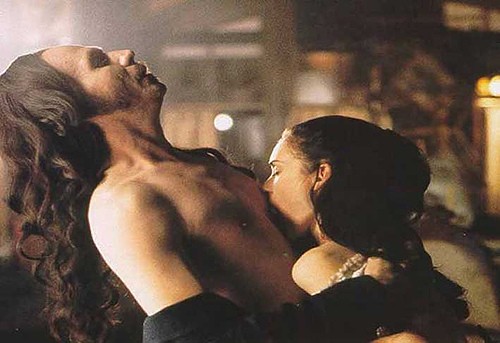
“Sexual energy can have many transformations: at the lowest it is biological; at the highest it is spiritual. It has to be understood that all creative people are highly sexual." Osho
There are many ways a writer can show the true nature of their characters. By placing them in conflict with their world at various levels and forcing them to make choices, the fundamental essence of the character is revealed. In thrillers, lives are at stake. In mysteries, justice often hangs in the balance. Every genre of fiction has its conflict conventions, but sexual expression is an unused goldmine for the revelation of character, especially in spy fiction.
Sex for Characterization Last month, I discussed the difference between characterizations and true nature in fiction writing. In short, characterizations are the definable qualities of a person and their true nature is the choices they make under pressure. As a vehicle of characterization, sex is used all the time. The male hero falls for the femme fatale. Now we know some characteristics of both of them. The man is heterosexual and sexually active. The woman is on some level attractive. This basic idea can be expanded indefinitely. The unquenchable sexual appetite of James Bond, for instance, is as much a part of his character as his nationality. But even this high profile sexual expression doesn’t speak to the true nature of the character.
Sex for True NatureIf sexual expression is going to be used to reveal true nature, then the sexual choices that a character makes need to be explored. There are a variety of questions that can be asked to further this goal:Who are they sexual with? Are they alone? Are they with one person and not another? Why? When are they sexual? Under what circumstances and at what point in the story does the event take place?Where are they sexual? Is there some risk based on the location or do they insist on total privacy and security?What sexual acts are they involved in? How vanilla or kinky are they? How simple or intricate are their thoughts or actions during the sexual encounter?Why are they taking this action? Is it the release of some emotion, if so, which emotion? Is the expression designed as a reward for someone or as a punishment for someone else, or both? Is it a celebration or a submission?How are they sexual? Is the character kind or cruel? Are they considerate or selfish? Are they experienced or naïve? Are they exploratory or conservative? Are they active or passive? This is perhaps the most important question when sexual expression is used to define true nature.

When you look at sexual expression from this perspective, the true nature of James Bond (at least the movie portrayals of him) is never revealed. We know he has a lot of sex. We know he is very eclectic in his sexual tastes, but beyond that, Mr. Bond is a mystery even after six decades of films.
So What? Can we know a protagonist’s true nature without watching her in bed? Of course we can. Millions of fine books have been written over the years without it. So why should anyone want to put it in now? The answer boils down to creativity. In a time where everything has already been done and a fresh new idea is as rare as a winning lotto ticket, using sexual expression to gain insight into character and move the narrative is the road less traveled and could be the ripest avenue for exploration in modern fiction.
Sex in My NovelI’m currently writing a novel called a Taste of Honey. It this story, sexual expression exposes both the characterizations and the true nature of all the main players. Instead of writing yet another novel about assassinations, bombings and hand to hand combat, I’m crafting a spy story that is more subtle in its execution. The stakes are still very high and the tension isn’t reduced because there are less bullets flying. I just decided to write a different type of spy novel. Hopefully the world will be ready to enjoy it.
Repression, Rejection and Titillation There is a reason why more writers do not use sexual expression as a vehicle to reveal true nature. The stigma attached to sexual expression in America has a chilling effect that marginalizes sex to the fringes of pornography. There are few ‘legitimate’ writers who are in a position to take this bold step under their own name. Anais Nin and Henry Miller did it in their prose. Anne Rice did it with Sleeping Beauty and Barry Eisler has taken steps in that direction with his spy fiction. I’m going to follow them because these are the stories I want to tell and I don’t have anything to lose.
Sex for the sake of defining character is fine. Sex for pure titillation is great too. But I’d like to go in a different direction and see where it takes me. It might not make me rich, but it will definitely be interesting.
Have fun.
G