Gamal Hennessy's Blog, page 6
January 13, 2014
Analysis of Story Structure Part 1: The Chapter
by Gamal Hennessy
Exploring the building blocks of story is a helpful exercise in the development of any novel. Writers who plot can use this technique to help map a story’s progression (See Building a Better Story Part 3: Plot Construction). Discovery Writers can use it during their rewrite phase to understand how the story developed. They can also use it to modify elements that might inhibit the flow of the narrative. (See Plot vs Pants: Which Road Do You Choose?) This essay will look at the second level of story structure, the chapter. I plan to discuss beats, sequences, acts and sequels in later posts.
Disclaimer: The foundation of this method comes from the screenwriting book, Story. I've modified it slightly for my own personal use.
The Story within a Story
In an ideal scenario a chapter is a miniature version of a story. It has all the structural components of a full novel in a compact form (SeeBuilding a Better Novel Part 2: The Narrative Framework). The goal of these ”mini stories” two fold; we want to move the story forward and reveal aspects of the characters. These goals are achieved when each chapter alters the condition of the characters on some level. The change can be minor or major. The change can be positive, negative or a bit of both. The change can be internal, interpersonal or extra personal. But in almost all cases, we need to create some change that drives the overall narrative and shows us who the characters are (See Creating Characters We Want to Know)
Felt but Not Seen
When the structure of a story works well it is similar to the structure of a building. People can enjoy the effects without thinking about or even noticing the details. For example, I work in an office building every day. The only time I notice the structure of the building itself is when something doesn't work. The same concept applies in your story. If a casual reader is picking out each element in your narrative, then they are not fully engaged in the story. Of course, a fellow writer might look at your story structure in the same way a building engineer instinctively looks at the working of a building. The casual reader shouldn't notice those things.
The Elements of a Chapter
I identify five fundamental structural elements in any chapter in a story.POV: This gives the reader the emotional perspective that you want them to follow and understand (See Managing Emotional Points of View) Situation: This orients the reader in time and space, giving them an understanding of the character’s relationship to their world Desire: This expresses what the POV characters want, whether it is their ultimate goal in the story or just a step that brings them closer to that goal. Beats: The sequence of action and reaction designed to dramatize conflict.Turning Point: The action or revelation that changes the condition of the POV characterOutcome: The result of the character's pursuit of desire. The outcome in most chapters plays a role in the situation and desire of the next chapter.
Example
The chapter structure does not require anything long, elaborate or convoluted. Consider this:
Jacob stormed up to the trailer with his Louisville slugger clutched tight in his gnarled fist. Lucky wanted to put his dirty paws on Ella? Let's see him try that with broken fingers. Jacob banged the handle of the bat on the flimsy door. It felt good to do that. If Lucky didn't open it and open it fast, it would only take a couple of swings to knock it down. Jacob had a mind to tear down the whole damn trailer.
Jacob never fired a shotgun before, but he knew the sound it made before it went off. His aunt Tee said it was a sound God created to drive off the spineless. Jacob wasn't spineless. He wasn't stupid either. The click clak of the shotgun on the other side of Lucky's door sent him diving for the mud. Splinters rained down on him. All the sound got sucked out of his ears. Jacob swallowed hard to keep his heart and his lunch from shooting up into his throat and choking him to death. Then he moved his ass.
Jacob scrambled away from the trailer on his hands and knees. He forgot about the Louisville slugger. He wasn't gonna get Ella back from Lucky with that.
My hope is that you can not only see the basic elements in that passage, but that you were also entertained enough to ignore the structure while you were reading.
Exposition and Non Events
If the goal of a chapter is moving the story forward and revealing character through conflict then there are two ways that a chapter can fail on a structural level. The first problem is referred to as exposition. This occurs if a recitation of facts is placed in a narrative for any reason other than the progress of conflict in the story. For example, in the recent series of Batman films, Bruce Wayne inherits a multi-billion dollar enterprise that seemingly built, controls and pays for most of Gotham City. No attempt is ever made to explain where this money comes from or even how much money he has. This wasn't left out because it's a "comic book movie". It's left out because it has nothing to do with telling the story. It is exposition that needs to be left out.
The second problem is the related issue of a non-event. This occurs when the condition of the characters in the end of the chapter is the same as it was in the beginning. These are the mundane events that provide no insight into the character and don't move the story along either. This is why as writers we leave out every shower, meal and bathroom break that doesn't directly impact the story. Sitting down to eat a ham sandwich often doesn't have a turning point, unless the meal is transcendent.
Stealing this for Your Own Purposes
If you want to look at the structure of your chapters, all you have to do is answer the following questions of each chapter in isolation:Who is this chapter about?Where are they in the story?What do they want?How do they try to get what they want?Who or what tries to stop them?Do they succeed or fail? What is the outcome?
Do you think this kind of analysis is helpful for your fiction? Do you already do something like this, or do you have your own method? Please leave a comment and let me know.
Have fun.
Gamal


January 6, 2014
A Special Sale Price for Smooth Operator!
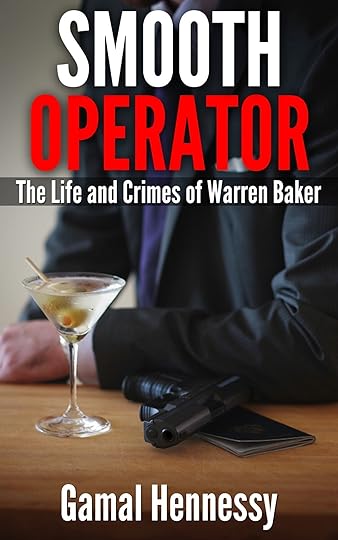
To celebrate the release of my new novel, A Taste of Honey, I’ve decided to offer my last novel at a special low price for a limited time.
You can buy Smooth Operator for just $.99 by clicking on this link.
About Smooth Operator
Born into privilege, wounded by war, and skilled in the art of manipulation, Warren Baker works like a spider. He weaves plans and plots, drawing people into his web until they accomplish his goals without ever knowing he was involved.
In some cases, his influence is as delicate as a woman's smile. In others, he is a blunt instrument ruthlessly pursuing his goals. All the stories in this collection reveal insights into this complicated man and his mysterious quest for power.
Smooth Operator is ultimately a crime story about our desires, and how they define us. From ambition to passion, from blood lust to vengeance, our motivations do more than shape what we are willing to do; they reveal who we are as people.
When you are faced with a critical life choice, what you are capable of?
Note: Readers who purchase and review this book will be eligible for a FREE gift!
Smooth Operator was a 2013 Amazon Espionage Bestseller in 2013 and was a #1 bestseller in the Amazon's Hot New releases category.
This sale won’t last long, so take advantage of it now so you can be ready for A Taste of Honey when it is released in February 2014.
Have fun.
Gamal
December 23, 2013
The Gift Every Writer Can Give to Their Friends and Family This Year
Being an independent publisher isn’t easy. Not only do we have to deal with the struggles and insecurities of writing (See The Writer’s Road), we also have to deal with marketing, sales and customer service in the form of social media.
Knowing an independent publisher might not be the easiest thing in the world either. Some of us want free services to help them get our books out into the world. Some of us want our loved ones to take the time and effort to read our work and offer critical (but not too critical) feedback. Almost all of us want support, whether it comes from actual sales or a boost of confidence. In short, an independent publisher often expects their friends and family to be advocates, cheerleaders and fans.
But do any of these expectations make sense?
The Missing PiecesI’ve found that many of the people who are close to me aren’t really interested in my novels. At first, I saw this as a personal rejection. The more I thought about it, the more I realized that there are several reasons why a person that cares about you might not want to read or support you work for reasons that have nothing to do with malicious intent or negative emotions:Lack of interest: Just because someone loves you doesn’t mean that they love your writing style, the genre you write in or reading in general. If you ask someone who watches mainstream TV to read your experimental novel, you’re putting a burden on them. They may or may not do it for you, but they might not be happy about it.Lack of time: The people in your life have their own financial, social, professional and recreational interests that have nothing to do with your book. While some of them could have several hours a week to read your work at your command, many of them don’t. This might be hard to believe, but your best friend might not be able to appreciate your magnum opus if she is trying to keep her job, pay her rent and go to the gym on a regular basis.Lack of perspective: When you ask a loved one to read your book, you are exposing yourself on an emotional level. A sensitive and thoughtful person will understand this and approach the request with the attention it deserves. This creates a dilemma for the reader. If they don’t like the story, they have to find a way to say that without hurting your feelings or lie to you. If they do like the book, then they have to find a way to say that without making it seem like they would like whatever you wrote because of their relationship to you. Many people have a hard time with this. It is often easier to avoid the situation altogether.Lack of expertise: Some people think that they need a certain skill set or background to help a writer with their book. Others feel like they can’t absorb or evaluate certain stories because they are unfamiliar with the genre. You might simply want the input or opinion of an “average reader” but some people might not feel they are in a position to do that.Lack of comfort: Your friends and family have a certain image of you. Exposure to your writing could threaten that image and create an imbalance that undermines your current relationship. This is obvious if you write in a genre like erotica (See Erotica as a Literary Pariah) but it could be just as disquieting if you are writing about sensitive subjects like violence, religion, politics, or other deeply personal issues. Some people would rather avoid that journey into your mind, even if they have known you all their lives.
The Writer’s GiftSo instead of giving your friends and family another copy of your 200,000 word short story (See Why Do We Count?) or regaling them with stories of your trials and tribulations with the craft over your fourth glass of egg nog (See How to Talk About Your Writing Over the Holidays) why not give them a break? Go out of your way to talk about their creative endeavors instead of your own.Support their personal interests.Thank them for all the help they’ve given you in the past and apologize if you sacrificed time and attention from them to focus on your work.
Your friends and family might not need any of this, but they will probably appreciate it. You might still have an eager cadre of advocates, cheerleaders and fans around, you so make them a part of your inner circle. When you understand that people can care about you without caring about your work, you will appreciate the ones who embrace both that much more.
Have fun.
Gamal
Sign Up Now for the Independent Publisher Newsletter!
December 16, 2013
The IPN Top Ten Books of 2013
Reading is one of the essential activities of being a fiction writer. We need to read in our chosen genre to understand its conventions and trends. We explore other genres to widen our palette and find unique inspiration. We read the non-fiction to acquire research for our work and to stay in touch with the reality that we avoid while we craft our artful lies. Stephen King said it well in his book On Writing "If you don't have time to read, then you don't have time to write."
I've been able to read about thirty five books this year through the magic of e-books, audio books and the Comixology app. Most of what I've read has been decent, a few I had to abandon before finishing (See How Often Do You Give Up On A Book?). The following ten books comprise the most outstanding writing that I've been exposed to this year.
Keep in mind that this is not a list of books that were released in 2013. This is a list of books that I have read this year. This list also excludes books that I read in the past and went back to during the past twelve months. It’s not limited by genre or format, it is as well rounded (or scattershot depending on how you look at it) as I am. I've provided links to my longer reviews if I wrote one. Otherwise I just provide a link to the Amazon page where the book can be purchased.Secret Pilgrim(thriller): John Le Carre closes the George Smiley series with an anthology of stories told during a dinner party for the next generation of British spies. Le Carre takes you through the Cold War and into the war on terror with emotional dexterity, dry humor, somber introspection and great insight into the mind of his fictional spies. This book might be just as good as Tinker, Tailor even if it isn't as well known.On Writing (non-fiction): This is a classic in the pantheon of how to write books. It reveals not only King’s insight on the craft, but his gift of storytelling as well.Delta of Venus (erotica): An anthology of short stories that explore various aspects of sexual expression with a delicate sensibility that doesn’t shy away from darker impulsesBatman and Psychology: (non-fiction) This book perfectly balances fiction and non-fiction by using eighty years of Batman’s postindustrial mythology as case studies for various psychological conditions. The Court of Owls (crime GN): This book blends a manipulation of the Batman mythology with some fanciful zoology about the animosity between bats and owls. The result is a fresh and enjoyable take on an icon that manages to retain all the things that make Batman interesting. London Twist (thriller): A novella that marks a slight departure from Eisler’s established conventions and an expansion of his creativity with very pleasant results.Grendel Tales (crime GN): This book takes two minor incidents in the mythology of the assassin Grendel and unpacks them from the perspective of their doomed protagonists. Fans of Hunter Rose will appreciate the alternate resonance that these stories provide. New readers will be confused by who or what Grendel is, but that enigma will enhance rather than detract from the story.Merrick(horror): Anne Rice brings her Vampire Chronicles and her Mayfair Witch series together in this book that also includes ghosts, voodoo and magic from the Incas, Egyptians and Christian mysticism. The glut of supernatural forces can be too much at times, and the long flash backs were sometimes difficult to get through, but this was still an excellent Halloween read.The Killer (crime GN): This is a French book about a lone assassin who has to eliminate his targets, avoid being double crossed by his allies and battle the demons in his own mind in order to survive. It doesn’t push the genre into new territory, but it brings a minimalist flair to established conventions that recall excellent films like La Femme Nikita (See Bloody Inspiration Part 1: My Top 21 Films)Hawkeye(GN): In the wake of the blockbuster Avengers film, this is a light hearted take on the groups least powerful member. If you ever wondered what a superhero does when he's not saving the world or hanging out with billionaires and thunder gods, then you will enjoy this book.
So what are your favorite books of 2013 (besides the one you wrote, obviously)? Leave me a note in the comments and let me know. I’m always looking for new books to read in 2014.
Have fun.
Gamal
December 2, 2013
What's Your Publishing Plan?

by Gamal Hennessy
The end of the year is a good time to look back on the progress you've made in your craft as a writer. It's also a good time to set goals for the New Year. For those of us who are predisposed to planning, the end of the year is the best time to set up a publishing plan. I'm going to try and show why this kind of plan is useful, what it is, how you can create one and what its limitations are.
Why Have a Publishing Plan?
The main benefit to a publishing plan is that it can help you manage your two most important resources; time and money. Few of us have unlimited hours to develop our craft (See Do You Really Need to Quit Your Day Job?) and while independent publishing is affordable, it's not cheap (See So How Much Does it Cost to Self-Publish?). Creating a plan can help you allocate enough time to reach your publishing goals in terms of output (See Why Do We Word Count?) and ensure that your costs for publishing don't interfere with any non-publishing expenses you'll have to deal with in your life.
What is a Publishing Plan?
The publishing plan is basically a projection of all your creative and writing business projects for a given period. It could be based on any goal you decide to set, and it can be broken down into any time period you like.
For example, my publishing plan for 2014 is to release two books that I wrote in 2013 and write two books that I'll release in 2015. Some people can break it down into quarterly, monthly or even weekly goals, but I prefer to work on an annual basis and have the goals from one year linked to the previous and subsequent years to maintain a steady output.
How Do You Create a Publishing Plan?
Creating a publishing plan is a three step process:Set your goal for your desired time period. Keep in mind that we're talking about publishing goals, not necessarily income goals. A publishing plan can help if your goal is 'publish one novel per year'. It is less helpful if your goal is 'sell a million copies'. I don’t have a plan for that yet.Breakdown your publishing efforts according to the four stages (See The Four Stages of Novel Development) so you give each project time for each stage it requires.Layout your activities based on your timing and goals. It helps to schedule extra time for each stage, since life has a way of disrupting plans.
Examples of a Publishing Plan
As I stated earlier, my goal for 2014 is to release two books that are already written (A Taste of Honey and Dark End of the Street) and write two more (A Touch of Honey and Smoke and Shadow). Based on that goal, my monthly plan gets broken down into a creative goal and a business goal and looks something like this:Jan: Pre-launch Taste of Honey/ Production of Touch of HoneyFeb: Launch Taste Book 1/ Touch ProductionMarch: Launch Taste Book 2/ Touch CompletionApril: Launch Taste Book 3/ Begin Production of Smoke and ShadowMay: Launch Full Taste Novel/ Touch Post ProductionJune: Production of Smoke/ Touch Post ProductionJuly: VacationAugust Production Smoke/ Post Production Dark End of the StreetSept: Pre-Launch Dark/ Production SmokeOct: Launch Dark/ Smoke CompletionNov: Catch UpDec: Catch Up
It helps to keep a few things in mind when looking at this plan. First, I’m planning to release A Taste of Honey in Four stages to test a marketing theory I discussed a few weeks ago (See The Case for Episodic Novels). Second, I give myself six months to write a book based on the fact that the plots are already done (See Building a Better Novel). I also build in two months to play catch up just in case life gets in the way. If everything goes according to plan (and it never does), I can use those two "extra" months to get a head start on the publishing projects for 2015.
What Can't a Publishing Plan Do?
For all the possible benefits of a publishing plan, there are some things it isn't good for:You can't schedule pre-production creativity. Inspiration and ideas come when they come and no plan can force the creative mind to find its muse.You can't anticipate non-writing emergencies. Things like illness, layoffs, family issues and other unplanned events can completely derail a publishing plan which can force you to start all over again.You can't control third party responses. If you hire editors, cover designers and other professionals, you can influence but not control how fast they work. If you're looking for an agent or a traditional publisher there is no telling how long you might wait.The plan can't make you stick to it. If plans are antithetical to your nature or if you have a PhD in procrastination, a publishing plan might be more trouble than it's worth. If you don't have any concrete goals and just write for the love of the craft, a publishing plan might be beside the point. This is primarily a business tool. It shouldn't interfere with your creativity.
So what are your publishing plans for 2014? Please let me know in the comments.
Have fun.
Gamal
November 25, 2013
How to Talk About Your Writing During the Holidays

It doesn't matter if you are a first time writer or a New York Times bestseller. Inevitably, there will come a point where you feel compelled to discuss your craft in a public or semi public forum. Maybe it's over Thanksgiving dinner. Maybe it's at a cocktail party. Wherever it is, it makes sense to have a plan on how to deal with this situation before it comes up. A writer who can't describe their own book is sending the wrong message.
The Goal of the Discussion
Keep in mind, I don't really want to have a trite conversation about my books. The idea of reducing 75,000 words and a year of toil into a 5 minute uninformed conversation isn't my idea of a good time. I would love to have an engaging dialogue about the theme, characters and twists in my plot, but the odds of that happening are close to zero. So the compromise I came up with is part diplomacy and part marketing. I want to say just enough to end the inquiry politely and if I'm lucky increase curiosity about my work.
Disclaimer: If your work is controversial, sensitive or not suitable for the situation you are in, it might be best to avoid all discussions about it. The holidays are stressful enough. The last thing you need is your cousin accusing you of giving grandma a heart attack because of your Fifty Shades of Gray slasher horror comedy novella.
The Diplomatic Marketing Method
Diplomatic marketing is a four part process:Setup is where I announce or introduce the fact that I'm a writer. This is the easiest part. Someone you just meet asks what you do or someone you know asks how your writing is going. The key is that I don't set up on my own. If no one asks about my work, I don't discuss it. Blatant self promotion is a faux pax I try to avoid.The Pitch is where I give the "famous bastard child description" of my novel. The idea is to transform a complex, nuanced narrative into something that anyone familiar with popular culture can digest and understand. This will often wind up sounding like a Hollywood cliche, but desperate times call for desperate measures.If the pitch generates interest, my next goal is creating anticipation. In the flirt stage I tease something about the story, but I make it clear that if they want to know more, they'll have to read the book. This could lead to a semi earnest claim that they will 'check your book out' or in extreme cases they might try to download your book on the spot (hint: it pays to make sure your book is available online before the party starts, just in case)Finally I deflect the conversation. In most cases, people aren't asking about my work because their dying to hear about my story. They ask me what I'm doing so I can turn around and ask them what they're doing. This is a natural social dynamic and since I don't want to talk about my book longer than necessary, I'm happy to help. There are several directions I can go; are they thinking of writing a book? what are they reading now? what was their favorite book? The direction doesn't really matter. The discussion of my book is effectively over until the next casual conversation starts. Then I just repeat the process.
Diplomatic Marketing in Action
A typical cocktail conversation goes something like this:
"So what do you do?"
"I'm a writer. I actually own my own publishing company."
"Really? What do you write about?"
"I working on a criminal espionage novel now. It's sort of a mix between Scandal and Homeland."
"Really, I love Scandal. Did you see the last episode?"
"I haven't had a chance to yet. What happened?"
"It was great. Blah, blah, blah."
Of course, there are several ways this conversation could go sideways. Maybe they never heard of those shows your referenced or they hate them altogether. Maybe they want to tell you about how all self-published books are crap or about all the money you won't make. Maybe they'll try to force their vague "idea" for a book on you as if you don't have enough of your own and they're too busy or important to write their own book. There's no way to get around that.
On the other hand, the conversation could go unexpectedly well. The person you're talking to might turn out to be a fellow author eager to discuss business and craft. They could have a relative or spouse who can help improve your finished product. They might even buy your book one day. You won't know what will happen unless you try. Diplomatic marketing isn't foolproof, but it's better than going in blind.
In The Successful Novelist, David Morrell advises authors to never reveal their role as a writer in polite conversation. This is one of the many areas of the book that I disagree with. For all its potential pitfalls, talking about your work in a thoughtful and concise manner can lead to connections and readers. Even if the conversations don't go well, you'll gain valuable practice learning how to pitch. It's a skill that might come in handy if you ever find yourself trying to get that novel turned into a tv show or movie.
So how do you talk about your books during the holidays? Leave a comment and let me know.
Have fun.
Gamal
November 18, 2013
Just How Long is a "Novel" and How Much Should it Cost?

My article last week talked about word count as a tool of measuring progress before a story is released (see Why Word Count?). I got quite a bit of feedback on that subject, but many of the responses focused on the relationship of word count to the price of a book after it is released. This raises an interesting question; what is the relationship between a story’s length and its cost? I have my own ideas on the subject, but as always, I'm interested in what you think as well.
The Length of a Story
The rise of independent publishing and e-books has given writers the ability to release work of any size no matter how large or small. By separating the story from a dead tree we can publish anything from a haiku to War and Peace. This has resulted in ambiguity about what is and isn't a “novel”. There are several definitions of story size, but my company works with the general idea that:
A short story is 10,000 words or lessA novella is between 10,000 and 50,000 wordsA novel is 50,000 words or more
There may be other narrative forms smaller or larger than these three, but I write in this range so that's what I'll discuss. The rest of this essay will have the same logic even if you consider it for works outside these three sizes.
The Price of a Story
Prior to e-book publishing, there wasn't a big market for individual retail sales of smaller works. The price per copy of a short story wasn't an issue because most of them weren't available for sale on their own. Now short stories and novella sales are common place. But how much should they cost?
I've heard from several authors and readers who reject the idea that one author's short story could cost the same as another author's novel. I've heard some author's advocate higher prices across the board to increase the perception of self-published work in general. I've experimented with different price points since 2012, but I plan to adopt the following price model as of February 2014:
Short stories will be priced at $.99Novellas will be priced at $2.99Novels will be priced at $4.99 for the electronic version and $5.99 for the paperback
The release of my next novel A Taste of Honey will have a direct relationship to the price. The novel will initially be sold in parts as three e-book novellas (See One Novel, Four Books). The first novella will be free to increase interest and, the other two will be released at $2.99 each. The full novel will be available for $4.99 with a bonus short story. With this kind of release pattern readers can try the novel for free, buy the episodic versions if they want to read the story early or they can wait and save $1. I get multiple releases and potentially multiple revenue streams. Everybody wins.
The Connection between Length and Cost ?
The one troubling idea I've encountered in this discussion is that the longer work should cost more by default. I understand that a reader might not want to pay $4.99 for a 5,000 words story, but length has little connection to quality. O'Henry, Nin and Poe produced literary classics that were less than 10,000 words. I wrote a 120,000 word abomination that shouldn't even be released. The idea of charging $5.99 for it is sinful. Readers want good stories (See Great Expectations) not necessarily long stories.
But charging based on objective quality is impossible. If the writer is also the publisher who sets the price, their inherent bias, positive or negative, will unduly alter the price. I don't think any author throws out a book that they believe is bad, but every book that comes out isn't good. Even "good" books aren't agreed upon by everyone. Quality itself is a subjective concept in reading, so it can't be used by itself to set price.
I've said before the right price of a book is the price that readers are willing to pay (See Selling Books Like a Drug Dealer). What do you think? Do books of a certain size need to have a specific price for you to buy them? Does the popularity of the writer or the genre play a role? Leave a comment and let me know.
Have fun.
Gamal
Sign Up Now for the Independent Publisher Newsletter!
November 11, 2013
Why Do We Word Count?

It is counter-intuitive to try and measure the progress of art that is being created. As far as I know, composers don't count the number of notes they put in a new song. Dancers don't count their steps. Painters don't agonize over the number of brush strokes per day. But when I hear writers talk about their work, the number of words they put down per session or the number of pages they write is a barometer of progress. Why? Is this kind of measure helpful? Does it even make sense?
Wasted WordsLike most writers, I keep track of the number of words I string together in each session. There is an emotional boost that comes from knowing that I saved 1,500-2,000 words after an evening of creating lies. Is that uplifting feeling a sham?
If I write 2,000 words of exposition that has to be cut later, wouldn't it be better to write 100 words that show instead of tell? I can write 60, 70, 80,000 words or more, but if the story has to be trashed because it's horrible then what was the point?
Between 1993 and 1999, I wrote a science fiction novel called The Salvation Strategy. It was 120,000 of the most convoluted, derivative and scatter shot words ever linked together in desperation. It will never see the light of day. The only reason I'm admitting to it is because I know no one will ever read it.
Is Fewer Better?When I decided to start writing fiction again in 2012, I thought that word count didn't matter as much as progress within the particular story. I work from a detailed script (See Building a Better Plot) so as I write I'm aware of how much of the story I've told and how far I have to go. Knowing my narrative destination gave me a mental finish line that seemed more relevant than endlessly throwing words on the page, hoping that some critical mass of content could turn my story from a disjointed mess into a masterpiece. This idea trickled down into my reading, I routinely avoided authors who I felt released books that were bloated and unwieldy. I suppose on a certain level, I became a minimalist snob.
Writing ExercisesBut I recently came to a revelation; the practice of writing is similar to exercising in the gym or training for a sport (See Why Your Writing Practice is Like Your Gym Membership). If each word is a rep and each writing session is a workout, then my craft can become stronger as I continue writing. Seen from that standpoint, my Salvation Strategy wasn't snafu seven years in the making. It was a process of squeezing the cliché out of me, to let some fresh ideas push through. It taught me both how to find my own voice and develop the mental stamina to write. If I didn't go through that 120,000 process, my craft might not be as good as it is now. (I'm sure some people think I need to practice for another seven years before my writing is any good, but that's not the point of this story.)
Keep WritingAuthors of writing books like Stephen King, Robert McKee and David Morrell urge us to keep writing. Their advice has merit on several levels. The more we write, the more we can learn about writing and about ourselves. This can improve the quality of our stories no matter how long they are. The dancer might not count her steps, but she will practice constantly before a big performance. A composer doesn't count notes, but does experiment night and day with different arrangements before the song is done. The writer's words are our practice. The more practice, the better the writing will be. Some writers do focus on word count as an end in and of itself, but the key comes not from how many words are used, but how we find the right words.
What do you think? Does my analogy of word count as exercise make sense or are stories simply better if they have more words? Please comment below and let me know.
Have fun.
Gamal
November 4, 2013
Early Warning Systems: Should Novels Come with Explicit Content Labels?
 Recent events concerning the Great Erotica Purge of 2013 and subsequent discussions online have raised various issues for publishers. Independent publishers are even more sensitive to these developments because their books seem to be under more scrutiny. Other creative mediums have faced similar issues and have responded in different ways over the years, but one of the major responses has been the idea of informed notice. Is this response applicable to publishing? What are the benefits and drawbacks of this kind of warning? I'll take a look at this idea and the way that it applies to my own books.
Ratings, Labels and Codes
It's not hard to find examples of entertainment regulation in American media. The film industry has the MPAA that assigns ratings based on content determined to be adult (i.e sexual). Television has a similar system, so do graphic novels and video games. Music doesn't have a rating system, but it does have the explicit content stickers for albums with "objectionable" lyrics. In addition, certain songs are recorded twice; once in its original form and once in a sanitized "radio friendly" version. Novels and theater seems to be the only form of mass entertainment that doesn't have some kind of early warning system. I can't speak to the theatrical experience, but that kind of system could have a definite impact on the selling and reading of books.
Acceptance and Rejection
There are two potential benefits to placing explicit content labels on books:Informed readers: potential customers will have a better idea of what they are getting. Readers who are more sensitive to sexual content (because the vast majority of backlash in any media with regards to content involves sex (See Erotica as a Literary Pariah) can avoid titles without the need to interpret the cover or book blurb.Increasing cross genre pollination: while some readers avoid stories with sexual content, others specifically seek that material out. Stories with this kind of content that don't fit into the erotica genre can have an easier time finding readers and sales if readers know that in their historical fiction or space opera they might also find erotic themes. Mainstream readers can dabble in other styles and authors can add erotic concepts to their stories without the need to categorize themselves or their work as erotic if they don't want to.
There are four potential drawbacks to book labeling:Lack of surprise: if a reader knows that sexual content is inevitable, then surprise is replaced by anticipation. Subconsciously, they could be looking for the characters or situations that will lead to the sex scene instead of experiencing the story organically. There might not be an inherent problem with this. Anticipation can keep a reader turning pages and pull them more into a story. But if you want the element of surprise, the warning label takes that away.Summary rejection: some readers will refuse to read a book if they know there is sexual content up front. The context, treatment and craft of the writer isn't considered. A reader who might otherwise be willing to accept and enjoy a well written scene that evolves naturally may never experience the story because of a prejudicial judgment based on the warning label.Ease of purge: Online distributors recently removed huge portions of their self-published catalog because of complaints revolving around sexual content. The purge appears to be over as books are being restored, but some of those books will never go back up. If there is going to be another purge or ban, an explicit content label could be a bull’s-eye painted on your book cover, regardless of the type of content in your story.Creative retreat: some authors might be willing to insert sexual themes in their non-erotic work if they can be placed quietly inside the rest of the narrative. If there was some kind of obligation to announce sexual content up front, some authors might alter their stories or change their writing style completely to avoid the scrutiny that might come with that disclosure. The label would have a chilling effect on the craft.Self-Imposed Systems
After weighing the pros and cons, I've decided to try and put warning labels on my next novel, A Taste of Honey. Because the book is about criminal espionage, it might not be immediately clear that the book has sexual content (although some people will probably disagree with me). The way I see it, there is a benefit to attracting readers who like shows like Scandal. I also prefer to warn off people who are looking for a more traditional spy novel. There is still a chance that my book will be rejected out of hand by readers, but I'd rather have them not read it based on their own choice, rather than feeling like I tricked them.
What do you think? Are you willing to put a warning label on your book? Would you avoid a book with a warning label or would that make you more interested in the story. Please let me know with a comment.
Have fun
Gamal
October 29, 2013
What Makes Readers Buy Your Book?
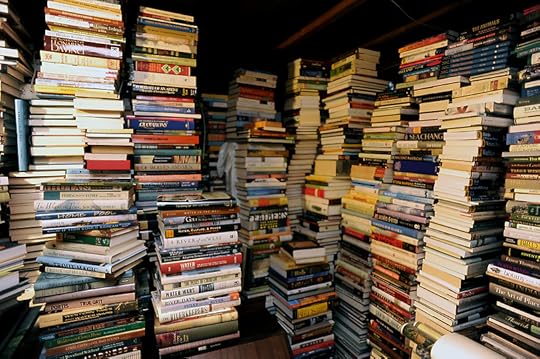
Independent publishers are constantly looking for ways to sell more books. But in our never-ending quest to sell, we might be missing an important part of the equation; buyer behavior. Without a buyer, selling can't happen so if we don't sell in a way that fits the way buyers buy, we might be shooting in the dark.
Market Evolution
In the past, people roamed book stores or read bestseller lists to find books. The arbiters of taste were few and selection was based largely on the inventory of our local bookstore. Amazon, Nook and their contemporaries have changed the game. That means we need to change our methods.
A Case Study in Book Buying
I will readily admit that I don't have a qualitative flowchart model on the modern consumer book buying process. If I did have one, I'm probably not smart enough to understand it. I do know how I buy books. I'm going to bet that my process is similar enough to other regular readers. We all have the enviable problem of too many books to read, not enough time to read them and everyone clamoring for our limited attention. Based on that, I'm going to extrapolate my experience as typical enough for this exercise. Please let me know if I'm way off the mark.
Disclaimer
Please keep in mind that I'm not suggesting that my process is better than anyone else or should be the standard in the way books are selected. This is simply a description of my personal method. My prejudices and biases are cooked into this, so it may not match your preferences at all.
How I Choose a Book
Based on my own observation, I currently have a four step process for buying a book. I'll refer to these steps as notice, choice, testing and purchase.
Notice
I don't buy books that I never see or hear about, so a book has to cross my radar and get noticed before I can consider it. As a reader and writer, there are several ways that I might notice a book. These are generally in order of influence:
Suggestions from Amazon based on my previous purchasesTitles on specific subjects that I search for on AmazonBrowsing physical bookstoresNews articles about books that pop up in my researchRecommendations from my favorite authors that I'm friends with on FBSuggestions from Good ReadsWhat doesn't work: There are many books that I notice and then reject because of the way I found out about them. I generally don't consider books:
on general bestseller lists, random social media messages that say "please check out my book", book review websites, book press releases social media comments that are simply thinly veiled attempts to add links for the author's book.book ads in newspapers, trains or on websitesChoice
After a book gets my attention, there are several factors that will influence whether I will give it a try. Sometimes this choice is subconscious and amorphous, but the selection factors include:
Seeing the name of an author that I have read and enjoyed beforeAn interesting cover designThe book blurbThe format the book is available in (paperback, e-book, audio book)The average rating for the book (if applicable)Things that don't work: In general, there are several factors that I know are supposed to influence my choice but don't. These include:
Any reference to other books the author wroteAny reference to the author being a "bestseller"Other readers specific reviews onlineExcerpts of critical reviews on the back coverGeneric elements of cover design (i.e. the ubiquitous male shadow running away from the White House or the Capitol Building for thrillers)Cliche elements in the book blurb (I read a lot of spy fiction, but I instantly stop reading the blurb when I find out the protagonist is "a burned out cop on the edge", "a maverick FBI/ CIA agent" or "the special forces soldier who answers only to the president")Testing
Once I weed out all the possible books I see, I get a sample of the book to see if the elements hinted in the blurb and the cover are actually in the book. Amazon's "try a sample" is a fantastic tool for this, but a couple times per year I'll grab a stack of books in B&N and peruse them for content. I read the first chapter and determine if the book needs to be acquired.
What doesn't work: Unless it's one of my favorite authors (See Bloody Inspiration 4: My Top Five Thriller Authors) with a strong blurb, I don't buy books without a sample. So when publishers don't make it available, I assume they don't want me to buy it.
Purchase
The decision to purchase is based on my level of excitement during the test.
Low excitement after testing means the book gets dropped. A moderate level of interest means the book will get put on the Amazon/ Good Reads wish list where it might be read later or not at all. A high level of interest means an immediate or impeding purchase and insertion of the book into my audio, e-book or print book cue. At that point the author has succeeded in making money off me. Whether I read more of their work later is based on my reaction to this book and the next thing they decide to write about.
What doesn't work: When a book feels like it's priced too high for my level of excitement, I have aborted purchases. I can buy a book on a whim for $5.99 or less. A price point of $9.99 is about as high as I will go for an e-book. Anything beyond that kills my interest. Also, limiting the format is another reason I'll drop a book. I rarely buy physical books anymore. My first preference is audio, then e-book, then paper. If the publisher insists on limiting my choices, I'll probably choose not to buy.
What I Plan to Change
After taking a long look at my own buying preferences, there are several things I plan to change in my marketing of A Taste of Honey. I had a process that I used for Smooth Operator (See Marketing the Independent Novel) that I'll modify as follows:
Offer the book on multiple platforms to increase potential noticeIncreased target ads to improve notice potentialIncreased advanced book reviews to increase positive choosingOffer the first quarter of my novel for free to encourage testingCompetitive pricing to increase potential purchaseElimination of Twitter feed purchases on launch dayElimination of book press releases on launch dayMy hope is by focusing on how I actually buy books, I will increase my chances of selling books.
What Do You Think?
Am I missing something in my thought process? Do you buy books in ways that I don't take into account? Do you sell books in a method that I don't mention? If you're willing to share your secret sauce, please leave a comment below.
Have fun.
Gamal