Gamal Hennessy's Blog, page 5
March 10, 2014
Genre Fiction: Conventions, Clichés and Evolution

by Gamal Hennessy
Fiction writers balance their work on a creative tightrope. On one hand, we create books that fit within one or more categories defined by the public and the creators who came before us. At the same time, we are expected to create stories that transcend the limits of previous tales and break new ground with our craft. If we stray too much on one side, our work becomes derivative. Too far the other way and we run the risk that no one will understand what we are talking about. How do we deal with this balancing act and produce art? I have a theory, but before I explain that, it might be helpful to start with some definitions.
Genre Definitions and ExamplesGenre: Broadly speaking, genre is a category of art formed by specific conventions. Fictional genres include traditional categories like mystery and romance and newer concepts like YA and slasher horror. There are also sub-genres within most of the major genres. For example, thriller is a very large genre that includes legal thrillers, spy thrillers, medical thrillers and many others.
Convention: The conventions in genre fiction are certain standards of storytelling. They can be defined by location (westerns), levels of activity (action adventure vs. cozy mystery), expected emotional impact (romance or horror), type of protagonist (crime or YA), or definition of reality itself within the story (fantasy and science fiction). Within each genre, the interpretation of the conventions can vary wildly. For example, Ian Fleming, John Le Carre and Tom Clancy are all pillars of the spy thriller genre, but each one approached the conventions from very different perspectives with very different results.
Cliché: is an expression, idea, or element which has become overused to the point of losing its original meaning to become trite or irritating. You are probably all too familiar with the clichés within your genre. The unearthly beauty of the vampire, the maverick FBI/ CIA/ former SEAL of the thriller and the naïve young girl of the historical romance can all fall into cliché because some writers have abused the convention and robbed it of its vitality.
From my perspective, the dilemma lies in how we play with and manipulate the conventions of genre without slipping into cliché. It would be hard to set a western story in modern day Manhattan or have a vampire story where no one sucked blood (or anything else), but how do we differentiate our work from all the other books, TV shows, movies and other stories in our genre that came before us?
I have two ideas. They aren’t really original, but I believe they can help us create work that is.
Creative Combinations The idea behind creative combinations is that unique concepts can come from the blending of different genres. The resulting work contains more of a unique flavor because the conventions of one genre play off and against the conventions of the other. Examples that I’m familiar with include the criminal fantasy of Thieves World, alternative historical psychological thrillers like The Alienist, criminal horror like Grendel and sci-fi cop stories like Blade Runner and Alien Nation. My latest novel A Taste of Honey is an attempt to combine the crime and spy genres in the tradition of The Usual Suspects, The Way of the Gun and Miami Vice.
The good news about this method is that it allows the writer to combine whichever genres appeal to her, so she doesn’t have to sacrifice her interests for her craft. The bad news is that even with the broad number of combinations that are possible, most of them have already been explored in one form or another, so creative combinations serve as a stop gap measure at best.
Evolution of the ArtThe best use of genre is to transcend the conventions to bring the craft into a new era. Writers who understand their genre completely have the chance to redefine the conventions and the genre itself.
Star Wars is the example that comes to mind first. The film at its heart is a monomyth that blends elements of fantasy and science fiction. I’m sure that has already been done before, but I don’t think it’s been done to a level this potent. Star Wars played on standard tropes to become synonymous with space opera. The knights of fantasy stories became Jedi and Sith. The science fiction trope of lasers became lightsabers. The fantasy concept of good and evil itself became personified in the Force. If you want an idea of how successful genre manipulation can be, look no further than Darth Vader and his friends.
Robert McKee said that genres are useful to writers because they help shape and define our creations into “knowable worlds”. A story that tries to contain too many concepts, too many characters and too many conventions is quickly overcome by cliché. Our job then is to know our genre conventions through research and practice. Our goal can then be breaking from the convention to take our genres into unexplored territory or to create a new genre altogether. So how do you use genre in your work? Please leave a comment and let me know.
Have fun.
Gamal
If you’d like to stay informed on the business, craft and lifestyle of independent publishing, sign up for the free Independent Publisher Newsletter


March 3, 2014
How and Why to Watch the Sales Numbers for Your Books
By Gamal Hennessy
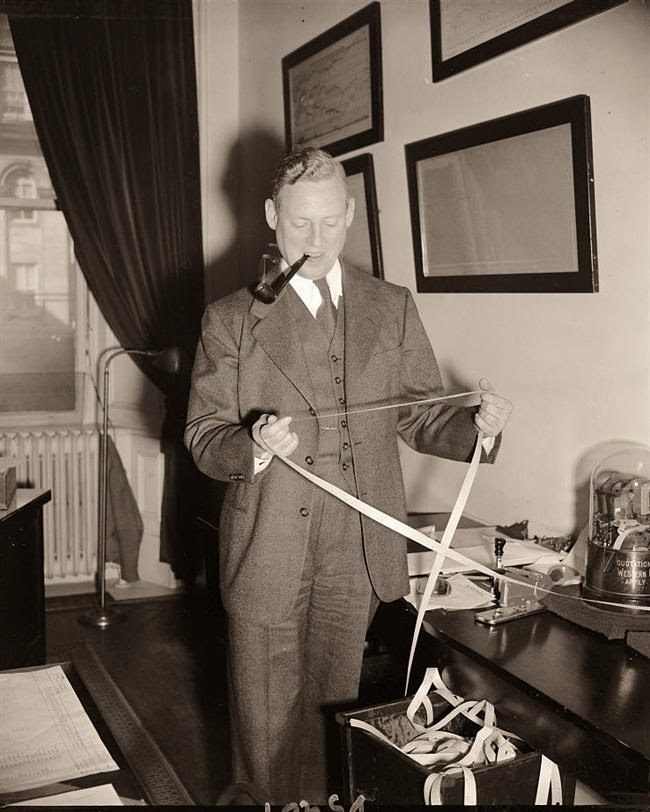
Watching the sales numbers for your book is a normal part of the publishing process. Any publisher, independent or traditional, wants to know how their product is performing in the market. If you just threw your book onto Amazon and then never checked to see if it made money, you might exist at the height of artistic freedom. But you would be ignoring the corporate manager and salesman functions of the independent publisher, (See What is the Difference between Self-Publishing and Independent Publishing?).
At the same time, obsessing your sales numbers can be an emotional rollercoaster that does little to improve your craft or your business. While I am often guilty of paying too much attention to the numbers, I think there is a benefit to looking at them the right way. I'll try to explore both the right way and the wrong way here.
Why We Look at the Numbers
JP Morgan once said “A man has two reasons for doing anything: a good reason and a real reason.” That has direct application for independent sales numbers. The good reason we check the sales page for our books is for financial feedback. High sales are the most basic indicator of the positive performance of our product. Reaching the top of the bestseller list is an indirect comparison between our work and that of our peers. Good sales indicate a successful marketing campaign, and possibly, a positive revenue stream (See Profit and Loss Statements for Independents).
But the real reason I look my sales numbers has little to do with business related issues. My primary motivation is ego gratification. I see high sales as a validation of my work. I equate open emails and FB likes as social proof and recognition. I react to reviews of my books and comments on my articles as people giving me attention and support. It might be narcissistic. It might not have anything to do with sales really, but I would be lying if I didn't admit to the emotional component of watching my sales charts. This reality creates a potential problem, but the first step in solving a problem is to admit that it exists.
How to Look at Your Sales Numbers
Whether your sales are high or low, the second most important benefit to looking at them (after seeing how much money you made) comes from viewing them in relation to the other metrics of your book.
If you have an e-mail list, social media activity, an advertising campaign or some other marketing vehicle, you can look at the relationships between those activities and your sales. As you develop your brand over time, you can try to manipulate the other metrics to try and increase sales. Do you get a bump in sales when you have a blog tour? Is the bump higher when you run an ad campaign? Which one offers a better return on investment? Looking at sales in comparison to your other efforts is an aspect of social experimentation that is a fundamental part of independent publishing. (See What is the Difference between Self-Publishing and Independent Publishing?).
When we look at sales numbers in this context, we only need to look at them periodically, such as when we are trying to measure the impact of a particular activity. When we're trying to track our sales over time, a monthly review of sales makes perfect sense. If we are using our sales numbers as a financial feedback system, we're doing our jobs.
How Not to Look at Sales Numbers
Whether your sales are high or low, they should not affect your writing schedule or your outlook on writing in general. Looking at your sales numbers as you sit down for a writing session can be counterproductive no matter how many books you sold. Checking your sales numbers several times a day for a book that you just released is not a good use of your time. Comparing your sales to another author in the abstract can be self-destructive. Any rumination about sales that keep you from writing should be avoided at all costs. I feel all of these statements are accurate because I have been guilty of each and every one of them in multiple occasions.
Keep Writing
Sales are an important indication of your commercial success as an independent. But it is not the only measure of success (See How Do You Define a Successful Writer?). Even celebrated authors have not achieved the financial success that frees them from their daily routine (See Do You Really Need to Quit Your Day Job?). Writers, like all artists, are driven at least in part by ego. It is a natural expression of the ego to seek validation in things like sales numbers. As long as the hunger for validation doesn't eat the desire to create, obsessing over sales numbers isn't a big problem. Just remember to write in those moments between refreshing the screen to see how many more copies you sold in the last ten minutes.
Have fun.Gamal
If you want to stay informed on the business, craft and lifestyle of independent publishing, sign up for my free independent publishing newsletter
February 24, 2014
Enter Now for Your Chance to Win a Free Copy of Smooth Operator!
.goodreadsGiveawayWidget { color: #555; font-family: georgia, serif; font-weight: normal; text-align: left; font-size: 14px; font-style: normal; background: white; } .goodreadsGiveawayWidget img { padding: 0 !important; margin: 0 !important; } .goodreadsGiveawayWidget a { padding: 0 !important; margin: 0; color: #660; text-decoration: none; } .goodreadsGiveawayWidget a:visted { color: #660; text-decoration: none; } .goodreadsGiveawayWidget a:hover { color: #660; text-decoration: underline !important; } .goodreadsGiveawayWidget p { margin: 0 0 .5em !important; padding: 0; } .goodreadsGiveawayWidgetEnterLink { display: block; width: 150px; margin: 10px auto 0 !important; padding: 0px 5px !important; text-align: center; line-height: 1.8em; color: #222; font-size: 14px; font-weight: bold; border: 1px solid #6A6454; border-radius: 5px; font-family:arial,verdana,helvetica,sans-serif; background-image:url(https://www.goodreads.com/images/layo... background-repeat: repeat-x; background-color:#BBB596; outline: 0; white-space: nowrap; } .goodreadsGiveawayWidgetEnterLink:hover { background-image:url(https://www.goodreads.com/images/layo... color: black; text-decoration: none; cursor: pointer; } Goodreads Book Giveaway
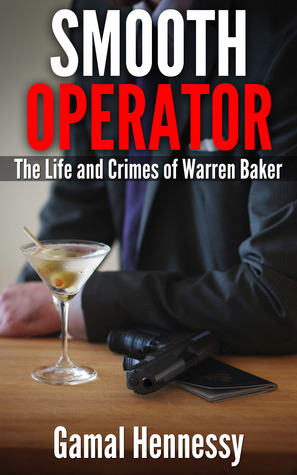 Smooth Operator by Gamal Hennessy
Smooth Operator by Gamal Hennessy Giveaway ends March 10, 2014.
See the giveaway details at Goodreads.
Enter to winWhat is the Difference Between Independent Publishing and Self-Publishing?
Many people use the term "self-publishing" to describe any books that an author releases outside the traditional publishing industry. Some people use the terms self-publishing and "independent publishing" interchangeably. I feel there is an important distinction between the two industries and while one isn't better than the other, some writers are more suited to one than the other.
The Characteristics of Self-PublishingTo me, self-publishing is an organic process that grows like a flower or a tree:
The writer decides to write a book and then explores the experience of releasing it into the world. The writing itself is often done by a discovery method or "pantsing" (See Plotting vs. Pantsing). The post production process (See The Four Stages of Novel Development) is cobbled together ad hoc. The writer either figures out how to do everything on their own (the “self” in self-publishing) or friends and family are recruited to do this work for little or no cost (See the Gift Every Writer Can Give Their Friends and Family)The marketing is limited to narrow social media blasts with little no sustained connection with potential readers.Additional books may or may not be produced. If they are, there might not be any consistency between books, or any improvement in the post production or release process. If a traditional publisher shows interest, the self-publisher will accept that deal as a chance to focus on writing and outsource the other aspects of publishing.A self-publisher is often unincorporated or acts as a sole proprietorship. The self-publisher focuses primarily on her role as a writer.
The Alternative of Independent Publishing
By contrast, I see independent publishing as a strategic process that is identical to a business, except for the normally small size:
The writer decides to write a book and then creates a long term publishing plan (See What is Your Publishing Plan?). The writing itself is often done by plotting according to a specific production schedule (See Why Do We Word Count?). The post production process (See The Four Stages of Novel Development) is a coordinated team approach. The writer hires professionals for the editing, cover design, formatting, and any other aspect where she doesn't have expertise. (See Just How Much Does It Cost to Release a Book?) The marketing is ongoing, seeking to build connections with potential readers and other writers even when there is no book actively being pushed.Additional books are essential. The subsequent books will share a consistent look and feel. They will be released according to an established schedule. As each new book is released, the craft and post production process is improved. (See Overnight Success in Ten Books or Less)If a traditional publisher shows interest, an independent publisher will reject that deal unless it fits in with the strategic goals.An independent publisher is often incorporated as an LLC for tax and payment purposes. An independent shifts their focus across four different roles.The Four Roles of an Independent Publisher
An independent publisher has to be a writer, a corporate manager, a salesman and an experimental social scientist. Each role focuses on a different side of the process and strives to answer a different (but related) question.
As a writer, the independent needs to deal with idea development, research, writing, and editing. The main question for the writer is 'What books are being written?'As a corporate manager, the independent needs to deal with budgets, selecting and monitoring the post production team, beta reading, cover design, release scheduling, revenue collection and performance evaluation of each book. The main question for the manager is 'How can we produce the best books at the lowest cost?'As a salesman, independents handle distribution control, sales copy, marketing, reviews and advertising. The main question here is 'How can we sell the maximum number of books at the lowest cost?’As an experimental scientist, the independent deals with the constantly shifting playing field of publishing. He needs to research each aspect of the business, develop theories on what will improve all the other aspects of the business, and test those theories in the real world. The main question here is 'Why do some things work and others don't?'
A Personal Choice
Whether you use the self-publishing or independent publishing model is a matter of taste, time and personal goals. Some writer's need the structure of independent publishing; others don't want to deal with the inherent tension that comes from the changing perspectives of independents. Success is not guaranteed with either method. Ultimately it is our individual writing goals and not our method that will define our writing (See How Do You Define a Successful Writer?)
Have fun.Gamal
If you want to stay informed about the business, craft and lifestyle of independent publishing, Sign Up Now for the Independent Publisher Newsletter!
February 17, 2014
Advance Review Request for The Art of Seduction

I'm currently looking for advanced reviewers for my novella, The Art of Seduction from February 18, 2014 to March 10th 2014.
If you're not familiar with the advance review process, don't worry. All that means is that you get an early copy of the book in exchange for an honest review that you post on Amazon or Good Reads. It doesn’t have to be a five star review. An honest assessment of your reaction is better for other readers and the author.
Advanced reviewers for this book will receive a free copy of A Taste of Honey as a thank you for your support.
If you enjoy crime thrillers or spy stories, consider this premise:
The Art of Seduction: A Taste of Honey Book Two
Nikki Sirene is a spy who uses her sexual charms to steal secrets. Her latest target is Manuel Cruz, an Argentine shipping magnate who might be using his company to smuggle weapons into Mexico. Nikki's mission is to get close enough to the womanizer to get access to his shipping records.
Seducing this kind of man is easy for Nikki, but dealing with his paranoid business partner and mysterious wife create complications and problems she couldn't anticipate. As threats emerge from all sides, will Nikki remain the hunter or will she become the target?
Note: This is episode two of A Taste of Honey. The story began in Book One: Anything for Loveand will conclude in Book Three: The Screams of Passion.
If you're interested in being an advanced reviewer for this book, please send an e-mail to gamalhennessy@gmail.com and I'll give you all the dirty details.
Thanks for playing.
Have fun.
Gamal
How to Deal with the World’s Reaction to Your Novel

One day you decided you were going to write a book. You came up with a story, changed it, fought with it and after a long struggle you finally reached the words “The End”.
Then you realized it was only the beginning. You edited it over and over again. You got feedback from beta readers. You got a proofreader and a professional editor. You got a cover designer. You wrote promotional copy. You found early reviewers. One day you released your story out into the world in eager anticipation for the world’s reaction.
This essay is about responding to that reaction.
Of course, I’m using “the world” as a dramatic device. In the vast majority of cases only a miniscule segment of the world’s population will have any knowledge or interest in your book, even if you sell a million copies. Out of seven billion people on the planet, only a select few will notice your book. But their reaction can be magnified out of all proportion depending on how you deal with it.
Their Four ResponsesPeople will either love, hate, forget or ignore your story. These responses are based on a variety of factors, only some of which will be in your control. A reader might love your story because it reminds her of some aspect of her own life. She might hate it for the same reason. While you can’t predict how an individual reader or a group of readers will respond to your work, there are a few things you should keep in mind when these responses come.
If people love your story and tell you about it in reviews, emails and social media posts, take the time to thank them for their reaction. Fans are extremely valuable to an independent author (See Champions, Tastemakers and True Fans). Creating a personal connection with each of them is the best way to build a base of support that will buy your next book. It also helps to have another story available for them to read, because once a reader finds an author and characters they love, they will look for more stories. Keep writing.
If people hate your story and tell you about it, you need, as much as possible, to not see the attacks on your story as attacks on you. As writers we are mentally and emotionally connected to our work. It is difficult to see a distinction between ‘this story sucks’ and ‘this writer sucks’. (See Learning to Love the Bad Review) But there is no point in getting into an online war of words with a bad reviewer. You won’t be able to change his mind about your book and you’ll probably alienate other people who see your defensive reaction. More importantly, focusing on a negative review will take energy away from efforts you could be putting into your next book.
If people forget your story, it is likely that they never bothered to react to it one way or another. There isn’t much you can do with this group except write the next story and try to bring them back as a repeat reader. A silent repeat reader, or even a one-time reader, isn’t as good as a vocal fan, but it still worth having them in your corner.
If people ignore your story you might feel lost. You won’t know if there is some technical problem that prevents people from buying it or some problem with your pricing, your cover, your description or some other factor that you can’t think of. You might start to feel isolated, as if the entire effort to put out a story was a complete waste of time. What’s the point of releasing a book if no one is going to read it?
Just remember that selling your work is not always a direct reflection on the quality of your work. People can’t decide a story is bad if they’ve never read it. It is impossible to read it if they ignore it or have never heard of it. You might need to change your sales and marketing strategy. You might need to improve your sales copy and cover design. You might learn lessons that you can apply to your next book. But under no circumstances should you stop writing. A successful writer isn’t just defined by sales (See How Do You Define a Successful Writer?) and the book that is ignored today can find a new audience when your next book comes out.
Your One ResponseNo matter how the public reacts to your work, you need to keep writing. It does you no good to be controlled by the fleeting moods and attitudes of your readers. You can be aware of them. You can respond to them in a polite and professional manner. You can take them into account in your future marketing plans. But the only way to fail as a writer is to stop writing. Public reaction, positive or negative, can’t stop you unless you give into it.
Have fun.
Gamal
If you want to stay informed on the business, craft and lifestyle of independent publishing, sign up for the free Independent Publishing Newsletter!
February 3, 2014
Read a Story of Crime and Passion Called Anything for Love

A Taste of Honey
Book One: Anything for Love
Nikki Siriene is willing to suffer for her lover Chris. She uses her sexual charms to spy for him. She deals with the constant slut shaming from his mercenary soldiers. She even faces the threat of sudden violence from his targets. But she wants a better life and she wants it with him.
That's why Nikki follows Chris to Argentina. She needs to escape the danger and constant stress of their lives. But new threats are hiding in this paradise. Will Nikki finally learn the truth about Chris and the men who are hunting him? Will she be able to leave the life of a honey trap, or will she be forced to sacrifice everything for her love?
Now available on Amazon and Kobo for just 99 cents!
Note: This book is episode one of A Taste of Honey. It originally appeared in the 2013 anthology Smooth Operator . Nikki's story will continue in Book Two: The Art of Seduction which will be available in March of 2014.
A Story of Crime and Passion Begins Next Week...
...here's your sneak preview...
A Taste of Honey
Book One: Anything for Love
Nikki Siriene is willing to suffer for her lover Chris. She uses her sexual charms to spy for him. She deals with the constant slut shaming from his mercenary soldiers. She even faces the threat of sudden violence from his targets. But she wants a better life and she wants it with him.
That's why Nikki follows Chris to Argentina. She needs to escape the danger and constant stress of their lives. But new threats are hiding in this paradise. Will Nikki finally learn the truth about Chris and the men who are hunting him? Will she be able to leave the life of a honey trap, or will she be forced to sacrifice everything for her love?
Coming to Amazon, Kobo and Smashwords on Tuesday, February 11th 2014.
Note: This book is episode one of A Taste of Honey. It originally appeared in the 2013 anthology Smooth Operator . Nikki's story will continue in Book Two: The Art of Seduction which will be available in March of 2014.
January 27, 2014
Levels of Conflict: Hitting Your Hero From All Sides
 by Gamal Hennessy
The vast majority of all fictional plots boils down to a struggle to achieve a goal. A protagonist has an object of desire that is material or situational. To get what she wants, your heroine has to exert effort against everything that stands between her and her goal. The power and intensity of her obstacles will define both your heroine and the strength of your story. But where do those obstacles come from and how can we build them into the story in a way that tests the heroine in the most satisfying manner? One answer lies in playing with the different levels of conflict.
Three Levels of Conflict
A level of conflict is a source of antagonism that stands between your protagonist and their goal. Robert McKee's book Story defines three major levels of conflict:Internal: where the thoughts, feelings or physical characteristics of a protagonist block achievement of the goalInterpersonal: where relationships with other people or groups block achievementExtra-personal: where institutions, natural phenomenon and situations block achievement
To put this into perspective, let's say you're writing a story about a boy named Adam living in Jerusalem. Adam has just seen a beautiful Arab girl and in that moment decides that he is in love. What obstacles does Adam face in his quest for a relationship? As a writer, you have several options:Internal: Adam's shyness, lack of experience with women and unattractive features get in the way of his budding romance. Interpersonal: The girl might resist his advances for her own reasons, or she might have another suitor who wants to remove Adam from the picture. Also, Adam's parents could try to prevent him from getting involved with an Arab girl. The girl's brothers might threaten him with violence. His own friends might reject him.Extra-personal: The wider Arab Israeli conflict could also inhibit our hero. Hezbollah bombings into the settlements could disrupt Adam's life or create a curfew situation. A suicide bomb could destroy everything or even kill the girl. Protests, strikes or other mass social events could tear their relationship apart before it even gets started.
This is just a few examples of what Adam is up against. If he is able to win this girl's love, the obstacles he'll have to overcome could make an amazing story.
The Different Directions of Conflict
After you determine the conflict against your hero, you have three main choices when deciding on the direction you’d like to go with each one:Broad: where the protagonist has to deal with conflict on each level, either at once or simultaneouslyDeep: where the conflict is primarily on one level, but the impact on that level is this hammers at the core of the characterCompound: where the conflicts are both broad and deep and the hero fights intense battles on all fronts to achieve their goal.
The direction you choose is often a function of genre. An action adventure might have heavy interpersonal and extra personal conflict when the hero battles the arch villain on the top of a mountain in a blinding snow storm. A cozy mystery might have strong internal focus as the detective quietly strains her intellect to solve the crime. Every style of writing can tap into each type of conflict, but some genres lend themselves to specific conflict types.
Conflict as Spotlight
The best way I've found to develop conflict in my work is to focus on the aspects of my protagonist that I want to reveal and then creating conflicts that explore those traits. One of my main characters is a young woman named Nikki. She wants the affection of her mentor and lover Chris. To show her dedication to this goal, I put several obstacles in her path in the first twenty five pages of the book.
Nikki has to deal with the extra personal danger of spying on the Russian mafia for Chris. She has to face the interpersonal roadblocks of abusive teammates. The internal doubt she has about who Chris really is and her own feelings for him create the largest source of conflict. As the story progresses, each level of conflict deepens and interacts with the others to build a story that reveals Nikki's true character as the narrative unfolds. (See Creating Complex Characters)
The best stories have the strongest conflicts. While it's not necessary to throw every obstacle at every character in every story, a weak story is most often the result of weak antagonists. Pit your heroine against the strongest combination of antagonism that you can think of. Your readers will thank you for it.
Have fun.
Gamal
If you’d like more tips on the business, craft and lifestyle of independent publishing, sign up for the Independent Publishing Newsletter. It’s Free!
January 20, 2014
Profit and Loss Statements for Independent Publishers
by Gamal Hennessy
When I hear self-published authors talk about the success of their book in the marketplace, the discussion often begins and ends with the number of copies they’ve sold. A few of them might boil things down to an actual dollar amount a book makes each month, but these board measurements don't capture the whole story.
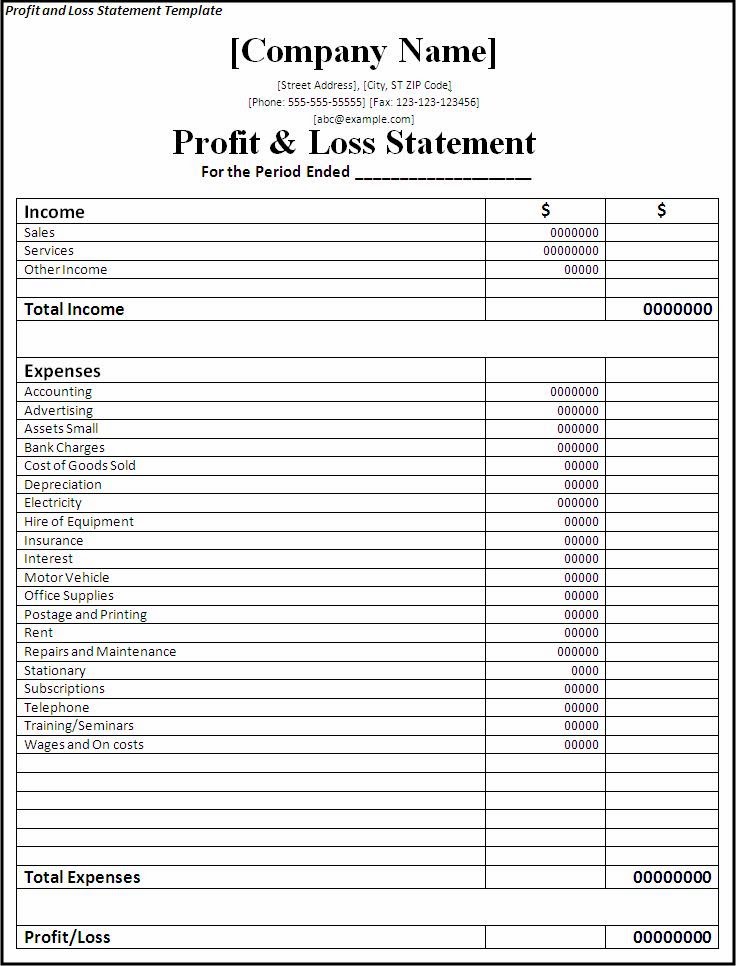
A book that makes $1,000 but costs $3,000 to launch isn't as financially successful as a book that makes $1,000 but cost $700 to launch. At the same time, a book sold through one outlet will bring in less money than the same book at the same price sold on a different website. To help independents get a better handle on the financial performance of their catalog, I suggest using a simple profit and loss statement or P&L.
A Little Background
My experience with P&Ls comes from the time I spent in the media industry. Every time we released a graphic novel, DVD or other product, the business affairs department had to generate a P&L to predict and measure that product’s potential success.
A lot of companies use P&L's to plan and evaluate their business. The banks that I deal with now have P&Ls that would make your eyes bleed. I've kept my version simple because independent publishing has a fairly straightforward business model and because I'm not that smart.
Determining Losses
The first element to a profit and loss statement is calculating your loss. In publishing, this is the amount of money you have to pay to get your words out into the world. It is often referred to as the cost of goods sold. I've found that there are several costs that make up this number when releasing a book:EditingCover DesignFormattingMarketingRegistration (ISBN, copyright, etc.)Advertising (if any)
You might have other costs associated with the marketing or production of your books, but this list covers the basics. (See Just How Much Does It Costs to Publish a Book Anyway?). In this case, your total cost is the sum of everything you have to pay to produce one book. That's the bad news.
The good news is that digital distribution has reduced the subsequent costs to almost zero. You pay one price for the first book, but don't have to pay anything extra books whether it’s two more or two million more. That means the price you paid for that first book decreases with every additional book sold. You might have additional initial costs when you launch a new product (bundle, audiobook, graphic novel, etc) but then you also have an additional revenue stream.
All Profit Is Not Created Equal
Independents face a choice when it comes to distribution of their work. They can go with a low to generate volume sales or a high price to give each individual sale a higher impact. They can test the benefits of exclusivity with one distributor (Amazon's KDP program), or they can give up those benefits to post their books on several smaller online stores for higher incremental revenue.
There are vocal supporters on all sides of this debate. You'll have to make your own choices for each book you release. The one thing that should not change is keeping track of how many books you sell and how much you make for each book.
Profit in independent publishing is based on the royalty you collect for each book sold. For example, if your novel is $2.99 on Amazon, you collect 70% of the sales price or about $2.10. If that is the only place where your book is available, then it's fairly easy to determine how profitable your book is overall when you look at it relative to its loss.
Breaking Even
In the simplest economic terms, a book succeeds to the extent that the profits exceed the losses. The threshold between success and failure is the break even number. If your book sells at a level less than break even, you lost money on that book. If the book sells more than break even, it is technically profitable. You might not be able to quit your job to write, but you're making more than you're spending. Congratulations, a lot of people never get to that point.
Using our example above, let's say your $2.99 book costs you $1,000 to release. If you make $2.10 per book, then you'd have to sell about 477 to break even.
In terms of a profit and loss sheet, it is helpful to determine the break even number and how much you make from each website at each price point. This will not only show you which websites are better for your book, but which prices make you the most money. Does it make sense to sell 50 books at a $2.10 royalty or 500 books at a $.35 royalty? Should you sell on one site and sell 200 copies or spread out to five sites and sell 40 copies each? If you compare the numbers in your P&L the answers should come to you.
Beware the Miser
A P&L has a larger benefit besides just telling you if you broke even or made money. It can help you manage the business side of publishing. It seems to me that there are only two ways to increase the profitability of a book; increase sales or decrease costs. Increased sales are the long term play. Because out books don't go "out of print" we can continue to count on long term sales if we continue to publish new material. Each new book stimulates interest in the overall catalog, making your new book the best advertising for your old book.
Decreasing costs is the short term play. If an author can make $500 in sales on a $250 production cost, he'll always be profitable. But it’s short sighted to reduce the quality of the product in an attempt to reduce the losses to zero. A low quality book will chase readers away to the point where both your costs and your profits are zero. (See Are Self-Published Books Inherently Inferior?). The smarter choice is to produce quality products within a budget you can handle. They'll serve you better in the long run and you'll be proud of them.
Follow the Muse
It is also a mistake to use the P&L as an indicator or what to write. Let's say you're trying to choose between writing a YA werewolf story, a historical romance, and a sci-fi epic. According to your P&L, your last historical romance was profitable. Your YA book fell flat and you don't have any previous sci-fi to make a comparison.
Which book should you write?
You write the book you are inspired to write most. The P&L is a helpful business tool, but it isn't a creative tool. Your artistic muse is in control when you sit down and write, not an Excel spreadsheet. You might get creative with costs and pricing when the book is done, but save most of your creativity for the book. Don't let the numbers get in the way.
Have fun.
G
If you’d like more tips on the business, craft and lifestyle of independent publishing, sign up for the Independent Publisher Newsletter. It’s free!