Gamal Hennessy's Blog, page 3
September 3, 2014
My Sixteen Game Ban on the NFL
Dear Professional Football:
Tomorrow is the start of the season, but I’m giving you a sixteen game ban from my life. You can probably guess why, but allow me to be specific.
As a more than casual fan of the Giants in particular and the league in general, I’ve ignored a lot of bad behavior over the past few years including:The bounty scandalThe concussion scandalThe dog fighting scandal I even gave you a pass on the alleged homicide scandal because of the way you reacted.
But I can’t condone misogyny.
You make a big show of holding your employees to a high standard of behavior (See the Sportstrac NFL 2014 Suspension and Fine Tracker). You claim to enforce harsh discipline whenever and however you see fit. If a player takes marijuana or performance enhancing drugs, you suspend them for four games. They lose hundreds of thousands of dollars. If a player hits another player the wrong way on the field or makes an obscene gesture, they are suspended for a game or fined or both.
So what happens if a player hits his fiancé hard enough to knock her unconscious, then drags her out of an elevator, tosses her on the ground like a sack of dirty laundry and has a casual conversation with the security guard who happens by?
He gets a two game suspension. (See The NFL’s Uneven History of Punishing Domestic Violence)
Here are the messages I get from your decisions:It’s better to knock a woman out than smoke weed or cheat on a test.Punching your significant other is just as bad as two obscene gestures during a game.Domestic violence is not as bad as illegal contact during the game.
The overall message boils down to the safety and security of women is not important to the NFL.
I know we don’t know what happened in the elevator. I know you changed your policy in the wake of public backlash. I understand my decision to distance myself from you won’t make any difference to your business or your product. I’m sure you’ll make more money this year than you did last year. You will continue to be the most addictive and popular sport in America. But I need to get away from your message for a while. I want to give you an example of what a significant ban looks like. Maybe I’ll come back for the playoffs. Or maybe your next misogynistic misstep will turn me away for good.
Have fun.
G


August 27, 2014
The Way of the Knife: A Book Review

by Gamal Hennessy
9/11 had a ripple effect the world is still dealing with. Universal surveillance, endless cycles of war and the erosion of civil liberties are all by products of the attack on the World Trade Center. The Way of the Knife focuses on the way, waging war and declaring war have changed for America in the 21st Century. The book goes over familiar ground in great detail, but it is ultimately unsatisfying.
The central premise of the book revolves around the military developing increase spying capability while the intelligence community devoted more of it’s time to killing than spying. The book explores the high level infighting between the Pentagon and Langley for control of the War on Terror. It’s a catalog of greed, bickering, turf battles, mismanagement and failed opportunities. Way of the Knife reveals many of the political and financial gains made by Washington elites in the name of national security.
I hoped this book would focus more on the experience of spies and soldiers on the ground in places like Iraq, Pakistan and Afghanistan. I had little interest in the back room deals made at the White House or the juvenile temper tantrums of our highest officials. Way of the Knife is enlightening and educational, but it gives too much attention to men and women who deserve condemnation and not more fame for their manipulations
August 21, 2014
Writing While the World Burns

by Gamal Hennessy
Police strangle a man in broad daylight.
I write.
Police gun down yet another unarmed man and I keep writing.
Protests turn into riots and police suppress the media, but I keep writing.
Gaza bombs Israel. Israel invades Gaza and I’m still writing.
Ebola spreads fear and death but that doesn’t stop me from writing.
Russia invades Ukraine.
Iraq and Syria crumble into civil war.
Fanatics behead journalists.
Athletes beat women and send them to the hospital.
I write.
Rape culture, racism and sexual repression remain fixtures in our culture.
I just keep writing.
What is the point?
Books and ideas can change the world, but I’m not writing some social manifesto. Very few people read what I write and even if they did, it wouldn’t change the relationship between cops and the community, women and men, or people and their own sexual expression. Writing, especially my writing, doesn’t change the world, but it might offer a way to cope.
Writing is an opportunity for catharsis. When anger and rage from police brutality, misogyny and other acts of human stupidity start to pile up, a writer can channel all those negative emotions into their work instead of holding it inside. A reader can feel the visceral impact without exposing themselves to more danger. Perhaps hiding an emotional truth inside a fictional lie is a good way to express the chaos of our lives. Maybe that’s why humans need stories. Maybe that’s why I write.
I don’t know the right answer and I don’t have solutions to the problems we face. But I’m not trying to solve the world’s problems. I’m just trying to write.
So I keep writing.
Have fun.
Gamal
August 17, 2014
The Touch of Honey Beta Reader Request
I'm currently looking for beta readers for my third novel, A Touch of Honey.
If you're not familiar with the beta reading process, don't worry. Beta readers are like a focus group for books. They help the publisher predict audience reaction to a story by getting feedback from a small segment of the market (See On Using and Being a Beta Reader)
A Touch of Honey is a sequel to my last novel, A Taste of Honey . It continues the story of the spy Nikki Sirene as she tries to survive in a world of crime and passion.
If you enjoy adult crime thrillers, consider this premise:
In seduction, control is surrender and surrender is control…
Nikki Sirene uses her sexual charms to manipulate men and steal their secrets. She lives in constant fear because the man who used to love her is now trying to kill her.
Desperate for protection, she agrees to a relationship of mutual exploitation with a mysterious spy named Warren Baker. He agrees to protect her from her enemies if she agrees to help take down a sex slave operation in New York.
Entering into this world of depravity and pain pushes Nikki to the edge of sanity. Can she escape with her freedom and her life, or will she become just another human trafficking statistic?
If you're interested in being a beta reader for A Taste of Honey, please send an e-mail to gamalhennessy@gmail.com and I'll put you on the list.
Have fun.
G
If you're not familiar with the beta reading process, don't worry. Beta readers are like a focus group for books. They help the publisher predict audience reaction to a story by getting feedback from a small segment of the market (See On Using and Being a Beta Reader)
A Touch of Honey is a sequel to my last novel, A Taste of Honey . It continues the story of the spy Nikki Sirene as she tries to survive in a world of crime and passion.
If you enjoy adult crime thrillers, consider this premise:
In seduction, control is surrender and surrender is control…
Nikki Sirene uses her sexual charms to manipulate men and steal their secrets. She lives in constant fear because the man who used to love her is now trying to kill her.
Desperate for protection, she agrees to a relationship of mutual exploitation with a mysterious spy named Warren Baker. He agrees to protect her from her enemies if she agrees to help take down a sex slave operation in New York.
Entering into this world of depravity and pain pushes Nikki to the edge of sanity. Can she escape with her freedom and her life, or will she become just another human trafficking statistic?
If you're interested in being a beta reader for A Taste of Honey, please send an e-mail to gamalhennessy@gmail.com and I'll put you on the list.
Have fun.
G
August 14, 2014
Being Wrong: A Book Review
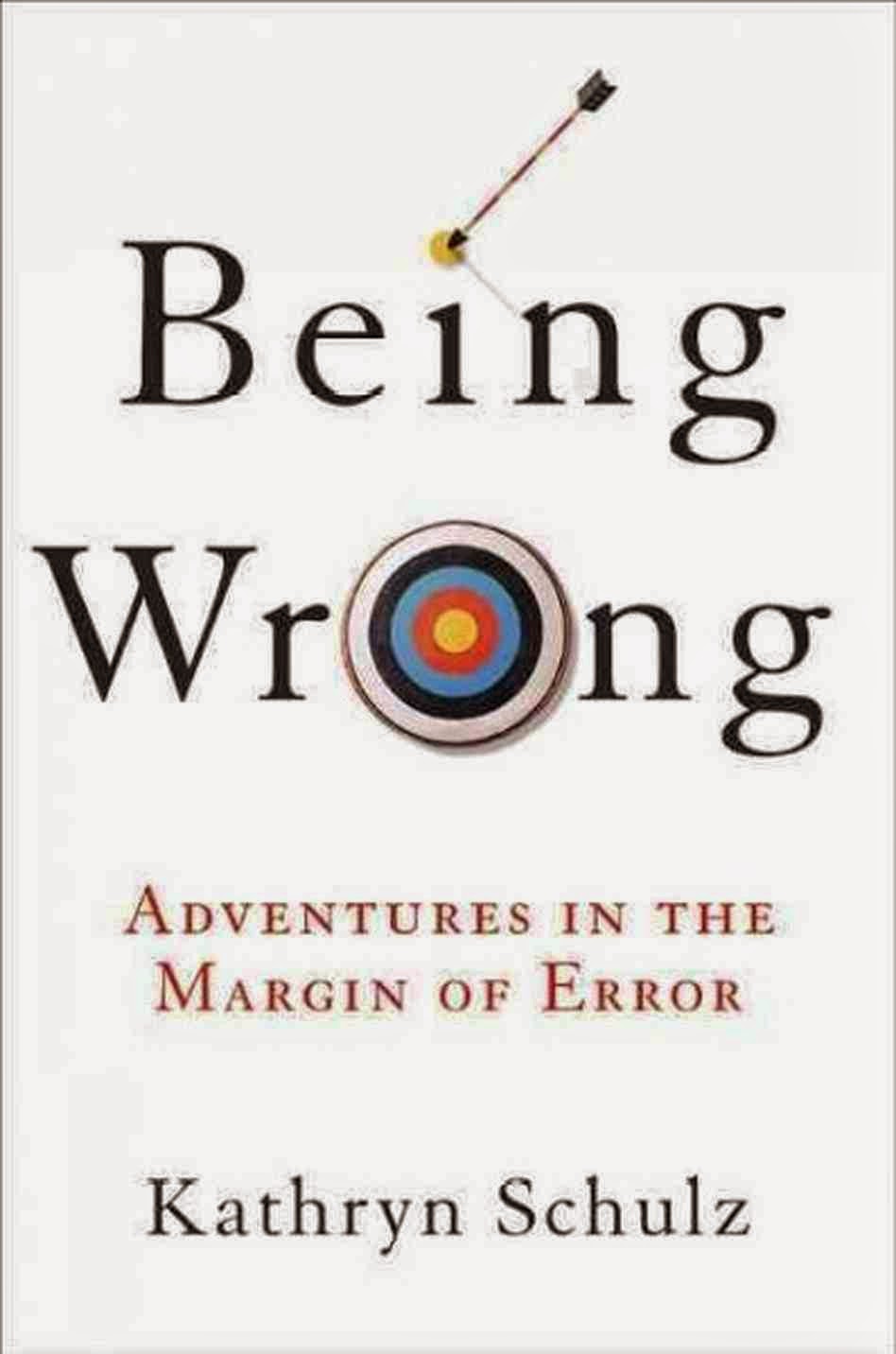
Most people go through life thinking they are almost always right about pretty much everything virtually all the time. The reality is we are often wrong about things from the trivial to the universal. Being Wrong explores why we are wrong so often and how it is helpful to us.
Katheryn Shulz breaks down various sources of error, from sensory perception and cognitive interpretation to group prejudices and cultural biases. She also looks at the mental, psychological and social consequences of both being wrong and knowing you are wrong. She had so many categories of how we get things wrong as well as compound combinations of error, I began to wonder how we ever get anything right. I also marveled at humanity’s ability to remain in existence considering how massive some of our mistakes are.
In the end, Being Wrong suggests error is a fundamental part of thinking. Developing the ability to use the brain also develops the ability to misuse it. Shulz took time to focus on the positive aspects of being wrong, including innovation, learning and adaptive behavior. She didn’t spend anytime discussing situations where subjective opinion is the basis of being “right” or when the “right answer” can’t be known or situations where people continued to maintain the “wrong” stance when it was in their best long term interests. Still, Being Wrong is an insightful look an ignored part of our mental processes. If you decide not to read it you will, once again, be wrong.
Have fun.Gamal
August 12, 2014
Who Watches the Watchers (Thoughts on the American Police Brutality)
The current strained relationship between police forces and some communities could be the result of military surplus weapons and training flowing from the War on Terror to local precincts (See Bill Maher: Police State).
It could be the result of the gradual expansion of police powers and a siege mentality in policing dating back to the American Revolution. (See Rise of the Warrior Cop).
Perhaps this occupying force mentality has always been present in our society and is only on the top of our minds now because the wider proliferation of personal video gives us weekly examples of minority and poor Americans being attacked and sometimes killed by police officers or even neighborhood watch members. (See NYC Official Wants Police to Wear Cameras After Chokehold Death).
It’s probably a combination of these factors and many others, but I think the most important thing to look at when thinking about or dealing with the police revolves around understanding their day to day motivation.
The articles I’ve seen about the killings in New York and Missouri frame the issue as racial, economic or social. (See FBI Steps In Amid Unrest After Police Kill Missouri Youth) I think all these things come into play, but why a person does what he does is based less on his socio-political position and more on his mental and emotional motivations. I’ve never been in the police department, but I don’t think it takes twenty years on the force to understand the things he care about:
A police officer wants to protect*:His lifeHis partner’s lifeHis family’s future His incomeHis pensionHis career and/or promotionHis reputation with other police His relationship to his superiorsThe relationship of his precinct to the othersThe relationship of his precinct to City HallHis relationship to the media and the court of public opinion
Please note: aiding the members of the community like you or me may or may not fit on this list. If it does, I doubt it will be higher than any of the things I’ve mentioned. I think this is accurate not because police are evil, but because police are human and every human in a society is motivated by self interest. If you or I decided to be a cop for whatever reason, this list would seem completely reasonable.
When you add the constant threat of sudden violence that comes with being a police officer, and increased access to military weapons and training to the list of motivations above, you create a situation where any actual or perceived threat to an officer or his motivations could result in a lethal force altercation.
To reiterate, I don’t believe all cops are evil. I don’t believe all cops are good. I believe all cops are human and are driven by what they perceive to be their best interests in stressful situations. Putting every police officer on camera for every civilian interaction can be effective because it impacts most of the officer’s motivations. But footage can be manipulated and evidence is not a guarantee of anyone being punished for a crime. Cameras treat the symptom, but they do not alter the underlying factors of behavior.
I’m not, nor do I plan to be engaged in any violent or criminal activity. Having said that, I limit my interactions with police to the same level as the characters in my writing. I avoid them when possible and do my best to avoid or disengage from any situation where police might become involved. If that isn’t possible I try to remove myself from the situation as soon as possible without making things worse (See 10 Rules for Dealing with Police)
Struggles between police and the people they protect is not a new phenomenon. In the first century AD, a Roman poet coined the phrase Quis custodiet ipsos custodes? or who watches the watchers? Through the magic of YouTube and Iphones we can all watch them, but until we can understand and change their motivations, is there anything we can do to stop them?
Have fun.Gamal
*Yes, I realize there are female police officers. Yes, I made a specific choice to single out men. I’m sure you can figure out why.
It could be the result of the gradual expansion of police powers and a siege mentality in policing dating back to the American Revolution. (See Rise of the Warrior Cop).
Perhaps this occupying force mentality has always been present in our society and is only on the top of our minds now because the wider proliferation of personal video gives us weekly examples of minority and poor Americans being attacked and sometimes killed by police officers or even neighborhood watch members. (See NYC Official Wants Police to Wear Cameras After Chokehold Death).
It’s probably a combination of these factors and many others, but I think the most important thing to look at when thinking about or dealing with the police revolves around understanding their day to day motivation.
The articles I’ve seen about the killings in New York and Missouri frame the issue as racial, economic or social. (See FBI Steps In Amid Unrest After Police Kill Missouri Youth) I think all these things come into play, but why a person does what he does is based less on his socio-political position and more on his mental and emotional motivations. I’ve never been in the police department, but I don’t think it takes twenty years on the force to understand the things he care about:
A police officer wants to protect*:His lifeHis partner’s lifeHis family’s future His incomeHis pensionHis career and/or promotionHis reputation with other police His relationship to his superiorsThe relationship of his precinct to the othersThe relationship of his precinct to City HallHis relationship to the media and the court of public opinion
Please note: aiding the members of the community like you or me may or may not fit on this list. If it does, I doubt it will be higher than any of the things I’ve mentioned. I think this is accurate not because police are evil, but because police are human and every human in a society is motivated by self interest. If you or I decided to be a cop for whatever reason, this list would seem completely reasonable.
When you add the constant threat of sudden violence that comes with being a police officer, and increased access to military weapons and training to the list of motivations above, you create a situation where any actual or perceived threat to an officer or his motivations could result in a lethal force altercation.
To reiterate, I don’t believe all cops are evil. I don’t believe all cops are good. I believe all cops are human and are driven by what they perceive to be their best interests in stressful situations. Putting every police officer on camera for every civilian interaction can be effective because it impacts most of the officer’s motivations. But footage can be manipulated and evidence is not a guarantee of anyone being punished for a crime. Cameras treat the symptom, but they do not alter the underlying factors of behavior.
I’m not, nor do I plan to be engaged in any violent or criminal activity. Having said that, I limit my interactions with police to the same level as the characters in my writing. I avoid them when possible and do my best to avoid or disengage from any situation where police might become involved. If that isn’t possible I try to remove myself from the situation as soon as possible without making things worse (See 10 Rules for Dealing with Police)
Struggles between police and the people they protect is not a new phenomenon. In the first century AD, a Roman poet coined the phrase Quis custodiet ipsos custodes? or who watches the watchers? Through the magic of YouTube and Iphones we can all watch them, but until we can understand and change their motivations, is there anything we can do to stop them?
Have fun.Gamal
*Yes, I realize there are female police officers. Yes, I made a specific choice to single out men. I’m sure you can figure out why.
A Brief Introduction to the Crime and Passion Blog
You and I share something in common. Curiosity led you to this post. Curiosity inspires me to write. Most of my books focus on adult crime fiction and I plan to use this blog to explore the real world influences on my work. I want to share ideas to increase your understanding and interest in the forces that shape modern conflict. The conflict could be based on our internal struggles, our personal interactions or the challenges facing us as a group. All of them play a role in my creations.
I’ve renamed this blog, and my series of novels, Crime and Passion because those concepts describe the what and the why of my curiosity. The characters in my stories are spies, assassins, prostitutes, slave traders, gun runners, thieves, mercenaries and others who make crime and violence their way of life. They are driven by greed, pride, lust, envy, hatred and other expressions of our darker nature. My hope is to create stories you can relate to, even if you see a side of yourself you might not like.
Writing in this genre exposes me to a lot of fascinating real world stories. My research covers a wide net, including news stories, books and open source intelligence reports. I want to use this blog to share the information I find and hopefully have a dialogue on aspects of the real world that are far more fascinating than any fiction I create.
Because I write about real world issues for adults, this blog will explore some hot button issues concerning politics, sexuality, social issues and violence. I will offer my perspective on news stories relevant to my writing. Those perspectives might not conform to popular opinion or to your experience. I welcome discussion and alternative views, but I try not to waste time with trolls.
I hope Crime and Passion satisfies your curiosity and stimulates your imagination.
Have fun.Gamal Hennessy
I’ve renamed this blog, and my series of novels, Crime and Passion because those concepts describe the what and the why of my curiosity. The characters in my stories are spies, assassins, prostitutes, slave traders, gun runners, thieves, mercenaries and others who make crime and violence their way of life. They are driven by greed, pride, lust, envy, hatred and other expressions of our darker nature. My hope is to create stories you can relate to, even if you see a side of yourself you might not like.
Writing in this genre exposes me to a lot of fascinating real world stories. My research covers a wide net, including news stories, books and open source intelligence reports. I want to use this blog to share the information I find and hopefully have a dialogue on aspects of the real world that are far more fascinating than any fiction I create.
Because I write about real world issues for adults, this blog will explore some hot button issues concerning politics, sexuality, social issues and violence. I will offer my perspective on news stories relevant to my writing. Those perspectives might not conform to popular opinion or to your experience. I welcome discussion and alternative views, but I try not to waste time with trolls.
I hope Crime and Passion satisfies your curiosity and stimulates your imagination.
Have fun.Gamal Hennessy
August 5, 2014
Navigating the Waters of E-book Exposure
For the first time (and hopefully not the last time), we have a guest writer on IPN. Ms. Leti del Mar of Rock the Book has shared some of her classic and traditional methods of book marketing with us. As an independent publisher, I plan to borrow some of these techniques.------------------------- The publishing industry is changing. It is being flooded with affordable e-books by traditionally published authors, self-published authors, and authors published by small companies. E-books are one of the fastest growing facets of the publishing industry, and authors are taking control of their own marketing and book promotion.
The gatekeepers used by the big bad publishing houses are becoming irrelevant. Many authors are skipping the traditional steps: write a book, query an agent, get signed by said agent, agent submits to publisher, publisher publishes said book, and then publisher does little to promote it. Instead they bring their work directly to the reader.
What that means for readers is that the reading choices out there are endless.
What that means for authors is that, while it is easier to get your book out there, it is just as easy for your book to get overlooked.
So with no gatekeepers, how does an author get noticed? How does a writer find an audience for their book?
For just a moment, let’s forget all about technology, Amazon, e-books, e-readers and book bloggers. Go back in time a decade or two to when these things didn’t exist. In those days of mortar and brick bookstores, how did people find books to read?
They asked a friend. Remember those conversations? You might even still be having them. They went something like this:
“Hey, have you read any good books lately?”
“Yes, I have! I just finished (insert name of book you read a decade ago), and it was fantastic! You have to read it”
“Okay, next time I go to Borders, I’ll pick it up.”
Back in the early '90s, I was reading Michael Crichton and John Grisham, even before the films. Why? My friends were. They would tell me about a title I hadn’t read, and I would go over to that bookstore that is no longer in business and pick up a copy.
Believe it or not, that is how people still discover new titles. Only now most of these conversations happen online.
We talk about what we are reading on Facebook, give a great title a shout out on Twitter, post a picture of the cover of a good read on Instagram or Pinterest. You too should join in on meaningful conversations about books and share what you are reading.
That’s right. I’m telling authors to frequently share what they have read, not what they have written, and here’s why:
People will listen when they like what you have to say. If you recommend good reads, they will pay attention. They will want to learn more about this person who has such great taste in books, and they will click on your picture, look at your profile, and discover that you too are an author. This won’t happen 100% of the time, but when it does, it is powerful.
What makes this even more powerful is chatting about books in the same genre you write.
Let’s go back into that time machine and think about another way we used to find books to read. We browsed our favorite aisles. If you read westerns, you would go directly to the western aisle. If you read historical romance, you explored those aisles.
This is where book bloggers come in. Find bloggers who read what you write. Ask them to read, review or feature your work. That way readers who love Young Adult Paranormal and go to Young Adult Paranormal blogs, will find your Young Adult Paranormal book.
Want to make this even more effective?
Don’t just solicit these blogs. Follow them and leave comments. Do this for a while before soliciting anything. That way, when you do ask the blogger to read, review, or feature your work, they will see you as a long-time follower and be more inclined to help.
Over at Rock the Book, we found each other because we write in the same genre and frequent the same message boards. We enjoy reading similar things and share with each other books we have read and ideas about what we want to read. The cool part is that we live all over the world and do our sharing online.
So yes, the publishing world is changing, faster than we can keep up with it. But the old ways for finding a good book still work. Use those old ways with new twists, and with some elbow grease and a little luck, your book will get its due notice.
August 4, 2014
Are You Afraid of the Dark?

You should be...
Horror lives in the shadows of our cities...
Slaves are bought and sold in back alleys.
Stranded commuters are kidnapped and tortured in abandoned subway tunnels.
Abuse, betrayal and corruption fester from the capitals of Europe to the streets of New York.
If you want to find terror, you only need to go to the dark end of the street.
The Dark End of the Street is my new anthology of crime and horror stories. It will be released in time for Halloween and this is your first look at the cover.
I'll release more information soon. Until then...
Have fun.
G
June 30, 2014
Are You in Love With Your Writing, or Are You In Lust With It?

By Gamal Hennessy
I’m coming out of my summer break from posting and I wanted to jump back into the craft with a few thoughts on a writer’s relationship to their writing.
Before I start, please understand that I'm not an expert on self-publishing.I don't even refer to my business as self-publishing. I call it independent publishing because it implies that I publish outside the traditional publishing system. ”Self-publishing” implies that I do everything myself and that's not true. I have a lot of formal and informal help with my books that make them better than anything I could do alone. I want to acknowledge that every time I talk about this business.(See What is the Difference Between Self-Publishing and Independent Publishing?)
Anyway, I've only been in the game for about two years. As of July 2014, I’ll only have one novel, eight short stories and one anthology to my name. Because I don't have a book publishing background, I spend a lot of time reading and learning about the business. Some of my education comes from research. Most of what I've learned comes from making my own mistakes. I make a lot of mistakes, so I guess I've learned a lot.
I share what little I know through my newsletter, The Independent Publishing Network. Every week I explore the minutiae of an industry that is changing every day. People have told me that information is really helpful, but if I had to boil down all the details of what I know into one piece of advice for a new writer, I would say treat your writing with love instead of lust.
Now what the hell does that mean?
When a person falls in love, they offer their time, energy and creativity to the loved one with enthusiasm. They bring the best aspects of themselves to the process. They make an effort to keep the relationship going, because they want it to last as long as possible. They are always looking for new ways to express their love. They are proud to display that affection in public. Part of what defines the lover is the person they are in love with.
A person in lust wants to get something from the object of their desire as quickly as possible. They are often single minded and ruthless in their pursuits. They jump from target to target, never taking the time to establish a bond or relationship with anyone. They often repeat a scripted pattern of behavior with each new target. They often act in secret or with a certain amount of shame. They are more defined by their hungers than their connections to others.
All this might seem very abstract, but the concept of love vs. lust has concrete applications for an independent publisher.
A writer in love with writing wants to publish as many books as they can in their lifetime. A writer in lust with writing wants that one book that will give them money, recognition, sex or whatever it is they are really after. A writer in love with writing writes about things that they are passionate about. A writer in lust with writing writes stories that they think are "hot" or take advantage of a pop culture trend.A writer in love with writing takes time to learn their craft and find their voice. A writer in lust doesn't want to invest time and effort because they think writing is fundamentally easy. (It’s not.)A writer in love with writing uses social media to make connections with readers and other writers. A writer in lust with writing uses every social media post to scream "please buy my book" A writer in love with writing reads a lot. A writer in lust with writing is only interested in other writers when he's trying to sell them his book.A writer in love with writing will start on a new project soon after the current one is done. A writer in lust with writing checks the sales figures on their book every thirty minutes instead of writing, hoping they'll see a magical flood of royalties. A writer in love with writing will experiment and try new things to improve both their writing craft and their publishing business. A writer in lust with writing is looking for that one gimmick or magic bullet that will make his book sell.A writer in love with writing takes pride in their catalog and tries to expose it to you as many people as possible in as many ways as they can. A writer in lust with writing will reject independent publishing as dead after the first book fails because their book isn't a bestseller.
I could go on, but you get the idea.
I'm not trying to imply that I haven't committed lustful thoughts and actions (both inside and outside of writing). As far as the writing is concerned, the things I’ve done based on lust have been some of my biggest mistakes.
I'm not saying that writers in lust always fail and writers in love always succeed. I am saying that when I started loving the process of writing I had less stress and more fun with the experience. You may or may not become the next Stephen King. If you love what you're doing, it won't really matter.
Have fun.
G
PS. If you want more news about the business, craft, and lifestyle of independent publishing, you can sign up for my free weekly Independent Publishing Newsletter.