Gamal Hennessy's Blog, page 4
June 2, 2014
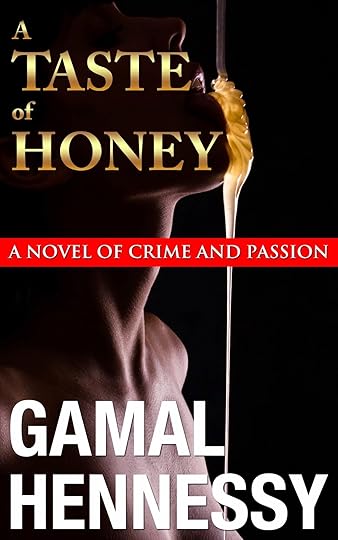
A Minor Media Blitz for A Taste of Honey
by Gamal Hennessy
In the grand scheme of things, it amounts to a tempest in a very small teacup.
Over the past two weeks since I’ve released A Taste of Honey critics and other authors have weighed in with their opinions of my first novel. The feedback for the book is not only gratifying, but it’s telling me I’m on the right track.
Writer’s Alive,
The author’s at Writer’s Alive have years of creative experience, an international perspective and a passion for the craft. After they read an advanced copy of A Taste of Honey, they invited me to sit down for an in depth conversation about both my creative process and my support of independent publishing. I didn’t join the discussion until about ten minutes into the show, but if you’d like to hear the sound of my voice, you can listen here.
The Girl in the Blue Mask
The Gal in the Blue Mask is the home of Meghan, a writer, editor and critic with a broad appetite for fiction of all types. She originally found my work when I released Smooth Operator and when I announced the release of A Taste of Honey she requested an interview for her website. You can find the interview here and you can also sign up for the contest where we plan to give away several copies of A Taste of Honey.
What the Critics Have to Say
The early reviews of A Taste of Honey show that people like what they are reading. Critics can be harsh, especially on Amazon, but so far I’m getting reviews like this:
“This could easily be made into a motion picture. Gamal has quite a talent of creating some intriguing characters and keeping you from putting the book down.”William Masters
“Catching your breath is tough between the suspense, steam and mystery, and as the stakes got higher I was more and more impressed with Hennessy's perceptive understanding of female sensuality and what goes on in our heads.”Chloe Halston
“Gamal is a very talented story teller, he has a unique ability to be able to throw me into the middle of the environments he creates, and the minds of his characters.”D. Johnson
“If you enjoy a thrilling, erotic, story of desperate lovers, spies, treachery, lies and love, you will want to pick up a copy of A Taste of Honey. You won't regret it.”E.P. Scott
A Step in the Right Direction
From an objective point of view, I can see that my work has a long way to go before I reach my marketing and publicity goals (See The Quest for Ten Thousand Fans). No, I didn’t get interviewed by Oprah or Jon Stewart. No, my book wasn’t reviewed by the New York Times or the Paris Review. But everyone has to start somewhere and few of us start at the top of our craft. This may only be a tempest in a teacup, but it is my tea so I’m going to savor the taste for as long as it lasts.
Have fun.
Gamal


May 27, 2014
A Reading List for Writers

By Gamal Hennessy
Most books dedicated to the craft of writing mention the importance of reading to the writing life. Stephen King boiled it down to “If you don’t have time to read, then you don’t have time to write.” Other less famous authors also stress the need to read, but few of them provide details on exactly what should be read.
I’m editing two novels and writing a third right now. I’ve had a chance to boil down the “what to read” idea into something that works for me. Rather than give you a biased and personal list of things to read, I’d like to suggest a few categories that are applicable no matter what style or genre you write in.
The best books for writers to read are:
Books in your Genre(s): Writing genre fiction involves manipulating, stretching and often breaking the conventions that define that genre (See Genre Fiction: Clichés, Conventions and Evolution). How do you know what conventions you are playing with if you’re not familiar with those them in the first place? Reading the established classics in your chosen genres, as well as the popular and new writers, will help you both understand where the genre has been and where it is going. This will help you define your own personal niche in the long run where you can redefine expectations. (See Developing Your Own Sub Genre). This type of reading is often easy for writers because we have the natural tendency to write in the genres we enjoy reading. It takes a certain amount of mercenary fortitude to write in genres purely for their financial potential.Books on Subjects Your Characters Know: Part of the suggestion of “write what you know” comes from the idea that the more familiar the writer is with the subject matter, the more authentic the story becomes. The suspension of disbelief required for immersion is reduced and readers think of your characters and settings as more real than imaginary. So if your characters know a lot about forensic psychology or mescal or French fashion or field artillery, then you need to know it too. Reading both the unadorned technical books on your characters passions, as well as the fiction that incorporates those elements, will give your work both the facts and the feel that readers are looking for. This type of reading is also not hard for writers since our characters are often aspects of ourselves and they know about (or want to know about) the same things we want to know.Books in Genres You Like or Are Interested In: Writing is a great way to expand your horizons. When the stories you work on require some knowledge or perspective that you’re unfamiliar with, you can take that opportunity to expose yourself to new information. When you are looking for a new wrinkle to add or experiment with to separate your craft from other writers, reading something from a different category can provide fresh inspiration. You may not like every book you read from these foreign genres. Reading things outside your chosen niche might only serve to remind you why you stick with the genre you have, but any kind of inspiration is helpful, even if it is negative.Current Events: No matter what stories we write or what time periods we write about, the voice of every writer is shaped by the world they live in. Novels written during Prohibition offer a glimpse into that world even if they didn’t deal with bootlegging and speakeasies. Works released before and after 9/11 see the world in stark contrast to each other. If you gain a better sense of both the banal and extraordinary events that shape our society, your voice will be clearer when you sit down to write. Some of my most enduring plots and themes come not from fiction, but from fact (See How Much Inspiration Do You Need?)Books on Writing and Publishing: Publishing in the 21st Century is a moving target. Whether you see yourself as a traditional writer, a self-published author or and independent publisher (See What is the Difference between Self-Publishing and Independent Publishing?) you have to juggle being a CEO, a salesman, and a social scientist, all while trying to find the time to write. While you could figure out everything for yourself through trial and error, it makes more sense to use the tips and tricks other writers have found to navigate this complex industry. You won’t agree with every suggestion you find on business or craft, but you’ll expand your range of options and perspectives if you take some time to educate yourself about modern publishing.
So what types of books do you read as a writer? Leave a comment below and let me know.Have fun.Gamal
If you want more information on the business, craft and lifestyle of modern publishing, sign up for the free Independent Publishing Newsletter.
May 5, 2014
My First Public Reading (Writing as a Spectator Sport)

By Gamal Hennessy
Writers have to use every method they can think of to create interest for their work. Most of our efforts focus on social media and internet channels, because in theory they provide the best results for the lowest cost. The bulk of my advertising also takes place online, but last week I had the chance to try something different that other writers might want to consider. All it takes are friends, liquor and a considerable lack of stage fright.
Falling in My Lap
In my first writing venture, I created articles and interviews about New York nightlife for a site called New York Nights. This allowed me to meet and drink with a lot of amazing and interesting people. I met singers, bartenders, owners and hedonists of all types. I maintained those relationships as my work expanded from nonfiction to fiction. Last month, I got an invitation from one of those connections to perform my work in public.
A beautiful woman named Jess Domain had a series of shows at a bar in Manhattan’s Theater District. She had enough of a following to do all the shows on her own, but as an artist, she wanted to try something different. She knew I have a novel coming out, so she asked me if I would be willing to read a chapter from the new book during her set. As a general rule, I avoiding saying no to beautiful women, so I agreed and tried to figure out a way to maximize this opportunity.
The Best Laid Plans
I decided that this public reading could help me in two distinct ways. First, I could drag a ton of books to the show and sell them after my reading. Once people got a taste of my craft, they’d line up to buy a copy of their own, right? Second, I could have the reading recorded for YouTube and then post it as a trailer to help bolster sales online. If a public reading could get people in the bar to buy the book, then the same thing would work as a video, right? Based on these optimistic theories, I scrambled to get things in place for my moment in the spotlight.
The idea of selling books at the event fell apart quickly. The date of my reading was two weeks before the scheduled release of A Taste of Honey and I didn’t have copies available yet. Of course, because I needed results quickly, the entire post production process fell apart . My normally reliable cover designer vanished for Spring Break. My interior formatting with CreateSpace hit a snag that still hasn’t been resolved. There was no time to get any books printed, so I resigned myself to the consolation prize of asking people to join the mailing list if they wanted more information about the book.
The video recording went better. Another friend of mine in the TV production business went above and beyond to help me. He got two professional video cameras and set them up on either side of the stage. He showed up an hour early to coordinate with the event manager and the sound engineer to make sure everything worked. Then he recorded the whole show, switching back and forth from his fixed camera to the mobile one to generate the B roll (which from what I understand is TV talk for secondary footage). I haven’t seen the edited footage yet, but whatever comes out is going to be better than anything I could have recorded on my phone.
Riding the Rollercoaster
I don’t have a problem with speaking in public. I turned down an invitation to get my masters in speech writing because I decided to go to law school (not the best choice in hindsight, but that’s another story). But even natural public speaker needs to practice before they go on stage, so I spent the week reading, recording and re-reading the first chapter of my book to make it feel natural when I read it in front of people.
I didn’t realize about this process would drag me through an intellectual rollercoaster. On Monday I went through a dry run and thought I sounded fine. On Tuesday I decided a few words needed to be changed to make the text flow better. On Wednesday I thought I should re-write the first chapter completely. On Thursday I kept tripping over myself trying to edit the book out loud as I read it. On Friday I thought the whole thing would be a disaster. When Monday came back around, I came to peace with my words. I just wanted to get the thing over with so I wouldn’t have to read the same damn chapter over and over again.
Under the Spotlight
The reading itself turned out to be anticlimactic. The ripple effects had a more profound impact.
When I got there, I didn’t know if the bar would be packed or empty. I announced the event on social media, but every event in New York competes with hundreds of others every night. I didn’t know how many people would actually show up. A handful of my friends sat with me at my table and maybe two dozen other drinkers sat in attendance. When Jess called me up on stage, there was just enough life in the room to make things feel real.
For the most part, my rendition of chapter one went well. Another group celebrating a surprise birthday party in the back room threw in a few outbursts to keep me on my toes. The lights on a performance stage (even a small one) will instantly reduce anyone to a sweaty mess, but I kept my composure and my cool during the reading. People responded well to both the reading and my semi-spontaneous jokes. I didn’t stand close enough to the microphone and I might have tripped up on the last word, but the performance ended as more of a success than a failure.
The special part happened after the reading ended. A pair of random strangers came up to me asking to be on the mailing list. Jess wanted me to read at more mixed media shows because we got such a good response. My friends came up to me at the bar to tell me how proud they were of me because I wrote a book. Other friends who couldn’t make it echoed the same sentiments in text messages and FB posts. Rain fell on New York City when I left the bar and I appreciated that because it prevented anyone from seeing if I might have been crying. (I can’t confirm or deny actual tears. Let’s just say I appreciated all the positive reaction)
Aftermath
I don’t think I’m going to sell any more copies of my book because I did a public reading. I am happy that I got the chance to do it and I would definitely do it again. Like many aspects of independent publishing, the benefits of reading your work in public affect you in ways that can’t be measured by your bank account.
Have you read your work in public?
If you haven’t would you be willing to do it?
Let me know in the comments.
Have fun.
Gamal
April 28, 2014
What is the Best Media Outlet for Your Writing?
By Gamal Hennessy
I was discussing my new novel with a friend over brunch when we got into a discussion about how story medium affects the message. I mentioned my plan to release my work in paperback, audiobook and graphic novel. He asked how I knew which stories would translate best into which media outlet. It is a good question, so I decided to elaborate on my brunch answer here.
A basic goal of every writer is to create a good story and tell it in the best way possible. Modern entertainment and technology have given us a variety of different vehicles to deliver our work including books, theater and film. Each of us choose to release our work in one medium over another based on a variety of personal factors. In most cases, the types of stories we tell are better suited for one medium over another. How do you know which vehicle fits your writing best? If you consider your stories primary level of conflict, you’ll get a much better idea of where your work would have the most impact.
Levels of Conflict
According to Robert McKee’s Story, stories are about the conflict between the desires of the protagonist and their reality. McKee points to three primary levels of conflict in his system:
Internal: the struggle between the protagonist and his own body, mind and heart. For example, a man could want to resist the advances of a certain woman, but he might not be able to convince his heart or body to complyInterpersonal: the struggle between the protagonist and the other people in their lives either based on their social role (parent/ child, boss/employee) or personality conflicts outside of formal definitions. A woman might rebel against her mother as a teenager and have disputes with her later in life for reasons that have nothing to do with their respective social roles.Extrapersonal: the struggle between the protagonist and his environment, institutions and society as a whole. A protagonist could fight against nature in a flood, the court system in a legal drama or an entire system of government.Most stories have conflict on all three levels at once (See Hitting Your Hero from All Sides), but many stories have a primary level of conflict where the main struggle is located. For example, Luke Skywalker has several instances of internal struggle in the Star Wars series, and interpersonal battles between his companions and his father, but it was his extrapersonal fight against the forces of the Empire that comprised the primary conflict in the story.
The Relationship Between Story Conflict and Story Medium
Each modern media that we have specializes in a different type of conflict. This specialization comes from the way information is conveyed by the artist and received by the audience.
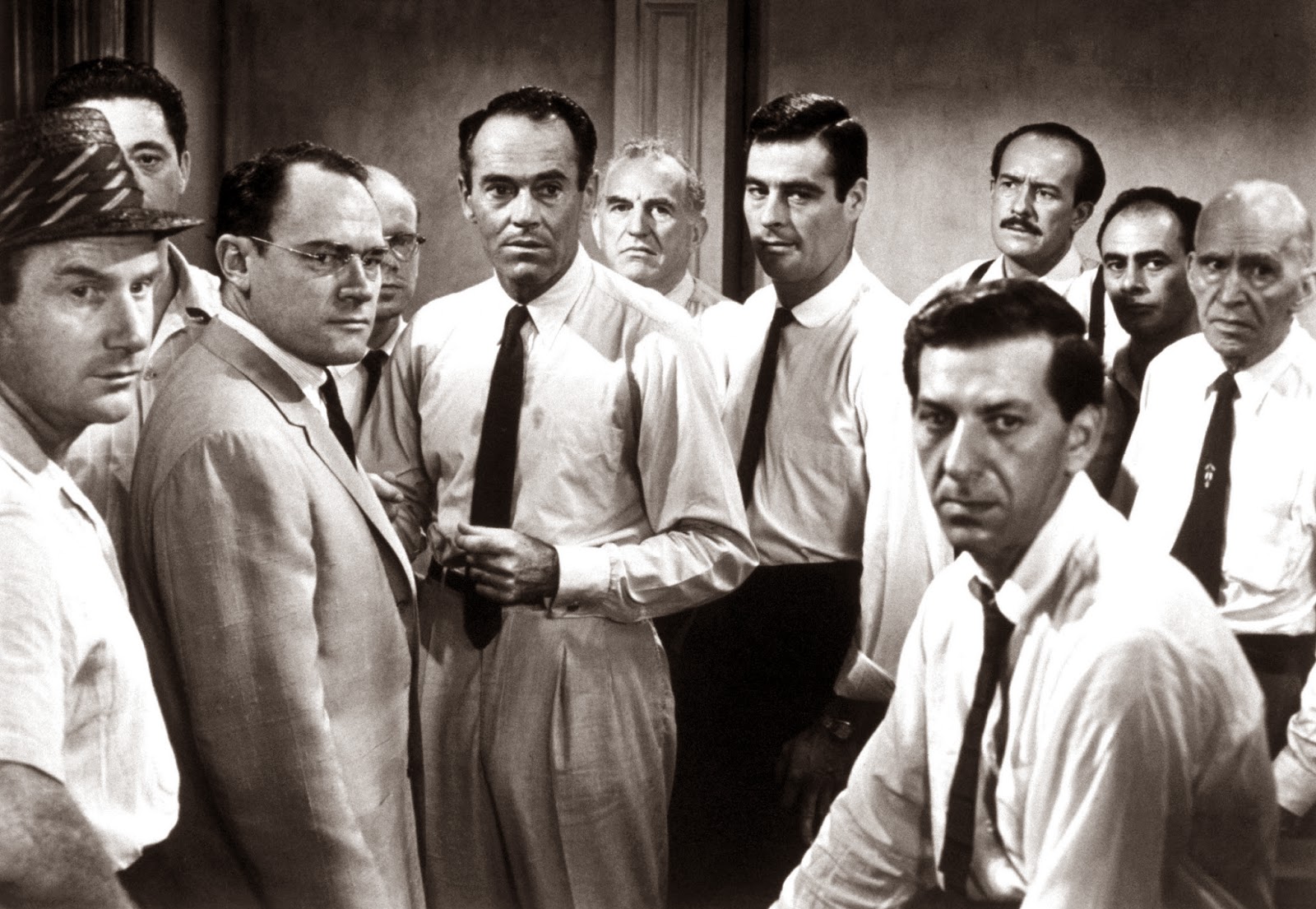
Prose (novel, novella and short story) specializes in internal conflict because it gives the ability for the artists to convey what is going on inside the characters. The reader is able to see all the struggles of emotion, belief and values inside the mind of the protagonist without needing any external actions or reactions to assist this understanding. (Example: A Spy in the House of Love)Theater (play, musical or audiobooks) specializes in interpersonal conflict because it focuses on the verbal interaction between people without reliance on internal dialogue or major external stimulus. Entire stories often play themselves out in a single location with all conflicts resolved within the context of each actor playing of the emotional reactions of the others. (Example: Twelve Angry Men)Visual Media (TV, Film, Sequential Art, Interactive Media) specializes in extrapersonal conflict because it has the ability to deliver huge amounts of information in a single image. Viewers have the ability to understand setting, conflict, and tone in seconds, without a single word of dialogue being spoken. Conflict that would be difficult or impossible to convey in words or discussion can be brought to life with pictures that are larger than life. (Example: The Matrix)
Finding a Home
This is not to say that stories cannot crossover from one media to another. Movies are made from books and plays every year. Broadway shows recreate both books and movies and novelizations of movies are also common. Some translations like Johnny Mnemonic fail completely. Others, like Sin City, don’t offer any additional benefit from being translated. A few translations, including Damage, are able to surpass the original work. But each story has a natural home. Your stories probably also have a medium where they would work the best. Are you writing in your natural medium?
Writing for one media instead of another is not just a matter of personal taste and creative disposition. Each one has it’s own business model and creative conventions that need to be understood if a writer wants to get his work into the world. Every writer can’t just produce a play or get a screenplay picked up. Many of us find our home in prose because it has the lowest barrier to entry. Even as the cost of audiobooks, experimental theater and independent film shrinks, books will probably remain the media for most of us.
But that doesn’t mean that we can learn from other media when it comes to developing our craft. If you know your stories lean towards interpersonal conflict, then it pays to learn and adopt techniques of the playwright when crafting your stories. If you want stories with an epic extrapersonal sweep, steal what you can from the screenwriter. Our craft is the creation of story. Each type of storyteller can help us find the tools we need to build the best work possible.
Have fun.
Gamal
April 21, 2014
The Quest for Ten Thousand Fans

by Gamal Hennessy
When I first started publishing my own work, I dreamed of the day when my name would be a household word and everyone from talk shows to dinner tables would sit down to talk about my stories, characters and creative talents.
Then I woke up.
I came to understand that the act of selling millions of copies, or even hundreds of thousands copies, is a rare occurrence that only a handful of writers experience. That revelation didn’t discourage me from writing, but it did force me to find more realistic goals for my sales targets. That’s when I stumbled on the idea of one thousand true fans. I tried to use this idea as a barometer for a while, but I found that this concept had it’s own flaws and issues. So I modified the idea a bit to something many independent publishers can use as a sales and marketing tool.
The One Thousand True Fans IdeaThe basic concept behind the One Thousand True Fans idea is that an independent artist can sustain their professional career even if they only cater to a select number of fans. If each fan is willing to spend one day’s pay per year to get everything the artist produces, the artist can live off that income and continue to create. There might be other casual fans that buy some of the artist’s material, but it’s the true fan that keeps the proverbial lights on.
One thousand fans is a number specific to musicians. The assumption is that if one thousand people buy her music and her merchandise and go to her concerts then she’s doing pretty good. Different types of artists require a different number of fans to make the concept work. A sculptor who sells big commercial pieces might only need 10 fans. A writer needs many more. The underlying message behind this idea is that niche artists can thrive in the current media marketplace once they find their audience. (See Creating Your Own Niche)
I agree with the sentiment behind One Thousand True Fans, but the inherent flaws in the theory have been the subject of debate for years. The idea that each fan will give up a days pay in a post recession world is too optimistic to be viable. Even if they were, the act of identifying each fan is challenging, if not impossible. Finally, producing enough content for the fans to part with a day’s pay might be too much for an artist who has to work a day job, manage a social/ family life and follow their passion. That’s why I decide to massage the idea a bit and come up with something more applicable to independent publishing.
The Ten Thousand Fans IdeaThis idea uses One Thousand True Fans as a springboard and then addresses the issues of fan value in dollars, content production and to an extent, fan identification. The basic formula looks like this:
Number of Books Per Year x Fan Value x Number of Fans = Gross Revenue
Content Production: If a writer completes 10,000 words a month (or about 350 words per day) that equates to 120,000 words or two novels. With that much content, the writer could release two novels per year. (See What is Your Publishing Plan?)Fan Value: If each novel is priced at $4.99 each and you release the books on Amazon, then the revenue for each book is $3.50 after you factor in the 70% royalty payment. If you release two books a year, then the value of each fan is about $7. A writer who produces more books or sells at a higher price has a higher fan value, but this example isn’t meant to be overly optimistic. (See How Long is a Novel and How Much Should it Cost?)Gross Revenue: If a true fan is defined as someone who will buy everything you produce and you release two novels in a year, then the gross revenue is the number of books you release per year (content) times the value of each fan, times the total number of fans. In this example, $7 times 10,000 is $70,000. This is a respectable income, especially if you don’t quit your day job (Do You Really Need to Quit Your Day Job?). Keep in mind that this is your gross revenue. It doesn’t take into account how much you spent to produce and market the book. (See Profit and Loss Statements for Independent Publishers)
So How Do You Get Ten Thousand Fans?Of course the biggest question in any marketing discussion is how do you get a fan and retain them over several years? Discoverability is a big buzz word in independent publishing and there are a lot of theories out there. At this stage of my career, I don’t know the best way to collect and hold fans. I might only have a dozen true fans to my credit now, and I cherish each and every one of you.
While I can’t be sure what works, I have lowered the importance of some common metrics:Social Media: Facebook, Twitter, etc. might be a vehicle for getting in front of potential fans, but a Twitter follower or a FB like does not equal a true fan, especially when you consider the stranglehold FB employs to encourage you to buy ads and the constant stream that is Twitter. You only have to compare the sales of your book to your number of likes to see that this is true. Actual interaction with readers is more indicative of fans, but even that will be skewed by a host of factors that you can’t control.Mailing list: A mailing list is a better indicator of fans, especially if everyone on your list has opted in, but I think the industry average open rate (defined as the % of people who actually open an email sent to them) is only about 10%. The click through rate (the number of people who get an email, open it and click on the link) might only be as high as 3%. The magic number of people who open, click and ultimately buy the product I think is 25% of the click through rate. That means if you want 10,000 true fans from an raw unfiltered email list based on these numbers, you might need a mailing list of more than 13 million, which is cost prohibitive on several levels.
It is early in the game for my publishing company, but I’m working with the concept that over time my fan base will increase based on three factors:Multiple Releases: Discoverability is kind of like the lottery; the more books a writer has in the market, the more chances a reader has to find them. Not only do I plan to have two novels released every year for several years, I also break up each novel into cheaper sample parts to give readers a low cost entry point and increase my catalog size quickly (See The Case for Episodic Novels)Niche Writing: Instead of writing in genres that I feel are saturated by a lot of independent writers or dominated by big names, I have decided to write in a space that is fairly open at this point. By working in a smaller pond, I have a better chance of becoming a bigger fish (See Genre Conventions, Cliches and Evolution)Added Value: By writing and sharing ideas outside my books, I’m trying to enter the consciousness of a potential reader base. The hope is that if I help other writers with the business, craft and lifestyle they are struggling with in their own writing, they might be more inclined to share my work with their fans. Then maybe, those fans will recognize my name when it pops up on Amazon and a potential fan will be born. This is more an attempt to engage Tastemakers and Champions rather than fans, but it is all part of the larger strategy (See Champions, Fans and Tastemakers)
In the end, the goal of getting ten thousand fans has it’s own flaws and challenges, but it is more realistic for me than both One Thousand True Fans model or the “Everyone should read my book” concept.
So what are your sales goals based on? Share your ideas below and let me know.
Have fun.Gamal
If you’d like to stay connected to the business, craft and lifestyle of independent publishing sign up for the free IPN newsletter today.
April 14, 2014
Read The Screams of Passion for Free All This Week!
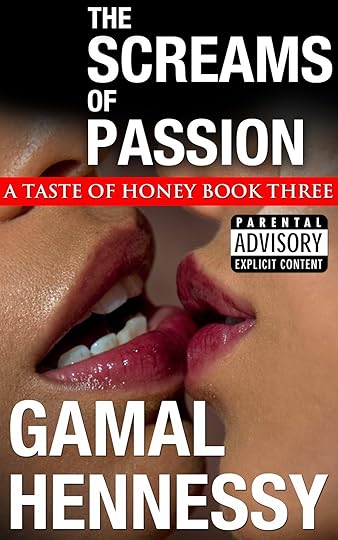
A Taste of Honey
Book Three: The Screams of Passion
Nikki Sirene is a spy who uses her sexual charms to steal secrets. She lied and manipulated her way into the bed of her latest target, Manuel Cruz to stop him from smuggling weapons into America. At the same time, she has also fallen in love with Manuel’s wife Dominique.
As the two women become more desperate for each other, their world begins to unravel. Nikki's jealous superior pushes her to complete her mission and end the affair. The Russian mafia behind Manuel’s arms smuggling is close to exposing her and killing everyone she loves. Can Nikki find a way to protect her lover and finish the job or will they both be destroyed by a dark and explosive secret?
This book will be available as a free download for Amazon Kindle from Tuesday April 15th, 2014 to Friday April 18th, 2014.
Download it now and leave a review!
Note: This book is the third and final installment of the Taste of Honey novel. It concludes the story that began in Book One: Anything for Love and continued in Book Two: The Art of Seduction.
Have fun.
Gamal
March 31, 2014
What If Everyone in the World Wrote a Novel?
By Gamal Hennessy
Independent publishing has created an ironic duality. On one hand, the good news about self-publishing in the 21st century is that anyone can publish a book. The bad news about modern self-publishing is, of course, that anyone can publish a book.
The backlash against this state of affairs has been aggressive on both sides of the argument. Proponents of traditional publishing point to the tsunami of poorly written books as proof of self-publishing’s inferiority (See Is the Self Published Novel Inherently Inferior?). Supporters of independent publishing have a more nuanced reaction. Some will admit that the new publishing freedom might produce a lot of substandard product (where the definition of “substandard” itself is often a moving target). But they will also say that many quality books are self-published (and we always find a way to put our own work in the category of quality books for some unknown reason).
Advocates on both sides will also point out that even if all self-published work was great, there is too much of it for the market to support. The industry produces too many books for people to find, pay for and read. I get the sense that many of these writers want everyone else to get out of self-publishing so they can remain and sell more books.
I agree and disagree with each side of this debate. I also feel that everyone can benefit from both writing and trying to sell their own book.
The Sales Sabotage Problem
First, let me address the obvious flaw with my premise. It is easy to see that if seven billion people each decided to write one book, the chances of any book being financially successful dwindle down to zero. My book, no matter how good it is, could never compete in a marketplace that big. I get that. That doesn’t change my central premise. It’s not because I’m some altruistic soul who believes in universal equality and fair play, and it’s not because I believe that my book is so much better than everyone else’s that I welcome that kind of competition. I just believe the filtering and selection processes that we have can solve the sales problem.
According to Worldwidewebsize.com, there were about forty billion websites worldwide in March of 2014. That’s about six websites for every living person on the planet. The vast majority of those sites have little or no traffic, but in spite of the glut of sites, we all still know where to find our cute cat videos, personality quizzes, pornography and e-books. I’m not saying that search engines, SEO and website management is perfect. I am saying that if we can find a way to catalog and manage billions of websites, we can do the same things with books. There is no guarantee that my book or yours would become the next Google or Amazon of books, but there are other benefits that still make universal authorship an attractive utopia.
Looking Beyond the Competition
Writing, like any business, is a competitive endeavor. Each seller in the market attempts to sell as many of their goods or services as possible. Because the number of buyers is almost always finite, the attempt of each seller to maximize their sales puts them in direct competition with all other sellers of the same goods. This concept applies to cars, candy bars and cocaine. But does it apply to books?
On a certain level, it does. There are only so many readers out there and each one has a limited capacity in the number of books they can read. Some writers will sell infinitely more books than others. Not every writer can be a James Patterson or J.K. Rowling. But that doesn’t mean that writing is futile.
Not everyone can be a professional athlete, but that doesn’t mean that people can’t benefit from exercise. Not everyone can open a chain of restaurants, that doesn’t mean knowing how to cook is a useless skill. Not everyone can dominate the stock market, but it is still helpful to understand the concepts of economics, investing and money. By the same logic, not everyone can be a New York Times bestseller, but that doesn’t mean that you shouldn’t write a book. (See How Your Writing Projects Are Like Your Gym Membership). Many of the things you achieve as a writer will come to you even if never sell anything.
Looking Beyond the Numbers
From the beginning of my experience as a writer, I realized that what I gained from writing went far beyond how many books I sold (See Great Expectations). The benefits are less tangible in many ways, but no less important. Writing gives me a vehicle to:Have funBe inspiredSolve problemsMeet new peopleLearn more about myselfLearn more about the world around meGet better at what I’m doingFind out more about the people I already knowBecome more comfortable with myself
The positive things that I get from writing aren’t unique to me. I’m sure seven billion other people might want each of these things, in one way or another. If each one of us developed our craft in an attempt to become better writers, how could that be a negative thing?
Looking Beyond the Rose Colored Glasses
I understand that writing for some authors is not an idealistic, philosophical endeavor. I know that many of us are using our craft to put food on the table, advance our careers or escape jobs that we hate. To these writers, any discussion about flooding the market with product for the sake of learning or inspiration is misguided and irrelevant. Some of us are writing simply to make money. I understand that, but even this group of writers would benefit if everyone tried their hand at writing a book, if only for the impact it would have on the reading population.
Writers understand that writing isn’t easy. No matter how many barriers are broken down with e-books and self-publishing technology, we still have to lock ourselves away and write. We still have to struggle with putting words together and deal with the dark emotional journey those words can create. (See The Benefits of Rejection, Indifference, and Insecurity). And that is just the writing side of the equation. Independents also have to concern themselves with post production, design, marketing, sales and customer service, in addition to writing and their day jobs. (See The Four Stages of Novel Development). Writers know what goes into releasing a book. If more people attempted to be writers, perhaps they would have more understanding of the process. If more people wrote a novel, maybe they would appreciate and be more willing to pay for the work that other writers do.
Have fun.
Gamal
March 25, 2014
Advanced Review Request for The Screams of Passion

I'm currently looking for advanced reviewers for my novella, The Screams of Passion from March 26th, 2014 to April 20, 2014.
If you're not familiar with the advance review process, don't worry. All that means is that you get an early copy of the book in exchange for an honest review that you post on Amazon or Good Reads. It doesn’t have to be a five star review. An honest assessment of your reaction is better for other readers and the author.
Advanced reviewers for this book will receive a free copy of A Taste of Honey as a thank you for your support.
If you enjoy crime thrillers or spy stories, consider this premise:
The Screams of Passion: A Taste of Honey Book Three
Nikki Sirene is a spy who uses her sexual charms to steal secrets. She has lied and manipulated her way into the bed of her latest target, the Argentinean shipping magnate named Manuel Cruz. Nikki has also fallen in love with Manuel’s wife Dominique.
As the two women become more desperate for each other, their world begins to unravel. Nikki's jealous superior pushes her to complete the mission and sacrifice Dominique in the process. The Russian mafia behind the arms smuggling threatens to expose her and kill her entire team. Can Nikki find a way to protect her lover and finish the job or will they both be destroyed by a dark and explosive secret?
Note: This book is Book Three of A Taste of Honey. It concludes the story that began in Book One: Anything for Love and continued in Book Two: The Art of Seduction.
If you’re interested, just send an email to gamalhennessy@gmail.com and I’ll take care of the rest.
Have fun.Gamal
March 24, 2014
Nine Good Reasons (and One Bad One) Why Independent Novelists Should Write Short Stories
By Gamal Hennessy
Most authors I know (both independent and traditional) see the novel as their main creative outlet. It has the substance, gravitas and size to mark it as a major achievement. Few of them focus on shorter works as a beneficial aspect of their craft. (I include both short stories and novellas into this discussion See Just How Long is a Novel and How Much Should it Cost?) I feel that independents, even more than traditional authors can get enormous benefits from writing short fiction. I've identified ten virtues of writing shorter stories that cover the business, craft and lifestyle of writing.
Business Virtues
1) Production benefits: Independents have several aspects of the production process that they have to be comfortable with in order to get their work out into the world. The best way to understand the nuances of pre-production, production, post production and launch is to get in there and do it. (See The Four Stages of Novel Production) There is a natural discomfort that comes from trying to understand all these moving parts when the 'test study' for your publishing education is the 120,000 word manuscript that you've worked on for two years. That hesitation is reduced when the “test subject” is a 15,000 word short story that you wrote in a month. You would still try to produce the best book possible, of course. But the emotional cost of each inevitable mistake would be less damaging to your psyche.
2) Cost benefits: One of the major costs in independent publishing is editing (See How to Find an Editor without Going Insane). The editing cost for a 120,000 word book can easily be $2,000 or more. The price is often based on word count, so a 15,000 word story might only cost $240 under a similar pricing model. This lower price offers flexibility on two fronts. First, you're more likely to try different editors if you know the cost associated with each one isn't that much. Second, the release of each book won't take such a huge chunk out of your limited personal budget. There is an increased cover cost for multiple books (See the Mystery of Cover Design) but there are ways to keep those costs substantially lower than your editing costs.
3) Sales benefits: The popular wisdom about independent publishing is that the more products you have in the market, the easier it is for readers to find you and the more success you'll have in the long term. The problem with that is that it might not be feasible to get 10-15 novels out in a reasonable period of time. Releasing 10-15 novellas on the other hand is a more manageable production plan (See What's Your Publishing Plan?)
Craft Virtues
4) Playground for Ideas: If you're playing with a certain characters or scenarios for a larger work, but you're not sure if you want to tell that story over an entire novel, then a short story can help you explore the narrative potential. If you get to the end of the short story and you're itching to write more, go ahead. If the idea fizzles after 10,000 words, then you can avoid wrestling with the concept for 30,000 to 40,000 words before you realize you've written yourself into a space that you can't get out of.
5) "Extra" ideas: I often come to points in my novels where minor characters suggest stories that won't fit into the main narrative. At other points they hint at something in their backstory that deserves to be explored. Instead of trying to cram it into the story where it might not fit or forgetting the idea altogether, I often use that idea as a separate short story to satisfy my creative detour without derailing me from the main plot.
6) Building blocks: I work under the concept that the chapter of a book is a mini story in its own right that includes a beginning, turning point and end (See Analysis of Story Structure Part 1: The Chapter). The only difference between short stories and chapters is that the chapter needs an internal consistency that also serves the broader book. Writing short stories is great practice for manipulating the individual elements of a novel that can be strung together to complete the story in the same way a season of a TV series is made up of discrete episodes.
Lifestyle virtues
7) Project management: Cooking dinner for two is less intimidating than cooking for twenty. A 15,000 word project is less intimidating than a 150,000 word project. Breaking your creative work into smaller chunks might get you to a place mentally where you are more productive. This is even more beneficial if you use your short stories to build a larger novel.
8) Greater sense of accomplishment: When I look on my author page on Amazon, I feel better when I have more titles up there. The bigger catalog gives me a sense of progress and productivity that inspires me to write more. I don't know if I would get the same sense of accomplishment if I only saw my novels.
9) Creative freedom: When you know all your writing isn't tied up in one project, you can take risks. You can explore different genres, perspectives and ideas. You can push concepts farther than you normally would without sacrificing your main books. These might be stories that you never even release, but the creative freedom that they give you will come back and make your main stories even better.
The Vice of Short Stories
If there is a downside for releasing short stories, it is their length in relation to their price. With many independents selling full novels for $2.00 less, some readers and writers might reject the idea of selling 15,000 words for $.99. While I might disagree with the $.99 novel concept, I understand the economic problem it creates.
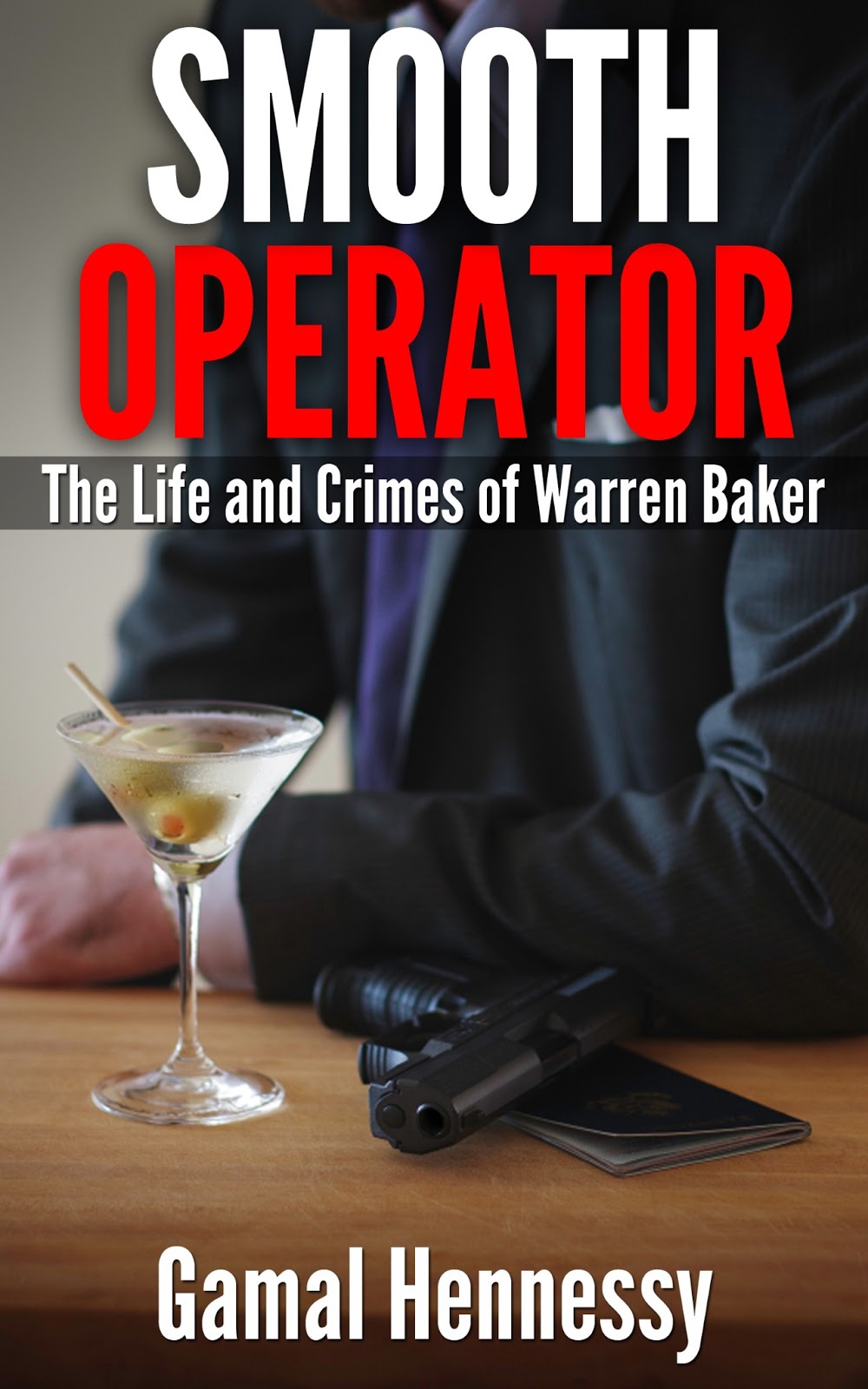
My solution is to release a series of short stories in an anthology that is cheaper than the cost of all the individual stories. For example, I released an anthology of related short stories called Smooth Operator in 2013. The book contained five short stories and one novella for a total of 65,000 words. If I released each one individually, the price of the set would have been $7.99. I released Smooth Operator for $4.99 or 40% off the individual story cost. It's still more than the $.99 novel, but I don't believe in selling full novels for a buck.
Your turn
Do you write short stories in addition to or instead of writing longer novels? Do you do it for some or all of the reasons I listed, or do you have another rationale? Please share in the comments below.
Have funGamal
If you’d like to stay informed about the business, craft and lifestyle of independent publishing, sign up from the free IPN Newsletter today. For a limited time, new subscribers will receive the short story Anything for Love: A Taste of Honey Book One
March 17, 2014
Creating Your Own Niche: Developing Your Own Sub Genre

When I wrote about the opportunities and pitfalls of writing genre fiction last week, I suggested that we as independent authors have the chance to distinguish ourselves by pushing the boundaries of our chosen genre. (See Genre Conventions, Clichés and Evolution) Now, I'd like to focus on the specific I work with to help illustrate this idea.
Genre Combinations
It’s common in modern fiction for stories to blend more than one genre together. The tension or interaction between the different conventions gives the narrative a particular flavor that can work very well. Historical romance, military science fiction and dystopian YA have been and continue to be popular combinations.
I combine crime thrillers and spy fiction into a sub-genre that I refer to as criminal espionage. The connection between the two base overlaps to the point of almost being seamless. Intelligence officers often deal with smugglers, assassins, thieves and other criminal elements to carry out their missions. Espionage itself is often defined as breaking the laws of a foreign government to acquire information. Many of the major historical events that revolve around spies including Watergate, the Iran Contra Affair, and even Madame Butterfly also have a distinct criminal component.
The Why and the How
So if there is a basic link between crime fiction and spy fiction, what makes mine unique? The two aspects that I try to focus on are process and motivation.
Motivation: Unlike the standard spy fiction tropes, my stories are not about terrorists trying to kill the President, finding secret nuclear facilities or recovering the list of every undercover agent that always happens to be lying around waiting for someone to steal. (See How to Write Spy Fiction) The goals of my characters are much more sordid. They're driven by things like greed, lust, revenge and hate. Of course these negative drives find their way into spy thrillers of all types, but in my work they are not subsumed by concepts of avoiding war or saving the world. I feel the scope and reach of their actions and consequences is much closer to the reader's perspective. Hopefully that makes the characters and the story easier to relate to.
Process: Unlike a lot of crime fiction that I've read, my characters commit their crimes with the skills and tactics normally reserved for elite spies and Special Forces. My criminals are not desperate degenerates. They are skilled specialists. They don't rush blindly into an action. They study, evaluate, prepare and execute their operations with precision. They plan for not only the violent action but the legal, medical and social consequences of their actions. There are many real and imagined criminals that approach their craft with the same rigor. By combining high training with low motives, I try to capture a flavor in my work that will set me apart from other thriller writers.
Pioneers of the Craft
While I may or may not have coined the term criminal espionage, I certainly did not come up with the idea first. There is a significant body of work in this subgenre that spans across several types of media including:Books: 100 Bullets, A Lonely Resurrection, Thick as Thieves, The Killer, Silence and Co.Film: The American, Bad Company, Driver, The Professional, The Usual Suspects, Way of the GunTelevision: Burn Notice, LeverageVideo games: Hitman, Watch Dogs, Sleeping Dogs
All these stories provide more than just inspiration. They provide a road map that other criminal espionage writers can follow by introducing the concepts that can become conventions over time.
Your Turn
So what subgenre are you working in? What major works define your space and what have you learned from them? How do you make your work stand apart? Please leave a comment and let me know. We can all learn something by both finding our own space and watching others build their own genres too.
Have fun.
If you want to stay informed about the business and craft of independent publishing, sign up for the Independent Publishing Newsletter