
Paul Garrigan's Blog, page 50
April 6, 2012
Why I Believe in Magic
The claim that I believe in magic is going to sound bizarre to people. We live in cynical times when most of the things that were once called magic have been debunked. When I talk about magic here I'm not referring to any particular phenomenon. I haven't met somebody who has convinced me that they have superpowers or anything like that. My claim to believe in magic is more about valuing a certain type of relationship with the universe – it is similar to saying that I believe in human compassion.
Thomas Huxley, Knowledge, and Humility
Thomas Huxley is credited with inventing the word 'agnosticism'. He also advised that humans should;
Sit down before fact like a little child, be prepared to give up every preconceived notion, follow humbly to wherever and to whatever abysses nature leads, or you shall learn nothing.
Every person has biases and underlying assumptions that prevent them from sitting before facts like a child. There are so many things that we take for granted yet there is no way to justify such certainty. At this point in our history most of us assume that a materialistic view of the universe is correct – this idea holds that all that exists is material and energy. We have reached this conclusion because we assume that we can fully understand the outside world using the methods of materialistic science – this is sometimes referred to as scientism . The strange thing is humans don't even know for sure what exists beyond their senses yet they feel confident to make such bold claims about the universe.
Reality Exists Inside Our Heads
I'm not claiming here that reality only exists inside our heads; although solipsism is a reasonable argument. When I would say is that our reality only exists inside our heads. There does seem to be something out there but we never directly experience it. It is our senses that interpret what is beyond, and many of the things that we take for granted don't really exist as we think they do. Everything we see is produced in the darkness of our minds, and the same can be said of all the other senses. When a bird tweets it doesn't actually make a noise – there is just a vibration that hits our eardrum and it is our brain that turns this into a sound.
Science appears to have allowed humans to get a better understanding of what is out there, and it is a strange an alien place. The things that we view as solid objects are mostly made up of empty space. Our brains are only able to interpret a tiny fraction of the light spectrum – for example, we are unable to see microwaves. We assume that we can measure all those things that we can't see, but how can we be sure of this? There is no guarantee that what we are measuring is even there. Some even claim that we may be living inside a virtual reality and our mind is using computer code to create our world. If this sounds crazy to you then find a way to disprove it – my guess is that you won't be able to.
A Hard Question for Scientists
The hard question in science is how consciousness could arise from matter. This debate gets confusing because there isn't even any real agreement as to what consciousness actually refers to. If the materialist view of the universe is correct then we have to be able to fully explain consciousness as a product of matter, and this is something we have not yet achieved. Instead we are left with a promissory note, but the claim that science will be able to explain it all soon is a belief and not a fact.
One way to explain consciousness using the materialist paradigm is to say that at some point in our evolution it just appeared – this is referred to as strong emergence. This makes evolutionists uncomfortable because nature doesn't usually work like that – things appear slowly over time. Another idea is that consciousness was always there in matter and as living systems become more complex they are able to become self aware. This is an interesting theory, and it could turn out to be true. The reality is though, that we cannot explain consciousness despite the fact that so many people act as if we have already explained it.
Assumptions and Scientific Knowledge
The materialist view of the world is based on a number of assumptions that could be likened to articles of faith. These assumptions include:
- The belief that because things have happened regularly in the past they will continue to happen regularly in the future. In philosophy this is referred to as the problem of induction.
* The belief that all that exists is measurable or observable.
* The assumption that we can understand nature.
*The belief that all that happens will have a physical cause.
These assumptions are reasonable, but there is no way that we can tell if they are the ultimate truth. The fact is that science is making life better for people; although it is debatable as to whether people today feel happier or more fulfilled than humans in the past. For me it is important to remember that in many ways the universe remains an unknown entity, and this is why I believe in magic.
It is Reasonable to Believe in Magic
The materialist worldview that life has no real purpose and that humans are just fleshy machines does not sound reasonable to me. Those who insist that this is the case are relying on a type of faith. We just don't know – it has not been proved. This is why I'm open to the possibility of magic. I suspect that the universe is far stranger than our minds could understand, and this makes me feel humble. Accepting the possibility of magic is a type of humility. It also makes the world a far more interesting place. It's as reasonable to believe in magic as it is to believe that we are just fleshy robots.
The Types of Magic I Believe In
I feel strongly that there is more to the universe than what can be found in the materialist worldview. I don't believe that the sense of 'I ness' and capacity of awareness will be explained away as purely a product of the brain – it certainly has not happened yet despite claims of the contrary. This is my current belief, and I may decide to believe something different in the future. My departure from the prevailing view on consciousness means that some might accuse me of magical thinking or being a devotee of woo woo. I don't mind because I prefer living in a world of magic where we are more than just fleshy machines. Of course if people wish to prove me wrong I'm always willing to listen.
Coming Out About Magic
Posting this article here sort of feels like coming out of the closet – although nowhere near as difficult as it must be for gay people to admit their sexuality for the first time. There is a great deal of negativity directed at those who depart from the materialistic worldview. We live in an age where debunkers of woo woo are treated like celebrities. There may be many who see my beliefs as stupid or weak – I don't care. I've more in common with faith healers and clairvoyants than staunch materialists. The purpose of this blog has always been for me to share my view of the world, and this is it.


April 1, 2012
Is Sober in Ireland harder than sober in Thailand?
Is Sober in Ireland Harder Than Sober in Thailand (Video and Podcast)
In this episode I discuss wheter it is easier for me to stay sober in Thailand than it would be if I lived in Ireland. Press play to watch the YouTube video below. The podcast is underneath the video
Addiction and Recovery Podcast Episode 55 – Is Sober in Ireland Harder Than Sober in Thailand
Podcast Powered By Podbean
Music for the podcast comes from Doug and Judy Smith – Crest of a Revolution
March 23, 2012
Christian Missionaries in Thailand Revisited – A Missionary Responds
Last year I posted on the topic of Are Christian Missionaries in Thailand a Good Thing? . This article generated some interesting comments at the time and people continue to join in the debate a year later. The most recent comment to the thread was by an actual Christian missionary. I found his side of the story so interesting that I've decided to turn it into a new post on the topic. Tim's comments are in italics.
Importance of Honesty and Effective Communications
Dear Paul and other posters,
First of all, I thank you each for sharing your honest thoughts, opinions, and ideas in this thread. Paul – kudos to you for having the guts to post a relevant (and potentially controversial) question and seeking to foster good, honest communication about this and other topics. I think one major issue with today's world is a lack of honesty with others or an apathy or negligence in communicating core, personal beliefs, thoughts, and ideas with others while demonstrating utmost love and respect for them. I appreciate you trying to do so and create some space for that to happen on your site.
And second, forgive me for this long post. I thought it would be good to join in the discussion. I'm grateful for all your comments and hope you would give these a read too.
Thanks Tim, I agree that many of the problems that we have with other people could be resolved with clearer communication. It is just so easy to get caught up by the 'in-group' mentality where we demonize anyone who is in the 'out-group' . It is a personal battle for me to keep reminding myself that just because people have a different worldview it does not mean that they are against me. I can hold my opinions and be a good person and so can they.
Rice Bowl Christians
I found this question intriguing because I'm a missionary in Thailand (6 years and counting…) and often wonder what Thais and other foreigners think of our presence and work. Believe me, I cringe along with many of you for much of the negative interaction you've had with Christians, both here in Thailand and abroad. I share your distaste for "baiting the hook" or "switcheroo" tactics that some may employ and prefer to be open and honest about our desire to love and serve others in the name of Jesus.
I do feel that trying to coerce anyone into joining a religion is a bad thing, and I'm glad that you appear to share my view. I realize that the believers who use such tactics are in the minority, but they can do a great deal of harm all the same. They are using a cynical ploy which I think is ultimately self-defeating anyway. People should not be asked to change their beliefs in exchange for food, gifts or free education. The history of 'rice bowl Christians' does suggest that many return to their former beliefs once they are more secure in life, but it still feels wrong to me. It is my experience with this type of tactic that has led to an almost kneejerk distrust of missionaries. I can easily fall into the trap of tarring everyone with the same brush, and this is why it is so good for me to hear from people like you.
The Problem with Beliefs
Wouldn't things be better if we all shared what we believe and retained great respect for others in doing so?
I have utmost respect for my Thai Buddhist friends and many of them exhibit what Christians would call "Fruit of the Spirit" from Galatians 5:22 love, peace, patience, kindness, goodness, faithfulness, gentleness, and self-control in their daily lives. Many to a greater degree than some who claim to be followers of Jesus! I understand that Christianity is pretty controversial and seen as closed-minded. Would you all agree that anything we believe could be seen as closed-minded? Those who would identify as open-minded could move towards a closed-mindedness when it comes to those who would say there's absolute truth, right? The claims of Jesus (both his deity and mankind's only hope for salvation – through grace not works) don't sit well with many because they draw this ultimate, absolute, line.
I sometimes look upon beliefs and opinions as a necessary evil. I don't know how we can survive without them, but they come with a heavy price. Every time I take on a belief it is like I've closed a door in my mind, and if I close enough of these doors it will lead to complete closed mindedness. So yes, I fully agree with you that anything we believe could be considered closed-minded.
I do not think it is possible for any human to have access to ultimate truth – that is one of my beliefs. How could we possibly know if anything is ultimately true? Even if I woke up in heaven tomorrow I could still question if any of it was real. This is why I'm not only skeptical about strong religious beliefs but of any beliefs (including scientific). I look upon the world as one huge mystery. I don't know the answers, and I'm not convinced that other people know much more than me, but I have to allow for the possibility that I'm wrong.
I can't say with 100% certainty that your claims for Jesus are wrong, and it would mean closing my mind if I were to believe that. On the other hand, it would be equally closed minded for me to accept the opposite conclusion. This leaves me in a position where I have to think, 'Tim could be right about Jesus', but of course the same would apply to every other religious belief. This is why I struggle with the Christian idea that they have access to the ultimate truth.
The Truth About Thai Culture
I thought it would be appropriate to weigh in here as a Christian missionary (the very subject of this post) and say that I have wrestled over many of the points you all have brought up. Will we have some detrimental effect on Thai culture by sharing the story of Jesus? As an artist and patron of the arts, I have great appreciation of Thai art forms, especially ancient forms of Raam Thai, Muay Thai, Poetry, and cuisine! From a Christian perspective I would posit that these are gifts from God (look at the distinctive qualities of all cultures) to be celebrated by Thai and foreigner alike. Even as Thailand is primarily Buddhist would it become any less Thai if many were to believe the claims of Jesus and become Christians? Did Korea become less Korean as Christianity grew? Would the US become less American if Buddhism continues to grow there? I don't have all the answers but please know that I care very deeply about Thais as a people. Cultural identity is wonderful but for the Christian, our ultimate identity is in Christ.
Many of the things I admire about Thailand do have Buddhist roots, but they are under far more threat from modernity than Christianity. I don't believe that culture should be a static thing anyway – so you do have a valid point here. It is the Thai people who shape their own culture, and if they want to embrace Christianity then that will become part of their identity. It is a bit patronizing of us foreigners to feel that we have to save Thailand from a foreign religion.
I come from a country that is predominately Christian, but I was allowed to explore other religions such as Buddhism and Taoism. It would be hypocritical for me to say that Thai people shouldn't have the same opportunity. I don't see Christianity ever becoming a dominant religion in Thailand so the threat is exaggerated anyway.
The Right to Spread Beliefs
I sincerely hope that my desire to live and work among the Thai people would never be detrimental to them. I guess we all start from of beliefs and work out from them, don't we? Jesus' claim to be God and the only hope of salvation for anyone compels me to share this with those around me. If you thought you had a cure for cancer, would you share it with others? I think you can follow the analogy here. If you truly believed that Jesus was the only way to salvation why would you keep that from others?
Paul's question has given us all a chance to share our beliefs as well and in a sense we're all trying (at one level or another) to see others come to our way of thinking. I agree with you that many Christians have been heavy-handed in doing so. I would say that that grieves the Spirit of Christ Jesus. If you read the gospels you'll see that Jesus was both tender (as with the woman at the well) and harsh (with the religious leaders of the day) as he needed to be. His followers are simply sinners looking to a God of grace to save them. We're miserable when it comes to engaging people as Jesus did. He was perfect after all.
One of the things that attracted me to Buddhism was that nobody tried to convert me. I had to seek out information and teachers. This way of spreading beliefs feels more legitimate to me – if something requires a 'hard sell' it automatically makes me suspicious. I understand that some Christian groups feel it is their duty to spread the word, and that is their motivation for coming to places like Thailand. As far as I can tell they aren't doing anything illegal and in all likelihood are doing at least some good.
I think the problem with comparing Jesus with a cure for cancer is that there would be no need to send missionaries to spread the word about such a cure. The fact that it was so obviously beneficial would mean that the news would spread like wildfire. The problem with religious beliefs is that they involve things that are not easily proved or accepted. So I don't think it is a fair comparison unless the cancer cure was a faith based treatment. The question of whether people are justified in spreading their strongly held opinions isn't so clear cut. I can think of plenty of examples where people should not be allowed to spread their beliefs – even if they do think it is beneficial to do so.
Christian Missionaries versus Sex Tourists
I would encourage all of us to form our opinions about others by getting to know them, seeking further understanding, and engage in meaningful dialogue. And to challenge them, like this question and subsequent posting did more me.
For example, I'm pretty prejudice about the foreigners who travel to Bangkok for sex. A similar question, "Are Sex Tourists in Bangkok a good thing for Thailand?", would likely yield a bevy of answers finding root in our core beliefs. One may say, "No problem! The girls love it and need the money!" – Another, "It shows disrespect for Thai women and Thai culture." – and another "Prostitution at it cores destroys souls and degrades people who are precious in the eyes of God and made in his image!" I would whole-heartily say that sex tourism is seeking to destroy Thailand. Would you agree with that?
You do make a valid criticism here, but I think it would be unfair to make black and white judgments. The problem is that the word 'sex tourist' has been used so much that it has become a bit meaningless. I would say that a significant number of those labeled as sex tourist come to Thailand looking for companionship more than anything else. Many of them are older guys who probably didn't have much luck with relationships back in their home countries. They come to Thailand to meet girls in a bar and will typically fall in love. In exchange for companionship (which would probably include at least occasional sex) they will then take care of this girl and her family. Some people might object to such relationships as morally wrong, but I'm not so certain. I think you are justified in pointing out a double standard here, but I don't think either missionaries or sex tourism are black and white issues.
People are Flawed
I try to keep my motives and actions in check and your posts are invaluable in doing so. Unfortunately, followers of Jesus are flawed, broken people and fail miserably when it comes to sharing the love of Christ perfectly. I'm compelled to share the good news with others because I believe it is true, the Jesus gave his life for you. I do want to you to wrestle with that as being truth just as you may desire to help me wrestle over my core convictions.
Tim I really appreciate that you have shared your side of the story here. You do make some valid points, and I feel that my understanding of what compels missionaries to come to Thailand has increased. I agree that all humans are flawed, and the best we can do is give life our best shot. I hope other people with add their own comments in reply to your well written side of the story.
March 13, 2012
If I Ask For Whiskey On My Deathbed Please Just Give It To Me
Alcohol is no longer part of my life. I don't miss it, and I have no intention of ever touching the stuff again. When I left Thamkrabok temple almost 6 years ago I was convinced my addiction had ended, and I still feel exactly the same way today. Some might say that I'm being overly confident, but it is just the way I feel.
The Founder of Alcoholics Anonymous Asked for Whiskey on His Death Bed
In the biography Susan Cheever reveals how the founder of Alcoholics Anonymous asked for alcohol shortly before his death. At the time he was losing his battle against chronic emphysema and only had days to live. It is reported the he asked for whisky on four separate occasions, but it was never given to him. It appears that protecting the legacy of the man who founded Alcoholics Anonymous was more important than comfort during his last hours. Bill Wilson's requests for whiskey were recorded in the notes by the nurse taking care of him.
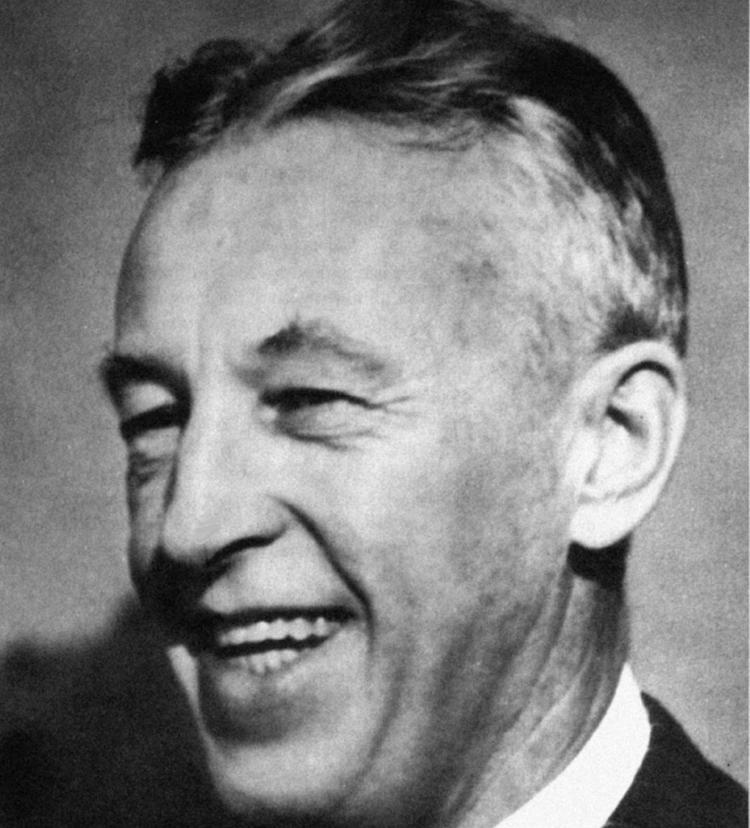
I personally find it a bit deplorable that Bill W. was not given alcohol when he requested it. I have experience working as a nurse in palliative care, and I have seen how tough the process of dying can be. People can be terrified so anything that can give them some comfort is welcome. The only reason that I can see why Bill W. was denied his dying request was an attempt to protect his image and the image of the program he created. These are not good justifications in my mind. He had already made it to the end of his life so what difference did it make if he drank again? It wasn't like he was going to go on a drunken rampage or damage his liver. It just bothers me that this man who had helped so many was denied some final comfort and for what?
If I Ask For Whiskey on My Deathbed Please Give It to Me
I have no plans to ask for whiskey on my deathbed, but if I do it should be given to me. I intend to leave this world completely sober because I want to fully observe the process – even if it is only blinking out into nothingness. The reality is though, that we have no idea how we are going to react to dying until we are facing it. Ram Dass talks about this in the documentary Fierce Grace . He devoted decades to spiritual training but he still felt overwhelmed when faced with own death – this was when he was having his stroke. Dying is not an easy thing.
March 5, 2012
Lucid Dreaming in Thailand

I love my waking life. I live in a beautiful part of the world, and the sun is always shining when I open the door. My home life couldn't be better, and things are going well in my career at the moment. I have plenty to stay awake for, but I'm also finding increasing pleasure in my dreaming hours. I would even go so far as to say that some of the most significant events in my life recently have occurred while I was asleep. This might sound like a bizarre claim but those who regularly have lucid dreams will probably understand what I'm referring to.
Lucid Dreaming Explained
I was once highly skeptical of lucid dreaming and put it in the same category as magic crystals or fairy dust. I didn't realize that this state of consciousness had already been given the stamp of approval by science. There are now numerous studies that confirm that it is possible for people to become fully aware in the middle of a dream. It is even suggested that as many as 50% of the population will have experienced at least some level of lucidity while dreaming.
Lucid dreaming is when people become awake while in the middle of a dream . Those who are unfamiliar with this experience are usually so startled that it wakes them up right away. Once people learn how to manage this lucidity it opens up a world of opportunity. It becomes possible to have some control in the dream. This world created by our mind then becomes our personal holodeck ; fans of Star Trek will know what I'm talking about here. In other words our dreams can become our playground and we can do almost anything we want.
Benefits of Lucid Dreaming
Those people who have never experienced lucid dreaming might wonder what all the fuss is about. We tend to take our dreams for granted and most of the time we don't even remember them afterwards. The potential of lucidity in dreams is astounding and the benefits include
- It is an opportunity to gain insight into our subconscious. The things that we learn about our own inner landscape can completely change the way we live our waking life.
- It is possible to talk with deceased loved ones. The general consensus is that these phantoms are just part of our subconscious, but they can bring great comfort.
- It is possible to have conversations with literally anyone; including historical heroes like the Buddha or Socrates.
- We can live out our fantasies. Forget about playing an air guitar because in a lucid dream you get to see an audience and really experience what it is like to be onstage.
- Buddhists have a long history of using lucid dreaming as a path to enlightenment.
- The ability that attracts the most attention from newbie lucid dreamers is flying. The laws of gravity do not apply in the dream world so flying is not a problem.
- Another tempting diversion in lucid dreaming is to live out sexual fantasies. This is probably high on the list of reasons for why people want to learn to become lucid in the first place – it takes sex tourism to a whole new level.
- One of the most talked about potentials of lucid dreaming is the ability to master new skills. My own experiences is that lucid dreaming isn't that great for learning new languages, but it can be good for practicing physical activities. I've used it for Muay Thai sparring, and it did help with my confidence.
- One of my favorite abilities in these dreams is time travel. It is even possible to revisit times before we were born or in the future. Of course most people don't believe that we actually travel through time, but it can be extremely convincing.
* It can lead to increased creativity in our waking life.
My Own Experience with Lucid Dreaming
I had lucid dreams in my teens, but I didn't know that this is what they were. The shock of being lucid always woke me up. I had my first sustained lucid dream during a meditation retreat at Wat Rampoeng nine years ago. I was then meditating up to 16 hours a day, and this meant that when I became lucid my automatic response was to just continue meditating. Most new lucid dreamers will do all the exciting stuff like flying, or having sex with their dream date, so my early experiences with lucidity might be considered a bit tame.
Since giving up alcohol almost six years ago I've developed an increased ability to lucid dream. I am experiencing them with increased regularity. I now have lucid dreams about once every couple of weeks. It is still such a joy to become aware in the middle of a dream, and I can't imagine ever getting bored with this ability. Some people are able to become lucid every night, but I've yet to reach that level. I would be happy with once a week.
It is only in recent months that I've started reading other people's accounts of lucid dreaming and the techniques that work for them. I highly recommend Lucid Dreaming by Stephen Laberge. I still struggle to gain control over my dreams. I just become too distracted and excited with being awake in this imaginary world that has been created inside my own head. A few nights ago I time travelled back to Dublin during the seventies. I just felt so gob-smacked by how real everything looked and felt. I wasted a lot of time just touching things. I woke up before really getting a chance to explore. There is a great deal of skill involved in dream lucidity, but I am getting better at it.
I'm surprised at how little attention is given to dream lucidity in the media. I believe that this is something that anyone could learn to do, and the rewards make the effort well worth it. It can be frustrating in the beginning, but if people keep at it they are almost certain to gain control over their dreams. We spend a good sized chunk of our life asleep so it does make sense that we make use of this time.
February 24, 2012
Greetings from Phuket
I've taken a few days off to travel down to Phuket. I came down on Thursday night and the journey took me 12 hours. It turned out to be a tougher drive than I'd expected, and I felt completely knackered afterwards. I was like a zombie for most of yesterday. I'm not looking forward to the return trip.
My reason for travelling down to Phuket is to practice Muay Thai. I've been lazy in recent months, and the aim of this trip is to revamp my love of this martial arts. I'm going to be devoting myself to Muay Thai over the next few days. You can follow my progress on my other blog Middle Aged Muay Thai
February 19, 2012
Why I Am No Longer An Alcoholic
In this episode I discuss my reasons for no longer considering myself to be an alcoholic
You can listen to the podcast of this episode by pressing play below.
Podcast Powered By Podbean
February 7, 2012
In Response to the Addiction Experts

I was recently interviewed by a journalist from the Chiang Mai City Life magazine about my experiences of addiction in Thailand. I'm always grateful for the opportunity to talk about myself so thanks Grace. I do recommend that people read this article Staying Sober in Thailand.
The Expert View of Thamkrabok
The one thing that really caught my attention in this article was the views of Simon Mott – an addiction expert. In particular his claim;
"This practice may be more beneficial for Thai people who are spiritually linked to Buddhism, also especially if they continue to live as a monk after treatment. However, it is vital to find and deal with the root of the problem causing addiction, which is better sought through psychology, counselling, and cognitive behavioural therapy. It is important to examine the way people think about things, and try to adapt thinking patterns to heal addictions."
I must admit that his comments have irked me. Mott does not appear to know much about the temple yet he feels qualified to make blanket statements. I do not pretend to act as a spokesperson for Thamkrabok but most of the ex-patients I've met have already tried the therapies he has suggested. I entered my first treatment facility and nineteen and had twenty years of psychology, counseling, and CBT – these methods did not work for me, but I found success at Thamkrabok.
I would love to know on what basis Mott is making his claim "This practice may be more beneficial for Thai people who are spiritually linked to Buddhism, also especially if they continue to live as a monk after treatment". Buddhism was hardly mentioned during my stay and most of the people who establish a solid sobriety afterwards do not live the life of a monk. I certainly don't live this life anyway.
More Than One Solution
I'm sure that the therapies Mott endorses do help many addicts. I'm not going to say here it will be better for people to go to Thamkrabok. It seems reasonable to assume that there is no one solution that suits everyone. It is obvious though, that the western approach is failing too many people so to insist that 'more of the same' is the way to go sounds stupid to me. This point was made clear by a report provided by the National Health Executive in the UK last year called Addicted to the Status Quo. It concluded that 'Current treatments options are limited and substantially rest within a symptom management model'.
There is not yet enough scientific research into the efficacy of Thamkrabok. Groups such as East-West Detox are working to get some studies completed, but it is a hugely problematic thing to judge. This means that any claims that recovery is "better sought through psychology, counselling, and cognitive behavioural therapy" is based on zero evidence. It bugs me when experts dismiss those therapies that they do not understand and that could be of benefit to many people. To keep on insisting that these individuals return to those therapies that have already failed them sounds ridiculous to me. To be honest, it bugs the shit out of me.
February 1, 2012
24 Years and I Can Still Get Homesick
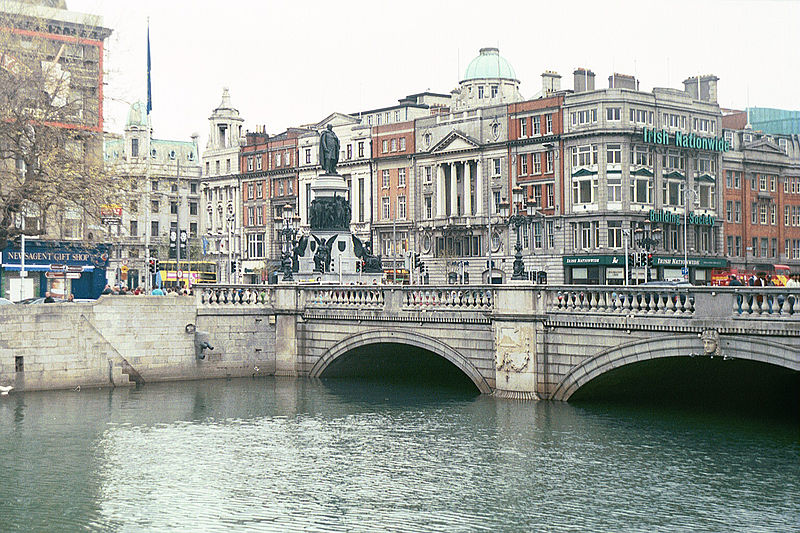
Dublin (Picture from Wikimedia Commons)
I left my home in Dublin 24 years ago – I had just turned eighteen. This means that I've spent the majority of my life living abroad. I stayed in England for over a decade, spent a year in Scotland, and this was followed by a brief sojourn in Saudi Arabia. I have been living in Thailand for the last 11 years. I love my current life and wouldn't change a thing. I made the right decision to leave Ireland all those years ago. Despite this I still get periods of homesickness.
The Homesickness Bug
I've become used to these periods of homesickness. I know that each year there will be a few days when I'll pine for the old country. I treat these emotions in much the same way as a common cold. I just sit them out, and I know that they will pass. These days there is wonderful technology that allows me to feel like I'm back in Ireland without leaving Bangkok. I can listen to Irish Radio, and watch Irish TV. I can even go for a walk around my old neighborhood with the help of Google maps street level views – on of the most fantastic tools available on the internet. This might sound like I'm wallowing in my homesickness, but it does help. It is not like this is something I do every day.
The Ireland I Left No Longer Exists
One uncomfortable truth that many of us long-term expats have to face is that the place we left no longer exists. Ireland has changed so much since the eighties that I can feel like a bit of a stranger there when I do visit. I will always consider it to be my home, but in so many important ways it is not my home any longer. I have a new life and Ireland has moved on without me.
I remember about twenty years ago talking to this old guy in a London pub. He had been living outside Ireland for decades. This old fella urged me to return to Dublin right away before it was too late. He warned that I was about to embark on a life where I'd always be a stranger. I would never completely feel like I fit in my adopted home, and I'd feel like a stranger when I went back to Ireland on holidays. His prophecy turned out to be correct, but there are some advantages to being an outsider. It has forced me to grow and challenge so many of my cultural assumptions. It made me who I am.
January 25, 2012
The Dangers of Strong Opinions and Beliefs – Video
In this video I discuss my views about holding strong opinions and beliefs. Please feel free to leave a comment.
Paul Garrigan's Blog

- Paul Garrigan's profile
- 3 followers

