Randy Susan Meyers's Blog, page 31
January 9, 2014
Bestelling Lists, Authors, & a Bit of Crazy
“You must stay drunk on writing so reality cannot destroy you.” Ray Bradbury
The New York Times Bestseller list (AKA “the list”) is the writer’s holy grail. Despite being rife with methodology that many claim to comprehend, but none can swear to understanding; despite not being a measure of selling the most books, but of selling the most books that week at those stores, every author wants the honor.
And yet, because it is considered so terribly jejune to admit that you want it, most of us toss our heads and roll our eyes when our moms and cousins ask one of these hated questions:
* Are you going to be on Oprah? (This even after her show ended.)
* Is your book going to be made into a movie?
* Are you a NYT Bestseller?
Only a few brave souls will go on record with their feelings about being (or not) a bestseller. (Which is why many of the authors here are speaking off the record below, but they are all published (most multiple times) authors from “Big 5” houses.
One anonymous author admitted to being ecstatic, even as she was a bit unsure how it all happened:
“When my first book hit the NYT trade list, I felt like I’d been handed the moon. I couldn’t believe there were all those strangers out there reading my little book. Then, my second novel debuted at number five on the NYT hardcover list, a fact we learned days before it even came out—back when no one had yet bought or read it. Crazy. Magical math? ESP? Barnes and Noble omnipotence? (It was a B&N Recommends.) I still have no idea. The List moves in mysterious ways.” Anon
Bestselling author Tish Cohen, a finalist for the Commonwealth Writer’s Prize, gave her feelings about “the list” in this succinct honest statement:
“For me, I haven’t made it until I hit the NYT list. Sigh?”
Ah, “the list.”
C.W. Gornter, celebrated author of six novels said:
“I think the list creates a feeling of have or have-not among the writing community; as authors, we vie for it, long for it, and can find ourselves sorely disappointed and disillusioned when we don’t achieve it, without understanding the numerous factors behind it over which we have no control.
To me personally, the list reflects more of a popularity contest, often engineered by publishers to gild chosen titles. It does not reflect the particular merits of any book—though sometimes, it does—but rather the fact that for various reasons that remain a mystery to the majority of writers, the publisher has decided to allocate monetary resources to create buzz for said book.
Nor does the lack of transparency as to how the list is actually achieved (last I heard, it was not based on Bookscan numbers) make deciphering it any easier. To want to be on the list is to be expected: it signals to the world at large that you are a success. But success in writing can be measured by more than that. I have never made the list, but make quite a good living with my writing. Would I welcome the chance to be on it? Absolutely. Will my career implode or will I plunge into despair if I don’t? No.”
Killer of dreams, maker of literary royalty: the road to the list is strewn with broken hearts. Two words whispered, fought over, dreamed of, and inducing more jealousy than Swiss bank accounts. I’ve heard rumors since I published my first book:
“You know, I should have been on the list—I sold more books than number 10 last week.”
How did he know that?
“If you’re over number 15 in the hardcover list, you don’t have the right to call yourself a NYT bestseller.”
Where could I get a list of these rules?
“You know, publishers pick the books they want to be on the list and then make it happen.”
Really? How did one get anointed?
Was any of this true? God knows it’s seductive, this insider baseball: The list. The list. The list. Who’s on, who’s not—who gets to have those golden words, New York Times Bestseller, plastered on their cover?International bestselling author Karen Essex has a simple answer to what being a bestseller means:
“You can finally prove to your parents that you were correct in not going to law school.”
Few, almost none, know the secrets to entering the gray lady’s scroll, while other bestselling lists are less opaque. Everyone agrees that being on “the list” is like winning the book beauty pageant, but no one will reveal the trade secrets that make the algorithm building “the list” Most agree it is a curated one—not one made up of pure math. There are list rules and strictures within “The List.”
According to the site Dear Author. “Each publisher house has its own standard for when the moniker “Bestseller” can be imprinted on the front of a cover. For some houses, the standard is to say “NYT Bestselling author of Book A”. Some houses won’t allow authors to put the label on the book unless they make the print list of the Times or USA Today. For example, there is an “extended” NY Times list and if you make it on there more than once, a publisher might allow the author to put “NY Times Bestselling Author” on the cover. In other words, at some houses, Snooki wouldn’t get to call herself a NY Times Bestselling Author.”
One online writers group almost broke into virtual fisticuffs over this, with one author declaring her publisher’s method (no “extended” NY Times list” authors allowed to use the moniker, versus those whose broader-minded publishers allowed all authors making any part of the list (print, digital, extended) to be used for labeling oneself part of “The List.”
It got ugly. After fighting to reach the highest rungs of a hierarchy, some want to kick down the climbers.
There’s no inoculation to list fever, and there are far more bestselling lists than ‘the list’: Wall Street Journal, USA Today, Amazon, Barnes & Noble, and Indiebound for a start. List makers range in the information given out on how data is collected—below is information listed on their websites:
NYT Bestsellers Data Collection: “The universe of print book dealers is well established, and sales of print titles are statistically weighted to represent all outlets nationwide. The universe of e-book publishers and vendors is rapidly emerging, and until the industry is settled sales of e-books will not be weighted . . . The appearance of a ranked title reflects the fact that sales data from reporting vendors has been provided to The Times and has satisfied commonly accepted industry standards of universal identification (such as ISBN13 and EISBN13 codes). Publishers and vendors of all ranked titles conformed in timely fashion to The New York Times Best Seller Lists requirement to allow for independent corroboration of sales for that week.”
USA Today Bestsellers Data Collection: “Methodology: Each week, USA TODAY collects sales data from booksellers representing a variety of outlets: bookstore chains, independent bookstores, mass merchandisers and online retailers. Using that data, we determine the week’s 150 top-selling titles. The first 50 are published in the print version of USA TODAY each Thursday, and the top 150 are published on the USA TODAY website. Each week’s analysis reflects sales of about 2.5 million books at about 7,000 physical retail outlets in addition to books sold online. Book formats and rankings: USA TODAY’s Best-Selling Books list ranks titles regardless of format. Each week, for each title, available sales of hardcover, paperback and e-book versions are combined. If, for example, Jane Austen’s Pride and Prejudice sells copies in hardcover, paperback and e-book during a particular week, sales from each format would be reflected in that week’s ranking. The ISBN for the format that sold the most copies is presented with each list entry.”
Amazon Top 100 Bestsellers Data Collection: “About Best Sellers in Books: These lists, updated hourly, contain best-selling items in books. Here you can discover the best books in Amazon Best Sellers, and find the top 100 most popular Amazon books.”
Barnes & Noble Bestsellers Data Collection:” B&N Top 100: Book Bestsellers”
Wall Street Journal Bestsellers Data Collection: “With data from Nielsen BookScan”
Indiebound National Indie Bestsellers: “Based on sales in independent bookstores across America. The Indie Bestseller Lists put the diversity of America’s independent bookstores on display. It’s produced just two days after the end of the sales week, and is the most current snapshot of what’s selling in indie bookstores nationwide.”
There is no place one can go and get a true list of how, in particular, the New York Times list is made—but, according to the many articles I read, and authors I’ve spoken with, the following seem to be widely accepted, though none can be backed this up with hard sourced fact:
1. “The list” captures the velocity of a give week, thus a book having high sales for one week can make the list, even while another book selling an overall far higher number for that month does not make the list.
2. There are stores deemed “New York Times Reporting” stores. Supposedly, some publishers and authors, aware of these stores will go all out to hit them within one week. Thus, gathering the velocity.
3. According to Wikopedia (yes, not always accurate—but this story of ‘leading data collection’ is often reported): The Times provides booksellers with a form containing a list of books it believes might be bestsellers, to check off, with an alternative “Other” column to fill in manually.It’s been criticized as a leading technique to create a best-seller list based on books the Times thinks might be included.
According to the NYT “Readers Representative” (data is from 2009) “the above is not quite accurate. “Another misconception is that booksellers are surveyed only on a list of titles determined by publishers’ shipments, keeping “sleeper” books — distributed in smaller numbers — off the list. That is not the way it happens. Instead, some companies dump all of their book sales to The Times, while others fill out an online form based on the previous week’s best sellers and including space for unlisted books that have sold well.”
4. Some try to manipulate lists by bulk buying—which is frowned upon (more below) and often found out—or by underpricing. I’m unclear on exactly how underpricing works, but it’s along the lies of giant retailer (such as Amazon) offering or agreeing to lower the price for an E-book (such as lowering the price from 11.99 to 1.99.) The author, friends of the author, etc., all shout out the bargain price. Then, the book, at this low price, shoots up the Amazon E-book list, enabling authors to write phrases such as “Number-one bestselling Kindle Kabbalah mystery!” Often an author will hit “the list” for a week through this method, and thus be forever deemed a “New York Times Bestseller. Then this book drops to it’s usual ranking.
5. There are services and sites devoted to quid-pro-quo for authors, meant to skew sales and rankings, and preying on self-published authors. And then there is the straight-up buy-in, reported on by Jeffrey Trachtenberg, Wall Street Journal in the article: “The Mystery of the Book Sales Spike: How Are Some Authors Landing On Best-Seller Lists? They’re Buying Their Way”. According to WSJ, “authors hired a marketing firm that purchased books ahead of publication date, creating a spike in sales that landed titles on the lists. The marketing firm, San Diego-based ResultSource, charges thousands of dollars for its services in addition to the cost of the books, according to authors interviewed.”
One author using the service said she didn’t know how ResultSource managed to skew sales so that the books landed on bestseller lists. “It’s a secret sauce,” she said.
Hmm… the last time I read the claim of “secret sauce” as the reason for a business success, it was attributed to Bernie Madoff.
After reading reams of supposed ‘inside scoops,’ I still can’t figure out a take-away. It seems too facile to deem anything (except buying one’s way onto a list) as something deserving of finger wagging. Jealousy and hope make for odd stews. Knowing insider-baseball can be as much loss of innocence as information-is-power (like learning the genesis of bright purple blurbs, or finding out the truth of a publisher’s reassurance that “you’ll have a social-media campaign!” means “good luck tweeting, honey.”
One author friend, one with his head tied on especially straight and smart, said this when I gathered quotes for this essay:
Marketing and sales are not my area of expertise. I do what I can and will be pleased, of course, if “The List” happens to me. But I focus on what I can control, the quality of my work. Anon
In the end, yes, Virginia, there is truth in basic advice, it does come down to living by those axioms which keep us honest, even as we pray to be touched by the Fairy Godmother of “The List.”
On the other hand, there isn’t a damn thing wrong with dreaming.
“I don’t care who you are. When you sit down to write the first page of your screenplay, in your head, you’re also writing your Oscar acceptance speech.” Nora Ephron
We have a hundred sides fighting inside us. We are like salt and snow.
Checking the list, hoping a frenemy didn’t make it. Being truly grateful at how deep a lens your friend brings to a story, and then feeling snarled and small when he hits “the list” and it seemed like a little part of you just died. We’re both parts and it’s okay to admit to the green monster in the shriveled corners of our hearts, but we must be on guard against being overtaken by coldness. If we’re not willing to appreciate the beauty brought forth by others, it’s unlikely we’ll be able to write our own.


December 30, 2013
DNA, Forgiveness, and Amazing Friendship: PICKING COTTON

I’m fascinated by redemption, forgiveness, and the power of being ‘strong at the broken places,’ so it wasn’t surprising that Picking Cotton: Our Memoir of Injustice and Redemption by Jennifer Thompson-Cannino and Ronald Cotton with Erin Torneo had me at hello, however it was the complicated shape-shifting of relationships in this story that burned this book into me.
Picking Cotton made me want to be a better person; just reading it allowed me a glimpse into hope.
Jennifer Thompson woke up to a man in her apartment; he raped her at knifepoint. She identified Ronald Cotton as her attacker, suffered great trauma, and though she eventually moved on, the attack on her body left a wide swath of emotional scar tissue. However, Jennifer used the legal system as her way to fight back. Lesson one: One doesn’t really recover from rape; one reconfigures themselves.
Ronald Cotton swore his innocence as surely as Jennifer Thompson testified to his guilt. At times, his lock-up seemed what allowed Jennifer to walk through the world. But after eleven years, DNA proved Ronald an innocent man. The amazing thing is that he walked out, not only an innocent man, but also a strong one. Lesson two: There are miraculous stores of strength inside us.
Ronald’s innocence stunned Jennifer (the real rapist was found) and tested her courage in an entirely different manner than had the rape. Despite her profound guilt at knowing she’d wrongfully identified her rapist, and taken eleven years, family, love, work, and all else from this man, she found the guts to meet with him. And despite eleven grinding wasted years in jail, time served for a crime he’d never committed, he found the valor to say yes, seeking closure and offering forgiveness.
Jennifer and Ronald eventually went on to work together for judicial reform. They speak out together, addressing the issues that kept Ronald in jail. More amazing, they became true friends.
I closed this book sorry for the ordeal Jennifer and Ronald suffered, but grateful they had the wisdom and grace to offer themselves to us: through this memoir, through speaking out, and through their example of true goodness. Lesson three: Read this book.
December 22, 2013
Oh, Santa: The Way We Were

Oh, Santa. Baby. Do we need couples counseling this year?
You and I have been in an indescribably on-again-off-again relationship for too long. I’ve been writing about our tortured love for how many years?
In 2011 it was off.
2012, back on again.
Now, it’s 2013—and I feel as though we’re friends with benefits. It’s just not enough. Sure I had Adam Sandler for Thankschanukah, but you can’t intersperse dreidels with Christmas cookies and call it one big happy holiday. Thankschanukah is gone, and as my friend’s 3-year-old said as she wept for a Christmas tree (when reminded of her joyous Hanukkah celebration) “But I’m so over Hannukuh!”
Ah, Santa, sweetheart—you torture me so. You’ve taken the place of Kathy Murphy (who hissed these words at me when I was 9 years old: You’ll ever ever get into Heaven, no matter what you do. Here I am again, knocking on the pearly gates. (Because that’s what Christmas can look like when you’re child’s nose is pressed up against those gleaming Macy’s windows. Heaven on earth)

In 2012, my therapist had enough. He told me I’d been whining about my unrequited love for too long. “It’s not him; it’s you,” Dr. Dreidel said. “Enough. Get over it. You want him so bad? Go after him.” So I celebrated. I wriggled back into your fuzzy red arms. But really, were you there for me?
I know, baby. There are many (maybe most) Jewish people who grow up warm and secure in their faith, those for whom the eight days of Hanukah don’t have to compete with Christmas: Jewish nurses and firefighters who take Christmas Eve shifts to ensure that their Christian brethren are home for the holidays. These are the lucky Jews with long standing traditions of Chinese food and a movie on Christmas.
But darlin’, I’ve never been one of them.

There were no Hanukkah (I can’t even figure out how to spell it right) traditions in my house, so I longed for that Rockefeller Center sparkle. My sister and I even hung stockings one year. (What were we thinking? That the keys to the kingdom lay in our old limp socks?) Mom was out on a date; we stayed up as late as possible, until, exhausted, we went to bed giddy with the prospect of what would be spilling out the tops of those socks.
Umm, I think my mother thought we’d once again left our dirty clothes around the house, because those damn socks were in the hamper when we woke.
As a teen, I went out with a similarly disposed Jewish friend and bought a pathetic Charlie Brown tree on Christmas Eve and smuggled it up to her room, decorating it with God knows what. Long dangling hippy earrings? Her mother was not happy. Other years I spent a Christmas with my best friend’s family, trying to be as adorably Christian as possible, praying they’d invite me back. Finally, I left home and gave you up for a few blessed too-hip-for-holidays years.
 Then I became a mother. Christmas reared its head. I was determined that my children would have a big old piece of the American pie. Why shouldn’t you love us, Santa? We lived with a non-Jewish couple in a rambling Victorian House and I fell into Christmas as though I were Jesus’ sister. Religion played no role for any of us: it was simply an orgy of food, presents, lights, good will, and Christmas stockings so full we needed overflow bags. You were there, Santa baby. (Though there was always a fly in my Christmas pie. Friends, who hadn’t stepped in a church since they were baptized, exclaimed as though I were crashing their personal kingdom: “you celebrate Christmas?”)

The kids got older. Christmas became firmly entrenched, including building up our own holiday family heirlooms (straight from the Crate & Barrel collection.) Still, I felt as though I were crashing Jesus’ birthday party. At a certain point I began to get that Barbra Streisand in “The Way We Were” feeling with you, Santa. You were my goyishe Robert Redford who I’d never truly possess. You’d hang out with me, for years even, but you’d never really make a commitment.

I’d never get your ring.
The kids got even older. I shrunk Christmas. I got a little standoffish with you. A miniature rosemary tree replaced the light-crusted evergreen. Orgy of presents stayed, but some years I’d name them presents.
But it wasn’t enough, Santa baby. I just couldn’t quit you. I don’t have the will to spend the day at the movies. Chinese food isn’t enough after years of licking peppermint sticks. It was good when we met up last year, right? But I’m tired of our back and forth, honey. I’m jonesing for you again.

I’m getting those old Santa Blues. I put that weird aluminum tree up—the one I tell my husband is hung with Stars of David.
But we know, right? No one will be the wiser if I throw a bit of glitter in with the Chinese food. Come on in, Santa. One bite of brisket never hurt anyone.

December 17, 2013
Paperback Pre-orders for THE COMFORT OF LIES (launching 1/28/14) to benefit Home For Little Wanderer’s Program

Amazon Barnes & Noble IndieBound Books-A-Million Powells
Please help support Located in Mission Hill, Boston, this group home serves children ages 8 to 15 and their families. The program provides residential treatment by offering a safe, structured home-like, living environment. Children living at Harrington House participate fully in the community through school attendance and extracurricular activities. I’ve visited the Harrington House, and helped raise funds and build a library for the children (with the help of Newtonville Books, friends, and readers.)
With each pre-order* of The Comfort of Lies paperback, between now and December 30, 2013, we’ll will donate $2.00 to this extraordinary program, located in the neighorhood where I spent most of my life, where I raised my children, and where I ran a local children’s program and community center for many years. It’s my way of saying thank you for providing the best hometown possible.
“Randy Susan Meyers’s second novel is sharp and biting, and sometimes wickedly funny when the author skewers Boston’s class and neighborhood dividing lines, but it has a lot of heart, too. Meyers writes beautifully about a formerly good marriage — the simple joys of stability, the pleasures of veteran intimacy — and deftly dissects just how ugly things can get after infidelity. The battles these women fight take place on a small stage, yet they’re anything but trivial: saving a marriage, making a meaningful career, learning to parent. In the end, thanks to Meyers’s astute, sympathetic observation, we want these women to win.”
—Boston Globe
* please forward proof of purchase (whatever the retailer emails is fine) to me at randy@randysusanmeyers.com and $2.00 of your purchase price will be donated to Harrington House.
December 12, 2013
Book Statistics & Fascinating Facts

Truly, it is easier to find out the average cost of a meal or nail polish (found them both in one try) than it is to find out most statistics on book sales (try Googling “average number of books sold per title” in any iteration and you’ll see what I mean).
I could find that the median writer/author salary was $55,420 per year in 2010, but let’s remember what ‘median’ means.
In a world where with the touch of few button we can find out the coffee drinking habits of the world, why did I spend hours looking for the few stats I could tease out about publishing? (Are there not enough computers for publishers? Do we need a kickstarter campaign to help get these numbers in one place?)
As a lover of the make-believe, this was not my favorite pursuit (oh, that I could have assigned this job to my fact-loving husband) but knowledge is power, so consider this part one of: Just The Stat Facts, Mam.
Caveat Emptor: What you have below is the work of a curious mind, but not an expert-in-the-field. Corrections welcome!
BOOK SALES IN 2013:
Which means (even to a non-math person like me) paper books have 80% of the market)
Publishers Weekly, with numbers gleaned from BookStats, the Association of American Publishers/Book Industry Study Group, reported: “Sales of hardcovers rose 1.3% in the year, to $5.06 billion, and trade paperback sales increased slightly, up 0.4%, to $4.96 billion. . . . Total e-book sales rose 44.2% in 2012, to $3.04 billion and accounted for 20% of trade revenue”
PW expected a drop in mass-market paperback sales, while “sales of downloadable audio rose 21.8% in 2012, to $240.7 million,” but there was no data on the performance of physical audio.
Self-publishing has tripled in five years: “The number of self-published books produced annually in the U.S. has nearly tripled, growing 287 percent since 2006, and now tallies more than 235,000 print and “e” titles, according to a new analysis of data from Bowker® Books In Print and Bowker® Identifier Services.”
Traditionally published books rose six percent: The number of traditionally published print books rose 6% in 2011, to 347,178, according to preliminary figures released by Bowker.
How many copies do most self-published books sell and what does it cost to self-publish?
According to the New York Times (last August–click link above for article) “most self-published books sell fewer than 100 or 150 copies, many authors and self-publishing company executives say. There are breakout successes, to be sure, and some writers can make money simply by selling their e-books at low prices. Some self-published books attract so much attention that a traditional publishing house eventually picks them up. (Perhaps you’ve heard of the novel “Fifty Shades of Grey,” which began its life as a self-published work?)
Still, a huge majority of self-published books “don’t sell a lot of copies,” said Mark Coker, the founder and chief executive of Smashwords, a no-frills operation that concentrates on self-published e-books. “We make it clear to our authors.”
Finding the number of books, by average, that books published by traditional houses sell seemed close to impossible (but I will keep looking for part 2). The closest stats I could find for average book sales was this: According to BookScan, which tracks most bookstore, online, and other retail sales of books, only 299 million books were sold in 2008 in the U.S. in all adult nonfiction categories combined. The average U.S. book is now selling less than 250 copies per year and less than 3,000 copies over its lifetime.
The above did not differentiate eBooks, so this average is truly unclear, but it is a beginning. Before this, I always heard the average title sales (which I take to include all versions) were usually 5,000. But, that is only word of mouth.
Books Published Per Year by Country (according to UNESCO)
Top 15 Countries:
United States (2010) 328,259 (new titles and editions)
United Kingdom (2005) 206,000
China (2010) 189,295 (328,387 total)
Russian Federation (2008) 123,336
Germany (2009) 93,124
Spain (2008) 86,300
India (2004) 82,537 (21,370 in Hindi and 18,752 in English)
Japan (2009) 78,555
Iran (2010) 65,000
France (2010) 63,690 (67,278 total)
South Korea (2011) 44,036
Taiwan (2010) 43,309
Turkey (2011) 43,100
Netherlands (1993) 34,067
Italy (2005) 33,641 (59,743 total)
Click on the hyperlink above for the whole wide world. Very interesting.
IN THE WORLD OF MAGAZINES:
“In the fall, celebrity title sales usually dip, while titles in the Food, Health and Automotive categories spike during the 4th quarter,” and November is the slowest month for magazine purchases on newsstands.
HOW MANY BOOKSTORES? WHERE ARE THEY?
According to Open Education Database in October 2012, and other sources highlighted below:
The Amazon online bookstore had about 22.6 percent of book sales.
The number of bookstores decreased from 2,400 to 1,900.
Book sales were strongest in Los Angeles, New York, Chicago, Boston, Washington DC, Philadelphia, San Francisco, Seattle, San Jose, and San Diego.
Cities with the most bookstores are Seattle, followed closely by San Francisco, Cincinnati, Minneapolis, and St. Louis.
There were about 10,200 bookstores in the United States in 2011. Since the numbers below do not add up to anywhere near that number, I can only assume that Open Education Database includes booksellers such as Target, Costco and other big box stores.
Independent books stores were operated in 1900 locations (by 1567 owners) in 2012, according to the American Booksellers Association.
The Barnes and Noble chain has 1363 stores (689 retail stores, and 674 college stores) and are planning to close 20 a year during the next decade.
Books a Million have 250 stores.
Hudson Booksellers has 59 retail outlets.
HOW DO YOU COMPARE TO A CELEBRITY WRITER’S SALES?
Writer’s Digest provides a wrap-up. The high number on the list comes from Tina Fey, at 921,856 copies. The low comes courtesy of Paris Hilton’s children’s book, at 2,855 copies.
(figures as of mid-2013)
December 11, 2013
This Is The Golden Age for Readers
 Guest Post by Kathy Crowley & Beyond The Margins
The other day while I was talking with one of my children’s teachers, she lamented the modern day explosion of distractions. TV, video games, ipods and iPhones, social networking. There are many forces drawing children away what the rest of us think they should be doing. Such as...? Well, let’s just cut to the chase and say: “They could be reading.”
I’m happy to be living in this time, though. This is principally due to my very deep appreciation of indoor plumbing, but I also happen to think it’s a great age in which to be a reader. A recent reminder inspired me to write this post. I participated in a Facebook meme a few days ago, the point of which was to share the titles of ten books that had stayed with us over the years, even over a lifetime. I loved reading everyone’s posts and responses. It was more interesting, of course, when the list belonged to a friend, but I read the lists of people I didn’t know almost as eagerly. Somehow, strangers aren’t strangers anymore when you love the same books. (I can’t find a term for this kind of bonding but I think if we throw a few German words together Lesenliebe? Bucherverbundenheit? – it’ll get us there.) I couldn’t help but think that living in the information age makes this experience a lot easier to come by.
Here are my arguments for why this is a golden age for readers:
1. A Room with a View or, So Many Places to Talk Books:
While Facebook may more generally occupy itself otherwise (sharing kitten and baby pictures, for example), there are lots of websites where it’s all literature, all the time. Bookriot, The Rumpus, Goodreads, The Millions, The New Yorker’s Page Turner (shamelessly stolen from us), HTMLGiant, Largehearted Boy…. I could go on. And on. If you’ve read a book and you want to know what other people think about it, what the author had in mind when he/she wrote it , what music s/he was listening to, suggestions for similar books, suggestions for very different books, suggestions of books about apricots or sword-fighting or hairdressing or…. Not only is it all there, way more of it is there than you’d ever need.
2. The Shipping News or, Books Magically Appear in Your Hands:
How about accessibility to reading material? In addition to our longtime go-to resources – library and bookstore shelves – we’ve got magical new ways to get our hands on a good book. Whatever your feeling about e-readers, it’s an incredible thing that the entire text of a book can be delivered into your hands in less than a minute. And that’s even without drones. Ebooks may not be an option for everyone, but they are for more and more people. (I’m writing this post from the public library in Watertown Massachusetts, where patrons can borrow ereaders and ebooks – and the librarian tells me the demand is huge.) Another point of accessibility allowed by ebooks: because the font can be modified, many more books are available to readers who need large print.
(continued at Beyond The Margins)
December 9, 2013
Dear Abby for Writers: Here Comes “Ask Margie”

Queries got you puzzled? Rejections piling up? Not sure about epilogues? Confused about point of view? Spouse resenting your hours spent at the computer? Wondering how to handle your jealousy over your friend’s best-seller status? Puzzled about holiday gifts for your agent?
It’s time to “Ask Margie”
Whether your writerly problem is emotional, creative, business-related, an etiquette quandry, or just plain curiosity about anything in the world of publishing, Margie can help. Please tune in for “Ask Margie Mondays” beginning Monday, January 20, 2014, when the staff of Beyond The Margins will answer your questions . . . and if we don’t know the answer, we’ll turn to our expert friends in the field (editors, agents, publicists, and marketing mavens).
Please start sending your questions to askmargie and watch for your answers starting January 20, 2014. Please use whatever signatory you’d like us to show under your question, whether it be “Confused by Commas,” “Considering Inventing A New Language,” or “Should I Bribe My Editor With Diamonds?”
November 28, 2013
The (Low) Cost of Reading
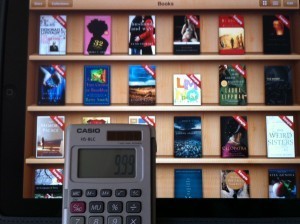
Books are my life. Without reading, I’d be lost. Perhaps that’s why I’m baffled about the rampant indignation about the price of e-books. Are readers being forced at gunpoint to buy these books? Is there a cabal I haven’t heard about? Are publishers from Little Brown to Graywolf Press in cahoots to rob readers?
According to the NYT, “Over the last year, the most voracious readers of e-books have shown a reflexive hostility to prices higher than the $9.99 set by Amazon.com and other online retailers for popular titles.” Authors dread the not uncommon one-star reviews given by those who’ve never read a page of the title they’re slamming, reviews based solely on the fact that they consider the price to high. Others dread sniping from authors who choose to publish their own work—authors who rather than talking about the worth of the read they offer, denigrate the price of books offered by established publishers.
Ah, can’t we all just get along?
I’m weary of hearing e-books are too expensive, that their value should be based on no more than the barest bones. Some disparage money going to authors (is there any more intrinsic part of a book than the creator? Unlike cooks, designers, engineers, should we work for free?) with remarks made by “The Cheapskate” on CNET: “Now, I understand books cost money. There’s editing, publishing, and distribution. Paper, ink, trucks, gasoline. Storage, shipping, shelf space, sales staff. And the countless people involved in all those transactions. E-books, on the other hand, consume zero trees. They weigh nothing, occupy no physical space, and don’t get shipped in the traditional sense. Middlemen are few and far between. So you’re left with, what, editing costs and the pittance you pay the authors?”
The average price of a restaurant meal in the United States is roughly $10 per person. The cost of individual meals range from $5.00 to $25.00 per person. My guess is the average person eats a meal in less than an hour and spends far longer reading any given book. (The average cost of a meal at a NYC restaurant is 41.76 per person.)
We have food choices. Duck into McDonalds and get a filet-o-fish for three bucks (sometimes 99 cents during Lent.) Shell out $10.99 for a mid-price entrée at a neighborhood restaurant. Anniversary? Get the equivalent of the hardcover and spring for the $30.00 lobster.
Should these meals all be priced the same? Do you see lines of foodies screaming that at the bestselling filet mignon should cost the same as a Big Mac?
In 2010 the average cost of movie ticket (according to the National Association of Theater Owners was $7.89. How long does a movie run? (And don’t you usually go with someone else, thus doubling the cost?)
The average cost of e-book on Ipad is $8.00 and though I couldn’t find an average across-the-board e-cost, I’m certain that it’s close. Some self-published books are available for 99 cents. Others, like the Janet Cromer’s heartbreaking chronicle Professor Cromer Learns to Read cost $9.99. The exquisitely written memoir In Her Wake by Nancy Rappaport is $11.92. State of Wonder, by Ann Patchett, a wonder to behold, is $12.99 for how many hours of riveting pleasure?
Average no-frills manicure: $10-$30.00
Average cost of a package of baklava: $20-50
Maple syrup can cost anywhere from $3 to $32 a jug.
Around the web there’s agreement that the average person takes 8-10 hours to read a book. Even taking into account length of book, varied reading skills, yada, yada, yada, for me the enjoyment received from a good book is longer-lived than the very best of meals and lives on in my soul rather than my waist. For me, books are probably third to food and shelter for what I need to survive and I’d forgo fancy food for books if asked to make the choice.
When my daughters were small, when they were in college, when I was a single mother, when I had two jobs so I could pay for college tuition, at that time I couldn’t afford my reading jones—I read too fast to keep up with my need. So I went to the library, gratefully lugging home 10-20 books a week for my daughters and me. I was then, as I am now, indebted to the taxpayers who provided libraries, the publisher who sold to them, and the authors who didn’t begrudge hundreds of patrons sharing one copy of their book.
And now, able to buy the books, I don’t complain about the money I spend on them: hard covers, paperbacks, or e-books. Instead, I am thankful beyond belief that these books are out there to keep me going, just as they always have.
There’s a good chance I’ll get some unhappiness from this. I’ll be told that I don’t understand. I’ll get tons of charts and analysis. And I hate to make folks unhappy, so I’ll need to relax. The average price of a massage is $60.00. Or I can get another book.
Oh, most of those books above? Bought about half of them twice. Had to have them both ways. Mr. President, I’m working for economic recovery.
November 24, 2013
The Year Google (and Goya) Saved Thanksgiving
I don’t care how many people shed tears for the good old days, before we were so connected, before life sped before our tapping fingers: Web, thee did save me.
My sister and I may not have grown up rife with traditions–when when Jill and I hung our socks on Christmas eve, the flat unfilled sight of them the next morning may have reminded us that Santa didn’t stop for little Jewish girls–but darn it, we had the stuffing handed down from Grandma Millie. If we were on death row, our last meal would be the stuffing.
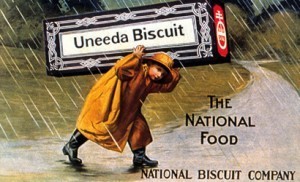
You could tweak it (Jill uses garlic, I don’t) but you never messed with the main ingredients: Uneeda Biscuits and stale rolls. The stale rolls might change from year to year—we’re flexible. Recently I’ve discovered that Bertucci’s rolls are perfect and we make sure to stop by the restaurant where our take out order is, um, 2 bags of rolls.
But don’t mess with the Uneeda biscuits.
In recent years, Thanksgiving became a little scary. The weeks before the hallowed meal I became obsessed with finding the suddenly difficult to find blue cardboard crackers boxes decorated with the little boy in the raincoat. Year round, the entire family went on the lookout for these increasingly rare crackers. What was going on with Nabisco?
One year I was able to order them from Amazon. Then not. Finally, I discovered that DeLuca’s Market in the Beacon Hill neighborhood of Boston stocked them (I think for nearby frail ladies in their nineties who crumbled them in their Campbell’s.) For years, I’d drive down and clean them out, sometimes, when only 4 or 5 boxes remained. I’d shudder, knowing how close I’d come to a Uneeda-less year.
A year ago, when we were already dangerously close to Thanksgiving, they seemed to have disappeared. My older daughter swore she’d seen them in a Market Basket in a suburb 40 minutes from our house. My husband and I raced over. We scoured the aisles. I called my daughter—oh, had she forgotten to mention the sighting had been months before? We drove to DeLuca’s, (surely they’d re-stocked) thinking it an auger of success when we found a parking spot in front (a Beacon Hill miracle.)
Nothing.
A wonderful clerk went to the order form.
Nothing. No longer being ordered.
Nauseated by fear, I went home to, of course, Google Uneeda Biscuits. Where I learned, on Chowhound (my new best friend) that it was over. They were gone. Discontinued. Kaput.
But, oh Lordy, it turned out that Grandma Millie’s secret ingredient was known by others. OMG! We were not the only family in America using Uneeda Biscuits for stuffing. We were not the only family in America for whom Uneeda Biscuits were the cure for stomach aches, depression, and holidays.
We were not alone.
But wait; there’s more. The miracle of Thanksgiving unfolded on my screen. Others, secret byte-sized friends, had already attacked the problem: Goya Snack Crackers. They weren’t a clone or a complete match, but, as my savior,Bicycle Chick wrote, they are quite similar in flavor.

She was correct.
We were saved. Because when it comes to keeping tradition alive, sometimes you have to go online.
Happy Thanksgiving to friends of all dimensions.
GRANDMA MILLIE’S (FLEXIBLE) STUFFING
This is as close as I can come to giving this recipe—as it has always been a trial, error, see-how-it-tastes-raw and then cook-it-when-it’s ready sort of food.
Preheat oven to 350°.
I don’t stuff the bird, but you can. I prefer baked stuffing.
Close as I can come to amounts are:
A bag or two of Goya crackers.
A dozen small Bertucci rolls, or 6 large crispy rolls. (Buy ahead and let get stale. Toast in oven if you forgot to make them stale.)
Break crackers and rolls into small (but not teensy) pieces.
Soak crackers and rolls in warmed milk. (Enough to cover, but not overwhelm. You want the milk to soften the carbs, but not drown them.)
Beat about 5-8 eggs (or more, depending on how ‘eggy’ you like your stuffing)
A bag of carrots (or more, depending on your taste), shredded
One or two large onions (or more, depending on your taste)
5-8 stalks of celery (or more, depending on your taste)
1-3 boxes of sliced mushrooms, depending on how much you like mushrooms
Melt lots of butter in largest skillet or sauté pan you have. Add onions, sauté for a bit. Add all other vegetables and sauté until soft. Add salt and pepper to taste.
Squeeze leftover milk from crackers (or add more if they seem too hard). Mix in vegetables and butter. Pat into baking dishes and bake until top seems crunchy (about an hour, sometimes less).
This recipe calls for the ability to play and taste as you mix, sauté, and cook. Uncooked it should be heavy and soggy, but not wet. Baked, it should be crunchy in places, soft in others, buttery, and, if you are a carb lover, you should find it almost impossible to stop eating.
(from the rerun files)
November 21, 2013
Writerly Etiquette

As I waited for my first novel to launch, I was told by the experienced:
1) “Don’t expect to get on Oprah.” (I wasn’t.)
2) Waiting for launch was “the quiet before the quiet.” (Hey, thanks for depressing me!)
3) “You don’t need to spend money on an outside publicist.” (Very glad I ignored that one.)
And my very super favorite warnings:
4) “Don’t get too excited.” and “Don’t pay attention to reviews or Amazon numbers.” (To which I should have answered: “And where should I get the lobotomy?)
Which taught me this: Sometimes people are speaking from sour grapes, sometimes jealousy, and sometimes you’re simply dealing with an Eeyore. Sometimes folks are helpful; sometimes they’re not. Some will spend their time telling you, in gushing terms, how much their ‘they-love-me-to-death’ publisher is doing for them, them, and them, while you gulp and nod, thinking how at least your publisher sent out a net galley . . . wait, they did remember to do that, right? You’ll soon learn to identify these types, but how do you cope with them?
When my grandmother turned 97, we had a party for her. (Why at 97? We are an odd family.) “Grandma,” I asked, “what’s your very best advice for life?”
She looked at me, this warm woman who’d never complained about a person in her life (which makes me unsure that she actually is my biological grandmother, whereas there is no doubt that I received genetic material from my card-sharking kleptomaniac Grandma on the other side) and she said, “Be nice to people.”
I’m certain there are a number of snappish authors who advocate that dogs-should-eat-dogs (dog-eating authors who’ve managed to hit every bestseller list) but I believe in nice. I recommend that ‘nice’ (which, by the way, is entirely unlike being a doormat) color your career.
Start by answering your mail. All of it. When you receive a compliment, say thank you. When a reader complains that you’re biased, don’t rant at them or call them out in public! Ignore them or try to answer thoughtfully. I sent one such email to a ranting angry woman (who’d written to me because she thought I’d been disrespectful at one point in my first novel) and received a far more rational answer. We actually found some common ground.
I’ve read public postings by authors grumbling about the attention and letters they receive. God, I can’t believe what these people write to me! They want a book! They want a signature! They want me to speak to their class! Perhaps public complaining is a way of showing off how Very Important one has become. Or perhaps they really are stretched to the limit. We all know that feeling, but keep quiet in public. Every job has its down side, but do you want your doctor to write about how disgusting she found your rash?
Don’t grumble in public. Especially in print. Never online. And not about fellow writers, unless they were racist, sexist, or some other ist, or you’re looking to build a reputation contingent on your scathing wit or are looking for a public feud. Some writers do want this, or don’t mind being thought of as holding a knife, but this is not recommended for the average sarcastic, funny, or observant person—be certain you truly are thick-skinned enough to pull off calling writers out, because it comes back.)
I don’t give bad reviews. If I dislike something, I keep it to myself—I never post a negative review on Amazon or Goodreads, or anywhere else. Not because I’m too wimpy to be honest, but because there are enough professional and amateur critics out there and I know how much even the best-intentioned criticism can hurt, and I don’t want to add one more bad word to their burdens. I either give five-stars or I don’t do anything. And trust me—writers notice. When I get a 4-star review on Amazon from someone I know, oh, I notice. Never underestimate the thin skin or pettiness of your fellow writers.
Do you plan to write about your life as an author? Most readers—and you are seeking readers, folks, not just the guffaws of your fellow writers—don’t want to hear complaints about how tired you are, how much you hate writing, and what a grind it is to revise. It’s better not to show how the sausage is made.
The proper audience for swearing about critics, cursing about Amazon reviews, or sneering at the efforts of more successful writers is your own trusted group of writer-friends. And if you have complaints about your treatment at the hands of your publisher, take them to your agent.
Don’t, don’t, don’t whine in public! You have published a book. This is a fantastic feat. Instead of showing off your sweat, let people see your happiness and gratitude.
Thank your agent, editor, copy-editor, cover designer—everyone. Flowers, candy and bagels are all nice. Paperweights. Wine. Etsy is a perfect source for unique gifts. A handwritten note of gratitude. Honestly, no matter how much you wish you got more, more, more from your publishers, these folks work hard for you.
And, when you’ve moved along, and maybe had to luck to sell a few books, and now you’re the one with the experience, be kind to new writers. Yes, I know there is a hierachy, but it only takes a moment to shake a hand and give a genuine “good luck!” As one whose introduced herself to a very-important-writer or two, trust me, those cold shoulders are long remembered.
Last piece of how-to-be-nice advice: Readers don’t limit themselves to one book. If you’re a writer, you’re probably also an avid reader. Publicly praise great books you’ve read. (And please, not just classics written by dead people—unless you expect dead people to be your readers.)
Promote other writer’s books—even ones that come out the exact same week as yours. It’s good karma. You can’t expect help if you don’t provide it to others.
And it’s nice. Just like Grandma said.
(Portions of the above were taken from What To Do Before Your Book Launch by MJ Rose & Randy Susan Meyers)