Randy Susan Meyers's Blog, page 29
August 2, 2014


July 28, 2014
July 18, 2014
Amazon, Publishers, The Sun, The Wind & Writers
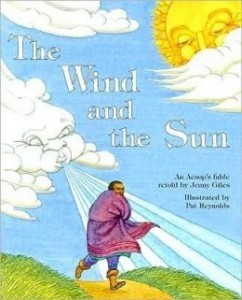
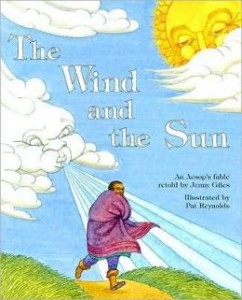
Long ago, the Wind and the Sun fought about who was the stronger. Suddenly they saw a traveller coming down the road, and the Sun said: “I see a way to decide our dispute. Whichever of us can cause that traveler to take off his cloak shall be regarded as the stronger. You begin.” So the Sun retired behind a cloud, and the Wind began to blow as hard as it could upon the traveler. But the harder he blew the more closely did the traveler wrap his cloak round him, till at last the Wind had to give up in despair. Then the Sun came out and shone in all his glory upon the traveler, who soon found it too hot to walk with his cloak on. Aesop’s Fables
If you’re in the business of books in any way, you have a dog in the Amazon vs. Hachette wars. I can’t say I know what the conflict is—no one seems to be able to enumerate the problems with certainty. The conventional wisdom seems to be that Amazon wants a bigger share of the profits from eBooks.
Ah, doesn’t everybody?
“Publishing a book is like stuffing a note into a bottle and hurling it into the sea. Some bottles drown, some come safe to land, where the notes are read and then possibly cherished, or else misinterpreted, or else understood all too well by those who hate the message. You never know who your readers might be.”
― Margaret Atwood
This Friday’s Faves Links, are a compendium of the sides, the essays, the articles, and the . . . facts? Honestly, at this point there are really only a few facts that I, as a writer with no insider info, can even try attesting to:
All Books Are Not Being Punished Equally
Amazon’s methodology to force a win from Hachette is to limit access to some Hachette titles. Interestingly, the hugely selling Stephen King’s Mr. Mercedes and JK Rowling’s The Silkworm books, (Rowling published under the pseudonym Robert Gailbraith) are available the same as ever vis a vis Amazon: on time and at discount:

While other titles, such as The Ice Cream Queen of Orchard Street by Susan Jane Gilman, and The Phantom of Fifth Avenue: The Mysterious Life and Scandalous Death of Heiress by Meryl Gordon are getting the s l o w d o w n treatment, being offered without discount and taking 1-3 weeks for delivery:

And some Hachette titles while not discounted, but are being shipped in the usual swift Amazon fashion, and others are not.
“If ever a publisher gets a non-terminable contract with an author, that author can never buy his freedom from that slavery on any terms. A publisher is by nature so low and vile that he — that he — well from the bottom of my heart I wish all publishers were in hell. “
― Notebook, 28 September 1903 (quoted in Mark Twain’s Correspondence with Henry Huttleston Rogers, p. 534)
Amazon Offered $$$ — Via Some Authors
Amazon offered authors (how they would access this, sans the authority of Hachette, I have no clue) a temporary deal. According to Entertainment: Last week, Amazon proposed a plan to offer Hachette authors 100% of eBook profits until negotiations are over, a plan Hachette swiftly rejected.
To which Hachette answered:
Amazon has just sent us a brief proposal. We invite Amazon to withdraw the sanctions they have unilaterally imposed, and we will continue to negotiate in good faith and with the hope of a swift conclusion. We believe that the best outcome for the writers we publish is a contract with Amazon that brings genuine marketing benefits and whose terms allow Hachette to continue to invest in writers, marketing, and innovation. We look forward to resolving this dispute soon and to the benefit of the writers who have trusted their books to us.”
“I cannot claim to have had a hard time publishing.”
― Alice Walker
The Author’s Guild struck back at Amazon over this offer:
“While Amazon claims to be concerned about the fate of mid-list and debut authors, we believe their offer—the majority of which Hachette would essentially fund—is highly disingenuous. For one thing, it’s impossible to remove authors from the middle of the dispute. We write the books they’re fighting over. And because it is the writing life itself we seek to defend, we’re not interested in a short-term windfall to some of the writers we represent. What we care about is a healthy ecosystem where all writers, both traditionally and independently published, can thrive.”
“Publishing for me is a business, not an ideology.”
―Barry Eisler
And Amazon hit back:
“Our offer is sincere and it stands—Hachette need only say yes to help their authors. We also wonder what this letter would look like if Hachette had posed this idea and Amazon had rejected it. The letter conflates the long-term structure of the industry with a short-term proposal designed to take authors, the constituency this organization supposedly represents, out of the line of fire of a negotiation between large corporations. Given that the Authors Guild are an author’s advocacy group, it is hard to believe they don’t support this. They are the Authors Guild, not the Publishers Guild.”
What’s a writer to think? Where and how do we win?
These Amazon-Hachette negotiations aren’t the first time writers were caught in the crossfire, nor, sadly, will they be the last is my guess. In this case, my historical knowledge is personal. When my first novel (The Murderer’s Daughters) launched, it turned out to be the day when Amazon pulled the Macmillan ‘buy’ buttons from the site. My second novel, The Comfort of Lies was caught in the nine-month-long Simon & Schuster/Barnes & Noble dispute.
“Writers are the lunatic fringe of publishing.“
― Judith Rossner
Naturally, all these corporate negotiations are over money. And yet, during these battles, it is writers, who provide the ransom, who are held captive. It is the midlist authors whose paychecks are shredded. Despite the myths of the impoverished writer happily scribbling away at midnight, after hours spent at a day job, writers, like everyone else working in publishing, feed their families, wear clothes, and pay electric bills. They cannot survive when the money coming in falls away.
Show us the money!
As Amazon and Hachette fight over how the pie is cut, where are the authors? Writers who work in a contract with traditional publishers—large and small—make 25% of the net profit. What does that mean? According to the Author’s Guild, it means that the publisher reaps the rewards:
Author’s Standard Royalty: $3.75 hardcover; $2.28 e-book.
Author’s E-Loss = -39%
Publisher’s Margin: $4.75 hardcover; $6.32 e-book.
Publisher’s E-Gain = +33%
“Be ruthless about protecting writing days, i.e., do not cave in to endless requests to have ‘essential’ and ‘long overdue’ meetings on those days. The funny thing is that, although writing has been my actual job for several years now, I still seem to have to fight for time in which to do it. Some people do not seem to grasp that I still have to sit down in peace and write the books, apparently believing that they pop up like mushrooms without my connivance.”
― J.K. Rowling
The Current Overviews
On July 12, The New York Times presented an overview from all sides about the Amazon-Hachette problem. Most agree it was a reasoned article, and far more reasurring than war of words between writers—those who are published by Amazon, those who are published by Hachette, those who are self-published—a war that seemed to be the very definition of losing sight of the real issues. Nathan Bransford’s essay on this captured the essence of the forest/trees problem:
“But at the very least, count me out of the letters and counter-letters and the flame wars and the bile. Rather than authors fighting it out we should be working together to create something better.”
And then, turning this issue crystalline regarding author’s needs, from UK, we have the Guardian, with an article concentrating on the needs of authors:
“Chief executive of 9,000-member UK group argues that while ‘authors’ earnings are going down generally, those of publishers are increasing . . . Nicola Solomon, who heads the 9,000-member strong Society of Authors, said that publishers, retailers and agents are all now taking a larger slice of the profit when a book is sold, and that while “authors’ earnings are going down generally, those of publishers are increasing.
“Authors need fair remuneration if they are to keep writing and producing quality work,” she said. “Publisher profits are holding up and, broadly, so are total book sales if you include eBooks but authors are receiving less per book and less overall due mainly to the fact that they are only paid a small percentage of publishers’ net receipts on eBooks and because large advances have gone except for a handful of celebrity authors.”This is neither the beginning or the end of publishing. All one has to do is look back to the past to understand this is an on ongoing battle, with opinions on every side, and a side to every opinion:
“I finished my first book seventy-six years ago. I offered it to every publisher on the English-speaking earth I had ever heard of. Their refusals were unanimous: and it did not get into print until, fifty years later; publishers would publish anything that had my name on it.”― George Bernard Shaw“
“Nothing stinks like a pile of unpublished writing.”―Sylvia Plath“
“I have been blessed to have the same editor and work for a great publishing house.” ―Vince Flynn
July 15, 2014
THE SECRET LIVES OF BABA SEGI’S WIVES
“When Baba Segi awoke with a bellyache for the sixth day in a row, he knew it was time to do something drastic about his fourth wife’s childlessness. He was sure the pain wasn’t caused by hunger or trapped gas; it was from the buildup of months and months of worry.”
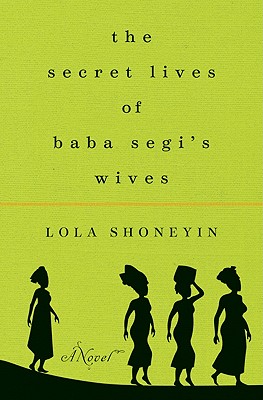
Here’s today’s reason we should support independent bookstores. Not long ago, I was browsing deep into the shelves of the Porter Square Bookstore, way past the “New Releases!” and “Staff Picks!!” tables, when the spring green binding of The Secret Lives of Baba Segi’s Wives by Lola Shoneyin drew me. I’m not sure I would have found it any other way, so thank you reading karma that led me to Porter Square and Shoneyin’s book that day.
Thank you for that brilliant first line, Lola Shoneyin. (Hello, my name is Randy, and I am a first line junkie.) Pull me in with your lead in and you’ll own me.
Baba Segi had a stable family of three wives and multiple children—then he took a fourth wife. Unlike the others, this new wife is educated and the women are terrified that she’ll change the balance of power in their family.
If families are a delicate balance of personalities, then a multiple-marriage family is spider-web thin and strong, entangling all who enter with strong confusing holds.
Shoneyin, a magical writer, spins her web of story with deceptively simple elegance. Her novel opens the door wider to a reader’s understanding with each chapter. Those who appear to be villains are suddenly revealed as tortured souls. Shoneyin, like all good writers, knows that villains aren’t one-dimensional.
I would shame this book if I gave away a single unfolded secret, so I can only say this: The Secret Lives of Baba Segi’s Wives delves deeply into the weakness of polygamy without showing disrespect towards those women and men raised to live their lives this way. By her deft creation of characters who wiggled inside my psyche and heart, I learned about two unknown-to-me cultures (polygamy and Nigeria) from an inside spot.
This, to me, is the beauty of great novels—they present the heart of an ethos, or a new land, in a manner that sweeps you right into the arms of the story. Unlike how a nonfiction, journalistic read about this topic might allow me to be the watcher peeking inside, Shoneyin’s book gave me a place at the dinner table. Like the difference between watching BIG LOVE or watching a documentary on polygamy, connecting with the characters allowed me to drop my judgment long enough to understand how such a system will damage women, but also, how it can appear to give the only opportunity available.
Women’s journey to equality will only come, I think, with examination of the myriad ways we are (world-wide) kept lower in the hierarchy, an examination that must include how and why we participate in our own cultural prisons. I don’t think we can give up hurtful practices in which we participate (why do we slice our wrinkles away?) until we come to terms to what problems the practices seem to solve (why is youth so over-valued?)
This book answered big questions while telling a page-turning story. Deceptively straightforward, with lines that merited re-reading and being turned like jewels to catch the light, The Secret Lives of Baba Segi’s Wives is one of those wonderful books which has brain-building nutrients tucked into the delicious story.
A mark, to me, of a great book, is one where the characters take up permanent residence inside me—characters that became so three-dimensional they are now part of the large family of children, women, and men who are book-family relatives. Lola Shoneyin has given me a passel of new relatives.
(originally published in 2010)
July 11, 2014
Before She Wrote: Robin Black’s Former Selves
Guest Post by Robin Black
Aspen
It’s strangely easy for me to forget now how miserable I was over a period of many years when I was still unable to write. My thirties. It’s not a time I like to think about, much less talk about, not because doing so brings the unhappiness back but because I’m ashamed.
You see, I wasn’t nobly unhappy, or quietly unhappy. I wasn’t graciously unfulfilled, strategizing with my husband in reasonable tones about possible changes I might make. I was a tantrum-throwing mess. I was a shoe-hurling, pan-slamming, screaming – literally screaming – nightmare. Not all the time, not frequently, and not with any human targets – often not even for the screams. But regularly, and memorably, for sure.
There was a hotel room in Aspen. “I hate everything, everything. I hate everything. I just can’t take it anymore.” Why in Aspen? “I hate everything, absolutely everything!”
I don’t know why the dam broke there, that time.
But this I do know: I did not hate everything. I hated myself. A lot. I so, so, so, so wanted to write. I so, so, so, so wanted to write. And yet, every time I made a start, I stopped. Not because I disliked the result. I thought I might be pretty good if I could just keep going; but instead I quit. I always quit. And I couldn’t understand it. How could a person simultaneously want to do something so much and be the only thing standing in her way?
Self-sabotage
The older I get, the more convinced I am that a lot of us suffer from this. We don’t let ourselves have what we want. We don’t even give ourselves a chance to try. Often, I think, we don’t believe we deserve to have what we most desire, so get caught in this hellish place of knowing what our dreams are and being the obstacle to any chance of having those dreams fulfilled.
It’s been years and years since I felt anything like the rage I used to feel at my own inability to follow through. I have never, not even momentarily, been as angry at anyone else as I was at myself for all that time. I have never been as confused by anything as I was by the prison in which I had myself caged. It takes work now to remember the intensity of those feelings, but once I do . . . I don’t entirely understand how I survived such unhappiness, so much self-directed wrath.
Those were terrifying times for me.
But now, painful as those memories are, I find that I don’t want to abandon the woman I was. I don’t want her erased from the narrative, her anger and her many failings buried in a blizzard of smiling selfies: Late Bloomer Poses With Second Book.
Late Bloomer
As my novel is due for publication next week, the phrase has reentered my daily life. I remain a phenomenon – though not such a rare one – because my career began when I was already middle-aged. It’s something strangers know about me and ask me about, at conferences, at book clubs, on Twitter – and so on. And I’ve talked about the experience a lot - sort of.
I have talked about my surprise and joy at having a book contract at forty-six, a story collection at forty-eight, this novel now at fifty-two. A second act. A reinvention. And, with only occasional passing references to some emotional blocks, I’ve hinted that my three children and their practical needs were the main obstacle to my writing life. “Yes, I was home with my kids full-time for more than fifteen years.”
I’ve participated in a narrative about myself that is in large part crafted by the subtle pressures of a story that I suspect people want to hear, maybe even that I want to hear, a story that is less about process than product, less about reality than image, less about empathy than encouragement.
But something has changed. I’ve grown older – even older! – and have also grown more secure in my professional identity. And it worries me now that in my rush to be a best-case-scenario role model, I may have made it all look easier than it was, turning what were significant psychological issues into everyday practical problems, like a lack of child care, like having three kids with different vacation schedules – all of which are genuine time-sucks and distractions for any aspiring writer, but far from the true story of what pushed my professional achievements into my middle years.
A Long Story
I’m not going to psychoanalyze myself here, or share what I understand about how I broke through the self-sabotage. It’s a long story, to put it mildly. But what I want to convey is that I didn’t need to clear my schedule in order to write. I needed to completely rebuild myself. And it was awful. All of it. Awful, when I wouldn’t let myself write, and awful too when I began, when I stuck with it, and discovered that the demons of self-sabotage are tenacious and cruel. Awful until it gradually, so, so gradually became less awful, bit by bit.
And now it isn’t awful. I have my bad writing periods, like everyone else, but I’m no longer filled with the kind of self-loathing I harbored back in the bad old days. I no longer yell and scream – really, ever. I haven’t for years. I can’t remember the last time I talked about hating my life, nor the last time I smacked a cooking pan onto a counter with such force that my hand ached. I don’t feel now as though I am in some kind of constant battle between my own dreams and my need to subvert them.
I’m doing okay.
The Damage Done
This is the point in such blogposts at which I usually begin drawing some kind of lesson from what I’ve described. And if there is one here, it’s this: I am emphatically not an example of someone who first was too busy with her kids to write, and then finally wasn’t too busy with her kids to write; so wrote. I am an example of someone who was a complete self-sabotaging head case, blocked, miserable, wasting days, years, despairing, depressed, mistreating the people around me, mistreating myself, certain that in old age I would feel a regret so keen that I feared that emotion more than I feared eventual death.
All of which is to say, if you are in anything like that kind of shape, you are still not disqualified from achieving your goals.
But in truth I didn’t write this to send that message into the world – though if that’s helpful to someone, I’m glad.
I wrote it because for all that I write fiction, I am a devotee of the truth. And recently, as I’ve looked over my prior writings about being a so-called ‘late bloomer,’ I have felt a disconnect between the rah, rah, you can do it tone, and the sorrow that consumed me for so long – and still does at times, sorrow over the years and years when I couldn’t let myself do what felt so urgent to me. And when I handled that badly. And when I saw myself as my own enemy; because I was.
I don’t want the record sanitized. I don’t want this story of mine, replete as it is with good fortune and the attainment of those long elusive dreams, to be recast as only a happy narrative, or as one in which everything fell into place with no damage done. You can’t be that frustrated for so long, nor that filled with self-loathing, then emerge without sustaining injury. And to the extent that anyone’s paying attention, I don’t want to give the impression that beginning a career, twenty years after you’d longed to have one, is a simple or painless experience for anyone.
The odds are that if you know someone who has “bloomed late,” that person is carrying around some serious grief over time gone by.
As much as every late bloomer’s story can seem like a happy one, it may be something more. If you stop long enough to ask what lies behind the eventual success – of whatever kind, to whatever degree – you may find a well of pain that has been obscured by relief and gratitude; and also by the subtle pressure of other people’s needs to see the positive outcome, to the exclusion sometimes of much else.
You may find a far more interesting story than the one you think you know.
Our Multitudes
But that’s hardly only true of late bloomers.
And this is why I write the sort of fiction that I write, the sort that earns itself adjectives like “brutal” and “sad”- when I think that I am only telling the truth. Because nobody’s life is simple. Nobody, no matter what gifts they are given and what joys they embrace, nobody comes out of life wholly unscathed. Everyone has an important, and yes, very often a painful story to tell – whether they choose to share it or don’t.
There’s a moment toward the end of my novel when my narrator, detecting in her husband traces of the many people he has been, the boy, the man she married, the man by then in his fifties, wonders, “How was it that any one of us could walk across a room, without our own multitudes tripping us up?” She concludes, “Maybe none of us could.”
Of all the lines that I wrote in the book, this one rolls through my thoughts every day: Maybe none of us could.
And then: Maybe none of us should.

Robin Black’s story collection If I loved you, I would tell you this, was published by Random House in 2010 to international acclaim by publications such as O. Magazine, The Chicago Tribune, San Francisco Chronicle, The Irish Times and more. The stories, written over a period of eight years, focus on families at points of crisis and of growth. Her writing is very much influenced by her belief that the most compelling act of creativity in which we all participate is the daily manufacture of hope. Though the book can be seen as a study of loss, it is also a study of the miraculous ways in which people move forward from the inevitable challenges of life.
Robin’s stories and essays have appeared in numerous publications including The Southern Review, The New York Times Magazine. One Story, The Georgia Review, Colorado Review, Alaska Quarterly Review, Freight Stories, Indiana Review, and The Best Creative Nonfiction, Vol. I (Norton, 2007). She is the recipient of grants from the Leeway Foundation, the MacDowell Colony, the Sirenland Conference and is also the winner of the 2005 Pirate’s Alley Faulkner-Wisdom Writing Competition in the short story category. Her work has been noticed four times for Special Mention by the Pushcart Prizes and also deemed Notable in The Best American Essays, 2008, The Best Nonrequired Reading, 2009 and Best American Short Stories, 2010. She holds degrees from Sarah Lawrence College and the Warren Wilson MFA Program for Writers.
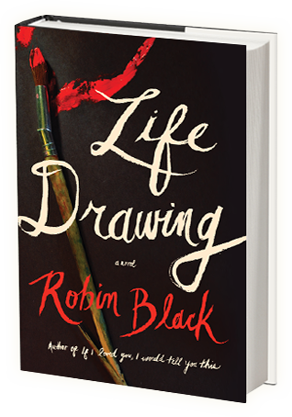
Her debut novel, LIFE DRAWING launches July 15 from Random House
July 4, 2014
Ten (More) Books to Read This Summer
So, I was lucky enough to get asked to be on Greater Boston’s Summer Books programs with Julie Wu and Jabari Asim (whose recommendations were incredible) hosted by the book-loving Jared Bowen. You can see it here:
The problem though, was picking one book per the categories they put forth. I wandered my bookshelves (scattered among 6 rooms) trying to stay faithful to the rules they made (bring the book with you—and I lend books out all too easily) and those I made (a book that has stayed with me for more than a year, thus guaranteeing that it truly passed the barrier and entered the bookish bloodstream, but that I’d read (or re-read) within the past few years, and last, not be so old that folk couldn’t get it easily. Plus, the authors had to be alive—don’t even ask why
Since then, all the ghosts of books I couldn’t fit in have haunted me, flying over my head in circles, haunting me. Thus, this summer will require a whole lot of book shouting. So, a list of the entire list, choices by my heart & soul, three quick words from me, descriptions from the author’s sites.
And when I look at my choices, I realize that my book love flies all over the genre map–which I think is true for most dedicated readers, right?
Life Drawing by Robin Black: Deep, Dark, and Heart-Breaking
“Augusta and Owen have moved to the country, and live a quiet, and rather solitary life, Gus as a painter, Owen as a writer. They have left behind the city, and its associations to a troubled past, devoting their days to each other and their art. But beneath the surface of this tranquil existence lies the heavy truth of Gus’s past betrayal, an affair that ended, but that quietly haunts Owen, Gus and their marriage.
When Alison Hemmings, a beautiful British divorcée, moves in next door, Gus, feeling lonely and isolated, finds herself drawn to Alison, and as their relationship deepens, the lives of the three neighbors become more and more tightly intertwined. With the arrival of Alison’s daughter Nora, the emotions among them grow so intense that even the slightest misstep has the potential to do irrevocable harm to them all. Life Drawing will launch July 15; I was lucky enough to read an early copy.”
The Ice Cream Queen of Orchard Street by Susan Jane Gilman: Engaging, Sweeping, and Delicious

“In 1913, little Malka Treynovsky flees Russia with her family. Bedazzled by tales of gold and movie stardom, she tricks them into buying tickets for America. Yet no sooner do they land on the squalid Lower East Side of Manhattan, than Malka is crippled and abandoned in the street.
Taken in by a tough-loving Italian ices peddler, she manages to survive through cunning and inventiveness. As she learns the secrets of his trade, she begins to shape her own destiny. She falls in love with a gorgeous, illiterate radical named Albert, and they set off across America in an ice cream truck. Slowly, she transforms herself into Lillian Dunkle, “The Ice Cream Queen” — doyenne of an empire of ice cream franchises and a celebrated television personality.
Lillian’s rise to fame and fortune spans seventy years and is inextricably linked to the course of American history itself, from Prohibition to the disco days of Studio 54.”
Ponzi’s Scheme: The True Story of a Financial Legend by Mitchell Zuckoff: Surprising, Entertaining, and Illuminating

“It was a time when anything seemed possible–instant wealth, glittering fame, fabulous luxury–and for a run of magical weeks in the spring and summer of 1920, Charles Ponzi made it all come true. Promising to double investors’ money in three months, the dapper, charming Ponzi raised the “rob Peter to pay Paul” scam to an art form and raked in millions at his office in downtown Boston. Ponzi’s Scheme is the amazing true story of the irresistible scoundrel who launched the most successful scheme of financial alchemy in modern history–and uttered the first roar of the Roaring Twenties.
Ponzi may have been a charlatan, but he was also a wonderfully likable man. His intentions were noble, his manners impeccable, his sales pitch enchanting. Born to a genteel Italian family, he immigrated to the United States with big dreams but no money. Only after he became hopelessly enamored of a stenographer named Rose Gnecco and persuaded her to marry him did Ponzi light on the means to make his dreams come true. His true motive was not greed but love.
With rich narrative skill, Mitchell Zuckoff conjures up the feverish atmosphere of Boston during the weeks when Ponzi’s bubble grew bigger and bigger. At the peak of his success, Ponzi was taking in more than $2 million a week. And then his house of cards came crashing down–thanks in large part to the relentless investigative reporting of Richard Grozier’s Boston Post. “
32 Candles by Ernessa Carter: Bold, beach-worthy, gripping

“Davie Jones—an ugly duckling growing up in small-town Mississippi with a mother who couldn’t get any meaner—is positive her life couldn’t be any worse. Just when she’s resigned herself to her fate, she sees a movie that will change her life—Sixteen Candles. But in her case, life doesn’t imitate art. Tormented in school and hopelessly in unrequited love with a handsome football player, Davie finds it bittersweet to dream of Molly Ringwald endings. When a cruel school prank goes too far, Davie leaves the life she knows and reinvents herself in the glittery world of Hollywood—as a beautiful and successful lounge singer. Just as she’s about to ride off into the L.A. sunset, the past comes back with a vengeance, threatening to crush Davie’s dreams—and break her heart again.”
The Headmaster’s Wager by Vincent Lam: Masterful, Powerful, and Engrossing

“Percival Chen is the headmaster of the most respected English school in Saigon. He is also a bon vivant, a compulsive gambler and an incorrigible womanizer. He is well accustomed to bribing forever changing lists of government officials in order to maintain the elite status of the Chen Academy. He is fiercely proud of his Chinese heritage, and quick to spot the business opportunities rife in a divided country. He devotedly ignores all news of the fighting that swirls around him, choosing instead to read the faces of his opponents at high-stakes mahjong tables.
But when his only son gets in trouble with the Vietnamese authorities, Percival faces the limits of his connections and wealth and is forced to send him away. In the loneliness that follows, Percival finds solace in Jacqueline, a beautiful woman of mixed French and Vietnamese heritage, and Laing Jai, a son born to them on the eve of the Tet offensive. Percival’s new-found happiness is precarious, and as the complexities of war encroach further and further into his world, he must confront the tragedy of all he has refused to see. “
The Mouse-Proof Kitchen by Saira Shah: Original, Engaging, and Mesmerizing

“Anna thought she had it all figured out . . . but fate had other plans.
When Anna, a chef by profession, discovers she’s pregnant, she prepares to leave dreary London behind and move to idyllic Provence, France, with her husband, Tobias, and her lovable baby-to-be. But she’s suddenly forced to reevaluate her dreams when their baby is born less than perfect. Little do Anna and Tobias know that the change in plans sparked by Freya’s birth is the beginning of an incredible journey of the heart. Along the way, they discover that there truly is no such thing as a mouseproof kitchen, and though life sometimes gets a little messy, it’s the messy bits that give it meaning.
The couple and their new daughter end up in a vermin-infested farmhouse in a remote town in France—far from the mansion in Provence they’d originally imagined. Their rickety home is falling down around them, the village is involved in a decades-old trauma, and even the charms of the region’s lavender fields and a budding romance between two of their young neighbors can’t distract from the fact that Freya’s hospital stays are becoming frighteningly frequent. Anna must draw on reserves of strength she never knew she had just to keep going from day to day. But will it be enough to keep her family together—and her daughter safe?
Told with humor and warmth, The Mouse-Proof Kitchen is a moving and thought-provoking story about how the best parts of life are often the most complicated.”
Coming Clean by Kimberly Rae Miller: Wrenching, Honest, and Startling

“Kim Miller is an immaculately put-together woman with a great career, a loving boyfriend, and a tidy apartment on Manhattan’s Upper West Side. You would never guess that Kim grew up behind the closed doors of her family’s idyllic Long Island house, navigating between teetering stacks of aging newspapers, broken computers, and boxes upon boxes of unused junk festering in every room—the product of her father’s painful and unending struggle with hoarding.
In this moving coming-of-age story, Kim brings to life her rat-infested home, her childhood consumed by concealing her father’s shameful secret from friends, and the emotional burden that ultimately led to an attempt to take her own life. And in beautiful prose, Miller sheds light on her complicated yet loving relationship with her parents that has thrived in spite of the odds.”
Untamed State by Roxane Gay: Harrowing, Intense, and Gotta-Know

“An assured debut about a woman kidnapped for ransom, her captivity as her father refuses to pay and her husband fights for her release over thirteen days, and her struggle to come to terms with the ordeal in its aftermath.
Mireille Duval Jameson is living a fairy tale. The strong-willed youngest daughter of one of Haiti’s richest sons, she has an adoring husband, a precocious infant son, by all appearances a perfect life. The fairy tale ends one day when Mireille is kidnapped in broad daylight by a gang of heavily armed men, in front of her father’s Port au Prince estate. Held captive by a man who calls himself The Commander, Mireille waits for her father to pay her ransom. As it becomes clear her father intends to resist the kidnappers, Mireille must endure the torments of a man who resents everything she represents.
An Untamed State is a novel of privilege in the face of crushing poverty, and of the lawless anger that corrupt governments produce. It is the story of a willful woman attempting to find her way back to the person she once was, and of how redemption is found in the most unexpected of places.”
Final Exam by Pauline Chen: Revelatory, Insightful, and Mesmerizing

“When Pauline Chen began medical school, she dreamed of saving lives. What she could not predict was how much death would be a part of her work. Almost immediately, she found herself wrestling with medicine’s most profound paradox–that a profession premised on caring for the ill also systematically depersonalizes dying. Final Exam follows Chen over the course of her education and practice as she struggles to reconcile the lessons of her training with her innate sense of empathy and humanity. A superb addition to the best medical literature of our time.”
The Wizard of Lies by Diana Henriques: Illuminating, Well-informed, and Absorbing

“Who is Bernie Madoff, and how did he pull off the biggest Ponzi scheme in history?
These questions have fascinated people ever since the news broke about the respected New York financier who swindled his friends, relatives, and other investors out of $65 billion through a fraud that lasted for decades. Many have speculated about what might have happened or what must have happened, but no reporter has been able to get the full story — until now.
In The Wizard of Lies, Diana B. Henriques of The New York Times – who has led the paper’s coverage of the Madoff scandal since the day the story broke — has written the definitive book on the man and his scheme, drawing on unprecedented access and more than one hundred interviews with people at all levels and on all sides of the crime, including Madoff’s first interviews for publication since his arrest. Henriques also provides vivid details from the various lawsuits, government investigations, and court filings that will explode the myths that have come to surround the story.
A true-life financial thriller, The Wizard of Lies contrasts Madoff’s remarkable rise on Wall Street, where he became one of the country’s most trusted and respected traders, with dramatic scenes from his accelerating slide toward self-destruction. It is also the most complete account of the heartbreaking personal disasters and landmark legal battles triggered by Madoff’s downfall — the suicides, business failures, fractured families, shuttered charities — and the clear lessons this timeless scandal offers to Washington, Wall Street, and Main Street.”
June 25, 2014
How Jobs Taught Me What To Write
 Our writer’s code, written into our secret writer club rules, remind us that day jobs stand between us and a published novel. I understand. For years I thought if only and when and someday. And yes, working one, two, three jobs at a time took a big bite out of what would certainly have been my fast track to a Pulitzer. But slogging through, learning at, loving, and hating a number of jobs, that’s what formed and hold up my novels.
The bosses I despised (especially them,) the coworkers who became family, the ones who turned my stomach, those I supervised, fired, hired, found cheating, using drugs, selling drugs . . . they gave me worlds. The clients. The patrons. Here’s to all of them:
Bartending: my top choice of jobs writers should have in their past. In my thirties, I worked for four years at Winnie’s Pub in Mission Hill, where I received a doctorate in men, alcoholism, racial politics, class, sexual politics and sexual harassment.
In vino, veritas, baby (or, a drunk man speaks a sober man’s mind) and the truth often sucked, such as being told by a very high-up member of a local police force, “I’ve never slept with a Jewish woman. I think it’s time.”
Ah, the romance of being wanted to round out someone’s cultural/religious romance resume.
Other nuggets learned at Winnie’s Pub:
* Yes, there is such a thing as live sex at bachelor parties (held across the street at a veteran’s hangout—enough said.)
* Men who come in with their girlfriend almost every night (physician-men, who neither tip nor smile) when visiting alone, suddenly become lively enough to ask you to come to their apartments and have sleep with them. Despite never having previously spoken to you.
* Sad numbers of women and men, when drunk enough, will go home with almost anyone. Trying to talk said-women (in sisterhood) out of these choices does not end well.
* When drunk, huge men will attempt to frighten tiny women.
* When drunk, tiny men will attempt to protect tiny women from huge drunk men.
* Drunken men and women are boring to a dangerous degree.
* When drunk and feeling ‘safe,’ men and women will use awful words to describe members of other cultures. These same people will act like good buddies when members of the other culture enter. These same people will also believe a bartender when she claims her father is: African-American, Japanese, Korean, Hispanic, Italian, and Muslim.
* And there are incredibly large groups of kind and funny men at bars. 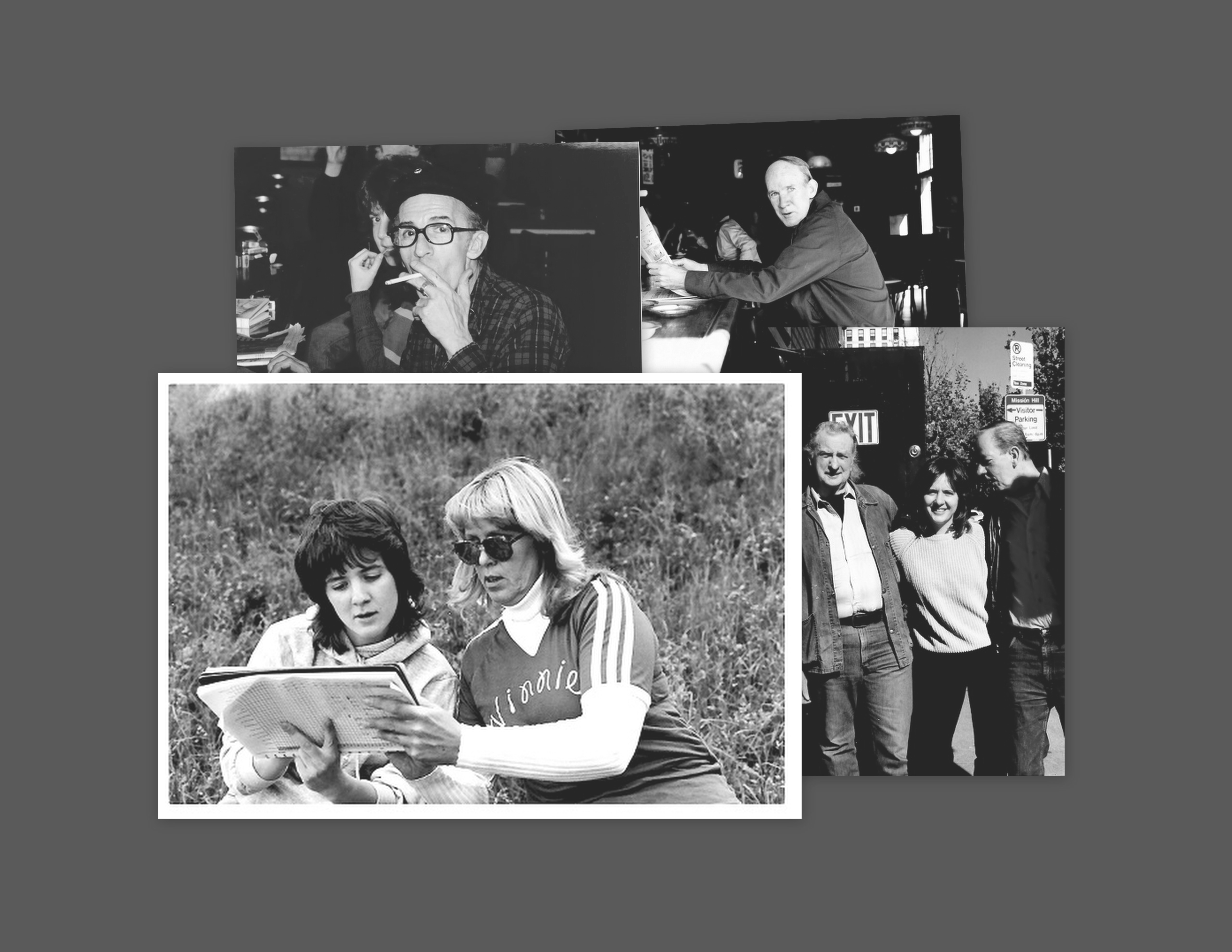
(Above, the men of Winnie’s Pub surrounding the owner, Winnie, and one of my two best bartender friends, Stephanie.)
Three (blessedly) short college jobs made huge impression: Making subs at Blimpie Restaurant taught me that this: when you walk out of a fast food restaurant, after 8 hours, you carry that smell with you forever. Folding pajamas and placing straight pins at the seams (for one day) at made me forever realize I was blessed (as I could quit that job) and that the clock can move backward. Twisting sheets into ropes, tying them off with rubber bands, and dipping them into vats of boiling dye (in the lower East Side) broke any illusions I held that ‘counter-culture’ factory work was more benign than any other factory. Political lessons all over the place.
Some lessons I learned working for the City of Boston I wish I could erase. Bring back my innocence. While many employees were dedicated and committed, others spend vast sums of time and money on self-indulgence and political purposes. Some treat the coffers of the city, the treasures of the city, and the people of the city, as toys and puppets.
And I found true heroes walking & working the street of Boston.
Running a community center, I learned that local sports (basketball!) is intense enough to grab even the guts of a sports-moron like myself (even weeping when my team won the city-wide championship.) I’d never understood sports fervor without that job. Nor would I have a clue about gym rules, day care environments, weeping teachers wandering the halls, and how much guts it takes to fire someone. Plus, it was my favorite job ever. So I learned what it means to love what you do, and what it means to leave because you need more money. And then, I learned why managers in ‘central offices’ get paid more than those in the field. Because the decisions are made in central office.
 Working with batterers taught me far more than I can put in a paragraph, but this is the Abusers 101: never underestimate the hatred some men have of women. Never think that people ‘snap’ (other than psychotics.) If they chose to find it, people can access that one sliver of decision-making. We have agency. We do not choose to hit and scream at our bosses. We choose to hit and scream at people in our homes.
In the scarf department of Gimbels (long gone) in New York City, I learned that people steal. All sorts of people. People you’d never suspect. I also learned, again, that I hate folding—but that wasn’t so useful for characterization.
Working at Barton’s candy counter in San Francisco, I learned that it takes very little time to get sick of eating candy. And that despite being sick of it, being bored will drive you to keep on shoving it in your mouth. And that sweet leads to salty to sweet and back again.
Babysitting (sorry, all you guys who let me into your homes when I was a teenager) taught me that the most average looking folks have porn stashed and pills in their cabinets.
Being a waitress meant knowing for the rest of my life what it means to be invisible. Being a supermarket cashier taught me about absorbing anger and sadness.
Working as a camp counselor helped me understand that one can trust one’s children with other folks. Because I loved those kids to pieces. I remember twenty-five jobs. I’m sure there are others. They all gave me material, taught me humanity, or illuminated inhumanity. I can’t regret one.
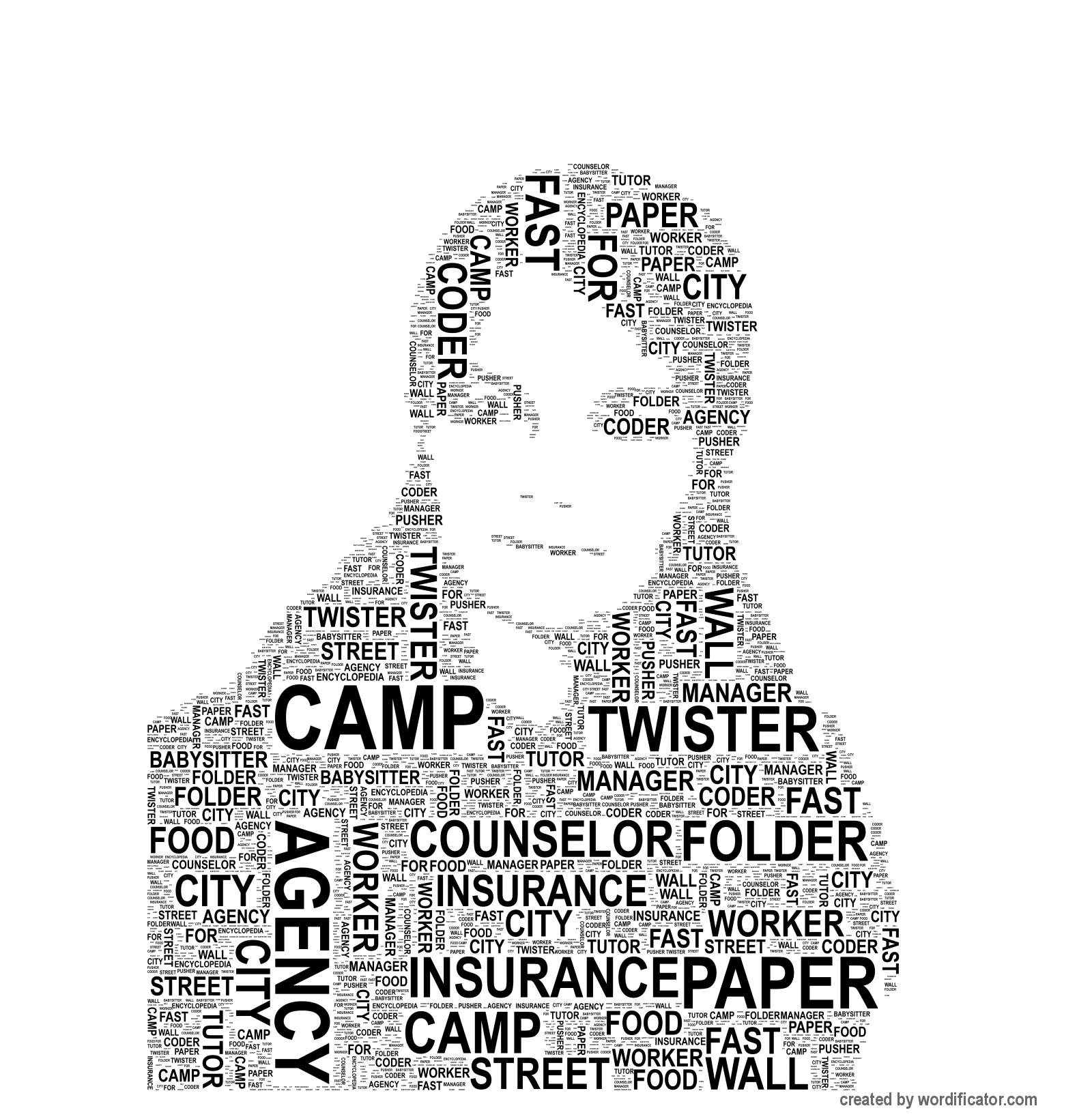
Babysitter
Manager for City Agency
Camp Counselor
Tutor
Fast Food Worker
Factory Folder
Factory Twister
Wall Street Coder
Insurance Paper Pusher
Encyclopedia Salesperson (door-to-door)
Writing Teacher
Candy Counter Salesperson
Department Store Salesperson
Counter Culture Non Profit Bookkeeper
Waitress
Writer
Bartender
Pregnancy-Post Partum Group Counselor
Community Center Director
Camp Director
After School Director
Assistant Director of Batterer Intervention Program
Grant Writer
Violence Prevention Group Facilitator
Supermarket Cashier
Mother
June 9, 2014
James Patterson’s Grants to Independent Bookstores: Why They Matter

Last Friday, Henriette Lazaridis Power and I spoke about writing, lying, rowing, Greece, shoplifting, being a chicken, infidelity, domestic violence, adoption and cookies in front of what seemed to be over 150 ardent readers. (I won’t say which topics where Henriette’s and which were mine. Sealed lips.) We were lucky enough to be chosen for the Friends of the Wolfeboro New Hampshire Library Annual Author Luncheon.
Many things were lucky for us: it was a truly warm, smart and engaged crowd. (They laughed at our jokes!) We got well cared for, well fed. The setting (Bald Peak Colony Club) was exquisite. The women in charge were on top of every detail. And, of course, hovering on the top of any author’s wish list: our books were sold. In a steady stream.
No pretending that sitting behind the table smiling at the air was indeed, our pleasure. No intent studying of one’s hands. Hmmm… is that hangnail as raggedly ugly as I think, she wondered, pretending to be plotting an intricate sex scene involving hands. And, thank you, Lord, no having to sell ones books oneself, trying to do math, swipe cards on that square thing, speak intelligently, and think of deep or witty signing words all at the same time.

The Country Bookseller sold our novels at the event (donating a portion of the sales to the library. Owner, Karen Black was our mama, our friend, and our beloved. She made it easy and she made it fun. Having an independent bookseller at events (and they come on faith, never knowing if they’re going to sell one—to our husband—or a hundred) makes all the difference to us. Uber-best-selling author James Patterson knows that. And he’s giving back in the way that means the most to booksellers who operate on the thinnest of margins: with cash grants. He’s planning to give away 1M dollars in 2014—half has already been given to bookstores across the country. (Bookstores can apply at the above link; readers can also recommend bookstores for grants.) One recipient is The Country Bookseller.
I visited The Country Bookseller the next day, and though I’d been excited about the Patterson grants before this, talking to Karen at her shop made all the levels of why this was deep down true important.
Independent Bookstores dance on the edge of commerce and altruism. I’ve visited dozens of bookstores as an author (and far more as a reader) and rarely been treated other than kindly, most often with a warmth and consideration that would seem to far outweigh the benefit my book profits might bring to their coffers. Bookstore owners and managers are a rare sort, working love of their product front and center. When I asked Karen what applying for the grant meant, she said, “It gave us a chance to dream.” (Really, isn’t that the sort of thing you expect to hear from non-profits?) Karen left the insurance business (and California) in 1994, following her passion for books and desire to bring light into the lives of readers. She settled on Wolfeboro (moving to her current bookstore location in 2004.) And what a dream of a shop she’s built.

Independent bookshops provide a curation and variety rarely found in chains or online. For instance, Autumn Siders, manager of The Country Bookseller, told me that Wolfeboro is a big dog town, and a town that loved cooking and gardening. Thus, the large and easy to find sections devoted to these genres.

Love fiction? There is an amazing selection, ranging from avant-garde to bestsellers to domestic drama to thrillers, to local independent authors. And, because of the ‘independent’ in independent bookstores, Karen can move quickly to please herself, delight authors-in-town, and honor fairy godfather authors.

Attention to childhood, when readers are created, is a cornerstone of Patterson grants. All bookstores applying must have a children’s section. For The Country Bookseller, that’s where the money is going. Karen is giving up her office, with the view of the water . . .

. . . to expand the already rich children’s book section. On the warm, sunny, blue-skies-forever afternoon that I visited, the children’s section was filled with parents, grandparents, teens and children.

Careers, not just jobs, can be provided by independents. Autumn began working at the store when she was 14, and she’s been there for ten years. She works to spread the joy of reading (and literature has been shown to provide benefits far beyond the sheer pleasure)—easily finding great choices for me to give to my own voracious eight-year-old reading granddaughter.

Ice cream. More and more independents are providing a place to sit and read those books. Places with coffee, cookies, ice cream. Only the fact that I’d already ingested a week of calories in two days kept me from her ice cream. (And, BTW, best sandwich I’ve ever had? At Gibson’s in New Hampshire.)

There is nothing quite like a non-cookie-cutter independent bookstore. Those finds that leave me with memories is something I can’t find elsewhere. Each time I am lucky enough to have a reading at a bookstore, I leave with tangible touchstones—not just the books (and my bedside table will surely break any day, weighed down by that pile of TBR) but artful useful items that touch me.
The jewel-toned rainbow tote I used until it was nothing but threads. Never saw anything like it until that day at R.J. Julia in Connecticut. The box of desktop delights from Brookline Booksmith. The stationary my husband surprises me with—that’s from Newtonville Books. At RiverRun in Portsmouth, I walked out with a stack of book-themed boxes. Porter Square provided a majority of the toys I bought for my granddaughter. It seems they all specialize in elements that delight the senses, items which don’t scream every-street-everywhere. This is just the tip of my personal iceberg of bookstores.
James Patterson knows: authors need independent bookstores. It’s where we meet readers; it’s where readers meet our books. An early edition of my new novel was sent to independents, asking them if they’d write an early review. Amazing generosity was shown as the words began coming in; I’m building a page for them, a page I intend to grow to say thanks to each bookstore I visit.
I can’t do a Patterson, but I can say thanks.
May 26, 2014
I Am A Coward

If a coward dies a thousand deaths, and a brave one dies but one, then I have died at least a million times.
I live my life cowering (at least in the corners of my mind.) Okay, I may appear bold to some—haven’t I always stood up for my children, for other people’s children? Don’t I stand up to street toughs? Didn’t I work with criminals for many years?
Certainly.
But inside, like so many, I am the dying coward. I die when faced with driving on the highway. I die when facing displeasure, dislike, and disappointment from anyone. Yes, anyone. Who cares what the shrinkish reasons, how it’s braided from my past, I still drag my quaking behind me like Marley’s ghost hauls his chains.
In place of whistling a happy tune, writing became my obsession. With a story, with a good whopping dose of fiction I can take the most fearful and make it worse. The magic of ‘what if’ is my passion. Yes, I am afraid of murder. Murder in the street. Murder in the home.
It once came close to happening, though it didn’t. However, for me, it doesn’t work to be the brave one, dying but once. I like to relive it over and over and over. What if it had happened? What if it happened in front of me? What if I got stabbed? What if my entire family died?????
So I chew up my fear and cowardice on paper. Thus, I now live my life. One quiet disaster at a time. On paper. And live my live looking plucky.
May 9, 2014
Give Mom Some Schadenfreude for Mother’s Day!

A year ago ago, at an event at the incredibly wonderful Reading Public Library (in Reading Massachusetts) one of the librarians bought my book, The Comfort of Lies, for her mother. For Mother’s Day. Using a large amount of not-usually-available-to-me control, I didn’t say any of the following:
“Nothing says Mother’s Day like cheating, anger, and hating-being-a-mother for Mother’s Day!”
In fact, that’s true. Who the heck wants to get Little Women on Mother’s Day? Not me. Does anyone want to psychically compete with Marmee?
No. I. Don’t.
I want to be feted with a pile of books that say:
Dear Mom,
This book is about a really troubled mother. This is a mother who truly effed up her kids. This mother is so much worse than you, Mom!!
Love,
Your fairly normal and grateful daughters.
With that in mind, five books that will tell Mom: You are so much better that these mom-characters. We could have been so much more screwed up! These are difficult complex (not necessarily bad, but not exactly who you want to rock you to sleep) mothers in memoirs and novels. These are all books I’ve read and loved. Which probably tells you everything you need to know about me.
1. We Need To Talk About Kevin by Lionel Shriver
“Eva never really wanted to be a mother—and certainly not the mother of a boy who ends up murdering seven of his fellow high school students, a cafeteria worker, and a much-adored teacher who tried to befriend him, all two days before his sixteenth birthday. Now, two years later, it is time for her to come to terms with marriage, career, family, parenthood, and Kevin’s horrific rampage, in a series of startlingly direct correspondences with her estranged husband, Franklin. Uneasy with the sacrifices and social demotion of motherhood from the start, Eva fears that her alarming dislike for her own son may be responsible for driving him so nihilistically off the rails.”
2. A Map of The World by Jane Hamilton
“The Goodwins, Howard, Alice, and their little girls, Emma and Claire, live on a dairy farm in Wisconsin. Although suspiciously regarded by their neighbors as “that hippie couple” because of their well-educated, urban background, Howard and Alice believe they have found a source of emotional strength in the farm, he tending the barn while Alice works as a nurse in the local elementary school. But their peaceful life is shattered one day when a neighbor’s two-year-old daughter drowns in the Goodwins’ pond while under Alice’s care. Tormented by the accident, Alice descends even further into darkness when she is accused of sexually abusing of a student at the elementary school. Soon, Alice is arrested, incarcerated, and as good as convicted in the eyes of a suspicious community. As a child, Alice designed her own map of the world to find her bearings. Now, as an adult, she must find her way again, through a maze of lies, doubt and ill will. “
3. Terms of Endearment by Larry McMurty
“Aurora is the kind of woman who makes the whole world orbit around her, including a string of devoted suitors. Widowed and overprotective of her daughter, Aurora adapts at her own pace until life sends two enormous challenges her way: Emma’s hasty marriage and subsequent battle with cancer. Terms of Endearment is the Oscar-winning story of a memorable mother and her feisty daughter and their struggle to find the courage and humor to live through life’s hazards — and to love each other as never before.”
4. Tender at the Bone by Ruth Reichl
“Tender at the Bone, is the story of a life determined, enhanced, and defined in equal measure by a passion for food, unforgettable people, and the love of tales well told. Beginning with Reichl’s mother, the notorious food-poisoner known as the Queen of Mold, Reichl introduces us to the fascinating characters who shaped her world and her tastes, from the gourmand Monsieur du Croix, who served Reichl her first soufflé, to those at her politically correct table in Berkeley who championed the organic food revolution in the 1970s. Spiced with Reichl’s infectious humor and sprinkled with her favorite recipes, Tender at the Bone is a witty and compelling chronicle of a culinary sensualist’s coming-of-age.”
5. The Glass Castle by Jeannette Walls
“Jeannette Walls grew up with parents whose ideals and stubborn nonconformity were both their curse and their salvation. Rex and Rose Mary Walls had four children. In the beginning, they lived like nomads, moving among Southwest desert towns, camping in the mountains. Rex was a charismatic, brilliant man who, when sober, captured his children’s imagination, teaching them physics, geology, and above all, how to embrace life fearlessly. Rose Mary, who painted and wrote and couldn’t stand the responsibility of providing for her family, called herself an “excitement addict.” Cooking a meal that would be consumed in fifteen minutes had no appeal when she could make a painting that might last forever.”