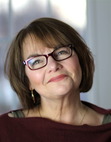
Randy Susan Meyers's Blog, page 34
April 8, 2013
Interview with Sarah Pekkanen: THE BEST OF US

“ The perfect book to curl up with on a rainy day.” Marie Claire Magazine
“Fans of Jennifer Weiner and Emily Giffin will strongly appreciate this rising star in women’s fiction.” Library Journal
“A deeply enjoyable page-turner.” Publishers Weekly STARRED review.
Q: Do you have a writing process?
I wish I had some elegant, impressive story about my glamorous writing life, but the truth is, I have three young boys and I write on the fly. I’ve piled up pages in the orthodontist’s waiting room, in the carpool pick up line, at the movie Kung Fu Panda – anywhere and everywhere I can find a little pocket of time. But now that I’m on a book-a-year schedule, I find that getting in a few big chunks of writing time really helps me meet my deadlines. Luckily I speak at book festivals every couple months, so train or plane trips, combined with a night in a hotel room, allow me not only an uninterrupted night’s sleep, but the chance to wake up early, order a pot of coffee, and write for hours. It’s blissful!
Q: How has your background in journalism affected your writing? Did you get any of the ideas for your novels from stories you covered?
My journalism training definitely comes into play when I sit down to write a novel. I usually pick some topic I know nothing about, and I do a lot of reporting on it to weave realistic details into my books. For example, for my second novel – SKIPPING A BEAT – I decided to have my main character create a start-up beverage company. I interviewed the founder of Honest Tea twice in his office to learn about how someone could do that. For THE BEST OF US I interviewed weather experts for help in creating a fictional hurricane.
Q: You’ve also written e-stories. How does that process compare with writing longer books, and will you continue with short stories too?
Right now, I’m writing one novel every year and one short e-story every year, and I enjoy both processes (well, when I’m not wanting to toss my computer out the window). The challenge with my e-stories is that they are all linked, whereas my novels are stand alones, with a group of fresh characters coming in for each new book. My e-stories need to fit together, and enhance each other, yet also be a satisfying read if you end up buying just one. Eventually, I think the plan is to compile the e-stories and turn them into a book.
Q: Give us the cover copy for THE BEST OF US.
An all-expense paid week at a luxury villa in Jamaica—it’s the invitation of a lifetime for a group of old college friends. All four women are desperate not just for a reunion, but for an escape: Tina is drowning under the demands of mothering four young children. Allie is shattered by the news that a genetic illness runs in her family. Savannah is carrying the secret of her husband’s infidelity. And finally, there’s Pauline, who spares no expense to throw her wealthy husband an unforgettable thirty-fifth birthday celebration, hoping it will gloss over the cracks already splitting apart their new marriage. Languid hours on a private beach, gourmet dinners, and late nights of drinking kick off an idyllic week for the women and their husbands. But as a powerful hurricane bears down on the island, turmoil swirls inside the villa, forcing each of the women to re-evaluate everything they know about their friends—and themselves.
Q: How do you feel social media has helped publishing and/or reading in general? What about for yourself?
Personally I adore it. I love going on Facebook and twitter and chatting with readers and bloggers and other authors. Since my job is very isolating, it’s a great way to stay connected to people, too. And in think in terms of the broader issue of publishing, social media has been a huge blessing. As we see newspapers and magazines fold and we lose those opportunities for traditional coverage and reviews, it’s amazing to be able to still get out the word about new books on social media. And bloggers have stepped in and become a force in promoting books and alerting readers to new authors, which is incredible.

Sarah Pekkanen is the internationally-bestselling author of four novels, including THE BEST OF US, which won a starred Publishers Weekly review and is the Marie Claire book pick for April. Hailed as a “rising star” by publications including Library Journal, her novels are often compared to those by Jennifer Weiner and Emily Giffin. Her books have won rave reviews from People magazine, Entertainment Weekly, O the Oprah magazine, Booklist, Cosmopolitan, Glamour magazine, and Ladies Home Journal. She is an occasional book reviewer for The Washington Post and is the back-page columnist for Bethesda Magazine. Sarah lives in Chevy Chase, Maryland with her family.


April 7, 2013
Debut Books by Writers Over 40
Time for a 2013 update!
Originally, I tried to resist writing this—especially after my plea against categorizing authors. Plus, so many of us hide our age in this world of never-get-old, unearthing this information, even in our Googlized world, was difficult.
But when , along with the plethora of lists of writers under 40, I was faced with the declaration that, as headlined in a Guardian UK article about writers, ‘Let’s Face It, After 40 You’re Past It.”
Then I read Sam Tanenhaus opine in the New York Times that there was “an essential truth about fiction writers: They often compose their best and most lasting work when they are young. “There’s something very misleading about the literary culture that looks at writers in their 30s and calls them ‘budding’ or ‘promising,’ when in fact they’re peaking.”
Thus, in the interest not of division, but of keeping up the flagging spirits of those who don’t want to be pushed out on the ice floe until after publishing all those words jangling in their head, I present 40+++ 0ver 40, updated once again.
Charlotte Rogan was 57 when she published Lifeboat to great acclaim. Erika Dreifus launched the outstanding short story collection Quiet Americans at the age of 41. Judy Merrill Larsen’s first well-received novel All The Numbers came out when Judy was 46.
Donald Ray Pollock was 55 when his short stories debuted, his novel The Devil All The Time launched three years later.
Laura Harrington launched her debut novel, Alice Bliss, when she was 58, after years as a playwright, lyricist and librettist. Shelter Me, Juliette Fay’s award-winning first novel came out when she was 45 years old. The Marquis de Sade wrote his first novel, Justine, at the age of 47.

Paul Harding, author of Tinkers, won the 2010 Pulitzer Prize with his debut novel, published when he was 42. Robin Black, author of If I Loved You I Would Tell you this, was 48 when she debuted this year. Holly LeCraw published her debut novel The Swimming Pool at 43. Julia Glass was in her early 40s when she published Three Junes. Charles Bukowski’s first novel, Post Office, was published at 49. James Michner’s first book, Tales of the South Pacific was published when he was forty—he went on to publish over 40 titles. Sherwood Anderson, author of Winesburg, Ohio published his first novel at the age of 40. Amy Mackinnon debuted Tethered in her 4o’s.
Henry Miller’s first published book, Tropic of Capricorn, was released when he was over forty. Tillie Olsen published Tell Me A Riddle just shy of 50. Edward P Jones was 41 when his first book Lost In The City came out. Claire Cook published her first novel at age 45. Chris Abouzied published his first novel Anatopsis at 46. Kyle Ladd was 41 when her debut, After The Fall, was published.
Lynne Griffin published her first novel, Life Without Summer at 49. Elizabeth Strout’s first novel Amy & Isabel debuted when she was 42. MJ Rose first novel came out when she was in her mid forties. Melanie Benjamin was 42 when she debuted. Therese Fowler was forty exactly when Souvenir debuted. Julie Wu’s about-to-debut novel The Third Son will launch when she is 46.
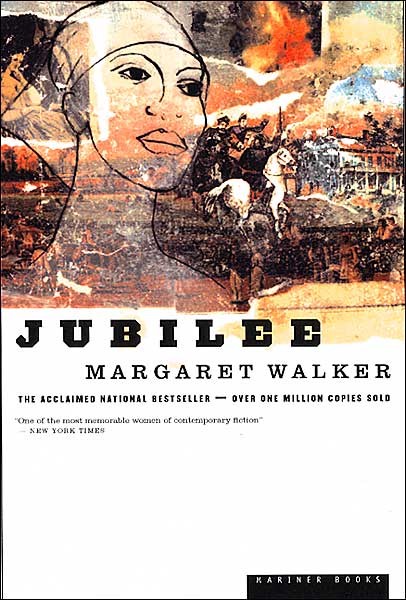
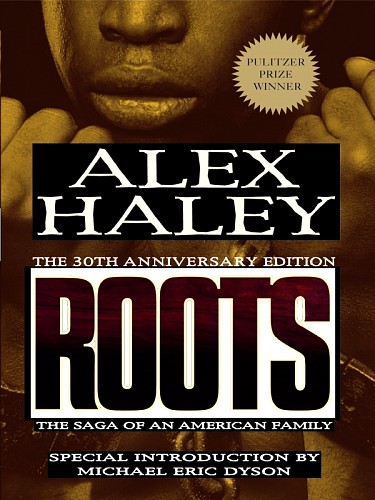
Margaret Walker wrote Jubilee, her only novel at 51. Raymond Chandler debuted at 51 with The Big Sleep. Belva Plain published her first novel, Evergreen, at 50. Alex Haley published his debut novel Roots when he was 55. (His first book, the nonfiction The Autobiography of Malcolm X was published when he was in his mid-forties.) Jon Clinch debuted with Finn at age 52. In 2010 his wife Wendy Clinch published Double Black.
Also in 2010 Iris Gomez published Try To Remember in her fifties, as did Joseph Wallace with Diamond Ruby, and I published The Murderer’s Daughters at 57. Sue Monk Kidd was 54 when she debuted The Secret Life of Bees. Annie Proulx’s first novel, Postcards, was published when she was 57. Jeanne Ray published debut, Julie and Romeo in her fifties.
George Elliot’s first novel, Adam Bede, debuted when Elliot turned 50. Isak Dineson’s first, Seven Gothic Tales came out when she turned 50. Hallie Ephron author of Never Tell A Lie began publishing fiction after fifty. Richard Adams debuted with Watership Down at 52.
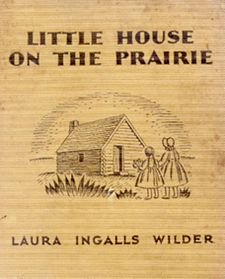
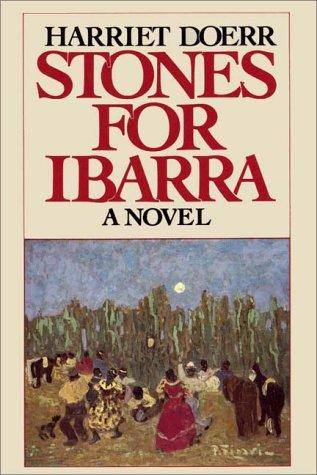
Laura Ingalls Wilder published her first novel (beginning the Little House series) at 65. Harriet Doerr won the National Book Award, for Stones for Ibarra, written when she was 74. Katherine Anne Porter published her only novel, Ship of Fools, at age 72. EJ Knapp just debuted Stealing The Marbles, saying “I’m so far past forty I can’t remember it anymore.” Norman McLean wrote A River Runs Through It at age 74.

Lise Saffran released Juno’s Daughters when she was 46. Astrid and Veronika was published when Linda Olsson was 56. Joan Medlicott published The Ladies of Covington Send Their Love when she was 65. And she published 6 books after that. Sally Koslow’s first novel Little Pink Slips was written when she was over 50.
Ellen Meeropol‘s first novel House Arrest, came out two months before her 65th birthday.” Karen LaFreya Simpson will be 55 when her first novel Act of Grace debuts next year and Nichole Bernier was 44 when The Unfinished Live of Elizabeth D published in 2012. Yes, that’s my answer, Ellen. We all count.
This is only a list of first novels. Compiling lists of bestselling, Pulitzer Prize winning, Orange Prize winning, etc. books written after the age of 40—that will take several essays.
Kathy Handley’s debut collection of short stories, A World of Love and Envy launched when she was 71.
Dyan deNapoli’s story of rescuing penguins (nonfiction) The Great Penguin Rescue came out when she was 49.
James Arruda Henry learned to read and write when he was in his mid-nineties. He published his autobiography In A Fisherman’s Language at the age of 98–going on to have it be a bestseller in his town and being featured in People.
Lydia Netzer’s novel Shine Shine Shine is being launched tomorrow. She is forty years old.
Sarah Pinneo launched her novel Julia’s Child when she was forty (ten years later than she’d planned.)
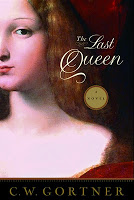
C.W. Gortner was 44 at the publication of his first novel, The Last Queen in 2008–he has gone on to publish 3 more as of June 2012.
Penelope Fitzgerald published her first novel The Golden Child in 1977, at the age of 60. She went on to win the Booker Prize in 1979 for Offshore.
I was told today by the incredibly talented Elizabeth McCracken that Bruce Holbert, author of the just launched (and much lauded) Lonesome Animals deserves a place here–though I am not sure of his exact age.
Kerry Schafer‘s Between, came out from Ace in January 2013. Jessica Keener’s novel, Night Swim, launched when she was 57. Becalmed will debut when Normandie Fischer is “so far past 40 that she can’t remember it.”
In the UK, Dorothea Tanning published her first novel, Chasm: A Weekend (also surrealist) by Virago when Tanning was 93 years old Harriet Doerr published her first novel, Stones for Ibarra, at age 73. She was awarded a National Book Award for this work and Helen Hoover Santmyer published the bestselling And Ladies of the Club at age 88.
April 2, 2013
Friendly Fire? Writers Caught in Conflict & Trying to be Switzerland.
Who remembers shaking in bed while Mom and Dad fought?
“Damn it, Harriet, we can’t go on like this! You’re spending money like a drunken sailor, but I’m not seeing a dime!”
“For goodness sake, Ozzie. Spending money where? Tell me! Where?”
“Fine! How about those fancy dresses you wear to work? How much do you pay those designers, huh? Everyone but me seems to get the benefit.”
“Don’t you want me to look good?”
“I want you to give me the biggest shot at you. I want to know that I’m the important one to you–not those other guys. And until you figure out how to give me a bigger share of your attention, don’t expect anything from me. You’re not getting one more dress out of me.”
“Fine! I don’t need you anyway!”
“What about the kids, huh? They need me.”
“We’ll see about that.”
Who are these kids listening while Mom and Dad fight?
Some facts:
1. According to the New York Times:
“A standoff over financial terms has prompted the bookstore chain Barnes & Noble to cut back substantially on the number of titles it orders from the publishing house Simon & Schuster . . . Industry executives, as well as authors of recently published Simon & Schuster books and their agents, say that Barnes & Noble has reduced book orders greatly, to almost nothing in the case of some lesser-known writers.”
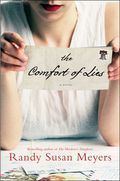
Judging from how much the order for my new novel, The Comfort of Lies, was reduced, I am firmly in the “lesser known” camp of writers. Luckily, my two scheduled B&N appearances were allowed to go on, but judging by the overall number of books ordered, the buy was enough to cover those events and a trickle more.
2. The events I had at B&N in Manhattan’s Upper East Side and Freehold New Jersey’s stores were wonderful. The staff was nothing less than fantastic and supportive.
Barnes and Noble bookstores have received a ton of love and money from me over the years. I have an ongoing membership, and in my attempts to be ‘fair’ I’ve often divided and balanced my book-buying dollars between independent booksellers and the chain. (And if you looked around my house, you’d see how many of those dollars have been spent. I am a fool for hardbound books; I never exit a bookstore without a purchase. I believe in book karma.)
3. I’ve been nothing but happy–nay, thrilled, working with Atria Books (a Simon & Schuster imprint.) My editor, Greer Hendricks, embodies everything I hoped an editor could be: she’s smart, caring, warm, and she laughs at my jokes. Plus, we share a deep and abiding love of Allure magazine.
Everyone I’ve worked with at Atria has been wonderful. From the top (Judith Curr) down they’re terrific and caring professionals. Even when things went wrong (glitches are inevitable) we shared kinship in solving the problem.
So, in effect, I have no dog (or am I the dog?) in the negotiations between Simon & Schuster and B&N. And, as in any family separation, we author-kids are pretty teary over the whole thing.
At the risk of sounding like a big baby, this is how it played out at my house:
Shortly before my book launch, I was told that because B&N and S&S couldn’t agree on terms, the B&N order for my novel was reduced by 90%. The display space for my book (so important when a book launches) was reduced by 100%.
Obviously Barnes & Noble outlets aren’t the only bookstores. Independent bookstores sales are growing–I’ve been lucky enough to visit many of them since my book was released. But B&N’s footprint is large and important and we were not included in those shoes.
I cried. A lot. And in the weeks since my book released I cried (and cursed) a lot more, especially when folks wrote asking why they couldn’t get my book (many readers live in towns where Barnes & Noble is the only bookstore.) They asked why Barnes & Noble didn’t like my book.
I added cringing to the crying. I pored over my reviews as though they were they were the Holy Scriptures, running my fingers over each word for approbation.
I’m not a loser, I’m not a loser.
Even though my book being unavailable had nothing to do with me, no one knew that. Staff at B&N was uniformed and unaware of the problem, telling readers everything from ‘perhaps this is a self-published book, which we don’t carry?’ to ‘you can order it, but we can’t have it sent to the store.’
One works for years on a book, through revisions, rejections, waiting, patience, more revisions, more patience. Selling it takes iron will and a thick skin. After finally reaching that goal, getting caught in something that requires you to roll a boulder of promotion not just uphill, but up a right angle, can shatter your reserve.
But you roll on.
I had a bit of sad wisdom to draw on–when my first book launched (The Murderer’s Daughters) it was caught smack on the day of the Amazon-Macmillan war. So my shock was tempered by ‘what now?” And in the sadness/relief that is misery loves company, I had partnership with M.J. Rose, whose trade paperback version of The Book of Lost Fragrances had just been released.
M.J. and I are sisters of the ‘Plan B’ set of mind. We danced with the ones that brung us and came up with our Indie Love Award, aimed at Indiebound bookstores, including other Simon & Schuster authors affected, as well as authors from other publishing houses. And as quickly as we came up with plans, Atria Books joined us in the execution. They worked hard with us to overcome the problems of not being available at Barnes and Noble, but overcoming that lack of visibility was a major obstacle to both visibility and sales.
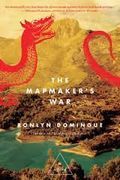
In response to this situation, Ronlyn Domingue (Ronlyn’s debut novel, was described as “that rarest of first novels–a truly original voice, and a truly original story,” in a Library Journal’s starred review. Writing about her second novel Kirkus Review wrote, “Domingue entwines genres to cast a spell upon its reader) said:
“About one-third of the readers who contacted me after my debut novel came out said they’d found The Mercy of Thin Air while browsing in a bookstore and took a chance on it. Those front-of-the-store placements gave that novel unparalleled exposure. Readers have not and will not discover my second novel, The Mapmaker’s War, in the same way–or any books by my fellow authors who are dealing with this situation.”
Holly Goddard Jones (about whom the New York Times wrote “Ms. Jones has a talent for making even scenes apart from the central mystery feel suspenseful. She also has a precise eye and empathy to burn, bringing each of her many characters to well-rounded life.“) is grateful for the huge effort Touchstone/Simon & Schuster is making for her novel to try to combat the B&N effect. They partnered with Gillian Flynn and Goodreads to give away 1000 copies of The Next Time You See Me in the hopes of starting a word-of-mouth groundswell. It’s an example of the extreme measures the publisher must take to give books releasing during this time a fighting chance. Still, even with all that effort, Holly says the effect will be chilling:
“The situation probably looks from the outside like an impersonal clash of corporations, but most of the authors affected live outside of that world. We have day jobs, and our hope isn’t to be bestsellers but to have the opportunity to reach an audience and to keep publishing. Bad sales records haunt an author throughout her career, and so it’s frustrating to not get at least a fair shot at success in the critical first months of a book’s release.”
Amy Hatvany released her fifth book, Heart Like Mine on March 19th. Her last book was a Target Book Club Pick, she’s been lauded by authors from Jennifer Weiner to Luanne Rice, and Library Journal described her last book as “vivid and written with a depth of feeling,” but she feels no safety during this period of semi-invisibility:
“I feel a little like a child of feuding parents as they try to work out the terms of a successful separation agreement: loving them both, appreciating what each of them does for me so much, but caught in the middle and unable to take sides. In divorce, the children suffer. In this case, the affected authors do. I’m worried about how long this will go on.”
The feeling of being caught in the middle echoes with author Sarah Pekkanen, whose books have been lauded in People, Oprah, and Entertainment Weekly. Her new novel The Best of Us is releasing in April (receiving a starred review in Publishers Weekly, who described it as “a deeply enjoyable page-turner“) and she’s praying the problem will be solved by then:
“I adore my publisher and Barnes & Noble has always been so wonderfully supportive of my books, too. It’s almost like we authors are kids caught in the middle of an acrimonious divorce. We’re hurting, and we desperately need both sides in our lives. We all have the exact same goal here – to get people reading our books – and I can’t express how much I hope this will end quickly.”
Library Journal gave Jamie Mason’s debut novel Three Graves Full a starred review, calling it “a quirky and downright thrilling treat that is not to be missed.” The New York Times wrote, “Mason has a witty and wicked imagination,” yet despite her universal laudatory reviews, she fears readers won’t find her book:
“There is this sense that after all the writing, then learning that you don’t know how to write, then actually writing, then learning the rules of the business, then submitting in between the painted lines of those rules, then pacing a hole in the carpet − that after all the “hard” parts, that you’re in the clear.
Well, newsflash, they’re all the hard parts. And not just for the writers. A lot of work from an awful lot of people goes into attempting commercial success with a book. From the agents through the editors and publishers, the distributors, and the booksellers, they all have a stake in this pile of words I wrote. I don’t forget them in this tangle we’re in, nor do I feel forgotten just yet. I do, however, feel like I have terrible timing.
The thing is, there are more books. Every day there are more books. I do worry that a resolution will come way past my stop on this train. So it does hurt – quite a lot, really – to imagine that after clearing all the other hurdles, that timing will decide what happens to Three Graves Full more than any effort any of us put into it.”
Ann Hite called Gwendolen Gross‘s latest novel, When She Was Gone ”A perfect balance of darkness and intricate struggles. Mix in a nail-biting plot and you have one outstanding read,” and she’s been lauded from Glamour Magazine to The Christian Science Monitor, making it even more gut wrenching when she realized her book was caught in this situation:
“Writing is solitary. Reading is solitary. Publishing and bookstores make these two into a profoundly social act. I adore my editor, S&S, my indies, Amazon, and my local B&N, and I’m really sad that I feel ashamed to meet my friends at B&N, where I regularly recommend a pile of books (and usually purchase my own heap), and tell them no, they can’t get my brand-new release here, or Randy Susan Meyers’, or Holly Goddard Jones’; they’ll have to go elsewhere (we are lucky there are still indies, (and libraries) but so few!). It’s a disappointment, and a waste of potential, and something sadly divisive in an already difficult and passionate world.”
Debut author Hilary Reyl was featured in Oprah Magazine and USA Today for her novel Lessons in French. Her reviews have been stellar, the book’s been called a “romantic and sensual delight” but the current situation has her deeply worried:
“As a debut author, I have been elated to have Simon and Schuster as my publisher and have been working tirelessly with my publicity team leading up to my release. The fact that my novel is now virtually unavailable in the country’s only retail book chain is absolutely devastating. While I am privileged to be part of a community of writers doing everything we can to get our books out there, there is no substitute for the visibility Barnes and Noble offers.”
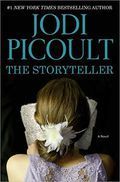
Multiple New York Times bestseller Jodi Picoult isn’t immune to having her sales affected, and yet in the midst of her own grueling tour for The Storyteller (working to make up for lost visibility in Barnes and Noble) she’s reached out to help other authors, including going out of her way to list authors affectedthrough her use of social media.
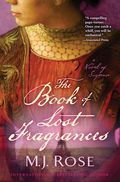
Picoult also took the time to share a post written by M.J. Rose, which gave a quick synopsis of the problem, along with cataloguing some of the authors made invisible by the Barnes and Noble blackout. Rose, described by the Washington Post as “an unusually skillful storyteller. Her polished prose and intricate plot will grip even the most skeptical reader,” released the paperback of The Book of Lost Fragrances in February, with almost no Barnes and Noble store availability. Now she’s readying to launch her next book, Seduction, which will be her fifth time awarded the coveted Indie Next Pick.
M.J. Rose is one of the hardest working and most generous writers I know. I pray that Mom and Dad will have kissed and made up well before Seduction comes out. Rose deserves that, as do all her readers.
March 24, 2013
Have You Seen These Books?

Guest Post by M.J. Rose
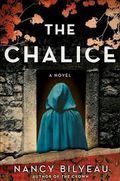
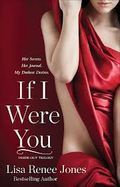
If you’ve been browsing for books in B&N chances are you haven’t seen these acclaimed books Why? They’re missing due to an ongoing negotiation between the publisher and the book store chain.As a result they aren’t getting the visibility they deserve. All (forgive me for including mine) are well-reviewed, terrific and garnering great reviews. So dear reader, here are links where you can discover more about each of these books and buy them from the store of your choice. (Please scroll all the way down to see all 10. )

“Uplifting” Kirkus
“Entertaining” PW Star

Click Here Cick Here Click Here
“Magnetic” Booklist ”Rewarding” Kirkus “Mesmerising” Booklist

Click here Click here Click here
“Impressive” NYT ”Smart” Kirkus “Riveting” RT
Click Here Click Here Click Here
“Powerful” Star Mag “Addicting” IM Reviews “Compelling” AP
March 23, 2013
Why Book Review Equality Matters

The first time I looked for a job, Help Wanted was divided into three sections: Men, Women, and General. If memory serves me (I doubt it) men’s jobs were the professional ones, women’s were the handmaiden ones, and general included dishwashers and drivers.
Trust me, the career paths were separate and not equal.
I remembered those categories while writing this post (which I wish I wasn’t writing) when I came across the terms microinequity and micro-affirmation, first coined by Mary Rowe, who defined micro-inequities as “apparently small events which are often ephemeral and hard-to-prove, events which are covert, often unintentional, frequently unrecognized by the perpetrator, which occur wherever people are perceived to be ‘different.’”
A micro-affirmation, in Rowe’s writing, is the reverse phenomenon. “Micro-affirmations are subtle or apparently small acknowledgements of a person’s value and accomplishments. They may take the shape of public recognition of the person, “opening a door,” referring positively to the work of a person, commending someone on the spot, or making a happy introduction. Apparently “small” affirmations form the basis of successful mentoring, successful colleagueships and of most caring relationships. They may lead to greater self-esteem and improved performance.”
On the front page of today’s Boston Sunday Globe is an article entitled: “About-face at Harvard: A push is on to make the portraits on the walls — white men, almost all — reflect the diverse face of the university today.”
In this article, Tracy Jan reports: “There’s a significance to portraiture, in demonstrating to people of all backgrounds that their presence and contribution are appreciated,’’ said Dr. S. Allen Counter, director of The Harvard Foundation for Intercultural and Race Relations, which for eight years has been quietly commissioning portraits of distinguished minorities and women to hang in Harvard’s hallowed halls.
“We simply wish to place portraits of persons of color and others who’ve served Harvard among the panoply of portraits that already exists,’’ Counter said. “We will not displace any portrait, just simply add to them.’’
A micro-affirmation of great proportions.
Also in today’s Sunday Boston Globe are four full reviews of books by men, no full reviews of books by women. (“Short Takes,” a column of brief reviews covered two books by women and one by a man.) Monday through Saturday, during the past three weeks, there were 17 reviews of books by men and one review of a book by a woman.
Microinequality.
Last weekend, when I briefly touched on this on my Facebook page, a friend asked “but how many books by men vs. women are published?” I’d love to know and spent too many should-be-writing hours looking, but I wonder if the question and answer would beget a chicken-egg quandary. In addition, there is the question of equality in marketing, book covers, etc—a topic well covered by Lionel Shriver (winner of the 2005 Orange Prize and a finalist for the 2010 National Book Awards).
To repeat: I didn’t want to write this post. I’m frightened of writing this post (but impulse and passion control has never been my strongest suit). I’ve had very fair shakes from newspapers and radio—great reviews and mentions in The Boston Globe, The NYT, and NPR (referenced below). They are my main and beloved news sources. I’ve subscribed to both for enough years to have bought a shiny new car.
The last thing in the world I want is to bite the hand . . . but I have two daughters and a tiny granddaughter.
When women write about this phenomenon, they can usually count on the eye-rolling responses, the sigh that says “isn’t this topic getting tedious” and wild assertions that women run publishing. Disparaging responses such as, “Unfortunately, what gets lost in this smokescreen is the more important (and dangerously tricky) question of “Why isn’t there more serious literary fiction being published by women?”” by bloggers such as The Grumbler who assert that women don’t deserve reviews in serious media.
Thankfully, I also find great hope. The Economist took a sharp look at this question, noting how reviews written will translate to books read, writing, “All readers are gently trained to empathise with white male narrators.”
In private, most female writers talk about mainstream media (and often non-mainstream media) review numbers, but we’re terrified to go public, easily imagining the scenario that could result:
“Oh, so you want a review, do you?” asks Important Editor after hearing about your . . . whining. “Fine. Here’s your review. Read it and weep.”
Do I truly think an editor would be that crass? No, but there is that ingrained awful fear about not being a good girl. About being called a whiner, a baby, and a jealous harpy. When Jennifer Weiner and Jodie Picoult talked about this they were accused of ugly motives as well as having their talent denigrated, and they’re best-selling authors. Thus, why would any woman want to go there? Why do I?
Would it help if men joined in this?
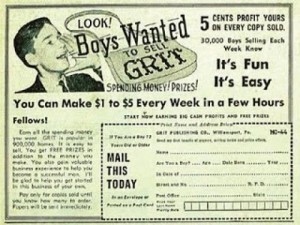
Does it matter? Does it matter that in 2009, Publishers Weekly didn’t include a single woman in their list of the Top 10 Books of 2009?
Carolyn Kellog writing in the LA Times on Dick Meyer’s NPR list of 100 Best Books of the Twentieth Century (a list that included only 7 books written by women) quotes Meyer as saying “My taste is probably medium-brow, male and parochial in many ways. Tough. It’s my list.” In response, Kellog asks, “but it begs the question: can one imagine a female writing for NPR having a nearly all female Best Books List?”
Does this matter? According to NPR, “As NPR’s executive editor, Dick Meyer shapes and oversees NPR’s worldwide news operation on-air and online. Meyer plays a critical role in integrating NPR’s on-air sound with its dynamic and growing online and mobile platforms, and in fostering the organization’s distinctive storytelling and enterprise reporting.”
That sounds to me as though his opinion very much matters.
The number of book reviews of women is indicative of a micro inequality, which piles up to matter quite a bit. Julianna Baggot captured it well, writing in the Washington Post, “So how do we strip away our prejudice? First, we have to see prejudice. The top prizes’ discrimination against women has been largely ignored. We can’t ignore it any longer.”
Some not only ignore it, they deny it. Writing about this issue, Slate.com wrote: “The bookish blogosphere continues to debate whether the New York Times—and, by extension, other cultural gatekeepers—really does give white male fiction writers preferential coverage over authors of the distaff and ethnic variety . . . So we decided to gather some statistics in order to determine whether the Times’ book pages really are a boys’ club.”
You can download the actual spreadsheet at Slate, but their conclusions boiled down to this: Of the 545 books reviewed in the NYT between June 29, 2008 and Aug. 27, 2010:
—338 were written by men (62 percent of the total)
—207 were written by women (38 percent of the total)
Of the 101 books that received two reviews in that period:
—72 were written by men (71 percent)
—29 were written by women (29 percent)
In 2002, the Complete Review of Books admirably took themselves to task for their miserable coverage of books written by women authors at 12.61%.
During that same period, they examined the track record of major literary papers of record:
Reviews of Books by Women
Publication
Total
Percent
London Review of Books
40
15.00
The NY Review of Books
76
18.42
The NY Times Book Review
120
30.00
Times Literary Supplement
130
24.60
.
.
.
TOTAL
366
24.04
If women’s books aren’t reviewed, when women’s books are declared “less literary, and when women’s books on family are declared women’s fiction, while men’s domestic books are declared brave and eye-opening, it adds many pounds to the micro-inequality pile.
Do we care enough to fight about this?
I think it comes down to this: people in power rarely give up power voluntarily; sometimes they don’t even recognize that they have the power. I think it’s up to us to join the brave authors like Julianna Baggot, Jennifer Weiner, Jodi Picoult, and Lionel Shriver, who are willing to talk about this. We need to tell ourselves and ask the men who are our friends, who are the fathers of daughters and father of sons who will marry daughters, that it’s time.
It’s time to rid ourselves of micro-indignity, and remember that men and women each hold up half the the sky.
March 14, 2013
27 Authors, 27 Books To Win!

27 authors have banded together to put together a year’s worth of reading for 2 lucky winners. Here are the rules:
Sign-up for the contest by leaving your name and email address below. Every entrant will have a chance to win 27 books.
In order to win as many books as possible, you must add each book to your Goodreads shelf through the links provided below. Click the link and then click the WANT TO READ button below the book’s image. If you add all 27 books and you win, then you’ll get 27 books. If you only add 2, then you only get 2, etc. (Note: if all you have done is “enter”, and you are chosen, you will win one book of your choice among the 27.)
The original contest will be for 2 winners; for each 500 entry milestone we will add another winner with a maximum of 5 winners. So when we get to 500 entries, there will be 3 winners. 1000 will be 4 winners, 1500 and over will be 5 winners. The winners will be chosen by random number generation and will be contacted through the email address they provided. US and Canada only. Runs March 15-22, 2013. (Note: some books may not be available until their publication dates.)
Click here to add HIDDEN by Catherine McKenzie to your Goodreads shelf
Click here to add SEDUCTION by MJ Rose to your Goodreads shelf
Click here to add THE UNFINISHED WORK OF ELIZABETH D by Nichole Bernier
Click here to add THE COMFORT OF LIES by Randy Susan Myers to your Goodreads shelf
Click here to add IN NEED OF A GOOD WIFE by Kelly O’Connor McNees to your Goodreads shelf
Click here to add ORPHAN TRAIN by Christina Baker Kline to your Goodreads shelf
Click here to add GLOW by Jessica Maria Tuccelli to your Goodreads shelf
Click here to add BY FIRE BY WATER by Mitchell James Kaplan to your Goodreads shelf
Click here to add THE WEDNESDAY DAUGHTERS by Meg Waite Clayton to your Goodreads shelf
Click here to add MURDER BELOW MONT PARNASSE by Cara Black to your Goodreads shelf
Click here to add THE LAST WILL OF MOIRA LEAHY by Therese Walsh to your Goodreads shelf
Click here to add THE HOUSE OF VELVET AND GLASS by Katherine Howe to your Goodreads shelf
Click here to add AFTER YOU by Julie Buxbaum to your Goodreads shelf
Click here to add A SIMPLE THING by Kathleen McCleary to your Goodreads shelf
Click here to add KITCHEN CHINESE by Ann Mah to your Goodreads shelf
Click here to add THE DOCTOR AND THE DIVA by Adrienne McDonnell to your Goodreads shelf
Click here to add WHY CAN’T I BE YOU by Allie Larkin to your Goodreads shelf
Click here to add NO ONE YOU KNOW by Michelle Richmond
Click here to add THE SHORTEST WAY HOME by Juliette Fay to your Goodreads shelf
Click here to add STUDIO SAINT-EX by Ania Szado to your Goodreads shelf
Click here to add HOUR OF THE RAT by Lisa Brackmann to your Goodreads shelf
Click here to add THE SEARCH ANGEL by Tish Cohen to your Goodreads shelf
Click here to add THE BIRD SISTERS by Rebecca Rasmussen to your Goodreads shelf
Click here to add THE HEADMASTER’S WAGER by Vincent Lam to your Goodreads shelf
Click here to add DEATH IN THE FLOATING CITY by Tasha Alexander to your Goodreads shelf
Click here to add THE GIRL WHO FELL FROM THE SKY by Heidi Durrow to your Goodreads shelf
Click here to add THE PAINTED GIRLS by Cathy Marie Buchanan to your Goodreads shelf
March 11, 2013
“Comfort of Food” Cookbooks For Book Groups

March is my birthday month. April is the cruelest month. What better time to offer The Comfort of Food?
Any book club choosing The Comfort of Lies as book club choice, (to be read anytime during 2013) will receive one copy of my limited edition cookbook, featuring recipes such as the French Lace Cookies below (complete with the story behind each dish and family pictures.)
Easy as pie to enter:
1. Choose The Comfort of Lies as your book club choice
2. Go to the book club page on my website, randysusanmeyers.com and fill out the form

French Lace Cookies
½ cup corn syrup
½ cup butter
⅔ cup brown sugar
1 cup flour sifted
1 cup finely chopped nuts
Preheat over to 325°. Combine corn syrup, butter, and sugar. Bring to boil. Combine flour and nuts w/liquid. Place by teaspoon 4″ apart and bake for 8-10 minutes.
To add a wonderful and delicious flourish , dip each cookie in melted dark chocolate when it comes from the oven. If you are talented and want to add a special flourish, roll the cookies while they are still warm, into a cylindrical shape and then when the rolled cookie is cool, dip it in the chocolate. If you are like lazy, like I am, don’t worry about rolling, simply dip the flat cookies when they are cool. Lay on waxed paper while the chocolate hardens.
The story behind French Lace Cookies
When I was newly married (19!) my then-husband and I moved to a farm located between Binghamton and Ithaca, New York. His job was being a farm hand. Mine was reading, watching the one television station available (for a limited number of hours,) and gaining weight as quickly as possible. The cookies below helped wildly in that last endeavor.
We lived far from any neighbors—other than the farmer and his wife, and the farmer’s son, his wife, and their children. When the farmer’s son’s wife invited me for breakfast one morning I was ecstatic. Upon arrival she offered me a Seven and Seven (I had no idea what it was), a Pop-Tart, and a cup of depression to share. This was my introduction to the shattering of the sort of idealization that only a girl from Brooklyn could have about life on a farm.
Christmas week, the farmer’s wife invited me to a cookie party—where each guest brought enough packages of (a dozen cookies per beribboned bag) cookies to exchange with all the guests. My excitement, though a teeny bit measured (based on my breakfast visit) was high enough for me to spend my next weekly library visit foraging for the most interesting and exotic cookie recipe I could find. My life was that much of a farm life void. (As my then-husband busily worked 16-hour days, becoming buffer and buffer I slowly morphed into a candidate for Weight Watchers—had one existed in the town of Center Lisle, New York.)
The cookies I made (below) were everything I’d hoped. Complicated, sophisticated, delicious, and greeted with faces of horror. What were these lumpy brown things brought in by the Brooklyn Jew? Clearly, they resembled nothing close to Christmas cookies. I handed out my Plain Jane bags of cookies, sans ribbons curling down the sides of the bags. My New York bakery sophistication style sweets might as well have been wearing little yarmulkes and speaking Yiddish for how much they stood out. All the other offerings were variations on a Christmas butter cookie theme cut in the shapes of stars and Santa, and decorated (Sparkles! Red and Green Sugar! Glittering Gold Balls!) with the skill of holiday possessed Rembrandts.
My cookies looked like the homely third cousin your mother forced you to invite to the Bar Mitzvah. But they were the tastiest.
February 27, 2013
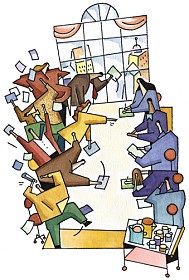
Are Writer Wars Good For Readers?
(updated from the Word Love re-run collection, originally published in 2010)
About when I turned ten I began crafting my library checkouts, hoping I’d look smart. I’d balance my Nancy Drew with a biography of Abraham Lincoln so the librarian thought well of me. (It seems my self-esteem problem enacted early.)
Jodi Picoult, following the NYT doubled coverage of Jonathan Franzen’s Freedom, recently weighed in on the Times overwhelming coverage of white male authors. Men telling domestic stories are writing art, while women covering similar ground are crafting women’s fiction. Jennifer Weiner agreed and twitterized the issue with the hashtag #franzenfreude.
Weiner’s directness started a new frenzy, and the issue veered from Picoult’s premise to the age-old battle of literary fiction being weighed against commercial fiction, often with writers feeding on their own.
Many writers and reviewers deny the claim that newspapers ignore women and non-white writers and unfairly categorize mainstream novels (a topic well examined by Roxanne MtJoy and Michelle Dean) asserting that they’re simply reviewing superior fiction, which quickly devolves into a fight of literary fiction versus commercial work, and becomes a construct of healthy peas and carrots books versus sinful bad-for-you ice cream reads.
Michelle Dean writes far better than I could on the danger of, as eloquently put by Nigerian writer Chimamanda Ngozi Adichie’s, “The Danger of A Single Story,” noting, “the silencing and devaluing of those voices has consequences, particularly when it tends to happen disproportionately to certain populations.
Some responded to #franzenfreude by trashing Weiner and Picoult’s writing and their success and lauding Franzen as though the issue was Franzen’s writing. (Neither Weiner nor Picoult wrote negative words about Franzen’s work.) Facebook friends, commenting on articles I’d put up regarding the issue, used it as an opportunity to denigrate Picoult and Weiner, and, by implication, commercial writers—to the point that I deleted my posts. I have little courage for online fights.
I have no dog in the #Franzenfreude fight. I subscribe to the NYT, Wall Street Journal and Boston Globe. Sean, my overworked mail carrier, delivers Newsweek, People, Time, Entertainment, and Oprah, along with Poets & Writers, Glimmer Street, Nimrod and more to my house
The Boston Globe reviewed my first book, The Murderer’s Daughters twice, the New York Times provided a terrific mention, and other papers including the Miami Herald, Denver Post and LA Times were more than kind. The media have treated me well. I’ve been categorized as everything from commercial to women’s, to literary fiction. The same thing is happening with my just-released second novel, The Comfort of Lies.
I’ve read Franzen, Picoult, and Weiner. Authors on my TBR pile include Jessica Marie Tucelli, Allie Larkin, Grace Coddington, Gail Caldwell, Lori L. Tharp, Lola Shoneyin, Julie Klam, Catherine McKenzie, Jonathan Papernick, Susanna Daniel, Karen Palmer, Sarah Pekkenan, Bernice L. McFadden, Simon Rich, Paul Theroux,People, Poets & Writers, Chuck Hogan, Abraham Verghese, Carleen Brice, Freddie Wilkinson, Nick Reding, Brady Udall, and Fredrick Riken. (They’re getting along on my nightstand quite well.)
It saddens me seeing writers buy into a class war. Lit looks down on commercial, who look down on genre, who eschew whatever’s lower on the literary food chain.
Some argue that commercial books find their audience, only literature needs reviewing—but how does that answer the male/white tipping of review scales? It seems a specious and power-retaining argument. Independent films survive even as reviewers include commercial films in their wheelhouse.
In a time when black writers are shunted to an African-American section, when men are deemed artists and women crafters, when science fiction and thrillers are better covered than woman-identified historical fiction, and romance is relegated to the deepest closet of shame reads, then the commercial-lit divide becomes nastily entwined within a gender and racial writing divide. Coloring this is the character versus plot battle, well described by author Chris Abouzied in his post, “The Decomposition of Language.”
Since I started reading at age four I’ve never been without books and I pray to have a TBR stack until the moment I die. On that heap I want it all: pounding plots, the wow of discovery, the comfort of recognition, and astounding characters. If I’m lucky, some will have all of the above. Whichever one I’m holding, I don’t want to be judged or lauded for it and I don’t want to shelve my books by race, class, or gender.
Tayari Jones, writing to fellow authors about the stratification of literature, said it very well: ‘other writers do not deserve your scorn.’ In the spirit of writer/reader heal thyself; I’m going to work on remembering those words. There’s room for all in the big tent of reading.
February 20, 2013
If It Seems Too Good To Be True: THE WIZARD OF LIES

Motivations behind some choices seem so impenetrable that even squinting close enough to crash into the subject you won’t find a mental foothold. That’s how I felt about Bernie Madoff and everything connected to his Ponzi scheme. How did he do it? Did his family really not know? How did he fool so many wise-in-the-ways-of-the-world investors?
Lives built on lies fascinate me. What story do people tell themselves? Do they feel justified, begin believing their own lies, and imagine they’re deserving of other people’s money—or do they envision that someday they’ll put it all right with none the wiser? Did Madoff think, like the guys from Enron and so many others, that he was always the smartest guy in the room?
Working with criminals, as I did for ten years, I knew their ability to fall into all the above. The thing about lying? It’s such an easy slide–or at least it seems so when that someone buys your deceit.
Madoff’s wife? I always believed (arguing with friends) in the possibility of Ruth Madoff being in the dark. Hell—titans of industry were fooled by him, why not his wife? My fascination extended to planning (long range) a novel based on a wife blindsided by her husband’s crime. What could that be like, having the entire fabric of one’s life ripped away by the man you’ve devoted yourself to since the age of 13? How do you make sense of life once you learn your life was built on sand? Does it make the love as false as your checkbook?
The Wizard of Lies: Bernie Madoff and the Death of Trust by Diana B. Henriques gripped me as tightly as any thriller—tighter perhaps, because instead of the “what happens,” I learned “how the hell it happened.” This man fooled almost everyone, including those in the SEC who investigated him (based on suspicions that were not followed through.) Descriptions of how he and his side-kicks—no, he did not do it alone—rigged up a phony computer show of trades and accounts astonished me same as any episode of “Homeland.”

Corporate leaders, CEOs, CFO’s, fund managers, titans of industry, none of them questioned the impossible returns brought to them by Madoff. The steady returns were unbelievable—yet only a few skeptical souls paid attention to if it seems too good to be true, it probably isn’t.
It wasn’t true. It wasn’t good.
The Wizard of Lies provided an education in the murky world of finance(that usually makes me fuzzy-brained) and imparted the facts in electrifying prose. Lessons in greed applied not just to the pocketbook, but to the soul of the players, providing a heartbreaking and enraging portrait of the disasters caused by Madoff—whose family and victims tumbled from golden peaks to suicide, loss, and near-madness.
Author Henriques’ conclusions will stay with me forever. The lines below,which come close to the final paragraphs of her book, could serve as warning to all of us who’ve stepped over, or been tempted to step over the line. We believe, we’re desperate to believe, that Madoff is a far away ‘them’ and not a “us,”but Henriques words serve as warning against the dangers of that hubris:
Madoff was not inhumanly monstrous. He was monstrously human. He was greedy for money and praise, arrogantly sure of his own capacity to pull it off, smugly dismissive of skeptics—just like anyone who mortgaged the house to invest in tech stocks, or tapped the off-limits college fund to gamble on a new business, or put all the retirement savings into a hedge fund they didn’t understand, or cheated a little on the tax return or the expense account or the spouse.
Just like us—only more so.
Henriques’ book unfolds a world of a billion dollar Ponzi scheme that at its core is no different than a ten-dollar offense:both depend on a suspension of disbelief to which anyone can succumb—the belief that the laws of the universe can be ignored when you want something enough.
This isn’t a book you’ll speed through, but it is a book that will fascinate and shed light on the hidden worlds operating in too many shiny corporate buildings around the world. Windows will open. Thank God. Because none of us can afford ignorance of that domain, nor the masters of that universe.
(originally published at Great New Books)
February 16, 2013
Heart-Break Men, Liar Song Men, I Didn’t Mean to Lie about Being Married Men: Songs from THE COMFORT OF LIES

The more relationships I have in my rear view, the more I organize my exes according to the sad-song scale: heartbreak song men . . . liar-song men . . . I-didn’t-mean- to-hurt you-but-oops-I-guess-not-telling-you-I-was-married-was-a-mistake men.
In The Comfort of Lies, pile-ups in the intersections of infidelity, adoption, marriage, parenthood and careers create perfect storms for desolate love music. I gathered a playlist eponymous of the particular sadness or strength of each character, and, of course, each rang in a past love nightmare of my own–thus creating a personal blues loop, allowing me to fall down the rabbit hole of melancholia, making me ever more grateful that I ultimately smartened up and married a non-sad song man.
1) The Gut-Wrenched Collection
Perhaps I listened to Ayo’s “Down On My Knees” fifty times during one particular revision. I don’t think I’ve ever heard the triangulation of love quite so plaintive and naked as in that song. Like Ayo, Billy Vera and the Beaters brings me to my longing knees with the deal-offering “At This Moment.”
What can I say about Etta James singing “I’d Rather Go Blind” that hasn’t been said before? If you never felt this way, well, not sure if I am happy or sad for you. “Anyone Who Had A Heart” sung by Dionne Warwick in 1964 feels like a wife’s plea—a mix of trembling anger, love, and yearning. I can’t listen to this song without getting a tight chest.
Does the anger of a spurned woman have an equal to Adele singing “Rumor Has It?”
2) The Being Killed Softly Collection
Bonnie Raitt’s “I Can’t Make You Love Me” is a quieter ache-song. Here we have the acceptance of loss, served with a side of whiskey neat. “There’s Always Something There to Remind Me” by Dionne Warwick brings plaintive to the sad song party.
“After The Love Is Gone”: Earth Wind and Fire worships at the corner of goodbye and blame—the song kills me every time. And then there’s “Wake Up Alone”. Oh those dark nights. You sang the hell out of it, Amy Winehouse.
3) Wrong Person, Wrong Place, Out of Sync Collection
What happens when you fall into the arms of the wrong transitional man? Like Patsy Cline you’ll end up singing “Why Can’t He Be You.” And the man left behind will be crying to “I’ve Been Loving You Too Long” along with the great Otis Redding. Couples missing the glittery thwack of love, worry as they listen to “You’ve Love That Loving Feeling” from The Righteous Brothers.
4) Anthems of the Other Woman Collection:
You are not allowed to be the other woman without hearing Whitney Houston’s “Saving All My Love For You” & “Where is the Love” by Roberta Flack & Donny Hathaway.
5) Moving on Collection:
In the end, where would furious exes be without “I Will Survive” by Gloria Gaynor, a song needing to be sung and danced to for a few days or months (depending on one’s emotional temperament) before starting over again, with “Let’s Get it On” by Marvin Gaye.
(Originally published in The Large-Hearted Boy)