Peter M. Ball's Blog, page 13
September 17, 2021
Morning Person
I never intended to become a morning person, but health issues pushed me into it. Evenings were a time of exhaustion, diminishing resolve, and brain fog, and so the first four hours after waking became the time of day when I brought my best self to a project.
For the first year, I fought against that. Loathed the early starts, focused on all the pop science write-ups about the research into larks and night owls, embraced the snooze button and the long sleep in. I was nostalgic for the kind of writer—the kind of person—I’d been before evenings became a nightmare. I convinced myself the problems with evenings were a temporary aberration, soon to be conquered. One day, I my creativity would fire up around 10 PM and I’d spend the next eight hours writing into the wee hours. One day, I would set my routine to the rhythms of a night owl and all the work would get done. This person I was will soon be who I am again.
It didn’t work out that way. Chronic health conditions get that name for a reason, and you manage rather than cure. Evenings were lost to me.
Things got better when I leaned into mornings: rolling out of bed as soon as I wake up, picking a wake-up song to energise my day, setting the tone of the next twenty-four hours by picking a focus—writing, reading, housework, or clearing publishing tasks—and did a short half-hour sprint on that project before making coffee and eating breakfast.
Somewhere along the way, I became a morning person. Focused on nailing that wake-up routine and transition into work. Full of beans in the first four hours of the day, itching to get started.
Socially, we’re conditioned to take a dim view of working against our natural inclinations. The heroes of our cultural narratives buck the system and break free of constraints, embrace their true paths and defy conventions. “Be true to yourself,” we’re told, “and the world is your goddamned oyster.”
But there are two things that inform our self-perception: our natural inclinations, and what we do on a given day. One is informed by who we are in the past, the other by who we hope to be in the future.
When shit hits the fan, the biggest challenge is letting go of the older vision of who you used to be and the vision of the future you’d been chasing. But cleaving to that is nostalgia, and one important aspect of nostalgia is that the past is irrecoverable.
Take a breath. Let that version of yourself go. See yourself for where you are right now, and the version of yourself that can still be. Then take the next step towards that person, day by day, hour by hour.
Even if it means becoming a morning person.
RECENT READING THAT INFORMED THIS POST
Who Are You, Really: The Surprising Puzzle of Personality , Brian R. Little (Book) I turned to The Secret Life of Us for warm nostalgia. Instead, I found jarring memories , Lisa Portolan (The Conversation)This blog is supported by the feedback, enthusiasm, and patronage of its readers. Thanks go out to everyone who contributes, particularly the folks who back my Eclectic Projects Fund on Patreon — their generosity gives me the freedom to spend time writing entries here that would otherwise need to go towards paying gigs.
If you liked this post and would like to make a one off contribution to show your support, can buy me a coffee at paypal.me/PeterMBall or pick up some of my books over at www.BrainJarPress.com.


September 15, 2021
Narrative Assumptions in the Binge-Watch Era
This blog is supported by the feedback, enthusiasm, and patronage of its readers. Thanks go out to everyone who contributes, particularly the folks who back my Eclectic Projects Fund on Patreon — their generosity gives me the freedom to spend time writing entries here that would otherwise need to go towards paying gigs.
If you liked this post and would like to make a one off contribution to show your support, can buy me a coffee at paypal.me/PeterMBall or pick up some of my books over at www.BrainJarPress.com.
September 13, 2021
Brain Jar News: Little Labyrinth Pre-Orders
WE’RE BACK, BABY!
Brain Jar Press has been quiet for a few months now, courtesy of some ill-timed computer issues back in May that turned into ill-timed internet issues in June (publishing is weird – the problems of May don’t manifest until August, at the earliest). But now? Guess what?
We’re BACK with a new book from SEAN FRICKEN’ WILLIAMS that you can go PRE-ORDER!
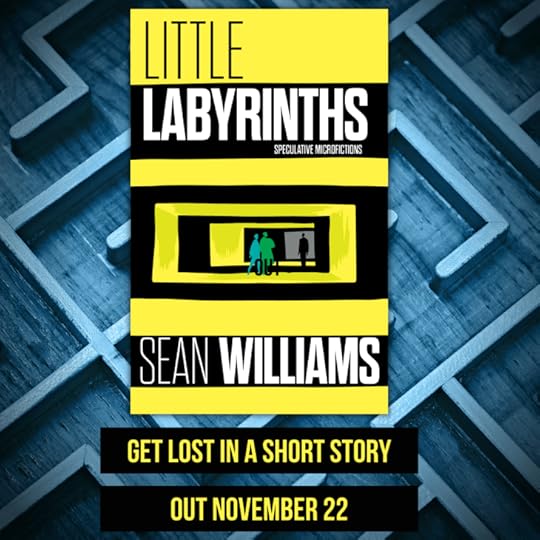
Here’s the pitch:
Matter transporters, dead worlds, and ghostly encounters. Parallel worlds, time-travel, and dangers that lurk in the shadows.
Little Labyrinths brings together 17 vignettes and microfictions from one of Australia’s premier authors of science fiction and fantasy. Collected together for the first time, these brief tales and startling asides cover territory that is playful, experimental, and infused with speculative wonder. Once dubbed Australia’s Lord of Genre Fiction, Williams’ work will remind you of the strange, exciting, and mysterious pleasures that come from losing yourself in the smallest stories.
The really interesting thing about editing this book was the way it contrasted with our first microfiction collection, Angela Slatter’s Red New Day. Both books share an interest in getting in and delivering a series of kick-ass stories in under a thousand words, but Angela typically uses the format as a gateway to terrify. The stories are as much about what’s not said, and the looming threat of the larger story waiting to swoop in and destroy lives, as it is about what’s on the page.
In contrast, Sean usually takes a familiar genre trope and plays with it, dismantling the exterior to show you the engine underneath and how it could be used to fire off in a different direction (I would say it’s the place where a man whose written 50 novels shows up to have fun and experiment a little, but Sean’s never been afraid of trying new genres or pulling of feats like writing an entire novel where a character speaks in Gary Numan lyrics).
Little Labyrinths comes out on November 22, 2021. Chapbooks and Ebooks are available to pre-order from the Brian Jar Press store, but if you’d prefer some other vendors, here are links to some of the usual suspects: Apple Books | Barnes & Noble | Kobo | Google Play | Amazon US | Amazon UK | Amazon AUS | Amazon CA | Amazon DE | Books2Read (covers most ebook vendors) | Booktopia
September 3, 2021
The Gulf Between Conception and Execution
Back in my teenage years, as a young comic book fan, I copied a quote from Neil Gaiman’s Sandman and stuck it on my wall. I wasn’t a kid given to this kind of behaviour, but this fragment where Gaiman’s protagonist, Dream, describes the creation of the first Corinthian spoke to me even then:
Imagine that you woke in the night and rose, and seemed to see before you another person, whom you slowly perceived to be yourself.
Someone had entered in the night and placed a mirror in your sleeping place, made from black metal. You had been frightened only of your reflection.
But then the reflection slowly raised one hand, while your own hand stayed still…
A dark mirror…
That was always the intention…
But the gulf between conception and execution is wide and many things can happen along the way.
Sandman #57, Neil Gaiman
My admiration for this passage came in two parts. The first, unsurprisingly, lay in my youthful terror of exactly that kind of experience. Even at an age when I should have known better, I harboured a lingering fear of empty spaces and the uncanny moment when something familiar became strange and dangerous.
But the part that really resonated was always the last line. Even at fifteen or sixteen years old, where my narrative focus was RPG games rather than fiction, I knew, acutely, that the conception of a project rarely matched the final outcome. Intentions changed, signals were misread, and paths could get diverted by all manner of blockages and side-routes.
In many ways, fiction (and particularly short-fiction) came as something of a relief once I started writing, because the projects were so self-contained. RPG campaigns have a tendency to go on for years, constantly metastasizing as you negotiate the contributions and digressions as your own voice and the voice of your players evolves and changes over time.
Which leads to a kind of truism — the longer the wait between conception and execution, the further you stray from the original intention and goals of the project. Some days this is for the best, with bad ideas becoming good ideas as additional complexity and theory builds up around them.
Other times, the gulf obliterates your original intent and you have to rebuild from the ground up.
When I launched the Eclectic Projects Patreon back in March, one of my intentions was getting back into the rhythm of regular blogging (which, in turn, would lead to future resources and possible books as I collated themed content together and fleshed out ideas). I set the goals and rewards to fit those intentions, trying to find the right balance between ambition (because I like ambition) and focused (so I wasn’t over-committing to the point of getting nothing done).
For thirty breif, shining days intention and execution seemed to work in sync.
Then, shit went wrong.
It started with laptop problems, which were followed by a long period of internet issues that left our household unable to get online. All up, I had about twenty-six or twenty-seven days of being offline or working on a back-up computer that didn’t play well with the internet, my default writing program, or any of the tools I used to publish books through Brian Jar Press. Then the next round of Australian lockdown hit, and my plans to make use of this blog got thwarted by some serious back-end issues that made it inaccessible, and anxiety over catching up on the massive backlog of work that built up while the computer was out and…
Well, the gulf between intention and execution is wide, and many things can happen along the way.
Last month, I was notified the theme/design I used for the previous iteration of PeterMBall.com was going to be archived. It would still work, but the designers were no longer maintaining it and making sure it ran perfectly on the latest iterations of the Worldpress platform.
My initial response was a moment of mild irritation—one more fucking thing to fix—but it was also an opportunity to re-think. A lot of the things I originally set up PeterMBall.com to do were now better handled by the Brain Jar Press site, and that allowed me to re-think decisions and approaches to an online presence.
The last few days have been a whirlwind of hassling tech support at my web host, experimenting with new designs, and re-imagining the look and feel of the site. Gone is the static front page and host of sidebars, and in their place is a scaled back approach that puts the blog front-and-centre.
It’s very much a statement of intent.
The next few weeks will be dotted with occasional posts, but I should hit cruising speed around September 18 and maintain posts at a fairly regular clip. Right now, there’s a small crew of Patreon supporters who are getting treated to an early preview of the coming blog posts and ideas I’ve been tooling with, and I’ll make no bones about the fact that I’m getting back into blogging because of their backing and enthusiasm.
Admittedly, it’s not quite the vision of the relationship between blog and Patreon I’d pitched them back in March of this year, but the gulf between conception and execution is vast, and many things can happen along the way.
September 2, 2021
Status: Friday, 3 September, 2021
LOCATION: Windsor, Brisbane, Australia.
THE QUICK-AND-DIRTY NEWS
Just launched the print editions of Not Quite The End Of The World Just Yet.Preparing to launch pre-orders for a chapbook collection of microfiction from Sean Williams — stay tuned for details next weekCURRENT INBOX: 38 (Gah!)
WORKING ON
Finishing Median Survival Time, a science fiction novella produced for my PhD thesis. Two chapters left to go on the current draft, and it’s an emotional project to finish. It was first derailed by my father’s death in March 2019, and there hasn’t been much “normal” time to get back on track since then.Final page proofs of the Exile print release, scheduled for the end of this month. Working the title development process for a series of fairy tale retellings Brian Jar Press will be releasing in 2022. Covers exist in rough form and rough layouts are progressing, which means I’m up to writing the cover synopsis for each. Catching up on the structural editorial of a horror novella we’ve picked up.Drafting contracts for a series of fantasy novellas I’m really excited about.THINKING ABOUT
Sites of online engagement and how to play by your own rules, rather than the expectations of a platform. I did some early thinking and experimenting with this back in March of 2019, logged in the post Who Gets To Monetize Your Spare Minutes Of Attention.The impending pivot when my small business grant ends and decisions need to be made about Brain Jar, the PhD, and the basic mechanics or paying rent. Debating whether it’s better to seek out additional freelance work and keep more control over my schedule, or seek out a part-time job that’s divorced from the writing and publishing field.The cover design options for the next round of Writer Chaps books. The series has grown more ambitious and less unified in its covers, and I’ll either need to double down on that or pare back to a clearer set of motifs.READING
Luanne G Smith’s The Vine Witch , which starts with a woman breaking the curse that turned her into a toad because the man who laid it didn’t account for the debilitating effects of poison upon magic. Cal Newport’s Digital Minimalism and Mike Monteiro’s Ruined By Design – both re-reads, but two books that have shaped the way I think about being intentional in online spaces. They’re useful touchstones when it feels like I’ve slipped away from that.LISTENING TO
The Kaiser Cheif’s Employment, especially the trilogy of I Predict A Riot, Every Day I Love You Less & Less, and Na-Na-Na-Na-Naaa, which is an incredible wake-up call first thing in the morning.WATCHING
AEW Dynamite and Rampage, following along on the pro-wrestling return of CM Punk after seven years away from the business. It’s hard to explain exactly how important this is to non-wrestling fans, but imagine your favourite writer “retired” seven years ago because the publishing industry burned them out at the height of their career. Then they made an unexpected return thanks to a plucky small press that gave them a platform and the freedom to do what they liked.STATUS OF THE ADMIRAL
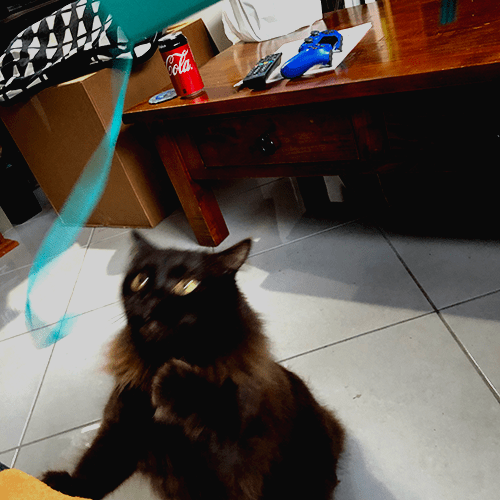
Trying to eat the bookmark ribbon on my bullet journal.
Now Shipping: Not Quite The End Of The World Just Yet
Brain Jar Press is now shipping print editions of my short story collection, Not Quite The End Of The World Just Yet. The book contains twelve science fiction stories, including my sci-fi dragon western Dying Young and the Aurealis Award winning cyberpunk fairytale Clockwork, Patchwork, and Raven. It also features two stories, 52 Pick-Up and and Inside An Egg, Inside A Duck, that are original to the collection.
Customers who pre-ordered already have their books. Copies have been showing up on Twitter.
This wonder arrived this afternoon. Thank you @BrainJarPress snd @Petermball pic.twitter.com/Q08xzSgEJj
— Trent Jamieson (@trentonomicon) August 25, 2021
Some books are events — launched and celebrated, pushed hard to find their readership — but increasingly I fall back on the default of making books available. The launch is a product of an older sales environment, where you needed all the attention on a book right now, before the sales window closed and a mass of new releases swept yours off the shelf.
Launches are fun, and they celebrate the author, but increasingly a writer’s career will be built out a deep backlist of releases that can sell over time. Very few of my books sell a huge number on the week they’re released, but most of them sell steadily over a number of years. Not Quite The End Of the World Just Yet has been ticking along in ebook since 2018, quietly becoming one of Brain Jar’s best-selling titles in the handful of formats it was available.
The print edition has less “new book” energy because of that, because it’s mostly a new option and format.
Not Quite The End Of The World is available now in Print and Ebook via Brain Jar Press or Your Favourite Bookstore
August 9, 2021
Reasons to be a luddite
Right, a quick one.
I set myself three books to read this week, then promptly read two of them in the space of twenty-four hours. So I added another two books and promptly read one of those in the space of a few hours. I started August by doing a Patreon post about the relative dearth of reading as I hit the mid-year, but it seems I’m trying to solve that in a single weekend.
Then there was an upset stomach and the discovery of Episodes, a 2011 sitcom featuring Tamsin Grieg and Matt LeBlanc, which makes a great job of utilizing the strength of both actors. And yet, oddly weird, because it feels like it should be a BBC comedy, but it’s…not.
…
I spent the start of Brisbane’s lockdown rescheduling a small stack of meetings. Now I’ve spent the end of lockdown rescheduling a small stack of meetings, because my stomach was iffy enough that sitting for an hour felt like a risk.
Did some submission reading for Brian Jar, scanned a bunch of contracts to mail out to the authors, and worked on some stuff for the Patreon and the current novella. Then the proof copies of Not Quite The End Of The World Just Yet arrived.
View this post on InstagramA post shared by Peter M Ball (@petermball)
I was worried how this one would look, the whole way through putting the files together. Things that look good on screen always lose a bit of their vibrancy during the printing process, and it’s a book that relies on stark contrast and light.
Turns out I shouldn’t have worried. It’s a beautiful book. You can still preorder copies over at the Brain Jar Press website.
Now I go start work on the print edition of These Strange And Magic Things.
…
Jathan Sadowski’s exhort to embrace being a Luddite isn’t the article you’re expecting if you’ve heard the term bandied around by folks who fumble with their phone. In fact, he mounts a pretty damn convincing case for re-igniting the movement in the face of the gig economy, engaging with technology critically and entrenching worker rights.
The contemporary usage of Luddite has the machine-smashing part correct — but that’s about all it gets right.
First, the Luddites were not indiscriminate. They were intentional and purposeful about which machines they smashed. They targeted those owned by manufacturers who were known to pay low wages, disregard workers’ safety, and/or speed up the pace of work. Even within a single factory — which would contain machines owned by different capitalists — some machines were destroyed and others pardoned depending on the business practices of their owners.
Second, the Luddites were not ignorant. Smashing machines was not a kneejerk reaction to new technology, but a tactical response by workers based on their understanding of how owners were using those machines to make labour conditions more exploitative. As historian David Noble puts it, they understood “technology in the present tense”, by analysing its immediate, material impacts and acting accordingly.
Luddism was a working-class movement opposed to the political consequences of industrial capitalism. The Luddites wanted technology to be deployed in ways that made work more humane and gave workers more autonomy.
I’m A Luddite. You Should Be One Too (The Conversation)
It’s a beautiful little essay and worth checking out.
August 7, 2021
A Saturday Spent Reading (with a little TV)
It’s been an odd kind of Saturday. I woke up at 5:30 — a terrifyingly regular occurance these days — and stumbled out to spend a few hours reading on the couch. The cat decided to hang out with me, so I spent a few hours devouring books at a terrifying rate of knots.
The last book on the pile was Daniel Coyle’s The Talent Code, all about the role the myelin sheaths forming over nerves play in the acquisition and refinement of skills, and the factors that contribute to certain schools, towns, or movements spawning an astonishing number of world-class talents, whether it’s in the field of art, sport, or science. Fascinating, fascinating book that’s going to have me thinking incredibly hard about my practice, and about the logistics of writing careers. Many old, well-worn bits of writing advice — write every day! If you want to write, you must read! — can be contemplated in a new light after reading Coyle’s book.
It’s also contribubing to this weird idea that’s bubbling away in the back of my head, pondering whether all the rhetoric we absorb about writing being a terrible career choice is really all that accurate. For all that we like to joke that there’s no money in writing, and warn new writers not to quit their day job, I’m not actually sure it’s as terrible a career choice as it initially seems. Stressful, yes, and unlikely to earn you a stalbe income, but writing is oddly resilient as a career and the skills you develop are surprisingly valuable if you set aside the mythology about muses and creative genius and actually develop your craft.
It may not turn into a thing, but I keep tapping away at notes and jotting down quotes from recent reading that ties into the general theme.
…
Another segue that’s just accored to me, based on Cole’s work.
The most astonishingly useful time-management tip I’ve encountered basically boils down to “DO LESS STUFF, DUMBASS.” The reason most people turn to time and project management books is typically because we’re massively overcommitted, and just like going all Marie Kondo on your home, the best way to get organised is to clear out the clutter and focus on the important stuff.
(The book that offered said advice Charlie Gilkey’s Start Finishing, which is both really useful and awkwardly written, so I often hesitate about recommending it)
I am failing to do less stuff at the moment. Rather spectacularly. I’ll have six big writing/publishing things to accomplish every day, and regularly tick off four of them. The other two will just sit there, getting bigger and scarier, which means I’ll soon have seven things to do on a daily task list and things will really get out of hand.
I was getting twitchy about that until I read Coyle’s book, and realised that a lot of what’s slowing me down at the moment is a lack of practice and refinement. Even the stuff I know how to do well — banging out words at a surprising speed — is a skill that’s laid fallow for much of the last year. I’m less than a week into trying to pick them up again, and it’s taking some time to fire up all the old mental pathways that allowed me to write at a certain speed. I’m both trying to awaken old skills and bed down new routines, both of which are going to take a little time to become routine.
…
There were some non-reading things on the docket today. Laundry was folded, a cat was petted several times, and the second season of Miracle Workers was finished over lunch. We started on season three, were treated to the incredible sight of Daniel Radcliff doing a Rocky Horror inspired cover of “She’ll Be Coming Around The Mountain,” and largely figured there was no TV that was going to top that anytime soon.
This was our second attempt at watching Mircale Workers — we bounced off the first episode hard last year amid all the disaster (bush fires at the time — remember them? — rather than plague). I’m glad we gave it a second chance, especially since a bunch of friends mentioned having a similar issue. It’s definitely an absurd brand of humour, but worth persevering with. Radcliffe is absolutely incredible, remaining one of the most interesting of the Harry Potter kids in terms of the projects he takes on.
And now it’s ten o’clock, and I’ve not attempted any real writing yet. Time to rectify that before I turn in.
August 6, 2021
Brain Jar 2.0: One Year On
A cold morning here in locked down Brisbane. The heater is definitely on and the cat has taken up residence in a conveninent patch of sunlight. The writing brain is protesting the return to work like a reluctant starter mower on the last dregs of fuel; it’s a “40% of optimal” day here, first thing in the AM. I’ll get things up and running, but it’s not going to be terribly smooth.
…
Many moons ago, at the 2016 Brisbane Natcon, I was on a panel with Cat Sparks and someone whose name eludes that turned to the character of Jack Reacher. Cat noted she didn’t think Jack Reacher would work as a woman — a thought that stuck in my head for a long while, and slowly evolved into a novella I’m working on for my thesis. I’ve got the big beats of the story more-or-less locked down at this point, so I’m into the interstitial scenes: negotiations; investigation; the occasional stare-down with a henchmen. Procuedral beats where the character of Reacher really lives, far more than the action scenes, because Reacher’s appeal is that he’s got a knack for hypervigilance without any of the PTSD or Anxiety symptoms that usually accompany it.
I wasn’t meant to working on this at the moment, nor the rough draft of a non-fiction book that I’m scribbling for the folks over on my Patreon. This week was meant to be spent finalizing a conference workshop I was going to present a little later in the month, but lockdowns in other parts of Australia saw that conference rescheduled for sometime in December. And so I wrote about Miriam Holst tearing apart her dead friend’s apartment, then I wrote a quick draft about writing being a surprisingly sound career when you look past all the rhetorick about artist being broke.
And then I did the monthly accounts for Brain Jar Press, logging all the income and outgoing expenses for July. Continuing to make a profit, which is good. Still not enough to live on long-term, which means there’s going to be some interesting decisions to make around the end of October when I have to scale my involvement back to part-time.
…
Since we’re on a nostagia kick, Angela Slatter reminded me that we announced Red New Day around this time last year. It was the first book of Brain Jar 2.0, transitioning the core business from self-publishing my work and towards a fully-fledged small press publishing schedule. Here’s how we kicked things off:
Looking back, I vastly underestimated how well this would sell. I knew Angela had some ardent fans, but I figured the chapbook format and the price point would discourage a lot of them. I spent an awful lot of time trying to set expectations before we’d even signed the contact, noting that Brain Jar’s strategy is a slow accumulation of sales over time rather than the focused, one-month burst of sales that’s the focus of traditional publishing. I figured fifty copies were a reasonable target. Seventy-five would be a wild success.
We cleared those numbers in the first three months, which is largely how Brain Jar Press got a small business development grant to begin with in the heart of the pandemic.
…
To the surprise of absolutely noone, George R.R. MArtin has gone on record stating the end of A Song of Fire and Ice probably won’t resemble the final season of A GAme of Thrones. The weirdest part about his statement is the realisation he was 5 books ahead of the TV show when it started in 2011, and they still caught up with him. There’s a small chunk of my thesis devoted to Martin’s books and the clash between reader experctations and publishing realities, but I would be having a field day with this sort of stuff were I doing a longer critical work.
…
Near as I can tell, all the usual promotion systems for this blog are offline at the moment. No auto-posts to Twitter or Tumblr, no mail-outs via the old system. Despite being the most public and accessible form of online presence I have — Twitter and Facebook require accounts, Patreon and the Newsletter both require sign-up — it may have the smallest possible readership.
Which is, frankly, something in it’s favour for the moment. For years I approached this blog like a miniature zine, showing up to write proto-essays as often as I’d update folks on the goings-on in my little neck of the writing world. These days the zine-like content is routed through my patreon, then my newsletter, which frees the website up as theis archaic bit of tech that can re-discover its own identity.
And I do miss the blog as journal approach, which fell out of favour after RSS readers were swept away by the newfangled social media feeds. One of my favourite books on writing remains Neil Gaiman’s Adventures in the Dream Trade, which devotes a huge number of pages to Gaiman’s journal circa 2004/2005.
It doesn’t utelise any of the tools of content-focused blogging, but it’s an intriguing historical document to look back on and trace the trajectories of the man’s career.
August 5, 2021
Lockdown Projects
Over the weekend Brisbane became the third Australian state capital to lock down because of a Delta-variation outbreak of Covid-19, and we’ve already hit our first extension because the contact tracing did not go well. Some folks are cheerfully making plans for after the current deadline expires, while others are merrily settling in for a much longer wait before things open up again.
Not that a lockdown means much when you’re running a publishing company from your couch. I’ve rescheduled a bunch of important-but-not-urgent meetings, and tried to think of ways I could turn the lockdown into an opportunity. Weeks like this are typically bad times to be announcing and releasing new books — any time attention is on the news, I’ve struggled to move the needle on sales — but that means it’s a great time to be working on some “when I get time for it” projects.
Such as, for example, the print release of Not Quite The End Of The World Just Yet.
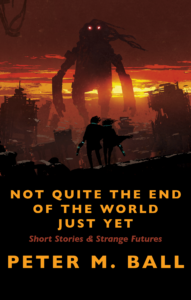
The USA has technically had a print version of this for a year or two now, albeit one that was only available through Amazon’s print on demand service. That print version has — inexplicably — outsold the ebook edition by considerable quantity, and was probably the profitable book I’ve ever done until Brain Jar 2.0 unleashed a bunch of new Angela Slatter titles unto the world.
This is a new edition, though. I’ve cleaned up a few things, re-done the layout, and played with the cover a little. Not enough that you’d be getting anything new if you’ve already bought a copy, but it’s definitely the prettier edition compared to the Amazon one.
The official release date is set for August 30 if you order it through most bookstores, but you can get it discounted (and possibly early, COVID shipping willing) if you order direct from Brian Jar Press this month.
Order From Brain Jar#
An interesting side-effect of the latest lockdowns and turmoils seems to be the resurgence of blogs as proper blogs again, with various writers and editors I followed in days of old posting journal entries and random thoughts for the first time in years. Many of them are citing a frustration with social media and a desire for more control over the spaces in which they engage as the reason, and I can see the logic behind their choice. It does my heart good to see the equivalent of short missives from friends and colleagues every time I log into my RSS reader (and it is, surprisingly, a damn good reason to check my RSS feed instead of Facebook. Half the reason I signed up to the book of face in the first place was because it made following people’s blogs a little easier… and they’ve removed that function a few years back, and it’s been less fun ever since).
There’s some interesting rumbles that Google may bring back an easy RSS reader in future editions of Chrome, which would be a welcome return. I’d like to see a little blog renaissance somewhere down the line, and there’s something to be said for a service that just shows you the things you’ve subscribed too, in the order they were posted, without messing with your timeline or weighting everything according to what they think you’ll engage with.