Peter M. Ball's Blog, page 12
September 27, 2021
STEAL THIS IDEA: Zombie Mode Task List!
I’m a big fan of running playbooks to take decision making off the table, especially on low energy days when I don’t have the spoons for self-management. There’s a larger piece in the works on this—part of a series that’s been going through my newsletter of late—but it remains a work-in-progress because there’s a bunch of moving pieces I’m trying to lay out and it’s hard to fit it into self-contained, 1,000 word chunks.
Imagine my jealousy when a Software Engineer named Lisa wrote about their “Zombie Mode” list over on the Bullet Journal blog.
“Zombie Mode” is what I call the state of being when I do not want to think and just want to be told what to do next. I have two collections to use when I am in this state — one for workdays and one for non-workdays. They both contain lists of tasks to be completed for the day, in order, until I snap out of Zombie Mode or the day ends.
Before, when I was in Zombie Mode, I would just waste all that time playing on my phone or trying to motivate myself to choose something to work on. Once I gave myself a list of things I could focus my attention on without having to make any decisions, my time in Zombie Mode went from completely wasted to productive. Even though I am only getting routine and brainless tasks done during that time, it is a vast improvement over getting nothing done at all.
Simple Time Management, Bulletjournal.com
My interest in playbooks started with something similar to this. I have a serious sleep disorder, so there’s a lot of days when I start off brain-fried and over-tired. Writing is damn near impossible on those mornings, and deep concentration is a mountain I often can’t climb, so I laid out a series of step-by-step activities I could follow that would steer me away from common, not-terribly-useful coping mechanism (computer games, binge-watching TV) and towards tasks I could actually do (layout and design; updating websites).
Over time, they’ve developed a little—my core playbooks are less “zombie mode” and more a trilogy that covers being overtired, over-anxious, or working-around-short-term-stressors—but I’m gradually building more and refining those that exist.
For example, over the weekend I added “straighten desk” to my three core lists, bedding in a habit of making the primary work space more pleasant to be around rather than defaulting to the couch. Another recent addition: play something from the “banger start to the morning” playlist, after a recent run of starting my mornings with the Kaiser Chiefs’ I Predict A Riot sent me into the workday with more enthusiasm than normal.


September 26, 2021
Do You Know The Origins of Frequently Quoted Advice?
Trace the origins of the “ten thousand steps a day” health advice, and you’ll find a marketing campaign. A Japanese company built a step counter and invented a reason to use it, with the brand name—Manpo-Kei—translating into 10,000 steps.
Trace the origins of the oft-repeated writing advice to show, rather than tell, and you’ll find the silent film industry, and writers deciding between conveying information via dialogue card, or putting it into action. Also popular in turn-of-the-century theatre scene of the early 1900s, where “showing” gave actors to display the emotional responses to scenes in ways the writer could not convey.
Neither origin makes for terrible advice—ten thousand steps a day is good for your health, and show, don’t tell can be solid advice for a prose writer—but it also gives you wiggle room to escape the tyranny of the ideals presented.
Any activity is better than none, when it comes to health, and the health benefits kick in long before you hit a ten thousand step a day goal.
Showing is a worthy goal for a scene, but there’s a time in place to just tell the reader something. Not everything needs to be dramatised, and access to the narrator’s interiority is a trick that prose can deliver that theatre can’t.
Context matters. Goals matter. And oft-quoted advice isn’t always the best solution in every situation, merely the version we’ve inherited over time because they worked out more often than not.
September 25, 2021
First Envision, Then Figure Out The Compromise
I’ve got a long history of advising writers to clarify their goals and vision around writing, and a recurring question is often how? It’s too big a question to tackle in blog posts, but something that occasionally gets some clarity during the longer, face-to-face (or email-to-email) conversations that take place with friends.
One insight is this: envisioning a career is a two-step process.
The first step is envisioning the kind of career you’d like to have—how much you want to write, what kind of work you want to do, what kind of readership you’d like to develop. Looking to benchmarks—writers whose career (not necessarily work) like to emulate in terms of approach and schedule—then doing research to figure out whether their current approach to work represents the way they built their profile up in the early days.
No writer comes out of nowhere, and overnight successes are often the product of decades-long effort and build.
The second step is figuring out where you’re willing to compromise and the circumstances in which you’ll do so. If your principal goal is “doing good work,” how far are you willing to compromise that to make working at writing full time happen? If your heart is set on working in a particular genre, are you willing to switch genres—or go to non-fiction—in order to achieve other parts of your goal. If you’ve set yourself the goal of writing one book a year, in order to really give it your focus, are you willing to do two or three if publishers really want you to push the pace? Are you content to write to a small audience, or do you crave recognition and large crowds?
Are the things you were unwilling to sacrifice as a single author the same when you have a working partner, or a family who needs your support? What happens to your vision of what productive means as a writer if you get sick, or develop a chronic illness? Do you want to build your career fast, or would you prefer to take your time?
We all make bad comprises over the course of our careers and only learn we’ve crossed a line in retrospect. Moments when we look up from the long, hard slog of a project and wonder, “what the hell was I thinking? This is making me miserable!”
Bad compromise is inevitable. (And doing work that makes them miserable is a boundary plenty of writers will compromise on if the trade-off gains them something else they desire; I use it because it’s frequently the area I don’t want to compromise on).
But thinking about your boundaries in advance—the permeable goals that will shift and mutate because of circumstances—helps you cut back on the mistakes, and gives you a clearer vision of what each opportunity represents and what it costs you to say yes.
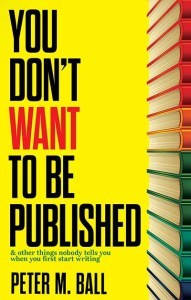
Want more insights into building a writing career, but don’t want to mess about digging through blog archives? You Don’t Want to Be Published compiles some of my best writing-about-writing from this website, along with articles and essays I’ve written for other publications.
Available in print and ebook direct from Brain Jar Press, or from your favourite bookstores.
The Weird Time Delay on Writing and Publishing Mistakes
So I’ve started publishing books again, after an unintentional hiatus.
The weirdest thing about publishing is this: you don’t pay for your mistakes in real-time. Stopped writing because of a serious illness? The books and stories you’ve already sold will keep appearing for another six months to two years, after which there will be a mysterious gap and the deafening silence feels like the end of your career.
Did your layout and design computer go boom, preventing work on new books in your small press publishing queue? The books you’ve already developed will chug along for a while, and it’s not until three-to-six months later that you’ve got no new releases and your cash-flow becomes the stuff of nightmares.
And the worst part: you forget the awful stuff happened. The flow of cause-and-effect gets muddy, and it never feels like you’re not publishing because bad stuff happened a while back, it feels like some personal flaw that means you should pack your bags up and give up this writing and publishing malarky for good.
Half the reason I embrace writing weekly newsletters about Brain Jar and my writing is so there’s an archive I can refer back to when it feels like shit is going wrong. I can trace the current problem back to its origin and see the decision I made at the time. It’s the back-up for my very fallible brain, which is prone to catastrophic thinking around pursuing a creative career.
Back in May, I made mistakes. Brain Jar Press went through a fallow period, where no new books were coming out. Those computer issues created a knot of problems that took time to work out, but they were hidden by projects that were already underway and ready to release when the computer noped out on us.
And yet, we’ve been quiet for three months now. The books that came out weren’t new releases, but projects from the in case of emergency draw. I went back to old logs a lot to remind myself how and why it was happening.
And now we’re through the gap, and the books are starting up. We’ve announced Sean Williams Little Labyrinths, and Kim Wilkins’ Headstrong Girl. The next round of books is underway, and it’s business as usual once more.
[image error]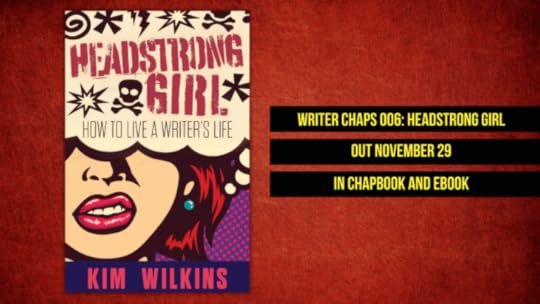
September 24, 2021
The Window For Raving About Stories You Love
’m sufficiently old that I feel like the window for talking about We Are Lady Parts is over, what with the series coming out in May of 2021 and our engagement with it taking place in early September.
I’m old because I’m trapped in a cultural paradigm where immediacy is a primary virtue when recommending narratives—the same paradigm where books have a shelf-life of three to four weeks, television shows get consumed in scheduled blocks and paid for by advertising, and films exist to be shown on the big screen or pulled off the limited shelf-space of your local blockbuster.
Talk about a film, a book, or a television show four months down the line in that kind of environment, and the moment is already over. You wait for re-runs or the DVD release that might never happen, scour second-hand bookstores or badger your library to order in a copy.
But this is the streaming age; the binge watch age; the ebook age. Online stores don’t have the limitations of physical shelf space, and they’re free to stock vast back lists if you’re eager to engage. A penchant for addressing things while they’re new is an atavism of an earlier age, and while we still get the occasional blockbuster that goes strong right out of the blocks, we mostly come to new works in our own time.
We lose some things with that transition: the sense of cultural conversation is more difficult to find, and you can no longer wade into a discussion of Game of Thrones or Big Brother with any real confidence that people understand what you’re saying.
But the gains are incredible, and open up an array of film, TV, and fiction that wouldn’t be feasible in a sales environment characterised by limited shelf space and short sales windows.
And We Are Lady Parts—a six-episode TV comedy about an all-female Muslim punk band in London—is an absolute cracker of a TV show that quietly picking up viewers ever week (this week, it’s shown up in two newsletters from writers I follow, both of whom are basically begging for people to watch it so they can talk bout it).
The show is smart, well-acted, funny, and packed to the gills with catch punk/riot grrl songs that will have you searching for the soundtrack within minutes of watching it. The kind of show that’s built for an era where slow discovery and conversations have replaced the gospel of immediate hype.
It’s easily the best thing I’ve watched all year, and will probably remain so for other people regardless of whether they watch it in 2021, 2025, or 2031.
The window for talking about works you love is open, and it will not close just because a few weeks have gone by.
This blog is supported by the feedback, enthusiasm, and patronage of its readers. Thanks go out to everyone who contributes, particularly the folks who back my Eclectic Projects Fund on Patreon — their generosity gives me the freedom to spend time writing entries here that would otherwise need to go towards paying gigs.
If you liked this post and would like to make a one off contribution to show your support, can buy me a coffee at paypal.me/PeterMBall or pick up some of my books over at www.BrainJarPress.com.
September 23, 2021
Why We’re Primed For Anger Right Now
I’m a lot angrier than I used to be since the start of the pandemic, and I suspect I’m not alone.
There are nine potential triggers for anger most people experience, and the one that inevitably catches us off-guard is being stopped. We are hard-wired to respond to any subversion of our forward progress by an outside party with an adrenaline dump and stress hormones.
This makes perfect sense when our primitive answers feared being immobilised by a bigger, stronger predator, but those same instincts now fire up when faced with a slow-moving queue, call-waiting muzak, or a change in the expected delivery time changes on our Uber Eats order.
It’s also triggered by systemic cultural oppression, by circumstances where we want things to change but can’t see a way out, and the denial of opportunities we’re convinced should be ours.
We’re living in an era full of anger right now. The pandemic thwarts our forward momentum in real and immediate ways, from lockdowns to thwarted plans to the general helplessness in the face of a large and overwhelming problem. Anger is less of a surge, and more a constant companion.
The initial, physiological shelf-life of an emotion like anger travelling through our nervous system is wired for a ninety-second burst, after which our thoughts take over and we can either nurse the feeling or move on. Which leaves us with two modes of reaction to the surge of anger: reactive, and proactive.
Reactive approaches see you stuff the feeling down, nursing it as a form of icy rage, or seeking the release of an explosive outburst of verbal or physical rage.
The pro-active approach is holding on to your boundaries, acknowledging the rage is there and letting it go. It’s about reframing what you’re feeling and what it means, finding alternative ways to move forward, and disrupting the tendency to stew through tools like exercise, humour, focused breathing, and mindfulness.
Those initial ninety seconds of anger are instinctual, something you can’t avoid. Your nervous system is hard-wired for it, warning you there’s a potential problem that you need to address.
But it’s also an invitation: how will you respond once the ninety seconds are over? Will you slip into the easy, reactive follow-through or find a pro-active way out of the being halted in place? Will you stew, or find an alternate route?
Some recommended reading if you’ve noticed a growing trend towards anger or irritability in recent months: Unfuck Your Anger: Using Science To Understand Your Frustration, Rage, and Forgiveness, by Dr Faith Harper.
September 22, 2021
Downgrading Instead Of Replacing
Me, three weeks ago: “Time to replace my phone. The battery isn’t quite enough to get through a busy day without charging, and everything’s running slow.” I resented the expense, and the time required to switch everything over, but it felt like a necessary upgrade.
Then I went through and cleaned off apps I didn’t want to transfer to a new phone. It cleared off half the screen. I followed it up by going minimalist on other apps as well. I went through them, one by one, and queried whether I was getting any value out of having them on my phone. The results were surprising:
No more mail app (I don’t answer emails on the phone, only read and ignore them);No more IMDB (I only ever look things up on my couch, and the computer is right there);No more YouTube (often used for streaming music during the day, and easily replaced by less distracting alternatives)No more Chrome app (I still have a browser, but not one that remembers my bookmarks and search history, giving me a work-around way of accessing social media like Twitter and Facebook)No more Instagram (I schedule and post images from Facebook’s business manager, mostly).No more RSS reader (I never remember to check it on the phone, only on the desktop).The short list of things that survive the cut: ereader apps for Kindle and Kobo; he messaging services used by my closest friends; check-in apps for COVID tracking; the handful of apps I used to run Brain Jar Press and the long-form aspects of my web presence; a handful of apps for tracking eating and health.
The sole new app added: a music app for streaming tracks without playing videos, so I didn’t backslide and download YouTube again.
The phone became a useful tool, rather than a place to waste time, and the battery rarely dips below 60% now. No need to replace it unless I backslide and load all the deleted apps again, but in three weeks I’ve lived without everything and gradually weaned myself off constant checking.
I’ve never resented my phone less.
And if I do want to waste time on my phone, there’s still a backlist of ebooks and comics that need to be read. Which hardly feels like wasting time at all, compared to the other options.
September 21, 2021
Two Components of a Big Return
There are projects that feel like you’ve captured lightning in a bottle, and they’re only partially fueled by talent.
The biggest story in professional wrestling right now is the return of CM Punk. A man who walks down to the ring to talk, and gets a standing ovation from ten thousand fans that lasts through a commercial break. It’s the kind of buzz that wrestling hasn’t got since it’s dwindling heyday in the late nineties, when two major companies fought for supremacy, and household names like Steve Austin and The Rock were consolidating their status as superstars.
Part of the reason fans are coming unglued: this return wasn’t meant to happen. Seven years ago Punk left the biggest game in town—the WWE—after mismanagement and ignored health warnings left him burnt out on the business. He was at the top of his game, but he wasn’t happy as a wrestler anymore, and especially unhappy with the way WWE treated him, frequently suggesting he was too weird, too alternative, too small, too difficult.
Punk did a lot of things in his time off: trained to fight for the UFC; wrote comic books; acted in small films. He sued the WWE’s doctors for repeatedly mismanaging his health, including a failure to diagnose and treat a potentially deadly staff infection. He got into a legal battle with his former best friend, whose Podcast was hit by a counter-suit by the WWE doctor for Punk’s comments about his time with the company.
And while people leave wrestling and come back all the time, from retirements that don’t stick to short-term movie gigs that take wrestlers away from the ring, Punk gave every impression of sticking to his guns. He didn’t do many fan events, rarely entertained questions about a return, and leaned into his reputation for being honest with the fans when he said, “I’m done.”
Then, suddenly, he wasn’t.
The rumours started a month ago: he was signing a contract with the two-year-old federation, AEW. They hinted at it on AEW’s major shows, and on Punk’s social media, and fans were cautiously excited. 90% percent sure there was a comeback afoot, but still never 100% sure. I’d stopped watching wrestling at the start of the year, because following a moderately large company like WWE or AEW means a) a subscription fee to access their content, and b) committing to watching several hours of television a week to follow the product.
I fired up my subscription to AEW again on the strength of the CM Punk rumour, and I still braced myself for disappointment if it was all hype.
Then he debuted. All he does for the first five minutes of his return is walk to the ring while the crowd goes berserk, and if you’re a wrestling fan, it’s goddamned riveting. People cried. I cried. The impossible had taken place. AEW pulled their biggest TV rating ever, which led to their biggest pay-per-view buy ever.
Punk’s return is a phenomenal success, and I’m a nineteen-year-old wrestling fan all over again, nerdily invested in the action.
But the thing worth noting about it: this isn’t a return you could manufacture out of nothing. Punk and AEW are capitalising on the circumstances available to them, picking their time and place to maximise the effects. They’re definitely working to make this as big as possible, but the organic heart of it—a mistreated wrestler with enormous fan investment who walked away on principle, then stayed away for seven years with nary a hint of making a comeback—that heart… that context… isn’t something you can manufacture.
None of this should take away from the talent of the people involved: CM Punk is fantastic at what he does, and the folks behind AEW are doing a damn good job of building a credible challenger for the WWE.
But it’s also a reminder—talent is only part of a massive success, the rest is capitalising on the circumstances and making the best use of the context in which a project debuts. I know from experience that launching a book in the early days of social media of 2007, when old friends were rapidly connecting and catching up on one-another’s’ lives, was a very different experience to launching books in 2021 when Twitter and Facebook are a drag on our attention.
Those first books felt like I’d captured lightning in a bottle, but that was as much circumstance and timing as anything I did as a writer. Old networks were re-awakening, friends who’d invested in the early stages of my development as a writer were checking in and getting excited by forward progress. Thing came together: right place, right time, right product.
This blog is supported by the feedback, enthusiasm, and patronage of its readers. Thanks go out to everyone who contributes, particularly the folks who back my Eclectic Projects Fund on Patreon — their generosity gives me the freedom to spend time writing entries here that would otherwise need to go towards paying gigs.
If you liked this post and would like to make a one off contribution to show your support, can buy me a coffee at paypal.me/PeterMBall or pick up some of my books over at www.BrainJarPress.com.
September 20, 2021
The Most Useful Format Isn’t Always Familiar
What does a recipe look like? If you looked one up in the old pen-and-paper days, there’s a familiar layout: ingredient lists; procedural instructions; a photograph to make your mouth water.
These days, on the internet, the recipe has all those things… and a long, digressive story up top that contextualises how and why the author is writing about and cooking this particular meal.
To the aspiring chefs at the Culinary Institute of America, a recipe is a three-column format. One lays out the timeline for the entire meal, logging what needs to be done when; the second column lists everything they need to produce, and the equipment needed to cook and serve it; the third column breaks down the ingredients needed for each recipe on their docket. (Example 1; Example 2)
It’s the first column that makes the difference, logging everything from prepping ingredients to turning the oven on to gathering equipment for every stage. There’s no space here for instructions hidden in the ingredient list (“wait, these onions were meant to be chopped?”) or unexpectedly necessary utensils (“Jesus, fuck, why didn’t you say we’d need a pastry brush?”).
It looks nothing like the recipes you’re used to, but once you’ve seen one, it’s hard to go back. The flow of cause-and-effect is too clear, the mapping-out of requirements to clean.
But it also takes up space—a precious resource in design for both books and websites—and goes into detail that many first-time cooks may find intimidating. Ergo, the more useful approach gives way to the aesthetically pleasing, less detailed option and the detailed, timesaving layout of the CIA is a piece of secret knowledge shared by the pros. Physical documents that become internalised by the time they graduate into the world.
The most useful way to approach something isn’t always the most popular, especially when the purpose behind the presentation moves from create a useful learning tool to create an aesthetically pleasing book.
(Want to read more about this particular approach? I recommend Dan Charnas’ book about the philosophy and practice of mise-en-place, Everything In Its Place)
September 18, 2021
Two Questions For The Start Of A Writing Project
Two questions worth asking at the start of every writing project, from tweet to blog post to short story to novel.
Question One: What is the most useful or interesting idea I can put into the world today?Question Two: Am I picking the right fight with this piece?“But Peter,” I hear you argue, “I’m not trying to pick a fight with my writing. I’m trying to write escapist, genre-friendly fiction that’s not trying to challenge anyone and producing blog posts and social media with the goal of selling my books.”
That’s fine. You’ve still picked a fight. The history of escapist and genre-friendly fiction has a long history of works filled with misogyny, classism, and racism, and the decision to follow those tropes without interrogation or question is a choice that reinforces those cultural assumptions. Some readers will follow you on that journey, or enjoy your work despite elements they find uncomfortable. Increasingly, folks will call you out on it, whether it happens at the editorial level or the reader level.
But the truth is this: The fight is going to happen. The fight is always happening. We’ve moved away from the single-narrative culture where such positions are normalised and left unexamined, and into a space where we’ve embraced a culture of complexity and multiplicity.
The goal of the second question isn’t avoiding the fight—it’s making sure you’ve picked the side you really want to be on.