Peter M. Ball's Blog, page 9
May 24, 2022
Routine Hacking and Emotional Triggers
When my life goes astray, my first port of call is always walking through my morning routines and figuring out where to make changes. Inevitably, I can track a minor thing that’s throwing my whole day off, which usually sees a flurry of experimentation as I find a work-around.
Back in January, mornings were a struggle, and I slowly worked through the stuff that’s changed to find solutions. At first, I blamed the issues on new medication that left me groggy and prone to dozing off in the mornings (aided, in part, by the addition of a daily Wordle). Going to bed earlier and shifting the Wordle check-in until after 8 AM has helped, but it didn’t quite get me back into a writing frame of mind.
So I started tracking where else my day was going astray and quickly realized a common point: sitting down to work on my desktop right after I drink my coffee.
The desktop in question is new, and basically a beast of a computer compared to my other devices. A massive upgrade, given I’ve primarily worked off laptops for a few years. I love writing on a desktop, and miss having a space where work can take place… but in January, with the unofficial lockdown that accompanied Australia’s Omicron wave of COVID, it’s also became the primary workspace for my day job at Brisbane Writers Festival.
Working on a festival program is stressful, especially when you’re not in synch with the person who has the most oversight. Factor in the last few months, which featured key staff departures, two months of frustrating my partner with work-from-home routines, and then a flood, and my stress levels were off the charts.
All this happened just as we were sheduled to go back into the office, post-Omicron, but the premises flooded along with the rest of Brisbane, earning us another week of work-from-home just as I was looking forward to getting out of the house. And with that, my morning routine has basically become wake up, make coffee, sit on the kitchen floor and weep at the futility of it all, after which I had no genuine desire to write.
So I started working off this theory: the desktop is an emotionally laden hotspot, where all my anger and resentment towards the job and its myriad difficulties overwhelm me. Given that I have nightmares about programming and schedules in the late stages of an event, it’s also hard to fight the feeling that I should work twenty-four seven in order to make the stress go away. In short, it’s an emotional trigger, and every single one of those emotions is an obstacle to getting writing work done.
The best way to sidestep all those emotions is to take the desktop out of the equation, so I adopted a double-barreled approach. First, I moved my pen-and-paper Journal to the space my keyboard occupies and tucked a writing notebook in behind it. They became the first thing I went to after waking up, and I got to spend spent the first hour of the day working with tools not-yet-contaminated by day-job anger.
For the first time in 2022, I started the day focused.
This change was backed-up with a second choice: pulling the USB Wi-Fi from my computer, so I physically couldn’t log into work after I turned it on. A subtle change, but it edged my brain back from the desktop=work equation it was running and meant I could get a little writing done at the keyboard before connecting to the internet and its myriad distractions. Plus, the nice thing about starting focused: it’s easier to break the automated routine of mail-Facebook-Twitter-check book sales that’s become my habit at the start of the day.
Physically disabling the internet is always a good starting point if you’ve got urgent brainwork that doesn’t require it. I only wish I had a career where I didn’t need to be online as much through the bulk of my day.
But the lesson here: if your day isn’t running smoothly, trace your morning routine and look for the emotional surge that derails you from your intentions. We tend not to wake up in a high emotional state unless there’s an early trigger, and if you can figure it out, there’s always a simple work-around.


May 17, 2022
Context Matters
I recently waxed nostalgic about the heady days of 2008 to 2009, when it felt like my fiction writing career tracked along with far more promise than it does today. I was focused on my writing career to the exclusion of everything else, a host of stories were published and opportunities offered, and things felt possible in a way they don’t right now.
But a quick survey of the context in which I did all that work is pretty illuminating:
That combination of time, necessity, and attention is a pretty powerful cocktail, and by 2011 its efficacy fading as my health, my dad’s health, social media, and my work situation changed.
Nostalgia’s a constant tempatation when what was feels out of reach here and now, but always remember that context matters.
No part of my life resembles the circumstances in which all that work was possible, and I’m unlikely to recreate them. Why expect the work to emerge at the same rate and quality as it did way back then?
May 13, 2022
Knock Knock: an interactive sci fi serial (Part 1)
A few months back, I wrote a little vignette while experimenting with tools from Mary Robinette Kowal’s flash fiction workshop on Patreon. The end result wasn’t quite a stand-alone flash piece, and wasn’t quite a short story, but something in between—the opening scene of a longer story.
Unfortunately, it wasn’t a story I was going to pursue with any real determination. In a lot of ways, I’m playing with a familiar trope, and I wrote it as a fun exercise rather than any ambition to sell it.
But posting to my Patreon gave me the idea of doing a story developed in serial, writing scenes that bring things to a major decision point and giving readers the chance to vote on what happens next. Alas, voting proved hard to set up on many of my usual platforms than expected — turns out mailing out a poll to subscribers is a premium service for my newsletter provider, and cost more than I’m willing to pay on a project that’s just for fun.
And so we take it low tech: a blog, a google form, and a 1500 word stretch of fiction that posits one very important question. I’ll leave voting open until May 20th, 2022, then take the results and work on part two.
Part 1: Suddenly, A Knock On The Airlock Door
The knock on the interior airlock door startled everyone. Finn’s heart raced as they turned from their console and exchanged a bewildered glance with Lucy and Tse—but judging by their crew’s facial expressions, everybody was in the dark. Finn checked the readings in case the team missed something, but no warning or trajectory marker sprang out to explain their visitor. There were no life signs within five thousand clicks of Denki Outpost, and sure as shit, there were no inhabitants on the irradiated planet they orbited.
Whatever occupied the airlock knocked a second time. Curt, sharp knocks that echoed through the cramped confines of Denki C&C. Tse mouthed the words ‘what the actual fuck,’ and Lucy’s professionalism fought the wild-eyed expression of a woman ready to a scream. Someone needed to step up and take charge of the situation, and the insignia on the uniform Finn hadn’t worn since they launched two years back meant they were the obvious choice.
“Anybody expecting visitors?”
A feeble joke to break the tension, and Tse offered a courtesy chuckle. Lucy clenched her fists, seemingly open to the idea of lunging across C&C to strangle Finn, and probably would have if the third knock hadn’t sapped the last skerrick of humour out of the wisecrack.
Finn went into command mode. “Tse, double-check our sensor array. Ensure everything’s hunky dory, and this isn’t just a bug that left us flying blind since the automated diagnostic. Luce—run through the external footage. Let the AI do pattern recognition, see if spots anything approaching and—“
The fourth knock, slow and ominous. As if they’d switched to a heavier hand. Or a sledge hammer. This time, Lucy shrieked. Still, she was a pro. Her fingers burst into motion a half-second behind Tse, following orders as she forced her breathing to steady.
Finn crossed over to the airlock seal and employed a more analogue, non-scientific response. They raised a fist and knocked in return, three sharp raps against the worn metal. Tse’s head bolted up, as if astonished they’d engaged, and Finn offered a shrug of apology.
They all waited, breath held, quietly hoping that would be the end.
The next knock echoed like asteroids hammering against the hull, and the whole station shook with the impact. Finn stumbled and fell on their ass, while Tse and Lucy clutched at their consoles to avoid a similar fate. “Scanners are working clean,” Tse reported.
“Nothing on the visuals,” Lucy added. “And systems don’t show any sign of the outer doors opening in the last twenty-four standard.”
Their visitor knocked again. Boom…Boom… Finn counted the seconds between them, as if one were lightning and the next thunder, the interval offering some new information that technology hadn’t provided. They cursed whatever screwless designer insisted there was no need for cameras in the station’s airlock.
“My Da used to tell ghost stories about the phantom airlocks on his home ship,” Tse said. The tall woman was a born spacer, a third-gen drifter who’d lived more hours in the void than Finn had spent on a planetary system. “The dead returned on All Hallows’s Cycle to visit the places they ended up deceased.”
“Except it ain’t All Hallows,” Finn said. “And we caught Denki’s first rotation. The station was fresh off the line — I doubt it’s a fucking ghost.”
Tse squared her jaw. “You got a better explanation?”
Finn didn’t, but the next knock saved them from having to admit that out loud.
BOOM! Then the interminable wait, eight seconds at least, before the second BOOM! shook the outpost once more.
Finn steadied themselves against the wall this time, pushed down the panic clawing at his throat. “Any chance we can vent the airlock, give whatever’s in there a taste of the void?”
“We don’t know what it is,” Tse said.
“You in a hurry to find out?”
Tse Lucy worried her lower lip, hands dancing across the consol. The hiss of oxygen leaking gave them all some comfort. Slowly, intractably, the sensors confirmed the lock was empty, even as the exterior seal cranked itself opened.
Lucy brought the external camera up on the main screen, showed them the backdrop of distant stars and red-scorched planet visible from their side. She nudged the joystick, trying to get an angle on the door itself, but the best they could do was a broadside glimpse of Denki Outpost’s flank. Not perfect, but they’d spot any occupant of the airlock floating away once they void did its thing.
Nothing floated out there except a few stray barrels, unsecured debris from the airlock ready to load into the next supply run.
The knocking returned—BOOM… BOOM—as if the vent hadn’t even occurred.
They sat, mute, as the seconds passed. Finally, Finn spoke: “If this is one of you playing some sick joke, speak now and we’ll agree you’ve pulled an all-time classic.”
“It’s not mine,” Tse said, and Lucy confirmed she was innocent with a nod. Both squinted at Finn, puzzling out whether their captain might pull a trick like this to break the monotony and write it off as a team-building exercise. Judging by the speed of their fading suspicion, the theory didn’t gain any traction.
Probably because I’m ready to piss myself, Finn thought. They drew a deep breath and forced a thin veneer of authority over their fear. “Seal the airlock and restore the atmosphere. If this hasn’t stopped them—“
BOOM!
The noise caught Finn by surprise, and they jumped. Adrenaline surged, but they ignored it, counting seconds. BOOM! There were thirteen before the follow up now. Getting slower, growing louder, no discernable pattern to the escalation.
“If emptying the airlock didn’t stop them,” Finn said, picking up the thread, “then I doubt there’s anything we’ve got in here that’s going to discourage them. That leaves us with two obvious alternatives moving forward, and neither of them are good.”
Tse perked up, as if the thought of choice somehow eluded her. “Roll out the options.”
“One: we ignore it and hope it goes away,” Finn said. “Praying that whatever is knocking at our door is ultimately harmless, and we make it until the next supply ship arrives in three months’ time,”
“Let’s call that Plan B,” Tse said. “What’s the other option?”
“We open up and let it in.” Lucy’s voice was soft, resigned to what had to happen. She flipped the controls, ready to comply with Finn’s order. “Airlock will be human-inhabitable in approximately two minutes.”
“We ain’t opening up,” Tse said. “I don’t care what Finn says. Something tracks you down in the middle of deep space, no explanation, no signs of violence? You keep your habitat sealed tight and take your chances that it can’t break its way inside.”
“Would claim it as my first choice,” Finn said, “but there are no good options.”
“It’s better than the other proposition,” Tse argued. “I not keen on meeting whatever’s out there.”
“Me either,” Finn said. “But it is what it is. Regulations don’t cover this, so we all vote on the play. All in favour, raise—“
BOOM!
The floor shook under them, so hard Finn wondered if this time the station would shatter under the impact. The shaking knocked Tse out of her chair, and Lucy’s face took on the green cast of someone about to vomit.
BOOM!
Finn figured it for thirty-seven seconds. Longer gaps between knocks, but each one hit harder. They sucked in a deep breath and closed their eyes, not sure they could meet Tse’s stare or Lucy’s panicked expression.
“Alright, time to vote,” Finn said. “All in favour of letting our visitor in, please raise your hand.”
Loading…May 10, 2022
Subscription Models and the Indie Author
There’s nothing like teaching a workshop on something to both clarify your thinking and beliefs, then inspire new insights on a topic. Here’s a little something I puzzled through while writing my workshop for RWA last year.
In indie publishing circles (and a lot of other marketing), you’ll often find people talking about sales funnels. The core idea here is moving COLD readers (who don’t know anything about you) through a funnel of information that WARMS them up (gets them excited about your work) and eventually gets them HOT enough to buy. It’s the kind of thing that you’ll find in 90% of indie seminars focused on making a living selling books, so it’s not particularly awe-inspiring or original.
But I was revising the slides for this portion of the workshop right before I sat down to write up my case study for a good reader funnel, then tackling the inevitable question of “do I put my books into Kindle Unlimited’s subscription service or go wide and sell from every retailer?”
This is the perennial debate in indie circles, and communities have split because of it. Some folks swear by KU and build their entire business around it, while others recoil from the exclusivity requirements that mean if you’re in KU, then your ebooks are only in KU.
I’m very much in the latter camp, but I’m trying not to be prescriptive because there are folks whose lived experience and tactical approach will be better suited to KU than what I do.
So I broke the debate down in terms of the larger pricing discussion and how price means different things when a reader is at a different point of the funnel.
For an author where I’m a COLD reader and no nothing about the work, I’m going to be price sensitive. The risk of getting a book I won’t enjoy is weighed up against the cost of the book. Risk is high, reward is unknown.Once my interest has been WARMED up by samples, reviews, recommendations from friends, newsletter opening sequences, etc, then I’m willing to spend a little more money because the risk of getting a bad book is lower.For an author where I’m a HOT reader, I’m willing to pay a premium because I know I’m probably getting a book I want to read. Getting it cheap is a steal when it happens, but I’m generally there to pick up a book on release. For an author where I’m a SUPER HOT reader, I’m willing to buy a hardcover or special edition. I’m definitely getting regularly priced paperbacks or ebooks on day one.The appeal — and challenge — of subscription services is pretty clear when you break things down like this. They’re great at lowering the cost of entry for COLD readers, who can try a whole range of stuff at a low subscription cost.
That’s great if you’re looking to bring people into a funnel, but once they’re warmed up and ready to be hot? Suddenly you’re making far less money per book across the length of your backlist, and need to find significantly more readers to make up for the shortfall.
Which doesn’t make subscription models a bad thing, but does contextualise the trade-off you’re making.
And, as I pointed out again and again int hat workshop, you’ve got a long time to court readers as an indie author. If you’re in a place where you can be patient, the lifetime value of those readers could well be higher than you’d get rushing to get them onboard now.
Of course, sometimes you can’t afford that tradeoff, and the dollars in the hand are worth more than the potential lifetime value if you take your time courting the reader. But given the choice, I err on the side of the slow burn, if only because I’ve seen just how long my books can earn me money.
May 3, 2022
You Have Solved This Problem Before
Elizabeth George writes a journal for every novel, logging thoughts, ideas, and problems before she starts her writing day. Every day, she runs through the same pattern: read an entry from an old journal from previous novels, then write a new entry about the book she’s currently working on.
This habit gives her the scope to recognise that whatever she’s experiencing right now, she’s experienced it in the past and worked her way through. Problems got solved, and books got written.
There are damn few problems in writing sufficiently new that I’ve got no experience in figuring out how to battle through. The problem is never solutions — it’s registering the problem is in play and certain solutions are entirely within my control, even if they’re difficult to implement.
Having looked through my calendar yesterday and recognised, yes, I was definitely not in a good place, I then ran through the checklist of things I know will help after a terrible month of writing:
Block out my day (and writing commitments) the night before, so I know what gets done whenSet my alarm an hour earlierDon’t touch the phone first thing in the morningGet up, feed the cat, and handwrite in the brain dump journalJot down rough notes for today’s writing session before I write, because I don’t have time to ponder as I go right nowI’d let some of those things slide during the chaos of November. At least two I’d been ignoring for months prior to that, because they were solutions to a particular problem (limited writing time) I haven’t faced in five years.
But I’ve solved this problem before using tools I’ve picked up here and there. And there’s no shortage of tools and ideas that might help (I rediscovered Elizabeth George’s Write Away and journal habits while revisiting John Roger’s Notebook system, and was reminded the power of rough notes in Mary Robinette Kowal’s Writing Through Fatigue workshop on her Patreon).
May 1, 2022
Trying to Reclaim That LiveJournal Feeling
For a few years now, I’ve lamented the death of blogging as a form with a widespread readership. While there’s still a few formats that have similar broadcast capabilities — a lot of my blogging impulses moved over to my newsletter around 2017 — none of them have the same capacity to provoke conversations and follow them as blogging once did. Newsletter responses are private and one-on-one, rather than conversation. Twitter threads move fast, and quickly disappear beneath the surface.
Patreon, which is probably my favourite platform at the moment, has the drawback of being a walled garden, which means the people who read and comment to you really want to be reading your stuff,, but can’t share content around as easily.
Blog still have some legs as a long-form medium, but there’s a mid-range kind of blogging or journaling that’s largely invisible these days. The kind of content that once used to appear on LiveJournal, where you could just show up and talk about what’s on your mind, without formulating the headings and graphics and calls to action that characterise blogging’s dominant mode here in 2022.
Some of my recent reading led me to think about Facebook as a platform, the whole notion of social media as a hypersigil, and what can be done if you use the platform in ways that run counter to norms and expectations. Which has led to an interesting week of using Facebook as a mid-range blogging platform, doing short-bursts of 300 to 500 words.
Since some of it may be of interest to readers here, I’ve pulled together a curated list of links from the last week below.
Going Full CyborgBalancing Work and PublishingRunning Before You Can WalkPreparing to Go BiggerPutting Money Where My Mouth Is Around BacklistThere’s no telling how long I’ll do this. At the moment, it’s an interesting diversion while my brain is focused on other things, and I expect the Facebook algorithms are sharing it rather widely because I’ve suddenly gone from avoiding the site to using it rather extensively.
But it has been interesting to write stuff and see folks interact with it, in a way that harkens back to a version of the internet I thought lost over a decade ago.
April 26, 2022
The Writers Dilemma
Some weeks, everything works smoothly. You stick to your routine, your projects progress smoothly, your business runs like clockwork and delivers, just as it should.
Some weeks, everything is chaos. Work demands sudden and necessary stretches of overtime that throw your routine into chaos, just as deadlines come due on other projects, and your support team disappears because of personal tragedy, injury, or illness.
You set your default expectation of “how much writing I can do” by one of these two situations, but it will serve you poorly when the other situation is in play.
There is something to be said for surveying the landscape and resetting your expectations based on the now, rather than the normal.
March 22, 2022
Lead Generation and the Evergreen Backlist
Lead generation is basically marketing speak for “how will you initiate interest in your product or service.”
It’s not something many writers are encouraged to think about — there is a mindset, more prevalent in other genres than here in the romance community — that once the book is done, it generates interest simply because it exists, and there’s a sense of frustration when the newly released book (or books) aren’t generating the kind of visibitiliy and sales they’d like.
Truth is, all writers need to generate leads. We call it different things — running a newsletter, building a platform on social media, blogging, generating adds on Facebook or Amazon, newsletters swaps, and putting calls to action in the back of a book — but they’re all predicated on the same idea: get someone interested in you and your writing so you can further that relationship and build a sale.
It may be horrible marketing speak, but I actually like the phrase lead generation because it keeps me focused on high level strategy rather than immediate tactics and tools, which have a tendency to be less effective as more people use them.
In just the last year we’ve seen Facebook adds and Newsletters become a tougher method to use effectively because of changes Apple’s made to the way it handles privacy, while the cost of Amazon ads has increased as more and more authors flock to them. Meanwhile, Booktok and Instagram have become the hot new means of reaching out to authors… but they will grow less effective as more authors flock to those methods.
One thing I will stress — less effective doesn’t mean ineffective. It just means they’re no longer going to have the outsized impact, and you’ll need to invest time and money in learning to use those tools effectively.
Making effective use of your backlist will often come down to three questions:
What kind of leads are leading people into your backlist?How are you using your backlist to generate leads for your other books?What resources can you leverage to generate new leads?March 17, 2022
And Now We Are 45
Today I turn 45, and in lieu of the traditional god-awful birthday selfie, you get a semi-awful birthday close-up of my cat saying Good Morning.
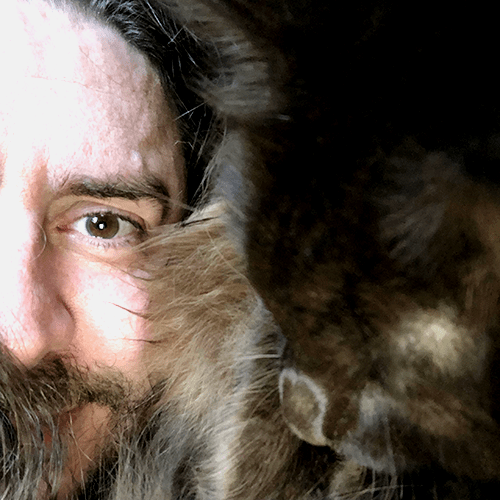
Gods, it’s been a year. The last twelve months have seen plagues and floods, a bunch of books getting published, a couple of ambitions projects started (and, currently, shelved for a restart once my schedule clears up in June). I got married to my beloved last Halloween, got a job with Brisbane Writers Festival, and have spent a good chunk of time trying to manage the ongoing whiplash of trying to figure out the rapidly changing landscape of existing in 2022.
I rather failed to finish my PhD, but it’s getting close. Sooooo goddamned close.
Tomorrow it’ll be three years since my dad passed away. It’s also three years since my sister went through the surgery that rendered her cancer free. I was already weird about birthday celebrations, but it’s been damn confusing since 2019, and I still haven’t quite figured it out.
March 15, 2022
Every Book Is Evergreen
One of the most useful parts of Thompson’s Merchants of Culture is the breakdown of the five modes of capital used in the publishing industry and its adjacent fields. I’ve used these to build a publishing company, guide my writing career, and solve all manner of problems.
But I also see a gap, born of Thompson’s focus. He specifically calls out Financial Capital as a key form of leverage, encapsulating all the cash-on-hand resources as well as the ability to generate credit, financing, and investment. It’s a key part of any artistic organisation, as very little happens without it.
The missing element — based on my experience — is probably time, which doesn’t appear anywhere else on his list. Traditional publishers default to the velocity models, focusing on a short, hot burn with sales — they generate interest, release the bulk of their stock into the world, and expect to sell the most copies in the first month. Failure to do so means using financial resources to warehouse books, using connections and marketing to keep books alive after the rest of the industry has set them aside, and tying up human capital managing the unsold books. That’s only viable for the evergreen titles, which generate so much interest there is constant demand.
Indie publishers can work slow, because the books are always there. The financial cost of storing an ebook or print-on-demand title is negligible, so it doesn’t matter if they sell tomorrow, next week, next month, or in five years.
If you wait long enough—and keep your costs low—every book is profitable.
And you can overcome a lot of financial resources by thinking long term and embracing the time to DIY and build your skills.
When you’re an indie publisher, every book is evergreen. And that means you can take chances, step away from the status quo, and do something surprising with utter confidence that one day—maybe months, maybe years—it will pay off.
You can write the book of your heart and eventually it will find its people. Maybe slowly, a reader gained here and there, but they will come.