Peter M. Ball's Blog, page 11
January 12, 2022
52 Chapbooks: A 2022 Challenge
Back at the tail end of 2020, Dean Wesley Smith laid out a challenge to aspiring indie writers who had a short story back list: publish 52 short stories over 2021.
One of the key details in his write-up is that the focus is publishing rather than writing. As he put it:
A lot of writers I know have collections published which have stories in them that are not yet published stand-alone. Those would be easy to mine for stories for the challenge.
A lot of writers I know have unpublished stories sitting, waiting. Heck, a bunch of writers did the write 52 stories in 52 weeks challenge and haven’t got most of those out yet.
POINT #1… So to get to 52 stories, you might have to write a few a month, but most writers have a bunch to start this challenge.
I’d been thinking about that challenge a lot as I wrote up my notes on making good use of your backlist for the RWA workshop in December, because one of the key ideas I was trying to get people to wrap their heads around is the idea of the “just in case” release.
The logic goes something like this: traditional publishing makes decisions based around economies of scale. Producing a book is an expensive prospect, and physical books need to be shipped around and warehoused, all of which means you want to focus on selling as many books as possible in a short space of time in order to minimize the ongoing cost of maintaining inventory.
This means the books that get published are typically a) likely to appeal to a wide range of people, and b) are books that can find that audience quickly. Short stories–which are a hard sell as stand-alone releases–make more sense bundled into collections, and even then only when the audience has sufficient fanbase to justify the release.
And so the short story collection or anthology became the default form of presenting shorter work.
Indie publishing inverts a lot of those assumptions. It’s relatively cheap to produce a book, and if you’re using tools like ebooks and print-on-demand, there’s no ongoing warehousing costs to cut into your bottom line. Releasing a book that a handful of people might buy in a particular format is a somewhat more reasonable decision—putting releases out just in case they find a reader is a perfectly viable strategy.
Lots of indie folk balk at releasing stand-alone short stories because they don’t see the sales to justify it, but a project like this isn’t about sales. It’s got a lot more to do with discoverability and the narrative that builds up around your career, as well as having a deep toolkit you can leverage to promote your work (the number of authors who have sold me dozens of books after a slow and steady drip feed of free stuff I enjoyed is staggering…)
And, for writers like me, there’s a lot of underutilised work in our backlist. I’ve got three collections of work and a history of doing stories as stand-alone chapbooks, but even I’ve dragged my feet on doing more with them.
Unsurprisingly, some aspects of trad pub have already embraced that on the ebook level when the author profile (Neil Gaiman) or the publisher brand (Tor.com) justify using the ebooks as an added extra or loss leader. They might not expect them to make huge returns immediately, but they’ll always be there just in case a reader takes a chance on them and there are layers of discoverability in play.
Meanwhile, Smith and his (oft-referenced here and in newsletters) wife Kirstyn Katherine Rusch have both built short fiction into their business model from the outset.
Rusch is a prime example of using previously published short story releases as loss leaders. Every week she post a free short story to her site as a free read for the next seven days. If you like it and want a copy, there’s a link to the stand-alone ebook and collections that include it attached, and the post serves as a placeholder and add after the week is done.
Smith used his short fiction to very different effect — when he first went indie, the top books attached to his name were all work-for-hire novels he wrote for Star Trek and other franchises. He used a steady stream of short stories to get his indie work front-and-centre when folks searched his name, as a self-published sale would be worth more than the royalty on his licensed work. That paid off when he started releasing novels, especially the ones built off short story series.
I didn’t do the 52 releases challenge in 2021 because…well, it wasn’t a good fit for the Brain Jar Press brand. It took me an embarrassingly long time to come up with the solution to that, which was basically doing what trad pubs do when they want to release work that doesn’t fit with their remit (start an imprint).

But I’m considering embracing the challenge (reworked as 52 Chapbooks rather than short-story specific releases) in the coming year. My other Eclectic Projects patreon challenge will cover 11 of the 52 releases, while I’ve got about 37 stories in various collections that could be re-released and point readers towards the longer work. There’s a few RPG releases I’ve been kicking around, and older short fiction books that need a print release and more strategic approach. Plus, the joy of a challenge like this is pushing yourself to look at your backlist differently.
And, as I discovered today, when I’m having a bad anxiety day about the idea of going back to work at a job that’s an increasingly poor fit for me, even a small step towards building a larger backlist helps an awful lot.


November 30, 2021
Fear and the Art of Submitting Short Fiction
Back when I taught short story writing, people would often ask the trick for getting past the inevitable flow or rejections. My answer was always simple: it comes down to volume.
When you have a single short story that you’re sending out, every rejection feels like you’ve been thwarted. When you’re sending out a dozen stories, with more projects in the hopper, a rejection usually means oh, thank the gods, that’s where X goes next.
The sting of rejection really boils down to fear—and often the social fear of something secret and hidden about yourself being revealed and found wanting—and that fear magnifies in relation to the perceived importance. If you’ve spent your life hungry to be a writer, immersed in a cultural narrative that says successful writers are either geniuses or hacks, then that first work holds a lot of weight and expectations.
It’s the point where you prove you’ve got what it takes to be the kind of writer you want to be, and those first rejections sting harder because you’ve mustered up your courage to defy society’s messaging that creating art is not for you in order to get the submission out there, and now you’re forced to wonder if everybody was right.
So, your first story or novel feels important, while your fiftieth (if you’re lucky) feels like another day at the office. Even if you still get that flutter of fear that someone will turn and say how dare you call yourself a writer, there’s a backlog of work and effort you can point to and say, I dare because of all that.
The fear never goes away. Writing often feels like a career where you can’t make mistakes, and where letting poor work out into the world is a shortcut to tanking your entire career.
To which I say: Fuck that.
Writing careers are crazy resilient—folks get torn down for plagiarism scandals or creating fictional stories that are fraudulently sold as autobiography, and they still rebuild their writing careers and go on to success. Bad books get released all the time, and people still rehab and rebuild. They do it because they keep writing, keep submitting, and keep searching for writing work.
Fuck fear. Do the work. Write more stories.
Does the fear ever leave you entirely? I’m not sure. I do know that I’m writing this post as a pep-talk to myself, finishing up a handful of new short story projects and deciding what’s next for them. And I can feel the familiar fear again, my subconscious throwing what-if designed to protect me from the sting of rejection: what if this story bombs? What if the editors all say no? What if I’ve lost the knack that got me through five novellas, fifty-odd short stories, three collections, and countless years of blogging, writing courses, teaching, and starting a small press? What if you publish it yourself, and nobody ever buys a copy?
(The answers to those questions: then write a different story; then send them a different story, dumbass; then keep writing until the knack comes back; then the blurb and cover are still leads that will pull people towards older work, and it will go in a collection eventually and make money there. Notice how volume lies at the heart of all those answers?)
My best guess is the fear is still there, waiting to come out. Inducing hesitation when the process that’s always worked best for me is damning the torpedos, sending things out, and getting on with the next story. Being willing to fuck up, because there’s always another story coming and that might be the place where I finally get it right.
Because, at the heart of it all, I know the answer to fear is volume. Making each individual story much less important in the overall narrative of my career. Writing enough that people forget the awful stuff and focus on the stories that really worked.
November 29, 2021
Three Digit Thinking
Yesterday Brain Jar Press released the sixth Writer Chap, Headstrong Girl, from the powerhouse of Australian genre, Kim Wilkins (aka Kimberly Freeman). It brings a close to season one, which was a test case for what seemed like an improbable and weird idea back in the middle of 20202.
But this isn’t a pitch for the new Writer Chap, or even the Season One subscription/bundle that gets you all six at a discount. It’s a post where I talk about my favourite bit of cover design going up on the top left corner of every Writer Chap.
I chose a very specific numbering convention, three digits for every book even though the first two are 00. Faintly ludicrous at these early stages, when a single digit is all we’re really working with, but that 00 is a subtle statement of intent that we’ll get to three digits one day. That I built the writer chaps concept with a long-term strategy in mind, and Brain Jar’s dedication to archiving the best writing about writing in Australian SF isn’t just about the here and now.
One of the early lessons you learn in publishing is this: the first book in your print run is expensive as hell, but every subsequent book gets cheaper. Set-up and development costs are relatively consistent from book to book, but quantity both makes books cheaper to print and divides your initial cost into smaller and smaller chunks of the whole.
But here’s another less: the value of your books also goes up the more books you produce, as the weight of repetition carves out a brand, consolidates expectations around the work, and generates new leads that bring people into the backlist.
Every new Writer Chap thus far has seen a percentage of new readers go back and buy another instalment, and many have jumped straight into the six-book subscription. Every book has a little reminder that there’s more just like it out there, and the series is driven by a mission as much as commercial concerns.
Plus, the slow accumulation of symbolic value makes the series more attractive to future authors (there is one chapbook in season 1 where the author went from an unsure ‘I don’t really have time’ to ‘here’s my manuscript’ in the space of 48 hours, largely because it was a hell of a list of names to be included alongside). Plus, what seems like a weird pitch (“short chapbooks of writerly non-fiction, released like comic books”) becomes a little clearer with concrete examples.
It’s notable that all of this was nearly impossible to pull off twenty years ago, when the realities of the marketplace increased the risk of thinking this long-term and made it nearly impossible to keep a three-digit backlist accessible.
But the challenge when kicking off Brian Jar 2.0 was building a strategy based on the publishing landscape I’m working in now, rather than cleaving to conventional wisdom predicated on the realities of small press and traditional publishing that’s now decades out of date.
Brain Jar may not make it to 120 Writer Chaps, but there’s definitely six books in the series and we’ve already contracted another six to make up Season Two. Not long after this blog posts, I’m off to do cover design, copy edits, and sales pitches for the next few books on the docket.
And, really, once you divorce publishing from the velocity model, the only reason to stop is because you decide its time to stop.
A quick behind-the-scenes note: You may notice there’s a bit of a backlist-driven theme going on in the next couple of weeks. That’s because I’m off to deliver a workshop on making good use of your backlist at the Romance Writers of Australia conference in December, and I’m writing the occasional blog post to clarify my thinking and make sure I’ve got language in place to field questions folks may ask (much the same reason my peak blogging-about-writing period coincided with working for Queensland Writers Centre).
If you’d like to get early access to blog posts, background thoughts, and other details, they’ve been going up over at the Eclectic Projects patreon for a few weeks now.
October 3, 2021
The Habit Of Faking It
Most days, I’m faking it here on the blog. My mission statement is simple—show up every day and put the most interesting insight I have into the world—but at least half the time I show up searching for something to be interested in or something useful to say.
Some days, I’m less interested and more anxious or completely fucking batty or so burnt out it’s crazy. The blog is a mask I wear for a while, a better version of myself that exists for public consumption, discarded the moment I hit post.
Some days, the act of posting lets me step into that better version of myself and stay there for the next eight hours. A bad day turns good by the simple virtue of roleplaying a different version of myself. My own personal magic trick, pushing me to get out of my head and engage with the world, after which I’m ready to do more.
The value of faking it until you make it isn’t in the persona you project, but the habits you build up in order to become a convincing facsimile of success. Writing a blog post becomes a foundational habit upon which I can stack other habits. “Start writing after you finish a blog post” is far easier to do than “kick off the crappy mood and write something.”
Habits build upon habits, and doing the simple stuff first opens the spaces for more complex work.
October 2, 2021
Strategy vs. Tactics in the Land of Newsletters
While the traditional side of the publishing industry is bracing itself for disruptions in the supply chain, the conversation over on the indie publishing side is all about how to prepare for the coming email marketing apocalypse.
For those who don’t pay attention to such things, the low-down goes something like this: Apple has been doubling down on email privacy with updates for a while now, and their most recent update to iO15 adds a feature dubbed “Mail Privacy Protection.” Once activated, this feature disrupts a bunch of tools that email marketing relies on: the ability to track open rates; details about what country the reader is in; triggers that would send you a follow-up email if you showed an interest in a particular thing.
There’s a pretty good round-up over here if you want to get into the technical stuff, but all you really need to know is this: a foundational marketing tool for many indie publishers is about to change in a big way, and a bunch of common tactics are going to get trickier to implement.
The email marketing industry has also encouraged to focus on different metrics of success from this point, because open rates are going to mean nothing. There’s lots of “focus on ‘read more’ links instead of including all your content in the email” type discussions, which means I’m dreading what the next few months of newsletters could end up becoming.
Some people are going to do that well, but I suspect lots of writers (who frequently pick up tactics and apply them divorced from context) are going to make some horrible newsletters as a result.
A brief lesson from the days of RSS and blogging: Setting your feed to show a quick blurb and Read More can be the kiss of death, because your readers have already decided where they’d like to engage with you and communicated that preference. If I put your blog on my RSS reader, it’s because I want it to appear there when I review the new posts. If I sign up for your newsletter, I want the convenience of your content showing up in my inbox, where I can easily archive it (if useful) or discard it (if not).
Read more works best as a signpost for bonus information, not the core content, and I’ve unfollowed countless writers whose blogs were set-up with an eye towards getting readers onto their sites to boost site metrics instead of getting people to read their work.
Getting people to read your stuff is always the core strategy for content marketing, and disrupting that strategic goal simply so you can cleave to a familiar tactic is very much a case of missing the forest for the trees.
October 1, 2021
Status: Saturday, 2 October, 2021
LOCATION: Windsor, Brisbane, Australia.
THE QUICK-AND-DIRTY NEWS
Printers have shipped out first print run of Joanne Anderton’s Inanimates , which should arrive around mid-week. First COVID vaccination jab yesterday, which means I’m aching like hell today. I’m searching for a new day job, which has thrown life into chaos. Our cat had an emergency vet visit, which means…I’m open for freelance cover design gigs, and have a few pre-made covers for sale at a discount.CURRENT INBOX: 65 (Officially in drop everything and fix it phase, because anything over 30 usually means I’m ignoring important stuff that will come back to bite me later)
WORKING ON
Layouts and cover designs for a Corella Press projectWriting so many selection criteriaEdits and cover design for January and February releases from Brain Jar (currently behind because of cat drama)A very secret project I’ll talk more about in November. Writing a zombie-infested D&D fantasy novella which may or may not be terrible.Contracts, as always, and edits, as alwaysTHINKING ABOUT
I’m ratcheted way down to the bottom of Masłow’s hierarchy of needs right now, so there’s not a lot of deep thought going on beyond prioritizing urgent jobs.READING
Luanne G Smith’s The Vine Witch , still, because it hasn’t been a good book for my stressed brain.Stephen Graham Jones The Only Good Indians , a phenomenal book that blends a melange of influences into a gloriously cohesive whole.LISTENING TO
I seem to be starting most mornings with The Hive’s Hate To Say I Told You So, or Pulp’s This Is Hardcore.WATCHING
Reservation Dogs: incredible TV that breaks all sorts of storytelling rules in all sorts of interesting ways. Just…watch it.Doom Patrol: Just when I thought they’d burned me out on DCs superhero television shows, along comes Doom Patrol which has the right amount of bat shit crazy, deeply weird superhero lore, meta-text, and career-resurgence-of-Brendan-Fraser to utterly capture my attention. We’re also revisiting the first season of Jodie Whittaker’s run as the Doctor, with the aim of getting to the seasons we haven’t seen yet.STATUS OF THE ADMIRAL
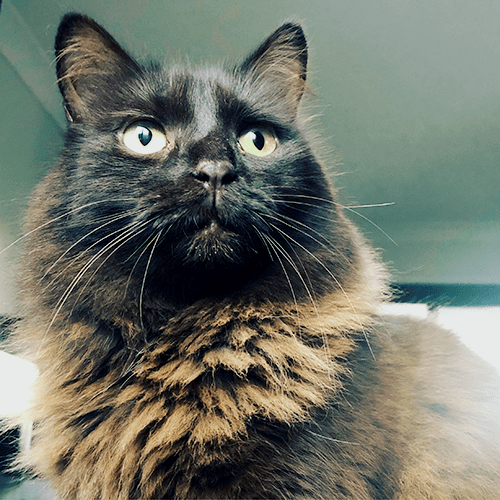 She’s got a chin full of kibble dust and an interest in the birds outside.
September 30, 2021
On Velocity Models and Leading With Your Backlist
Back when I pulled together the Brain Jar Press writer guidelines, I specifically called out that we use a backlist driven model of publishing. It’s one of those phrases that generates a lot of questions from new authors, and there’s been a project where the author in question wasn’t interested in pursuing publication with us once I laid things out (Side note: this is a good thing: I lay things out because publishing with a small press whose practices are a small fit for your expectations is likely to be frustrating for everyone).
What’s really interesting at the moment is the way backlist versus front list models are coming into focus because of the current problems with publishing supply chains, particularly in the US. It often means people have to articulate what a front-list model looks like, and why it runs into problems.
My favourite description comes via Kristine Kathryn Rusch’s analysis of the current supply chain problems in publishing:
“Traditional publishing, as I have written many times, is built on the velocity model. Books must sell quickly out of the gate, and then taper off later.”
There’s a lot of complexity packed into that word velocity, from the legacy models trad pub clings to through to the realities of storing, shipping, and selling books in physical spaces with limited capacity. And I think it’s worth noting that velocity models do make sense in a world where that’s the only way to sell books, and it served big publishers well for several years.
But it’s also a very fragile business model, easily broken with just a few changes to the ecosystem. Tansy Rayner Roberts recently wrote her own response to Rusch’s article on twitter, noting the ways disruptions to the velocity models shaped Tansy’s career and the way she thought about the success and failure of certain books she’d written.
When Brain Jar Press 2.0 launched, I used the phrase “Backlist Focused” intentionally to describe our approach to publishing. I’m incredibly disinterested in velocity in publishing, and more interested in producing books that people find their way to over time. My perspective of publishing is shaped by doing RPG ebooks in 2005, then watching them continue to sell for sixteen years despite the industry moving on, my leaving the industry behind in 2007, and the books receiving very little advertising or updating after that point.
Ostensibly, the ability to be backlist focus is the strength of digital publishing, but it’s astonishing how often the conversations and strategies among people who use it focus on replicating the velocity model. They devote tremendous amounts of energy and advertising budget to launching big and ‘tickling the algorithm’ to get Amazon to sell one’s work, particularly among the parts of the indie publishing industry that have doubled down on the Kindle Unlimited model.
A good, backlist driven publishing model is more characterised by patience than anything else. It’s all about building connections between works, creating a web of marketing that allows you to move readers from one book they’ve enjoyed to another on your list, and regularly casting out leads for the kinds of readers you want to attract. It’s about being willing to sell twenty books at launch, confident that each of those readers will gradually talk about that book and find you twenty more, with slow exponential growth ticking along over a period of years.
Strong launches aren’t the only legacy of velocity publishing that people replicate without question, though. Velocity publishing concerns and limitations drive the conventions of a good back cover synopsis, and rarely get questioned. But those conventions are focused on getting a potential reader exciting about this particular book, because the reader’s primary relationship was with the product in their hand rather than the author.
That convention perfect sense in a world where backlist is hard to trace, and the book has two or three weeks to sell copies, but less sense in a world where books exist as part of an ongoing relationship between writer and reader. Especially given that relationship expands beyond the books, spreading across social media, convention appearances, and other forms of engagement.
52 Blog Posts That Never Came Into Existence
I recently opened the “unfinished drafts” section of my blog and discovered that I had 52 unfinished posts in various states of completion. Some of these resulted from dumping a quick idea using the WordPress app on my phone, little more than three of four words to be fleshed out later. Some are just a title, waiting for the post to arrive.
Some are near-complete or actually complete blog posts I never got around to posting, usually because they were a) incredibly negative, b) incredibly risky, or c) written during a week with a serious anxiety flare up and being ‘out in public’ with ideas wasn’t palatable to me.
I’ve logged all 52 titles here, from the evocative to the mundane, to give you a glimpse as a blog that might-have-been once upon a time. Reading them aloud makes for an oddly evocative prose poem, especially once you get to the last two entries.
UntitledShort Fiction Friday: The Seventeen Executions of Signore Don VashtaBook Recs: Profit FirstUntitledUntitledUntitledLinksUntitledThesis MonthThe Empathy Gap and Writers In NovemberUntitledThe Holy Trinity of Process Books for WritersUntitledThe SwitchHolding PatternsUntitled2018 Reading: My Favourite ReadsThe Uncool InfluencesUntitledEvery Book Has Three Stories Attached (or, How To Talk About Your Writing Without Boring People)UntitledI Just Watched Kenny Omega Save Ibushi, and It’s Making Me Think About StorytellingUntitledUntitledUntitledUntitledUntitledUntitledUntitledSMAX #175: No-One Can Stop A Gang Who Can FlyRUOK DayEnid Blyton PostWhat Could You Get Written By The End of 2018?When Is A Series Not A Series?UntitledHell Track Project Diary: Day Six (ish)Some Thoughts On Masters Of The UniverseHow To Use The Philosophy Of Circuit Training To Level Up Your WritingAsk Not What Your Readers Can Do For YouUntitledUntitledUntitledThe World Doesn’t Want You To WriteThings You Should Be Going To In June/July If You’re In Brisbane And Into Spec FicThe World Doesn’t Want You To ReadUntitledUntitledUntitledPutting Together A Monthly PlanUntitledYour Book Is Dead. Move On.I Am Surprised When Someone Reads My WorkThree unifinished drafts are from 2016, 13 from 2917, 13 from 2018, 15 from 2019, 7 from 2020, and one from 2021. My plan for the rest of week is to go through and rescue what needs rescuing, kill what needs killing, and clear the space for future work.
September 28, 2021
Pre-Made Book Covers, Going Cheap
I opened up for Freelance Cover Design Work last week because our cat had an unexpected vet visit and it wiped out my emergencies fund. However, with my small business grant running out towards the end of October, I’m also preparing to open up a few more side-hustles to keep things afloat while I’m looking for a new day-job and keeping Brain Jar Press running.
Which brings us to the secondary side-hustle on the design front: pre-made book covers folks can pick up slightly cheaper than getting me to design stuff from scratch.
The proper launch for this will likely come in October, when I’ve had time to set up a proper web store to streamline the buying process and built up a decent catalogue (the aim is about 5-to-6 covers for each genre I want to cover at time of launch). Meanwhile, here’s the preview gallery of what’s coming:
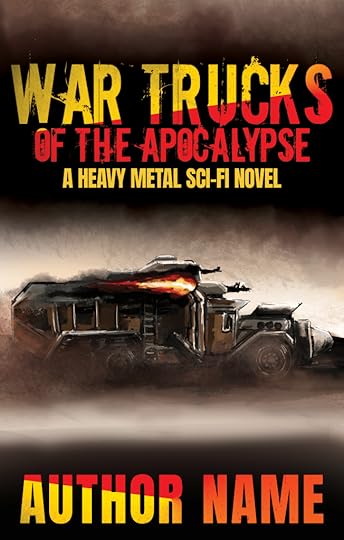
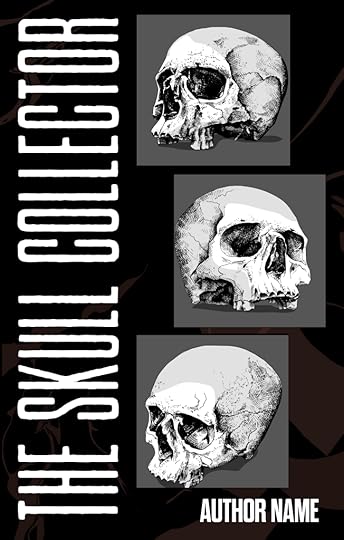
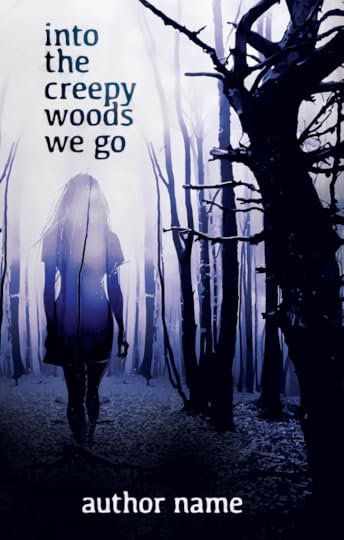
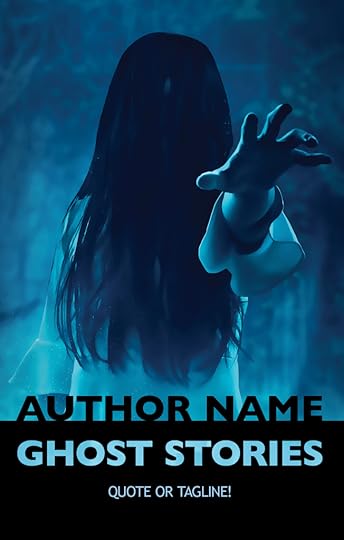

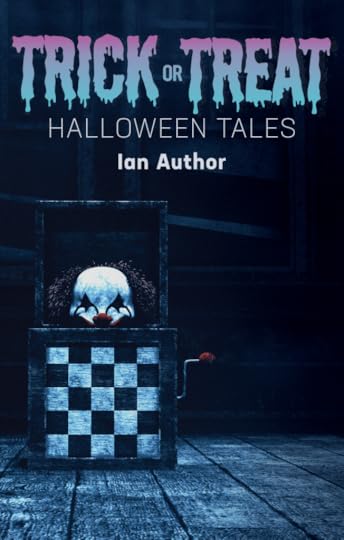
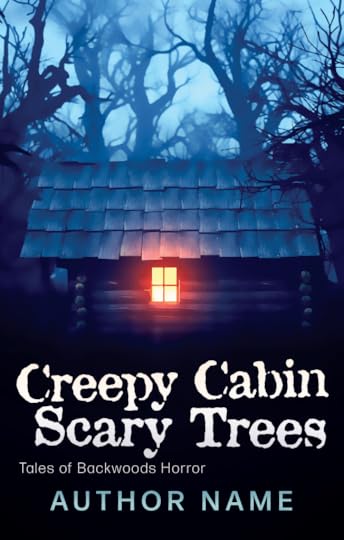
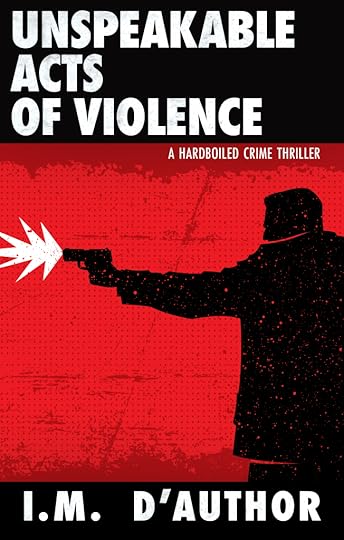
Like I said, the full store is coming in October. However, given the vet visit and impending shift to freelancing, I’m totally open to selling these ahead of the store going live. If you want one, drop me an email with the title you want and formats needed (ebook only/ ebook and print) and I’ll invoice you once we update the design with your title, name, and details. The process will usually take 48 hours or so. Prices are $60 for an ebook only file, and $210 if you want it converted for a print book through Ingram Spark or KDP print.
Like a cover but don’t have a book ready to go with it? Buy it now and let me know you’re keeping it for a future book in the email — I’ll pull it from sale and keep the cover on file until you’re ready for it.
An Intriguing (and Discouraging) Take On Substack’s Business Model
My favourite headline doing the rounds right now:
Is Salman Rushdie’s decision to publish on Substack the death of the novel?
It seems to originate from Julian Novitz’s article over on The Conversation, taking a quick dive into Rushdie’s decision to publish his new novella through Substack on a Pro deal (where Substack pays creators with a certain profile to use the platform and build up the service’s profile, rather than paying based on how many paid subscribers a writer brings to the platform).
The answer to the question, of course, is “No,” but the original article is worth reading because Novitz is primarily interested in using Rushdie’s decision to publish there as a lens through which to examine the current state of the Substack platform and business model.
The interesting thing about the question posed in the headline is how familiar it is. People have been looking towards digital reading platforms and considering it for about two decades now, and the answer is always no. Books are a remarkably resilient piece of technology, and with a few rare exceptions, the folks on the digital end keep reinventing the same wheels in slightly new variations.
Personal Sidenote: As someone who spent a good chunk if time vetting ‘new and innovative publishing platforms’ around 2010 to 2014, it’s astonishing how many of these innovations start with “let’s resurrect the serial format”. Back when I reviewed new concepts pitched at the Australian Writers Marketplace, every second ‘new innovation’ pitch was a distribution platform for serials (The others were usually ways of gussying up the vanity publishing business model). All of them usually started from the perspective that they would get writers involved, then the writers would bring the audience.
It’s not the most effective model. I mean, there’s a reason ebooks didn’t take off as an idea until Amazon used the kindle as a loss leader, then made ebooks attractive to writers and publishers who wanted access to a growing new audience. Substack, for all my concerns about the platform, seems to be smart enough to think about audience first, using paid authors with strong readerships as their loss leader. /End Sidenote
So whether Rushdie is killing the novel isn’t an interesting question, but Novitz’s insights into the platform are worth reading. Particularly this point, made towards the end, which presents an oddly grim picture of the platform from a writing point of view.
Recently Jude Doyle, a trans critic and novelist, has abandoned the platform. They note the irony of how profits generated by the often marginalised or subcultural writers who built paid subscriber bases in the early days of Substack are now being used to fund the much more lucrative deals offered to high-profile right-wing writers, who have in some cases exploited Substack’s weak moderation policy to spread anti-trans rhetoric and encourage harassment.
It could be argued Substack Pro is evolving into an inversion of the traditional (if somewhat idealised) publishing model, where a small number of profitable authors would subsidise the emergence of new writers. Instead, on Substack, profits generated from the work of large numbers of side-hustling writers are used to draw more established voices to the platform.
And, look, there’s a lot of things that I dislike about traditional publishing business models and processes, but the inversion of the “our whale authors help us take a chance on new authors” approach isn’t one of them. For all that Substack Pro feels like an incredibly smart marketing ploy on Substack’s end, that’s… well… not a dynamic I’d want to be codifying if I’ve got an eye towards long-term growth.
Substack intrigued me for a while—less for the monetization of newsletters, and more because they’d created a newsletter system that introduces social spaces and comments, which felt an awful lot like blogging. Alas, every time I dug into the platform, I found something that gave me pause, which eventually sent me to Patreon (a more mature platform that’s already through its first round of venture-funding fueled shitfuckery) and ultimately reinvigorating my blog.
I can’t say I’m regretting that decision.