Peter M. Ball's Blog, page 17
April 12, 2020
Research Links 20200413
Years ago, when I first discovered Tumblr, I’d intended to use it as a public dumping ground for research links and images I might want to use later.
Resurrecting the idea here, since virtually nobody comes to blogs anymore, but the folks that do probably share my obsession with seeing how ideas manifest some five to ten years after a writer first discovers them.
NEW BLUETOOTH SPEAKER WITH A WAR ROBOT AESTHETIC
Gravstar unleash a new bluetooth speaker design which looks like a battle-scarred war robot from an episode of Doctor Who you haven’t got around to watching yet. Watch the accompanying video for a full sense of their commitment to the motif, and ponder what these choies say about human ideas of authenticity and aesthetics.
SPORTS STADIUMS ARE REPLACING CROWDS WITH ROBOT MANNEQUINS DRESSED AS FANS
As sports stadiums prepare for the resumption of play amid lockdowns, some of them are replacing the crowd experience with robotic stand-ins. Some of them are being given fan’s faces in Belarus. Freaking me out, because I’ve been writing scenes like this for an upcoming project about MMA in space.
ALL THE WAYS FUNGI ARE SAVING THE PLANET
Every SF writer who reads this is probably making Mythos jokes right now. Flagged because I need to steal the line “Fungi are basically the digestive track of the plant” for something.
AI TRAINING HELPS A BUGGY NEGOTIATE DIFFICULT TERRAIN
Think about the amount of difficulty into getting an SF-concept like self-driving cars to work, and please shut the fuck up about not having a jetpack already. The future is trickier than anyone thought, but also more amazing.
CONCRETE CUBOID HOUSING WITH PROTRUDING BALCONIES
One lesson from searching for a house to buy: concrete doesn’t age well unless it’s tended for. Much as I adore the design of this, it feels like the “before” picture of a very grungy dystopia.
THE ARTS & SCIENCE BUILDING AT THE OSAKA UNIVERSITY OF THE ARTS
For all your “I want to go work in a silver-age-of-sci-fi spaceport” needs. Flagging this because it seems likely I’ll want to revisit it for a project I’ve got planned for the second half of the year.
112 “SMART CHIMNEYS” REGULATING LIGHT, HEAT, & AIR IN AN OFFICE BUILDING
A 53,000 square foot office building in Italy that has minimal technical needs due to the placement of chimneys that handle the lighting, heat, and airflow issues usually relegated to electrical systems. Incredibly beautiful design. Go check it out.
Then ponder why this doesn’t feel anywhere near as sexy as a bluetooth speaker designed like a beat-up war robot.


April 11, 2020
Tell Me Of Your Favourite Blog Reads
It’s been about five years since I last did a serious scouring of my RSS feeds, which means a lot of the regular incoming information is largely focused on topics that were of interest to me from 2010 to 2015. Things have changed since then, and the signal to noise ratio is becoming a little more unacceptable, so it’s time to start culling feeds and adding new stuff.
Kathleen Jennings dropped by earlier this week and noted that she’s in the process of setting up a new RSS reader, after years of working without one, so I figured I’d create a space where folks who may be doing the same can talk up the feeds that are meaningful to them.
One of mine remains Inhabitat, a blog about using design to create a better world, which is a glorious mine of story ideas and setting details.
A newer site I’m adding in is SF writer Trent Jamieson’s new online space, where a recent redesign has seen a short burst of online blogging in which Trent writes about recent obsessions and process in his considered and meditative style.
And I’m still on the search for a good architecture blog, after a lot of the places I follow went dormant over the last few years. Which sucks, because I’ve missed glorious things like Oki Sato’s glorious staircase-driven house design .
April 10, 2020
Playing it Smart and Calm
One question I keep coming back to right now is “what does it mean to approach the pandemic in a calm way, as an artist? How do we play it smart?”
Because calm is going to be a valuable commodity for the next few months, as writers and artists of every stripe pivot and adapt. Everyone seemed to launch sales at the start of the pandemic, a knee jerk response to try and stimulate interest in the face of everyone getting hit with financial anxiety at the same time.
But sales are a tactic, not a strategy, and they’ll only last so long. Especially when the sales are pitched as “the ass has just dropped out of our industry, so support us if you want this all to continue,” which is largely speaking to a) your existing fans who, b) want you to continue, and c) are likely to be motivated by a discounted price.
The really interesting responses to the pandemic will start emerging in the next few weeks, as folks lean into what gets them interested in writing to start with and how it can be hacked to fit the state of the world.
Interesting case study, on this front: Alan Baxter leaning into Twitter as a storytelling medium to connect with his readership. You can read the entire thing over on his blog, but it loses a little something with the transition. To get the full effect, go read the story in the twitter thread that starts with this post:
You guys know I'm also a martial arts instructor, huh. I've been running my classes online during this pandemic. But something weird has happened.
— Alan Baxter (@AlanBaxter) April 8, 2020
This thread is a thing of beauty, but it’s particularly impressive when you consider Al’s day job as a martial arts instructor has been decimated by pandemic shutdowns.
Far better than any sale announcement, it focuses back on core strategies for storytelling, delivering a kick-ass tale that entertains the readers, plays to the strengths of his medium, and serves as an amuse-bouche that gives a taste of his style and mindset before suggesting that there’s more out there if you’d like to track it down.
April 9, 2020
Gods, I miss drinking right now.
A few years back I went through a bad time, psychologically speaking, and my doctor quietly pointed out my tendencies towards depression and anxiety, then suggested a series of treatments that might get me back on an even keel.
We cycled through the usual suite of pharmaceutical treatments, discovered I had an adverse reaction to most SSRI inhibitors, and eventually settled on a serotonin drug that’s a) hideously expensive on my monthly salary, and b) will make my liver pop like a balloon if I get funky and mix it with booze.
All in all, it was a good motivation to do the hard yards in counselling to get a handle on things and get off the antidepressants. Then 2019 hit, and my toolkit for coping wasn’t quite up to the task, and when my partner quietly suggested that my mental healthy might be suffering I went back to the GP and signed up for a fresh prescription.
Now it’s 2020. The personal shitstorm of 2019 has given way to a global shitstorm of epic proportions.
And the antidepressants help. A whole fucking lot. As evidenced by the days where I take them and get shit done, versus the few days where I forgot and ended up having panic attacks over email.
Basically, compared to the relief that mainlining scotch might offer right now, there is no real measurable advantage to the booze.
But years of cultural indoctrination trains the brain to think that drinking is the right response to a crisis, and the idiotic monkey brain keeps pondering whether it would all be a little easier if I could embrace the hardboiled detective aesthetic. Pour a drink and stand at a rain-slicked window, peering out at a world gone made through the vertical blinds.
Some days, it’s hard to escape the feeling we are an incredibly clever fucking species who have trained ourselves for idiocy for the sake of aesthetics.
April 8, 2020
James Stewart vs. Kubrik
Via the often excellent Grant Watson on Facebook:
Honestly, this is the most interested I’ve ever been in Kubrick’s work.
April 7, 2020
Permeable Membrane Blogging
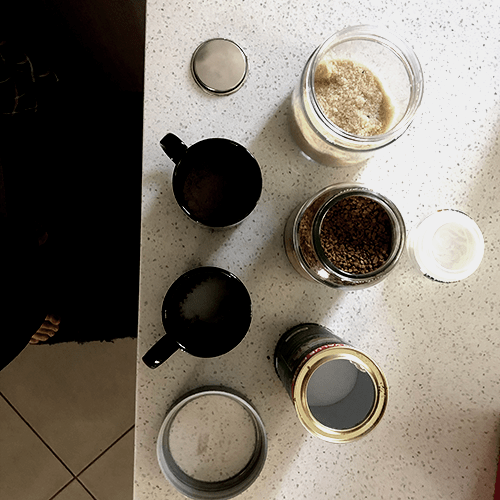
Back in the old days, when dinosaurs roamed the earth and WiFi hadn’t yet migrated to phones, blogging used to feel like the first step of an interactive process. You’d post something, and other folks would respond on their blogs, setting up a slow moving conversation as other folks joined in on their blogs. Interactivity was part of the appeal, and even in the absence of interactive responses, the potential of interactivity remained.
The membrane between you and the readership was thin, and highly permeable.
Over the years permeability feels like it’s fallen away. Conversations sped up as responses moved to tools like Facebook and Twitter, or became siloed to the comments section because folks weren’t maintaining their own feed of information. The nature of blogs transformed as folks figured out how to take this weird conversation platform and monetise it as a content publisher, setting off a boom of increasingly focused blogs devoted to tightly constrained topics, evergreen content generation, and content marketing for further services or products.
There’s less of a temptation to use blogs as a weblog under that model, because the membrane grows more resilient. Then the tools that enable the original permeability–RSS feeds, interlinked communities–fall by the wayside. Facebook eliminates the ability to stream your feed to a personal page, thus ensuring the only way to get a blog on the platform is professional Eventually, you’re no longer speaking to an audience who shows up on the regular, but folks who follow a link from a tweet, or a google search, or a Facebook rec.
The rewards for using a blog for things that aren’t highly concentrated content marketing seem to grow increasingly distant. Increasingly, you stop showing up in your party clothes and start deploying a more together, professional persona.
That notion of the permeable membrane as a default seems to have shifted to other platforms. Facebook had it, but lost it over the course of a decade as they figured out how to monetize the platform and turn everyone into a product. Twitter still has it, but also exposes the potential abuses of permeability, and seems perfectly content to let the fuckheads rule because (hat tip to Mike Monteiro) they make money by getting you to fight with nazis and despair about right wing fuckmonkey incompetents running countries into the ground right now.
At the same time, the platforms that still retain some level of permeability are the ones holding folks attention. People still cite Instagram as their preferred social media, because it still feels like a friendly place instead of a professional one. The resurgence of the email newsletter might be driven by folks engaging in email marketing, but it’s quickly been subverted by various creatives who simply enjoy talking to people about stuff on a regular basis.
The permeable membrane is valuable to us because it allows us to feel like we’re human beings. I’m kinda intrigued to see what happens as the Great Pause generated by the current pandemic sees us searching for more sources of connection online, and highlights the flaws of those places where the market has seeped in.
Personally, I find myself falling back on the blog. Resetting it as the default place where I show up and think, share, and otherwise engage with the folks who find their way here.
You may be fewer than you once were, but that just means we’re in the wee hours of the party when all the beer is drunk and you’re shooting the shit until sunrise.
For everyone else, I recommend checking out Wired’s article about why the RSS reader should be making a comeback. Right now, more than any other time, there’s something to be said for a curated stream of content as a break from the social media firehose.
April 6, 2020
7 April 2020
Right, then. Tuesday. It is Tuesday, yes? The weirdness is setting in. I’m sitting in my flat pondering ways to break every rule I know about publishing, and marvelling at the fact I’m coaxing folks to come along for the ride. My inbox is filled with freshly signed contracts, my messenger services filled with chats about future projects.
And for all my bluster about breaking rules, I’m going back to resources from 2005 when the publishing paradigms of RPG gaming splintered thanks to ebooks and thinking about the ways to transplant them into 2020.
This has largely involved picking up an idea that’s been kicking around my computer since 2008. The nice part about everything going mental is that there’s really no reason going full tilt at ideas that seem interesting, rather than second-guessing whether they’ll pay off.
Brain Jar Press is on the verge of getting its own online identity. The webpage is getting some attention. We’ve launched a new Facebook Page, seperate from my own feeds. It’s all a big seat-of-the-pants, making the best use of The Great Pause we can, but it’ll pick up speed as our household figures out the new work dynamic with both of us home.
April 5, 2020
Ugly Cover, Great Book: go read The Captured Ghosts Interview with Warren Ellis
The great irony of Warren Ellis: The Captured Ghosts Interviews is this: it’s an interviewer with a comics writer who thinks very carefully about the design and packaging of the written product, and yet it’s released with an incredibly ugly , half-arsed cover that’s seemingly designed to discourage purchasing.
![Warren Ellis: The Captured Ghosts Interviews by [Patrick Meaney, Kevin Thurman, Warren Ellis, Julian Darius]](https://i.gr-assets.com/images/S/compressed.photo.goodreads.com/hostedimages/1586230968i/29244558.jpg)
Which is a pity, because the contents of the book offer some fascinating insights into Ellis’ mindset, work processes, and usage of the internet, circa 2010/2011.
We live in an age where access to interviews with creators are at an all-time peak right now, what with the plethora of websites, podcasts, and livestreams devoted to archiving creative insights. What marks The Captured Ghosts Interviews as something special is it’s origins: these are the full transcripts of the interviews Meaney and Thurman did while making a documentary about Ellis and his work, which means you’re getting all the messy asides and digressions rather than the best sound-bytes.
It also means they have time, in a way most interviews don’t. There are whole sections devoted to Ellis’ origins as a writer, and formative experiences that helped shape his mindset. Stuff that would be glossed over or summarised is explored in detail.
Which leads to some choice insights into his feelings about design in comics:
The package is very, very important. It’s a piece of visual art, so it should be attractive. It should be something you want to own and something that gives you pleasure when you look at it. And for all the great skill that was deployed in comics art – commercial comics art , certainly , for the first time in the ’ 70s and ’ 80s – the packages themselves were hideous fucking things.
and the tendency for older writers to engage in nostalgia for their earlier days:
I do not pine for not being able to afford food. I do not pine for being terrified every time a bill came through the door. I do not pine for sleeping rough under the pier. I do not miss those days at all. Yes, there is a sense of purism, but people associate it with that because they were younger, and their minds moved faster, and they had more ideas than they had written down yet. So when you think back to those days, you think, “ God, I came up with a lot of stuff back then! God, I had so much energy!” You were young and you hadn’t written it all down yet. That’s all it is.
And internet privacy:
The nature of privacy – privacy hasn’t disappeared. It isn’t being eroded. It’s just changing What’s happening is, given the plethora of communications media available to us now, we are simply choosing to be less private, because we’re finding that more interesting. We can shut off all these devices at any time we like. We can cancel our Facebook accounts. We can turn off Twitter. We can even get rid of our phones , if we feel like it. We simply choose not to. Because giving up a certain level of privacy does somehow make us all feel more connected to everyone else, in a sort of ambient social space where we can choose to notice what our friends, colleagues, and fellow travelers are doing. We can turn it off, or we can allow great waves of it to pass us by and then start paying attention to it again. But there is now this ambient layer of sociality in society that we all live in that – if we choose to –makes us feel more connected to the people around us or even the people who are furthest away from us.
There are, of course, an incredible amount of insights into comics and comics writing as well, but its the digressions and interrogations into his obsessions that routinely yield the best bits of the book. Especially when he starts projecting into the next ten years of his life, where he foresaw an increasing move into prose (and, these days, seems to have landed in the lands of television with projects like Castlevania on Netflix).
If you’re a fan of Warren Ellis, or just a fan of seeing smart writers interrogate their practice, look past the ugly-as-fuck cover and pick up a copy of this book.
March 29, 2020
Emotions Need Motion
Interesting post about the omnipresence of grief here in the age of contagion, over at the Harvard Business Review.
Emotions need motion. It’s important we acknowledge what we go through. One unfortunate byproduct of the self-help movement is we’re the first generation to have feelings about our feelings. We tell ourselves things like, I feel sad, but I shouldn’t feel that; other people have it worse. We can — we should — stop at the first feeling. I feel sad. Let me go for five minutes to feel sad. Your work is to feel your sadness and fear and anger whether or not someone else is feeling something. Fighting it doesn’t help because your body is producing the feeling. If we allow the feelings to happen, they’ll happen in an orderly way, and it empowers us. Then we’re not victims.
That Discomfort You’re Feeling Is Grief, Harvard Business Review
It’s a useful thing to consider as I’m figuring out the impacts of the pandemic. Life has changed, and keeps on changing. Plans are in a state of flux. For the first time in four years, my future feels dangerously uncertain and allows for very little space in which to take risks on the financial or the creative front.
It’s a familiar mindset from mu freelancing days–and gods, it feels like the whole word is coming to grips with the freelancers insecurity around work and finances–but I thought those days were behind me. I celebrated those days being behind me for a stretch, and not needing to make hard choices.
The Pandemic means giving up all sorts of dreams an ideas about what life was going t be like for the next few years, and I grieve them lest I give in to the anger and despair that wait in the wings.
March 17, 2020
Writing in the Age of Contagion
I’d like to talk a little about writing (and, really, just surviving) in the age of contagion we find ourselves in.
This is a tricky subject because I loathe the impetus that capitalism puts on being productive at all costs, especially when you’re sick or stressed out. It’s the same impetus that makes COVID-19 so tricksy, because we’ve all spent far too long soldiering on at work while ill, and that’s seeped into the western mindset.
On the flip side, writing’s important to me. It’s a big part of my self-identity and it’s the thing that keeps me calm. And, as I wrote in my newsletter today, a goodly part of the challenge in writing through the age of contagion isn’t working while sick, it’s working while the world is trying to scare the pants off you.
The tactics that make it possible for me to write through the age of contagion largely coincides with the tactics I use to manage general anxiety, so it’s useful to give myself a pep talk as the world goes askew.
So strap yourselves in, because this is going to be a long one.
FIRST, LIKE AN INTERNET RECIPE BLOG, LET ME TELL YOU SOME BACKSTORY BEFORE WE GET TO THE MEAT OF THIS POST
We’re going through a stressful period in our society, rife with anxiety and uncertainty, and the ability to recognize and acknowledge fear is actually good for our mental health (For more on dealing with mental health challenges during the corona epidemic, I recommend this article over on the Conversation).
Right now, there’s definitely an undercurrent of fear in my day. There’s also a massive undercurrent of resentment towards that fear, because March 18 was always going to be a hard day. If we flash back to 2019, I spent March 18 in a hospital watching my father die of pneumonia after two incredibly rough weeks of watching him deteriorate. It’s also the day my sister was preparing for surgery at the next hospital over, going in to get cancerous tissue removed from her breast.
Old family friends would stop by to wish me a happy birthday before they went to say goodbye to dad. It felt a bit absurd, with everything going on, but social protocols are weird like that.
Twenty-four hours later dad would be dead. My sister would be out of surgery without complications. I’d go home feeling hollowed out and lost, but relatively confident I’d just lived through the worst birthday I was going to have in my lifetime.
Then 2020 went all “hold my beer,” and delivered a global pandemic. One that’s decimated the industries I normally work in, right about the point where I’m planning an exit strategy when my PhD scholarship runs out in July. At the same time, major upheavals like this tend to see a decline the book market, which is not the greatest news at the time when Brain Jar Press was just hist the point where it broke even every month.
All in all, my propensity towards anxiety is running a script in the back of my head that’s constantly panicked at the idea that I’ll be unemployed for a significant stretch and my mortgage will become untenable. Which is a little extra dollop of stress on top of the general uncertainty of Covid-19, my current day-job gig tutoring writing going through a rapid pivot to online classes, and general uncertainty about the health of my loved ones, the state of the economy, and whether we’ll run out of toilet paper.
At times like this, I fall back on the advice of my psychologist when I first fronted up with anxiety issues.
You’ve got no control over what you feel, but you get to decide how you respond to the feelings.
If you’re feeling stressed or anxious about the virus, it’s going to make it harder to ignore distractions and write/work. If you’re caught up in an evolving cycle of stress, it can be damn near impossible.
It’s only a few weeks since I last linked to Winifred Gallagher’s Rapt: Attention and the Focused Life in my newsletter, but it’s such a useful book for times like this and I’m going to link it again. The short history of Gallagher’s book starts when she was diagnosed with cancer, and she realised the disease would try to monopolize her attention and thereby take control of her life. Thus started a five-year research jaunt into focus and attention and how it shapes our existence, and Gallagher does a great job of going from the small scale to the large.
For the moment, though, let’s focus on the difference Gallagher draws between “Bottom Up” and “Top Down” attention.
ATTENTION IS EITHER ACTIVE OR PASSIVE
Our experience of the world is invariably guided by what we focus on, a statement that can be applied metaphorically, but is also surprisingly literal when you look out biology. We’re incredibly good at screening out sensory input in order to focus on particular parts of our surroundings, and our experience of the world is incredibly easy to reshape because of it—put a sign up warning people to look out for snakes and they’ll notice things on their walk down the path that would have slipped by unnoticed if the sign wasn’t there.
Tell them to keep an eye out for koalas nesting in the trees above, and their experience will be different again. You’re no doubt experiencing something similar this week, as the world is inundated with information about Covid-19 and responses around the globe.
But there are actually two ways our attention is captured. The first is a passive, bottom-up approach where our attention drifts to whatever seems most compelling and important in our immediate environment. It’s the part of you that’s hard-wired to focus on possible danger or reward. It’s constantly scanning your environment, looking for stimulation, and trying to keep you safe.
And it is, like emotions, an enormously reactive form of attention and largely driven by novelty (Side Note: Social media and computer games capitalise on this by feeding you a constant stream of new data to capture your attention, which is why they’re so good at sucking away available time).
But the other half of our attention is top down—an active, intentional approach that asks “what do I want to be focusing on” instead of following the shiny newness. It’s a fairly human trait, and one that’s powerful enough to block out all manner of distractions, which is great when you’re trying to get writing done. On the downside, because it’s active and voluntary, it tends to take up more resources and demand periods of rest.
Here’s why writing is tricky in times of big stress.
NEGATIVE EMOTIONS DRIVE FOCUS
I’m just going to quote directly from Gallagher here:
Just as you’re primed to attend to swarming insects and snarling dogs, you’re strongly wired to focus on the negative ideas and emotions that signal threats of a different kind. Indeed, whenever it’s not otherwise occupied, your mind is apt to start scanning for what could be amiss, allowing unpleasant thoughts along the lines of “I feel fat” or “Maybe it’s malignant” to grab your attention.
Or, as I’m experiencing today, “oh shit, we’re all going to die” and “oh crap, I will end up broke and living in a ditch.”
This is bottom-up focus at its core, but it is meant to serve a purpose—the emotional reaction is like a small alarm signalling that there’s a possible danger or problem, and you should probably try and resolve it.
The challenge, in times of uncertainty, lies in the fact that no easy solutions present themselves. So you try to resolve the problem by fretting at it and focusing at it, letting your attention get drawn to each new scrap of negative information, until you find yourself in a self-perpetuating loop of new negative stimuli and increasing negative emotions, looking for extreme solutions
Pretty soon, you’re panic buying a year’s supply of toilet paper and trying to figure out where to store it. Or hitting up twitter to question the actions of corporations and officials, demanding they do better, then sifting through varying layers of outrage and misinformation (Another side-note, from Mike Monterio: Twitter’s business model lies in monetizing your attention, so Twitter makes money by getting you to fight with Nazis).
This is one of the reasons why the advice for managing stress around the virus largely starts with some paraphrase of “mute the fuck out of Covid-related keywords on social media, and give yourself a damn break from the stress, goddamnit.” Winnowing your focus down to one or two trusted sources of information, and creating spaces to process the negative emotions and figure out what problem they’re really trying to signal.
CREATING SPACE TO GET TOP-DOWN—PHASE ONE
Mindfulness is a buzzword du jour in health and lifestyle these days, but that’s largely because we’re only just starting to understand the science behind it. Figuring out the benefits of being in the present is hard when you’re only tools for studying involves reflecting on experiences, so it’s only with the advent of pagers, mobile phones, and other devices that psychologists could really dig in and see the effects.
Ergo, there’s now a rash of research on mindfulness hitting a critical mass, and the results are proving to be interesting.
The theory is simple: set a timer for three minutes. Close your eyes and take deep breathes, paying attention to your senses. Don’t focus on clearing your mind—like feelings, thoughts are going to show up regardless of your intention. Instead, let anything that crops up drift away like a leaf on a river. It happened. It’s gone. No big.
Focus on your breathing again.
Or, download an app like Calm and use the guided audio.
CREATING SPACE TO GET TOP-DOWN—PHASE TWO
One of the things that getting anxiety and depression teaches you is just how faulty and short-term some of the default solutions your brain offers up really are when faced with negative emotions. Which is why, when I first started counselling for anxiety, I wrote these words in my notebook: YOUR BRAIN DOES NOT KNOW SHIT.
It was a little reminder that the first response to any stimuli is likely to be ground-up and impulsive, and in the face of problems more complex than “hey look, dangerous animal,” the instinctive response isn’t usually the best option.
So the trick becomes creating space to let the top-down focus kick in, and part of the way you do that is recognizing that responding is usually a three step process.
Recognize the stimuli that needs a responseAssess and decide on a course of actionImplement the course of action
When you’re working from the ground up, you’re packing all three steps into the space of a few seconds. This is an incredibly valuable thing when dealing with simple threats, but less useful for complex and long-term ones.
Which means you want to start slowing your instinctive brain down and giving your top-down brain the space it needs to start getting involved. It’s the reason the vast majority of time and project management systems will start with some variant of identifying major tasks and planning/structuring your day before you actually start doing anything.
So how do we do this? For me, this means maintaining two important lists.
CREATING SPACE TO GET TOP-DOWN–LISTS FTW!
The first is the list of things I need to do on the writing and PhD front, along with associated subtasks that need my attention.
When making this list I do my best to capture everything I can in a single brainstorm–all the tasks associated with it getting it finished (if it’s a book going into publication), or a means of tracking progress on the draft (if it’s in progress), or an acknowledgement that it’s not a project that gets my attention right now (AKA there is no deadline).
I start the day with a rough plan, just like all the time management systems suggest. If you need one, you can find a working version of my daily checkin over on Google Docs, which is adapted from Todd Henry’s work in Accidental Creative and Die Empty. If you need a shorter, less daunting process, I recommend trying Tobias Buckell’s process under “Bullet Journaling: What I do” in this post.
I try to apply a similar philosophy to to my writing, when it’s time to actually work. Rather than sitting down and going “well, time to write a thousand words,” I’ll write a short plan or goal for the writing session, like “I’m going to try and nail this chase through the woods” or “write a thousand word scene that makes it clear Robin and Bertram and fey and dangerous.”
The goal is to try and eliminate as many new decision points as possible when it’s time to actually write/act, because those decisions are a gap where new things will capture my attention and let some bottom-up focus take control.
Because—and let me stress this—that’s going to happen a lot regardless. As acknowledged earlier, the world is a scary place right now. This process isn’t meant to make me superhuman, but rather give me the best chance of focusing on things that are important to me and my goals.
You may not need to go as hard on the detailed planning as I do–a lot of my process is all about managing anxiety–but even a basic list of things that need your attention and when you’ll work on them can help break through the haze of overwhelm.
The second list is a braindump of all the shit I’d like to freak out about, which is actually a list of things I should research solutions to, assess the likelihood of occurring, and brainstorm possible solutions.
Jotting them down is a little signal to my subconscious that I’m aware of the problem, but it’s blocking out a little time each day to research, assess, and plan possible solutions that really eases things up. My panic about being unemployed, for example, was heavily magnified by an imperfect understanding of how defaulting on your mortgage played out.
It was also magnified by seeing it as a binary—pay the mortgage or get kicked out–rather than a process in which there were many possible solutions. Once I stepped back and stopped catastrophising, there were a lot of options between me and abject homelessness (if you need a playbook on how to tackle this kind of thinking, try the process on how to stop catastrophising as a good starting point).
Largely, I’ve noticed the things on this list typically emerge from situations where I don’t have enough information to make a meaningful choice, or concerns where I’m projecting far enough into a hypothetical future where “what do I do next” is unclear because I’ve ignored something far smaller in the short-term and it’s built up.
GRATITUDE POSTING & WINS OF THE DAY
Mindfulness and gratitude are buzzwords du jour in health and lifestyle these days, which makes it incredibly easy to disregard how useful they are.
The thing is, making yourself articulate something you’re truly grateful for shifts your attention in meaningful ways. First, you have to appreciate the little moments of good among the chaos of everyday life. Then, you start looking for more to be grateful about in your days, rather than focusing entirely on the swirling storm of negative stimuli out there.
This lengthy email is very much a response to this habit. I came home from a crazy stressful shopping trip yesterday and didn’t much feel like writing a newsletter at all, because finding my way through the maelstrom of feelings seemed too daunting on top of everything else going on. Instead, I sat down and wrote a Facebook post to show my appreciation for Helen Marshall (SF author and lecturer) for the way she’s taken the burden off her students and tutors amid the temporary shutdown of UQ and a veritable tsunami of less-than-informative emails from the uni administration.
Not long after, I started writing this.
Gratitude’s power lies in its capacity to shift your attention away from negative emotions, but don’t get caught up in the word and its connotations. The age of contagion is a really good time to just show up and appreciate things—if you’re getting stressed out, do a social media post about a book you’re a fan of or throw an image of the things you love on Instagram.
Interestingly, you can use the same to hack your brain by logging your daily writing wins. These don’t need to be big—today, simply writing is going to be a win—but doing a quick recap where you focus on the things you’re really proud of after a writing session be a useful tool to keep you enthused about getting back to it in this time of contagion.
FOCUS ON WHAT YOU CAN CONTROL
Writing is an uncertain gig at the best of times, so this advice tends to apply across the board. You can’t control whether or not your book sells, but you are in control of how much time you spend working on it and how many submissions you make.
The age of contagion moves a whole slew of things out of our control as writers. I cannot force people to buy books, nor stop the Australian dollar from tanking. I cannot stop people from panic buying, nor ignoring the advice to self-isolate.
I cannot dismantle the systems of capitalism that force all sorts of casual workers to go make difficult choices about whether to go to work and risk infection, or stay home and risk financial stress as their wages disappear.
But I do have control over my own writing process, my release schedule, and how I present my work to people in these times of stress. I can choose how my social media presence will operate and what it will focus on.
I can control my my feeds by setting up muted words/accounts, and how much time I give to social media. I have control over how I respond to the stress of everything, and how I manage the impact on my work habits.
And I have access to a toolkit, hard-earned through psychologist visits and research, that’s surprisingly useful in days like this.
ACKNOWLEDGE SHIT IS GOING TO CHANGE
The flip side of focusing on things you can control is acknowledging circumstances are different now. While the strategies that guide your business might stay constant, the tactics for achieving your long-term goals are probably wildly different.
Part of me is already prodding my writing process and wondering how to manage if my partner starts working from home in our small flat. Part of me is looking at the Brain Jar budget and working out how the tanking of the Australian dollar will affect several ongoing subscriptions that are paid in US dollars.
Writing habits will have to adjust, and business tools will likely fall by the wayside as my costs go up right as book sales hit a slump. All of that is a significant change that will impact on my processes as a writer and a publisher.
These are places where I get to apply the same tools as everything else: list the stuff that’s freaking me out, evaluate it from a place of relative calm, and focus on the things I can control as I plot my next actions.
Don’t cling to old approaches, tactics, and goals for their own sake. Focus on them because they get you closer to the kind of writer you want to be.
LAST-MINUTE TOOLS TO ENHANCE YOUR FOCUS
If distraction is proving a problem, switch up your toolkit. Get offline and break out a notebook, or focus on editing.If you’re really struggling, fire up the pomodoro method and write in 25 minute sprints with a five minute break. Don’t worry about how much you’re getting done, just focus on working for the period of time.This is an important one: LOWER YOU DAMN EXPECTATIONS. There’s a natural tendency to overreach when you’re freaking out about the state of the world, as you can assert control. Aim for less than your peak productivity, and go easy on yourself.Similarly, focus on the process, not the goal. Writing is often a gig where small, incremental progress adds up over time, so focus on the efforts you need to put in today rather than the place you’re ending up.
SOURCES AND FURTHER READING
To save you scrolling back, here’s a quick recap of some of the most prominent sources/books referenced in this post.
Winnifred Gallagher’s Rapt: Attention and the Focused Life is heavily referenced above, and a resource I recommend to everyone over the coming weeks.Kristine Kathryn Rusch’s post on Disruptions and the book industry’s response to black swan events is solid reading for any writer working through the age of contagion. Louise Stone and Katrina McLean have written a great article on coping with the stress and anxiety of the coronavirus for The Conversation.Sane Australia’s article on How to Stop Catastrophising is a great crash-course on challenging anxious thoughts.Berkley’s Greater Good project on the ways Gratitude can benefit out mental health. You can grab a copy of my (admittedly complex) daily checkpoint process off google docs. I’m a guy who likes a lot of prompts and moving parts. Tobias Buckell’s (far more streamlined) daily planning is available in the bottom third of this blog post about the way he hacked the bullet journal process.It’s only a side note in the post above, but Mike Moterio’s Ruined By Design is incredibly useful for understanding how and why social media drives certain types of content out way (with some strong, forthright arguments about the ethics of that approach).