
Jonathan Harnum's Blog, page 45
October 14, 2014
Take a Free Songwriting Course. Open Now! (10-14-14)

A song or poem written by Daniel Johnston.
Just a quick heads-up about a free songwriting course over at Coursera, taught by Pat Pattison, from Berklee College of Music.
One of the things I learned while writing The Practice of Practice is that “practice” takes many forms, and Erin McKeown taught me that one of them is the act of songwriting. Songwriting one of the primary ways she used to hone her skill on various instruments (mostly guitar) and as a songwriter. McKeown used a 4-track recorder to write her songs.
I’ve been digging the lo-fi sound of Tune Yard’s first album, Bird-Brains. Merrill Garbis is the creative force behind the band, and that album sounds like she used the same process. She just did a fun interview on Bullseye with Jesse Thorn and talks about her process a bit.
The great thing is that, using a 4-track recorder, you get immediate feedback on what you’ve just recorded, and you scrutinize it for quality. Does it fit what you’re after? No? Then do it again. And maybe again, and again, and again. Not only is this a superb way to get better, at the end of the process you have a song to show for it. That’s motivational.
If the song is good, you can send it out into the world, and if it’s good enough (and you’ve got a little luck), it might just send some money back to you. But the real benefit is in the process. Try it!
4-track recorders.
_________________________________________________
Back-To-School Specials On All Formats:
________________________________________________
Related articles
 The Road to Becoming a Successful Songwriter
 Singing Across Continents: An Interview with Somi (Column)
 Bullseye with Jesse Thorn: Merrill Garbus of Tune-Yards and John Darnielle
 MusicWorld: 10 Questions With American Authors


October 13, 2014
Oud Playing To Make Your Jaw Drop (also guitar, bass, req, and drums)

Joseph Tawadros and his oud, 2011
All practice and now play is not a good idea. Now and then I like skip any kind of practice advice and feature great musicians and albums you might not have heard of before. Here’s a keeper:
One of my favorite albums in the last year is The Hour of Separation from oud virtuoso Joseph Tawardos. He’s joined by world-class grand-master jazz musicians: John Abercrombie – Guitar; John Patitucci – Double Bass; James Tawadros – Egyptian Percussion; and Special Guest, Jack DeJohnette – Drums.
The album doesn’t feel like a jazz album, it feels like its very own thing: middle-eastern, groove-oriented, and is at times languid and beautiful, at other times driving forward with crazy energy.
The video below is fun to watch not only because of the great playing, but because you get to see part of the process that went into making such a great album. There hasn’t been a month that’s gone by in the last year that I haven’t played this album. It’s that good. Enjoy!
_________________________________________________
Back-To-School Specials On All Formats:
________________________________________________
Related articles
 10 Visually Inspiring Films from the 2014 Toronto International Film Fest
 No cultural divide for Dalal

October 11, 2014
Calling All Wind Musicians: Do This NOW (Please)
I’ve been on this soapbox before, for good reason. Without intonation, music doesn’t resonate, and if things are really out of tune, it can be a painful experience. Ingrid gives an excellent example of how to play in tune. She spoke with me about practice for my latest book, The Practice of Practice, and it inspired me to play along with drones. It’s radically changed my approach to sound and intonation. Here’s Ingrid in a video from JALC’s Jazz Academy to tell you more about playing with drones:
Ingrid uses a shruti box. But for something more portable (like on your phone), I’ve discovered one of my favorite apps, created by Prasad Upasani, another musician (an Indian classical vocalist) who spoke with me about practice for the book. It’s called iTablaPro and is less than half the price of a shruti box. In addition to drones, you can also play rhythms on tabla, so it doubles as a metronome and makes playing against the drone more interesting and fun. I’ve posted about the app and playing with drones before. Learn more and see a demonstration video here.
You can use a piano, too, just hold down the sustain pedal as you play against it. It’ll help a lot if the piano is in tune! If there is one thing that I highly recommend to players of any age, but especially beginners, it’s to play with drones. It makes for a great warmup.
_________________________________________________
Back-To-School Specials On All Formats:
________________________________________________


October 9, 2014
This Might Melt Your Brain: Anna-Maria Hefele Sings 2 Notes At Once
The overtone series is the sonic example of the Golden Ratio, and it underlies all music (and all sound, really), no matter where the music comes from. Brass players are intimately familiar with the overtone series (also known as the harmonic series), even if they don’t know what it’s called. Produce sound through any tube (like didgeridoo, shofar, flute, bugle, trumpet, garden hose, etc.) while keeping the length of the tube the same (i.e. don’t push keys or valves), and you’ll hear the overtone series. With practice, you can do it with your voice, too, as demonstrated by singer Anna-Maria Hefele in the video below. After her demonstration, there’s a couple more video of what overtone singing sounds like in a piece of music.
_____________________________________________________
SUPERSONUS: The European Resonance Ensemble
Anna-Maria Hefele, overtone singing
Eva-Maria Rusche, harpsichord
Anna-Liisa Eller, kannel
Wolf Janscha, jew´s harp
Marco Ambrosini, nyckelharpa, jew´s harp
Overtone singing was first introduced to me in the form of Tuvan throat singing by virtuosos Hu Huun Tur. Here’s some concert footage. It’s over an hour long, but if you don’t have the time to listen, skip down to the second video that starts at an introduction and superb example of the sygyrt style of singing.
_____________________________________________________
Example of Tuvan Throat Singing
Related articles
 Overtone Singing: The Science Behind Singing Multiple Notes At Once (VIDEO)

October 7, 2014
Tony Royster Jr.: Drummer Extrordinaire
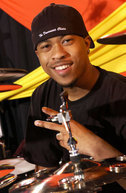
Tony Royster Jr.
I’m working with four-year-olds today, such a fun age! It’s got me thinking a lot about the environment kids grow up in, and he mystery of musical ability. Here’s a video that captures what a rich musical upbringing, supportive parents, and unswerving dedication to playing and practice can do for your music.
Lots to love about this video retrospective of Tony Royster Jr., an amazing drummer who clearly had drive, passion, and a rich musical environment as a kid. Drummers out there will appreciate this up-close (and sometimes slow-motion) look at some pretty amazing stick-work!
Related articles
 A percussion passion
 MUNITIO with Tony Royster Jr. – NINES Profile Series
 Tony Royster Jr. – The Evolution of Tony Royster Jr.

October 5, 2014
Great Classical Resource! Musaic Intro from Michael Tilson Thomas
Michael Tilson Thomas introduces a new service on Musaic for orchestral musicians and anyone interested in learning more, like what a concertmaster actually does, or videos on trumpet, cello, flute, violin, piano, but not so much on saxophone, as you might expect. You can find players, like Yo-Yo Ma, and some very cool videos of composers pieces like the one for Steve Reich’s Music for 18 Musicians.
The site is a compendium of video interviews, master classes, and more, and you can search by instrument, composer, conductor, or whatever. I couldn’t embed videos (a tick-mark against the site, IMHO), so you’ll have to go check ‘em out at Musaic.
Below is a talk by Thomas that’s pretty entertaining, and might introduce you to a new way to relate to classical music. Check it out:
_________________________________________________
Back-To-School Specials On All Formats:
________________________________________________
Related articles
 Trumpet Duet: Vivaldi Concerto for 2 Trumpets
 Michael Tilson Thomas’s 20th San Francisco Symphony season
 Launched On Kickstarter, Musaic Promises Hi-Fi Music And Home Automation
 Musaic wireless sound system also controls your lights


October 3, 2014
How to Manipulate Your Audience and Make Them Love It
Jazz and popular music of today owes a huge debt to Africa where the driving steady rhythm, swing, and accenting beats 2 and 4 come from. Most audiences in the US don’t know this, and don’t feel that kind of beat. Because of this, audiences frequently end up clapping on beats 1 and 3, as they’re doing in the clip below. Harry Connick Jr. knows better, and he also knows how to turn the beat around so he can help the audience clap on 2 and 4 (that happens around the :39 mark in the video below). His drummer is happy about it and gives a double-fist pump right after Connick makes the switch. Notice how much more hip the sound is!
Harry Connick Jr. is a consummate performer, a guy who knows what it means to respect tradition and practice your ass off. He grew up in New Orleans and began playing piano at age 3. His parents also owned a record store, which probably helped his listening practice. He also had many teachers, including Ellis Marsalis, and spent a lot of time at the New Orleans Center for Creative Arts. Check it out again. The clip below starts just before the switch so you can hear the difference:
If you’re not familiar with jazz or listening for the almighty beat, check it out. Change from 1 and 3 to 2 and 4 and feel how much more hip the music sounds. Another master of this technique is another New Orleans musician, and my favorite singer-songwriter, the great Chris Smither. In the turnaround of his excellent tune, The Devil’s Real, he turns the beat around on purpose and it’s a great effect. You can hear it a couple times in the short clip available at that link. It’s also harder than it sounds to actually do. Try it in your practice session. (PS: Smither’s album Live as I’ll Ever Be is one my all-time favorite albums in any category. Highly recommended.)
___________________________________
Back-To-School Specials On All Formats:
________________________________________________
Related articles
 Harry Connick Jr. talks about ‘American Idol’ role, new albums
 Connick sings anthem, thrives off sports ‘energy’
 Senior, too, pleases fans at Harry Connick Jr. show
 Chris Smither Celebrates 50 Years Of Making Music


October 1, 2014
Cover Yourself: Why You Should Copy Your Musical Heroes
Music, like many things, is best learned through imitation. By recreating the sounds you love, you’re literally embodying that knowledge. Owning it. It doesn’t matter if it’s Bach, Beastie Boys, or Benny Golson, figuring out and recreating your favorite tunes is what every single one of the best musicians you’ve heard do in the quest to become a great musician.
Start simply. Learn a melody, and try to imitate absolutely everything you hear: tone quality, pitch, rhythm, movement, emotional content, everything. Don’t use written music: 90% of the information you put in your sound has nothing to do with written music. That’s just black dots on a white page. You have to own the sound quality, not just the notes, and that’s why imitation is one of the best practice tools out there.
Our brains are literally wired for imitation. I’m talking about the mirror neuron system a topic that’s covered in detail in The Practice of Practice.
Here are a few performances by Kawehi, covering Nirvana’s Heart-Shaped Box, Michael Jackson’s The Way You Make Me Feel, and a couple others interesting musical inventions. She’s got a Kickstarter going right now, that I just pledged to, and you should, too. Even a buck. It’s a tough life being a musician. After supporting her, get started imitating some of your musical heroes!
___________________________________
Back-To-School Specials On All Formats:
________________________________________________
Related articles
 Lawrence musician Kawehi’s Nirvana cover gets worldwide raves
 ALBUM REVIEW: Kawehi, “Robot Heart”
 Long Live the Beastie Boys: Their Five Most Underappreciated Songs (Feature)
 Do mirror neurons explain understanding, or is it the other way round?
 David Byrne explains the neuroscience of music and mirror neurons but skips the skepticism.
 “Hear it before you play it!”
 The Muppets Cover The Beastie Boys
 Jazz Great Benny Golson Is Young Again – Bloomberg

September 30, 2014
100 Days of Art – Day 28: The Roberts McFerrin

I first discovered Bobby McFerrin early in his career and was hooked immediately with his playfulness and command of his voice. I was astounded to learn that his first public concert as a singer happened when he was in his 30s. Here’s a great blog post from Bill Jones, Jr. with some of McFerrin’s backstory.
 Originally posted on Just Me:
Many of you have probably heard of Bobby McFerrin, below, noted singer, musician, and one-man voicechestra/multi-octave singer, beat-boxer, and, conductor. However, did you know that he’s actually Robert McFerrin, Jr. and his father was noted baritone Robert McFerrin (1921-2006)?
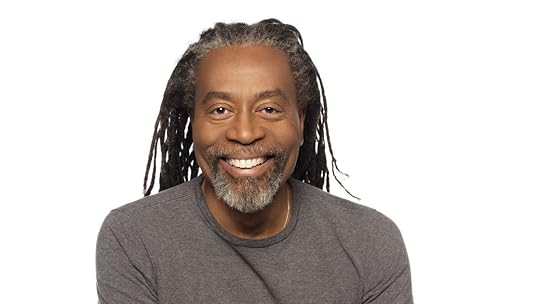
Robert Keith “Bobby” McFerrin, Jr.
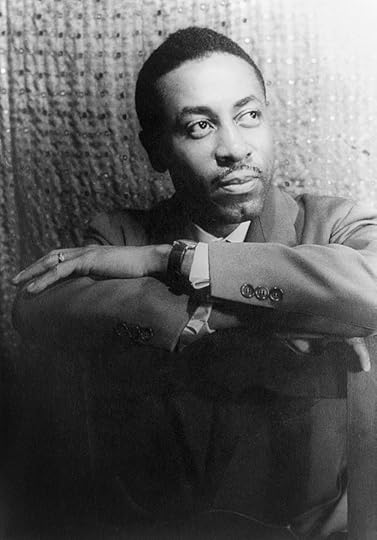
Robert Keith McFerrin, Sr.
No, well sit back and take a listen to both men’s work.
Robert McFerrin was a noted classical singer who reached his peak fame in the 1950s. He performed and recorded numerous classics, and was the first African American to sing a title role at the Metropolitan Opera house. (No, that wasn’t Sidney Poitier’s voice.) He voiced the lead vocals in Otto Preminger’s version of the film.
Born in 1921 in Arkansas as one of 11 children born an itinerant preacher–he lived to pave roads for black musicians previously not thought possible. See the YouTube video below for a great biography on…
View original 258 more words


September 29, 2014
Two-Year-Old Rapper: In the Flow, Laying It Down Like a Boss
All humans are musical. In that sense, musical ability is genetic. We all have musical potential. But like all genes, our musical potential reacts in a dynamic relationship with the environment (no matter what age we are). There is no nature OR nurture, it’s always nature AND nurture. Here’s a great and adorable example: Two-year-old Khaliyl Iloyi rapping with his dad, Femi. Little dude’s got some skills! And he got those skills not because he’s got some natural ability, but because he’s growing up in a musically rich environment.
Prasad Upasani is an Indian classical singer who I interviewed about practice for The Practice of Practice. He called it samskar, and said it means “an unconscious influence in music.” Just like Khaliyl shows us below. Thing is, there were many other world-class musicians I spoke with who didn’t have rich musical childhoods. They can still rip it up. So a rich musical childhood isn’t essential to be a good musician, but it certainly doesn’t hurt, and it’s a ton of fun, as you can see below. Play music with your kids!
___________________________________
Back-To-School Specials On All Formats:
________________________________________________



